Sorry, you must be a member of the group to do that. Join this group.
Jason SurfrApp's Blog, page 30
July 7, 2014
To get started in life, give yourself permission
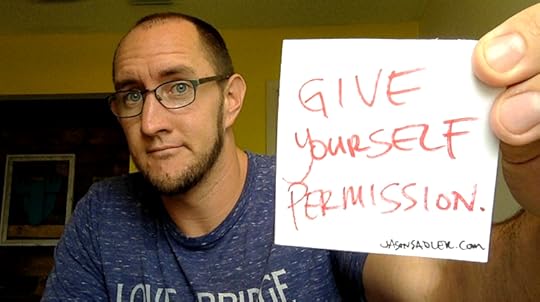
Since releasing my book Creativity For Sale, I’ve received amazing emails from people all over the world who are excited to start their own business or pursue an idea they’ve had for years. These emails have meant so much to me, but I’ve noticed a common theme.
Almost every email ends with a variation of the question: “What’s your advice on getting started?”
I wasn’t sure how to respond to the first couple people who emailed me asking this question. After writing some lengthy and some short responses, I realized what the majority of these folks (and maybe you reading this) are looking for…
Permission.
You see, we’ve been taught our entire lives that we need to ask permission to do things. Whether that’s permission to go outside and play with our friends. Permission to leave a classroom to use the restroom. Permission from a guidance counselor to take a certain class. Permission from a boss to do marketing tests. Permission from our significant other to spend money on something. There are a million things in our life we ask for permission for.
Well right now I want you to give yourself permission.
If you’re thinking about starting a new business, project, writing a book, etc, you don’t need to ask anyone for permission to do it. I challenge you to stand in front of a mirror, ask yourself for permission to start your thing, then respond and give yourself that permission. I know it sounds silly, but I bet you’ll feel an overwhelming sense of approval and inspiration to get started.
I’d also like to thank Nike for creating one of the best tag lines of all time: Just do it.
I 100% understand that I’m wired differently than most people. I rarely ask for permission (sometimes to a fault). But not worrying about asking for permission has helped me create a path for myself that would never have existed. I’ve been able to work with some fantastic people and brands because I told myself I was good enough to do so. I’ve been able to make a great living and define my own freedoms because I’ve given myself permission.
Whatever the thing is you’re waiting to get permission for, don’t wait any longer. Give yourself permission and get started.
Bonus: One resource I’ve also been pointing a bunch of folks to is Eric Reis’ book “The Lean Startup.” It’s not a sexy book, but it’s been hugely helpful in changing the way I think about any business idea. It gets the Jason SurfrApp stamp of approval!


June 30, 2014
How to start your next business while working a full-time job

The American dream used to be getting a secure job, working from 9-5, and retiring. For most of us, especially people born in the 80s and 90s, this is the American nightmare.
The idea of working for someone else makes many of us cringe, and if you’ve had a 9-5 job, you’ve probably felt the suffocating hold it can take on your life. Mondays are dreadful. Mundane meetings and conference calls seem never-ending. Having a corporate job can literally suck the soul right out of your body. But fear not, you can start your next business while working for someone else.
Let’s assume you already have an idea for a business you want to start. The first thing you need to do is set intentions. A couple of those intentions could look something like this:
I intend to continue working at my soul-sucking 9-5 job for only six more months
I intend to start living a much more frugal lifestyle so I can create a savings account and have a financial buffer when I do quit my job and start running my own company
I intend to come home from work, spend two hours with my family, then spend three-four hours working on my new business
I intend to completely disconnect myself from my 9-5 job when I leave my 9-5 job
Those are just a couple examples of intentions I set for myself when I made the decision that I wanted to start my own company and leave my “secure” 9-5 job back in 2007. By taking action and repeating those intentions to myself (almost daily), it created a sense of focus and desire to work that much harder at getting my own business up and running.
One of those intentions needs to be dug into a bit more and that’s your after hours work schedule. Because a normal job creates structure and a fairly rigid schedule, most people want nothing more than to come home, lounge around, kick their feet up, and be lazy. If you want to start your own business, you’re going to need structure in the beginning to make sure you’re actually getting work done and putting in valuable time and effort. Kicking your feet up isn’t going to help you escape the stranglehold your 9-5 job has on you. Here are a couple tips on how to get into a routine after work:
Start small. Don’t try to dive in head first with a new schedule, you’ll never stick to it. For the first week, just try to get on a schedule with one thing (maybe it’s dinner time). On the second week, give yourself an hour of relaxation time after dinner, but cut yourself off after that hour is over. We all have favorite TV shows, but just sitting on the couch watching them doesn’t help us start a new career. Each week add a new change to your evening schedule.
Family comes first, so come home and immediately devote time to your kids, your spouse, your pets, etc. If you get home at 6pm, spend an hour doing something with your family that doesn’t involve TV, a computer, or anything technology based. If you have kids, this is a great time to wear them out before bed. If you don’t have kids but have a spouse, spend some quality time with them and avoid talking about work of any kind. Go for a walk, get some exercise, make a delicious meal together.
When you start spending time working on your next business (maybe 8pm – 11pm), be focused only on that. Turn off notifications on your phone. Close all the tabs you have open on Google Chrome. Shut your email down and don’t look at it unless that’s part of your work. Spend these limited hours actually working.
You may not be a fan of having a schedule at home, but that’s only because you work at a job you don’t enjoy and it forces you to have a schedule you don’t enjoy. Make an effort to appreciate your time away from your 9-5 job, and I guarantee giving yourself some parameters won’t feel the like the worst thing ever.
Now that you’ve created structure and a schedule for yourself, start working on goals for your new business. Through trial and error, I’ve found that creating three sets of goals works really well for me (and people I consult with). The sets of goals are daily, weekly, and monthly.
Daily goals will most likely be your smaller goals or to-do list items. Each evening that you start working, you should make a list of goals you intend to complete by the end of that night. This small exercise should only take 5-10 minutes of your time (at most) and I find it best to physically write these down so you can then cross them off. It always feels great to cross things off a list!
Weekly goals are somewhat larger goals and are things that won’t necessarily be able to be completed in one evening. Some weekly goals you might be setting early on are: Design and develop different stages of your product/service/website. Reach out to friends and family for feedback about your idea. Do PR or influencer outreach to try to get exposure for your new idea. Put a product or service up for sale and work on perfecting your sales process. Take one week off to recharge your batteries. You should still write these down and be diligent about crossing them off at the end of each week (it’s okay if some carry over to the next week).
Monthly goals are your bigger goals and you’ll probably want to set these for one month, three months, six months, and a year. It may seem silly to write down goals for a year from now, but trust me, it helps keep you accountable for that intention you set to leave your job in six months. Your monthly goals might look something like this: Month 1 – Create prototype product, launch website, and get feedback from initial user group. Month 3 - Start selling product or service publicly. Month 6 – Build up enough savings through initial sales and 9-5 job money to leave 9-5 job! Month 12 – Hire sales person, customer service company, and start doing paid marketing and advertising.
Goal setting can feel uncomfortable and awkward at first, but like everything else, it gets better with practice. It wasn’t until I started writing my sets of goals on a whiteboard in my office that I really started to focus on completing them.
Starting your next business while working a 9-5 job isn’t easy, but it’s absolutely doable. Put these steps in place and you’ll not only be working for yourself in no time, but you’ll also look forward to your work.
Oh, and if you already own your business, pat yourself on the back and then get back to work! :)
How to start a business while working
The American dream used to be getting a secure job, working from 9-5, and retiring. For most of us, especially people born in the 80s and 90s, this is the American nightmare.
The idea of working for someone else makes many of us cringe, and if you’ve had a 9-5 job, you’ve probably felt the suffocating hold it can take on your life. Mondays are dreadful. Mundane meetings and conference calls seem never-ending. Having a corporate job can literally suck the soul right out of your body. But fear not, you can start your next business while working for someone else.
Let’s assume you already have an idea for a business you want to start. The first thing you need to do is set intentions. A couple of those intentions could look something like this:
I intend to continue working at my soul-sucking 9-5 job for only six more months
I intend to start living a much more frugal lifestyle so I can create a savings account and have a financial buffer when I do quit my job and start running my own company
I intend to come home from work, spend two hours with my family, then spend three-four hours working on my new business
I intend to completely disconnect myself from my 9-5 job when I leave my 9-5 job
Those are just a couple examples of intentions I set for myself when I made the decision that I wanted to start my own company and leave my “secure” 9-5 job back in 2007. By taking action and repeating those intentions to myself (almost daily), it created a sense of focus and desire to work that much harder at getting my own business up and running.
One of those intentions needs to be dug into a bit more and that’s your after hours work schedule. Because a normal job creates structure and a fairly rigid schedule, most people want nothing more than to come home, lounge around, kick their feet up, and be lazy. If you want to start your own business, you’re going to need structure in the beginning to make sure you’re actually getting work done and putting in valuable time and effort. Kicking your feet up isn’t going to help you escape the stranglehold your 9-5 job has on you. Here are a couple tips on how to get into a routine after work:
Start small. Don’t try to dive in head first with a new schedule, you’ll never stick to it. For the first week, just try to get on a schedule with one thing (maybe it’s dinner time). On the second week, give yourself an hour of relaxation time after dinner, but cut yourself off after that hour is over. We all have favorite TV shows, but just sitting on the couch watching them doesn’t help us start a new career. Each week add a new change to your evening schedule.
Family comes first, so come home and immediately devote time to your kids, your spouse, your pets, etc. If you get home at 6pm, spend an hour doing something with your family that doesn’t involve TV, a computer, or anything technology based. If you have kids, this is a great time to wear them out before bed. If you don’t have kids but have a spouse, spend some quality time with them and avoid talking about work of any kind. Go for a walk, get some exercise, make a delicious meal together.
When you start spending time working on your next business (maybe 8pm – 11pm), be focused only on that. Turn off notifications on your phone. Close all the tabs you have open on Google Chrome. Shut your email down and don’t look at it unless that’s part of your work. Spend these limited hours actually working.
You may not be a fan of having a schedule at home, but that’s only because you work at a job you don’t enjoy and it forces you to have a schedule you don’t enjoy. Make an effort to appreciate your time away from your 9-5 job, and I guarantee giving yourself some parameters won’t feel the like the worst thing ever.
Now that you’ve created structure and a schedule for yourself, start working on goals for your new business. Through trial and error, I’ve found that creating three sets of goals works really well for me (and people I consult with). The sets of goals are daily, weekly, and monthly.
Daily goals will most likely be your smaller goals or to-do list items. Each evening that you start working, you should make a list of goals you intend to complete by the end of that night. This small exercise should only take 5-10 minutes of your time (at most) and I find it best to physically write these down so you can then cross them off. It always feels great to cross things off a list!
Weekly goals are somewhat larger goals and are things that won’t necessarily be able to be completed in one evening. Some weekly goals you might be setting early on are: Design and develop different stages of your product/service/website. Reach out to friends and family for feedback about your idea. Do PR or influencer outreach to try to get exposure for your new idea. Put a product or service up for sale and work on perfecting your sales process. Take one week off to recharge your batteries. You should still write these down and be diligent about crossing them off at the end of each week (it’s okay if some carry over to the next week).
Monthly goals are your bigger goals and you’ll probably want to set these for one month, three months, six months, and a year. It may seem silly to write down goals for a year from now, but trust me, it helps keep you accountable for that intention you set to leave your job in six months. Your monthly goals might look something like this: Month 1 – Create prototype product, launch website, and get feedback from initial user group. Month 3 - Start selling product or service publicly. Month 6 – Build up enough savings through initial sales and 9-5 job money to leave 9-5 job! Month 12 – Hire sales person, customer service company, and start doing paid marketing and advertising.
Goal setting can feel uncomfortable and awkward at first, but like everything else, it gets better with practice. It wasn’t until I started writing my sets of goals on a whiteboard in my office that I really started to focus on completing them.
Starting your next business while working a 9-5 job isn’t easy, but it’s absolutely doable. Put these steps in place and you’ll not only be working for yourself in no time, but you’ll also look forward to your work.
Oh, and if you already own your business, pat yourself on the back and then get back to work! :)
June 23, 2014
How To Become an Entrepreneur

A few years ago a friend told me he was taking an “Entrepreneurship Class” and I remember raising an eyebrow. How do you take a class to learn how to be a certain type of person? The word entrepreneur is defined as: a person who organizes and operates a business or businesses, taking on greater than normal financial risks in order to do so. How do you teach someone to take risks or to work hard?
It’s not that I’m against higher education, although I kind of am, it’s that I’m against the idea that you can try to teach someone to be something they are not. And do you know the one critical piece that’s missing from every “Entrepreneurship Class” in the world? The fact that none of them make you put your own money, blood, sweat, and tears on the line. You can’t do that in a well air-conditioned classroom. You do that in real life.
So if you want to get an MBA in Entrepreneurship, here’s exactly what you need to do:
Start a business.
Right now. I don’t care what it is, what it does, what it sells, who the customer is, etc. Just start a business. Give it a name. Get someone to build you a simple website. Get a logo made. Spend as little money as possible doing those things and do them yourself by figuring out how.
Sell a product or service.
Once you have your business and your website, put a product or service up for sale. Stand behind that thing you’re selling and say it’s effin’ great. The more excited you are about the thing you sell, the better chance you have of succeeding. You should do some marketing too (and I don’t mean starting a Twitter account or Facebook page). Actually put in effort and get creative. Think about ways to put your product in front of people.
Hire someone for a month and then fire them.
You want an entire semester’s worth of education? Go through this process. Hiring people is difficult, but there is almost nothing harder to do as an entrepreneur than letting someone go. It sucks. It will keep you up at night. It will leave a pit in your stomach. It will cause great stress in your life. But you’ll learn from that process and you’ll make tremendous growth as a person and as a business owner.
Put your money where your mouth is.
Whether this means paying for marketing or advertising, invest a good chunk of money into your business. You’ll probably lose that money and not see any direct ROI. This is called life experience. Some guy standing in front of a chalkboard telling you how to write a business plan or balance a budget isn’t going to help you understand what it feels like to make a financial decision that doesn’t pay off. Put real money on the line and learn from the experience that follows.
Pivot (as they say in the biz).
Completely change the direction of your company. You were selling a product, now it’s a subscription service. You probably need to throw away all your previous collateral around your product. That’s going to suck, but it wasn’t working, so why the hell are you holding on to it? You can look at a graph about pivoting on a projection screen in an auditorium, or you can see it happen in real life and understand all the emotions and time that go into it.
Congratulations, you now have an MBA in Entrepreneurship!
Something tells me that entire process will take less than a semester in school, might actually cost less, and will give you a wealth of knowledge and experience you would never learn in a classroom.
And before people get all uppity that entrepreneurship classes teach you the basics of business and the fundamentals of starting your own company, that’s existed for years and it’s called a “Business Class.” An entrepreneurship class, or major, is nothing more than a marketing tactic to recycle a pre-existing syllabus.
If you think I’m trying to sway people from becoming entrepreneurs, I want the exact opposite. I want more people to do exactly what I’ve listed here, save the time and money they’ll give to a large institution, and learn from real life experience. When you get in the actual trenches and do the actual work, you reap incredible benefits.
Now go do these things and then write “MBA in Entrepreneurship” on a piece of paper you can frame and put up on your wall. You deserve it and I’m proud of you.
June 18, 2014
Why You Need to Focus on Email Marketing Over Social Media: Explained with Two Animated GIFs
As a follow up to this post, I wanted to visually explain why you should be focusing on email marketing over social media.
This is how people use social media platforms and how they interact with your marketing messages:
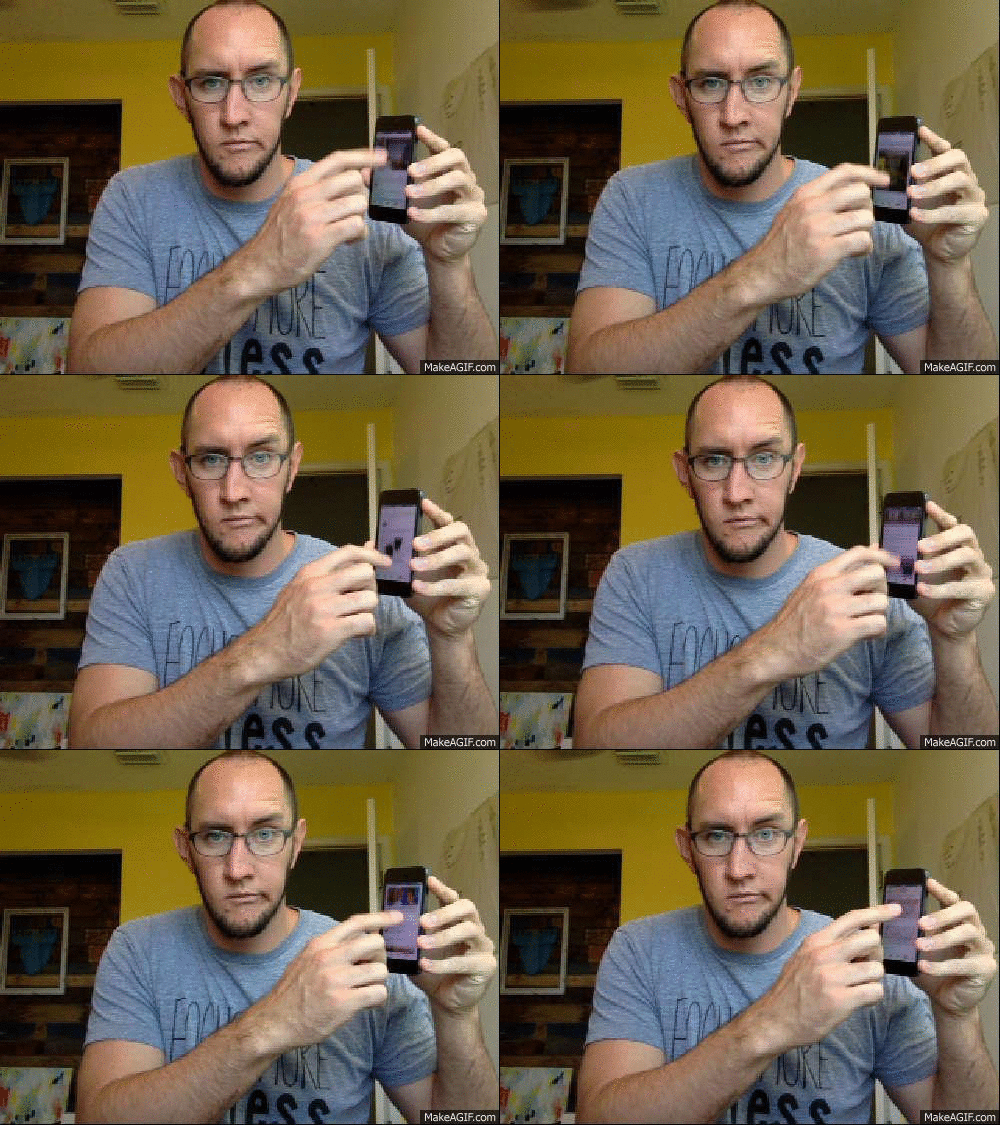
And this is how people read emails:
[image error]
Would you rather have your content scrolled through at lightning speeds (social media) or would you rather someone actually took the time to read your content (email)?
June 17, 2014
Fear doesn’t have to paralyze you

If there’s one thing I’ve learned about myself over the years, it’s that I’m not afraid to put myself and my out there. For some of you reading this, you’re the complete opposite (and that’s okay!).
The crazy thing about fear is that we aren’t born with it. Fear is something we learn over time. Whether it’s from the people around us or the circumstances we live in. However, fear is also something we can overcome with effort.
I want to share a quick story with you about overcoming fear…
When I graduated college I was getting ready to find my first “real” job as a graphic designer. I’d done some freelance design work before graduating, but nothing substantial and nothing long-term. I remember a friend showing me a job listing for a graphic design job at a major sports agency. Immediately doubt and fear crept in. My portfolio didn’t contain any sports-related work. I didn’t have other sports-related experience. How could I land a job at a world renowned company with almost no worthwhile credentials?
I remember asking myself all these “what if” questions but decided what the heck and submitted my resume and portfolio (none of which fit the criteria of what they were looking for). A few days later I received an email and was asked to come in for an interview. Fear set in again, because now I had my foot in the door, but couldn’t hide behind technology. I had to sit in front of accomplished people and pretend I could do this job I applied for.
I took the interview and decided I wouldn’t pretend to be something I wasn’t. They asked questions about previous experience in the sports industry, knowing anything about that sport (which was tennis), and why I thought I was the right fit. I didn’t have great answers to any of those questions, but instead I tried to be honest. I told them I was eager to learn and that it seemed like an environment I’d thrive in. I stood behind the work I had done and explained my processes and how I worked.
I distinctly remember being scared when they asked me to name five active tennis players and I couldn’t. But instead of letting fear paralyze me, I flipped the question back to them and asked them to name five principles used in graphic design. Just like I couldn’t name tennis players, they couldn’t name design principles.
The interview finished and a few days later I was offered the job. Had I let my fear of the unknown take over, I never would have gotten the job. A job that led me to meeting a fellow designer, which led to my first entrepreneurial venture, which led to the idea of IWearYourShirt, which led to me doing more writing, which led to you reading this blog post (and many other things).
There are many moments in our lives when we have decisions that need to be made. Those decisions typically bring about fear and can seem daunting. One way I overcome fear is to ask myself “what’s the worst thing that will happen if I do this?” More often than not, there is no “worst thing.” There’s no outcome that I can’t survive.
Whatever the thing is that you’re afraid of doing right now just ask yourself:
What’s the worst thing that will happen if I do this?
I’m willing to bet if you answer that question honestly and really drill down, the fear you have won’t be so paralyzing. In fact, the fear you once had might seem trivial.
If I can help you overcome a current fear you have, please reach out on twitter or email.
June 7, 2014
After Another Amazing Weekend at Misfit Con, I Feel Unbelievably Inspired!

(Photos via Instagrammers: @jwgreenlighting, @rachrodgersesq, @skooloflife, @randikayolsen, and @veglatina)
Nearly a year ago to the day, I wrote a blog post after attending the first Misfit Conference (Misfit Con) titled: After An Amazing Weekend at Misfit Con, I Feel Lost… If you’ve read that post you know that I was trying to find my way (and my passion) after a very inspirational event in Fargo, ND.
What I neglected to say in that post was how scared I was. Scared to actually ask for help. Scared to make changes in my life. Scared to admit that my business was no longer something I woke up every morning with a burning passion to work on and grow. I wrote a line in that post that said “I want to ask for help from my peers (I’m looking at you Pam Slim)” and I fully intended to reach out Pam. But I was terrified to talk to her and share my feelings, doubts, and fears. So scared in fact that it took me 8 months to muster the courage to email her and eventually chat on Skype. But even though it took me more than half a year to finally reach out, I did it. That call along with many personal blog posts, meetings with friends, and intentional changes to my habits and goals, made a profound difference on who I am as a person. I can honestly say that Misfit Con in 2013 absolutely changed my life.
Here I am a few days removed from this year’s Misfit Con and I have a completely different feeling and outlook. Before I get to that, I want to give you a glimpse of what this “conference” was like. The venue was a beautiful art gallery, decorated by hand with amazing details. The 160 eclectic chairs to sit in were sourced from people and places around the wonderful city of Fargo. The food was the furthest thing from standard conference fare (food options were vegan, gluten-free, dolphin safe, organic, and we ate the best marshmallows I’ve ever crammed in my face). The brilliant speakers who are changing the world, shared emotional stories of failure, loss, and success. There was a passionate spoken word poet whose words rocked me to my core. There was not one, but two hip hop artists whose talent poured out in their words and rhymes. There were so many talented people doing and saying amazing things. And after I gave the most vulnerable talk I’ve ever given, I was met with open arms and words of encouragement and excitement.

(A small handful of photos to show off the attention to detail and love that go into Misfit Con. Photos via Instagrammers: @artistnicholerae, @ajleon, @randikayolsen, @melissacrnic, @ryannicodemus, @jackiness, and @misfitchairs)
After this year’s Misfit Con I feel so unbelievably inspired. Hearing the stories of my fellow misfits who have grown leaps and bounds (as I have) since last year. Listening to people tell me how they’ve started new projects. Listening to a wonderful Aussie named Israel who is embarking on an amazing journey with his family. Listening to Victor Saad give us an update on The Experience Institute, a project that was nothing more than an idea a year ago and now has students, a curriculum, and the backing of Stanford and Leo Burnett. Just listening to various stories like these from every attendee. Every single person is doing something to reach their goals and dreams and that has me so fired up and excited. I wish I could list the accomplishments of every person, but that would end up being the length of a book.
Oh, and speaking of books, Misfit Con was the very first event to have my book Creativity For Sale on display. Without even planning it, or realizing it until Saturday, my book release and my 4-year anniversary with my girlfriend Caroline all aligned with Misfit Con. I’m sure my friend and fellow Misfit Con attendee Julia Roy would tell me that some weird part of my brain subconsciously made those decisions for me. I can’t begin to thank AJ and Melissa enough for agreeing to buy a bulk order of my books and showcase them. I will forever be grateful for that gesture.
There are two big takeaways for me this year and some of them are things I’ve been telling myself constantly and consistently since last year:
#1 Change is incredibly hard, but it can lead to amazing things
Whether you’re minimal-izing your life, moving to a new place, starting a new career, trying meditation, admitting you need help, whatever the thing is you want to change you need to start small and be intentional about it. It will be uncomfortable, but it will be worth it.
#2 Give yourself permission to do the things you want to do
We all have ideas, goals, and dreams, but most often we are the ones limiting ourselves from making those things happen. It’s not money, timing, or any other factor, it’s giving ourselves the permission to just get started.
I haven’t been able to accomplish what I’ve accomplished in the past year because of luck or good timing. I’ve intentionally changed things in my life and “sat in the chair” as Joshua Fields Millburn says. It hasn’t been easy for me and it probably won’t be easy for you. The key is to make a commitment to yourself and to not do it alone. As proud of a person as I am, the best thing I ever did in the past year was to start asking for help and be open to change.
To my fellow misfits reading this, lean on your peers for help. Feel free to reach out to me. No one is going to ridicule you for asking for help (and if by some insane chance they do, immediately remove that person from your life). Set big goals for yourself and don’t be afraid if you don’t achieve them. Embrace the journey and learn from it.
I’m already excited for Misfit Con in 2015, it can’t come soon enough.
June 2, 2014
Creativity For Sale Book Release – Enter to Win a $1,000 Entrepreneurial Sponsorship
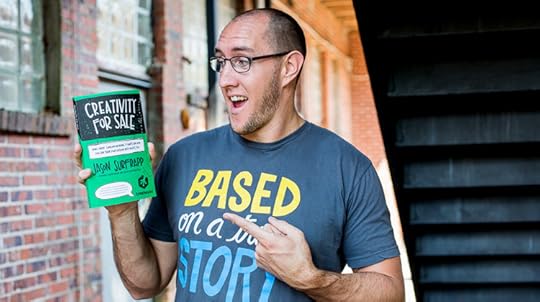 (All photos credited to: Laura Evans Photography)
I am extremely excited to announce the release of my first book Creativity For Sale! Just over a year ago I made the decision to write a book and with the help of friends, family, sponsors, and supporters, my dream has officially come true.
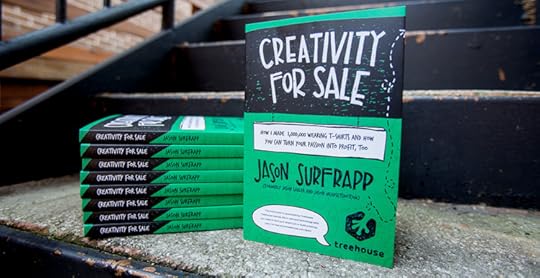
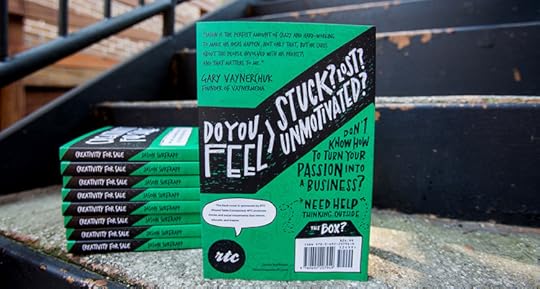
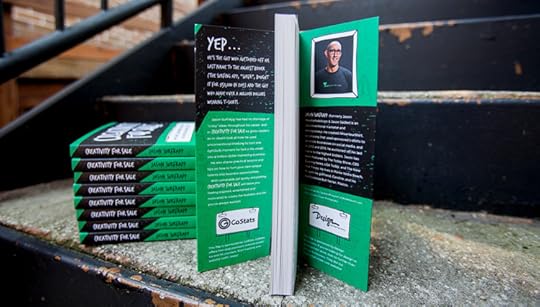
When I set out to write Creativity For Sale I knew I wanted to pull back the curtain and share stories, mistakes, failures, emotional hurdles, and much more from my entrepreneurial journey (and life). But besides just sharing my story, I also wanted to share practical advice for current and aspiring creative professionals. That’s why the tagline of the book is How I Made $1,000,000 Wearing T-Shirts and How You Can Turn Your Passion Into Profit, Too.
Are you tired of working for someone else and feeling unfulfilled with your job? Are you constantly thinking of business ideas but don’t know how to get started? Or, maybe you have an established business selling a product or service and want to know more about marketing and selling? Those are the questions I set out to answer with Creativity For Sale.
→ Buy the Paperback Book for $16.99
→ Buy the Kindle Book for $9.99
*** The Paperback book is already out of stock on Amazon, but you can still place your order and I promise it will arrive way sooner than the date Amazon has listed ***
Before we get to the $1,000 sponsorship, I need to thank a few companies and people who were pivotal in making Creativity For Sale a reality:
Front Cover Sponsor – Treehouse
I’m ecstatic to have Treehouse on the front cover of Creativity For Sale. TreeHouse teaches in-demand technology skills you need to build a website, learn to code, build an app, or start a business. I strongly believe you can get an entire college education during the 14-day free trial at Treehouse!
Back Cover Sponsor - Round Table Companies (RTC)
Creativity For Sale simply wouldn’t exist if it weren’t for David Cohen, the COO of Round Table Companies. Not only did RTC sponsor the back cover of the book, they coached me through the writing process, edited the book, formatted the book, and have been instrumental in navigating the self-publishing process. I can’t recommend RTC enough if you’re interested in writing your own book.
Front Inside Flap Sponsor - GoStats
GoStats offers free (and premium) website analytics and hit counters. I’ve used their real-time analytics on every project I’ve done online. Start tracking your website traffic and visualize your analytics today.
Back Inside Flap Sponsor - Design Extensions
I hope you’ll check out the Creativity For Sale website so you can see Design Extension’s work in action. I provided them with a unique design and they made it a fully functioning website that’s completely responsive and mobile friendly. Definitely reach out to the team at Design Extensions for any of your website or branding needs.
The Page Sponsors - View 200 Awesome Companies
The companies that grace the bottom of each page of my book were critical to making the book a reality. There are tons of great products, services, and people to find throughout the book. Many of them also submitted interviews about how their companies got started. Check them all out here.
SponsorMyBook Supporters
I also wanted to give a shoutout to the 150+ people whose names you can find in the back of the book (and on the Creativity For Sale website). Thank you official supporters!
Enter to Win 1-of-3 $1,000 Entrepreneurial Sponsorships
With a book full of sponsors it seemed only fitting to offer some sort of “sponsorship” of my own with the book launch. My goal is to offer an opportunity that I wish I would have had when I started my first business a few years ago. Here’s what the Entrepreneurial Sponsorships will include:
$1,000 you can use for your next or current idea, no restrictions on how you use the money
5 hours of one-on-one time with me via Skype (or phone) calls
Ongoing email support from me which includes brainstorming, critical feedback, and coaching
Introductions to key people or companies
Blog post featuring your company, product, or service
All of those items will be included in each Entrepreneurial Sponsorship!
How to Enter to Win the Entrepreneurial Sponsorships
There are three ways to enter to win one of the three available sponsorships. The only restriction to enter is that you must be 17 years of age. You can use one or all of the entry methods to be eligible to win.
Entry Method #1: Sign up for a 14-day free trial Treehouse account: http://iwys.co/TeamTreehouse (30 entry points)
To start a free trial on Treehouse you will need to input your credit card, but you will not be charged! If you don’t want to continue using it after the trial, you can cancel with no penalty or fee. It takes less than 30 seconds to create an account.
ACTION: To show proof that you created a Treehouse account you must email me (jason@sponsormybook.com) a screenshot of your Treehouse profile (once you’re logged in).
Entry Method #2: Submit an awesome photo with the Creativity For Sale book: email photo (10 entry points)
If you own a copy of Creativity For Sale, grab your camera (or phone) and snap a creative photo! While I’d love a selfie of you with my book, let’s pull up our creativity overalls and put in some effort with your photo. If you don’t own a copy of the book yet, the links to purchase are listed above (or here: http://amzn.to/SpfaPI). Limit one photo entry per week.
ACTION: To show proof that you purchased a copy (or copies) of the book you must email me (jason@sponsormybook.com) your Amazon receipt.
Entry Method #3: Share CreativityForSale.com on Facebook or Twitter: http://creativityforsale.com (1 entry point each)
At the top of the Creativity For Sale website there are share links to Facebook and Twitter. You can only earn up to 4 points each day by using the share links, but you can share daily.
ACTION: You must use the links at the top of the Creativity For Sale website. No need to email me.
Picking the Winners, Deadlines, and Additional Prizes
The winners for the Entrepreneurial Sponsorships will be picked on June 16, June 30, and July 14. The winners will be contacted via email and their names will be listed below. Any entry made after June 3 is eligible for all three winning dates.
Winner #1 – June 16: Mike W. (California)
Winner #2 – June 30: _________________
Winner #3 – July 14: _________________
Additional prizes will be awarded on those dates. Those prizes include:
One person wins a 1-year membership to Treehouse
Three people win signed copies of Creativity For Sale
Three people win Kindle versions of Creativity For Sale
Good Luck!
I’m really excited to have the opportunity to be able to offer Entrepreneurial Sponsorships. I started IWearYourShirt with less than $300 so I know you can create a wildly profitable and successful business with $1,000 plus my time, coaching, support, etc.
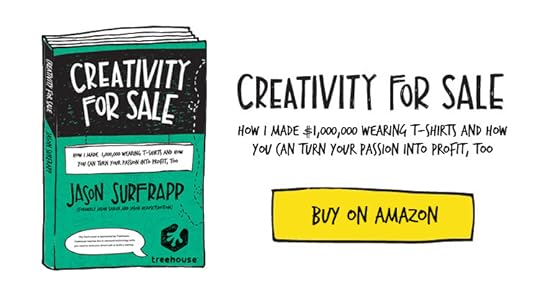
And of course, if you just want to purchase Creativity For Sale and not be a part of the Entrepreneurial Sponsorship, that’s fantastic too. Click the image below to grab a copy of Creativity For Sale today!
May 29, 2014
Read Preview Chapters of Creativity For Sale
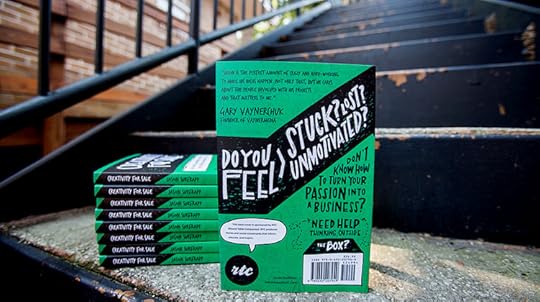
Last summer after eating a burrito with a friend I decided to write my first book. A few months later (October 2013) SponsorMyBook was underway. At that point I gave myself nine months to fill all the page sponsorships in the book and, somewhat importantly, write the actual book. There were a few bumps in the road along the way, but I’m excited to release the book to the public next week on June 3!
Most authors probably wouldn’t share content from their book, but I’ve been doing the opposite for the past two weeks. Every two days since May 20 I’ve shared an entire chapter from Creativity For Sale on the content platform Medium. Below you’ll find a short preview of those chapters with a link to read the full versions.
Introduction: Jason ______?
For the past 32 years of my life, only one thing has been consistent: change. I wasn’t a military brat, but growing up, I lived in Arizona, California, Virginia, New Jersey, and eventually Florida. My mom and I still argue about the correct number, but I attended somewhere between 12 and 16 schools. Not only did I attend double the amount of schools that normal kids do, but when I changed schools, it was often to a new city or a different state. I was the “new kid” over and over again.
Click here to keep reading this chapter on Medium.com
.
Chapter 1: Let Me Wear Your Shirt
On the morning of October 10, 2008, I sat on my couch with my dog, Plaxico, and stared at my laptop in utter confusion. Overnight, my design and development team had finished putting the final touches on the IWearYourShirt website. It wasn’t an extravagant website, but it was the first big project I’d ever undertaken solo, and a large photo of me was plastered on the front page of it. I had seen previous iterations of the website, but pieces of it were all over the place before that morning. Now, it was a completed object. All the puzzle pieces finally fit together, and it was ready for the world to see it. There was just one problem. When launch time came, instead of seeing a fiery blaze of sales and hockey stick shaped web traffic, all I heard was my dog snoring and the morning weather report from my TV.
Click here to keep reading Chapter 1 on Medium.com
.
Chapters 2 & 3: Let There Be Sales
At some point during the email melee, I took a break. I let my dog out, put on clothes, and smeared gobs of peanut butter on two slices of multigrain bread. Between and during each task, I refreshed my email inbox on my iPhone like a crazy person. I’m shocked I didn’t spread peanut butter on my dog’s head and end up wearing socks on my arms because I was so distracted. Then a magical thing happened . . . the first calendar purchase came in. This was my moment. This was it.
Click here to keep reading Chapters 2 & 3 on Medium.com
.
Chapter 4: (C)Leverage
A few days after my first Ustream show, Evan emailed to say that a New York Times reporter wanted to do a story on IWYS. I’m not sure how Evan had talked this reporter into writing a story about IWYS, but I’m assuming he used some secret PR-ninja tactics. I had never imagined the NYTimes would be my first big media hit. I received an email from Jenna Wortham, and it was direct and to the point. “Evan White referred me to you—I’d like to know more about your experiment. Have a sec to chat today, either on AIM or Gchat?” That was it.
Click here to keep reading Chapter 4 on Medium.com
.
Chapter 5: Christmas HARO Eve
During my crash course in PR early on, Evan also email-introduced me to a gentleman named Peter Shankman from Help A Reporter Out (HARO). This email introduction came with a price, though, and Peter wasn’t cheap. You see, Peter had created a huge email list of journalists and sources (in late 2008, approximately 50,000 people were on the list). Journalists would post requests for information and other subscribers of the email would answer those requests. It was a brilliant PR tool, and Peter had placed small text advertisements at the top of the email. I had never considered myself a salesman in the beginning stages of IWYS, but Peter Shankman—he was a salesman, and a damn good one at that.
Click here to keep reading Chapter 5 on Medium.com
.
Chapter 6: T-Shirts + Last Name + My Book = $1,000,000+
While I enjoyed success early on, IWearYourShirt certainly wasn’t all puppies and rainbows when it was an active business from late 2008 to May 2013. I made some mistakes when it came to managing people and managing money, and not making tough decisions fast enough. That being said, I’ve learned countless life lessons from those experiences, and as painful as some of them were, I wouldn’t go back and change them. Those experiences have helped me progress as a person and as a business owner, and they continue to provide value in my life.
.
That’s it for the preview chapters! To read about unleashing your creativity and learning how to make money by doing what you love, you’ll have to grab a copy of the actual book. Creativity For Sale will be available for purchase on Amazon (Paperback and Kindle), iBooks, and Nook on June 3. Keep an eye out for a fun announcement next week!
May 19, 2014
Which Social Media Platform is the Best?

This has to be the question I get asked most often about social media during interviews, speaking engagements, consulting calls, etc.
“Which social media platform is the best?”
When people previously asked me this question, my go-to answer was Twitter. It’s a completely open platform (meaning you can find and follow anyone) and it’s completely searchable. Twitter can be extremely powerful for finding people and finding conversations.
However…
During my year of soul-searching in 2013 I realized that Twitter wasn’t the answer anymore. My new answer, and one that probably won’t change is email marketing. Yep. The best social media platform you can use to build an audience, stay in touch with customers/fans, sell stuff, etc, is good old fashioned email.
But wait, email isn’t a social media platform. It’s been around for a long time. It doesn’t hold a candle to the almighty social media titan Facebook does it?
Don’t get me wrong, Facebook has been a great social media platform over the years. I’ve been able to connect with friends, fans, and family. I’ve been able to share and promote my crazy projects. I’ve even been able to attribute sales to Facebook-only promotions. But as Facebook changes their news feed algorithms like I change t-shirts and last names, my ability to reach people with minimal cost is fading away.
Here’s what Facebook, Twitter, and all other social media networks intend to do: Let people share content and hope other people consume/engage with that content. Email does this as well, but with one caveat; people control (for the most part) their email inboxes.
There’s no algorithm change for what email shows up at the top of your email inbox.
If you send someone an email, they get it, and they have the choice to read it and engage with it. When people connect with you on social media, even though they’ve opted-in to receive your content (a follow, or like, et al), the platforms control which content gets seen the most.
Oh, and social media is effin’ crowded. There’s a new company popping up each day. Signing up for social media accounts. Thinking they’ll follow 2,000 people and some percentage of those people will follow them back and become great customers (spoiler alert: this never, ever, ever works). At least when you get spam emails you can quickly archive them, report them, or unsubscribe and never be bothered again. For a nominal fee, companies you have zero interest in can pay to promote their boring sales tweets or next sales discount on Facebook and keep showing up.
Email is the best social media platform because email inboxes are a sacred place for people. I send emails all the time that get tons of replies (because I want people to reply). I also send emails asking people to buy things and they do. Through email I’ve built trust with people by providing them value over time. I could provide the exact same value on Twitter, Facebook, etc (and I have) and have little-to-no success selling something.
When was the last time you caught yourself scrolling through your email inbox trying to get to the next email as quickly as possible? And then the next? And then the next? No one treats email like they treat their social media news feeds and not realizing that is a huge mistake.
Take a look at your social media strategy right now. Is it working? Are you creating engaging conversations and sales? Or does it feel like you’re just throwing darts into a black hole? If you haven’t prioritized email marketing, now’s the time to start. Here are a few resources that have helped me hone my email marketing strategy recently:
Video: Growing an email list
1,000 Email Subscribers
Paul Jarvis & MailChimp (Storytelling)
Video: TheRiseToTheTop Email Marketing Strategy
Chris Brogan’s Email Marketing Tips
Example Email Sign-Up Page (via JamesClear.com)
8 Email Marketing Tips (a post I wrote last year)
Maybe you think social media is working for you because you get a few favorites on Twitter or Likes on Facebook, but those are just vanity metrics (and don’t get me started on “reach” numbers). The most important social media statistic to me right now is my email open rate.
I’m not saying you should abandon social media altogether, but I’d highly recommend focusing on email marketing first.
ps – in case you were wondering, MailChimp (aff link) is my email provider of choice.