Jason SurfrApp's Blog, page 29
August 9, 2014
The Big Problem Artists Have With Marketing
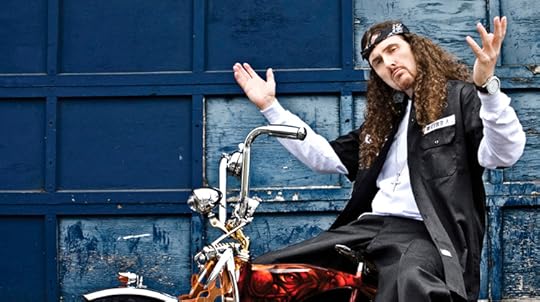
(Photo credit: Missoula Big Sky Press)
Recently you may have noticed Weird Al Yankovic has made a roaring comeback. He released a new album and amassed over 20,000,000 views on YouTube in just three weeks. His album hit #1 on the Billboard Charts, the first time a comedy album has hit #1 since 1963. To most people, it looks like Weird Al just made some funny songs, filmed some funny videos, and shared them with his audience. What you don’t see or hear much about is the following:
Weird Al has been making music and honing his craft for 30 years! That in itself is an amazing feat.
Weird Al’s record label didn’t have the money to produce the 8 videos for his latest album, so he went to sites like Nerdist, CollegeHumor, Yahoo!, and Funny or Die to partner with them. Not only did they help fund and produce his videos, then they promoted them to their built-in audiences (because any great content on their platform helps their platform).
Weird Al has been appearing as a guest on a number of popular podcasts (again, tapping into existing networks).
Weird Al got the blessing of Pharrell, Robin Thicke, Lorde, and the other artists he parodied. By doing this he earned their respect and they wanted to share his parody because it helped boost their other music.
Weird Al has his own blog where he’s been sharing unique content and behind the scenes stuff for years.
Weird Al uses social media well, reposting content that matters, and sharing interesting content.
He wasn’t platform exclusive, and his album has been downloaded 100,000+ times on Amazon, iTunes, and other sites.
And a whole hell of a lot more stuff that I couldn’t quickly find on Google…
So all of this seems great for a celebrity like Weird Al right? Maybe you’re thinking you can’t apply this to whatever thing you are creating? False.
Here are the exact takeaways you can steal from Weird Al:
Hone your craft. Weird Al has done this for 30 years. You don’t have to do it for 30 years, but you need to get good at whatever you’re putting out into the world. (I talked about this idea of Internet Woodshedding on my podcast last week.)
Partner with people who have existing networks you can tap into. Weird Al didn’t have College Humor, Funny or Die, and Nerdist knocking on his door. He sought them out and pitched them his (mutually beneficial) idea. Also, I’m sure he received some “No’s” from plenty of other networks.
Keep your audience engaged. Don’t just promote yourself when your latest thing is out or for sale. Marie Forleo does an amazing job of promoting herself for 11 months out of the year and selling her B-School product for only one month out of the year.
Share your work across multiple platforms and don’t worry about people seeing it too much. If people love your work, they’ll want to see it over and over again.
In a perfect world, you’d use your unique superpower to create something amazing and people would find you on their own. Unfortunately we don’t live in a perfect world. Thinking people are just going to find you on their own is a pipe dream that’s simply never going to happen.
Back in 2008 when I conceived the idea for IWearYourShirt (by standing in my closet), I thought it was the next big thing. I thought I had created an idea that was going to have rocket-powered success. When the website was finished and launched, only 12 people showed up on the first day (thanks Mom and Grama!). I realized quickly that just putting up a website and hoping random people would find it is kind of like putting up a billboard in the middle of the desert.
I got on my marketing horse and started emailing friends and family about IWearYourShirt. I got on Twitter and started searching appropriate hashtags and engaging in conversations with strangers. With only a handful of hours spent marketing IWearYourShirt the first few sales started to pour in and I made a few critical connections. Had I just sat back and waited for people to find me, nothing ever would have happened. The same could probably be said for the success of Weird Al’s latest album. He could have just shared it, uploaded some videos to YouTube, and seen some viewership/success, but it wouldn’t have taken him to the first #1 comedy album in the past 50 years.
As a creative person, I know the feeling of wanting to be found. By putting my heart and soul into creating things, I always keep my fingers crossed that they’re just randomly going to be found and take off (read: overnight success). But this isn’t realistic and never works.
You can’t just create whatever your art is and think strangers worldwide are going to stumble across it. Sometimes you might even think by continuing to put your work out in to the world, a little spark of magic will happen (read: your thing goes viral). This also doesn’t ever happen.
Most people, not just creatives, suffer from the anti-marketing mindset*. By not actually thinking about marketing your product, service, or art, you’re putting yourself in success handcuffs.
The anti-marketing mindset stems from a few different things:
You see people in your field who’ve had success and it looks like it happened out of no where.
Creating a marketing strategy seems daunting.
Doing actual work is hard and takes time and effort.
Artists (especially) want to be found and think their work won’t be as “great” if they have to promote it.
Marketing is an iterative process that looks a lot like a maze. Some marketing ideas lead to dead-ends, but eventually one of those ideas (or the most likely the culmination of them) will bring you success.
This is all well and good, but you probably want to know how to take off the success handcuffs don’t you?
I don’t have a magic potion, a 12-step process, or some miracle advertisement you can buy. But what I do have for you is a plan of action you can take to get out of the anti-marketing mindset.
Find people in your related business and ask them how they got to where they are. Learn from them. What worked for them? What advice can they offer? What failures have they had that you can avoid.
The simplest marketing strategy looks like this: Find your superpower and then start taking action.
Stop reading Facebook and Twitter all day. Stop listening to all the podcasts. Stop only consuming content and start creating it. Reward your content creation with content consumption (50/10 rule: 50 minutes of creation (work) to 10 minutes of consumption (pleasure).
The only way your art, product, or service is going to get “found” is to share it with the world. You should immediately buy and read the book Show Your Work by Austin Kleon. It applies to everyone.
Create a marketing strategy/plan built around email marketing.
Stop putting yourself in success handcuffs. Stop thinking you’ll get more customers by doing the same thing over and over again. Get yourself out of the anti-marketing mindset.
*Thank you Clay Hebert for this little phrase and inspiring this post.


July 28, 2014
Do better work by taking time off

I can remember it clear as day. The first year of IWearYourShirt was coming to a (fun and profitable) end and people were emailing in to congratulate me on pulling off such a crazy idea. Besides the accolades, there was a message that got repeated over and over:
“Jason, you did a great job with the first year of IWearYourShirt, but you need to plan to take some time off! Working 365 days a year isn’t sustainable and you need to give yourself a break.”
I read those emails, and there were lots of them, and thought to myself: “Pshhh, only normal people need days off, I’m superhuman!”
I was dead wrong.
Throughout 2010 fatigue started to set in. I started to have trouble sleeping. I started to have a hard time thinking up creative ideas for my daily videos. I missed out on some big opportunities because I didn’t have the creative energy to respond to yet another email. I got really bad at juggling life and work. I’m honestly surprised I was able to keep it all together.
In 2011 I made the decision to remove 1 day each week from the IWearYourShirt calendar (Saturday). Removing Saturdays meant I would lose around $35,000 in revenue. That’s not an easy pill to swallow, but I knew I couldn’t continue working myself to the bone for another 365 days straight.
While that one day off a week was helpful, the damage was already done. I couldn’t recharge my batteries completely on one day per week, especially after 730+ days without a break. Plus, those Saturdays became an attempt to try to get ahead of the game, so I ended up working anyway (ugh).
This trend continued until 2013 when I simply couldn’t do it anymore and in May of 2013 I hung up my final sponsored t-shirt. Unfortunately I had exhausted myself beyond repair when it came to IWearYourShirt.
So how does this apply to you?
I’m sure you aren’t planning a 365-day-a-year business (please don’t!), but no matter what you are doing, you need to take time to recharge your batteries and take a break.
Now you might be thinking, “Jason, I can’t plan to take time off, I need that time to make money to support my business, my family, etc.”
I’m here to tell you that you and your business will survive if you plan accordingly. And you’ll create better work with less effort. Here are a few tips:
1. Schedule your time off and then take that time off.
It’s very easy to fill every hour with work, checking email, brainstorming, building, coding, etc. But if you don’t schedule breaks for yourself you’ll hit a wall that you simply can’t ever get over. Schedule time off from your business and be diligent about using that time to relax, enjoy time with friends and family, and just clear your mind.
This doesn’t have to be a vacation in the Bahamas either. Staying off your computer and social media on the weekends is a great start. Why not take a road trip to see a friend in a nearby city? Take your family to a beach or lake. Go camping (in your backyard even). Don’t think about taking time off as an extravagent vacation, think about it as time to disconnect from your work.
2. Aim to make the money you need for a month, in the first week (or two) of your business.
My friend Bryan gave me this advice a few years ago and it was eye-opening. If I could make all the money I would need for a month in just one week, I could easily give myself time to relax and disconnect (often). This doesn’t mean you have to work 600 hours in the first week of every month, it just means that you should focus on creating a profitable business that has low expenses (and that you don’t have to work yourself sick to be profitable).
3. Build a business that doesn’t require you to be involved 24/7.
I can’t stress this point enough. You can absolutely be the cornerstone of your business (especially if you’re a service provider; designer, developer, etc), but you should put systems in place that don’t require you. Can you get a virtual assistant to handle your emails and give you a daily digest? Can you hire a part-time project manager that you pay hourly who can take care of customer service and planning issues? Can a family member take care of things like accounting, contracts, etc?
I know all of these tips may not apply to people who work 9-5 jobs, but my biggest tip for you is to turn off your work after 5pm. Don’t check email, don’t answer work calls, don’t even think about your job after 5pm. This is one of the biggest advantages that employers take of their employees; they expect people to work around the clock, but only take payment for eight hours of work a day. You’re going to get more work done if you disconnect after work and recharge your batteries.
Bonus 9-5 worker tip: If you don’t think you can do this, have a meeting with your boss. Tell them you’d like to try a two-week test of completely disconnecting at 5pm each day. For two weeks leading up to this new schedule, keep a journal of how you feel and how much work you are getting done each day. Then, during the two-week experiment, keep another journal of the same things. After a month of trying both compare them. How did you feel? How did your work output change? If you can be a better worker, your boss will be happy. If you don’t think your boss will be up for this experiment you should quit your job (kidding! maybe…).
Look at your work schedule and start planning to make time to disconnect. Be absolutely diligent about this “time off” and you’ll thank me later.
Speaking of disconnecting, I’m off to San Diego for a week with my girlfriend and our friends. Our goal is to stay off of technology for a week and recharge our batteries. If you don’t see me posting much on social media (or being super quick to respond on email), now you know why.
Oh, and don’t be surprised if I have another new business idea in a month or two. It won’t be because I had some random epiphany, it will be because I gave my brain a break and took some time off.
July 22, 2014
You have an idea, now what?

If you’re anything like me you have ideas all the time. Maybe your ideas come to you in the shower, while driving somewhere, while reading a book, or during some other activity. For many of us, it’s not coming up with an idea that’s the hard part, it’s what the heck to do next?
This past weekend I got to spend some time with my good friend Greg Hartle at a Startup Weekend event in South Florida. Greg and I were both speakers at the event, and the subject of his talk was: What’s next?
If you aren’t familiar with Startup Weekend, it’s a 54-hour event where anyone can get on stage, pitch an idea for a business/app/product/service, and build a team of fellow entrepreneurs to make that idea happen. The great thing about Startup Weekend events is that there are no shortage of ideas. The tough part about Startup Weekend is that it can leave many people wondering how to proceed with their idea. I highly recommend attending one if you can find one in your area.
As Greg started his talk he pulled a blue combination lock (the one with the dial on the front that spins in both directions) from his pocket. Holding the lock in one hand and the microphone in the other, he handed the lock to a nearby attendee and asked her to open the lock. He told her he couldn’t leave the stage until the lock was open.
Immediately this attendee went to work spinning the dial of the lock. She put it next to her ear and spun it. She looked at it and spun it. She even started Googling “how to unlock a combination lock.” All the while, Greg went on to share his story and talk about entrepreneurship.
A few minutes later Greg asked the woman how she was doing with the lock. She responded that she was “working on it.” Greg said he had a piece of advice lots of entrepreneurs get to help them have success: Put in more hard work. So he asked her to put in a little more effort into unlocking the lock.
A few minutes later Greg came back to the woman who had yet to unlock the lock. He had another piece of advice and that was to: Use your passion. So he asked her to be more passionate about opening the lock. She channeled this suggestion by standing up and yelling “woo!”
A few minutes later Greg had more advice. This time he said “you have a team of people around the table, get them to help you.” She quickly huddled the six people at the table with her and passed the lock around. Everyone kind of shrugged their shoulders and tried spinning the dial in random directions.
A few minutes later Greg had his last piece of advice for her: “Maybe you need more money to get the lock open?” He pulled some cash out of his pocket and handed it to someone at the table (to which that person shoved it in his pocket, causing the crowd and myself to laugh).
At this point Greg had asked this table of people to open a combination lock using hard work, passion, teamwork, and money. All of those things are typical pieces of advice for entrepreneurs to be successful. Yet, as you can imagine, none of these things helped the attendees open the lock.
Finally someone from the crowd shouted “Just give them the combination!”
Greg smiled.
He pulled a small piece of paper from his pocket and said:
“Why don’t you try this: 34, 20, 6.”
A few seconds later the lock was open.
Greg finished his talk by explaining that entrepreneurs have a bias toward taking action, which is great, but to take an idea and move it forward, you need to analyze and adjust. You need to understand that every business and every idea has a different combination for success. And unlike a combination lock, there’s no secret code to creating a successful business. Unfortunately, hard work, passion, teamwork, and money aren’t the solution to the problem either.
So this story is fun to read, but how can you analyze and adjustyour idea and turn it into an actual business?
The first thing to do is customer research. If you have an idea, you should also have thoughts about who your potential customers are. Find those people and bring your idea to them. I recommend working on your value proposition (look for Step 1) first, so you’re ready to answer their questions.
The next step is the analyze the feedback you get from those potential customers. Do you see any trends? Do you see any big gaps that need filling? Were people excited? Did anyone say “I’d buy/support that thing today!”
Take all initial feedback and adjust your idea accordingly. This doesn’t mean you have to abandon your initial vision, but it does mean you should listen and tweak your idea based on what your potential customers had to say.
From here you want to build a Minimum Viable Product (or MVP). This is the most basic version of your product or service so that you can get it out into the world and see if people will buy it (maybe it’s an e-commerce website, a prototype product, a basic iPhone App wireframe, etc). When your MVP is ready, go back to those first potential customers and see if they’ll pay you money for your thing.
If they aren’t interested, why not? Is it the price point? Is it the way you’re pitching the product? Again, analyze their feedback and see what you can learn.
Another thing you can do at this point is share your MVP with your friends and family. What do they have to save about it? Don’t ask them to buy it, just ask for feedback and recommendations. If they aren’t potential customers, take buying feedback with a grain of salt. If your friends and family might know your potential customers, ask for introductions.
As you start to talk to more people you want to continue to analyze the responses you’re getting and adjust your business plan and strategy. You might need to scrap your first prototype entirely and start fresh. You might need to change the customer you are targeting. There is a lot of testing and tweaking you should be doing, and that’s perfectly okay.
Orrett Davis was the Startup Weekend organizer and he has this absolutely fantastic quote:
“Don’t worry about failure; you only have to be right once”
Having your idea is just the first step in a long line of steps. And while a lot of steps you take will be in the wrong direction, eventually you’ll find the right combination of things that bring you success. Unfortunately, no one can give you the perfect combination right now, and everyone’s combination is going to be different.
I hope this helps you take the next step with your idea. As always, if you want to share your idea with me, feel free to shoot me an email. I highly recommend finding people who will help you take action and then analyze and adjust that action (even better if they’re people local to you).
July 15, 2014
What’s your superpower?

I wish I was about to tell you some amazing story about being a nerdy kid who went on a field trip, got bit by a radioactive spider, and became a web-slinging hero. Alas, that’s not me, and I’m willing to bet that’s not you either (if it is, please reply immediately and let’s be best friends!).
Instead, I’m going to share the superpower I’ve discovered I do have. And I didn’t realize this was my superpower until recently.
My superpower is: Taking action.
You see, over the years, without even knowing it or paying attention to it, I’ve had the ability to take action on many things (mostly without hesitation). I started a crazy t-shirt wearing marketing company during the recession of 2008. I auctioned off my last name (twice) and barely batted an eye deciding to do it. I dove head-first into writing a book and marketing it unlike anyone had ever done before. There have been big decisions and other businesses, all of them wouldn’t have happened without my superpower of taking action.
It wasn’t until recent conversations with my girlfriend Caroline that I realized I had this superpower. Like most “real” superpowers, you don’t notice you have them, they’re just a part of who you are.
Here’s why I think my superpower is my actual superpower:
It’s not that I’m just good at taking action, it’s that I crave helping other people take action. I love writing about different topics that inspire people to do something. I love answering emails from fellow entrepreneurs and business owners who are looking for a push in the right direction. I take great pride in using my energy and experience to help other people.
To me, that’s when you know you’ve found your superpower.
So this brings us to the question in the subject of this email: Do you know your superpower?
It’s 1000% okay if you don’t. But to discover your superpower I encourage you to ask yourself these questions:
What’s the unique trait that I have?
What’s something I do without effort or hesitation?
What’s the thing I can offer other people that will help them?
Your superpower might be graphic design. It might be copywriting. It might be personal training. It might be compassion. There’s no set list of available superpowers and your superpower might be similar to someone else’s.
I know what you’re going to ask next: “Jason, why do I need to know my superpower?”
That’s a great question, thanks for hypothetically asking it reader!
The reason it’s incredibly valuable to know your specific superpower is so you can use it to your advantage. So that you can hone this skill that you have and create a business (or grow an existing one) around it. And as cliche as it sounds: So you can help other people!
I haven’t had any focus over the past year, and that was on purpose with all the personal and professional hoopla I was going through. In the coming months you’ll get to see my updated personal brand. It will be focused around the idea of taking action (both for myself and helping other people). I don’t plan on wearing a cape and becoming “Super Action Taking Man” but I do want to highlight my superpower. I want to be known for taking action and helping other people take action because that’s what lights me up and excites me every day.
I hope this helps you discover your superpower, or at least gets you thinking about it.
I know my superpower, do you know yours?
I wish I was about to tell you some amazing story about being a nerdy kid who went on a field trip, got bit by a radioactive spider, and became a web-slinging hero. Alas, that’s not me, and I’m willing to bet that’s not you either (if it is, please reply immediately and let’s be best friends!).
Instead, I’m going to share the superpower I’ve discovered I do have. And I didn’t realize this was my superpower until recently.
My superpower is: Taking action.
You see, over the years, without even knowing it or paying attention to it, I’ve had the ability to take action on many things (mostly without hesitation). I started a crazy t-shirt wearing marketing company during the recession of 2008. I auctioned off my last name (twice) and barely batted an eye deciding to do it. I dove head-first into writing a book and marketing it unlike anyone had ever done before. There have been big decisions and other businesses, all of them wouldn’t have happened without my superpower of taking action.
It wasn’t until recent conversations with my girlfriend Caroline that I realized I had this superpower. Like most “real” superpowers, you don’t notice you have them, they’re just a part of who you are.
Here’s why I think my superpower is my actual superpower:
It’s not that I’m just good at taking action, it’s that I crave helping other people take action. I love writing about different topics that inspire people to do something. I love answering emails from fellow entrepreneurs and business owners who are looking for a push in the right direction. I take great pride in using my energy and experience to help other people.
To me, that’s when you know you’ve found your superpower.
So this brings us to the question in the subject of this email: Do you know your superpower?
It’s 1000% okay if you don’t. But to discover your superpower I encourage you to ask yourself these questions:
What’s the unique trait that I have?
What’s something I do without effort or hesitation?
What’s the thing I can offer other people that will help them?
Your superpower might be graphic design. It might be copywriting. It might be personal training. It might be compassion. There’s no set list of available superpowers and your superpower might be similar to someone else’s.
I know what you’re going to ask next: “Jason, why do I need to know my superpower?”
That’s a great question, thanks for hypothetically asking it reader!
The reason it’s incredibly valuable to know your specific superpower is so you can use it to your advantage. So that you can hone this skill that you have and create a business (or grow an existing one) around it. And as cliche as it sounds: So you can help other people!
I haven’t had any focus over the past year, and that was on purpose with all the personal and professional hoopla I was going through. In the coming months you’ll get to see my updated personal brand. It will be focused around the idea of taking action (both for myself and helping other people). I don’t plan on wearing a cape and becoming “Super Action Taking Man” but I do want to highlight my superpower. I want to be known for taking action and helping other people take action because that’s what lights me up and excites me every day.
I hope this helps you discover your superpower, or at least gets you thinking about it.
Do you have a secret superpower?
I wish I was about to tell you some amazing story about being a nerdy kid who went on a field trip, got bit by a radioactive spider, and became a web-slinging hero. Alas, that’s not me, and I’m willing to bet that’s not you either (if it is, please reply immediately and let’s be best friends!).
Instead, I’m going to share the superpower I’ve discovered I do have. And I didn’t realize this was my superpower until recently.
My superpower is: Taking action.
You see, over the years, without even knowing it or paying attention to it, I’ve had the ability to take action on many things (mostly without hesitation). I started a crazy t-shirt wearing marketing company during the recession of 2008. I auctioned off my last name (twice) and barely batted an eye deciding to do it. I dove head-first into writing a book and marketing it unlike anyone had ever done before. There have been big decisions and other businesses, all of them wouldn’t have happened without my superpower of taking action.
It wasn’t until recent conversations with my girlfriend Caroline that I realized I had this superpower. Like most “real” superpowers, you don’t notice you have them, they’re just a part of who you are.
Here’s why I think my superpower is my actual superpower:
It’s not that I’m just good at taking action, it’s that I crave helping other people take action. I love writing about different topics that inspire people to do something. I love answering emails from fellow entrepreneurs and business owners who are looking for a push in the right direction. I take great pride in using my energy and experience to help other people.
To me, that’s when you know you’ve found your superpower.
So this brings us to the question in the subject of this email: Do you know your superpower?
It’s 1000% okay if you don’t. But to discover your superpower I encourage you to ask yourself these questions:
What’s the unique trait that I have?
What’s something I do without effort or hesitation?
What’s the thing I can offer other people that will help them?
Your superpower might be graphic design. It might be copywriting. It might be personal training. It might be compassion. There’s no set list of available superpowers and your superpower might be similar to someone else’s.
I know what you’re going to ask next: “Jason, why do I need to know my superpower?”
That’s a great question, thanks for hypothetically asking it reader!
The reason it’s incredibly valuable to know your specific superpower is so you can use it to your advantage. So that you can hone this skill that you have and create a business (or grow an existing one) around it. And as cliche as it sounds: So you can help other people!
I haven’t had any focus over the past year, and that was on purpose with all the personal and professional hoopla I was going through. In the coming months you’ll get to see my updated personal brand. It will be focused around the idea of taking action (both for myself and helping other people). I don’t plan on wearing a cape and becoming “Super Action Taking Man” but I do want to highlight my superpower. I want to be known for taking action and helping other people take action because that’s what lights me up and excites me every day.
I hope this helps you discover your superpower, or at least gets you thinking about it.
July 7, 2014
Retirement is what you do from something you hate

I had three life goals when I graduated high school (mind you, I was 18). Goal #1 was to make $1,000,000. Goal #2 was to own a Ferrari. Goal #3 was to retire by age 35.
Looking back, these goals are silly. First and foremost, I had no concept of what “making $1,000,000″ meant. Was that in a year? In my bank account? Business reveneue? Second, owning a Ferrari is insanely impractical for me. I’m 6’5″ tall, so I would barely fit. And, I live in an area where the speed limit is 45mph everywhere with some neighborhoods at 19mph. Both of these goals were most definitely driven by watching too many episodes of MTV Cribs. Damn you MTV Cribs.
The third goal had one key assumption: I assumed I would be working at a shitty job and would want to get out of it as quickly as possible. Now having 15 years of experience working and half of those years working for myself, I have no need to retire (ever).
I realized that retirement was a thing people did from a job they didn’t enjoy. When was the last time you saw a successful entrepreneur, business owner, artist, etc, who retired because they simply enjoyed their work too much? “Sorry guys, it’s time to retire from the thing I’m passionate about and that brings myself and other people a lot of value.” You’d never hear those words.
Unfortunately we live in a society not focused on intention, love, and happiness, but focused on wealth, work, and a somewhat standard 9-5 operating system. While this system may work for some people, I’m trying to run away from it as quickly as possible.
I have to thank my friend Joshua Fields Millburn for helping me realign my values. His story and the simple phrase he constantly asks himself “Does this thing bring me value” has made a huge impact on my life. Instead of focusing on goals that society has deemed important, I’m focusing on new goals that I deem important.
If looking forward to retirement is a thing for you, I highly suggest realigning your life priorities. Your work. The people around you. Etc. I’m happy to work the rest of my life because the work I’m doing is something I truly enjoy.
People don’t retire from jobs they love
I had three life goals when I graduated high school (mind you, I was 18). Goal #1 was to make $1,000,000. Goal #2 was to own a Ferrari. Goal #3 was to retire by age 35.
Looking back, these goals are silly. First and foremost, I had no concept of what “making $1,000,000″ meant. Was that in a year? In my bank account? Business reveneue? Second, owning a Ferrari is insanely impractical for me. I’m 6’5″ tall, so I would barely fit. And, I live in an area where the speed limit is 45mph everywhere with some neighborhoods at 19mph. Both of these goals were most definitely driven by watching too many episodes of MTV Cribs. Damn you MTV Cribs.
The third goal had one key assumption: I assumed I would be working at a shitty job and would want to get out of it as quickly as possible. Now having 15 years of experience working and half of those years working for myself, I have no need to retire (ever).
I realized that retirement was a thing people did from a job they didn’t enjoy. When was the last time you saw a successful entrepreneur, business owner, artist, etc, who retired because they simply enjoyed their work too much? “Sorry guys, it’s time to retire from the thing I’m passionate about and that brings myself and other people a lot of value.” You’d never hear those words.
Unfortunately we live in a society not focused on intention, love, and happiness, but focused on wealth, work, and a somewhat standard 9-5 operating system. While this system may work for some people, I’m trying to run away from it as quickly as possible.
I have to thank my friend Joshua Fields Millburn for helping me realign my values. His story and the simple phrase he constantly asks himself “Does this thing bring me value” has made a huge impact on my life. Instead of focusing on goals that society has deemed important, I’m focusing on new goals that I deem important.
If looking forward to retirement is a thing for you, I highly suggest realigning your life priorities. Your work. The people around you. Etc. I’m happy to work the rest of my life because the work I’m doing is something I truly enjoy.
Retirement isn’t for everyone
I had three life goals when I graduated high school (mind you, I was 18). Goal #1 was to make $1,000,000. Goal #2 was to own a Ferrari. Goal #3 was to retire by age 35.
Looking back, these goals are silly. First and foremost, I had no concept of what “making $1,000,000″ meant. Was that in a year? In my bank account? Business reveneue? Second, owning a Ferrari is insanely impractical for me. I’m 6’5″ tall, so I would barely fit. And, I live in an area where the speed limit is 45mph everywhere with some neighborhoods at 19mph. Both of these goals were most definitely driven by watching too many episodes of MTV Cribs. Damn you MTV Cribs.
The third goal had one key assumption: I assumed I would be working at a shitty job and would want to get out of it as quickly as possible. Now having 15 years of experience working and half of those years working for myself, I have no need to retire (ever).
I realized that retirement was a thing people did from a job they didn’t enjoy. When was the last time you saw a successful entrepreneur, business owner, artist, etc, who retired because they simply enjoyed their work too much? “Sorry guys, it’s time to retire from the thing I’m passionate about and that brings myself and other people a lot of value.” You’d never hear those words.
Unfortunately we live in a society not focused on intention, love, and happiness, but focused on wealth, work, and a somewhat standard 9-5 operating system. While this system may work for some people, I’m trying to run away from it as quickly as possible.
I have to thank my friend Joshua Fields Millburn for helping me realign my values. His story and the simple phrase he constantly asks himself “Does this thing bring me value” has made a huge impact on my life. Instead of focusing on goals that society has deemed important, I’m focusing on new goals that I deem important.
If looking forward to retirement is a thing for you, I highly suggest realigning your life priorities. Your work. The people around you. Etc. I’m happy to work the rest of my life because the work I’m doing is something I truly enjoy.
Give yourself permission
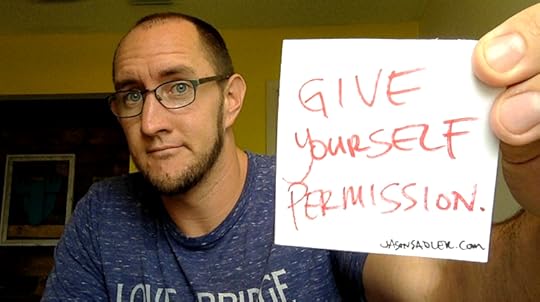
Since releasing my book Creativity For Sale, I’ve received amazing emails from people all over the world who are excited to start their own business or pursue an idea they’ve had for years. These emails have meant so much to me, but I’ve noticed a common theme.
Almost every email ends with a variation of the question: “What’s your advice on getting started?”
I wasn’t sure how to respond to the first couple people who emailed me asking this question. After writing some lengthy and some short responses, I realized what the majority of these folks (and maybe you reading this) are looking for…
Permission.
You see, we’ve been taught our entire lives that we need to ask permission to do things. Whether that’s permission to go outside and play with our friends. Permission to leave a classroom to use the restroom. Permission from a guidance counselor to take a certain class. Permission from a boss to do marketing tests. Permission from our significant other to spend money on something. There are a million things in our life we ask for permission for.
Well right now I want you to give yourself permission.
If you’re thinking about starting a new business, project, writing a book, etc, you don’t need to ask anyone for permission to do it. I challenge you to stand in front of a mirror, ask yourself for permission to start your thing, then respond and give yourself that permission. I know it sounds silly, but I bet you’ll feel an overwhelming sense of approval and inspiration to get started.
I’d also like to thank Nike for creating one of the best tag lines of all time: Just do it.
I 100% understand that I’m wired differently than most people. I rarely ask for permission (sometimes to a fault). But not worrying about asking for permission has helped me create a path for myself that would never have existed. I’ve been able to work with some fantastic people and brands because I told myself I was good enough to do so. I’ve been able to make a great living and define my own freedoms because I’ve given myself permission.
Whatever the thing is you’re waiting to get permission for, don’t wait any longer. Give yourself permission and get started.
Bonus: One resource I’ve also been pointing a bunch of folks to is Eric Reis’ book “The Lean Startup.” It’s not a sexy book, but it’s been hugely helpful in changing the way I think about any business idea. It gets the Jason SurfrApp stamp of approval!