Aidan Moher's Blog, page 6
May 6, 2015
The End Has Come: An Interview with Jonathan Maberry
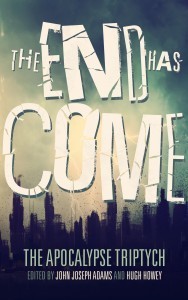
Buy The End Has Come, edited by John Joseph Adams and Hugh Howey
In collaboration with editors John Joseph Adams and Hugh Howey, A Dribble of Ink is proud to introduce a series of interviews with the authors of The End Has Come, the final volume in the The Apocalypse Triptych. Following on The End is Nigh, and The End Is Here, The End Has Come contains 23 stories about life after the apocalypse.
Interview with Jonathan Maberry about “Jingo and the Hammerman”
(Interview by Hannah Huber)
What do you think it is about zombies that make them work as the source of an apocalypse?
Zombies are the perfect storytelling metaphor if you want to spin a tale about an extreme crisis, which makes them perfect for apocalyptic and post-apocalyptic storytelling. They represent a massive shared threat: something so big that it impacts every person, every relationship, every aspect of infrastructure, and every element of culture. Nothing escapes that impact. The zombie’s nature, threat, and potential are all easy to grasp, so once they’ve been introduced, they often fade into the background so the story can concentrate on what is most important: human people in the midst of life-changing events. People facing crises is the basis of all drama, and therefore the writer is able to tell any kind of story he or she wants. No other monster is so generous in enabling this, or in sharing the stage.
In a zombie apocalypse the crisis is so overwhelming that there is no time for us to maintain our affectations of who we pretend to be in day-to-day life. None of us are ever really ourselves – we edit ourselves depending on the situation. We are different people in public, at home alone, at work, in love, when heartbroken, and so on. Often we play roles that are vastly different from our natural selves, such as feeling ‘powerful’ because we have money, good looks, or position. In a zombie apocalypse, none of that matters. A captain of industry or a supermodel expect deference as a matter of course, but they might be the first to fall in an apocalyptic scenario. Whereas the bag-boy at the local supermarket might have tremendous but untapped leadership and survival skills. Steel is forged in the heat of a furnace, not while it is ore in the ground.
Why are they not only frightening, but also emotionally resonant to their audiences?
In all good fiction, the zombies are metaphors. In bad fiction, they are the focus of the story, but otherwise, they are stand-ins for other things that disturb us, frighten us, shake our confidence, and make us confront difficult questions about our personal strength, our character, and our ability to confront (and resolve) great challenges. Since the dawn of the zombie genre (1968’s Night of the Living Dead) the zombie story has been the vehicle in which we drive through the landscape of our fears. George Romero used zombies to explore the dangers of racism, rampant consumerism, the rise of the military-industrial complex, the impersonal nature of the digital age, and so on. Max Brooks used World War Z to explore the dangers of viral pandemics that could spread out of control because of politics and greed. Joe McKinney used Dead City and its sequels to discuss the dangers of a faulty government infrastructure during times of crisis. My own novels of the Rot & Ruin series delved into post-traumatic stress disorder as well as human corruption and opportunism. Zombie stories allow writers to discuss important topics with readers without making that conversation too obvious, and that allows readers to engage no matter where they align in terms of political party affiliation. This is also why the best science fiction and fantasy works.
Why are we seemingly readier to believe in a zombie outbreak than in any other kind of apocalypse?
We are particularly vulnerable to a new virus or bacterium. That vulnerability has been born out of a rampant and widespread misuse of antibiotics. Doctors prescribe these drugs for viruses because the public believes antibiotics actually work for those kinds of diseases. Doctors prescribe them to satisfy their patients rather than educate them, or rather than admit that there isn’t much they can do for a flu or common cold. The result is that people have had so much exposure to antibiotics and have used them so incorrectly, that viruses have developed resistance to many of then. New strains of old diseases are presenting, and for many of these there are no treatment options currently available. Add to that the widespread use of antibiotics in chicken, pork, and beef farming. Ask anyone in the World Health Organization, the National Institutes for Health, or the Centers for Disease Control, and they’ll tell you how great a danger this poses. I know – I’ve asked them all. They have been posting warnings for years, which are unfortunately largely ignored. They all say that it is inevitable that a treatment-resistant flu strain will hit us at some point. That is scary. Zombies are how we talk about the fear of this. It’s why the CDC used zombies as a theme in their public health cautions. People completely ignored the standard viral warning e-mails; but when the zombie one went out, the response was so massive it crashed the CDC servers.
Moose spends a lot of thought on what keeps Jingo going in the face of hopelessness. He almost seems never to question why he hasn’t given up yet, and he seems to be both a realist and compassionate in the face of suffering – two character traits that might not be optimal for long-term survival in the face of the apocalypse. What is it that you believe keeps Moose going after the world has ended, and what makes him a better prospect for long-term survival than Jingo?
Moose is my proxy in the story. I’m a realist and compassionate idealist. I don’t consider those qualities to be weaknesses. Without them survival, becomes too self-centered. Left alone, a person will ultimately fail to survive because of simple despair. One has to care in order to hope, and without hope, living is nothing more than a routine with finite repetition.
Moose cares for Jingo and his friend’s enthusiasm – however misplaced – and that enthusiasm keeps Moose in the mode of ‘civilized human’. Moose would probably descend into barbarity or suicide if he didn’t have something or someone to care about.
What is your Apocalyptic Fiction Required Reading List, and why are each of the entries required reading?
When I was a teenager, Richard Matheson gave me a signed first edition of I Am Legend, and that will always be at the top of my list. It is the model for all apocalyptic and outbreak stories that followed. And it holds up damn well more than a half century later.
Other favorites include:
Swan Song by Robert McCammon – an occasionally brutal, but ultimately hopeful story of the power of love in a time of crisis.
Day of the Triffids by John Wyndham – like I Am Legend, this is a seminal work that has inspired so many books and movies that followed it, notably 28 Days Later.
A Boy and His Dog by Harlan Ellison – an inventive bit of alt-history speculative fiction that is arguably Ellison’s most sentimental work.
The Stand by Stephen King – the most majestic novel of the apocalypse, blending Wagnerian drama with some of King’s most insightful character development. Truly brilliant. Only read the fully restored extended cut.
The Postman by David Brin – a story of compassion and courage. This exemplifies what I said earlier about how a crisis strips away who we were and allows us to discover who we are.
War Day by Whitley Strieber and Jim Kunetka – written during the last days of the Cold War, this is a brilliant and disturbing piece of apocalyptic meta-fiction in which the authors are the main characters.
Plague by Graham Masterton – a tragic story about parents and their children, and how the next generation will have to pay for the crimes we commit. Absolutely killer last scene.
The Death of Grass by John Christopher – published in 1956, but eerily prophetic, and this is not the kind of story you ever want to see come true.
Damnation Alley by Roger Zelazny – an example of a book that is far superior to the movie adaptation. Balls-to-the-wall adventure with a strong core of political and ethical debate.
Here’s a general question about the writing of horror: what elements of story – character, plot, pace, tone, etc – do you believe are necessary to make a story truly frightening to its audience?
All good horror, just like all good science fiction, must begin with characters. You have to believe in the characters to write them well, and once you become invested in them, they will share their secrets with you. From a reader’s perspective, if the characters feel real, then we begin to care. Once we begin to care, we can be hurt, frightened, shocked, appalled, enchanted, and left devastated based on what then happens to those characters.
Would you like to share a few details of your next major project?
I’m in the middle of the busiest year of my career. I’m writing Kill Switch, the eighth book in my Joe Ledger series of weird science thrillers. Then I’ll write Glimpse, a standalone horror novel about a recovering junkie trying to find the child she gave up for adoption. Then I’m going to write a science fiction novel for teens about space travel, and then a mystery thriller for older teens. I have a slew of new books out this year including Predator One (the seventh Joe Ledger novel); The Nightsiders, Book One: The Orphan Army, the first of a new series of middle grade sci-fi/horror mashups; Bits & Pieces, the fifth book in my Rot & Ruin series of post-apocalyptic zombie novels for teens; and then Ghostwalkers, a novel based on the Deadlands role-playing game. I have two graphic novels out this year: Rot & Ruin: Warrior Smart and V-Wars: All of Us Monsters; and there is a V-Wars board game debuting this summer. And I have a slew of anthologies coming out that I’ve edited, including V-Wars: Night Terrors, X-Files: Trust No One, and Out of Tune, Vol. II. And several of my projects have gone into active development for film and TV. So … yeah … it’s a crazy year.
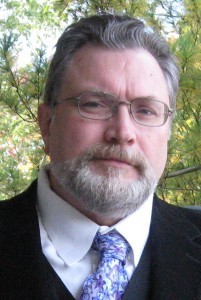
About Jonathan Maberry
Jonathan Maberry is a New York Times bestselling author, multiple Bram Stoker Award winner, and comic book writer. He’s the author of many novels including Code Zero, Fire & Ash, The Nightsiders, Dead of Night, and Rot & Ruin; and the editor of the V-Wars shared-world anthologies. His nonfiction books on topics ranging from martial arts to zombie pop-culture. Jonathan writes V-Wars and Rot & Ruin for IDW Comics, and Bad Blood for Dark Horse, as well as multiple projects for Marvel. Since 1978 he has sold more than 1200 magazine feature articles, 3000 columns, two plays, greeting cards, song lyrics, poetry, and textbooks. Jonathan continues to teach the celebrated Experimental Writing for Teens class, which he created. He founded the Writers Coffeehouse and co-founded The Liars Club; and is a frequent speaker at schools and libraries, as well as a keynote speaker and guest of honor at major writers and genre conferences. He lives in Del Mar, California. Find him online at jonathanmaberry.com.
About the anthology
Famine. Death. War. Pestilence. These are the harbingers of the biblical apocalypse, of the End of the World. In science fiction, the end is triggered by less figurative means: nuclear holocaust, biological warfare/pandemic, ecological disaster, or cosmological cataclysm.
But before any catastrophe, there are people who see it coming. During, there are heroes who fight against it. And after, there are the survivors who persevere and try to rebuild.
Edited by acclaimed anthologist John Joseph Adams and bestselling author Hugh Howey, The Apocalypse Triptych is a series of three anthologies of apocalyptic fiction. The End Is Nigh focuses on life before the apocalypse. The End is Now turns its attention to life during the apocalypse. And The End Has Come focuses on life after the apocalypse.
Buy the book
The End Has Come is available as a trade paperback or eBook.
The post The End Has Come: An Interview with Jonathan Maberry appeared first on A Dribble of Ink.


May 5, 2015
The End Has Come: An Interview with Carrie Vaughn
Buy The End Has Come, edited by John Joseph Adams and Hugh Howey
In collaboration with editors John Joseph Adams and Hugh Howey, A Dribble of Ink is proud to introduce a series of interviews with the authors of The End Has Come, the final volume in the The Apocalypse Triptych. Following on The End is Nigh, and The End Is Here, The End Has Come contains 23 stories about life after the apocalypse.
Interview with Carrie Vaughn about “Bannerless”
(Interview by Jude Griffin)
What was the seed for “Bannerless”?
“Bannerless” is something of a prequel to an earlier story of mine, “Amaryllis,” which was nominated for a Hugo in 2011. In almost the first line of “Amaryllis,” the narrator wonders about her mother and why would have tried to go through with an unauthorized pregnancy. “Bannerless” is the answer to that question. I’ve been wanting to tackle this story for a long time, based on the premise that the answer isn’t what anyone would have expected.
I loved the world-building detail of the banners, so small a part of the story, but so rich—what was the inspiration?
It’s a detail that carried over from the first story, so I don’t entirely remember the exact reasoning behind it. But people love trophies. Abstract rewards are all well and good, but a thing that people can display and be proud of, concrete representation of an accomplishment, is an idea that’s been around as long as civilization. This is a world where people need to earn the right to have children, and the banner has become something of a merit badge to show off to the world that accomplishment. For a simple agrarian society like this, a piece of cloth—a flag—is an inexpensive and effective way to show off.
Why does the complex, imperfect resolution of the case cause Enid to change her mind about retirement?
I think this case reminds her that it isn’t about the entire society, it isn’t even necessarily about enforcing the rules—it’s about helping one person. Aren puts a face on the work Enid’s been doing, and I think that inspires her.
Which post-apocalyptic story/ies left the greatest impression on you?
A Canticle for Leibowitz by Walter M. Miller for sure. In fact, I imagine that’s a big inspiration for these stories—it’s about what society saves from before, what new society they have to build to carry on. As a child of the last gasp of the Cold War, all the nuclear apocalypse movies and stories from the early 1980’s—everything from “The Day After” to “Threads” to “Mad Max” to “Red Dawn” have all stayed with me as well.
Any projects/news you want to tell us about?
The last book in the Kitty series, Kitty Saves the World, is due out in August. That’s the big one! I also have the usual round of short stories and other projects lined up. Check out my website for news.
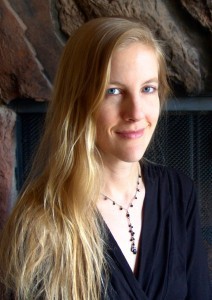
About Carrie Vaughn
Carrie Vaughn is the author of the New York Times bestselling series of novels about a werewolf named Kitty, the most recent installment of which is Kitty Saves the World. She’s written several other contemporary fantasy and young adult novels, as well as upwards of 80 short stories. She’s a contributor to the Wild Cards series of shared world superhero books edited by George R. R. Martin and a graduate of the Odyssey Fantasy Writing Workshop. An Air Force brat, she survived her nomadic childhood and managed to put down roots in Boulder, Colorado. Visit her at carrievaughn.com.
About the anthology
Famine. Death. War. Pestilence. These are the harbingers of the biblical apocalypse, of the End of the World. In science fiction, the end is triggered by less figurative means: nuclear holocaust, biological warfare/pandemic, ecological disaster, or cosmological cataclysm.
But before any catastrophe, there are people who see it coming. During, there are heroes who fight against it. And after, there are the survivors who persevere and try to rebuild.
Edited by acclaimed anthologist John Joseph Adams and bestselling author Hugh Howey, The Apocalypse Triptych is a series of three anthologies of apocalyptic fiction. The End Is Nigh focuses on life before the apocalypse. The End is Now turns its attention to life during the apocalypse. And The End Has Come focuses on life after the apocalypse.
Buy the book
The End Has Come is available as a trade paperback or eBook.
The post The End Has Come: An Interview with Carrie Vaughn appeared first on A Dribble of Ink.

Kameron Hurley sells The Broken Heavens to Angry Robot Books
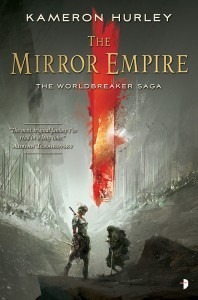
Buy The Mirror Empire by Kameron Hurley: Book/eBook
Today, Angry Robot Books announced that they have purchased The Broken Heavens, the concluding volume to Kameron Hurley’s Worldbreaker Saga, which began last year with The Mirror Empire (Review).
“The Mirror Empire saw her burst from the gates as a fully-formed A-list fantasy author,” said Marc Gascoigne, Publisher at Angry Robot Books. “Empire Ascendant, as readers will soon discover for themselves, shows her relaxing into her powers, utterly in command of her characters and their world. Now it’s time to see what she does by way of a third act and I, along with her many fans, cannot wait.”
What can readers expect from the final volume in the trilogy? “Get ready for the end of the world – Hurley style,” the author said.
Empire Ascendant, the second book in the trilogy, is due for release in October 2015. However, somewhat curiously, readers will have to wait until Fall 2017 for The Broken Heavens—the delay being the result of Angry Robot’s sale in 2014. Sandwiched between the releases is The Stars Are Legion, Hurley’s space opera from Saga Press, due out in 2016.
The post Kameron Hurley sells The Broken Heavens to Angry Robot Books appeared first on A Dribble of Ink.

May 4, 2015
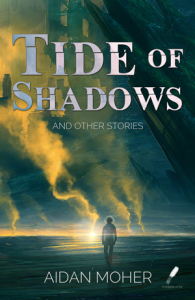
Tide of Shadows and Other Stories is on sale now!
Huzzah!
Tide of Shadows and Other Stories is now officially available worldwide! The collection of five short stories is my first book, and I’m immensely proud to finally pass these stories from my hands to the hands of all the wonderful SFF readers out there in the world!
To begin the week, I’ve got an interview with The G. at Nerds of A Feather, followed by an appearance at SF Signal on Tuesday, Fran Wilde’s Book Bites on Wednesday, a guest post at Theo Taylor’s blog on Thursday, and wrapping the week is an appearance at /r/fantasy as their “Writer of the Day.” Fun times!
Buy Tide of Shadows and Other Stories for $2.99
An Excerpt
You can read an except from Tide of Shadows and Other Stories on Medium for free!
About the Collection
From Aidan Moher—Hugo Award-winning editor of A Dribble of Ink—comes Tide of Shadows and Other Stories, a collection of five science fiction and fantasy stories spanning adventure, comic whimsy, and powerful drama—from a star-faring military science fiction tale of love and sacrifice, to a romp through the dragon-infested Kingdom of Copperkettle Vale.
“A Night for Spirits and Snowflakes” is the story of a young man reliving the last moments of his fellow soldiers’ lives; “The Girl with Wings of Iron and Down” tells the tale of a broken family and a girl with mechanical wings; “Of Parnassus and Princes, Damsels and Dragons” introduces a typical prince, princess, and dragon—and a not-so-typical love triangle; “The Colour of the Sky on the Day the World Ended” follows a girl and her ghost dog as they search for a bright light in the darkness; and “Tide of Shadows” is about a soldier and his lover, a mother, and planetwide genocide.
In addition to the five stories (four originals and one reprint), Tide of Shadows and Other Stories also includes story notes for each tale. These give readers insight into the origins of the story and explore some of the ways they’ve impacted me as a writer.
The cover illustration is by Kuldar Leement, a wonderful digital illustrator and graphic designer from Estonia, and the design/layout is by me. A print of the original illustration is available through Leement’s online store.
Relevant Links
Interview on Nerds of a Feather
Why I’m self-publishing my book – A detailed article about why (and how) I’m self-publishing ToSaOS
Tide of Shadows and Other Stories on Goodreads
Tide of Shadows and Other Stories on Amazon
The post Tide of Shadows and Other Stories is on sale now! appeared first on A Dribble of Ink.

The End Has Come: An Interview with Chris Avellone
Buy The End Has Come, edited by John Joseph Adams and Hugh Howey
In collaboration with editors John Joseph Adams and Hugh Howey, A Dribble of Ink is proud to introduce a series of interviews with the authors of The End Has Come, the final volume in the The Apocalypse Triptych. Following on The End is Nigh, and The End Is Here, The End Has Come contains 23 stories about life after the apocalypse.
Interview with Chris Avellone about “Acts of Creation”
(Interview by Georgina Kamsika)
Tell us a little about “Acts of Creation.”
Aside from an obsessive drive to gamemaster superhero role-playing games (pen and paper superhero games, like Dungeons and Dragons, except… superheroic), Acts of Creation was my first foray into science-fiction prose – the idea of exploring a universe populated by artists with the potential to crack suns and detonate fleets with the ease of painting with watercolors appealed to me. Not only that, but exploring the idea of how you would attempt to contain and disarm such weapons in the wake of the apocalyptic war they won… in a manner of speaking.
I played around with a few other ideas and stories in the universe. Strangely enough, the stories often veered into family and romantic relationships, often with a mentor figure seeking to inspire a disciple with far more potential, sometimes older, sometimes younger, a character set-up I’ve often used in digital role-playing prose as well, from Planescape: Torment, to Knights of the Old Republic II, to New Vegas. I guess I haven’t quite gotten a satisfying answer on it yet, but arguably, each game universe comes with its own interesting twist that makes it fresh again in my eyes.
I always carried the hope of being able to share the story one day. And when John Joseph Adams brought up The End Has Come anthology and asked if I wanted to contribute, it seemed a great fit. And it helps that John and Hugh (Howey) are nice folks – Hugh, in fact, writes some of the nicest critiques I’ve ever seen from an editor, he makes sure you know what you’re doing well along with what you need to improve on.
What did you like to read when you were growing up?
Just about anything on the library shelves. And on the comic racks. Note that I grew up in the late 70s, early 80s, so no Kindle, no digital reader. Instead, I’d hop on my bike, ride to the library, load up my backpack with books, and then take my haul home and read in-between episodes of Star Trek: The Next Generation.
Among some of the books I loved was Madeline L’Engle’s A Wrinkle in Time and a Wind in the Door (love the last page of that book, it reminded me that you don’t need to spell out everything to make something compelling), the Narnia series, J.R.R. Tolkien (although I couldn’t get into The Silmarillion), and the Chronicles of Thomas Covenant – which had a lot of harsh material for a young reader, but I enjoy Donaldson’s writing, and he’s crafted some of the most memorable epic moments for me in fantasy and sci-fi literature from the opening challenge from Lord Foul to the horror and confrontation with the Amnion in This Day All Gods Die.
I also enjoyed Asimov’s Foundation series (I liked the Robot series, but I liked Foundation more because the concept of psychohistory and the idea of the Mule were fascinating), Arthur C. Clarke (Childhood’s End is one of the best books I’ve ever read), Lloyd Alexander’s The Black Cauldron series (The Chronicles of Prydain), Harry Harrison’s Deathworld, almost anything by John Bellairs (esp. The House with a Clock in Its Walls), the Great Brain series by John Dennis Fitzgerald, Xanth and most of Piers Anthony’s novels, Ursula K. Le Guin (Tombs of Atuan grabbed me because of the dungeon aspects and because of its insane map in the front of the book, it reminded me of a D&D adventure, and I went on to read the Earthsea Cycle series and The Left Hand of Darkness), Sheri S. Tepper’s True Game series, and Susan Cooper’s The Dark is Rising series – I actually re-read The Dark is Rising, Deathworld, and A Wrinkle in Time/A Wind in the Door recently for a nostalgia trip and attempting to remember what I enjoyed about reading in the first place. Nowadays, most work and media consumption is largely for work, not for enjoyment, so I had a moment where I realized I had to step back and learn to love prose and comics again. I’m not 100% recovered yet, but I’m getting there.
As for comics, I was a big fan of the X-Men, which felt like a strangely “realistic” cutting edge comic (super-powered discrimination based on a twist on one’s genetics was new at the time, and the X-Men were beginning to branch out from John Byrne/Claremont’s run with Days of Future Past, which finally became a movie). Also, I was still in early high school when Alan Moore’s Watchmen hit, and that really stirred things up for an otherwise tired genre. Other favorites included: 2000 A.D., The Flash, Suicide Squad, Frank Miller’s run on The Dark Knight and Daredevil (Born Again was amazing), Simonson’s run on Fantastic Four… and what’s been interesting to me is how much of these older stories the current run of Marvel movies have returned to source those old plots and intrigues, which is proof to me those authors knew what they were doing, and they really captured the imagination and essence of the characters.
I also went through reading lots of game modules for Dungeons and Dragons and other favorite games, only because when I read them, I felt like I was exploring the dungeons myself and having adventures, since, uh, “gathering a party to venture forth” was almost impossible – until computer games came along, and suddenly I had my own digital game master (starting with Bard’s Tale 2 and going onwards).
I will say the opportunity to contribute stories now has been gratifying. I finally feel I can give back to the prose community for all the good times they’ve given me (including inspiration and cool ideas and everything else a designer could ask for).
You’re probably most well-known for your award winning video game design, and comic book writing. How do those mediums feed into your prose?
They have the capacity to help and hurt the writing process. As an example, when doing video game design, you can explore almost every permutation of a character you feel find interesting to delve into – with standard prose and comics, you need to make the best choice you can, and when you’ve trained yourself to do equal branching, it can be hard to “trim” those branches and focus the best arc for the piece.
Comic books have also been a bit different in a (helpful) way – they’ve trained me to think visually to tell the stories, which is an important skill in game design. Storyboarding, camera angles and how they can communicate the power and emotion in a scene, dialogue brevity, and layout of pages and panels to emphasize action, contemplation, and building tension have all proven useful.
What I like about Obsidian and inXile is that a number of the designers eagerly explore variations of prose, not just game writing – Carrie Patel (The Buried Life), Colin McComb (the Oathbreaker series), Nathan Long (Jane Carver of Waar), Adam Heine (his Tides of Numenera novel is excellent), and Andrew Rowe (Forging Divinity) are only a few of the folks I’ve worked with who also write prose in their off-hours, and (no humility here, it’s the truth, especially Adam), they write far better than I do. I feel like I’m stumbling a lot of the time, but hey, I like to believe I make enough mistakes and learn from them to make fewer and fewer errors as time goes on. Or not. It’s up to the reader to judge.
You have a lot of experience writing about the end of things – the many Fallout games, Wasteland 2, now this anthology.
Is it a coincidence, or are you intrigued by the possibilities post the apocalypse?
Intrigued in the sense of enjoying taking aspects of the real world and giving them a hardy shake, yes, and each apocalyptic/post-apocalyptic genre allows for a different spin on the themes, which is welcome. Fallout 2, for example, had a lot of interesting societal and cultural changes that occurred in the wastes (return of slavery, classism, drug-induced work force/towns, overt mob politics, and more, that made you question those institutions not just in the game, but their origins in the real world), New Vegas allowed for commentary on much of the same, and for Wasteland 2, the idea that the world stopped around the 80s (well, technically 90s, but since the game came out in the 80s, I set my franchise clock by the attitudes at the time) allowed me to go back and dig through my childhood for visual and thematic signposts at the time, which I rarely get to do – I felt like I was time traveling, and I was loving it.
Finally, what have you got coming up next?
A lot. Tons. Maybe several tons. So: The Wasteland 2 novel, an Eternity novella for the backers of our Eternity Kickstarter, leading the creative aspects for a new game at Obsidian, work on inXile’s Torment: Tides of Numenera, and even a few more short stories here and there. These short works of prose provide a great outlet for exploring an idea that’s been buzzing around in my head and running with it until the tiny inspiration demons get worn out and go to sleep, making room for the next idea. Among these short stories is a Forgotten Realms short story set in the world of Icewind Dale, courtesy of Wizards, and also John Joseph Adams invited me to contribute to one of his other anthologies focused on video games, called Press Start to Play, which I had a blast with. I’m grateful for the opportunity, and hope I have the chance to contribute more.
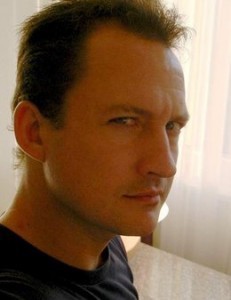
About Mira Grant
Mira Grant hails from somewhere between hell and high water, with an emphasis on whichever is drier at the moment. She spends most of her time researching things most people are happier not knowing about. Mira is the author of the Newsflesh trilogy, as well as the Parasitism series. In her spare time, Mira likes to visit Disney Parks around the world, which is possibly one of her creepiest hobbies. She also writes as Seanan McGuire, filling the role of her own good twin, and hopes you realize that the noise you just heard probably wasn’t the wind.
About the anthology
Famine. Death. War. Pestilence. These are the harbingers of the biblical apocalypse, of the End of the World. In science fiction, the end is triggered by less figurative means: nuclear holocaust, biological warfare/pandemic, ecological disaster, or cosmological cataclysm.
But before any catastrophe, there are people who see it coming. During, there are heroes who fight against it. And after, there are the survivors who persevere and try to rebuild.
Edited by acclaimed anthologist John Joseph Adams and bestselling author Hugh Howey, The Apocalypse Triptych is a series of three anthologies of apocalyptic fiction. The End Is Nigh focuses on life before the apocalypse. The End is Now turns its attention to life during the apocalypse. And The End Has Come focuses on life after the apocalypse.
Buy the book
The End Has Come is available as a trade paperback or eBook.
The post The End Has Come: An Interview with Chris Avellone appeared first on A Dribble of Ink.

May 1, 2015
Channing Tatum to star in film adaptation of The Forever War by Joe Haldeman
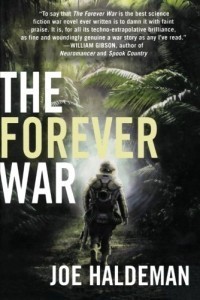
“After a bidding war with Sony, Warner Bros has won the rights to adapt Joe Haldeman’s Hugo- and Nebula-winning sci-fi novel The Forever War,” Tor.com revealed today. The script will be written by Jon Spaihts, writer of Ridley Scott’s much-maligned (but underrated) Prometheus. Tor.com also spilled the beans about the film’s lead: Channing Tatum, of Magic Mike, and Jupiter Ascending fame. He will play William Mandella, an Earth soldier who has to deal with a rapidly changing human society due to the time dilation necessary to travel through interstellar space.
The Forever War is one of my favourite novels, so I’m duly excited (and duly dubious) about this adaptation.
As Tor.com postulates, many questions remain surrounding the adaptation. Will it be set in modern times, or 1977 like the novel? How will the narrative handle the military narrative and political messaging from a modern perspective, versus Haldeman’s firsthand experiences during the Vietnam war. Are we still on the path to an exclusively homosexual human society? It’s a complicated novel, so hopefully the writer and directors are willing to engage with Haldeman’s book on more than a surface level.
The post Channing Tatum to star in film adaptation of The Forever War by Joe Haldeman appeared first on A Dribble of Ink.

The End Has Come: An Interview with Mira Grant
Buy The End Has Come, edited by John Joseph Adams and Hugh Howey
In collaboration with editors John Joseph Adams and Hugh Howey, A Dribble of Ink is proud to introduce a series of interviews with the authors of The End Has Come, the final volume in the The Apocalypse Triptych. Following on The End is Nigh, and The End Is Here, The End Has Come contains 23 stories about life after the apocalypse.
Interview with Mira Grant about “The Happiest Place”
(Interview by Gwen Whiting)
Your story, “The Happiest Place,” is set in a post-apocalyptic Disneyland where survivors of an epidemic have gathered. What inspired you to choose this particular setting?
I really really really really really love Disneyland, and any excuse to spend time there–even during a horrific apocalypse that is inevitably going to kill basically everyone–is cool by me. I literally wrote this story to creep out my best friend. I did a good job.
Share with us your happiest—or most—unusual Disney memory.
My happiest Disney memory ties into Disney World, not Disneyland. See, I grew up super-poor, and I remember seeing commercials for Disney World on TV when I was a kid and asking my mother if we could go. She said no, because Disney World was only for rich people. Jump forward a bunch of years, until I have a stable job and a good understanding of financial planning. I’m nowhere near rich–I’m poorer than I was a few years ago, before I quit my job–but I know how to budget. And I took my mother to Disney World. She nearly fainted when she saw the Castle for real for the first time. I did good.
Your main character, Amy, is someone that I think readers will identify with. She cares about family, she’s strong and determined and she also holds her position of authority not because she necessarily wants the job but because she’s the closest thing left to a leader. Is Amy–or the situation that she finds herself in–based on anyone that you know? On personal experience?
Amy is a love letter to every amazing Disney Cast Member who has ever helped me have a magical day. I mean that unironically.
What part of this story did you find the most difficult to write?
Striking the balance between “fair use of this place which is open to the public” and “getting sued into oblivion by Disney’s lawyers” was super-fun and I am glad I have done it once so I do not need to do it again.
Disease and specifically, epidemics and their aftermath appears in much of your work. How did you become interested in this topic? Do you find yourself particularly fascinated by any one aspect of this (be it a disease, recent event in the news, etc.) right now?
Honestly, right now, the recent measles outbreak at Disneyland is the most interesting thing in the world to me. We dodged such a bullet with that one–it could have been so much worse–and it’s just the beginning. I got interested in disease because disease was already interested in me, and this seemed fair.
Do you think that humanity will ever experience a worldwide catastrophic event that might create situations such as that in “The Happiest Place”? If so, what form do you think such an event would take?
I’d like to say I don’t, but honestly, I do. I think we’re going to see something nasty and novel come out of someplace we don’t expect, and it’s going to knock us on our asses. I may mutter about a return of smallpox, but that’s not going to wipe us out. Something new and unpleasant is going to get that honor.
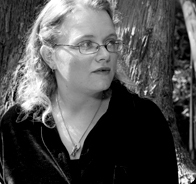
About Mira Grant
Mira Grant hails from somewhere between hell and high water, with an emphasis on whichever is drier at the moment. She spends most of her time researching things most people are happier not knowing about. Mira is the author of the Newsflesh trilogy, as well as the Parasitism series. In her spare time, Mira likes to visit Disney Parks around the world, which is possibly one of her creepiest hobbies. She also writes as Seanan McGuire, filling the role of her own good twin, and hopes you realize that the noise you just heard probably wasn’t the wind.
About the anthology
Famine. Death. War. Pestilence. These are the harbingers of the biblical apocalypse, of the End of the World. In science fiction, the end is triggered by less figurative means: nuclear holocaust, biological warfare/pandemic, ecological disaster, or cosmological cataclysm.
But before any catastrophe, there are people who see it coming. During, there are heroes who fight against it. And after, there are the survivors who persevere and try to rebuild.
Edited by acclaimed anthologist John Joseph Adams and bestselling author Hugh Howey, The Apocalypse Triptych is a series of three anthologies of apocalyptic fiction. The End Is Nigh focuses on life before the apocalypse. The End is Now turns its attention to life during the apocalypse. And The End Has Come focuses on life after the apocalypse.
Buy the book
The End Has Come is available as a trade paperback or eBook.
The post The End Has Come: An Interview with Mira Grant appeared first on A Dribble of Ink.

April 30, 2015
Cover Art for Death’s End by Cixin Liu
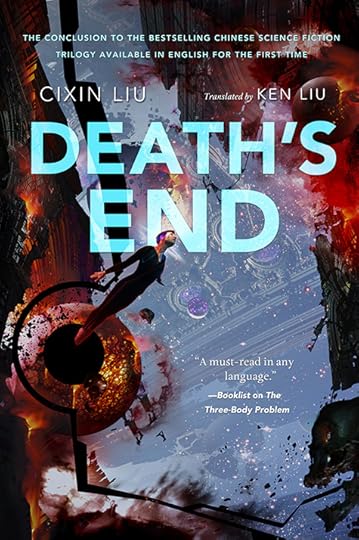
Death’s End is the concluding volume to Cixin Liu’s critically acclaimed Remembrance of Earth’s Past, which began in 2008 with The Three-Body Problem, which is nominated this year for the Hugo Award for “Best Novel”, due to its first English release in 2014. Like those for the first two volumes in the trilogy, the cover for Death’s End is riveting and gorgeous, and I’m really happy to see the art department at Tor Books continuing their streak of great covers.
Death’s End also marks the return of Ken Liu as translator, after the second volume in the series, The Dark Forest, was translated by Joel Martinsen.
Death’s End will be published by Tor Books in January, 2016.
The post Cover Art for Death’s End by Cixin Liu appeared first on A Dribble of Ink.

April 29, 2015
Read an excerpt from Tide of Shadows and Other Stories
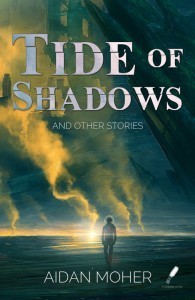
My first short fiction collection, Tide of Shadows and Other Stories, releases in less than a week! To celebrate the upcoming publication, you can now read an excerpt from Tide of Shadows and Other Stories right now.
“Tide of Shadows” is a military science fiction tale about a group of genocide survivors aboard the spaceship Spirit of a Sudden Wind. Travelling half the length of a galaxy, they’re on a mission of vengeance: to seek retribution against the terrifying alien race that destroyed their home world, and bring peace to the spirits of fallen.
Tide of Shadows and Other Stories will be released on May 4, 2015 and is available now for pre-order. You can also find the collection on Goodreads.
The post Read an excerpt from Tide of Shadows and Other Stories appeared first on A Dribble of Ink.

April 28, 2015
Cover Art for Speculative Fiction 2014
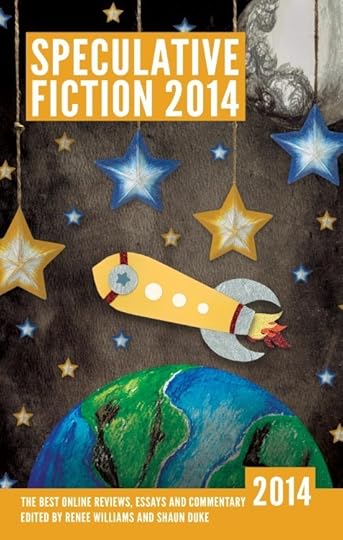
Book Smugglers Publishing revealed the cover art for Speculative Fiction 2014 today, and it’s wonderful! The series has always had a lot of fun with its covers, but I think this cover, designed by Kenda Montgomery, is my favourite so far.
About the Collection
What exactly is fanfiction?
How are women “destroying” science fiction?
Why are we Sansa Stark?
Why is Nick Fury the Tyranny of Evil Men?
The Internet has the answers. Speculative Fiction 2014 collects over fifty of the best reviews, essays and media commentary from all facets of SFF. From insightful deconstruction of major blockbuster films, to considered arguments for diversity and inclusivity in science fiction and fantasy, this edition highlights many of the most complex, fraught, and important events in speculative fiction fandom from 2014.
Contributors include: Abigail Nussbaum, Adam Roberts, Aidan Moher, Aja Romano, Alex Dally MacFarlane, Amal El-Mohtar, Ana Grilo, Andrew Lapin, Annalee Newitz, Anne C. Perry, Bertha Chin, Betty, Charles Tan, Chinelo Onwualu, Clare McBride, Corinne Duyvis, Daniel José Older, Deborah Pless, Ebony Elizabeth Thomas, Erika Jelinek, Foz Meadows, Gavia Baker-Whitelaw, Joe Sherry, Jonathan McCalmont, Juliet Kahn, Justin Landon, Kameron Hurley, Kari Sperring, Ken Neth, Mahvesh Murad, Martin Petto, Matthew Cheney, Memory Scarlett, Mieneke van der Salm, N.K. Jemisin, Natalie Luhrs, Ng Suat Tong, Nina Allan, Olivia Waite, Paul Weimer, Rachael Acks, Rebecca Pahle, Renay, Rose Lemberg, Saathi Press, Sara L. Sumpter, Shaun Duke, Tade Thompson, Tasha Robinson, The G, thingswithwings, and Vandana Singh.
With a foreword by Kate Elliott and cover by Kenda Montgomery.
I’m quite proud to say that my review of Ann Leckie’s Ancillary Sword will be reprinted in the collection. Speculative Fiction 2014 will be released on May 5, 2014.
The post Cover Art for Speculative Fiction 2014 appeared first on A Dribble of Ink.