Aidan Moher's Blog, page 5
May 19, 2015
The End Has Come: An Interview with Ben Winters
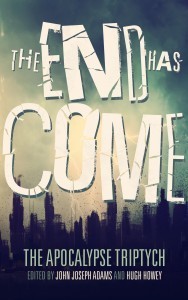
Buy The End Has Come, edited by John Joseph Adams and Hugh Howey
In collaboration with editors John Joseph Adams and Hugh Howey, A Dribble of Ink is proud to introduce a series of interviews with the authors of The End Has Come, the final volume in the The Apocalypse Triptych. Following on The End is Nigh, and The End Is Here, The End Has Come contains 23 stories about life after the apocalypse.
Interview with Ben Winters about “In the Woods”
“Heaven Come Down” tells the story of the sole survivor of a rapture that is not what it seems. Where did the idea for this story come from?
This whole process was new and interesting to me: I wrote BRING HER TO ME, my first story, for the first book in the “triptych”, with no real firm idea of how the whole thing would turn out, and then for the others I tried to stay on the path I had begin and see where it led. So the idea came from my own earlier ideas, I guess!
Robert intrigues me. Was his survival an attempt to mollify Pea regarding the loss of her world (an attempt that would later be repeated with her reanimated parents)? Or did he survive because of his expressed unhappiness with the voice of God and what it did to his people? Did that disapproval lead to disobedience, and would that make him a loose end that God needed Pea to tie up?
Probably, from the POV of “God,” of the voices that sort of run the show in this tale, Robert survived as long as he did to help maneuver Pea into the right emotional and logistical space she needed to be in when the end came. Of course there is always a question, when we’re talking about omnipotent or quasi-omnipotent beings, of why they chose Robert to be the vessel, but after all Pea is a kid, a sweet lonely kid just becoming a fully developed human, for whom a friend is a powerful force.
Do you consider what the others did to Pea’s world to be a mercy? On the one hand, they did convince (nearly) the entire population that their deaths would be worthwhile and a blessing. On the other, they accomplished it by tricking them into surrendering both their freedom and their will to live. As Robert pointed out, the entire culture became obsessed with their impending end. Is coming to peace with death worth sacrificing everything worth living for?
Short answer: no. Which is sort of my thing with religion in general, particularly heaven-centric or afterlife-centric religion—why would you spend even one precious minute of life on earth obsessing on some hypothetical life elsewhere, later? It’s funny because my Last Policeman trilogy dealt a lot with those questions, with this theme, and I thought it was all out of my system, but apparently it’s not.
Where does Pea go from here? Given the way the others lied to and manipulated both her and her people, could she come to trust and live with them? Should she?
In my mind, Pea ends up as a powerful ruler, an elite among the elites. Either because she is elevated to that status, or because she takes it by force. I think I just like the idea of my sensitive young heroin, who has changed over these three stories from naif to burgeoning power, completing that arc in the future.
What’s next for Ben Winters?
I am almost done with the first full draft of a new novel, called Underground Airlines, which will be out in 2016 from Mulholland, a crime/thriller imprint of Little, Brown. It’s a crime novel set in an alternate version of America, in which the Civil War was never fought.
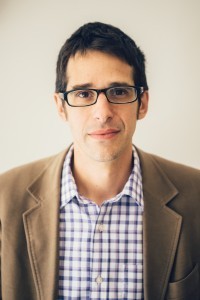
About Ben H. Winters
Ben H. Winters is the winner of the Edgar Award for his novel The Last Policeman, which was also an Amazon.com Best Book of 2012. The sequel, Countdown City, won the Philip K. Dick Award; the third volume in the trilogy is World of Trouble. Other works of fiction include the middle-grade novel The Secret Life of Ms. Finkleman, an Edgar Award nominee, and the parody novel Sense and Sensibility and Sea Monsters, a New York Times bestseller. Ben has written extensively for the stage and is a past fellow of the Dramatists Guild. His journalism has appeared in Slate, The Nation, The Chicago Reader, and many other publications. He lives in Indianapolis, Indiana and at BenHWinters.com.
About the anthology
Famine. Death. War. Pestilence. These are the harbingers of the biblical apocalypse, of the End of the World. In science fiction, the end is triggered by less figurative means: nuclear holocaust, biological warfare/pandemic, ecological disaster, or cosmological cataclysm.
But before any catastrophe, there are people who see it coming. During, there are heroes who fight against it. And after, there are the survivors who persevere and try to rebuild.
Edited by acclaimed anthologist John Joseph Adams and bestselling author Hugh Howey, The Apocalypse Triptych is a series of three anthologies of apocalyptic fiction. The End Is Nigh focuses on life before the apocalypse. The End is Now turns its attention to life during the apocalypse. And The End Has Come focuses on life after the apocalypse.
Buy the book
The End Has Come is available as a trade paperback or eBook.
The post The End Has Come: An Interview with Ben Winters appeared first on A Dribble of Ink.


May 15, 2015
Cover art for The Last Mortal Bond by Brian Staveley
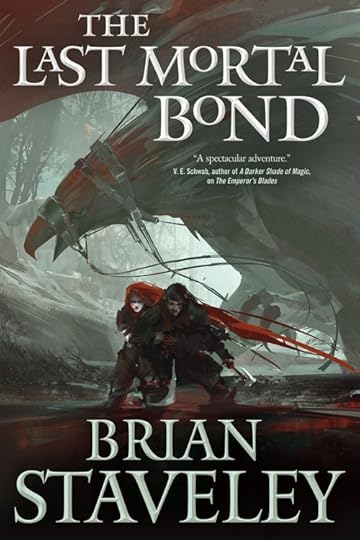
Tor.com revealed the cover for Brian Staveley’s The Last Mortal Bond, and it’s gorgeous.
Like the first two volumes in the trilogy, The Last Mortal Bond features the artwork of the always awesome Richard Anderson. As much as I liked the first two covers, this one might be my favourite of them all. The blood red highlights and the morass of greys fits perfectly with Anderson’s impressionistic style. It’s engaging and visceral, and, in a sea of same-y covers, manages to use common fantasy cover tropes (wounded soldiers, menacing beasts, blood) but makes them interesting again. Bravo to Anderson and the art team at Tor Books.
“This is hands-down my favorite of Anderson’s three covers for the series,” Staveley told Tor.com. “It captures so many things that are central to the book: the desperation, the camaraderie, and the sheer skull-splitting badassery of the Kettral.”
The Last Mortal Bond is the conclusion to Staveley’s Chronicle of the Unhewn Throne trilogy, and wraps up the deadly struggles of the siblings, Kaden, Adare, and Valyn, around whom the series revolves.
The Last Mortal Bond will hit store shelves sometime in 2016.
The post Cover art for The Last Mortal Bond by Brian Staveley appeared first on A Dribble of Ink.

Julie Crisp leaves Tor UK, opens private consultancy
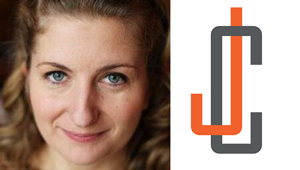
Julie Crisp is no longer Editorial Director at Tor UK. She is beginning a new venture as a private consultant, offering services as a literary agent, freelance editor, and manuscript doctor. She has launched a new website to market her new company. Her shoes will be filled by Wayne Brooks, Publishing Director for Tor UK’s commercial fiction team.
Ambiguous wording in the announcement makes it unclear if Crisp was let go from the company as a result of ” a review of the company’s science fiction and fantasy publishing,” or if Crisp left after conducting the review. However, Crisp’s response on Twitter suggest the latter, and, respecting her leadership and editorial eye as much as I do, I’d like to think Tor UK wouldn’t willingly let her go. Either way, Tor UK will be poorer for Crisp’s absence, but writers everywhere should be scrambling for her services.
Crisp has worked with many of science fiction and fantasy’s most successful authors, such as China Mièville, Adrian Tchaikovsky, Ann Cleeves (not to be mistaken for Anne of Cleves), and Paul Cornell.
The post Julie Crisp leaves Tor UK, opens private consultancy appeared first on A Dribble of Ink.

The End Has Come: An Interview with Hugh Howey
Buy The End Has Come, edited by John Joseph Adams and Hugh Howey
In collaboration with editors John Joseph Adams and Hugh Howey, A Dribble of Ink is proud to introduce a series of interviews with the authors of The End Has Come, the final volume in the The Apocalypse Triptych. Following on The End is Nigh, and The End Is Here, The End Has Come contains 23 stories about life after the apocalypse.
Interview with Hugh Howey about “In the Woods”
“In the Woods” opens with a sense of mystery and confusion, almost a rebirth for the main character April. What inspired such a tense opening?
It’s a nod to the beginning of the second novel in the Wool trilogy. Here we have a survivor from the old world entering a new and much darker one. To me, that’s what apocalyptic fiction is all about: What would it feel like to be dropped into a hostile place where survival from day to day was a real ordeal?
April wakes after a long period of time. Did you need to conduct any additional research into how this kind of sleep might be conducted?
There is real progress being made on forced hibernation. Tests are being performed on lab rats, with the hope of human trials in the near future. NASA is looking into this for long space missions, so we might see science fiction become science fact in a generation or two. It will raise some interesting questions: Would you volunteer to be put into hibernation? We might not be able to travel into the past, but for our grandchildren, the chance to travel into the future might be a very real possibility.
April is a complex, sympathetic character that has developed over time. We feel for her, her confusion, her annoyance with her sister, her love for her husband. However, as the story progresses the reader might need to re-evaluate their feelings. Were you surprised at how she progressed through the stories, or was this the path you’d planned for April all along?
This was always her path. She was meant to collide with Juliette, the heroine from the Wool series. Too often, great heroes have ignoble ends. We don’t all get the perfect climax and the bow on stage that we see in much of fiction.
This is your third story in the Apocalypse Triptych series. Can you tell me a little how these stories relate to each other, and to the ongoing ‘Wool’ Silo series universe?
In Wool, I explored a world where humans are managed by layers of bureaucracy. These may be thrillers, but there’s satire at the heart of them. With this triptych, I wanted to touch on how often our blame is misplaced, and how we hurt the wrong people, and hurt ourselves by lashing out. It’s often the case that systems are to blame, and the people in them are performing no worse than we might. Innocents are hurt as innocence is lost.
I was pleased to see you as the editor on the Apocalypse Triptych series. Is this your first time editing an anthology? Can you tell us a little about it?
It was. I had no idea what I was getting into, and I hope I didn’t muck it up too much. John Joseph ran the idea by me at a conference a few years ago, and I loved the concept. I have a lot of experience with editing my own work and critiquing work in writing groups, but it was terribly daunting to offer suggestions to writers whom I admire. I don’t know how John Joseph does this for a living. It’s intense. And at the end: Incredibly rewarding.
Can you remind us what’s next for you and for your readers?
I’m working on a sequel to Sand. I’m also in the final stages of moving aboard a sailboat to sail around the world. Be nice to see the joint before the zombies, aliens, and meteors have their way with her.
About Hugh Howey
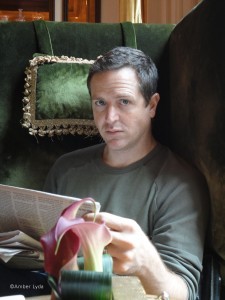
Hugh Howey is the author of the acclaimed post-apocalyptic novel Wool, which became a sudden success in 2011. Originally self-published as a series of novelettes, the Wool omnibus is frequently the #1 bestselling book on Amazon.com and is a New York Times and USA TODAY bestseller. The book was also optioned for film by Ridley Scott, and is now available in print from major publishers all over the world. Hugh’s other books include Shift, Dust, Sand, the Molly Fyde series, The Hurricane, Half Way Home, The Plagiarist, and I, Zombie. Hugh lives in Jupiter, Florida with his wife Amber and his dog Bella. Find him on Twitter @hughhowey.
About the anthology
Famine. Death. War. Pestilence. These are the harbingers of the biblical apocalypse, of the End of the World. In science fiction, the end is triggered by less figurative means: nuclear holocaust, biological warfare/pandemic, ecological disaster, or cosmological cataclysm.
But before any catastrophe, there are people who see it coming. During, there are heroes who fight against it. And after, there are the survivors who persevere and try to rebuild.
Edited by acclaimed anthologist John Joseph Adams and bestselling author Hugh Howey, The Apocalypse Triptych is a series of three anthologies of apocalyptic fiction. The End Is Nigh focuses on life before the apocalypse. The End is Now turns its attention to life during the apocalypse. And The End Has Come focuses on life after the apocalypse.
Buy the book
The End Has Come is available as a trade paperback or eBook.
The post The End Has Come: An Interview with Hugh Howey appeared first on A Dribble of Ink.

May 14, 2015
The End Has Come: An Interview with Megan Arkenberg
Buy The End Has Come, edited by John Joseph Adams and Hugh Howey
In collaboration with editors John Joseph Adams and Hugh Howey, A Dribble of Ink is proud to introduce a series of interviews with the authors of The End Has Come, the final volume in the The Apocalypse Triptych. Following on The End is Nigh, and The End Is Here, The End Has Come contains 23 stories about life after the apocalypse.
Interview with Megan Arkenberg about “Like All Beautiful Places”
Tell us about your story, “Like All Beautiful Places”.
“Like All Beautiful Places” follows the environmental catastrophes that began in “Houses Without Air” and “Twilight of the Music Machines.” After earthquakes and toxic rain devastate San Francisco, a small group of survivors attempts to reconstruct the city in an immersive alternate reality. Grecia, the narrator, struggles with her role in the project—and, more broadly, with her place in the world, now that she’s freed from the consequences of a series of disastrous personal decisions.
In an interview with Nightmare Magazine, you spoke about the need for well-defined settings to engage readers, and said your settings often play active roles in the plot. With this in mind, why did you choose San Francisco?
There’s a couple answers to this. The easy one is that I started drafting this story while house-sitting in San Francisco (which was also when and where I wrote the majority of my previous Triptych story, “Twilight of the Music Machines). Some of my other fiction has addressed the parts of the city that I loved, but Grecia gave me the chance to vent about the aspects that irritated me. I also thought the setting was thematically appropriate; if Washington D.C. was the perfect place for a memorial in “Houses Without Air,” then the ridiculously iconic San Francisco seems like a good image for memory and representation.
Your protagonist, Grecia, is helping preserve the memory of a city she didn’t like, where she lived with a guy she hated, and it’s sometimes physically painful for her to do this. So why is she doing it?
I think the immersive alternate reality project is giving her the chance to claim her experiences for herself. Now that she’s separated from the people and circumstances that made her unhappy, she’s able to re-evaluate her own role in her history, to connect these events to herself and her choices instead of all these outside influences.
“Like All Beautiful Places” and your other stories in the Apocalypse Triptych are all structured according to a number of things: seven matches (a reference to “The Little Matchgirl” fairy tale); six music tracks; and now a count to five (as in, count to five and say what your heart wants). Seven, six, five – an apocalyptic countdown?
I guess I’d say it’s a pattern rather than a countdown—it isn’t meant to inspire dread or anything! For all three stories, the counted motif is part of something integral to the narrative (the memorial, music, and Grecia’s decision, respectively). But I also needed the structure to help me pull together all the distinct segments of the stories. The Triptych gave me the chance to develop several facets of both this apocalyptic world and the particular characters in each story, and the counted segments helped me fit these facets together in a coherent way.
One of the first things I noticed about Grecia is that the apocalypse is useful to her, in that it helps her escape a toxic relationship. Your other Apocalypse Triptych protagonists also find personal advantages to the world ending – not having to bother keeping in touch with people, not having to deal with failing to graduate from high school. What kind of emotional appeal would you say the apocalypse presents?
That’s a great observation. In an interview for Wastelands 2, I mentioned that the apocalyptic genre often strikes me as pastoral, in that it represents an escape from the stress and complications of contemporary life. I think that comes through more clearly in my Triptych stories than in my other apocalyptic fiction; to varying degrees, Beth and Farah, Friday and Cloud, and Grecia and Lena are taking advantage of the end of the world to create new realities for themselves, in circumstances of their choosing.
About Megan Arkenberg
Megan Arkenberg lives and writes in California. Her short stories have appeared in Lightspeed, Asimov’s, Strange Horizons, and dozens of other places. She procrastinates by editing the fantasy e-zine Mirror Dance.
About the anthology
Famine. Death. War. Pestilence. These are the harbingers of the biblical apocalypse, of the End of the World. In science fiction, the end is triggered by less figurative means: nuclear holocaust, biological warfare/pandemic, ecological disaster, or cosmological cataclysm.
But before any catastrophe, there are people who see it coming. During, there are heroes who fight against it. And after, there are the survivors who persevere and try to rebuild.
Edited by acclaimed anthologist John Joseph Adams and bestselling author Hugh Howey, The Apocalypse Triptych is a series of three anthologies of apocalyptic fiction. The End Is Nigh focuses on life before the apocalypse. The End is Now turns its attention to life during the apocalypse. And The End Has Come focuses on life after the apocalypse.
Buy the book
The End Has Come is available as a trade paperback or eBook.
The post The End Has Come: An Interview with Megan Arkenberg appeared first on A Dribble of Ink.

May 13, 2015
The End Has Come: An Interview with Nancy Kress
Buy The End Has Come, edited by John Joseph Adams and Hugh Howey
In collaboration with editors John Joseph Adams and Hugh Howey, A Dribble of Ink is proud to introduce a series of interviews with the authors of The End Has Come, the final volume in the The Apocalypse Triptych. Following on The End is Nigh, and The End Is Here, The End Has Come contains 23 stories about life after the apocalypse.
Interview with Nancy Kress about “Blessings”
(Interview by Jared Cooper)
“Blessings” shows two sides of an alien invasion—an apocalypse for some, a new life for others. What elements of the story did you focus on while writing this third triptych piece?
“Blessings” follows the previous two stories in this series, carrying my “apocalypse” forward another few generations. When I started the first story, I wanted to write about a different apocalypse from the usual, so I chose this: an incident that makes everyone nicer. Less aggressive, biologically incapable of violence. That raised questions: How could such a thing come about? Who would desire it? I knew from before I began that aliens wished to remake us, and that genetic alteration of the entire world was the way they could do it.
This third story was thus free to explore how such an experiment ends. The aliens have succeeded—but only temporarily. Regression to the mean is a real, inescapable biological phenomenon (which is why children of Nobel winners don’t also win Nobels). Human beings have had millions of years in which they were biologically hierarchal and—yes—violent under the right circumstances, which vary from person to person. Violence is, unfortunately, a survival trait. It reappears, despite the Dant. And as with all human change, some gain and some lose. To me, that’s reality, and any good fiction must reflect that reality.
The story claims the aliens—the Dant—”remade us.” Yet they cannot be talked to. What was the driving idea behind the presence of the Dant?
My driving idea was that they are the catalyst to get my apocalypse going, so I could explore its effects on generations of my characters. The Dants’ driving idea remains obscure to the story characters. The aliens may want to help us; they may want the planet for themselves; they may be conducting a vast experiment for reasons of their own. You choose.
The shifting points-of-view show that this is not your average apocalypse. What about apocalyptic fiction appeals to you? Why do you think we come back to this genre so often?
Any apocalypse involves tension and conflict. Since those are the engines of fiction, it’s not surprising that writers like to write such stories. I think readers like them for the same reason—plus a certain comfortable, once-removed frisson: “At least I’m not in the middle of that situation!”
The ending to is—perhaps surprisingly—a hopeful one. What makes a good ending, in your opinion?
Ambiguity. Life is seldom black-or-white, and I don’t think fiction should be, either. I want to see endings in which there are both gains and losses—sometimes for different characters, sometimes both for the same character. In addition, I like an ending to imply something true about the human condition (see “regression to the mean,” above).
Finally, what’s coming up next for you?
I just finished a new science fiction novel, tentatively titled Triple Point. Next, I will write short stories for a while, as I usually do when finishing a novel. Change of pace is refreshing!
About Nancy Kress
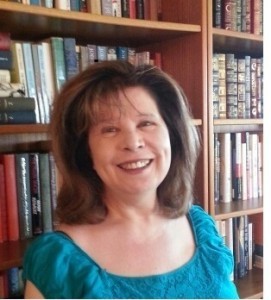
Nancy Kress is the author of thirty-two books, including twenty-five novels, four collections of short stories, and three books on writing. Her work has won five Nebulas, two Hugos, a Sturgeon, and the John W. Campbell Memorial Award. Most recent works are Yesterday’s Kin (Tachyon, 2014) and the forthcoming Best of Nancy Kress (Subterranean, Autumn 2015). In addition to writing, Kress often teaches at various venues around the country and abroad; in 2008 she was the Picador visiting lecturer at the University of Leipzig. Kress lives in Seattle with her husband, writer Jack Skillingstead, and Cosette, the world’s most spoiled toy poodle.
About the anthology
Famine. Death. War. Pestilence. These are the harbingers of the biblical apocalypse, of the End of the World. In science fiction, the end is triggered by less figurative means: nuclear holocaust, biological warfare/pandemic, ecological disaster, or cosmological cataclysm.
But before any catastrophe, there are people who see it coming. During, there are heroes who fight against it. And after, there are the survivors who persevere and try to rebuild.
Edited by acclaimed anthologist John Joseph Adams and bestselling author Hugh Howey, The Apocalypse Triptych is a series of three anthologies of apocalyptic fiction. The End Is Nigh focuses on life before the apocalypse. The End is Now turns its attention to life during the apocalypse. And The End Has Come focuses on life after the apocalypse.
Buy the book
The End Has Come is available as a trade paperback or eBook.
The post The End Has Come: An Interview with Nancy Kress appeared first on A Dribble of Ink.

May 12, 2015
Tor.com reveals Every Heart a Doorway by Seanan McGuire
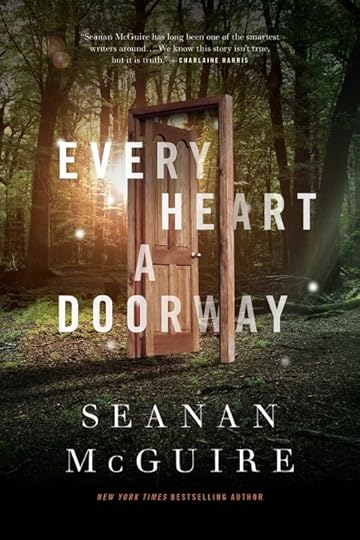
Yesterday, Tor.com announced Every Heart a Doorway by Seanan McGuire, a novel to be published in collaboration between the Tor.com Imprint, which focuses primarily on Novellas, and Tor Books.
“When Seanan McGuire sent me her pitch for Every Heart a Doorway I was delighted,” said Tor.com Senior Editor. “When the book arrived, and I read it, I was dumbfounded! Seanan had surpassed herself.”
“Seriously,” he continued, “I have been telling everyone I meet how great this book is, and I’m more than a little jealous that you’ll have the opportunity to read it for the first time, and I won’t.”
About the Book
Eleanor West’s Home for Wayward Children
No Solicitations
No Visitors
No Quests
Children have always disappeared under the right conditions; slipping through the shadows under a bed or at the back of a wardrobe, tumbling down rabbit holes and into old wells, and emerging somewhere… else.
But magical lands have little need for used-up miracle children.
Nancy tumbled once, but now she’s back. The things she’s experienced… they change a person. The children under Miss West’s care understand all too well. And each of them is seeking a way back to their own fantasy world.
But Nancy’s arrival marks a change at the Home. There’s a darkness just around each corner, and when tragedy strikes, it’s up to Nancy and her new-found schoolmates to get to the heart of the matter.
No matter the cost.
“Every Heart a Doorway tells the story of what happens after Ever After,” Harris described. “When a portal fantasy has ended, and its young protagonist is no longer wanted, where do they go? And how do they cope with the transition back into the “real” world? It begins almost as a coming-of-age tale, but soon becomes something quite different and unexpected.”
I’ll admit, I’ve not read McGuire’s other novels, nor those published under her “Mira Grant” pseudonym, but Every Heart a Doorway has my attention in a big way. From the gorgeous cover art, to the Through the Looking Glass-esque blurb, everything is working for me this time around. I can’t wait to give it a shot.
In collaboration with Tor Books, Tor.com will publish Every Heart a Doorway as a hardcover, audiobook, and eBook in April, 2016. It is the first physical release from the new Tor.com imprint.
The post Tor.com reveals Every Heart a Doorway by Seanan McGuire appeared first on A Dribble of Ink.

May 8, 2015
Release Week Round-up: Tide of Shadows and Other Stories
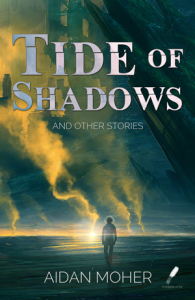
This week saw the launch of my first book, Tide of Shadows and Other Stories, a collection of science fiction and fantasy short stories, and support from around the SFF community has been wonderful! I’ve been completely blown away by all the wonderful things that people are saying about the book, and I can’t wait to hear what readers think.
To round-out the week, I thought it might be useful to compile a list of placed I’ve visited promoting the book, and a few other relevant links of interest.
Blog Tour
Monday: Interview on Nerds of a Feather—The G. and I chat about self-publishing, short fiction’s place in SFF, and, of course, cover art.
Tuesday: Interview on SF Signal—Rob Bedford grills me on the switch from blogging to writing, copyediting, and future short fiction plans.
Wednesday: Book Bites w/ Fran Wilde—Pun-tastic names and tasty flowerdumplings.
Thursday: Big ideas; Itty, Bitty Living Space: On Tide of Shadows and Other Stories, Writing Lessons, and Short Fiction—A guest post at Theo Taylor’s blog about why I write short fiction.
Friday: Writer of the Day @ r/fantasy—Answering questions from the passionate fans at Reddit’s largest fantasy community!
Other Links
The first written review! Five stars!
Read an Excerpt from Tide of Shadows and Other Stories
Tide of Shadows and Other Stories on Goodreads
Tide of Shadows and Other Stories on Amazon
Buy Tide of Shadows and Other Stories for $2.99
The post Release Week Round-up: Tide of Shadows and Other Stories appeared first on A Dribble of Ink.

The End Has Come: An Interview with David Wellington
Buy The End Has Come, edited by John Joseph Adams and Hugh Howey
In collaboration with editors John Joseph Adams and Hugh Howey, A Dribble of Ink is proud to introduce a series of interviews with the authors of The End Has Come, the final volume in the The Apocalypse Triptych. Following on The End is Nigh, and The End Is Here, The End Has Come contains 23 stories about life after the apocalypse.
Interview with David Wellington about “Agent Neutralized”
(Interview by Jude Griffin)
What was the seed for “Agent Neutralized” How does it relate to your book “Positive”?
The novel takes place twenty years after the end of the world, after the “Crisis.” The three stories I’ve contributed to the Apocalypse Triptych add some context to the novel. They set up a minor plot point in the book, and originally it was all supposed to be a kind of in-joke. As I started writing them, though, I found that the character of Whitman had his own tragic arc, and I just wanted to tell more of his story. I felt like I owed him that.
Why are zombies so compelling for us as a society? Why now especially?
You know, I’ve heard a lot of theories and I’ve come up with several of my own but these days I think the zombie is just a blank slate. It’s a monster you can project just about any fear onto—anxieties about what terrorism has done to society, anxieties about consumerism, the simplest fear of all, which is fear of other people. I don’t know if they really are specifically compelling to this time period. If you go back and look for them, there have been zombie movies made every year since 1968, when Night of the Living Dead came out. Zombies are just that versatile.
The Bob details were the most heart-wrenching for me–did you walk a line about showing too much suffering, being too graphic?
I walk that line with everything I write. You want people to feel the horror, you want them to get that dread. There comes a point though where it becomes overwhelming, and then it isn’t entertaining anymore. If you push a horror story too far I think it just ends up being sad. The reader stops identifying with the character and just feels pity for them, and that’s a tough emotion to work with as a writer. Especially when the character is a child, you run a real risk of coming off like you’re the monster yourself. Like everything in writing, it’s a question of choices.
Which post-apocalyptic story/ies left the greatest impression on you?
I grew up obsessed with the idea of nuclear war. It might seem absurd to younger readers now but there was a time when it seemed inevitable, that we had created this thing, this world-ending machine, and that we just weren’t going to be able to stop ourselves from pressing the red button. I pored over many a tome of nuclear catastrophe as a child, like On the Beach and Alas, Babylon, and of course (as this story clearly shows) the Mad Max movies. The funny thing was back then our apocalypse fiction served to make it look like maybe it wouldn’t be so bad. Sure, the crops would all fail and life would be hard, but you got to wear crazy clothes and roar around the desert in dune buggies covered in spikes and baby doll heads. There is a very strange kind of nostalgia for old armageddons, sort of the dark twin for the nostalgia we all feel now for the naïvely optimistic futures of old science fiction.
Any projects/news you want to tell us about?
By the time you read this, davidwellingtonsfearproject.com will be wrapping up—a writing contest I ran in the style of a reality show. That was an enormous amount of fun, and I’m hoping to make it a yearly thing. Of course, we’ve already talked about Positive, but I hope everyone will check it out—if you liked my stories in the Triptych, I can pretty much guarantee that Positive will be right up your street!
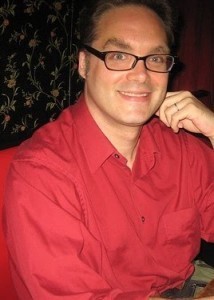
About David Wellington
David Wellington is the author of the Monster Island trilogy of zombie novels, the 13 Bullets series of vampire books, and most recently the Jim Chapel thrillers Chimera and The Hydra Protocol.“Agent Unknown” (The End is Nigh) and “Agent Isolated” are prequels to Positive, his forthcoming zombie epic. He lives and works in Brooklyn, New York.
About the anthology
Famine. Death. War. Pestilence. These are the harbingers of the biblical apocalypse, of the End of the World. In science fiction, the end is triggered by less figurative means: nuclear holocaust, biological warfare/pandemic, ecological disaster, or cosmological cataclysm.
But before any catastrophe, there are people who see it coming. During, there are heroes who fight against it. And after, there are the survivors who persevere and try to rebuild.
Edited by acclaimed anthologist John Joseph Adams and bestselling author Hugh Howey, The Apocalypse Triptych is a series of three anthologies of apocalyptic fiction. The End Is Nigh focuses on life before the apocalypse. The End is Now turns its attention to life during the apocalypse. And The End Has Come focuses on life after the apocalypse.
Buy the book
The End Has Come is available as a trade paperback or eBook.
The post The End Has Come: An Interview with David Wellington appeared first on A Dribble of Ink.

May 7, 2015
The End Has Come: An Interview with Tananarive Due
Buy The End Has Come, edited by John Joseph Adams and Hugh Howey
In collaboration with editors John Joseph Adams and Hugh Howey, A Dribble of Ink is proud to introduce a series of interviews with the authors of The End Has Come, the final volume in the The Apocalypse Triptych. Following on The End is Nigh, and The End Is Here, The End Has Come contains 23 stories about life after the apocalypse.
Interview with Tananarive Due about “Carriers”
(Interview by Jude Griffin)
I was very excited to see another story in this world with Nayima—how has the character changed since you first began writing her?
In the first story, Nayima was a young woman forced to come of age against the backdrop of a super plague. That story was really me processing the true end of my own childhood, with the long suffering and death of my mother. But at least Nayima had a sense of moving on to the next phase of her life. In the second story, Nayima was shattered. I believe she was forced to give up her last notions of communal humanity–she herself was toxic, and her dreams of building a village were silly and, in a way, even selfish because of her deep denial that she was a carrier. So the Nayima of “Carriers” is a hardened, solitary woman who had given up hope of a “normal” life. And she has lost her trust in everyone.
I found the night cats fascinating—how did they come about?
Ah, the night cats! I have always had cats, but the age of YouTube is turning me into a bit of a cat fanatic. I can watch funny cat videos for days. One day I was research more exotic breeds of cats like Savannahs and I came across an article about the plague of feral cats in Australia, where there are actually bird species being wiped out and endangered in areas where cats have taken over. Cats are excellent hunters with few natural predators.
I decided to bring the feral cats into this story because I wanted to explore the changes in the ecological system since the plague. If mankind were virtually eliminated, how might that look? I didn’t say so in the final draft, but dogs died in the plague and cats didn’t. So now Nayima has been reduced to a kind of primal state, fighting for resources with wild animals whose immediate ancestors were docile house pets. As a cat lady, that idea intrigued me—and also the question of what it means to be “domesticated,” since Nayima has welcomed two of the cats—but ONLY two—into her home. I see her adoption of the two cats as an attempt to reclaim the part of her that can love another, which was damaged so deeply by the events in the first two stories.
The difference between Raul and Nayima is so stark: one embraces hope, the other rejects it. Are there other choices for people living under such difficult circumstances?
I think all survivors of a mass extinction would fall somewhere within the spectrum of hope and depair. Nayima may seem to have lost hope, but she is building a home even after her first was stolen from her, she has not killed herself, and she has managed to cling to her sanity. I think that’s pretty amazing. Raul’s naiveté might have been laughable under earlier circumstances, but after a period of collective madness, society IS shifting back toward a sense of justice. They have lived long enough–as many of us will–to see great social changes in their lifetimes. The goverment may well only want to study them, but Nayima and Raul been given an opportunity to live fuller lives–the life Nayima dreamed of in “Herd Immunity.”
As the child of civil rights activists and a social justice activist myself, I also want to impart to the activist community that there IS hope despite setbacks. There will always be people who agitate and advocate for change.
Nayima’s decision to open the door at the end, her emotional state once she sees her daughter, was unexpected but wonderful. Please tell me there is more after this.
In one sense, Nayima was simply tired of fighting. She realized that if she couldn’t bring herself to shoot a cat, she certainly wasn’t going to fight marshals and potentially see Raul hurt or killed. But Nayima was also trying to follow Raul’s example and embrace hope. Yes, she is putting her heart in grave danger if she attaches to a child she has no power to keep, ultimately–it could be a tremendously manipulative act on the part of the government–but she is willing to take that chance for the promise of love and family. Humans need other humans.
Any projects/news you want to tell us about?
My first short story collection, Ghost Summer, will be published by Prime Books in October. I’m very excited about that! I have been publishing short stories since 2000, but this is the first collection of my major short works. And all three Nayima stories will be included.
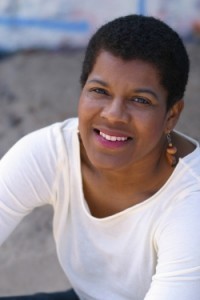
About Tananarive Due
Tananarive Due is the Cosby Chair in the Humanities at Spelman College. She also teaches in the creative writing MFA program at Antioch University Los Angeles. The American Book Award winner and NAACP Image Award recipient has authored and/or co-authored twelve novels and a civil rights memoir. In 2013, she received a Lifetime Achievement Award in the Fine Arts from the Congressional Black Caucus Foundation. In 2010, she was inducted into the Medill School of Journalism’s Hall of Achievement at Northwestern University. She has also taught at the Geneva Writers Conference, the Clarion Science Fiction & Fantasy Writers’ Workshop, and Voices of Our Nations Art Foundation (VONA). Due’s supernatural thriller The Living Blood won a 2002 American Book Award. Her novella “Ghost Summer,” published in the 2008 anthology The Ancestors, received the 2008 Kindred Award from the Carl Brandon Society, and her short fiction has appeared in best-of-the-year anthologies of science fiction and fantasy. Due is a leading voice in black speculative fiction.
About the anthology
Famine. Death. War. Pestilence. These are the harbingers of the biblical apocalypse, of the End of the World. In science fiction, the end is triggered by less figurative means: nuclear holocaust, biological warfare/pandemic, ecological disaster, or cosmological cataclysm.
But before any catastrophe, there are people who see it coming. During, there are heroes who fight against it. And after, there are the survivors who persevere and try to rebuild.
Edited by acclaimed anthologist John Joseph Adams and bestselling author Hugh Howey, The Apocalypse Triptych is a series of three anthologies of apocalyptic fiction. The End Is Nigh focuses on life before the apocalypse. The End is Now turns its attention to life during the apocalypse. And The End Has Come focuses on life after the apocalypse.
Buy the book
The End Has Come is available as a trade paperback or eBook.
The post The End Has Come: An Interview with Tananarive Due appeared first on A Dribble of Ink.