Aidan Moher's Blog, page 4
May 27, 2015
The End Has Come: An Interview with Jake Kerr
In collaboration with editors John Joseph Adams and Hugh Howey, A Dribble of Ink is proud to introduce a series of interviews with the authors of The End Has Come, the final volume in the The Apocalypse Triptych. Following on The End is Nigh, and The End Is Here, The End Has Come contains 23 stories about life after the apocalypse.
Interview with Jake Kerr about “The Gray Sunrise”
(Interview by Gwen Whiting)
The characters are under threat because of an encroaching astronomical event. What made you select this particular trigger for your apocalypse?
This is actually the fourth story set in this world. The original was “Biographical Fragments of the Life of Julian Prince,” which can be found in the Wastelands 2 anthology. John asked if I would be interested in setting my Apocalypse Triptych stories in that world, and so I wrote all three in them, all set in the same time frame and setting of an impending near extinction asteroid strike. Why did I originally choose an asteroid strike? I honestly can’t remember. My first thought was of a character and an epic event, and that was the first thing that popped into my mind!
A dominant theme that seems to prevail in some of your work, particularly “The Gray Sunrise” and “The Old Equations,” is the meaning of human relationships. This particular piece is largely about Don and his connection with his teenage son. Tell us a little bit about how you conceptualized that relationship. Is Don based on you or someone you know?
I love writing about relationships, how we interact with each other as human beings—the pain, the joy, the dawning comprehension of something deep and powerful changing within us. My first two Triptych stories are ultimately depressing. There is joy in “Wedding Day,” but it is tragic, ending in death. “Penance” is comfort and acceptance found through death, as well. Those stories looked at love and guilt through the lens of darkness and sadness. I wanted “The Gray Sunrise” to be a story of hope.
As to conceptualizing the story, first of all, all three stories in the Triptych are stand-alones, but they all have characters that overlap, although it is not obvious. Don is, in fact, the same man that is mentioned in “Wedding Day” as having already escaped on his boat. So I knew I wanted there to be a middle-aged to older man who escapes on a boat. I also wanted it to be a personal story, and the concept of having a father/son dynamic seemed to be powerful to me. Finally, I had to create a story with tension but also end with hope. The initial idea was actually of Don’s dream to own his own yacht, and how that dream led to their salvation. That led me to create the scenario of a father who starts the story full of hope, with a son who starts the story apathetic and nihilistic. The story starts with only one dream, that of Don hoping to survive to once again experience his lifelong dream of being on his boat and watching the sun rise over the water. Through the horrors they experience, I loved the idea of one dream dying while another one is born, until we have the end of the story there is only one dream, and it isn’t the dream that starts the story.
I tried to put a lot into this story, and certainly one of the pieces is the idea that, as a father, sometimes you give up your own dream for your child’s, and the process of doing that saves your life in the end, symbolically and literally.
Throughout the story, the main character Don returns to his daydreams of owning a yacht. Is there something significant that the yacht signifies to you personally or is it unique to this story?
I wish I could say that I chose a yacht for a grand symbolic reason, but the truth is that I was trying to link a character from “Wedding Day” or “Penance” to the new story, and the one that made the most sense was the relative from ‘Wedding Day” who fled on his yacht. So I started with the yacht as a plot point, not any grand dream or symbol. But ultimately it is symbolic in that it represents Don’s dream, and a big part of the story is seeing how his dream for the future and the physical representation of that dream are both battered by the storms resulting from the asteroid strike.
Was there a particular moment or scene in this piece that you found difficult to write? If so, why?
All of the scenes that required knowledge of yachting. I had the distinct fortune of having Hugh Howey as an editor. He is a yachtsman, and he thus caught every mistake, and there were a lot of them. I went with my normal approach of, “do enough research to fake it,” and then sent the story to an editor who couldn’t be faked. But ultimately they weren’t difficult to write, just difficult to get past Hugh!
Do you think that humanity will experience an apocalyptic event at some point in the future? If so, what form do you think the apocalypse is likely to take?
Yes, “the future” is a very long time. I don’t know how an apocalypse for the human race will manifest itself. There are so many possibilities, and that thought alone is frightening.
About Jake Kerr
Jake Kerr began writing short fiction in 2010 after fifteen years as a music and radio industry columnist and journalist. His first published story, “The Old Equations,” appeared in Lightspeed and went on to be named a finalist for the Nebula Award and the Theodore Sturgeon Memorial Award. He has subsequently been published in Fireside Magazine, Escape Pod, and the Unidentified Funny Objects anthology of humorous SF. A graduate of Kenyon College with degrees in English and Psychology, Kerr studied under writer-in-residence Ursula K. Le Guin and Peruvian playwright Alonso Alegria. He lives in Dallas, Texas, with his wife and three daughters.
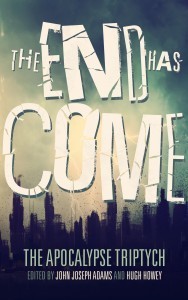
Buy The End Has Come, edited by John Joseph Adams and Hugh Howey
About the anthology
Famine. Death. War. Pestilence. These are the harbingers of the biblical apocalypse, of the End of the World. In science fiction, the end is triggered by less figurative means: nuclear holocaust, biological warfare/pandemic, ecological disaster, or cosmological cataclysm.
But before any catastrophe, there are people who see it coming. During, there are heroes who fight against it. And after, there are the survivors who persevere and try to rebuild.
Edited by acclaimed anthologist John Joseph Adams and bestselling author Hugh Howey, The Apocalypse Triptych is a series of three anthologies of apocalyptic fiction. The End Is Nigh focuses on life before the apocalypse. The End is Now turns its attention to life during the apocalypse. And The End Has Come focuses on life after the apocalypse.
Buy the book
The End Has Come is available as a trade paperback or eBook.
The post The End Has Come: An Interview with Jake Kerr appeared first on A Dribble of Ink.


May 26, 2015
The End Has Come: An Interview with Elizabeth Bear
In collaboration with editors John Joseph Adams and Hugh Howey, A Dribble of Ink is proud to introduce a series of interviews with the authors of The End Has Come, the final volume in the The Apocalypse Triptych. Following on The End is Nigh, and The End Is Here, The End Has Come contains 23 stories about life after the apocalypse.
Interview with Elizabeth Bear “Margin of Survival”
(Interview by Jude Griffin)
How did “Margin of Survival” come about?
That’s one of those impossible questions, really, but I can at least manage to line up some of the sparks. Somewhere, some time ago, I read about the nuclear-powered, abandoned lighthouses left after the collapse of the Soviet Union, and of course I live in New England, which is known for its lighthouses—most of which are largely automated now as well. And that image of a beacon, forgotten on a beach somewhere after the end of civilization, struck me as incredibly poignant.
The story grew up around that, and some reading I’ve been doing on what Bruce Sterling refers to as “Involuntary Nature Reserves,”–places like the Chernobyl exclusion zone, where we’ve created such a toxic mess that people can’t safely live there anymore.
The description of Yana’s hunger, the different kinds, how some were empowering and others were enervating, felt so real that I immediately assumed you were writing from experience. Were you?
I’ve never experienced real long-term hunger of the sort Yana has… but I have been broke enough to wonder where my next meal was coming from, and I’ve done enough long-distance hiking and running to experience that need for fuel that comes with it.
There is so much tension around Yana’s infiltration, what she finds, and how she gets out, that I was almost surprised to go back and realize that the whole of the story shows us only two people. It almost felt like the kind of work playwrights must do–suggest so much while keeping the stage relatively clear. Do you write plays? Was it challenging to write such a story so spare in some ways and rich in others?
To me, short stories and plays are very similar in their constraints, actually. They both require extreme economy: there’s not as much room for expansiveness as there is in a novel. You need to get as much use out of everything as possible.
It’s actually really hard for me to switch back and forth between novels and short stories. The short story mode is too dense for a novel; it becomes exhausting to the reader. Novels need a little more breathing room and a little more room for repetition and reinforcement. They may be read over a period of weeks, as opposed to half an hour, and so much of what you’re doing in a novel has to be robust enough to stand up to that sort of break in the experience. Novels have room for more engineering, more failsafes and several engines! Short stories are more like the World War II fighter plane, the Zero: They do one thing and they do it as efficiently as possible, without much tolerance for error.
That ending was hard to read–what made it the right one for this story?
It was hard to write, too. I’m going to try to answer this question without spoiling.
Some of it is my growing distrust, as I get older, of the Cozy Catastrophe–the idea that the world may end, but all of our friends will survive and we’ll get to build a perfect world in the ashes. Sort of Swiss Family Robinson with nukes.
Some of it is just the way the story went. I feel that relentless darky-darkness is just as intellectually dishonest as the opposite, but I also acknowledge that sometimes, for some people, things just don’t end well. I feel like art in honesty needs to reflect both hope and despair.
I noodled with three or four different endings, and this was the one that didn’t feel pat and expected to me. I guess it’s a matter of, “try on a lot of hats; buy the one that suits the outfit.”
Any projects/news you want to tell us about?
I have a new novel out. It’s called Karen Memory, and it’s a stand-alone wild west steampunk adventure starring heroic saloon girls versus wicked disaster capitalists.
I’m currently working on a fourth book in the Eternal Sky series–the first in a new trilogy, with different characters, in a different part of the world! It’s called The Stone in the Skull. I’m also working on a big-idea far-future space opera called Ancestral Night. Both will be out next year–The Stone in the Skull in the US from Tor and Ancestral Night in the UK from Gollancz.
About Elizabeth Bear
Elizabeth Bear was born on the same day as Frodo and Bilbo Baggins, but in a different year. When coupled with a tendency to read the dictionary for fun as a child, this led her inevitably to penury, intransigence, and the writing of speculative fiction. She is the Hugo, Sturgeon, and Campbell Award-winning author of almost a hundred short stories and more than twenty-five novels, the most recent of which is Karen Memory. Her dog lives in Massachusetts; her partner, writer Scott Lynch, lives in Wisconsin. She spends a lot of time on planes.
Buy The End Has Come, edited by John Joseph Adams and Hugh Howey
About the anthology
Famine. Death. War. Pestilence. These are the harbingers of the biblical apocalypse, of the End of the World. In science fiction, the end is triggered by less figurative means: nuclear holocaust, biological warfare/pandemic, ecological disaster, or cosmological cataclysm.
But before any catastrophe, there are people who see it coming. During, there are heroes who fight against it. And after, there are the survivors who persevere and try to rebuild.
Edited by acclaimed anthologist John Joseph Adams and bestselling author Hugh Howey, The Apocalypse Triptych is a series of three anthologies of apocalyptic fiction. The End Is Nigh focuses on life before the apocalypse. The End is Now turns its attention to life during the apocalypse. And The End Has Come focuses on life after the apocalypse.
Buy the book
The End Has Come is available as a trade paperback or eBook.
The post The End Has Come: An Interview with Elizabeth Bear appeared first on A Dribble of Ink.

RIP Tanith Lee (1947 – 2015)
Sci-Fi Bulletin is reporting that Tanith Lee passed away on Sunday, May 24, 2015.
Lee was an incredibly prolific writer, with 90 novels, and over 300 pieces of short fiction to her name, spanning science fiction and fantasy, horror, and crime. Most notably, she is the author of The Flat-Earth Cycle, a huge fantasy series with dozens of related novels and short stories.
Twitter is currently overflowing with love for Lee and her vast works of fiction.
I awoke to the news of Tanith Lee's death. The loss of a brilliant and singular voice.
— Caitlín R. Kiernan (@auntbeast) May 26, 2015
Very sad to hear that Tanith Lee has passed away – she wrote so many wonderful stories. She was always so gracious, so elegant, so kind.
— Steve Berman (@thesteveberman) May 26, 2015
We've just lost someone I greatly admired as a person & writer. Terrible news, such a hard year for these departures.
Tanith Lee, RIP.
— Guy Gavriel Kay (@guygavrielkay) May 26, 2015
Ah, no. We lost Tanith Lee. I still remember individual lines of her books that kicked me in the chest.
— Nightjar UrsulaV (@UrsulaV) May 26, 2015
Lee was 67 years old.
The post RIP Tanith Lee (1947 – 2015) appeared first on A Dribble of Ink.

May 25, 2015
“Intentions (or, This is What I Meant)” by Peter Orullian
What if I wrote an epic fantasy series that grounded readers first in the familiar, then took them to the stuff I’m doing that I feel is unique and new?
The journey to Trial of Intentions began in the year 2000. It started with a simple notion: What if I wrote an epic fantasy series that grounded readers first in the familiar, then took them to the stuff I’m doing that I feel is unique and new? That journey takes its next step on May 26th, when Trial of Intentions is released. But like any good story, there’s much more to it than that. And some of it is painful.
About the time I wrote the first book of the series, The Unremembered, I landed a literary agent. I won’t share his name. Suffice it to say he’s a noted agent in the field of science fiction and fantasy. He decided to represent me on the strength of a short story collection I’d had published by a small press. So, cool, right?
As we got to know one another, I shared with him my desire to write and publish books in horror, science fiction, thriller, and even (gasp) mainstream, in addition to fantasy. He nodded sagely to all this.
When I turned in the manuscript to book one of my epic fantasy series, he proceeded to tell me we should shelve it, and that I should focus on my thriller ideas, which he said he liked very much. I think my brow pinched in confusion. I’d just finished a book. He could go market it. Sell it. Make a commission. But I saluted and went off to write the thriller books that I was also eager to write.
Years later, it became clear that his motivation—with me, anyway—was less about my career, and more about his own. He was deliberately trying to build diversity into his author list. I can’t blame him for his business strategy, but not at the expense of what might be best for me.
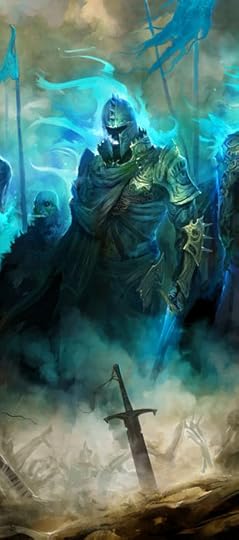
Art by Kekai Kotaki
We parted ways.
I started submitting to agents again. This time, I was using my most recent work. The thrillers. I love these books. Got some good interest, too. In fact, one agent—the one I ultimately landed—said, “These are wonderful, very Dickensian. But . . .”
Dan Brown’s The Da Vinci Code was dominating the universe at the time, and he didn’t feel we’d be well positioned. So, he turned me down. Checking his client list, I saw one fantasy writer. One. But hell, what does it hurt to ask. “I have an epic fantasy,” I said. “Would you like to see it?”
“Yes,” he said. So I sent it. He liked it. He took me on. He sent it to Tom Doherty. I had a book contract before I knew it. For a ten year old manuscript.
Now, while I was off writing other books, my mind had continued to turn on the fantasy. As my craft was (hopefully) improving through workshops and reading and lots of writing, my thoughts on how to approach my notion for the epic fantasy had evolved. When I got paired with an editor . . . well, let’s just say not all writers and editors are a perfect match. That’s no one’s fault. It happens. I’ve since learned, from talking to lots of pros who are much further down the writer career path than I am, that a writer and editor sharing the same vision for a book series makes all the difference.
Anyway, I saluted again, and off we went with the original manuscript. That version of The Unremembered was published in 2011.
Since then, a few things have happened. First, work. By day, I’m a marketer for Xbox at Microsoft. It’s not a nine to five gig. And I’ve had several stretches (months at a time) where my writing time (3:30 a.m. to 6:30 a.m.) has had to be used for the day job. Priorities, don’t you know.
But that wasn’t the larger part of it. The larger part…well, as I say, not all writer/editor pairings….
This latter bit, fortunately, led to an editor change. A good one. And once she and I got talking, and once she’d been in to what they call “launch” meetings with the publisher and sales team, we decided the best thing to do was an Author’s Edition of The Unremembered. An edition much closer to what I’d wanted to do after spending those ten years writing books and thinking about the series.
Now, I was also afforded the chance to weave in some new bits—since I’d now written book two, Trial of Intentions. Who wouldn’t take that opportunity?
Do I think this new Author’s Edition is going to sell a million copies? That would be nice. But what I can say is that this edition is nearer to my original intent. And that intent was to start an epic fantasy series with some familiar stuff, and then evolve it toward what I believe I’m doing that’s unique. I’ve compared this to placing a crab (in this case, the reader) in a pot of room-temperature water, then slowly turning up the heat. Get you boiling before you know it.
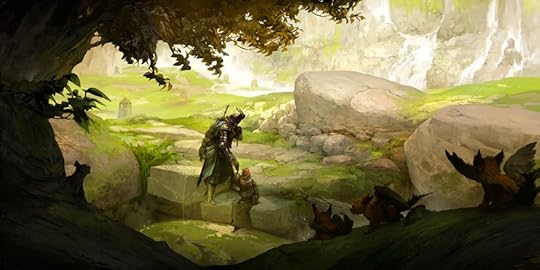
Art by Kekai Kotaki
Idealistic as it sounds, I want to introduce more readers to fantasy.
We can debate if my notion was a good one, of course? For my part, I was thinking of book one as what you sometimes hear referred to as “gateway fiction.” Gateway books serve as an accessible entry point to a genre, precisely because it trades on things familiar. Idealistic as it sounds, I want to introduce more readers to fantasy.
Why?
Because I think fantasy does some things better than other genres. For example, it seems to me that fantasy can deal with issues in a way contemporary fiction can’t. A second-world fantasy has a level of remove that makes dealing with sensitive topics less polarizing. Readers will consider viewpoints that in a real-world setting might invoke an immediate bias.
But also, fantasy deals in wonder. There’s precious little of that. Good for people to reawaken that sense, if you ask me. So, what then, of Trial of Intentions? Well, this is where that pot of water I was talking about really gets to boiling. The familiar stuff gets turned on its head, so to speak.
Like, if you think one of my characters is an orphan farm boy…think again. In fact, imagine something kind of the polar opposite. This is some of what you’ll find in Trial of Intentions. A friend of mine, Ty Franck, calls it a deconstruction of fantasy tropes. He might be right, but “deconstruction” isn’t my intent. It’s more trying to take the reader someplace my own.
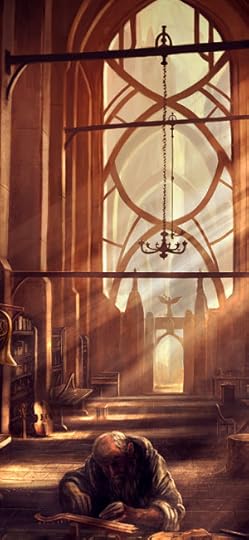
For example, in Trial of Intentions, there’s a major plot thread that trades on science. An entire society of science, with colleges of astronomy, physics, mathematics, cosmology, and philosophy. In fact, one of my main characters decides—against the endless escalation toward conflict—to enlist their help to try and avert war before it begins. I call it a Succession of Arguments. There’s still some mortal danger and threat. Intense battles. But there are also characters using investigative techniques and applied thought and debate to try and answer hard questions.
And, of course, I go deep on the music magic. In fact, what readers learn in Trial of Intentions is that I’ve set up something I call: governing dynamics. I had this idea to create something akin to our world’s mechanical laws, e.g. magnetism, gravity. In my world I call it: Resonance.
Resonance underlies—so far—five magic systems in my world. I posit that this principle of Resonance would fuel many magic systems that would take various forms, since different cultures would tap and manipulate the principle differently.
So, while the magic systems appear different, readers realize that they’re all operating on Resonance.
And chief among these in Trial of Intentions is the music magic. I’m a musician, so maybe this makes sense. But don’t get too comfortable. This isn’t lullabies and sweet soprano airs. I create something I call a dysphonic technique for my main character who possesses this ability. Think Morgan Rose and his backing vocals for Sevendust. Or David Draiman from Disturbed.
Not always, mind you. But often this is aggressive vocal music. It’s filled with raw emotion. It’s combative. It’s driven by intent, quite above lyrics and melody.
And then there’s motivation. More raw stuff. It was always the case that suicide was a part of my world. I’ve created difficult circumstances for some of the peoples in my series. For instance, there’s a barren place known as The Scar, home to castoffs whose parents no longer want them. Not all of them survive. Those that don’t, die at their own hands, the mental and emotional weight of their lives growing too much.
In Trial of Intentions, this becomes a deep-seated motivation for a few of my characters who work through the aftermath of having people close to them make this choice. I think it gives those plot threads an emotional center.
And I’ll tell you that I had a friend recently make this choice. I thought I’d worked through it okay. Stages of grief. But in going back over Trial of Intentions once it was done, I could see that it had gotten into the words. The book isn’t about this, but I can’t deny its influence, either.
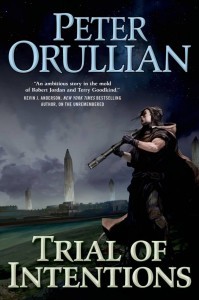
Buy Trial of Intentions by Peter Orullian: Book/eBook
I should add, that since there’ve been four years between the original edition of The Unremembered and Trial of Intentions—and not knowing I’d get the opportunity to release an Author’s Edition of book one—I wrote Trial of Intentions as an entry point to the series. So, if you want to just jump in with Trial of Intentions, you’re good to go. I figured, given the time lapse, this made sense.
So, that’s the story. Fifteen years. A fledgling writer with the idea of wanting to draw new readers to a genre he loves. Some challenges along the way. Trials, if you will. The chance to put out the first book again, this time more in line with how I’d wanted to execute my idea in 2011. And a second book in the series, Trial of Intentions, where so much of what I’d dreamed about finally hits the page, and hopefully takes readers to new places.
Kind of crazy.
And not crazy at all.
The post “Intentions (or, This is What I Meant)” by Peter Orullian appeared first on A Dribble of Ink.

The End Has Come: An Interview with Sarah Langan
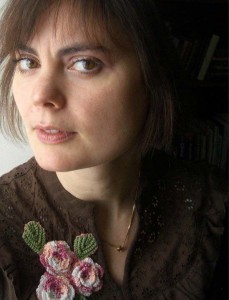
In collaboration with editors John Joseph Adams and Hugh Howey, A Dribble of Ink is proud to introduce a series of interviews with the authors of The End Has Come, the final volume in the The Apocalypse Triptych. Following on The End is Nigh, and The End Is Here, The End Has Come contains 23 stories about life after the apocalypse.
Interview with Sarah Langan about “The Uncertainty Machine”
“Prototype” shows us a drastically changed world. How did this story evolve over the course of writing for a triptych?
I was really glad John contacted me, because I’d already written a couple hundred pages of a YA series (KIDS) set in the post apocalypse, but needed to more firmly build the mythology and rules of my strange world.
I got that opportunity– with The End Is Nigh I wrote “Love Perverts” which covers the basic themes of the YA series (parents selling out their childrens’ futures; survivors tending to be the least moral of a particular group), and also the nature of the apocalypse (asteroid). My story in The End is Here shows how the villains of my world came into existence (cyborgs!). And in The End Has Come, “Prototype” shows the world itself, and sets up the rules. Writing these stories has really crystalized things for me. I’m CRAZY excited to dig back into KIDS with this new perspective.
The presence of sand and the difficulties of living in a sand-clogged world have dramatically shaped the people, their personalities, and what drives them. What was the idea behind this apocalypse?
It was an asteroid called Aporia that changed air quality. I guess I had the dinosaurs in mind, but also 9-11. I worked downtown in NYC when all that went down, and went back to work soon afterward. I wore a mask and got bloody noses and breathed little pieces of building for months. It’s affected most everything I’ve written since.
The characters here are, say, varying degrees of human. What are the real human costs of living in this world?
I’d venture to say that the characters here aren’t human at all.
What about post-apocalyptic fiction appeals to you? Why do readers come back to it so often?
I think the country’s in decline and we’re aware of it. But decline isn’t necessarily bad, particularly if our standard of living doesn’t decline. We’re looking more and more like Europe, which is both good and bad. I think we retell stories of our own demise in order to reassure ourselves that it won’t be so bad as we think, and in some ways, it will be a reinvention. After all, every generation tears down what came before.
Finally, what’s coming up next for you?
I’m working hard on my fourth novel The Clinic.
I’ve got a 50-page short story (the longest thing I’ve published in years!) called “The Old Jail” coming out in the Blumhouse Anthology, Blumhouse Book of Nightmares.
About Sarah Langan
Sarah Langan is the author of the novels The Keeper, This Missing, and Audrey’s Door. Her work has garnered three Bram Stoker Awards, a New York Times Editor’s Pick, an ALA selection, and a Publishers Weekly favorite Book of the Year selection. Her short fiction has appeared in Nightmare Magazine, Brave New Worlds, Fantasy Magazine, Lightspeed Magazine, The Magazine of Fantasy & Science Fiction, and elsewhere. She’s at work on her fourth novel, The Clinic, and lives in Brooklyn with her husband and two daughters.
Buy The End Has Come, edited by John Joseph Adams and Hugh Howey
About the anthology
Famine. Death. War. Pestilence. These are the harbingers of the biblical apocalypse, of the End of the World. In science fiction, the end is triggered by less figurative means: nuclear holocaust, biological warfare/pandemic, ecological disaster, or cosmological cataclysm.
But before any catastrophe, there are people who see it coming. During, there are heroes who fight against it. And after, there are the survivors who persevere and try to rebuild.
Edited by acclaimed anthologist John Joseph Adams and bestselling author Hugh Howey, The Apocalypse Triptych is a series of three anthologies of apocalyptic fiction. The End Is Nigh focuses on life before the apocalypse. The End is Now turns its attention to life during the apocalypse. And The End Has Come focuses on life after the apocalypse.
Buy the book
The End Has Come is available as a trade paperback or eBook.
The post The End Has Come: An Interview with Sarah Langan appeared first on A Dribble of Ink.

May 24, 2015
John Scalzi signs $3.4 million, 13 book deal with Tor Books
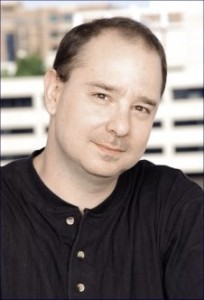
Via the New York Times, John Scalzi and Tor Books announced a new deal for thirteen novels worth a whopping $3.4 million. “Mr. Scalzi approached Tor Books, his longtime publisher, with proposals for 10 adult novels and three young adult novels over 10 years,” revealed John Schwartz of the New York Times.
Some of the included novels will be set in the same universe as Old Man’s War, and at least one will be a sequel to his most recent novel, Lock In. Scalzi’s editor at Tor, Patrick Nielsen Hayden, says that though Scalzi has never had a No. 1 bestseller, he “backlists like crazy.” Nielsen Hayden then revealed that Scalzi sells over 10,000 books a month, which is a very respectable number. “One of the reactions of people reading a John Scalzi novel is that people go out and buy all the other Scalzi novels,” Hayden said.
Scalzi’s Red Shirts, a satirical science fiction, won the Hugo Award for “Best Novel” in 2013.
“My celebration, personally, has just been standing around,” Scalzi told the New York Times. “And my wife saying, ‘Yes, now go take out the trash.’” It seems Scalzi’s trademark dry humour will remain intact, even under the weight of this mega deal.
The post John Scalzi signs $3.4 million, 13 book deal with Tor Books appeared first on A Dribble of Ink.

May 22, 2015
The End Has Come: An Interview with Jamie Ford
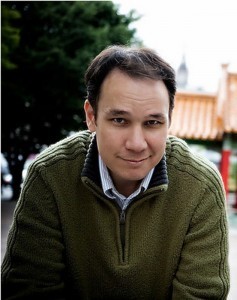
In collaboration with editors John Joseph Adams and Hugh Howey, A Dribble of Ink is proud to introduce a series of interviews with the authors of The End Has Come, the final volume in the The Apocalypse Triptych. Following on The End is Nigh, and The End Is Here, The End Has Come contains 23 stories about life after the apocalypse.
Interview with Jamie Ford about “The Uncertainty Machine”
(Interview by Jude Griffin)
“The Uncertainty Machine” begins with a wonderful air of self-absorption and irony that carries through the entire tale with delicious intent. Often humor of this sort is not easy to maintain throughout a story. What sort of challenges did you encounter when setting Phineas’s story to paper?
It’s a fine line between full-on, David Koresh crazy, and a perma-tanned, toupee-wearing host on QVC. I mean––you never know how much of their own bullshit they actually believe. It’s this weird balance of vanity and madness. So it was interesting to try and put myself in that headspace where ego (for a while anyway) can supersede reality.
You blend elements of steampunk, alternate history, and the metaphysical into a fully realized world. Using Seattle only serves to enrich the telling. Why did you happen to select the Seattle underground as your setting?
Seattle is a relatively young city, and by that I mean, there are still some secret places left. I have a friend whose family owns a building in Chinatown that’s been boarded up for decades and there’s an old opium den inside (that was shut down in the 40s). I love that.
The Seattle Underground is another one of those funky places with a colorful past.
Phineas is far from a sympathetic character, yet he embraces many of the characteristics of the wily trickster figure popular in myth and legend, one who teaches invaluable lessons while falling prey to his own cleverness at the same time. What is it about such trickster figures that appeals to readers? Is it the satisfaction of “come-uppance” at the end of the story, or something more?
I once worked with a guy who was brilliant, but he lived in a VW bus that he would park at the beach. He never repaid his student loans (and had no intention to), he didn’t have a bank account, he didn’t pay taxes, and he drank vodka like it was Kool-Aid. Basically, he lived on the margins of polite society. And he was so much fun to hang out with!
There’s something charming (and enlightening) about someone who breaks the rules so easily, because doing so makes us see the bars of a societal cage that we didn’t even know was there. But, deep down, he was also kind of despicable. So there was also the slow-motion train wreck aspect of his life. And who doesn’t like a good train wreck?
What comes to mind when you think of the end of the world? What is the Apocalypse to Jamie Ford?
For me, the Apocalypse is the fulfillment of the ultimate “I told you so.” Because whatever doom befalls us—super-plague, global warming, economic meltdown, nuclear war, alien invasion, techno-singularity—whatever it is, there will be a some crazy (or not so crazy) person who will be able to say, “See, you should have listened, dumbass.”
On your website you mention your great-grandfather Min Chung, who later changed his name to William Ford. How much do you rely on your Chinese heritage when it comes to telling your stories? Is it a case of “writing what you know?”
I often say that my writing career began when I wrote my parent’s obituaries. Because after my dad passed away (he was full-Chinese and spoke Cantonese fluently), I felt cut off from that side of my heritage. So, at the moment, exploring Asian history and culture is what interests me the most. Plus, traditionally, there hasn’t been much diversity in SF&F (unless you count elves, dwarves, and hobbit-folk).
What’s next for Jamie Ford? What do readers have to look forward to when it comes to new works?
The book that’s with my editor at the moment is about a boy who was raffled off at the 1909 World’s Fair. No one knows whatever happened to this kid, so I’ve made up his life story. And I’m gathering research materials for a gaslamp fantasy set in Chinatown, circa 1890. Oh, and maybe I’ll schedule a nap. A nap would be lovely.
About Jamie Ford
Jamie Ford is the great grandson of Nevada mining pioneer Min Chung, who emigrated from Kaiping, China, to San Francisco in 1865, where he adopted the western name “Ford,” thus confusing countless generations. His debut novel, Hotel on the Corner of Bitter and Sweet, spent two years on the New York Times bestseller list and went on to win the 2010 Asian/Pacific American Award for Literature. His work has been translated into 32 languages. Jamie is still holding out for Klingon (because that’s when you know you’ve made it). He can be found at www.jamieford.com blogging about his new book, Songs of Willow Frost, and also on Twitter @jamieford.
Buy The End Has Come, edited by John Joseph Adams and Hugh Howey
About the anthology
Famine. Death. War. Pestilence. These are the harbingers of the biblical apocalypse, of the End of the World. In science fiction, the end is triggered by less figurative means: nuclear holocaust, biological warfare/pandemic, ecological disaster, or cosmological cataclysm.
But before any catastrophe, there are people who see it coming. During, there are heroes who fight against it. And after, there are the survivors who persevere and try to rebuild.
Edited by acclaimed anthologist John Joseph Adams and bestselling author Hugh Howey, The Apocalypse Triptych is a series of three anthologies of apocalyptic fiction. The End Is Nigh focuses on life before the apocalypse. The End is Now turns its attention to life during the apocalypse. And The End Has Come focuses on life after the apocalypse.
Buy the book
The End Has Come is available as a trade paperback or eBook.
The post The End Has Come: An Interview with Jamie Ford appeared first on A Dribble of Ink.

May 21, 2015
The End Has Come: An Interview with Robin Wasserman
Buy The End Has Come, edited by John Joseph Adams and Hugh Howey
In collaboration with editors John Joseph Adams and Hugh Howey, A Dribble of Ink is proud to introduce a series of interviews with the authors of The End Has Come, the final volume in the The Apocalypse Triptych. Following on The End is Nigh, and The End Is Here, The End Has Come contains 23 stories about life after the apocalypse.
Interview with Robin Wasserman about “In the Valley of the Shadow of the Promised Land”
(Interview by Lee Hallison)
Abraham sacrifices Isaac in the bible – did you research biblical history before starting this triptych of stories?
No, I didn’t need to do much research–I went to Hebrew school all through my childhood, so these Bible stories are pretty much embedded in my subconscious. I actually didn’t set out to echo the Abraham/Isaac story in the first story–I only knew that I wanted to create something that would, eventually, form a religious origin story that would somehow be retold in the final story. (That story was originally titled “Midrash,” which is the Hebrew word for a collection of stories that, over the centuries, were extrapolated/intepreted from the text of the Old Testament. From the start, I imagined stories #1 and #2 as a kind of Midrash for the civilization of story #3.) It was only once I had the initial concept in place, and was honing in on the father-son relationship at the heart of it, that I realized I was working with a story that had already been told.
The characters seem to dance around the Cain and Abel story until finally, instead of Thomas and Joseph taking the roles, Isaac decides it is his story. Were you surprised at how the story turned at the end to both fratricide and patricide, or had you planned it all along?
I actually followed a trajectory similar to the one that Isaac follows in the story, sifting through the various bible stories that deal with fathers and sons and brothers — and there are so many! — before finally realizing this was a story of Cain and Abel, at least in part. Of course, some of the fun of this story, at least I hope, comes from the fact that Isaac is so confused and mistaken about what’s happening around him, and the question of whether he’s interpreting everything wrong, or whether his senility allows him to see things more clearly than everyone else. He thinks he’s playing out Cain and Abel, but actually the emotional thrust of the story–again, I hope–comes from his manipulation of his sons, his over-reliance on the Isaac/Jacob/Esau narrative, and the ways his projection of these tropes blinds him to who his sons really are. (The unreliability of Isaac’s narration is also what we have to thank for the lack of women in this story–he registers their existence but, as could be said for the Bible as well, sees them less as historical actors than as incubators or succubi.)
Isaac has many mostly silent epiphanies, and it is hard not to empathize with how trapped he is in his old body. Did you spend time with elderly people in order to draw this part of Isaac so intuitively?
For some reason (well, actually it’s for a number of reasons that I could put my finger on, but would take a much longer explanation than I have space for here), I spent a lot of my teenage years writing stories about the elderly, issues of physical decline and encroaching senility, the relationships between younger people and their aging loved ones, and the distance that can grow between them, from resentment or discomfort or guilt. As an adult writer, I’ve spent most of my career writing young adult novels, which, obviously doesn’t allow for much exploration of the experience of aging. So for me, this was a refreshing return to a favorite theme.
I will say that I don’t think it takes that much of an imaginative leap to write about people aging–we all have elderly people in our lives, whether it’s close relatives or the guy sitting across the room at the coffee shop–I think the imaginative leap, which most of us put a lot of desperate energy into taking, comes from pretending that we will never be one of them.
Isaac (unhappily) imagines his story repeating generation after generation via the pageant. Readers can imagine the effect the two twisted sons will have on generation after generation. Do you see a different/better future for these people? Should Isaac have prevented his story from repeating by somehow making his fantasy of the compound as a tomb come true?
I’m a little heartbroken that you describe his sons as “twisted”–you really think they’re so bad? (Think about their childhood!) Whatever happens beyond the bounds of the page is, obviously, up to each reader to decide for him or herself, but personally, I see a bright future for these people who–unlike Isaac–haven’t been warped by their time in the compound and aren’t weighed down by the grief of a lost world. Remember, Isaac is unreliable: Like all of us, he sees what he wants to see. One thing he sees accurately, I think, is these survivors’ need to bury the past in the past. Once Isaac is gone, once their religion can become a body of interpretable stories, rather than a living, breathing body telling them what to do, anything can happen.
What was the biggest challenge in writing this story?
I probably shouldn’t admit this, but for me the biggest challenge was…writing a story about the apocalypse. As you may have noticed, the first two stories do pretty much everything they can to avoid dealing with traditional apocalyptic happenings. There’s a reason that the second story, the one ostensibly set during the apocalypse, spends most of its wordcount talking about the pre-apocalyptic past. I didn’t want to write a disaster movie, I didn’t want to write a survival story, and I certainly didn’t want to have to create an entirely new post-apocalyptic civilization. I especially intimidated by that last one, but in this third story, there was simply no way to avoid it!
It was also challenging, in a fun way, to figure out how to do these characters and this world justice. I’ve fallen a little in love with this world, over the course of writing these three stories, and I wanted to give them a fitting send-off. As I said, from the very beginning I knew that I wanted the content of the first two stories to become a basis of the religious beliefs of the third story, I just wasn’t quite sure how to do it. Maybe because Isaac is more object than subject in the first two stories, it took me a long time to realize that he was the heart of the triptych, that together these were the stories of his life and its tragedy. Once I got there, everything else followed.
What are you working on now?
I’m diving into the revisions on Girls on Fire, my first novel for adults. It’s set in the early 90s, in the dawn of grunge and the twilight of the Satanic Panic, which means lots of Nirvana, Doc Martens, flannel, and more than a little devil worship. Suffice to say, I’m having fun.
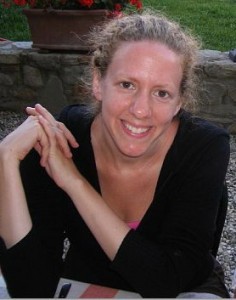
About Robin Wasserman
Robin Wasserman is the author of The Waking Dark, The Book of Blood and Shadow, the Cold Awakening Trilogy, Hacking Harvard, and the Seven Deadly Sins series, which was adapted into a popular television miniseries. Her essays and short fiction have appeared in several anthologies as well as The Atlantic and The New York Times. A former children’s book editor, she is on the faculty of the low-residency MFA program at Southern New Hampshire University. She lives and writes (and frequently procrastinates) in Brooklyn, New York. Find out more about her at robinwasserman.com or follow her on Twitter @robinwasserman.
About the anthology
Famine. Death. War. Pestilence. These are the harbingers of the biblical apocalypse, of the End of the World. In science fiction, the end is triggered by less figurative means: nuclear holocaust, biological warfare/pandemic, ecological disaster, or cosmological cataclysm.
But before any catastrophe, there are people who see it coming. During, there are heroes who fight against it. And after, there are the survivors who persevere and try to rebuild.
Edited by acclaimed anthologist John Joseph Adams and bestselling author Hugh Howey, The Apocalypse Triptych is a series of three anthologies of apocalyptic fiction. The End Is Nigh focuses on life before the apocalypse. The End is Now turns its attention to life during the apocalypse. And The End Has Come focuses on life after the apocalypse.
Buy the book
The End Has Come is available as a trade paperback or eBook.
The post The End Has Come: An Interview with Robin Wasserman appeared first on A Dribble of Ink.

May 20, 2015
The End Has Come: An Interview with Seanan McGuire
Buy The End Has Come, edited by John Joseph Adams and Hugh Howey
In collaboration with editors John Joseph Adams and Hugh Howey, A Dribble of Ink is proud to introduce a series of interviews with the authors of The End Has Come, the final volume in the The Apocalypse Triptych. Following on The End is Nigh, and The End Is Here, The End Has Come contains 23 stories about life after the apocalypse.
Interview with Seanan McGuire about “Resistance”
(Interview by Hannah Huber)
The post-apocalyptic world that you have conceived here is rather unique: not marked by political conflict or war of any kind, lacking the grandeur of destruction from a cosmic source, even without the gore of a zombie takeover. Yet it manages to be chilling and strangely obscene – perfectly analogous to the state of death itself. What inspired this particular means of world-destruction?
I did a Twitter poll! As it turns out, I am really, really good at destroying the world, and so sometimes I need help deciding between mechanisms. For this tryptich, it was down to either fungus or antibiotic resistance, and fungus won. I guess the answer is the easy one: I asked what people wanted, and then I gave it to them.
As the story went on, I found my feelings shifting back and forth regarding Megan Riley. Sometimes I was angry at Colonel Handleman for blaming her for having OCD, and sometimes I found myself thinking, ‘yes, she really is at fault for the way certain things worked out.’ How do you feel about Dr. Riley and her culpability in the end of the world?
I have OCD. And throughout my life, there have been things that have gone terribly wrong because I couldn’t cope with something at the beginning of the process, and so people hid it from me, or I hid it from myself. It’s a self-fulfilling prophecy sometimes, that my issues will get in the way. I wanted to explore that experience in fiction. As for Dr. Riley … I don’t think the end of the world was her fault. I think it was the fault of people who tried to protect her when they shouldn’t have done so.
Motherhood is a strong theme in this story. I’ve seen a number of stories that approach the apocalypse from the perspective of a father – The Walking Dead, The Road, and the movie version of I Am Legend come to mind – but not as many from the point of view of a mother. How do you feel about the representation of mothers, and indeed of women in general, in apocalypse stories?
I think mothers are really lacking, in part because of this belief that a good father is a miracle, and a good mother is an inevitability. It’s insulting. It’s insulting to amazing fathers, to mothers who work very hard, and to the people whose mothers weren’t suited for the job. We need to make room for everyone.
One of the most fascinating things about apocalyptic stories is the way that they manage to effectively combine horror and science fiction or fantasy, along with strong elements of human drama. Do you believe that the blending of genres is important to the power of genre fiction, and if so, what are some of your favorite examples of genre-crossing?
Oh, gosh. I love Charlie Stross’ Laundry novels, which are urban fantasy crossed with Lovecraft, and Tim Waggoner’s Night Watch novels, which are urban fantasy crossed with horror. If you notice a common theme there, it’s because I really love urban fantasy.
Have you got an exciting upcoming project that you’d like to tantalize us with?
I’m writing a comic! “The Best Thing” is updating weekly over at Thrillbent.com, and I could not be happier.
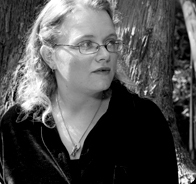
About Seanan McGuire
Seanan McGuire was born and raised in Northern California, resulting in a love of rattlesnakes and an absolute terror of weather. She shares a crumbling old farmhouse with a variety of cats, far too many books, and enough horror movies to be considered a problem. Seanan publishes about three books a year, and is widely rumored not to actually sleep. When bored, Seanan tends to wander into swamps and cornfields, which has not yet managed to get her killed (although not for lack of trying). She also writes as Mira Grant, filling the role of her own evil twin, and tends to talk about horrible diseases at the dinner table.
About the anthology
Famine. Death. War. Pestilence. These are the harbingers of the biblical apocalypse, of the End of the World. In science fiction, the end is triggered by less figurative means: nuclear holocaust, biological warfare/pandemic, ecological disaster, or cosmological cataclysm.
But before any catastrophe, there are people who see it coming. During, there are heroes who fight against it. And after, there are the survivors who persevere and try to rebuild.
Edited by acclaimed anthologist John Joseph Adams and bestselling author Hugh Howey, The Apocalypse Triptych is a series of three anthologies of apocalyptic fiction. The End Is Nigh focuses on life before the apocalypse. The End is Now turns its attention to life during the apocalypse. And The End Has Come focuses on life after the apocalypse.
Buy the book
The End Has Come is available as a trade paperback or eBook.
The post The End Has Come: An Interview with Seanan McGuire appeared first on A Dribble of Ink.

May 19, 2015
Cover Art for The House of Shattered Wings by Aliette de Bodard
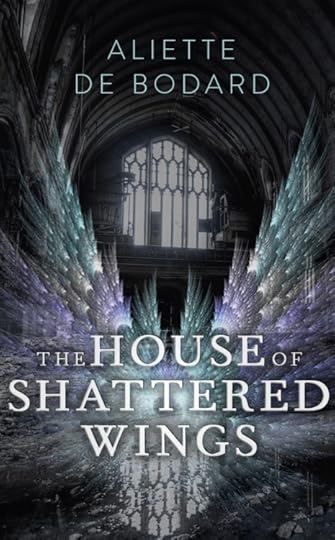
Gollancz revealed the cover art for one of my most anticipated novels today, Aliette de Bodard’s The House of Shattered Wings—a post-apocalyptic tale about warring houses and fallen angels. I love, love, love it.
The cover was created by Gollancz in-house designer Graeme Longhorns.
From the pastels against black, to the shattered glass effect accentuating the wings, Longhorns created a cover that matches the eerie beauty of the North American cover from Roc.
About the Book
Paris in the aftermath of the Great Magicians War. Its streets are lined with haunted ruins, Notre-Dame is a burnt-out shell, and the Seine runs black, thick with ashes and rubble. Yet life continues among the wreckage. The citizens retain their irrepressible appetite for novelty and distraction, and The Great Houses still vie for dominion over France’s once grand capital.
House Silverspires, previously the leader of those power games, now lies in disarray. Its magic is ailing; its founder, Morningstar, has been missing for decades; and now something from the shadows stalks its people inside their very own walls.
Within the House, three very different people must come together: a naive but powerful Fallen, an alchemist with a self-destructive addiction, and a resentful young man wielding spells from the Far East. They may be Silverspires’ salvation; or the architects of its last, irreversible fall . . .
De Bodard is one of the most celebrated SF short fiction writers working in the field, she’s been nominated or won most of the major literary awards, and been published in most of the top short fiction magazines available, including Interzone and Asimov’s. It’s not often a debut novel comes along from a writer with such accolades, so readers are in for a treat.
The House of Shattered Wings will be available from Gollancz in the UK and Roc in North America. It will release simultaneously in both regions in August 2015.
The post Cover Art for The House of Shattered Wings by Aliette de Bodard appeared first on A Dribble of Ink.