Shawna Coronado's Blog, page 9
July 30, 2018
A Blue Bench in the Garden Saves the Day
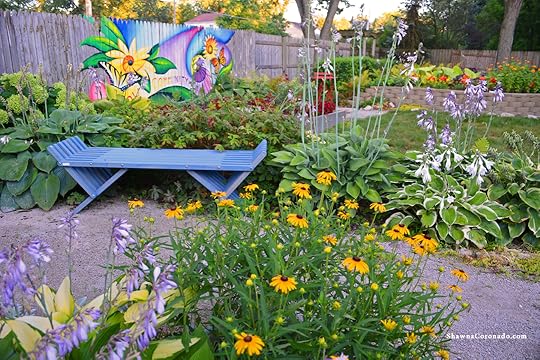
Blue. It’s always been “a thing” for me in the garden. I once had a very famous local garden expert come over to my place, look at all the blue I had around and pronounce his opinion, “How vulgar!” I’ll never forget how high my eyebrows went up on my forehead that afternoon as I consider blue beautiful and a particularly powerful color against the greens of woodland foliage which fills my shady garden. When GloDea® asked me to review their garden furniture my first choice was blue. I love this Glodea® Blue Bench X70 and think it’s found a permanent spot in the garden snuggled right below the hydrangeas and next to the garden path. I wanted to show you how it looked out back so you could see that color can be a wonderful thing in designing your garden. It saved my garden from being dreadfully seat-free.
While the blue bench might be architectural and beautiful in my perennial garden, it is also quite useful. I’ve found it remarkably strong; it can easily fit 3 full-sized humans with cocktails in hand. Essentially it has saved me from the dreaded NO PLACE TO SIT SYNDROME. I use it functionally as a place to set tools and bags and all my garden things while I’m out back working. I let the super hero blue bench sit outside all winter last season with no worries. My review: two thumbs up. Special thanks to GloDea® for providing the blue bench for the garden. I’ll be donating it this season to the local community to see if I can save someone else’s garden with a little bit o’ blue.

The post A Blue Bench in the Garden Saves the Day appeared first on Shawna Coronado.


July 25, 2018
Best Tequila Glazed Fish Tacos with Avocado Salsa Recipe

Ryan and Shawna cooking up one of Shawna’s favorite dishes.
My friend, Chef Ryan Hutmacher, won ABC’s The Chew Search for the Weight Watchers® Chef a while back. Before that, when he still lived in Chicagoland, he and I filmed a series of awesome cooking videos where we used fresh ingredients to prepare healthy recipes for all you wonderful peeps. Chef Ryan’s delicious taco dinner is $10 or less and very easy to cook, especially with freshness from your garden. It includes tomatoes and onions from my very own front lawn veggie stash and is one of the most delicious and inexpensive taco meals you can prepare. Above you see a “how to” video that features the amazing Sun Gold Cherry Tomato and onions I grew myself. Below is the delicious recipe.

To learn more about rain water cisterns and rain exchange systems for your garden and lawn that you see in the background where we filmed, please go to the sponsor for the “Living Lean and Green; How To Cook Healthy For $10 or Less” video series, Aquascape Inc., at www.aquascapeinc.com. They have an amazing website filled with ideas to help you live more sustainably by collecting and utilizing rain water, particularly to water a garden.
The “Living Lean and Green; How To Cook Healthy For $10 or Less”video series features Chef Ryan Hutmacher, The Centered Chef of Centered Chef Food Studios (http://www.centeredchef.com), cooking with me (Shawna Coronado) in my front lawn vegetable garden. Together, we are creating meals which cost a family of four $10 or less to prepare and features organic vegetables I have grown myself.
Today’s recipe features cherry tomatoes I grew myself. Tequila Glazed Fish Tacos with Avocado Salsa Recipe is TO DIE FOR! Cook it up!
The post Best Tequila Glazed Fish Tacos with Avocado Salsa Recipe appeared first on Shawna Coronado.
July 16, 2018
Get Rid of Japanese Beetles

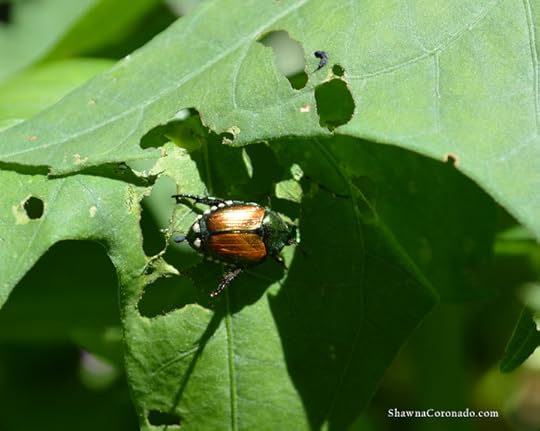
Japanese beetles are pretty much the biggest battle in the July garden in the Midwestern states and everyone is trying to figure out the best way to get rid of them. It is guessed that they originally migrated to New Jersey as larvae from Japan through a shipment of iris bulbs before 1912. They are about ½ inch long and have this amazing iridescent copper and green shell that makes them look remarkably beautiful – but don’t be fooled by their lovely exterior – it is a pest in the United States (see photos). They hibernate in the cold months under ground as larvae. They pupate and emerge as adults mid-summer. Without a doubt, they are a plague in almost every place they land across the world and have currently invaded all but nine western states in the U.S.
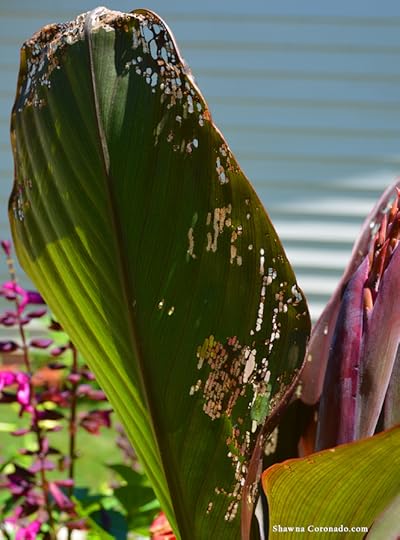 As a crop devastating scourge, they will eat your prize roses or prize tomatoes indiscriminately. In fact, Japanese beetles have more than 200 host plants. Their big month is July in the Midwest, so you will be working from the beginning of the month to the end taking care of them if you have a particularly strong beetle population. My advice is DO NOT USE the pheromone beetle trap bags. They only seem to attract more beetles, and that is the last thing you need when trying to control the population. The beetles winter underground as grubs feeding on roots and hide deep in the soil. Organic grub control can work, but you have to treat the ground where the larvae burrow AFTER summer. You need a solution mid-summer as well, just as they emerge from the soil, in order to get the little buggers before they devastate your plants.
Once they hatch, they are slow moving and easy to snatch off plants and toss in a bucket of soapy water. Right now I have them feasting on my roses and canna lilies – eating flowers, devastating the leaves, and generally being a nuisance (see photos). Try catching them early before they start spreading the pheromone from their bodies that attract other Japanese beetles and you will have more success. When the beetle population is exceedingly large, however, it might be time to take your defense up a notch.

This season I am testing a botanical OMRI® listed botanical insecticide which has ingredients derived from chrysanthemums; PyGanic Gardening for organic gardens from www.MGK.com. PyGanic will kill adult Japanese beetles – and has successfully slaughtered hundreds in my garden – but only if the product is sprayed directly on the beetle. Beetles which are not sprayed directly will not die, so be sure to hit them straight on with your sprayer. Mixing up the PyGanic Gardening product is simple; Add 1-2 fluid ounce of PyGanic Gardening per gallon of water. You must approach each beetle individually.
Remember, that unlike using synthetic pesticides, there’s no need to wait for harvesting provided the spray has sufficiently dried, as it degrades fairly quickly. Even so, it is still a good idea to thoroughly wash off all veggies and other edibles from the garden. Get rid of Japanese beetles early as they just emerge from the soil and you will have better success.
Special thanks to with McLaughlin Gormley King Insect Solutions (MGK) for sending me the two OMRI® listed botanical insecticides derived from chrysanthemums; Azera Gardening and Azera Gardening at no cost. It’s easy to get rid of Japanese Beetles – try using these OMRI listed products at www.MGK.com.
The post Get Rid of Japanese Beetles appeared first on Shawna Coronado.
July 14, 2018
How to Cut Flowers in a Cutting Garden
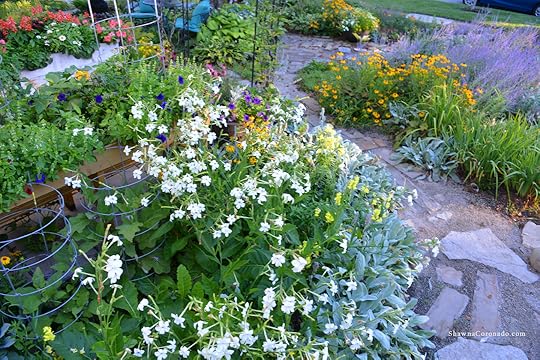
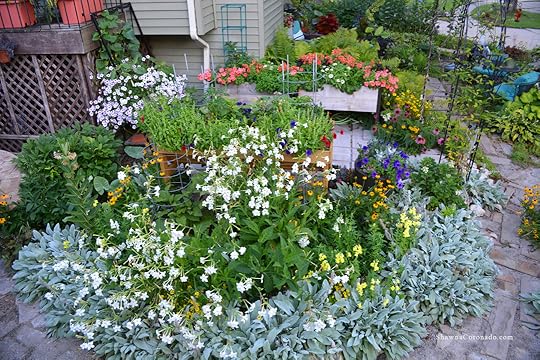
This season plant a cutting flower garden! A cutting garden is often dual purpose serving as a pollinator garden and an oh so very beautiful source of cut flowers. Cutting gardens continue to give generously throughout the growing season. I wanted to share with you how to cut flowers in my own cutting garden so that you can better understand how easy it is to have fresh cut flowers all summer long.
In the video below, sponsored by the Wave Petunia company, you can learn how to cut a flower from the garden and also see some of my favorite cutting garden plants – Nicotiana ‘Nicki White’, Snapdragon ‘Rocket White’ and ‘Rocket Golden’, Zinnia ‘Zahara Fire’, and Zinnia ‘State Fair Mix’.
Video here – https://youtu.be/9Gzn7FFqHmg
Special thanks to Wave Petunias for providing the astounding cutting flowers used in this How to Cut Flowers in a Cutting Garden video. Visit www.wave-rave.com to learn more about flowering annuals.
The post How to Cut Flowers in a Cutting Garden appeared first on Shawna Coronado.
July 5, 2018
How To Make Authentic Corn Tortillas

Learning how to make corn tortillas with Margarita in Akumal, Mexico.
For those of you who are joining the gluten-free lifestyle, rice and corn qualifies as a gluten-free grain. A few years ago my team went to Mexico and filmed a culinary series on regional Mexican cuisine – perfect inspiration for the gluten-free crowd.
While we were there we met Margarita, a lovely woman who hand pats six kilos of corn tortillas daily for the Lol-Ha Restaurant in Akumal, Mexico. If you watch the video, you will see how wonderful she is and what a cook – she showed us how to pat the tortillas out.
Below is a simple recipe for making corn tortillas yourself. Corn tortillas are much healthier for you than white flour tortillas, and when you make them from scratch are the perfect side for your fresh vegetable fajitas and tacos.
How To Make Corn Tortillas
Ingredients –
2 Cups Masa Harina
1 to 1/2 Cups Water
Instructions –
To make around 16 tortillas, place 2 cups of masa flour in a bowl.
Add 1 1/2 to 2 cups of very warm water to the masa flour (according to the directions on the package).
Mix in and rest for 5 to 10 minutes.
Knead the dough for several minutes, do not over knead.
Shape masa dough into a ball the size of a golf ball.
Pat balls flat with hands or utilize wax paper and a tortilla press. (See video as reference.)
Cook on hot pan until lightly toasted and air pockets are forming.
Serve hot!
*Note – Because the FTC requires it, I am noting that the Riviera Maya Tourism group supplied the trip to Mexico and the culinary series was sponsored directly by the Lol-Ha Restaurant at the Hotel Akumal Caribe in Akumal, Mexico. Any further sponsorships are mentioned at the end of the video.
The post How To Make Authentic Corn Tortillas appeared first on Shawna Coronado.
July 1, 2018
Secret for Trimming Herbs so They Will Keep Producing All Garden Season
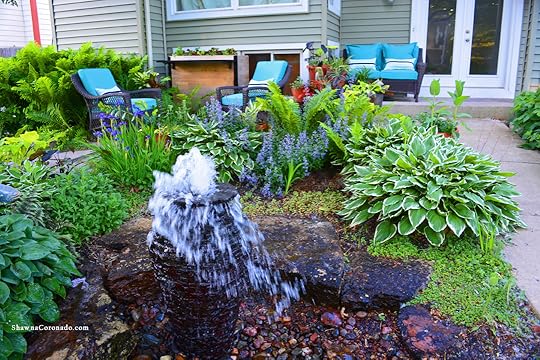
Want to save grocery money by growing herbs in the garden? I have a simple cutting technique for you that I do all the time in my own garden that helps extend the life of an herb plant. I call it the “Cutting Rule of Thirds”. Once you have grown an herb plant to maturity, only cut 1/3 of the herb plant at a time in order to prevent total devastation when harvesting your herbs. Destroying your plant in one fell swoop will curb season-long production. By cutting in thirds, you can save the plant and have it produce all season long.
Watch this quick video sponsored by the Wave Petunia company and learn how you can cut herbs that will save your money and enable you to produce more herbs from the same plant.
Video here – https://youtu.be/oXpNaMNc46M
Special thanks to Wave Petunias for providing the herbs, vegetables, and flowers used in this Secret for Trimming Herbs so They Will Keep Producing All Garden Season video. Visit www.wave-rave.com to learn more. Thanks to Organic Mechanics Soil for the worm casting filled organic soil.
The post Secret for Trimming Herbs so They Will Keep Producing All Garden Season appeared first on Shawna Coronado.
June 29, 2018
How To Find Bad Bugs in the Garden

Tips on How to Find Bad Bugs
As bugs go, there’s the good, the bad, and the ugly – and all of them seem to hide when I go looking for them. Just how do you find those bad bugs that are eating your plants down and seem to be eluding capture? Many bugs are predators or prey, so they can be sneaky and excellent at hiding in your garden.
4 Pest Finding Techniques
Look with your Peepers – Get down at the level of the plant in order to examine it. This might entail you getting down on your hands and knees to take a looksee. I use a magnifying glass and a garden kneeler to help bring my eyeballs a little closer to the insect action.
Take a Shot – Bring your cell phone in the garden and do your best to take a close-up photo of the bug if you’re trying to identify it. Once you capture the photo you can send the photo to an expert who can guide you. A local university extension office is the perfect place for assistance if you need it.
Search on the Flip Side – Insects often attach to the leaves from the underside (see top photo). It offers them a hiding place which is cool to eat their lunch. When you begin inspecting a plant, the first place to look is on the back of all the leaves. Gently turn the leaf over and examine each leaf closely for the opportunistic chomping creatures. Once you’ve examined the back, move to the stem. Pests love to hide in the cross intersection point of stems.
Night Vision – Sometimes the pesky insects are nocturnal, which means they only come out at night. Bring a flashlight out on a dark night. Creep up on the suspected plant victim, pull some leaves back, then flash the light directly on the plant. You might see Asiatic garden beetles or earwigs scuttle away from the light.
Now that you have found them, you have to do something about the invaders. Handpicking is always my first choice, but if they’re fast and you cannot catch them with your hand, then spraying them with an organic pesticide is an option.
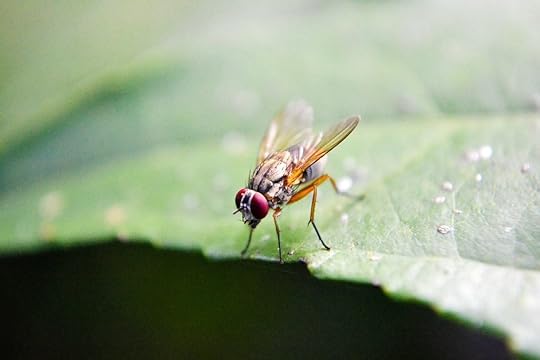
This season I am testing two botanical OMRI® listed botanical insecticides which have ingredients derived from chrysanthemums; PyGanic Gardening and Azera Gardening for organic gardens from McLaughlin Gormley King Insect Solutions (MGK). Both products can be purchased over-the-counter and kill more than 200 types of crop-damaging insects on virtually all growing crops, is OMRI® listed, meets the USDA’s National Organic Program (NOP) requirements. And, unlike using synthetic pesticides, there’s no need to wait for harvesting provided the spray has sufficiently dried, as it degrades fairly quickly. Even so, it is still a good idea to thoroughly wash off all veggies and other edibles from the garden. The trick is that once you find the bad bugs in your garden you must spray their bodies. Make direct contact with the application for success.
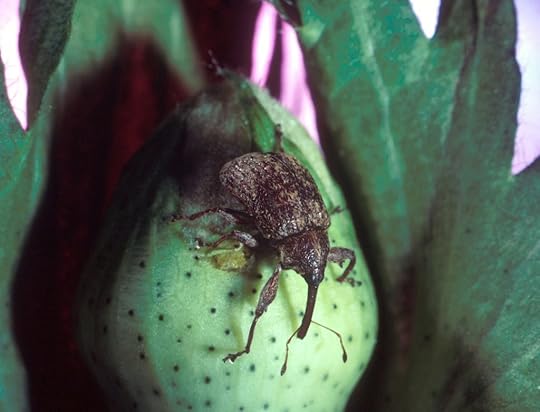
Special thanks to with McLaughlin Gormley King Insect Solutions (MGK) for sending me the two OMRI® listed botanical insecticides derived from chrysanthemums; PyGanic Gardening and Azera Gardening at no cost. How to find the bad bugs in your garden and encourage beneficial insects? Handpick and use eco-friendly approaches whenever possible. Find these OMRI listed products at www.MGK.com.
The post How To Find Bad Bugs in the Garden appeared first on Shawna Coronado.
June 21, 2018
How To Make Gluten Free Cold Shrimp Cocktail Veracruz Recipe

Chef Carlos Capistran and Shawna Coronado cook Shrimp Veracruz Cocktail With Vegetables
Several seasons ago I filmed regional cooking in Akumal, Mexico at the Lol-Ha Restaurant. I learned how to cook amazing meals and appetizers for under $10 or $15 per meal using fresh vegetables, such as this amazing Shrimp Veracruz Cocktail. Cooking on a beach with a chef who loves garden fresh food – what an experience!
Follow the video above to see how it is made.

~~~
HOW TO MAKE SHRIMP VERACRUZ WITH VEGETABLES
Ingredients:
Salsa or ketchup – 1 Cup
Tomato juice – 2 Cups
Extra virgin olive oil – 1/8 Cup
Lemon juice – 1 1/8 Cup
Tomato puree – 1 Cup
Diced tomatoes – 1 Cup
Chopped cilantro – 1/2 Cup
Diced red onion – 1 Cup
Shrimp, Cooked, Peeled, Chopped – Half Pound
Avocado – 1/4
Salt and Pepper to taste
Tortilla Chips, Plantain Chips, or Saltine Crackers
Preparation:
In a large bowl mix the ketchup, tomato juice, lemon juice, and tomato puree.
Add the diced tomatoes, red onions, and cilantro. Let rest for at least one hour.
Add shrimp and the rest of ingredients to the bowl. Mix well.
Looks lovely when served in a cold martini glass with a few slices of avocado resting on top.
Serve with the chips or crackers.
*Note – Because the FTC requires it, I am noting that the Mayan Riviera Tourism, Hotel Akumal Caribe, Villa Akumal, and Akumal Guide Mexicarte sponsored this experience. I was not told what to document or how to document the experience of making Shrimp Veracruz Cocktail, we were simply asked to attend and film – anything expressed in posts related to the activities is my own opinion expressed from my own personal experience.
The post How To Make Gluten Free Cold Shrimp Cocktail Veracruz Recipe appeared first on Shawna Coronado.
June 18, 2018
Plant Amaryllis in Summer For a Flower Surprise

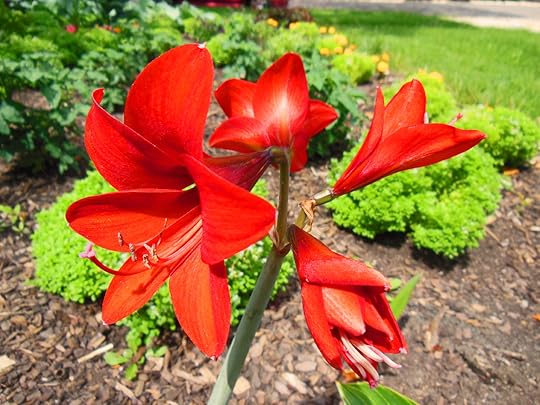
Every winter holiday we garden enthusiasts go absolutely bonkers for Amaryllis as houseplants. I love them passionately and have been growing them for years. Having some blooming sunshine in mid-winter is a joy in itself and this Amaryllis ‘Apple Blossom’ was the light of my life for several weeks while it was flowering. The flowering heads are so large I tend to think of them as a part of the family. Of course, while amaryllis is known primarily as a houseplant which is exchanged near Christmas, it is far more versatile than that and can be grown year round and even in your outdoor garden beds.
After the initial bloom during the holidays, clip off the greenery and store in a cool dark place. Once the bulb has rested a few months, bring it out after the last frost and replant either in a container or in ground for a second rebloom display as an outdoor plant. Repeat the process of storage and bring the bulb out again in the winter as a houseplant.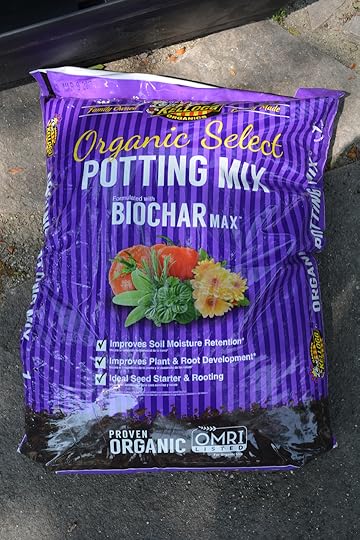
How to Plant Amaryllis in a Container for Summer
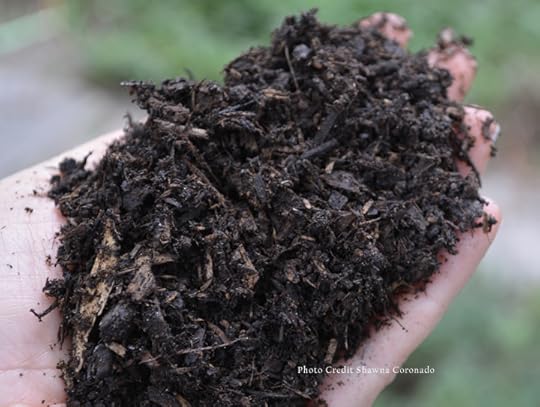
1. Fill the container ¾ full with organically fertilized potting soil. I used Kellogg Garden Organics Organic Select Potting Mix formulated with BioCharMax (see below), which is an excellent well draining organic potting soil filled with nutrients.
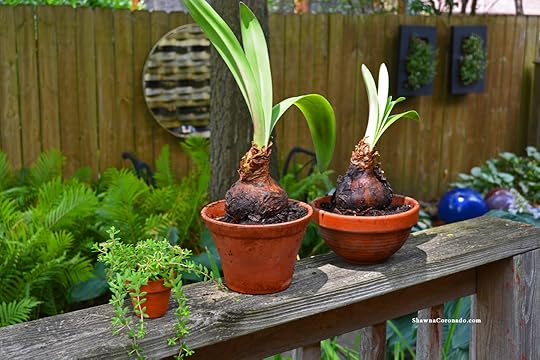
2. Place the bulb on top of the potting soil, then nestle the bulb down about a quarter inch. Make sure to leave the top of the bulb exposed. For Amaryllis, there should be one bulb for a 6 inch pot.
3. Water so that the soil is moist. Do not over-water as Amaryllis prefers good drainage. Display outside in your garden or in a sunny location in your home.
Amaryllis Outdoors in Bedding Plants
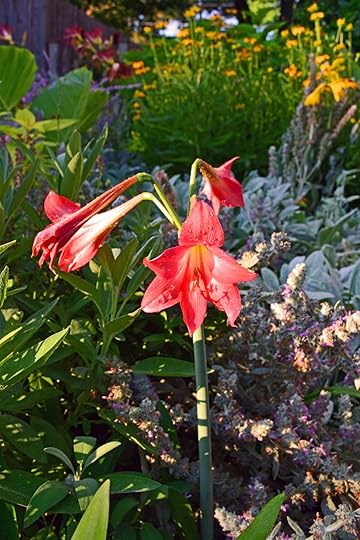
It is easy to grow Amaryllis outdoors in your summer planting beds as well (see photos). When danger of the last frost passes, amend the ground soil with an organic amendment to increase drainage and nutritive value of the planting area. An organic soil will do such as Kellogg Garden Organics Organic Select Potting Mix formulated with BioCharMax, then plant the Amaryllis directly in your garden bed with half the bulb above ground. A sunny spot is best, but partial shade will do. Use an organic fertilizer to stimulate green growth, however, fertilizer is not necessary for the plant to flower. Before the fall frost sets in, dig up the bulbs and place them in a cool, dry spot to over-winter and start the process again.
Special thanks to Kellogg Garden Organics for providing soil to me this season – the soil worked very well with my herbs, vegetables, and flowers. Happy Amaryllis gardening!
The post Plant Amaryllis in Summer For a Flower Surprise appeared first on Shawna Coronado.
June 8, 2018
Grow a Shade Vegetable Garden
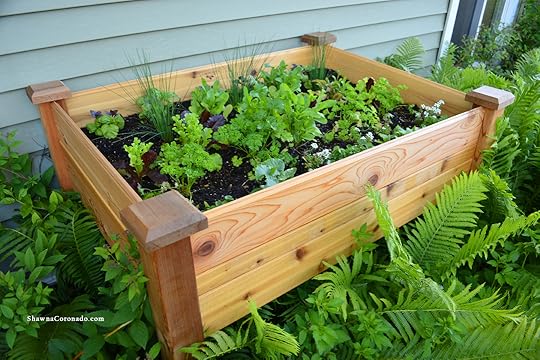
Traditionalists believe that full sun is the most important ingredient to success for herbs and vegetables, yet not everyone gets 6 to 8 (or more) hours of sun per day on their homes and balconies. Some get only partial sun and shade (4 to 6 hours of sunlight per day), and others have full shade
(less than 4 hours of direct sunlight per day). When considering herbs and vegetables for lower light conditions, remember that shade equals no fruits and no roots. In other words, large fruiting plants such as tomatoes cannot produce abundantly in shade. Neither can root plants such as potatoes and beets. Growing root vegetables in shade means you will get far more leaf than root. It’s the same with the fruiting plants; you’ll get lots of greenery and very little fruit production.
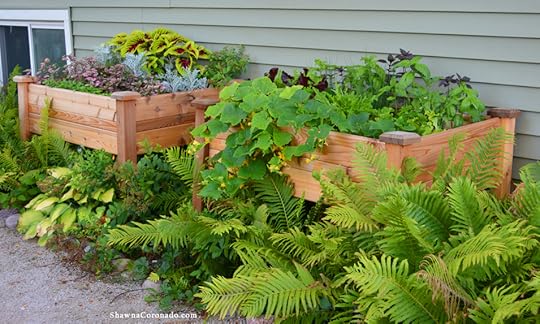
Growing shade vegetables is easy and a fantastic solution for tight spaces such as balconies, patios, and fence lines. Watch the video sponsored by the Wave Petunia company to get a better idea of how to grow in part shade. You can see the vegetables and plants that I used and I included a list of part shade vegetables and herbs below.
Video here – https://youtu.be/FyyQrQyST04
SHADE-TOLERANT HERBS AND VEGETABLES
• Arugula
• Basil
• Beet greens
• Collards
• Endive
• Herbs – leafy does best
• Kale
• Lettuces
• Malabar spinach
• Mustard greens
• Pak choi
• Rhubarb
• Spinach
• Swiss chard
• Turnip greens
Special thanks to Wave Petunias for providing the herbs, vegetables, and flowers used in this Grow a Shade Vegetable Garden video. Visit www.wave-rave.com to learn more. Thanks to Gronomics for the beautiful elevated beds and Organic Mechanics Soil for the worm casting filled organic soil.
The post Grow a Shade Vegetable Garden appeared first on Shawna Coronado.