Shawna Coronado's Blog, page 7
August 6, 2019
Best Stonecrop or Sedum Growing Tips
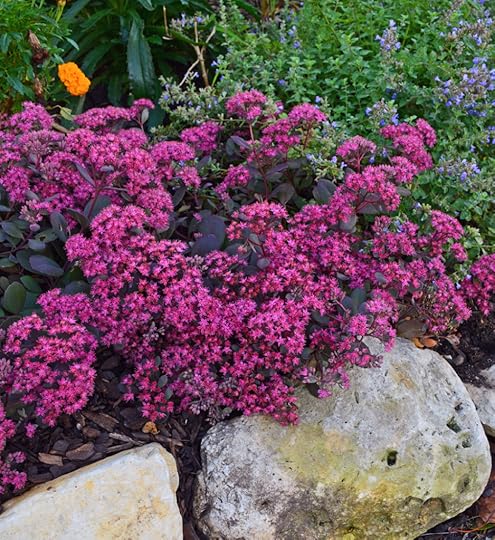
Stonecrop, or Tall Sedum, is a species related to the groundcover creeping sedum, yet its height makes it significantly more versatile in the landscape. It is a terrific ornamental succulent that can be used in xeric and drought-tolerant perennial beds. Stonecrop has various shapes of leaf and flower, is deer resistant, attracts beneficial insects, and can be grown in virtually any type of soil or location, from roof to container to ground, as long as they have access to regular sunshine. Stonecrop is the perfect butterfly garden plant; it attracts both bees and butterflies in large quantities when it blooms in the late summer or early fall. Some varieties of stonecrop are edible and are particularly good in stir-frying, but eating stonecrop raw can upset your stomach, so make sure you cook it first. Below is an excerpt from the Indiana Getting Started Gardening Guide which can give you some insight into growing this interesting plant.
Botanical name — Sedum spp.
Bloom Period and Seasonal Color — End of summer or fall; various colored foliage that bloom white, pink, burgundy, and purple
Mature Height × Spread — 15 inches to 3 feet × 15 inches to 2 feet
Added Benefits – Edible, beneficial to insects
Sun Requirements – Sun, Part-Sun, Part-Shade – Hardiness Zones 4-9
When, Where, and How to Plant – Stonecrop will do well in most any soil but prefers a light, sandy, or gravel area exposed to full sun. Loosen heavy clay soils with rotted manure, compost, or gravel before planting as good drainage is the key to success with the plant. While full sun is its preference, it will tolerate part shade but can become floppy and have weak stems in shady, moist conditions.
Growing Tips – In summer, particularly during dry summer weather, water every two weeks. Moisten the soil without soaking it as the leaves of this succulent store water, so heavy irrigation is not necessary. Plants that stand in water will drown and typically suffer from root rot and fungal issues. Fertilize in early spring with an organic fertilizer and prune back any dead growth from winter. Do not overfertilize as the plants will become leggy and weak. I once planted ‘Matrona’ in a pile of rotted manure and the leaves achieved a giant size, larger than my hand, but the stems became gangly and floppy.
Advice and Care – Shade and overcrowding can cause fungal issues. Treat botrytis leaf blotch and other fungal conditions with an organic fungicide. While resistant to deer, some regions see deer eating this plant to the ground; it depends on the area and level of wildlife exposure.
Companion Planting and Design – Stonecrop looks amazing in border gardens, large landscape installations, and containers. It’s a fantastic solution for difficult locations like busy urban areas because it looks great even after being exposed to high levels of air pollution, poor soil, and low water conditions.
Want more creative growing and gardening ideas for sedum or stonecrop, particularly for gardens in the Midwest? Please get my book, the Indiana Getting Started Garden Guide.
Save
Save


July 9, 2019
Best Joe Pye Weed Growing Tips
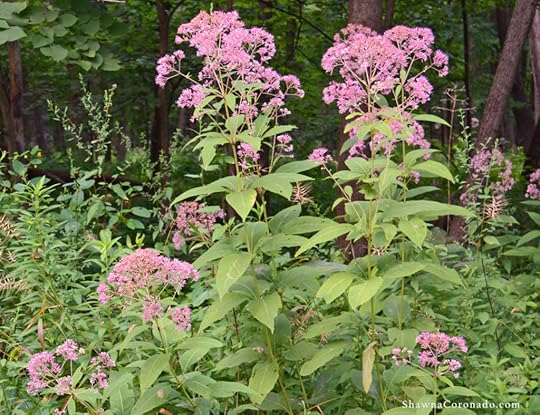
Native to the Midwest, Joe-Pye Weed is an easy plant to grow and can make a powerful statement in the wildflower garden. Joe-pye weed is rumored to be named after a Native American herbalist who used the plant as a medicinal herb to help cure fever-centered illnesses in early American history. This herbaceous perennial is often called “queen of the prairie” because of its 10-foot stature and regal crowning flowers that are a rose-purple shade and attract butterflies and bees by the hundreds. Plants have a lovely vanilla scent, and the flowers make extraordinary cut flowers. If you have a bird garden, do not deadhead the flowers as the seedheads attract all types of feathered friends. While Joe-pye weed has been considered medicinal, it is rarely used in modern times [for this purpose] because it is considered highly toxic to pets and humans when it’s not consumed as directed. Below is an excerpt from the Indiana Getting Started Gardening Guide teaching you more about this beautiful flowering plant.
Botanical name — Eupatorium purpureum (also – Purple boneset)
Bloom Period and Seasonal Color — Summer; rose-purple flowers
Mature Height × Spread — 3 to 10 feet × 3 feet
Added Benefits – Low maintenance, attracts pollinators and beneficial insects, birds love the plant
Sun Requirements – Sun, Part-Sun – hardiness zones 3 to 8
When, Where, and How to Plant – Although Joe-pye weed prefers full sun, it will do well in part sun but might sprawl if its spot is too shady. Joe-pye weed prefers rich, humusy, moist soils. Improve soil where needed with rotted manure and compost. Plant either from seed or potted plants. If it’s planted early enough, Joe-pye weed should flower by the end of its first season of growth.
Growing Tips – Encourage shorter plants by pinching back early in the spring growing season. Consider planting in wet soils near rivers, streams, ponds, and as a plant for wetland mitigation.
Advice and Care – Maintenance includes cutting down the plant completely in early winter. Typically Joe-pye weed has very little insect or disease problems, although overcrowded, shady, and consistently wet conditions can lead to fungal problems. Give the plants lots of space in the planting beds in order to help prevent these issues. Treat fungal spot and powdery mildew with an organic fungicide.
Companion Planting and Design – Joe-pye weed naturalizes very well both in prairies and along the borders of woodlands. It makes an outstanding rain garden plant and looks good combined with grasses and water-loving iris. Because it is such an exceptionally tall prairie plant, it is best used at the very back of borders, as a natural fencelike border plant, and mixed in with other natives in prairies and meadows. Joe-pye weed is a must-have choice for a butterfly garden and works well planted in the center of an island of mixed butterfly shrubs and perennial plants. In a more drought-tolerant border, consider placing Joe-pye weed at the back with ornamental grasses, Russian sage, goldenrod, and butterfly weed, mulching the garden well to help hold moisture.
My book the Indiana Getting Started Garden Guide has some delightful ideas on how to grow joe pye weed and many more perennials, annuals, and shrubs, particularly if you live in the midwest.
Save
June 4, 2019
Angelonia or Summer Snapdragon Growing Tips
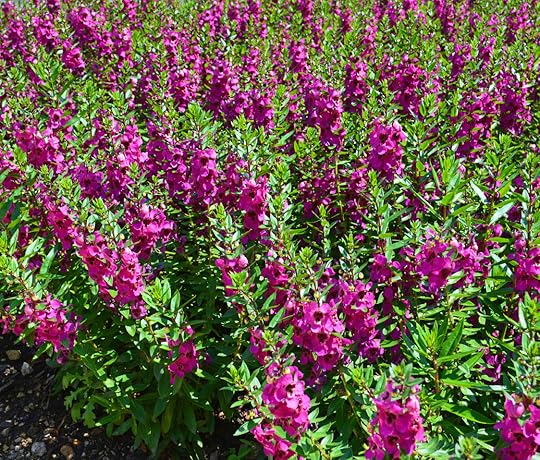
Angelonias are a remarkably drought tolerant and low-maintenance annual. They are often called summer snapdragons because they resemble a snapdragon in their upright habit; however, they hold up better in heat and drought than snapdragons. They flower most of the spring, summer, and on into the fall with no deadheading required. There are many cultivars within the angelonia family—some are shorter and have tiny blooms and some are taller with large blossoms. All have varying degrees of fragrance that smell somewhat like grape or apple. Because of their strong stems and long lasting blooms, they make an excellent choice for cut flower arrangements. Hummingbird moths and other pollinators love angelonia. Below is an excerpt from the Illinois Getting Started Garden Guide which can help you get started with this tough sun loving plant.
Botanical name — Angelonia angustifolia
Bloom Period and Seasonal Color — Spring to fall; blue, lavender, pink, rose, white, stripes, and bicolor
Mature Height × Spread — 1 to 4 feet × 6 to 12 inches
Added Benefits – Attracts Beneficial Insects, Attracts Hummingbirds
Sun Requirements – Sun, Part Sun, Part Shade
When, Where, and How to Plant
Angelonias can be found during the spring at garden centers across the state and can also be grown from seed. Plant after frost dates to ensure there will not be a frost as the plants really prefer warmer weather. Angelonias grow their best in a full sun location with a bed amended with a heavy level of organic matter. They will perform in part sun, but require six to eight hours of direct sun per day in order to produce hearty plants with lots of flower spikes. There are many different varieties of angelonia, so be sure to check the label of a plant for growth habits to make sure you have the correct height for your growing situation. Outstanding as container plants, angelonias do well as a featured plant or as part of a mixed container design as well.
Growing Tips
Water very well until established. Once established, this plant is in it for the long haul and will require very minimal care. Fertilize with an organic fertilizer every four weeks. Staking is not required.
Advice and Care
Deadheading is not needed for this vigorous flower; however, trimming overgrowth or leaning stems will not harm the plant. Aphids are best treated by squirting a strong blast of water from a garden hose or spraying the bugs with soapy water. Plants grown in shadier conditions might be prone to powdery mildew, which can be treated with an organic fungicide.
Companion Planting and Design
Angelonia’s upright habit makes it the perfect taller companion plant for cascading plants such as petunia, calibrachoa, or sweet potato vine. They are gorgeous in front of ornamental edibles, roses, fountain grass, and plume grass.
If you would like more ideas on how to grow all types of plants, particularly in the Midwest, please resource my book, the Illinois Getting Started Garden Guide in order to see more plant profiles and guides.
Save
Save
June 1, 2019
Hybrid Elm Tree Tips
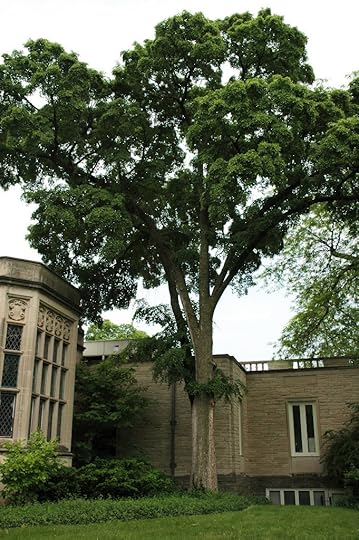
Want some inspiration for planting your landscape up this season? Hybrid elm tree planting is making a comeback and the elm can be a beautiful choice for your landscaping needs. Below is an excerpt from the Indiana Getting Started Gardening Guide which can help you get started with this hybrid tree which has great potential to make a strong statement in your landscape.
Elm trees were used as street trees and truly represented Main Street USA in the beginning of the 20th century until Dutch elm disease, a wilt fungus, decimated the trees. It is reported that by 1970 over 77 million trees were dead, and a new understanding of the importance of planting diverse tree varieties within our communities became mainstream. Hybridized varieties of the elm tree have made a strong comeback because of their resistance to Dutch elm disease. Native varieties have been known to grow over 100 feet tall, but most hybrids get about 60 feet tall. Elms have winged seeds called samaras that are well loved by squirrels, chipmunks, songbirds, and game birds. Baltimore orioles love to weave their pendulous nests in elms.
Botanical name — Ulmus hybrids
Bloom Period and Seasonal Color — Spring; inconspicuous flowers
Mature Height × Spread — 40 to 100 feet × 40 to 80 feet
Added Benefits – Attracts birds of all kinds
Sun Requirements – Sun
When, Where, and How to Plant – Plant an elm in a sunnier location; morning sun is best as it will help prevent fungal problems, although the tree can survive shade well. Elms will tolerate most soils as long as they are well drained. Remove all burlap, rope, and wire from the rootball, and then water the rootball well before planting. Dig a hole the same depth of the rootball but at least twice as wide before planting.
Growing Tips – Water consistently until the tree is established. Also water the trees in drought conditions because plants in distress are more likely to contract fungal disease. Annually mulching the tree with several inches of compost will help an elm hold moisture but also allow nutrients to trickle down through the soil. Do not fertilize otherwise unless the tree is showing signs of malnutrition.
Advice and Care – Prune trees in early spring before foliage develops. Cut back deadwood, water sprouts, and suckers at any time. Wildlife enjoys the spring seed litter, but tidy seeds by blowing or raking them up. Fungus is the enemy of the elm. While new varieties are resistant to Dutch elm disease and other fungi, they can still be attacked by fungal problems. Some of these conditions can be controlled by planting the elm in full, direct sunlight with good air circulation. Do not plant an elm in shady or crowded conditions; it will perform poorly.
Companion Planting and Design – Elms handle pollution, winter salt, and high traffic areas well. Additionally, they are very adaptable to most soils, making them a stupendous selection for the urban landscape, particularly inner city areas. Its glossy leaves make the elm ideal as a shade tree near patios and pathways.
Try These – Commendation has glossy green leaves, grows rapidly, and has yellow fall leaves. It grows between 40 and 60 feet. Triumph will reach 60 feet high and 40 feet wide, has good branching, and significantly improved disease and pest resistance. ‘Dynasty’ is a very hardy, vase-shaped, Chinese elm with leaves that turn bright orange in fall. If you would like more ideas on how to grow many different trees and plants for your landscape, particularly in the Midwest, please pick up my book, the Indiana Getting Started Garden Guide.
May 7, 2019
How to Grow a Banana Plant in a Northern Garden
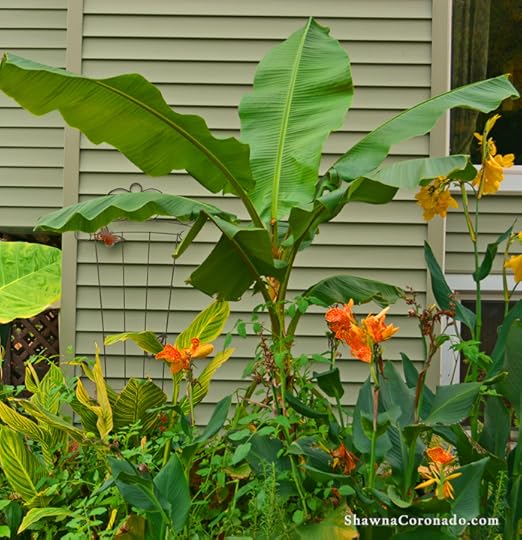
Bananas can definitely be grown as an annual or an herbaceous perennial in the Midwest or northern states – most particularly down to zone 5. If there is a cold winter that goes below -15 degrees, the plant will not survive as an herbaceous perennial and will need to be replanted. Therefore, I treat this plant as an annual; I do my best to mulch well in the hopes that it will return the following year. Seeing the large tropical leaves of the banana is an unexpected surprise in a northern garden bed that can add an eye-lifting level of interest to your landscape. I have found it to be a conversation piece next to my front patio. While the bananas produced are inedible and seedy, the banana leaves are edible and I often use them in culinary dishes. Below is an excerpt from the Indiana Getting Started Gardening Guide which can help you grow this sunny flower.
Botanical name — Musa basjoo
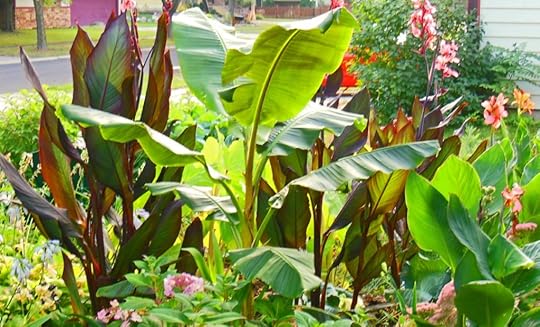
Bloom Period and Seasonal Color — Summer; orange flowers, foliage interest
Mature Height × Spread — 6 to 14 feet × 8 to 10 feet
Added Benefits – Edible
Sun Requirements – Sun, Part Sun
When, Where, and How to Plant – After the last frost, plant a banana plant from a nursery or online catalog in a sunny spot, out of the wind and in well-drained soil that is organically rich with compost and manure. Windy locations can damage the large leaves, which can grow up to 6 feet long in perfect conditions. If you plant a banana deeper—up to 12 inches—the plant will be more likely to survive through winter [with heavy mulch].
Growing Tips – Mulch well to help retain moisture; in fact, bananas love water and grow well with a consistently moist soil. Fertilize regularly with organic fertilizer throughout the season. Overwintering a banana is easy if you dig it up after the first frost, wrap the roots in plastic, and store it in a cool, dark, frost-free location like a basement. To keep the plant in the ground, let it die back, then cut off the dead part of stem, mound a layer of mulch around the plant base, and cover the mound with black plastic or burlap. Uncover in spring and see if it has survived. Yes? Fantastic, you saved money. No? Go out and get yourself another banana; it is time to start over.
Advice and Care – Japanese beetles seem to love bananas, but it’s mostly pest-free outside of the beetles. For an organic solution, handpick the pests and drop them into soapy water. Cut wind- or pest-damaged leaves with scissors to keep the leaf edges looking crisp.
Companion Planting and Design – Great companion plants include hakonechloa and other more tropical plants such as caladium, colocasia, and canna. Planting petunias and other annuals around the base of the plant helps feature the height of the banana. I have seen an upstart cherry tomato use a banana as a support quite successfully, which speaks to the possibilities of adding the banana to an ornamental edible garden as a center feature.
Try These – Other hardy bananas include Musa xishuangbannaensis ‘Mekong Giant’, which can grow 20 feet tall, and M. velutina ‘Pink Banana’, which is a dwarf that grows 6 to 9 feet tall.
Find more interesting ideas for annuals, perennials, and shrubs, particularly plants that work well in the Midwest, in my book the Indiana Getting Started Garden Guide.
April 1, 2019
How To Grow Purple Broccoli
Purple broccoli is a positive anti-inflammatory food to consume if you are trying to lower inflammation, eat more roughage, and to generally keep your system moving. As a person with degenerative osteoarthritis I have learned that certain foods seem to help me relieve inflammation more than others; purple sprouting broccoli works well and is full of antioxidants. Both the vitamins and antioxidants are most readily retained when eaten raw.
Besides all of the above benefits, purple broccoli is absolutely delicious and looks beautiful in a salad or side dish. Watch the video (here at the LINK if you cannot see it above) to learn more about how to plant, grow, and harvest this ornamental edible vegetable in your garden.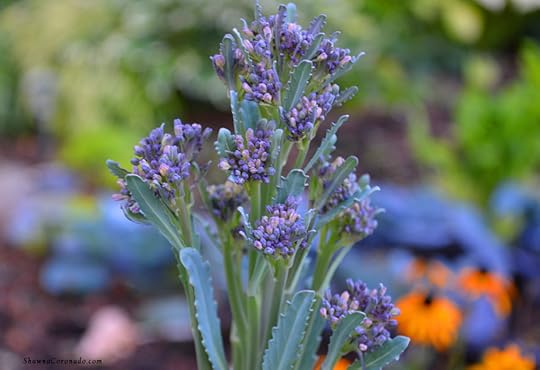
Save
Save
March 4, 2019
Summersweet Clethra is a Wet Soil Garden Solution
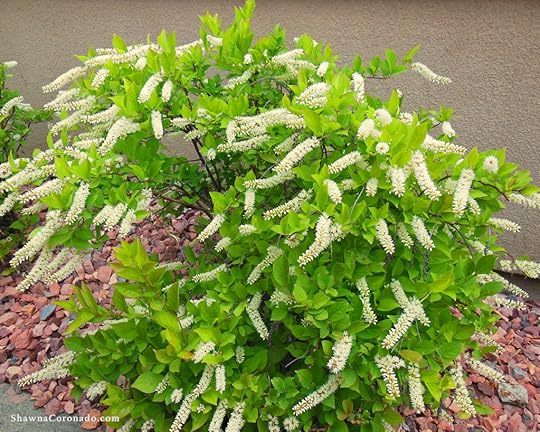
Pollinators love the Summersweet clethra shrub: it blooms in midsummer with amazingly sweet-scented flowers that flower continuously throughout the heat of the season. Summersweet can have warm golden yellow leaves in fall and is often grown for its fall color as much as for its summer flower display. While summersweet is a highly attractive shrub, it can sometimes overstep its bounds if it’s allowed to roam on its own. Planting the shrub where its root suckering can be stopped, such as near a wall, fence, or sidewalk border, will help keep the plant contained. Summersweet can be a useful and utilitarian shrub when it is used for challenging landscape situations, such as controlling erosion or preventing standing water issues. Below is an excerpt from the Indiana Getting Started Gardening Guide which can give you further ideas on how to grow this shrub.
Botanical name — Clethra alnifolia
Bloom Period and Seasonal Color — Early summer; white and pink flowers
Mature Height × Spread — 4 to 8 feet × 4 to 6 feet
Added Benefits – Loved by pollinators and butterflies. Fruit is enjoyed by birds.
Sun Requirements – Sun, Part-Sun – Garden Zones 4-9
When, Where, and How to Plant – Summersweet prefers a fertile, well-drained, moist soil with full sun exposure. Amend soil with organic matter to improve it or consider raised beds if your site lacks drainage. Plant it in the spring by digging a hole in a well-drained planting area that is the same depth of the rootball and twice as wide. Place the top of the rootball so that is level with the ground.
Growing Tips – Water the root system in well upon initial planting. This shrub loves moist soils and should never be left to dry out. Mulch the soil with a 3-inch layer of organic matter to help it hold water and protect it from winter cold. Only fertilize with an organic fertilizer before new growth occurs in the spring if the plant shows signs of undernourishment. Heavy fertilization can increase suckering and reduce flower production.
Regional Advice and Care – Suckers can be produced freely once the plant is established and form into large colonies, so these need to be spaded back annually. Summersweet blooms on the current year’s growth, so the best time to prune the bush is in late winter before the new buds have set on the limbs. Cut out dead or broken branches anytime. There are no serious disease or pest issues with summersweet.
Companion Planting and Design – Plant this shrub as a glorious blooming solution for rain gardens or to prevent erosion on hillsides. It’s appealing as a naturalized plant, but be careful when naturalizing in woodlands as the suckering plant can take over large areas of the forested landscape. Summersweet is surprisingly tolerant of salt spray and makes a good choice to line walkways that will be salted.
Try These – ‘Ruby Spice’ is a deep reddish pink-flowering shrub that grows to 6 feet tall and 4 feet wide. ‘Hummingbird’ attracts hummingbirds and butterflies with its white spiky flowers. This shrub requires constantly wet soils. ‘Sixteen Candles’ grows 3 feet tall with large, upright white flower spikes.
Would you like to know more about shrubs and plants, particularly for gardens in the Midwest? Please get my book, the Indiana Getting Started Garden Guide.
Save
The post Summersweet Clethra is a Wet Soil Garden Solution appeared first on Shawna Coronado.
February 5, 2019
Purple Basil is a Great Ornamental Edible
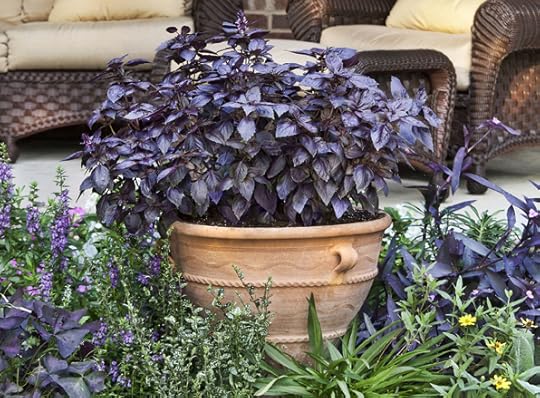
Purple basil is a colorful addition to any flower or herb garden, particularly as a filler or edger. With a strong, almost spicy aroma, purple basil can contribute to your garden with aroma as well as its bold foliage. An additional benefit is that it is useful seasoning in Italian, Greek, Mexican, and tomato dishes. Purple basil can be used in any recipe that calls for sweet basil, although the flavor is more intense than traditional sweet basil. Amazing purple foliage looks attractive in cut flower arrangements. Beyond making a gorgeous statement in your garden, purple basil is also a nutritional powerhouse with vitamins A, C, K, B6, iron, calcium, potassium, and tryptophan.
Botanical name — Ocimum basilicum purpureum
Bloom Period and Seasonal Color — All season; burgundy, bronze, and purple leaves
Mature Height × Spread — 12 to 24 inches × 12 to 24 inches
Added Benefits – Edible, attracts bees if left to flower
Sun Requirements – Sun, Part Sun, Part Shade
When, Where, and How to Plant – Purple basil prefers a sunny location that gets at least six hours of sun per day. Grow from seeds or transplants in well-drained soil that is richly amended with rotted manure or compost. To start from seed, wait until two weeks after your last frost, and then place seeds onto prepared soil and cover with 1⁄8 inch of soil.
Growing Tips – In late summer heat and drought, purple basil can become slightly bitter and lose some of its color. Overfertilization can result in lots of leaf with lesser flavor. To encourage bushy growth, prune back the leaves every two or three weeks and remove flower buds immediately upon their appearance. When watering purple basil, always water at the base of a plant to prevent fungal issues on the leaves.
Advice and Care – Store fresh basil sprigs in a glass of fresh, cool water on the counter, out of direct sunlight. To freeze basil, chop the leaves and place them in an ice cube tray, then drizzle olive oil over the tops of the leaves until you have a full tray. Freeze. Use the basil olive oil cube for flavorings in sauces and stews. Treat fusarium wilt and other fungus issues with foliar applications of an organic fungicide.
Companion Planting and Design – Purple basil looks fantastic as an ornamental edible when combined in containers with purple-flowering annuals such as a spreading petunia, angelonia, and sweet potato vine. Window boxes filled with purple basil, parsley, and white gerbera daisies are simply breathtaking. Use purple basil stems in cut flower arrangements that include zinnia and celosia for a bold color statement.
Try These – ‘Purple Ruffles’ is a deep purple with a surprising ruffle design to the leaf, which makes a strong statement in a container. ‘Osmin Purple’ has a sweeter flavor with a fruity scent. ‘Purple Dark Opal’ has an intense purple leaf, fruity taste, strong flavor, and is good for drying. ‘Italian Violetto’ is a deep red-purple with purple stems and glossy leaves on full bushy plants; it has a powerfully sweet scent and a slight clove flavor.
If you would like more ideas on how to grow many different trees and plants for your landscape, particularly in the Midwest, please pick up my book, the Indiana Getting Started Garden Guide.
Save
The post appeared first on Shawna Coronado.
January 14, 2019
Front Garden Design: Break the Rules
Ten years ago I was at a garden conference, and I will never forget it because I got into an aggressive garden lady argument over the “proper” contents of a front garden design. There was a sweet garden designer from Europe who spoke at the conference and insisted that the front garden be orderly and filled with subtle and calming color. This expert believed that strong colors and clashing shapes simply cannot reside out front. I believe the opposite – that rules are meant to be broken, bold color should be everywhere, and the only thing restricting you should be your own heart. Clearly my feelings are very strong on this point and while we garden ladies thankfully did not come to blows, it was equally clear that we all do not agree.
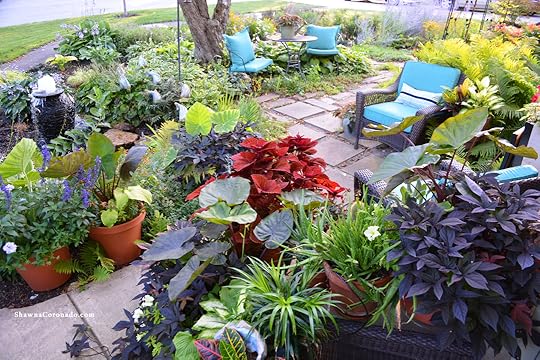
Above you see my front garden. In the lower part of the photo you see my container garden display; a mix of tropicals, cactus, sweet potato vine, flowering annuals, perennials, and houseplants all slammed together in a mad mad mad combination of happiness. Look to your left and see my ridiculously tall milkweed which self-planted along my sidewalk (photo below). Since milkweed is a requirement for a monarch butterfly’s survival and I have a few monarchs every year, I simply could not pull them up. My garden is a strange mix of natives and traditional perennials, flowers, and sculpture. Seemingly, it is designed willy-nilly, but truly it is designed with a very specific purpose; to please *MY* eye.
In my mind a garden is not about rules, it is about expression. Passionate, colorful, heart-felt expression. It is a connection to nature and a connection to creativity. Your garden is the place to throw your compost and your full self in order to create that which gives you joy. And so, my friends, I give you permission to break the rules. Live large. Garden passionately.
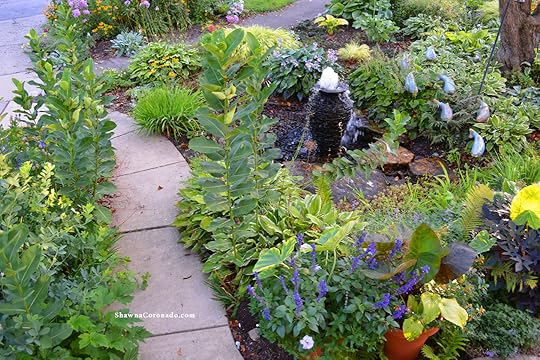
List of new plants in the front garden containers (photo at top) –
Coleus ‘Inferno’
Colocasia ‘Distant Memory’
Colocasia ‘Thailand Giant’
Cuphea ‘Vermillionaire’
Grass Hakonechloa ‘All Gold’
Hosta ‘Autumn Frost’
Hosta ‘Cool as a Cucumber’
Hosta ‘Dancing Queen’
Salvia ‘Playin’ the Blues’
Sweet Potato Vine ‘Blackie’
Verbena ‘Superbena Stormburst’
If you want more information on what plants are in the photos in my front garden design, please shoot me an email at shawna at shawnacoronado dot com. Special thanks to Walters Gardens and Proven Winners for providing many of the annual plants seen in this garden. Fish art was created by FishintheGarden.net, the rain water cistern and fountain is from Aquascape Inc., and the bold blue chair cushions are from Target. Thanks to the Organic Mechanics Soil company for providing my organic worm-casting filled soil for my container gardens.
The post Front Garden Design: Break the Rules appeared first on Shawna Coronado.
January 2, 2019
Tree Peony Shrub Growing Tips
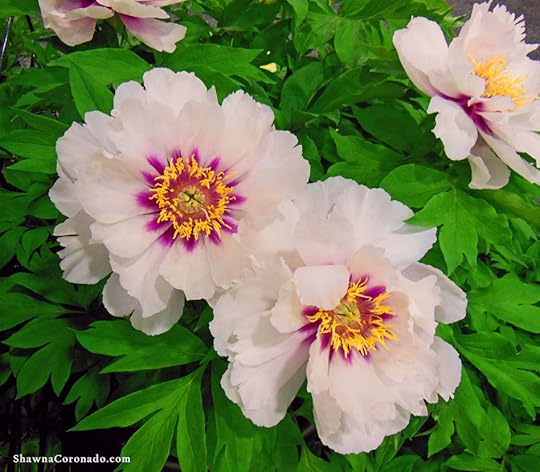
Want an interesting shrub to grow this season? The tree peony or Chinese peony shrub is not the traditional herbaceous perennial peony plant you remember your sweet grandmother growing. Tree peonies are woody shrubs that grow to be approximately 4 feet tall and wide that have been grown and hybridized for their fragrant flowers. They have long fibrous roots and the flowers can be 10 inches wide; plants require no staking. Some tree peonies can live exceptionally long lives, up to 100 years. So when you plant a tree peony shrub, you are really planting an investment in your landscape. Many common Chinese tree peonies go by the Latin designation, Paeonia suffruticosa. However, there are other species of tree peony. P. rockii, for instance, is a species commonly used as an herbal remedy in traditional Chinese medicine. Below is an excerpt from the Indiana Getting Started Gardening Guide on the tree peony.
Botanical name — Paeonia suffruticosa
Bloom Period and Seasonal Color — Late spring and early summer; white, pink, coral, red, maroon, purple, and yellow flowers
Mature Height × Spread — 4 feet × 4 feet
Added Benefits – Attracts hummingbirds and pollinators
Sun Requirements – Sun, Part-Sun
When, Where, and How to Plant – Tree peonies prefer rich, loamy, soil that has excellent drainage, and they perform better in part shade to full sun, requiring at least five hours of sun per day. Test soil to see necessary amendments. If heavy clay, consider amending soil with rotted manure, compost, and worm castings to enrich and enhance drainage. Plant a tree peony in fall or spring, making sure the site is not located near large trees, which can pull nutrients and water away from the shrub. A tree peony typically blooms in the fifth year of its life. When purchasing the plant, be sure to discuss its age with the nursery team.
Growing Tips – Mulch the ground well around a tree peony to ensure moisture retention and provide winter protection; prolonged drought and heat stress can cause the plant to go into early dormancy. Tree peonies are heavy feeders but do not care for “hot” (fast) fertilizers, they prefer slow-release organic fertilizers applied regularly and enjoy spring treatments of fresh compost topdressings.
Advice and Care – To overwinter a tree peony, mulch well. Some experts suggest wrapping the plant with burlap; however, if the soil is mulched and protected well, that should be sufficient. Do not prune except to remove dead branches because the buds will return on the stems in spring. Tree peonies can be plagued with fungal issues such as blight and powdery mildew. Be sure to water at the base of the plant to help prevent disease. Fungal issues can be controlled with an organic fungicide.
Companion Planting and Design – Tree peonies are delightful in perennial beds as specimens. They’re interesting planted in groupings with other spring-flowering perennials. Because of their flowering nature, tree peonies make a wonderful contribution to a pollinator garden. Their sweet-smelling blooms make good cut flowers; one peony blossom can perfume an entire room. If you would like to learn how to grow a garden, particularly in the Midwest, please get my book, the Indiana Getting Started Garden Guide.
The post Tree Peony Shrub Growing Tips appeared first on Shawna Coronado.