Janine Robinson's Blog, page 15
March 30, 2015
Excerpt from New Writing Survival Kit: Show AND Tell

One of the Hot Writing Tips
for College Application Essays
I’m excited to share one of the 50-plus writing tips, techniques and ideas from my just-published guide: Essay Hell’s Writing Survival Kit, now available as a Kindle ebook on Amazon. This one is from Chapter Three, called Show the Way.
In many of the writing tips and advice, I draw helpful examples from the sample college application essays written by students at the back of the book. In the digital Kindle version, there are live links (but they won’t work in this excerpt, sorry!).
To me, this is one of the most powerful writing concepts out there. I wish I had learned it sooner.
We all have heard about the importance of “showing” in good writing. This holds especially true for college application essays, since one of the goals is to engage those potentially bored-to-tears admissions counselors from the get-go.
One of the purest techniques of “showing” in writing is called the anecdote, which I encourage students to use in their introductions. But effective essays also include quite a bit of “telling.” And that’s fine.
To both show and tell, you “show” the reader something, and then you “tell” them what it means. Or you “tell” them about something, then you “show” them an example so they get what you mean. (Some writing teachers call this the “what” and the “so what.”)
Check out how student Max Rubin started his essay by “showing” with an anecdote, and then went on to “tell” the reader what it meant in his Sample Essay in Chapter 11:
(Showing: Anecdote)
When we pulled up to the McDonald’s drive-through, my friend ordered the usual for our group: “Four Big Macs, four large fries, and four large Cokes.”
But at the pick-up window, I poked my head out from the back seat and told the server: “Make that three of everything, please. And add a bottle of water.”
“A bottle of water?” My friend turned to me with a baffled look on his face. “Since when? Are you on a diet or something?”
(Telling: Background)
I felt a flush of embarrassment, but I just tried to ignore the comments and change the subject. Not many teenage boys have to watch what they eat. Most of my friends can devour almost anything and stay thin. I thought I was like them and dined on junk food without a second thought until about two years ago. One morning in the beginning of my sophomore year, I stepped on the scale and was shocked to see that I was more than 20 pounds overweight.
In almost any effective writing, you need both. To keep your reader engaged, you need to shift back and forth between the two—showing and then telling; telling and then showing, etc.
To use this approach, it helps to know the difference:
Showing=Details; Specifics; Examples
If you want to “show” something, ask, “Can you prove it with an example?”
Telling=Explaining; Analyzing; Reflecting; General Points
If you want to “tell” something, ask “Why? What does it mean? Explain it to me.”
In these shorter essays, you will “show” at the beginning with an anecdote, and then the rest will be mostly “telling” (with some more showing interspersed along the way) or explaining what it all meant.
As readers, college admissions officers are looking for how you find personal meaning out of whatever happened to you. This is one way they assess your intelligence, critical thinking skills, unique coping strategies and life philosophies.
* * * * *
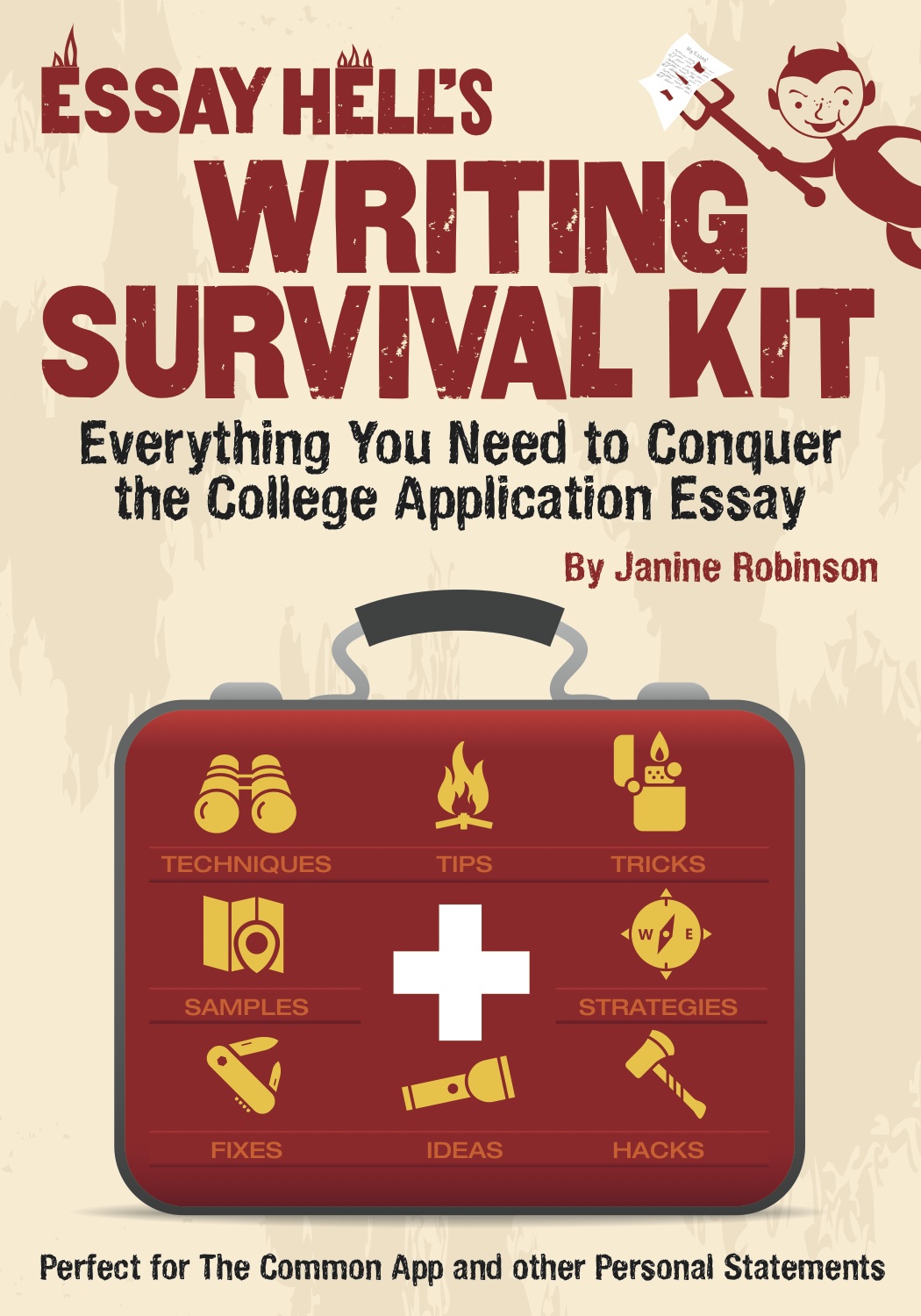
For a limited time, I’m sharing ebook review copies. If you are interested in reading my Writing Survival Kit and sharing a review on its Amazon page, email me (Janine) at: EssayHell@gmail.com. Can’t wait to hear what you think!


March 21, 2015
Sample College Application Essay Collection Free for Teachers!
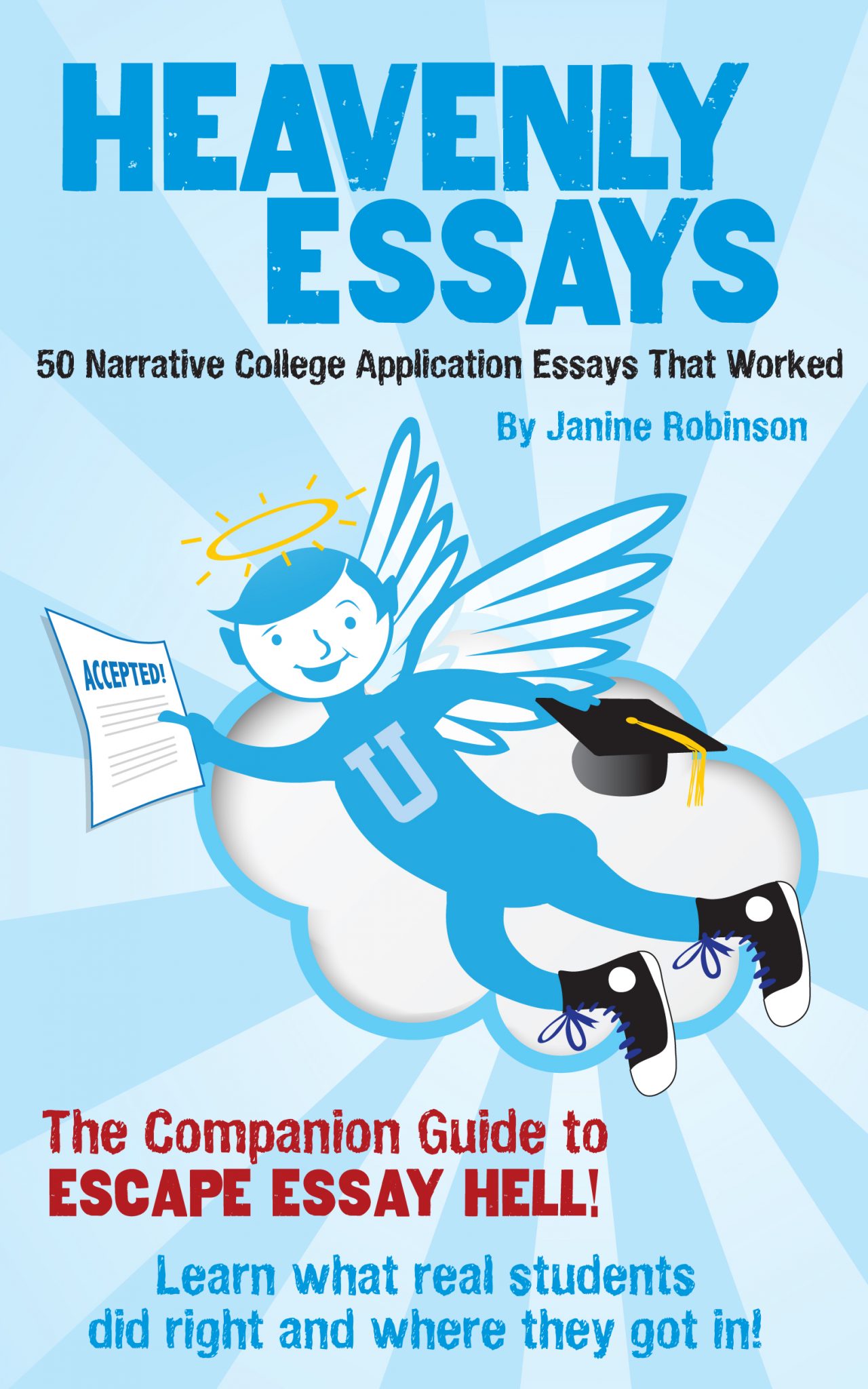
To welcome in spring, I’m offering my inspiring collection of sample college application essays free to all teachers now through the end of this month (March).
In recent years, I’ve had English teachers from all over the country contact me about my blog and writing resources. Apparently, many Language Arts programs now teach units on how to write these essays, either in the spring for high school juniors or during fall for seniors.
(One teacher in California has her students pick several posts from my blog and then write what they learned from them on her class blog. Kind of a cool idea, I thought. Also, last year I wrote this Lesson Plan for teachers.)
I know many teachers are strapped for time and resources when teaching, and I’m hoping they might find these narrative-style, “slice-of-life” college admissions essays—and my analyses of them—helpful in their classes. I believe students can glean ideas for their own topics by reading the work of other students, and also learn the style of a narrative, personal essay.
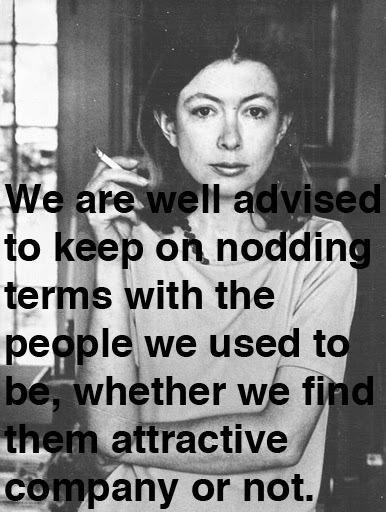
Joan Didion
In English classes, we usually read the work of the masters. For essays, these include: Joan Didion. E.B. White. Jo Ann Beard. David Sedaris. Cynthia Ozick. George Saunders. Phillip Lapote. Annie Dillard. It’s a large and impressive crowd, and reading their essays can’t help improve students’ writing. But I think it helps students understand that they can find and tell their own stories when they also see what their peers have done.
The personal statement-style pieces in Heavenly Essays are not perfect. And they aren’t supposed to be. But they are a strong sampling of students who took a hard look at themselves and what they believe and value, and shared their most personal stories with the world. Not only that, most of them landed in great colleges.
If you are a teacher, any kind of English, language arts or writing teacher, just send me an email to: EssayHell@Gmail.com by the end of the month, and tell me your name, where and what you teach, and I will zip you an ebook version of Heavenly Essays. (I shared some of the essays on this blog.) Good luck to all you teachers who will be helping students nail their college application essays this year!
March 16, 2015
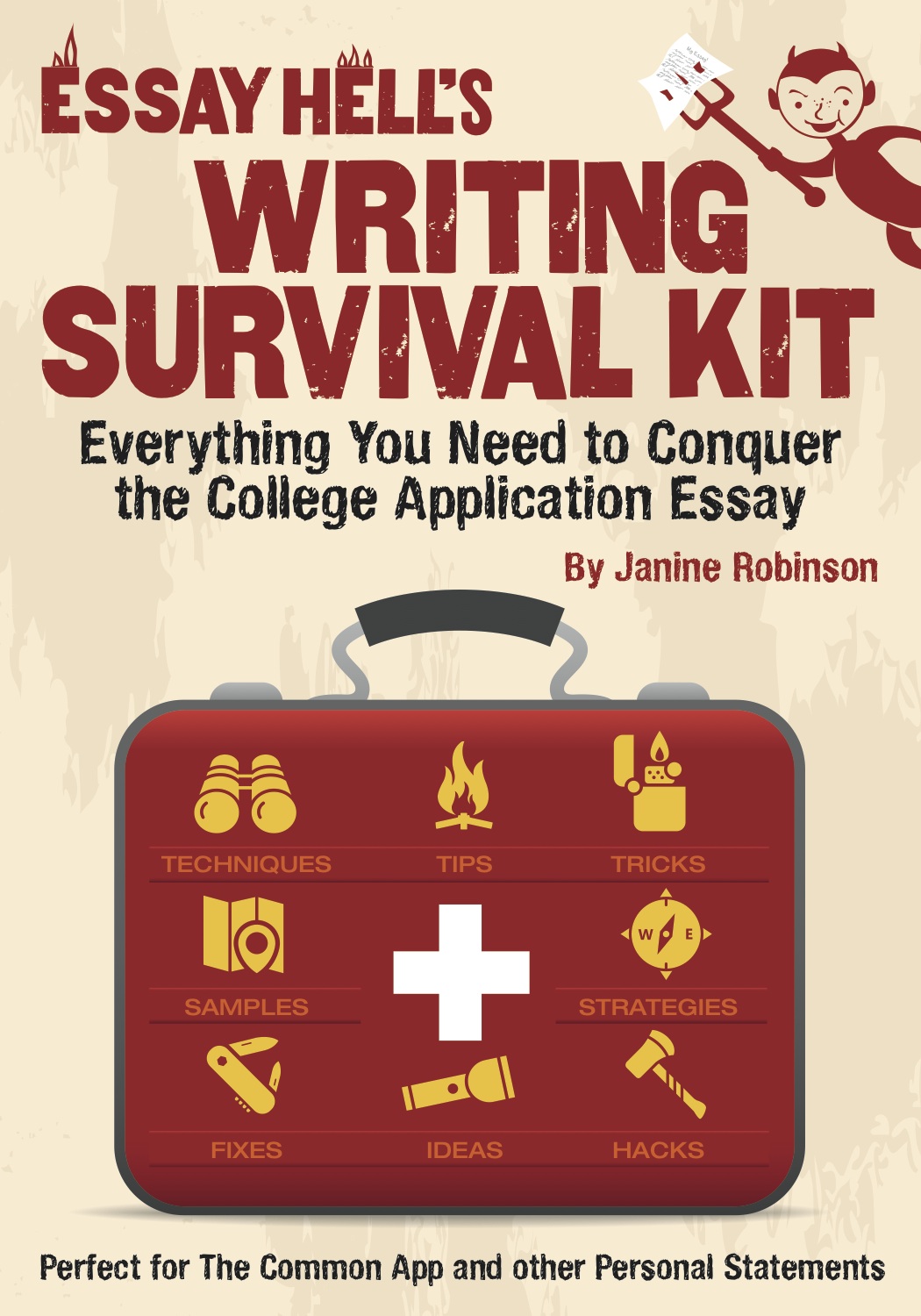
Essay Hell’s NEW Writing Survival Kit
Best Writing Tips
for College Application Essays!
I’m excited to introduce my newest writing guide for college application essays: Essay Hell’s Writing Survival Kit. It includes some of the best writing tips and advice I know of, as well as other handy college admissions-related resources and sample narrative style essays written by real students.
It will be available the first of April on Amazon as a Kindle ebook, and shortly after, in paperback as well.
In the next few weeks, I will be sharing some excerpts from the Survival Kit here on Essay Hell. I’m always eager (and SO GRATEFUL) for readers to provide feedback and reviews on the Amazon pages of my guides, such as Escape Essay Hell (my step-by-step writing guide for writing narrative-style college app essays) and Heavenly Essays (a collection of inspiring sample college app essays written mostly by my former students).
If you are interested in reviewing my Writing Survival Kit, I’m going to send out several dozen review copies in upcoming weeks. Email me at Janine@EssayHell.com if you would like to read it and leave a review on Amazon after it’s published there.
Here’s an excerpt with one of the brainstorming tips I included in the Writing Survival Guide:

Find Your Life Souvenirs
Some of us are adept at scrolling back through time and recalling specific memories or “times” we had interesting experiences. Others (like me), not so much.
Ask me to recall one of my most meaningful moments or incidents in my life, and I immediately go blank. But if something sparks a memory, every detail will come back in vivid, living color.
So instead of trying to pull memories out of thin air, start by collecting those specific “somethings” that can trigger a memory. The idea is that one tangible, concrete object or piece of a memory often links to past experiences with larger meaning. These are a gold mine for real-life stories you can use as anecdotes (real-life mini stories) in our essays.
In a way, they are little metaphors in our life. They remind us of something else, often something larger than the actual object. For the most part, these concrete pieces connect to something that happened, or those “times” we treasure from our past.
Looking around for your little life souvenirs can be a path to topic ideas for essays, or at least a “time” that you can write about to showcase your skills, values, qualities, goals, etc. They can be incredibly valuable for spurring ideas because they are usually highly personal; there’s a reason you kept them.
Here are some places to look for your life souvenirs to discover the stories behind them:
A shell you found while walking with your grandmother on the beach.
A song you listened to while driving back and forth between your divorced parents’ home.
A dress you made for your first dance.
A piece of metal you kept after you wrecked your car.
A drawing you made while in the hospital for an operation.
A bottle of hot sauce you kept from the chili cookout you won.
A ticket stub to a special movie or other event.
Go through your favorite “stuff,” and search your home, your room, your computer files, social media posts, junk drawers, binder covers, closets, bookshelves, pockets, etc. Notice what you have kept—and why. These objects can be anything from a fortune cookie message to a hand-carved box you keep on your dresser to a poster on your wall to a costume hanging in your closet.
What do they remind of you of? Often, you will discover a forgotten memory of something that happened. And suddenly, you have captured one of those “times” that can make the perfect anecdote for your narrative essay.
* * * * *
I also have to give a shoutout to Russell Pierce, the amazing graphic artist in Laguna Beach, California, who has designed all the graphics for my Essay Hell blog and books. If you want to see his other terrific work, check out his portfolio.
March 13, 2015
The Ultimate Acceptance Letter

Columist Frank Bruni of the New York Times just published one of the most timely and convincing articles today on the issue of students vying for the most elite colleges—often at the expense of their sense of self-worth. It’s a dangerous trend, and Bruni shares the stories of students who were rejected, and where they ended up.
For the most part, he found that students who steered clear of the most prestigious schools—or were outright rejected—ended up at wonderful liberal arts colleges and public universities enjoyed experiences that were rich and empowering. It was less about their classes and grades and status, and most what the learned about themselves and participating in a larger community.
“People bloom at various stages of life, and different individuals flourish in different climates,” Bruni wrote in the piece, “How to Survive the College Admissions Madness.” (To me, it’s a must-read whether you are a student or parents just starting the application process, or waiting for those acceptance letters.)
My favorite part of the column is his story of a couple who wrote their son a beautiful letter about himself, which was intended to buffer the rejection of the ivies he tried to get into. They wanted him to remember that they loved him unconditionally no matter what colleges wanted him or not.
Even well-meaning parents forget the messages they often unintentionally send their kids when they succumb to the pressure of doing whatever it takes to get them into the most competitive schools. In the frenzy to ace the tests and participate in every community service activity and visit multitudinous colleges and write brilliant essays, there’s an underlying message that goes out to kids: You are only as good as where you get accepted.

Nonsense! This is not a win-all, lose-all moment. It’s not the final judgement day of the student’s life (or the parents). If you feel that way, get a grip. Where you go to college is just the beginning, and often it doesn’t matter where you start.
We all love our kids. But in this insane environment of college admissions—especially as many students will soon be opening those letters—it’s important to find ways to counter those rejections. You don’t need to write a letter (or maybe you do?), but it’s important to keep it all in check and find ways to remind your kids that they are wonderful no matter where they end up.
Here’s the beautiful letter Bruni included in his piece:
Dear Matt,
On the night before you receive your first college response, we wanted to let you know that we could not be any prouder of you than we are today. Whether or not you get accepted does not determine how proud we are of everything you have accomplished and the wonderful person you have become. That will not change based on what admissions officers decide about your future. We will celebrate with joy wherever you get accepted — and the happier you are with those responses, the happier we will be. But your worth as a person, a student and our son is not diminished or influenced in the least by what these colleges have decided.
If it does not go your way, you’ll take a different route to get where you want. There is not a single college in this country that would not be lucky to have you, and you are capable of succeeding at any of them.
We love you as deep as the ocean, as high as the sky, all the way around the world and back again — and to wherever you are headed.
Mom and Dad
[image error]

March 10, 2015
#Selfie: 5 Ways It’s Like Your College Application Essay
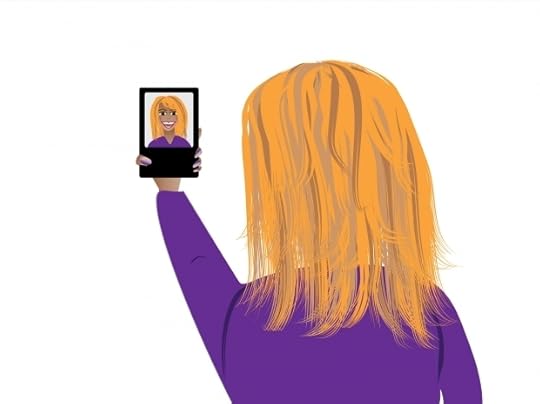
A good selfie can define and shape your personal image that you blast out to the world. The same goes with your college application essay.
Both selfies and personal statement essays are supposed to capture your essence on some level, and reveal what makes you stand out from the crowd of other applicants. Some of the same tricks you use to snap your selfies apply to writing these admission essays, such as for The Common App and other universities and colleges.
If you are starting the college admissions process, it’s time to put down the cell phone and pick up your pens now or this summer or as soon as you can. Here are five ways that selfies and college admission essays are similar, and some tips that can help you craft an awesome essay snapshot of yourself (click the links for more help):
1. A good one catches everyone’s attention. There is something about a great selfie that grabs the viewer; they can’t take their eyes off you. Same thing with your personal statement: It’s imperative to hook the reader’s attention at the start with a compelling introduction, such as starting with an anecdote.
2. The unexpected or a twist makes them better. If you can show something about yourself that surprises the viewer, you will make a stronger impact. You are riding an elephant or diving off a cliff or eating live bugs. Great stuff! Same with your personal statement: Featuring something college admissions officers wouldn’t expect to learn about you only makes you that much more interesting and memorable.
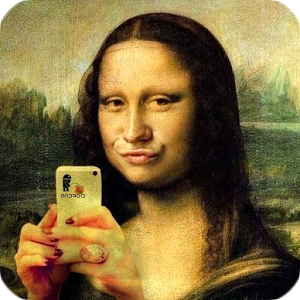
Don’t pucker in your college app essay!
3. They are in focus. If they are blurry or unclear, they lose their impact. Same with your personal statement: If you try to cover too much ground about yourself, and start listing your talents or accomplishments or your life story, you start to get fuzzy around the edges. Better to zero in on one specific quality, value or experience to keep the point your are making about yourself in sharp focus.
4. The best capture your personal style. Are you a jokester who likes mugging for the camera or someone who loves big hats or a serious type who always has a more intense message? Same thing with your personal statement: A strong personal statement will reveal your individuality through the topic and details you choose, as well as your writing style and voice.

5. A few tweaks can turn a mediocre image into one that pops. With some simple Photoshop or phone app editing tweaks, you can often transform yourself and highlight your best angles and features. Same with your personal statement: Once you write a rough draft (which is like your original shot), go back and tweak your writing by editing it and making changes that improve the message and overall picture you are making of yourself.
So is your college application essay #selfie going to be dull and predicable or show a little attitude? Often, it’s worth the risk to get that great shot!

February 22, 2015
5 Reasons to Write Your Own College App Essay

With all the hype and pressure surrounding college admissions, I don’t blame students and parents for looking for shortcuts or anything that can give them an edge in the selection process.
While I believe students should take the helm of figuring out where they want to go to college, I understand the attraction of getting some help. Taking prep classes for standardized tests. Hiring a private college admissions counselor. And working with a writing expert on the dreaded college application essays.
Yep, I provide help with essays, including tutoring. But I do not write them for students. It can be a fuzzy line, and I think we all know when it’s been crossed.
If you have searched the Internet to find help on writing these essays, I’m sure you have discovered the booming business of buying essays. The Web sites make it all sound so normal and natural. Here are some reasons why it’s a very bad idea:
FIVE REASONS TO NOT BUY A COLLEGE APPLICATION ESSAY
1. It will NOT be better than what you could write. There is no way someone else could write an effective college application essay about you, even if they know you really well. The whole point of these essays is to capture something about you that is highly personal, unique and sets you apart from other candidates. That is challenging enough to discover for yourself. Details, emotion and insight power personal essays, and you simply can’t fake those. If another person writes your essay, it will be generic, and general is dull, and dull is essay death.
2. These essays are not only meant to help you get into the college(s) of your choice, but also to get you into the right school for you. In order to decide if you are a right fit at their university or college, admissions counselors need these essays to get a sense of who you are, what you value and your unique personality. If someone else wrote your essay, they are going to make their decision based on someone else. What’s the point?
3. I know this doesn’t seem important, but writing these essays can be a powerful personal exercise beyond helping you get into a great college. From what I’ve seen with the hundreds of students I have worked with, many have not had or taken the time to sit down and really take a long, hard look at their life yet—what they have accomplished, lessons they have learned, challenges they have met, how much they have changed and grown. In the brainstorming and writing process, you will be surprised (even impressed!) by your own personal stories, and might even enjoy telling them.
4. I know it’s hard to believe, but there’s a strong chance you will need to write more of these in the future. Many scholarships, transfers and applications for graduate programs (medical and law and art schools….) require personal statements. Might as well learn how to do it now.
5. I’ve saved the most important for last. Buying an essay and passing it off as your own is CHEATING. It’s totally immoral. Hello!!
Save your money! If you need help, search the Internet for writing advice, buy a guide book or hire someone to help you. And keep reading this blog!
My Jumpstart guide post is a great place to start writing your own college application essay.
February 13, 2015
Essay Hell’s 2015 Spring Webinar Series

Not many images are more daunting than a blank page. The horror! But starting next month (March), I’m launching a weekly Webinar series to assist more students and families with starting their college application essays.
I write this blog, peddle my three guide books and tutor privately to get out my advice, tips and inspiration to make this process less miserable. I actually believe writing these essays can be an enlightening and productive experience, and dare I say, fun, if you have some direction and support. It can also be a total drag.
But I think you have a choice on how it goes. A lot of the stress of the college admissions process is caused by the unknown. Once you know what to do, you will see that it’s not that impossible.
I’m hoping that my Webinars can help students, and parents and others who work with students, get a jump on what they need to do.
What Exactly is a Webinar?
Until a year or so ago, I really didn’t know what these were myself. Webinar is really a fancy name for an online presentation that can also be interactive. To participate, you usually just have to sign up and get online during the day and time that it happens. Then, you watch a presentation, and often have a chance to ask questions.
I think Webinars are especially helpful if you are the type of learner who doesn’t want to read tons of information, and does better listening and watching and participating.
Here’s the schedule so far, and it will include other topics in upcoming weeks. All Webinars will be an hour long and cost $24.99. You register by paying in advance via PayPal (which takes credit cards). See my Webinar Page for details on how to access the Webinar. All participants also will receive a free ebook copy of my popular collection of narrative-style college app essays, Heavenly Essays!

SPRING 2015 SCHEDULE
SUNDAY, MARCH 15
5 p.m. (Pacific Standard Time) 8 p.m. (East Coast Time)
Q&A: Everything You Wanted to Know About College App Essays
I will share a list of the most common questions regarding college applications essays, and provide my answers, opinions and tips. Questions will include: How much do these essays matter? How do I find the best help? When do I start? How do I recycle essays? What if I’m not a strong writer? How Do I Make My Essay Stand Out?
At the end of the presentation, I will field questions directly from students and parents.

SUNDAY, MARCH 22
5 p.m. (Pacific Standard Time) 8 p.m. (East Coast Time)
Find A Great College App Essay Topic!
I will walk students through an information and brainstorming process to help them learn what makes a great college app essay topic, and help them find their own topic. I will help them identify their own defining qualities, share examples of effective topics, teach them some narrative writing techniques, and help them make sure it’s engaging and meaningful. This is mainly for finding topics for the Common App essays, and other essays that want personal statement style essays (eg U.C. Prompt 2; most large university core essays, etc.)
At the end of the presentation, I will answer questions.
SUNDAY, MARCH 29
5 p.m. (Pacific Standard Time) 8 p.m. (East Coast Time)
(Repeat) Q&A: Everything You Wanted to Know About College App Essays
I will share a list of the most common questions regarding college applications essays, and provide my answers, opinions and tips. Questions will include: How much do the essays matter? How do I find the best help? When do I start? How do I recycle essays? What if I’m not a strong writer? How Do I Make My Essay Stand Out?
At the end of the presentation, I will field questions directly from students and parents.
**I will be adding more Webinars for April in the next couple weeks. If there is a topic you would like me to address, just shoot me an email. Thanks!
December 1, 2014
Zoomita: Awesome Site to Organize Your College Application Essays!!
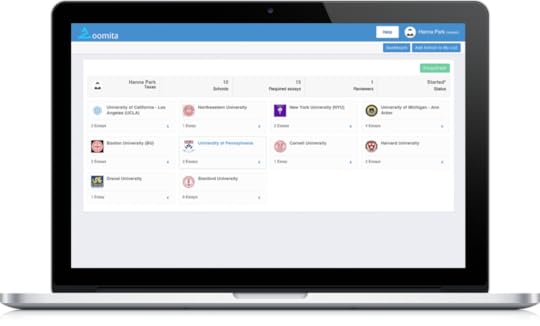
Over the past couple years, I’ve been asked to check out a couple of new Internet companies that try to help students and others organize their college admissions essays. Without naming names, none so far has been very impressive. They sounded good, but then when I tried them out, I was totally confused and found them a royal pain.
Recently, the co-founder of a new site called Zoomita asked me to give his site a whirl. I only spent about 20 minutes exploring the organizing tools, and immediately saw they were amazing.
It took me only a couple minutes to create a list of colleges and universities (if I were applying, these would be my target schools), and then pull up all their essay prompts, including supplements. This feature alone can save students many hours of their time and energy.
Even better, Zoomita also has a file managing system that is totally intuitive and simple to use. You can create multiple essay drafts (they have their own simple text editor), keep them all organized by schools, track your deadlines and even send them out for others to review with a simple email.
The best part is when the reviewer sends your draft back, you can see all her or his editing suggestions and even line them up for side-by-side comparisons. Also, the reviewers do not need a Zoomita account to offer editing feedback on your essays. Nice!
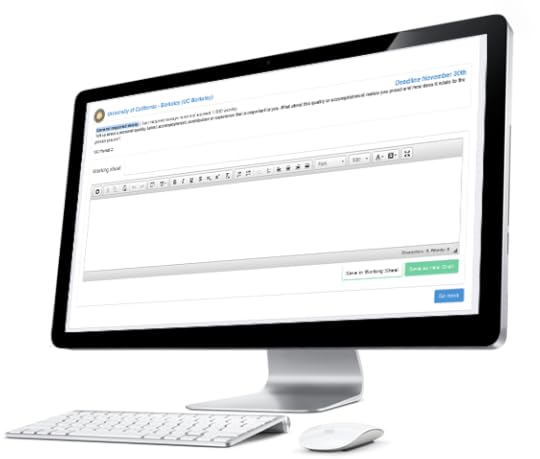
If you are applying for multiple colleges and universities, I would highly recommend you set up an account at Zoomita. The best part is it is totally free for students.
Good news, too, for those of you who work with college-bound students and their essays. The same company runs Edswell, a fee-based service that offers a similar set of editing and management tools, including cloud-based file-sharing via DropBox, for college admissions counselors, parents and others.
I plan to get an account, if only to keep up with all the college application essay prompts and have them at my fingertips.
NOTE: This is my independent opinion and I am not receiving any type of compensation or benefit from this endorsement. I simply believe it’s a great tool and students will find it immensely helpful.
November 26, 2014
Last-Minute Help for UC Essays!!
If you are applying to the University of California schools, you have until the end of this month (this Sunday, Nov. 30!). As busy seniors, some of you might have waited to write your two college application essays over Thanksgiving, when you have some days off and can catch up.
The key, however, is to not let this last minute deadline dash ruin your Thanksgiving. So yes, you are really cutting it close. If you don’t have a plan, it could hang over your head the entire holiday weekend.
To not let these essays ruin one of the best times of the year–when you are supposed to be feasting with your family, watching football games and focusing on all you have to be grateful for–take a few minutes to map out a plan. These essays don’t have to take days and days to write. If you can latch on to some strong topic ideas, and then pound out a rough draft, you could crank them out in a matter of hours.
You can also start with my Instant Boot Camp for writing your two UC essays. If you read this selection of posts, you should have a good idea of what you need to do, and a plan on how to get it done.
But if you just keep procrastinating, finding reasons not to work on this Wednesday (because, hey, you deserve some down time), and then Thursday (because, hey, this is the big day and you are so stuffed now you can’t think and it’s time for a nap), and then Friday (your friends come up with some fun idea to go out and you tell yourself you still have all Saturday…) you could find yourself staring at a blank computer screen that night, feeling mad at yourself for waiting so long and trying not to panic.

If you have today (Wednesday) off, that’s your best day. Give yourself two hours in the morning to come up with topics, and write out a rough draft for one of the two prompts. Then block out two more hours that afternoon or evening to write out another draft for your other essay.
There, you will have two drafts. Almost there! Then, do nothing on Thanksgiving, unless you suddenly get in the mood, or didn’t quite get to those first drafts. Block out two more hours either Friday morning or afternoon to review what you have written, and cut out the bad stuff, add some more good stuff, read it out loud, go through a final editing checklist, etc.
From what I understand about the application system, lots of kids wait until the last minute, and often, the system gets glitchy and it can be frustrating and hard to turn in your application. So avoid this last minute rush as much as possible. Ideally, submit your application well before the final weekend. But above all, avoid Sunday, and especially Sunday night.
Of course, if you can start on these essays NOW, you will be that much further along, and won’t have to spend any of your precious Thanksgiving dealing with them. If you do wait, just stick to your plan and it will all work out!
HAPPY THANKSGIVING!
November 20, 2014
Listen to Me Talk About Writing Great College App Essays!

My friend, Lynn O’Shaughnessy, who is a national expert on helping families afford higher education, interviewed me recently about how to write standout college application essays. If you are struggling to figure out how to pay for your college or university, Lynn has the best insider information and resources, including her best-selling book and popular online courses.
I believe one thing that many students and parents don’t realize is that a strong essay not only can help you get into a competitive school, but it can also help you score merit scholarship money. This isn’t true for all schools, especially large universities, but many liberal arts colleges use the essays to determine who they want at their school and then work to help them afford it—including offering money.
Lynn understands the value of an effective college admissions essay and wanted to share my advice and tips with the readers of her informative blog, The College Solution. Here is our interview and her post from the College Solutions blog (the timing is a bit off, but I think you can still understand it all):
How To Write a Great College Essay
by Lynn O’Shaughnessy on November 17, 2014
Today I am excited to share an online conversation that I recorded with Janine Robinson, a journalist, a consultant and the creator of EssayHell , which is a wonderful website for students who want to learn how to write a great college essay.I invite you to watch the YouTube video during which Janine and I discuss tips on creating winning college essays.I’d also urge you to spend time on EssayHell, looking through Janine’s extremely helpful, how-to blog posts that should help inspire your teenagers to get started on their college essays or improve the ones they have written.
Here are a few of her recent posts:
Essay Hell’s Top 10 Tips
Think Your Topic is Too Broad? It Probably Is
2 Sample Outlines for Why You? Supplements
Tips for Completing the University of California Personal Statement Prompts
For students applying to any University of California campuses (applications are due on Nov. 30), I’d urge you to check the following posts regarding the two dreaded UC personal statement prompts:
UC College Application Essay Boot Camp
A Peek Into the Many Worlds of Prompt 1 of the UC College Essay
Sample College App Essays for Describe the World You Come From
How to Nail Prompt No. 2 for UC Essays