Janine Robinson's Blog, page 14
May 3, 2015
2 Must-Haves for a Great College Application Essay

Here’s a guest post by a talented college application essay writing coach named Ethan Sawyer. I love what he shares about how important it is to have both an engaging story at the start of an essay, and then a key insight that reveals what it meant.
From Ethan:
Ira Glass, in his awesome 5-minute video series, talks about the two ingredients necessary for a great story:
A great narrative, to keep us interested. (Like: “A happened, then B, then C…”)
A great insight, to wow us, or at least let us know why you told us the story.
The same is true for your college essay.
Some college essays I’ve read have the story but not the insight, some have the insight but not the story, and some have neither. Very few have both, especially in the first draft.
So I want to share a quick example of what NOT to do, then give a few tips on developing a great story and a great insight, and finally leave you with an example of what you SHOULD do. Here we go.
And rather than use a former student’s college essay (because I don’t want to make any of my former students cry), I’ll use a Facebook post I read last week that sounds like it could be the first draft of a college essay:
One day, when I was a freshman in high school, I saw a kid from my class named Kyle walking home from school. It looked like he was carrying all his books. I thought to myself, “Why would anyone bring home all his books on a Friday? He must really be a nerd.”
As I was walking, I saw a bunch of kids running toward him. They ran at him, knocking all his books out of his arms and tripping him so he landed in the dirt. His glasses went flying, and I saw them land in the grass about ten feet from him… He looked up and I saw this terrible sadness in his eyes.
My heart went out to him. So I jogged over as he crawled around looking for his glasses, and I saw a tear in his eye. As I handed him his glasses, I said, “Those guys are jerks. They really should get lives.” He looked at me and said, “Hey thanks!” There was a big smile on his face. It was one of those smiles that showed real gratitude. I helped him pick up his books, and asked him where he lived. As it turned out, he lived near me, so I asked him why I had never seen him before. We talked all the way home, and I carried some of his books.
He turned out to be a pretty cool kid. I asked him if he wanted to play a little football with my friends. He said yes. We hung out all weekend and the more I got to know Kyle, the more I liked him, and my friends thought the same of him. Over the next four years, Kyle and I became best friends.
Kyle was valedictorian of our class and when graduation day came he had to give a speech at graduation. As he started his speech, he said, “Graduation is a time to thank those who helped you make it through those tough years. Your parents, your teachers, your siblings, maybe a coach…but mostly your friends…. I am here to tell all of you that being a friend to someone is the best gift you can give them. I am going to tell you a story.”
I just looked at my friend with disbelief as he told the first day we met. He had planned to kill himself over the weekend. He talked of how he had cleaned out his locker so his Mom wouldn’t have to do it later and was carrying his stuff home. He looked hard at me and gave me a little smile. “Thankfully, I was saved. My friend saved me from doing the unspeakable.”
I heard the gasp go through the crowd as this handsome, popular boy told us all about his weakest moment. I saw his Mom and Dad looking at me and smiling that same grateful smile. Not until that moment did I realize its depth.
Never underestimate the power of your actions. With one small gesture you can change a person’s life. God puts us all in each others lives to impact one another in some way.
You now have two choices, you can:
1) Pass this on to your friends or
2) Delete it and act like it didn’t touch your heart.
Tomorrow is a mystery. Today is a gift. I hope you all have a blessed day and lots of gifts ahead of you.
My (Ethan’s) thoughts on this story:
Interesting opening! I’m following the story for about, I’d say, the first two-thirds, wondering what’s going to happen, what the narrator will learn, etc.
Then we get to the insight, or what I call the “so what.” And, in my humble opinion, it’s pretty cheesy. While suicide is no joke, the lesson at the end reads like a Hallmark card: Never underestimate the power of your actions. With one small gesture you can change a person’s life. God puts us all in each others lives to impact one another in some way.
Could this have been a great insight? Maybe! But the way it’s expressed doesn’t quite work.
What does this have to do with your college essay?
I think a great college essay needs both a great story and a great insight and that we can learn a bit about both from the story above.
Three tips for writing a great story:
Don’t give away your ending at the start. (This is something the author does well above.) Don’t, in other words, write in the first line, “I’ve always wanted to be a doctor” IF your ending is “…And that’s why I want to be a doctor.” Instead:
Consider using a misdirect. Example, “I always wanted to be a doctor” at the start of an essay might lead to “…And that’s why I, the kid who always wanted to be a doctor, now see myself studying Business.” (Obviously you’ll need to make the connections between “doctor” and “business” in your story.) Another option is to:
Just tell the frickin’ story. Y’know, like you’d tell it to a friend. What do I mean? Well, I think many students feel obliged (thanks in part to AP English class) to put a thesis or moral of the story at the end of the first paragraph. But you totally wouldn’t do this in life. Imagine, for example, starting a story to a friend with, “Little did I know, the lesson I learned that day on the soccer field would serve me for the rest of my life and shape the person that I was to become in several important ways.” Heck no! Just tell the story.
Three tips for writing a great insight
HOW your insight is expressed really matters. Because if you’re not careful, the insight can sound really cheesy (like the one in the story above). How do you make sure your insight isn’t cheesy? Do this: Copy and paste only the insight of your essay onto a separate document and ask a.) Is this an insight that could work on someone else’s essay? b.) Does it sound like it could go on a Hallmark card? If you answer “yes” to either, cut the insight and try again. Make it more specific. Want an example? Check out the insight from the story above: “Never underestimate the power of your actions. With one small gesture you can change a person’s life.” Super cheesy, right? That could work at the end of LOT of essays and it totally sounds like a Hallmark card. Plus the writer’s use of “you” in “you can change a person’s life” sounds like it’s instructing the reader (and please don’t instruct the college admissions reader). In fact:
Never ever use “you” when communicating the insight or take-away from your story. Use “I.” (Yes, you can use “I” in your college essay; remember this is a personal statement.) The reader will draw his or her own connections without the help of “you.” (Catch my double-meaning there?)
End specifically rather than generally. I know, you’ve probably been told it’s good to relate the ending of your essay to something larger, or even universal. But don’t force it. And if your essay has lots of juicy specifics and details, chances are you’ll find something specific that has the potential to represent the universal. Want an example of an ending that’s both specific and universal? Here’s one from my favorite essay ever, the “I Shot My Brother” essay (and yes, he really shot his brother). At the bottom you’ll discover four tips for an amazing essay.
BONUS TIP: You don’t have to spell out the final insight! In fact, the best essay endings aren’t. Here’s one more amazing example essay about a dead bird.
For more essay tips and a free step-by-step guide to writing your personal statement, find Ethan at www.collegeessayguy.com


April 30, 2015
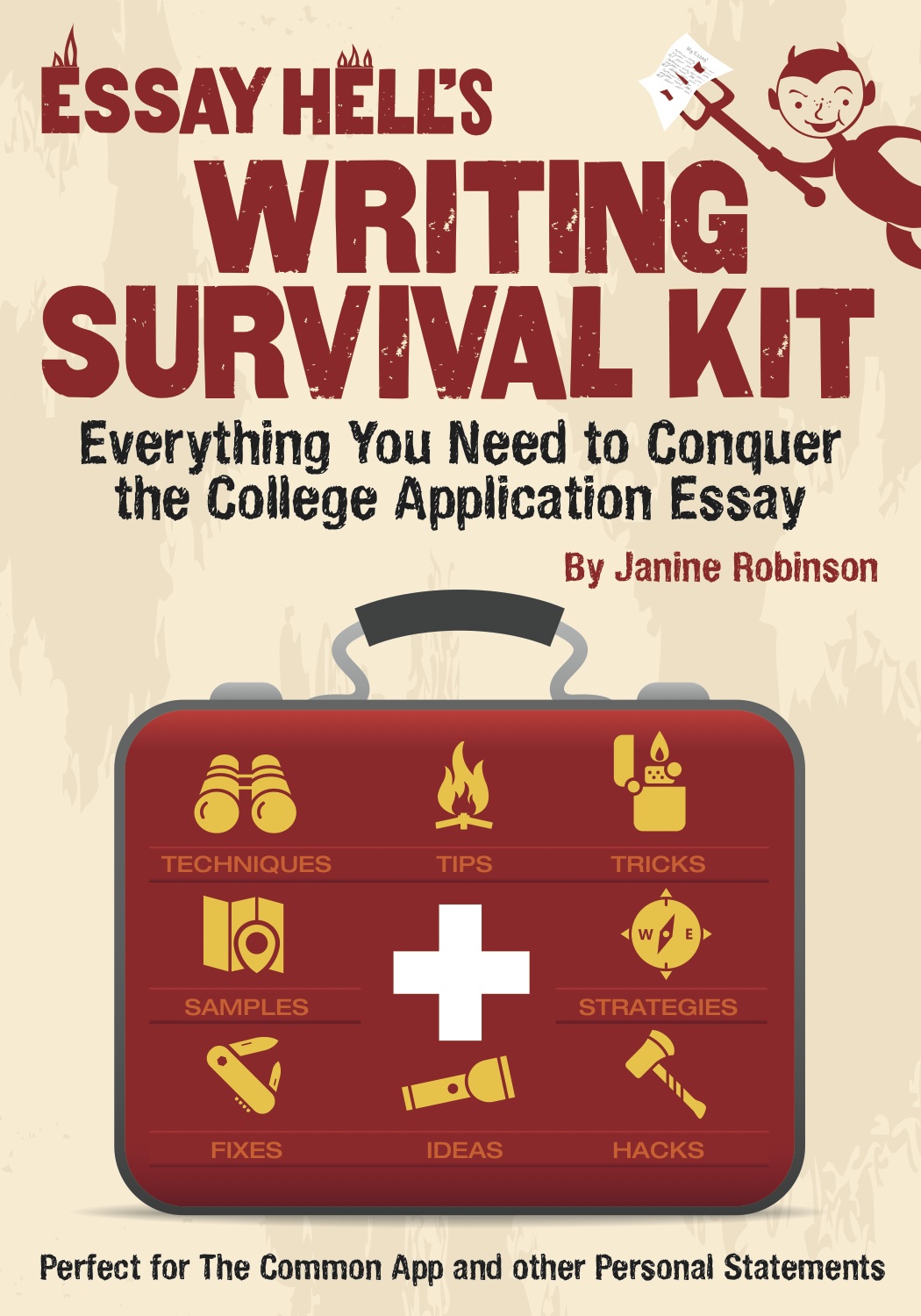
Want My New “Writing Survival Kit” for Free?
Get My Latest College Application
Essay Writing Guide
FREE on Mother’s Day on Amazon!
Yup, it’s that simple. I’m celebrating the recent publication of the paperback version of my latest writing guide on Amazon by offering the Kindle ebook version for free on this May 10, which also happens to be Mother’s Day. (a $6.99 value!) Whether you are a college-bound student, or their mom or dad or counselor or teacher, I believe you will find this guide of great help.
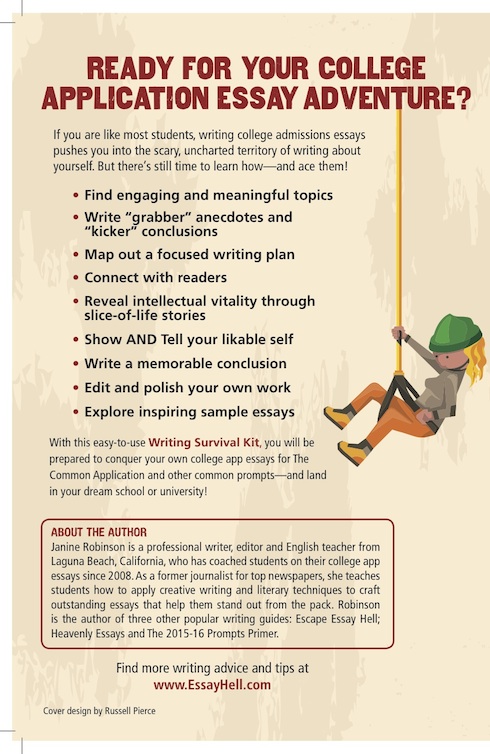
The Writing Survival Kit includes all the best power writing tools and techniques to craft standout college admissions essays, and also features about a dozen sample essays written by real students.
If you get yourself a copy, and like it, please consider leaving a rating/review on its Amazon page. That helps me get out the word. Thank you in advance!
Mark your calendars. It’s one day only. Sunday, May 10.
Happy Mother’s Day!
Back Cover
April 16, 2015
Do You Undermine Yourself with Words?
Photo Via Goop
This might seem random, but I found some powerful writing advice on the blog of Gwyneth Paltrow that I believe is relevant to students writing their college application essays, and others, especially women.
The woman Paltrow recently featured in her blog, Goop, had some opinions about how women have unconscious habits in their speech and writing that cause them to come across as less confident and competent. And they hit me hard. When I thought about it, I was surprised how my lingering insecurities and self-esteem issues still creep into my writing, and even how I talk. So I thought you might would find them interesting, too.
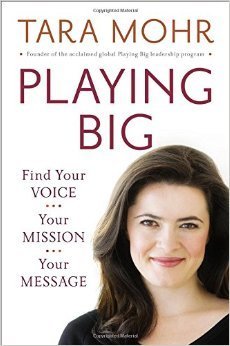
Tara Mohr has written a book, Playing Big, about how women can “step into their power” by breaking certain patterns that self-sabotage their success. Here are some examples she shared in a recent interview on Goop. I am guilty of ALL of these (notice my strike outs in this post!), and think you should check your own habits when it comes to communicating about yourself, especially in your college admissions essays):
Here are some of the “little things” women do in speech and writing that aren’t really “little.” In fact, they have a huge impact in causing us to come across as less competent and confident:
Inserting just: “I just want to check in and see…” “I just think…” Just tends to make us sound a little apologetic and defensive about what we’re saying. Think about the difference between the sound of “I just want to check in and see…” and “I want to check in and see…” or the difference between “I just think” and “I think…”
Inserting actually: “I actually disagree…” “I actually have a question.” It actually makes us sound surprised that we disagree or have a question—not good!
Using qualifiers: “I’m no expert in this, but…” or “I know you all have been researching this for a long time, but…” undermines your position before you’ve even stated your opinion.
Asking, “Does that make sense?” or “Am I making sense?”: I used to do this all the time. We do it with good intentions: We want to check in with the other people in the conversation and make sure we’ve been clear. The problem is, “does that make sense” comes across either as condescending (like your audience can’t understand) or it implies you feel you’ve been incoherent.A better way to close is something like “I look forward to hearing your thoughts.” You can leave it up to the other party to let you know if they are confused about something, rather than implying that you “didn’t make sense.”
Another habit I have noticed that snuck into my vocabulary is to end sentences with the word, “Right?” And many of my friends are doing the same thing. Are guys doing this? Just curious. You have to admit it sends out a sense of insecurity about whatever preceded it, right? (Maybe it’s a California thing.)
I don’t know how many times on this blog I have used the word “just,” and actually try to edit them out. Or how many times I have said, “I’m not an expert, but…” Wow! Hey, I know my stuff, and I need to stop apologizing for it. And you should, too. Especially when writing your college application essays because you are writing about yourself—so how can you be wrong about what you have to say?
So, ladies, and anyone else with a tendency to subordinate yourself for whatever reason when you communicate, let’s try to cut this out. (One possible exception: When writing college application essays, students sometimes need to tout their accomplishments and use qualifiers to make sure they still come across as humble. “I might not be the best swimmer, but that day I won the most important race.” I think this is okay.)
Here are a couple other empowering quotes from Ms. Mohr:
“Most women are unconsciously using these speech habits to soften our communications, to try to ensure we don’t get labeled—as women often do—as bitchy, aggressive, or abrasive.”
and this
“In our culture, an outspoken, confident woman is probably not going to be liked by everyone all the time.”
I think I might have to will buy her book!
April 7, 2015
6 Ways to “Make Me Care” in Your College Application Essay
Storytelling “Clues” from a Master
for your College Application Essay
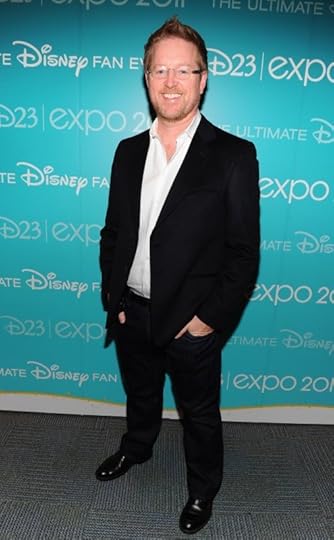
If anyone knows how to spin a great story, it’s this guy: Andrew Stanton. Ok, I hadn’t heard of him before either, but I certainly know about his films: All the Toy Story movies, Monsters, A Bug’s Life, Finding Nemo, WALL-E, and a ton more. If you are working on your college application essay, you grew up with all these popular animated films.
Stanton is an American filmmaker with Pixar studios, and he recently gave a TED talk about what makes a story powerful. His greatest storytelling commandment? “Make me care,” he says.
In other words, if you don’t care about the character(s), you won’t care what happens to them, or you won’t learn a thing from them. It will be boring.
SAME GOES FOR YOUR COLLEGE APPLICATION ESSAY!
So how do you make your readers—college admissions counselors—care about you? Tell a great story, and use some of these narrative (storytelling) writing techniques and devices:
1. Collect Your Real-Life Stories: In his recent TED talk on the clues of stories, Stanton says to tap parts of your life, your real-life “stories” and experiences: “Use what you know. Draw from it. It doesn’t always mean plot or fact. It means capturing a truth from your experiencing it, expressing values you personally feel deep down in your core.” Use anecdotes. (Prompt 1 for The Common Application asks you directly to “share your story!”)
2. Have Something Happen: Sharing a problem works wonders in injecting drama into a story. (Hey, isn’t that what Prompt 4 for the Common Application wants?)
3. Be Likable: “Frankly, there isn’t anyone you couldn’t learn to love once you heard their story,” Stanton said in his TED talk, quoting something on a card that legendary T.V. children’s host Mr. Rogers used to carry around with him. In your college application essay, don’t be afraid to get personal—share how you feel, think, believe and value.
4. Open Up: Recount something that happened, but make sure to include how it made you feel, how it changed you in anyway, and whether if affected what you believe or value. Readers connect more when you reveal a vulnerability than when you tout a strength. (Prompt 2 for the Common Application sets you up for this perfectly by asking you to talk about a time you failed at something.)
5. The Unexpected: ”The best stories infuse wonder,” Stanton said. Give your stories a twist or reveal something unexpected, something the readers wouldn’t have thought you would do, or care about or think.
6. Have a Clear Theme: ”A strong theme is always running through a well-told story,” Stanton says. It’s not often stated directly in the story (or essay), but there’s a core idea at the root of it. If you have a clear sense of your theme or main idea, you will stay focus and not try to include too many ideas in your essay.
Here’s Stanton’s entire TED talk: The Clues to a Great Story
(Warning: The joke he tells at the opening has a profane punchline with the F-bomb, if this bothers you. But it is funny.)
“Make Me Care” in Your College Application Essay

Andrew Stanton
Storytelling “Clues” from a Master
for your College Application Essay
If anyone knows how to spin a great story, it’s this guy: Andrew Stanton. Ok, I hadn’t heard of him before either, but I certainly know about his films: All the Toy Story movies, Monsters, A Bug’s Life, Finding Nemo, WALL-E, and a ton more. If you are working on your college application essay, you grew up with all these popular animated films.
Stanton is an American filmmaker with Pixar studios, and he recently gave a TED talk about what makes a story powerful. His greatest storytelling commandment? “Make me care,” he says.
In other words, if you don’t care about the character(s), you won’t care what happens to them, or you won’t learn a thing from them. It will be boring.
SAME GOES FOR YOUR COLLEGE APPLICATION ESSAY!
So how do you make your readers—college admissions counselors—care about you? Tell a great story, and use some of these narrative (storytelling) writing techniques and devices:
Collect Your Real-Life Stories: In his recent TED talk on the clues of stories, Stanton says to tap parts of your life, your real-life “stories” and experiences: “Use what you know. Draw from it. It doesn’t always mean plot or fact. It means capturing a truth from your experiencing it, expressing values you personally feel deep down in your core.” Use anecdotes. (Prompt 1 for The Common Application asks you directly to “share your story!”)
Have Something Happen: Sharing a problem works wonders in injecting drama into a story. (Hey, isn’t that what Prompt 4 for the Common Application wants?)
Be Likable: “Frankly, there isn’t anyone you couldn’t learn to love once you heard their story,” Stanton said in his TED talk, quoting something on a card that legendary T.V. children’s host Mr. Rogers used to carry around with him. In your college application essay, don’t be afraid to get personal—share how you feel, think, believe and value.
Open Up: Recount something that happened, but make sure to include how it made you feel, how it changed you in anyway, and whether if affected what you believe or value. Readers connect more when you reveal a vulnerability than when you tout a strength. (Prompt 2 for the Common Application sets you up for this perfectly by asking you to talk about a time you failed at something.)
The Unexpected: ”The best stories infuse wonder,” Stanton said. Give your stories a twist or reveal something unexpected, something the readers wouldn’t have thought you would do, or care about or think.
Have a Clear Theme: ”A strong theme is always running through a well-told story,” Stanton says. It’s not often stated directly in the story (or essay), but there’s a core idea at the root of it. If you have a clear sense of your theme or main idea, you will stay focus and not try to include too many ideas in your essay.
Here’s Stanton’s entire TED talk: The Clues to a Great Story
(Warning: The joke he tells at the opening has a profane punchline with the F-bomb, if this bothers you. But it is funny.)
April 6, 2015
How to Find The Best Essay Help: Part Two

Learn to Vet College Application Writing Experts
Read PART ONE on How to Find The Best Essay Help on College Application Essays first…
Here are other potential sources of help for writing personal statement essays for college admissions:
2. High School College Counselors: Remember that most of these counselors have literally hundreds of students to guide through the admissions process. If you are lucky, you might be able to bounce off topic ideas, find direction to other resources or even get them to read your drafts. This can be immensely helpful, since most of these counselors have a strong idea of what makes an effective essay. But you might have to seek out more help on your own.

3. English teachers: I’ve written quite a bit about how most Language Arts classes typically do not teach the type of writing used in college admissions essays, even though I believe that might be changing. Some English teachers now devote a special unit to helping students write these essays, either the fall of their junior year or spring of their senior year. The main red flag I have seen (in my own experience tutoring hundreds to students) is that some teachers give high grades to student essays that are not that great. Also, many English teachers prize the type of formal, pedantic style of writing that actually backfires when writing personal statement essays.
The other challenge with getting help from English teachers is that they are already overloaded with too many students and work demands from all fronts. And many also are tapped by students to write letters of recommendation for college applications. So don’t take it personally if they don’t have time to help you on your essay. I believe the best assistance you can get from an English teacher is if she or he is willing to proofread your piece. No one knows grammar, syntax and the rules of the English language better than they do.
4. Higher education professionals: I often hear from students and parents that they have reached out to a family member or close friend who works at a university for help. Even if these academics are brilliant in their field, I would be very wary of their help with these essays. Many are out of touch with what is considered an effective college application essay these days. And no one loves that academic, write-to-impress, jargon-filled language than professors. My own father was an English professor, and even though he was an intellectual, his writing was so erudite it was almost unreadable for most of us. This is not what you want in your college admissions essay.
5. Professional writers: Anyone who writes for a living—newspaper reporters, book authors or Internet content writers–could be a big help on an essay. They understand the writing process, and because they write all the time, they should have a strong ear for a good story.
Ideally, I would look for someone who writes regularly in the genre of telling stories for a specific audience or purpose–such as memoirs, or feature stories (especially personal profiles) for newspapers or magazines, advertising/marketing or blogs.
At the same time, professional writers also could be a disaster. There’s more to writing a great college application essay than being able to write well in other genres. Those who work with students on their essays need to understand what goes into an effective college admissions essays, as well as understand the college admissions process. Also, those who do can’t always teach. A lot has to do with the role and relationship the writing teacher plays with the student. Wise parents who write professionally often are the first to know they need someone else to work with their child and essay.
6. College essay writing “experts”: This is getting to be a crowded industry in itself. At the bottom of the barrel, in my opinion, are those essay writing services that write essays for students. Avoid these at all cost! Then there are essay writing coaches (like myself) who work with students on all phases of the process, but do not write them for students. You can find coaches from all sorts of backgrounds—from professional writers with backgrounds in newspaper, magazine and other media writing to those who wrote books, or screenplays or freelanced articles. Some essay experts also worked in the college admissions industry as college counselors at schools and universities.
All this background can be very helpful. But the bottom line is not only can they write, but can they help you write the type of personal statement essay to optimize your chances of connecting with college admissions counselors? To vet any essay writing expert, I would check out their web site or blog, read the testimonials, and read the samples of essays written by students they worked with. Also, ask them the same set of questions for private college counselors (see below).

You can end up paying anything from about $50 or less for someone to review your essay and give edits and feedback, to hundreds and even thousands of dollars to take you through the process of brainstorming, writing and proofing one essay. I think you can find what you need somewhere in the middle. If an essay expert can help you write an effective essay, I would say it’s worth at least several hundred dollars, given how much you have been and will be investing in your education.
DISCLAIMER: Obviously, I am in this very business, and believe my services have value. And so do many of the other professionals working in the college admissions industry. I also think there are plenty of free resources out there to help you—including all the posts on this blog. If you have an idea for your essay, and feel confident writing it, go for it. You might not need any help at all.
But if you are stuck, I think you are wise to reach out for help. There’s simply too much riding on these essays to mess them up. If nothing else, anything that gives you more confidence in your own writing skills, and helps relieve some of the pressure, is well worth the extra dough. Just make sure it will really help you. In the end, trust your own judgement with your college application essay. If you really like it, it’s probably pretty good!
Questions to ask essay experts:
How do they work with their student clients on essays? Do they help them personally or source the essay part out to some other “expert.” (If they tap someone else, I would ask that other expert the same questions.)
Do they have any background in writing. If not, how have they educated themselves about essay writing?
What do they think makes a good or effective essay? And ask to see samples of essays from past students that include an original draft and then the “edited” one to understand how it was improved.
How do they help their student clients find compelling topics? This is one of the most important steps in writing a strong essay.
What writing resources do they share with students?
How much time do they spend with students on their essays?
What guidance do they offer students on writing their essays? Do they offer workshops to get started? When do they get started?
Do they set deadlines? How do they help students re-write, edit and polish their essays?
Do they help with the supplemental essays?
How To Find the Best Essay Help: Part One

If you landed on my Essay Hell blog, there’s a strong chance you are in search of help on writing your college application essay. Yes, that’s what I do, and I’m happy to help you. But I was thinking of how I would advise a student or parent who is looking for someone to assist in the essay writing process (other than me).
There are many options—from private college counselors to teachers and smart friends. Many “experts” claim to know their stuff, but it’s important to make them prove it. I think the trick is to A. determine if your essay helper really understands what makes a good college admissions essay (a very specific type of writing), and B. has the experience and skills to help a student write or improve her or his own.
The best thing you can do as a student or parent is spend some time figuring out what you think makes a great essay. That way you are protected from someone telling you an essay is good when it is not. If someone assures you that a less-than-stellar essay is really great, and you send it in, you will never know how that affected your chance of admission. There’s simply no accountability with these essays. It’s up to you to do the best you can, including finding qualified assistance.
If it helps to sort it all out, here’s what I would tell a friend who is launching their college admissions quest about the various options:
1. Private College Admissions Counselors: If I were looking to hire a private counselor, and most likely pay several thousand dollars to guide me and my child through the complex admissions process, one of my main requirements would be that she or he had a handle on these essays. And that they understood how and why they matter.
I certainly wouldn’t expect (or want) the counselor to write these for their clients, but I would require them to share their specific plan for helping students on these essays.

Here are the types of questions I would ask:
How do they work with their student clients on essays? Do they help them personally or source the essay part out to some other “expert.” (If they tap someone else, I would ask that other expert the same questions.)
Do they have any background in writing. If not, how have they educated themselves about essay writing?
What do they think makes a good or effective essay? And ask to see samples of essays from past students that include an original draft and then the “edited” one to understand how it was improved.
How do they help their student clients find compelling topics? This is one of the most important steps in writing a strong essay.
What writing resources do they share with students?
How much time do they spend with students on their essays?
What guidance do they offer students on writing their essays? Do they offer workshops to get started? When do they get started?
Do they set deadlines? How do they help students re-write, edit and polish their essays?
Do they help with the supplemental essays?
Most private college counselors have little or no writing background. It’s typically not part of their training. But many belong to professional organizations in the college admissions industry that help them stay current with trends and professional development. If a private college counselor belongs to these groups (NACAC, IECA and HECA) and participates in their annual conferences, and other events, chances are they are up to snuff on the essay scene. At least way more than those who don’t.
Based on the private counselors I have worked with, I saw that those with experience developed a keen radar for an effective essay, and had learned ways to connect with students and help them find their stories. Good counselors also can be effective sounding boards, and provide feedback, such as when an essay is not clear, focused or dull.
PART TWO: How to Find the Best Essay Help: High school counselors, English teachers, higher ed professional, professional writers and essay writing experts…
DISCLAIMER: Obviously, I am in this very business, and believe my services have value. And so do many of the other professionals working in the college admissions industry. I also think there are plenty of free resources out there to help you—including all the posts on this blog. If you have an idea for your essay, and feel confident writing it, go for it. You might not need any help at all.
But if you are stuck, I think you are wise to reach out for help. There’s simply too much riding on these essays to mess them up. If nothing else, anything that gives you more confidence in your own writing skills, and helps relieve some of the pressure, is well worth the extra dough. Just make sure it will really help you. In the end, trust your own judgement with your essay. If you really like it, it’s probably pretty good!
How To Find the Best Essay Help
If you landed on my Essay Hell blog, there’s a strong chance you are in search of help on writing your college application essay. Yes, that’s what I do, and I’m happy to help you. But I was thinking of how I would advise a student or parent who is looking for someone to assist in the essay writing process (other than me).
There are many options—from private college counselors to teachers and smart friends. Many “experts” claim to know their stuff, but it’s important to make them prove it. I think the trick is to A. determine if your essay helper really understands what makes a good college admissions essay (a very specific type of writing), and B. has the experience and skills to help a student write or improve her or his own.
The best thing you can do as a student or parent is spend some time figuring out what you think makes a great essay. That way you are protected from someone telling you an essay is good when it is not. If someone assures you that a less-than-stellar essay is really great, and you send it in, you will never know how that affected your chance of admission. There’s simply no accountability with these essays. It’s up to you to do the best you can, including finding qualified assistance.
If it helps to sort it all out, here’s what I would tell a friend who is launching their college admissions quest about the various options:
1. Private College Admissions Counselors: If I were looking to hire a private counselor, and most likely pay several thousand dollars to guide me and my child through the complex admissions process, one of my main requirements would be that she or he had a handle on these essays. And that they understood how and why they matter.
I certainly wouldn’t expect (or want) the counselor to write these for their clients, but I would require them to provide a specific plan for helping students on these essays.
Here are the types of questions I would ask:
How do they work with their student clients on essays? Do they help them personally or source the essay part out to some other “expert.” (If they tap someone else, I would ask that other expert the same questions.)
Do they have any background in writing. If not, how have they educated themselves about essay writing?
What do they think makes a good or effective essay? And ask to see samples of essays from past students that include an original draft and then the “edited” one to understand how it was improved.
How do they help their student clients find compelling topics? This is one of the most important steps in writing a strong essay.
What writing resources do they share with students?
How much time do they spend with students on their essays?
What guidance do they offer students on writing their essays? Do they offer workshops to get started? When do they get started?
Do they set deadlines? How do they help students re-write, edit and polish their essays?
Do they help with the supplemental essays?
Most private college counselors have little or no writing background. It’s typically not part of their training. But many belong to professional organizations in the college admissions industry that help them stay current with trends and professional development. If a private college counselor belongs to these groups (NACAC, IECA and HECA) and participates in their annual conferences, and other events, chances are they are up to snuff on the essay scene. At least way more than those who don’t.
Based on the private counselors I have worked with, I saw that those with experience developed a keen radar for an effective essay, and had learned ways to connect with students and help them find their stories. Good counselors also can be effective sounding boards, and provide feedback, such as when an essay is not clear, focused or dull.
PART TWO (coming soon!): How to Find the Right Essay Help: High school counselors, English teachers, higher ed professional, professional writers and essay writing experts…
DISCLAIMER: Obviously, I am in this very business, and believe my services have value. And so do many of the other professionals working in the college admissions industry. I also think there are plenty of free resources out there to help you—including all the posts on this blog. If you have an idea for your essay, and feel confident writing it, go for it. You might not need any help at all.
But if you are stuck, I think you are wise to reach out for help. There’s simply too much riding on these essays to mess them up. If nothing else, anything that gives you more confidence in your own writing skills, and helps relieve some of the pressure, is well worth the extra dough. Just make sure it will really help you. In the end, trust your own judgement with your essay. If you really like it, it’s probably pretty good!
April 1, 2015
The NEW Common Application Prompt 4: What’s Your Problem?
How to Answer Prompt 4 for the Common App
for your College Application Essay
Prompt 4: Describe a problem you’ve solved or a problem you’d like to solve. It can be an intellectual challenge, a research query, an ethical dilemma—anything that is of personal importance, no matter the scale. Explain its significance to you and what steps you took or could be taken to identify a solution.
You almost can’t go wrong if you pick this prompt to write your college application essay for The Common Application for 2015-16. It sets you up perfectly to tell an engaging story, which makes the best personal statement-style essays.
If you read through the lines, this prompt breaks down to a simple formula: Find a problem you faced or are still facing, share what you have done to deal with it, and then go on to explain what you learned in the process and why it mattered. That’s it!
The authors of this prompt try to help you by offering sample problems you could write about: an intellectual challenge, a research query, an ethical dilemma. But these are just some suggestions. Their main point is that your problem can be “anything” that mattered to you.
Also, when they say, “no matter the scale,” the message is that this problem can be big or small. In other words, it doesn’t have to have been a catastrophic life event. But if you did face a crisis in your life, this could make an excellent essay, too. You get to pick.
The beauty of this prompt is that if you write about a problem, you almost can’t help include some type of story. Think back to English class. Remember the two things you need to make a story? A character and a conflict. In these essays, since you write about yourself, you are the “character.” And the “conflict” is the problem you faced or are facing.
Remember that conflicts (problems) can come from many different places—from within yourself (internal: you have a personal issue or hang-up that caused you pain or trouble) to outside yourself (external: something bad happened to you.)
To put it simply, a conflict is just another word for a problem. Problems come in all forms. They do not need to be traumas or a crises, although those can work, too. (HINT: Basic, everyday problems work best! Check out this post about “mundane” topics.) Here are other words for a conflict or problem: challenge, failure, obstacle, mistake, hang-up, issue, a change, dilemma, fears, obsessions, accident, a deficiency, query, etc.
Some variations of problems: you are shy, competitive, stubborn, were bullied, are obsessed with Twilight, didn’t make the team, got injured, have big feet, frizzy red hair, smile too much, someone quit at your work, don’t have own car, can’t spell, adhd, ocd, don’t eat meat, perfectionist, slob, lazy, drunk driving, have a mean grandparent, no money, etc…Man, there are a lot of problems out there! But for the purposes of writing these dreaded essays, that’s a good thing for once!
(If you want help making sure your problem was or is “significant” to you, start by Finding Your Defining Qualities.)
Once you remember a juicy problem, follow these steps to share it in a narrative (storytelling) essay format:
1. Describe the time you had a problem or describe a specific example of your problem. Include what happened and how it made you feel. Try to start at the moment it hit, or happened for the best impact. Include the 5Ws–-who, what, when, where and why! Stick to one or two paragraphs. Include a snippet of dialogue. These mini-stories from real life are also called anecdotes, and you can learn more by reading my post on how to write an anecdote.
2. Background the history of this problem (when did it start, why/how did it happen or get this way.) Give it some context. “It all started back when…”
3. Talk about how you dealt with that problem. What you did about it. Describe the steps you took to handle it.
4. VERY IMPORTANT: Analyze and reflect on that problem, and your response. How did you think about it? How did you feel? Did handling it change you in any way or how you think about things? Share your thoughts on the good and the bad. This is how and where you can “explain its (the problem’s) significance to you.”
5. What did you learn from dealing with that problem–about yourself, others or life in general? Anything good come out of it? Did you develop or demonstrate a core quality–determination, problem-solving, creativity, passion, patience, respect…–in the process? Talk about that. This is your chance to develop more “its significance to you” in your essay.
6. To wrap it up, update the reader on the current status of that initial problem you shared in the introduction. You don’t necessarily have had to solve it. Just explain briefly how things are going for you now, today. You could also give examples of how you have applied the life lesson(s) you learned in other parts of your life.
7. End by projecting into your future. Go ahead and share your goals and dreams as they relate to what you have learned about yourself. If you can think of one, end with a “kicker,” which is a memorable last line that can show that you are witty, funny, passionate or don’t take yourself too seriously.
This is just a sample outline for a classic narrative-style essay to help you get started. You don’t need to stick to every step, and feel free to take your essay in whatever direction you want. Just remember that the point is to reveal how you think, what you care about and how your learn. It’s called your “intellectual vitality,” and colleges love to see it in all shapes and sizes.
Check out this sample narrative essay. Can you tell what his “problem” was, and the steps he took to deal with it, and what he learned?
Although this post with three sample essays was intended to help students write their University of California essays, all three sample essays could easily have answered one of the five Common App prompts. Notice how the introduction to each of these essays describes a problem, and check out how the students used an anecdote to help the reader understand it. Instead of explaining their “problem,” they used a moment or an example from real-life to help us see it for ourselves.
The first sample essay, by Duncan, shows us how people think he’s mean, because he’s such a big guy. The first paragraph is an example of that problem.
The second sample essay, by Gabrielle, shows us a moment of her weekly drive between her parent’s two homes. The first paragraph is a specific example of her problem: the long boring drive, and the reason she has to endure it: having divorced parents.
The third sample essay, by Luc, shows us the moment his house literally fell out from under him in a mudslide. His first paragraphs describe that moment and his problem: losing his home.
All these essays engage the reader at the start because something happens. Problems are good for that. And they go on to share the steps they took to deal with them, and how they felt, and what they learned. You can do this, too!
Good luck with your own problems. This may be the only time in your life that you are glad to have them! ; )
In case you don’t have them all, here are all five prompts for The Common Application for 2015-16:
Some students have a background, identity, interest, or talent that is so meaningful they believe their application would be incomplete without it. If this sounds like you, then please share your story.
The lessons we take from failure can be fundamental to later success. Recount an incident or time when you experienced failure. How did it affect you, and what did you learn from the experience?
Reflect on a time when you challenged a belief or idea. What prompted you to act? Would you make the same decision again?
Describe a problem you’ve solved or a problem you’d like to solve. It can be an intellectual challenge, a research query, an ethical dilemma-anything that is of personal importance, no matter the scale. Explain its significance to you and what steps you took or could be taken to identify a solution.
Discuss an accomplishment or event, formal or informal, that marked your transition from childhood to adulthood within your culture, community, or family.
March 31, 2015
New Common App Essay Prompts for 2015-16!

The Five Prompts to Write your College Application Essay
for The Common Application
The folks at the Common Application announced the five essay prompts students will choose from to write their core essay for the coming college admissions “season.” I’m sharing them below. In general, I think they improved upon the options, and the prompts will elicit more interesting and meaningful college application essays. Bravo Common App!
Students just starting this process don’t even need to bother to know what the old ones were, and should just focus on understanding these new ones. I will update the information I offer in this blog in the next week or so to make everything accurate and clear.
For those in the college admissions industry who watch these changes as closely as I do, here’s a look at the new prompts, in a nutshell. Bottom line: The main change was they replaced Prompt Four. (The new instructions are in italics; my comments in red.):
1. Some students have a background, identity, interest, or talent that is so meaningful they believe their application would be incomplete without it. If this sounds like you, then please share your story. Same as last year, except they added three other categories (identity, interest and talent), which should make this even a more opened-ended prompt than before. In other words, you can almost write about anything you want, similar to the previous “Topic of Choice.” This is good news. They want your stories!
2. The lessons we take from failure can be fundamental to later success. Recount an incident or time when you experienced failure. How did it affect you, and what did you learn from the experience? This is almost exactly the same, except for the additional sentence that encourages the writer to make sure to describe the failure and what was learned, but also how that experience led to a more basic or core success for that student. A minor, but nice addition.
3. Reflect on a time when you challenged a belief or idea. What prompted you to act? Would you make the same decision again? Same as last year.
4. Describe a problem you’ve solved or a problem you’d like to solve. It can be an intellectual challenge, a research query, an ethical dilemma—anything that is of personal importance, no matter the scale. Explain its significance to you and what steps you took or could be taken to identify a solution. I LOVE this brand new prompt! (And they nixed the old one about the place where a student was “perfectly content,” which I found led to some dull essays.) To me, this prompt is begging for a story, which are THE BEST for these essays! If you have a problem, and then share how you dealt with it, you will tell a story. I write about that all over this blog and in my guide books!
And stories are engaging and the perfect way to reveal meaning, character, intellectual vitality, all that good stuff. Also, when there is a problem, something happens—which makes the essays more interesting to write and read!
I especially love the part that emphasizes that this problem just needs to have “personal importance, no matter the scale.” To me, this means it does not need to be impressive, and even an everyday (mundane) problem could produce a terrific essay. And with any personal statement essay like these, the more “personal,” the better.
I will be all over this prompt, and will share a post on it soon. Way to go Common App! College admissions counselors around the country will want to kiss you this year.
5. Discuss an accomplishment or event, formal or informal, that marked your transition from childhood to adulthood within your culture, community, or family. Same as before. Not a favorite of mine, but it worked really well for students who came from challenging personal backgrounds that forced them to “grow up” and assume adult responsibilities and admirable qualities early in life. Provoked some powerful essays.
So that’s it! At least for now. I need to get busy and update this blog and my guide books. If I were just starting, I would read all these prompts and see if one resonates with you, or inspires an idea or story you like. I believe Prompt One, Two and Four can evoke the best narrative (story-telling style), slice-of-life college application essays–but go with whichever one works for you.
Check out my Jumpstart Guide to get your started. Good luck!