Janine Robinson's Blog, page 13
June 22, 2015
The Secret to a Killer College Application Essay

A lot of pieces go into crafting a college application essay that will help you stand out from the competition, and help push you through the door to your dream school:
It needs to be engaging, especially at the start. (Here’s how you do that.)
It needs to have a topic that’s unique and interesting. (Here’s how you do that.)
It needs to showcase something about you that the college wouldn’t otherwise know. (Here’s how you do that.)
It needs to make you come across as likable. (Here’s how you do that.)
It needs to prove that you have what it takes to excel once you start school. (Here’s how you do that.)
It needs to connect with your reader. (Here’s how you do that.)
It needs to be memorable and leave a lasting impression. (Here’s how you do that.)
But what’s the real secret to nailing your essay?
In my opinion, it needs to be personal.
What does that mean?
Personal means writing about things involving your private life, your relationships and emotions and feelings, as opposed to your public life and the things you do.
If you include all or many of the elements I just listed above, you will be well on your way to writing a personal essay.
But here are some other ways to make sure your essay is personal:
Don’t be afraid to be vulnerable.
Express doubts or concerns.
You can be imperfect.
Don’t try to impress.
Share a flaw or phobia or weakness.
Open up.
Write about something only you care about.
Confess a little.
Be bold with how you feel and what you believe.
Avoid listing accomplishments.
Share your truth.
Don’t worry about being judged.
Be humble, even if you are pretty awesome. Actually, the more awesome you are, the more humble you need to be about it.
Being personal is risky business. It usually means you have to step out of your comfort zone, and that’s not easy.
But this is how you connect with your reader. Would you want to read an essay that only talks about how great the person who wrote it was? Or one that listed all the impressive things they have done? Or someone who talks in generalities and only says what everyone else has to say?
No!
The people who are going to read your essay are admissions counselors, and they probably have fancy titles and are on a mission to find great students for their colleges, but above all they are people, just like you and me.
The main difference between them and us is that they have to read hundreds of these essays, so that makes it harder to stand out and connect with them.
But that doesn’t mean it’s not possible.
The trick is to try to share something personal about yourself. Tell about something that happened to you (something on the bad end of the scale), or something about yourself that has been hard to deal with, or something in your background that has been a challenge.
That’s what we all want to hear and read about: Problems. Your unique problems. (I know that sounds terrible, but it’s true! It’s just not interesting when things are all smooth sailing.)
RELATED: Video tutorial on How to Answer Common App Prompt 4: What’s Your Problem?
Of course, you don’t want your entire essay to only be about your flaws, and insecurities and self doubts, and for you to come across as a whiner or a loser. That’s not the point.
But before you get to the good stuff about yourself, make sure to reveal some of your less-than-perfect side. That way, we will relate with you (we’ve all been there at some point and can feel your pain) and cheer you on as you tackle your issues and learn from them.
If you don’t do that, we might get bored or feel jealous or annoyed by only hearing how great you are. And we probably won’t believe you anyway.
So how do you do that?
One trick is to find some type of problem you have faced (which is the best way to get personal!), and then go onto share how you dealt with it and what you learned.
This Jumpstart Guide can help you get started.
Works every time!


June 10, 2015
How to Write Anecdotes: The Story Behind My New Video Tutorial
in Your College App Essay
When I started as a young reporter at my first newspaper job in Illinois, I was assigned to cover a half dozen small farm towns.
I didn’t think much would happen out there.
But after about a month, there was a gruesome double murder in one of the towns on my beat.
A former convict looking for beer money stumbled upon a couple in their 20s fishing by a stream. After he stole $40, he tied them up and shot them both in the head because one of them recognized him.

For me, a 22-year-old cub reporter, this story was the big time.
After the first splash of reporting what happened, I needed a follow-up piece for the next edition. But there wasn’t a lot new to say since the suspect was still at large.
A fellow reporter suggested I drive to the couple’s hometown of about 5,000 and write a mood piece about the tragedy.
I raced out to the local watering hole and interviewed some of the residents, several of whom were related to the victims.
When I went back to write it up on deadline, my friend suggested I use an anecdotal lede (introduction using an anecdote).

I kind of knew what that meant, but he gave me some pointers on how to use colorful details and dialogue to capture the atmosphere of shock, grief and fear in that town.
(My friend was a talented writer and had learned in college what are known as the New Journalism writing techniques, where reporters tell true stories using literary devices found in fiction.)
I started the story describing the town, with its one main drag and single stoplight, and the dark, gloomy bar in the middle of the day, with pick-up trucks and Harleys lined up outside and Merle Haggard and Donna Summer playing on the jukebox, and other details like that.

Then I wove in some of the conversations (dialogue) with the bar patrons about the two victims and bizarre murder.
Back at the newsroom, I barely made my deadline and went home late.
When I opened the newspaper the next morning, there was my story.
Front page, top of the fold, with a huge banner headline.
And my byline.
I was surprised and giddy.
I even called my parents.
That story gave me my first taste of the power of the mighty anecdote.
Instead of telling the readers about the fall out of the murders, I showed them with this mood piece.
Instead of telling them how the residents were shocked and devastated, I showed them by weaving in their comments, feelings and observations.
For the rest of my journalism career, I always looked for ways to show instead of tell in my stories. Using an anecdote was often the best device, especially for the start of stories, called “ledes.”
Even after I shifted into other writing roles, such as editing lifestyle magazines and writing marketing content, I still found ways to use anecdotes to power my writing.
When I started helping students write their college application essays about seven years ago, I realized how perfectly anecdotes could work to help students tell their own stories using the narrative (storytelling) style of writing.
[image error]
You can use an anecdote to convey other people’s true stories—like reporters use them—or to convey your own real-life stories.
Anecdotes can be tricky to craft. There’s an art to providing just enough information to tell the mini-story, but not too much to give it all away.
They work like a dream to engage readers at the start of a college application essay, and inject personality, drama and emotion.
They just take a little practice.
So if you want to add this potent technique to your college application essay writing toolkit, read my posts on how to write anecdotes.
And watch my short, new tutorial video about How to Write an Anecdote: Part One.
June 2, 2015
How to Write a College Application Essay Even If You Can’t Write

or
Why Bad Writers
Write the Best
College Application Essays
If you think you can’t write, and you need to write a college application essay, this is your lucky day. There’s a higher-than-average chance you will write an awesome essay.
(If you think you can write, there’s still hope for you, too. But you might have more work to do.)
Let me start by asking you why you’re so sure that you can’t write, at least not well.
Is it because you got average to low grades in English class? Or even flunked out.
Or that your teacher never liked what you did write about, or ask to share it with the class or give you any positive comments?
Or when you did have to write something for any class, you hated it?
Here’s the deal. Your problem is not that you can’t write, it’s that you don’t write. At least not very often, and rarely about anything that you care about.
So of course you can’t write.
Yet.
There are far better indicators of your writing ability and potential than high school grades:
Do you like to read? Not just novels, but magazines, or blogs about sports or gadgets or topics you care about?
Do you love good movies, or T.V. dramas (The Wire, Girls, Breaking Bad, etc.)?
When something interesting happens to you, do you like to tell your friends about it?
Do you like to blast out selfies on FB and arty Instagram shots and those little Snapchat movies for your friends?
Are you funny?
Do you tend to get stuck in your head, overthink things?
Are you depressed sometimes?
Lots of yes answers? This means you love a good story, enjoy expressing yourself, making personal connections and are a thinker. Watch out then…you are starting to sound like a future writer.
Back to these college application essays.
What most people don’t know is they are the one level playing field in the college admissions game. And you bad writers most likely have the advantage.
Why? Because hardly anyone in high school can write well. (I sure couldn’t and this writer couldn’t and tons of other professional writers couldn’t.)
The main reason is that they haven’t done it very much, just like you.
And for many, even those with the high grades and shiny red As, what they have written wasn’t very good, or even outright stunk, but no one told them it was bad, or why, or how to make it better.
They just learned quicker how to write in a way that pleased their teachers.
And sadly, even tragically, that type of writing is often terrible.
Especially when it comes to the specific type of writing you need for your college application essay: narrative, personal and strategic writing skills.
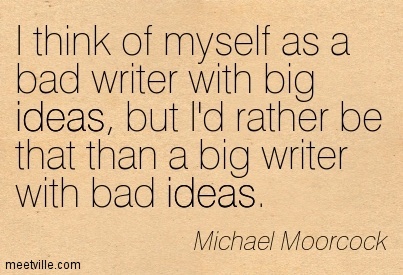
To keep your bad-writer edge, you need a plan, and to watch your back.
Here’s how it works:
The AP English students, and those with the great test scores and grades, will write essays that are well-organized, make their case using logic and some fancy words for effect, and will be sparkling-clean when it comes to errors, such as typos, grammar mistakes and spelling gaffes.
And that’s good.
But behind those descriptive sentences and ordered, logical points often lurks a boring essay, or an essay about a cliche topic (mission trips, acl injury, sport victories, etc.), or one that tries too hard to impress the reader with a dazzling list of achievements and talents.
Your essay, since you can’t write, could be about your summer job mowing lawns, or your alcoholic dad, or how you accidentally broke your brother’s arm, or that you have a mustache (and are a girl), or get up before dawn to pick grapes in a field before you go to school, or you take three busses to get to school, or your fear of kittens, or how you helped raise your sister’s baby, or any type of random, interesting problem you have dealt with in your life.
That’s good.
No, it’s awesome!!
But your essay might be more scattered, and riddled with run-on sentences and spelling errors and lots of typos.
Oops. Not so good.
But guess what matters more when it comes to a great college application essay: style or substance?
Substance!
You need a good story, first and foremost, and then something original and meaningful to say about it.
So do you see my point? This is your opening! As a bad writer, you got this.
Why?
It’s a lot easier to fix style than substance. It’s a lot easier to fix basic grammatical and spelling errors than it is to fix a dull topic.

Use your underdog advantage with these essays!
If you think you can’t write (because you haven’t been a stellar student so far), or you have an underprivileged or underrepresented background (ie you are poor, have a single mom, are a minority, etc.) and your school wasn’t considered great or even good, or you have a disability, or English is not your first language—you actually may be a step ahead of the privileged A-types out there.
How do I know this? I have seen for myself who writes the best essays. (And I’ve read literally thousands from all types of students.)
Yup, it’s those bad writers out there who nailed them every time.
At least those who put some effort into understanding what makes a great college application essay topic, and then brainstormed and pounded out their own.
After that, their essays rocked.
Often, it seemed almost effortless.
I think it’s because they didn’t take themselves too seriously, and that they had already failed in the writing world of high school and didn’t think they had anything to lose.
So they just went for it, said what they thought, wrote like they talked, and covered something they actually cared about.
They took a risk. And showed their grit. And got into colleges, even the most competitive ones.
Watch your back
Here’s main pitfall you bad writers need to watch out for: sloppy proofreading.
Most people, including college admissions officers, have trouble looking past mistakes. The little typos and grammar errors and misspelled words blind them to your terrific story.
So after you pound out your story, make sure to work on it more. Edit it. At least twice.
Force yourself to care about the organization, and the grammar and spelling.
If you can’t do this, reach out to someone who is good at proofreading (teachers, friends, parents, etc.—you just need to find one!) and get their help.
This is where bad writers who actually write awesome essays can fall short.
(For all you “good writers” out there, don’t despair! Read between the lines here and spend time making sure you have powerful topics, since that is where you’re more likely to fall short with your essays. I know a lot of you are struggling with your own issues and challenges, too, but there’s still time to unlearn a lot of that awful English class writing style. Loosen up a bit!)
Also, you bad writers found this blog. That shows me right there that you have the determination to find outside resources to help you. This alone puts you way ahead of the game!
It can be frustrating to watch other students who seem to have it all—the easy smarts, the teacher’s-pet appeal, the supportive (rich) parents and the tutors—but here’s another little secret. A lot of them have issues, too.
They just hide them better. And many end up dropping the ball—especially now, when it matters.
Yes, some of them get to hire private college admissions counselors, or expensive writing coaches, like me.
Again, don’t let this get your down. First, most of these admissions counselors don’t know how to write, either. It’s just not their background or training, even though they can be helpful with essays and on many other fronts.
As far as me, I can totally help a student write a great essay.
But everything I share with my private students on how to write these essays, I share on this blog.
Everything.
(Here’s the single best thing I have to offer if you are ready to get started: my video tutorial called How to Answer Common Application Prompt 4: What’s Your Problem?
You have no excuses: it’s FREE. And it’s under ten minutes.)
So it’s back to you. You can’t write. Great. Congratulations!
But chances are you won’t have this secret advantage for long. Because once your write a killer college application essay, you might surprise yourself and see that in fact, you can write.
May 31, 2015
How Many Common Application Essays Should You Write?

Short Answer:
ONE College Application Essay
for The Common App
The Common Application comes out officially August 1. But they already announced the changes for this coming 2015-16 season.
The most important were changes to the five essay prompts. (You can write your main Common App essay about one of the five.)
Beside the prompts, there were two other significant tweaks you should know about:
Tweak One
You can now change your Common App essay as often as you want. The upshot of this is that unlike previous years, you now could conceivably submit different essays for different target schools.
Even if you don’t write totally different essays, you at least now have the opportunity to tailor them to meet the sensibilities of your schools.
For instance, if one of your schools is super conservative or religious, you could pick a topic that isn’t as risky or provocative.
And then you could go with a more “out there” topic if your school has a reputation for wanting more unconventional students and thinkers, or is more liberal and progressive.

There are big differences among colleges and universities (some are very conservative, some are really progressive), but my guess is that most of your target schools will be of similar ilk. So it probably doesn’t matter anyway.
The point is I wouldn’t send an essay about your marijuana horticultural skills or your coming out story if you are applying to a military school or Baptist college in the deep south.
Instead, I would brainstorm topics that showcase your more high-minded core values and beliefs.
No judgement here. Just saying this should be common sense stuff.
You also might have one dream school (“OMG! All I ever wanted was to go to Stanford!”) and try to get in their head by researching everything about it and aim to showcase yourself in your essay as their ideal student.

No matter how gaga you are over one college, I totally wouldn’t advise this.
I think you should cast a wide net in your college search (if you haven’t heard, many of the prestige schools aren’t what they are cracked up to be anyway) with the aim to find the one that’s the best match for you.
So you could do this. Research the heck out of your schools and write a bundle of essays.
But my advice is to not worry about that. Just write one really great essay that reflects who you are, and go with that.
I think the closer you can convey what you are all about, the better chance you have to be selected by a school that is a great fit for you.
Also, schools that want to learn more about you usually require supplemental essays anyway—so use those to customize your application.
If you want to try to game your application, it’s your call.
I just don’t think it’s worth the time and energy, which you could put toward other objectives—such as writing ONE killer college application essay.
Who needs more work anyway, especially if it most likely won’t matter in the long run?
Just know you have that option now.
(Those of you who hire professional college admissions counselors should defer to their opinions on your essay submission strategies, since they know more than I do one how this admissions industry works. I just offer what seems like common sense to me, and has been supported by other college admissions professionals I respect who have weighed in on these changes.)
Tweak Two
Colleges that use The Common Application no longer have to require applicants to their schools to submit an essay. So you might get lucky with some of your target schools and not need to send them one.
But don’t hold your breath.
Even if one or more of your target schools don’t require an essay, there’s a strong chance at least one school will—so you will still need at least one essay.
I would also recommend that even if one of your schools doesn’t require the Common App essay, I would send one in anyway.
These are the best, and sometimes only, way schools can learn something personal about you. So why wouldn’t you jump at that opportunity to stand out from the crowd—especially if you already wrote your Common App essay for the schools that do require it?
The Takeaway From This Post?
Just focus on finding a great topic that reveals what makes you tick and write a narrative-style essay that rocks! Only write one.
And even if one or more of your target colleges doesn’t require a college application essay, send it in anyway—because it’s that good!
May 30, 2015
How to Answer Common Application Prompt 4: Free Tutorial Video

The folks at The Common Application added a new prompt this year and I love it.
It asks you to write about a problem.
What’s so great about a problem?
Problems = Stories = Great Essays!
This may be the only time having a juicy problem is a good thing. So take advantage of it!
I wrote Common App Prompt 4: When a Problem is a Good Thing earlier this year, but wanted to share the same writing advice and strategies in a video format. Some students learn better by listening and watching than reading.
So here it is. I’m offering it free for now.
You can learn almost everything you need to nail this prompt and write a standout narrative-style essay in less than 10 minutes.
If you want more in-depth instruction and writing advice after watching the video and pounding out a rough draft—and are a reader—my writing guide, Escape Essay Hell!, is the perfect companion to this video.
Another option to sharpen your essay writing skills would be to take my mini-course on How to Write A College Application Essay (cost: $49 time: one hour).
But there’s a good chance you won’t need more help. It all depends how much time and energy you want to invest in your essay.
Just watch the short video, take notes, start to dig in your past for a juicy problem, brainstorm a great topic, map out a narrative essay and then write it up.
This video will help you with Prompt 4, and also the other prompts—depending on what problems you end up writing about (this is explained in the video).
The sooner you start the better! Good luck!
Please share it if you find it helpful!
(To watch on a larger screen, click the YouTube icon on the bottom right and watch it there.)
May 26, 2015
Educators: 6 Reasons to Embrace the College Application Essay
I’m not sure how many high schools require their English teachers to help students write college application essays, but those that do could give their juniors and seniors a huge advantage in the college admissions game.
For many students, an assignment to write one of these essays for English class will be the only outside help they get.
But if a high school decides to have its English teachers include these essays in their curriculum, it’s important to get them right.
My understanding is that some overburdened English teachers don’t understand these essays or how to teach them. I’ve heard stories of teachers giving high grades to essays that are bad, or not giving any direction on how to write an effective one.

Someone recently told me that a teacher at one of our local high schools was having students answer a prompt for the Common Application that is no longer used (the old Prompt 4 before it was changed this year). I don’t even want to think how that could play out.
I’m not trying to point fingers, but believe high schools and English teachers should consider taking these more seriously, and put more energy into understanding why they matter and what makes a good one.
Beyond their value in the admissions game, I also believe learning to write one of these essays is perfect for teaching students to write better, especially in the real world.
And isn’t that the point of English class, at least when it comes to teaching writing?
Here are my 6 reasons I think the college application essay is an ideal writing assignment for high school juniors and seniors:
1. This probably is the first time something they write could have a real and lasting effect on their lives. Unlike a compare-and-contrast essay on Moby Dick, these essays are current and relevant. They can affect where a students goes to college, and also how much scholarship money they get. When something matters, it also motivates. Take advantage of that.
2. It’s a true writing assignment. Students get to write their own stories, instead of just analyze what others have written. They also can test out the literary writing techniques used in all the great fiction they have read over the years. (I’m not saying studying literature does not have value, but to learn how to write, students need to do more of their own.)
3. When students care about what they are writing, they invest more emotional energy into the process—which produces better writing. What can be more interesting to a teenager than themselves and their immediate future? I have found that my tutoring students (despite the initial dread of dealing with these essays) end up enjoying the opportunity to take an analytical look at their past, and explore what shaped them and what they learned. And the results often have been surprising and impressive.
4. This assignment teaches students how to write with a goal in mind. These essays are really marketing pieces. Students are trying to sell themselves to their target schools. It can be tricky to tout yourself and come across likable at the same time. But learning to strike the right tone in writing is a valuable skill in itself. So many jobs involve marketing writing skills—from advertising to Internet content writing (blogging) to press releases and cover letters.
5. These essays are great practice to write for a real audience. Up until this point, most students only had their English teachers in mind when they wrote papers. Now they need to pitch them to a discerning and critical group of strangers.
6. These essays push students to get personal in their writing. Many essay prompts ask students to dig deep and share their struggles, hardships and challenges. These experiences and feeling can be tough topics to explore and write about—but what better time than right before they step out into the real world?
I could keep going past 6 reasons why these essays are a valuable exercise: Students learn to write in a different style, called narrative writing. They can learn creative writing techniques, which they might not have used before, such as crafting anecdotes and applying other fiction-writing tools and strategies. They also learn to seek feedback outside the classroom and edit their own work. They have to face word counts and deadlines; and to think out of the box and find original topics.
So that’s my case for embracing the college application essay as a serious writing assignment, worthy of spending time to figure out the best way to help students craft ones that are effective and meaningful. Doing it halfway can do more harm than good.
No one likes these essays. They are loaded on many levels. But as long as college application essays are required to get into most colleges, and can make a difference on where students end up, why not embrace them and empower students with real-world writing skills at the same time?
May 25, 2015
Score My Latest Writing Guide FREE Today!
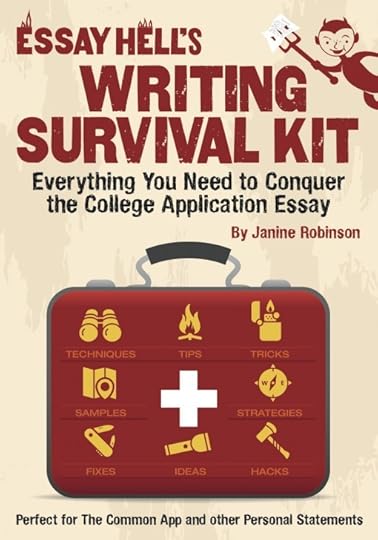
Click book image above to go to Amazon to get this book for free!
Get my latest college application essay,
writing guide
“Writing Survival Kit”
FREE ALL DAY TODAY
at Amazon!
Click HERE to go to Amazon and get the book free. If you like it, I’m hoping you will
leave a comment and tell other readers. Thanks!
May 22, 2015
Want to Take My New College App Writing Course for FREE?

I’m Giving It Away to 50 Lucky Students!
I’m offering my new mini online course, How to Write a College Application Essay, to the first 50 students who send me a request via email.
I will send you a link, which will bring you to the host site, Udemy. And you take it from there.
The course only takes about an hour to go through the 11 short tutorials and related handouts, and walks you step-by-step through the brainstorming, writing and editing process.
It’s the exact approach I take with my private tutoring students and use during my workshops—so I know it works!
(It’s the same online course that I’m also offering directly from this blog, but it has a slightly different platform.)
The course is great for college-bound students, but also valuable for parents, English teachers, college counselors, college admissions counselors, education consultants, and anyone who wants to learn how to craft a standout personal statement-style essay.
The narrative-style essay you will end up writing will be perfect for The Common Application, the UCs and other universities that don’t use the Common App, transfers, scholarships, graduate programs, etc.
The 50 students will have until the end of June to take the course, and then the link will expire.
To receive your free course, please email me (Janine Robinson) at: EssayHell@gmail.com.
Once I have given away 50 of these, I will update this post so you know the offer has ended.
Good luck!
May 21, 2015
Should You Write About Your Job?

Colleges Encourage Students to Write About Work and Financial
Hardship in College Application Essays
The New York Times today published the seven college application essays it liked the best from its contest for writing about the topic of money.
Most of the winners wrote about their experiences facing various types of financial hardship and challenges.
They are worth reading simply as sample essays, which could give you ideas for topics of your own.
New York Times financial columnist Ron Lieber wrote a companion piece to announce these winners, which included interviews with the admissions officers from the schools that shared these essays.
It’s worth reading his article, Essays About Work and Class That Caught a College’s Eye, so you can see what specifically engaged and appealed to the colleges in these pieces.
The idea is to see if you can include similar themes or details in your own essay to generate a similar positive reaction from your target schools.

Lieber started his piece by talking about how the associate dean of admissions at Wesleyan University read about 1,200 essays last year, and that only about 10 were about work or jobs.
He speculated the reason for such a low number was that many students were either affluent and never needed or wanted to work during high school, or that underprivileged students thought the need to work would not reflect well on them for some reason.
Regardless of the reason, Lieber went on to encourage students (you out there!) to consider writing about the potentially provocative topic of social class and financial hardship. And I heartily agree! Here’s how he put it:
“Yet it is this very reluctance [to write about social class] that makes tackling the topic a risk worth taking at schools where it is hard to stand out from the thousands of other applicants. Financial hardship and triumph, and wants and needs, are the stuff of great literature. Reflecting on them is one excellent way to differentiate yourself in a deeply personal way.”

Put simply, problems make great essay topics. Problems make “great literature” because they contain that central conflict at the heart of any story.
This year, The Common Application included a new prompt, Prompt 4, that asks directly What’s Your Problem? for students to share one and write about it.
I also have written about how Jobs Can Make Excellent Topics for College App Essays, and how when it comes to topics, Why the Real Risk is Playing It Safe.
So, yes, if you have faced financial hardship, or any other type of hardship, consider it for your topic because you will have an instant problem to share and reflect upon, and also find yourself digging deep into yourself and writing an essay that is personal and compelling.
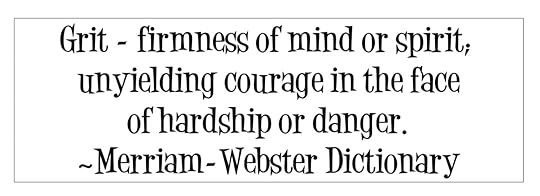
And if you are among the less privileged, it’s even more important to find a way to Show Your Grit in your essay!
Those of you who have not faced any hardship, don’t despair. First, I think you just haven’t looked hard enough at yourself. Hardship does not always need to be dramatic or a crisis. It can be any set of circumstances that made something hard or difficult for you.
Often, essays written about mundane or everyday hardships or problems make the best reads. It’s all about what you have to say about how the problem affected you, what steps you took to deal with it and what you learned in the process.
Bottom line: If you faced a dramatic hardship in your life, similar to those written about by these students, consider it for your topic. There’s a strong chance it shaped you in a significant way, and could make a powerful essay.
If you didn’t, dig a little deeper, get more creative, and you will land on something equally compelling and meaningful.
Check out this Jumpstart Guide to find your problem—whether it’s big or small.
May 11, 2015
Do You Have The Write Stuff for College and Beyond?
I’m always on the lookout for new voices in the college admissions industry who try to help students and parents and all of us keep a balanced and sane perspective on the frenzied quest for the perfect college.
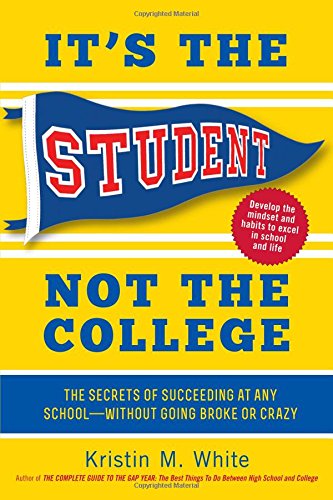
Kristin White, an educational consultant who wrote It’s the Student, Not the College: The Secrets of Succeeding at Any School: Without Going Broke or Crazy, does a great job of explaining how a student’s success has little to do with where they get in, even if it’s one of the 20 prestige schools so many believe they must attend or their lives will be ruined.
I asked Kristin if she would share her opinions on how she thinks about the college application essays, and she wrote this guest post on what is behind every great and effective essay—strong writing skills. As she explains in this piece, strong writing chops can not only help you nail your college admissions essays, they are powerful skills that will help power your college experience as well as your effectiveness in the workplace.
* * * * *

Writing Skills: A Powerful Asset In College And Career
By Kristin M. White
It can start with a rush, and end with a bang; make you angry, cry or even laugh. It can inspire you, or at least change your viewpoint, your attitude. It has come in many forms, from goose twills to bold faces. I’m talking, of course, about the written word.
Writing skills are incredibly important, certainly in the college admission process, but also during your career as well. A thoughtful essay can capture the imagination of the admissions committee, while employers want effective communicators, both verbal and in writing. Indeed, hiring companies today complain they cannot find enough job seekers with effective writing skills.
The reason this is so, unfortunately and somewhat inexplicably, is because writing is no longer emphasized at most American high schools. It is pushed aside by curriculums that rather focus on getting good results on standardized tests or on covering a mountain of material. The sad result is this leaves little time for careful analysis and thoughtful writing.
Teachers also often have large classes and less time to grade writing exercises. They aren’t likely to give extensive feedback and edits, or encourage students to rewrite their paper. There are very few high school graduates who have written a ten-page research paper, which used to be a common requisite. Many students I work with report they are only required to write a few two- to three-page papers each year.
These students, therefore, find it difficult to organize their ideas on paper, and articulate them clearly and in a convincing manner. The power to influence people and their way of thinking is incredibly important. Whether you’re convincing your chief executive to launch a new product line, a capital provider to invest in your company, a prospective client to buy your technology, or an admissions officer that you have the insights and self-awareness to move off the bubble and onto the admit list – you will need strong writing skills.
The good news is you can improve your writing acumen with practice; think of it as a muscle that needs to be exercised. Write in a journal each day. Write a persuasive essay with a firm viewpoint on a topic you find interesting. Write a response to an article that made you think, or better yet, send a letter to the editor – they may even publish it. Think through your view point, take a “side” and then defend it. Once you start writing, it might be a habit that stays with you for life. You might even learn to love it.
You can also find an author or authors you love, and read their work – it will help you develop your own skills. As J.K. Rowling has said, “The most important thing is to read as much as you can, like I did. It will give you an understanding of what makes good writing and it will enlarge your vocabulary.” After you’ve honed your craft, you might consider entering one of the hundreds of writing contests available each year.
Students need to take charge of their education, and develop the skills and mindset needed to succeed. Developing strong writing skills is one important component in building a profile for success not only while in college, but also when launching your professional career.
Kristin M. White is the author of It’s the Student, Not the College: The Secrets of Succeeding at Any College – Without Going Broke or Crazy. She is also the Director of Darien Academic Advisors, an educational consulting firms that advises students and families on the college, boarding school and MBA admissions process. She can be reached at kwhite@darienacademicadvisors.com. To learn more, visit www.darienacademicadvisors.com.