Christopher Lawson's Blog, page 6
December 8, 2017
Diet for the MIND: The Latest Science on What to Eat to Prevent Alzheimer's and Cognitive Decline
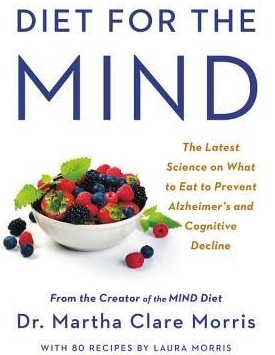
In DIET FOR THE MIND, Dr. Martha Clare Morris says that we can do much to fend-off dementia:
“It is possible to delay the symptoms of dementia in later life by taking control of your health.”
Before spending much time reading this book, I wanted to know WHY I should believe the author—that is, how is she qualified to give advice on this subject? Well, it turns out the author’s credentials are stellar. Dr. Morris is a professor of Epidemiology at Rush University and has a doctorate from Harvard. She has been researching cognitive decline for 20 years.
Here’s the key to the professor’s findings: The same good practices that help your physical health also improve your brain. It comes down to what we eat, and how much we move:
“Diet and physical activity are at the root of nearly all major chronic conditions and diseases. Focusing on these two basic components of daily living is key to aging healthfully.”
Much of the book is dedicated to guidelines for eating. In Chapter 3: “Foods For Everyday Eating,” we are exhorted to eat lots of leafy green vegetables:
“Among all the different types of vegetables out there, the leafy green variety has shown to be among the most important for protecting cognitive abilities. . .”
Here’s something I didn’t know: Go for the DARK-leaved veggies:
“The darker the leaves, the greater the source of brain-healthy nutrients.”

Leafy and Colorful
In Chapter 4: “Foods to Eat Every Week,” I was delighted to find that walnuts take the prize for best nut:
“If you had to pick a winner for brain-enhancing nuts, walnuts would take first prize. . . two to five servings of this brain food per week were associated with 37 percent fewer deaths from coronary heart disease.”
The author not only suggests what we should eat—she says what we should avoid. So, we read in Chapter 5 about “Brainless Foods that Harm the Mind.” The foods here are pretty much what you would expect: fried food, fast food, fatty food, sugary food.
Luckily for me, chocolate is NOT listed as one of the “Brainless Foods.” I was encouraged by the small section on chocolate, entitled, “Is Chocolate A Brain Food?” The author notes that some studies show a link between cocoa and increased blood flow to the brain. (I hope more studies will show that!)

Brain Food, Definitely.
So all in all, I found DIET FOR THE MIND to be a credible book with lots of practical ideas. Dr. Morris writes clearly, making the book easy to read. She also cites lots of research studies to back up her claims. The latter part of the book contains suggestions and recipes for putting into practice the lifestyle and dietary changes recommended by the author.
One interesting observation: The author is currently running a study to confirm how well her recommended diet regimen protects again cognitive decline. It will be interesting to see how well the results of this study support her dietary recommendations.
For further reading on this subject, I also recommend, The Alzheimer's Solution: A Breakthrough Program by Dean Sherzai and Ayesha Sherzai. The physician-authors reach a nearly identical conclusions as in this book.
Diet for the MIND: The Latest Science on What to Eat to Prevent Alzheimer's and Cognitive Decline -- From the Creator of the MIND Diet
Diet for the MIND by Martha Clare Morris


December 6, 2017
Be the Hands and Feet: Living Out God's Love for All His Children by Nick Vujicic
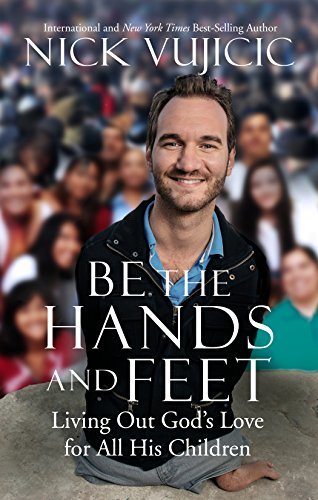
More than anything else, BE THE HANDS AND FEET is a book of ENCOURAGEMENT. The author, Nick Vujicic, believes in the "Big Tent" method of Christian evangelism. He's not interested in pushing a particular denomination or approach; rather, he's interested in how individuals can be like Jesus everyday--how we each can be the "hands and the feet" to those suffering, and especially to those who need to hear the Gospel.
"My encouragement to pastors everywhere is to come under one tent to fulfill this primary mission, the Great Commission."
Most of the book is devoted to stories about fellow believers who are sharing the Gospel throughout the world, or who are helping the suffering. Nick also describes his international journeys--where he usually met a warm reception, but sometimes a scary situation.
There is lots to like in BE THE HANDS AND FEET. Nick provide various ideas on how Christian believers can demonstrate God's love for a lost and dying world. Many of the stories are from fellow believers the author has met in his travels.
The latter part of the book describes Nick's own struggle with some painful medical problems and procedures he had to endure. The book also includes a powerful testimony all about his dad in "My Father A Model for Life."
I thought this one sentence from Nick nicely describes the theme of this book:
"Jesus didn't tell us to build the biggest churches we could build. He told us to serve his children."

Be the Hands and Feet: Living Out God's Love for All His Children by Nick Vujicic
November 27, 2017
The Marines' Lost Squadron The Odyssey of VMF-422 by Mark Carlson

In THE MARINES' LOST SQUADRON THE ODYSSEY OF VMF-422, author Mark Carlson explains in great detail the tragic story. The flight was just supposed to be a routine flight, ferrying 24 F4U-1D Corsairs to another island. The end result: Only one plane actually landed where intended. The rest were either lost forever, or ditched at sea. Although not often mentioned, the “Flintlock Disaster” was actually the worst non-combat loss of a marine squadron in the war.
Here was the key problem: They were heading “right at one of nature’s most powerful and dangerous forces: a Pacific typhoon.” Adding to the problem was that the commanding general never told the arriving location that the planes were on the way. So, when they didn’t show up, no one knew to take action to look for them.
The pilots became hopelessly confused in the typhoon. Just one managed to land on their original destination, and many ended up in the ocean:
“One by one the planes disappeared like tiny insects into the storm.”
The author recounts in great detail the confusion of the typhoon, and how the pilots attempted to make their way, without success. Ultimately, there were 13 men in 12 rafts trying to survive.
The most bizarre account is of pilot Jake Wilson. He flew around blindly for two hours, then “managed to stumble on the only island inhabited by friendly natives whose pretty girls were literally throwing themselves at him.” The chief of the island gave a party for Wilson. It was his “own betrothal party. He told the American pilot to choose a wife from among the young women who were dancing for him.” Later, Wilson recounted that life on the island “had been one of the most pleasant times he had ever known.”
Although the men on the rafts were rescued, some men were never found, and were lost at sea. There was an official investigation, which placed much blame on commanding General Merritt—primarily for not sending a multi-engine escort with the single-engine planes:
“A multi-engine escort plane was virtually imperative for long over-water flights by single-engine aircraft.”
So all in all, I found THE MARINES' LOST SQUADRON to be an outstanding book. The author writes very well and provides a wealth of information about these events. Mr. Carlson does a nice job of setting the stage for the disaster, as well as taking the reader through the terrible events. The research presented here by the author is impressive and detailed.
As a side note, it’s worth mentioning a bit of history about the author. In a postlude, Mr. Carlson briefly notes that he lost his vision via the eye disease, retinitis pigmentosa (the same disease that afflicts my own family.) In an encouraging--even uplifting note, the author suggests that “In a way, being blind has given me both an advantage and an insight that mere sight could never hope to accomplish.”
My award for Best Non-Fiction, 2017.November 16, 2017
Ships of Mercy: Bringing Hope & Healing to the World's Forgotten Poor by Don Stephens
I had no idea of the complexity required to get a hospital ship ready. In SHIPS OF MERCY, Don Stephens and the team explain the beginnings of Mercy Ships, discussing the early, smaller ships, and continuing onto the giant African Mercy. The authors explain all the long legal hurdles, equipment problems, staffing issues, money--you name it. This was a HUGE ordeal getting this organization off the ground.
There are also numerous stories that document the many lives changed as a result of Mercy Ships. It is almost unbearable to read the stories of these poor people with terrible diseases--who are then helped with surgery on the ship. There are also some inspiring photos with "before and after" pictures showing you the results. Really awesome!

Africa Mercy
Some of the children have diseases that we never see here in the U.S. Several children had legs that actually were backwards! Another person had a tumor so large they could barely breathe! Afterwards, their face looked normal (and happy!)
All in all, I found SHIPS OF MERCY to be an inspiring, informative book. The rear of the book contains schematic illustrations of several mercy ships, as well as a future ship.
All I can say is, "Bravo to the Mercy Ships team!"
For more information, see Mercyships.org

The new Atlantic Mercy
Ships of Mercy: Bringing Hope & Healing to the World's Forgotten Poor by Don Stephenson
I had no idea of the complexity required to get a hospital ship ready. In SHIPS OF MERCY, Don Stephenson and the team explain the beginnings of Mercy Ships, discussing the early, smaller ships, and continuing onto the giant African Mercy. The authors explain all the long legal hurdles, equipment problems, staffing issues, money--you name it. This was a HUGE ordeal getting this organization off the ground.
There are also numerous stories that document the many lives changed as a result of Mercy Ships. It is almost unbearable to read the stories of these poor people with terrible diseases--who are then helped with surgery on the ship. There are also some inspiring photos with "before and after" pictures showing you the results. Really awesome! Some of the children have diseases that we never see here in the U.S. Several children had legs that actually were backwards! Another person had a tumor so large they could barely breathe! Afterwards, their face looked normal (and happy!)

All in all, I found SHIPS OF MERCY to be an inspiring, informative book. The rear of the book contains schematic illustrations of several mercy ships, as well as a future ship.
All I can say is, "Bravo to the Mercy Ships team!"
For more information, see Mercyships.org
October 23, 2017
American Radical: Inside the World of an Undercover Muslim FBI Agent by Tamer Elnoury
AMERICAN RADICAL is the story of a patriotic Muslim recruited by the F.B.I to penetrate terrorist groups. The author became "Tamer Elnoury," complete with a solid background and internet presence. That way, anybody checking him out would discover that Tamer was "real." Of course, the author did not just pretend to be Muslim--he really is a devout believer, and hates the notion that radicals are bringing disgrace to his religion.
Before working in anti-terrorism, the author worked to take-out major drug dealers. I actually found this brief section of the book more interesting than the anti-terrorism action. He lived the part: I spent a lot of days looking and acting like a criminal." Describing the moment the SWAT team stormed the building, the author recalls: "My eyeballs went to Black’s hands and waist. If he went for a gun, I was going to shoot him."
AMERICAN RADICAL reads a bit like a "Police Procedural." I found it to be an interesting read by someone right at the heart of the action. The author puts the reader right at the scene of the crime, with all the nitty-gritty details. There is lots of detailed narrative about the author's work on the "inside," as well as the court details. I thought some parts were a little too long, but perhaps other readers might appreciate all the detail. The book also includes a "Glossary of Arabic Words."
American Radical: Inside the World of an Undercover Muslim FBI Agent by Tamer Elnoury
Republican Like Me: A Lifelong Democrat's Journey Across the Aisle by Kenneth Stern
We Would All Be Better Off Doing Less Finger-Pointing And More Listening To The Other Side
In REPUBLICAN LIKE ME, lifelong Democrat Kenneth Stern goes on a brave adventure: Attend lots of conservative events for 1 year. This means going to conservative churches, learning how to shoot guns, attending Tea Party rallies—and even chatting with Steve Bannon.
Prior to his 1-year adventure, the author admits he held many of the stereotypes about conservatives. He didn’t associate with conservatives, he didn’t like them—and neither did any of his friends. In his neighborhood, he could not find a single Republican.
The author is quite frank about his political leanings: “I detest Fox News, and the very sight of Mitch McConnell’s hound-dog, jowly face irritates me. “
So why are the partisan barriers so strong? It’s because we don’t even talk to the other side: “We are increasingly participating in groupthink. When all the people you know, when all the people in your political sect agree with you, it becomes easy to relax in the certainty that you and your cohort are right.” The author makes this frank admission: “When we don’t hear from them, when we don’t talk to them, when we can demonize them to our heart’s content.”
Well, that all changed when the author left his bubble. He acknowledges that associating with Conservatives for a year really changed his perspective. The other side is a lot more like him than he thought: “We are not nearly as different from them as we like to think we are.”
There’s a much bigger point that the author emphasizes: It doesn’t take an entire year to change perspective, and soften partisan rigor. Mr. Stern cites a study with eye-popping implications. Professor Samara Klar, at the University of Arizona, wanted to see how easily partisan walls could be overcome. She discovered that folks of opposite political beliefs could begin to reach common ground in just a few minutes of conversation.
The author summarizes this surprising finding: “Klar’s research opens a little window of hope, that if we spend a little time we each other, if we venture outside our bubbles, we might see things a little differently.”
So all in all, I found REPUBLICAN LIKE ME to be a fun read. The author writes well, and tells a good story. He is a brave man for admitting he was living in a partisan “bubble,” and being willing to listen to people he disagrees with. He sums up his adventure: “If the year has taught me anything, it is that none of us has a monopoly on the right ideas and none of us has a superior claim on values.
October 20, 2017
Dollars and Sense: How We Misthink Money and How to Spend Smarter by Dan Ariely and Jeff Kreisler
I was hesitant to read this book, as I was pretty sure it would be boring. I assumed it would be one of those “How to Make a Budget” type of books.
Okay, I was completely wrong—it’s nothing of the kind. I enjoyed reading this book. DOLLARS AND SENSE by Dan Ariely and Jeff Kreisler explains how we think about money, with special emphasis on the frequent ways we think WRONGLY about money. It’s not that we are stupid about money; rather, we don’t think objectively, and are easily manipulated in some areas.
I confess I am a bit of a chump and easily tricked by marketers, so this book was especially helpful to me.
For example, I really like those big, “50% OFF!” signs. I’m not alone, says the author. Bargains make us feel “special and smart. They make us believe we’re finding value where others haven’t.”
I completely understand what the authors are saying. Deep down, I know I’m being manipulated by the “Savings” signs, but I still like the feeling of getting a great deal.
The authors discuss the “pain” of buying something. Not surprisingly, if there is little pain, we tend to “spend more freely and enjoy consuming things more.” That’s a big factor in using credit cards—they separate the moment of consuming from the pain of paying.
“Credit cards capitalize on our desire to avoid the pain of paying.”
One of the favorite sections is the discussion of “Fairness.” We tend to value things more highly if we know a lot of effort has gone into the product or service. If it seems like the seller is gouging us, we won’t buy their product—even when it is in our best interest to do so.

The later part of the book provides suggestions to help us. First off, realize that some forces in our environment WANT us to make poor decisions. A bad decision by us means more money for them: “We fight a financial environment that actively tries to tempt us to make bad financial decisions. We live in a world where outside forces constantly want something from us.”
I thought this one suggestion was the best advice in the book:
“From time to time, let’s stop and question our long-term habits.”
Maybe getting that expense coffee every day is not really a good idea.
Here’s an interesting idea that helps us save more money: We can also create a “Ulysses Contract.” (Named after the classic story of Ulysses tying himself up to prevent responding to the call of the Sirens.) A Ulysses contract is a process we setup to“create barriers against future temptation. We give ourselves no choice.” The idea is, have some sort of automatic savings process, to try to fend off future temptations. The authors cite a study showing that savings increased 81% under an automatic savings scheme.
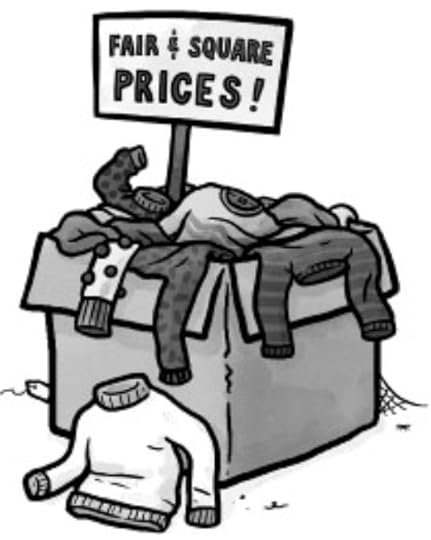
So all in all, I found DOLLARS AND SENSE to be a fun, insightful read. It’s definitely not one of those “Make a Budget and Stick to it” type of financial planning books. The authors write clearly and includes a ton of examples, often citing scientific studies. I liked the funny illustrations by Matt Trower.
Dollars and Sense: How We Misthink Money and How to Spend Smarter by Dan Ariely and Jeff KreislerOctober 5, 2017
Capital Gaines: Smart Things I Learned Doing Stupid Stuff by Chip Gaines
In CAPITAL GAINES: SMART THINGS I LEARNED DOING STUPID STUFF, author and TV personality Chip Gaines describes the rocky path of his business career. If you are a big fan of his TV show, you will probably find the anecdotes a lot of fun to read.
Several themes stand out in this book. The first is COURAGE.
“The courage to take a chance is half the battle. The other half? Viewing failure as a teacher and not an enemy.”
“Real and important changes begin with small, courageous acts. It’s never too late in your story to take a step away from fear.”
Chip describes the early failures of many folks, who later went on to achieve greatness. For example, Michael Jordan was “cut from his high school basketball team and still went on to become arguably the greatest basketball player of all time.” Chip recalls his desire to be a great baseball player, only to be cut from the team in his early years at college.
So, when you experience a sudden, unexpected decline, you can sit around and mope, or get to work using your skills to achieve something.
“Make yourself irreplaceable to your company, and you will have your choice of titles that can’t define you.”
Chip describes some really bone-headed ideas that they tried early-on, only to later realize they had made a big mistake. Wanting to be more ecologically sound, they bought a new machine: “We invested in this amazing machine that converted used boxes into packing materials. What we didn’t consider was how much shipping would cost to ship with all of that heavy cardboard packing material.”
Perhaps the most valuable part of the book is the encouraging outlook, on learning from your mistakes:
“We turned just about every situation into a learning opportunity.
So all in all, I found CAPITAL GAINES to be an interesting read recounting his successes and failures, with some decent business tips thrown in. The author includes many stories just like the “packing material” machine mistake. I appreciate the author’s humility in sharing the mistakes he made. I found the book to be optimistic and encouraging.
October 1, 2017
Why We Sleep: Unlocking the Power of Sleep and Dreams by Matthew Walker
In WHY WE SLEEP, author Matthew Walker, Director of UC Berkeley’s Sleep and Neuroimaging Lab explains the urgency of getting proper sleep. Getting proper sleep yields a “constellation of nighttime benefits.”
Conversely, not getting enough sleep has devastating results. For example, insufficient sleep wrecks our immune system and doubles the risk of cancer. Of all the scary consequences Dr. Walker mentions, this one scares me the most:
“Insufficient sleep is a key lifestyle factor determining whether or not you will develop Alzheimer’s disease.”
The author devotes much space to explaining WHY so many people have trouble sleeping. One big reason is that the practice of modern society tends to wreck our sleep. Dr. Walker mentions 5 things in particular:
Constant electric light; Regularized temperature;Caffeine;Alcohol, andA legacy of punching timecards.I was especially dismayed to hear that even moderate alcohol interferes with our natural sleep.
“Nightly alcohol will disrupt your sleep, and the annoying advice of abstinence is the best, and most honest, I can offer.”
A big chapter is devoted to explaining how sleeping pills work (or don’t work, as the author explains) About 10 million people in the U.S. use some kind of a sleeping aid, but the benefit is not what is advertised. Amazingly, sleeping aids don’t actually improve sleep: “Sleeping pills help you forget how poorly you are sleeping, rather than actually improving your sleep.”
Another scary warning: Many studies show a “much increased mortality in those who use sleeping pills.”
Instead of drugs or sleep aids, the author recommends “cognitive behavioral therapy for insomnia,” or CBT-I. Instead of taking pills, the patient works with therapist using proven techniques to break bad sleep habits.
“CBT-I is more effective than sleeping pills in addressing numerous problematic aspects of sleep for insomnia sufferers.”
The very last part of the book contains some serious suggestions. One in particular stands out. The author argues for making the school day start later. This time would better fit our natural sleep pattern. The author cites one study showing substantial improvement in SAT scores when the school day started 1 hour later.
So all in all, I found WHY WE SLEEP to be an outstanding book. The author writes well, and the book is easy to follow. The author also has the credentials to back up his claims, and often cites studies to support his statements. Dr. Walker cites lots of worrisome statistics, but balances it out by giving practical suggestions on how to improve our sleep.
The author has one key suggestion:
“Going to bed and waking up at the same time of day no matter what. It is perhaps the single most effective way of helping improve your sleep.”
Why We Sleep: Unlocking the Power of Sleep and Dreams by Matthew Walker