Christopher Lawson's Blog, page 19
March 16, 2017
How to Remember (Almost) Everything, Ever: Tips, Tricks and Fun to Turbo-Charge Your Memory by Rob Eastaway
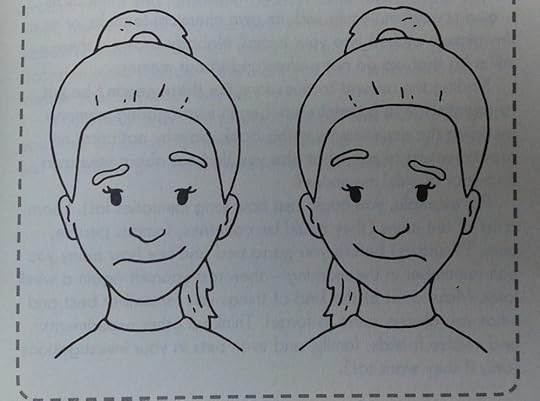
How to Remember (Almost) Everything, Ever by Rob Eastaway
I had heard of this author from another of his books, and when I saw this book at the local public library, I snagged it right away.
There are lots of very clever pneumonic devices. Some I already knew, like the number-to-letter substituion trick, but others were brand new to me. Plus, there are some fantastic stories about people who had incredible memories. Like the insurance company worker who, after the company files were burned up, restored all the files from memory!
And what about that prisoner who looked at the prison keys, and then memorized how to make duplicates and escaped!
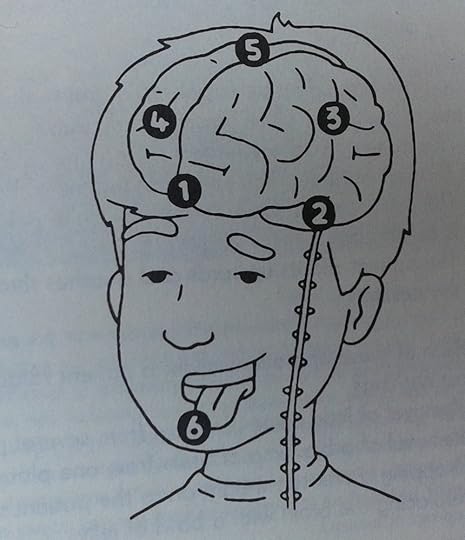
How to Remember (Almost) Everything, Ever by Rob Eastaway
Perhaps the craziest story is about Simonides, who was able to remember people seated inside a building, and then when there was an earthquake that killed the occupants, he was able to identify the bodies by remembering their seating!
I confess I doubted the truth of the above story, but I checked it, and by golly that is exactly right! Let's hope that I won't have to use my new memory to do that!
This is a really fun and easy book to read. You don't need to read it in any particular order. I skipped around at the various sections and learned quite a bit. But I never was able to memorize those prisoner keys. Darn!
How to Remember (Almost) Everything, Ever by Rob Eastaway


Eyes Wide Open: Overcoming Obstacles and Recognizing Opportunities in a World That Can't See Clearly by Isaac Lidsky

Eyes Wide Open by Isaac Lidsky
In EYES WIDE OPEN, Isaac Lidsky provides a series of autobiographical essays, which document his struggles with Retinitis Pigmentosa—commonly called “RP.” The author explains the hideous nature of this disease: One gradually loses vision, starting from the periphery, causing a “tunnel effect.” There is no cure, although there is a lot of research going on.
The author recounts his many struggles with RP and his plan to just solve the problem logically—just like it were some math problem. Of course, that didn’t work, and Isaac was forced to face circumstances that weren’t as simple as solving a geometry problem. The author began to see how to better use his other senses. He makes it clear that his hearing is not actually more acute than sighted people—it’s just he uses it more effectively: “I gained heightened abilities of perception employing my other senses.” As a result,
“Eyes wide open became my powerful philosophy and active daily strategy.”
In the chapter, “Acceptance and Surrender” the author explains his tendency to put limits on himself. He cites the challenge of “throwing out the first pitch.” Even though he was a highly successful lawyer, he had convinced himself he could not throw a baseball. He discovered that “The self-limiting assumptions we make about ourselves are buried deep and easily missed.”

Eyes Wide Open by Isaac Lidsky
If you read nothing else, DO NOT MISS CHAPTER 8! In this chapter, Isaac explains that “Going blind opened wide my heart.” He now experienced and felt kindness all around him—had had gotten “heart sight.” The author’s vulnerability actually opened him up to new possibilities. He could apprehend things and people he had taken for granted before:
“I felt it in random strangers who helped me. I felt it in friends who labored to understand. I felt it in my sisters who sought to protect me. . . They taught me to see with my heart, and I feel in love with the view. Joy, grace, beauty, and beneficence are everywhere if you choose to see them.”
Besides Chapter 8, whatever you do, READ THE LAST 2 PAGES! These 2 short pages are a call to action, based on changing your worldview: “How do you want to live your life? Who do you want to be?”
So all in all, I found EYES WIDE OPEN to be an interesting read—especially the inspiring Chapter 8, “Heart Wide Open.” Keep in mind this really isn’t a “How to” book for blind people. It’s really more a philosophy of life, related by someone who has faced a massive challenge, and learned to make the best of it. The sections appear to be independently written essays. This makes the read seem a little disconnected, and hurts continuity somewhat. Nevertheless, the author's encouraging words and especially his worldview come though loud and clear. The author closes the book with this admonition:
“Count your blessings, not your burdens. Live with grace, not greed.”
This was a very tough book for me to read, since my daughter suffers from the same disease. On the other hand, I hope the encouraging words found in EYES WIDE OPEN may help those suffering from RP.

Eyes Wide Open by Isaac Lidsky
For another story about a journey through RP, see this short read by Laura Lawson Visconti, “Believing is Seeing.”
Advance Review Copy courtesy of the publisher.
Photos courtesy of Pexels.Eyes Wide Open: Overcoming Obstacles and Recognizing Opportunities in a World That Can't See Clearly by Isaac Lidsky
March 15, 2017
WE LOVE CATS! BEST CAPTION CONTEST

Caption: ??
The best caption gets $100 to your favorite animal charity.Enter caption & charity below, then "Submit."
Name *
Name
First Name
Last Name
YOUR CAPTION *
CHARITY TO RECEIVE $100
Thank you!
Cute cat courtesy of Pexels.
Any Ideas? Tips and Techniques to Help You Think Creatively by Rob Eastaway

Any Ideas? Tips and Techniques to Help You Think Creatively by Rob Eastaway
In his latest book, ANY IDEAS? Rob Eastaway provides an encouraging assortment of tips and techniques to improve your creativity.
One of Rob’s main suggestions is to “Nurture and protect silliness.” After all, many great ideas would have been thought ridiculous years ago. How about “Injecting a deadly toxin into your face to make you look younger (Botox)?” Sometimes you just have to “embrace more silliness.”
Over the years, we tend to all become “conforming individuals who look for right answers rather than interesting ones.”
It’s important to encourage, rather than discourage new ideas. If we’re not careful, unique ideas get “questioned, challenged, laughed at or just rejected out of hand.” So, be careful to create a nurturing atmosphere, where everyone feels free to contribute.

Any Ideas? Tips and Techniques to Help You Think Creatively by Rob Eastaway
The author points out the difference between thinking creatively versus thinking laterally. Rob suggests that creative thinking is concocting novel ideas, whereas lateral thinking is “addressing a completely different question from the problem you’re presented with.”
Here’s another fun tip: Try framing the problem “in the extreme.” Ask yourself how you would solve it if money were no object, or if you needed to have it solved in one minute. What would you do then?
I’ve employed a similar principle as this “extreme” tactic. I ask myself,
“Could I solve this problem if someone would actually DIE if I didn’t?”
I actually submitted this “deadly” idea to a magazine purporting to encourage creativity. The editor didn’t really like the idea, and remarked, “But no one will actually die.”
All in all, I found ANY IDEAS? to be a fun, easy read. I found many of the ideas to be good ones, with practical use. Embracing silliness is a great concept. Perhaps my favorite section was on the idea of lateral thinking.
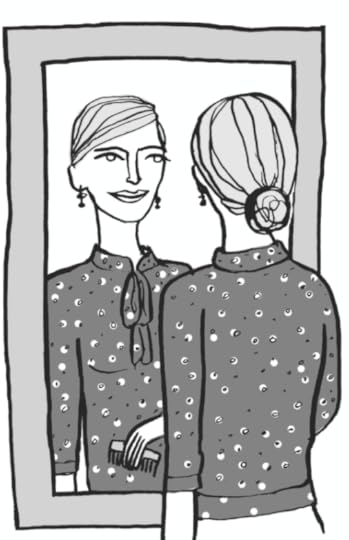
I started reading at the back of the book.
Any Ideas? Tips and Techniques to Help You Think Creatively by Rob Eastaway
Review Copy courtesy of the author.
Photos courtesy of Pexels.
Recent Bassocantor Reviews from Goodreads

All my recent book reviews.
Chris's bookshelf: read


Wired to Eat: Transform Your Appetite and Personalize Your Diet for Rapid Weight Loss and Amazing Health
by Robb Wolf


The Imagineers of War: The Untold Story of Darpa, the Pentagon Agency That Changed the World
by Sharon Weinberger

The Seven Money Types: Discover How God Wired You To Handle Money
by Tommy Brown

Street Cred: A Hood Minister's Guide to Urban Ministry
by Harry Louis Williams II

The Time-Crunched Cyclist: Race-Winning Fitness in 6 Hours a Week, 3rd Ed.
by Chris Carmichael

March 14, 2017
Wired to Eat: Turn Off Cravings, Rewire Your Appetite for Weight Loss, and Determine the Foods That Work for You by Robb Wolf

Wired to Eat by Robb Wolf
In WIRED TO EAT, Robb Wolf first explains how he got involved with Paleo, or the “ancestral diet.” Many years ago, he was very ill with ulcerative colitis:
“I was facing a bowel resection, statins, blood pressure medications, and antidepressants. . . I thought I was going to die, and the idea was pretty appealing, considering how much my life and health sucked. I was a mess.”
Out of desperation, he tried this “wacky” idea. Convinced (and healthier), he then made the Paleo philosophy an integral part of his life.
The first part of WIRED TO EAT is where we adopt an “Ancestral Health model” of diet. He calls this the “30-Day Reset.” The second part is the “7-Day Carb Test,” where we figure out exactly how certain food options affect us. In the second phase, you eat an exact amount of carbs, and you test your blood sugar level. Between 90 and 115. Here’s the key: You try different foods and see which ones cause an overly large spike. If so, that food is not your best choice.

Wired to Eat by Robb Wolf
Throughout the book, Robb emphasizes that everyone is different; thus, “Our individual needs may be profoundly different than those of our neighbor.” The author is brutally honest about the difficulty in making substantive changes to your lifestyle. He admits it will be tough.
Robb explains the scientific basis for a Paleo-type diet. The book is “Wired to Eat” because our genes encourage us to find food to eat. We humans used to be a lot more active, having to walk a long ways to get our food. Now, we don’t have to move at all!
“Hunter-gatherers walked 5 to 10 miles most days. Today, many of us walk less than a half mile every day as we shuffle from house to car.”
Making things worse, we live in a society full of foods that have been “engineered for overeating.” Then, if we try a simple (normal) meal, it tastes terrible! That’s why the first phase is called a “Reset.” The reset interrupts the constant stimulation about eating fast, unhealthy food. This phase “rewires” our appetite.
Wired to Eat by Robb Wolf
I thought some of the best sections were not even diet related. For example, one of the best sections is “How to Get Awesome Sleep.” In the section called, “The Puritan Work Ethic,” the author suggests that Americans get 2 ½ hours less sleep than in the 1970’s. This sacrifice is a terrible tradeoff. There are quite a few detailed tips for improving our sleep; here are some of my favorites:
1. Get more daytime sun on your person and in your eyes to establish a normal circadian rhythm.
2. Our evenings need to be darker, cooler, and not the equivalent of a rock concert if we want to get the best sleep possible.
3. Limit evening tech.
4. Sleep in a cool room.
As another example, Robb also explains that there is one thing that hurts us just as much as obesity or smoking. It’s called “social isolation” but it’s just plain loneliness. He gives suggestions on how to incorporate more social interaction into your life. For example, the author takes an exercise class with others. “Humans are social beings, and without adequate social connection our health and longevity can be as negatively impacted as if we had a pack-a-day smoking habit.”
All in all I found WIRED TO EAT to be a well-researched, clearly written book. Some parts were more valuable to me than others. I was already familiar with the “gut” aspects of healthy eating, so that section was not as interesting to me as it might be to others. On the other hand, I especially appreciated the author’s emphasis on social interaction and sleep.
Wired to Eat: Turn Off Cravings, Rewire Your Appetite for Weight Loss, and Determine the Foods That Work for You
By Robb Wolf

Wired to Eat by Robb Wolf
Advance Review Copy courtesy of the publsher.
Photos courtesy of Pexels.Wired to Eat by Robb Wolf
March 11, 2017
Eat Fat, Get Thin by Mark Hyman

Eat Fat, Get Thin by Mark Hyman
The fat that we eat of course turns into fat on our body. WRONG. That's the essential mistake that we Americans have been making for decades. Following the advice of government nutrition experts, many of us drastically cut fat out of our diets. How did it work? Not good at all. The doctor notes that there has been a DRASTIC reduction in the percentage of fat in our diets, but heart disease and obesity are going UP!
The solution that the doctor recommends is based on scientific studies, as well as from patients in his own practice (who give their names and testimonials later in the book.) The key finding of these studies is remarkable: A diet high in fat INCREASES your metabolism compared to lower fat diets. One study showed that the high-fat eaters burn 300 calories a day more than the low-fat eaters. So, the idea is, get your metabolism running faster. You will be more full of energy and naturally lose weight.

Eat Fat, Get Thin by Mark Hyman
Instead of fat, research now show that "Sugars and refined carbs are the true causes of obseity and heart disease--not fats, as we've been told. Carbs turn on the metabolic switch, causing a spike in the hormone insulin and this leads to fat storage..." So, Dr. Hyman explains, we've got to rethink out idea of fat--we need get over our FEAR of eating fat.
**TIP ON USING THIS PLAN**
The author often makes note of the carbs/protein/fat percentages. (And of course, the folly of the low-fat diet.) To keep track of how your diet contains carbs/protein/fat, I have found it useful to use a free app like "Loseit" or other similar apps. There are several good apps that you can get for free. These apps automatically keep track of these percentages, based on your meals. Then, you can get a summary, either for the week, or for the day. For instance, I just discovered that my eating habits put me pretty close to bad high-carb eating.
(See the photo of a screenshot showing my weekly nutritional mix.)
All in all, I found EAT FAT, GET THIN to be a little startling. The doctor's research was suprising to me. I honestly didn't know about the research showing that high fat diets speed-up your metabolism. I am re-evaluating how I eat, and I'm going to check-out the carb/fab mix in my diet.
Eat Fat, Get Thin: Why the Fat We Eat Is the Key to Sustained Weight Loss and Vibrant Health
$16.30
By Mark Hyman M.D.

Eat Fat, Get Thin by Mark Hyman
Eat Fat, Get Thin by Mark Hyman
Old School: Life in the Sane Lane by Bill O'Reilly
Forthcoming Title. Check back soon!

Old School: Life in the Sane Lane by Bill O'Reilly
From the publisher:
"You have probably heard the term Old School, but what you might not know is that there is a concentrated effort to tear that school down.
It’s a values thing. The anti–Old School forces believe the traditional way of looking at life is oppressive. Not inclusive. The Old School way may harbor microaggressions. Therefore, Old School philosophy must be diminished.
Those crusading against Old School now have a name: Snowflakes. You may have seen them on cable TV whining about social injustice and income inequality. You may have heard them cheering Bernie Sanders as he suggested the government pay for almost everything. The Snowflake movement is proud and loud, and they don’t like Old School grads.
So where are you in all this?
Did you get up this morning knowing there are mountains to climb—and deciding how you are going to climb them? Do you show up on time? Do you still bend over to pick up a penny? If so, you’re Old School.
Or did you wake up whining about safe spaces and trigger warnings? Do you feel marginalized by your college’s mascot? Do you look for something to get outraged about, every single day, so you can fire off a tweet defending your exquisitely precious sensibilities? Then you’re a Snowflake.
So again, are you drifting frozen precipitation? Or do you matriculate at the Old School fountain of wisdom?
This book will explain the looming confrontation so even the ladies on The View can understand it.
Time to take a stand. Old School or Snowflake. Which will it be?"

Old School: Life in the Sane Lane by Bill O'Reilly

Old School: Life in the Sane Lane by Bill O'Reilly
Old School: Life in the Sane Lane
$14.16
By Bill O'Reilly, Bruce Feirstein
Old School: Life in the Sane Lane by Bill O'Reilly
Simply Clean: The Proven Method for Keeping Your Home Organized, Clean, and Beautiful in Just 10 Minutes a Day by Becky Rapinchuk

Simply Clean by Becky Rapinchuk
Forthcoming Title! Check back soon!

Simply Clean by Becky Rapinchuk
From the publisher:
"From the cleaning and homekeeping expert and creator of the wildly popular Clean Mama blog comes a simple and accessible cleaning guide with a proven step-by-step schedule for tidying a home in just ten minutes a day.
Becky Rapinchuk, the “Clean Mama,” understands that many people don’t have the time, organizational skills, or homemaking habits to maintain a constantly clean and decluttered living space.
In Simply Clean, Becky will help you effortlessly keep a tidy house and build habits to become a neat person—no matter how messy you may naturally be! Simply Clean features:
-A 7-Day Simply Clean Kick Start and the 28-Day Simply Clean Challenge, to turn cleaning from a chore into an effortless habit
-A designated catch-up day, so you’ll never have to worry or stress when life gets in the way of cleaning
-Step-by-step tutorials for speed cleaning hard-to-clean spaces
-Dozens of recipes for organic, environmentally conscious cleaning supplies
-Many of Becky’s famous checklists, schedules, and habit trackers
No matter how big your home or busy your schedule, the Simply Clean method can be customized to fit your life. It really is possible—in just ten minutes a day, you can create a cleaner, happier home."

Simply Clean by Becky Rapinchuk
Simply Clean: The Proven Method for Keeping Your Home Organized, Clean, and Beautiful in Just 10 Minutes a Day
$10.70
By Becky Rapinchuk
Simply Clean by Becky Rapinchuk
March 10, 2017
The Imagineers of War: The Untold Story of Darpa, the Pentagon Agency That Changed the World by Sharon Weinberger
In THE IMAGINEERS OF WAR, Sharon Weinberger provides a detailed history of this interesting defense agency. The activities of DARPA have been varied—perhaps by design. The authors explain that DARPA was “established it as an independent agency that reported directly to the secretary of defense.”
Much of the earlier work of DARPA ended up being scrapped, transferred to other agencies, or just not helpful. For a while, ARPA, as it was known in early years, did research in satellites. Then, in 1958, this research was taken over by NASA.

The Imagineers of War by Sharon Weinberger
Of course, there was one BIG invention that was not a flop. The DARPA engineers invented a networking system, which they called ARPANET. The author recounts a funny story about the first message transmitted over ARPANET:
“At 10:30 p.m., on October 29, 1969, a one-word message arrived at a computer console at the Stanford Research Institute. 'Lo,' read the message. That was the entire content of the first transmission sent across the ARPANET. . . it was supposed to be 'login,' but the system crashed before it could be transmitted in its entirety, sending just the first two letters."
Of course, ARPANET later evolved and formed the basis for the modern internet.
Much of the book recounts the long and winding history of the agency, and all the zany weapons projects it invented. Much time is spent describing the agency leadership. A recent director, Dr. Tony Tether, for example, wanted his program managers to “have inside them the desire to be a science fiction writer.” The authors also note, that “More than anything, Tether loved Disneyland.”
Some of DARPA's invention turned out to be vital. And some weapon systems are still in use: “Today, the agencies past investments populate the battlefield." One great example is the Predator drone.
The real question, wonders the author, is where does DARPA go from here? What is the new mission?
“More than fifteen years after the 9/11 attacks, and over two decades since the end of the Cold War, the dilemma for DARPA is finding a new mission worthy of its past accomplishments and cognizant of its darker failures.”
So all in all I found THE IMAGINEERS OF WAR to be a somewhat interesting read. My favorite parts were the discussions on the interesting inventions—especially, of course the DARPANET. On the other hand, I found the long discussions on the politics of the agency, and its leadership to be a bit much at times.
I should also mention that this book caught my eye because I had the opportunity to work on several defense projects funded by DARPA. In every case, I found the engineers on this projects to be of top-notch caliber.
The Imagineers of War: The Untold Story of DARPA, the Pentagon Agency That Changed the World
By Sharon Weinberger

The Imagineers of War by Sharon Weinberger
Advance Review Copy courtesy of the publisher.
Photos courtesy of Pexels.
Advance Review Copy courtesy of the publisher.
Photos courtesy of Pexels.