Christopher Lawson's Blog, page 7
September 22, 2017
The Power of Moments: Why Certain Experiences Have Extraordinary Impact by Chip Heath, Dan Heath
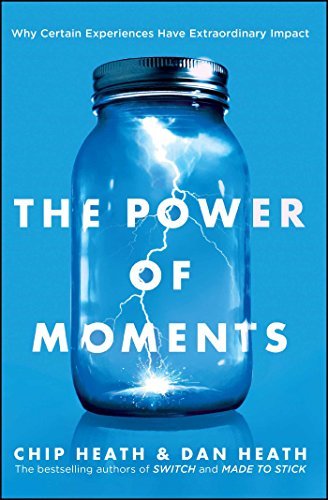
In THE POWER OF MOMENTS, Chip and Dan Heath suggest an intriguing possibility: We can actually create special moments—we don’t just have to wait for them to happen to us. Instead,
“We can be the author of them.”
To create these moments, we have to first understand what makes historical events stand out as special. Chip and Dan cite research that explains which memories really stand out. When we look back at some event, we forget about the duration, and instead recall just 2 main things: The best or worst moment, and the ending.
Knowing what our mind recalls suggests a strategy—we focus on creating a few memorable highlights. Well, just how do we go about making great moments for ourselves? The authors have boiled it down to 4 key things. We can actually synthesize great experiences if we include one or more of these aspects:
ELEVATION: Moments that rise above the commonplaceINSIGHT: Some new understandingPRIDE: Moments of achievementCONNECTION: Social engagements.Chip and Dan spend a lot of time explaining each of the 4 keys, and tell lots of funny stories about how companies did something to create a special moment.
I found the chapter on creating elevating moments especially interesting. The authors provide a recipe on creating such a moment:
Boost the sensory appeal;Raise the stakes; orBreak the script—do something radically difference.
I found THE POWER OF MOMENTS to be a fun read, with lots of practical ideas. I enjoyed the anecdotes that illustrate the principles. Don’t miss the story of how the Ritz Carlton took photos of the forgotten toy “vacationing” around the hotel. Each chapter concludes with a summary called the “Whirlwind review.” I found this summary to be a good recap of the points in each chapter.


September 15, 2017
A Life Beyond Amazing: 9 Decisions That Will Transform Your Life Today by Dr. David Jeremiah

Nine Decisions That Will Transform Your Life
This is a great book.
I have never read anything by this author, I have never heard him speak anywhere, and I know little about him. In short, my expectations for this book were not very high. So I was pleasantly surprised by Dr. David Jeremiah and A LIFE BEYOND AMAZING.
Here’s the key point: Christians need to be ACTIVE participants in achieving the fruit of the spirit. Yes, it’s indeed the Holy Spirit developing these traits in believers, but we are not supposed to be passive:
“The same Bible that describes love as a fruit of the Spirit also commands us to love one another.”
We are commanded to be “active partners in the process, and we must be diligent to do our part,” as all believers are exhorted in 2 Tim. 2: 15.
Dr. Jeremiah sets the foundation for the book with the first trait, which he calls, “Leading a Life Of Love.” The point is not so much a feeling, but an ACTION:
“Love is not about what we feel for others— it’s about what we do for others.”
Besides the very first chapter on Love, another one of my favorite chapters is the one on Generosity. I found lots of practical, inspiring ideas. The author suggests Christians should “change the way you think about money.” Make a radical shift—“turn the way we think about money on its head.”
Here’s my favorite tip of this chapter—I decided to implement this idea TODAY: “Carry some money with you specifically to give away to someone in need.” I absolutely love that idea. I’m putting extra money in my wallet.
The chapter on self-discipline was similarly stocked with great ideas. I talking about how to develop good habits, Dr. Jeremiah recalls a friend who was trying to make a habit of exercise. He started with just one thing: “He chose one small behavior, so small it felt trivial. This ensured it was easy to do. Then he did this small behavior consistently until it became routine.” Wow—great idea. I confess I never thought of this.

As you begin your journey, the author suggests five specific steps:
Desire the SpiritRenounce Your SinDevote Yourself To God’s WordLet Go Of Your Own AmbitionCommit To The Spirit’s DirectionSo all in all, I found A LIFE BEYOND AMAZING to be a solid read, with tons of useful ideas. I am already implementing several of these ideas. I thought this one sentence nicely summed up the theme of this book:
“The journey to a life beyond amazing is a journey to the highest, best, most love-filled life possible. It will not always be easy. But I promise you, it will be worth it.”

A Life Beyond Amazing: 9 Decisions That Will Transform Your Life Today by Dr. David Jeremiah
September 13, 2017
I Will Find You: Solving Killer Cases from My Life Fighting Crime by Joe Kenda
In I WILL FIND YOU, former Colorado Springs Detective Joe Kenda takes us on a gritty tour of his life catching murderers. The book reads a little like a “police procedural,” and is pretty gory at times in describing the murders. The crime scenes are described in great detail, as are the injuries to the victims. So, if you are sensitive to violence and gore, avoid these sections. (When I came to the parts about child victims, I skimmed over those sections.)

Kenda made his name as a tough guy early on in his career. He recalls a situation early in his career, where a huge man was strangling one of his colleagues. Kenda took quick, brutal action: “I did not intentionally flatten the dispenser with his face, but that was the result.” Kenda thought he might be fired for unnecessary force , but instead, his superiors admired the forceful action of a rookie.
Kenda developed a routine for each crime scene. In the chapter, “I Talk To Dead People,” he explains his routine. He asks, “What did you do here? Why did you do it? What was your first move? What was next?” At the crime scene, he “listened” intently to the victim, or even spoke out loud. His methods were very successful. Of his cases going to trial, 215 out of 217 suspects were convicted.
The author corrects some misconceptions about police work, as compared to what is simplified on TV. For example, fingerprints aren’t checked in just a few minutes. In reality, you send your prints in, and “within a couple of weeks or months AFIS sends you back fifteen possible suspects.”
The author’s approach to making an arrest was simple: He just threatened to blow the suspect away. Pointing his gun right at them, he announced: “My name is Kenda. I’m with the police department. You are under arrest. If you don’t do what I say, I will kill you right here and now.”
The author explained something that has always confused me about cop shows on TV. Why do suspects on TV always start blabbing on without a lawyer? They can’t possibly be that stupid!
Well, it turns out that suspects DO usually talk to the police. Yes, they really are that stupid! Kenda explains that about 80% of suspects waive their Miranda rights to an attorney and “just gab away.” They think they can outwit the police, since they are so used to getting away with lies.
For folks considering buying a hand gun for self-protection, the author recommends that purchase only if you are willing to do the training. Don’t get a gun unless you are “supremely confident that you can use it with great accuracy and protect those you love from it.” This strikes me as good advice.
All in all, I enjoyed reading the book. It has lots of interesting detail, and is a captivating read. Yes, it is on the grisly side, but the gore was not exaggerated. Near the end of the book, the author gives his take on the justice system:
“We don’t have a perfect system. Yet, as imperfect as it is, I don’t see anything better out there. For all of its weaknesses and all of the mistakes that happen, our rate of success is still better than most.”I Will Find You: Solving Killer Cases from My Life Fighting Crime by Joe Kenda
September 11, 2017
Time Surfing: The Zen Approach to Keeping Time on Your Side by Paul Loomans
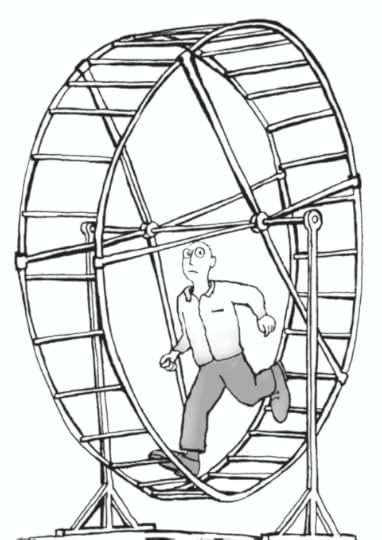
Hey, this wasn't what I said in the book!
I almost didn’t read this book, since I figured it would just be some trite ideas on time management. Okay, I was wrong--I underestimated this book. I think the author is a creative, ingenious person. I'm glad I read this book.
TIME SURFING does indeed have a ton of practical tips, such as dealing with email and using your smartphone—but don’t focus so much on those things (which are at the end of the book anyway.) These tips are useful, but they are not the real meat of the book. The real strength of TIME SURFING has nothing to do with tips on how to use your phone or prioritize your tasks. It’s bigger than that—but also more subtle than that.
Seven Big IdeasAuthor Paul Loomans succinctly lists seven main topics. I call these his "Big Ideas." Here are the seven:
Do one thing at a time;Be aware of what you’re doing and accept it;Create breathers between activities;Give your full attention to drop-ins;Become aware of “gnawing rats” and transform them into “white sheep;”Observe background programs;Use your intuition when choosing what to do.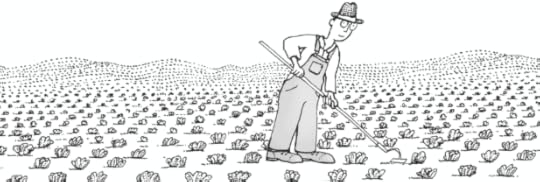
Trying one thing at a time . . .
I have long practiced the idea of #1, just doing "one thing at a time." The author provides some good basis for his point. He suggests that if you think you are doing more than one thing at a time, you are fooling yourself. Here’s why--the second task is not really getting your attention:
“One of the two activities was being carried out on autopilot, almost unconsciously. . . If we need to give our attention to both things, it means we’re sacrificing something in the process.”Drop-Ins
I also really liked Idea #4, "Give your full attention to drop-ins." This is another idea that was new to me. Here's how it works: Instead of looking at an interruption as something bad, you focus directly on it:
“By shifting the focus of your attention, you experience the interruption as a separate item rather than as a disruption, and don’t stay suspended in between two things. . . For both you and the other person, it’s more relaxing and also more effective. . . “
So the interruption is no longer a time-waster step, but something really useful. Excellent idea; simple but powerful.
Rat ProblemsPerhaps the most graphically desribed idea is #5, the “gnawing rats." The “rats” are concerns that lie just below the surface, bugging us. Paul suggests facing these ideas directly, and “visualizing the step that’s hard for you.” You look at the issue, and create a “relationship with the problem.”
[image error]
"Hmm. . . tasty but not too filling!"
By directly facing the "rats" problem, it ceases to be something negative. Oftentimes, you can more clearly see any obstacles, especially by talking about the issue with others.
Surprise CapsulesYet another good idea is #7. I have never heard this idea before. Here’s how it works: You visualize future actions as “a dispenser filled with surprise capsules.” You don’t try to schedule a task; rather, you “let them go and trusting they will get their turn.” Think of the surprise as “one of those coin-operated dispensers filled with surprise capsules.” His idea is that your intuition does a better job of managing your time than your analytic mind. So relax and wait for the surprise!
[image error]
Wait for some "surprise capsules"
So all in all, I found TIME SURFING to be a fun, creative read. This book contains a lot of wisdom and excellent practical tips. Some of the ideas were familiar to me, but others were brand spanking new. For most “Type A” persons, I think that “letting go” to let your intuition schedule tasks will be really tough—but I’m going to try just “floating along with whatever happens.”
Finally, I thought the illustrations by Niels de Hoog were amusing and entertaining.

Time Surfing: The Zen Approach to Keeping Time on Your Side by Paul Loomans
September 8, 2017
Oracle Performance: Copy Sql Profiles to Another Database

Performance Optimization
Sql Profiles are really easy to use. Sometimes, we need to transfer a bunch of profiles to another database.
Create the special staging table
BEGINCopy desired profile to the Staging table
DBMS_SQLTUNE.CREATE_STGTAB_SQLPROF
(table_name => 'PROFILES', schema_name=>'CCBP');
END;
/
BEGIN
DBMS_SQLTUNE.PACK_STGTAB_SQLPROF
(profile_name => 'SYS_SQLPROF_0659e1f0f6d80000',
staging_table_name => 'PROFILES',
staging_schema_owner=>'CCBP');
END;
/
Make sure profile is there
select distinct obj_name from CCBP.PROFILES;
Export special staging table
expdp cxly dumpfile=profiles.dmp TABLES=CCBP.PROFILES
-- Dump file in /u01/app/oracle/product/12.1.0/db_1/rdbms/log/profiles.dmp
--In Target Database Create the staging table
BEGINNow import the profile
DBMS_SQLTUNE.CREATE_STGTAB_SQLPROF
(table_name => 'PROFILES', schema_name=>'CCBP');
END;
/
impdp cxly dumpfile=profiles.dmp TABLES=CCBP.PROFILES TABLE_EXISTS_ACTION=REPLACE
Check to make sure new profile is there
-- Transfer SQL profiles from Staging Table to Final place
BEGIN
DBMS_SQLTUNE.UNPACK_STGTAB_SQLPROF
(staging_table_name => 'PROFILES',
staging_schema_owner=>'CCBP', replace=>FALSE);
END;
/
COL NAME FORMAT A33
select name, created from dba_sql_profiles orderby created;
September 6, 2017
Vintage Saints and Sinners: 25 Christians Who Transformed My Faith by Karen Wright Marsh

VINTAGE SAINTS AND SINNERS is a serious read--but it's also a fun, inspiring read. I knew about many of the "saints" featured, such as C.S. Lewis, Tozer, and Augustine, but there were also some who were unfamiliar to me. I was only vaguely familiar with the name Julian of Norwich. I knew about Francis of Assisi, but who is "Clare" of Assisi?
Perhaps the most intriguing saint featured is Flannery O'Connor. The author raves about O'Connor, placing her "among the greatest American writers, and at the top of my English syllabus." She notes that
"One cannot get through a Flannery O'Connor story without encountering the strangeness of God."
Wow! I admit I am now motivated to read Flannery O'Connor.
Of course, I was familiar with Mother Teresa, but after reading the chapter on her life, I realize how little I actually knew. Letters made public after her death show a soul who feared she had been abandoned by God: "I feel the terrible pain of loss, of God not wanting me. . . " This surprised me. Mother Teresa--feeling abandoned by God?
The author includes "Conversation Starters" at the end of each chapter. Just like it sounds, this section has some excellent discussion points. For example, "Dorothy Day said, 'Don't call me a saint. I don't want to be dismissed to easily.' What makes us bristle at the term saint?"
So all in all, I found VINTAGE SAINTS AND SINNERS to be an inspiring book, full of wonderful, inspiring lives. After reading this book, I am motivated to research more on many of these figures. So, whether you are Roman Catholic or Protestant, there is something to inspire everyone in this bright book.
This book is also part-autobiography, as the author recounts her own spiritual struggles. In the chapter on John Wesley, Karen admits,
"Now I feel that I've stepped out from the spotlight of center stage and down into a living faith where God is breathing spiritual life into my soul."
Advance Review Copy courtesy of the publisher.
Vintage Saints and Sinners: 25 Christians Who Transformed My Faith by Karen Wright MarshSeptember 5, 2017
The Art and Science of Writing a Book Review
Readers do not read a book review to hear how smart you are. A book review exists to help the reader make a decision, not to showcase your writing skills. Unless you are writing for the New York Times, forget about trying to impress anyone with a scholarly, or critical review.

I always try to showcase my skills
If you look at the top Amazon reviews, the highest-rated reviews are often just a few paragraphs. I know that I have a very short attention span, and I believe many readers do as well.
A book review is also not a book report. One need not provide an outline to the book, as though you had to prove you actually read the book.

We like to review romance novels
Some things to DOGet right to the review. Remember, we’re reading a book review, not a book reviewer review.Summarize the theme of the book.Identify some of the best features.Identify some of the worst features.Keep the paragraphs concise and fairly short. I just read a review that was 17 sentences long, in a single paragraph. The book being reviewed was about how to write a book review (I am NOT making this up!)Give your opinion. That’s right—explain why you liked/disliked the book.Some things to NOT DODo not blather on.Do not waste the reader’s time with an introduction to your review.Do not claim it is the “Best book you ever read” on the subject (unless, of course, it really is.)Do not interject partisan feelings; do not even HINT at them.Highlight Special Features
Finally, if there are any really unique, or helpful features in the book, be sure to call them out. For example, I recently read Men Without Work: America's Invisible Crisis by Nicholas Eberstadt. It's a concise book on the labor market. Towards the end of the book, Mr. Eberstadt includes responses from economists having different political perspectives. This latter section was really useful to me—perhaps more useful than the main body of the book.
Keep it Short and SweetWriting a good review is a lot like making a public presentation. Put yourself in the audience. Pretend you don't know much about the book. Does reading your review help you make a decision?
Uh-oh, I see I am beginning to blather. Sorry about that.

I prefer thrillers
How to Write a Great Book Review
The Motley Fool Investment Guide by Tom Gardner and David Gardner

In this latest edition of THE MOTLEY FOOL INVESTMENT GUIDE, David and Tom Gardner provide some good investment advice, along with some historical perspective. They note that the stock market has proven to be an excellent investment—but only when viewed over a long time frame: “The Stock Market Is Pretty Close To A Sure Thing If You Have The Proper Timeline.” The longer your time frame, the more likely you will make money.
I especially like the book’s theme that an investors should make their own financial decisions—and not turn over a portfolio to a professional, who has a vested interest in making fees. There’s one person who can best look out for your interests—and it’s not a stock broker:
“You are the individual most personally invested in your financial success and, therefore, are the one best suited to make your money decisions.”
The authors emphasize many times throughout the book how poorly actively managed funds do, compared to the market a large. Over the long run, almost all actively managed funds compare poorly. Here’s a good metric: “Standard & Poor’s reports that between 82 percent and 88 percent of all domestic stock mutual funds have underperformed the market’s average return. . . “
Buying index funds for the long-term? Great! You will almost certainly beat all the actively managed funds.
Day-Trading? Well, not so likely.
The authors ask the question, “Why Do Most Funds Underperform?” Well the answer is easy: fees.
“The biggest contributor to lagging fund performance is fund expenses.”
They point out the very low fees generally charged by index funds—but even there, some funds are greedy. The authors note the very low fees charged by Vanguard. (Note: I notice that the Vanguard 500 Index Fund has an even lower expense ratio than the authors cite. I checked recently, and the expense ratio was only .04%.)
David and Tom spend a lot of time emphasizing how well index funds do over the long run. They encourage active investors to always compare their results to an index fund. In other words, index funds should be the standard of comparison. Nevertheless, they suggest that with proper research, many investors can beat the index funds:
“If you’re able and willing to take risk beyond the index fund, there’s a wide, wide world out there. “
All in all, I found THE MOTLEY FOOL INVESTMENT GUIDE to be a good, common-sense guide to investing. I especially appreciate the authors clearly explaining how fees eat up investment returns. The Gardners illustrate so well the advantage of index funds, that I intend to continue in that investment path. (Of course, other readers are likely more ambitious than me.)
If you are planning to actively manage your portfolio, the authors have lots of tips. For example, the appendix also contains some guidelines for hiring a discount broker. I also enjoyed the tongue-in-check investment suggestion anecdotes at the end of the book, as well as the amusing “Favorite Reader Emails.”
September 1, 2017
Overload: Finding the Truth in Today's Deluge of News by Bob Schieffer
In OVERLOAD, I was delighted to find that Bob Schieffer really does provide an independent look at the media and news events. It is such a nice change to read something that is NOT a partisan slam of one side or the other.
The author draws on his “Long Life in Journalism” to give us his take on what in the world is happening to news media. Bob gives an overview of the state of American media, and how it relates to politics, with special attention to the most recent presidential election. A large section is devoted to polls, and why they have turned out to be so wrong in recent years.
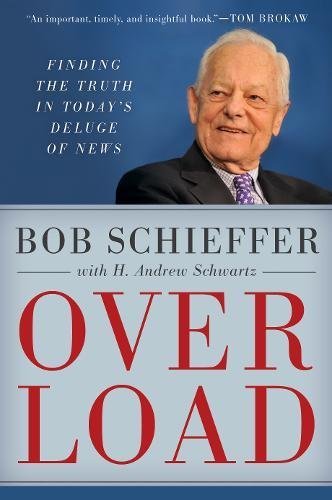
The author sees a major problem with both the quantity and quality of information; we are indeed “overloaded” with information. Many folks have trouble figuring out what is true and what is not:
“Americans are so overwhelmed by information in the digital era they cannot process it.”
One interesting chapter provides a guide to the most popular news web sites. Bob calls this, “Journalism’s New Digital Wave: A Guide to Digitally Native News Websites.” For each site, there is a brief background on the organization, including how it got started, major figures, and the political leanings. I found this chapter insightful—I had no idea how these web sites got started, but Bob knows.
In “The Awful State Of American Politics,” the author notes that many bright people are repelled by the dirty business of politics:
“We have allowed the path to public office to become such an unpleasant and revolting exercise that too many times our best and brightest want no part of it.”
Throughout the book, Mr. Shieffer points lots of interesting facts I didn’t know. I had no idea, for example, that cable news viewers are older: “The median viewer age for Fox is sixty-six, sixty-three for MSNBC, and sixty-one for CNN.”
The very last chapter of the book gives the author’s conclusions. Bob notes that he wanted to have the readers make up their own minds before giving his opinion. Some of his key points:
Greater reliance on mobile phones makes polling less reliable;Fake news poses a growing and dangerous threat;Declining advertising revenue has put many local newspapers into desperate straits;Our electoral system is broken.Bob encourages politicians to have courage and stand up for principle:
“America needs more than political reform is political courage— candidates and politicians who are not afraid to risk losing the office they hold to accomplish the greater good.”
The author also suggests a revamp of campaign spending, and a bipartisan effort to“end gerrymandering of congressional districts.”
The author provides an example of what is considers stellar journalism. He reprints thereport by David Fahrenthold of the Washington Post, who “got the dreary assignment of investigating Donald J. Trump’s often cited charitable activities.” This account relates how Mr. Fahrenthold dug into all the claimed donations, to see if in fact they were genuine.
So all in all, I found OVERLOAD to be a solid, well-written book, in the spirit of non-partisan journalism. The author comes across as a decent person, without an axe to grind. I enjoyed reading Mr. Schieffer’s perspective on the state of journalism today, and the chapters that focus on prominent journalists and newspapers.
I thought this one sentence summed up the author’s hope for America:
“The greatest and most effective reform, however, will be to convince young people that holding elective office is an honorable and needed pursuit.”
.
August 31, 2017
Reach Out: The Simple Strategy by Molly Ford Beck

The More People You Know, The More Stuff You Can Get Done
In REACH OUT, author Molly Beck provides a plan for drastically improving your network. Early in her career, the author realized the important of networking. Since then, she makes it a point to add a new contact every day:
“I’ve been Reaching Out daily for years now, and this strategy alone has single-handedly changed my professional career trajectory”
The essence of the Reach-Out plan is to identify your “targets” and launch a plan to winningly connect with each target. Molly calls this the “Reach Out Strategy Plan.” The idea is simple--You schedule a time each day to contact a “target.” Here’s the key: You offer at least two “gifts,” then perhaps ask a favor. The idea is to offer something genuinely helpful, and not just try to freeload off people.
The author lists different possibilities for gifts. A gift can be a lead, some special information, an introduction, or perhaps a free copy of your book. Something simple, but genuinely useful.
The author suggests first doing a simple “Love/Don’t Love Career Test.” On a piece of paper, list “Love” on one side, and “Don’t Love” on the other. Think of your regular activities and sort them to either side. Then, list some ways to do more of the “Love” things and less of the bad stuff. Finally, “brainstorm all the different people who could help you reach your goals.” These folks are your potential Targets.
There is one really important point in this book that would be easy to miss. Here it is: The contacts that are on the edge of your network will likely yield more fruit than your base. What—how can that be? Molly explains this paradox:
“Strong ties tend to give us redundant knowledge.”
That is, your close friends and colleagues tend to just repeat ideas that you already know about. It’s the many distant contacts that yield new information and ideas.

Reaching out
The author does a few things that make this book a LOT easier to read: First, she has simple bullet points at the end of each chapter, covering the main points. Secondly, she provides, in Appendix B, a summary of each action item, chapter by chapter. She calls this, “Your Reach Out Strategy Plan.”
So all in all, I found REACH OUT to be a useful, practical book, with a few really golden nuggets. I especially liked her explanation of the importance of peripheral contacts. If you get nothing else from this book, don’t miss that point.
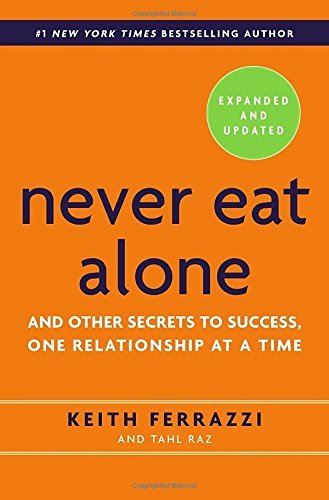
For another good book on the subject, I really like Keith Ferrazzi’s “Never Eat Alone.”
Reach Out: The Simple Strategy You Need to Expand Your Network and Increase Your Influence by Molly Ford Beck