L.Z. Marie's Blog, page 8
September 21, 2014
Rx for Writing Blocks
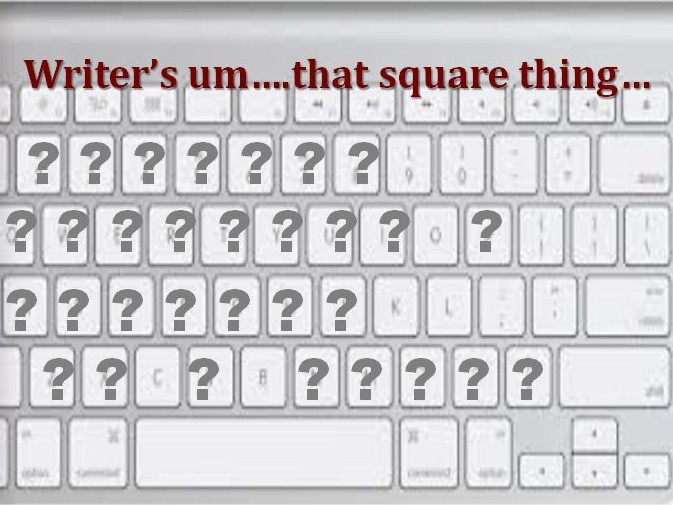 Writer’s BLOCK. It’s a phrase striking angst and fear into the hearts of writers. The inability to write—anything. The writer stymied, unable to move the plot along.
BAH! Don’t allow that evil phrase to coil around your soul like a serpent.
Call it a writing pause if you must—pause is such a pleasant-sounding and friendly word–but DO NOT give in! Do not cease writing. There are PLENTY of tasks to be done.
Friends often ask if I experience writer’s block. My response? I don’t have the luxury. My hours after the day job and during the weekends are precious. Staring at a computer screen with a blinking cursor and nothing to write? No thank you.
Here’s a few ideas should you should come to place where you are pausing to consider the plethora of plot and character options.
1. Revise and edit earlier chapters. Be vigilant. Often new will ideas come.
2. Write a blog or 2 or 3. I post a new blog every Monday. Should I find my work week having drained me of all creativity I write the next few weeks’ blogs.
3. Write tweets for future use. Then when you ARE back in the writing saddle those tweets are ready to go.
4. Find and read information about a topic in your story. The internet has information about everything. There must be some subject or object or place or history or event in your story you can learn more about. Research inspires ideas. It really really does. This, more than anything else, generates tons of ideas.
5. Revisit your original research notes for inspiration, plot twists, detail, etc.
6. Google photos of something you’ve written about. Is there a detail that might advance the plot, add detail, and/or be be used symbolically?
7. Create a pinterest board for your work-in-progress. Pictures are worth a 1000 words, right? Here’s mine:  It has boards for all my novels plus my WIP.
8. Write engaging captions under the pinterest pins.
9. Revisit your outline. Add to it. Flesh it out. What? You don’t have one? Might that be the source of your writing pause? Knowing where your novel is going helps alleviate the “what next” conundrum.
10. Do NOT commiserate with others experiencing the same thing. Misery loves company—not helpful. Talk to a writer who is on fire! Read their blogs! Let their sparks ignite your own.
11. Take a walk. Walk the dog. Clean the fridge. Perform a mindless task but think about the plot, the characters, the next chapter, the climax, the ending while you’re doing it. Something is sure to emerge. ( I imagine an entire chapter in my head before writing it.)
12. Write a synopsis for the novel.
13. Craft a query.
14. Write a one-line pitch.
15. Write a riveting back cover hook.
16. Re-write the bio on your Amazon author page or website.
17. Re-write one of your first blogs. Add to it—give it new zing! Notice how much better you write now? Give yourself a pat on the back.
18. Re-tag your blog posts. Use better key words.
19. Re-write your twitter bio. You only have so many spaces, make them count.
20. Write a poem or journal entry in the voice of one of your characters.
21. Read one of Shakespeare’s plays. The Bard was brilliant, his characters legendary, his understanding of humans’ proclivities profound. Ideas are sure to follow.
22. Take a drive. The Driving Muse loves to visit then!
23. Identify the reason for the temporary pause. Are you tired, angry, frustrated, grieving? An emotion that overwhelms your creativity isn’t a “block.” Use the emotion to writerly advantage. Note how your body feels during times of intense emotion. Embrace it! You will need to call upon that emotion when you write about a character experiencing the same one. Is the plot line frustrating? Identify why. Is it a plot flaw or a matter of getting from scene A to scene C with a connecting scene B that makes sense? That’s not a block that’s intelligent plotting.
Did you notice that most of these solutions require writing and/or reading? You don’t have writers block if you are writing. And reading, my friends, is research, an important part of the writing life.
May the Muse be ever with you.
Related posts: Readin’ & Writin’


September 14, 2014
Manuscript Cleanup
 Writers are creative. Plots and characters appear, evolve, and invade our minds, haunting us until we unleash them on paper or computer screen. That’s fun!
But there’s another aspect of writing that isn’t quite as fun. The grammar-punctuation part. It’s a chef’s version of cleaning the kitchen after making a 5-course gourmet meal. Or cleaning the house after hosting a New Year’s bash.
And yet the writing cleanup must be done!
Cleaning, like editing, becomes easier—more efficient—over time and with increased experience. And one day, tidying your manuscript may become a task you enjoy. Instead of regarding editing as drudgery, imagine you are polishing your manuscript until it is free of the germs, particles, grime, and residue of initial drafts.
A down and dirty method for cleaning your manuscript.
Wipe out those indiscriminate, willy-nilly, neither-rhyme-nor-reason changes in tense. Remember to hose down those ( usually unnecessary ) perfect tenses.
Rinse away overused words: just, very, literally, really, maybe, quite, amazing, things, stuff, it, then. Replace with a better word.
Brush up on your grammar. Recognizing the simple from the compound complex sentence or the independent from the dependent clause helps a writer manipulate and master sentence construction and variety. Know the grammar rules before breaking them. (And yes, as a literature major I had to diagram many sentences.)
Vacuum loose punctuation: Manuscripts speckled with semicolons and em dashes as though they were sprinkles on a cupcake need to be reassessed. My fave punctuation book is Eats, Shoots and Leaves: The Zero Tolerance Approach to Punctuation. Funny and educational.
Wash those vague words down the banal drain. Select the perfect word. It makes all the difference. Unless, of course, you’re intention is to be vague.
Polish your word choice. A word’s connotation ( the feeling the word invokes ) is more important than its denotation ( the dictionary definition.)
Sweep for the correct prepositions. Choose the one that does the job. Here’s a Preposition List.
Scour for commas-gone-wild usage. ( It’s my personal editing demon.) Check out Purdue Online Writing Lab for answers to all your comma questions.
Swab the manuscript deck for misplaced modifiers. Oddly worded sentences result in unintended–and funny–meanings. Ex: I saw a painting walking down the hall. Daily Writing tips offers some nice examples and explanations.
Shine your syntax until it gleams. Syntax is powerful. It can: emphasize, shift mood, focus, imply relationships/connections, create more or less abstraction, reveal character, establish flow/rhythm, break flow/rhythm, foster suspense, establish tone, and add variety.Here’s syntax cheat cheat.
Have fun polishing your manuscript.
Note: I really, really, really hope I don’t have any typos in this post. Please, let me know if I do!
Related Posts: Readin’ & Writin’


September 7, 2014
Writing Therapy
Writing is fraught with angst and panic and euphoria and creative outbursts and emotional meltdowns. Writers experience the highs and the lows–which is a good thing because it helps us recreate the feelings in our characters. However….
those mood swings might indicate the need for a specialized writing therapist—you know, one who understands the joys and horrors of our passion.
One of the most common writing struggles is not only learning to cope with rejection but bouncing back with even more dedication and motivation.
Below is a list of common writing issues and psychoses.
Synonymania: Listing 10 different synonyms for a word & deliberating over which is best for that sentence. The problem only becomes critical if the writer corrects himself while conversing with ( real ) people.
Ubervocabulary: A tendency to use words like vanquish in everyday conversations.
Realityapnea: Zoning out in a middle of a conversation when a a brilliant idea for a scene/novel/character/sentence/climax/beginning/ending/denouement/ pops into your brain.
Rewriteaplasty: Writing a sentence 20 different ways and not being happy with any of them!
Literary Craving: Craving whatever food/beverage is in your novel.
OCP: Obsessive-compulsive plot discussions with significant other.
Excessive nostril flaring when someone refers to your writing as a “hobby.”
Adverbaphobia: Fear of adverbs. We’ve all heard the warning. Adverbs are clearly, certainly, positively the kiss of death!
Conferencosis: Confusion brought on by numerous conflicting statements made by those in the publishing industry. See What Kind of Conference Attendee are you for more information.
Grammaropia: Inability to see your grammar errors.
Excessive Verbation : Process of adding-using-including-writing-editing verbs.
Prepositionectomy: Obsessive removal of prepositional phrases and/or replacing with the perfect preposition.
Number Anxiety: Concern that your follower/friends on social media are not exponentially increasing.
Spamsitude: The inability to refrain from spamming friends/followers on social media.
Who would you choose as YOUR writing therapist?
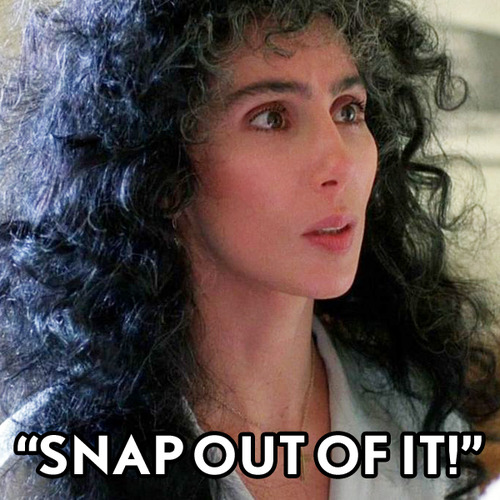
“Snap out of it.” Cher’s character from Moonstruck.
Drill sergeant from Geico commercial
Billy Crystal’s character in Analyze This

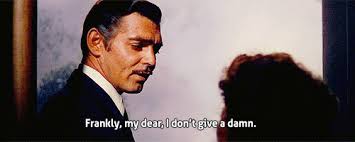
“Frankly, my dear, I don’t give a damn.” Rhett Butler in Gone With The Wind
Of course, if therapy doesn’t work the writer can always find relief for their woes by getting a prescription for writers.
What’s YOUR writing psychosis?
Related Links: Readin’ & Writin’
Join me on Facebook * Twitter * Instagram * Pinterest * Amazon
August 31, 2014
Hot and Cold
 Temperature symbolism is hot-hot-hot. Turn it up for burning anger or passion that sizzles. Turn it down to reveal character and mood. But be careful, the heated adjectives can be ambiguous in the cold reality of writing.
Temperature can:
reveal a novel’s overall mood
be a plot device
reveal a character’s personality
reveal a character’s mood
be thematic
The Great Gatsby is loaded with heat! Tom is a hot-head. Gatsby is hot for Daisy. Tom is hot ( lusting ) for Myrtle and hot ( with anger) when he discovers Daisy’s infidelity. Myrtle is hot to be wealthy. Gatsby made all his money on hot goods. Myrtle’s husband is hot to murder his wife’s killer. The rising temperature mirrors the rising anger/lust of the characters.
Hot—and all it’s scorching synonyms—can refer to:
lust: He got hot just lookin’ at her.
personality: He’s a hot head. ( aka rage-aholic)
anger: Tom grew hot when he learned Daisy cheated on him with Gatsby.
popularity: Every author dreams of being the next hot new author.
enthusiasm: He was hot for the next new novel by his favorite author.
physical appearance: Damn, his chiseled body is hot.
actual temperature: There are many descriptive words for hot, be sure to choose the one that reveals just how hot.
Heated words can refer to: lust, love, anger, embarrassment, guilt, shame
A few synonyms for hot! Warm, summery, tropical, broiling, boiling,searing, blistering, sweltering, torrid, sultry, humid, muggy, roasting, baking, scorching, scalding, searing, heated, red-hot, steamy
Cold:
personality: The boss in The Devil Wears Prada was cold-hearted.
lack of emotion: His response to my question was cold.
remoteness: The detectives knew their leads were cold but they looked for clues anyway.
probability: It will be a cold day in hell when I forgive you.
austerity: Some folks think that modern furniture is cold-looking.
actual temperature
Chilly words can refer to anger, indifference, death, reality, conviction, cruelty
A few synonyms for cold! chilly, chill, cool, freezing, icy, nippy, wintry, frosty, frigid, bitter, biting raw, bone-chilling, arctic, frozen ,numb, shivery
So whether you’re writing His arctic glare sent chills down my spine or Her smoldering gaze lit my desires on fire…
have fun lowering or raising the temperature in your novel.
Related Posts: Symbols & More Symbols; Rock Your Writing
August 24, 2014
Muse Musings
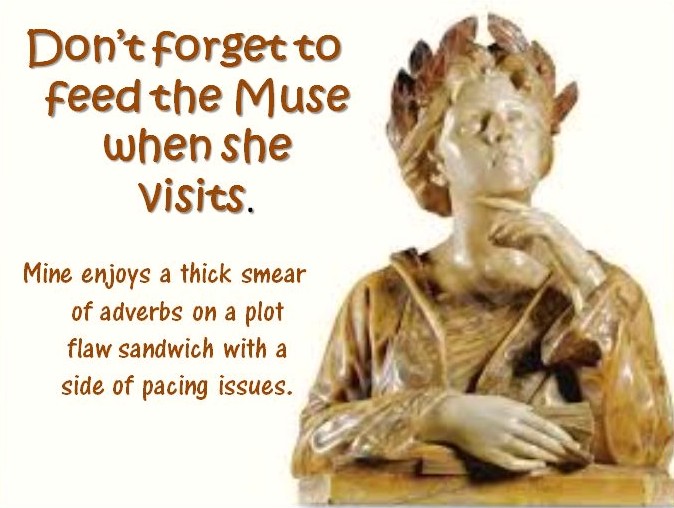 Whether you believe there were 9 original muses—the daughters of Zeus and Mnemosyne—or 3 Muses, the fact remains that there exists a few lesser known Muses. You’ve probably encountered one or two of these stealth Muses because they love tormenting….uh, inspiring writers.
So forget trying to invoke Calliope, Clio, Euterpe, Erato, Melpomene, Polyhymna, Terpsichore, Thalia, and Urania with the usual Muse summons, “Oh Muses, Sing to me” or “O Muses, O high genius, aid me now!” or coffee and pastries. Not happening—just try imagining their name on a Starbucks cup. Anyway, those Muses are busy taking selfies, writing memoirs—My Big Fat Greek Adventure and Fifty Shades of Zeus—and hobnobbing with Hollywood producers.
The real Muses—the everyday Muses for the rest of us—keep a low profile.
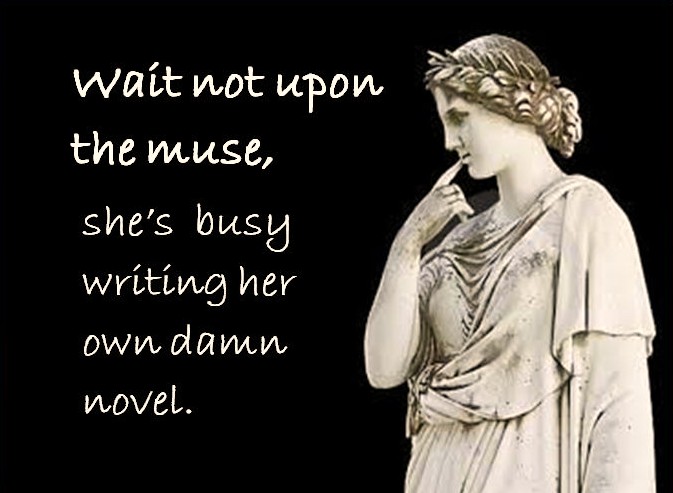 Here’s a list of the Muses you probably are familiar with.
Sarcastic Muse: “I’m certain your banal character will garner lots of sympathy.” “Another calorie-laden mocha will definitely help you meet your deadline.” “Oh sure, resort to that ol’ trope.” “Of course you will figure out that plot flaw by the end of the chapter.” Cough cough. This Muse toughens us up, smacks us around—and we like it! Sarcastic Muse challenges writers by helping us hone our craft.
Nodding Off Muse: She comes—this specter of creativity—to fill our minds with characters and story lines and dialog and descriptions compelling writers to leap from their bed and jot down the best ideas ever…but wait, come back, the moment you flick on the light she vanishes into the shadows.
Dream Muse: Evil twin of Nodding Off Muse, she fills a writer’s head with wonderful plots, captivating intrigues, and evocative scenes only of which a few can be remembered in the morning.
Psycho Muse: She’ll whisper “This is fabulous paragraph—luscious with description revealing the character’s pain” one minute only to murmur “Overwritten, tragically overwritten—why are you hitting your reader over the head with a wordy 2 by 4?” Psycho Muse helps writers reconsider and evaluate their literary techniques with an eye toward the reader. She might also be the cause of a writer’s descent into madness. Take Psycho Muse with a grain of salt and sprinkling of sugar. ( I treat my Psycho Muse to a salted caramel ice cream cone when she visits.)
Driving Muse: She comes up with the best, most amazing solutions to your plot flaws and provides riveting dialog while you are driving. The trick is to thank her profusely and repeat her brilliance until you can write it down or find the record feature on your phone.
Guilty Muse: “You really should be [ insert chore here] .” I know, you respond, but the words are flowing, the hubby and kiddos can forage for their own food. “Your friends haven’t seen you in a while.” But, I’m almost done, true friends understand. Guilty Muse helps balance our time ( “Fat Chance,” laughs Sarcastic Muse ) and urges us to complete tasks other than writing obsessively during the day–even if it’s as simple as texting hubby Get Toilet Paper on the way home. Ever the practical one, Guilty Muse suggests rewriting a sentence in your head while tossing in the next load of laundry.
Which Muses visit YOU while writing?
Related Links: Readin’ & Writin’

August 17, 2014
Family Bonding & Life Skills
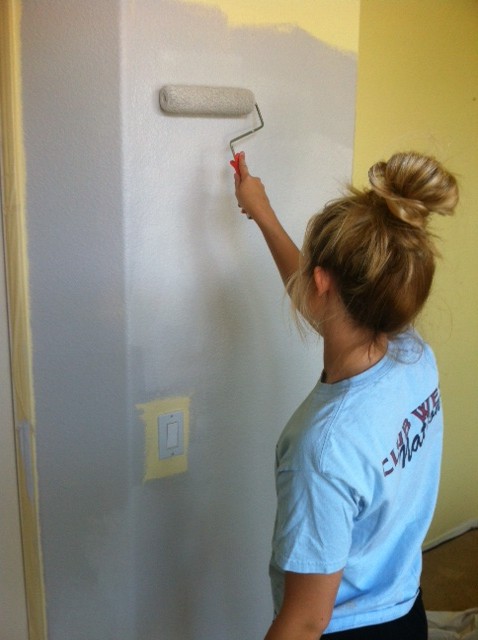 As a mom to four grown children, I found that there were a few tasks—important tasks– I neglected to teach them before sending them into the cold cruel world. Why is that, you ask?
Moms and dads are busy. It’s often easier and faster for parents to do a task ourselves than taking the time to teach our children. So for some real family bonding time, grab your kiddo and show them how to do all those little tasks that are required in the adult world.
Warning: Princes and princesses can skip this blog. These following tasks can be handled by one of your minions.
Useful everyday skills pre-adults should learn:
Cook something. Pasta, scrambled eggs, steak, their favorite meal, something! Fast food is expensive and most young adults struggle financially. My oldest three can cook almost anything, the youngest never learned.
Bake a cake. Either from box or scratch. One of my fondest mommy moments was when my daughter made me a birthday cake.
Clear a jammed or stuck garbage disposal. ( Goes with learning to cook ). One twist of that wee L-shaped doodad ( allen wrench) solves the problem.
Understand basic cooking terminology. Sear, caramelize, reduce, baste, marinate, saute, simmer, mince, knead, etc. Oh, can someone puleeze teach my hubby?
Wash clothes and remove basic stains ( like grease, grass, blood, or red wine). My children have been doing their own laundry since middle school. A real sanity saver. Of course, don’t forget to add the Full Load rule. “No, you cannot wash one pair of jeans unless you’re paying the water bill.”
Iron a shirt—spray starch optional.
Sew on a button.
Hem pants/skirt. Granted, some fabrics or styles require an expert but knowing the basics is a money-saving skill.
Write a thank you and condolence letter.
Locate the shut off valves both inside and outside the house. Knowing about the valve on the wall at the bottom of the toilet might help future overflow problems.
Replace the toilet flange and other parts. When the kids’ toilet broke, I bought a basic toilet repair kit, tossed it to my 16-yr old and said, “fix it.” An hour later, he had replaced all the tank’s insides and strode around the house saying, “I. Am. Plumber!”
Change the heating and air conditioning filter.
Pump gas, replace windshield wiper fluid /wiper blades, check tire pressure/oil.
Mow the lawn.
Grow/plant something. Herbs, vegetables,flowers—no, not marijuana.
Prune a bush and tree.
Paint a room and all that goes with it. Brushes, rollers, taping, paint types, and clean-up.
Patch a wall. Because everyone like to get their renter’s deposit back!
Change a fuse.
Reset the circuit breaker.
Make an appointment on the phone.
Tip. Smart phones make it easy to calculate.
Assemble something—because ‘some assembly required’ demands patience and practice. Second son never had to assemble anything until 1st son moved out. After purchasing 2 pieces of ‘some assembly required’ furniture, I left the boxes with 2nd son and walked away . If you can read, you can follow directions, right? A few trips to the garage for tools and a “What if I have leftover parts?” question later, I had a bookcase and an end table. ( Yes, they are still standing.)
Clean an oven, sink, toilet.
Polish shoes. Two words: Job interview
Start/build a fire in the fireplace or fire pit.
I’m sure I left out a few tasks, so feel free to comment so I can include them!
Related Posts: Mom Musings & Hubby Funnies
August 9, 2014
Characterization
Characterization 101: Writers have quite an arsenal of ways for conveying a character’s personality. Whether overt or subtle, the savvy reader knows that characters are brought to life only if the writer has effectively done their job.
So how does a writer portray personality?
Fictional names act subliminally on readers. Is the name:
symbolic?
metaphoric?
ironic?
androgynous names (Lee, Pat, Kelly, Chris) ?
cliché or stereotype?
See for examples and an in-depth explanation.
Physical descriptions may convey personality as well.
Exposition style biographical summaries—aka “telling”— are found in older fiction.
Body type, hair,and eye color can be conveyed gradually by “telling” or with action and/or dialog. “I’m not fooled by her baby blues.”
Modern authors use synecdoche— one part standing in for the whole. For example nails that are chewed may indicate a nervous personality
Clothes are often indicators of character, class, & lifestyle. Your character’s driving a dented, rusty economy car while dressed in knock-off Christian Louboutins and holding a fake Louis Vuitton handbag may indicate a female with high aspirations and/or a concern with appearances. Flashy jewels and clothes usually indicate an attention-seeking personality.
See character descriptions for a more.
A character’s dialog conveys personality. It often reveals:
level of education
ethnicity
geographicl location
predominant attitudes
maturity level
biases and/pr prejudices
relationship status
respect or disrespect for other characters
their need for understanding. For example, are they overly wordy or pithy?
cognitive level. Do they ask a lot of open-ended questions?
What, why, and how the other character’s respond ( or not) to them is also relevant.
Let’s not forget internal dialog–-those thoughts not spoken but which are frequent in a 1st person or limited 3rd person point of view
Actions often speak louder than words. The saying “it’s not what you say but what you do” is just as important in literature. Actions reveal:
feelings
intentions
gut reactions
or they may also disguise feelings and intentions
Writers may enlist all these character builders or employ only one or two. For example, Boo Radley in To Kill A Mockingbird never speaks and his physical description is given at the end of the novel. Boo is made real from other’s dialog and his heroic actions.
Have fun creating your characters!
Related links: Readin’ & Writin‘, Rock Your Writing
August 3, 2014
Mel Brooks Writing Academy
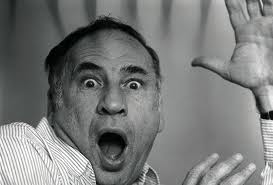 Mel Brooks taught me everything I know about writing. Nah, not really, BUT his films do provide writers with great tips.
And here they are:
1. There are more synonyms for words than are listed in the thesaurus. I counted 29 for worst dregs. Think outside the thesaurus box.
.
2. Work with the research or information you have. Improvise!
3. Allusions add depth and complexity—or fun. In this scene from SpaceBalls ( which is a parody of StarWars), we see shades of Alien mixed with the Looney Tunes singing frog cartoon.
4. Study the greats! Learn from them.
5. “Walk this way!” Mel Brooks shows us–so must writers. How a character walks indicates their mood and/or personality.The website Daily Writing Tips provides 60 synonyms.
6. Sometimes ‘very’ works very well.
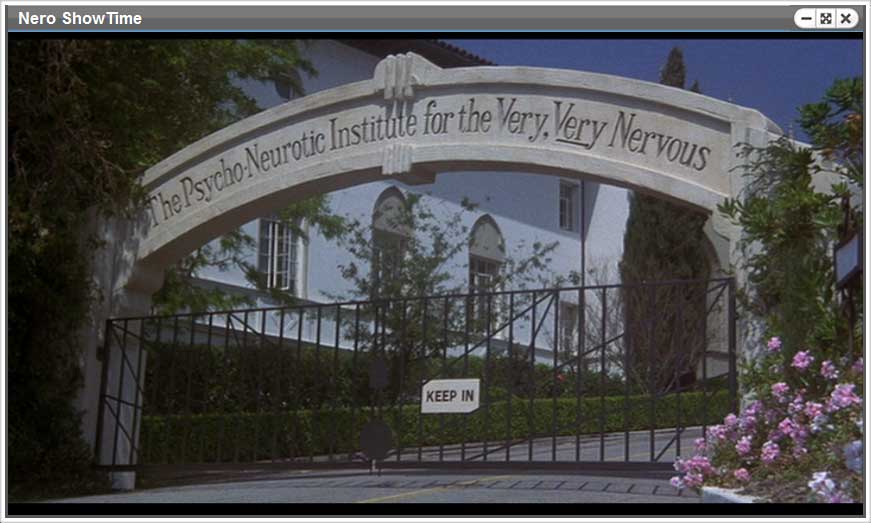
7. Motifs ( a word, statement, object, action repeated 3 times or more ) can reveal character, theme, or plot.
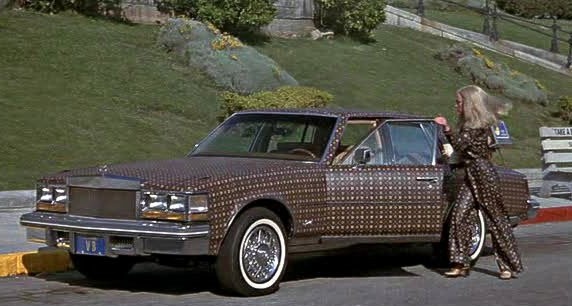
8. Past. Past Perfect. Present. Then. Now. It’s easy for writers to lose their way in the Tense Jungle. Note: This is one of my favorite Mel Brooks scenes.
9. Opening lines and pages are important. They reveal tone and mood. Craft them for maximum impact.
10. You needn’t be so literal all the time.
11. Dialog can be tricky.
My apologies if this post makes you want to take a break from writing to watch your favorite Mel Brooks movie.
Related links: Readin’ & Writin’
July 27, 2014
The Sight of Typos
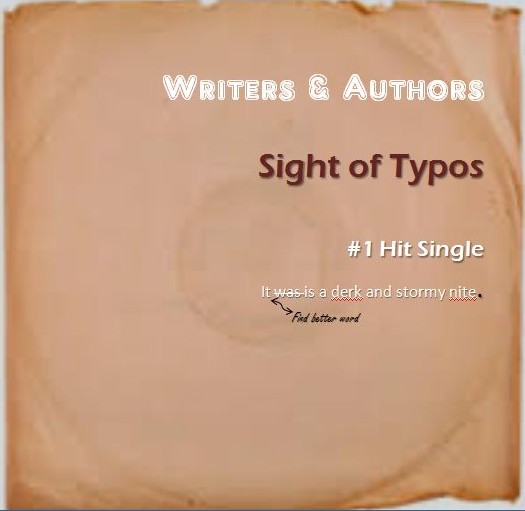 Channeling Weird Al Yankovic!
A few blogs ago, I posted Tunefully Yours, a collection of writer-modified opening lines to a few famous songs.
So in the spirit of that blog, here are the complete lyrics to the ol’ writing favorite “Sight of Typos.” Sing this to Simon & Garfunkel’s “The Sound of Silence.”
Hello typos, my old friend,
I’ve come to correct you once again,
Because the words softly creeping,
Left a plot across the page sleeping,
But the story vision that was planted in my brain
Still remains
despite the sight of typos.
In restless revisions I edit alone
Tighten grammar set in stone,
in front of the halo of LCD,
I tapped my fingers on the plastic keys
When my eyes were stabbed by the flash of a misused word
That split the prose
And revealed the sight of typos.
And in the twitter light I saw
Ten thousand writers, maybe more.
Writers talking without speaking,
Writers hearing without listening,
Writers typing novels that bookworms never read
and never shall
because of the plethora of typos.
“Fools,” said I, “You do not know –
Typos in a manuscript grow.
Hear my words that I might teach you.
Read my blog that I might show you.”
But my warnings like homonyms sound
And echoed in the manuscript rife with typos.
And the writers rewrote and prayed
To the publishing gods they made.
And the red squiggles flashed out its warning
In the sentences that they were forming.
And the sign said, the novels of authors are written in Microsoft Word
And Scrivener
And obsessively corrected during the sight of typos.
Hope it doesn’t get stuck in your head!
Related Links: Readin’ & Writin’
July 20, 2014
Book Nooks
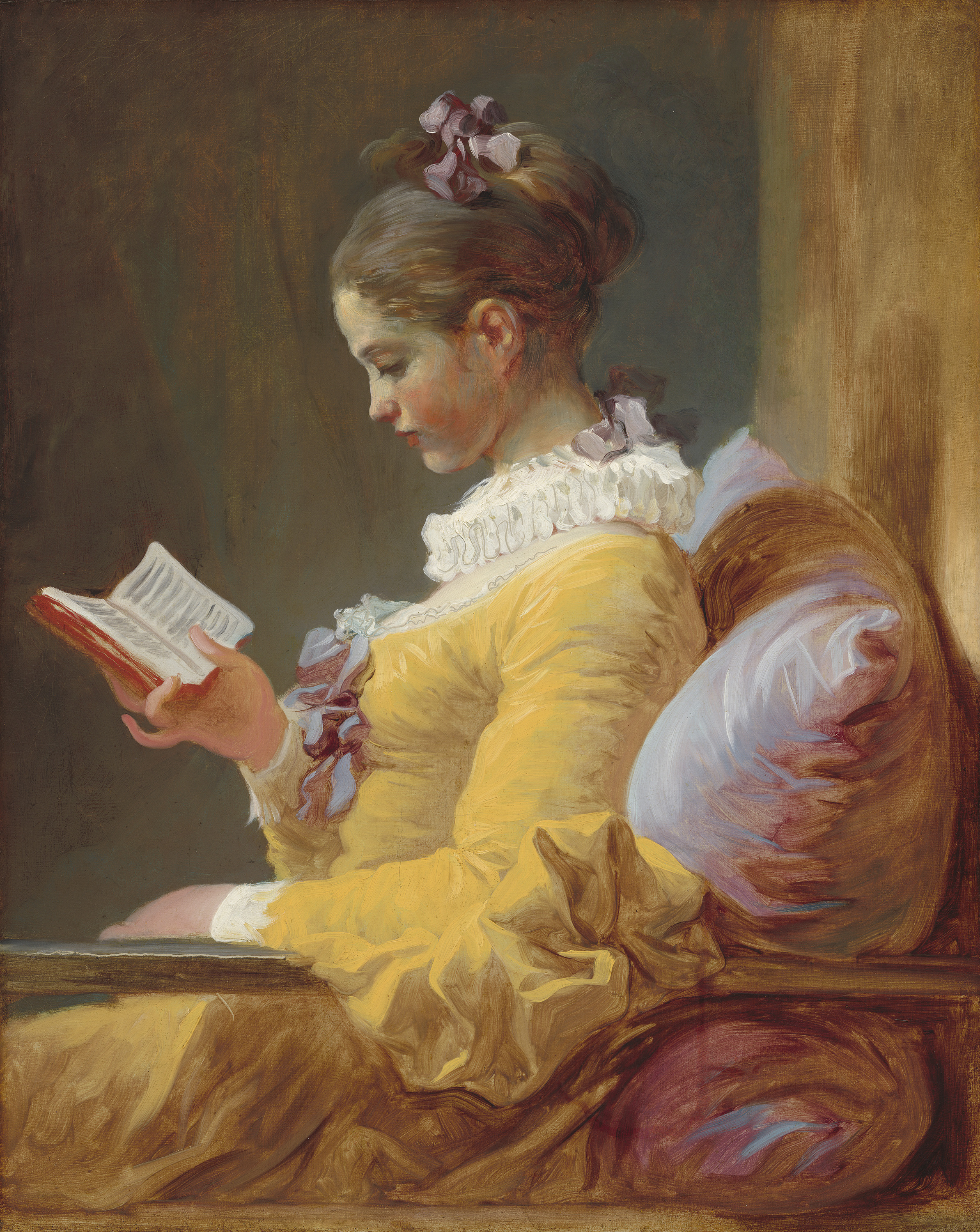 Where is YOUR favorite place to read? Most of us have a preferred place—a comfy couch or chair—where we hunker down with a good book. How does your book nook compare to other readers’ favorite spots?
An informal and thoroughly unscientific survey conducted on twitter, Facebook, and while attending a big party netted interesting responses. Using sophisticated tabulation methods (cough-cough)…
the results are in!
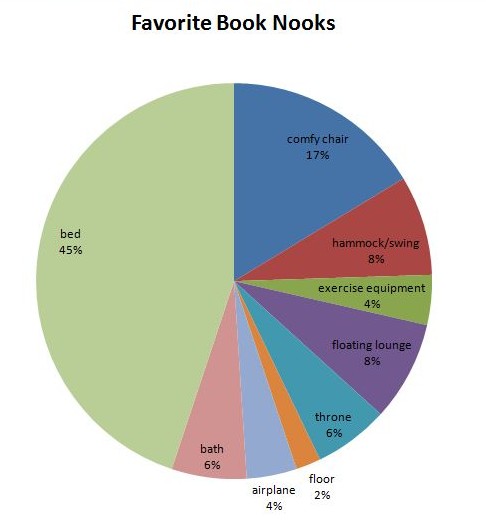
Bed: #1 place to read: The is the perfect read-until-your-eyes-are-blurry location, but do these readers only read at night? A few bookworms stated it was the one place to escape the household hubbub.
Sofa: Great for getting comfy. A drink nearby (see Beverage & Book Pairings) and pillows are optional.
Comfy chair: Whether inside or outside, recliner or Adirondack, the reading chair is a temple to the written word. Almost a throne…which leads to the next location.
The Throne: Only a few brave souls admitted to this. Hey, some people like to take advantage of every moment of ‘down time’ possible.
Chaise lounge on the beach: Can we hear a resounding YEAH! The soothing sounds of the surf along with the inspiring sight of sea and horizon makes it an intoxicating place to read and ponder.
Hammock: Had the pleasure of reading my first Sookie Stackhouse novel while swaying in a hammock on an Ecuadorian beach. Heaven. If only I could convince my hubby to install one in the backyard.
Mile high reading club: If you’re a reader—and you must be if you’re reading this post—the invention of the e-reader was a godsend. No longer did you need to lug multiple paperbacks in your carry-on. Some SERIOUS reading gets done on an airplane. ( Unless, of course, you sit next to someone who loves to read the genre you write & then you can make a new friend and talk books & authors! Confession: Several seatmates have downloaded my novels.
Dining room/kitchen chair: Reading and eating is so much safer to do at the table. With the proper space between book and food, there is little chance of crumbs or spills soiling your book or e-reader. The downside: Do you remember what you ate?
Train/Bus/Car/ Vanpool: Reading for those immune from motion sickness. Reading while speeding down the freeway is do-able. Stop-n-go traffic, not so much. My son assures me that one day cars will be self-driving ( like in the movie i-Robot ) Imagine how much reading we might do!!!
Floating pool chaise: So decadent! The sun’s heat, the chlorinated cool splash, the soothing motion—great for the glam novel. Floating loungers with a handy-dandy beverage holder and/or retractable shade is reading BLISS. The ONE problem: If your e-reader decides to go for a swim. Hey Kindle or e-reader folks—make a waterproof version ( or case )! Observation: We sent a robot to Mars and yet our techno devices are not designed to be waterproof.
Treadmill/Exercise equipment: Several people swear by this location. It’s VERY multi-tasking fitness minded! Confession: My leg muscles and reading brain don’t sync. I forget to walk or pedal.
Floor: This might be fun for the young ‘uns. All I can say is “ouch.”
Bathtub: This was surprising. My bath water gets cold in about 5 minutes. Maybe there’s a secret the bath-readers aren’t divulging.
Outside vs Inside: Many readers prefer reading outside! There’s nothin’ like reading a book on a nice day while surrounded by nature.
Plot + Nature + Comfy Chair = Readtopia.
Several respondents said they will read ANYWHERE.
Where is YOUR favorite book nook?
Many thanks to all those who put in their 2 reading cents.
Related links: Readin’ & Writin’