L.Z. Marie's Blog, page 10
May 4, 2014
What Kind Of Conference Attendee Are You?
 The best place to get the latest publishing scoop is at a writer’s conference. There’s tons to choose from and they happen all over the world! Large, medium, small, intimate, or intimidating, writers go to meet other writers, attend workshops, and listen to keynotes speeches.
Having been to my fair share of conferences, I’ve noticed a thing or two about conference attendees while people watching or indulging in authorveillance. They fall into one of several groups:
Wallflower: Shy writers attending for information only. They have no intention of pitching, won’t make eye contact with anyone, and pretend to be fiddling on their cell phone when the opportunity to talk to others presents itself.
Read My MSer: These folks walk around with copies of their manuscript asking folks they just met to read their novel. This puts writers between a page-rock and word-hard place. Are they looking for someone to tell them how wonderful it is? And what will they do if you give advice? And who are YOU to give advice anyway?
Clinger: Wallflowers often advance to Clinger status. Once they’ve made a conference friend they follow them everywhere, seek them out at every meal, and ask “what session are you going to next?” Clingers often gravitate to each other and soon become fast friends—which is a good thing.
Newbie: What I do? Where do I go? Can I speak to an agent? How do I pitch? What if I flub my pitch? How many words is a normal [ insert genre]? What’s a platform? How did you get so many Twitter followers? How am I supposed to manage social media? Blogging too, are you joking? What’s a query? I have to have an elevator pitch? Ah, crap, my MS is no where near ready to be queried, what do I do?
Very Important Person: One can always identify a VIP because they are usually accompanied by an entourage. They might be one of the keynote speakers, notable agent, famous publisher representative, or high profile author. OR they be one of the hosts/founders of the writers conference. ( I’m thinking about hiring an entourage for the next conference so at least I look important. )
Stalker: Writers with one singular purpose: To seek out agents during moments of weakness ( at the bar, dining with friends, in the bathroom ) to pitch their novel. They will cut fellow writers off in the refreshment line if their victim—ah, agent—happens to be standing next to you, talk over your pitch, chair hop to get closer to the agent’s table so they can ‘accidentally’ leave their manuscript on the agent’s chair.
Weary Wanderer: Identified by the shadows under their eyes and cup of coffee in their hand, these folks are mentally drained after attending 2 workshops. They often need naps or breaks during the day to recover from the plethora of information provided during the sessions. Their exhaustion is often amplified by not using technology for note-taking.
Bookish Bacchanal: Sleep late. Attend a session. Drink some coffee. Saunter around. Ask when the bar opens. Go for a swim. Sight see. Catch another session. These writing folks come alive at the bar where they lift their glasses with others who extol the mercurial life of the writer.
Befriender: They may arrive alone but in a few hours they will have added 50 new Twitter followers and Facebook friends. They strike up conversations at every session, make you laugh, ask about your MS, and keep their successes on the down low. By the time lunch has ended they know the genre and plot of everyone’s MS who is sitting at their table.
( Member of ) Wolf pack: From a group of writer friends to a bevy of agents, the Wolf Pack is almost always together. Identified by their inside jokes, tight knit formations, and large scale seat saving, this group is happy hanging with their pack members. Warning: Observe their body language before attempting to enter the group.
Look for me at the next conference! I’ll be the tall redhead at the Santa Barbara Writers Conference this June.
What kind of conference attendee are YOU?
Related Links: Readin’ & Writin’; 10 Things To Do After A Conference


April 27, 2014
Readerality
 We all have our own reading styles and preferences. Some read many types of books, while others stick to a favorite genre. You can read a book fast, skimming over the paragraphs or take it slow, savoring the words in a well-crafted sentence.
What kind of reader are YOU?
GenreWhore: Mystery, Action, SciFi, Romance, Historical, Paranormal, non-fiction—these folks don’t care what genre they read, they just need a book—NOW! Any book will do! They’re easy with formatting too. Ebook or hard copy, it matters not, both will satisfy.
E-sexual: Hard copies? Puleeeze! So old school! This reader craves instant gratification and that can only be accomplished by downloading a book whenever and wherever the mood strikes. Downloading two or more is even better—throw in a promoted freebie and it’s oh baby, yeah! Ebooks provide clandestine reading, their cheap ( or free ), and don’t take up room on your nightstand. Readers on the go don’t have time for lugging books around. Another bonus, people can’t see that you’re a GenreWhore.
LiteratureDom: These folks scoff at fun “beach reads.” They demand agonizing symbols, tormenting themes, stinging allusions, and a well-bound plot. An unreliable narrator and taboo subject matter will have them begging for more. They’re not truly satisfied until they have wrestled every nuance from the tale and recruited a literature virgin into their literati lair.
NovelMadonna: Faithful to their genre, these readers know a good thing when they see it and get maximum pleasure from being true to their genre companion. Should one of their novels veer from the expected story arc they show compassion, mercy, and forgiveness. These readers often pray for the release of new titles from their favorite authors.
AuthorSlut: These folks latch onto one author and devour every book they’ve written in record time. “I love this author!” they coo to friends and family. They read the author’s blog, Amazon author page, FaceBook Fan page, follow them on Twitter, and seek them out at book signings. But when they’ve exhausted the author’s novels and are only left with “Coming Soon” promises they move onto the next author to repeat the cycle.
Bestseller-ophile: If the book is not on the New York Times or USA Today’s best seller list, they ain’t reading it. Period. End of story. They only buy books from the high visibility ( and most expensive to place) bookstore locations—the end caps of bookshelves, promotional tables, the best seller section, high stacks, and/or if the cover is facing out.They wholeheartedly agree with the buzz generated by guerrilla marketing techniques and can talk intelligently about the hot new titles at any social gathering. They do not often bother with reading the author’s older titles and tend to be GenreWhores.
PaperPredator: The feel of the paper caressing their fingers, the sweet swoosh as they turn the page, the first crease in the binding, the delirious whiff of paper and ink. Ah! These readers will spend money for a real book! They lust for substance, heft, paper thickness, artful layout, and font styles. Real books are works of art to be enjoyed multiple times and multiple ways. Fold their pages, annotate them, use them—they plead for the pleasure of your hands. Ebooks are nothing more than technological imposters. Bah!
Did you choose one? Or are you a bit of several?
Related Posts: Readin’ & Writin’
Amazon book link
April 20, 2014
Writing Shoes
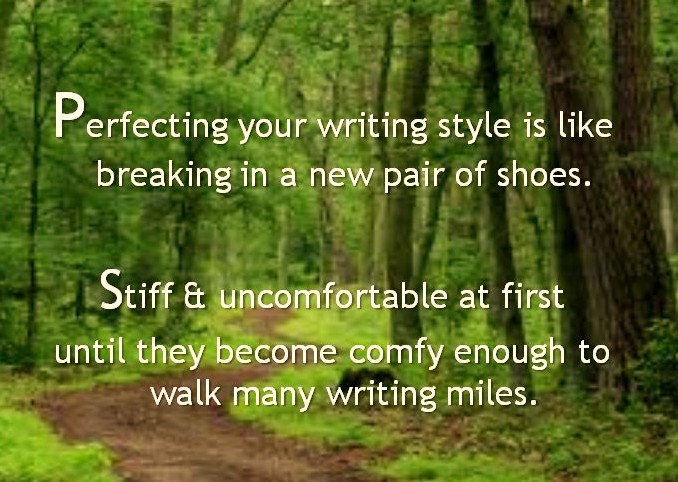 Ready to begin writing the first draft of your novel? Better put on your writing shoes for completing that 1st Draft Mile.
Writing a novel is like walking: Having a destination, avoiding obstacles, enjoying the scenery, and hitting your stride makes the journey more interesting. Now, which footwear will you wear?
flip flops: For the minimalist whose plots, sub plots, action, character development, & dialog are lean and mean. They add detail, mood, and style in subsequent drafts, unpacking a 55,000-word 1st draft into a 89,000-word final.
high heels: Concerned with first draft appearances, these writers balance character development, sentence crafting, nuances, and careful plotting until satisfied–even if it’s a bit wobbly. They prefer the arched support of a developed novel. Fancy embellishments and subtractions are done after strutting their stuff.
loafer: Write a bit, complain a little, brew coffee, take a break, enjoy social media, write a bit more. Maybe skip to the end—yeah, the end, or the love scene—they really want to write that steamy love scene. These writers enjoy dawdling before writing a difficult scene. They don’t fret too much though because they are confident it will get done eventually.
lug-soled boots: This writer doesn’t wait for inspiration—they lasso it with their Rope of Determination ( like Wonder Woman’s Lasso of Truth but for writers ) and trudge through the first draft with unwavering determination. They don’t shy away from fording a quagmire of plot problems and character issues because their boots were made for walkin.’ (can you hear Nancy Sinatra singing, “These boots are made for walking, and that’s just what they’ll do?”)
running shoes: Sprinting to the end—their fingers flying over the keyboard, these writers value the speed with which the words explode from their brain. The faster the better. Complete sentences? Mispelled words? Forget about ‘em, this first-drafter runs past them—time for fixes later.
What pair of writing shoes do you put on?
Related Posts: Rock Your Writing

April 13, 2014
Football Fanatic Communication 101
Hubby loves football, so in an effort to better communicate with him I decided to incorporate referee hand signals into my arsenal of effective information dissemination strategies. ( Because “here’s a beer” doesn’t work for every situation.)
Hubby’s smart, he had no trouble understanding the explanations behind the signals.
There are 2 kinds of signals. One for writers and one for wives/lovers/partners of football fans. A printable PDF has been provided at the end of the blog.
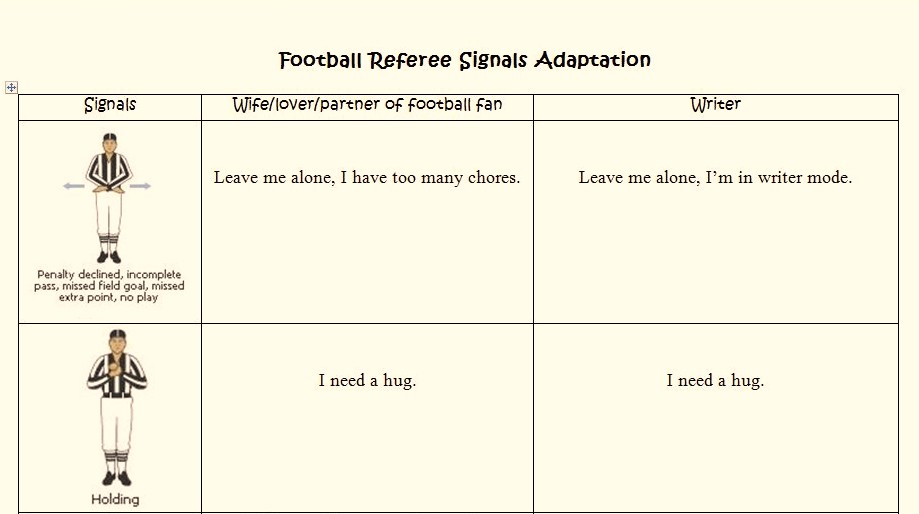
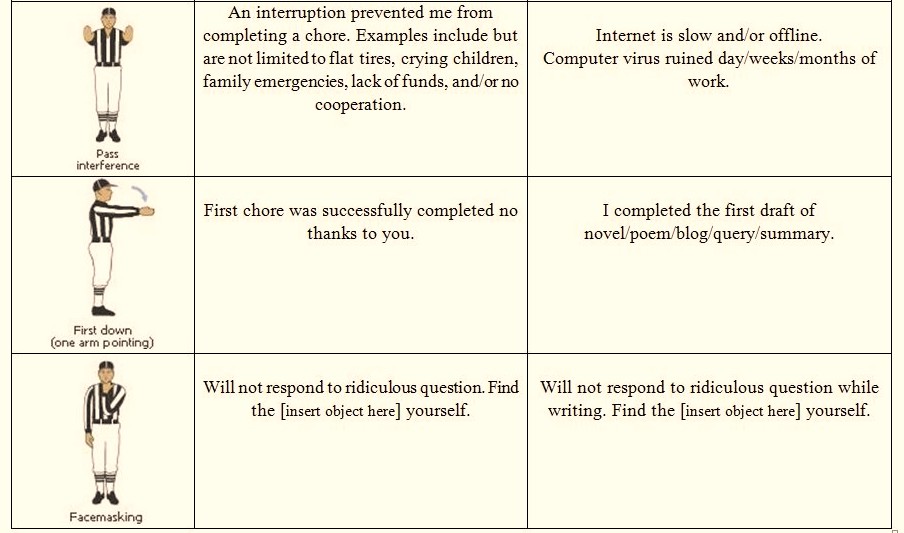
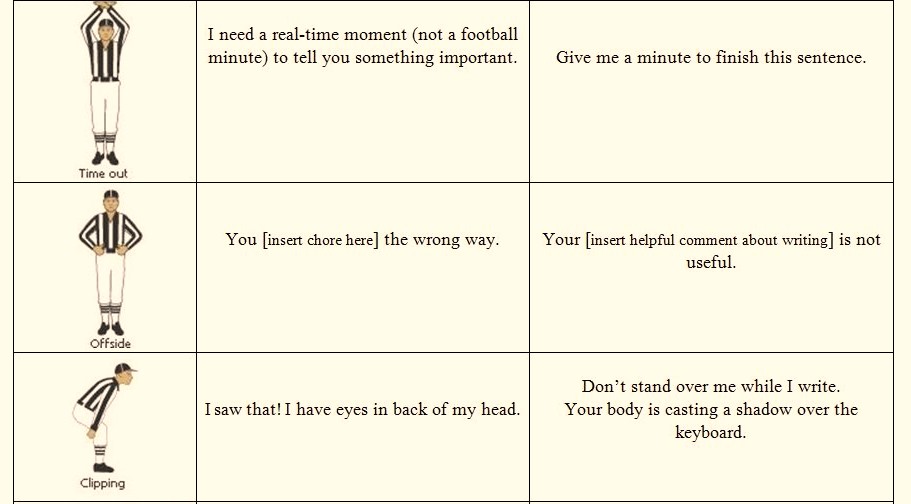
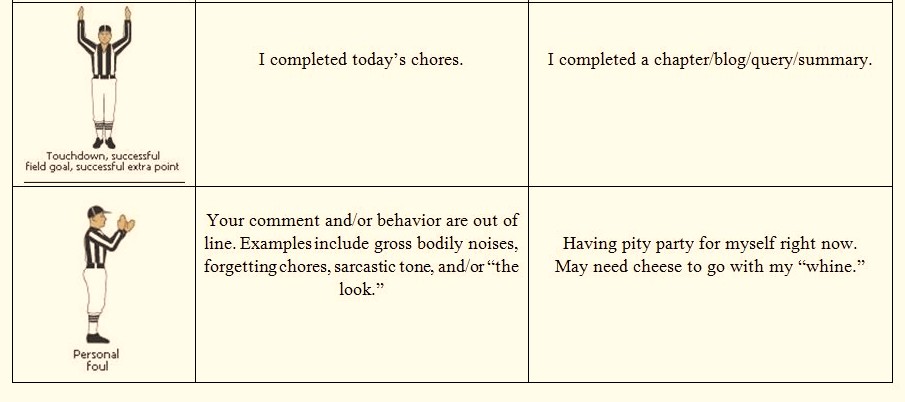
Football Referee Signals PDF file.
Related Posts: Rock Your Writing, Hubby Funnies
April 6, 2014
The 4 Cardinal Virtues
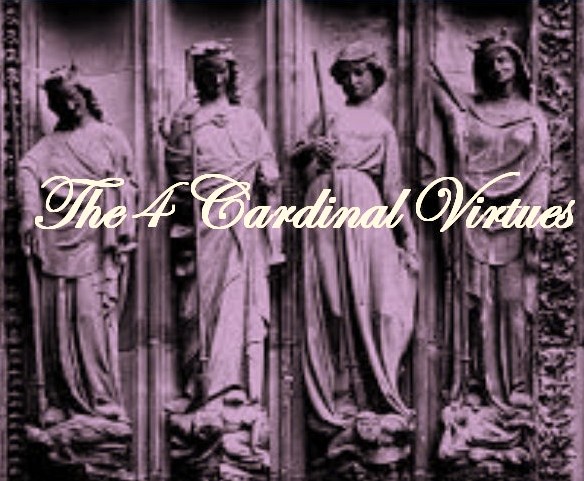 And how an author uses them for evil!
( A Sarcastic Glimpse Into A Writer’s World)
Virtues are good, right? Not when they’re done this way!
Note: I went for satire but wasn’t able to pull off the snark and shaming intent.
Justice: Play fair! If another writer RTs spam on twitter, so should you! If someone makes a caustic remark, fling one back yourself. Justice is sooo cathartic. Did a troll leave a bad review? Respond with venom.
Prudence: Wisdom is important. Make sure to tell everyone on social media how smart you are. Tell them a few times, in case it didn’t penetrate their thick skull. Correct folks whenever you can. Make quick judgment calls and never apologize for being wrong—because you never are. Argue with a friend who points out a plot flaw. They’re just jealous of your brilliance.
Temperance: Self-control and moderation is critical when researching for your novel. Facts? Forget ‘em—it’s called fiction for a reason. Restrain from editing your novel masterpiece. It’s brilliant! Why remove a single adverb, adjective, or repetitive phrase? It’s your style!
Fortitude: Courage is required when accosting an agent in the bathroom at the writer’s conference, and it takes endurance to stalk them all weekend. Confront your fear and send out that first draft query. Do not be intimidated by a this-is-not-what-we’re-looking-for rejection letter by bad-mouthing them on twitter.
Now that you know how to live a virtuous writing life, be sure to name drop Plato, Aristotle, Saint Ambrose, and Saint Augustine. Righteous intellectuals! Just like you!
See you in writer heaven!
Related Links: Rock Your Writing; Symbolism & more symbols;
Click Amazon link for novels.
March 23, 2014
Orwell’s Rules
“Most people who bother with the matter at all would admit that the English language is in a bad way, but it is generally assumed that we cannot by any conscious action do anything about it.”
 Some things never change. That statement is the opening line of George Orwell’s “Politics and the English Language” written in 1946. It’s a 10-page single-spaced censure of poor political and academic writing.
And because his polemic is an old one—it wouldn’t be surprising if they find hieroglyphics with a similar rebuke—I decided to blog about my few favorite lines and share his enduring writing tips.
“Our civilization is decadent and our language—so the argument runs—must inevitably share in the general collapse.”
OMG and LOL! How might Orwell react if he were to travel in in the Tardis with Dr. Who to witness today’s language transgressions.
“[The English language] becomes ugly and inaccurate because our thoughts are foolish, but the slovenliness of our language makes it easier for us to have foolish thoughts.”
Mind you, this was before we had 500 channels to choose from and yet “reality” TV is all the rage.
“The point is that the process is reversible. Modern English, especially written English, is full of bad habits which spread by imitation and which can be avoided if one is willing to take the necessary trouble.”
Ah, there’s the rub! And the cry of every teacher of language and literature heard around the world. The writer’s challenge: Using mere words to convey a specific emotion, setting, idea, subject, object, belief, personality etc that is understandable to the reader. It takes a lot of “necessary trouble.” Writers, editors, and teachers call is rewriting and editing.
But there’s a solution to tragic writing!
Orwell lists the common and correctable problems:
Dying metaphors: “A newly invented metaphor assists thought by evoking a visual image.” Most writers no longer understand the hackneyed metaphors they are using. Orwell’s examples of metaphors that have “been twisted out of their original meanings” include, ride roughshod over, stand shoulder to shoulder, Achilles’ heel, swan song, and toe the line” which he states is “sometimes written as tow the line.”
Operators of verbal false limbs: (Love this metaphor!) “These save the trouble of picking out appropriate verbs and nouns, and at the same time pad each sentence with extra syllables which give it an appearance of symmetry.” Using a phrase when a simple verb will do. Examples include ” render inoperative, be subjected to, give rise to, have the effect of, exhibit a tendency to..”
Flames shoot from my eyes when I read these ‘false limbs’ in student papers.
Pretentious diction: “…used to dress up a simple statement and give an air of scientific impartiality to biased judgments.” Where would politicians be without all that pretentious politically-correct rhetoric?
Meaningless words: “In certain kinds of writing, particularly…literary criticism, it is normal to come across long passages which are almost completely lacking in meaning.” This refers to jargon, vague, or ‘in’ words that are used in a consciously dishonest way.
We have grown so familiar and possibly anesthetized by meaningless words that we accept them, assuming they mean what we want them to mean.
A favorite personal example is when a student writes, “We, as humans…” As opposed to what, I ask. There’s no aliens in class from other worlds—that I know of.
Orwell provides an example of a well-written passage ( taken from Ecclesiastes in the Holy Bible)
I returned and saw under the sun, that the race is not to the swift, nor the battle to the strong, neither bread to the wise, nor yet riches to men of understanding, nor yet favor to men of skill: but time and chance happen to them all.
His bombastic re-wording.
“Objective considerations of contemporary phenomena compel the conclusion that success or failure in competitive activities exhibits no tendency to be commensurate with innate capacity, but that a considerable element of the unpredictable must invariably be taken into account.”
Huh?
Another example: In my opinion it is not an unjustifiable assumption that instead of I think.
Orwell suggests that a “scrupulous” writer will ask himself the following questions for every sentence he writes.
What am I trying to say?
What words will express it?
What image or idiom will make it clearer?
Is this image fresh enough to have an effect?
Could I put it more shortly?
Have I said anything that is avoidably ugly?
Orwell also offers the following rules for writers.
1.Never use a metaphor, simile, or other figure of speech which you are used to seeing in print.
2. Never use a long word where a short one will do.
3. If it is possible to cut a word out, always cut it out.
4. Never use a foreign phrase, scientific word, or a jargon word if you think of an everyday English equivalent.
5.Break any of these rules sooner than say anything outright barbarous.
Some writing tips are timeless.
Related Links: Rock Your Writing; Symbolism & more symbols;
Click Amazon link for novels.
March 16, 2014
Writing & Chocolate Chip Cookies
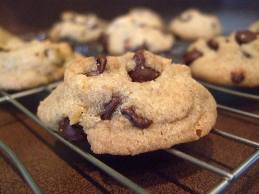 Writing is a lot like making chocolate chip cookies. OK, I’ll admit this blog comes after fighting off a craving—and losing—to the allure of the confection, but the similarities are sweet!
2 1/4 cups all-purpose flour is like the plot of a novel, the basic element in any delicious tale.
1 teaspoon baking soda is a leavening agent of skill and craft waiting to expand your draft batter when it’s time to turn on the revision heat.
1 teaspoon salt is akin to the salt of your brow as you labor over your creation.
1 cup (2 sticks) butter, softened. Like real butter, well-chosen words make a better novel and discriminating readers will taste the difference when substitutes are used.
3/4 cup packed brown sugar. Without sweet conflict a writer has no story. And like the iconic chocolate chip cookies several kinds add depth and complexity to its sweetness, be it the…
3/4 cup packed white refined sugar of man vs man or the psychologically tormented man vs self.
1 teaspoon vanilla extract Great novels have an extra uumph to them—infused with the undetectable something special. Imitation zing doesn’t work—dig deep for the real thing.
2 large eggs. Walkin’ on thematic eggshells does a writer no good. They must crack their creativity wide open to scramble a reader’s prosaic ideals while incorporating them into the story.
2 cups chocolate chips. With just the right amount of narrative hooks, the story will melt in a reader’s mouth, leaving them eager for another bite and turn another page.
1 cup chopped nuts and other optional mix-ins are odd characters that add flavor and zing your novel.
PREHEAT oven to 375° F. Revisions are in your future—don’t become attached to any single sentence.
COMBINE flour, baking soda and salt in small bowl. Beat butter, granulated sugar, brown sugar and vanilla extract in large mixer bowl until creamy. Add eggs, one at a time, beating well after each addition. Gradually beat in flour mixture. Stir in morsels and nuts. Drop by rounded tablespoon onto ungreased baking sheets.
BAKE for 9 to 11 minutes or until golden brown. Cool on baking sheets for 2 minutes; remove to wire racks to cool completely.
Writer’s Baking Instructions:
COMBINE plot, craft, and salt in computer. Beat words, conflict, more conflict, and that something special in your brain until ideas are combined. Add themes, one at a time, rewriting & fine tuning well after each addition. Gradually beat in plot mixture. Stir in narrative hooks and optional symbols, motifs, allusions. Drop by rounded sentences and paragraphs onto pages and chapters.
Write & rewrite & edit until story is done—whether you like it moist and chewy, burnt, hard, or slightly raw. In writing time this can take anywhere from 2 months to 10 years. Cool completed novel for several weeks before moving manuscript to the query-agent racks.
Have fun cookin’ up your novel!
Related Links: Rock Your Writing; Symbolism & more symbols;
Click Amazon link for novels.
March 9, 2014
Writing & Ethnic food
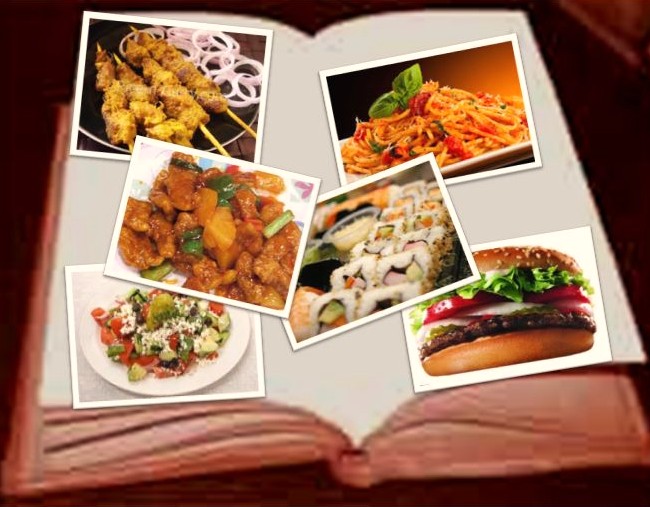 As Hubby and I were deciding which local restaurant to visit, I remarked that novels and ethnic food have much in common.
Warning: To all those who will tell me that healthy versions or alternatives of these foods can be made in my kitchen—you missed the point.
Italian: A carb and cheese-laden indulgence, this comfort food is like a favorite dog-eared novel in our library. Its familiar themes and characters our treasured friends—good for devouring during rainy days or when we need to relive our delight of the initial reading.
Greek: Flavorful food that harkens back to simpler days when stoic philosophers nibbled upon olives and charmed us with tales of Homeric heroes. Within the pages of these novels lay a honeyed treat of lusty gods and duex ex machina endings where themes of honor and destiny are ripe for the chewing.
Latin: A little hot, a whole lot of exotic flavors, this food brings out the magical realism found in many novels. Spicy sexual conquests, sour inequities, and sweet victories provide a decadent mouthful of themes, symbols, and metaphors from our favorite—and often—Latino authors.
Indian: A spicy hot mixture of tales that are often filled with gender and class discrimination, the novels curry favor by providing readers a taste of the exotic and the forbidden in our lives.
Japanese: Like the trendy cool Sushi bars offering everything from humble udon soup to the showy Fuji Volcano to the sushi-for-beginner’s California Roll these stories offer a blend of culturally nuanced symbols and metaphors for readers to explore and discover. Be it the raw themes of the human condition or ‘tempuring’ root concepts with an appetizing coating, these novels can be enjoyed by novice and expert literati alike.
Chinese: Delectable, savory, and less-filling books to be shared with friends. Whether sweet or sour these tales pack a kung pow punch with a deceptively vague but fortunate message at the end.
Middle Eastern: If they can make a delicious salad from parsley–considered a garnish to prosaic eaters–imagine the wonders found in novels where a humble symbol is elevated to reveal a universal truth, where kebabs of meaty plots are skewered with ancient dogmas to sear flavorful wisdom into your soul.
American fast food: Salty goodness between two buns—um…you know you shouldn’t read it—it’s bad for you—won’t stretch your mind and will only stretch your thighs—and yet once in awhile we must indulge in a novel with little literary merit. Oh! And as you lick salt from your fingers you say ‘That novel was delicious!’
Hungry yet?
Related Links: Rock Your Writing; Symbolism & more symbols;
Click Amazon link for novels.
March 2, 2014
Yoga for Writers
Writers tend to stay in a seated position for hours while working, therefore it’s critical to move our body. Exercise gets our blood moving, which in turn helps us ponder plot flaws, create characters, and dig deep into the depth of our emotions. And no! Lifting coffee or moving your mouse is NOT considered exercise.
In addition, certain movements reduce cortisol ( the stress hormone ) and increase testosterone ( the fearless hormone).
Here’s a few poses that may help reduce writer’s block and writer’s derriere.
( As with any exercise program be sure to check with your physician before beginning—yada yada)
Seated meditation: Good for going deep inside your brain while visualizing a scene or imagine dialog.

Down dog: Use after receiving the sorry-your-manuscript-is-not-what-we’re-looking-for rejection letter. Hold position until you are brave enough to query again or your arms give out.

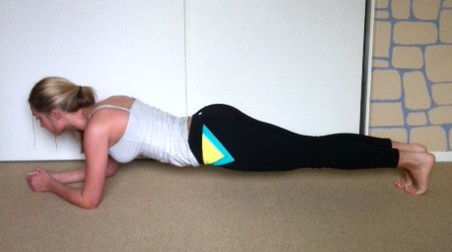
Plank: Excellent way of keeping your fingers away from the keyboard when someone posts something stupid or insulting on social media. Maintain position until you no longer feel the urge to reply or comment.
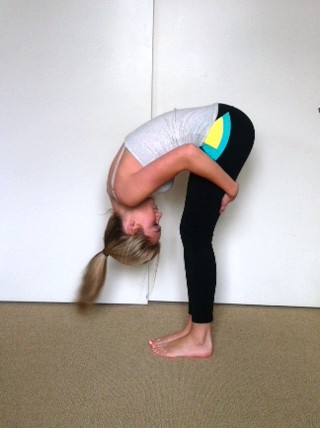
Forward roll: Effective when someone tells you they didn’t like your protagonist. The head to knee position is a great way to disguise your tears.
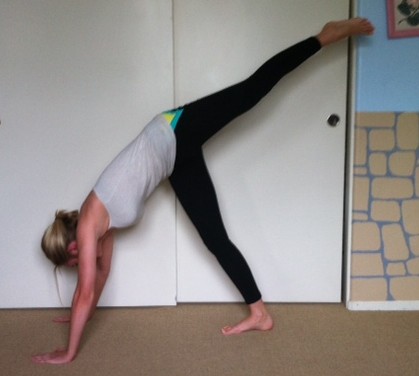
Leg high: Best way to make certain all the blood flows directly to your brain. This position not only gives you a brain boost it will help you describe pain.
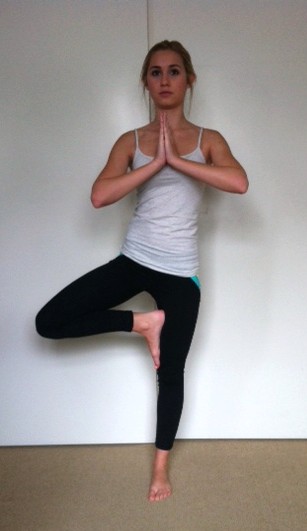
Tree: Effective way to come down from your caffeine high. Maintain very cool looking Zen-like position until your coffee is cold, then add ice cubes for a refreshing pick-me-up.
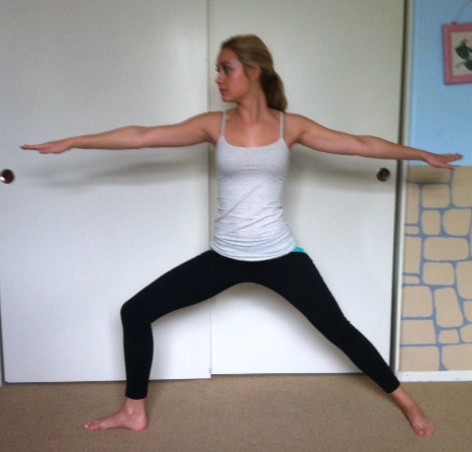
Warrior: Perfect pose to assume after completing a tough chapter or difficult scene.
Child: Great for stretching out your back and legs. Also good for giving thanks to your editor.

Plough: Beneficial pose when you have writer’s block. Hold position until you can think of something—ANYTHING— to get out of this ridiculous and embarrassing position.

Mountain pose: A fabulous way to give thanks to the Writing Gods when an agent ask to see a full manuscript. Also great for stretching out those hunched-over-the-keyboard back problems.
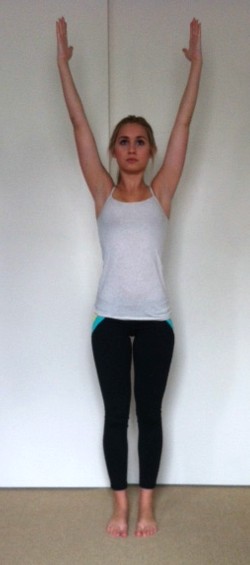
So stretch out those limbs and embrace the creative power poses!
Hugs and kisses to my daughter for being a good sport about the photos!
Related Links: Rock Your Writing; Symbolism & more symbols;
Click Amazon link for novels.
February 23, 2014
Windows & doors & stairs, oh my!
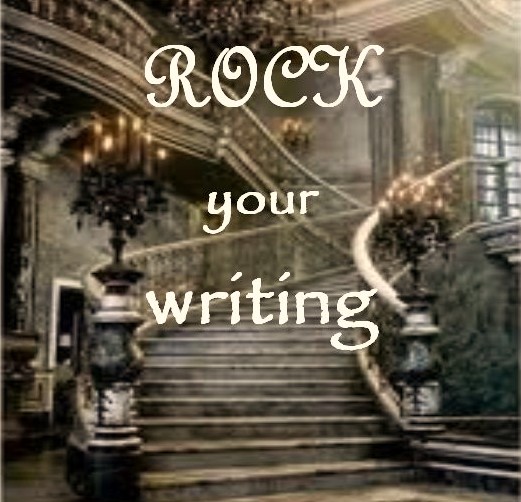
Every man’s home is his castle! It’s also full of symbolism.
The roof over your head, the window you gaze through, the threshold you walk across— all these structural features can be used symbolically in literature.
windows:
let in the light of knowledge/understanding
allow the character to view the outside world–which may or may not be a good thing. In The House on Mango Street, poor immigrant wives sit by the window staring out into a world they are never able to participate in.
with dirty glass might indicate the observer’s foul view of the world.
with always-closed drapes might reveal a characters’ closed-mindedness or fear of the outside world.
are the eyes of the soul—traditionally speaking.
of stained glass—especially those with religious iconography—shout RELIGION. The observer sees the world through the dogma of their religion.
doors: A symbolic powerhouse!
represent the divide between good and evil.
transition from one stage in life to another.
a divide between one world and another.
with a mezuzah—a scroll with Hebrew words to remind one of God’s presence and commandments–is specifically placed on the doorpost of Jewish homes.
with locks suggest secrets and forbidden places/worlds/experiences.
Note: to hear the knocking—especially if comes from a door knocker—is a sign that fate is headed one’s way. Should you hear, “…some one gently rapping, rapping at my chamber door. “’Tis some visiter,” I muttered, “tapping at my chamber door—Only this and nothing more.”–you know something ‘Poe-etically–’ creepy is about to happen. In Macbeth, the drunken porter—making the first knock-knock jokes—signals the fateful demise of the overly ambitious Macbeths. “Knock, Knock! Never at quiet. What are you? But this place is too cold for hell. I’ll devil-porter it no further.”
archways:
a divine or religious entrance into another state of being
rebirth
a metaphysical time-space threshold
walls:
strength
division or barrier
privacy
floors:
the earthy realm
being grounded in reality
the material of the floor may also be symbolic. Is its marble ( wealth ) or rustic wood ( humble ), or linoleum ( low income ). Does the floor’s pattern reveal something about the culture or social class of the characters?
roofs:
sheltering
keeps evil out
the shape of the roof is suggestive, as well. Domed roofs are emblematic of heaven, low roofs suggest restriction or being hemmed in by dogmas, vaulting roofs might be metaphor for high-mindedness or over lofty ideals
halls:
a transitional location
the place of choice before deciding which symbolic door you will enter
stairs: I know, I know, you’re breaking out in Led Zeppelins Stairway to Heaven song
which one ascend lead to heaven or enlightenment
which one descends end in depravity, wickedness, evil or madness
that are winding indicates mystery–one can’t see straight ahead
In Effi Briest the stairs in the young wife’s home are described as “crooked, rickety, and dark” which aptly describes her feelings, the house’s history, and her marriage.
kitchens:
the domain ( traditionally ) of women
maternal care taking, be it with food, spiritual, or motherly nourishment
most obvious place to use a knife—ahem
living room/drawing rooms:
place where proper social behavior was expected
location of one’s public persona
outward appearances
bedrooms:
love
lust
one’s true self might be revealed here
libraries:
the location synonymous with learning, knowledge, and education
a place where ancient wisdom or secrets are revealed
attics:
where memories remain tucked away
a place of half-remembered or forgotten truths
where relics of the family’s or ancestor’s past are hidden
basements:
your deepest darkest secrets
the underworld or lower realms
creepy or base desires
Have fun deciding which rooms to use in your novel!
Related Links: Rock Your Writing; Symbolism & more symbols;
Click Amazon link for novels.