L.Z. Marie's Blog, page 14
October 23, 2013
Hero archetypes
 Archetypes! What are they?
Archetypes are defined as a consistent pattern, model or image that recurs so often in life and literature, it is deemed universal !
Steven Fox, PH.D says archetypes are, “Patterns of thought that are handed down through generations by culture and the quantum transmitting aspects of consciousness” in his dream analysis guide, Unlock Dream Power: 40 Keys to Find Your Path.
What kind of hero is in your novel?
This is the first stop in our 3-part archetypes blog.
Male Heroes!
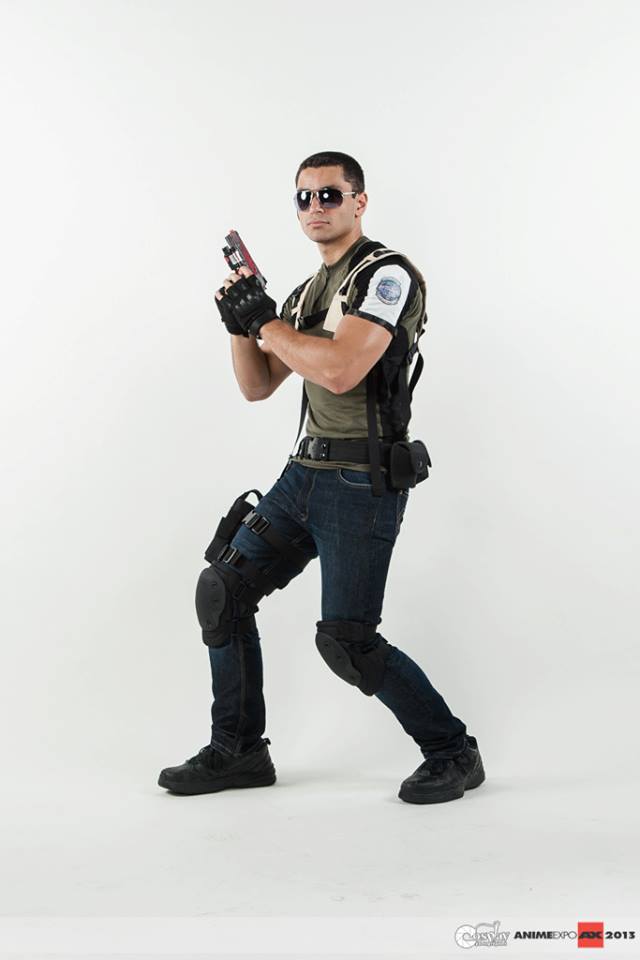 The Chief: The quintessential alpha macho dude. He’s a tough, decisive natural leader. (I’m the decider and I decide) . Although stubborn, arrogant, and domineering he gets the job done! Captain James T. Kirk, anyone?
Bad Boy: Yeah, yeah, all the women go for this type. He’s the guy from the wrong side of tracks, thumbs his nose at authority, and may have anger issues. He has oodles of charm and plenty of street smarts. James Dean & Rhett Butler have my vote.
Swashbuckler: Bam! Smack! Punch! Wack! These manly men have no fear when it comes to feats of physical daring. They get any girl they want–sweeping her off her feet while swinging across a gorge. Indiana Jones, Jackie Chan characters, and Orlando Bloom in Pirates of the Caribbean are examples.
Warrior: Can you say Superhero? These heroes sticks up for the underdog and tend to be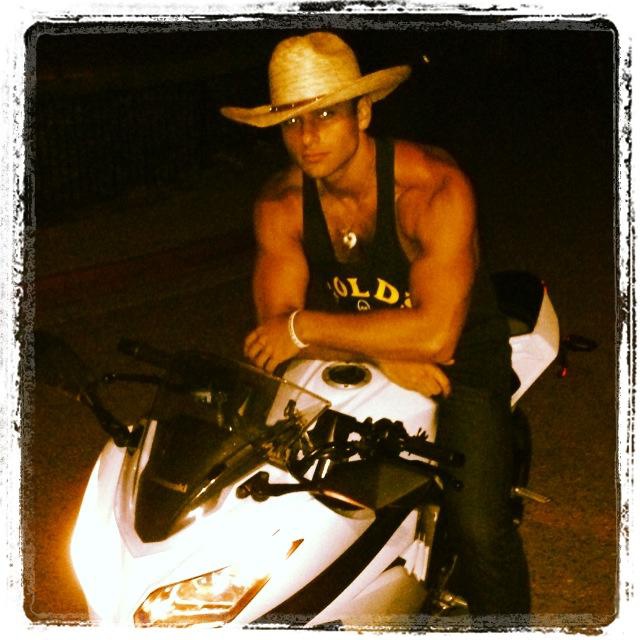 reluctant, but ultimately come though because of their tenacity and honor.
Charmer: A not-so-reliable, less volatile version of the Bad Boy, this guy is all fun-fun-fun. Oh, he’ll show you a good time and is uber smooth, but he has a difficult time committing to a relationship.
Best Friend: Mr. Nice Guy, this hero doesn’t really want to punch anyone ( I’m thinking of Steve Carell in Date Night) and can be a bit bumbling. But gals don’t mind, because he’s decent and kind.
Professor: Intelligent, logical, truthful but also stubborn introverts/nerds. Jeff Goldblum in Independance Day or Jurassic Park.
Lost Soul: Perhaps even more than the bad boy, women fall head over heels for the hero who needs spiritual/psychological saving. He has a tortured past, is a first-class brooder, and doesn’t get close to anyone. He’s usually an outcast and/or loner. Think Angel in Buffy the Vampire Slayer or Denzel Washington in Man on Fire.
A special THANKS & hugs goes to Adam Johnson ( a former student) for letting me use two of his photos. (Yup, and he’s smart too!)
Have fun creating a hero!
Related Links: Rock Your Writing


October 20, 2013
POV
 Point of View!
It’s an important decision for a writer because it impacts EVERYTHING an author writes.
Quick true story: At a writers conference, a man told me about the murder/mystery he was writing.
“What’s the POV ?” I asked, pretending to be interested.
“I’m not sure.” He shrugged his shoulders.
“How can you not know? Whose head are you in? Do you use ‘he said, she said’ or ‘I said’?”
“I’m not sure. Does it really matter?”
“You’re joking, right?” I tried not to look appalled.
“Well, I don’t get hung up on all that stuff…I just write a good story.”
There’s lots of great books with comprehensive information about POV ( I like The Art of Fiction by David Lodge).
A blog-quick recap of point-of-view:
1st person POV= “I”
the narrator is a character and uses “I” throughout the story
the reader doesn’t know any more than the character/narrator does
the reader is only in the narrator’s head
Writing issues include:
offering only a limited perspective to the reader. Is there a reason why you are telling the story through the eye of the protagonist/antagonist?
making certain narrator/character’s voice is authentic and believable. >>>Example: A highly educated character/narrator will use different words and syntax than a young child<<< AND their views and understanding of the world are very different.
finding ways to add “off screen” action or dialog that does not include the character/narrator.This can be achieved through another character’s telling of events or using font changes or chapters to indicate POV changes or multiple 1st person POVs.
accidentally assigning thoughts to another character that the character/narrator would not know. Unless, like Sookie Stackhouse, the character/narrator reads minds.
making sure thoughts of other characters are evident through action and/or dialog <<< Example: Mom was angry vs Mom burst into my room, then slammed the door behind her OR Mom looked angry.>>>
3rd POV= “he” “she”
Most novels these days are written in limited POV
Writing issues include:
choosing how limited or omniscient the 3rd person POV will be. There’s a broad spectrum, from very limited (thoughts inferred by actions and/or dialog only) to completely omniscient ( mind reading narrator)
how many heads do you want your reader to be in?
more importantly, why do you need to be in a particular character’s head? Does it add to theme or plot? What purpose do multiple perspectives serve?
An advantage of omniscient POV is the reader gets to see into many characters’ heads. This adds depth and complexity to thematic issues or plot. It is also a way for writers to manipulate/trick readers.)
One disadvantage of being in multiple heads is that it gives the story a more contrived feel.
A second disadvantage is that inexperienced writers do a lot of head-jumping for no specific story purpose, thus accidentally confusing a reader.
Mixing it up:
Multiple points of view are just that!
multiple first persons ( Sisterhood of the Traveling Pants)
Ist person and 3rd person ( anywhere on the limited/omniscient spectrum)
Multiple POVs issues:
is there a purpose?
can you execute that purpose? Read Kafka on the Shore for a mind bending look at multiple POV in action.
how does it reveal theme or drive the story?
Have fun reading your characters’ minds!
Related Links: Rock Your Writing
October 16, 2013
Dining & Feasting
 It was the best of times. It was the worst of times! Oh, the drama of the family meal! People eating and drinking together is tasty with yummy symbolism.
Why is that, you ask? In ancient times, sharing one’s meal symbolized hospitality and goodwill. Certain foods, drink, or days were associated with religious and social rituals.
If one was breaking bread with someone, it indicated friendship, truce, partnership, or an alliance. The human race hasn’t changed all that much—we still enjoy eating with those we like–and eschew eating with those we don’t.
Eating and/or fasting rituals is found in most religions. And I can’t think of a holiday that doesn’t center around or end in eating! Eating together & sharing food is an act of communion/agreement/fellowship/harmony.
I’m sure you can picture a few eating scenes in movies! (My favorite is the scene in Flashdance where the rich guy watches his date eat a lobster in most provocative manner!)
Shared meals can:
be a plot device
reveal character
reveal the relationships between characters
be thematic
be an allusion to other famous religious meals or foods ( the Last Supper, maror & matzo of Passover)
be an allusion to famous literary meals (Tom Jones, Like Water for Chocolate, Good Earth, Oliver Twist)
Writing a meal scene is challenging, but can reveal much about the plot, character, relationships, family dynamics, setting, or culture of the novel.
A few symbolism-weighty factors to consider:
Who is sharing the meal? Enemies? Lovers? Family? Strangers?
What foods are they eating? Is the food and drink symbolic of religion or social class, OR is the food itself fraught with symbolism. See the posts Fruit of the Gods, Sacred Spices, and Foods of Life for information regarding the symbolism of some common foods. In the Merkabah Series, there are several eating scenes–each revealing something about the characters and their relationships. One character orders a flambeed dish. Yep! You bet it’s symbolic.
Why is this particular meal described? Why is it significant to the plot/character?
How does the meal end? Did someone choke? ( plot device or sign of character “choking” on their own words or that of another’s).
Did someone stalk off—an indication the communing/fellowship/agreement went wrong. Remember the scene in Great Gatsby when Tom jumps up from the table to take a phone call from his girlfriend?
How is the character eating? Are they nibbling ( dainty ), gobbling ( glutton ), selective ( picky ). Sloppy or neat or overly fastidious? Did a character stop eating mid meal–and why? Is a woman enjoying her meal with great delight indicative of her sexual appetite? (Is she smacking her lips, making mmmm & aaahh & oohh noises?)
How does the character feel about the meal? Do they hate the food (closed-minded?) Trying new food (open-minded?)
Does a character take food from another’s plate? Do they refuse to share?
Does a character become sick? (is it a plot device OR is a character “sick of” or “sickened by” a character, conversation, or turn of events at the table?)
Is a character eating with his favorite 12 friends?( allusion to Last Supper)
Do the characters share a utensil, straw, or drink ( either accidentally or with purpose).
Does one character feed another? This may be erotic, suggestive, a prelude to sex, or reveal who is the boss in the relationship
What’s happening under the table? hand-holding, clenched fists
Is a character refusing to eat? In effect saying, I’m here with you, but I don’t like/approve of you.
An eating scene is full of chewy symbolic deliciousness.
Have fun feeding your characters!
Related Links: Rock Your Writing
October 13, 2013
Getting Wet
WATER is symbolic! You know that!
We use water to bless, baptize, cleanse, and purify.
Authors use a dunk under water to indicate a character’s spiritual change or spiritual rebirth!
A character might:
dance in the rain, indicating joy at their new lease on life.
jump in a lake/pond/river/ocean/pool of their own accord, signifying a determined effort to change.
be pushed or dragged into a lake/pond/river/ocean/pool, which may indicate their unwillingness to change OR they emerge as BAD/EVIL–think the Joker in Batman who falls into the vat of acid.
accidentally slip or trip into the water signifying a less purposeful change
Once immersed in water, the character can:
grab some driftwood and float merrily along with the current. This might signify the character’s understanding and acceptance of his rebirth. In Fahrenheit 451, Montag jumps into a river to escape death, grabs some driftwood and floats toward a new life–I think there’s about 3-pgs of his thoughts while floating.
almost drown.This might be the big slap-in-the-face-scene. It might serve as the character’s revelation; reveal guilt or failure; be thematic; or act as a plot device. In I Robot, the main character realizes the inhumanity of technology when the robot calculates the odds and saves him instead of the little girl. His a-ha moment.
drown. Once again this might be a plot device, or a poignant too-late revelation for a character.
Other symbolic factors to consider:
Is the water polluted?
Does the character float on his back and gaze at the sky (symbolic of divinity or limitless possibilities)
Does character struggle or get tangled in seaweed?
is the character dragged down by their possessions?
Is the water warm or cold or arctic?
Does someone SAVE the character?
Does character refuse to be saved?
Does the character save himself?
What is the body of water? The Ganges river or Red Sea might have a different meaning than a scummy pond or chlorinated swimming pool.
If character is baptized/reborn by rain, is it :
a summer shower
a hail storm
a drizzle
a torrential downfall
a storm complete with divine thunder and lightning
of flood-like epic proportions ( symbolic slap in the face and allusion to the Bible)
Remember IRONY blows this all “out of the water!”
Have fun soaking your characters!
Related Links: Rock Your Writing
October 9, 2013
Location location location
 “Ain’t no river wide enough…ain’t no mountain high enough…to keep you away from me, babe.”
We know it’s not a real river or mountain but a symbolic obstacle to overcome.
Geography is more than just the setting of your novel!
It can express theme.
It can be a plot device!
And it may indicate or foreshadow a character’s:
moral growth or decay
emotion
problems or dilemmas
Geography can also serve as an indicator of morality, emotion, intellect, or spirituality.
Here’s a few examples of geography’s symbolism:
Mountains and higher elevations indicate moral righteousness or spiritual awareness–it’s the whole closer to God thing. There’s a reason why the guru in every joke sits atop a mountain. In Frankenstein, the monster leads his creator across the tallest mountains and glaciers in Europe. This is ironic, since both monster and creator are immoral, indignant, murderous, insane, arrogant, and angry. Although the Dr. played god when he created the monster, neither character is high-minded nor virtuous enough to do the right thing. It’s an ironic and symbolic double whammy!
Steep ground suggests trials and tribulations to surmount. Think The Sound of Music song “Climb every mountain…”
Flat land may reveal the “flatness” or dullness of a character’s life.
Swamps imply low morals, poverty, lack of faith, a dirty or degraded sense of self, a connection to the primordial ooze of the earth so to speak. WAIT! I know exactly what you’re thinking! “In Star Wars, Luke finds Yoda living in a swamp! Yoda is a master Jedi who did NOT go to the Dark Side. What’s he doing living in a swamp?” Well…it could be Lucas throwing some irony into the mix OR be plot device AND/OR might represent the now disrespected, disregarded state of the Force.
Forests are dark and fraught with danger, implying emotional/spiritual/moral ignorance or heading into a place of emotional/spiritual/moral danger. In Effi Briest the two lovers take the low road into the dark forest only moments before the married protagonist decides to have an affair. (It’s like being hit in the head with a symbolic 2 by 4)
Gardens with flowers symbolize beauty, a desire for beauty, sex ( bees “pollinating” flowers), and if it’s a rose garden–well, roses have thorns–so a character is going to get hurt.
Vegetable gardens suggest practicality, abundance, frugality, and health, but not necessarily fertility.
Orchards–depending on the fruit or nut–is associated with fertility, abundance, and prosperity.
Deserts hint at a character’s hopes and dreams drying up OR they have become an emotional/spiritual/moral wasteland.
Jungles are dangerous and contain scantily-clad heathens. Expect some loosening of morals OR spiritual soul searching OR primitive behavior.
Caves, as Plato’s Allegory of the Cave suggests, is all about shadows vs reality and philosophical enlightenment ( yeah, I know, a total over-simplification)
Cliffs. Remember the Cliffs of Insanity in Princess Bride? Precipices shout DANGER! A character OR sentiment OR perception OR judgement OR insight OR Truth is going over the edge–dashed to bits by the rocks below. If you have a cliff in your novel–put it to symbolic use.
A setting in the city may indicate the story’s fast-paced cosmopolitan complex plot OR the character’s urban lifestyle OR serve as a sharp contrast to either.
Small town or rural settings tell a reader the plot will be charming, cozy OR small town creepy OR serve as irony.
Don’t forget IRONY trumps any of this!
So take some advice from realtors—it’s all about location, location, location!
Related Links: Rock Your Writing
October 7, 2013
Stormy Weather
 Weather is more than just the change of atmospheric conditions! It’s fraught with symbolism—especially bad weather.
Need to portend a change? Use weather!
A few quick examples:
The crack of thunder after a character’s ominous OR foreboding OR creepy statement
Gathering rain clouds signal the brewing emotional storm of characters
Rain and thunder and lightening means homicidal maniac or unleashed demon from hell is unleashed upon the earth
Rain, thunder & lightening suggests a bit of divine wrath or judgement is coming your character’s way
Bad weather in every Shakespearean play signifies “something evil this way comes”
Rain is never just rain! Snow is more than snow…and fog—oh, it’s misty with meaning…
Rain might be:
a plot device
the emotional or spiritual emotional cleansing/ healing of a character
a character’s drowning with despair–the rain a sign of tearful emotions
a new life/new beginning/new outlook ( think: spring rain)
Other factors to keep in mind:
Is the rain gently sprinkling or pouring buckets?
Spring rain or summer deluge?
Is it raining WATER? Because in Haruki Murakami’s Kafka on the Shore, it rains fish.
A freezing cold rain might mean the character’s spiritual rebirth is one of heartlessness OR they become numb to their emotional pain
A fresh spring rain symbolizes a fresh start or rebirth of life… life renewed
Does the character have an umbrella? is their face lifted to the sky, or do they protect themselves with a heavy raincoat?
Are they “singing in the rain?”
Does they become splattered with mud? Another symbolic smack in the face; the mud symbolizing their life/situation spotting/soiling/ruining their new spiritual/emotional cleansing.
Snow is also rife with meaning:
Light, fluffy flakes are symbolic of happiness and romance and good will toward men ( are you having flashbacks of every sappy Christmas movie you ever saw?)
A snow storm, on the other hand, can be romantic if the couple is trapped in a supply-filled cabin, OR damn terrorizing if something or someone is stalking the character.
Fog always indicates confusion.
The character is “in a fog” about their life, a relationship, or a problem.
In Mary Shelley’s Frankenstein, Dr. Frankenstein tracks the monster in thick fog– a so-obvious-it’s-a-slap-in-the-face metaphor for the mental confusion he feels about his responsibilities. The crazier the Dr. becomes, the more fog. Once in the fog, Dr. Frankenstein loses his way both psychologically and morally, the fog acting as an atmospheric indicator of both psyche and soul.
So before writing “it was a dark and stormy night” you might want to consider the implications of the weather.
And don’t forget, a bit of well-placed IRONY throws ANY of this into a tailspin!
Have fun getting your character’s wet!
Related Links: Rock Your Writing
October 2, 2013
Character Violence
 BaM! SmAcK! POW!
Violence! We love it! And in many genres it’s 100% necessary! Most of us include some type of violence in our novels.
In literature, violence can be:
thematic: Think Fight Club or The Old Testament or Heart of Darkness or The Things They Carried or Persepolis.
Biblical: Wrestling with an angel, a la Jacob wresting with Metatron, OR the Crucifixion of Jesus OR a devastating flood
Shakespearean: “Tis not so deep as a well, nor as wide as a church door, but ’tis enough, ’twill serve. Ask for me tomorrow and you shall find a grave man.” ( Mercutio to Romeo after Tybalt stabs him) OR “Et tu, Brute?” ( after Brutus stabs Caesar)
Allegorical: The stoning or just the whole darn story in Shirley Jackson’s “The Lottery.”
Transcendent: The flames of passion engulfing the two lovers in Laura Esquivel’s Like Water for Chocolate
Metaphoric: Violence is equated with masculinity in Chinua Achebe’s Things Fall Apart
A plot device: Most action-adventure movies
Symbolic: In God Of Small Things, a character is beaten to a bloody pulp by the cops. It’s symbolic of: 1) the injustice of India’s caste system, 2) the consequences of disregarding cultural taboos, 3) cost of true love in a racist society
Gratuitous: What can I say? Some of us need a little BAM! POW! BASH !
Some factors to bear in mind when writing that violent scene:
The proximity of the two adversaries. The closer they are, the more intimate (personal) the violence.
The location where the violence occurs. A fight in a church has different implications than a fight in the forest.
The weapon: Buffy the Vampire Slayer kills demons with a wooden stake after kicking their evil ass. Nice and ‘old school’!
The ‘evilness’ of the bad guy! Does the Bad Guy get his come comeuppance or is his less-than-painful death a symbol/metaphor for some point you’re making about culture/humanity/religion/gender/etc
What body part delivers the hits? Fist, leg, knee, hand, finger, head. elbow. A knee to the groin is ever so much nastier than a fist to the nose.
What body part takes the hits? A gal’s cutting a guy’s woo-hoo off is VERY symbolic.( hey this is a PG blog, my novels, however, are not.) And we all know what a stab in the back means! Hits from behind are associated with cowardice. Frontal attacks are usually equated with courage.
Have fun terrorizing your characters!
Related Links: Rock Your Writing
Paranormal Palooza
THE MERKABAH RECRUIT is free day, October 2nd!
Question I’m most often asked: “What’s real in the novel and what are products of your imagination?” The answer is today’s post at WriteAwayBliss

September 29, 2013
Character Illness
 Have you created a character who sickens and/or dies?
Or maybe a character—for plot’s sake—just has TO GO!
Make it awesome by having their illness be SYMBOLIC or IRONIC or DIVINE .
Writers often use illness to reveal a character’s:
flaws or weaknesses
last thoughts
emotional/psychological/spiritual growth
Examples:
A weak heart or heart attack might be a metaphor for their heartlessness, or an indication they have too much heart/compassion, or a sign of a broken heart (tragic love).
Cancer may be symbolic of their evil nature or reveal the emotional damage inflicted by others. Brain cancer might be a metaphor for a character who thinks too much or not enough! Where the cancer originates could say a lot about your character’s proclivities, flaws, or strengths.
Malaria ( bad air ) could reveal the character’s penchant for spreading nasty rumors or, conversely, be the target of malicious gossip.
Seizures might reflect the character’s inability to control their emotions or be a physical manifestation of the thrashing he receives from society/group/individual.
In Effi Briest, the protagonist’s mother suffers from blurry vision brought on by some unknown ailment, thereby symbolizing her inability to “see” her daughter’s sin or “see” the hypocrisy of her aristocratic society.
In Joseph Conrad’s classic, Heart of Darkness, Mr. Kurtz—the ivory transporter gone native—doesn’t die until returning to the boat bound for civilization. Symbolic? You betcha!
Diseases can be:
horrifyingly ugly and/or painful
tragic
picturesque
mysterious
Is the illness a result of Divine Wrath?
Maybe you just want to pop in a bit o’ irony?
There are lots of diseases! Choose one that gives your story an added punch!
Have fun infecting your characters!
Next on ROCK Your Writing: Violence
Related Links: Rock Your Writing
September 24, 2013
Character Descriptions
 YOU see the characters in your mind…more importantly, does the reader? And is it necessary they see your vision?
Although physical descriptions and a thorough biographical summary of each major character is found in older fiction, the current trend is to reveal character details through action and dialog.
Clothes, hairstyles, accessories, and body type reveal a character’s personality, class, and lifestyle.
Or suggest the character’s emotional or psychological state.
OR may be the author’s way of:
providing irony
commenting on a social/cultural/poltical issue
serving as a plot device
revealing a 1st person narrator’s biases and prejudices
What you do reveal about a character is just as important as what you do not!
Readers interpret physical descriptions:
If a character has bright red head, most people think the character will be assertive, spunky, and feisty. It’s pretty cliche–and that’s OK—if they’re supposed to be a cliche.
Physical descriptions are important–or NOT–depending on the plot–and are often fraught with symbolic meanings.
Height: Does the character stand head and shoulders above the rest because they’re morally/socially/emotionally superior?
Build: In Duong Thu Huong’ Paradise for the Blind, the protagonist is a sickly, frail young woman, which suits her personality and emotional state.
Hair color: Can you imagine Scarlet O’Hara with blonde hair? I think not!
Hair texture: Janie, in Their Eyes Were Watching God, possesses the silky textured hair of whites–making her more “white” in this novel about racism and self-fulfillment.
Eye color: The darker the iris the more mysterious or dark the character appears. If eyes are the window to the soul, the black-eyed character is mysterious indeed.
Skin color: In Arundhati Roy’s God of Small Things, the love interest is described with chocolate-hued skin which is ever so important to the plot and theme of the tragic novel about the Indian caste system.
Does an upturned nose suggest the character is stuck up or arrogant?
Do small eyes reveal the character is narrow-minded or prejudiced?
Does a broad forehead indicate the character is exceptionally intelligent?
Do narrow hips foreshadow trouble giving birth?
Do overly large hands reveal the character’s helpfulness or are they always looking for a hand out?
In the German tale of adultery, Effi Briest, the paramour, Crampus is described as having one arm shorter than the other, which is indicative of his dishonesty and cheatin’ ways.
Authors play God with characters–so when creating your characters, think about how much, how little and why you’re going to add a heart-shaped mole on your protagonist’s left shoulder!
Does your character have a scar? Why?
Where is the scar located? A scar across the chest ( heart) means something different than a scar on the face. Does the character keep the scar concealed or do they flaunt it? And why?
Are you thinking about Harry Potter’s lightening bolt scar on his forehead? Yes? Good!
I’m always disappointed by characters who are physically damn-near perfect. It’s annoying and does not endear me to the character. Unless, you mean to do something with that perfection. Are they tormented souls? Do they discover the true cost of beauty? Are they ugly on the inside?
Have fun describing your characters!
This is the 2nd in the ROCK Your Writing series!
Related links: Character Names