L.Z. Marie's Blog, page 3
October 25, 2015
Shocking Writer Transmutations


October 4, 2015
Psychopath, Entrepreneur or…Writer?
September 20, 2015
A Confucius Consultation
September 6, 2015
10 Can-Do Traits Every Writer Needs
 There are 10 can-do traits that an employer looks for in a prospective employee. Those same 10 traits also apply to a wanna-be author with plans to begin and finish writing their novel. Below are the 10 traits and how they apply to the novel-writing process. Do you have them all?
1. Shows commitment
Make a schedule for writing and stick to it. Don’t make excuses. Sit your a** in the chair and write! Stop talking about writing and write. Stop daydreaming about writing and write!
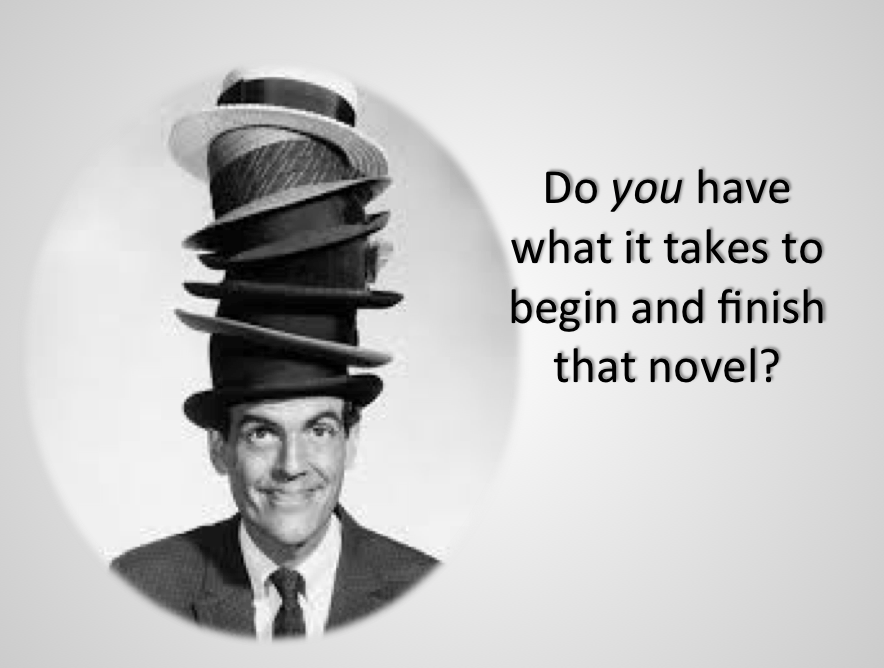
2. Wears many hats
Whether you need to be your own first draft cheerleader, social media expert, blogger, or website manager be prepared to learn many new skills.
Enjoy wearing your characters’ hats as well. Embrace the villain with as much gusto as you do your protagonist. Writers, like actors, get to ‘play’ many different people. How cool is that!?
3. Goes the extra mile
Yeah, you do need to look up that fact and double-check information.
You must also follow agents’ instructions exactly for query sending. Make certain they represent your genre.
Good enough is NOT good enough. From your manuscript to your query to your blogs make them as perfect as you can.
4. Decision-maker
Think about genre before beginning. Plan out the plot and characters. You can always change it up but it’s easier to write when you know where-when-why-how your plot is going.
5. Have passion or a sense of purpose
You’re more likely to finish the novel when you’re passionate about the story and characters. If YOU’RE not passionate what are the chances someone else will be??
That passion ought to extend to the rewriting and revising and editing process. Too often I read posts and tweets about writers lamenting the revision or editing process. Why? These are an important part of novel writing, one that can make or break your story. Tackle with gusto! Be delighted when you find typos or craft a well-turned phrase!
6. Organized
If you’re balancing a career or kiddos or both you must be organized if you want to stand a chance in hell of accomplishing any writing. See Making the Most of Your Writing Hours for helpful hints.
Find the best way to catalogue research, keep track of character descriptions and traits, arrange timelines, organize notes, and methodize the queries-sending process. It’s a necessary evil that will pay off time-saving dividends in the end.
7. Dependable
Create self-imposed deadlines. For example, the first draft will be done in three months. I will write 2000 words a day on the weekend. Whatever your short or long term goal, be sure to set an achievable deadline for yourself. Reward yourself when you meet the goal.
8. Possess effective communication skills
Writers have to use social media—it’s the new author normal—so be mindful of how you come across. Are your posts/tweets full of complaining or whining or self-promotion?
Think twice before hitting post or tweet. Are your comments rife with typos, poor grammar, and unintelligible syntax? Yeah, folks are judging you.
9. Conscientiousness
If you’re gonna do anything, do it right. Read blogs and how-to books, attend conferences, listen to webinars, take classes, join a writer’s group, do whatever you can to learn more about the art of novel writing. ‘Winging it’ doesn’t work and sets you up for disappointment and criticism. There’s sooooo much great free advice ( there’s lots in this website ) on the internet it’s silly not spending the time to research whatever aspect of the process you’re currently scratching your head over.
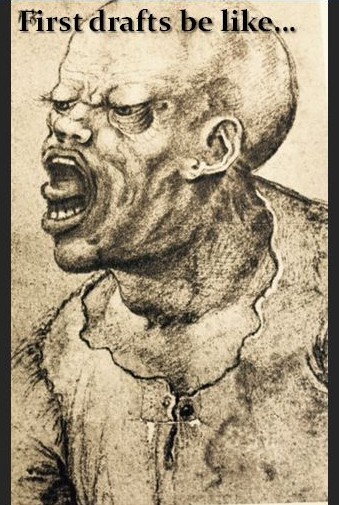
Writing means rewriting. Period. First drafts are crap.
10. Positive attitude
Discouragement, frustration, plot setbacks, character conundrums, and agent rejection are part of the process. If you want to increase your success rate, double your failure rate. We don’t like to hear that because we live in a world where we only hear about the ‘overnight’ success story. It doesn’t work that way for the other 99.9% of us.
If you love to write, then write. Keep sending out queries. Keep trying. You have nothing to lose and everything to gain!!
Fake the positive attitude if you must!! Remember, every no brings you closer to a yes!
Which trait do you need to work on?
Related Posts: Readin’ & Writin’
August 30, 2015
Making the Most of Your Writing Hours
 “How do you find the time to write a novel while working full time?”
I get asked this question ALL the time by coworkers, friends, and aspiring authors. Writing a novel is time-consuming. It takes a whole lot of perseverance and ambition and stamina and self-control.
I credit rearing four children. Learning the art of effective time-management was essential. I had no choice but to figure out how to maximize my time. ( Any mom or dad who has driven children from this practice to that practice knows skills are involved.) This same skill has served me well at work and when I decided to pursue a lifelong dream of writing novels.
Below are a few tips for making the most of your ‘free’ time.
Prioritizing the few hours of available writing time is critical. The WHEN.
Equally important is maximizing your creative brain power during that time. The WHAT. Once you’ve determined the WHEN and WHAT you’ll be able to optimize those few precious hours during the work week.
The WHEN: Those folks who rise with the sun might find they have more time to write after work. Writers with a later start might be able to squeeze in an hour or so before work.
So….before or after work?
The WHAT: Whether you work morning or evening, many of us deal with brain drain… you know, that I’m-so-tired-I-can’t-think brain. Some days are worse than others. It’s absolutely critical to know what you are capable of creatively ( or not ) so you can determine the best task for your creativity level. So whether you are brain dead or on creative fire you will make some kind of progress.
Here’ a 100% non scientific look at the creative mind.
Cold Brain: The least creative thinking time.
Use this time to tweet, scroll through Facebook, read blogs and email, or research and take notes.
Warm Brain: Dribs and drabs of creativity.
Use this time to jot down ideas for future blogs and/or work in progress. Some folks are able to line edit or fine-tune sentences.
Hot Brain: Creativity Maximus.
Use this time to plot, outline, and write first and second drafts. Dinner isn’t happening! Neither is laundry nor any other household task.
Do’s & Don’ts
Do learn your own brain’s rhythms. For example, it’s tough for me to think creatively immediately after I get home—Cold Brain–, but after dinner—Hot Brain—I might be able to crank out a 1000 words for a rough draft.
Do honor your own writing pace. For example, 1st drafts required my most creative brain, I get the most work done on a weekend. I feel mighty accomplished if I manage to write a whole page of a 1st or 2nd draft during the week.
Do stick to a schedule. Make writing a habit not an afterthought. I say it’s my second job and treat it as such.
Don’t beat yourself up trying to write 2000-words a day if you’re mentally exhausted. Just choose a cold brain task.
Don’t try to solve a plot problem when you’re brain dead.
Don’t waste valuable HOT Brain time on actions or interactions that steal your best creative time. Yup, dinner ain’t happening.
A word about weekends and days off: Work ’em for all their worth.
Related Posts: Readin’ & Writin’; Rock Your Writing
August 23, 2015
10 Artifacts Every Writer Can Really Use
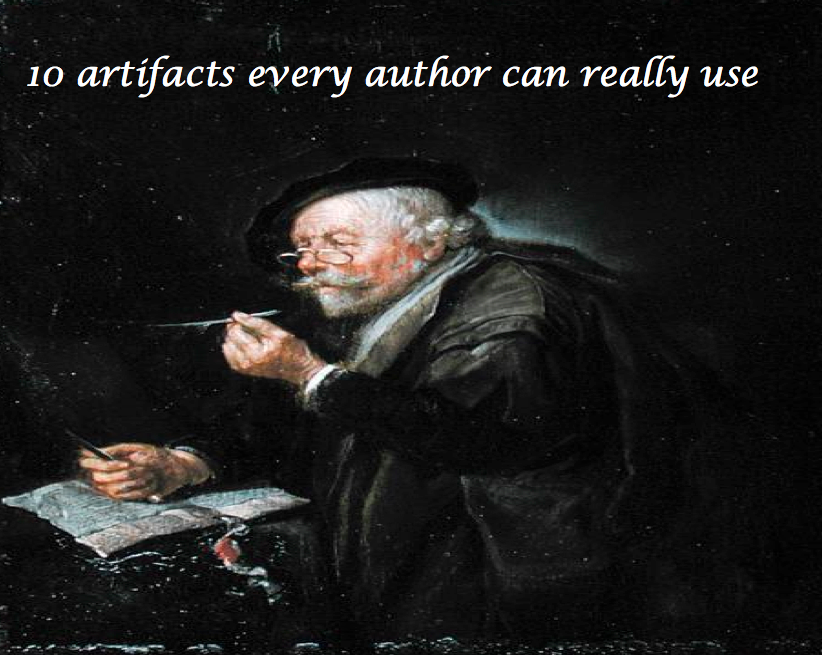 Writers are a curious bunch. We tend to be a tad superstitious when it comes to writing. A writing routine, a preferred chair, a favorite mug or coffee shop: All these—so we convince ourselves—provide the creative sanctuary to imagine plot, character, and conflict. Here are a few other notable objects that might also come in handy.
Ruby slippers from the Wizard of Oz movie: These magic slippers will send you back home—you know, the one located in front of your computer, the cursor blinking hello from the middle of your neglected WIP.
The ring from Lord of the Rings: Yeah, yeah, it makes everyone power-hungry, but sometimes writers need to add a bit of obsessiveness into their writing quest. A dash of ‘precious’ fanaticism helps finish that novel.
Everlasting gobstopper from Charlie and the Chocolate Factory: But only if it comes in coffee flavors and provides a constant caffeine fix.
Invisibility cloak from Harry Potter: Great for sidling unseen next to agents and publishing execs during a writers conference to hear the inside scoop about the biz. Also fabulous for hiding from family and friends when you don’t wish to be disturbed while writing.
Magic carpet from One Thousand and One Nights: Although Google’s satellite view is awesome for ‘seeing’ locations and topography it sure would be nice to fly through a locale for a closer look.
Babel fish from Hitchhiker’s Guide to the Galaxy: Perfect for translating the conflicting information heard at a writers conference, or a friend’s ‘helpful’ suggestions, or a rambling Facebook post.
Soma from Brave New World: Rewriting, editing, crafting summaries, querying agents, waiting-waiting-waiting, receiving rejections—sometimes a writer needs to pop some Happy Happy Happy to soothe anxieties and doubts.
Wilson the volleyball from the movie Castaway: Wilson understands. He’s always there and ready to listen. Writers need a person to vent, to explain, to question, to work through all those little problems and decisions cropping up during the coarse of our writing day. And Wilson keeps secrets!
The iconic silver bullet: No, you don’t really want to shoot anybody, but it sure would be a nice weapon for those vanity press werewolves, Facebook witches, and computer/component/program/coding monsters determined to thwart your dream.
The whale from Moby Dick: Of course, a whale is not an artifact but writers do need a nemesis. They’re great for conflict ideas, philosophical introspection, and angst—all requirements of a thought-provoking novel!
Which item do you wish you were in possession of?
Related Posts: Readin’ & Writin’
9 Artifacts Every Writer Can Really Use
 Writers are a curious bunch. We tend to be a tad superstitious when it comes to writing. A writing routine, a preferred chair, a favorite mug or coffee shop: All these—so we convince ourselves—provide the creative sanctuary to imagine plot, character, and conflict. Here are a few other notable objects that might also come in handy.
Ruby slippers from the Wizard of Oz movie: These magic slippers will send you back home—you know, the one located in front of your computer, the cursor blinking hello from the middle of your neglected WIP.
The ring from Lord of the Rings: Yeah, yeah, it makes everyone power-hungry, but sometimes writers need to add a bit of obsessiveness into their writing quest. A dash of ‘precious’ fanaticism helps finish that novel.
Everlasting gobstopper from Charlie and the Chocolate Factory: But only if it comes in coffee flavors and provides a constant caffeine fix.
Invisibility cloak from Harry Potter: Great for sidling unseen next to agents and publishing execs during a writers conference to hear the inside scoop about the biz. Also fabulous for hiding from family and friends when you don’t wish to be disturbed while writing.
Magic carpet from One Thousand and One Nights: Although Google’s satellite view is awesome for ‘seeing’ locations and topography it sure would be nice to fly through a locale for a closer look.
Babel fish from Hitchhiker’s Guide to the Galaxy: Perfect for translating the conflicting information heard at a writers conference, or a friend’s ‘helpful’ suggestions, or a rambling Facebook post.
Soma from Brave New World: Rewriting, editing, crafting summaries, querying agents, waiting-waiting-waiting, receiving rejections—sometimes a writer needs to pop some Happy Happy Happy to soothe anxieties and doubts.
Wilson the volleyball from the movie Castaway: Wilson understands. He’s always there and ready to listen. Writers need a person to vent, to explain, to question, to work through all those little problems and decisions cropping up during the coarse of our writing day. And Wilson keeps secrets!
The iconic silver bullet: No, you don’t really want to shoot anybody, but it sure would be a nice weapon for those vanity press werewolves, Facebook witches, and computer/component/program/coding monsters determined to thwart your dream.
The whale from Moby Dick: Of course, a whale is not an artifact but writers do need a nemesis. They’re great for conflict ideas, philosophical introspection, and angst—all requirements of a thought-provoking novel!
Which item do you wish you were in possession of?
Related Posts: Readin’ & Writin’
August 9, 2015
Writer’s Grimoire page 3
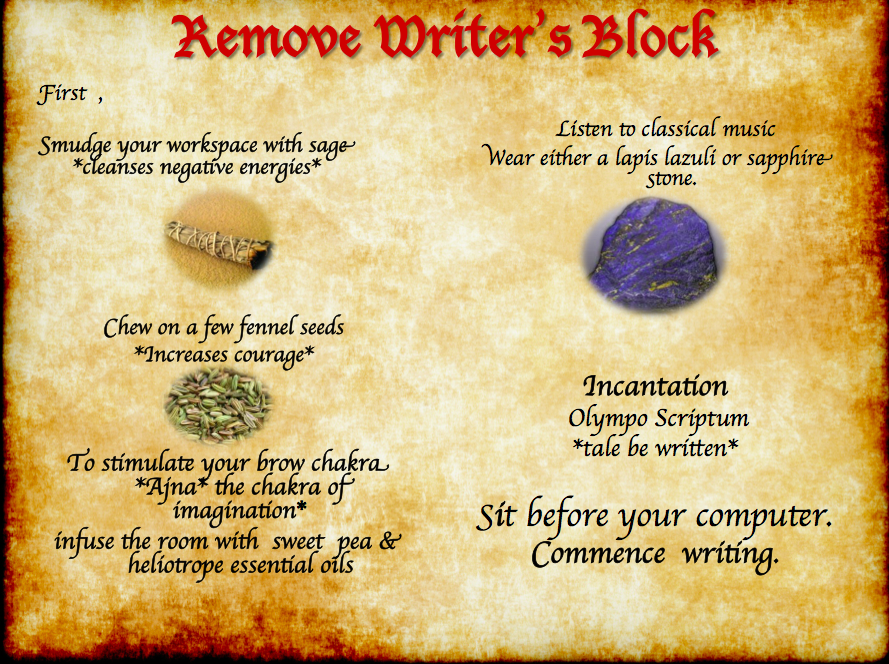
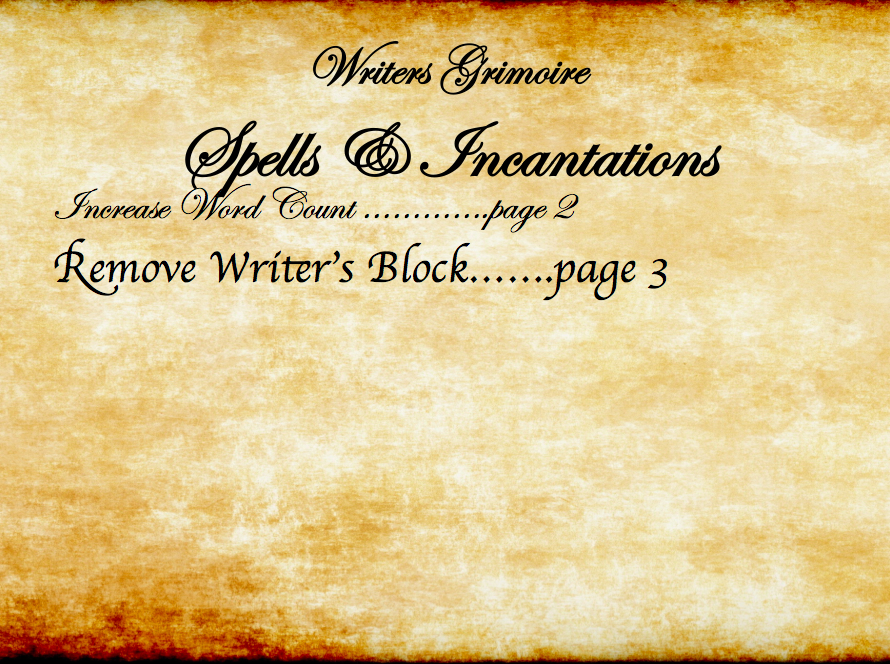 Spell for removing writer’s block!
Don’t ask where I found this ancient book! I can’t tell you ( the repercussions and all that ). But I will share the spells and incantations with you—hey, we writers need all the help we can get! And a little magic never hurt anyone either. In truth, any author or wanna-be struggling writer will tell you the act of creating is magic!
For the spell and incantation to increase word count click HERE!
Disclaimer: L.Z. Marie assumes no responsibility for the failure or success of removing your writer’s block, nor side effects caused by misusing spells and incantations.
Related Posts: Rock Your Writing: Symbols & More Symbols, Readin’ & Writin’
August 2, 2015
12 Signs Your WIP is Your Best Friend
*WIP stands for work in progress
You spend every spare moment together.
You take selfies together. #BestiesForever #BFran #BFF #BFFForever
Your WIP doesn’t care that you haven’t shampooed your hair for days.
You can reveal your weirdest, most frightening, craziest thoughts.
You can throw a tantrum in front of your WIP.
You drop everything to come to your WIPs rescue.
The thought of drifting apart makes you break into a cold sweat.
Your WIP loves when you do a makeover!
You cuddle on the sofa.
Your 1st-draft WIP embarrasses you but you’re OK with it.
You miss your WIP when you haven’t visited for a few days.
Your WIPs problems are always on your mind.
Related links: Rock Your Writing; Readin’ & Writiin’; Symbols & More Symbols
July 26, 2015
Color Smarts
 I love paint shopping. I have fun looking at the names assigned to the hundred and hundreds of colors available. So many Reds-Blacks-Blues-Greens-Oranges-Whites-Purples-Pinks-Browns-Yellows and ALL the colors in between. Sometimes I think the folks who assigned the names are wanna-be novelists. They do know the importance of naming a color.
Visual imagery is important. It can evoke emotion, mood, tone, convey character, foreshadow, or be ironic. So, assigning a color name might be important in your story. ( Or not, depending on your genre and authorial voice.)
Next time you watch a movie pay attention to the lipstick color worn by the women. A gal in a matte dark red is usually the “bad” one. Even the level of gloss reveals the character’s personality.
Color imagery is easily conveyed in written form.
Does your character wear a red dress? What kind of red dress? Red—beyond the western symbolism of lust, power, and anger—doesn’t really tell a reader all that much—which is OK if that’s your intent. BUT, if you want to add a bit of symbolic punch to your writing be mindful of the names used when describing color.
A rose-colored dress conveys ladylikeness or love.
A cherry dress is suggestive of sexual prowess or desire, or…ahem…a woman wishing to be deflowered.
An apple-red dress suggests something forbidden or idyllic.
A blood-red dress…well, when you mix two symbolic words you get a metaphoric punch in the symbolic face!
A woman with ruby lips is sultry and expensive.
A woman with candy-apple lips sounds like a damn good fun time.
You’ve all seen the meme dismissing color symbolism and yet consider this, fabric described as bone produces a much different emotion than one described as snow.
Consider the following when assigning a color name:
Genre: Sweet Romance novels might use more romancy color names. (caramel—sweet and gooey, like love—instead of light brown ). Historical fiction authors need to be mindful of using color names that didn’t exist in that century. A lipstick-red dress isn’t gonna work if they had no lipstick back then. You’re better off using a descriptor like ruby.
Foreshadowing: In Haruki Murakami’s Kafka on the Shore there’s a lot of blue. One of the main characters wears only blue.
Revealing character: Is your character a murderer? He/she might see their color world in shades of viscera. A gardner or florist they may see their world in shades of blooms and flora. A chef or a woman on a diet might describe the world with food colors.
Mood and/or tone: Is your novel dark? Light and happy? Full of irony? Religious? Sarcastic? Is your main character clueless, evil, dying, in-love, oppressed, or stoned? Using a color descriptor specific to tone, mood or character will convey that.
There are many ways to describe color.
Jewel tones convey preciousness, worth, or rarity.
Nature colors convey the idyllic.
There are city colors and farmland colors, youthful and aged colors, fun colors, mysterious colors, clean colors and dirty colors, evil colors and good color descriptors.
Does all color need to be symbolic? No, of course not! It’s your novel after all, you can have as much fun ( F. Scott Fitzgerald with The Great Gatsby certainly did ) or not with color as you like.
For more information regarding color symbolism ( and remember there’s a difference between western and eastern color symbolism ) check out the Color Symbolism post.
Have a colorful day!
Related Posts: Rock Your Writing, Symbols & More Symbols; Readin’ & Writin’