S.W. O'Connell's Blog, page 11
October 14, 2017
Things: Shallow Ford
A Humble Crossing
The Shallow Ford, located some 15 miles west of Winston-Salem, North Carolina, is,a shallow section of the Yadkin River which, in colonial times, afforded a safe place for travelers to cross. The ford is formed by a sand and gravel bar. Upstream from the ford, a stretch of hard rock crosses the river and below the stretch of rock the gradient decreases, reducing the strength of the current and depositing sediment creating the bar that forms the crossing. It provided a natural game crossing and fish trap, which was used by the Indians. By 1748, six families had settled near the ford. Within two years a ferry and tavern operated there. Soon Moravians settled nearby and cut the first road to the ford and over the years several others were cut, making it a transportation hub of sorts. By the time of the American Revolution, the Shallow Ford was a focal point for travelers. While the Yadkin River could be crossed at other fords and ferries, heavier wagons could cross at only two places: the Trading Ford, near Salisbury (Rowan county), and the Shallow Ford (Surry county). Several roads converged on both sides of the river.That humble crossing would be the instrument of a little heeded but important event in shaping the outcome of the war.
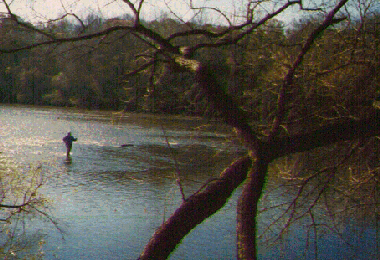 Shallow Ford
A Southern Strategy
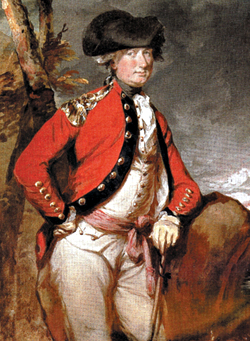 Gen Cornwallis
The year 1780 was to be the comeback year for the British in North America with their pivot to a "southern strategy." And a grand and effective strategy it first proved to be. By the fall of 1780, the British commander in the south, General Charles Cornwallis, moved north into North Carolina after subduing most of Georgia and South Carolina. The final phase of the grand strategy of subduing all of the south before moving north into Virginia. He had set up his headquarters in Charlotte where bands of Loyalists rallied to the crown.
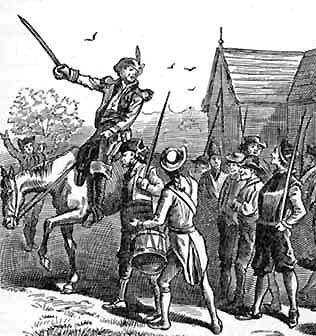 Loyalist Militia gathered with the arrival of Cornwallis
The absence of local patriot militia groups who had gone to King's Mountain left a vacuum for Loyalists to rise up and wreak havoc in their prospective counties. In Surry County, local Loyalist brothers Gideon and Hezekiah Wright rallied hundreds of Tories who began exacting revenge on the properties of absent patriots and killing those who opposed them. On October 3rd and 8th, they attacked patriots in Richmond, the county seat, where they killed the county sheriff.
 Western NC and Surrey Co in 1780
When news spread of the Loyalist uprising, patriots from nearby areas began to mobilize to stop them. The news of the surprise defeat of the renowned Major Patrick Ferguson at King's Mountain helped electrify the patriots, who had been subdued by Cornwallis's maneuver north. Now things were changing. Patriot militia General William Lee Davidson now believed that the local Tories intended to join Lord Cornwallis' forces in Charlotte. He sent fifty men from Charlotte, along with two companies of patriot militia from Salisbury. They were joined by 160 men from Montgomery County, Virginia, under Major Joseph Cloyd. (who had come to the Carolinas to fight the now dead Ferguson). All of the converging patriots came under the leadership of Cloyd.
A Place of Battle
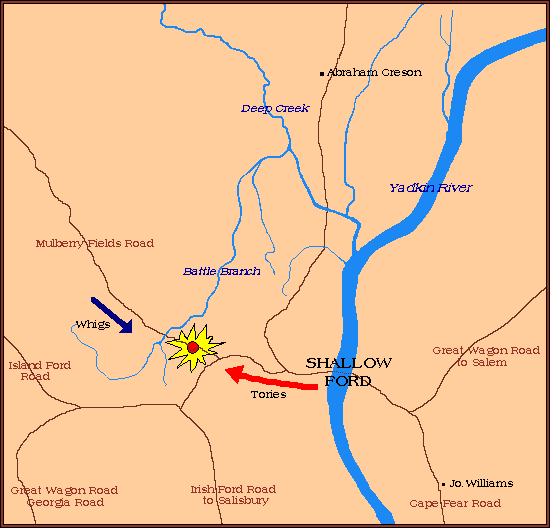 Competing militias would clash in a small but pivotal battle
along the Yadkin River at Shallow Ford
All this activity came to head on 14 October when a band of 600 Loyalists under Colonel Gideon Wright crossed the Yadkin River on their way to join General Cornwallis in Charlotte. On Saturday morning, 14 October, Cloyd's force of 350 men waited on the west side of a small stream near the Shallow Ford crossing of the Yadkin River. About 9:30 they spotted the Loyalist force that terrorized the county for the past weeks. The force numbering between 400 and 900 crossed the Yadkin and were moving westward on the Mulberry Fields Road. A cry of "Tory! Tory!" went out among the patriots. From across the creek they heard similar cries of "Rebel! Rebel!"
 NC patriot militia
The patriots deployed and battle lines soon formed. Volleys were exchanged. One Captain James Bryan, of the notorious Tory Bryan clan, who led the advance element of Loyalist forces, was quickly killed. Five rifle balls passed through him and his horse. The patriots advanced towards the ford as the Loyalists fell back and formed again. Captain Henry Francis of the Virginia militia was shot through the head and fell dead on the ground a few steps from his son, Henry. His other son, John, took careful aim and fired at the Loyalist who had killed his father. Though outnumbered, the patriots soon had the advantage and several more Loyalists fell. After another quick exchange of fire, the Loyalists retreated in disorder across the Yadkin, shouting "we are whipped, we are whipped." Enraged patriots beat the wounded Loyalists to death after their comrades had fled. A black Loyalist named Ball Turner continued to fire at the patriots. An angry party of patriots found his location and riddled him with musket balls. The Loyalists soon made good their escape. Captain Henry Francis of the Whigs lost his life, and four others were wounded. The Loyalists lost some fifteen killed. The engagement took less than an hour.
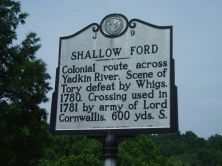 Shallow Ford Battle Marker
Aftermath
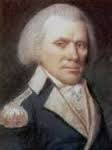
As the engagement ended, a relief party of three hundred militia under Colonel John Peasley arrived, along with Colonel Joseph Williams of Surrey county. Williams had heard the musket fire from his nearby home. The next day, Major General William Smallwood arrived at Salem with about 150 horsemen, thirty infantry, and three wagons. Smallwood, a Marylander, had been put in command of all North Carolina militia. As a colonel in 1776, Smallwood had commanded the famed Maryland Line on Long Island and is featured in my novel of that campaign, The Patriot Spy. Smallwood had left Guilford Courthouse the previous day. Seeing the local force had defeated the Loyalists, he launched his men in pursuit of those who had fled. As a result of Shallow Ford, the Wright brothers' Loyalist forces in Surry County were essentially nullified for the duration of the war. Hezekiah Wright himself was later shot and wounded in his own home. His brother Gideon fled to the safety of Charlestown, where he died on August 9, 1782.
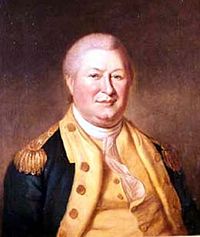 General William Smallwood
The results of the double defeats at King's Mountain and Shallow Ford were a major blow to Cornwallis: patriot morale increased dramatically along with their numbers, while demoralized North Carolina Loyalists were never able to gather such a force again. Cornwallis had to withdraw into South Carolina for the winter. His grand strategy was set back by a year, with even graver implications for any hope of a British victory.
Fittingly, the Shallow Ford played a minor role the following year when on 7 & 8 February Cornwallis's army crossed it in the legendary pursuit of General Nathanael Greene in the maneuvers that led to the Battle of Guilford Court House on 15 March, 1781.


September 16, 2017
Places: Blackstock
A Savage War of Posts
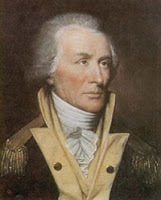 Gen Thomas SumterThe William Blackstock farm became the site of one of those "small" but violent clashes that made up the complex mosaic of the American Revolution in the South. The farm (several tobacco barns) sits just off the Tyger River, at the western edge of Union County, South Carolina. This backwater farm formed the backdrop to one of American General Thomas Sumter's most important battles. In November 1780, Georgia militia under Elijah Clark and John Twiggs reinforced Sumter, whose forces threatened Loyalist outposts north of the famed bastion at Ninety-Six. Sensing a threat to Ninety-Six could become untenable, the British commander in the south, Lord Cornwallis, ordered famed cavalry commander, Banastre Tarleton to break off contact with Francis (Swamp Fox) Marion's militia along the Pee Dee River. Tarleton rushed to his new assignment hoping to pin Sumter's force between him and the British at Ninety-Six. Fortunately, a British deserter gave warning to Sumter, who beat a hasty retreat out of the impending trap. Not to be outdone, the ever aggressive Tarleton pursued hell bent to get the rebel force before it could elude him. To do this, he led his cavalry, leaving infantry and guns to follow.
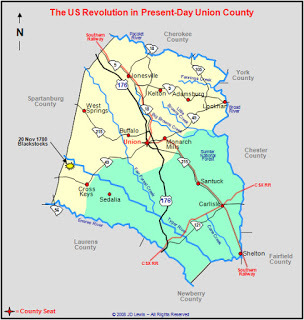
A Defense Well Prepared
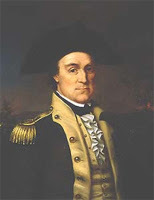 Elijah ClarkeSumter's force reached the Tyger River at dusk on the 20th of November. The canny Sumter realized he had "good ground" and decided to establish defensive positions and frustrate his pursuers with a stout defense of the farm. The famed "Gamecock" distributed his 1,000 men in defensive positions. They did not have long to wait before Tarleton's Legion - 190 dragoons and 80 mounted infantry of
the British 63rd Regiment were observed moving at them. Realizing the rest of Tarleton's force was far behind, Sumter decided to surprise the lead forces with an attack. Sumter left his center to defend the high ground using protection of the five log cabins and a rail fence. He sent Elijah Clark with his 80 Georgians around the advancing Tarleton's right flank to block the British troops coming up. Sumter led the main thrust with 400 militia against 80 regulars of the 63rd who had dismounted and taken up positions to the right of the British advance.
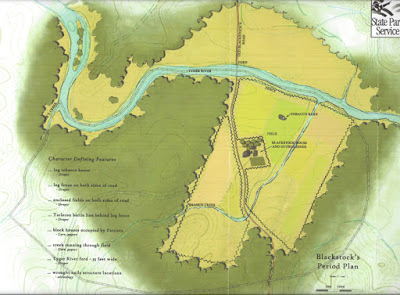 Sketch of the battlefield
A Back and Forth Struggle
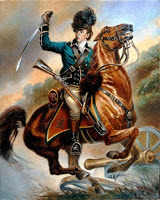 Banastre TarletonSumter's plans turned to dust when the British 63rd repulsed his militia who retreated back through the houses anchoring the center. Not to be undone, Sumter dispatched a force of mounted infantry under Colonel Lacey with orders to strike the British dragoons on the left. Lacey's men surprised the dragoons (who were admiring the work of the 63rd). Lacey's first volley inflicted 20 casualties on the troopers. But they quickly recovered and drove off Lacey's men. Itching to dispatch the rebels, the 80 men of the 63rd attacked the center. A bayonet charge led by Major John Money sought to drive back the rebels but the 63d advanced too close to the farm buildings and came under fire from Colonel Henry Hampton's men inside, as usual aiming "at the epaulets and stripes." Money and two of his lieutenants were killed, and according to an officer of Fraser's Highlanders, a third of the privates as well. Meanwhile, other partisans worked their way around their right flank and attacked Tarleton's dragoons who were in their saddles but only watching the action. Now that Hampton's South Carolina riflemen and some of the Georgia sharpshooters held the line and checked the British, Sumter's men began to rally around them. The British infantry were trapped under the muskets and rifles of an enraged patriot force. Seeing their distress, Tarleton led a desperate charge at the American center. The reckless uphill cavalry charge against riflemen firing from cover did not go well. One report recorded so many dragoons knocked from their horses that the road to the ford was blocked by the bodies of men and fallen chargers, the wounded, still targets, struggling back over their stricken comrades and kicking, screaming horses. Still, the British forces fell back in good order.
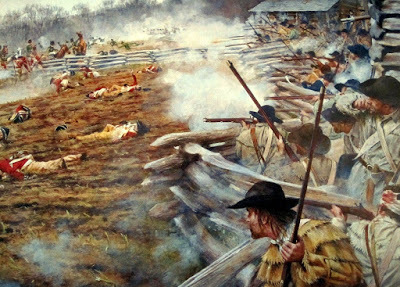 Tarleton's cavalry attack repulsed by intense American fire
Change of Command
 John TwiggsNot without his own bravado, Sumter rode to the center of his line as the British dragoons were repulsed. As they made their withdrawal, members of the 63d fired a volley at him and his officers. Sumter was severely wounded, taking rounds in the arm and the back, and had to relinquish command to John Twiggs. Realizing he would have no more success that day, Tarleton pulled back and awaited reinforcements hoping to launch another attack the next day. Fearing that troops from Ninety-Six would join with Tarleton to overwhelm them, the Americans retreated. To deceive the British scouts, Twiggs left camp fires burning and withdrew under the cover of night. Tarleton claimed the battlefield, and the battle, the following day. But can sense his frustration as he was forced to bury the dead of both sides. The butcher's bill was lopsided: British casualties: 92 killed and 75-100 wounded.American casualties: 3 killed, 4 wounded, and 50 captured.
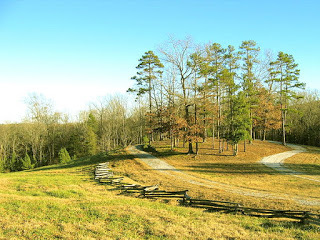 View of American defenses
After the Battle
The engagement at the Blackstock farm is little known, and for many years nearly forgotten. Tarleton boasted of his victory and the dispatching of the hated Sumter. Yet his regulars had failed to eject the rebel militia from the field and had suffered an unacceptable loss ratio. Moreover, Sumter would be back in action in a few months. Meanwhile, his wounding enabled General George Washington to appoint the New England fighting quaker Nathanael Greene as overall commander of the Southern Department.
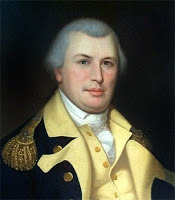 Nathanael Greene
The Battlefield Today
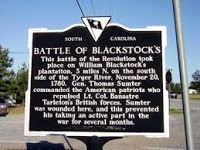 The Blackstock Plantation, once a series of tobacco barns, lies in in a hilly, wooded region. In the eighteenth century much of the land of the battlefield was cleared, but has since overgrown with
small pines and brush. No above-the-surface evidence remains of Blackstock’s barn or house, which were located in the area of the historical marker that designates the battle site, and there are no modern buildings in the area of the battlefield. The site has 54 acres preserved with walking trails just south of the Tyger River.
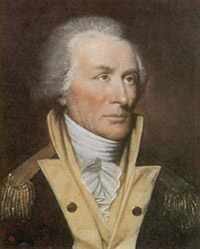 Gen Thomas SumterThe William Blackstock farm became the site of one of those "small" but violent clashes that made up the complex mosaic of the American Revolution in the South. The farm (several tobacco barns) sits just off the Tyger River, at the western edge of Union County, South Carolina. This backwater farm formed the backdrop to one of American General Thomas Sumter's most important battles. In November 1780, Georgia militia under Elijah Clark and John Twiggs reinforced Sumter, whose forces threatened Loyalist outposts north of the famed bastion at Ninety-Six. Sensing a threat to Ninety-Six could become untenable, the British commander in the south, Lord Cornwallis, ordered famed cavalry commander, Banastre Tarleton to break off contact with Francis (Swamp Fox) Marion's militia along the Pee Dee River. Tarleton rushed to his new assignment hoping to pin Sumter's force between him and the British at Ninety-Six. Fortunately, a British deserter gave warning to Sumter, who beat a hasty retreat out of the impending trap. Not to be outdone, the ever aggressive Tarleton pursued hell bent to get the rebel force before it could elude him. To do this, he led his cavalry, leaving infantry and guns to follow.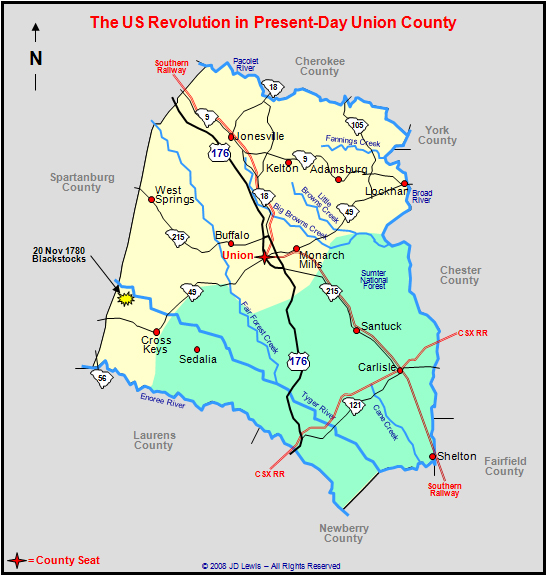
A Defense Well Prepared
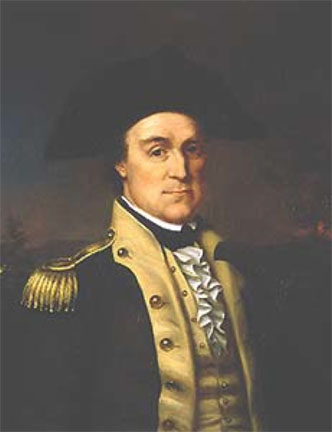 Elijah ClarkeSumter's force reached the Tyger River at dusk on the 20th of November. The canny Sumter realized he had "good ground" and decided to establish defensive positions and frustrate his pursuers with a stout defense of the farm. The famed "Gamecock" distributed his 1,000 men in defensive positions. They did not have long to wait before Tarleton's Legion - 190 dragoons and 80 mounted infantry of
 the British 63rd Regiment were observed moving at them. Realizing the rest of Tarleton's force was far behind, Sumter decided to surprise the lead forces with an attack. Sumter left his center to defend the high ground using protection of the five log cabins and a rail fence. He sent Elijah Clark with his 80 Georgians around the advancing Tarleton's right flank to block the British troops coming up. Sumter led the main thrust with 400 militia against 80 regulars of the 63rd who had dismounted and taken up positions to the right of the British advance.
 Sketch of the battlefield
A Back and Forth Struggle
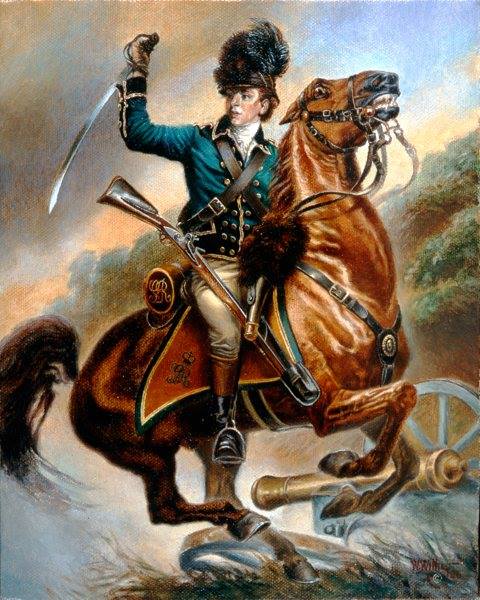 Banastre TarletonSumter's plans turned to dust when the British 63rd repulsed his militia who retreated back through the houses anchoring the center. Not to be undone, Sumter dispatched a force of mounted infantry under Colonel Lacey with orders to strike the British dragoons on the left. Lacey's men surprised the dragoons (who were admiring the work of the 63rd). Lacey's first volley inflicted 20 casualties on the troopers. But they quickly recovered and drove off Lacey's men. Itching to dispatch the rebels, the 80 men of the 63rd attacked the center. A bayonet charge led by Major John Money sought to drive back the rebels but the 63d advanced too close to the farm buildings and came under fire from Colonel Henry Hampton's men inside, as usual aiming "at the epaulets and stripes." Money and two of his lieutenants were killed, and according to an officer of Fraser's Highlanders, a third of the privates as well. Meanwhile, other partisans worked their way around their right flank and attacked Tarleton's dragoons who were in their saddles but only watching the action. Now that Hampton's South Carolina riflemen and some of the Georgia sharpshooters held the line and checked the British, Sumter's men began to rally around them. The British infantry were trapped under the muskets and rifles of an enraged patriot force. Seeing their distress, Tarleton led a desperate charge at the American center. The reckless uphill cavalry charge against riflemen firing from cover did not go well. One report recorded so many dragoons knocked from their horses that the road to the ford was blocked by the bodies of men and fallen chargers, the wounded, still targets, struggling back over their stricken comrades and kicking, screaming horses. Still, the British forces fell back in good order.
 Tarleton's cavalry attack repulsed by intense American fire
Change of Command
 John TwiggsNot without his own bravado, Sumter rode to the center of his line as the British dragoons were repulsed. As they made their withdrawal, members of the 63d fired a volley at him and his officers. Sumter was severely wounded, taking rounds in the arm and the back, and had to relinquish command to John Twiggs. Realizing he would have no more success that day, Tarleton pulled back and awaited reinforcements hoping to launch another attack the next day. Fearing that troops from Ninety-Six would join with Tarleton to overwhelm them, the Americans retreated. To deceive the British scouts, Twiggs left camp fires burning and withdrew under the cover of night. Tarleton claimed the battlefield, and the battle, the following day. But can sense his frustration as he was forced to bury the dead of both sides. The butcher's bill was lopsided: British casualties: 92 killed and 75-100 wounded.American casualties: 3 killed, 4 wounded, and 50 captured.
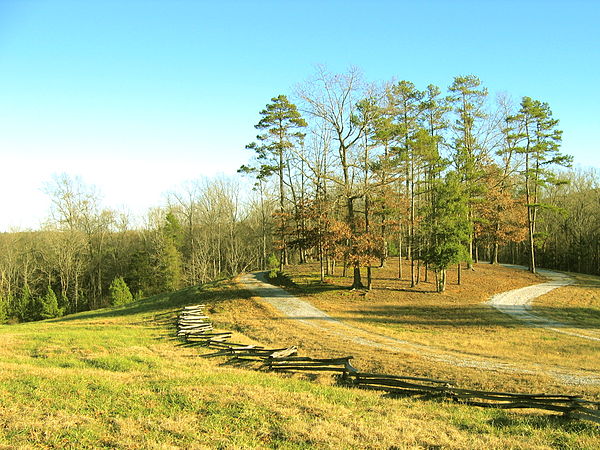 View of American defenses
After the Battle
The engagement at the Blackstock farm is little known, and for many years nearly forgotten. Tarleton boasted of his victory and the dispatching of the hated Sumter. Yet his regulars had failed to eject the rebel militia from the field and had suffered an unacceptable loss ratio. Moreover, Sumter would be back in action in a few months. Meanwhile, his wounding enabled General George Washington to appoint the New England fighting quaker Nathanael Greene as overall commander of the Southern Department.
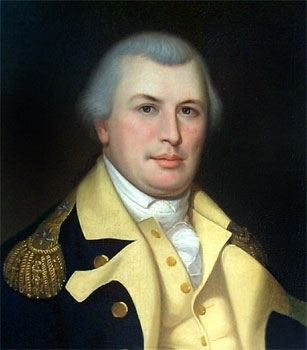 Nathanael Greene
The Battlefield Today
 The Blackstock Plantation, once a series of tobacco barns, lies in in a hilly, wooded region. In the eighteenth century much of the land of the battlefield was cleared, but has since overgrown with
 small pines and brush. No above-the-surface evidence remains of Blackstock’s barn or house, which were located in the area of the historical marker that designates the battle site, and there are no modern buildings in the area of the battlefield. The site has 54 acres preserved with walking trails just south of the Tyger River.
August 13, 2017
People: The Patriot Playwright
An American First
On 16 April 1787 "the first American play" opened at the John Street Theater in New York City. Entitled, The Contrast, it was written by 29-year-old Royall Tyler. It is considered the first American play ever performed in public by a company of professional actors. An American play in the sense it was written by an American, with an American theme, for American audiences.
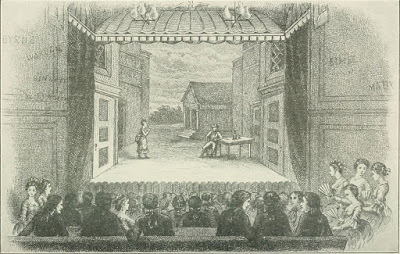 John Street Theater - Birthplace of American Theater would close in 1798
A Playwright Patriot
Royall Tyler was born in Boston on 18 July, 1758. He had a great pedigree, coming from one of the wealthiest and most prominent families in Massachusetts. Tyler received his early education at
the Latin School, in Boston. He then went on to Harvard where he read the law. Along the way he joined the Continental Army where he received a commission and eventually rose to the rank of major. Tyler was admitted to the bar in 1780, and joined the law office of John Adams. Tyler fell in love with the future president's daughter; but the engagement was broken off, reportedly because Adams disapproved of Tyler's "high-spirited temperament." With John's attitude that might have ruled out a whole generation of potential beaus.
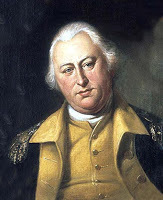 General Benjamin Lincoln
Back to the Bar. back to the Army and on to the Theater
The end of the war and the birth of the republic in 1783 did not go long before America had its first crisis. In 1786, Shay's Rebellion broke out in New England. Many veterans felt (rightfully) that the new republic did not pay enough attention to their economic woes and that years of service were held in little regard. A former Massachusetts soldier and down and out farmer, Daniel Shays led a band of disgruntled veterans seeking redress of their grievances. The reaction came quickly as a panicked government put together forces to quell the rebels. In 1787 Tyler once more answered his nation's call. He left the practice of law to take an appointment as the aide de camp to General Benjamin Lincoln, charged with suppressing Daniel Shays and his rebellious ex-soldiers. After Shays left Massachusetts (the heart of the rebellion) for New York, Tyler was sent to New York City to negotiate his capture and return to Massachusetts. And while there, as millions have done over the years,Tyler did something that he had never done - he went to see a play!
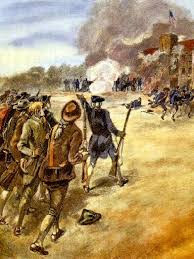 Shays Rebellion would set events leading to
the birth of the American stage
That's Entertainment
Theater was slow to take off in America as a popular form of entertainment. There are known performances of Shakespeare in Williamsburg in the early 1700s, and in general the Southern colonies — which were more open to all British customs — were happier to embrace the theater. In the North, it was looked on as a sinful form of entertainment. Massachusetts actually passed a law in 1750 that outlawed theater performances, and by 1760 there were similar laws in Pennsylvania, Rhode Island, and New Hampshire, although performances occasionally snuck through the laws with the special permission of authorities.
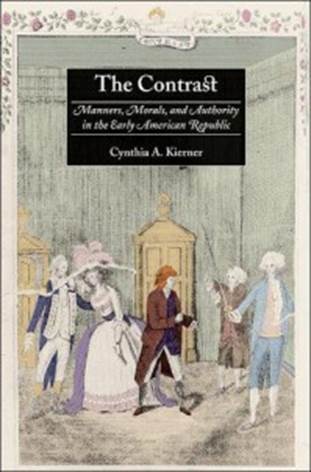 Reprint with comment by modern historian Cynthia Kierner
illustrates the enduring value of The Contrast as a vehicle
for understanding mores of post Revolutionary America.
A Playwright is Born
In any case, Royall Tyler had never been to the theater before. So on March 12, 1787, he went to see a production of Richard Sheridan's School for Scandal (1777). He was so inspired that in just three weeks he wrote his own play, The Contrast. Barely a month later, The Contrast became the first play by an American writer to be professionally produced. The Contrast was a comedy of manners, poking fun at Americans with European pretensions, and the main character, Jonathan, was the first "Yankee" stock character, a backwoods man who spoke in a distinctive American voice and mannerisms. Mixing such a character with sophisticates is a technique writers use to this day - the traditional "fish out of water." Tyler did not pioneer this. But he did master it. And the results were compelling to late 18th century audiences. The Contrast was a success. It was performed four times that month in New York, which was very unusual. Then it moved on to Baltimore and Philadelphia, where George Washington went to see it. The first citizen's approbation added to the buzz both for the play and the stage in general.
Man of Letters
Tyler went on to be one of the most accomplished men of letters in early America. While he continued to practice law, he wrote six other plays. Only four exist today, three are biblical plays and the fourth another social satire, The Island of Barrataria. Also also produced a number of verse and prose works, including a colorful adventure novel, The Algerine Captive (1797). The plot is the memoir of a young man who has a series of misadventures eventually leading to enslavement by barbary pirates. In addition to being a bit of Americana it ends with a serious call for Americans to unite. The book had more than one printing and is only the second American work to be printed in Britain.
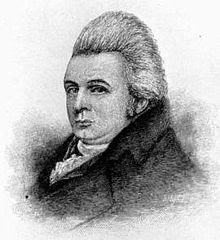 Royall Tyler: jurist and author in late life
Author & Attorney
Tyler's literary works were published anonymously. After all, the arts were still considered something beneath the mainstream and he was a serious jurist with a reputation to maintain. His works brought little income. He clearly produced them out of a labor of love. Many modern authors, including this one, can relate to the situation! As a member of the legal profession, he sought to correct those ills and follies which he satirized in his writing. He died in Brattleboro, Vt.
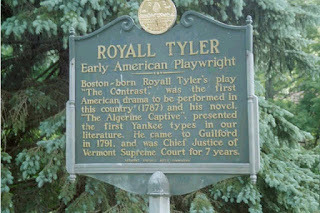
The Seed of Modern Theater Long Forgotten
The success of The Contrast brought contemporary drama and theatrical productions into high favor among all classes. Over a short period of time they went from mild disdain to high regard and sometimes wild popularity. In that sense the "arts" owe him a great deal. Certainly modern stage does. Yet I am sure few in the business know of Royall Tyler the patriot and playwright who birthed their art form. Methinks a new rebellion need take place. A Royall rebellion in fact. Perhaps the "Tony" should be renamed the "Tyler?"
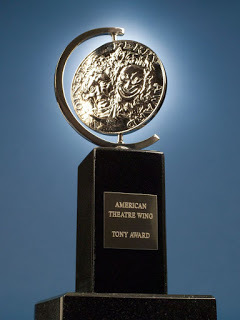 So should Tony become Tyler?
On 16 April 1787 "the first American play" opened at the John Street Theater in New York City. Entitled, The Contrast, it was written by 29-year-old Royall Tyler. It is considered the first American play ever performed in public by a company of professional actors. An American play in the sense it was written by an American, with an American theme, for American audiences.
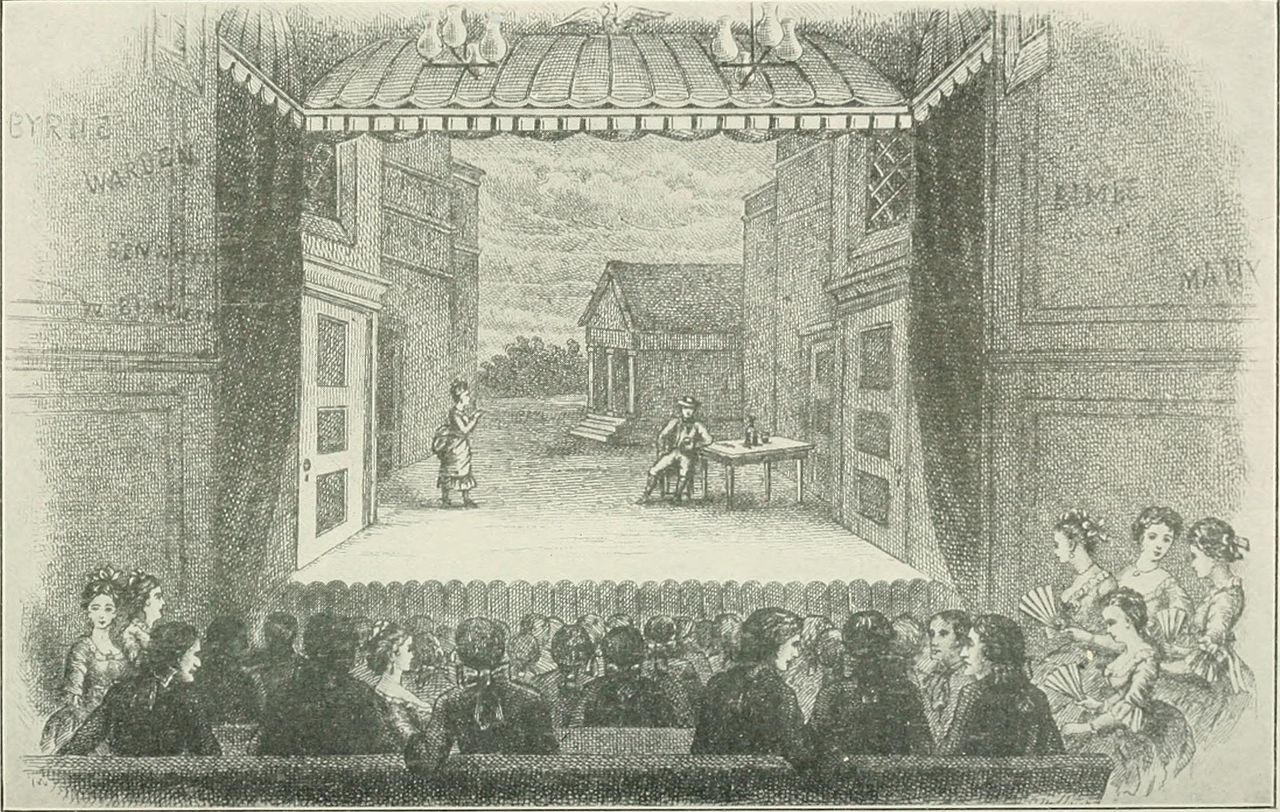 John Street Theater - Birthplace of American Theater would close in 1798
A Playwright Patriot
Royall Tyler was born in Boston on 18 July, 1758. He had a great pedigree, coming from one of the wealthiest and most prominent families in Massachusetts. Tyler received his early education at
the Latin School, in Boston. He then went on to Harvard where he read the law. Along the way he joined the Continental Army where he received a commission and eventually rose to the rank of major. Tyler was admitted to the bar in 1780, and joined the law office of John Adams. Tyler fell in love with the future president's daughter; but the engagement was broken off, reportedly because Adams disapproved of Tyler's "high-spirited temperament." With John's attitude that might have ruled out a whole generation of potential beaus.
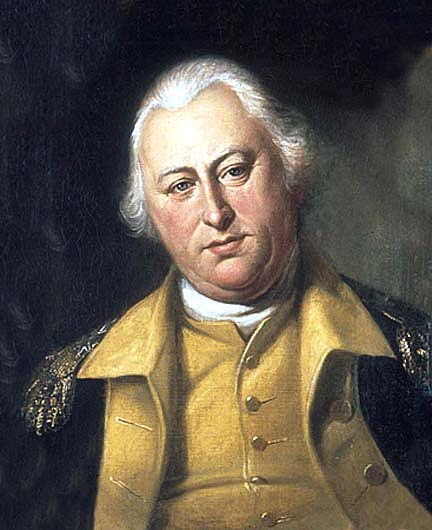 General Benjamin Lincoln
Back to the Bar. back to the Army and on to the Theater
The end of the war and the birth of the republic in 1783 did not go long before America had its first crisis. In 1786, Shay's Rebellion broke out in New England. Many veterans felt (rightfully) that the new republic did not pay enough attention to their economic woes and that years of service were held in little regard. A former Massachusetts soldier and down and out farmer, Daniel Shays led a band of disgruntled veterans seeking redress of their grievances. The reaction came quickly as a panicked government put together forces to quell the rebels. In 1787 Tyler once more answered his nation's call. He left the practice of law to take an appointment as the aide de camp to General Benjamin Lincoln, charged with suppressing Daniel Shays and his rebellious ex-soldiers. After Shays left Massachusetts (the heart of the rebellion) for New York, Tyler was sent to New York City to negotiate his capture and return to Massachusetts. And while there, as millions have done over the years,Tyler did something that he had never done - he went to see a play!
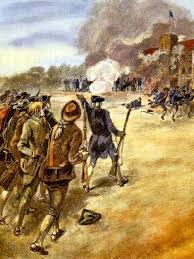 Shays Rebellion would set events leading to
the birth of the American stage
That's Entertainment
Theater was slow to take off in America as a popular form of entertainment. There are known performances of Shakespeare in Williamsburg in the early 1700s, and in general the Southern colonies — which were more open to all British customs — were happier to embrace the theater. In the North, it was looked on as a sinful form of entertainment. Massachusetts actually passed a law in 1750 that outlawed theater performances, and by 1760 there were similar laws in Pennsylvania, Rhode Island, and New Hampshire, although performances occasionally snuck through the laws with the special permission of authorities.
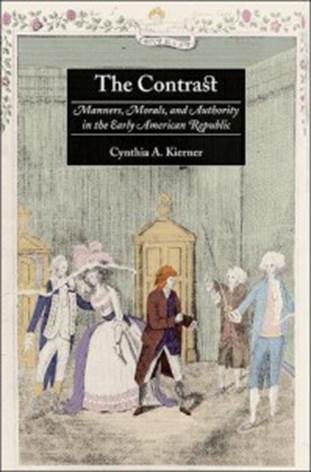 Reprint with comment by modern historian Cynthia Kierner
illustrates the enduring value of The Contrast as a vehicle
for understanding mores of post Revolutionary America.
A Playwright is Born
In any case, Royall Tyler had never been to the theater before. So on March 12, 1787, he went to see a production of Richard Sheridan's School for Scandal (1777). He was so inspired that in just three weeks he wrote his own play, The Contrast. Barely a month later, The Contrast became the first play by an American writer to be professionally produced. The Contrast was a comedy of manners, poking fun at Americans with European pretensions, and the main character, Jonathan, was the first "Yankee" stock character, a backwoods man who spoke in a distinctive American voice and mannerisms. Mixing such a character with sophisticates is a technique writers use to this day - the traditional "fish out of water." Tyler did not pioneer this. But he did master it. And the results were compelling to late 18th century audiences. The Contrast was a success. It was performed four times that month in New York, which was very unusual. Then it moved on to Baltimore and Philadelphia, where George Washington went to see it. The first citizen's approbation added to the buzz both for the play and the stage in general.
Man of Letters
Tyler went on to be one of the most accomplished men of letters in early America. While he continued to practice law, he wrote six other plays. Only four exist today, three are biblical plays and the fourth another social satire, The Island of Barrataria. Also also produced a number of verse and prose works, including a colorful adventure novel, The Algerine Captive (1797). The plot is the memoir of a young man who has a series of misadventures eventually leading to enslavement by barbary pirates. In addition to being a bit of Americana it ends with a serious call for Americans to unite. The book had more than one printing and is only the second American work to be printed in Britain.
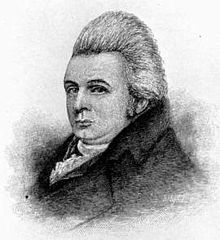 Royall Tyler: jurist and author in late life
Author & Attorney
Tyler's literary works were published anonymously. After all, the arts were still considered something beneath the mainstream and he was a serious jurist with a reputation to maintain. His works brought little income. He clearly produced them out of a labor of love. Many modern authors, including this one, can relate to the situation! As a member of the legal profession, he sought to correct those ills and follies which he satirized in his writing. He died in Brattleboro, Vt.
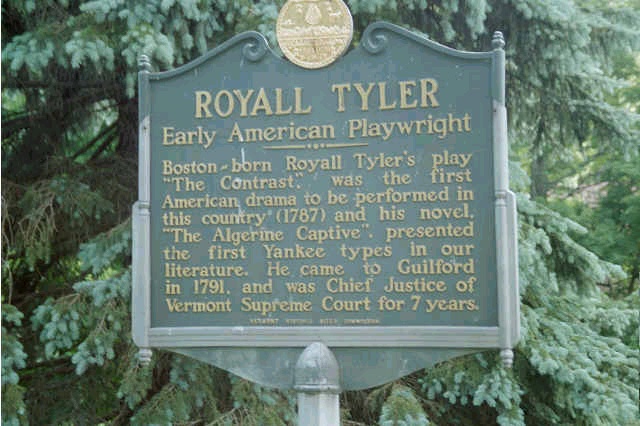
The Seed of Modern Theater Long Forgotten
The success of The Contrast brought contemporary drama and theatrical productions into high favor among all classes. Over a short period of time they went from mild disdain to high regard and sometimes wild popularity. In that sense the "arts" owe him a great deal. Certainly modern stage does. Yet I am sure few in the business know of Royall Tyler the patriot and playwright who birthed their art form. Methinks a new rebellion need take place. A Royall rebellion in fact. Perhaps the "Tony" should be renamed the "Tyler?"
 So should Tony become Tyler?
July 9, 2017
Things: The Road of Destruction
A Prequel
This is a rare Yankee Doodle Spies "prequel" post. In many ways the seeds of the American struggle for independence were watered with the blood of the French and Indian War. And in a bold coincidence George Washington's activities in the western (Virginia- Pennsylvania-Ohio) frontier played a role in its beginning. A young Washington had explored the frontier for the then Governor of Virginia, Robert Dinwiddie. During one mission, an altercation with a party of French and Indians spurred both nations (and much of Europe) into a long and costly war. As one of the few English who had traversed the wilderness,Washington was appointed a special aide to the commander in chief of British forces in North America, Edward Braddock. Washington did not have a Royal commission, however, and was considered a colonial officer. This was no small factor in Washington's later drift from being English to being American.
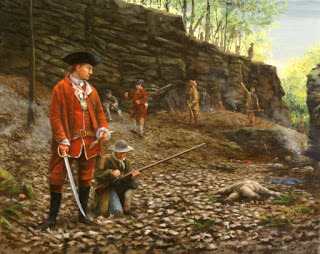 Washington became a special assistant
due to his experience in the west
The Campaign
 Gen BraddockBecause the war began over a dispute about the western limits of British North America, Britain's first objective was to secure the French forts near the Ohio River. In the summer of 1755, the newly appointed commander-in-chief of the British Army in America, General Edward Braddock, decided to personally lead the main thrust against the Ohio Country with a column some 2,100 strong. He had two regular line regiments, the 44th and 48th (about 1,350 men), plus some 500 colonial troops and militiamen. To take the forts he brought some artillery and other support troops (engineers, artificers, etc.). Braddock, a confident if not arrogant Scotsman, was confident he could seize Fort Duquesne (today's Pittsburgh) with little difficulty. He would then move north to capture the other French forts, eventually reaching Fort Niagara. Two other campaigns would push directly north into French Quebec but this was to be the main effort.
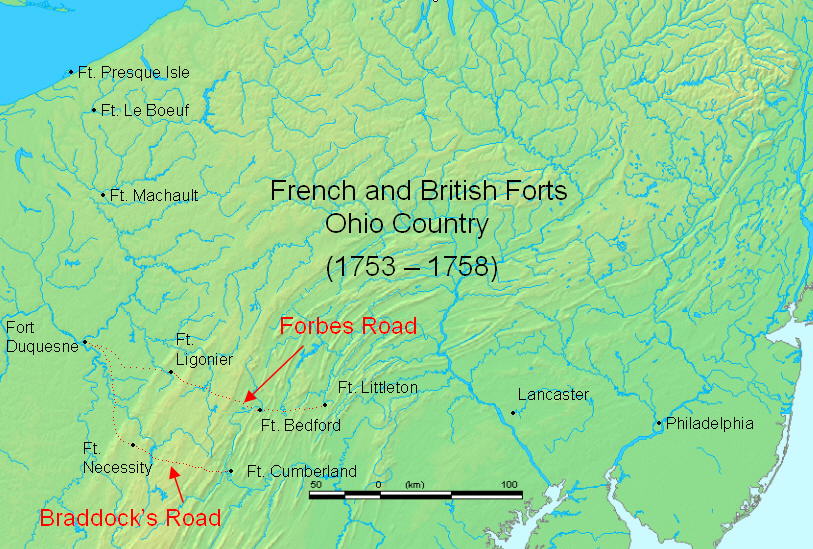
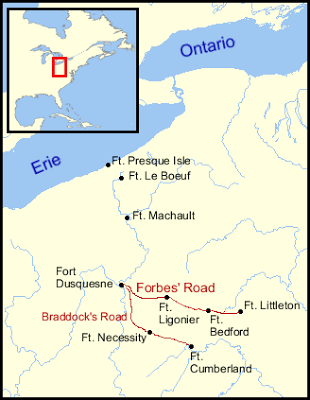 The Western Theater of Operations
The Road to Victory
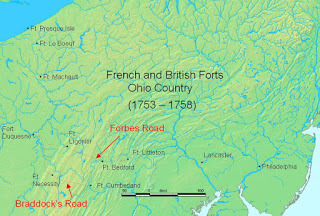
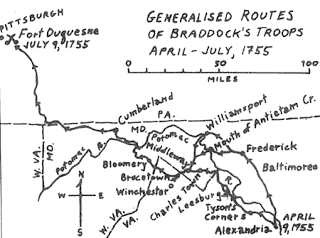 Sketch of Braddock's RouteThere is some controversy as to which direction the British should take. There were two main routes to the west. One to the south traversed Virginia (West Virginia today) while the other went through western Pennsylvania. Washington was connected to the commercial interests that supported using the southern route. The rationale for both parties being that British military improvements to the road chosen would ensure that route became the main British artery to the west. In either case, Braddock chose the southern route, which ran through much more rugged and densely wooded terrain. The march to Fort Duquesne relied on the building of a road that Braddock and his men constructed by using an old Indian path called Nemacolin’s Path, which gave them a route through the Allegheny Mountains. Braddock's troops marched from Alexandria to Winchester to Cumberland (MD), where the road through the wilderness began. It took them a little over a month to build this road, which was 12 feet wide and 110 miles long and 50 years later, financed by Congress as the first National Road. But it never took them to Fort Dusquesne.
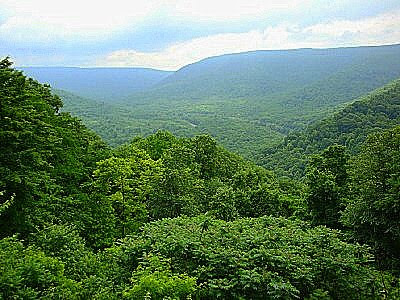 The thickly forested Allegheny Mountains would
prove a formidable obstacle fro Braddock's column
The Road to Destruction
On 9 July 1755, Braddock's force crossed the Monongahela River west of a place called Turtle Creek. Braddock's advance guard of 300 grenadiers and colonials with two cannon under Lieutenant Colonel Thomas Gage (later of Boston infamy) began to move ahead. Washington tried to warn him of the flaws in his plan but Gage ignored him. Confident there were no enemy about, they moved out in column along a narrow path under heavy wooded canopy. Then unexpectedly, Gage's advance guard came upon the French and Indians, who were hurrying to stop the British at the river. But behind schedule and too late to set an ambush, they ran head on into Gage's men. The enemy forces were led by a French Captain named Beaujeu, who fell mortally wounded at the opening of the engagement. The surprise of two forces colliding into each other initially surprised both sides. But the French and Indians rallied quickly and began to pour a murderous fire into the British column. After an exchange of fire, Gage's men fell back. In the narrow confines of the road, they collided with the main body of Braddock's force, which had advanced rapidly when the shots were heard. The entire column dissolved in disorder as the Canadian militiamen and Indians enveloped them and continued to snipe at the British flanks from the woods on the sides of the road. Musket balls buzzed through the woods, striking tree limbs with a crack and leaves with a zing. But it was the silent rounds that struck man after man. War cries and death from behind the dense undergrowth took also its toll on the British, as did the heat.Then the French regulars began advancing along the road and began to push the British back. The British organized defense collapsed.
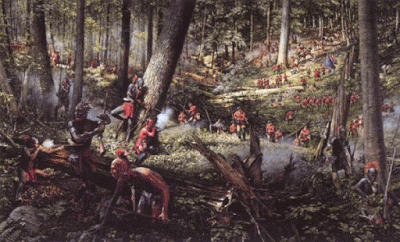 Indians ambush the British column
Despite deadly bullets from seemingly all directions, the British officers tried to rally the men. The British also tried to employ some of their cannon. But again the narrow confines prevented effective use. The colonial militias and troops rallied and engaged the Indians with aimed fire. But some of them received "friendly fire" from panicked British regulars, still attempting to maintain their formations. The fighting lasted several hours. Washington was all over the place, trying to take charge where he could. He rallied small parties and, when Braddock was shot from his horse, he established a rear guard and ensured the wounded commander reached safety. Many other officers died trying to rally and lead their men. The Indians did a good job at picking off the officers, who suffered an extremely high proportion of casualties. Washington himself had two horses shot out from under him and bullets pierced his clothes, but he came out with not one scratch on him. By sunset, the surviving British and colonial forces were fleeing back down the road they had built.
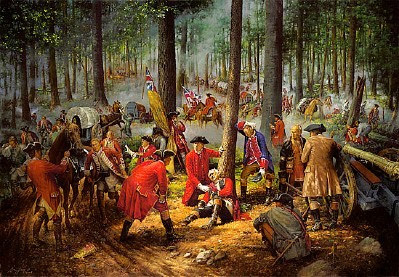 Gen Braddock falls wounded
The Aftermath
The French won this battle (usually called the Battle of the Monongahela) and suffered 40 casualties - less than 10 percent. The British suffered almost 900 - more than 60 percent. Braddock himself succumbed to his wounds on 13 July. The next day, Washington buried him under the road near the head of the column. The site for his burial was chosen to prevent the French and Indians from desecrating his grave. The outnumbered French did not follow up with a pursuit of the British and the Indians began looting and scalping. These two factors saved the column form further destruction. Hope of a quick British offensive towards the Ohio were decisively crushed on the road of destruction. They would not be revived until three years later, ironically, by use of the northern approach and what became Forbes Road.
This is a rare Yankee Doodle Spies "prequel" post. In many ways the seeds of the American struggle for independence were watered with the blood of the French and Indian War. And in a bold coincidence George Washington's activities in the western (Virginia- Pennsylvania-Ohio) frontier played a role in its beginning. A young Washington had explored the frontier for the then Governor of Virginia, Robert Dinwiddie. During one mission, an altercation with a party of French and Indians spurred both nations (and much of Europe) into a long and costly war. As one of the few English who had traversed the wilderness,Washington was appointed a special aide to the commander in chief of British forces in North America, Edward Braddock. Washington did not have a Royal commission, however, and was considered a colonial officer. This was no small factor in Washington's later drift from being English to being American.
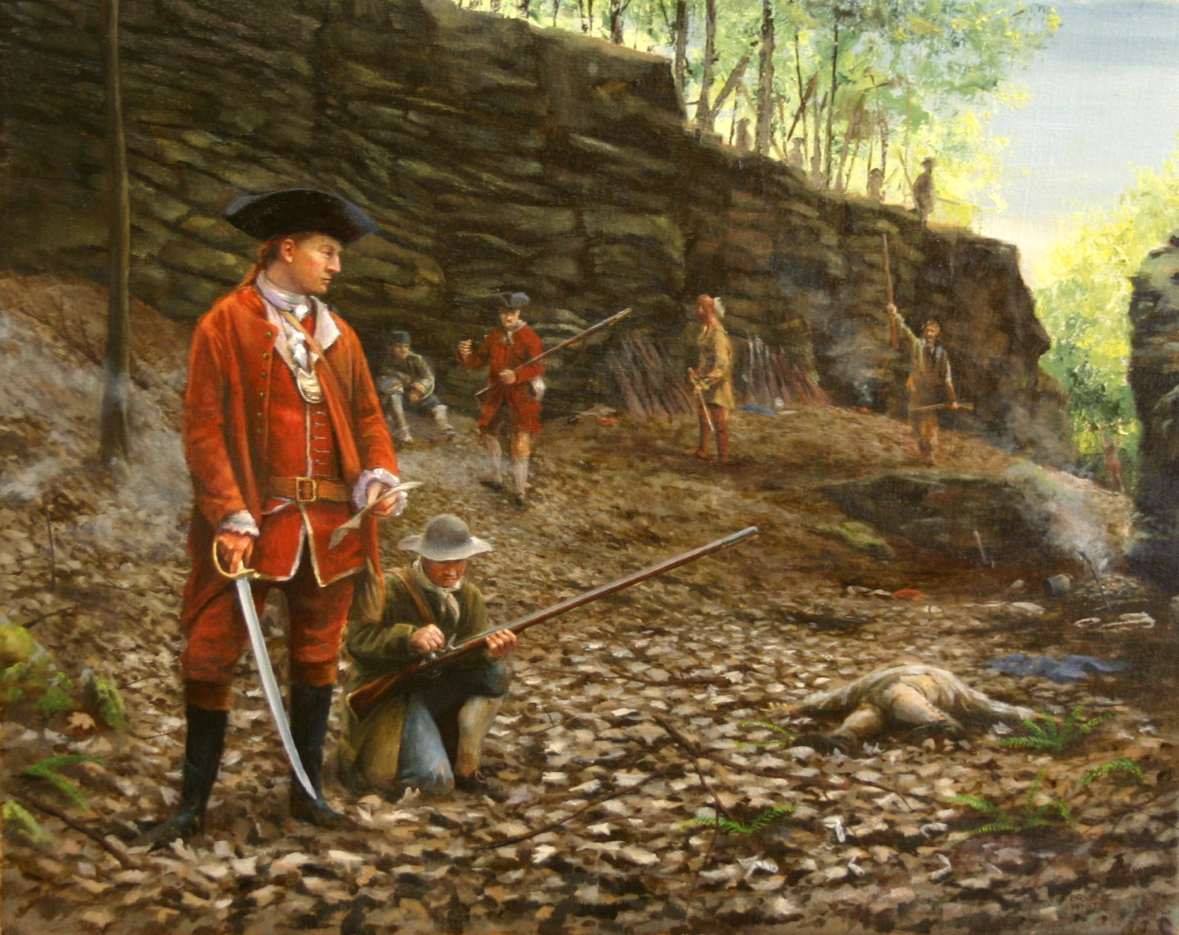 Washington became a special assistant
due to his experience in the west
The Campaign
 Gen BraddockBecause the war began over a dispute about the western limits of British North America, Britain's first objective was to secure the French forts near the Ohio River. In the summer of 1755, the newly appointed commander-in-chief of the British Army in America, General Edward Braddock, decided to personally lead the main thrust against the Ohio Country with a column some 2,100 strong. He had two regular line regiments, the 44th and 48th (about 1,350 men), plus some 500 colonial troops and militiamen. To take the forts he brought some artillery and other support troops (engineers, artificers, etc.). Braddock, a confident if not arrogant Scotsman, was confident he could seize Fort Duquesne (today's Pittsburgh) with little difficulty. He would then move north to capture the other French forts, eventually reaching Fort Niagara. Two other campaigns would push directly north into French Quebec but this was to be the main effort.
 The Western Theater of Operations
The Road to Victory
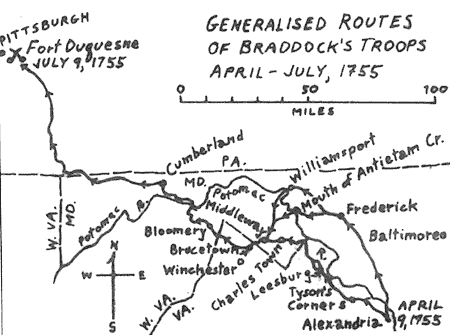 Sketch of Braddock's RouteThere is some controversy as to which direction the British should take. There were two main routes to the west. One to the south traversed Virginia (West Virginia today) while the other went through western Pennsylvania. Washington was connected to the commercial interests that supported using the southern route. The rationale for both parties being that British military improvements to the road chosen would ensure that route became the main British artery to the west. In either case, Braddock chose the southern route, which ran through much more rugged and densely wooded terrain. The march to Fort Duquesne relied on the building of a road that Braddock and his men constructed by using an old Indian path called Nemacolin’s Path, which gave them a route through the Allegheny Mountains. Braddock's troops marched from Alexandria to Winchester to Cumberland (MD), where the road through the wilderness began. It took them a little over a month to build this road, which was 12 feet wide and 110 miles long and 50 years later, financed by Congress as the first National Road. But it never took them to Fort Dusquesne.
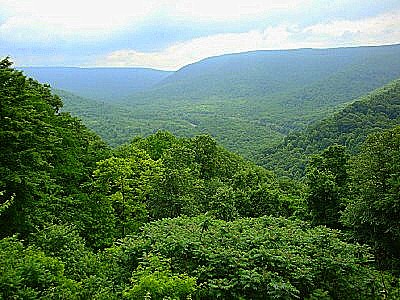 The thickly forested Allegheny Mountains would
prove a formidable obstacle fro Braddock's column
The Road to Destruction
On 9 July 1755, Braddock's force crossed the Monongahela River west of a place called Turtle Creek. Braddock's advance guard of 300 grenadiers and colonials with two cannon under Lieutenant Colonel Thomas Gage (later of Boston infamy) began to move ahead. Washington tried to warn him of the flaws in his plan but Gage ignored him. Confident there were no enemy about, they moved out in column along a narrow path under heavy wooded canopy. Then unexpectedly, Gage's advance guard came upon the French and Indians, who were hurrying to stop the British at the river. But behind schedule and too late to set an ambush, they ran head on into Gage's men. The enemy forces were led by a French Captain named Beaujeu, who fell mortally wounded at the opening of the engagement. The surprise of two forces colliding into each other initially surprised both sides. But the French and Indians rallied quickly and began to pour a murderous fire into the British column. After an exchange of fire, Gage's men fell back. In the narrow confines of the road, they collided with the main body of Braddock's force, which had advanced rapidly when the shots were heard. The entire column dissolved in disorder as the Canadian militiamen and Indians enveloped them and continued to snipe at the British flanks from the woods on the sides of the road. Musket balls buzzed through the woods, striking tree limbs with a crack and leaves with a zing. But it was the silent rounds that struck man after man. War cries and death from behind the dense undergrowth took also its toll on the British, as did the heat.Then the French regulars began advancing along the road and began to push the British back. The British organized defense collapsed.
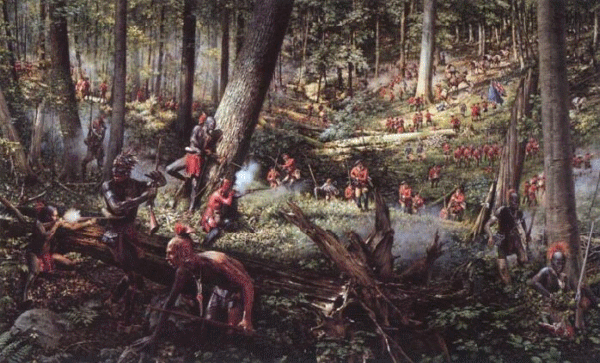 Indians ambush the British column
Despite deadly bullets from seemingly all directions, the British officers tried to rally the men. The British also tried to employ some of their cannon. But again the narrow confines prevented effective use. The colonial militias and troops rallied and engaged the Indians with aimed fire. But some of them received "friendly fire" from panicked British regulars, still attempting to maintain their formations. The fighting lasted several hours. Washington was all over the place, trying to take charge where he could. He rallied small parties and, when Braddock was shot from his horse, he established a rear guard and ensured the wounded commander reached safety. Many other officers died trying to rally and lead their men. The Indians did a good job at picking off the officers, who suffered an extremely high proportion of casualties. Washington himself had two horses shot out from under him and bullets pierced his clothes, but he came out with not one scratch on him. By sunset, the surviving British and colonial forces were fleeing back down the road they had built.
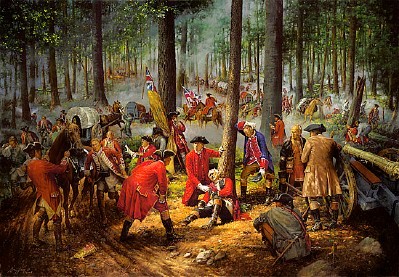 Gen Braddock falls wounded
The Aftermath
The French won this battle (usually called the Battle of the Monongahela) and suffered 40 casualties - less than 10 percent. The British suffered almost 900 - more than 60 percent. Braddock himself succumbed to his wounds on 13 July. The next day, Washington buried him under the road near the head of the column. The site for his burial was chosen to prevent the French and Indians from desecrating his grave. The outnumbered French did not follow up with a pursuit of the British and the Indians began looting and scalping. These two factors saved the column form further destruction. Hope of a quick British offensive towards the Ohio were decisively crushed on the road of destruction. They would not be revived until three years later, ironically, by use of the northern approach and what became Forbes Road.
June 25, 2017
Things: The Palmetto
A Tour de Force
In the spring of 1776 the British planners in London were intent on turning the stalemate and embarrassing withdrawal from Boston to the cheers and jeers of a rag tag rebel army into a strategic tour de force to end the rebellion that year. With one armada poised to strike the critical port of New York in a right punch, another would make a quick left jab at the equally important port of
Charleston. The latter blow would come first, setting up the rebels for the more powerful knock out in the middle Atlantic colonies. Charleston was the major southern city at the time and had key connections to the important islands in the West Indies, which were always at the forefront f British strategic interests. Dominated by a planter class, South Carolina was not viewed as a particularly rabid rebel stronghold that would succumb quickly. A handful of gallant patriots would show them wrong.
A Last Minute Plan
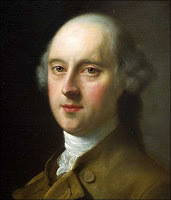 Lord DartmouthThe British strike at the southern colonies actually began earlier in the year when William Legge, Lord Dartmouth, and Secretary of State for the Colonies ordered General Henry Clinton and Commodore Peter Parker to rendezvous with another armada under General Lord Charles Cornwallis off Cape Fear, North Carolina. Misfortune on land and at sea turned the North Carolina plan to mud. But before Clinton could sail north, Parker reported that a reconnoiter of Charleston indicated the defenses were ill prepared and that a quick strike against Fort Sullivan on Sullivan's Island in the harbor would be successful. After that, the city could be successfully assaulted. Anxious for some "low hanging fruit" after the Tar Heel frustration, Clinton concurred and so they made their way south, anchoring off the city on 7 June 1776.
A City Prepares
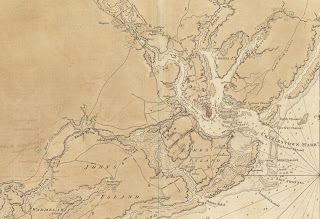 Charleston's waters were treacherous
as the British would soon discover
But the South Carolinians in Charleston long expected they were a target of the British and feverishly built up the defense works on Sullivan's Island. This was a three sided fort with sixteen foot sand walls bounded by soft wood palmetto logs. The spongy-soft palmetto wood gave way and absorbed the shock of cannon balls - the primary threat to the fort. The fort boasted twenty-five guns of assorted size and caliber with a garrison of over four hundred men. Most importantly, in command of Fort Sullivan was militia Colonel William Moultrie, who would soon prove to be one of the best fighting generals of the war. The city itself had a garrison of over six thousand men - including Continental Line infantry. In command was Major General Charles Lee, a former British officer and widely regarded (especially by himself) as the finest officer in the American cause. Lee's estimate was that Fort Sullivan lay too exposed to the fire of British warships and ordered it abandoned. However, South Carolina Governor John Rutledge overruled Lee, believing it a buffer against a naval onslaught. Geography and hydrography were allies of the defending rebels. The narrow channel into the harbor, with hits commensurate currents and shoals, plagued the British as they plotted where to land and how to position their war ships. It took a month before the were ready to advance on the city that lay just within their grasp.
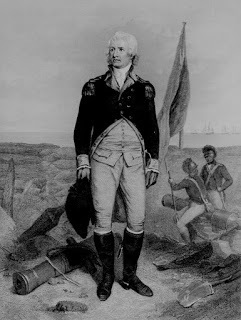 Colonel William Moultrie's militia
staged a gallant defense
Bombs Bursting in Air... Sand.. and Wood
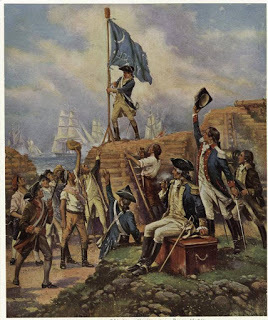 The South Carolina flag hoisted in battle
boosts morale
On 28 June, a bombardment commenced between Parker's warships aligned off Sullivan Island and Moultrie's raw militia manning the guns protected by sand and palmetto logs. The barrage went on for hours. The British gunners were frustrated that, despite hit after hit, the combination of sand and spongy logs inflicted little damage on the fort. Shot after shot from the warships either bounced off the walls or got absorbed into the soft walls of palmetto. The Americans fired back. But low on gunpowder, Moultrie insisted that each shot be well aimed. In the middle of the hours long engagement a British shot cut down the South Carolina flag. A brave sergeant named William Jasper, in full view of the British and the American, ignored the hail of lead and iron to mount the parapet and restore the flag. The impact on the morale of both sides was telling. As the battle went on, the deliberate fire of the defenders took its toll on the British ships, scoring hit after hit. Things took a final turn against the British when Parker sent three frigates around Sullivan Island to take the defenders in the flank. Unaware of the dangerous waters of the channel, all three suddenly grounded in the shallows. After a struggle, two freed themselves but the third, HMS Acteon remained stuck. The frustrated crew burned it to prevent the rebels taking it.
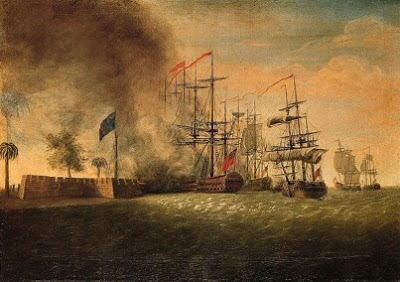 The savage naval bombardment was decided by shoals, sand and wood
Fight on till Dark
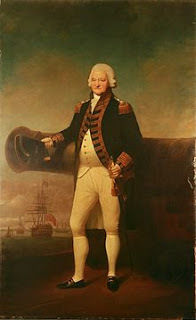 Commodore ParkerThe firing continued on both sides. Commodore Parker's flagship had its anchor cable severed by a shot, causing the ship to turn and present its explode stern to American fire. The rounds poured in and one actually passed between Parker's legs as he shouted out commands. The commodore was unhurt but indignant as the shot tore his pants off. When darkness descended on the harbor Parker signaled the fleet to disengage. Exasperated, the British fleet sailed from the harbor. It would be four long years before they would deign to return to face the Carolinians and their palmettos. The next one would end differently, but in 1776, the failed attack presented the British with a near disaster. The Royal Navy incurred well over two hundred casualties - Moultrie's men less than forty. An what of General Clinton? His men had landed on nearby Long Island to prepare for an assault on the mainland once Fort Sullivan fell. With the warships gone this would not be. Instead, they remained exposed there for several weeks before the British transports were able to sail in and they could re-embark.
The Result
The British armada returned to New York on the last day of July with ships damaged and sailors and soldiers demoralized. But they soon would get a chance for some sort of retribution when the British launched their massive attack on Long Island in late August. Still, the victory at Fort Sullivan saved the south for four critical years. It introduced the world to a gallant new leader and bolstered morale throughout the Carolinas and the entire rebellion. And in honor of the role of the palmetto in the victory, the noble tree with the soft bark was added to the South Carolina state flag, where it remains to this day.
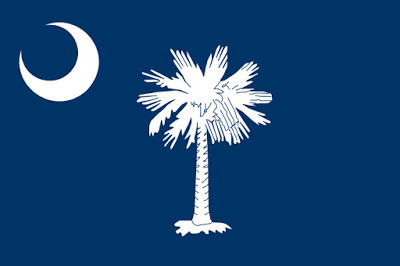 South Carolina State Flag
In the spring of 1776 the British planners in London were intent on turning the stalemate and embarrassing withdrawal from Boston to the cheers and jeers of a rag tag rebel army into a strategic tour de force to end the rebellion that year. With one armada poised to strike the critical port of New York in a right punch, another would make a quick left jab at the equally important port of
Charleston. The latter blow would come first, setting up the rebels for the more powerful knock out in the middle Atlantic colonies. Charleston was the major southern city at the time and had key connections to the important islands in the West Indies, which were always at the forefront f British strategic interests. Dominated by a planter class, South Carolina was not viewed as a particularly rabid rebel stronghold that would succumb quickly. A handful of gallant patriots would show them wrong.
A Last Minute Plan
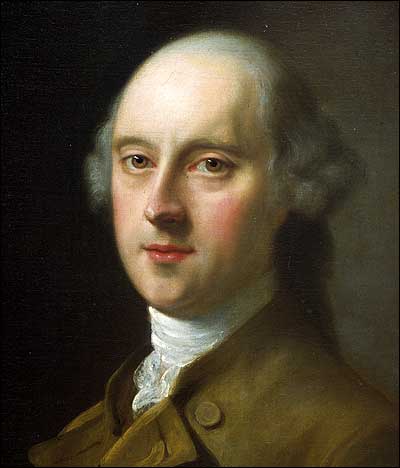 Lord DartmouthThe British strike at the southern colonies actually began earlier in the year when William Legge, Lord Dartmouth, and Secretary of State for the Colonies ordered General Henry Clinton and Commodore Peter Parker to rendezvous with another armada under General Lord Charles Cornwallis off Cape Fear, North Carolina. Misfortune on land and at sea turned the North Carolina plan to mud. But before Clinton could sail north, Parker reported that a reconnoiter of Charleston indicated the defenses were ill prepared and that a quick strike against Fort Sullivan on Sullivan's Island in the harbor would be successful. After that, the city could be successfully assaulted. Anxious for some "low hanging fruit" after the Tar Heel frustration, Clinton concurred and so they made their way south, anchoring off the city on 7 June 1776.
A City Prepares
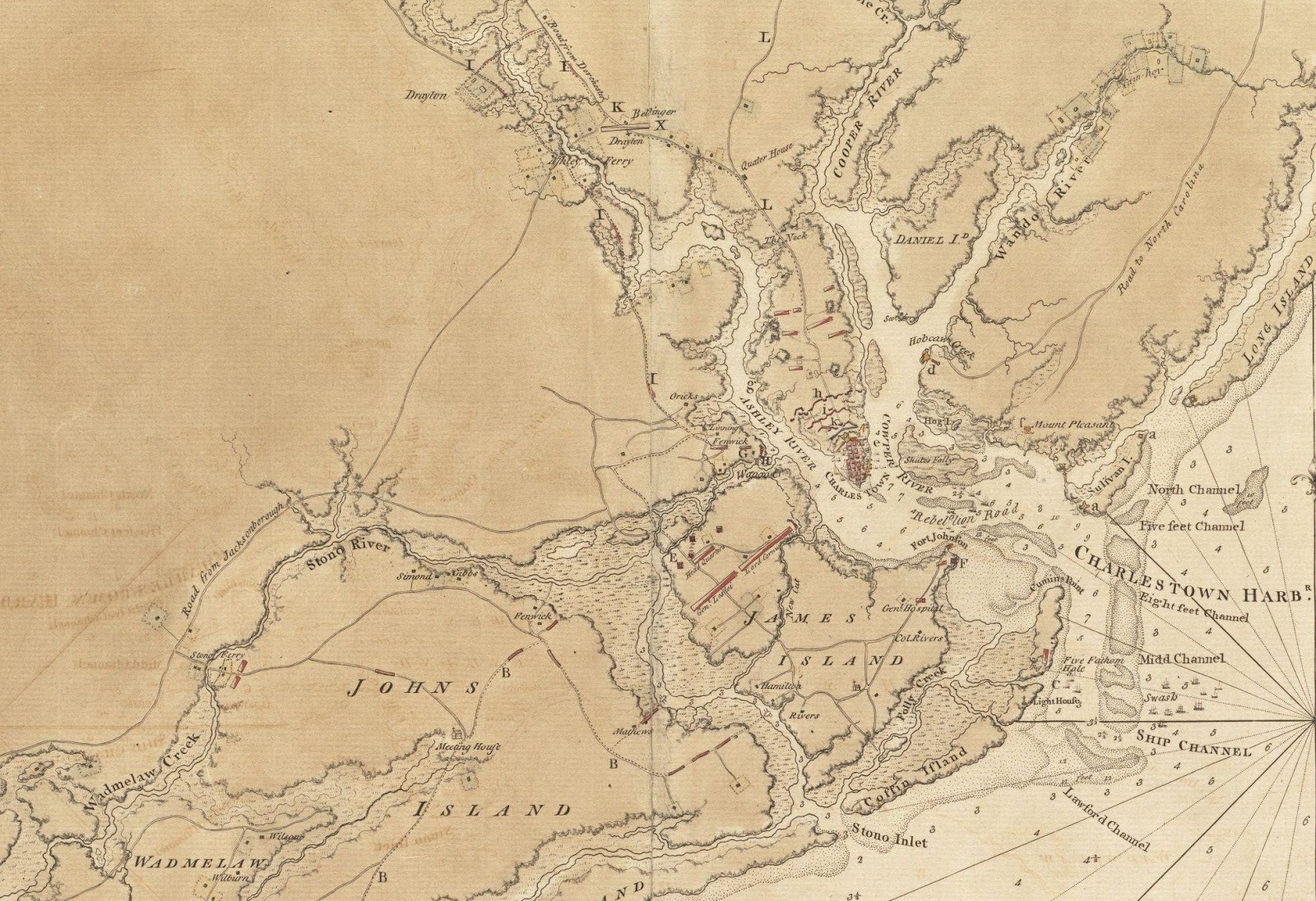 Charleston's waters were treacherous
as the British would soon discover
But the South Carolinians in Charleston long expected they were a target of the British and feverishly built up the defense works on Sullivan's Island. This was a three sided fort with sixteen foot sand walls bounded by soft wood palmetto logs. The spongy-soft palmetto wood gave way and absorbed the shock of cannon balls - the primary threat to the fort. The fort boasted twenty-five guns of assorted size and caliber with a garrison of over four hundred men. Most importantly, in command of Fort Sullivan was militia Colonel William Moultrie, who would soon prove to be one of the best fighting generals of the war. The city itself had a garrison of over six thousand men - including Continental Line infantry. In command was Major General Charles Lee, a former British officer and widely regarded (especially by himself) as the finest officer in the American cause. Lee's estimate was that Fort Sullivan lay too exposed to the fire of British warships and ordered it abandoned. However, South Carolina Governor John Rutledge overruled Lee, believing it a buffer against a naval onslaught. Geography and hydrography were allies of the defending rebels. The narrow channel into the harbor, with hits commensurate currents and shoals, plagued the British as they plotted where to land and how to position their war ships. It took a month before the were ready to advance on the city that lay just within their grasp.
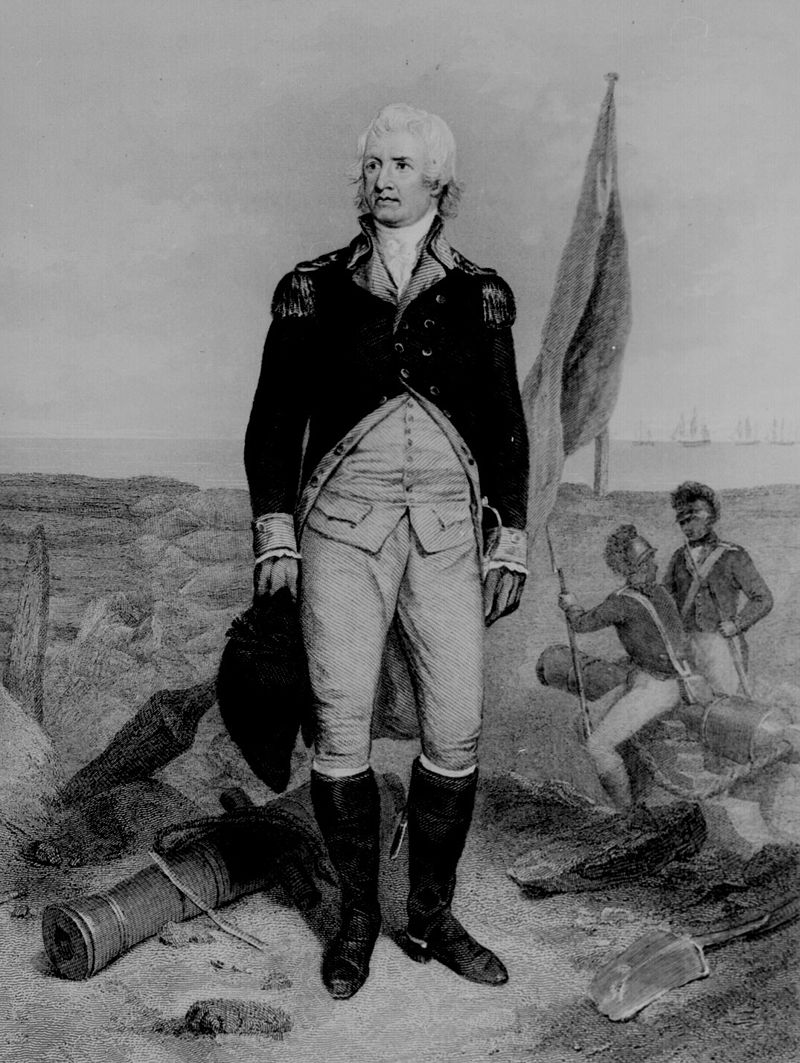 Colonel William Moultrie's militia
staged a gallant defense
Bombs Bursting in Air... Sand.. and Wood
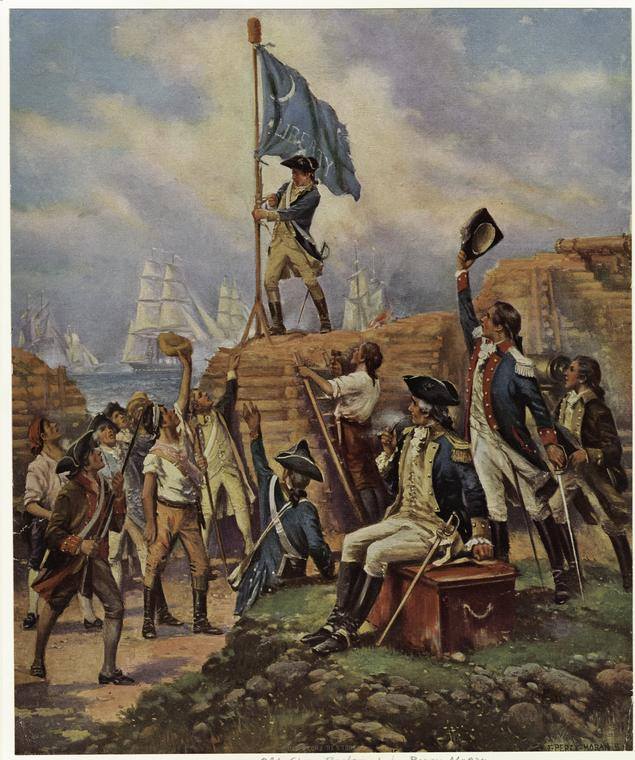 The South Carolina flag hoisted in battle
boosts morale
On 28 June, a bombardment commenced between Parker's warships aligned off Sullivan Island and Moultrie's raw militia manning the guns protected by sand and palmetto logs. The barrage went on for hours. The British gunners were frustrated that, despite hit after hit, the combination of sand and spongy logs inflicted little damage on the fort. Shot after shot from the warships either bounced off the walls or got absorbed into the soft walls of palmetto. The Americans fired back. But low on gunpowder, Moultrie insisted that each shot be well aimed. In the middle of the hours long engagement a British shot cut down the South Carolina flag. A brave sergeant named William Jasper, in full view of the British and the American, ignored the hail of lead and iron to mount the parapet and restore the flag. The impact on the morale of both sides was telling. As the battle went on, the deliberate fire of the defenders took its toll on the British ships, scoring hit after hit. Things took a final turn against the British when Parker sent three frigates around Sullivan Island to take the defenders in the flank. Unaware of the dangerous waters of the channel, all three suddenly grounded in the shallows. After a struggle, two freed themselves but the third, HMS Acteon remained stuck. The frustrated crew burned it to prevent the rebels taking it.
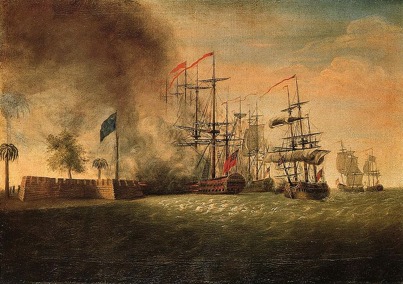 The savage naval bombardment was decided by shoals, sand and wood
Fight on till Dark
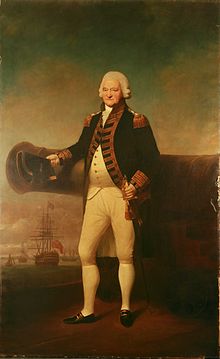 Commodore ParkerThe firing continued on both sides. Commodore Parker's flagship had its anchor cable severed by a shot, causing the ship to turn and present its explode stern to American fire. The rounds poured in and one actually passed between Parker's legs as he shouted out commands. The commodore was unhurt but indignant as the shot tore his pants off. When darkness descended on the harbor Parker signaled the fleet to disengage. Exasperated, the British fleet sailed from the harbor. It would be four long years before they would deign to return to face the Carolinians and their palmettos. The next one would end differently, but in 1776, the failed attack presented the British with a near disaster. The Royal Navy incurred well over two hundred casualties - Moultrie's men less than forty. An what of General Clinton? His men had landed on nearby Long Island to prepare for an assault on the mainland once Fort Sullivan fell. With the warships gone this would not be. Instead, they remained exposed there for several weeks before the British transports were able to sail in and they could re-embark.
The Result
The British armada returned to New York on the last day of July with ships damaged and sailors and soldiers demoralized. But they soon would get a chance for some sort of retribution when the British launched their massive attack on Long Island in late August. Still, the victory at Fort Sullivan saved the south for four critical years. It introduced the world to a gallant new leader and bolstered morale throughout the Carolinas and the entire rebellion. And in honor of the role of the palmetto in the victory, the noble tree with the soft bark was added to the South Carolina state flag, where it remains to this day.
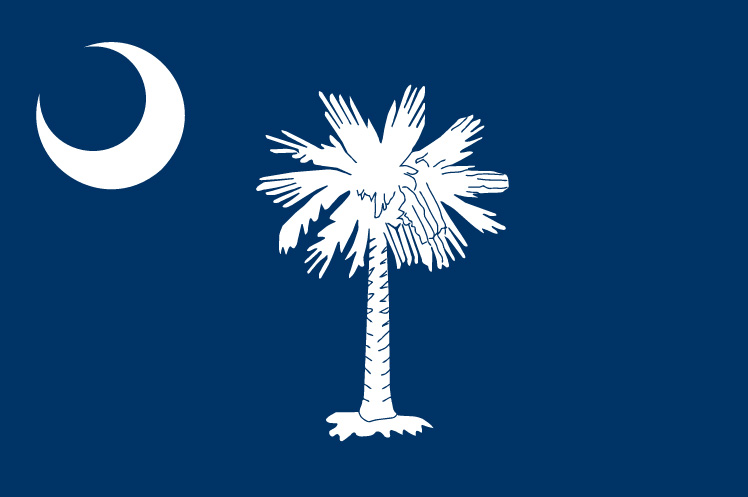 South Carolina State Flag
June 17, 2017
First Fathers
N.B. This is an edited reprise of an earlier post on the subject. With Father's Day tomorrow I decided to revisit the tragic case of the Lynch father - son team.
Who’s your Daddy? There were many father-son combinations during the American War for Independence, especially in the local militia units that came and went with the ebb and flow of hostilities. But some served at the highest levels of the Revolution. The Lynch's were one such duo.Father - Son Signers...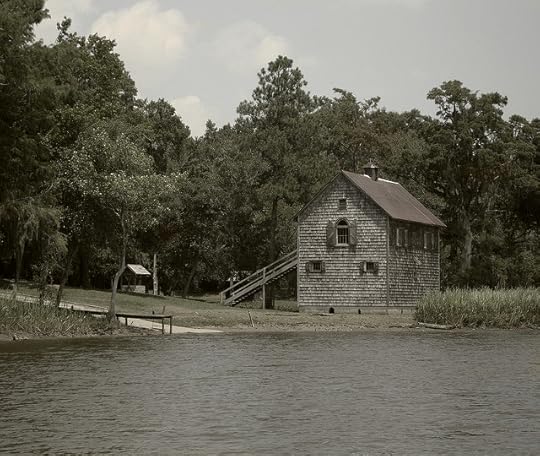 Eighteenth century rice houseThomas Lynch Sr. was the son of Jonas Lynch from the Galway lines of the Lynch family who were expelled from Ireland following their defeat in the Irish wars of William of Orange. Jonas Lynch came to America and became a successful planter. His son Thomas was born in Berkeley County, S.C., in 1727. By the time his son Thomas Jr.’s birth in 1747, he owned a huge estate called Hopsewee Plantation, on the North Santee River and other watercourses. He was also active in politics. As the crisis with Britain worsened the elder Lynch became an influential and often times fiery revolutionary. He eventually became a member of the Continental Congress serving from 1774-1776. The senior Lynch was to be a signer of the Declaration of Independence representing South Carolina. Unfortunately, he suffered a massive stroke in the early part of 1776.
With the father struck down, the South Carolina Assembly named his son, Thomas Lynch Jr. in his place. Thomas Jr. was born at Hopeswee and, unlike his father, had the advantage of a world class education.He attended elite schools in America and then Eton, Cambridge and finally read the law in
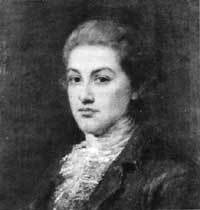 Thomas Lynch Jr.London. He returned to America and made a grand marriage. He then took up planting. As the heir of one of the most fervent revolutionaries and influential men in the colony, Lynch Jr. naturally took a deep interest in politics himself. He enjoyed strong support from the electorate. During the years 1774-76, while his father served in the Continental Congress, he labored on the home front, attending the first and second provincial congresses as well as the first State legislature and sitting on the State constitutional committee.
A Military Career CurtailedIn 1775, Lynch accepted a captaincy in the First South Carolina Regiment of Continentals. This upset his father who wanted to use influence to obtain a higher rank for his son. Unfortunately, young Lynch contracted bilious (an intestinal) fever while on recruiting duty in North Carolina. Incapacitated, he had to give up his nascent military career.
The Stand - In
But when in the spring 1776, Thomas Sr.’s condition proved grave, South Carolina’s Assembly elected Thomas Jr. to the Continental Congress. Despite his own significant medical issues, the younger Lynch dutifully traveled to Philadelphia where he remained throughout the summer .During that revolutionary season the younger Lynch got to vote for and sign the Declaration of Independence at the young age of twenty-seven. The Lynches were the only father-son team that served concurrently in the Continental Congress.
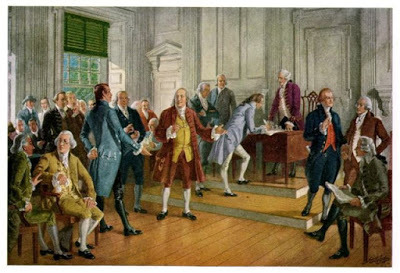 Signing the Declaration of Independence
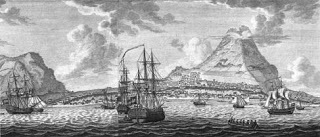
Double TragedyPolitical triumph was met with personal tragedy and more blows to the patriot family were yet to come. Both Lynchs’s health worsened, and by the end of the year they headed homeward. En route, at Annapolis, MD, a second stroke took the life of the senior Lynch. Thomas Jr. returned home a broken man – physically and emotionally. Late in 1779 he and his wife, headed to France in an attempt to regain his health. They sailed for the Dutch island of St. Eustasia in the West Indies to find a ship back across the ocean but a storm struck and their ship was lost at sea.
Who’s your Daddy? There were many father-son combinations during the American War for Independence, especially in the local militia units that came and went with the ebb and flow of hostilities. But some served at the highest levels of the Revolution. The Lynch's were one such duo.Father - Son Signers...
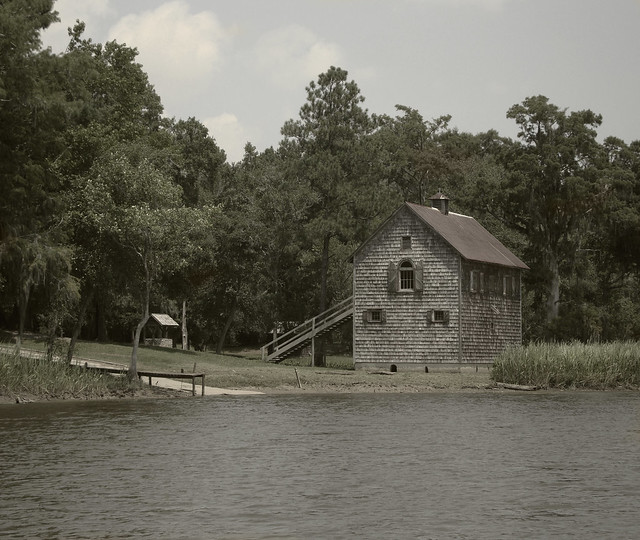 Eighteenth century rice houseThomas Lynch Sr. was the son of Jonas Lynch from the Galway lines of the Lynch family who were expelled from Ireland following their defeat in the Irish wars of William of Orange. Jonas Lynch came to America and became a successful planter. His son Thomas was born in Berkeley County, S.C., in 1727. By the time his son Thomas Jr.’s birth in 1747, he owned a huge estate called Hopsewee Plantation, on the North Santee River and other watercourses. He was also active in politics. As the crisis with Britain worsened the elder Lynch became an influential and often times fiery revolutionary. He eventually became a member of the Continental Congress serving from 1774-1776. The senior Lynch was to be a signer of the Declaration of Independence representing South Carolina. Unfortunately, he suffered a massive stroke in the early part of 1776.
With the father struck down, the South Carolina Assembly named his son, Thomas Lynch Jr. in his place. Thomas Jr. was born at Hopeswee and, unlike his father, had the advantage of a world class education.He attended elite schools in America and then Eton, Cambridge and finally read the law in
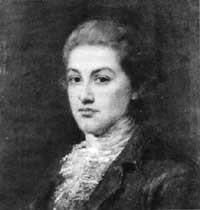 Thomas Lynch Jr.London. He returned to America and made a grand marriage. He then took up planting. As the heir of one of the most fervent revolutionaries and influential men in the colony, Lynch Jr. naturally took a deep interest in politics himself. He enjoyed strong support from the electorate. During the years 1774-76, while his father served in the Continental Congress, he labored on the home front, attending the first and second provincial congresses as well as the first State legislature and sitting on the State constitutional committee.
A Military Career CurtailedIn 1775, Lynch accepted a captaincy in the First South Carolina Regiment of Continentals. This upset his father who wanted to use influence to obtain a higher rank for his son. Unfortunately, young Lynch contracted bilious (an intestinal) fever while on recruiting duty in North Carolina. Incapacitated, he had to give up his nascent military career.
The Stand - In
But when in the spring 1776, Thomas Sr.’s condition proved grave, South Carolina’s Assembly elected Thomas Jr. to the Continental Congress. Despite his own significant medical issues, the younger Lynch dutifully traveled to Philadelphia where he remained throughout the summer .During that revolutionary season the younger Lynch got to vote for and sign the Declaration of Independence at the young age of twenty-seven. The Lynches were the only father-son team that served concurrently in the Continental Congress.
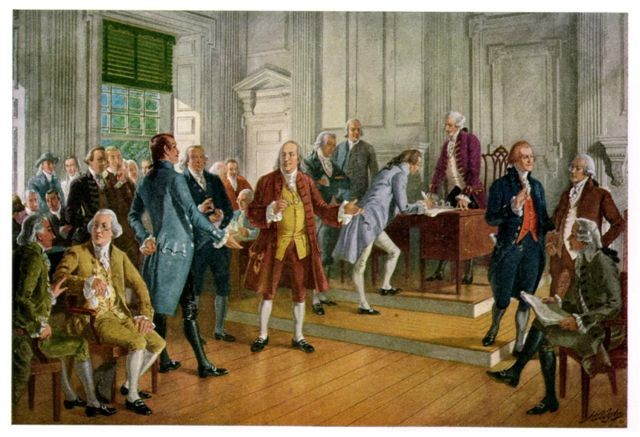 Signing the Declaration of Independence
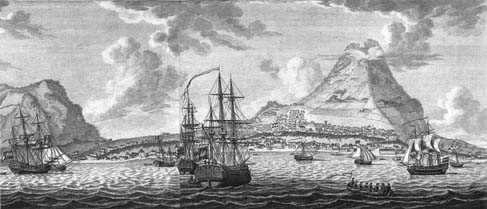
Double TragedyPolitical triumph was met with personal tragedy and more blows to the patriot family were yet to come. Both Lynchs’s health worsened, and by the end of the year they headed homeward. En route, at Annapolis, MD, a second stroke took the life of the senior Lynch. Thomas Jr. returned home a broken man – physically and emotionally. Late in 1779 he and his wife, headed to France in an attempt to regain his health. They sailed for the Dutch island of St. Eustasia in the West Indies to find a ship back across the ocean but a storm struck and their ship was lost at sea.
May 21, 2017
Rev War Talk: Veterans & Leaders
 Dick Winter's Memorial at Veteran's Plaza in Ephrata. Pennsylvania
The Lecture
As part of their on going Veteran's Lecture Series, the Winters Leadership Memorial Committee invited me to speak on the American Revolution, the Yankee Doodle Spies and related topics. The committee sponsors one such talk each month, typically the last Tuesday. The talk will encompass an overview of the eight year struggle for independence plus a series of cameos on various aspects of the war such as intelligence, maritime, geography, etc. It will take place in the library at Ephrata, Pennsylvania. The Lecture Series itself began back in 2014 as a way to continue the effort we started with the construction of Ephrata’s Veterans Plaza & installation of the Winters Leadership Memorial. The driving purpose behind building Veterans Plaza was to honor all veterans from all wars. One of the plaques in the plaza says it best, “They are not dead who live in the hearts they leave behind.”
The Man
The Winters Leadership Memorial is named after Major Dick Winters, legendary WWII commander of Easy Company of the 101st Airborne (Screaming Eagles) commemorated in the book and television mini-series: Band of Brothers. Winters grew up in and around Ephrata, in central Pennsylvania, where he eventually returned.
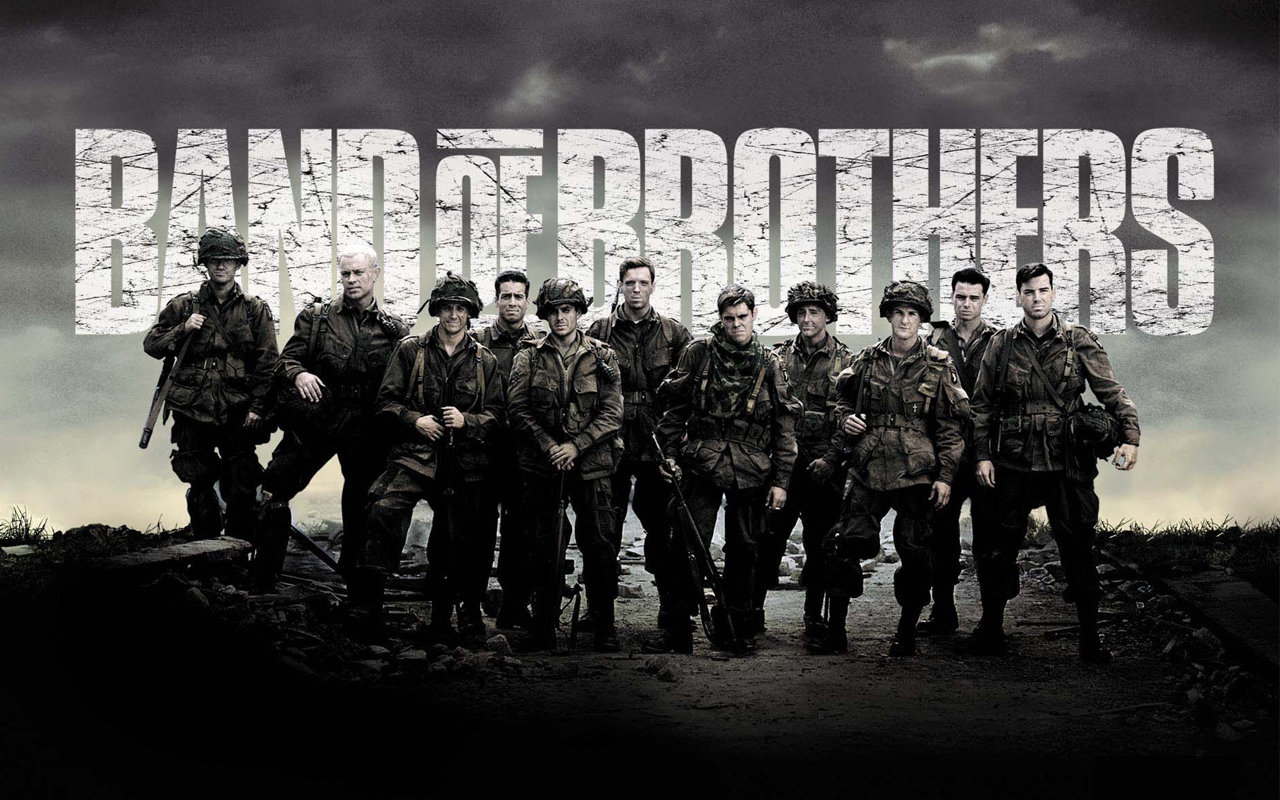 Winters was immortalized in the book and HBO series, "Band of Brothers"
The Memorials
In June of 2012, a statue was installed at Utah Beach in Normandy. It was created in Richard D. Winters' likeness, designed to honor all leaders, especially those of the Junior Officer’s. Winters felt that the leadership and decision making of these young and inexperienced men was critical to the success of the D-Day invasion and other critical WWII battles. The artist who created the Winters Statue, also offered the community of Ephrata the opportunity to erect a reproduction of the Normandy statue. A committee was formed, and the group set out to raise the funds required to acquire the statue, build the Veterans’ Plaza it would rest in, and maintain the site. In May 2015 the statue was dedicated at the plaza.
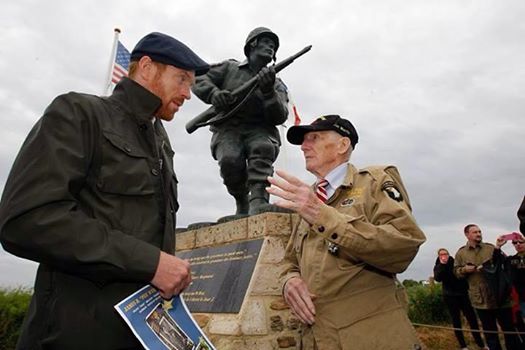 Actor Damian Lewis, who portrayed Dick Winters in the HBO series,
 speaks with 101st vet during commemoration of the Winters Memorial
in Normandy, France
America's Veterans Issues & the Revolutionary War
So what does all of this have to do with the Rev War? Well, everything as it turns out. Issues regarding veterans commenced even as the American War for Independence was in its waning years. Soldiers released from services often failed to receive compensation promised by the states and Congress, little as that was. There were several "affairs" sometimes even mutinies over lack of compensation, food and clothing.
Newburgh Conspiracy
One of the most famous was the Newburgh Conspiracy, a rebellion of Continental Army officers in March 1783 that was nipped in the bud by George Washington himself. Washington personally confronted the conspirators, who planned to march on Congress and overthrow the fledgling confederation government. In 1780, Congress had passed a resolution providing half-pay for retired soldiers. But as late as 1783 the states (who had power of the purse) had yet to comply with Congress’s request for money. The British Army was still quite ensconced in North America - the last troops would not leave until very late in the year. So the action of these conspirators could have resulted in stamping out the new nation before it could be established.
 Continental Army at New Windsor Cantonment
How did it happen? As the conspirators gathered at an assembly hall/chapel (the Temple Building) at Newburgh's New Windsor Cantonment, to the surprise of all, Washington suddenly appeared before the assembly. The group had an inflammatory ultimatum penned by a Major Armstrong, former aide to cashiered General Horatio Gates (no friend of Washington). Washington denounced Armstrong and the ultimatum in very strong (for the 18th Century) terms.
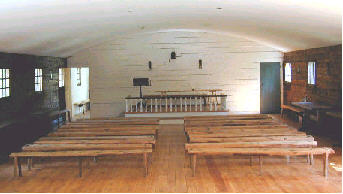 The Temple Building - chapel where the officers gathered and Washington
confronted the conspiracy
The commander in chief remarked of the ultimatum, "...something so shocking in it, that humanity revolts at the idea." Taking the pulse of the audience he went on, "My God! What can this writer have in view, by recommending such measures! Can he be a friend to the army? Can he be a friend to this country? Rather is he not an insidious foe?" He also asked that they, "Give one more distinguished proof of unexampled patriotism and patient virtue." He asked for their, "full confidence in the purity of the intentions of Congress."
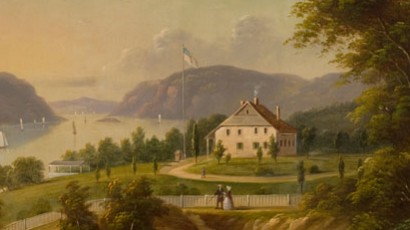 Washington's Headquarters at Newburgh
In closing, Washington attempted to read a letter he recently received from Joseph Jones, a Congressman from Virginia. The letter was to assure the commander in chief of (some in) Congress's assurance that the needs of the soldiers would receive a full measure of support. But Washington’s vision had recently begun to fail. He struggled with the opening paragraph. Frustrated Washington retrieved a pair of glasses from his pocket. Then, the usually formal and stiff Washington made a rare casual remark. "Gentleman, you must pardon me, for I have not only grown gray but almost blind in service to my country."
This spontaneous act of demonstrating his humanity, from a man almost all held as next to God, had the immediate effect of taking the air out of the sails of mutiny and rebellion. Many officers began to weep. Possibly the greatest threat to the American Revolution and the new nation had evaporated due to the heartfelt and humble words of Washington. Sadly, veterans have had to fight for their rights from that day forward. Sometimes things did not end as peacefully and quickly as that March day in in the Hudson Valley.
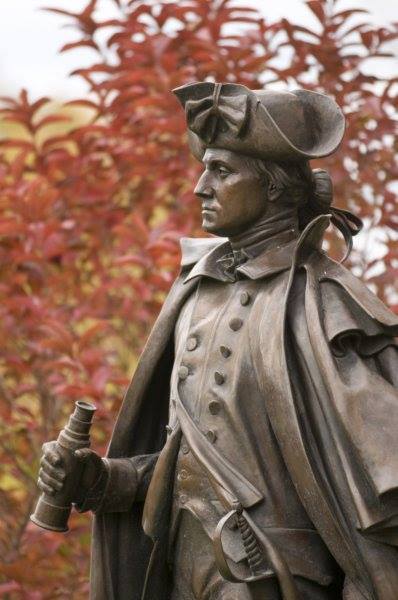 Washington did as much in saving The Cause with
 his talk as in all the battles he fought
May 13, 2017
Yankee Doodle Spies Mothers Day
I just thought I'd take a short post to salute all of the mother of the American Revolution. Motherhood was an unrelenting, painful, tedious, demanding, unforgiving and too often under appreciated vocation in the time of the Yankee Doodle Spies. Sadly, not unlike today in many cases. I use this blog in great part to hail the so called second tier of first patriots. The untold and little mentioned men and women who played important roles in the struggle that birthed the first modern republic. Okay, I do post on the top tier from time to time but that is to fill out the story. This one is for the moms...
Mary
I posted a previous blog about the greatest (sorta) mother of the American Revolution: Mary Ball Washington. This steely widow birthed the ages "indispensable man" George Washington. She was kind of a Beeyoche, but her stubborn and strong willed nature clearly passed on to George. The result: a leader who although flawed managed to adapt to adversity, rally diverse peoples, and keep a nation (and himself) together for eight long years until the millennium's most unlikely victory came to being. Despite their often strained relationship, Washington doted on his mother. We can be thankful to the woman who raised a son to become the leader of a new nation and the idol of most of his age.
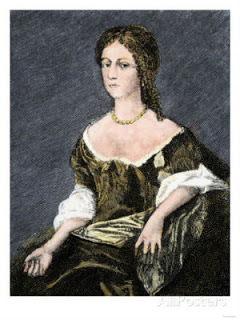 Mary Ball Washington's fire and
stubbornness passed on to her noted son
Martha
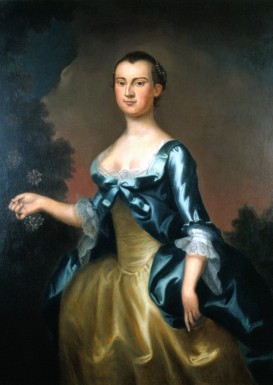
I truly think the lord above was having fun with these two mothers who influenced, molded and simply made George Washington the man he was. Martha Custis was a wealthy widow when she married George. She was also his senior and was already a mother. George adopted her children as his own and doted on the family he married into. Martha was short and tended in middle age to stout. But although Washington was admired by the most glamorous women in the hemisphere, Martha was his lodestone. Her strength in maintaining his farm and family enabled him to ride off from Mount Vernon to return a long eight years later. But he could not remain apart from Martha that long. Almost every winter he requested she leave their farm and join him in winter quarter where she became the surrogate mother of his officers and men.
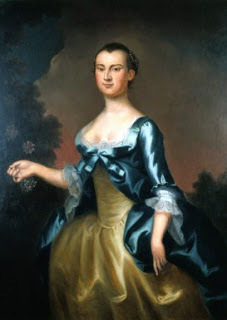 Martha as a young woman
Abigail
Abigail Smith is most widely known as Abigail Adams. The great John Adams book by David McCullough and the resultant TV series has made her the most renowned of "First Mothers." Adams admired and encouraged Abigail's outspokenness and intelligence. She supported him by running the family farm, raising their children, listening to him, and trying to help him with his problems. Despite her own bouts with illness, she gave birth to five children. One daughter, Susanna, born in 1768, lived for only a year. Besides being the bedrock of the founding father who would become America's second (and first controversial) president, Abigail was mother to the nations's sixth president - their son John Quincy Adams.
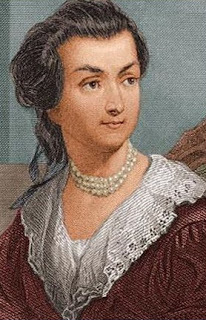 Abigail's letters bolstered her husband
while informing him of family doings
Caty
Nathaniel Greene is considered the second greatest (and for some the greatest) commander in the American army. Catharine Littlefield married Nathaniel Greene in 1774 at the tender age of nineteen. With her husband marching off to war a year later she was thrust abruptly into the role of head of household. Eager to be with her husband, she joined Gen. Greene at his military headquarters whenever possible. Over the course of the war (and shortly after), Catharine had five children. Conflicted by the caring for her children but longing to be with her husband, Caty (as she was also called) settled on a compromise. In order to have a normal family life when conditions allowed, she brought her young children with her to camp. At other times she left them in the care of family or friends. It was during these separations that Caty most felt the effects of the war upon her family. She was a staple at winter quarters and her presence had a positive effect not only on her husband but the other officers and the commander in chief himself - they were often dance partners.

Happy Mothers Day!
Mary
I posted a previous blog about the greatest (sorta) mother of the American Revolution: Mary Ball Washington. This steely widow birthed the ages "indispensable man" George Washington. She was kind of a Beeyoche, but her stubborn and strong willed nature clearly passed on to George. The result: a leader who although flawed managed to adapt to adversity, rally diverse peoples, and keep a nation (and himself) together for eight long years until the millennium's most unlikely victory came to being. Despite their often strained relationship, Washington doted on his mother. We can be thankful to the woman who raised a son to become the leader of a new nation and the idol of most of his age.
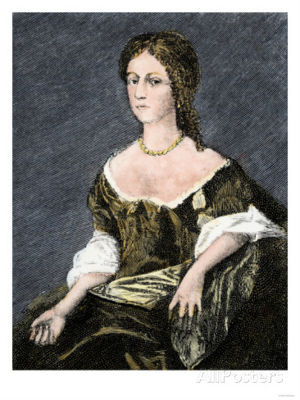 Mary Ball Washington's fire and
 stubbornness passed on to her noted son
Martha
I truly think the lord above was having fun with these two mothers who influenced, molded and simply made George Washington the man he was. Martha Custis was a wealthy widow when she married George. She was also his senior and was already a mother. George adopted her children as his own and doted on the family he married into. Martha was short and tended in middle age to stout. But although Washington was admired by the most glamorous women in the hemisphere, Martha was his lodestone. Her strength in maintaining his farm and family enabled him to ride off from Mount Vernon to return a long eight years later. But he could not remain apart from Martha that long. Almost every winter he requested she leave their farm and join him in winter quarter where she became the surrogate mother of his officers and men.
 Martha as a young woman
Abigail
Abigail Smith is most widely known as Abigail Adams. The great John Adams book by David McCullough and the resultant TV series has made her the most renowned of "First Mothers." Adams admired and encouraged Abigail's outspokenness and intelligence. She supported him by running the family farm, raising their children, listening to him, and trying to help him with his problems. Despite her own bouts with illness, she gave birth to five children. One daughter, Susanna, born in 1768, lived for only a year. Besides being the bedrock of the founding father who would become America's second (and first controversial) president, Abigail was mother to the nations's sixth president - their son John Quincy Adams.
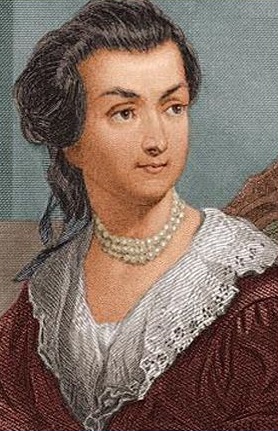 Abigail's letters bolstered her husband
while informing him of family doings
Caty
Nathaniel Greene is considered the second greatest (and for some the greatest) commander in the American army. Catharine Littlefield married Nathaniel Greene in 1774 at the tender age of nineteen. With her husband marching off to war a year later she was thrust abruptly into the role of head of household. Eager to be with her husband, she joined Gen. Greene at his military headquarters whenever possible. Over the course of the war (and shortly after), Catharine had five children. Conflicted by the caring for her children but longing to be with her husband, Caty (as she was also called) settled on a compromise. In order to have a normal family life when conditions allowed, she brought her young children with her to camp. At other times she left them in the care of family or friends. It was during these separations that Caty most felt the effects of the war upon her family. She was a staple at winter quarters and her presence had a positive effect not only on her husband but the other officers and the commander in chief himself - they were often dance partners.
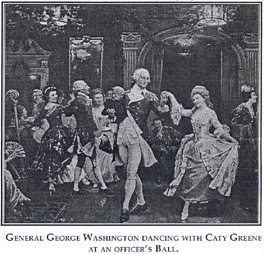
Happy Mothers Day!
April 26, 2017
Places: Ramsour's Mill
Background
One of the least known but nevertheless critical venues of the American Revolution was a small mill in the Piedmont region of North Carolina. A small mill in the back country, Ramsour's Mill played its first roll in the struggle for America in the summer of 1780. With the fall of Charleston, South Carolina in May of 1780, General Charles Cornwallis was well on his way to securing the south. Georgia and South Carolina were under control, enabling the dynamic British general to turn to North Carolina with his army of more than 8,000. The southern strategy seemed to be succeeding.
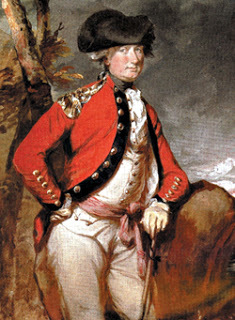 Lord Charles Cornwallis
Loyalists Gather
While Cornwallis rested his army in Charleston to prepare for his next venture, two Loyalist leaders decided to act on their own. The war for independence was after all, a civil war and those are necessarily fought at the local level by the locals. Thus Loyalists Lt. Colonel John Moore and Major Nicholas Welch decided to fulfill their own ambitions by launching the first British attack on the North Carolina colony - their home territory. By June 13, 1780, they had successfully organized a band of Loyal recruits at Jacob Ramsour’s Mill, near Clark’s Creek in Lincoln County, NC.
Patriot Response
However, General Griffith Rutherford, the canny and determined leader of the patriot forces in western North Carolina, had learned of the Loyalists gathering in Lincoln County. He immediately contacted patriot leaders Colonel Francis Locke and Major Robert Wilson, ordering them to gather the militia with the intent of stopping the assembly of Loyalists. To that end, 400 militia from Burke, Iredell, Mecklenburg, and Rowan Counties gathered at Mountain Creek on 19 June. The recent British victory at Waxhaws buoyed Tory sentiment, enabling Moore and Welch to gather some 1300 Loyalists - more than three times the number of local patriots. Realizing the Loyalists would only grow in numbers, Rutherford decided on a surprise attack on the Loyalist camp. A battle that would feature neighbor against neighbor was about to start.
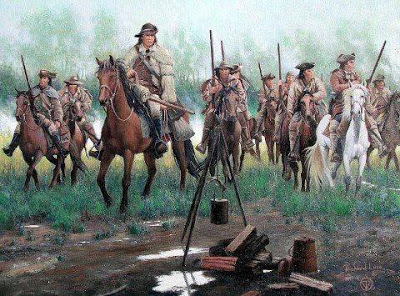 Patriot mounted militia led the attack
Battle or Fratricide?
In the early hours of June 20, Locke a militia band to Ramsour’s Mill, in order to meet Adam Reep, a local patriot spy who had intelligence on Loyalist troop location and strength. With the sun rising on Ramsour’s Mill, the the rebel militia quietly moved through the early morning fog. The patriot cavalry struck quickly in the hope of surprising the Loyalists. The Loyalists defenses repulsed them but then the rebel infantry moved up. The Tories were confused at first but then Moore and Welch rallied them to repel the patriot attack. At first the defenders held back the attackers, but eventually rebel marksmen worked their way in close and then the parties clashed hand to hand. Many on both sides were poorly armed. Confusion reigned, as this was a battle without uniforms. The Loyalists wore green pine twigs in their hats, while the patriots wore white paper on their hats. The fighting was vicious - neighbor against neighbor and even brother against brother. The fighting was personal as well as political - each side holding the other as traitor. And it went on for nearly two hours - a long time for such engagements. The Loyalists eventually began to fall into confusion, and many fled. When Colonel Rutherford arrived at the scene, the Loyalists requested a truce. But demanded an immediate surrender. As they parlayed, the remaining Loyalists fled, and only about 50 fell prisoner.
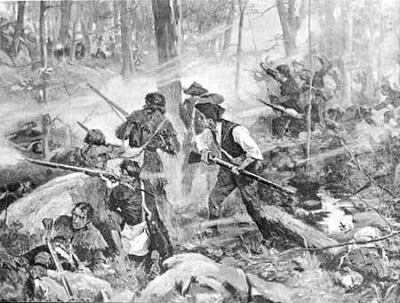 The fighting was intense - and personal for many
The Result
The action at Ramsour's Mill took seventy lives and wounded left two hundred. Most of the fallen , patriots and Loyalists, were buried in a mass grave. The defeat so badly demoralized the Loyalists in that part of North Carolina they never organized again in that area. As for the head strong Colonel Moore, he and around 30 of his men were able to reach General Cornwallis, now at Camden. But Cornwallis, incensed by the impetuous action of Moore, as well as the defeat, threatened him with charges for disobeying his orders.
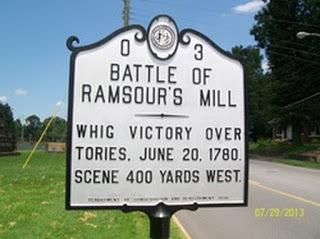
Aftermath
Ramsour’s Mill deprived Cornwallis of Loyalist recruits when he finally invaded western North Carolina. More importantly, patriot morale received a tremendous boost from the unlikely victory. And the Loyalists morale was such that they never could properly recruit from that area again.This indirectly led to the chain of events that culminated in the later patriot victory at King’s Mountain later that year. In a curious and ironic post script, Ramsour's Mill played another role in the struggle for the south, and Lord Cornwallis's ambitions. It was at Ramsour's Mill in January 1781 that Cornwallis paused his advance north to burn his wagons and excess baggage before resuming his futile pursuit of American General Nathanael Greene to the Dan River. This campaign exhausted Cornwallis's forces and he eventually fell back under heavy pressure from ambushes and skirmishes initiated by the rebels who now smelled blood. Cornwallis finally got to face Greene's resurgent army at a place called Guilford Court House - a "victory" that proved costly and heralded the beginning of the end for the southern strategy.
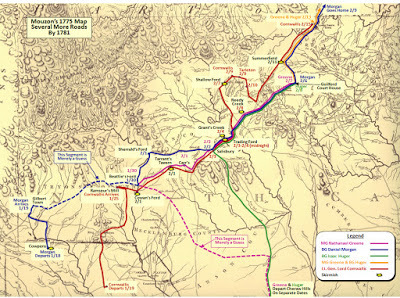 Ramsour's Mill played a role in fateful race to the Dan of 1781
One of the least known but nevertheless critical venues of the American Revolution was a small mill in the Piedmont region of North Carolina. A small mill in the back country, Ramsour's Mill played its first roll in the struggle for America in the summer of 1780. With the fall of Charleston, South Carolina in May of 1780, General Charles Cornwallis was well on his way to securing the south. Georgia and South Carolina were under control, enabling the dynamic British general to turn to North Carolina with his army of more than 8,000. The southern strategy seemed to be succeeding.
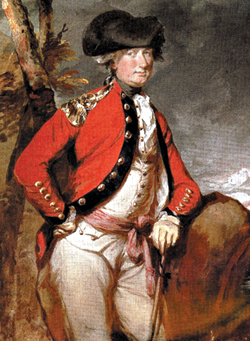 Lord Charles Cornwallis
Loyalists Gather
While Cornwallis rested his army in Charleston to prepare for his next venture, two Loyalist leaders decided to act on their own. The war for independence was after all, a civil war and those are necessarily fought at the local level by the locals. Thus Loyalists Lt. Colonel John Moore and Major Nicholas Welch decided to fulfill their own ambitions by launching the first British attack on the North Carolina colony - their home territory. By June 13, 1780, they had successfully organized a band of Loyal recruits at Jacob Ramsour’s Mill, near Clark’s Creek in Lincoln County, NC.
Patriot Response
However, General Griffith Rutherford, the canny and determined leader of the patriot forces in western North Carolina, had learned of the Loyalists gathering in Lincoln County. He immediately contacted patriot leaders Colonel Francis Locke and Major Robert Wilson, ordering them to gather the militia with the intent of stopping the assembly of Loyalists. To that end, 400 militia from Burke, Iredell, Mecklenburg, and Rowan Counties gathered at Mountain Creek on 19 June. The recent British victory at Waxhaws buoyed Tory sentiment, enabling Moore and Welch to gather some 1300 Loyalists - more than three times the number of local patriots. Realizing the Loyalists would only grow in numbers, Rutherford decided on a surprise attack on the Loyalist camp. A battle that would feature neighbor against neighbor was about to start.
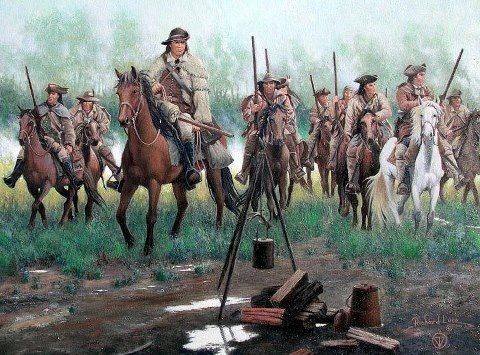 Patriot mounted militia led the attack
Battle or Fratricide?
In the early hours of June 20, Locke a militia band to Ramsour’s Mill, in order to meet Adam Reep, a local patriot spy who had intelligence on Loyalist troop location and strength. With the sun rising on Ramsour’s Mill, the the rebel militia quietly moved through the early morning fog. The patriot cavalry struck quickly in the hope of surprising the Loyalists. The Loyalists defenses repulsed them but then the rebel infantry moved up. The Tories were confused at first but then Moore and Welch rallied them to repel the patriot attack. At first the defenders held back the attackers, but eventually rebel marksmen worked their way in close and then the parties clashed hand to hand. Many on both sides were poorly armed. Confusion reigned, as this was a battle without uniforms. The Loyalists wore green pine twigs in their hats, while the patriots wore white paper on their hats. The fighting was vicious - neighbor against neighbor and even brother against brother. The fighting was personal as well as political - each side holding the other as traitor. And it went on for nearly two hours - a long time for such engagements. The Loyalists eventually began to fall into confusion, and many fled. When Colonel Rutherford arrived at the scene, the Loyalists requested a truce. But demanded an immediate surrender. As they parlayed, the remaining Loyalists fled, and only about 50 fell prisoner.
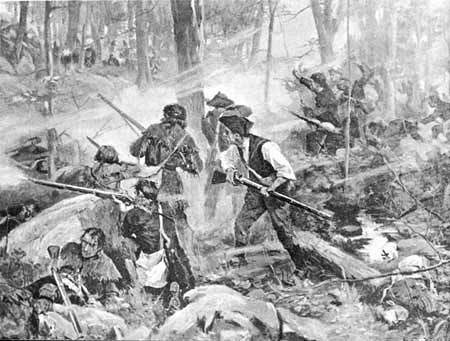 The fighting was intense - and personal for many
The Result
The action at Ramsour's Mill took seventy lives and wounded left two hundred. Most of the fallen , patriots and Loyalists, were buried in a mass grave. The defeat so badly demoralized the Loyalists in that part of North Carolina they never organized again in that area. As for the head strong Colonel Moore, he and around 30 of his men were able to reach General Cornwallis, now at Camden. But Cornwallis, incensed by the impetuous action of Moore, as well as the defeat, threatened him with charges for disobeying his orders.
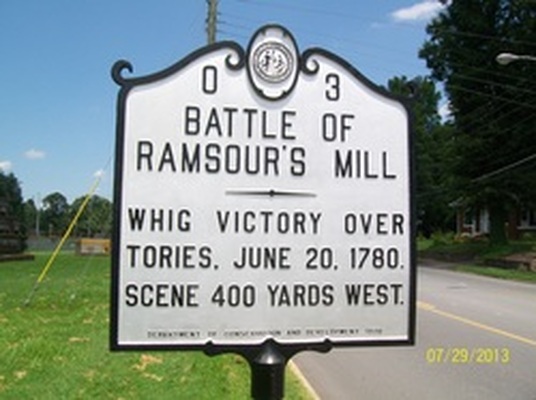
Aftermath
Ramsour’s Mill deprived Cornwallis of Loyalist recruits when he finally invaded western North Carolina. More importantly, patriot morale received a tremendous boost from the unlikely victory. And the Loyalists morale was such that they never could properly recruit from that area again.This indirectly led to the chain of events that culminated in the later patriot victory at King’s Mountain later that year. In a curious and ironic post script, Ramsour's Mill played another role in the struggle for the south, and Lord Cornwallis's ambitions. It was at Ramsour's Mill in January 1781 that Cornwallis paused his advance north to burn his wagons and excess baggage before resuming his futile pursuit of American General Nathanael Greene to the Dan River. This campaign exhausted Cornwallis's forces and he eventually fell back under heavy pressure from ambushes and skirmishes initiated by the rebels who now smelled blood. Cornwallis finally got to face Greene's resurgent army at a place called Guilford Court House - a "victory" that proved costly and heralded the beginning of the end for the southern strategy.
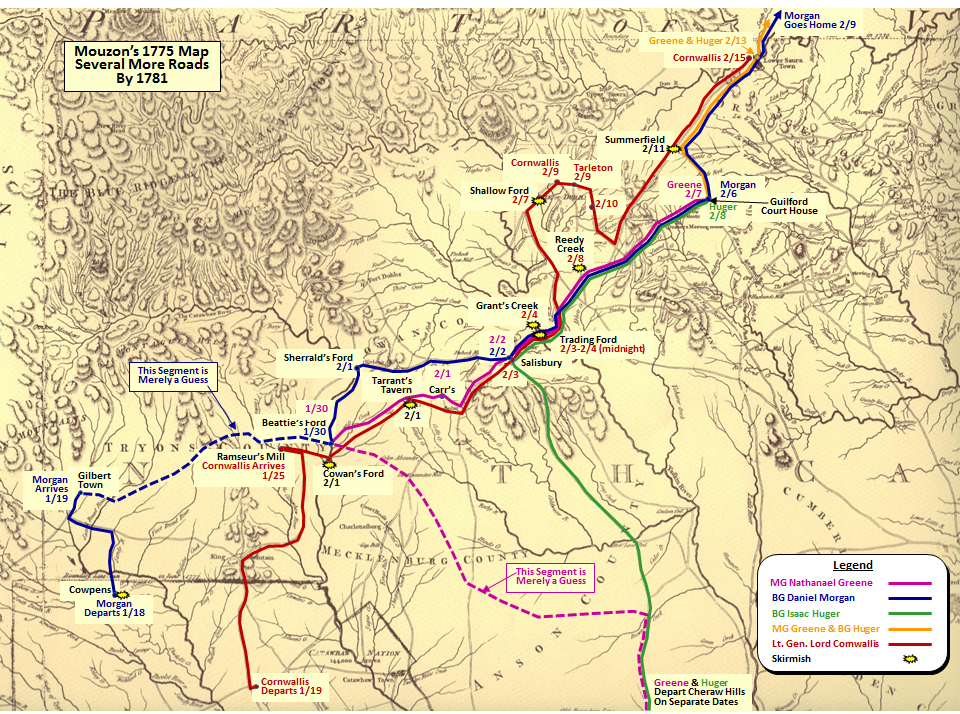 Ramsour's Mill played a role in fateful race to the Dan of 1781
March 21, 2017
People: The First President
Who was John Hanson?
The "Major Deegan Expressway" is a busy and famous road in the Bronx, named after someone nobody ever heard of. William Francis Deegan was a major in the Army Engineers in WWI, renowned civil engineer and NY Democratic politico. Deegan also helped found The American Legion.
Suburban Washington, DC, has its own version of the "Major Deegan." In Maryland, there is a road called the "John Hanson Highway." The John Hanson Highway is actually US Route 50 heading east from the District towards Annapolis. Just as in the Bronx, I am sure the thousands of drivers who transit that road each day have no idea who John Hanson was. They would be amazed to learn it was named after the nation's first president!
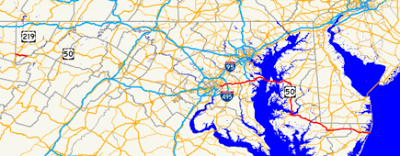 John Hanson Highway
Early Life
John Hanson was born in Mulberry Grove, Charles County, Maryland on 2 April 1721. He was the son of a planter of English ancestry. His grandfather, also named John, came to Charles County, Maryland as an indentured servant around 1661. In 1744 Hanson married a wealthy land owner (Martha Washington was no the only wealthy colonial woman to marry a future president). Within the decade Hanson had expanded the holding to over 1,300 acres. Also like Washington, Hanson entered public life. In 1750 he was elected sheriff and seven years later was elected to a seat in the Maryland Assembly. By all accounts he was a solid and efficient bureaucrat with a knack for finance.
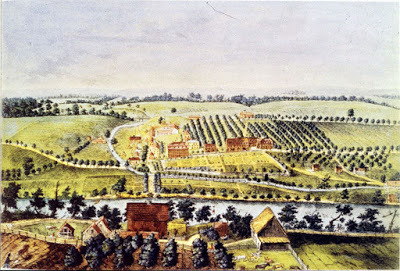 Maryland Plantation
Political Strife
As friction between England and her colonies grew during the 1760s, Hanson identified with those who supported American grievances. Hanson publicly denounced the Stamp Act of 1765 and drew instructions for the first Maryland delegates attending the Stamp Act Congress in New York. In 1769, Hanson signed the Non-Importation Resolution adopted by Maryland to protest the Townshend Acts - a series of measures introduced into the English Parliament by Chancellor of the Exchequer Charles Townshend. The Townshend Acts of 1767 imposed duties on glass, lead, paints, paper and tea imported into the colonies.
Move West
Hanson moved to Frederick County in the western part of Maryland in that same year. He took up life as a merchant. But he did not forgo politics. Instead, he became involved in the "extra-legal" political activities protesting British policy. In a word, he became a rebel. In 1774 Hanson chaired a town meeting to protest the Coercive Acts, the series of laws passed by the British Parliament to punish the colonies. Four of the acts were issued in direct response to the Boston Tea Party of December 1773. The following year, Hanson went on record declaring that armed force might be necessary to resist British tyranny. Those were serious words that clearly placed him at the center of rebellion.
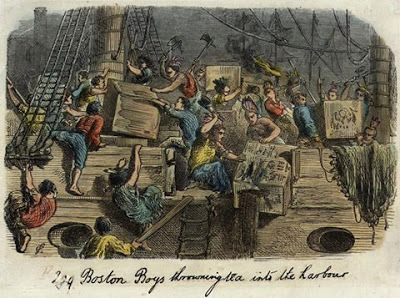 Coercive Acts were enacted in response to Boston's Tea Party
War Supplier
When armed conflict erupted in April 1775, Hanson used his fiscal expertise and organizational skills to help arm and equip soldiers of the Continental Army. As a result, soldiers from Frederick County were among the first soldiers to join General George Washington's army gathering at New York City. These were part of the famed First Maryland Regiment of the "Continental Line." Readers of the Yankee Doodle Spies series know that the main protagonist, Lieutenant Jeremiah Creed, was an officer leading a company from Frederick County as part of this esteemed outfit. The Marylanders, who made a gallant charge at the Battle of Long Island, were among the best equipped of Washington's soldiers - now we know it was thanks to one John Hanson.
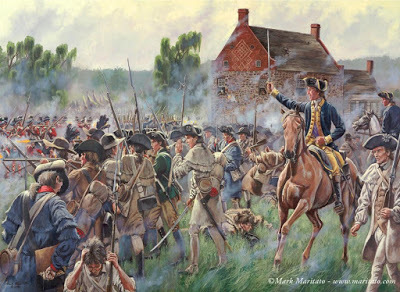 Mark Maritato's painting of the Maryland Line's gallantry on Long Island
(hangs in my office)
War Politician
Beginning in 1777, the people of Frederick sent Hanson back to the Maryland assembly for five consecutive terms. In 1779 he was appointed a delegate to the Continental Congress. In Philadelphia, Hanson was appalled by the sloppy administration of the war and their wasteful spending. He was an early supporter of a stronger government in the form of the Articles of Confederation. Now known as a weak central form of government, the Articles had many advantages and were in fact more authoritative than the unstructured Congresses that preceded it. Hanson delayed formal support until Virginia and other states gave up their claims to western lands. Once he accomplished that, Hanson became an ardent advocate and was elected as the first "President of the United States in Congress assembled" on 5 November, 1781.
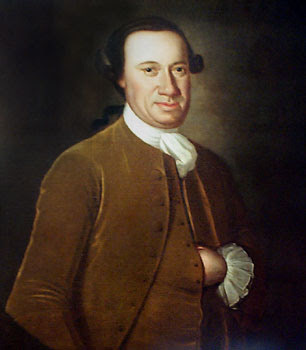 America's First President - John Hanson
Hanson's role was mostly ceremonial as under the Articles there was no executive. But he did oversee the day to day proceedings of the Congress. He corresponded with state governors, sent resolutions off to the various state assembles, and helped orchestrate legislative functions. Peace talks were initiated with Britain under Hanson. And he developed the structure of managing government through departments. Arguably, Hanson's most memorable war act was to accept the sword of General Charles Cornwallis from the victorious General Washington in November in 1781.
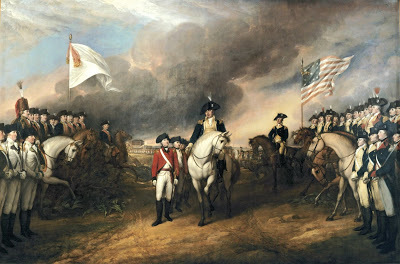 Washington would present the sword Cornwallis surrendered
at Yorktown to President John Hanson
An Early Demise
Hanson was plagued by ill health and left his position after only one year as president when he resigned from office. John Hanson died on 15 November 1783, in Oxon County, Maryland, just ten days before the last British troops left New York City. Although not listed among the pantheon of "Founding Fathers," John Hanson can best be remembered as a highly trustworthy and efficient public servant and, technically, the nation's first president.
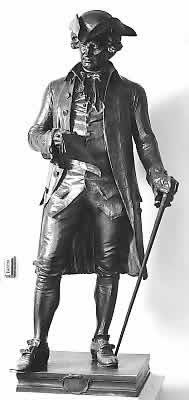 Statue of Hanson in Capitol's
National Statuary Hall Collection
The "Major Deegan Expressway" is a busy and famous road in the Bronx, named after someone nobody ever heard of. William Francis Deegan was a major in the Army Engineers in WWI, renowned civil engineer and NY Democratic politico. Deegan also helped found The American Legion.
Suburban Washington, DC, has its own version of the "Major Deegan." In Maryland, there is a road called the "John Hanson Highway." The John Hanson Highway is actually US Route 50 heading east from the District towards Annapolis. Just as in the Bronx, I am sure the thousands of drivers who transit that road each day have no idea who John Hanson was. They would be amazed to learn it was named after the nation's first president!
 John Hanson Highway
Early Life
John Hanson was born in Mulberry Grove, Charles County, Maryland on 2 April 1721. He was the son of a planter of English ancestry. His grandfather, also named John, came to Charles County, Maryland as an indentured servant around 1661. In 1744 Hanson married a wealthy land owner (Martha Washington was no the only wealthy colonial woman to marry a future president). Within the decade Hanson had expanded the holding to over 1,300 acres. Also like Washington, Hanson entered public life. In 1750 he was elected sheriff and seven years later was elected to a seat in the Maryland Assembly. By all accounts he was a solid and efficient bureaucrat with a knack for finance.
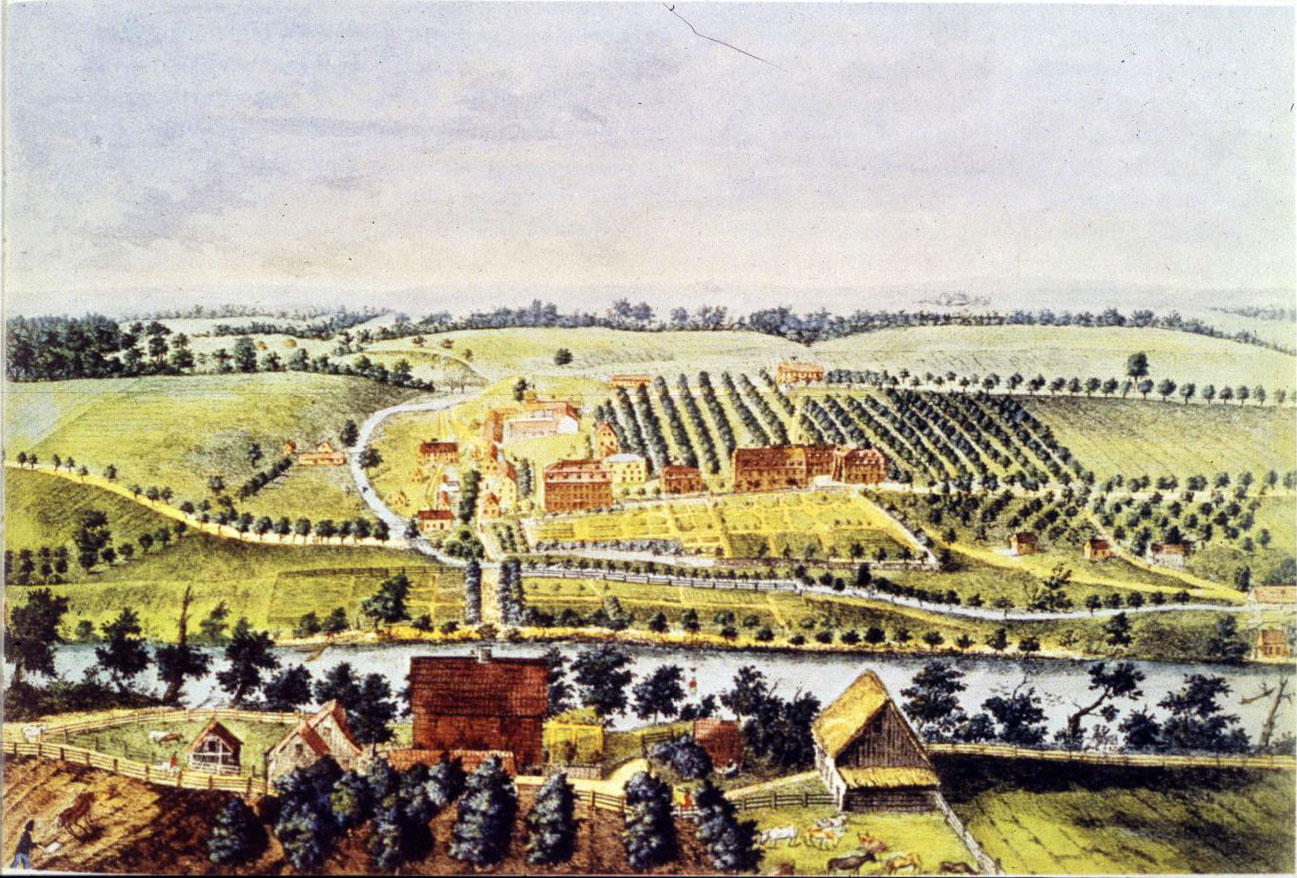 Maryland Plantation
Political Strife
As friction between England and her colonies grew during the 1760s, Hanson identified with those who supported American grievances. Hanson publicly denounced the Stamp Act of 1765 and drew instructions for the first Maryland delegates attending the Stamp Act Congress in New York. In 1769, Hanson signed the Non-Importation Resolution adopted by Maryland to protest the Townshend Acts - a series of measures introduced into the English Parliament by Chancellor of the Exchequer Charles Townshend. The Townshend Acts of 1767 imposed duties on glass, lead, paints, paper and tea imported into the colonies.
Move West
Hanson moved to Frederick County in the western part of Maryland in that same year. He took up life as a merchant. But he did not forgo politics. Instead, he became involved in the "extra-legal" political activities protesting British policy. In a word, he became a rebel. In 1774 Hanson chaired a town meeting to protest the Coercive Acts, the series of laws passed by the British Parliament to punish the colonies. Four of the acts were issued in direct response to the Boston Tea Party of December 1773. The following year, Hanson went on record declaring that armed force might be necessary to resist British tyranny. Those were serious words that clearly placed him at the center of rebellion.
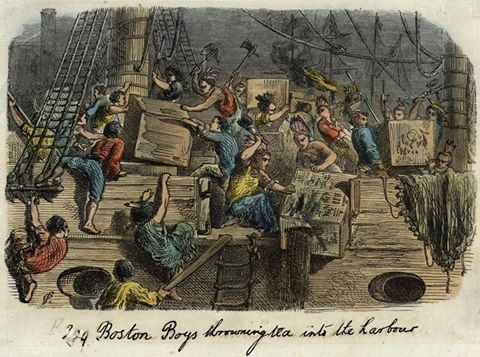 Coercive Acts were enacted in response to Boston's Tea Party
War Supplier
When armed conflict erupted in April 1775, Hanson used his fiscal expertise and organizational skills to help arm and equip soldiers of the Continental Army. As a result, soldiers from Frederick County were among the first soldiers to join General George Washington's army gathering at New York City. These were part of the famed First Maryland Regiment of the "Continental Line." Readers of the Yankee Doodle Spies series know that the main protagonist, Lieutenant Jeremiah Creed, was an officer leading a company from Frederick County as part of this esteemed outfit. The Marylanders, who made a gallant charge at the Battle of Long Island, were among the best equipped of Washington's soldiers - now we know it was thanks to one John Hanson.
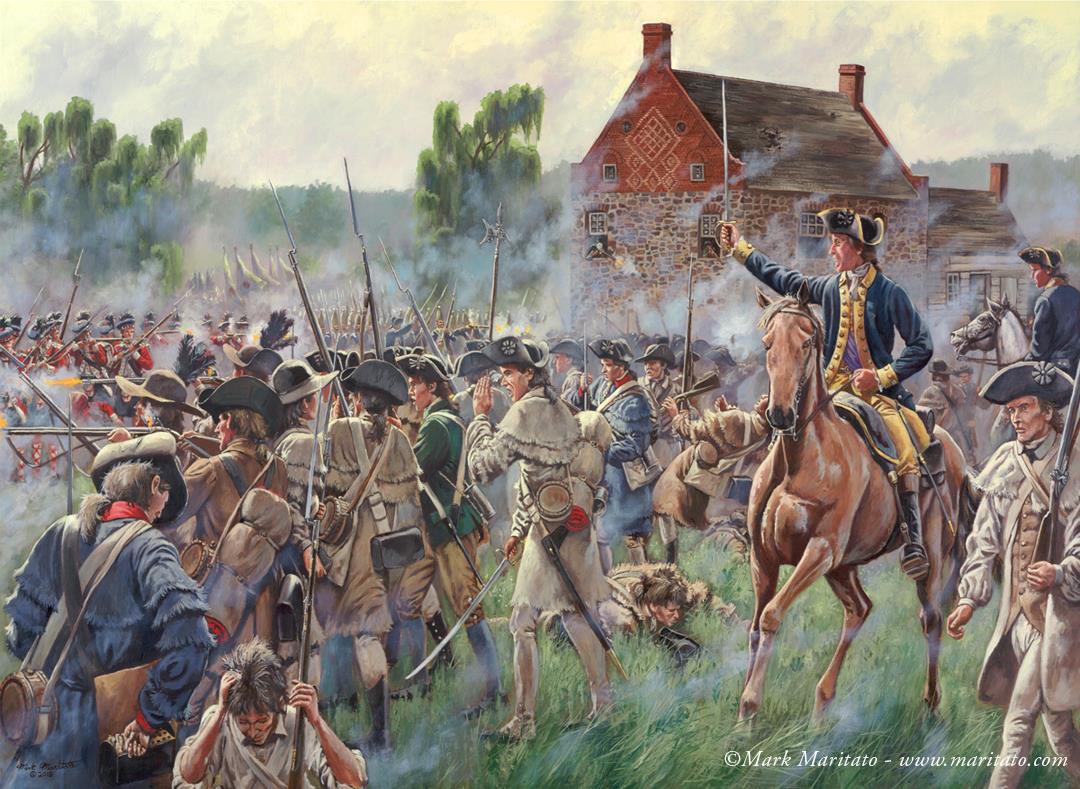 Mark Maritato's painting of the Maryland Line's gallantry on Long Island
(hangs in my office)
War Politician
Beginning in 1777, the people of Frederick sent Hanson back to the Maryland assembly for five consecutive terms. In 1779 he was appointed a delegate to the Continental Congress. In Philadelphia, Hanson was appalled by the sloppy administration of the war and their wasteful spending. He was an early supporter of a stronger government in the form of the Articles of Confederation. Now known as a weak central form of government, the Articles had many advantages and were in fact more authoritative than the unstructured Congresses that preceded it. Hanson delayed formal support until Virginia and other states gave up their claims to western lands. Once he accomplished that, Hanson became an ardent advocate and was elected as the first "President of the United States in Congress assembled" on 5 November, 1781.
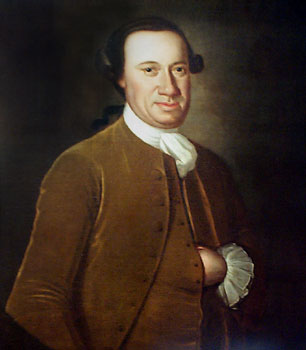 America's First President - John Hanson
Hanson's role was mostly ceremonial as under the Articles there was no executive. But he did oversee the day to day proceedings of the Congress. He corresponded with state governors, sent resolutions off to the various state assembles, and helped orchestrate legislative functions. Peace talks were initiated with Britain under Hanson. And he developed the structure of managing government through departments. Arguably, Hanson's most memorable war act was to accept the sword of General Charles Cornwallis from the victorious General Washington in November in 1781.
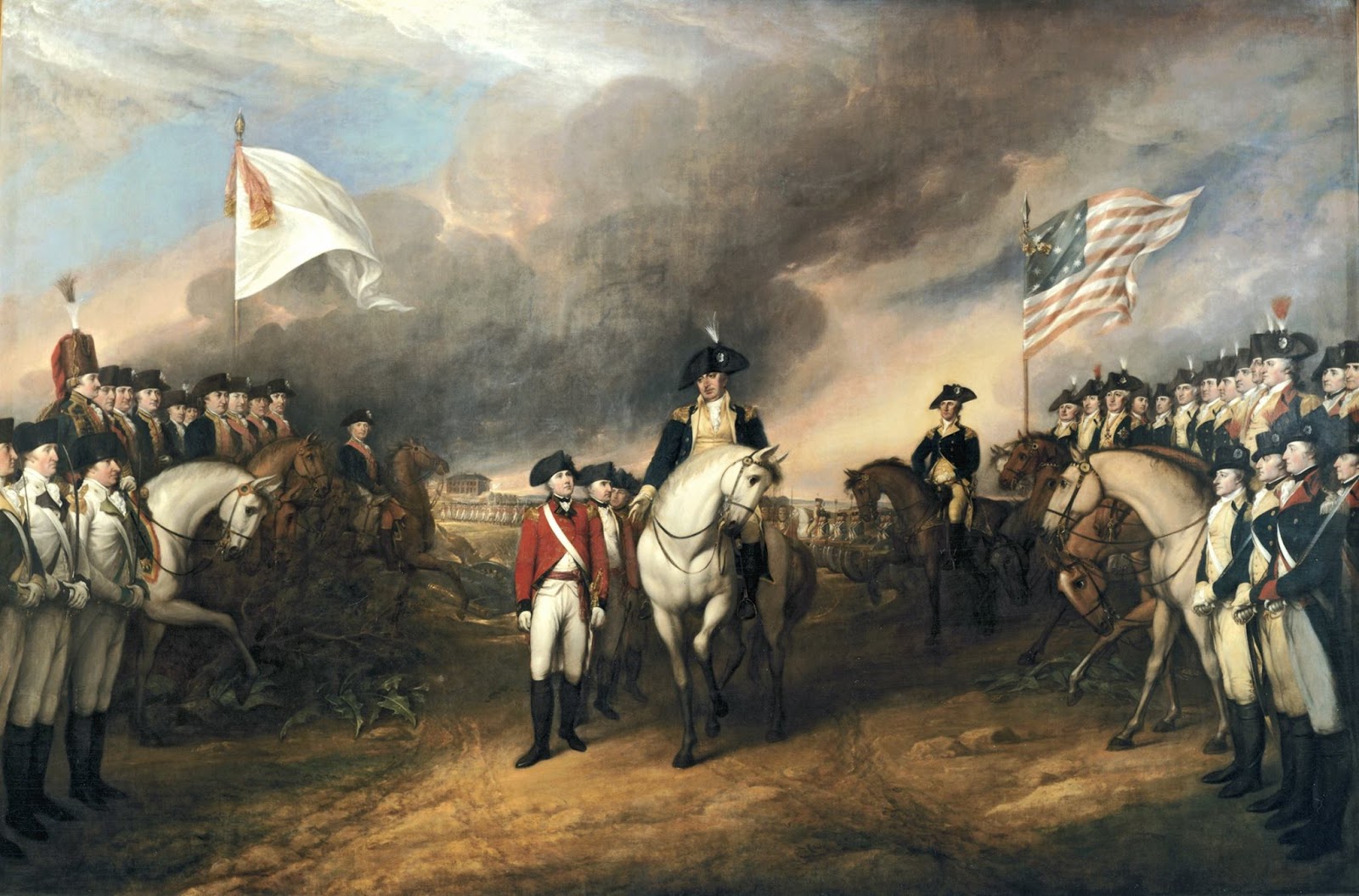 Washington would present the sword Cornwallis surrendered
at Yorktown to President John Hanson
An Early Demise
Hanson was plagued by ill health and left his position after only one year as president when he resigned from office. John Hanson died on 15 November 1783, in Oxon County, Maryland, just ten days before the last British troops left New York City. Although not listed among the pantheon of "Founding Fathers," John Hanson can best be remembered as a highly trustworthy and efficient public servant and, technically, the nation's first president.
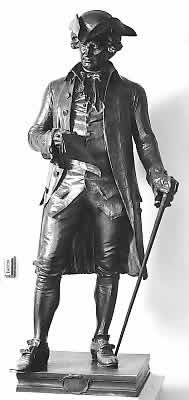 Statue of Hanson in Capitol's
National Statuary Hall Collection