
Jeremy Dean's Blog, page 824
February 26, 2013
How to Create Brand New Solutions From Old Objects and Ideas
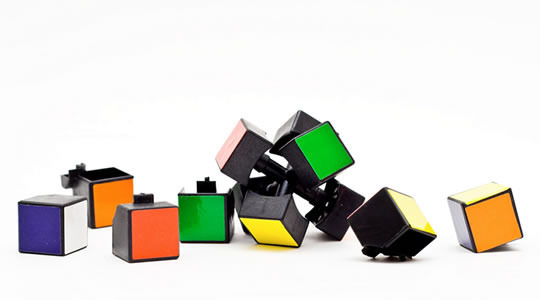
What psychologists call 'functional fixedness' is a common creativity-blocker. It's when thinking about an object or idea gets stuck in a rut. It's like the old saying that when you've got a hammer in your hand, everything looks like a nail.
It comes up all the time: at home, work, family, wherever. We all get stuck thinking in habitual ways about objects, ideas or even people at some time. To arrive at new solutions, we have to escape from these stale, established ways of thinking.
Here's a little test you can try out to see if you can escape from functional fixedness:
"...consider the two-rings problem, in which the participant has to fasten together two weighty steel rings using only a long candle, a match, and a 2-in. cube of steel [and] melted wax is not strong enough to bond the rings." (McCaffrey, 2012)
Any ideas?
The key to the problem is remembering that a candle contains a wick and wicks aren't just for burning, they are also pieces of string, which can be used for tying.
Once you get this flash of insight and escape from the fixed function of a candle (which is further reinforced by the presence of a match), the problem seems incredibly obvious. But until that moment you might as well be tackling Fermat's Last Theorem.
That's why Tom McCaffrey, a psychologist at UMass, has developed the 'Generic-Parts-Technique' to help us escape from functional fixedness. It simply involves asking two questions:
Can you break the problem down more?
Does the new, simpler, more generic description imply a use?
The thinking for a candle might go: first you break the candle down into its components, the wick and the string. Then you ask yourself what uses you can put a wick and a string to.
McCaffrey gave this and other similar puzzles to people to see if the technique works. Those in the control group only solved about 50% of these sorts of little puzzles. For those using the Generic-Parts-Technique, though, the success rate went up to 83%.
This works rather neatly for the type of puzzles tested in this study, but would it work in the real world? Well, it will depend on whether the answer to your problem already exists and is known to you, but in a different form.
There is evidence that this is often the case. A recent book, 1001 Inventions That Changed the World , looked at innovations both ancient and modern, and found that almost all involved co-opting existing items and ideas for new uses.
The Generic-Parts-Technique is useful because it's a great way of tackling complex problems. The first rule encourages you to break the problem down into its component parts and this is almost always a sensible move. The mind can sometimes be much more creative with abstractions because you can start ignoring all the things you know about, say, a hammer, and start to see it in a new light.
The second rule, thinking about alternative uses, encourages a kind of practicality which is divorced from habitual uses. By going around this loop, through abstractions and alternative uses, you create sparks of ideas which may well help you through that mental road-block.
Image credit: Patrizio Cuscito
 How to make and break habits
About 50% of our everyday lives is habitual. While we're awake, then, about half the time we are repeating the same actions or thoughts in the same contexts. Automatically. Without thinking. It's part of the reason change is so hard.
My new book, 'Making Habits, Breaking Habits', gives you a blueprint for how to create new habits and tackle bad ones, whatever they are, and how to make it automatic so that willpower is no longer an issue.
→ You can dip into the first chapter, or check it out on Amazon.com or Amazon.co.uk
→ Download amazing, 100% free e-books on meditation, self-improvement and wisdom by a Himalayan mystic. Go to http://www.omswami.com/p/free-ebooks.html or http://www.omswami.com.
→ Latest Novel by Psychologist David Liebert--A Psychological Gritty Tale of Socipathic Lust and Revenge.






February 25, 2013
Can People’s Personalities Change?

For many years personality psychologists gave the same answer as any pessimist: no, people's personalities don't change.
This was even more true once they got to 30-years-old. By that time, it was thought that if people preferred their own company or were overly neurotic, they tended to stay that way.
In the last 15 years, though, this view has changed. Instead of personality being set in stone at 30, now evidence is emerging that there is some change. In fact people don't give exactly the same answers to personality questionnaires at different times in their lives. But are these shifts meaningful? Could the differences be more about the tests than real life?
To settle this you've got to look at whether the typical changes in personality over time really affect people's lives. For example, the personality trait of high neuroticism is associated with mental health problems. So, does a decrease in neuroticism lead to a significant increase in how satisfied a person is with their life?
This is exactly what Boyce et al. (2013) looked at for all five aspects of personality: extroversion, agreeableness, openness-to-experience, conscientiousness and, of course, neuroticism. What they wanted to see was if changes in these over the years translated into changes in well-being.
They used data from a large Australian survey of 8,625 people over two years. What kind of difference had two years made to their lives? Had there personalities changed? And if so, had their satisfaction with life changed with it?
Firstly, they confirmed that personality was the strongest predictor of satisfaction with life. This is well-established and helps explain why some people have everything and are never satisfied and some people have next-to-nothing and seem quite happy with life. It's not just what you have that makes you satisfied (or not), it's how you think about it. And those habits of thought are heavily influenced by personality.
Secondly, they confirmed that people's personalities had shifted over the two-year period. Indeed the degree of personality change in those two years was equivalent to changes in other demographic variables such as marital status, employment and income.
Most importantly, though, they found that these changes in personality were associated with significant shifts in satisfaction with life. The strength of the effect was about twice that for all the other aspects of circumstances combined. In other words, the typical shift in personality has a greater effect on your satisfaction with life than all the typical changes in circumstances, like income or marital status, all added up together.
This shows quite convincingly that not only do people change over time, but that these shifts in personality can have significant effects on how we experience our lives.
Image credit: Marco Belluci
How to make and break habits
About 50% of our everyday lives is habitual. While we're awake, then, about half the time we are repeating the same actions or thoughts in the same contexts. Automatically. Without thinking. It's part of the reason change is so hard.
My new book, 'Making Habits, Breaking Habits', gives you a blueprint for how to create new habits and tackle bad ones, whatever they are, and how to make it automatic so that willpower is no longer an issue.
→ You can dip into the first chapter, or check it out on Amazon.com or Amazon.co.uk
→ Download amazing, 100% free e-books on meditation, self-improvement and wisdom by a Himalayan mystic. Go to http://www.omswami.com/p/free-ebooks.html or http://www.omswami.com.
→ Latest Novel by Psychologist David Liebert--A Psychological Gritty Tale of Socipathic Lust and Revenge.



February 22, 2013
The Illusion of Control: Are There Benefits to Being Self-Deluded?

The 'illusion of control' is this: people tend to overestimate their perceived control over events in their lives. It's well documented and has been tested over-and-over in lots of different studies over four decades.
Here's an example: you choose an apple which tastes delicious. You assume you are very skilled at choosing apples (when in fact the whole batch happens to be good today).
Another: you enter the lottery and win millions. You assume that this is (partly) a result of how good your lucky numbers are (in fact lotteries are totally random so you can't influence them with the numbers you choose. Although most of us know and accept this, we still harbour an inkling that maybe it does matter which numbers we choose).
Sometimes this illusion manifests as magical thinking. In one study participants watched another person try to shoot a miniature basketball through a hoop (Pronin et al., 2006). When participants willed the player to make the shot, and they did, they felt it was partly down to them, even though they couldn't possibly be having any effect.
It's like pedestrians in New York who still press the button to get the lights to change, despite the fact they do nothing. Since the late 80s all the traffic signals have been controlled by computer, but the city won't pay to have the buttons removed. It's probably just as well: they help boost people's illusion of control. We feel better when we can do something that feels like it might have an effect (even if it doesn't).
A beneficial illusion?
It's sometimes argued that the illusion of control is beneficial because it can encourage people to take responsibility. It's like when a person is diagnosed with an illness; they want to take control through starting medication or changing their diet or other aspect of their lifestyle.
Similarly, studies find that hospital patients who are able to administer their own painkillers typically give themselves lower doses than those who have them prescribed by doctors, but they experience no more pain (Egan, 1990: What does it mean to a patient to be "in control").
Feeling in control can also urge us on to do things when the chances of success are low. Would you apply for that job if you knew how little control you had over the decision? No. But if you never apply for any jobs, you can't get them. So we pump ourselves up, polish our résumé and practice our interview technique.
But the illusion of control isn't all roses.
To return to the discussion of lotteries, we can see the illusion of control operating in the financial markets. Traders often feel they have more control over the market than they really do. Indeed one study has shown that the more traders think they are in control, the worse their actual performance (O'Creevy & Nicholson, 2010). A word of caution there for those who don't respect the forces of randomness.
More generally, some argue that the illusion of control stops us learning from our mistakes and makes us insensitive to feedback. When you feel you're in charge, you are more likely to ignore the warning signals from the environment that things are not under your control. Indeed an experiment has shown that the more power you feel, the stronger the illusion of control becomes (Fast et al., 2009).
Illusion of futility
So far, so orthodox. What's fascinating is the idea that the illusion of control itself may be an illusion, or at least only part of the story.
What if the illusion of having control depends heavily on how much control we actually have? After all, we're not always totally out-of-the-loop like the experiments above suggest. Sometimes we have a lot of control over the outcomes in our life.
This has been recently tested out in a series of experiments by Gino et al. (2011). What they found was that the illusion of control flips around when control over a situation is really high. When participants in their studies actually had plenty of control, suddenly they were more likely to underestimate it.
This is a pretty serious challenge to the illusion of control. If backed up by other studies, it reverses the idea that the illusion of control is usually beneficial. Now we're in a world where sometimes the illusion is keeping us back.
For example, applying for more jobs increases the chance of getting one, exercise does make you more healthy, buying a new car does make you poorer. All these are areas in which we have high levels of control but which we may well be assuming we don't.
This effect will have to be renamed the illusion of futility. In other words: when you have high control, you underestimate how much what you do really matters.
Image credit: Jason Michael
How to make and break habits
About 50% of our everyday lives is habitual. While we're awake, then, about half the time we are repeating the same actions or thoughts in the same contexts. Automatically. Without thinking. It's part of the reason change is so hard.
My new book, 'Making Habits, Breaking Habits', gives you a blueprint for how to create new habits and tackle bad ones, whatever they are, and how to make it automatic so that willpower is no longer an issue.
→ You can dip into the first chapter, or check it out on Amazon.com or Amazon.co.uk
→ Download amazing, 100% free e-books on meditation, self-improvement and wisdom by a Himalayan mystic. Go to http://www.omswami.com/p/free-ebooks.html or http://www.omswami.com.



February 19, 2013
Reconstructing the Past: How Recalling Memories Alters Them

Recently the neurologist and author Oliver Sacks recalled a vivid childhood memory, recounted in his autobiography, Uncle Tungsten .
.
During WWII he lived in London during the Blitz, and on one occasion:
"...an incendiary bomb, a thermite bomb, fell behind our house and burned with a terrible, white-hot heat. My father had a stirrup pump, and my brothers carried pails of water to him, but water seemed useless against this infernal fire—indeed, made it burn even more furiously. There was a vicious hissing and sputtering when the water hit the white-hot metal, and meanwhile the bomb was melting its own casing and throwing blobs and jets of molten metal in all directions."
Except when his autobiography came out, one of his older brothers told him he'd misremembered the event. In fact both of them had been at school when the bomb struck so they could not have witnessed the explosion.
The 'false' memory, it turned out, was implanted by a letter. Their elder brother had written to them, describing the frightening event, and this had lodged in his mind. Over the years the letter had gone from a third-person report to a first-person 'memory'.
Turning the memory over in his mind, Sacks writes that he still cannot see how the memory of the bomb exploding can be false. There is no difference between this memory and others he knows to be true; it felt like he was really there.
***
This sort of experience is probably much more common than we might like to imagine. Many memories which have the scent of authenticity may turn out to be misremembered, if not totally fictitious events, if only we could check. Without some other source with which to corroborate, it is hard verify the facts, especially for events that took place long ago.
That these sorts of distortions to memory happen is unquestioned, what fascinates is how it comes about. Does the long passage of time warp the memory, or is there some more active process that causes the change?
A study published recently sheds some light on this process and provides a model for how memories like Sack's become distorted.
In the experiment participants took part in a self-guided museum tour where they were told to stop at particular exhibits along the way (St. Jacques & Schachter, 2013). These stops on the museum tour are the experimental stand-ins for the events you've experienced across your life.
Two days after the tour participant were asked to look at pairs of photos of exhibits in the museum. Sometimes they were shown two exhibits at which they had stopped, other times they were exhibits in the museum that they hadn't visited.
This is something like what goes on when you sit looking out of the window on a wet Sunday afternoon, thinking back to childhood memories. Images come back to you in no particular order: some of which may be true memories, others things you've been told or simply fabricated. They are jumbled; the sources unclear and the meanings opaque.
In the study participants returned for a third session and were shown photos and asked whether they'd stopped at the exhibit or not. Once again, some of the time they were shown pairs of exhibits they had or hadn't looked at and other times real and false memories were mixed up together.
Across the three sessions, then, the researchers had simulated the recall of the jumble of real and false memories that are likely to be returned to consciousness when we try to recall past events. Real aspects of a memory get mixed up with false aspects and the whole confection gets stirred up each time we recall it.
In the study they found that participants' memories were both enhanced and distorted by the process of recall. People found it easier to remember those exhibits which they were subsequently shown photographs of. This shows that merely recalling a memory is enough to strengthen it.
This is one aspect of the fact that memory is an active, reconstructive process; recalling something is not a neutral act, it strengthens that memory in comparison to the others.
But the study also demonstrated that false memories were also strengthened. In other words when participants falsely recalled seeing a particular exhibit in the second session, this made it more likely to be flagged up as a 'real' memory in the third session.
What this is showing is how false memories can grow in the mind. Of course, in real life things don't happen as cleanly as they do in the psych lab. Our memories and fantasies are intertwined, crossing over and interfering with one another. Thinking about the past continues this process of interweaving.
Something like this may have happened to Sacks. Indeed, while he didn't actually witness the bomb blast described above, he had been there at an earlier incident, describing it thus:
"One night, a thousand-pound bomb fell into the garden next to ours, but fortunately it failed to explode. All of us, the entire street, it seemed, crept away that night (my family to a cousin’s flat)—many of us in our pajamas—walking as softly as we could (might vibration set the thing off?). The streets were pitch dark, for the blackout was in force, and we all carried electric torches dimmed with red crêpe paper. We had no idea if our houses would still be standing in the morning."
His brother confirmed that he had been there that time.
***
Anyone who thinks that the main aim of memory is fidelity will find this study disheartening. It seems to underline the fragile nature of memory and the human mind in general.
But there is a way to look at it that is not only more positive, but also hints at ways to make valuable personal changes.
What emerges is that autobiographical memory is not just about accurately remembering what happened when, it is an active construction of the self. How you think about the past helps generate your experience in the moment as well as the decisions you take in the future.
If that autobiographical memory can change based on how you recall the past, then our pasts are not gone and forgotten, they are living parts of who we are. Choosing to recall certain events rather than others is a way of choosing how we live now and what decisions we make in the future.
What's done maybe done, but it's still open to reinterpretation.
Image credit: Joel-Evelyn-Francois
How to make and break habits
About 50% of our everyday lives is habitual. While we're awake, then, about half the time we are repeating the same actions or thoughts in the same contexts. Automatically. Without thinking. It's part of the reason change is so hard.
My new book, 'Making Habits, Breaking Habits', gives you a blueprint for how to create new habits and tackle bad ones, whatever they are, and how to make it automatic so that willpower is no longer an issue.
→ You can dip into the first chapter, or check it out on Amazon.com or Amazon.co.uk
→ Download amazing, 100% free e-books on meditation, self-improvement and wisdom by a Himalayan mystic. Go to http://www.omswami.com/p/free-ebooks.html or http://www.omswami.com.



February 14, 2013
The Single Most Effective Method for Influencing People Fast

Influence techniques vary considerably in how effective, ethical and easy to perform they are. At the easy, more ethical end of the spectrum, is affirming someone's right to choose. This is a benign strategy which happens to have the handy side-effect of increasing persuasion.
But what if you are looking to use a little more effort to get a lot more persuasion-power? Then perhaps the disrupt-then-reframe (DTR) technique is for you.
A word of warning, though: the DTR technique is more of a cheap (but very effective) trick which some might find morally questionable.
OK, with the health warning over, here's what they did in the original study which kicked off this whole line of research.
$3 versus 300 pennies
Davis and Knowles (1999) demonstrated the DTR technique by selling note cards door-to-door for a local charity. Here are two different strategies they used:
In the 'normal' condition they told people it was $3 for 8 cards. Using this they made sales at 40% of households.
In the DTR condition they first told people it was 300 pennies for 8 cards, immediately followed by: "...which is a bargain!" This form of words encouraged 80% of households to buy the cards.
It's a huge effect for what is only a small change in the form of words. So, how and why does this work?
DTR works by first disrupting routine thought processes. The pitch is deliberately made hard to think about. In this case people's attention is distracted while they try to process this cryptic '300 pennies' and why anyone would mention the price in pennies rather than dollars.
Hot on the heels of the disrupt, in comes the reframe: in this case the words: "It's a bargain!" While people are distracted by the price in pennies (for a second or two anyway), they are more likely to just accept the suggestion that the cards are a bargain.
The disruption only works for a second; the reframe has to come immediately, before people's critical faculties come back online.
Surprisingly powerful
Many might wonder if this effect was a one-off which wouldn't work elsewhere. This looks unlikely since the DTR technique has now been tested in 14 different studies on hundreds of participants (Carpenter & Boster, 2009).
It's been shown to increase charity donations, encourage people to fill out surveys and help change their attitudes. It is even surprisingly effective in sales situations where people are normally wary of these sorts of shenanigans.
The types of disruptions used can be quite childish. In one study researchers trying to boost charity bake sales referred to 'cupcakes' as 'halfcakes'. In another to solicit charity donations, they flipped the phrase 'some money' to make it 'money some'. Neither quite make sense, and that's the point; the disruption should only be mildly confusing, not total gibberish.
On average Carpenter and Boster found that DTR is stronger than the other standard persuasion techniques, including affirming autonomy.
Even if you don't want to use it yourself, the DTR technique is useful to know about. If a salesman says something confusing ("Only lady one owner!"), then quickly sticks you with their reframe ("Between you and me this car is incredible value.") make sure you take your time before making a decision and treat the reframe with scepticism.
It's amazing how such a simple disruptive manipulation has the power to befuddle.
Image credit: Patrick Brosset
How to make and break habits
About 50% of our everyday lives is habitual. While we're awake, then, about half the time we are repeating the same actions or thoughts in the same contexts. Automatically. Without thinking. It's part of the reason change is so hard.
My new book, 'Making Habits, Breaking Habits', gives you a blueprint for how to create new habits and tackle bad ones, whatever they are, and how to make it automatic so that willpower is no longer an issue.
→ You can dip into the first chapter, or check it out on Amazon.com or Amazon.co.uk
→ Download amazing, 100% free e-books on meditation, self-improvement and wisdom by a Himalayan mystic. Go to http://www.omswami.com/p/free-ebooks.html or http://www.omswami.com.



February 13, 2013
Cognitive Biases: Why We Make Irrational Decisions
Over the decades psychologists have discovered all kinds of biases in how we think.
Some tell us why the incompetent don't know they're incompetent, others why it's difficult to estimate our future emotions and some why we feel more transparent to others than we really appear.
Many of these biases result from our minds using little short-cuts to help us navigate through a complicated world. Unfortunately the result can be that we reach irrational decisions.
Understanding how these biases operate may help you make better decisions in all sorts of situations, both at home and work. More than that, though, it will help you understand your own mind.
The Dunning-Kruger Effect: Why The Incompetent Don’t Know They’re Incompetent - The Dunning-Kruger effect is the finding that the poorest performers are the least aware of their own incompetence.
The Worse-Than-Average Effect: When You’re Better Than You Think - People underestimate their ability at stereotypically difficult tasks like playing chess, telling jokes, juggling or computer programming.
Why You’re a Sucker for the Impact Bias - Why we are often poor at predicting how future events will affect us emotionally.
The Hindsight Bias: I Knew It All Along! - How to correct for a bias that stops us learning from our mistakes.
How to Overcome the Egocentric Bias - Perspective-taking offers a way around the egocentric bias.
See How Easily You Can Avoid The Memory Bias - The type of memories we retrieve to make decisions are often biased to unusual examples that are either very positive or very negative.
Why Your Future Self is an Emotional Mystery: The Projection Bias - People directly project their current emotional state into the future, forgetting their current feelings will likely change.
How To Avoid Choosing the Wrong Job or House: Fight the Distinction Bias - There are reliable biases in the way we make comparisons that mean we don't always choose what maximises our future happiness.
4 Belief Biases That Can Reduce Pleasure - How beliefs can bias our decisions.
Does Delaying Decisions Lead to Better Outcomes? - Decision-makers move away from the default after a delay.
The Belief in a Just World: A Fundamental Delusion - Does what goes around come around? Do you get what's coming to you? Do you reap what you sow?
Why Society Doesn’t Change: The System Justification Bias - Have you ever wondered why society hardly ever changes?
The Availability Bias: Why People Buy Lottery Tickets - Shark attacks, murders and lottery wins: vivid events are more likely to affect judgement.
The Illusion of Transparency - Other people can't read your mental state as well as you think.
Image credit: David Goehring
How to make and break habits
About 50% of our everyday lives is habitual. While we're awake, then, about half the time we are repeating the same actions or thoughts in the same contexts. Automatically. Without thinking. It's part of the reason change is so hard.
My new book, 'Making Habits, Breaking Habits', gives you a blueprint for how to create new habits and tackle bad ones, whatever they are, and how to make it automatic so that willpower is no longer an issue.
→ You can dip into the first chapter, or check it out on Amazon.com or Amazon.co.uk
→ Download amazing, 100% free e-books on meditation, self-improvement and wisdom by a Himalayan mystic. Go to http://www.omswami.com/p/free-ebooks.html or http://www.omswami.com.



February 12, 2013
Here’s a Quick Way to Fire Up Your Motivation

Before reading a new article in the Journal of Personality and Social Psychology, I never thought of a backup plan as something that might be motivating in itself.
Surely all the benefit of a backup plan accrues when the main plan goes wrong and there's something to fall back on?
While coming up with a 'plan b' might be necessary, I always thought of it more as a chore. (Ho-hum now I've made my main plan, instead of getting started, I've got to spend more time thinking about an alternative plan).
But when you start to think about it, backup plans don't just make sense as, well, backup plans, but also as a means of driving you forward at the precarious early stages of a project.
That's because our motivation to succeed is heavily tied in with our expectations of success. No one drives to a shop that they are pretty sure is closed. What feeds our motivation is knowing that we have a good chance of achieving the goal.
It sounds obvious but it leads to a non-obvious conclusion. It means that a little more time spent thinking about a backup plan or alternative ways to get where you're going will help you, even if you never have to actually use them.
Opportunity drives motivation
A new study demonstrates this nicely using a coffee shop customer loyalty programme (Huang & Zhang, 2013).
Participants were told they had to get a card stamped six times to get a free coffee. One group in the study, though, was manipulated into thinking that they had more ways of collecting stamps than the other group. So, some people thought there were more ways of reaching their goal than others.
Again: actually there weren't more ways of getting stamps—the experimenters were trying to remove the better known advantage of a backup plan (that you might need to use it) and just look at the effects on motivation of thinking there are more ways to achieve your goal.
What they found was that those who thought there were more alternatives for collecting the loyalty stamps were almost twice as likely to join the programme.
They also checked this out in different contexts and got the same results again and again. When people thought there were more opportunities to donate blood, write reviews of movies, or memorise word lists, they demonstrated more motivation.
Backfiring backup plans
Backup plans, then, can sometimes have a motivating effect, but not always; there is a twist in the tail.
What about when you're half-way through your project or towards that goal of yours? You're starting to feel very confident that you will get there. What kind of effect do more alternatives for reaching your goal have then?
When Huang and Zhang looked at this, they found the effect reversed.
When people already had five stamps on their loyalty card, more ways to get the sixth and final one actually de-motivated them. Similarly when people thought the blood drive had almost reached its target, rather than being right at the beginning, fewer options lowered their motivation to donate.
This might seem a little strange, but it chimes with other research that has looked at the psychology of choices. Generally speaking, choices are more pleasurable at the beginning of a project. But once we're on the road to success, options go from being a pleasure to a pain.
So backup plans, or alternative means of achieving our goals, start out reassuring, but end up as distractions.
This means that the use of options in motivation should be arranged like a funnel. At the start (the wide end), more options pump up initial motivation; but later on, when success is all but assured, options slow us down. Once the end is in sight (the narrow end), it's far better to forget about backup plans and push on for victory.
Just the same is true when motivating others: give people options to get them interested at the start, but towards the end, they should be reduced to avoid distraction.
Image credit: Marc Falardeau
How to make and break habits
About 50% of our everyday lives is habitual. While we're awake, then, about half the time we are repeating the same actions or thoughts in the same contexts. Automatically. Without thinking. It's part of the reason change is so hard.
My new book, 'Making Habits, Breaking Habits', gives you a blueprint for how to create new habits and tackle bad ones, whatever they are, and how to make it automatic so that willpower is no longer an issue.
→ You can dip into the first chapter, or check it out on Amazon.com or Amazon.co.uk



February 11, 2013
The Brainstorming Tweak: How to Boost Creativity in Groups

For many years brainstorming has been a very popular way for groups to generate new ideas, especially in business.
This is despite the fact that many studies have shown that groups actually produce fewer and less creative solutions than people working on their own. This was confusing: we are used to thinking that 'many hands make light work', and 'two heads are better than one'.
The research showed, though, that many hands and heads made people nervous, lazy and blocked (for a more in-depth discussion see: Brainstorming Reloaded). In fact people perform better on their own at coming up with new ideas than in a brainstorming group.
This is highly perplexing. What we see from the creativity research is that great ideas often come from bolting together two so-so ideas. In other words: brainstorming should work.
Electronic Brainstorming
Now what's emerging from the productivity research is that brainstorming is a good technique, but it needs a little tweaking.
Two candidates that provide a new twist on a promising formula are 'Brainwriting' and 'Electronic Brainstorming'. Both use the basic brainstorming rules developed almost half a century ago by the advertising executive, Alex Faickney Osborn:
Don’t criticize.
Focus on quantity.
Combine and improve ideas produced by others.
Write down any idea that comes to mind, no matter how wild.
The pretty simple twist in Electronic Brainstorming is that it's done online using any kind of internet chat method, like Microsoft Messenger. The only requirement is that all the participants can see the other ideas as they scroll down the screen.
Brainwriting, on the other hand, is a little more old-school and involves sitting together and writing down your ideas on Post-It notes. Participants initial their ideas and put them in the centre of the table for others to see. No talking is allowed.
A new study has compared both of these techniques and found that it is Electronic Brainstorming that produces the most non-redundant new ideas (Michinov, 2012).
The drawback of the Brainwriting method is that each person has to reach forward and pick up other ideas and people don't do this as much as they should.
In contrast, Electronic Brainstorming allows (forces, even) every member to see what the other's are saying with little or no effort. It means that the group is exposed to the flow of ideas with very little effort.
On top of this it solves some of the problems with face-to-face brainstorming. When it's done online, each person doesn't have to wait for the others to stop talking and is less worried about being evaluated (plus brainstomers don't have to be in the same country!).
This probably helps to explain why people report finding Electronic Brainstorming to be a satisfying experience.
One final tip: Electronic Brainstorming research suggests the best results are gained in groups of 8 or more.
Image credit: Matthias Weinberger
How to make and break habits
About 50% of our everyday lives is habitual. While we're awake, then, about half the time we are repeating the same actions or thoughts in the same contexts. Automatically. Without thinking. It's part of the reason change is so hard.
My new book, 'Making Habits, Breaking Habits', gives you a blueprint for how to create new habits and tackle bad ones, whatever they are, and how to make it automatic so that willpower is no longer an issue.
→ You can dip into the first chapter, or check it out on Amazon.com or Amazon.co.uk



February 8, 2013
How to Recapture the Simple Pleasures of Childhood

One of the great things about being a regular unspoiled kid is that you hardly have any money.
While all your basic needs as a human being are met—food, shelter and so forth—the actual income of the average child is paltry. And, in some ways, that's a wonderful thing.
I'm not sure I fully appreciated this at the time, but looking back I can see it is true.
When I got a new toy or was taken to the cinema, it seemed all the more exciting, not because I was deprived, but because I perceived it as a special and rare gift.
As an adult I can easily make choices that would have dazzled my younger self: should I so desire, I can buy more candy than I can possible eat, go to the cinema every day and order piles of brand new books. Not that I appreciate these things now of course.
But perhaps it's possible to recapture some of that excitement about relatively simple pleasures using very simple means. Quoidbach and Dunn (2013) ask whether one way of appreciating what we already have is to voluntarily give it up for a period.
I'm sure they'll be the first to admit that it's far from a novel suggestion, but surprisingly they couldn't find anyone who has scientifically tested whether it really works and why.
In their study they had one group of participants give up chocolate for a week while a second group were given a big bag and told to gorge. A third group were given no chocolate-related instructions—they acted as a control.
When the participants returned to the lab a week later they tried some chocolate and their ratings were compared with those they'd provided a week ago.
Sure enough the abstainers got more pleasure from the chocolate than either the control or the gorging group. Not only that but the boost to pleasure was due to increased savouring. The experience became more enjoyable because they really concentrated on it.
There's one word of caution here: people were more likely to drop out of the no-chocolate condition than the other two groups. This suggests some people find abstinence, even for a short period, is too much of a challenge for their self-control (you know who you are!).
Although not examined in this study, one of the other upsides of quitting for a period is the pleasure in anticipation of its return.
So, why not give up something today? For a whole week you'll have the pleasure of anticipation and you'll enjoy it more when it returns.
A little judicious self-denial can be a wonderful thing.
Image credit: Lotus Carroll
How to make and break habits
About 50% of our everyday lives is habitual. While we're awake, then, about half the time we are repeating the same actions or thoughts in the same contexts. Automatically. Without thinking. It's part of the reason change is so hard.
My new book, 'Making Habits, Breaking Habits', gives you a blueprint for how to create new habits and tackle bad ones, whatever they are, and how to make it automatic so that willpower is no longer an issue.
→ You can dip into the first chapter, or check it out on Amazon.com or Amazon.co.uk



February 7, 2013
The One (Really Easy) Persuasion Technique Everyone Should Know

I'll admit it. A few of the techniques for persuasion I've covered here on PsyBlog have been a little outlandish and impractical.
Things like swearing, talking in the right ear and pouring coffee down someone's throat. The studies are interesting and fun but not widely useful.
The question is: which persuasion technique, based on psychological research, is most practical, can easily be used by anyone in almost any circumstances and has been consistently shown to work?
The answer is: the 'But You Are Free' technique. This simple approach is all about reaffirming people's freedom to choose. When you ask someone to do something, you add on the sentiment that they are free to choose.
By reaffirming their freedom you are indirectly saying to them: I am not threatening your right to say no. You have a free choice.
A recent review of the 42 psychology studies carried out on this technique has shown that it is surprisingly effective given how simple it is (Carpenter, 2013). All in all, over 22,000 people have been tested by researchers. Across all the studies it was found to double the chances that someone would say 'yes' to the request.
People have been shown to donate more to good causes, agree more readily to a survey and give more to someone asking for a bus fare home.
The exact words used are not especially important. The studies have shown that using the phrase "But obviously do not feel obliged," worked just as well as "but you are free".
What is important is that the request is made face-to-face: the power of the technique drops off otherwise. Even over email, though, it does still have an effect, although it is somewhat reduced.
The BYAF technique is so simple and amenable that it can easily be used in conjunction with other approaches.
It also underlines the fact that people hate to be hemmed in or have their choices reduced. We seem to react against this attempt to limit us by becoming more closed-minded.
The BYAF technique, as with any good method of persuasion, is about helping other people come to the decision you want through their own free will. If they have other options, like simply walking away, and start to feel corralled, then you can wave them goodbye.
On the other hand, respecting people's autonomy has the happy side-effect of making them more open to persuasion. You can look good and be more likely to get what you want. Nice.
Image credit: Lori Greig
How to make and break habits
About 50% of our everyday lives is habitual. While we're awake, then, about half the time we are repeating the same actions or thoughts in the same contexts. Automatically. Without thinking. It's part of the reason change is so hard.
My new book, 'Making Habits, Breaking Habits', gives you a blueprint for how to create new habits and tackle bad ones, whatever they are, and how to make it automatic so that willpower is no longer an issue.
→ You can dip into the first chapter, or check it out on Amazon.com or Amazon.co.uk



Jeremy Dean's Blog

- Jeremy Dean's profile
- 29 followers

