
Jeremy Dean's Blog, page 821
June 24, 2013
Beard Psychology: 4 Signals That Serious Facial Hair Sends
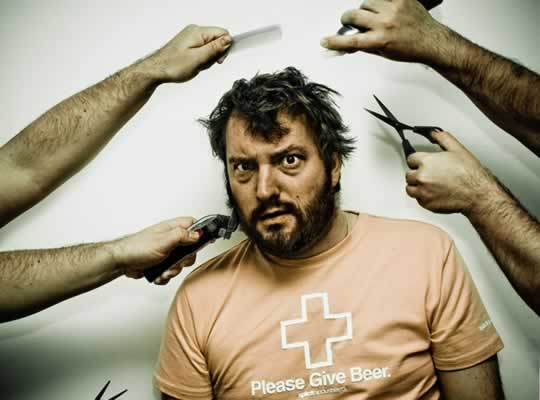
If you're having trouble telling men from women, here's a clue. Men are the ones with hair sprouting from their faces (alright more hair sprouting from their faces).
Some men attempt to cover up the effect of all those androgens by shaving off their beards. Others prefer to send out manly signals in all directions (well, either that or they can't be bothered to shave).
Who is right? What signal does the beard really send? Here are four very important beard-related facts that every man, woman and child should know.
1. Beards are attractive...or are they?
Whether or not beards are attractive to women is a big area of controversy in beard-related psychological research. Some studies find that bearded men are more attractive to women than the clean-shaven, others not (e.g. Reed & Blunk, 1990; Muscarella & Cunningham, 1996).
The most recent research goes against both beards and being clean-shaven and is starting to show the benefits of stubble.
But do women prefer light stubble or heavy stubble? The jury is still out, with one study suggesting light stubble (Neave & Shields, 2008) and another heavy stubble (Dixson & Brooks, 2013).
Just a matter of fashion? Well, probably best for men to cover all bases by letting it grow through light to heavy stubble and into a full beard. See what effect it has on the women in your life and adjust to taste.
It's a social psychological experiment that's easy to do and saves precious moments in the morning.
2. Beards increase age, social status and aggressiveness
Dixson and Vasey (2012) found that (European) women from New Zealand and Samoan Polynesians both thought that men with beards looked older and that they looked of higher social status.
On top of this, when men look angry and have a beard, they look even more angry than clean-shaven men.
Why not test this out by poking a bearded man with a stick. How angry does he look? Make sure to note down your results before being knocked unconscious. Science is important.
3. Bearded men are good with babies...
...or at least that's women's perception according to Dixson and Vasey (2012). This is a little mysterious given that beards are associated with masculinity and very masculine men are, on average, less likely to be good long-term bets.
But perhaps the beard as 'good-daddy-signal' operates through other variables. Because men with beards look older and of higher social status, they are more likely to be able to provide for their offspring.
Or it could be, as Dixson and Vasey (2012) say, that it's because they used pictures of bearded men who were smiling and this is a strangely potent combination.
Like a cage fighter baking a cake.
Or a fireman writing a poem.
You get the picture.
4. Beards are a disadvantage in a fight
Finally, let's take an evolutionary perspective on the beard. What signal does it send? Is it costly to produce in some way and therefore an ancient signal of good genes? Perhaps.
Like a lion's mane, beards may be a way of showing off. Since one man can easily grab another's beard in a fight, they could be a disadvantage. So, any man with a long beard is saying: "I'm so good in a fight that even grabbing on to this beard won't help you!"
(I'm not totally convinced by this argument, although the thought of men fighting by grabbing each other's beards is inherently funny. You really don't see enough beard-fights in movies nowadays do you?)
Coming soon...
...the latest psychological research on chest hair.
Image credit: Kit
→ If you value PsyBlog, please support it by spreading it to others through email, social networks or even old-fashioned talking! Thank you!
Making Habits, Breaking Habits
In his new book, Jeremy Dean--psychologist and author of PsyBlog--looks at how habits work, why they are so hard to change, and how to break bad old cycles and develop new healthy, creative, happy habits.
→ "Making Habits, Breaking Habits", is available now on Amazon.
Related articles:
10 Psychological Effects of Nonsexual Touch
Are Men or Women More Cooperative?
How Other People’s Unspoken Expectations Control Us
10 Hidden Benefits of Smiling
The Upside of Anger: 6 Psychological Benefits of Getting Mad
When Does Reverse Psychology Work?






June 22, 2013
Psychology in Brief: 5 Things We Didn’t Know Last Week (22 Jun 2013)
Five things we didn't know last week from the world of psychology:
1. Coffee shops boost creativity
Is it possible coffee shops make people more creative because of the noise levels? For abstract thinking, maybe:
"...a level of ambient noise typical of a bustling coffee shop or a television playing in a living room, about 70 decibels, enhanced performance [on tasks that required abstract thinking] compared with the relative quiet of 50 decibels.
A higher level of noise, however, about 85 decibels, roughly the noise level generated by a blender or a garbage disposal, was too distracting, the researchers found."
2. Quit smoking trick
You can further motivate yourself to quit smoking by seeing what you might look like in 20 years time. The study found:
"...providing concrete and realistic information about an individual’s potential future and using the aged face of a game avatar as a way to get the quit-smoking message across to college-age students could be very effective."
3. Alzheimer's drug hope
New drug hope for Alzheimer's which has shown promise in mice:
"...NitroMemantine brings the number of synapses all the way back to normal within a few months of treatment in mouse models of Alzheimer's disease. In fact, the new drug really starts to work within hours."
4. Weight loss improves brain function
If anyone carrying a few extra pounds needs further motivation to lose it then here it is. People who are obese tend to show deficits in memory for events, but this is reversible:
"Memory performance improved after weight loss, and...the brain-activity pattern during memory testing reflected this improvement. After weight loss, brain activity reportedly increased during memory encoding in the brain regions that are important for identification and matching of faces."
5. Would you save a dog over a person? Depends?
Given some weird confluence of events that meant you could only save the life of a person or that of a dog, which would you choose?
Person right?
You might be surprised to learn that if it was their dog and the person was a foreign tourist, 40% would save their dog.
Here's a graph showing how the relationship with the dog and the person changed their choice:
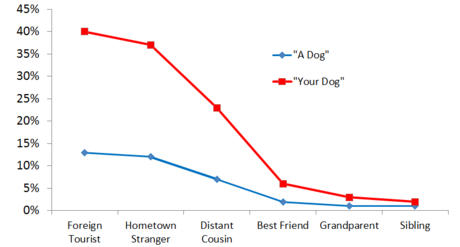
The authors rightly caution that:
"...it is important to note that the current study examines moral judgments and not moral behavior. Participants’ actual behavior in these situations may vary greatly from the way they report they would act in these situations."
Yes, if really faced with this dilemma, the number choosing their dog would be 100%.
I'm joking.
Probably.
Image credit: dierk schaefer
→ If you value PsyBlog, please support it by spreading it to others through email, social networks or even old-fashioned talking! Thank you!
Making Habits, Breaking Habits
In his new book, Jeremy Dean--psychologist and author of PsyBlog--looks at how habits work, why they are so hard to change, and how to break bad old cycles and develop new healthy, creative, happy habits.
→ "Making Habits, Breaking Habits", is available now on Amazon.
Related articles:
Psychology in Brief: 5 Things We Didn’t Know Last Week (28 June 2013)
The Surprising Power of an Emotional ‘Memory Palace’
40 Superb Psychology Blogs
How To Encourage People To Change Their Own Minds
How Memory Works: 10 Things Most People Get Wrong
Happy Habits: How to Fix Bad Moods



Psychology in Brief: 5 Things We Didn’t Know Last Week
Five things we didn't know last week from the world of psychology:
1. Coffee shops boost creativity
Is it possible coffee shops make people more creative because of the noise levels? For abstract thinking, maybe:
"...a level of ambient noise typical of a bustling coffee shop or a television playing in a living room, about 70 decibels, enhanced performance [on tasks that required abstract thinking] compared with the relative quiet of 50 decibels.
A higher level of noise, however, about 85 decibels, roughly the noise level generated by a blender or a garbage disposal, was too distracting, the researchers found."
2. Quit smoking trick
You can further motivate yourself to quit smoking by seeing what you might look like in 20 years time. The study found:
"...providing concrete and realistic information about an individual’s potential future and using the aged face of a game avatar as a way to get the quit-smoking message across to college-age students could be very effective."
3. Alzheimer's drug hope
New drug hope for Alzheimer's which has shown promise in mice:
"...NitroMemantine brings the number of synapses all the way back to normal within a few months of treatment in mouse models of Alzheimer's disease. In fact, the new drug really starts to work within hours."
4. Weight loss improves brain function
If anyone carrying a few extra pounds needs further motivation to lose it then here it is. People who are obese tend to show deficits in memory for events, but this is reversible:
"Memory performance improved after weight loss, and...the brain-activity pattern during memory testing reflected this improvement. After weight loss, brain activity reportedly increased during memory encoding in the brain regions that are important for identification and matching of faces."
5. Would you save a dog over a person? Depends?
Given some weird confluence of events that meant you could only save the life of a person or that of a dog, which would you choose?
Person right?
You might be surprised to learn that if it was their dog and the person was a foreign tourist, 40% would save their dog.
Here's a graph showing how the relationship with the dog and the person changed their choice:
The authors rightly caution that:
"...it is important to note that the current study examines moral judgments and not moral behavior. Participants’ actual behavior in these situations may vary greatly from the way they report they would act in these situations."
Yes, if really faced with this dilemma, the number choosing their dog would be 100%.
I'm joking.
Probably.
Image credit: dierk schaefer
→ If you value PsyBlog, please support it by spreading it to others through email, social networks or even old-fashioned talking! Thank you!
Making Habits, Breaking Habits
In his new book, Jeremy Dean--psychologist and author of PsyBlog--looks at how habits work, why they are so hard to change, and how to break bad old cycles and develop new healthy, creative, happy habits.
→ "Making Habits, Breaking Habits", is available now on Amazon.
Related articles:
The Surprising Power of an Emotional ‘Memory Palace’
40 Superb Psychology Blogs
How To Encourage People To Change Their Own Minds
The Influence of Positive Framing
Happy Habits: How to Fix Bad Moods
How Memory Works: 10 Things Most People Get Wrong
June 20, 2013
The Well-Travelled Road Effect: Why Familiar Routes Fly By
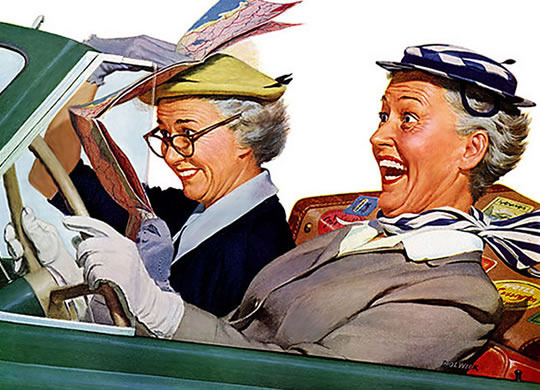
Here's a common experience for motorists: you are driving somewhere new and you're late.
As you drive down unfamiliar roads it seems that everything is conspiring against you: other cars, the road-layout, the traffic lights and even suicidal cyclists. You know it's only a few more miles, but it seems to be taking for-e-e-e-e-e-ever.
Psychologically there are all sorts of things going on to make the journey seem longer than it really is, but let's just isolate one of those: the unfamiliarity of the route.
Unknown routes peak our curiosity; they are filled with new names, landscapes and landmarks, all of which attract the interest. The fact that our attention is engaged with all this newness has a subtle effect on how much time we think has passed.
To see why, let's take the opposite perspective for a moment.
Think about driving a route that's very familiar. It could be your commute to work, a trip into town or the way home. Whichever it is, you know every twist and turn like the back of your hand. On these sorts of trips it's easy to zone out from the actual driving and pay little attention to the passing scenery. The consequence is that you perceive that the trip has taken less time than it actually has.
This is the well-travelled road effect: people tend to underestimate the time it takes to travel a familiar route. The corollary is that unfamiliar routes seem to take longer.
The effect is caused by the way we allocate our attention. When we travel down a well-known route, because we don't have to concentrate much, time seems to flow more quickly. And afterwards, when we come to think back on it, we can't remember the journey well because we didn't pay much attention to it. So we assume it was proportionately shorter.
The well-travelled road effect has an odd consequence. When you estimate how long it takes to travel a familiar route, typically you'll underestimate it. Because of its familiarity the travelling time feels shorter than it really is. This means that when you travel a familiar route, unless you adjust for this effect, you're more likely to be late.
Routine makes time fly
Actually the well-travelled road effect is a specific example of the fact that we tend to underestimate how long routine activities take. Or, put the other way around: time seems to fly when we're engaged in automatic, routine tasks.
This means that people often find the last part of their holiday tends to go quicker than the first part (Avni-Babad & Ritov, 2003). That's because as the holiday goes on, we settle into a routine, so time seems to go quicker towards the end.
The same happens at work, where people report routine activities as taking proportionately less time than those that require more deliberate, conscious attention.
Familiarity, then, with routes travelled, holidays and work activities, tends to speed up our perception of time.
Maybe this all helps explain why the latter parts of our lives--which are more likely to be filled with routine, predictable events--seem to skip by much quicker than our earlier years. As the roads of our lives become well-worn we take less notice of the landscape.
One way to avoid this is to expose yourself to more unexpected, unpredictable experiences...
...but probably not being late and getting stuck in traffic.
Image credit: James Vaughan
→ If you value PsyBlog, please support it by spreading it to others through email, social networks or even old-fashioned talking! Thank you!
Making Habits, Breaking Habits
In his new book, Jeremy Dean--psychologist and author of PsyBlog--looks at how habits work, why they are so hard to change, and how to break bad old cycles and develop new healthy, creative, happy habits.
→ "Making Habits, Breaking Habits", is available now on Amazon.
Related articles:
Cognitive Biases: Why We Make Irrational Decisions
The Illusion of Truth
The Endowment Effect: Why It’s Easy to Overvalue Your Stuff
The Chameleon Effect
Cognition Accelerated by Just 4 x 20 Minutes Meditation
The Anchoring Effect: How The Mind is Biased by First Impressions



June 19, 2013
Can This Simple Trick Stop Athletes Choking Under Pressure?
It's fascinating to watch the rituals professional athletes go through to cope with the unbelievably weird situation they find themselves in.
They have to perform precise physical actions, demanding great concentration, all with millions of people watching them, both right there, and on TV.
For those who have never played in front of a crowd, it's like the difference between having a relaxed conversation with a friend and giving a speech to thousands of people, multiplied by ten.
So, anything athletes can do to improve their performance in response to the huge amount of pressure they are under, is worth a try.
Things like deep breathing, going through particular routines and using visualisation can all help, but now there's a new trick to add to the book.
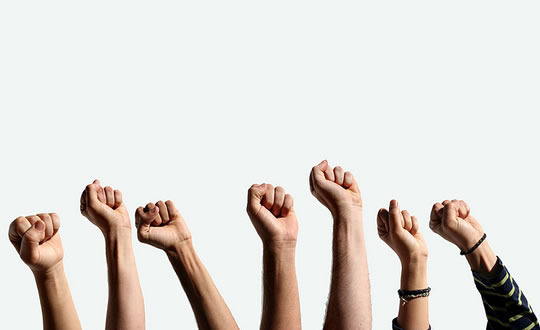
To test it out, Beckmann et al. (2013) had footballers, Taekwondo practitioners and badminton players try something new when they were under pressure. They were told to squeeze their left hands tight into a fist and hold it for 30 seconds.
What happened was that when they were under pressure and they squeezed their fists, they didn't choke. Instead of dipping, their performance remained at its usual level.
The researchers explain this boost by saying that squeezing your left fist boosts right-brain activity (the left side of your body is broadly associated with the right-hand-side of the brain). The right brain has, they say, more control over highly practised, automatic, skilled performance, which is what we rely on under pressure.
But perhaps you think you've spotted a flaw in the experiment? Maybe the athletes were responding to the suggestion that, if they made a fist, they would play better. If so, this explanation is bunk and it's all about the power of suggestion.
The researchers, however, tested that out by having the athletes try squeezing their right hand into a fist in stressful moments. When they did this, they tended to choke. So it does seem it's something about squeezing the left hand.
If you're still sceptical that such a simple action could prevent choking then I'm with you.
The explanation they provide is not watertight and the experimenters weren't blinded to the experiment, so perhaps it was all about the power of suggestion after all. Only further research will tell us which.
Still, worth a try isn't it?
Image credit: Ibai Lemon
→ If you value PsyBlog, please support it by spreading it to others through email, social networks or even old-fashioned talking! Thank you!
Making Habits, Breaking Habits
In his new book, Jeremy Dean--psychologist and author of PsyBlog--looks at how habits work, why they are so hard to change, and how to break bad old cycles and develop new healthy, creative, happy habits.
→ "Making Habits, Breaking Habits", is available now on Amazon.
Related articles:
Power Up: The Performance Benefits of a Simple Mental Exercise
Sway: The Psychology of Indecision
9 Simple Suggestions That Change People’s Perceptions
Powerful People Feel Taller Than They Really Are
Illusory Correlations: When The Mind Makes Connections That Don’t Exist
10 Simple Postures That Boost Performance



June 14, 2013
How Memory Works: 20 Psychological Insights
"You think you have a memory; but it has you!" —John Irving.
Irving's quote nicely captures our hunch that we are slaves to our memories. Will I recall someone's name? What moment from my past will come back to delight, perplex or daunt me? And at other times we ask ourselves why we seem unable to forget.
These uncertainties prompt many people to say their memory is awful, a comment distinguished memory researcher Professor Alan Baddeley hears all the time. But be fair, he argues:
"I have a good memory and would argue, despite its occasionally embarrassing fallibility, that both my memory and yours exceed that of the best computer in terms of capacity, flexibility, and durability." (Baddeley, 1999)
At times it may not feel like it and that's partly because human memory follows its own rules, not the ones we imagine or prefer. To help us use our memories more effectively we need a better understanding of how it really works so that, hopefully, we can forgive its eccentricities.
Here are 20 of my favourite articles on the mysteries of memory, culled from PsyBlog's archives:
How Memory Works: 10 Things Most People Get Wrong - "If we remembered everything we should on most occasions be as ill off as if we remembered nothing." —William James
- Why people's names are more difficult to remember than their jobs, hobbies or home towns.
How Memories are Distorted and Invented: Misattribution - One evening in 1975 an unsuspecting Australian psychologist, Donald M. Thomson, walked into a television studio to discuss the psychology of eyewitness testimony, little did he know...
Memory Improved 20% by Nature Walk - Short-term memory is improved 20% by walking in nature, or even just by looking at an image of a natural scene.
Absent-Mindedness: A Blessing in Disguise? - The benefits of forgetting.
Mind Pops: Memories That Come From Nowhere - Cheese grater. Why do odd images suddenly pop into your head for no reason?
How Quickly We Forget: The Transience of Memory - How recall fades over time.
Reconstructing the Past: How Recalling Memories Alters Them - Experiment shows both the enhancing and distorting effects of recall on the original memories.
Can Doodling Improve Memory and Concentration? - Doodling may be more than just a pleasant waste of time and paper.
On the Tip-of-the-Tongue: Blocked Memories - College students have one or two 'tip-of-the-tongue' moments a week, while older adults have between two to four per week.
Six Memory Myths - Can flashbulb memories be distorted? Some of the most widespread beliefs about memory are plain wrong.
Memory Improved By Saying Words Aloud - Memory can be improved by vocalising or sub-vocalising words.
Infant Memory Works From Very Early - Some argue it's impossible for us to remember anything much from before around two to four years of age—but is that true?
Memories Are Made of This - Study records the activation of human brain cells deep inside the living brain as memories are formed and recalled.
Memory Enhanced by a Simple Break After Reading - If you find it difficult to remember what you've read, try giving the memory time to consolidate.
The Persistence of Memory - Being unable to forget is a double-edged sword.
7 Simple Ways to Improve Your Memory Without Any Training - Boost your memory by writing about your problems, predicting your performance and more...
How the Consistency Bias Warps Our Personal and Political Memories - What were your political views a decade ago? How good was your relationship last year? Studies show we often assume things haven't changed, when in fact they have.
The Temporal Doppler Effect: Why The Future Feels Closer Than The Past - Like the sound of a passing ambulance siren, our perception of time distorts as it shoots by.
Implanting False Memories: Lost in the Mall & Paul Ingram - "Do you swear to tell the truth, the whole truth, or whatever it is that you think you remember?" -- Elizabeth Loftus
Image credit: Mike Bailey-Gates
→ If you value PsyBlog, please support it by spreading it to others through email, social networks or even old-fashioned talking! Thank you!
Making Habits, Breaking Habits
In his new book, Jeremy Dean--psychologist and author of PsyBlog--looks at how habits work, why they are so hard to change, and how to break bad old cycles and develop new healthy, creative, happy habits.
→ "Making Habits, Breaking Habits", is available now on Amazon.
Related articles:
How Memory Works: 10 Things Most People Get Wrong
7 Simple Ways to Improve Your Memory Without Any Training
The Surprising Power of an Emotional ‘Memory Palace’
Six Memory Myths
Memory Improved By Saying Words Aloud
Memory Enhanced by a Simple Break After Reading



June 13, 2013
Habits and The Unexpected Benefits of Weak Self-Control

It's not often that anyone talks about the benefits of low self-control. That's because usually low self-control has bad consequences: over-eating, over-spending under-exercising and the rest.
That said, there are some circumstances in which being in a weakened state can be good news for our diets, our health or even our credit cards.
These arise out of the way that habits work. Typically we perform habits automatically and unconsciously.
Let's say you've got a long-established habit of going to the gym before work or of practising the piano in the evening.
But, one morning, after a bad night's sleep, you feel mentally weak when you get up, then after a gruelling day at work you return home with your mental energy badly depleted. What will happen to the gym and piano practise?
You might imagine that when self-control is weak, as it will be in these situations, you're more likely to give up on relatively demanding tasks and have a lie-in or watch some TV.
But that's where the twist comes in. Because established habits tend to activate automatically, the exact reverse is true. Tiredness and low self-control actually make established routines more likely to be followed. It takes a mental effort not to follow your usual routine. So, when your self-control is low, you are actually more likely to get to the gym or practise the piano (so long as both are well-established habits).
Sounds unlikely?
A brand new psychology paper demonstrates exactly this pattern in a series of 5 studies (Neal et al., 2013). When people in these studies were feeling weak, they were more likely to perform strong habits in the same situations.
In other words, all things being equal, if the gym-habit was strong, they were more likely to go to the gym when their self-control was low.
The down-side of how habits work is that, just like good habits, bad habits are also more likely to be performed when our self-control is low. Until new, strong, improved habits are formed, we are at the mercy of our self-control to keep us on the straight-and-narrow.
Once established, though, strong habits repay the effort made to build them up many times over. So try to build up good routines that are activated by regular situations that you are in. Strong habits have the power to pull us through in difficult moments, even when we don't feel like performing them.
→ To find out more about how to build strong habits, check out my book 'Making Habits, Breaking Habits'.
Image credit: Jiuck
→ Do you use Google Reader? It is shutting down on 1st July 2013. To continue following PsyBlog, sign up for free email updates.
Making Habits, Breaking Habits
In his new book, Jeremy Dean--psychologist and author of PsyBlog--looks at how habits work, why they are so hard to change, and how to break bad old cycles and develop new healthy, creative, happy habits.
→ "Making Habits, Breaking Habits", is available now on Amazon.
Related articles:
How to Banish Bad Habits and Control Temptations
10 Step Guide for Making Your New Year’s Resolutions
How to Stop Biting Your Nails
Can You Be Addicted to Facebook or is it Just a Bad Habit?
How Long to Form a Habit?
How to Promote Visionary Thinking



June 10, 2013
A Woman’s Tattoo Doubles The Chance of a Man Approaching

Not long ago I reported on a study which found that guitar cases have considerable power over women when they are asked on a date.
The French psychologist who conducted that study, Nicolas Gueguen, has been up to his old tricks again on the Atlantic Coast of France.
In a new experiment, reported in the journal Archives of Sexual Behavior, he had some women lying on a beach, face-down, reading a book (Gueguen, 2013). Sometimes they displayed a 10cm x 5cm temporary tattoo of a butterfly on their lower backs and sometimes not.
Then another research assistant counted how many times a man came up to them and tried to start a conversation.
Without a tattoo they were approached 10% of the time, but with the tattoo this shot up to 24%. Not only that but the tattoo increased the speed with which men approached from 35 minutes up to 24 minutes.
I will pass no judgement on the rights or wrongs of tattoos, the types of men that might have been approaching or anything else, but simply leave this for you to interpret as you will.
Oh wait; one final fact does need mentioning. When men were asked to evaluate the women with or without the tattoo, they judged that the women with tattoos were more likely to say yes to their advances and were probably more promiscuous.
Whether or not either of these assumptions is actually true is a totally different matter. It may well be that men misinterpret tattoos and/or that women don't realise how men perceive them.
OK, now discuss.
Image credit: Stephanie Wallace
Making Habits, Breaking Habits
In his new book, Jeremy Dean--psychologist and author of PsyBlog--looks at how habits work, why they are so hard to change, and how to break bad old cycles and develop new healthy, creative, happy habits.
→ "Making Habits, Breaking Habits", is available now on Amazon.
Reviews
The Bookseller, “Editor’s Pick,” 10/12/12
“Sensible and very readable…By far the most useful of this month’s New You offerings.”
Kirkus Reviews, 1/1/13
“Making changes does take longer than we may expect—no 30-day, 30-pounds-lighter quick fix—but by following the guidelines laid out by Dean, readers have a decent chance at establishing fulfilling, new patterns.”
Publishers Weekly, 12/10/12
“An accessible and informative guide for readers to take control of their lives.”
→ "Making Habits, Breaking Habits", is available now on Amazon.



June 5, 2013
The Confirmation Bias: Why It’s Hard to Change Your Mind
In an uncertain world, people love to be right because it helps us make sense of things. Indeed some psychologists think it's akin to a basic drive.
One of the ways they strive to be correct is by looking for evidence that confirms they are correct, sometimes with depressing or comic results:
A woman hires a worker that turns out to be incompetent. She doesn't notice that everyone else is doing his work for him because she is so impressed that he shows up every day, right on time.
A sports fan who believes his team is the best only seems to remember the matches they won and none of the embarrassing defeats to inferior opponents.
A man who loves the country life, but has to move to the city for a new job, ignores the flight-path he lives under and noisy-neighbours-from-hell and tells you how much he enjoys the farmer's market and tending his window box.
We do it automatically, usually without realising. We do it partly because it's easier to see where new pieces fit into the picture-puzzle we are working on, rather than imagining a new picture. It also helps shore up our vision of ourselves as accurate, right-thinking, consistent people who know what's what.
Psychologists call it the confirmation bias and it creeps into all sorts of areas of our lives. Here are a few examples:
1. Self-image
"Hey, you look great, have you done something different with your hair?"
Who doesn't like a compliment? No one. It doesn't even have to be sincerely delivered, I'll take it. But what about...
"Hey, you're a real slime-ball, you know that?"
Who likes insults? Well, we don't exactly like them but—believe it or not—sometimes we seek them out if they confirm our view of ourselves.
In a study that examined this, people actually sought out information confirming their own view that they were—not exactly slime-balls—but lazy, or slow-witted or not very athletic (Swann et al., 1989).
And this isn't some kind of self-hating thing; in this study even people with high self-esteem sought out information that confirmed their own negative self-views.
It seems we like to be right, even at a cost to our self-image.
2. Finance
A study of online stock market investors has looked at how they gathered information about a prospective stock (Park et al., 2010).
The researchers found the confirmation bias writ large. Investors mostly looked for information that confirmed their hunch about a particular stock. Those people who displayed the strongest confirmation bias were the most over-confident investors and consequently made the least money.
It seems we like to be right, even if it costs us money.
3. Politics
People see what they want to see in politics all the time.
The most ironic example is in satire. Often satire uses sarcasm to make its point: TV satirist Stephen Colbert frequently says the opposite of what he really thinks to make his point (amongst comedians I believe these are called 'jokes').
Except the irony is that one study has shown that people who don't agree with Colbert don't get that he's being sarcastic, they think he really means it (LaMarre, 2009).
The beauty is that both liberals and conservatives get what they want: their viewpoints confirmed.
It seems we like to be right, even if it means not getting the joke.
Blame it on the bias
Over the years the confirmation bias has picked up the blame for all sorts of dodgy beliefs. Here are a few:
People are prejudiced (partly) because they only notice facts which fit with their preconceived notions about other nations or ethnicities.
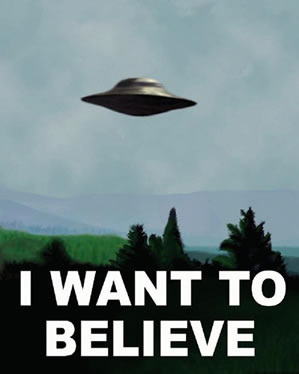
People believe weird stuff about flying saucers, the JFK assassination, astrology, Egyptian pyramids and the moon landings because they only look for confirmation not dis-confirmation.
In the early nineteenth century doctors treated any old disease with blood-letting. Their patients sometimes got better so doctors—who conveniently ignored all the people who died—figured it must be doing something. In fact for many ailments some people will always get better on their own without any treatment at all.
Fight the bias
The way to fight the confirmation bias is simple to state but hard to put into practice.
You have to try and think up and test out alternative hypothesis. Sounds easy, but it's not in our nature. It's no fun thinking about why we might be misguided or have been misinformed. It takes a bit of effort.
It's distasteful reading a book which challenges our political beliefs, or considering criticisms of our favourite film or, even, accepting how different people choose to live their lives.
Trying to be just a little bit more open is part of the challenge that the confirmation bias sets us. Can we entertain those doubts for just a little longer? Can we even let the facts sway us and perform that most fantastical of feats: changing our minds?
Image credit: mat
Making Habits, Breaking Habits
In his new book, Jeremy Dean--psychologist and author of PsyBlog--looks at how habits work, why they are so hard to change, and how to break bad old cycles and develop new healthy, creative, happy habits.
→ "Making Habits, Breaking Habits", is available now on Amazon.
Reviews
The Bookseller, “Editor’s Pick,” 10/12/12
“Sensible and very readable…By far the most useful of this month’s New You offerings.”
Kirkus Reviews, 1/1/13
“Making changes does take longer than we may expect—no 30-day, 30-pounds-lighter quick fix—but by following the guidelines laid out by Dean, readers have a decent chance at establishing fulfilling, new patterns.”
Publishers Weekly, 12/10/12
“An accessible and informative guide for readers to take control of their lives.”
→ "Making Habits, Breaking Habits", is available now on Amazon.



June 3, 2013
The Psychology of Motivation Explained (in under 300 words)
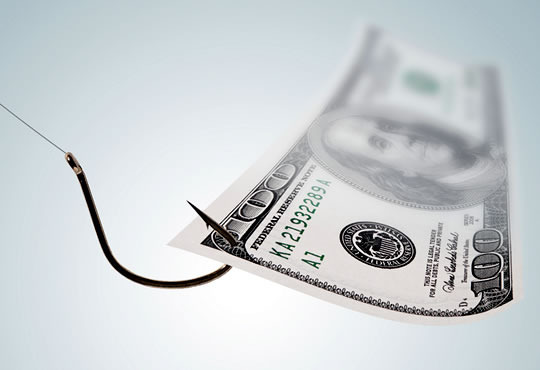
Roughly speaking there are only two reasons you do anything in life:
Because you want to.
Because someone else wants you to.
The first category of internally motivated activities might include things like eating, socialising, hobbies and going on holiday. The second category of externally motivated activities might include working a job, studying, or loading the dishwasher.
The reason I say 'roughly speaking' and 'might include' is because the two types of motivation can be difficult to disentangle. Yes, you enjoy your work, but would you do it for less money or for free? Maybe, maybe not. Yes, my wife wants me to load the dishwasher, but maybe I'd do it anyway. Or maybe not.
Turning work into play
And one type of motivation can slowly morph into another over time. For example, things originally we did for their own sake can become a chore once we are paid for them. More hearteningly, sometimes things we once did just for the money can become intrinsically motivated.
This latter, magical transformation is most fascinating and probably happens because the activity satisfies one or all of three basic human needs. As the eminent motivation researchers, Richard M. Ryan and Edward L. Deci, say, it's these three factors that are at the core of intrinsic motivation (Ryan & Deci, 2000):
Competence. We want to be good at something. Things that are too easy, though, don't give us a sense of competence; it has to be just hard enough.
Autonomy. We want to be free and dislike being controlled. When people have some freedom—even within certain non-negotiable boundaries—they are more likely to thrive.
Relatedness. As social animals we want to feel connected to other people.
Look for these in any activity if you want to harness the power of self-guiding, internal motivation.
Image credit: Tax Credits
Making Habits, Breaking Habits
In his new book, Jeremy Dean--psychologist and author of PsyBlog--looks at how habits work, why they are so hard to change, and how to break bad old cycles and develop new healthy, creative, happy habits.
→ "Making Habits, Breaking Habits", is available now on Amazon.
Reviews
The Bookseller, “Editor’s Pick,” 10/12/12
“Sensible and very readable…By far the most useful of this month’s New You offerings.”
Kirkus Reviews, 1/1/13
“Making changes does take longer than we may expect—no 30-day, 30-pounds-lighter quick fix—but by following the guidelines laid out by Dean, readers have a decent chance at establishing fulfilling, new patterns.”
Publishers Weekly, 12/10/12
“An accessible and informative guide for readers to take control of their lives.”
→ "Making Habits, Breaking Habits", is available now on Amazon.



Jeremy Dean's Blog

- Jeremy Dean's profile
- 29 followers

