
Jeremy Dean's Blog, page 820
July 11, 2013
Women 3 Times More Likely to Wear Red or Pink When Fertile

Although women can only conceive during a relatively short window during their monthly cycle...
"...scientists have not found any clearly observable, objective behavioral display associated with ovulation in humans." (Beall & Tracy, 2013)
From an evolutionary point of view it's mysterious, given the continuance of the species and so on. For one thing studies have not consistently found that women dress more sexily when they are more fertile.
But according to a new study, apparently women do provide a clue about their fertility:
"Across two samples (N = 124), women at high conception risk were more than 3 times more likely to wear a red or pink shirt than were women at low conception risk, and 77% of women who wore red or pink were found to be at high, rather than low, risk." (Beall & Tracy, 2013)
Perhaps, whether consciously or unconsciously women use it as a more subtle signal than dressing more sexily, which in itself tends to be associated with social stigma. And red works to attract men:
"Individuals across cultures associate red with love and passion (Aslam, 2006). Studies using a range of methods and populations have demonstrated that women’s use of red is linked to sex and romance (e.g., Elliot & Pazda, 2012; Greenfield, 2005) and that men find women wearing or surrounded by red particularly attractive and sexually desirable (Elliot & Niesta, 2008)."
Although when they followed up this finding in another study, the researchers found the red signal for fertility was strongest in the winter compared with the summer. They guessed that this is because women can use other signals in the summer when less clothing needs to be worn.
Image credit: Mait Juriado
→ If you value PsyBlog, please support it by spreading it to others through email, social networks or even old-fashioned talking! Thank you!
Making Habits, Breaking Habits
In his new book, Jeremy Dean--psychologist and author of PsyBlog--looks at how habits work, why they are so hard to change, and how to break bad old cycles and develop new healthy, creative, happy habits.
→ "Making Habits, Breaking Habits", is available now on Amazon.
Related articles:
Habits and The Unexpected Benefits of Weak Self-Control
Are Men or Women More Cooperative?
Are Men or Women Better at Multitasking?
PsyBlog’s 10 Most Popular Psychological Insights From 2012
Beard Psychology: 4 Signals That Serious Facial Hair Sends
Ten Powerful Steps to Negotiating a Higher Salary






July 10, 2013
How a Psychological Bias Makes Groups Feel Good About Themselves And Discredit Others

One of the strongest human motivations is to feel good about ourselves. Bolstering our own self-image helps us all feel slightly saner, more confident individuals.
We do this partly by thinking we're a bit better looking, cleverer and more skilful than we really are. Although not absolutely everyone is an optimist, the vast majority of people do think they are above average in many areas.
Yes, it's a cognitive bias, but it's not so bad if it makes us feel better about ourselves.
Feeling good about our group
We don't just think optimistically about ourselves, though, we have a clever way of being optimistic about the social groups we belong to as well. Naturally we prefer to think that our own family, our group of friends, our team, our company and our country are great.
One important psychological bias that helps us be more positive about our own group is called the 'ultimate attribution error'. It's a horrible bit of psychological jargon but here's what it means in practical terms.
When someone from a different group to our own does something immoral, or reprehensible, or just fails in some way, we don't bother finding excuses for them. We have a tendency to ascribe their failure to poor character or low ability.
For example, we say to ourselves: the guy from the opposition football team failed to score because he's not that good at football. Psychologically what we're doing here is ascribing the failure to something internal about him.
However, when someone from our own group does something bad, we work much harder to make excuses. And these excuses are of a particular type: we say it was bad luck or they didn't really try or they were in a difficult situation. When it's one of our own, we try our best to avoid saying it was a failure of character.
For example, when a guy whose on our team makes a mistake we say it was because he was under pressure or it was 'bad luck'.
All this is flipped around when our fellow group member does something positive, something to be proud of. This time when it's one of our own, we say it was because of his ability, because he's one of us and he's great.
Conversely, when it's someone from another group who scores a success we say that was down to luck or because the situation was right or because they were making a special effort. In other words it was less to do with them, than with the situation being right.
My team is talented, yours is lucky
These patterns have been seen in all sorts of different contexts in psychological research. Here are a couple of examples described by Professor Miles Hewstone, an expert on the psychology of intergroup relations (Hewstone, 1990):
In the 1976 Super Bowl, fans of each team were asked about the cause of their own and the other team's moment-by-moment successes during the match. Each thought their own team's success to be a result of good play, but when the opposition did well, they minimised the influence of skill.
In one study, children at both elite private schools and more mediocre, state schools were asked to explain exam performance at both institutions. Those from the private schools said they did well because they were cleverer and had higher academic standards. Those at the state school were quick to point out the privileges that students at the elite school received and were not so impressed with their intelligence.
What's interesting about both these examples is that people aren't totally blinding themselves to reality. What they are doing is picking out and emphasising the details that support their own group while subtly discrediting the other group. They did this by explaining away their own group's failures while attributing their successes to superior skills and innate talent.
Prejudice?
Although I've avoided mentioning it so far, research on the ultimate attribution error is usually focused on how it supports prejudice and stereotyping. Many of the studies show the same effects described above, but with nationalities or ethnicities instead of teams or smaller social units.
Wherever we see it, though, the underlying psychology is the same: when members of our group make a mistake it's an accident or an anomaly, when members of another group do so, it's typical of them.
Image credit: Joseph Shemuel
→ If you value PsyBlog, please support it by spreading it to others through email, social networks or even old-fashioned talking! Thank you!
Making Habits, Breaking Habits
In his new book, Jeremy Dean--psychologist and author of PsyBlog--looks at how habits work, why they are so hard to change, and how to break bad old cycles and develop new healthy, creative, happy habits.
→ "Making Habits, Breaking Habits", is available now on Amazon.
Related articles:
How to Overcome the Egocentric Bias
Cognitive Biases: Why We Make Irrational Decisions
The Hindsight Bias: I Knew It All Along!
The Anchoring Effect: How The Mind is Biased by First Impressions
Why Society Doesn’t Change: The System Justification Bias
Why We Buy: How to Avoid 10 Costly Cognitive Biases



July 9, 2013
Hypnosis: 8 Myths Most People Believe
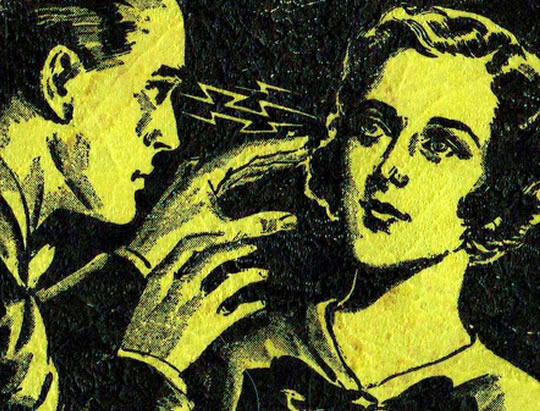
It is true that hypnosis can achieve all sorts of fascinating effects. Amongst other things, people can:
have visual or auditory hallucinations,
move their bodies without intending to,
and feel less pain.
But much of what many people believe about hypnosis is total and utter rubbish. Here are 8 very common myths:
Myth 1: Only the mentally weak can be hypnotised
This isn't true. In fact the exact reverse is probably more true. The higher your intelligence and the stronger your self-control, the more easily you are hypnotised.
That's because entering a hypnotic trance is all about concentrating, so people with mental health problems can find it difficult.
However finding it hard to enter a hypnotic state doesn't mean there's anything wrong with you. People naturally vary in how susceptible they are to hypnosis. Studies have shown that around 30% of people are relatively resistant to being hypnotised. Although, with effort, the state can usually be achieved eventually.
Myth 2: The hypnotised are helpless
Also false. It's difficult to get people to do things under hypnosis that they wouldn't normally do. While hypnotised people are still in touch with their morals and normal standards of behaviour.
That said, though, it is possible to reduce people's inhibitions under hypnosis and they will more readily accept suggestions.
Stage hypnotists rely on this heightened suggestibility, along with picking the types who, let's say, don't mind a little attention. That's how they get people to quack like ducks and the rest.
Don't we all know someone who would quack like a duck if it meant everyone would look at them?
Myth 3: Hypnosis is sleep
Yes, people look like they're asleep when they're hypnotised because their eyes are closed and they're peaceful. But they're not asleep. The brain waves of a person who is hypnotised are nothing like those of a person who is asleep.
In fact the hypnotic trance is a heightened state of concentration. A high level of alpha waves on an EEG show that a hypnotised person is awake, alert and very responsive.
Myth 4: A hypnotist cured me in one session!
Some of the most outrageous claims are made about hypnotism (although usually not by hypnotherapists themselves). These have their origins in stage hypnotism as well as hucksters of all types.
Of course people regularly repeat claims that they were cured in only one session of hypnotherapy because it's such a good story. Who wants to hear about how it took you a decade, three divorces and 19,423 nicotine patches to give up smoking?
The truth is that almost no one is cured in one session, if they are cured at all through hypnosis. Hypnotherapists usually insist that patients commit to 6 sessions, or sometimes 20 sessions. This isn't naked profiteering, change takes time.
Even then, hypnotherapy is often used as an added extra to some other kind of treatment, rather than as the main method.
Myth 5: Hypnotists must be flamboyant or weird
That's just TV people who have to be flamboyant and weird.
In reality it would be distracting if the person trying to hypnotise you had swirling eyes, kept talking about black magic and wore very loud ties.
Your average hypnotist is much more likely to wear a grey suit.
Myth 6: Hypnosis can be used to retrieve long forgotten memories
If you believe this one then you're in very good company. Many members of the public think this is true, as do some psychologists and many hypnotherapists themselves.
Except that nowadays most people in the know think that the hypnotic trance isn't much good for accurately retrieving memories. Worse, hypnotists can easily implant false memories, because people in a hypnotic trance are easily suggestible.
That scene in the movie where a hypnotist helps the victim see the killer's face is pure Hollywood: entertaining but total fiction.
Myth 7: You can't lie under hypnosis
Oh yes you can! Hypnosis is not some kind of magical state in which you can only speak the truth. This is a natural result of the fact that you are not helpless when hypnotised and your usual moral (and immoral) faculties are still active.
Not only can you lie under hypnosis, but lying is not necessarily any more detectable hypnotised than when not (Sheehan & Statham, 1988).
Myth 8: You've never been hypnotised
Many people think they've never been hypnotised since they've never been to a hypnotherapist. In reality, most of us have experienced a state of mild hypnosis, at least.
For example, when you drive a long distance and start to feel dissociated from your body and the car, that's a mild state of hypnosis. Your unconscious is taking care of all the mechanical aspects of driving while you conscious mind is free to float around.
Or if you've every meditated then you've hypnotised yourself. Meditation is really a specific type of hypnosis.
Image credit: Danielle Buma
→ If you value PsyBlog, please support it by spreading it to others through email, social networks or even old-fashioned talking! Thank you!
Making Habits, Breaking Habits
In his new book, Jeremy Dean--psychologist and author of PsyBlog--looks at how habits work, why they are so hard to change, and how to break bad old cycles and develop new healthy, creative, happy habits.
→ "Making Habits, Breaking Habits", is available now on Amazon.
Related articles:
Six Memory Myths
The Chameleon Effect
Forecasting Myopia: Why Exercise is More Fun Than We Predict
How Memory Works: 10 Things Most People Get Wrong
Reconstructing the Past: How Recalling Memories Alters Them
Why People Believe Weird Things and 8 Ways to Change Their Minds



July 8, 2013
What Can Self-Control Do For You? 10 New Studies Provide Surprising Answers

Nowadays it's hardly news that self-control is vital to success in many areas of life.
The studies bear this out with boring monotony in education, in health, in terms of how much money you earn, in personal relationships and even mental health.
Consciously or otherwise, people with low self-control know it's a disadvantage to be weak-willed. To make up for it they seek out others who do possess this magical property, both socially and as dating partners (Shea et al., 2013).
But, according to studies published in the last six months, a more subtle picture is emerging of the advantages and disadvantages of having, or lacking, self-control. These provide new answers to what self-control can do for you and what it can't.
1. Can it make you happier?
One stereotype of people with high self-control is that they are boring killjoys. After all, how much fun can you have if you're so in control all the time?
But, according to a new study by Hofmann et al., (2013), this stereotype is now being attacked. Their research showed that people with high self-control are happier because it helps them deal better with goal conflict.
Instead of agonising over whether to indulge in fattening foods, extra-marital affairs or cheap reality TV, people with high self-control find it easier to make the right choice. This is part of the reason they are happier. That and the fact they got better grades at school, earn more money, have better physical and mental health and so on.
2. Can it stop you lying?
Have you ever used a drug called 'clorovisen', also known as 'zens'? And how many times have you used the drug in the last month?
That's the question Meldrum et al. (2013) put to a group of 1,600 adolescents at a school in the US. Of these, 40 students admitted they had used the drug.
The weird thing is that the drug doesn't exist. The researchers had made it up to see if anyone would admit to using a totally fictitious drug.
Apparently some people just can't help lying and it's those who have low self-control that succumb to the temptation more easily, even if, as in this situation, there was absolutely nothing to gain from it. It was just lying for the sake of lying.
3. Can it make you willing to sacrifice for others?
The benefits of self-control have become so well-known that it's easy to overlook the disadvantages of iron self-control, because there are a few.
One comes out in neat research by Righetti et al., (2013) who found that in close personal relationships it was the people who had low self-control who were more willing to make sacrifices for their partner.
This is because sometimes that first instinctual reaction is to sacrifice your own interests to someone else. This happens before boring old self-interest kicks in.
But those lovely people with low self-control just can't help themselves. Before they know what they've done, they've done something nice.
4. Can it make you fairer?
Another advantage of people currently low in self-control emerged in a study by Halali et al. (2013): they are fairer. Or at least they acted more fairly in an economic game played in the lab called 'the ultimatum game'.
The findings took the authors by surprise. To explain them they think that those low in self-control acted more fairly because of fear of having less fair offers rejected.
Perhaps, but that's a rather weaselly explanation. Maybe it was like the last study: the first instinctual reaction is to act fairly and this is only tempered by later, more selfish thoughts.
Whatever the explanation, it seems in some circumstances people with low self-control act more fairly.
5. Can it help you quit smoking?
Sure, self-control is handy when you're trying to give up smoking, or any other long-standing bad habit. But how can you boost your self-control when it's been depleted by a long, stressful day?
One way of fighting back against low self-control is to use abstract thinking. When we are thinking abstractly we are more connected to our overall goals.
This was recently tested for people who were trying to quit smoking (Chiou et al., 2013). Participants who concentrated on why they were quitting smoking managed to smoke fewer cigarettes. This was because it boosted their depleted self-control.
(Find out more about self-control and abstract reasoning.)
6. Can it improve your mental focus?
One of the major benefits of self-control is it enhances mental focus and the ability to ignore anxious thoughts.
Just this process was seen in a study by Bertrams et al. (2013) who had participants trying to do maths in their heads while under pressure. Those with low self-control in the moment were more distracted by negative thoughts and performed worse in the task.
Much the same was true in another study on dart tossing (McEwan et al., 2013). Here participants whose self-control was depleted were less accurate and less consistent at throwing darts.
7. Can it stop you snooping on your partner?
Have you ever read your partner's email or text messages, or searched their pockets or been too inquisitive about where they were last night? It's pretty common, with one survey suggesting two-thirds of young adults have invaded their partner's privacy at some point.
Relationships without trust are hard. But perhaps it's about more than just trust, it's also about self-control. Maybe some people trust their partner, but can't restrain themselves from a little snooping.
Brand new research by Buyukcan-Tetik et al., (2013) found that, amongst married couples, snooping behaviours were only lower when a person both trusted their partner and was high in self-control.
So it seems that snooping on your partner doesn't necessarily mean you don't trust them, it might be that you can't resist (even though you don't expect to find anything).
8. Can it be replenished with sugar?
Perhaps you've heard of the studies which show that people's self-control is replenished by eating something, especially something sugary? The idea being if you're feeling low on self-control, a glass of orange juice will do the trick.
But the idea that there is some physiological connection has now been questioned, with some believing that really it's all about what you believe.
There's evidence for this in a new study by Hagger & Chatzsiarantis (2013) who used a glucose mouth rinse to try and boost the self-control of those who were feeling mentally weak. It worked. By contrast they found that using an artificially sweetened placebo did not work to boost weakened self-control.
So maybe it's not really the sugar that replenishes self-control, it's the idea of sugar. In other words self-control is much less about what's in your stomach than was previously thought.
9. Can it make leaders unethical?
Leaders are often under a lot of pressure to perform. This tends to sap their willpower meaning that under some circumstances it's hard to make the right decisions.
For those low in moral convictions, perhaps this makes them more likely to make unethical decisions.
Joosten et al. (2013) found that when leaders who had high moral standards were under pressure, they still generally did the right thing. But, for those leader whose morals were questionable, low self-control made it much more likely they would slip over the line into unethical behaviours.
So, low self-control can make leaders unethical if they've got low moral standards.
10. Can it make you easier to hypnotise?
You might imagine—I certainly did—that being hypnotised is all about giving up your self-control to someone else. That suggests it would be easier to hypnotise someone who has low self-control.
That's the theory Ludwig et al. (2013) had when they hypnotised 154 participants and also measured their self-control.
Contrary to their expectations—and mine—they found that having higher self-control made people easier to hypnotise.
The explanation they put forward is that people high in self-control try harder to 'do well' when they are hypnotised. People lower in self-control, however, get distracted and don't pay so much attention to the hypnotic induction so are less hypnotisable.
Image credit: RelaxingMusic
→ If you value PsyBlog, please support it by spreading it to others through email, social networks or even old-fashioned talking! Thank you!
Making Habits, Breaking Habits
In his new book, Jeremy Dean--psychologist and author of PsyBlog--looks at how habits work, why they are so hard to change, and how to break bad old cycles and develop new healthy, creative, happy habits.
→ "Making Habits, Breaking Habits", is available now on Amazon.
Related articles:
The Online Society: 50 Internet Psychology Studies
Online Snooping: Is Your Partner Secretly Watching You?
Email: Why People Feel Lying is Justified
Psychology in Brief: 5 Things We Didn’t Know Last Week (22 Jun 2013)
Highly Trusting People Better Lie Detectors
How Powerful is an Apology?



July 5, 2013
Psychology in Brief: 6 Things We Didn’t Know Last Week (5 July 2013)
Six things we didn't know last week from the world of psychology:
1. Make kids eat veg
The answer to getting kids to eat more veg, according to this study, is to have them read specially designed books on nutrition:
"These children [...] more than doubled their voluntary intake of vegetables during snack time after the three-month intervention, whereas the amount that the control group ate stayed about the same."
The books even outperformed more traditional approaches:
"When the conceptual program was pitted against a more conventional teaching strategy focused on the enjoyment of healthy eating and trying new foods, the results showed that both interventions led to increased vegetable consumption. Yet, the children in the conceptual program showed more knowledge about nutrition and a greater overall increase in vegetable consumption."
2. How to be happy
What can we do to make ourselves happier? Some standard answers to this age-old question are in this BBC article which rounds up research from the World Happiness Database. Here are a few of the more eye-catching facts:
Men tend to be happier in a society where women enjoy greater equality.
Being considered good looking increases men's happiness more than it does women's.
You tend to be happier if you think you're good looking, rather than if you actually, objectively speaking, are.
Having children lowers your happiness levels, but your happiness increases when they grow up and leave home.
For a more nuanced response, check out this Psychology Today article which praises being curious, finding meaning, celebrating success, taking risks and even embracing negative emotions:
"Happy, flourishing people don't hide from negative emotions. They acknowledge that life is full of disappointments and confront them head on, often using feelings of anger effectively to stick up for themselves or those of guilt as motivation to change their own behavior. This nimble mental shifting between pleasure and pain, the ability to modify behavior to match a situation's demands, is known as psychological flexibility."
3. Women sidestep maths stereotypes
Neat research reported by the BPS Research Digest suggests women can get better at maths by pretending to be someone else. It's all about sidestepping the stereotype that women are worse then men at maths:
"Overall, men outperformed women on the maths task. But women who took the test under someone else's name, be it male or female, performed better than women who performed under their own name, and they did just as well as the men. The effect was stronger for women who cared more about maths."
It would be interesting to see if the same effect held true for other types of stereotypes as well. Also, can we avoid our bugbears by pretending to be someone else?
4. Exercise protects brain from stress
A study on mice suggest another advantage of exercise: it makes the brain more resilient to stress. When researchers compared 'runner' mice with lazy-old-sit-around-the-house-doing-nothing-all-day-long-mice, they found that:
"...when mice allowed to exercise regularly experienced a stressor -- exposure to cold water -- their brains exhibited a spike in the activity of neurons that shut off excitement in the ventral hippocampus, a brain region shown to regulate anxiety."
5. The secrecy heuristic
In a week when secret information once again hit the headlines, the NYT has a piece explaining the psychological shortcut or 'heuristic' that we tend to overvalue secret information. Psychological studies show that we automatically assume that information which is secret is more useful, important and accurate, although this isn't necessarily the case.
"There are several reasons people might inflate the value of secret information. Sometimes, of course, secret information is genuinely of higher quality and affords real strategic advantage over public information. With that in mind, people may overgeneralize about the association between secrecy and quality to contexts where it is unwarranted."
Which means that:
"If people exaggerate the value of secret information, they may too readily cede privacy in the interest of national security, even if they value that privacy highly."
6. The creative power of death
If you've ever struggled to come up with a humorous caption for a cartoon or photo then perhaps what you need is an unconscious reminder of your own mortality. A new study had people trying to caption a cartoon from The New Yorker. The results suggested that:
"The captions written by individuals who were subconsciously primed with the word death were clearly voted as funnier by the jury. By contrast, the exact opposite result was obtained for the students who consciously wrote about death: their captions were seen as less humorous."
But why is that?
"[a] substantive body of work suggests that humor functions as a natural and often effective means of down-regulating stressful or traumatic experiences."
Perhaps this helps explain why Woody Allen is so funny.
Image credit: opensourceway
→ If you value PsyBlog, please support it by spreading it to others through email, social networks or even old-fashioned talking! Thank you!
Making Habits, Breaking Habits
In his new book, Jeremy Dean--psychologist and author of PsyBlog--looks at how habits work, why they are so hard to change, and how to break bad old cycles and develop new healthy, creative, happy habits.
→ "Making Habits, Breaking Habits", is available now on Amazon.
Related articles:
Psychology in Brief: 5 Things We Didn’t Know Last Week (22 Jun 2013)
Why Many Small Pleasures Beat Fewer Larger Ones
Are Men or Women More Cooperative?
Buy More Experiences and Less Stuff
Why Spending Money on Others Promotes Your Happiness
The 12 Psychology Studies of Christmas



July 4, 2013
It’s My Way or the Highway: Why People Are Evangelists for Their Own Way of Life

...and people who are single think being single is the only way to live for a civilised, modern individual?
People easily become evangelists for their own way of life. Some apparently think that because they have made a particular life choice, everyone else should do the same.
Why is it so difficult to accept that different choices suit different people?
That's the question that fascinated Laurin et al. (2013), who set about testing an explanation.
They wondered if it was a result of feeling that your own situation is relatively unchangeable. Say you feel that you'll never meet anyone and you'll be single forever, or that you'll be stuck in a marriage forever with no hope of release.
They wondered if the mind battles this apparent inevitability by rationalising and idealising the current situation, whatever it is.
Idealising a situation makes it more likely you'll see it as best for everyone, rather than the something that happens to be right for your particular circumstances.
Across four studies, the researchers found exactly this pattern. When people thought their relationship status was unchangeable they were more likely to idealise it. They were also more likely to like others whose status was the same as theirs:
"The knowledge that others live their lives differently than oneself can threaten the rationality of one’s own life choices, and the idealization of one’s own status provides a simple rationalization in the face of these ever-present potential threats. This idealization implies that others are worse off because of their different life arrangements and that "the way I am is the way everyone ought to be."" (Laurin et al., 2013)
Image credit: linh ngan
→ If you value PsyBlog, please support it by spreading it to others through email, social networks or even old-fashioned talking! Thank you!
Making Habits, Breaking Habits
In his new book, Jeremy Dean--psychologist and author of PsyBlog--looks at how habits work, why they are so hard to change, and how to break bad old cycles and develop new healthy, creative, happy habits.
→ "Making Habits, Breaking Habits", is available now on Amazon.
Related articles:
Can People’s Personalities Change?
The Honking Experiment: Can You Predict Your Driving Behaviour?
How Our Emotions Work
The Meaning of Life (in Under 300 Words)
Reaching Life Goals: Which Strategies Work
Power Up: The Performance Benefits of a Simple Mental Exercise



July 3, 2013
Are Narcissists As Sexy As They Think?

Narcissists themselves think they are sexy. In comparison with non-narcissists, they claim to:
find it easy to find new partners,
have alternatives to their current partner,
and have had more sexual partners overall.
But they are preening, manipulative, self-obsessed, narcissists; they would say that. How about we use more objective measures than just asking narcissists how great they think they are?
Dufner et al. (2013) have done just that in a new series of studies published in Personality and Social Psychology Bulletin.
In these narcissists were rated by strangers, by their friends and had their dating skills tested in the field.
Scoring phone numbers
In the first study participants looked at written profiles of people either low, medium or high in narcissism. They then rated them for their appeal as both a friend and as a partner.
What emerged was that the profiles high in narcissism did not predict friend-appeal but were rated as more attractive as potential mates.
Score one for the narcissists.
A second study moved out of the lab and asked the friends of real, live narcissists about how attractive and socially bold their friends were. Once again the narcissists emerged as more socially bold and attractive than their non-narcissistic peers.
Score two for the narcissists.
Finally men were sent out onto the street to try and get the telephone numbers of passing women. When the results came in, it was the narcissists who had scored the most phone numbers and who were rated most attractive by those they approached.
Score three for the narcissists.
Overall it turned out that it wasn't just that narcissists were better looking (although they often were) or that they had higher self-esteem; it was their self-enhancing thoughts that made them more attractive to others. They thought they were great, so other people thought they were great.
These self-enhancing thoughts enhanced their social boldness, which turned other people on.
Your inner narcissist
For those non-narcissists among us, bear in mind that this research is all about short-term mate appeal. Over the long-term, many quickly get fed up with narcissists' self-obsessed behaviour (more on the paradoxes of narcissism). But in the short-term the narcissists have it.
So, if you're a perfectly normal non-narcissist looking to boost your sex-appeal, it's time to get in touch with your inner narcissist. To give you a head-start, here are the type of questions that narcissists strongly endorse (from Jonason & Webster, 2010):
I tend to want others to admire me.
I tend to want others to pay attention to me.
I tend to seek prestige or status.
I tend to expect special favours from others.
If you're thinking like this then you're thinking like a narcissist.
Not that I'm recommending it of course.
Image credit: Hannah Kate
→ If you value PsyBlog, please support it by spreading it to others through email, social networks or even old-fashioned talking! Thank you!
Making Habits, Breaking Habits
In his new book, Jeremy Dean--psychologist and author of PsyBlog--looks at how habits work, why they are so hard to change, and how to break bad old cycles and develop new healthy, creative, happy habits.
→ "Making Habits, Breaking Habits", is available now on Amazon.
Related articles:
Why We Love Narcissists (At First)
Facebook: 7 Highly Effective Habits
Gain Self-Insight Through Abstract Thinking
Stop Being Socially Lazy and Start Enjoying Yourself
Are You Too Pessimistic About Your Personality?
The Problem With Narcissistic Leaders



July 2, 2013
The Psychology of Nostalgia (in under 300 words)

It seems incredible now but at one time nostalgia used to be considered a psychiatric condition:
"Nostalgia was regarded as a medical disease confined to the Swiss, a view that persisted through most of the 19th century. Symptoms—including bouts of weeping, irregular heartbeat, and anorexia—were attributed variously to demons inhabiting the middle brain, sharp differentiation in atmospheric pressure wreaking havoc in the brain, or the unremitting clanging of cowbells in the Swiss Alps which damaged the eardrum and brain cells." (Sedikides et al., 2008)
Nowadays we know that it's not just the Swiss that 'suffer' from nostalgia, it's most people, to varying degrees. One survey finds that 80% of people feel nostalgic at least once a week.
There's some reason to think nostalgia might be bad for you, as it does have negative components. Nostalgia is often experienced as a loss or longing for what has now gone. But studies suggest that at the same time people experience warm, positive emotions as they remember happy times.
Indeed people often find the positive components of nostalgia stronger than the negative. That's why far from being seen as a disease of the mind, modern psychologists have been attracted to the positive attributes of nostalgia:
Nostalgia fights boredom. When people are bored they use nostalgia to give their lives meaning. Thinking about the past helps them feel that life has more purpose in the present.
Nostalgia fights loneliness. When people are nostalgic it's almost involves other people. As social creatures, nostalgia helps remind us of our connections to others and staves off loneliness.
Nostalgia fights mortality. When people are exposed to reminders of illness and death, they fight it with nostalgia, which again brings meaning and connection with others.
So nostalgia is well on its way to being rehabilitated. From a disease of the mind to a valuable emotional resource: nostalgia really isn't what it used to be.
Image credit: Victor Bezrukov
→ If you value PsyBlog, please support it by spreading it to others through email, social networks or even old-fashioned talking! Thank you!
Making Habits, Breaking Habits
In his new book, Jeremy Dean--psychologist and author of PsyBlog--looks at how habits work, why they are so hard to change, and how to break bad old cycles and develop new healthy, creative, happy habits.
→ "Making Habits, Breaking Habits", is available now on Amazon.
Related articles:
How Our Emotions Work
The Battle Between Thoughts and Emotions in Persuasion
4 Life-Savouring Strategies: Which Ones Work Best?
The Psychological Immune System
The Psychology of Flow (in under 300 words)
The Psychology of Persuasion



June 28, 2013
Psychology in Brief: 5 Things We Didn’t Know Last Week (28 June 2013)
Five things we didn't know last week from the world of psychology:
Meeting online = (slightly) longer marriages
Did you know that one-third of people who get married in the US originally met online? And it seems these marriages are slightly less likely to fail. In this sample of almost 20,000 people in the US:
"...marriages that began on-line, when compared with those that began through traditional off-line venues, were slightly less likely to result in a marital break-up (separation or divorce) and were associated with slightly higher marital satisfaction among those respondents who remained married."
See: the internet isn't all bad...
Internet banging
...although, since all human life is online, a lot of stuff is quite bad. Just like everyone else, gang members now do a lot of their 'business' online. As a new paper entitled "Internet Banging: New trends in social media, gang violence, masculinity and hip hop" puts it: gang members now carry guns and Twitter accounts.
"Gang members now occupy two spaces: the “streets” and the internet. Data from the National Gang Threat Assessment suggest that gang members uses social medial to conduct drug sales, market their activities, communicate with other members, coordinate gang actions, recruit new members and to brag about acts of violence or make threats."
Suicides peak in spring
Very counter-intuitive this one because spring is the season of new life and new hope. Except it turns out that suicides peak in spring.
Although it's an established finding from around the world, going back centuries in some cases, we still don't really know why. Here are a couple of candidate explanations:
"One traditional candidate [..] is the “broken promise effect” — the sometimes crushing disappointment that spring fails to bring the relief the sufferer has hoped for. In addition, psychiatrists have long observed that for patients with bipolar disorder and depression, spring can create a manic agitation that amplifies the risk of suicide."
If you need emotional support, try Befrienders Wordwide.
The power of cutlery
There's too much emphasis on food nowadays and not enough on cutlery. Something as simple as cutlery has quite noticeable effects on taste perceptions:
"...when the weight of the cutlery confirms expectations (e.g. a plastic spoon is light), yoghurt seemed denser and more expensive. Color contrast is also an important factor: white yoghurt when eaten from a white spoon was rated sweeter, more liked, and more expensive than pink-colored yoghurt. Similarly, when offered cheese on a knife, spoon, fork or toothpick, the cheese from a knife tasted saltiest."
Throw away all those stupid cook-books and instead try experimenting with different coloured plates.
When uncertain we choose narcissistic leaders
As I've covered here before, narcissists seem to have a strange attraction for us. For a while at least we find ourselves drawn to their charm, their self-obsession and their entitled behaviour. Just the same effect is seen when people are looking for a leader, especially during times of uncertainty:
"...individuals were shown to be aware of the negative features of narcissistic leaders, such as arrogance and exploitativeness, but chose them as leaders in times of uncertainty, regardless. Thus, a narcissistic leader is perceived as someone who can help reduce individual uncertainty."
Image credit: dierk schaefer
→ If you value PsyBlog, please support it by spreading it to others through email, social networks or even old-fashioned talking! Thank you!
Making Habits, Breaking Habits
In his new book, Jeremy Dean--psychologist and author of PsyBlog--looks at how habits work, why they are so hard to change, and how to break bad old cycles and develop new healthy, creative, happy habits.
→ "Making Habits, Breaking Habits", is available now on Amazon.
Related articles:
The Problem With Narcissistic Leaders
50+ Savvy Insights into Workplace Psychology
The Online Society: 50 Internet Psychology Studies
How To Be a Great Leader (in under 300 words)
“Is the Internet Good/Bad For You?” and Other Dumb Questions
Can You Trust a Facebook Profile?



Psychology in Brief: 5 Things We Didn’t Know Last Week
Five things we didn't know last week from the world of psychology:
Meeting online = (slightly) longer marriages
Did you know that one-third of people who get married in the US originally met online? And it seems these marriages are slightly less likely to fail. In this sample of almost 20,000 people in the US:
"...marriages that began on-line, when compared with those that began through traditional off-line venues, were slightly less likely to result in a marital break-up (separation or divorce) and were associated with slightly higher marital satisfaction among those respondents who remained married."
See: the internet isn't all bad...
Internet banging
...although, since all human life is online, a lot of stuff is quite bad. Just like everyone else, gang members now do a lot of their 'business' online. As a new paper entitled "Internet Banging: New trends in social media, gang violence, masculinity and hip hop" puts it: gang members now carry guns and Twitter accounts.
"Gang members now occupy two spaces: the “streets” and the internet. Data from the National Gang Threat Assessment suggest that gang members uses social medial to conduct drug sales, market their activities, communicate with other members, coordinate gang actions, recruit new members and to brag about acts of violence or make threats."
Suicides peak in spring
Very counter-intuitive this one because spring is the season of new life and new hope. Except it turns out that suicides peak in spring.
Although it's an established finding from around the world, going back centuries in some cases, we still don't really know why. Here are a couple of candidate explanations:
"One traditional candidate [..] is the “broken promise effect” — the sometimes crushing disappointment that spring fails to bring the relief the sufferer has hoped for. In addition, psychiatrists have long observed that for patients with bipolar disorder and depression, spring can create a manic agitation that amplifies the risk of suicide."
If you need emotional support, try Befrienders Wordwide.
The power of cutlery
There's too much emphasis on food nowadays and not enough on cutlery. Something as simple as cutlery has quite noticeable effects on taste perceptions:
"...when the weight of the cutlery confirms expectations (e.g. a plastic spoon is light), yoghurt seemed denser and more expensive. Color contrast is also an important factor: white yoghurt when eaten from a white spoon was rated sweeter, more liked, and more expensive than pink-colored yoghurt. Similarly, when offered cheese on a knife, spoon, fork or toothpick, the cheese from a knife tasted saltiest."
Throw away all those stupid cook-books and instead try experimenting with different coloured plates.
When uncertain we choose narcissistic leaders
As I've covered here before, narcissists seem to have a strange attraction for us. For a while at least we find ourselves drawn to their charm, their self-obsession and their entitled behaviour. Just the same effect is seen when people are looking for a leader, especially during times of uncertainty:
"...individuals were shown to be aware of the negative features of narcissistic leaders, such as arrogance and exploitativeness, but chose them as leaders in times of uncertainty, regardless. Thus, a narcissistic leader is perceived as someone who can help reduce individual uncertainty."
Image credit: dierk schaefer
→ If you value PsyBlog, please support it by spreading it to others through email, social networks or even old-fashioned talking! Thank you!
Making Habits, Breaking Habits
In his new book, Jeremy Dean--psychologist and author of PsyBlog--looks at how habits work, why they are so hard to change, and how to break bad old cycles and develop new healthy, creative, happy habits.
→ "Making Habits, Breaking Habits", is available now on Amazon.
Related articles:
The Problem With Narcissistic Leaders
50+ Savvy Insights into Workplace Psychology
The Online Society: 50 Internet Psychology Studies
How To Be a Great Leader (in under 300 words)
Why We Love Narcissists (At First)
“Is the Internet Good/Bad For You?” and Other Dumb Questions
Jeremy Dean's Blog

- Jeremy Dean's profile
- 29 followers

