
Jeremy Dean's Blog, page 819
July 19, 2013
Brain Ultrasound: How Sound Waves Can Boost Mood
→ The full text of the article is currently only available on the website. Please click through to PsyBlog.


July 18, 2013
How Eye Contact Works
→ The full text of the article is currently only available on the website. Please click through to PsyBlog.

July 17, 2013
The Best Computer Now Smart as a 4-Year-Old (Sort of)






July 16, 2013
Will Your Mind Still Be Sharp At 95? The Chances Are Improving All The Time

Although our bodies might still be (sort of) working as we approach 100-years-old, many wonder whether their minds will be sharp enough to appreciate life.
A new Danish study has looked at this by comparing the brainpower of two groups of nonagenarians (Christensen et al., 2013):
The first group were born in 1905 and assessed at 93-years-old.
The second group were born in 1915 and assessed at 95-years-old.
To see how dramatically lifespan is increasing, the chances of people in this study reaching 90 increased by almost 30% in just those ten years between 1905 and 1915.
But the main question is: did people born 10 years later perform any differently on standardised cognitive tests?
Indeed they did:
"...the 1915 cohort performed significantly better than did the 1905 cohort both in cognitive functioning and activities of daily living."
So, being born just 10 years later meant that, by the time they got to 95, their minds were sharper. This improvement in scores of cognitive functioning is known as 'the Flynn effect' and has been demonstrated on young and middle-aged people repeatedly. The reasons for it are hotly debated:
"Improvements in education are likely to be a major underlying factor for the Flynn effect at younger ages, but even after adjusting for the increase in education between the 1905 and 1915 cohorts, the 1915 cohort still performed better in the cognitive measures, which suggests that changes in other factors such as nutrition, burden of infectious disease, work environment, intellectual stimulation, and general living conditions also play an important part in the improvement of cognitive functioning."
Whatever the explanation, the results of this study suggest that as we approach old age, on average, we should arrive in better shape mentally than any previous generation.
Image credit: Patrick
→ This site is written by psychologist and author, Jeremy Dean. It is completely free. Please help it continue by spreading the word. Thank you.
Making Habits, Breaking Habits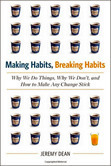
In his new book, Jeremy Dean--psychologist and author of PsyBlog--looks at how habits work, why they are so hard to change, and how to break bad old cycles and develop new healthy, creative, happy habits.
→ "Making Habits, Breaking Habits", is available now on Amazon.
Related articles:
Irregular Bedtimes Reduce Children’s Cognitive Performance
Boosting Your Brainpower in Old Age: Do Scientists Really Think Mental Workouts Can Help?
Automatic Drive: How Unconscious Cognitive Biases Help Fire Our Motivation
Cognition Accelerated by Just 4 x 20 Minutes Meditation
How The Mind Really Works: 10 Counterintuitive Psychology Studies
Does The Weather Affect Your Mood?



Top 5 Career Regrets

In a survey of 30 professionals, here are the top 5 career regrets:
1. I wish I'd quit to pursue my passion sooner
Around one-third of employees are dissatisfied with their jobs (here are 10 keys to job satisfaction). Not everyone wants to quit the day job, but amongst those people who have quit to follow their passion, almost all wish they had done it earlier.
Most people stick to the safe job in the hope of relatively small increases in their pay and conditions and are put off change by fears about insecurity.
2. I wish I'd worked harder at college
Most people value a higher education and those that benefited from it wished they'd appreciated it more at the time. People thought they'd been in too much of a hurry to get through college and did not fully understand how good the experience was at the time.
They also regretted not using their education more in their chosen careers.
3. I wish I hadn't focused so much on the money
People who decided on high-paying but dissatisfying careers regretted their decision. Money doesn't really motivate, especially if you can earn enough in a variety of different lines of work.
Many people wanted to leave their high-paying jobs but had built up too many financial commitments and were unsure if they'd be suited to other jobs.
4. I wish I'd followed my hunches
Looking back on their careers, people perceived vital opportunities they didn't take. Sometimes these opportunities looked risky but it turned out that they would have created big leaps forward in their careers.
These turning points were amongst the things that people regretted the most.
5. I wish I'd started my own business
People wanted more control over their lives and were fed up with being beholden to their managers. Naturally, then, they wanted to start their own business.
While many people think about starting their own business, only a fraction (perhaps 15%) think they have what it takes. People regretted not having the guts to do it.
Regrets shape the future
It's clear that people's regrets shaped how they thought about their careers in the past. But regret can also shape how we think about the future.
We actually anticipate regretting certain decisions, and this anticipated regret can paralyse decision-making. But research has shown that the regret we will actually experience isn't as bad as we anticipate:
"Anticipated regret is such a powerful emotion that it can cause us to avoid risk, lower our expectations, steer us towards the familiar and away from new, interesting experiences. We anticipate more regret when we go against the grain, when we make positive decisions ourselves, rather than letting the chips fall as they may. And all for what? So that we can avoid something that won't be that bad anyway and might not happen at all?" (from: The Power of Regret to Shape Our Future)
Image credit: Sodanie Chea
→ This site is written by psychologist and author, Jeremy Dean. It is completely free. Please help it continue by spreading the word. Thank you.
Making Habits, Breaking Habits
In his new book, Jeremy Dean--psychologist and author of PsyBlog--looks at how habits work, why they are so hard to change, and how to break bad old cycles and develop new healthy, creative, happy habits.
→ "Making Habits, Breaking Habits", is available now on Amazon.
Related articles:
The Power of Regret to Shape Our Future
How to Use Psychology to Succeed at Work
How Our Emotions Work
Multiple-Choice Tests: Why Sticking With Your First Answer is (Probably) Wrong
Success! Why Expectations Beat Fantasies
10 Psychological Keys to Job Satisfaction



July 15, 2013
People Are Happier When They Do The Right Thing

What has happened to people's happiness all around the world as they've faced the economic crisis? How have they coped with job losses, less money coming in, the sense of despair and lack of control over a nightmare that seems to have no end?
That's the question that Helliwell et al. (2013) ask in a new paper in the Journal of Happiness Studies.
They guessed that one answer is one of the oldest in human civilisation: by pulling together.
Pulling together, though, has a new fancy name: social capital. Here are the kinds of things which tell you whether a group of people have 'social capital':
How many people do volunteer work in the community?
How many people have done a favour for a neighbour in the last month?
How many people have given a little money to charity (about $25)?
How many people regularly have meals together as a family?
These go on and on, but you get the general idea. It's essentially doing nice things for other people around you; they don't have to be that dramatic like donating a liver, just little boyscout-type activities count.
They then looked at a huge amount of data on both social capital and happiness across 255 metropolitan areas in the US and drew this conclusion:
"...communities with greater social engagement are happier than otherwise equivalent communities and that life evaluations fell by less, in response to unemployment increases, in those communities with high levels of a broad measure of social engagement."
So social capital has a protective effect: by pulling together through doing little things for each other, people helped keep their spirits up during the economic crisis.
Happy countries
Helliwell et al. (2013) also found the same when they compared between countries, not just between US metropolitan areas. They divided countries into those which had become happier since the crisis, those which remained about the same and those that had become less happy.
In the group of countries with falling levels of happiness (which includes the US but not the UK):
"We saw that average happiness drops were far greater than could be explained by their lower levels of GDP per capita, suggesting that social capital and other key supports for happiness were damaged during the crisis and its aftermath."
In contrast, South Korea is a country whose average levels of happiness have rocketed up since the economic crisis. This is partly because the economy has recovered remarkably well, but maybe also because of policies that have encouraged social capital. Here's the President of South Korea explaining:
"Korea has already proposed a new way forward from the global crisis. [...] We decided to share the burden. Employees chose to sacrifice a cut in their own salaries and companies accepted to take cuts in their own profits because they wanted to save their employees and co-workers from losing their jobs."
More than social: pro-social
The explanation for these effects is that humans are fundamentally pro-social so:
"...they get happiness not just from doing things with others, but from doing things both with and for others. Despite a wealth of findings that those who do things for others gain a bigger happiness boost than do the recipients of generosity, people underestimate the happiness gains from unselfish acts done with and for others"
Image credit: Shena Pamella
→ This site is written by psychologist and author, Jeremy Dean. It is completely free. Please help it continue by spreading the word. Thank you.
Making Habits, Breaking Habits
In his new book, Jeremy Dean--psychologist and author of PsyBlog--looks at how habits work, why they are so hard to change, and how to break bad old cycles and develop new healthy, creative, happy habits.
→ "Making Habits, Breaking Habits", is available now on Amazon.
Related articles:
Why Spending Money on Others Promotes Your Happiness
8 Psychological Keys to Spending Wisely
Buy More Experiences and Less Stuff
Facebook: 7 Highly Effective Habits
Can You Get Things Done Without Making People Hate You?
Why Many Small Pleasures Beat Fewer Larger Ones



July 14, 2013
Irregular Bedtimes Reduce Children’s Cognitive Performance

How much do children's bedtimes really matter for how their brains develop?
To measure the effects of bedtimes on cognitive function, researchers followed 11,000 children from when they were 3-years old to the age of 7 (Kelly et al., 2013).
Parents were asked about their children's bedtimes at 3, 5 and 7-years-old. At 7, the children were tested on their reading, maths and spatial abilities.
The study found that:
"...irregular bedtimes at 3 years of age were associated with lower scores in reading, maths, and spatial awareness in both boys and girls, suggesting that around the age of 3 could be a sensitive period for cognitive development."
In other words, regular bedtimes are important for both boys and girls and the earlier these can be implemented, the better for cognitive performance. The suggestion is that irregular sleeping patterns adversely affect development and these may cause permanent damage:
"Sleep is crucial for the maintenance of homeostasis and brain plasticity, including processes to do with embedding new knowledge, memory and skills into developing neural assemblies"
While is true of for both boys and girls, the study found that irregular bedtimes may be particularly bad news for girls.
Although children from more disadvantaged backgrounds tend to have less regular bedtimes, this was taken into account in the statistical models built by researchers:
"It might be that inconsistent bedtimes are a reflection of chaotic family settings and it is this, rather than disrupted sleep that impacts on cognitive performance in children. However, we found that inconsistent bedtimes were linked to markers of cognitive performance independent of multiple markers of stressful family environments. Findings from elsewhere suggest that stressful family environments affect children's functioning via effects on sleep."
Image credit: Patrick
→ This site is written by psychologist and author, Jeremy Dean. It is completely free. Please help it continue by spreading the word. Thank you.
Making Habits, Breaking Habits
In his new book, Jeremy Dean--psychologist and author of PsyBlog--looks at how habits work, why they are so hard to change, and how to break bad old cycles and develop new healthy, creative, happy habits.
→ "Making Habits, Breaking Habits", is available now on Amazon.
Related articles:
6 Easy Steps to Falling Asleep Fast
10 Simple Postures That Boost Performance
Want to Improve Your Attention? Wear a White Coat
Boosting Your Brainpower in Old Age: Do Scientists Really Think Mental Workouts Can Help?
How Superstitions Improve Performance
The Peaceful Mind: 5 Step Guide to Feeling Relaxed Fast



July 13, 2013
Why Do We Enjoy Listening to Sad Music?

According to a new study by Kawakami et al. (2013), sad music is enjoyable because it creates an interesting mix of emotions; some negative, some positive. In their study, they found that:
"...the sad music was perceived to be more tragic, whereas the actual experiences of the participants listening to the sad music induced them to feel more romantic, more blithe, and less tragic emotions than they actually perceived with respect to the same music."
They reached this conclusion by asking...
"...44 volunteers, including both musicians and non-specialists, to listen to two pieces of sad music and one piece of happy music. Each participant was required to use a set of keywords to rate both their perception of the music and their own emotional state."
The key to enjoying sad music is that although we perceive the negative emotions, our felt emotions aren't as strong as these perception. Perhaps this is because:
"Emotion experienced by music has no direct danger or harm unlike the emotion experienced in everyday life. Therefore, we can even enjoy unpleasant emotion such as sadness. If we suffer from unpleasant emotion evoked through daily life, sad music might be helpful to alleviate negative emotion."
Although we can't currently explain the cathartic effect of sad music—or indeed sad art in general—perhaps:
"...we initially experience negative emotion, such as sadness, and subsequently experience pleasant emotion because of the rewarding effect of enjoying art. Thus, the experience of listening to sad music may ultimately elicit pleasant emotion."
This is just one of the psychological reasons why music is important.
You can also try the experiment for yourself. Here is one of the pieces they used in the research, it's Glinka's "La Séparation" in F minor. How does it make you feel?
Image credit: Scott Schiller
→ This site is written by psychologist and author, Jeremy Dean. It is completely free. Please help it continue by spreading the word. Thank you.
Making Habits, Breaking Habits
In his new book, Jeremy Dean--psychologist and author of PsyBlog--looks at how habits work, why they are so hard to change, and how to break bad old cycles and develop new healthy, creative, happy habits.
→ "Making Habits, Breaking Habits", is available now on Amazon.
Related articles:
The All-Time Top Six Psychological Reasons We Love Music
10 Ways Our Minds Warp Time
4 Life-Savouring Strategies: Which Ones Work Best?
What “The Love Bridge” Tells Us About How Thoughts and Emotions Interact
Earworms: Can They Be Killed?
The Psychology of Nostalgia (in under 300 words)



July 11, 2013
Boosting Your Brainpower in Old Age: Do Scientists Really Think Mental Workouts Can Help?

You may have thought the case for keeping the mind active over the years was open and shut.
To protect your brain against cognitive decline with age, you should keep it active. It's common sense isn't it? Keep doing the Sudoku, reading books, doing crosswords, whatever you can.
People who keep their minds active stay sharper for longer, don't they?
Indeed they do. But until now scientists had little evidence of what caused what.
Could it be, they wondered, that some people stay mentally active with age because they have an inbuilt genetic advantage. Maybe some of us are just destined to get more befuddled with age and, as a result, the life of the mind naturally fades.
In other words, perhaps there's no need to bother keeping the mind active because how much your brainpower declines with age is unrelated to how much you use it.
Slowing cognitive decline
Now a new study published in Neurology has weighed in with evidence that, in fact, using your brain may indeed cause it to stay in better shape over the years.
Wilson et al. (2013) collected this evidence by looking at the brains of 294 people who had died and examining them for tell-tale signs of physical decline. They knew how much these people had stimulated their minds as they'd answered questionnaires over the years about how often they'd:
read books,
visited libraries,
written letters,
and sought out or processed information.
They found that:
"...people who participated in mentally stimulating activities both early and late in life had a slower rate of decline in memory compared to those who did not participate in such activities across their lifetime, after adjusting for differing levels of plaques and tangles in the brain. Mental activity accounted for nearly 15 percent of the difference in decline beyond what is explained by plaques and tangles in the brain."
So it seems that mental activity really could be a protective factor against mental decline with age:
"The study found that the rate of decline was reduced by 32 percent in people with frequent mental activity in late life, compared to people with average mental activity, while the rate of decline of those with infrequent activity was 48 percent faster than those with average activity."
This study suggests that keeping mentally active really can protect us from cognitive decline with age. And it's never too early to start flexing those cognitive muscles.
Image credit: Nathan O'Nions
→ If you value PsyBlog, please support it by spreading it to others through email, social networks or even old-fashioned talking! Thank you!
Making Habits, Breaking Habits
In his new book, Jeremy Dean--psychologist and author of PsyBlog--looks at how habits work, why they are so hard to change, and how to break bad old cycles and develop new healthy, creative, happy habits.
→ "Making Habits, Breaking Habits", is available now on Amazon.
Related articles:
Does Keeping Busy Make Us Happy?
Mental Practice Makes Perfect
How Our Emotions Work
Can People’s Personalities Change?
How Much Do You ‘Zone Out’ While Reading?
4 Life-Savouring Strategies: Which Ones Work Best?



Mindful Photography: A Simple and Fun Exercise That Boosts Well-Being

The science of happiness has brought us all kinds of fascinating new ideas and techniques for feeling better.
There are now many simple activities that have been proven to increase your well-being, including counting your blessings, spending on experiences not stuff, visualising your best possible self and many more.
Here's another to add to the list.
It's based on the idea that happiness is boosted by being grateful for what you have.
Unfortunately we often ignore what we have in the rush through everyday life.
One way of combating this is to take photographs of whatever is important to you as a reminder. Here are the instructions for 'mindful photography', by positive psychology experts Jamie Kurtz and Sonia Lyubomirsky:
"Throughout the course of the day today, you will take photographs of your everyday life. [...] think about the things in your life that are central to who you are. If you wanted someone to understand you and what you most care about, how would you capture this? While this is highly personal, some examples might include sports equipment [or] a memento from a favorite time spent with your romantic partner [..]. Have your camera or camera phone handy and take at least 5 photographs of these things today."
Since camera phones are so ubiquitous now, people have the tendency to take photos of anything and everything. Choosing about five things, though, will help you resist that impulse and focus in on what's important and what you have to be grateful for:
"We believe mindful photography to be effective because it helps people examine their everyday lives in a way that they normally do not – namely, through the lens of a camera, with an eye out for beauty, meaning, and value."
Image credit: Zuhair Ahmad
→ If you value PsyBlog, please support it by spreading it to others through email, social networks or even old-fashioned talking! Thank you!
Making Habits, Breaking Habits
In his new book, Jeremy Dean--psychologist and author of PsyBlog--looks at how habits work, why they are so hard to change, and how to break bad old cycles and develop new healthy, creative, happy habits.
→ "Making Habits, Breaking Habits", is available now on Amazon.
Related articles:
Still Thinking About Your Ex? Why It’s Bad News for Your Current Partner
The Meaning of Life (in Under 300 Words)
How to Dodge Buyer’s Remorse
A Simple Boost for Social Confidence
The All-Time Top Six Psychological Reasons We Love Music
The Psychology of Nostalgia (in under 300 words)



Jeremy Dean's Blog

- Jeremy Dean's profile
- 29 followers

