
Jeremy Dean's Blog, page 827
August 28, 2012
Memory Enhanced by a Simple Break After Reading

I have a great memory for books I've read on trains.
I always thought this had something to do with the nature of train travel: the rocking of the carriage, the rhythm of the stops, the continually changing picture window. Perhaps the combination of all these helps induce a focus which is harder to achieve in familiar circumstances.
Or perhaps the answer is simpler.
Psychologists have found that brief resting periods after learning aids memory. In studies, when people take a little rest after learning, say, a string of numbers, they do better in recall than other people who've been given another task straight away.
It is thought that this little rest helps consolidate the memory, making it easier to retrieve. On the other hand if you go straight on to another task, the memory doesn't have a chance to solidify.
I began to wonder if this suggested why I find it easier to recall books I've read on trains.
Unlike at home where I read continuously, on a train I tend to stop more frequently to look out of the window or see who is getting on at the next stop. These would be exactly the type of restful periods described in this research.
The problem is these findings have only been shown over very short periods. That is until now.
10-minute break
In a new study the effect of a 10-minute break was tested on participants' recall of a story 7 days later (Dewar et al., 2012).
They found that even after 7 days people's memory was enhanced when they took a 10-minute break after reading the story. In fact, 7 days later people who'd taken a break were as good as those trying to recall the story just 15-30 minutes later, but without the break.
So perhaps this helps explain why I have a clearer memory of books I've read on trains.
It also shows that one of the pleasures of reading—pausing to let it wash over you—is not only agreeable but also helps you remember what you've read.
Image credit: Jens Schott Knudsen
→ If you enjoy the free content on PsyBlog, please support me by passing it on. You can like it on Facebook, tweet about it, and get email updates and more. Thank you.
PsyBlog's How to Be Creative
 If we can all be creative, why is it so hard to come up with truly original ideas?
It's because creativity is mysterious. Just ask any scientist, artist, writer or other highly creative person to explain how they come up with brilliant ideas and, if they're honest, they don't really know.
But over the decades psychologists have given ordinary participants countless tests, forms and tasks and conducted hundreds of hours of interviews. From these emerge the psychological conditions of creativity.
Not what you should do, but how you should be...
Click here to find out more...






August 20, 2012
How TV Can Boost Your Self-Control
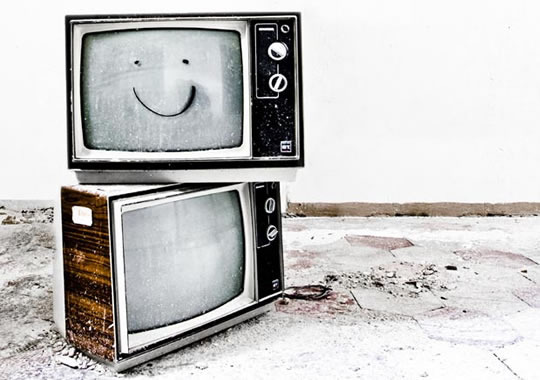
After a long hard day's work it feels good to flop down and enjoy your favourite TV show.
Is that so wrong? Or should we be doing something more challenging or creative with our time? Perhaps taking a spin class or learning the Peruvian nose-flute?
A new study, however, suggests that the 'idiot box' may have its psychological uses after all (Derrick, 2012).
Sense of belonging
The problem with stressful days is that they sap our self-control. This is a finite resource which easily runs down at the end of the day.
While you might start out with good intentions for what you'll do in the evening, these are all shot once you're worn out.
One way that we can replenish our self-control is to escape into a familiar social world. People we know well provide a sense of belonging, can give us energy, boost our mood and be self-affirming.
Since research has shown that people experience the characters in TV shows as real people, perhaps they can also provide this sense of belonging.
Where you know everybody's name
When Jaye Derrick from the University at Buffalo tested this in an experiment, she found that after using up their self-control people did automatically seek out a familiar fictional world, such as those found on TV.
Not only that but this immersion in a fictional world also had positive effects. People did better at a difficult puzzle that required self-control once they'd watched a favourite TV program or read a favourite book.
A second study suggested it wasn't just about watching any old TV show. It made a difference that the fictional world was a familiar one, such as you might enjoy in a well-established sitcom or drama series.
None of this is to say you should drop your real friends and rely totally on Frasier Crane, Jerry Seinfeld or Homer Simpson for your social interactions. But this research does suggest that, at least in the short-term, watching a familiar TV programme can have a restorative effect on self-control.
Image credit: Luca Rossato
→ If you enjoy the free content on PsyBlog, please support me by passing it on. You can like it on Facebook, tweet about it, and get email updates and more. Thank you.
PsyBlog's How to Be Creative
If we can all be creative, why is it so hard to come up with truly original ideas?
It's because creativity is mysterious. Just ask any scientist, artist, writer or other highly creative person to explain how they come up with brilliant ideas and, if they're honest, they don't really know.
But over the decades psychologists have given ordinary participants countless tests, forms and tasks and conducted hundreds of hours of interviews. From these emerge the psychological conditions of creativity.
Not what you should do, but how you should be...
Click here to find out more...



August 6, 2012
The Availability Bias: Why People Buy Lottery Tickets

If people really understood their chances of winning the lottery, they would never buy a ticket.
Yet tickets are bought so frequently that well-run lotteries are, for the organisers, virtually a license to print money.
All lotteries exploit a simple bias in the way the human mind works called the availability bias (that and people's desperation).
This is the tendency to judge probabilities on the basis of how easily examples come to mind.
Since lottery organisers heavily promote the jackpot winners, people are continually hearing about those who've won big. On the other hand they hear almost nothing about the vast majority of people who haven't won a bean.
So people assume they are much more likely to win the lottery than they really are.
The UK lottery is promoted with the phrase "It could be you", which, of course, is technically true. To tell the whole truth it should read: "It could be you, but it almost certainly won't be."
Shark attack!
This bias affects all kinds of judgements we make that rely on memory. Here are a few more examples:
A doctor who has just diagnosed two cases of bacterial meningitis is likely to see it in the next patient, even though they only have the flu, which it resembles.
People judge themselves more likely to be murdered than getting stomach cancer, because homicides are so frequently reported in the news (Brinol et al., 2006). In fact it is five times more likely that you will die of stomach cancer (which is already fairly rare) than be murdered.
The same is true of shark attacks, which people think are relatively frequent because of media reports. In fact you're more likely to be killed by a part that's fallen off a plane, which in itself is unbelievably unlikely (Read, 1995).
When two of your friends have just had car accidents, you judge the roads are becoming less safe and feel you're more likely to have an accident as well.
One of my favourite examples, though, is that college students often think that in a multiple-choice test, you should always stick with your first answer, rather than changing it. In fact this is wrong and I explain why here: Multiple-Choice Tests: Why Sticking With Your First Answer is (Probably) Wrong.
And the examples go on.... when information is more obvious, vivid or easier to recall it biases the way we assess the probability of that event.
The reason we have this bias is that some of the time it is an effective way to make quick decisions. For example, memorable events—like getting food poisoning from a bad prawn curry—teach important lessons (about cheap restaurants).
Beat the bias
Often, though, the availability bias serves to make us more nervous than need be. But there is a way to beat it without resorting to a statistics textbook, an actuary and a super-computer. The key is to specifically try and recall instances of the event that aren't so memorable. For example, how many people do you know who have:
not been murdered?
failed to win the lottery jackpot?
not been killed in a shark attack?
If you're anything like me, you'll discover this is an awful lot of people. I find these thoughts are a good recipe for a less stressful life.
Image credit: kygp
→ If you enjoy the free content on PsyBlog, please support me by passing it on. You can like it on Facebook, tweet about it, and get email updates and more. Thank you.
PsyBlog's How to Be Creative
If we can all be creative, why is it so hard to come up with truly original ideas?
It's because creativity is mysterious. Just ask any scientist, artist, writer or other highly creative person to explain how they come up with brilliant ideas and, if they're honest, they don't really know.
But over the decades psychologists have given ordinary participants countless tests, forms and tasks and conducted hundreds of hours of interviews. From these emerge the psychological conditions of creativity.
Not what you should do, but how you should be...
Click here to find out more...



July 26, 2012
Why Society Doesn’t Change: The System Justification Bias
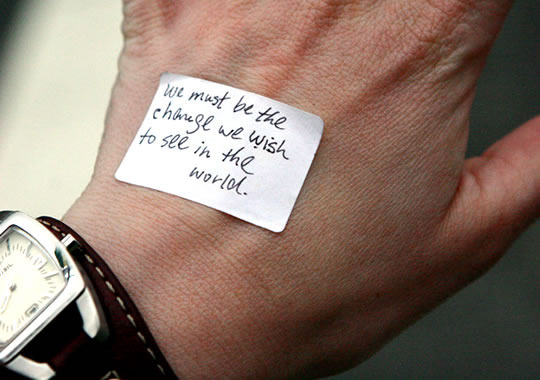
"Society's tendency is to maintain what has been. Rebellion is only an occasional reaction to suffering in human history: we have infinitely more instances of forbearance to exploitation, and submission to authority, than we have examples of revolt." (Zinn, 1968)
Have you ever wondered why society hardly ever changes? I think most of us have.
One answer is that humans have a mental bias towards maintaining the status quo. People think like this all the time. They tend to go with what they know rather than a new, unknown option.
People feel safer with the established order in the face of potential change. That's partly why people buy the same things they bought before, return to the same restaurants and keep espousing the same opinions.
This has been called the 'system justification bias' and it has some paradoxical effects (research is described in Jost et al., 2004):
Poor people don't strongly support the sorts of political policies that would make them better off. Surveys find that low-income groups are hardly more likely than high-income groups to want tax changes that mean they will get more money. Generally people's politics doesn't line up with their position in society.
Oddly, the more disadvantaged people are, the more they are likely to support a system that is doing them no favours. This is because of cognitive dissonance. In one US example of this low-income Latinos are more likely to trust government officials than high-income Latinos.
Most disturbing of all: the more unequal the society, the more people try to rationalise the system. For example in countries in which men hold more sexist values, women are more likely to support the system.
People seem to rationalise the inequality in society, e.g. poor people are poor because they don't work hard enough and rich people are rich because they deserve it.
Incredibly, this means that some (but not all) turkeys will keep on voting for Christmas.
Image credit: kris krug
→ If you enjoy the free content on PsyBlog, please support me by passing it on. You can like it on Facebook, tweet about it, and get email updates and more. Thank you.
PsyBlog's How to Be Creative
If we can all be creative, why is it so hard to come up with truly original ideas?
It's because creativity is mysterious. Just ask any scientist, artist, writer or other highly creative person to explain how they come up with brilliant ideas and, if they're honest, they don't really know.
But over the decades psychologists have given ordinary participants countless tests, forms and tasks and conducted hundreds of hours of interviews. From these emerge the psychological conditions of creativity.
Not what you should do, but how you should be...
Click here to find out more...



July 25, 2012
The Incubation Effect: How to Break Through a Mental Block
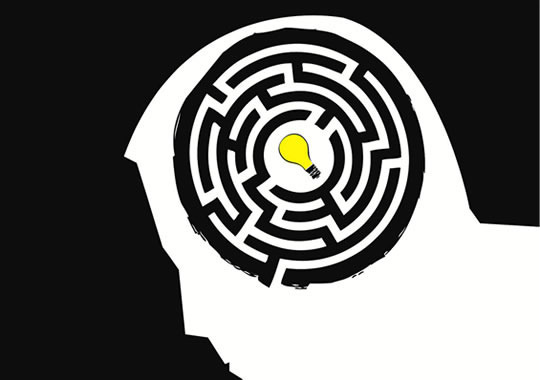
Mental blocks are incredibly irritating.
It doesn't matter whether you're pondering spreadsheets at work, trying to decide what colour to paint the shed or wondering where to spend the holidays, sometimes you hit a mental block and can't go forwards.
It might be that the number of options is overwhelming or, at the other extreme, that you can't come up with a single idea. Either way you're stuck and in that moment there seems like no way out.
The usual solution is simply to take a break. After an hour, a day or a week, you return to the problem afresh and suddenly everything seems clear. You can't understand what the problem was in the first place: the answer is right there, staring you in the face.
This is a fascinating capability of the mind. It's wonderful that it can solve problems unconsciously while we're getting on with day-to-day life.
I've come back to problems that have stumped me and been amazed to feel the answer pop into my head as if by magic. It partly makes up for all those times I get lost in the city or can't remember my next-door neighbour's name.
Incubation works
The incubation effect is well-known and was included in an early four-stage theory of creativity, put forward in 1926 by Graham Wallas, an English psychologist:
Preparation
Incubation
Illumination or insight
Verification
The problem with this theory is that the incubation phase is extremely mysterious. First you prepare, then you 'incubate', which involves making no conscious effort to solve the problem, then comes the insight. It sounds too good to be true.
Whether it sounds too good to be true or not, the psychological research backs up the common experience that incubation (or taking a break) does work. About 50 different studies have been carried out on the incubation effect and three-quarters of them find an effect.
The question is: why does it work? (This argument matters practically and I'll explain why in a moment.)
Is it just rest?
One group of psychologists say it's only the effect of resting. When you take a break from a problem you rest your mind and when you come back it's fresher, so you do better.
It's not just you that's fresher, it's also your take on the problem that has been freshened up. Before, you saw the problem in a particular way which limited your ability to come up with solutions. After a break, though, you forget things that held you back, which allows the breakthrough.
On the other side of the fence sit psychologists who say, yes, these things are important, but they don't tell the full story. The break doesn't just freshen you up, it gives your unconscious time to work towards a solution.
This argument is important because if the unconscious is doing some processing then it matters that you're motivated, expecting to work on the problem again and that you're creative. If not, all that matters is that you take a break.
The alternative uses task
These two views have been tested in a new study by Gallate et al. (2012). They gave participants a standard creativity test which...
"...involves listing as many novel uses as you can for an everyday object in two minutes.
Take for example, a chair: yes you can sit on it but that's not a novel use. You can also stand on it which is a little more novel. Much more novel is using it to build a home-made fort, burning it to fight the cold or hitting someone with it in a bar-room fight.
The more of these examples you can come up with in an allotted amount of time, typically the more creative you are (try it, it's good fun)." (from: Duck/Rabbit Illusion Provides a Simple Test of Creativity)
After this they were given a maths test to keep their conscious minds busy, and then asked to do the creativity test again. The catch was that only some of the participants were told they would be returning to the creativity test, the rest were visibly surprised to be asked to do it again.
For the participants who were surprised by the second test of creativity, their average performance didn't improve much. In contrast those who were told had time for their unconscious to work on the problem and they did improve. In fact they came up with more than twice as many novel ideas the second time.
Breaking through
This study suggests, then, that unconscious processing is important in the incubation effect. It seems that for the group who knew they'd be doing the task again, their unconscious was working away in the background thinking up more solutions.
This means that breaking through a mental block is about more than just taking a break. It helps to be motivated and to know that you will be returning to the problem. It also helps if you are a creative person because this study found that people who were naturally more creative benefited more from the break.
At a time when we always seem to be in a hurry, we need reminding that taking a break is a simple but effective tool for boosting creativity. To come up with creative solutions to problems, your chances are increased by incorporating breaks into your work-flow.
Here are two more research-based hints to get the most from your incubation periods:
Prepare. Another boost for the incubation effect comes from preparation. If you've looked at the problem from more angles before you start incubating, there's more chance your unconscious can give you some answers.
Short breaks. Even relatively short periods of incubation can be successful. Studies have found that 30-minute incubation periods can be superior to 24 hours.
Image credit: Khalid Albaih
→ If you enjoy the free content on PsyBlog, please support me by passing it on. You can like it on Facebook, tweet about it, and get email updates and more. Thank you.
PsyBlog's How to Be Creative
If we can all be creative, why is it so hard to come up with truly original ideas?
It's because creativity is mysterious. Just ask any scientist, artist, writer or other highly creative person to explain how they come up with brilliant ideas and, if they're honest, they don't really know.
But over the decades psychologists have given ordinary participants countless tests, forms and tasks and conducted hundreds of hours of interviews. From these emerge the psychological conditions of creativity.
Not what you should do, but how you should be...
Click here to find out more...



July 19, 2012
How to Fight Excessive Doubt
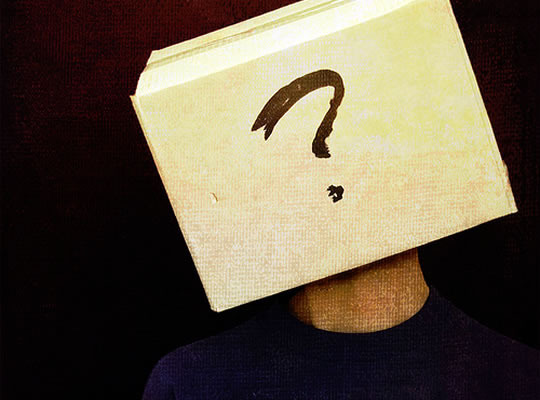
A little critical, analytical thinking is a good thing. Without doubting ourselves sometimes we'd find it difficult to make good decisions.
Too much doubt, though, can stop us living our lives to the full. Some people can never make up their minds about their careers, their love lives or much else.
Unfortunately that sense that you're not quite sure can leave you living in permanent limbo, never taking that final decisive step.
The problem is that we can we never really know what the outcome of our decisions will be, that's the nature of life. But the person who never takes a risk, however small, never gets anywhere. At some point, after a little looking, you've got to leap.
Psychologists have found that people who doubt themselves too much end up engaging in excessive information processing which leads to procrastination and self-handicapping.
Self-doubters are also more likely to suffer from depression and social anxiety. Some soul-searching and self-analysis can be useful, but too much is a recipe for stagnation.
Shake your head
A recent study, though, points to a possible path for escaping the doubt habit.
For their research Wichman et al. (2010) recruited people who were chronically uncertain. They were then given a test which unconsciously encouraged them to be uncertain about their uncertainty. This was done by getting them to unscramble sentences which were related to uncertainty, like: "her speaker doubt I explanations" (you're allowed to drop one word, in this case 'speaker').
Ironically it didn't increase their uncertainty further but reduced it. This suggests that doubting your doubt can be useful. Of course this wasn't a permanent solution, but it did momentarily reduce their levels of uncertainty.
Just the same effect could be seen when participants in a second study shook, rather than nodded their heads. The physical action of shaking their head while thinking about their uncertainty caused one to cancel out the other. Through this they temporarily reduced their doubts.
Doubt your doubt
This is a fascinating counter-intuitive case when lack of confidence in your own thoughts is beneficial. For some people having confidence in their doubts just leads to more procrastination, self-handicapping and worse.
Perhaps learning to doubt the doubt more will offer one way of helping to escape from some of the crippling effects of excessive self-doubt.
While shaking your head can't be considered a miracle cure, it is interesting that doubting your doubt can work to dispel the original doubt.
Image credit: paurian
→ If you enjoy the free content on PsyBlog, please support me by passing it on. You can like it on Facebook, tweet about it, and get email updates and more. Thank you.
PsyBlog's How to Be Creative
If we can all be creative, why is it so hard to come up with truly original ideas?
It's because creativity is mysterious. Just ask any scientist, artist, writer or other highly creative person to explain how they come up with brilliant ideas and, if they're honest, they don't really know.
But over the decades psychologists have given ordinary participants countless tests, forms and tasks and conducted hundreds of hours of interviews. From these emerge the psychological conditions of creativity.
Not what you should do, but how you should be...
Click here to find out more...



July 16, 2012
50+ Savvy Insights into Workplace Psychology
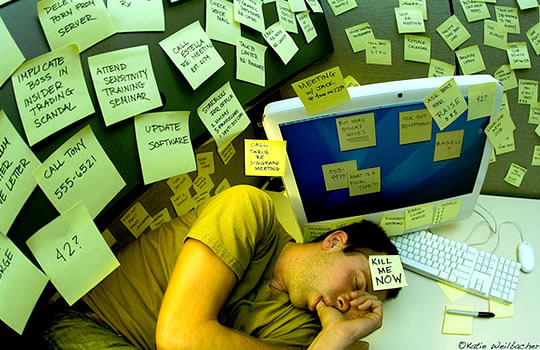
Do you want to pimp your résumé, negotiate a better salary, become a great leader, learn the secrets of a satisfying job and more? Then read on for 50+ studies on the psychology of work:
10 Psychological Techniques to Help You Get a New Job
7 Easy Ways to Give Your Résumé the Psychological Edge
10 Psychological Keys to Job Satisfaction
Why Career Planning Is Time Wasted
Ten Powerful Steps to Negotiating a Higher Salary
Why Teamwork is Overrated
Can You Get Things Done Without Making People Hate You?
7 Ways Work Can Make You Physically Sick
The Problem With Narcissistic Leaders
7 Reasons Leaders Fail
How To Be a Great Leader (in under 300 words)
→ If you are looking for a textbook on the psychology of work, try: Work in the 21st Century: An Introduction to Industrial and Organizational Psychology .
.
Image credit: katiew
→ If you enjoy the free content on PsyBlog, please support me by passing it on. You can like it on Facebook, tweet about it, and get email updates and more. Thank you.
PsyBlog's How to Be Creative
If we can all be creative, why is it so hard to come up with truly original ideas?
It's because creativity is mysterious. Just ask any scientist, artist, writer or other highly creative person to explain how they come up with brilliant ideas and, if they're honest, they don't really know.
But over the decades psychologists have given ordinary participants countless tests, forms and tasks and conducted hundreds of hours of interviews. From these emerge the psychological conditions of creativity.
Not what you should do, but how you should be...
Click here to find out more...



July 13, 2012
Automatic Drive: How Unconscious Cognitive Biases Help Fire Our Motivation

It feels daunting when we draw the bow across a violin for the first time or start learning to samba, or pick up our first stuttering words in a foreign language. The ultimate goal of being able to dance, speak French or play the violin seems a long way off.
There is a strong temptation to give up and try other goals, perhaps less challenging ones. So how do we motivate ourselves to keep going?
Consciously we can use these 11 goals hacks described in a previous article. But our unconscious also chips in to change our perceptions and help us on our way, as revealed by an ingenious new study (Huang et al., 2012).
Collect 1,000 t-shirts
In the study participants were told they were going to be involved in an ongoing effort to collect 1,000 t-shirts to send to refugees in Haiti. They were told about the desperate state of refugees there, including their lack of basic clothing.
Then they were split into two experimental groups* by being shown two different pictures of the project's progress so far:
Some were shown two full boxes of t-shirts, suggesting there was lots more work to do and,
The others were shown 10 full boxes of t-shirts, suggesting they were much nearer their goal.
Crucially, each group was asked to estimate how many t-shirts had already been collected in these boxes.
The group that were shown the two boxes simulated the feeling we get at the start of a big project, i.e. that there is still a lot of work to do.
So how did the participants cope with this? It turned out that they over-estimated the number of t-shirts that had already been collected. In fact, in comparison to an unmotivated control group who thought there were, on average, 92 in the box, those who were committed to the task estimated there were 220 t-shirts.
This over-estimation made them feel that the goal was more attainable.
Almost there?
The group that were shown the 10 boxes were simulating the experience of being close to achieving our goal.
So how did participants keep themselves motivated when there was much less work to do? You guessed it: they under-estimated the number of t-shirts in the box. The control group guessed an average of 617, while the motivated participants guessed 424.
By under-estimating their progress when they were near the end of the task, highly motivated people are able to push themselves on harder towards the end when the temptation is to slack off.
The experimenters checked this finding using other tasks. They got the same types of results again. When people are highly motivated to achieve a task, they over-estimate their progress at the beginning and under-estimate it at the end. This helps provide us with the psychological energy to keep us going through the task.
This effect has been most noticeable to me towards the end of large projects. Even when I'm nearing the finish line, it feels like I've still got a fair way to go. Then when I'm finished it takes me by surprise.
Automatic motivation
This finding is heartening because sometimes these subtle cognitive biases work against our best interests, like in the Dunning-Kruger effect and the worse-than-average effect, but here they're working for us.
In both cases participants' minds were warping what they were seeing to give them extra motivation. Although strictly speaking they were less accurate, it's all in the service of achieving something more important: reaching that vital goal.
This is one great example of the way our cognitive biases can be extremely handy for us.
This finding is fascinating because it's demonstrating how sometimes getting precise information about our progress can actually reduce motivation.
For example if you're on the running machine at the gym and you've just started your workout, then the fact that the display tells you exactly how far you've got to go leaves no room for these helpful unconscious biases to operate.
Sometimes it really is better not to know. Instead let your unconscious give you a helping hand on towards your goal.
→ You can find out more about the psychology of motivation in Daniel H Pink's book 'Drive: The Surprising Truth About What Motivates Us '
'
[*Please note that I have simplified the design of the study for clarity]
Image credit: kelsey_lovefusionphoto
→ If you enjoy the free content on PsyBlog, please support me by passing it on. You can like it on Facebook, tweet about it, and get email updates and more. Thank you.
PsyBlog's How to Be Creative
If we can all be creative, why is it so hard to come up with truly original ideas?
It's because creativity is mysterious. Just ask any scientist, artist, writer or other highly creative person to explain how they come up with brilliant ideas and, if they're honest, they don't really know.
But over the decades psychologists have given ordinary participants countless tests, forms and tasks and conducted hundreds of hours of interviews. From these emerge the psychological conditions of creativity.
Not what you should do, but how you should be...
Click here to find out more...



July 9, 2012
10 Even Weirder Psychology Studies
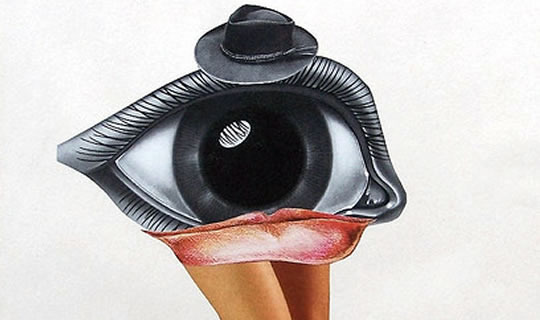
A few years ago I wrote an article on weird psychology studies. It included studies on tickling, superstitious pigeons, a psychic dog and self-conscious urinators.
It seems I hardly even scratched the surface. Here are 10 even weirder psychology studies that have mostly been published in academic journals, some more reputable than others...
1. Cerebral activation during micturation in normal men
Nour et al. (2000) had people urinating in a PET scanner. And from this they tell us:
"We conclude from this study [...] that the onset and maintenance of micturation in normal men is associated with a vast network of cortical and subcortical regions, confirming observations from clinical and animal studies"
...and also that their PET scanner now has a funny smell.
2. Unwanted intrusive thoughts and the growth of facial hair
You're going to think I've just made this one up, but I haven't. From Durac (1997):
"An increase in hair production on the end of one’s nose or ear can produce an automatic negative cognition. Equally, a negative automatic thought can produce an immediate increase in hair growth on the outer surface at the tip of the nose..."
So what happens when you clip your nasal hair? Do all those bad thoughts immediately evaporate? If only it were that easy.
3. Men and women holding hands: whose hand is uppermost?
Chapell et al. (1999) tell us:
"A combined total of 15,008 handholding couples were observed in six studies, and across differences in height, age, hand preference, ethnicity, culture, and sex of the initiator of handholding in public, men were significantly more likely than women to have the uppermost hand."
I've never noticed this before, but I'll definitely be on the lookout now.
4. Does smelling granny relieve depressive mood?
Black (2001) wins the prize for the most unusual abstract for a study:
"Chen and Haviland-Jones claim if you’re down
You needn’t be depressed and mope around
Check out Granny’s smell
It’ll make you feel well
One problem: no supporting evidence was found"
There's your answer: granny may smell wonderful but sniffing her won't cheer you up. Better to speak to her instead.
5. Neurological and cognitive abnormalities associated with chronic petrol sniffing
Maruff et al. (1999) tell us that...
"...subtle neurological and cognitive abnormalities do occur in individuals who abuse petrol but who do not have acute toxic encephalopathy and that the severity of these abnormalities is reduced with abstinence."
Not exactly earth-shattering news that sniffing petrol isn't good for your brain and you'll probably get better if you quit. Still, good to know that someone is on the case.
6. Farting as a defence against unspeakable dread
Sidoli (1996) tell us about the defence mechanism of boy who was had been a victim of abuse and neglect:
"When feeling endangered, Peter had developed a defensive olfactive container using his bodily smell and farts to envelop himself in a protective cloud of familiarity against the dread of falling apart, and to hold his personality together."
Childishly I found the title funny but reading the abstract made me feel bad for Peter. But when the authors start talking about a fart holding someone's personality together, I had to stifle a giggle.
7. Gender differences in book carrying
"The results show our study replicated Jenni's: females use Type I (books in front of body), males preferred Type II (books at side of body). For bag carrying, males prefer backpacks, while females prefer one/two-strap bags. However, no differences exist in carrying style."
Unlike the handholding study, which I hadn't noticed, this one I remember from school days. The key for young men is to hold the books as nonchalantly as possible, as though you've forgotten they are there.
8. The rubber hand illusion
An out-of-body experience with a rubber glove described by Tsakiris and Haggard (2005):
"Watching a rubber hand being stroked, while one's own unseen hand is synchronously stroked, may cause the rubber hand to be attributed to one's own body, to "feel like it's my hand."
These sorts of illusions are fascinating and have a corollary in the phenomenon of phantom limbs. There people who've had limbs amputated find that they still have sensations from it. This is very irritating if they get an itch which they'll never be able to scratch.
9. Becoming a vampire without being bitten
Gabriel and Young (2011) tell us:
"...participants read passages from either a book about wizards (from the Harry Potter series) or a book about vampires (from the Twilight series). Both implicit and explicit measures revealed that participants who read about wizards psychologically became wizards, whereas those who read about vampires psychologically became vampires."
I'm too old for vampires and Harry Potter but I remember just this effect from watching Superman, Star Wars, James Bond and the rest.
10. A phenomenological investigation of being bored with life
If all these weird studies are getting you down then remember that everything is interesting if you look hard enough. Even studying gender differences in book carrying is better than being bored. As Bargdill (2000) explain:
"Boredom is equivalent to the freeze response. In this response, people ignore the possibility of taking creative steps toward making their lives meaningful. Instead, they wait for others--for outside assistance to a very personal insight. Like a deer in the headlights, these people freeze. They hope that the intrusive danger, meaninglessness, will disappear and that they will be able to return to their daily lives. [Instead] they are no longer in motion. They are aware, but paralyzed. They are bored."
Image credit: Derrick Tyson
→ Join 20,000+ PsyBlog followers now on Facebook and Twitter.
PsyBlog's How to Be Creative
If we can all be creative, why is it so hard to come up with truly original ideas?
It's because creativity is mysterious. Just ask any scientist, artist, writer or other highly creative person to explain how they come up with brilliant ideas and, if they're honest, they don't really know.
But over the decades psychologists have given ordinary participants countless tests, forms and tasks and conducted hundreds of hours of interviews. From these emerge the psychological conditions of creativity.
Not what you should do, but how you should be...
Click here to find out more...



June 28, 2012
When Does Reverse Psychology Work?
 '
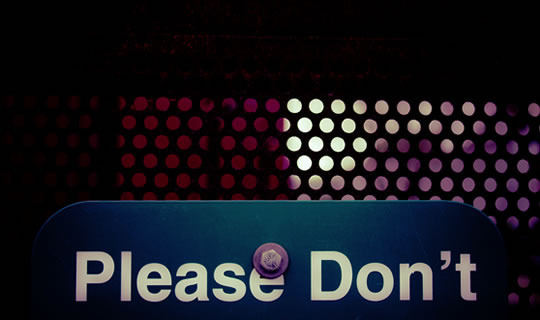
'You're probably familiar with reverse psychology: it's when you try to get someone to do something by telling them to do the opposite.
In theory people don't like to have their freedom restricted so they rebel. But what does the psychological research tell us? Do people really react to restrictions on their freedom by wanting the restricted object more?
Under some circumstances, the answer is yes, as these two experiments demonstrate:
"...two-year-olds who are told not to play with a particular toy suddenly find that toy more appealing. [...] Students who are told they have their choice of five posters, but then are told one of them is not available suddenly like that one more..." (from the excellent textbook Social Psychology and Human Nature)
Warning labels can have the same perverse effect:
"...warning labels on violent television programs across five age groups (ranging from 9 to 21 years and over) were more likely to attract persons in these groups to the violent program than information labels and no label." (Chadee, 2011)

The idea is that when you are told you can't have or do something, the following three things happen:
You want it more.
You rebel by reasserting your freedom.
You feel angry at the person restricting your freedom.
In other words you are immediately turned back into an irritating teenager.
Forbidden fruit
Reverse psychology works best with people who are contrary or resistant. In contrast agreeable people are likely to go along with you anyway so you don't need to use it.
Watch out, though, people hate being manipulated. If they sense you are trying to get them to do something by telling them to do the opposite, a form of reverse reverse psychology may operate. So they end up doing what you tell them, just to spite your attempts to control them.
Reverse psychology is a tricky customer both in real life and in the psych lab. Researchers have found it difficult to pin down exactly when reverse psychology works and when it doesn't. Here are a few factors likely to increase psychological reactance:
The more attractive and important the option that's being restricted, the greater the psychological reactance.
The greater the restriction of freedom, the greater the psychological reactance.
Arbitrary threats produce high reactance because they don't make sense, which makes people more rebellious.
In real life reverse psychology likely works best when used subtly and sparingly on people who are resistant to direct requests.
Image credit: David Rabbit Wallace
→ Join 20,000+ PsyBlog followers now on Facebook and Twitter.
PsyBlog's How to Be Creative
If we can all be creative, why is it so hard to come up with truly original ideas?
It's because creativity is mysterious. Just ask any scientist, artist, writer or other highly creative person to explain how they come up with brilliant ideas and, if they're honest, they don't really know.
But over the decades psychologists have given ordinary participants countless tests, forms and tasks and conducted hundreds of hours of interviews. From these emerge the psychological conditions of creativity.
Not what you should do, but how you should be...
Click here to find out more...



Jeremy Dean's Blog

- Jeremy Dean's profile
- 29 followers

