
Jeremy Dean's Blog, page 826
December 14, 2012
Making Habits, Breaking Habits: How to Make Changes that Stick
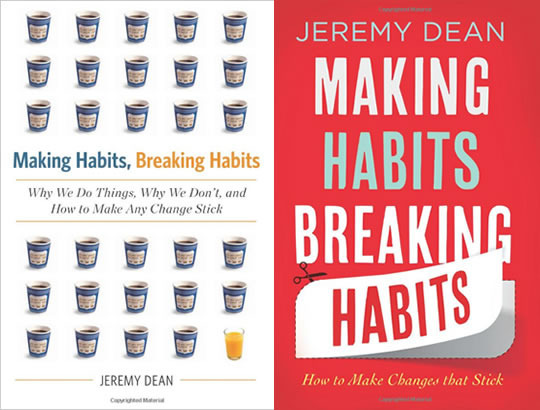
I'm very pleased to announce that I have a new book coming out in a few weeks time called Making Habits, Breaking Habits: How to Make Changes that Stick.
The book will be published as a hardback in the US (above left; 1 Jan 2013) and a paperback in the UK (above right; 3 Jan 2013). It will also be available as an ebook through all the usual retailers.
Here is what the publisher has to say about it:
"Say you want to start going to the gym or practicing a musical instrument. How long should it take before you stop having to force it and start doing it automatically?
The surprising answers are found in Making Habits, Breaking Habits, a psychologist’s popular examination of one of the most powerful and under-appreciated processes in the mind. Although people like to think that they are in control, much of human behavior occurs without any decision-making or conscious thought.
Drawing on hundreds of fascinating studies, psychologist Jeremy Dean busts the myths to finally explain why seemingly easy habits, like eating an apple a day, can be surprisingly difficult to form, and how to take charge of your brain’s natural “autopilot” to make any change stick.
Witty and intriguing, Making Habits, Breaking Habits shows how behavior is more than just a product of what you think. It is possible to bend your habits to your will—and be happier, more creative, and more productive."
I will tell you more about the book over the coming weeks. To ensure you get the latest information, why not sign up to get free email updates from PsyBlog. This will send you an email every time PsyBlog is updated.
→ You can pre-order the book now on Amazon.com or Amazon.co.uk.
→ Find out more about advertising on PsyBlog.






December 4, 2012
Why People Believe Weird Things and 8 Ways to Change Their Minds

...no, actually, for a very good psychological reason I'm not going to repeat any of it here.
Let's just say that some people believe weird stuff and leave it at that. It turns out that just one of the fascinating reasons that people accept odd ideas is that they keep getting repeated, even if only to debunk them.
So, where does all this misinformation come from, why do people believe it and how can right-thinking people counter it?
(The following is based on an excellent article by Professor Stephan Lewandowsky and colleagues).
Where misinformation comes from
1. Rumours and fiction
People love sensational stories. They like to pass on tales that make the listener very happy, disgusted or afraid: anything that provokes a strong emotional response.
Neutral stories, which are probably more likely to be true, but much more boring, therefore get short shrift.
More bizarrely, people have been shown to believe things that they've read in novels that have clearly been totally made up. This is true even when:
They are obviously works of fiction,
and when they are told the fiction contains misinformation,
and when the real facts are relatively well-known.
This may be partly because people's defences tend to be lower when they're consuming popular entertainments.
2. Politicians
We may all be aware that politicians will say anything to get elected, but can we tell the difference between the truth and the lies they've told?
Studies have found that, in fact, people find it very difficult tell the difference. It seems that knowing that politicians lie is no barrier to people believing those lies.
3. The Media
The usual sources of misinformation in the media are oversimplification and the need for providing balance.
The need for balance is an interesting one because the issues themselves aren't always 'balanced'. For example over 95% of climate scientists agree that the Earth is warming due to greenhouse-gas emissions, but you wouldn't know that from many media debates on the issue, which are hobbled by the perceived need to always provide a 'balanced' viewpoint.
4. The Internet
There are a lot of good things to be said about the internet but it's still a source of fantastic amounts of misinformation. Here's a frightening fact:
"A survey of the first 50 Web sites matching the search term "weight loss diets" revealed that only 3 delivered sound dietary advice."
Plus people tend to seek out information that confirms their existing points of view. And this is an exercise that has become much easier now the internet provides such a huge range of viewpoints. No matter what people believe they can find some other people who also believe it to back them up.
Why people believe misinformation
It's pretty clear that lies and misinformation are floating about all over the place. But if we all know that politicians, the media and the internet sometimes lie, then how come some people end up believing it?
The problem is that the way people go about believing things (or not) is fundamentally weird. Few bother actually checking the facts for themselves; the majority use these mental short-cuts:
Does it feel right? In other words does the new information square with what I already believe? For example, a Republican is more likely to accept untruths about where President Obama was born because the lie is convenient.
Does it make sense? Things that are easy to understand are easier to believe. The mind repels complicated stuff, defending itself by saying: oh, it's probably a lie (see my previous article: 8 Studies Demonstrating the Power of Simplicity).
Is the source believable? People who seem authoritative, like those in positions of power, are more likely to be believed. For example, doctors can create havoc by giving bad advice in public because people tend to believe them.
Who else believes it? People prefer to go along with the herd. Unfortunately people also have in inbuilt bias towards thinking that most other people agree with them, even if, in reality, they don't (see: Why We All Stink as Intuitive Psychologists: The False Consensus Effect).
But this still doesn't explain why people continue to believe all kinds of weird stuff, even after it's been proven to them that it's false. It turns out that even once misinformation has been completely retracted and those involved have admitted it was lies, the misinformation is difficult to kill.
There are all sorts of reasons but one is based on how memory works: we tend to find it much easier to recall the gist of things rather than the exact details. Usually this is handy because it means we can learn specific things, say that cooking beef makes it easier to digest, and generalise it to the fact that cooking makes many foods more palatable.
The down side of this is that it's easy for people to remember the gist of some piece of misinformation (the moon is made of cheese), but forget that they heard it from a totally unreliable source (a mischievous child).
8 ways to counter misinformation
So, is it possible to kill off misinformation? Lewandowsky and co-authors say yes, but it's hard and you will need help from these 8 psychological techniques:
1. More than the truth
Changing people's minds isn't just about telling them they are wrong; if only it were. To be convinced people need to hear an alternative account that explains why something happened, not just that the misinformation is wrong. Ideally it should also explain the motivations for the lie.
2. Short and sweet
This alternative account, though, shouldn't be too complicated. The shorter it is, the sweeter it will work. Give people too much and they switch off: just a few salient facts will do.
3. Don't repeat the myth
Try to avoid repeating the myth. Remember that people find the gist of things easiest to recall. If you keep repeating the myth, you're shooting yourself in the foot.
4. Here comes some misinformation...
You'll have to repeat the myth once, though, so people know what you're talking about. So tell them beforehand that there is misleading information coming.
5. Facts facts facts
Then, after the myth, keep repeating the facts. Each repetition builds up the rebuttal's strength in people's minds. The power of repetition to influence people is clear, see: The Illusion of Truth.
6. Attack the source
What is the source of the misinformation? And what do they know? Nothing! Encouraging people to be a little more sceptical can help.
One of the challenges here is that people tend to believe those who say things that fit in with their worldview. So that's why it's important to...
7. Affirm world-view
You have to keep the audience onside, even if you're telling them things they don't want to hear. You can do this by framing things within the audience's world-view. For example you might say to a 'birther': "Hey, neither of us likes Obama or his politics, but the fact is he was born in Hawaii."
Telling people things they don't want to hear is a balancing act. You've got to go far enough to make the point, but not so far as to put them off.
8. Affirm identity
Another way of avoiding people's natural resistance to facts they find unpleasant is to get them to affirm their identity. So you might indirectly get people to think about things that are important to them like their family, friends and ideals.
Research suggests this helps people deal with inconsistencies between their beliefs and the new information that is conflicting with it.
Mud sticks
Of course all these techniques are already used by opinion-formers and influencers, which is why it's so important to know about them. As Lewandowsky and colleagues conclude:
"Correcting misinformation is cognitively indistinguishable from misinforming people to replace their preexisting correct beliefs. It follows that it is important for the general public to have a basic understanding of misinformation effects... Widespread awareness of the fact that people may "throw mud" because they know it will "stick"...will contribute to a well-informed populace."
Image credit: Steve Rhodes
→ Find out more about advertising on PsyBlog.
PsyBlog's How to Be Creative
 If we can all be creative, why is it so hard to come up with truly original ideas?
It's because creativity is mysterious. Just ask any scientist, artist, writer or other highly creative person to explain how they come up with brilliant ideas and, if they're honest, they don't really know.
But over the decades psychologists have given ordinary participants countless tests, forms and tasks and conducted hundreds of hours of interviews. From these emerge the psychological conditions of creativity.
Not what you should do, but how you should be...
Click here to find out more...



November 20, 2012
Mind Pops: Memories That Come From Nowhere

You're walking down the street, just like any other day, when suddenly a memory pops into your head from years ago. It's about a person you haven't thought of for years.
Just for a moment you're transported back to a time and place you thought was long-forgotten. In a flash, though, the memory has vanished as quickly as it appeared.
This experience has been dubbed a 'mind-pop' and sometimes it is prompted by nothing your conscious mind is aware of.
There is, perhaps, an even weirder type of 'mind-pop'. This is when all you get is a word or an image which seems to have no connection to anything at all. Like suddenly thinking of the word 'orange' or getting the image of a cheese grater. They seem weirder because they feel unconnected to any past experience, place or person—a thought without any autobiographical context.
Not everyone has these experiences, but many do. When psychologists have recorded these involuntary memories, they find that, on average, people have about one a day.
They are most likely to occur during routine, habitual activities, like walking down the street, brushing your teeth or getting dressed (Kvavilashvili & Mandler, 2004). They are also more likely to come when your attention is roaming and diffused.
Some of these mind-pops can even be traced back to their causes. Here is one psychologist (L.K.) describing some mental detective work:
"...while throwing a used bag in a dust bin the word “Acapulco” popped up and since L.K. had no idea what it was and where she might have come across the word she turned to a member of family for help. To her surprise, it was pointed out to her that Acapulco was mentioned on the TV news some 45 minutes ago."
This ability to trace a mind-pop back to its source wasn't an isolated case. When they surveyed people, Kvavilashvili and Mandler found that the words and images that seemed to pop up randomly, didn't actually come from nowhere.
Sometimes it was an associative mind-pop, like being reminded about Christmas and later having the words 'Jingle Bells' pop into your head. Or, it could be a sound-a-like, for example having the image of a sandy beach appear after you see a banana (Bahamas sounds like bananas).
The fact that many mind-pops could not be traced back to their source is probably the result of how much of our processing is carried out unconsciously.
The fascinating thing was that many of these mind-pops occurred weeks or months after exposure to the original trigger. This suggests that these words, images and ideas can lie in wait for a considerable period. Some even think that experiencing mind-pops could be associated with creativity as these apparently random associations can help to solve creative problems.
Mind-pops are another hint that we are recording more information than we know. Fortunately, our minds mostly do a good job of suppressing random thoughts and images, as they can be extremely distracting.
So next time you have a mind-pop, remember that, however weird, it has probably been triggered by something you've seen, heard or thought about recently, even if you can't remember what. Of course, why we get these particular ones and not others is still a mystery.
Image credit: Tim Ebbs
→ Find out more about advertising on PsyBlog.
PsyBlog's How to Be Creative
If we can all be creative, why is it so hard to come up with truly original ideas?
It's because creativity is mysterious. Just ask any scientist, artist, writer or other highly creative person to explain how they come up with brilliant ideas and, if they're honest, they don't really know.
But over the decades psychologists have given ordinary participants countless tests, forms and tasks and conducted hundreds of hours of interviews. From these emerge the psychological conditions of creativity.
Not what you should do, but how you should be...
Click here to find out more...



October 31, 2012
How Memory Works: 10 Things Most People Get Wrong
It's often said that a person is the sum of their memories. Your experience is what makes you who you are.
Memory, then, shapes the very core of human experience. Despite this, memory is generally poorly understood, which is why many people say they have 'bad memories'. That's partly because the analogies we have to hand—like that of computer memory—are not helpful. Human memory is vastly more complicated and quirky than the memory residing in our laptops, tablets or phones.
Here is my 10-point guide to the psychology of memory (it is based on an excellent review chapter by the distinguished UCLA memory expert, Professor Robert A. Bjork)
1. Memory does not decay
Everyone has experienced the frustration of not being able to recall a fact from memory. It could be someone's name, the French for 'town hall' or where the car is parked.
So it seems obvious that memories decay, like fruit going off. But the research tends not to support this view. Instead many researchers think that in fact memory has a limitless capacity. Everything is stored in there but, without rehearsal, memories become harder to access. This means it's not the memory that's 'going off' it's the ability to retrieve it.
But what on earth is the point of a brain that remembers everything but can't recall most of it? Here's what:
2. Forgetting helps you learn
The idea that forgetting helps you learn seems counter-intuitive, but think of it this way: imagine if you created a brain that could remember and recall everything. When this amazing brain was trying to remember where it parked the car, it would immediately bring to mind all the car parks it had ever seen, then it would have to sort through the lot.
Obviously the only one that's of interest is the most recent. And this is generally true of most of our memories. Recent events are usually much more important than ones that happened a long time ago.
To make your super-brain quicker and more useful in the real world you'd have to build in some system for discounting old, useless info. In fact, of course, we all have one of these super-brains with a discounting system: we call it 'forgetting'.
That's why forgetting helps you learn: as less relevant information becomes inaccessible, we are naturally left with the information that is most important to our daily survival.
3. 'Lost' memories can live again
There's another side to the fact that memories do not decay. That's the idea that although memories may become less accessible, they can be revived.
Even things that you have long been unable to recall are still there, waiting to be woken. Experiments have shown that even information that has long become inaccessible can still be revived. Indeed it is then re-learned more quickly than new information.
This is like the fact that you never forget how to ride a bike, but it doesn't just apply to motor skills, it also applies to memories.
4. Recalling memories alters them
Although it's a fundamental of memory, the idea that recall alters memories seems intuitively wrong. How can recalling a memory change it?
Well, just by recalling a memory, it becomes stronger in comparison to other memories. Let's run this through an example. Say you think back to one particular birthday from childhood and you recall getting a Lego spaceship. Each time you recall that fact, the other things you got for your birthday that day become weaker in comparison.
The process of recall, then, is actually actively constructing the past, or at least the parts of your past that you can remember.
This is only the beginning though. False memories can potentially be created by this process of falsely recalling the past. Indeed, psychologists have experimentally implanted false memories.
This raises the fascinating idea that effectively we create ourselves by choosing which memories to recall.
5. Memory is unstable
The fact that the simple act of recall changes memory means that it is relatively unstable. But people tend to think that memory is relatively stable: we forget that we forgot and so we think we won't forget in the future what we now know.
What this means is that students, in particular, vastly underestimate how much effort will be required to commit material to memory. And they're not the only ones. This leads to...
6. The foresight bias
Everyone must have experienced this. You have an idea that is so great you think it's impossible you'll ever forget it. So you don't bother writing it down. Within ten minutes you've forgotten it and it never comes back.
We see the same thing in the lab. In one study by Koriat and Bjork (2005) people learned pairs of words like 'light-lamp', then are asked to estimate how likely it is they'll be able to answer 'lamp' when later given the prompt 'light'. They are massively over-confident and the reason is this foresight bias. When they get the word 'light' later all kinds of other things come to mind like 'bulb' or 'shade' and the correct answer isn't nearly as easy to recall as they predicted.
7. When recall is easy, learning is low
We feel clever when we recall something instantly and stupid when it takes ages. But in terms of learning, we should feel the exact reverse. When something comes to mind quickly, i.e. we do no work to recall it, no learning occurs. When we have to work hard to bring it to consciousness, something cool happens: we learn.
When people's memories are tested, the more work they have done to construct, or re-construct, the target memory, the stronger the memory eventually becomes. This is why proper learning techniques always involve testing, because just staring at the information isn't good enough: learning needs effortful recall.
8. Learning depends heavily on context
Have you ever noticed that when you learn something in one context, like the classroom, it becomes difficult to recall when that context changes?
This is because learning depends heavily on how and where you do it: it depends on who is there, what is around you and how you learn.
It turns out that in the long-term people learn information best when they are exposed to it in different ways or different contexts. When learning is highly context-dependent, it doesn't transfer well or stick as well over the years.
I had a friend at University who swore that standing on a chair or up against a wall helped him to revise. I used to laugh at him but there was method in his madness.
9. Memory, reloaded
If you want to learn to play tennis, is it better to spend one week learning to serve, the next week the forehand, the week after the backhand, and so on? Or should you mix it all up with serves, forehands and backhands every day?
It turns out that for long-term retention, memories are more easily recalled if learning is mixed up. This is just as true for both motor learning, like tennis, as it is for declarative memory, like what's the capital of Venezuela (to save you googling: it's Caracas).
The trouble is that learning like this is worse to start off with. If you practice your serve then quickly switch to the forehand, you 'forget' how to serve. So you feel things are going worse than if you just practice your serve over-and-over again. But, in the long-run this kind of mix-and-match learning works best.
One explanation for why this works is called the 'reloading hypothesis'. Each time we switch tasks we have to 'reload' the memory. This process of reloading strengthens the learning.
10. Learning is under your control
The practical upshot of these facts about memory is that we often underestimate how much control we have over our own memory.
For example, people tend to think that some things are, by their nature, harder to learn, and so they give up. However, techniques like using different contexts, switching between tasks and strenuous reconstruction of memories can all help boost retention.
People also tend to think that the past is fixed and gone; it can't be changed. But how we recall the past and think about it can be changed. Recalling memories in different ways can help us re-interpret the past and set us off on a different path in the future. For example, studies have shown that people can crowd out painful negative memories by focusing on more positive ones (Levy & Anderson, 2008).
All in all, our memory isn't as poor as we might imagine. It may not work like a computer, but that's what makes it all the more fascinating to understand and experience.
Image credit: kozumel
→ Find out more about advertising on PsyBlog.
PsyBlog's How to Be Creative
If we can all be creative, why is it so hard to come up with truly original ideas?
It's because creativity is mysterious. Just ask any scientist, artist, writer or other highly creative person to explain how they come up with brilliant ideas and, if they're honest, they don't really know.
But over the decades psychologists have given ordinary participants countless tests, forms and tasks and conducted hundreds of hours of interviews. From these emerge the psychological conditions of creativity.
Not what you should do, but how you should be...
Click here to find out more...



October 25, 2012
How Does The Cleanliness of Money Affect Our Spending?

With the rise of credit cards, PayPal and other ways of transferring cash electronically, real cash-money is in decline. Like CDs and books before it, the folding stuff looks certain to be another victim of technological advances.
But not just yet.
We still love our cash and it turns out that money's physical manifestation has all sorts of interesting psychological effects on us.
For example, people tend to spend more when they have larger denomination notes, even if the amount is the same. In other words they spend more when using one $20 bill than if they have four $5 bills.
We are also emotionally attached to our currency. Americans continue to resist the introduction of a dollar coin, preferring the dollar bill, and British people like their pound over the euro.
Dirty money
So what about the effects of dirty money? I don't mean money that's the result of criminal activities; I mean, literally, money that is soiled.
As bills circulate, they pick up all sorts of muck, including bacteria and traces of illegal drugs. In fact, in the UK 80% of banknotes contain traces of illicit substances, usually cocaine—surprisingly it's not an urban myth. Similar rates have been found in the US and elsewhere around the world.
Naturally dirty bills are periodically replaced. The average $1 bill in the US is in circulation for about 18 months while for the less-used $100 bill it's about nine years.
This means that when you go to the cash machine, sometimes you get a bunch of crisp, new notes and sometimes it's a little wedge of crinkled up scraps that look like they've been around the block more than a few times.
Surely everyone prefers to get the crisp new notes from the machine. But does it make any difference to how we spend it whether money looks new and crisp or old and soiled?
Out with the old
In a new study by Muro and Noseworthy (2012) they found that it does. Across a series of experiments, when people were given old, worn bills they usually spent more than when given crisp new ones.
For example, participants given a crisp $20 bill spent an average of $3.68 but those given the old one spent an average of $8.35.
The same was true when participants were offered a chance to gamble. A new bill proved a way more tempting prize than an old soiled one, with 80% of participants willing to gamble away an old one to get a new one, compared with only 23% willing to gamble a new one to get an old one. It seems crazy because the amount of money on offer was exactly the same.
So it seems we generally prefer to get rid of old notes and keep the new ones. But this isn't always true; sometimes the dirty money stays in our pockets.
All of the transactions in the previous study were made by people on their own. What happens when there are others around?
The researchers found that in public our preferences reverse. When we think other people are watching us, we are more likely to spend the crisp new notes, rather than the old crinkled ones, if we have a choice.
This study demonstrates two interesting things. Firstly, we find soiled bills disgusting and want to get rid of them. Secondly, when other people are watching we prefer to show off our crisp, new bills, despite the fact it means we have to keep the dirty bills instead.
Once again it shows the emotional attachment we have towards inanimate objects that, on the face of it, seem interchangeable. People in this study felt measurably more pride towards their crisp bills than the dirty ones.
It's the same reason some people still love vinyl and the traditional dead-tree-type-book: the physical form that things take has a strong effect on us; it's not just about the information that's contained within.
Image credit: Adrian Clark (Detail from a £20 note)
→ Find out more about advertising on PsyBlog.
PsyBlog's How to Be Creative
If we can all be creative, why is it so hard to come up with truly original ideas?
It's because creativity is mysterious. Just ask any scientist, artist, writer or other highly creative person to explain how they come up with brilliant ideas and, if they're honest, they don't really know.
But over the decades psychologists have given ordinary participants countless tests, forms and tasks and conducted hundreds of hours of interviews. From these emerge the psychological conditions of creativity.
Not what you should do, but how you should be...
Click here to find out more...



October 17, 2012
Happy Habits: How to Fix Bad Moods

"Imagine that you have two letters in your mailbox. One notifies you that you were caught on camera speeding and must pay a fine. Another is a nice handwritten letter from your best friend who lives in a foreign country. Which one would you prefer to read first?" (Sul et al., 2012)
We are forced to make decisions like this all the time. The habitual way in which we deal with how to order our happy and less happy experiences may have important consequences for how happy we feel overall.
In a new study participants were given pairs of everyday events, both uplifting and depressing, to see how they chose to order the experiences (Sul et al., 2012).
Some of the pairs were both uplifting, some both depressing and some mixed, for example:
You lost a $250 gift certificate for a department store.
You had a good time with some of your friends.
Participants could not only choose the order of the events but also their timing. Unsurprisingly, perhaps, people preferred to spread out the pairs of uplifting events, and the same was true of the pairs of depressing events.
When both good and bad things happen you don't usually want it all on the same day. It's better to spread out both pain and pleasure—the pain so you can recover and the pleasure so you can savour it.
Bad mood buffer
Life, of course, tends to be more mixed and so it's the mixed pairs that are most interesting. How did people deal with pairs of good and bad events?
Firstly, about three-quarters of people preferred to get the bad news first. This is a consistent finding: most people prefer to end on a happy event rather than a depressing one.
Secondly, the researchers found that people who reported being happier showed a stronger tendency to use a positive social event, like meeting up with a close friend, right after losing some money. They seemed to have the potentially happy habit of using socialising more quickly after their loss to fix their bad moods.
Happier people also tended to use socialising as a buffer against negative events, no matter what they were.
In contrast less happy people tended to use positive financial events as buffers against negative events, rather than social ones.
We can't tell directly from this study that this method of off-setting depressing events with happier social ones really does make people happier overall, although it's a very good bet that it does.
This is a great insight into the everyday experience of how we choose to order painful and pleasurable experiences. It's a step on from whether you choose the good or bad news first, and starts to tell us something about when and how the good news can be most effective at cheering us up.
Image credit: Prince Lang
→ Find out more about advertising on PsyBlog.
PsyBlog's How to Be Creative
If we can all be creative, why is it so hard to come up with truly original ideas?
It's because creativity is mysterious. Just ask any scientist, artist, writer or other highly creative person to explain how they come up with brilliant ideas and, if they're honest, they don't really know.
But over the decades psychologists have given ordinary participants countless tests, forms and tasks and conducted hundreds of hours of interviews. From these emerge the psychological conditions of creativity.
Not what you should do, but how you should be...
Click here to find out more...



October 10, 2012
The Illusion of Transparency

Most people hate public speaking. The very idea starts the palms sweating and the stomach churning.
It makes sense: with everyone's eyes on you, the potential for embarrassment is huge. Crowds, we are told, can sense our nerves.
Or can they? We may feel terribly nervous here on the inside, but what can other people read from our facial expressions, speech patterns and general demeanour?
When this is tested experimentally we find an interesting thing.
In one study in which people gave extemporaneous speeches, participants were asked to rate their own nervousness (Savitsky & Gilovich, 2003). This was then compared with audience ratings.
The results showed that people tended to over-estimate just how nervous they appeared to others. And this is a consistent finding. We think others can read more from our expressions than they really can.
In other studies people have been tested trying to hide the lies they are telling, as well as their disgust at a foul-tasting drink and even their concern at a staged emergency. In every case people think their emotions are more obvious to others than they actually are (Gilovich & Savitsky, 1999).
Sometimes simply knowing this can help. In a follow-up to the public speaking study, some participants were told that they didn't look as nervous as they felt. These people went on to deliver better speeches as their nerves didn't get to them so badly.
Tap out a song
Psychologists call this the 'illusion of transparency'. It's the idea that we feel our emotions are transparent to others when in fact they are not, or at least not as much as we think.
You can test this illusion by tapping out the rhythm to a song and getting a friend to try and guess what it is.
When this study was carried out, people guessed that those listening would get it about 50% of the time (Newton, 1990; PhD dissertation). In fact it's incredibly hard to guess. Listeners in this study got it right less than 3% of the time.
This was true even though the songs were incredibly well-known—in this case it was "Happy Birthday To You" and "The Star-Spangled Banner".
When you do this with a friend, you find yourself staring in amazement at them because it seems so obvious. You can hear the chords thundering away in your head as you tap, but you forget that they can't.
Just the same is true of written communication. When you write an email it seems perfectly obvious to you what you meant but language is open to interpretation and sometimes the meaning gets twisted or lost in the journey from one mind to the next.
None of this means, of course, that our thoughts and feelings are totally impenetrable to others. Nevertheless the illusion of transparency is worth bearing in mind as it affects so much of our everyday life and helps explain arguments that begin with: "But I thought it was obvious how I felt..."
Image credit: KnockOut_Photographs
→ Find out more about advertising on PsyBlog.
PsyBlog's How to Be Creative
If we can all be creative, why is it so hard to come up with truly original ideas?
It's because creativity is mysterious. Just ask any scientist, artist, writer or other highly creative person to explain how they come up with brilliant ideas and, if they're honest, they don't really know.
But over the decades psychologists have given ordinary participants countless tests, forms and tasks and conducted hundreds of hours of interviews. From these emerge the psychological conditions of creativity.
Not what you should do, but how you should be...
Click here to find out more...



October 3, 2012
8 Ways to Defeat Persistent Unwanted Thoughts
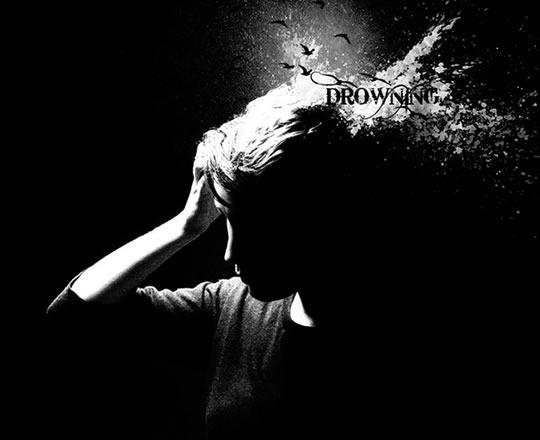
It's one of the irritations of having a mind that sometimes bad thoughts get stuck going around in it.
It could be a mistake at work, money worries or perhaps a nameless fear. Whatever the anxiety, fear or worry, it can prove very difficult to control.
The most intuitive method for dealing with it is using thought suppression: we try to push it out of our minds.
Unfortunately, as many studies have shown, thought suppression doesn't work. Ironically, trying to push thoughts out of mind only makes them come back stronger. It's a very frustrating finding, but one that's been replicated experimentally again and again.
So, what alternatives exist to get rid of thoughts we'd rather not have going around in our heads?
In an article for American Psychologist, the expert on thought suppression, Daniel Wegner, explains some potential methods for tackling persistent unwanted thoughts (Wegner, 2011). Here are my favourite:
1. Focused distraction
The natural tendency when trying to get your mind off, say, a social gaff you made, is to try and think about something else: to distract yourself. The mind wanders around looking for new things to focus on, hopefully leaving you in peace.
Distraction does work but, oddly enough, studies suggest it is better to distract yourself with one thing, rather than letting the mind wander.
That's because aimless mind wandering is associated with unhappiness; it's better to concentrate on, say, a specific piece of music, a TV programme or a task.
2. Avoid stress
Another intuitive method for avoiding persistent thoughts is to put ourselves under stress. The thinking here is that the rush will leave little mental energy for the thoughts that are troubling us.
When tested scientifically, this turns out to be a bad approach. In fact, rather than being a distraction, stress makes the unwanted thoughts come back stronger, so it certainly should not be used as a way of avoiding unpleasant thoughts.
3. Postpone the thought until later
While continuously trying to suppress a thought makes it come back stronger, postponing it until later can work.
Researchers have tried asking those with persistent anxious thoughts to postpone their worrying until a designated 30-minute 'worry period'. Some studies suggest that people find this works as a way of side-stepping thought suppression.
So save up all your worrying for a designated period and this may ease your mind the rest of the time.
4. Paradoxical therapy
What if, instead of trying to suppress a worrying repetitive thought about, say, death, you head straight for it and concentrate on it?
It seems paradoxical that focusing in on a thought might help it go away, but some research suggests this can work. It's based on the long-established principle of 'exposure therapy': this is where, for example, arachnophobes are slowly but surely exposed to spiders, until the fear begins to fade.
This approach is not for the faint-hearted, but research suggests it can be useful when used by those tackling obsessive thoughts and compulsive behaviour.
5. Acceptance
Along similar lines, but not so direct, there's some evidence that trying to accept unwanted thoughts rather than doing battle with them can be beneficial. Here are the instructions from one study which found it decreased participants' distress:
"Struggling with your target thought is like struggling in quicksand. I want you to watch your thoughts. Imagine that they are coming out of your ears on little signs held by marching soldiers. I want you to allow the soldiers to march by in front of you, like a little parade. Do not argue with the signs, or avoid them, or make them go away. Just watch them march by." (Marcks & Woods, 2005, p. 440)
6. Meditate
Similar to acceptance, Buddhist mindfulness meditation promotes an attitude of compassion and non-judgement towards the thoughts that flit through the mind. This may also be a helpful approach to unwanted repetitive thoughts.
There is a basic guide to mindfulness meditation in this article on how meditation improves attention.
7. Self-affirmation
Self-affirmation is the latest psychological cure-all. It involves thinking about your positive traits and beliefs and has been found to increase social confidence and self-control, amongst other benefits.
It may also be helpful for unwanted repetitive thoughts, although it has only been tested experimentally a few times.
8. Write about it
In contrast to self-affirmation, expressive writing—writing about your deepest thoughts and feelings—has been tested extensively and it does have various health and psychological benefits (although generally only with a small effect).
Writing emotionally about yourself, then, may help to reduce recurrent unwanted thoughts.
The disclaimer
A note on all these techniques from Daniel Wegner:
"The techniques and therapies explored here vary from the well established to the experimental, but it should be remembered that, on balance, they lean toward the experimental...these assembled solutions for unwanted thoughts should be taken as hypotheses and possibilities rather than as trusty remedies or recommendations."
That said, none of these techniques are likely to do any harm and all of them are probably an improvement on thought suppression.
Image credit: Shifteye
→ Find out more about advertising on PsyBlog.
PsyBlog's How to Be Creative
If we can all be creative, why is it so hard to come up with truly original ideas?
It's because creativity is mysterious. Just ask any scientist, artist, writer or other highly creative person to explain how they come up with brilliant ideas and, if they're honest, they don't really know.
But over the decades psychologists have given ordinary participants countless tests, forms and tasks and conducted hundreds of hours of interviews. From these emerge the psychological conditions of creativity.
Not what you should do, but how you should be...
Click here to find out more...



September 19, 2012
A Counter-Intuitive Remedy to Feeling Short of Time
Have you got enough time for everything you want to do? If this survey is correct then about half of us are 'time-poor', as the expression goes, or worse, are experiencing a 'time famine'.
So, what if I said there was a solution to feeling continuously short of time, and it involved giving your free-time away to others?
No, you might say, quite rightly, that doesn't make sense. If I give away my free-time to others then I will have less time for myself and so I will feel even more rushed. It doesn't add up.
This is a perfectly logical response, except that it doesn't take into account the weird way in which the mind works.
For the mind, time is not always perceived in exactly the same way. I have written an article on this (10 Ways the Mind Warps Time) but suffice to say here that many things like our emotions and attention affect our perception of how much time has passed. To repeat Einstein's quote:
"Put your hand on a hot stove for a minute, and it seems like an hour. Sit with a pretty girl for an hour, and it seems like a minute. That's relativity."
No matter how much free-time we actually have, what really matters is our personal perception. So how can we change our perception of how much time we have?
Giving time gives you time
That's what was tested in a new study which gave people some time and had them either (Mogilner et al., 2012):
spend it on themselves,
waste it, or,
spend it on others, whether friends or strangers.
What they found was that people who spent the time on others felt afterwards that they had more time in both the present and the future, compared with those who spent it on themselves or wasted it.
This seems odd and the opposite of how people intuitively deal with being short of time. A regular response to being rushed is to hoard spare time for ourselves. So why does giving it away help?
Here's how the study's authors answer this question:
"...spending time on others makes people feel like they have done a lot with their time – and the more they feel they have done with their time, the more time they will feel they have."
It seems that time well spent expands in our mind, giving us the illusion of being time-rich. When we spend our time well, i.e. by giving it away, it makes us feel more effective and capable.
Of course there is an upper limit to how much giving time will make you feel you have more time yourself. Some people, like full-time caregivers, already give so much of their time away that giving more is detrimental.
But for the majority of us, when making decisions about how to spend our spare time, defaulting to 'me-time' may not be the best answer, either for others or for ourselves.
Image credit: themysteryman
→ Inquiry on Religious Experience & Moral Identity at the Center of Theological Inquiry. Click HERE to apply.
PsyBlog's How to Be Creative
If we can all be creative, why is it so hard to come up with truly original ideas?
It's because creativity is mysterious. Just ask any scientist, artist, writer or other highly creative person to explain how they come up with brilliant ideas and, if they're honest, they don't really know.
But over the decades psychologists have given ordinary participants countless tests, forms and tasks and conducted hundreds of hours of interviews. From these emerge the psychological conditions of creativity.
Not what you should do, but how you should be...
Click here to find out more...



September 11, 2012
The Surprising Motivational Power of Self-Compassion

We all have a kind of virtual policeman living inside us. Amongst other things he's the guy that helps us work towards our goals, whether personal or professional.
When things go wrong and we stray off the straight and narrow, he reminds us what we were supposed to be doing.
But what kind of policeman is he? Is he the kind with a riot shield, a baton and a bad attitude or does he offer a forgiving smile, a friendly word and a helping hand?
People sometimes think of the latter, more relaxed internal policeman, as being weak and ineffectual. The danger, it is thought, with going easy on ourselves, is that it will lead to lower motivation. Surely if we don't use self-criticism to push ourselves, we'll never get anywhere?
So, what stance should we adopt towards ourselves?
Antitoxin of the soul
Let's say someone is trying to deal with a recent period of low self-confidence. Here are three ways the inner policeman might deal with it:
Self-esteem boost: think about positive aspects of the self to boost confidence.
Positive distraction: think back to nice memories to create a distraction from the problem.
Self-compassion: think about the self with kindness and compassion, seeing the period of low self-confidence in context, without evaluating or judging it.
When psychological researchers tested these approaches they found that self-compassion was surprisingly powerful (Breines & Chen, 2012). In comparison to self-esteem boosting and distraction, this study found that self-compassion was most likely to help participants:
See the possibilities for change,
Increase the motivation to change,
Take steps towards making a change,
Compare themselves with those doing better, to help motivate their change.
So self-compassion did not emerge as the soft-option: in fact, quite the opposite. By being sympathetic and non-judgemental towards the self, people were able to avoid both harsh self-criticism and potentially fragile self-enhancement.
When participants thought back to insecurities in their relationships, their shyness or social anxieties, it was showing compassion towards themselves that helped the most.
This may be because self-compassion builds a more balanced way of reacting to both failures in ourselves and difficult situations we find ourselves in. As the American writer Eric Hoffer said:
"Compassion is the antitoxin of the soul: where there is compassion even the most poisonous impulses remain relatively harmless."
Image credit: Loving Earth
→ Inquiry on Religious Experience & Moral Identity at the Center of Theological Inquiry. Click HERE to apply.
PsyBlog's How to Be Creative
If we can all be creative, why is it so hard to come up with truly original ideas?
It's because creativity is mysterious. Just ask any scientist, artist, writer or other highly creative person to explain how they come up with brilliant ideas and, if they're honest, they don't really know.
But over the decades psychologists have given ordinary participants countless tests, forms and tasks and conducted hundreds of hours of interviews. From these emerge the psychological conditions of creativity.
Not what you should do, but how you should be...
Click here to find out more...



Jeremy Dean's Blog

- Jeremy Dean's profile
- 29 followers

