
Marina Gorbis's Blog, page 1295
May 6, 2015
The Business Investments That Freak People Out

Over the last couple of years, major corporations such as the Gap, McDonald’s, and Walmart joined the growing ranks of companies voluntarily raising wages. But recently, a smaller tech company, Gravity Payments in Seattle, took a more unusual step by raising the minimum wage for professionals in the firm to $70,000 per year. Given the collective hand-wringing from some economists and pundits following the announcement, you would think Gravity was waging war on capitalism. But a decision to invest in people, even in an unconventional way, should be judged no differently than other strategic investment choices.
So what are many commentators worried about? A typical response came from economist Diana Furchtgott-Roth from the conservative Manhattan Institute for Policy Research. She told the New York Times that paying above-market wages means the CEO is running Gravity “more as a charitable organization, because he could get people for less.” But by this logic, spending any more than the absolute lowest amount possible on anything makes a company derelict in its fiduciary responsibility. So let’s really imagine setting the bar that low across a business.
Should procurement buy the cheapest and flimsiest packaging? How would that help the brand? The IT department could get the least expensive computers and hosting services available, and marketing could buy the lowest-cost banner ads on the cheesiest sites. And if we go back to the labor discussion, a company could certainly fill its offices with some bodies “for less,” as Furchtgott-Roth suggests, but is that the right metric for success in human resources?
Even in our quarterly-focused, cost-cutting-obsessed world, companies opt for additional expense beyond the bare minimum all the time. All investments in business, from marketing and IT to R&D and procurement, balance cost considerations with other needs, such as quality, performance, and brand value.
But in most areas, if a company chooses to invest, there’s an underlying assumption that it’s a strategic choice with the potential to create real value. For example, GM just announced a $5.4 billion plan to invest in upgraded manufacturing and the coverage is positive. So imagine if Gravity had announced a new investment in software-as-service or said they had a “big data” play. Some commentators might question the potential of these initiatives, but can you imagine anguished accusations of anti-capitalist, anti-business behavior?
Of course, not all the reactions to Gravity’s announcement were negative. As one economist told the Times, the company would likely increase morale and reduce turnover. Potential employees and customers were also impressed: in the week following the announcement job applications skyrocketed, up 1000%, and the company gained dozens of new clients.
But the underlying theme of the mainstream commentary was that this pay scheme might make the CEO seem like “a terrible manager” or “crazy,” to quote from a fairly lighthearted segment on MSNBC’s Morning Joe.
All of this overreaction is not isolated by any stretch. I see this basic assumption of expense or bad business judgment cited regularly for investments in people, or what companies call “planet,” which can cover everything from efficiency investments to renewable energy to making sure inputs are sourced sustainability. There are some intense biases that lead many to suspect that social or green investments don’t actually pay off. Even Tim Cook, the CEO of Apple, which is one of the most profitable companies in the world, has faced questions about the company’s use of renewable energy (and famously declared that if shareholders don’t like it, they can “get out of the stock”).
Of course, every business investment should face scrutiny. As venture capitalist Jeffrey Bussgang says in the Times article, if a CEO proposed the kind of pay minimum Gravity is rolling out, there would be a tough conversation at the board level. And that’s fair. But anything that might be called “sustainability” – investments in people or in building resilience through environmental strategy – seems to start out with a mental deficit, 10 yards behind the starting line. They’re guilty until proven innocent.
In reality, these categories of investments are like all others. When done well, they create enormous value – for example, most of the options that reduce energy or carbon are highly profitable. Research has also shown that paying employees well also pays off. Of course, like any business initiative, when they’re done thoughtlessly or executed poorly they can lose money. But environmental and social investments are not inherently anti-business or anti-value.
When we see, or feel, these visceral reactions to spending more on people or building resilience in the business and society through environmental investments, we should check ourselves and ask a tough question: What truly creates value in our business? And are we just maximizing short-term results or investing in the right things for the long haul?


Don’t Let Emotions Screw Up Your Decisions

Andrew Nguyen
Think about a time you were weighing an important decision at work or considering a big expense such as a buying a house, making a hefty financial investment, or a starting a new business. Such decisions are inherently complex, and — no matter how much experience we have making them — working through the pros and cons of each choice can be overwhelming. Our emotional reactions to these choices may be useful in directing our attention and energy toward what we feel are the most important aspects of the decision. Yet intense emotions may lead us to make misguided decisions or outright disastrous ones.
An amusing example comes from the 1991 movie Defending Your Life. In one scene, the character Daniel Miller (played by Albert Brooks) is preparing for a salary negotiation the next day with his boss. To try out the tough bargaining strategy he is planning to use, he enlists his wife’s help. His wife makes various salary offers, and Daniel rejects every one of them, insisting that he cannot take the job for a penny under $65,000. As Daniel refuses to budge from his position, his wife starts to make him increasingly attractive offers.
The next scene is Daniel’s negotiation with his boss. His boss opens the discussion by saying, “Daniel, I am prepared to offer you $49,000.” Before he even finishes his sentence, Daniel replies: “I’ll take it.” Daniel’s decision to be tough got derailed by the emotions he failed to anticipate: the anxiety triggered by sitting in front of his boss and negotiating with him.
Emotions can cloud our judgment and influence our decisions when triggered by the situation at hand, as in Daniel’s case. But research shows it is also possible for emotions triggered by one event to spill over and affect another, unrelated situation.
Imagine, for instance, that you hit heavy traffic while driving to work. Later that day, you have an important meeting with a client who is interested in placing an order for the new product that your company is launching. You initiated the product’s development and oversaw its creation. So there’s a lot at stake for you. By the time you reach the office, you are 45 minutes late for work and fuming with anger. Since your meeting isn’t for another hour, you should be able to push your anger aside by then, right? In fact, my research suggests we are often unable to do so. Emotions triggered by an event completely unrelated to a new situation can influence our thinking and decisions in that situation.
Further Reading
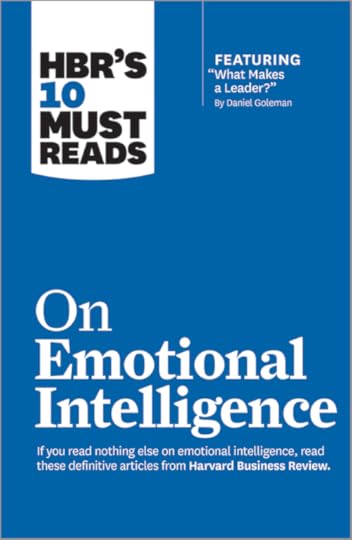
HBR’s 10 Must Reads on Emotional Intelligence
Emotional Intelligence Book
24.95
Add to Cart
Save
Share
In one study, Maurice Schweitzer of the Wharton School and I asked a group of participants to estimate the weight of a person based solely on a picture of that person. Participants were paid for the accuracy of their estimate. After they provided their estimates, we asked them to watch a short movie clip. Some participants watched a clip from a National Geographic special that portrayed fish at the Great Barrier Reef. Others watched a clip from the movie My Bodyguard that showed a young man being bullied — a clip that we’d found in a pilot test makes people feel angry due to the aggressive and unfair treatment the young man experiences. All participants were given another participant’s estimate of the weight of the person they had just evaluated and asked whether they wanted to revise their initial estimate.
For the participants who saw the clip from My Bodyguard, the anger they experienced while watching the video clip carried over to this next, unrelated task. It led them to largely distrust and disregard the other person’s estimates and to rely instead on their initial judgments. In fact, a full 74% of these participants did not attach any significance to the advice they received. By contrast, only 32% of participants who watched the neutral National Geographic clip disregarded the advice. Disregarding the advice was costly: listening to it would have led to greater accuracy in their judgment — and thus greater pay.
As this research shows, anger triggered by a prior, unrelated experience that, from an objective perspective, should not influence our current judgments or decisions can make us unreceptive to what others have to say. In related research, Scott Wiltermuth of the University of Southern California and Larissa Tiedens of Stanford University found that anger triggered by something unrelated to the decision at hand also affects how we evaluate others’ ideas. Many jobs include the task of evaluating the ideas of others, including our colleagues, customers, employees, friends, and family members.
In one study, Wiltermuth and Tiedens had participants first complete a writing task and then evaluate ideas generated by others. Half were led to believe they would be judging high-quality ideas and likely be making positive evaluations. The other half believed instead that they would be judging low-quality ideas and probably evaluating them negatively. For the writing task, some participants were told to write about a time in their life when they felt extremely angry. Others were asked to write about how they spent the previous day, a task designed to put them in a neutral emotional state.
The result? Although most participants, whether angry or neutral, preferred to evaluate good rather than bad ideas, those who were induced to feel angry found the task of evaluating others’ low-quality ideas much more appealing than did participants in the control condition. In addition, the angry participants were less interested in evaluating others’ high-quality ideas than were those in the control condition. It seems that anger can increase the appeal of criticizing others and their ideas.
Our feelings can offer relevant and important feedback about a decision, but irrelevant emotions triggered by a completely unrelated event can take us off track. The next time you drink a bitter cup of coffee or have an argument with a loved one, pause to consider how your emotional reactions could linger as you enter into important task or weigh a complex decision. Fortunately, we often can choose when to perform each of the many tasks required of us. This should allow us to evaluate ideas and advice from others when we believe we are most capable of doing so objectively and thoroughly.

May 5, 2015
Networking When You Hate Talking to Strangers

The power of serendipity is hot in business circles. Silicon Valley campuses have been constructed to foster more “random collisions.” One key to creativity, many thinkers say, is unexpected interactions. “Create spaces where you’re wandering around and exposing yourself to new people,” John Hagel of Deloitte’s Center for the Edge told me in an interview. And venture capitalist Anthony Tjan and his colleagues conducted an expansive survey of entrepreneurs that revealed a quarter of them self-identified as lucky and traced their success to embracing serendipitous encounters.
All that is well and good – for people who don’t mind talking to strangers. But as an introvert, one of the situations I hate most is making small talk with people I don’t know. Here’s how I’ve managed to strike the balance between meeting new people – and being exposed to interesting new ideas – and not having to initiate awkward conversations.
Make them come to you. The very best solution I’ve found for uncomfortable events where you don’t know anyone is arranging to be the speaker. That might seem paradoxical, but there’s a difference between introversion and shyness; I’m actually far more comfortable on a stage in front of hundreds of people than I am chatting in a small group of folks I don’t know. I’m getting ready to launch an 11-city tour for my new book Stand Out, which presents the perfect solution: when you’re the speaker, people approach you, and there’s a ready-made topic of conversation.
Bring a friend. When you have a “wingman” at your side to help highlight your accomplishments at networking events, it can give you the confidence you need to approach others and break into conversations. Additionally, your friend likely knows people in the room that you don’t, and vice versa, so you can trade “warm introductions” and connect with new people. If you or your company is hosting the event, you can also encourage your friends to bring guests that they think you should meet. Just avoid the temptation to use your friend as a crutch and spend the evening talking with them — that defeats the purpose of meeting new people.
Have a few opening lines ready. The hardest part of interacting with a stranger is the opening. How do you get started? What do you say? That was the challenge facing a coaching client of mine, a talented executive from the West Coast. She frequently attended high-powered alumni events but wasn’t sure where to begin the conversation. We developed a few questions she felt comfortable using that didn’t sound hackneyed, but opened the door to a more substantive discussion. They don’t have to be profound; the goal is to kickstart a dialogue. Possibilities include:
What’s the coolest thing you’re working on right now?
How do you spend most of your time?
How did you hear about the event?
When there’s a common tie, such as alumni group: What year did you graduate/what house or dorm did you live in?
And when nothing else works, I’ve often simply said, “I don’t know anyone here. Can I talk to you?” No one has ever said no.
Research in advance. Finally, it’s easier to talk to someone if they don’t feel like a stranger. Even if you haven’t met them in person before, having some background information about them can suggest possible topics of conversation. You don’t have to become a stalker; educated guesses and light online research can carry you pretty far. For instance, most fundraisers have a host committee listed on the invitation. If you want to make the experience more pleasant, you can quickly Google them and see if anyone seems particularly interesting, or look for commonalities you can bring up, such as having attended the same college or living in the same neighborhood. Similarly, if you’re attending an event organized by a professional association, it’s likely that many of their board and advisory board members will be in attendance, and you can almost always find that information on the organization’s website.
Talking to strangers will probably never be comfortable for me. It’s exhausting for me when an airplane seatmate starts chattering, or a taxi driver wants to know too much about my day. But with these strategies, it’s possible to make just a little more room for serendipity in our lives.

The Internet Is Finally Forcing Management to Care About People

The humanist strand of management thinking that celebrates teams and collaboration through respect for customers and workers as human beings has a long and distinguished history. It includes Mary Parker Follett (1920s), Elton Mayo and Chester Barnard (1930s), Abraham Maslow (1940s), Douglas McGregor (1960s), Peter Drucker (1970s), Peters and Waterman (1980s), Katzenbach and Smith (1990s), and Gary Hamel (2000s).
Yet despite almost a century of fine management writing and many successful initiatives, the ugly truth is that the lasting impact on general management practice has been limited. Even humanist change initiatives that were objectively dramatically successful have often been discarded by the firms that introduced them. Sooner or later, firms revert to stultifying bureaucratic practices as if on zombie-like auto-pilot.
Achieving humanistic management has thus turned out to be a much more intractable problem than most thought leaders expected it to be. Instead of hierarchical bureaucracy comprising a set of linear mechanisms that could be improved one-by-one through implementing proven remedial measures, it has acted more like an ingeniously morphing virus that steadily adapts itself to, and ultimately defeats, intended fixes and returns to its original state, sometimes more virulent than before.
Why is change so difficult? One reason is that an unholy alliance links shareholder value theory and hierarchical bureaucracy. Once a firm embraces maximizing shareholder value and the current stock price as its goal, and lavishly compensates top management to that end, the C-suite has little choice but to deploy command-and-control management. That’s because making money for shareholders and the C-suite is inherently uninspiring to employees. The C-suite must compel employees to obey. The result is that only one in five employees is fully engaged in his or her work, and even fewer are passionate. The very foundations of humanist management—collaboration and trust—are missing.
The good news is that the Internet is now forcing change, by shifting power in the marketplace from seller to buyer. Customers, who have access to reliable information about the available choices and a capacity to interact with other customers, are now collectively have much more power than before. As a result, customers’ expectations are raised. As “better, cheaper, faster, smaller, more convenient, and more personalized” became the new norm, the ability to innovate with committed employees became critical. This in turn requires firms to draw on the passion and full talents of those doing the work to find new and better ways to delight customers.
Internet has also led to other dramatic changes in the workplace and marketplace to which firms have to respond. It has tended to shred vertical supply chains, as customers can buy a wider array of stuff online cheaper, and often quicker, than in a physical store. It has spawned vast new horizontal value chains, in which millions of people began creating their own virtual meeting places and marketplaces with their own lateral economies of scale. It has also enabled firms to create huge ecosystems of contractors and customers that can achieve scale without the sclerosis of hierarchical bureaucracy.
These shifts require not just increased attention to customers by strengthening the marketing department or introducing rah-rah employee engagement programs. They require rethinking the fundamentals of management.
The foundation is Peter Drucker’s insight of 1973: the only valid purpose of a firm is to create a customer. It’s through providing value to customers that firms justify their existence. Profits and share price increases are the result, not the goal of a firm’s activities.
The locus of competitive advantage is now determined by interactions with the customer, built on the work of engaged and passionate workers. The central strategic questions of the industrial model, “How much more can we sell?” and “How much money can we make?” are replaced by “Why should customers buy from us?” and “What else do customers need?”
As Ranjay Gulati notes in Reorganize for Resilience (2010), this means orienting everyone to the goal of delivering more value to customers sooner, and aligning all decision-making with this goal. It is a shift in mindset from “You take what we make,” to “We seek to understand your problems and will surprise you by solving them.”
While armies of dispirited bureaucrats, driven by command-and-control, simply can’t get this job done, the enabling management practices and metrics of humanistic management are well suited to it. When the goal is the inherently inspiring goal of delighting customers, managers don’t need to make employees do their job. With managers and workers sharing the same goal—delighting customers—the humanistic management practices of trust and collaboration become not only possible but necessary.
To be sure, other changes wrought by the Internet bring new challenges that must also be dealt with. Increasing income inequality must be addressed with more progressive tax policy. Excessive financialization of the economy must be resolved by reining in the financial sector. Abuses of burgeoning monopolies must be met with stronger anti-trust action. Threats to privacy must be averted by appropriate regulation. The rights of vast numbers of part-time workers and “permatemps” must be protected through appropriate legislation. Education systems must support greater entrepreneurial skills and life-long learning to prepare people for the new world of work. Greater support must be provided for individuals to start their own businesses.
But the most important battle in the war for humanistic management—compelling firms to respect customers and employees as human beings—has already been won. The choice for organizations today is: change or die.
This post is one in a series of perspectives by presenters and participants in the 7th Global Drucker Forum, taking place November 5-6, 2015 in Vienna. The theme: Claiming Our Humanity — Managing in the Digital Age.

A Cheat Sheet for Marketers on the Future of Digital Platforms

Steven Moore
Customer engagement has never been more urgent or more elusive. Real engagement – the kind that goes beyond a momentary impression to a meaningful interaction – isn’t happening on traditional channels. It’s happening today on digital platforms such as Twitter, Facebook, LinkedIn, Pinterest, YouTube, SnapChat, and Instagram.
To understand the future of digital platforms and what it means for marketers, we spoke with senior executives in a community of top marketers from Silicon Valley. The perspectives of these executives suggest that the pace of innovation shows no sign of slowing down.
Marketers who want to understand the future of these platforms need to understand seven P’s: people, participate, personalize, product, process, pay, and partner.
1. People. The power of platforms ultimately comes from people. For the first time in history, we have mass collaboration on a global scale. Digital and social platforms eliminate the friction in the flow of information and communication, empowering customers, employees, and citizens alike. To date, platforms have made us more efficient, but according to Ivy Ross, Head of Glass at Google, they will soon “help us be more human and do the things we love to do.” And David Rubin, Head of Brand at Pinterest, adds, “technology is ultimately about making things easier for people.”
2. Participate. The word “platform” gets thrown around a lot, but is often misunderstood. Platform isn’t just a fancy name for a distribution channel or a service delivered through the cloud. Channels are one-way pipes; platforms are two-sided networks. It’s the difference between Netflix and YouTube. Netflix has an audience and adds content incrementally. YouTube has a community and adds content exponentially. GoPro understands this well, engaging their customers not just as an audience of consumers, but a community of co-creators. According to Paul Crandall, SVP of Marketing at GoPro, the goal is “to make our customers the heroes by showcasing their enthusiasm and content on our platforms.”
To generate participation, marketers must engage more authentically, with a focus on ongoing relationships beyond individual impressions or transactions. Danielle Tiedt, CMO of YouTube, says the goal isn’t “how do I create the viral video?” Instead, the goal should be “how do I use video to create an ongoing conversation that builds a relationship?” Brands must also remember that they are members of the social networks in which they participate. Daina Middleton, Head of Global Business Marketing at Twitter, told us, “as marketers, we have historically wanted to dominate the conversation, but now it needs to be about participating, not dominating.”
3. Personalize. The ease of connecting and co-creating on platforms has a downside. The amount of information can be overwhelming. Digital platforms do the work of making the experience more personalized, relevant, and meaningful. According to Middleton, platforms are becoming more intelligent. They will proactively notify us what’s important and even work as an agent on our behalf. More and more, customers are creating their own filters. They are at the center and in control. According to YouTube’s Tiedt, “Our next challenge is to make sure the things they might be interested in, they have an opportunity to discover.” And Google’s Ross thinks that the platform will be more than a place where you connect with friends; the platform itself will feel “like a friend that knows you.”
4. Product. To date, digital platforms have been the place you go to talk about products. But the relationship between products and platforms is about to undergo a significant disruption. First, platforms are going to be more integrated into our products and services. As an example, Uber customers can now select the music for their trip directly from their Spotify playlists. Nick Besbeas, former VP of Marketing at LinkedIn, believes “the lines between product and marketing are blurring.”
Second, our products are going to start showing up in our platforms. Today, a spouse might send a reminder to pick up the milk or get the oil changed. It won’t be long until our connected refrigerator or connected car sends the message itself, most likely through a digital platform. Ross believes the convergence of digital platforms with connected devices will be “one of the most disruptive forces” as “the net is increasingly around us and on us.” The Internet of Things will soon be the Social Network of Things.
5. Process. We tend to focus on digital platforms that are customer-facing, but they are also happening internally and behind the scenes. Twitter’s Middleton notes that bid management and customer experience platforms are bringing social media, display, search, and CRM together, connecting customer acquisition, customer service, and customer retention. Companies are adopting platforms to reshape other business processes, ranging from employee communications to performance management to professional development. We believe a phenomenon is emerging that one might call “platform symmetry.” Companies that want to engage customers who use platforms to manage their lives must equally use platforms to manage their organizations. And leaders who want their customers to engage with their brands on platforms must also participate themselves. In a social age, you truly get what you give.
6. Pay. Have you noticed that payments are disappearing? The convenience of a swipe is giving way to the even greater convenience of – nothing. Thanks to digital wallets, we can download an app, pay the driver, or order a coffee without touching our wallet. In the future, we can expect even greater integration of e-commerce and social networks on digital platforms. Lara Balazs, SVP of North America Marketing at Visa, says that digital payments are creating frictionless ways to shop and pay. Where payment used to be an afterthought, it’s now becoming critical to the experience itself.
When you’re on a social network, the act of making a payment can feel a bit odd, or even unsettling. It’s part of a relational context that anthropologists call a “gift economy.” But the invisible nature of digital payments is making a new era of social commerce possible – one in which transactions are seamlessly embedded inside of ongoing collaborative relationships between customers and businesses, instead of being the culmination of a temporary commercial relationship.
7. Partner. To layer product, process, and payment on top of people, participation and personalization, companies will need to get even better at partnership and collaboration. According to Ross, customers won’t want to use more than one platform for any given purpose. Platforms and providers are going to have to work together to “unlock the connectivity” and deliver a compelling and seamless user experience. The smarter home will require partnerships with appliance manufacturers, and the connected car will require the same of carmakers. We can expect digital platforms to move beyond software platforms to business platforms with associated ecosystems, creating new opportunities for brands to form unexpected alliances.
Marketers need to continuously evolve the way they think about adding value to their customers beyond the products and services they sell. Companies that win the hearts and minds of customers will be the ones that put their customers’ passions, goals, and inspiration at the forefront. The more you engage, involve and empower your customer, the more your customer will want to engage with your brand.
A study by Adobe found that 80% of marketers believe their role is fundamentally changing, and that 40% believe they need to reinvent themselves to keep pace. According to Ann Lewnes, CMO at Adobe, new technologies like digital platforms are just the beginning. Marketing leaders need to rethink how they approach people and process. They need to attract talent in areas like data science, social media, and web analytics that didn’t exist five years ago. And they need to create opportunities for their employees to re-skill and reinvent themselves too.
Our conversations suggest that for marketers, the road ahead will not be getting easier anytime soon. Digital platforms are evolving to be more robust, relevant, and intelligent. This makes things easier for us as individuals, but more challenging for companies with traditional mindsets, structures, and practices. Customers are setting the pace in this race. Whoever can keep up with the customer will share the winners’ circle.

How to Document a Performance Review

The annual performance review can be stressful. But while many managers focus their attention on what they’ll say in the face-to-face conversation, they forget the importance of documenting their impressions in the right way. The following piece, adapted from the book Performance Reviews , will help you write down your feedback in a way that will both meet your organization’s requirements and pave the way for an effective discussion.
Once you have analyzed your employee’s performance, record your feedback in a way that can be shared and saved. When preparing a formal written assessment, refer back to your company’s guidelines so you’re adhering to the appropriate format. If your company does not have a standard form, create one.
Your organization may require you to provide a general rating of the employee’s performance, individual ratings of specific aspects of their performance, or a combination of ratings and qualitative information. Follow the instructions given to you, but don’t be constrained by the format of the form. Instead, adapt or amend it so you can tell the whole story. Your employee will find your observations, comments, and examples more useful than a numeric rating alone. Include attachments—comments too long to include on the form, or the employee’s development plan from the previous year—if they will enrich your evaluation.
Record your observations about your employee’s job performance as objectively as possible, and tie your conclusions to hard data. Provide evidence of progress (or lack thereof) by connecting accomplishments with established goals: “Derek increased sales by 7%, which exceeded his goal of 5%.” “Laura reduced her error rate by 20%; her goal was 30%.” Then your employee can easily grasp the assessment criteria and recognize the evaluation as fair.
Also include specific examples. The more information you can provide, the more likely the employee will be to repeat and even improve on positive behaviors—or correct less positive ones. Use the most telling examples to make your point in your written evaluation, and save the rest for your review session in case you need to support your judgment during the conversation. These examples should include:
Details about what you observed. Let’s look at Theo, a customer service representative. Theo has more than doubled the orders he’s filled over the past year, now that he’s learned how to use the new customer database. But don’t just say that; back it up with detail. For example, write: “Last year Theo filled 15 orders per day. This year his average was up to more than 30 per day. He also asks fewer questions now that he’s effectively using the customer database.”
Supporting data, such as reports or 360-degree feedback: “Siobhan helped Theo learn how to use the new customer database, and she reports that he’s using it on a regular basis.”
The impact on your team and organization: “After Theo learned how to use the new database, he no longer had to rely on colleagues to find out pertinent information. The whole team began fulfilling orders more quickly because they were answering fewer questions from him, which improved cash flow for the organization.”
Expressing your observations as neutral facts rather than judgments is particularly important when giving negative feedback. For example, “Theo doesn’t seem to care about customers” negatively characterizes Theo rather than describing his behavior. “Theo doesn’t know how to talk to difficult customers” also isn’t helpful, because it infers a lack of knowledge instead of identifying a skill that Theo can improve upon. On the other hand, “Theo received five complaints from extremely unsatisfied customers,” is more objective and specific to a particular job requirement.
When giving positive feedback, on the other hand, combine specific achievements with character-based praise. For example: “With the new accounts she generated, which delivered $1.25 million in business, Juliana exceeded the goal we set for her last July by 27%. Her creativity and perseverance drove her to look beyond the traditional client base; she researched new industries and networked at conferences to find new customers.” Acknowledging the traits and behaviors that made those results possible will show your direct report that you see her as an individual—which can generate pride and boost motivation.
Excerpted from
Performance Reviews (20-Minute Manager Series)
Organizational Development Book
Harvard Business Review
12.95
Add to Cart
Save
Share
Supporting your assessment with specific examples and details not only makes it more likely that the employee will be able to hear and learn from your feedback, it also mitigates any possible legal ramifications in particularly egregious situations. If an employee’s work is beginning to suffer, or if you suspect that you might need to dismiss someone due to poor performance, it’s vital that you document the individual’s behavior and the steps you’ve taken in attempting to correct it. As a rule of thumb, include in your evaluation only statements that you’d be comfortable testifying to in court. If you have any questions about legal ramifications, consult with your human resource manager or internal legal team.
Finally, write down the three things the employee has done best over the course of the year and the two areas that most need improvement. Ask yourself, “What’s the single most important takeaway I want the employee to remember?” Distill your message down to a single key idea—your overall impression of his performance. These few points will determine the overarching message that you want to convey in the review discussion, and having them documented will prevent you from forgetting any important points when you’re in the moment.

The First Question to Ask of Any Strategy

The senior team of a large player in the global wealth management business recently asked me for my opinion on their strategy. They had worked long and hard at coming up with it. Their “Where to Play” choice was to target wealthy individuals who wanted and were willing to pay for comprehensive wealth management services. Their “How to Win” choice was to provide great customer service across the breadth of their wealth management needs. I pushed and probed, but that was it.
Sadly, like the majority of strategies that I read, this firm’s strategy failed my sniff test and for that reason I would bet overwhelmingly that it will fail in the market as well. The test I apply is quite simple. I look at the core strategy choices and ask myself if I could make the opposite choice without looking stupid. For my wealth managers, the opposite of their “where” choice was to target poor individuals who don’t want and aren’t willing to pay for comprehensive wealth management services. The opposite of their “how” is to provide crappy customer service.
Insight Center
The New Ways to Compete
Sponsored by Accenture
Strategies for staying ahead.
The point is this: If the opposite of your core strategy choices looks stupid, then every competitor is going to have more or less the exact same strategy as you. That means that you are likely to be indistinguishable from your competitors and the only way you will make a decent return is if the industry currently happens to be highly attractive structurally. The wealth management company was targeting the exact same clients as every single global competitor and, like every other global competitor, they planned on giving them “great service.”
There are many, many such strategies. Perhaps the two most popular “strategies” are service excellence and operational effectiveness. All that can be said about them is that they are non-stupid and that is hardly an exemplary level of accomplishment.
The finest strategies are those in which other competitors do things largely, if not diametrically, opposed to what you do — and make money doing them. That means that you have made a distinctive choice. Vanguard made a real choice when it said it would not sell managed funds. We know it was a real choice because Fidelity focuses on selling managed funds, and makes enormous sums of money doing that.
It is not as though great service is a bad way to win. It is just that stated at that level of generality and abstraction, it is something that any company in the industry will strive for. Hence nobody does the opposite and it is really not a choice. Choosing to define service in a way that is different than others define it is a legitimate strategy. Four Seasons defines luxury as service that makes up for what you left at home or the office. Its luxury competitors define it as grand architecture and décor and obsequious service. Those are real choices because the opposites aren’t stupid; in fact other hotels do something that is reasonably close to the opposite of what Four Seasons does.
So do a little test of your strategy before committing to it. Ask: Is the opposite stupid on its face? Have most of my competitors made the same choice as me? If the answers are “yes,” you have more work to do to have a smart strategy rather than just a non-stupid one.

May 4, 2015
Simple Online Tools to Make Hiring Easier

Nicholas Blechman
Running an open recruitment process – one where the position is openly advertised – can be overwhelming, especially if you don’t have at your disposal an HR department that’s organized to handle the process. This is often the case in small businesses, volunteer organizations, and some government branches. I’ve often seen recruitment calls receiving too little interest, or, worse, paper CVs piling up on a desk, with no clear plan on how to deal with them.
No wonder so many managers choose to avoid advertizing openings. An extensively cited 2010 study found that 42% of hires happened at companies that didn’t report a vacancy. But hiring like this, by word of mouth, is a mistake. Recruiting with an open call, rather than through your and your associates’ personal networks, dramatically expands the talent pool you can fish from. It can also increase the diversity of the people you hire, which has been shown to increase a firm’s competitive advantage.
Fortunately, time-strapped managers can use freely available tools to publicize your call, gather applications, and collaborate with your team for evaluating the candidates.
Utilize multiple channels to advertize your call. Online social networks, such as LinkedIn, Twitter, and Facebook, can work wonders. Consider paying to promote your call — promoted posts are often cheaper than traditional advertising channels. Put the word out through your newsletters, mailing lists, and internal channels as well. By creating a specific link for each channel through a URL shortener, such as Google’s, you can compare their effectiveness and geographic reach.
Don’t even think about inviting paper CVs. These are certain to bog you down if you receive more than a handful of applications. Instead, create a Google form where job seekers can enter their details. Once an applicant submits a form, the details get automatically entered into a spreadsheet, which makes comparing the entries much easier.
Add ample fields to the application form, allowing the applicants to express all details that might indicate they’re particularly suitable for your opening. If, for instance, you’re hiring chefs, create a field for each cuisine they can cook, one for each formal qualification (such as diplomas and certificates in professional cookery, food safety, hospitality supervision, patisserie, leadership), as well as fields for attendance at industry events, awards, and types of experience. Don’t fret about the exact relevance of these fields to your particular opening. During evaluation you’ll use them mainly as proxies to highlight the most promising candidates.
Here’s an example. In 2009, I was hiring aides for a senior IT management job. The application form I created had countless fields for indicating proficiency in tens of programming languages and IT systems. Few were relevant to the position. However, those who scored high demonstrated both their interest for IT and their self-improvement drive. Both were qualities that made them suitable for the job.
Make the form’s fields easy for you to process. You can quickly tally in a spreadsheet answers to multiple choice, checkbox, and number fields, so prefer these types. In contrast, evaluating free text fields requires a human eye; use such fields sparingly. Even when you can’t avoid free text, try to restrict it with suitable guidance. For instance, instead of asking candidates to tell you where they went to school, ask them for the school’s website – this will give you one consistent answer, such as www.berkeley.edu, instead of a variety of names used to refer to the University of California, Berkeley.
If you’re hiring as a team (which you should be doing), once the application deadline expires share the Google spreadsheet with the rest of the team, allowing each member to vote on the applicants. One method I’ve used, is to give team members a fixed number of votes (say 20), and ask them to allocate these among the applicants. I also allowed for negative votes to let members identify particularly risky applicants. Create a separate spreadsheet column for each of your colleagues’ votes. To avoid the groupthink trap, set the vote cell font color to white, thus obscuring the votes from other team members. For higher confidentiality you can create a separate voting form, where applicants are identified by a unique identifier, such as their email. You can then merge the results of the two forms with a simple spreadsheet lookup formula.
With completed fields and votes in one giant spreadsheet it’s then time to grade the applications. Here you’ll use spreadsheet formulas to convert completed form fields into weighted values, (say 10 for our chef’s food safety qualification and 150 for a James Beard Foundation Award). If it’s difficult to write a formula to grade a particular field, create a new column and enter the grades by hand. If you’re into this, you can even write some Google Apps code to automate the task. When evaluating new editorial board members for the IEEE Software magazine, I wrote a small program that would complete each applicant’s number of publications and co-authors based on a supplied link to their online library publications’ list.
Finally, add the calculated field values to obtain the total grade for each applicant. With an (admittedly crude) grade assigned to each applicant, you can sort the spreadsheet by the corresponding column to obtain a ranked applicant list. Given that many of the measures you’ve used for grading are rough proxies for the qualities you’re actually looking for, some more work lies in front of you. Go through the top ranked entries and carefully evaluate the applicants to create the shortlist of the ones you’ll invite for an interview. Be generous in the shortlist’s size to compensate for the lack of your grading’s sophistication. As an example, in 2009 case, from a list of 750 applications I shortlisted about 20 people to interview for five positions.
Having read this far, you may have come to the conclusion that open recruitment and messing with forms and spreadsheets is too much for you. But make no mistake: this process allows you to hire the best. Bringing such people into your organization is the single most important thing you can do for it.

When Work Satisfaction Comes from Having 4 Jobs

If your job feels as though it’s draining you, try this: Do more.
Even if you feel overworked and too busy to fit another thing onto your calendar, the solution may actually be to take on more responsibilities.
Not just more responsibilities in general, but more of the right type. Try adding a new pet project or even giving a trial run to a whole new job that you’ve been interested in and feel passionate about. You may have to learn some intensive juggling, but evidence we’ve gathered from a study of fascinating people from many walks of life suggests that sometimes more — a lot more — is better, especially when “more” entails a diversity of tasks. And, paradoxically, doing more may end up making you feel more centered and whole.
Through in-depth interviews, we’ve studied dozens of people who fill multiple jobs simultaneously. We call them harmonic careerists, because many of them have constructed their working lives by combining multiple jobs rather than taking on a single monolithic career. In sticking to their pluralistic career paths, despite increased workload and, often, pushback from others, these individuals also exhibit a feisty persistence that can be inspiring to witness. Here are a few examples:
Gery (some of these are the individuals’ real names; others are pseudonyms) is an IT consultant, freelance writer, engineering technician, freelance marketing and PR consultant, and world-class bullwhip performer.
Lola is a labor and delivery nurse, an administrator and partner in a 65-bed long-term-care facility, president and consultant in a software technology company, director of operations in a long-term-care consulting company, chair of several hospital committees, and volunteer for a women’s fertility organization that travels to Africa.
Peter is the CEO of a coaching company, as well as a software developer, business strategist, philosopher, linguist, food-magazine publisher, and operator of a nonprofit healthy-food bank.
Meg is a freelance writer, blogger, and children’s book author and merchandiser, and she owns her own marketing and PR consultancy.
Louise is dance teacher, professional dancer, and church counselor, and she’s the founder and director of a private elementary school.
Most of these people, as well as a majority of the others we studied, began looking for additional roles because there was something unfulfilling or draining about their past monolithic jobs. Many of our participants felt that a single previously held job hadn’t allowed them to full express their passions or had restricted their sense of the meaningfulness of work. As a result, they searched for additional jobs in which they felt either more passionate about the work itself or more connected to others through the work.
For example, Jane, who got her degree as a physical therapist, felt after graduating that there was “zero creativity” in her chosen profession. So rather than be stifled, she experimented with other work, eventually taking on a total of six different work roles, most of which allowed her discretion over her time and provided outlets for her creativity.
Kara, whose accumulated work roles include being the director of the world’s largest online nutrition-coaching program, the cofounder of a charity, a book author, the manager of several web sites, and a seminar speaker, handles the demands of her multiple work roles by strategically mapping out a set of priorities regularly. This process of prioritization is “almost like writing a manifesto or my rules for life,” she says. Then she allows herself flexibility on a day-to-day basis in scheduling her time. She selects tasks that “resonate” with her at the moment and plunges in, because “you need deep immersion and deep focus in things to really make them good.” She also sets aside specific days for meetings, phone calls, or errands — things that she doesn’t want to waste her focused time on.
Although the conventional wisdom suggests that switching from task to task undermines productivity, the people we studied say the energy they get from switching improves their productivity and outweighs any negatives from constant changes of focus. Switching allows them to get around temporary obstacles and keep working, and transitioning to different types of tasks unleashes creativity. Meg says that as long as she feels in control of the decision to take on a new task, “I get a kind of high when I switch” tasks. Kara says switching feels “refreshing, rejuvenating, exciting, and sometimes it’s even restful.”
Bailey, a sales consultant for a women’s clothing line as well as a Spanish medical interpreter, jeans designer, personal stylist, and Spanish tutor, describes it this way: “Every time I’ve tried to do just one thing, I’m not happy. Something in my makeup is not being fed, and therefore I don’t think I do the job that I’m focusing on well. I know that does not make sense, because you would think if you’re focusing all of your energy, you would do a better job at that one thing than having four things. But honestly, all of these things make up who I am, and I feel like they all help each other.”
We don’t expect most managers or employees to go to the extremes demonstrated by the harmonic careerists we interviewed, but we believe that these unconventional workers offer valuable lessons in how to identify engaging work and stay fulfilled:
They make their own choices. The voluntary nature of their chosen path is key to their sense of ownership and engagement and the joy they find in work. Research shows that when people have multiple roles that are voluntary, they derive psychological benefits from receiving positive feedback from each domain. “I’ve always been unwilling to just blindly take someone else’s idea and spend my time working at a lower level on the implementation,” says Sam, a director of a university educational outreach center, self-employed educational consultant, alternative-school board member, textbook writer, and software developer. “It’s much more interesting for me to create my own work to do, and I think that as a result, I’m always working on projects that resonate with me.”
They allow their work to evolve. While all of those we interviewed are committed to holding multiple jobs for the long term, they do not seem tied down to particular work roles. In fact, many of our harmonic careerists talked about their careers as evolving, and they were open to this change. Sometimes one piece of work will take over a person’s attention for a while, and later that individual will focus his or her time and energy on a separate task. In fact, many of our interviewees talked about the excitement they felt in embracing the evolution of their careers. They take direction from their own sense of meaningfulness in deciding how to focus their work energies. If they feel the surge of positive emotions that they’re looking for, they’ll keep a job, sometimes for a long time. If not, they’ll move on after a while and try something else. Granting themselves the flexibility to grow and change allows them to constantly stay engaged and passionate about their work.
They are true to their passions. While many of our harmonic workers talked about the “social problem” of having multiple simultaneous careers, they also emphasized the importance of being authentic to their multifaceted interests. They refuse to fit neatly into a box. “There’s no reason why I should do” just one job, Gery told us. “It was the fact that there was a combination of things that I was interested in and good at that made it difficult [for me to choose just one].”
Harmonic careerists have a lot to teach us about the value of work. Most of think of our jobs as transactional: We work to make money or build a career. But these individuals remind us that sometimes the work is a worthwhile end in itself, regardless of remuneration. For them, money is often secondary to personal fulfillment. Once they’re happy with a new role, they put effort into maintaining it, even if there’s no significant financial benefit.
They also remind us that work can be a source of such joy that two jobs are sometimes better than one, three are better than two, and four are better than three. “My career is like a blender of fresh fruit,” one interviewee said, echoing the ebullience that we heard again and again, “because I do so many different things at the same time. Each has a distinct flavor but mixes well into a symphony of great taste.”

What the Dalai Lama Taught Daniel Goleman About Emotional Intelligence

Two decades before Daniel Goleman first wrote about emotional intelligence in the pages of HBR, he met his holiness the 14th Dalai Lama at Amherst College, who mentioned to the young science journalist for the New York Times that he was interested in meeting with scientists. Thus began a long, rich friendship as Goleman became involved over the years in arranging a series of what he calls “extended dialogues” between the Buddhist spiritual leader and researchers in fields ranging from ecology to neuroscience. Over the next 30 years, as Goleman has pursued his own work as a psychologist and business thinker, he has come to see the Dalai Lama as a highly uncommon leader. And so he was understandably delighted when, on the occasion of his friend’s 80th birthday, he was asked to write a book describing the Dalai Lama’s compassionate approach to addressing the world’s most intractable problems. Due out in June, Force for Good, which draws both on Goleman’s background in cognitive science and his long relationship with the Dalai Lama, is both an exploration of the science and the power of compassion and a call to action. Curious about the book and about how the Dalai Lama’s views on compassion informed Goleman’s thinking on emotional intelligence, I caught up with Goleman over the phone. What follows are edited excerpts from our conversation.
HBR. Let’s start with some definitions here. What is compassion, as you are describing it? It sounds a lot like empathy, one of the major components of emotional intelligence. Is there a difference?
Goleman: Yes, an important difference. As I’ve written about recently in HBR, three kinds of empathy are important to emotional intelligence: cognitive empathy – the ability to understand another person’s point of view; emotional empathy – the ability to feel what someone else feels; and empathic concern – the ability to sense what another person needs from you. Cultivating all three kinds of empathy, which originate in different parts of the brain, is important for building social relationships.
But compassion takes empathy a step further. When you feel compassion, you feel distress when you witness someone else in distress — and because of that you want to help that person.
Why draw this distinction?
Simply put, compassion makes the difference between understanding and caring. It’s the kind of love that a parent has for a child. Cultivating it more broadly means extending that to the other people in our lives and to people we encounter.
I think that in the workplace, that attitude has a hugely positive effect, whether it’s in how we relate to our peers or how we are as a leader, or how we relate to clients and customers. A positive disposition toward another person creates the kind of resonance that builds trust and loyalty and makes interactions harmonious. And the opposite of that — when you do nothing to show that you care — creates distrust, disharmony, and causes huge dysfunction at home and in business.
When you put it that way, it’s hard to disagree that if you treat people well things would go better than if don’t or that if you cared about them they would care a lot more about you. So why do you think that just doesn’t happen naturally? Is this a cultural thing? Or a misplaced confusion about when competition is appropriate?
I think too often there’s a muddle in people’s thinking that if I’m nice to another person or if I have their interests at heart it means that I don’t have my own interests at heart. The pathology of that is, “Well, I’ll just care about me and not the other person.” And that, of course, is the kind of attitude that leads to lots of problems in the business realm and in the personal realm. But compassion also includes yourself. If we see that if we protect ourselves and make sure we’re okay — and also be sure the other person is okay — that creates a different framework for working with other people and for cooperating with other people.
Could you give me an example of how that might work in the business world?
There’s research that was done on star salespeople and on client managers, which found that the lowest level of performance was a kind of “I’m going to get the best deal I can now, and I don’t care how this affects the other person” attitude, which means that you might make the sale but that you lose the relationship. But at the top end, the stars were typified by the attitude, “I am working for the client as well as myself. I’m going to be completely straight with them, and I’m going to act as their advisor. If the deal I have is not the best deal they can get I’m going to let them know because that’s going to strengthen the relationship, even though I might lose this specific sale.” And I think that captures the difference between the “me first” and the “let’s all do well” attitude that I’m getting at.
How would we cultivate compassion if we’re just not feeling it?
Neuroscientists have been studying compassion recently, and places like Stanford, Yale, Berkeley, and the University of Wisconsin, Madison, among others, have been testing methodologies for increasing compassion. Right now there’s a kind of a trend toward incorporating mindfulness into the workplace, and it turns out there’s data from the Max Planck Institute showing that enhancing mindfulness does have an effect in brain function, but that the circuitry that’s affected is not the circuitry for concern or compassion. In other words, there’s no automatic boost in compassion from mindfulness alone.
Still, in the traditional methods of meditation that mindfulness in the workplace is based on, the two were always linked, so that you would practice mindfulness in a context in which you also cultivate compassion.
You and Your Team
Emotional Intelligence
Feelings matter at work
Stanford, for example, has developed a program incorporating secularized versions of methods that have originally come from religious practices. It involves a meditation in which you cultivate an attitude of loving kindness, or of concern, or of compassion, toward people. First you do this for yourself. Then for people you love. And then for people you just know. And finally for everyone. And this has the effect of priming the circuitry responsible for compassion within the brain, so that you are more inclined to act that way when the opportunity arises.
You’ve remarked that the Dalai Lama is a very distinctive kind of leader. Is there something we could learn from his unique form of leadership, as leaders ourselves?
Observing him over the years, and then doing this book for which I interviewed him extensively, and of course being immersed in leadership literature myself, three things struck me.
One is that he’s not beholden to any organization at all. He’s not in any business. He’s not a party leader. He’s a citizen of the world at large. And this has freed him to tackle the largest problems we face. I think that to the extent that a leader is beholden to a particular organization or outcome, that creates a kind of myopia of what’s possible and what matters; focus narrows to the next quarter’s results or the next election. He’s way beyond that. He thinks in terms of generations and of what’s best for humanity as a whole. Because his vision is so expansive, he can take on the largest challenges, rather than small, narrowly defined ones.
So I think there’s a lesson here for all of us, which is to ask ourselves if there is something that limits our vision — that limits our capacity to care? And is there a way to enlarge it?
The second is that he gathers information from everywhere. He meets with heads of state and he meets with beggars. He’s getting information from people at every level of society worldwide. This casting a large net lets him understand situations in a very deep way, and he can analyze them in many different ways and come up with solutions that aren’t confined by anyone. And I think that’s another lesson everyday leaders can take from him.
And the third would be the scope of his compassion, which I think is an ideal that we could strive for: it’s pretty unlimited— he seems to care about everybody, and the world at large.
You’ve called the book a call to action. What do you hope people will do after reading it?
The book is a call to action, but it is a very reasoned call to action. The Dalai Lama is a great believer in a deep analysis of problems and letting solutions come from that analysis. And then he is also passionate about people acting now. Not feeling passive, not feeling helpless, not feeling, “What’s the point; I won’t live to see the benefit” but rather to start changes now even if the change won’t come to fruition until future generations.
And so my hope, as is his, is to help people understand what they can do in the face of problems that are so vast— creating a more inclusive economy; making work meaningful; doing good and not just well; cleaning up injustice and unfairness, corruption and collusion in society, whether in business, politics or religion; helping the environment heal; the hope that one day conflict will be settled by dialogue rather than war.
These are very big issues. But everyone can do something to move things in the right direction, even if it’s just reaching across the divide and becoming friendly with someone who belongs to some other group. That actually has a very powerful end result: that is, if you have two groups somewhere in the world that have deep enmity toward each other, and yet a few people in each group like each other it turns out that’s because they’ve had personal contact — they have a friend in that other group. So something as simple as reaching out across a divide is actually a profound thing.
In each of these areas, with whatever leverage we have, the point is to use it, not just to stand back.

Marina Gorbis's Blog

- Marina Gorbis's profile
- 3 followers

