Annie Cardi's Blog, page 95
May 8, 2012
Maurice Sendak, 1928-2012
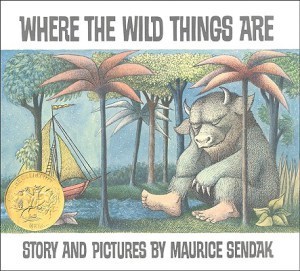 In case you haven’t heard yet:
“Maurice Sendak, the children’s author and illustrator best known for the 1963 classic “Where the Wild Things Are,” died Tuesday in Danbury, Conn., reportedly of complications from a stroke. He was 83.”
Sad to lose such a powerful voice and talented artist in children’s literature. I hope many others will carry on his legacy of taking children seriously and providing them with engaging stories and compelling art.





May 7, 2012
Links Galore
A few more links for Monday:
Neil Gaiman adds some more books to your to-read list.
In case you aren’t on Tumblr yet, GalleyCat shares some tips for the social media site. (My own hint: have fun and don’t worry too much about what you “should” post.)
Awesome literary projects from around the world.
In my head today. (via A Fuse #8 Production)
“Don’t wear a garden party hat with bloomers,” and other tips for the Victorian lady bicyclist.





Book Pricing and What’s Behind It
In all this debate over what e-books should cost, here’s an interesting look at what consumers think. Many people (understandably) can’t see why an e-book should cost almost as much as a hard copy of the same book.
But it’s not as simple as “there’s no paper so it should cost way less.” A publisher still needs to pay the author (hurray for writers getting money!) and pay the salaries of everyone working on the book (editors, marketers, graphic designers, etc.). Even though you’re not paying for physical assembly and shipping, there’s still a lot that goes into making a book. As someone who’s worked in publishing, I have to agree that making a book involves much more than putting pages together, and the people doing that work (which is necessary for both e-books and hard copies) deserve to be paid fairly.
Does that mean the debate about e-book pricing is over? Not even close. But I think it’s good to keep in mind that just because it’s digital doesn’t mean there was no effort in the creation process.





Think of the Parents
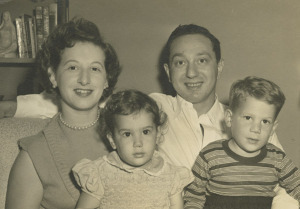 A good reminder that parents should occasionally make an appearance in YA novels:
“I’m always a little bugged when I read YA books where the parents are absent, either by killing them off for no reason, or by sending the teen away to boarding school. Now I have to admit, some of my favorite books are set in boarding school and many of them require the setting, but in a lot of cases, it’s just a way to get rid of the parents so that the kids can run wild and have their own adventures. There aren’t many kids who have either had their parents die or are sent to live at boarding school (okay, my husband has had both of those things happen – and he says that Hogwarts aside, life in a co-ed boarding school in England was as awesome as it sounds) but there are lots and lots of kids out there who have to deal with their parents every day.”
I know that it’s easy to think that less parental interaction means more adventure/freedom for your main character, and in part that’s true. You don’t necessarily want your main character to have to sit at home every night because their parents are watching them constantly. (Although that might be a good excuse for a character to rebel.) But as CJ mentions, most readers can relate to dealing with parents on a day-to-day basis. That’s not to say they need to be present on every page, but they should at least be a part of your character’s life.
A recent example of parents handled well in a novel would be John Green’s The Fault in Our Stars. Although they’re not uber-present they’re still a big part of Hazel’s life and feel like real people. (I won’t give away details, but one quote from Hazel’s mom was heartbreaking.)
How do you handle parents in your YA/children’s novels?
(image: Center for Jewish History, NYC)





The Hobbit Hole
The movie is still pretty far away, but these illustrations from a vintage copy of The Hobbit are awesome:
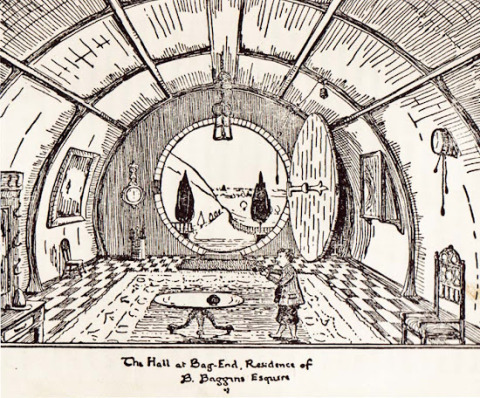
Click through for more! (image: Vintage Kids’ Books My Kid Loves)





May 4, 2012
Friday Fifteen
Welcome back to the Friday Fifteen, in which I review five books in fifteen words or less. Onward to the reviews!
 The Big Orange Splot by Daniel Pinkwater
Paint splotch on one roof inspires neighborhood creativity. I’d read, then draw my own wild homes.
The Believer Book of Writers Talking to Writers by Vendela Vida
Bought because I liked several authors included. Don’t remember much; should flip through again.
Anastasia Krupnik by Lois Lowry
An MG favorite. Anastasia is hilarious and it’s easy to relate to her faults.
I Promised I Would Tell by Sonia Weitz
Poetry fills this Holocaust memoir. Read in middle school, probably missed a lot; should reread.
The Forest of Hands and Teeth by Carrie Ryan
Intriguing concept, but pace didn’t quite work. Left with more questions than I’d like





Links Galore
Lots of good links to take you into the weekend:
Mary Poppins the musical edited slightly for an audience of autistic children and their families to enjoy.
Congrats to all the 2012 Crystal Kite Member Choice Award winners!
Rare books at Brown.
It’s hard to make a living as an artist, especially when art is seen as a luxury or something elite.
What’s in a name and how do you find the right one to begin with?
Non-fiction books for fantasy writers. Must get all of these.
Even though I’m not going to BEA, I’m going through this list of upcoming releases so I can update my to-read list.





The Secret Life of Gone with the Wind
From this list of Gone with the Wind trivia:
“Though Mitchell spent the next decade working on characters and plot development, almost no one knew she was writing a book. She went to extreme lengths to hide her work from friends and family, including hurriedly throwing a rug over pages scattered on her living room floor once when company showed up unexpectedly.”
I don’t talk a lot about my writing with people who are non-writer friends. It can even feel weird if they ask “What’s your book about?” or “How’s the writing going?” Usually they ask out of genuine interest and enthusiasm, but it can be hard to explain the writing process to someone who hasn’t done it before. (Plus the day-to-day work of me sitting at a computer isn’t glamorous.) And I don’t tend to show my work to people who are non-writer friends.
I think there’s a lot to be said for keeping your work private. Once it’s published and out in the world, it belongs to other people. It’s not yours anymore. But while you’re still writing, it’s yours in a very special way. Sharing that with lots of people can dilute your enthusiasm in some way.
Or maybe that’s just Margaret Mitchell and me. Do you tend to share your work with family and friends?


Tales of Tails
I’ve love to have a print of this illustration from You Read to Me, I’ll Read to You by John Ciardi, illustrated by Edward Gorey:
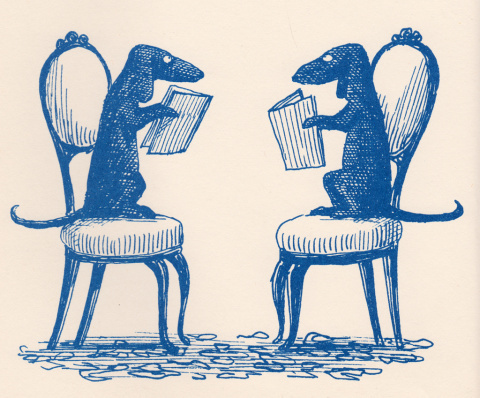
(via my vintage book collection)





May 3, 2012
Be Fearless in Your Writing
From this interview with Judy Blume:
Q: What do you do to fight censorship?
Well, I’m on the board of the National Coalition Against Censorship and I’m talking more and more with newer, younger writers now about there’s no such thing as a safe book.
If you think you can go into a little room and write a book that no one will ever challenge—I don’t care if it’s a picture book—if somebody wants to find something in a book, they will find something in any book.
So, write with passion and write what’s deep inside and kick that censor off your shoulder, just the way you have to kick your critics off your shoulder when you go into that room. You can’t worry about things.
I guess that’s what I mean by being fearless in your writing. That doesn’t mean that you’re not trying to write the very best books that you can write because especially when you’re writing for young people, they deserve the very best stories, books, characters.
In fact, the younger they are, the better it should be.
Love all of the above. Make sure to read the rest of the interview for more about Blume’s writing, New Jersey, and the upcoming Tiger Eyes movie.