Annie Cardi's Blog, page 96
May 3, 2012
A YA Room of One’s Own
From Callie’s “Why YA?” post at Teen Librarian’s Toolbox:
“I’ve realized teenagers are, quite possibly, the most forgotten group among libraries. And this fact is infinitely sad. And we, as adults, aren’t fooling anyone. Teens know they’re forgotten. It can be seen simply in the size of so many library YA departments. YA departments are tiny and, unless you’re in a large city, usually don’t actually have their own librarian. A teenager comes in with a question and is referred to a children’s librarian. And, come on folks, you remember what it was like. No teenager wants to be called a child. Teenagers aren’t children.”
I remember having this exact experience when I was in middle/high school. We had a small local library which had a children’s section but nothing like that for teens. Similarly, at Barnes and Noble I felt caught between the children’s section and the adult section. There was a small collection of YA books, but it was incorporated into the children’s section–not where I wanted to be at 13. Fortunately, libraries and bookstores are offering a lot more for teens these days, including their own sections and programming, but as Callie says in her post, it’s essential adults remember what it felt like to be caught between the world of kids and the world of adults.





Royal Role Models in YA/MG Literature
In response to Disney Princess week, Bailey Shoemaker Richards at SPARK counters with her own list of awesome princesses from MG/YA literature. As Bailey says: “The main characters in these books are, become or interact with princesses, and all of them have to deal with the implications of femininity in their own worlds.”
I have to admit: I was crazy about Ariel, Belle, and the other Disney princesses when I was little, and I think these characters still have a lot to offer girls. But when the princess line is marketed as just focusing on the fact that these ladies are princesses and wear pretty dresses, that’s a problem.
Bailey’s list includes three of my favorite MG fantasy heroines: Ella from Ella Enchanted, Cimorene from The Enchanted Forest Chronicles, and Alanna from The Song of the Lioness. All such awesome choices and complex characters outside of being royalty or near royalty. Bailey talks about each character and what makes her compelling, so click through to read more.
A couple of other suggestions I’d add: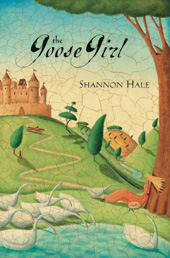
Ani (aka Isi) from The Goose Girl by Shannon Hale
This is one of my favorite fairy tale adaptations. Ani has a hard time being a princess and manages to find her own strength when her position is challenged. I love seeing Ani’s progression from awkward and uncertain to a confident, sensitive leader. (Shannon Hale has a bunch of other strong female characters in fairy tale adaptations, so Ani stands in for them as well.)
Beauty from Beauty by Robin McKinley
I especially like Beauty’s relationship with her family in McKinley’s retelling. In the original tale, Beauty’s sisters are selfish and spoiled, but here the family gets along well. Leaving them behind means a lot for Beauty, and I like how McKinley reinforces Beauty’s quiet bravery.
Who are your favorite women from MG/YA fantasty?


May 2, 2012
Links Galore
A few more links to get you over the hump:
I don’t think I’ve seen any particularly bad author intros, but these are solid tips and would translate well to author bios.
Really intrigued by the Not at Fault Project, which supports victims of sexual abuse.
Love this post about Chris Crutcher and why teens need a voice.
Rare manuscript archives + children’s books = awesomeness.
Best-ever agent Taylor Martindale talks about voice in YA.



A Truth Universally Acknowledged Via Webcam
I managed to catch up on the Lizzie Bennet Diaries last night. In case you haven’t seen them yet, here’s the first video:
Such an awesome take on Pride and Prejudice, and really well executed as a web series. I’m kind of obsessed.





MT Anderson: YA Visionary
 MT Anderson is probably one of the best YA authors currently writing. He’s tackled dystopian society hipsters in Feed and the life of a brilliant slave/social experiment in Revolutionary-era Boston in The Astonishing Life of Octavian Nothing with equal skill and depth of emotion. He pushes boundaries, and I think he’s done a lot for YA as a genre.
So I was really psyched to see Anderson included in NPR’s Visionaries series. Read the article and listen to the podcast here. One part I especially liked:
“Older teens tend to write to me and say, ‘Thank you for not writing down to teenagers,’ ” Anderson explained. “And then there are the letters from adults who say, ‘This is such a good book, why did you write it for teens?’ And feel like, ‘What, you should write a [expletive] book for teens, is that the idea?’”
I think this is why some YA and children’s writers find major success. Their goal isn’t to write a book “for teens” or to “teach children.” They just write good books that appeal especially to children and teens. If adults like those books too, it’s because they’re good books. Kids and teens deserve books that are held to a literary standard like any book you’d put in the general fiction section.
PS–I also had the opportunity to meet Anderson at an NCBLA event last year. He and lots of other amazing authors were signing books afterward, and I got Anderson’s signature. He was very cool and I had a major inner fangirl moment.
(image: Adam Ragusea/WBUR)


Quote of the Day
 “Marry somebody you love and who thinks you being a writer’s a good idea.”–Richard Ford
Very fortunate to have a yes on both counts.
Thanks to Stephanie for sharing this one!
(image by Cramer Photo)


May 1, 2012
The Art of Imaginary Friends
My friend Ron alerted me to an awesome upcoming exhibition at the William Baczek Fine Arts gallery. From May 2-June 2 they’ll be featuring Travis Louie and his series, The Secret Pet Society. An example is Julia & Her Swamp Friend, 2012, acrylic on board, 20 x 16″:
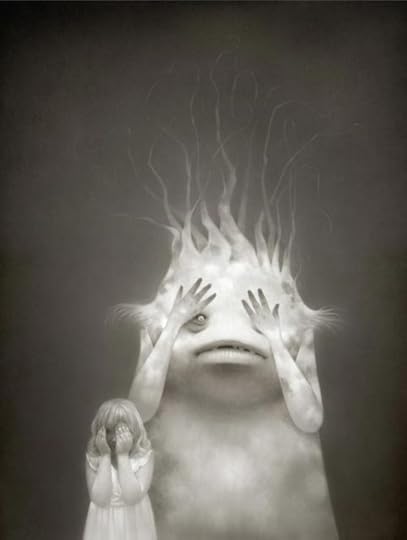
What dreamy, eerie, cool art. From the description for this piece: “Julia discovered him while she was collecting red-spotted salamanders in the swamp behind her parent’s farm house. She mistook the crown of branch-shaped tendrils on its head as a thicket of dead birch trees. The creature turned out to be quite harmless.”
Need to make a road trip to check out this exhibit.
(image: Travis Louie)


Katherine Paterson in Lowell for Talk About Historical Fiction
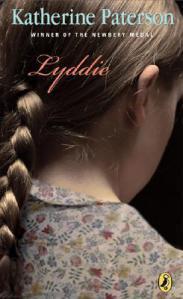 Grrr, I’m booked that night, but this presentation by Katherine Paterson sounds fantastic:
When: 7 p.m. Thursday, May 3, 2012
Where: UMass Lowell Inn & Conference Center, 50 Warren St., Lowell, MA
Paterson, the Library of Congress’s 2010-2012 National Ambassador for Young People’s Literature, will talk about how historical research, a compelling plot, and a feisty female character combine to create a novel that breathes life into the story of Lowell’s 19th-century textile mills and the labor activism of “mill girls.”
Click through for more info. Apparently you need to reserve a space in advance. I had the opportunity to see Katherine Paterson at another NCBLA event, and she was fantastic. I’d love to hear her thoughts on creating compelling historical fiction.
(via The National Children’s Book and Literacy Alliance)


Race and Responsibility in YA
Sarah Ockler has an excellent post up about the issue of race in YA. Like most other genres, the characters are predominantly white, and so are the authors. Sarah looks at the problems associated with this and what YA authors themselves can do to fix these problems. One part I especially liked:
Actively diversifying our fiction does not mean any of the following:
Giving a character almond-shaped eyes or coffee-mocha-latte-chocolate-hazelnut-caramel-cappuccino-colored skin. In fact, as a general rule, writers seeking inspiration solely from Starbucks menus probably need to dial down the caffeine.
Including a non-white character whose only real difference from the white characters is the color of his skin and/or his snappy catch phrases. Word!
Putting a sushi or taco bar in the school cafeteria. Which is one of those things that sounds like a good idea at the time, but usually isn’t.
Oh my lord, I remember so many almond-shaped eyes and caramel-colored skin from books I read as a preteen/teen, it was ridiculous. Obviously Sarah adds a good dose of humor here, but her points are still valid. You can’t just throw in stereotypical details and assume your non-white character is covered. Or include a non-white character just to fill in your racial gap. It reminds me of how sitcoms about white families always feature a kid with a non-white best friend, whose job it is to show up and be sassy/awkward/etc.
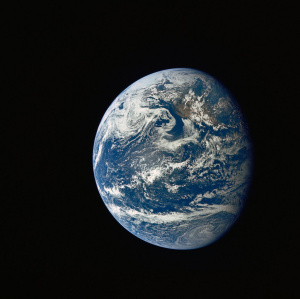
It's a small world, after all.
Sarah also takes on the excuse of “I’m not black/Asian/Mexican-American so I can’t write about those people.” She says:
“I don’t buy it. We’re writers. Storytellers. Weavers of tales great and small. It’s our job to make things up, to imagine, to explore different perspectives through the eyes of our characters. This isn’t to say we can plug-n-play a few multicultural characters into our work or rely on stereotypes or assumptions for crafting our fictional friends (see aforementioned anti-starbucks advice), but that’s writer 101 stuff. Cardboard, one-dimensional people have no place in a story, whether they’re white, black, brown, purple, or invisible. Authenticity is important, but thanks to the library, the internet, and, you know, other human beings, it’s possible to learn about something we’ve never personally experienced. Sometimes all it takes is a simple question: Hey, people who’ve been there, what’s your take on this? People want their voices heard. They want to share. They want to help.”
This is something we don’t see very often. It can feel like you’re overstepping boundaries to write about, say, a Muslim girl living in Chicago if you don’t have that background. There’s pressure to capture her cultural and religious background accurately, and it can be overwhelming for someone who hasn’t experienced that. But, as Sarah says, how is that different from creating any other character? If you’re only writing about characters who have had your exact experiences, you’re going to run out of stories pretty quickly.
At NESCBWI, I took a creating magical worlds workshop with Cinda Williams Chima. One thing she mentioned was that, in creating your magical world, think about what different races/religions/backgrounds might be represented. She encouraged us to look for opportunities to make our worlds diverse. Fantasy novels don’t get off easy, either!
There’s a lot more in Sarah’s post, so make sure to check it out. As she mentions, we’re the ones who can bring so many other voices to YA.
(image: NASA)(H/T bookshelves of doom)


April 30, 2012
Links Galore
A few more fun links for the day:
Color-coded etymology gets the attention of my inner word-nerd.
Only your knowledge of 18th century female writers and the history of witchcraft in Europe can save us from this asteroid!
Great post at YA Highway about placeholder projects.
Arresting piece about the power of poetry for Afghan women.
There’s no such thing as a perfect first draft.
Why writing support and communities are so necessary. (Psyched to be part of a fabulous YA/MG critique group!)