Annie Cardi's Blog, page 93
May 17, 2012
Bullying Is Always Personal
Although there are some great YA books about bullying, it’s arresting to read these essays by actual teens struggling everyday with this problem. Even if you’re familiar with how awful bullying is and how it’s such a problem in schools, it’s heartbreaking to read something like this:
“For 8 years, I have skipped lunch to get to the safety of the library, bury myself in books, and count the days till graduation. As of today, it is 64.”
How is that someone’s adolescent experience? She has lost her sense of safety in school, which is absolutely abhorrent. I know it can be hard for teachers to see all bullying, and so much of it can be subtle (especially among girls), but no one should have to feel like this.
Another part that struck me:
“No two acts of bullying are the same because bullying is always personal, always meant to strike home with that individual person, to make that individual feel as if she is completely worthless to the world.”
I think that hits at the very heart of bullying. It’s not just one kid slamming another into a locker or spreading a cruel rumor about someone. It’s not just something kids do. It’s a personal attack, and because it’s so personalized you can carry that for the rest of your life.
Make sure to read all the essays; they’re pretty short but pack a punch. Hoping for the very best for these teens and everyone who’s going through a similar experience.


Pulling Back the Covers
You need to check out Kate Hart’s post about YA covers from 2011. Awesome graphics and information.
She also takes a good look at minority representation on covers. Not surprisingly, there’s barely any. Also:
“But hey! Only about 6.6% of our girls appear to be dead this year! Which is… still more than our POC representation! But only 1% are actively drowning! So… that’s… kind of a win?”
Curious to see if dead girls still dominate in 2012 and 2013. And can filigree maintain its hold as hottest cover design element?
Thanks to Kate for such an awesome resource!


In a Word
At The Millions, Bill Morris takes a look at one word titles and when they work. As someone who stresses over titles, it’s interesting to see this collection of titles ranging from Hamlet to Swamplandia! to Salt. He also notes that “seven of the 32 books on the current New York Times hardcover fiction and non-fiction best-seller lists – a healthy 22 percent – have one word titles.” That’s a solid showing.
The focus in this list is on adult literature, so I was interested in single word titles for YA and children’s books. Looking at the Newbery and Printz lists, my first impression is that children’s books tend toward longer titles. In the last twelve years of Newbery winners and honors, only four have had single word titles (all honors, not winners).
Single words fair a little better for Printz titles–twelve total, with one winner and eleven honors. The inaugural year featured a one word title winner (Monster by Walter Dean Myers) and two one word title honors (Skellig by David Almond and Speak by Laurie Halse Anderson).
One guess as to this divide: single word titles tend to suggest a higher level of intensity, which you’re more likely to find in a YA novel. (Monster and Speak aren’t exactly light books.) I think there’s a greater potential for whimsy in Newbery books, which probably works best with multi-word titles. (You can get a little more sass in there.) Obviously that’s not a hard and fast rule, but it was my first assumption. Any other guesses?


May 16, 2012
Links Galore
A few more mid-week links:
How to be a good guest blogger.
Would you want to grab a drink with your favorite literary icon?
Ruth Warburton looks at instalove and attraction in YA novels.
In honor of Foster Care Month and One for the Murphys, EMU’s Debuts features an interview with social worker Paula Netto.
A discussion at Shannon Hale’s asks where are the moms in children’s/YA lit and if they need to be left behind.


Get Real
At TLT, the YA trend watch includes:
Reality Bites
Finally, thanks in no small part to The Fault in Our Stars by John Green, contemporary fiction is returning in popularity. Some of the hot titles include In Honor by Jessi Kirby, The Downside of Being Charlie by Jenny Torres Sanchez, Second Chance Summer by Morgan Matson and Waiting by Carol Lynch Williams. Dying, especially death by cancer, seems to be a prevalent theme in the current crop of titles that I have been reading.
So glad to hear that contemporary realism is making a comeback! I love fantasy and dystopian novels, but I think there’s a lot to be said for realism, and for a while the buzz in the YA community was that realistic novels just weren’t selling. I hope this move toward realistic teen experiences continues.


Grab Your Giant Bears and Don’t Smile at the Camera
From Flavorwire’s list of silly author photos, here’s my favorite:
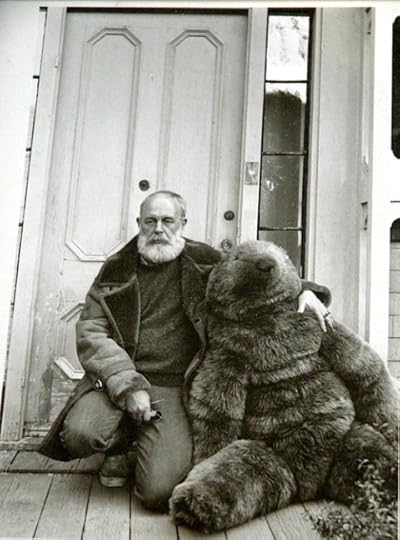
Edward Gorey, where did you get that giant teddy bear? Also, that’s some beard, sir. And why aren’t you happier with either one?
Although Gorey and Neil Gaiman are included, I think we need a list of silly pictures of children’s/YA authors. Internet, do you accept the challenge?


Hear the Monster’s Call
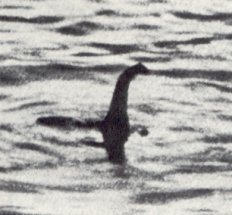 When I did study abroad in England, I discovered Poems on the Underground, a project created to share poetry with Londoners on the Tube. One poem I came across was The Loch Ness Monster’s Song by Edwin Morgan. You can read and hear it here. Most poetry is meant to be heard, but The Loch Ness Monster’s Song practically demands it.
I think it would be a great poem to use in the classroom, since it shows how poetry doesn’t need to be stuffy and use impressive language. In fact, it doesn’t even need to use real language at all.
Also, it’s just the kind of poem I need on this gray, damp day.
(H/T bookshelves of doom)(image: Wikipedia)


May 15, 2012
Sincerely, Fondest, All My Love, and Other Sign-Offs
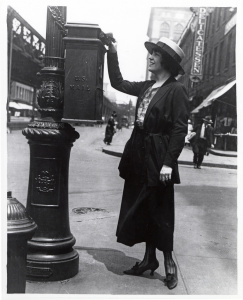 At the Paris Review, Sadie Stein talks about sign-offs and how she settled on “As ever.” She writes:
“Immediately, it seemed to me that rare thing, an all-purpose valediction: versatile, graceful, elliptical. If I was writing to a loved one, the sign-off implied my affection was going strong. If I hated someone, well, it didn’t rule that out, either. It could be cool or warm, friendly or formal. Or it could be literal: I was still Sadie Stein, and there was very little arguing with that.”
I might not be as charmed as Sadie by “as ever” but I can certainly relate to the importance of a sign-off. For more professional/formal correspondence, I tend to go with either “Thanks” or “Best,” which feel very safe. They keep a distance but express good feelings. Even more formal writing gets a “Sincerely.” Recently I’ve settled on “Cheers,” which feels friendly but isn’t too cutesy.
How do you end letters or emails? Do you feel a particular kinship with any sign-offs?
(image: Smithsonian Institution)


Taking Note
One of my writerly goals is to keep a notebook with me on a regular basis. A lot of times I end up leaving it at home and thinking “I need to write down this later!” and forgetting. Fortunately, Gems has a roundup of notebooks that are too pretty to leave at home. A couple of my favorites:
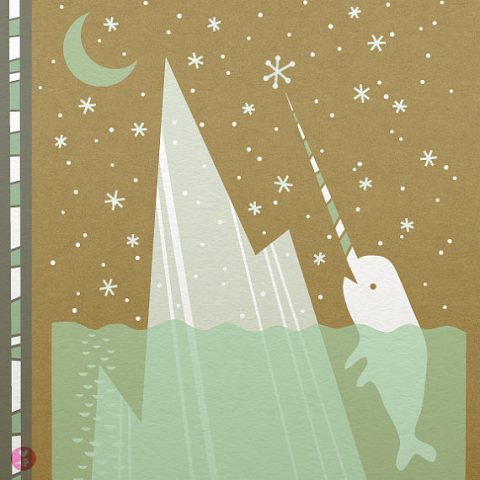
narwhal bee land notebook by beethings
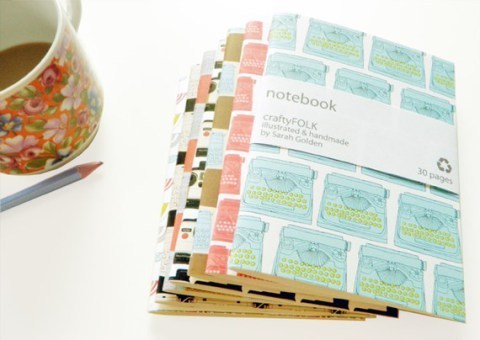
I tend to think of notebooks as a fairly personal choice. It’s got to have the right feel and look. Some people only go for legal pads or the composition books. Others swear by Moleskines. I tend to like something with a little personality, and I like to change it up so that my next notebook doesn’t look identical to my last.
Do you have any notebook requirements?


Have Fun and Be Cool at Bookstore Events
For most people, public speaking is scary. Everyone’s watching you and listening to you. If you’re giving a reading, you’re also sharing your creative work, which can be intensely personal (even if the story has nothing to do with your actual life). And you’re supposed to read for an hour and then answer questions about yourself? Who invented this kind of torture?
Fortunately, Jennifer Laughran looks at what makes a successful bookstore event. Hint: it’s not reading for an hour. One part I liked:
“Tip #6: Visual aids raise interest level. Kids especially love to see visual aids. I know one prolific author who has ALL his jackets taped together and unfurls them like a scroll and has kids hold it up – it stretches across the room! People think it is cool if you show off all the book jackets from around the world or early versions of book jackets that didn’t make it, or a funny story you wrote as a kid, or a writing notebook with a thousand cross-outs in it, or your own embarrassing childhood photo, the menu from the restaurant that inspired the book, or whatever. People love “behind the scenes” stuff and “making of” stuff, and kids love knowing that fancy published authors were just kids like them once upon a time.”
I love all the ideas here that aren’t related to you reading a selection of your book. That’s important, but I think these “behind the scenes” looks at the life of an author and the creation of the book. Once I attended a reading by Shannon Hale and for the most part, she talked about how she became a writer. She even showed us a giant roll of rejection letters she’d received from literary journals–a few of which I’d gotten myself. It was a huge relief to know that someone like Shannon had worked through rejection to get The Goose Girl published (and all her other amazing novels that followed). Thinking outside the standard reading box can be so much fun for your audience, who tend to expect the standard “reading followed by a Q&A.”
Jennifer gives a lot of info and suggestions, so make sure to check out the whole post. Have you attended any cool readings? Do you do anything to make your readings stand out?