Annie Cardi's Blog, page 92
May 22, 2012
Make Good Art and Other Thoughts From Neil Gaiman
Neil Gaiman talks about making a life as an artist in his address to the 2012 graduating class of University of the Arts:
I really like the idea of constantly walking toward the mountain of your own success and hopes. Also, must remember that mistakes mean you’re “out there doing something,” especially when the mistakes or disappointments have just happened.
PS–I had problems getting this video to play at first, then went to the main page and skipped ahead a couple seconds, and it played fine after that.
(via readergirlz)


A Fairer House Than Prose: Emily Dickinson and The Little White House Project
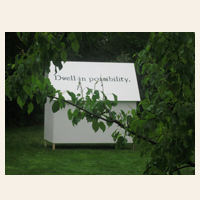 This is way cooler than my high school English projects. Deerfield Academy student Peter Krasznekewic has constructed 34 small houses, all made from sustainable materials and all bearing a line from an Emily Dickinson poem. His “Little White House Project” is featured on the grounds of the Emily Dickinson Museum in Amherst.
Jane Wald, executive director of the Dickinson museum, says:
“When Peter first came to me, it was clear he was thinking about the wider Pioneer Valley. Part of the concept was integrating it with the bigger landscape…The museum has been working to figure out how to connect Emily’s poetry to other art forms and artists, and maybe find an edgy way to do that.”
So excited to hear that teens like Peter and looking for ways to both appreciate art and create their own, while also connecting to their communities. The exhibit will be up until June 30; it’s free and open to the public. Good excuse to make the trip out to Amherst!
Read the rest of the article for more info on Peter and his project.
(H/T: NCBLA)(image: Emily Dickinson Museum)





New Study on Profanity and YA Stirs Media Concern
A new study about YA books is alarming parents to the idea that their teens might be reading books with–gasp!–profanity. I haven’t seen the full study, so you can take all of this with a grain of salt. But based on articles about this study, I have a few reservations about the findings.
First, apparently “teen novels contain 38 instances of profanity between the covers. That translates to almost seven instances of profanity per hour spent reading.” Does profanity mean any cursing at all, including “hell” or “damn,” which you can hear pretty regularly on tv? If so, my guess is that language that wouldn’t fly in a movie or tv show is limited to a handful of instances in the average teen novel.
Second, apparently characters who swore more often usually had “higher social status, better looks and more money.” As a general fan of YA, my guess is that these characters aren’t usually the protagonists. Outside of novels like Gossip Girl, more YA tends to focus on the kids who aren’t super rich and popular and beautiful. And the popular teens tend to be the source of more drama and anxiety for the protagonist, suggesting that characters who swear more often are more likely to be cast in negative roles.
Third, I’m curious to see which books this study looked at and how they were evaluated for their content outside of profanity. In my high school, we had to read Catcher in the Rye, which uses a fair amount of cursing. Although Catcher in the Rye still gets flack for its content, it’s widely considered a classic and is included in most middle/high school literature curricula. Can’t contemporary YA novels be held to that kind of standard, where language is part of a larger story and emotional journey?
The lead researcher of the study suggests that children’s and YA books should come with a ratings system. Beth Yoke, executive director of the Young Adult Library Services Association, responds:
“Books can be a safe way for young people to explore edgier, sensitive, or complicated topics, and they provide parents the opportunity to help their teens grow and understand these kinds of sensitive issues. ALA’s interpretation on any rating system for books is that it’s censorship.”
I’m very much with Yoke on this one. Obviously parents should take an active part in their child’s reading life, but that should involve reading books alongside their children and having conversations about the content, not slapping labels on book covers. And frankly, sometimes teenagers need to engage with issues on their own and books are a fantastic way to do that.
Also, YA books are intended for teenagers. Let’s classify that as generally PG-13 content. Isn’t a book’s place in the teen section of a bookstore or library enough of a “warning” about the content without having to develop a ratings system?
If anyone has any more details about the study itself and what criteria was used, I’d love to hear about it. Do you feel that YA has too much profanity and should be rated in some way?





May 21, 2012
Links Galore
Start the week right with a few more links:
Sucker Literary Magazine shares some tips for revising. Good stuff to think about for novels and short stories.
Vermont bookmobile rides again!
When books forge relationships.
In case there are any Oz fans among you, start writing your Baum-inspired story for the 2012 Fred Otto Prize for Oz Fiction.
Tweets in iambic pentameter. #sonnet





No Guilty Pleasures
It’s easy to look down on something. You tell me your favorite book is by Nicholas Sparks or James Patterson, and I judge you as a particular kind of reader. This happens a lot for people who love YA. Even though I’d go to the ropes with anyone over whether or not there is excellent writing in YA (of course there is!), a lot of times adults talk about reading YA as if it’s something they should be ashamed of. And even if you’re not reading the most cutting edge, well crafted novel, shouldn’t that be okay too? Why can’t we let people read what they want to read?
At Stacked, Kelly has a fantastic post up about taking away the judgment in book choices. Really, I want to quote half her post here, but I’ll limit myself to one part I liked in particular:
“I have a huge problem with the notion of a guilty pleasure. If something brings you pleasure, there should be no guilt associated with it. The reason people find themselves talking about guilty pleasures is because someone has taken their right to enjoyment from whatever it is that they like doing. It’s because someone has asserted themselves as an authority, as a person with privilege, and cast judgment upon an activity.
No one has the right to tell you what you should or shouldn’t like.”
I love that Kelly takes issue with the idea of guilty pleasure reading. Not everything you read has to be some impressive tome or work of experimental fiction. Sometimes you’re in the mood for something a little fun and lighthearted. Heck, maybe all the time you’re in the mood for something a little fun and lighthearted. Maybe the rest of your day involves caring for your ailing grandparent and when you get home, all you want to read about is sparkly vampires. Or maybe you just enjoy sitting on the porch with a glass of lemonade and an action-packed pseudo-spy novel. That’s okay, too. Not everyone needs to love Infinite Jest.
It’s kind of like not everyone has to love baseball. Or curling. Or sports in general. Why impose such harsh moral judgments on what is, for most people, a leisure activity? Again, I’m guilty of book judgment. I think we all are. But it’s so important to remember that your history, likes, goals, and values as a reader aren’t the same as anyone else’s.
Make sure to check out the full post for lots of other de-shaming goodness. Do you ever feel judged for your reading choices?





It’s Not Like Twilight and Other Things Writers Say
Start your Monday with a laugh about sh*t writers say:
Oxford commas are non-negotiable. This also really made me want to be on a writers’ retreat in a cool cabin somewhere with lots of other awesome writer friends.
(H/T Sarah J Schmitt)


May 18, 2012
Friday Fifteen
Hey there Friday! Perfect time for the Friday Fifteen, in which I review five books in fifteen words or less.
 1. Connections: Short Stories by Outstanding Writers for Young Adults, ed. Donald Gallo
Got for class in 8th grade; ended up reading most stories on my own.
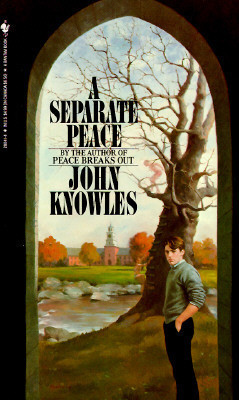
2. A Separate Peace by John Knowles
Love boarding school books. Great look at personal cruelty and vindictiveness.
3. American Smooth by Rita Dove
Beautiful poetry as usual, with a shoutout to ballroom.
4. The Pugilist at Rest by Thom Jones
Read for class. Having a hard time remembering much about this one.
5. About Me (Childcraft: the How and Why Library #14) by World Book-Childcraft International
I liked learning about diseases I could contract. Measles, anyone?





Links Galore
Lots of links to end the week:
Love these classic Children’s Book Week posters.
There’s always an exception to the rule, but in general these are good tips for how not to start your novel.
How the New York Times Bestseller List works. (Apparently e-books don’t count!)
I’m certainly prone to a few of these bad author habits.
Another loss in the children’s book world–Jean Craighead George, author of Julie of the Wolves, passed away this week.
Teens like Lilli, who started a “giving library” for homeless kids, give me so much hope.





Voice Across the Country
Voice is essential to writers, so I’m sure I’m not the only one who’s interested in regional dialects. An accent can say so much about someone’s background and environment, and you can use accents to reinforce or break down stereotypes. From now until July 15, you can watch American Tongues, a documentary about dialects in the US, on the PBS website. (Note: some strong/offensive language is included.)
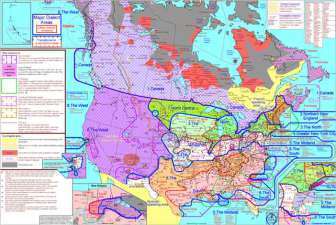
The film first premiered in 1988, and I’d be really curious to see how dialects have changed since then due to a greater prevalence of television and the internet.
If you want to get super nerdy about it (who doesn’t?!), you can check out this interactive map of regional dialects in the US.





Whale in the Woods
Under the heading of generally awesome, a series of life-size whale sculptures in the forests of Argentina:

The project, My Family Dead is by Argentinian artist Adrián Villar Rojas. I feel like this would be an awesome inspiration for a story.
(via Colossal)(via Design Crush)