Annie Cardi's Blog, page 94
May 14, 2012
Dreams of Paper
Check out these gorgeous works of paper art by Patricia Sarrafian Ward. This one is called Insomnia Dream:
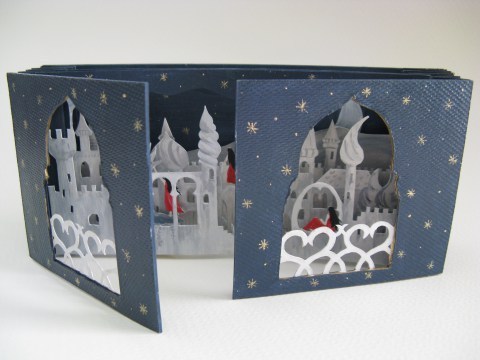
Make sure to check out her others, too. (via fyeahbookarts)


The Joy in Writing
I love this post by LimebirdKate (aka 4amWriter) about what to do when you’re in a writing funk. One part I like in particular:
“Writing is joyful – This must be the foremost reason I write. When I return to my writing, it can’t be because I have a deadline to meet, nor can it be about publication. It has to be because I love to create worlds. Once, when I spent about 5 years away from writing it was because I put too much pressure on myself. I didn’t think I was good enough. With that ridiculousness behind me, now I make sure that I write purely for myself—this is separate from any writing that I share with others. I never consider them for publication; I only write them for me. And I tend to them several times a week. Like cultivating a secret garden.”
I think “joyful” is the perfect word to use here. Even if writing involves work and focus, it should still raise your spirits in some way. When I’m having a hard time with a particular scene or story, I remind myself that, when I was younger, writing was something I did for fun. Of course I had ideas of being a famous published author at age 13, but for the most part I knew that these were stories I’d keep private. I wrote because I loved doing it; writing was like a game. Now, I try to remind myself that even though I consider writing a career, part of it should still be fun. Somehow that helps take the pressure off.
Make sure to click through for the rest of LimebirdKate’s fantastic suggestions. Do you have any particular tips or tricks to get back into the writing groove?


May 11, 2012
Friday Fifteen
Welcome back to the Friday Fifteen, your favorite (only?) source of five fifteen-word reviews. Onto the books!
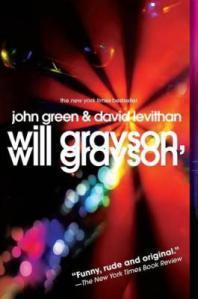 1. Will Grayson, Will Grayson by John Green and David Levithan
Bought it because I like Green’s work; ended up being particularly touched by Levithan’s Will.
2. The Piggy in the Puddle by Charlotte Pomerantz
Silly sounds and muddy fun in a cute picture book.
3. Help! My Apartment Has a Kitchen Cookbook: 100 + Great Recipes with Foolproof Instructions by Nancy Mills and Kevin Mills
My first cookbook. Perfect for new cooks, with useful “mom tips,” like what ovenproof means.
4. Ella Enchanted by Gail Carson Levine
My favorite Cinderella adaptation, full of charm. Don’t judge it by the movie.
5. The Prelude by William Wordsworth
Lesson from Oxford: If the question is Wordsworth, the answer is “The mind of God.”


Say Bonjour to Audiobooks
I don’t tend to listen to audiobooks (my mind wanders too much) but this clip of Alan Rickman singing in French from the audiobook version of The Return of the Native may change my mind:

Click through for a list of other cool audiobooks to take with you on summer travels.


May 10, 2012
Links Galore
A few more links for the afternoon:
Summer job advice from your favorite YA novels.
The Shakespeare playlist.
Stretch your creative muscles by trying out a new poetry form or two.
Excellent advice on how to keep your series running smoothly.


Second Novels
At NESCBWI, I went to a workshop about expectations for your writing career and your second book in particular. It was refreshing to hear Cynthia Lord and Linda Urban talk about their struggles writing their second books. Urban mentioned spending a lot of time working on one book in particular and how it was a huge, stressful project. Ultimately, she had to set it aside fro a while and move onto something else.
It’s hard enough to think about getting published and how your first book will do. Then you have to worry about the second one and if anyone will like that. It’s like the work and worry never ends! (Apparently it doesn’t.)
Still, Rachelle Gardner talks about how second book stress doesn’t mean the end of the world. If your agent/editor doesn’t love your next manuscript, that’s okay. Gardner says:
“It’s true, many writers’ subsequent novels fall short of the mark. The most common reason is that most authors work on that first novel, the one that sold, for far longer than the second one. They may have even agonized over it for years. The following novels, by contrast, are usually written much faster and under the pressure of a contract and a deadline, so they might not be as strong…If you wrote one great one, and your second one is not quite as good, the world’s not going to end. You just fix it. Presumably you’ll have the help of whoever told you it wasn’t good enough—your agent or editor. You’ll get notes for revision and you’ll get to work. Or you’ll be told to junk it and start over. (Hopefully not the latter, but it’s been known to happen.)”
I think it’s good to remember that a writing career isn’t all or nothing. Sometimes there are disappointments, but that doesn’t mean your career is over. It’s all a process and it never stops being work. But on the upside, just because you write something that might not be your next book doesn’t mean that your agent will leave your or your editor will hate you. Again, it’s more work, but it’s not the end of your writing career.


The Problem with Artists
Jennifer Laughran has a great post up about what happens when an artist you admire turns out to be a jerk (or worse). Can you separate the art from the artist? I’ve posted about this question before, but I think Jennifer handles the topic really well. In reference to Orson Scott Card and Ender’s Game, she says:
“Do I want to line OSC’s pockets with gold? Heck no. I don’t pay for his books anymore, personally (though I certainly did as a kid). If somebody asks me what I think of him, I’ll say this: He is a very good storyteller. Ender’s Game is probably one of my most re-read books of all time. He’s excellent at starting series (less successful at finishing them). He’s extremely problematic personally/politically.”
I think the “extremely problematic” is key here. Usually, if you liked an artist’s work enough to be deeply upset at their personal failings, it’s hard to cast aside that art. There are some artists I try to make excuses for, or at least ignore their personal issues and focus on the art itself. For others, I refuse to read/watch/listen to any of their work after finding out something awful about them. But as Jennifer says, people are extremely problematic, and so it’s hard to have one clear response to this issue.
Make sure to click through and read Jennifer’s full post. The comments are also very interesting.


May 9, 2012
Where’s the Love?
It’s hard to talk about love without delving into the cheesy, the clinical, or the painfully awkward. (There’s a reason why the Literary Review has a “Bad Sex in Fiction” award.) So how do you write about romance without sounding like a total idiot?
Malinda Lo has a fantastic post about how to write a good kissing scene. She looks at a few examples of kissing in YA done well and examines how the writer managed to convey the right emotion. Lo is careful to look at the emotions going on behind the kisses and what they reveal about the people involved. One part I liked:
“This description brings up something that appears over and over in effective fictional kissing scenes: power. Not necessarily in a Fifty Shades of Gray way, but every time two people come together in a kiss, there is a physical and often emotional negotiation going on. Who is in control? Who is totally swooning? Are they both completely bonkers for each other? Or is one less bonkers than the other? This relationship negotiation occurs in every kiss and without it, the kiss can often feel flat.”
I love the reminder that there’s an emotional dynamic involved in kissing. It’s easy to focus on one character (especially if you’re writing in the first person or a close third) and forget that the kiss is happening to the other person as well.
Lots of other excellent advice here as well; make sure to click through and read the rest.


Much Ado About Joss Whedon
 Buffy the Vampire Slayer aired its first episode when I was in 7th grade. I was shy and insecure and didn’t quite know how to grow up. Buffy, with its quips and demonic high school drama, helped me maneuver into young adulthood. As a result, Joss Whedon has a very special place in my heart. Then I find out he did a version of Much Ado About Nothing and I want to scream “Stop making me love you, Joss!” From the press release:
“Filmed in just 12 days entirely on location in exotic Santa Monica, the film features a stellar cast of beloved (or soon to be beloved) actors — some of them veterans of Shakespearean theater, some completely new to the form. But all dedicated to the idea that this story bears retelling, that this dialogue is as fresh and intoxicating as any being written, and that the joy of working on a passion project surrounded by dear friends, admired colleagues and an atmosphere of unabashed rapture far outweighs their hilariously miniature paychecks.”
Whedon meets the Bard? So awesome! And he cast includes Whedon-verse veterans like Alexis Denisof and Nathan Fillion. It looks like the film is set to release this year, but not a lot of details about where/when exactly. But with Whedon’s recent Avengers success, I’m hoping this might get a wider release and appeal to teen viewers. Shakespeare is way cool, guys.
If you want even more on Whedon, check out this interview.
(The picture: me getting to meet Joss Whedon a few years ago. I think I said “Thanks so much for making awesome stuff and doing this presentation,” and managed to stay fairly calm. But inside it was like “YOU GOT ME THROUGH MIDDLE SCHOOL, I LOVE YOU.”)


May 8, 2012
The Fragility of Life, the Irrationality of Life, the Comedy of Life
From this NPR interview with Maurice Sendak in 2011:
“Yes. I’m not unhappy about becoming old. I’m not unhappy about what must be. It makes me cry only when I see my friends go before me and life is emptied. I don’t believe in an afterlife, but I still fully expect to see my brother again. And it’s like a dream life. But, you know, there’s something I’m finding out as I’m aging that I am in love with the world.
And I look right now, as we speak together, out my window in my studio and I see my trees and my beautiful, beautiful maples that are hundreds of years old, they’re beautiful. And you see I can see how beautiful they are. I can take time to see how beautiful they are. It is a blessing to get old. It is a blessing to find the time to do the things, to read the books, to listen to the music.”
The rest of the interview is extremely engaging and moving as well, especially today. Make sure to listen or read the full transcript.