Annie Cardi's Blog, page 97
April 30, 2012
The Formative Years
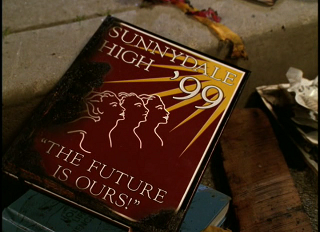
At least my high school experience didn't end with a giant demon snake attacking the senior class.
At the Washington Post, Jay Mathews wonders why people are often asked about their college background as opposed to their high school experience. In addition to pointing out that more people attend high school, he also suggests that the high school years are more formative:
“High school defines us. It is an educational experience we nearly all share. Useful abilities, such as reading, writing, math and our own peculiar talents for the most part take root in high school, or don’t, to our sorrow. High school offers lessons in love, social dynamics, news and what we are most likely to enjoy in our adult lives, at work and play. Hillsdale High School in San Mateo, Calif., gave me more than my colleges, Occidental and Harvard.
High school dramas are staples of television and cinema. Far more people attend high school sporting events than those at colleges. High school teachers are far more likely to have an impact on the lives of students than college professors.
Yet we don’t act as if any of that high school stuff is important. In a lifetime of social gatherings, I cannot remember ever being asked where I went to high school. The college experiences, on the other hand, are frequently discussed.”
As a YA writer, this claim intrigues me. I love looking at the teenage experience. In high school, you start learning who you are as a person and how you can interact with the world. Everything is filled with deep meaning; fights seem more intense, friendships seem like they’ll last forever, heartbreaks are the most painful. But does that mean high school forms who you are?
I think that it’s not so much that the high school experience is more important or that it should be talk about more. Instead, I think it’s probably more personal. It’s hard to talk about those experiences at a cocktail party. Events from high school can sound insignificant when you look back at them and can be hard to explain. I think this is one reason that YA is so compelling as a genre. It looks at those seemingly insignificant moments and examines how meaningful they really are.
Still, I’m not sure that I’d say my high school made me the person I am more than my college did. There’s more I did at college that I can point to as helping foster who I am now, but there’s a lot from high school that meant a great deal to my emotional and social development. There’s a vast emotional difference between a high school freshman and a high school senior, and high school helps you get to that emotional place. At that point, you’re more ready to form who you are, either through college or work or travel.
High school starts you on the path to discovering who you are. I don’t think it ultimately creates that final person, but it certainly starts you on that journey. And that’s what I find exciting about YA as a genre. It’s so much about discovery and personal growth.
Do you think high school formed more of who you are now than any other time in your life?
(H/T Kim Briggs)


Trust Your Talent
This image from The Fresh Exchange seems like the perfect way to start the week:
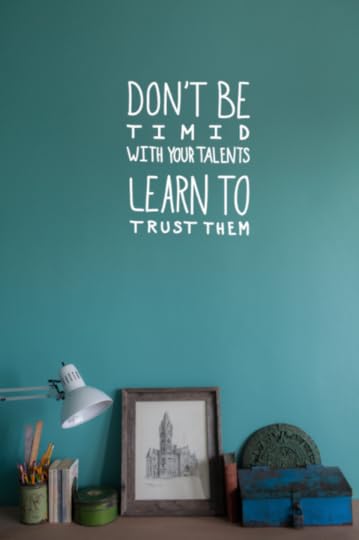
The image is from a whole Creative Life post about artist Gracie French of Freshly Squeezed Letterpress Print Shop. Make sure to check it out; lots of cool, inspiring images and thoughts.
(image: Bryan and Mae)(via The Fresh Exchange)





April 27, 2012
Friday Fifteen
Okay guys, executive decision time. I love the Friday Fifteens, but I think it’s time to take it down a notch. So far I’ve had sixteen Friday Fifteens featuring fifteen reviews, which means I’ve reviewed 240 books; I’m exhausted! Starting this week, the Friday Fifteen will review five books in fifteen words or less. All that fifteen-word goodness in a snappier format.
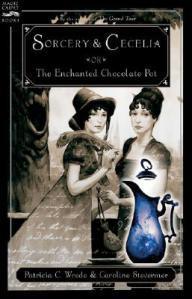 1. Sorcery and Cecelia or The Enchanted Chocolate Pot: Being the Correspondence of Two Young Ladies of Quality Regarding Various Magical Scandals in London and the Country by Patricia C. Wrede and Caroline Stevermer
Jane Austen meets Harry Potter in this epistolary novel. Such a treat!
2. Russell Grant’s Illustrated Dream Dictionary: Your Dreams and What They Mean by Russell Grant
If you dream about teeth, it means you’re stressed. Or something. Can’t remember much.
3. A Tale of Two Cities by Charles Dickens
Me in seventh grade: “Why are they all named Jacques?” Had a crush on Sidney.
4. Interpreter of Maladies by Jhumpa Lahiri
Gorgeous collection of short stories; can see why this won the Pulitzer.
5. The Sword of Shannara by Terry Brooks
Dug it, got the sequel, stopped reading when no characters from Sword of Shannara appeared.





More Matter, Plus Art
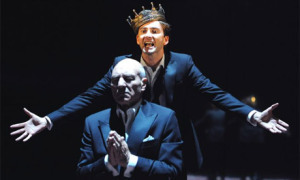 First there was a podcast of David Tennant in Twelfth Night; now his Hamlet is available to watch online? What an awesome week for Shakespeare (and fans of the Tenth Doctor)!
You can also check out this video on the making of this version of Hamlet. English teachers, take note.
Side note: the scene with Hamlet holding Yorick’s skull is probably one of the best-known images in theater, so it’s easy to forget what’s going on in the scene. I took a Shakespeare class in grad school, and our professor reminded us that Hamlet is holding the skull of probably the only person who ever really cared about him. The skull isn’t just a prop–it’s what’s left of the head of someone he loved. That scene suddenly became so sad for me! Shakespeare knew what he was doing, guys.
(image: The Guardian)


Doing the Voices: Reader as Orchestra
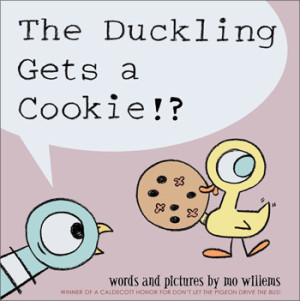 From this interview with awesome children’s book writer/illustrator Mo Willems:
MONTAGNE: You have a long relationship with writing for television. You’ve won six Emmys for your work at “Sesame Street.” And that kind of writing shows up in your books, it seems, not just funny but also really works and it’s very possible to read it out loud. Do you read out loud as you’re writing?
WILLEMS: I think it’s really important. I mean here’s the weird thing is. I write for illiterates.
MONTAGNE: Three year olds.
(SOUNDBITE OF LAUGHTER)
WILLEMS: Right? So what that means is I am dependent on my orchestra. And my orchestra can be a parent, it can be a teacher, it can be a librarian. But I have to make sure that my orchestra is engaged. That they are, you know, maybe being sillier than they normally are; that they are yelling and jumping around, so that that’s what’s going to make the book work better. It’s very, very important. Also, because it’s a time to be together. You know, I want parents to be engaged and I want them to laugh, because then it’s cool. I think that sometimes parents forget that they are the coolest people in the world to kids. They’re just awesome. So if they’re enjoying reading books, suddenly the kid is going to say, wow, reading books is awesome.
I love the idea of the reader as the “orchestra” of a picture book. Willems does a great job capturing voice and making his characters really dynamic for the reader and the listener. You need to do the voices!


Toads, TED talks, and Magical Landscapes: the 2012 NESCBWI Conference

Sara Zarr giving her keynote. Somehow my only picture from the weekend.
Last Saturday I woke up before sunrise, grabbed my bags, and drove a couple hours to Springfield, MA. Why put so much effort into what would otherwise have been a sleepy Saturday morning? Because I had to get to the NESCBWI conference!
I attended the international SCBWI conference in January, but this was my first regional conference. As with the larger SCBWI conference, there was a fantastic writerly vibe at NESCBWI. Fellow attendees were friendly and enthusiastic; presentations were informative and invigorating; and I left excited to get to work.
It’s a smart idea to have a regional conference. While I loved going to SCBWI in New York, I’m not sure I could make the trip out every year. The New England version is a little more manageable. Also, the workshops I attended felt much more focused on a particular topic. I’m sure regional conferences allow a little more tailoring to what particular attendees want to work on, as opposed to a much larger conference. A few workshops I attended were about setting expectations for your writing career, creating magical worlds, and navigating book contracts. Again, really interesting and helpful stuff.
A few highlights/thoughts/fun moments from NESCBWI:
In her keynote speech, Sara Zarr (one of my favorite YA authors) talked about what characters care about. So often we’re asked “What does your character want?” but Sara mentioned that sometimes what you want can just be a symbol for what you care about. I hate the “what does X want?” question; the “what does X care about” makes so much more sense to me. (She also related the writing life to Frog and Toad stories. Loved it!)
Also from Sara Zarr: “Let your writing actions speak to your commitment.”
Cynthia Lord mentioned there are peaks and valleys in a writing career; it’s not always an upward trajectory. She suggested thinking of the successes and rewards as “gifts” from readers. If someone write a good review about you or wants to give you an award, it’s a gift. Gifts can’t be expected, and as a result there’s way less pressure on you to hit those peaks.
Kate Messner shared her TED talk with us (so cool!) and reminded us that sometimes fear lets us know we’re exceeding the artificial limitations we set for ourselves.
A behind-the-scenes look at New Yorker covers and comics from Harry Bliss. His keynote made me wish I could illustrate.
When creating magical worlds, ask yourself questions like “How would geography affect class structure?” and “What kind of medicine or drugs do they have?” Cinda Williams Chima gave such a great workshop; I felt with major fantasy invigoration.
The Apocalypsies/Class of 2012 debut novelists are awesome people. It was great to hear about how weird the first novel experience can be. Special thanks to AC Gaughen and Diana Renn for chatting with me afterward.
On a more personal note, I was invited to join a fabulous YA/MG critique group. So excited to start workshopping with such wonderful writers!
If you want even more on NESCBWI, make sure to check out these posts by other attendees/presenters. And if you attended, please share your thoughts/links to blog posts about your NESCBWI experience in the comments.





April 26, 2012
Links Galore
A few more links for Thursday:
Twelfth Night is my favorite Shakespearean comedy. David Tennant is (so far) my favorite Doctor. The two combined in a BBC podcast? Insanely awesome! (H/T bookshelves of doom)
Jennifer Laughran talks fonts. In short: make sure it’s legible.
I don’t think I would have been cool enough to be a flapper, but I like their style.
Everyone hates the word “moist.”
YA Highway looks at how to get a publishing internship.


Owl Development
Another poem for National Poetry Month. I couldn’t resist one with owls:
How To Build an Owl
By Kathleen Lynch
1. Decide you must.
2. Develop deep respect
for feather, bone, claw.
3. Place your trembling thumb
where the heart will be:
for one hundred hours watch
so you will know
where to put the first feather.
4. Stay awake forever.
When the bird takes shape
gently pry open its beak
and whisper into it: mouse.
5. Let it go.
(via swissmiss)


Better Red Than Dead
I love this Red Riding Hood illustration by Madame Lolina:
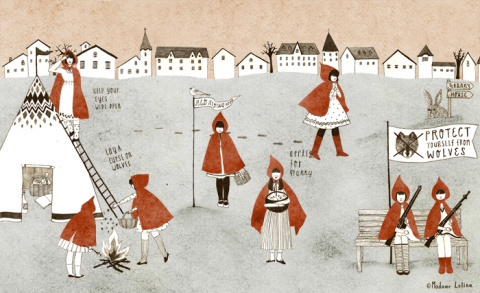
Keep your eyes open and protect yourself from wolves!
(via Gems)


April 25, 2012
Sorry, Vikings
Apparently vikings didn’t wear horn hats. And vomitoriums? Not what you think. Check out this video for information on these topics and other common historical misconceptions:
(via The Dish)