Annie Cardi's Blog, page 88
June 8, 2012
Map Out Your Genre Fiction
Digging this literary genre map. Not only does it have categories, but each tile gives you a brief description of the sub-genre and a few examples.
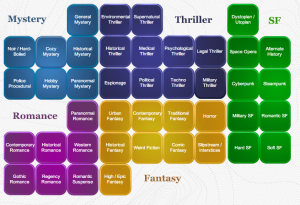
I think YA could use a version of this.
(image: Book Country)(via Book Riot)


Old Stories, New Books
Every year at my high school we had an awards assembly, at which students would be recognized for particular talents. The awards were usually based off academic departments or sports teams. When I was a senior, I won the Art award. I’m actually not that great an artist (would you like your stick figure drawing?) but I made a lot of projects that involved found objects. I made a purse out of my dad’s old neckties; a sculpture out of old lipstick tubes; a recycled paper book. So it’s probably not surprising that I really enjoy novels that are reworked versions of other stories.
Flavorwire has a great roundup of ten contemporary novels based on classic books. Two of these–His Dark Materials and The Hours–are favorites.
Another reason I like YA is that it’s a genre that tends to have a lot of fun with established material. Obviously fairy tale retellings are huge, but so are takes on other classics. A few years ago I read The Dead Fathers Club by Matt Haig. When I was in high school, I hated Hamlet (why couldn’t he just kill people like Macbeth?!), but The Dead Father’s Club opened me up to a much greater sympathy for the character.
What are you favorite contemporary retellings of classic stories?


June 7, 2012
All the Words in the World Aren’t Enough
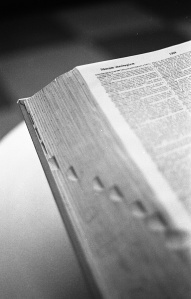 Sometimes you need a word that doesn’t exist. A word that just feels right. And according to Erin McKean’s article, that’s okay:
“One thing that shouldn’t stop you from using an undictionaried word: worrying about whether it’s “real” or (as Wordnik users like to say) “madeupical.” All words (aside from unintentional errors and malapropisms) are words at their birth. All you have to decide is whether the word in question is the right one for the job. Dictionaries don’t measure realness; they serve as rough proxies for the extent of a word’s use.”
That’s not to say there aren’t a lot of underused words in the English language that would be perfect for these occasions. But it’s also fun to play around with language and see what comes of it. They may not all be Shakespeare-esque gems, but they might be exactly what you need.
(image: jollyville)





Looking at the Mad Scientist: Frankenstein Online
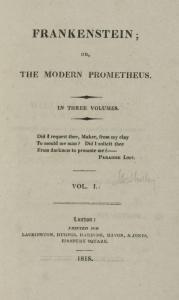 Last November, I read Frankenstein for the first time. Until then, I’d just seen the movie and read the background information on how Mary Shelley came up with the story. So I’m psyched to see that Biblion is looking at the book, Mary Shelley, and her circle. Lots of cool background information and essays.
Right now they have a lot of info up about the Romantics. Seriously guys, the drama in this group could make for some awesome TV drama. (Downton Abbey is already a hit, so why not have more historical dramas?) Get those English major vibes going!
PS–I’m also going to see the National Theatre Live version of Frankenstein when it’s shown in a couple of weeks. Really psyched to see Benedict Cumberbatch rock this one.
(H/T NYPL Wire)





It’s Good to Be Curious





June 6, 2012
Terrific and Radiant Sculptures
These sculptures by Linda and Kelly Campbell (aka Artful Living) are gorgeous. Love the Charlotte’s Web one:
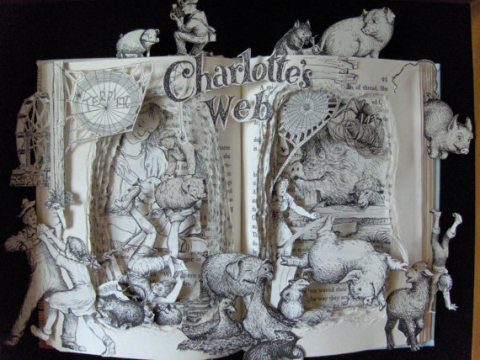
It really captures the spirit of the novel. So cool!
(H/T books, paper, scissors)


Financial Expectations for Working Writers
My friend Andrew has a great post up about the recent McSweeney’s comic contest debacle and why writers should take notice. In very short, McSweeney’s ran a contest in which the winner would get to run regular, bimonthly feature on Internet Tendency for a year (so 24 total posts). But there was no monetary compensation, and 24 separate comics is a lot of work. There was an uproar among comic artists, and McSweeney’s ended up pulling the contest. Andrew notes how this might not have happened for a writing contest:
“I don’t mean to suggest that McSweeney’s hasn’t done great things for the publishing industry, and for writers, and for schools, and for the community. But it seems like a dangerous precedent to admit that contests of the sort they run—hell, business models of the sort they run—can be “used for the purposes of exploitation.” If it’s exploitative to ask graphic artists to produce work on spec, why is it not exploitative to ask the same of writers? Are we not also creative individuals trying to make an honest living doing what we love?”
Frankly, I think this would be a great opportunity for McSweeney’s to look at how it acquires content and what it can do for its writers. Most writers, even really successful ones, don’t make enough money from writing to have it be their only job. Not that McSweeney’s can save the day, but they can certainly take a step forward in fostering artists of all kinds.





Ray Bradbury Knows the Monster’s Sadness
Another loss for the literary world: Ray Bradbury has passed away at the age of 91. I haven’t read much of his longer work, but one of my favorites is his short story “The Fog Horn,” about a sea monster who hears the fog horn from a lighthouse and thinks the lighthouse is calling to it. From that story:
“The Fog Horn blew.
And the monster answered.
I saw it all, I knew it all-the million years of waiting alone, for someone to come back who never came back. The million years of isolation at the bottom of the sea, the insanity of time there, while the skies cleared of reptile-birds, the swamps fried on the continental lands, the sloths and sabre-tooths had there day and sank in tar pits, and men ran like white ants upon the hills.”
Saddest story about a sea monster ever. Make sure to check out the whole story in Bradbury’s collection, The Golden Apples of the Sun.


The Secret Life of Publishers
Movie pet peeve #312: how children’s publishers are depicted in movies. Whenever I watch Elf or You’ve Got Mail, I turn to the person next to me and say “That’s not how children’s book editors act.” (I’m a lot of fun to watch movies with.) Sure, maybe that’s how some editors act, but certainly not all or most of them. Most people who work in children’s or YA publishing are people who love these books.
So I was happy to see this video about Random House’s staff, in which they talk about what they do on a daily basis and what they love about their work. Like every industry, there are frustrating days and disillusioning moments, but I think for the most part, people in the children’s publishing world feel this kind of dedication and enthusiasm.

I’ve had the opportunity to interact with editors in a few different settings–at conferences, during work or internships, as a writer–and I’ve never felt like they didn’t care about the books they published.
Hollywood, please take note.


June 5, 2012
Links Galore
A few more links to get you through the day:
Midwesterners should check out Printers Row Lit Fest in Chicago.
Are you ready for the 48-Hour Book Challenge? (I’ll be at a wedding that weekend, but read hardy for me!)
In case you’re not too busy reading this weekend, there’s the 7th annual Children’s Book Festival at the Eric Carle Museum of Picture Book Art. (via NCBLA)
Hopes for more YA at the movies.
Lots of time travel books for the time lord in you.
Enter Hilary Weisman Graham’s big giveaway to celebrate the upcoming release of Reunited (trailer here). Definitely on my summer reading list!