Could not find Kindle Notes & Highlights for that user.
Annie Cardi's Blog, page 87
June 13, 2012
Links Galore
A few more links for a rainy Wednesday:
My biggest title pet peeve.
Why readers advisory matters to librarians and their reading communities.
Great interview with Emily M. Danforth about LGBT YA novels and writing in general.
Why The Secret Garden endures.
Just try picking your favorite Horn Book Magazine cover.
The stories from Moonrise Kingdom get animated.


Best Friends Forever
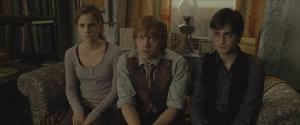
Harry likes best friends with personality and lives of their own.
Mindy Kaling is one of those people I’d like to be friends with. Not just because she’s famous, but because she’s awesome and I think we’d have a great time together. (Online shopping adventures! Fun games of “judge the TV moms!”) Yet another thing that makes me love Mindy is this article about women who only exist in movies. Basically, it’s every pet peeve about female characters in film: the gorgeous actress whose single flaw is that she’s klutzy; the career woman who’s too busy for love; the woman who works in an art gallery.
One item that caught my eye in particular:
The Sassy Best Friend
You know that really hilarious and horny best friend who is always asking about your relationship and has nothing really going on in her own life? She always wants to meet you in coffee shops or wants to go to Bloomingdale’s to sample perfumes? She runs a chic dildo store in the West Village? Nope? O.K., that’s this person.
The sassy best friend is certainly not limited to the world of romantic comedies. This can be a problem in most fiction, YA novels included. I read one YA novel a few months ago that was great, but I felt like the main character’s best friend was never allowed outside that role. She seemed to exist entirely to be a best friend. While it’s certainly okay to have minor characters, it’s good to remember that these characters are also complete people outside of your main character’s journey. Maybe we don’t get to see most of their outside world, but there should be the suggestion that the friend has something else going on.
Of course, if Mindy Kaling wants to meet for coffee or go to Bloomingdale’s to sample perfumes, I’m up for it.
(H/T AC Gaughen)(image: Harry Potter Wiki)


You Can’t Go Home Again
It can seem like famous writers sprang up from the earth as famous writers. Wasn’t Hemingway always getting drunk and shooting elephants? Didn’t Tolkein always create his own languages and hang out in Oxfordian pubs? Apparently they were children just like the rest of us. The Atlantic takes a look at the childhood homes of twenty famous authors. A few favorites:
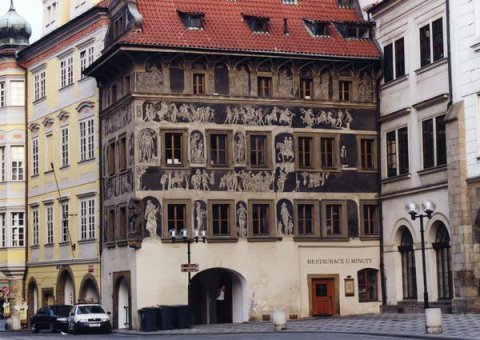
Holy cow, is this how everything looks in Prague? Kafka’s childhood home is gorgeous.
 Hans Christian Andersen’s home looks cozy and appropriately Danish.
 Digging the front porch of Tennessee Williams’ home.
Make sure to check out the full list as well. These images actually made me look for images of my childhood home on Google street view; the pangs of nostalgia!


June 12, 2012
Links Galore
A few more links for the day
You can propose a workshop for the 2013 NESCBWI conference.
Not sure if I need a baby book version of Pride and Prejudice, but those felt character sure are cute.
The cheat sheet for MFA programs in writing for children.
An extensive summer reading chart with lots of classic and contemporary options.
Summer camp books, perfect for those of us who never went to summer camp.


An Ocean of Books
This may be my favorite book sculpture yet:
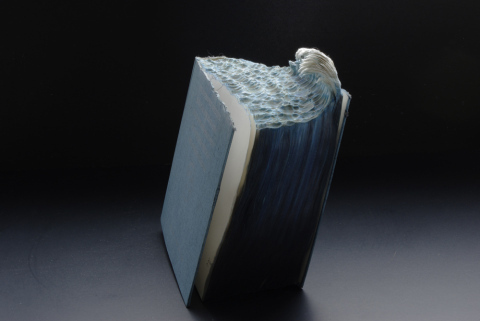
Gorgeous texture, and I love how it uses the natural lean of the book as part of the design. Artist Guy Laramee has other gorgeous works on his site; make sure to check them out.
(via swissmiss)


Fair is Foul and Foul is Material
 At Sara Zarr’s blog, she talks a little about “foul matter“–printed material like manuscripts that were part of the book-making process but aren’t relevant after the book is printed. She says:
“Sometimes writers save this stuff for “posterity”. I have enjoyed going to special collections and looking at drafts and manuscripts of other authors…But generally, my drafts make me feel so completely exposed, I can’t imagine anyone but my editor and a few trusted friends reading them without feeling like shortly there will be a knock on the door and I’ll be arrested for impersonating a writer. And I’m not sure about the idea of predicting that work will be lasting enough to warrant a record.”
I feel pretty much the same. Okay, so most of my foul material consists of copies printed for workshops or previous drafts, but every so often I go through huge paper purges and recycle lots of previous drafts. Most of the time, I’ve already incorporated the necessary comments into my work; and if I haven’t, maybe that was because I went a different direction in my revision. It can be tempting to keep old material, but do you really need it? When I do a paper purge, I try to think that it means I’m moving forward in my work. And as much as I love seeing old material from famous writers, I don’t necessary need all my early drafts on file just in case I make it big.
Do you tend to save your previous drafts and other foul material?
(image: bionicteaching)


June 11, 2012
The Fourth Dimension of Art
These 4D paper sculptures of letters and numbers by LoSiento are awesome. They remind me of the discussion of time and space in A Wrinkle in Time.
Love seeing all the pieces come together.


Reading Faulkner
Love this article on the joys of and struggles with reading Faulkner. The assertion here is that Faulkner is often first encountered as assigned reading in high school or college, which can lead to frustrated readers who assume that Faulkner is all effort. This is certainly not the case:
“We too often see images of Faulkner as the stern silver-maned, sharp-mustachioed aristocrat in the houndstooth jacket, pipe in hand, who now foists his terribly dense prose on precocious students. But he was also a young, artsy, hilarious and unforgiving observer of human nature. The issues and themes that Faulkner treats in his novels and stories are eternal. Like any great writer, he crafted permanent monuments out of elementary materials—the old verities and truths of the heart, if you will—in the same tradition as his predecessors. Strangers come to town in “Light in August” and “Absalom, Absalom!” The Chaucerian journey is made in “As I Lay Dying”. Epic farce is on display in “Snopes”, and family drama gets positively freaky Greeky in “The Sound and the Fury”. The difference is he did it better than most.”
I’m a huge Faulkner fan, so I fully support a closer look at his work. In high school we were assigned “The Bear” (part of Go Down, Moses). I didn’t love it, but I liked the writing enough to check out some other Faulkner. Of course, I ended up getting The Sound and the Fury out of the library and diving right in. I probably missed most of the book, but I loved the language and the glimpses I got of the Compson family. I eventually studied more Faulkner in college/grad school, but I kind of liked having that first major Faulknerian experience be just the book and me. You don’t have to “get” everything the first time to enjoy the experience of being immersed in language and story.
If you’re a Faulkner fan and haven’t read his Nobel Prize acceptance speech, do it now. Or you can listen to Faulkner give his address here.


The Rules of Storytelling According to Pixar
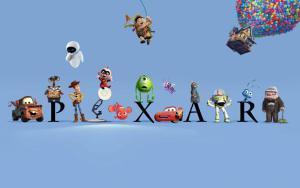 Yesterday I caught the beginning of Finding Nemo. I’ve seen it at least a dozen times now and I always tear up at the beginning. “No, this time will be different,” I tell myself. “I know what’s coming.” But damnit, every time Marlin holds that little fish egg my lip starts quivering. Sometimes I think Pixar is out to make adults weep as much as possible.
Even if their goal isn’t to steal the tears of every living adult and child, Pixar does know how to tell a good story. So even if you’re not a screenwriter, you should probably check out this list of storytelling rules by Pixar artist Emma Coats. A few that I really liked:
“#9: When you’re stuck, make a list of what WOULDN’T happen next. Lots of times the material to get you unstuck will show up.
#12: Discount the 1st thing that comes to mind. And the 2nd, 3rd, 4th, 5th – get the obvious out of the way. Surprise yourself.
#19: Coincidences to get characters into trouble are great; coincidences to get them out of it are cheating.”
To me, these are all about pushing yourself as a writer. In early drafts, I tend to give my characters easy outs or not insert enough tension to really fuel the story. You want to make things hard for your characters because a) life is hard and b) drama is compelling. And if you can think of an easy way out for your characters, the audience has probably already thought of that as well, which isn’t compelling for them.
Make sure to check out the whole list. It’s a fantastic resource for writers of all levels.
(Also, who’s excited for Brave?!)
(via 109)(image: Pixar Wiki)


June 8, 2012
Friday Fifteen
Stormy weather here for the Friday Fifteen. Onto the best in fifteen-word reviews!
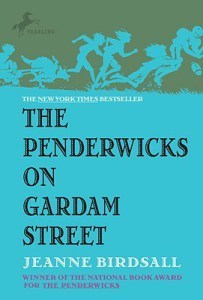
1) The Penderwicks on Gardam Street (The Penderwicks #2) by Jeanne Birdsall
The sisters are just as clever and cozy at home as they are on summer vacation.
2) 101 Ways to Say Thank You: Notes of Gratitude for All Occasions by Kelly Browne
Thank you! You’re the best! Your generous gift is greatly appreciated! Lots of love!
3) Flash Fiction: 72 Very Short Stories ed. James Thomas, Denise Thomas, Tom Hazuka
Good shorts collection, some big names included. Very useful if you’re new to the form.
4) The View from Saturday by E.L. Konigsburg
Didn’t expect this one to stay with me the way it has. Konigsburg rocks.
5) Possibility of Being by Rainer Maria Rilke
Everyone goes through a Rilke phase.