Annie Cardi's Blog, page 85
June 22, 2012
Friday Fifteen
It’s Friday, so we need a celebratory round of fifteen-word reviews!
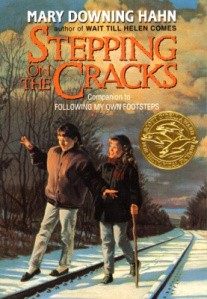 1. Stepping on the Cracks by Mary Downing Hahn
MG novel about the homefront during WWII. Only read once but it stayed with me.
2. Oroonoko by Aphra Behn
One of the first novels. I’m sure that’s why it was assigned in class.
3. A Sister for Sam (Tale from the Care Bears) by Evelyn Mason
My parents bought for my brother when I was born. But I was a delightful.
4. The Winter’s Tale by William Shakespeare
Worth a read, if only for the stage direction “exit, pursued by bear.”
5. Ever by Gail Carson Levine
Sweet and clever take on Snow White. Gail Carson Levine rocks the fairy tale adaptation.





Links Galore
More links to take you into the weekend:
“Meet a non-white person and not subsequently discover they’re from the Burning Lands Far to the South or something like that,” and other things that should happen more in fantasy novels.
So who are these publishers, anyway? A great summary at The YA Curator.
Take the challenge.
I’m guilty of using at least a few of these redundant phrases.
Keep up with the Horn Book team at ALA.





Mental Health and Care
An arresting and moving piece in the New York Times about mental illness and treatment in America. Jeneen Interlandi talks about her own family’s experiences with this issue, as her father has bipolar disorder. Anyone who’s been a caretaker for someone with mental health problems can relate to the stress and confusion felt by Interlandi and her family. Laws vary from state to state, and there are so few options available for mental health care, especially for those who haven’t displayed extreme violence. Interlandi writes:
“But extreme violence is not the only thing families like mine worry about. We worry that our loved ones will themselves fall victim to violent crimes, or accidental disasters, if they are left out in the streets while they are sick and delusional. We also worry that without involuntary treatment, they might not recover.”
It’s sad that so many people who could use serious mental health help aren’t getting the kind of resources they need, and are left vulnerable to the kind of threats Interlandi describes. I’m sure that part of the problem is that mental health issues and treatments can vary so much from person to person. It’s a problem that requires so much more support than it’s getting now.
Part of Queen of the Air deals with mental illness in the family and how hard it is to talk about that issue. I hope that more people get to talking about it and learning about it so we can demand more resources for those struggling with mental health problems and the people who care for them.
Make sure to read the whole article; it’s on the long side, but it’s really worth it.



Distance in YA: Where Things Come Back
From YARN’s interview with John Corey Whaley, author of this year’s Printz winner, Where Things Come Back:
YARN: WTCB has a retrospective feel, with Cullen looking back on the way he felt “back then.” Can you shed any light on how old you imagined the narrator being at the time he tells this story? And also—this is an unusual choice for YA fiction, which is so often told in the immediate here-and-now of the teen’s life. Why did you choose this more distant and—dare we say—more adult form of narration?
JCW: Great question…and a tough one. I can’t say I set out to write from a specifically “adult” perspective, but that’s just sort of what happened. I guess I wanted to be able to include observations on life and details in the story that couldn’t have worked out if Cullen had been telling it in the present tense. As far as how old I imagined Cullen as he’s telling the story goes—I can’t really say. I want to say he’s at least out of high school, but I don’t really examine the character’s “life after the book” so much.
Really interested to see this. The question of narrative distance is huge in discussions about how YA novels differentiate from adult novels. Really glad to see Whaley talk about perspective and time in WTCB, and that he didn’t limit himself to the here and now. I think it’s a great example of you can break pretty much every rule in YA. It doesn’t need to be from an intensely immediate perspective. I recently read WTCB, and I think giving Cullen that little bit of distance was a huge help to the narrative.
Make sure to check out the whole interview through the link.





June 21, 2012
Something Warm and Fuzzy: Seeing Your Book for the First Time
Susan Dennard received the first copy of her soon-to-be released novel, Something Strange and Deadly, and decided to open the package on camera. It’s pretty much the most heartwarming video since Kristen Bell met a sloth:
Congratulations, Susan! So excited for you, and can’t wait to pick up a copy for myself.


But Don’t Take My (iPad’s) Word for It!
 Reading Rainbow is back and now it’s digital, via a new iPad app. From this interview with LeVar Burton, Mark Wolfe, and Sangita Patel about the project:
PATEL: Oh, mobile? Okay. Well I think the reason that publishers were excited about Reading Rainbow is one, trusted brand, more importantly discovery. I think for publishers, even though you can go in the bookstore, when a child goes in a bookstore they are able to have an experience that they can’t really have anywhere on the Internet, or on devices now, because discovery of a book in the App Store is virtually impossible. There are so many out there –
WOLFE: Unless you know the title, right?
PATEL: Unless you know the title of the book. So what publishers found very interesting is, they said, “We do not have a discovery platform there, with curation”, and so LeVar, LeVar’s brand, the Reading Rainbow brand, was a perfect fit for them.
It’s funny–I never thought of Reading Rainbow as a curation project, but that makes a lot of sense. When my mom was a new mother, she didn’t know a lot about children’s books. So along with recommendations from our local librarians, things like Reading Rainhow were a great way for her to find us new books. And having an app means that children and parents can be introduced to new books at any given time of day.
Also:
WOLFE: …we were talking yesterday, the day before that stories, you know, start on cave paintings, then they wind up as heiroglyphics, and then they are written on papyrus, and eventually on sheep vellum, then trees, now here you go [points to iPad]. The device — the delivery of the device doesn’t make stories. It can help augment them in a certain way, but a good story’s a good story no matter whether it’s on papyrus, or electronic.
Amen to good stories. And just so you have it in your head for the rest of the day:
[image error]
(image: Wikipedia)


Pain and Possiblity: Why We Need YA
Patrick Ness totally gets why YA is necessary:
“I think to be a teenager is to yearn. I yearned for someone to tell me I was all right, that everything was going to be all right…I look back on that teenage me with real tenderness, real affection. I so want to be able to tell him that he’s going to be OK…
In a real way, I think this is what my books for teenagers have all ended up being about. Being heard. Being taken seriously. Being treated as a complex being who doesn’t always get things right but who also doesn’t always get things wrong. And being told that there’s hope, there’s life, there’s laughter and love, that hurt is real, that pain is real, yes – but so is possibility, so is a liveable, wondrous future, despite what anyone may tell you. And the response to that has been amazing, and sometimes heartbreaking.”
Yes yes yes. I wish I had more to add, but Ness beautifully sums up why this is a genre I love.
Make sure to read the whole article, too.


June 20, 2012
Links Galore
A few more links to round out the day:
Ahab goes down with the whale, and other literary spoilers.
Love the idea of a Narnia birthday party. Turkish delight, anyone?
Are blog tours worth it?
Pixar wanted to make Merida a different kind of princess. Very excited to see this one.
We’re halfway through the year; let’s get started on those Printz and Morris predictions!


The Rules and Reasons of Magic
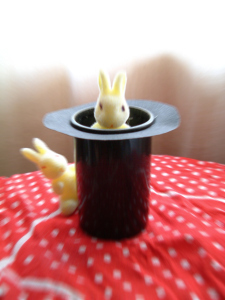 Usually when people talk about magic in novels, they also talk about rules. What limitations are there on magic? Who can perform it and when? Under what circumstances? What can’t magic control? Do you have to be born with magical abilities or can anyone learn?
Most people agree that your system of magic needs some rules; otherwise your main character would never be in any real danger. But N.K. Jemisin’s post at io9 takes the opposite view. It’s magic–why do we need to explain it?
“Because this is magic we’re talking about. It’s supposed to go places science can’t, defy logic, wink at technology, fill us all with the sensawunda that comes of gazing upon a fictional world and seeing something truly different from our own. In most cultures of the world, magic is intimately connected with beliefs regarding life and death – things no one understands, and few expect to. Magic is the motile force of God, or gods. It’s the breath of the earth, the non-meat by-product of existence, that thing that happens when a tree falls in the forest and there’s no one around to hear it. Magic is the mysteries, into which not everyone is so lucky, or unlucky, as to be initiated. It can be affected by belief, the whims of the unseen, harsh language. And it is not. Supposed. To make. Sense. In fact, I think it’s coolest when it doesn’t.”
My first reaction was, admittedly, a bit of pearl-clutching. “Of course magic needs to make sense! How else will we understand your world? How else will there be tension?”
But I don’t think Jemisin’s saying that creating a magical world is akin to playing wizards as a kid. (“Zap! I got you!” “No you didn’t, I’m wearing an invisible shield that protects me from spells!” “Well my spell destroys invisible shields!”) I think the point is more about over-explaining magical systems. At some level, the audience just has to buy the fact that magic exists and that it works a certain way. In Harry Potter, every wizard has a wand that’s specially tied to him. Although JK Rowling goes into a little background on what makes a wand, we don’t get pages of the history of wand-making and what exactly ties a wizard to his particular wand. Harry goes to Ollivanders, tries a few wands, and eventually get to his. Rowling doesn’t need to stop the action to explain why wizards have wands outside of “they help perform magic.” At some level, the reader just has to buy that wizards need wands.
That said, I don’t think you can just throw magic on the page and assume it’s all okay. You still need some limitations and a level of consistency. In Doctor Who, the Doctor carries a sonic screwdriver that can pretty much fix/adjust/open/etc. anything. Except a natural substance like wood. Having a limitation like that means that the Doctor can’t just go around screwdriver-ing everything; it would make for a fairly boring episode. There’s always the threat that his magical device won’t be able to help him out of a jam.
Also, I think it’s good for a writer to have worked out their magical system in detail. It doesn’t have to go on the page, but it’s good for you to know in advance so you can heighten tension and get your characters out of binds in a way that’s still exciting for the reader.
(via bookshelves of doom)(image: Kaptain Kobold)


To Boldly Go Where No Poem Has Gone Before

Klingon poetry readings get out of hand very quickly.
Poetic form or Star Trek villain at McSweeney’s.
Way harder than I assumed it would be. I mean, Luc Bat? I totally saw that episode!
Once you take the quiz, you could write a poem in a specific poetic form about one of the Star Trek villains.