Annie Cardi's Blog, page 86
June 19, 2012
Bookyard
Check out this gorgeous outdoor library in Ghent:
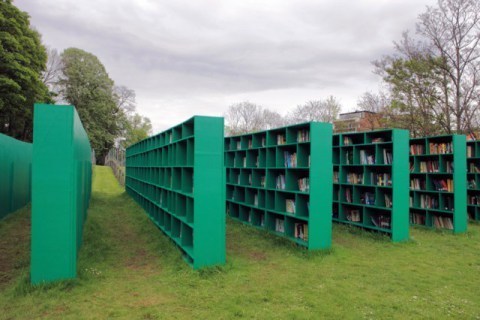
It was created by artist Massimo Bartolini for a Belgian art festival. So it doesn’t seem like this will be a permanent installation, but I love the idea. Check out all images through the link.


NPR Wants Your YA Favorites
NPR wants your picks for the best YA novels ever. You can share your top five in their comments (make sure to read the rules first). It’s awesome to read through everyone else’s choices as well. So far mine are:
Speak by Laurie Halse Anderson
Octavian Nothing by M.T. Anderson
The Outsiders by S.E. Hinton
The Giver by Lois Lowry
His Dark Materials by Philip Pullman
Of course then I start thinking about all the awesome YA books and want to fit them all in, but I think I have a good representation of style, tone, and publication date, too. Runners up include: Dangerous Angels by Francesca Lia Block, Harry Potter by JK Rowling, A Ring of Endless Light by Madeleine L’Engle, Story of a Girl by Sara Zarr, and The Hunger Games by Suzanne Collins.
Note: I tried to focus on titles that are currently categorized as YA novels. So even though To Kill a Mockingbird is basically YA and usually read in middle/high school, it’s still commonly stacked in the adult section so I had to leave that one out. But I did lean toward the MG novels, because I figure the line can blur so easily.
Share your favorites here at at NPR’s post!


Quote of the Day
“Novels are never about what they are about; that is, there is always deeper, or more general, significance. The author may not be aware of this till she is pretty far along with it. A novel’s whole pattern is rarely apparent at the outset of writing, or even at the end; that is when the writer finds out what a novel is about, and the job becomes one of understanding and deepening or sharpening what is already written. That is finding the theme.”–Diane Johnson
Very much agree with that. I don’t think many writers sit down to write about a particular theme and end up with a compelling story. Themes have to emerge naturally and with layers of complication.
(H/T Advice to Writers)


Modern Publishing Choices
On her blog, Shannon Hale shares some thoughts on traditional vs. self-publishing. Very much agree with her stance overall, especially:
“For those who are self-publishing because they’ve been rejected by professionals, I would ask, Why in such a hurry to be published? Someday you may wish you waited to put your very best work out there. And if this book is your very best work and it’s smokin’ awesome, then patience, it will find a home.
For those who prefer the control of self-publishing, I say, more power to you. It’s not the route for me, but I can see it would appeal to some.”
The control factor seems to be huge in self-publishing. If you want to be the #1 person behind your books in terms of content, marketing, and sales, go for it. It’s a lot of work, but it’s doable.
But if you’ve been rejected by lots of editors and agents already, maybe your book isn’t ready to meet its audience. There are a lot of stories I’ve worked on that haven’t come to fruition and I’m really glad they’re not out in the world for everyone to see. Does that mean writing them was a waste of time? Of course not.
Like Shannon says, this does not mean that there aren’t fantastic self-published books out there. Heck, I’ve read some pretty amazing fanfics in my day, which were certainly as well-written as any given trade fiction. But if you want to go down the self-publishing route, you need to think a lot more about how your audience will find your book and why this is the best way for you to connect with readers.
Side note: every time I type “self-publishing” I really want to type “elf-publishing,” mostly because I like the image of elves in curled-toe shoes and adorable hats making tiny books.


June 15, 2012
Friday Fifteen
Gotta end the week with a few fifteen-word reviews. Onto the books!
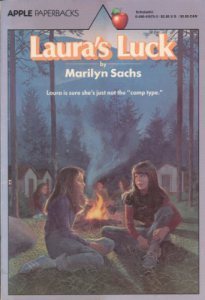 1. Laura’s Luck by Marilyn Sachs
Great camp book for someone who didn’t go to camp. Read a zillion times.
2. Their Eyes Were Watching God by Zora Neale Hurston
Only remember the ending. Rabies and guns get my attention, apparently.
3. Robinson Crusoe by Daniel Defoe
It could have used more smoke monsters. And maybe Ben Linus.
4. First Place (Sweet Valley Twins #8) by Francine Pascal
Horses are expensive, even in Sweet Valley.
5. New Moon by Stephenie Meyer
The most emo of the series. Stop whining about your absent boyfriend, Bella!


What You Can and Can’t Get From Blogging
 There’s a lot of pressure now for writers to have an active social media life. You need to blog, tweet, pin, reblog, and “like” things. It’s necessary for your career as a writer, people say. You need to have an online presence.
Okay, maybe that’s true. You don’t want people to Google you and come up with nothing. You want people to be able to find information on your writing, maybe how to contact you, etc. But what does that mean for how much work you should be doing on your social media platform?
Roni Loren has a great post up about if blogging is worth the time/effort and what you can expect to get out of it. In very short, blogging generally won’t make you sell a gazillion books, but it’s a wonderful way to connect with other writers and/or readers who already like your work. One part I liked in particular:
“Having a blog just to have one is worse than not having one at all. If you’re not somewhat focused in your content and you aren’t giving the reader a takeaway, no one is going to stick around except your mom and a handful of others who are writing about Random Randomness…Do it because you enjoy connecting with people, don’t do it because you think it’s going to vault you up the bestseller list.”
Blogging is work. It requires upkeep and, even if you’re not blogging every day, you want to set up some kind of schedule for yourself. I hate seeing people’s blogs that only list a post every couple of months. And maybe part of that problem is not knowing who you’re trying to reach. Writing for a void can be disheartening.
If this isn’t your first time at my blog, you’re probably aware that I blog a lot. (If this is your first time, here, howdy!) Mostly it’s because I find things online that I like to share. It’s way easier than emailing each person I think might be interested in whatever I’ve found, and it has the potential to connect me with other people who like the same kind of things. I rarely post about my life because I don’t think that would be as interesting. It would end up feeling more like a chore.
So even if you need to have some kind of blog, don’t think that it has to be any one way. Find what works for you, and remember to keep it fun. If it’s not fun, it’s just something else to stress about that won’t necessarily get people to like your fiction. Blogging is its own thing, and can be really fun. Just don’t think of it as a make or break for your career.
(image: JISC)


The Personality of a Semicolon
Punctuation mark personality? Yes, please! My favorite is the semicolon, so apparently this is me:
“Semi-colon (;): You’re well-read and urbane. You knew where this was on the keyboard before it became part of the winky emoticon. You’re more easy-going than Colon or Period types, but you’re still put together and usually organized. People are comfortable around you and tend to like you, though they may not be able to say exactly why.”
You could also read this as “you have a hard time committing to a real colon.” But I’ll stick with “well-read and urbane.”
Sadly, this list is missing some of the more unusual punctuation marks, but how often can you really use the interrobang, anyway?


June 14, 2012
Bookish Band Names
I’m not musical at all, but I still like to prepare for the possibility that I’m magically granted musical genius. Part of that preparation includes thinking up band names. Book Riot’s list of made me want to pick up a guitar. A few of my own literary band ideas:
Jane Eyre Guitar
No One’s Green Light
Oliver Twist and Shout!
It’s a Wise Child
Oedipus Wrecks
Scarlet and the Letters
Ferdinand Loves the Flowers
Feel free to share your literary band names in the comments. Maybe we can all go on tour!


The American Literary Canon Needs More Whales: Debating the Great American Novel
 The term “Great American Novel” gets used a lot, but which book can claim that title for its own? Christopher Buckley claims it should go to Moby-Dick:
“From the opening line, the aforementioned “Call me Ishmael,” to the novel’s last line, “Then all collapsed, and the great shroud of the sea rolled on as it did five thousand years ago,” “Moby-Dick” contains within it the most soul-stirring lines in American literature…The narrator, Ishmael, an American innocent in search of adventure at sea. What could be more American?”
Frankly, anything giant sea creature-related gets a high five from me. But I’ve always thought of the Great American Novel as The Great Gatsby. It’s about money, social mobility, and the tragedy of chasing your dreams. Plus, the writing is stellar.
Sadly, Gatsby doesn’t have a whale. Points off, Fitzgerald.
Your votes for the Great American Novel?
(image: Wikipedia)


Historical Fact in YA Fiction
When I was in high school, I took the AP US History exam. After the test, a couple of friends mentioned one of the multiple choice questions that neither of them could answer. “Oh, it was C,” I said. When they asked me how I knew that, even though it wasn’t covered in class, I said, “It was in one of the Felicity books.”
I really enjoyed history in school, but most of the historical knowledge I retain probably has to do with novels I read. (The American Girl books cover most American History for me.) As Whitney Etchison says in this post at The Hub, history isn’t about dates and facts–it’s about the story of people’s lives. And what better way to engage in those stories than through great fiction?
She also offers some great options for historical YA fiction, including Bog Child by Siobhan Dowd and The Book Thief by Markus Zusak. A few others I’d suggest:
A Northern Light by Jennifer Donnelly. Great combination of murder mystery and real life drama at the turn of the 20th century.
The Astonishing Life of Octavian Nothing, Traitor to the Nation by M.T. Andersen. Expertly written and unexpected Revolutionary War-era story.
The Shakespeare Stealer by Gary Blackwood. Lots of Elizabethan fun, with orphan thieves and Shakespeare’s troupe of actors.
Maybe fiction can’t take the place of high school history classes, but novels like these can certainly engage readers and get them emotionally invested in historical events.
Any other historical fiction favorites to add to the list?