
Matador Network's Blog, page 1384
March 13, 2018
This majestic cat on Instagram is our new hiking icon
Does the name Jean Luc Piccat ring a bell? If Star Trek came to mind, you’re not too far off. Jean Luc, an adventure-hungry Bengal cat, lives in Seattle and has earned notoriety for taking after the adventurous spirit of his namesake Jean Luc Picard, Captain of the starship USS Enterprise-D.
A post shared by Jean Luc (@jeanlucpiccat) on Mar 4, 2018 at 2:07pm PST
His expeditions through the mountains of the Pacific Northwest are a bit more earth-focused than Picard’s, but certainly no less risky. Jean Luc’s “continuing mission, (is) to explore strange new trails. To seek out new mountains and new trail-side snacks. To boldly go where no cat has gone before,” according to his Washington Trail Association profile. At least not domestic house cats, anyway.
A post shared by Jean Luc (@jeanlucpiccat) on Mar 3, 2018 at 4:59pm PST
Along the way, he interacts with creatures both man and beast and has become an accomplished hiker even by the standards of his outdoors-y hometown of Seattle. Along with owner Mike Kempton, the pair recently conquered Washington’s Mailbox Peak Trail. Jean Luc, a captain in every sense, put together a detailed trip report of the pair’s brave mission complete with a photo of him atop the mailbox itself.
A post shared by Jean Luc (@jeanlucpiccat) on Mar 3, 2018 at 9:05pm PST
As it turns out, Jean Luc is the purrfect hiking companion and proves dogs aren’t the only animals that make for outdoor adventure buddies. Follow his ongoing travels via Instagram. 
A post shared by Jean Luc (@jeanlucpiccat) on Feb 26, 2018 at 6:53pm PST

More like this: Meet the cat and dog besties hiking the Colorado wilderness together


New flight-share app Wingly
A new ride-sharing program out is taking the concept to new heights — literally. Wingly is the first flight sharing program to operate in Europe, allowing non-commercial pilots to share the cost of flying with passengers.
The Paris-based startup offers a product that works similar to Lyft or Uber, only with 2-6 seater light airplanes instead of Camrys. Hobby fliers map out their next planned flight (e.g. a trip from Paris to the coast of Normandy), put it on the app, and wait for passengers to book their tickets.
Follow Matador on
Vimeo
Follow Matador on
YouTube
On its website Wingly compares it to “carpooling”, as the pilot is not making any profit, but both the pilot and the passengers are saving money on a pre-planned trip. The savings for passengers can be considerable, as they are only paying for their part of the fuel, landing fees, and a service fee.
However, critics have noted that there are quite a few more regulation and safety concerns when it comes to sharing airplanes compared to cars.
While this could keep the project grounded in other regions, Wingly got a brand new set of wings after the European Aviation Safety Agency (EASA) and Civil Aviation Authority (CAA) legally certified the company last year.
Since then, angel investors have dropped €2 million ($2.48 million USD) into the flight share project. There are currently 10,000 pilots with more than 60,000 flights available in France, Germany, and the UK.
So next time you find yourself in Europe and you feeling like a quick jump over the countryside for a fraction of the cost and none of the headaches that come with a normal flight experience, you now have an alternative.
More like this: Uber CEO says we will see both autonomous taxis and flying cars in a decade
Remote work stress tips
Remote work is an emotional rollercoaster. Some days are busy, profitable, productive. Others leave you staring into the laptop in dismay, wondering why you left your desk job and why you’re sitting in a café on the other side of the planet.
I’ve found that even when the stoke level is high, it often takes just one less-than-stellar email to change my mood completely. Perhaps a big contract went to someone else, or that contact I made in Chiang Mai flaked out. There are plenty of rough spots in the digital nomad lifestyle. I’ve been working online for seven years now. In that time, I’ve learned a few tricks to numb the anxieties that come with remote work, as well as hacks for staying on top of the game while on the road.
To optimize your work-life balance
1. Have a “laptop down” day and/or time.
Among the toughest things to adjust to when switching to freelance work is that the work is always there. There’s always something to do, and no concrete barrier separating your work life from the rest of your day. Establish firm rules to force yourself to stick by regarding “off the clock” time. Once I finish work for the day, I will not open email (or any apps/files that are strictly work related) again until the next morning. I typically start work at 8 AM, and unless it’s a super busy day I try to be offline by 6 PM at the very latest.
Strive for at least one day each weekend that is fully “offline,: such as Saturday. No email, no planning your schedule for next week, no sneaking into Google Drive to check whether a coworker has modified a file. Not breaking up your weeks and not having downtime burns you out and makes you less productive. The remote work lifestyle takes discipline in a different way than most other jobs — you have to force yourself to not work.
2. Harness the value of your portfolio.
Let me be loud and clear about my support for the “freelance isn’t free” argument. We all need to make a living. But one of the catch 22s of contract work is that many assignments and contracts offer value far beyond the financial reach of the task at hand. When freelancing, successful completion of an assignment has the possibility to lead not only to another task, but to a bigger and better client.
Sometimes, especially as a newbie, a hefty dose of networking is equally as valuable as the rates offered by most online publications. One of the steepest learning curves of self-employment is honing in on the long-term value in a piece of work before deciding whether or not it’s worth your time. Whether that’s better pay for a long-form feature down the line or a referral to an assignment for someone else, keeping the work train moving is an absolute necessity if you’re going to stay afloat. Freelancing is a case study in trickle up economics — work your ass off, maintain your contacts, strive to get better at what you do, and good things will follow.
3. Go to conferences and events.
The digital nomad life is built for networking. Working from the road offers ample opportunity to attend networking events, conferences, and happy hours that those at home miss out on. Hit up Meetup.com and stop into a coworking space and ask about events. I cannot emphasize this enough! Get off your ass, out of your co-living office, and into the world. There are so many conferences. What is your niche? Find events that influencers, publications, business owners, and other freelancers in your field will be at. Then, buy a ticket and go.
Building relationships and maintaining contacts is the number one way to make money as a freelancing traveler. Plus, professional events are typically a great time — after the breakout sessions and keynotes, drinks generally flow as freely as handshakes. Get in the pocket and start talking to people. Odds are you’ll have a list of people to follow up with the following Monday.
To conquer the anxiety and emotional rollercoaster of remote work
On a strong day, I’m productive and feel competent in what I do. I smoothly work through my task list, and maybe see a payment or two come through to boost my mood. But then, out of nowhere, it happens: that one email comes in and changes the whole vibe of the day. I might be working from a beachside bar in Hoi An, but the sudden burst of anxiety casts a dark shadow over the whole setting. Maybe it’s a client requesting revisions on a piece I thought was stellar. Maybe it’s a note saying someone else got a certain contract. Often it’s not an email at all, but a Skype meeting or call that flips the emotional switch on my whole day. It’s happened so many times. I go from feeling great to all of a sudden feeling behind and insufficient. Here’s how to cope.
4. Play the long game.
You may have a great client, but someone else out there has a bigger and better one. You might travel to three countries this year, but someone else goes to five and isn’t shy about posting about them on social media. It’s easy to feel behind or like you’re not doing enough and aren’t as successful as someone else. Well, for lack of a better term, f**k that.
Your personal career is all that matters. When I get down on myself, I look back at Facebook photos from a year ago, two years ago, five years ago, and think about where I was work-wise at that point. Freelancing is a long game. Big steps happen slowly but the progress is as measurable as the stamps on your passport. Instead of feeling intimidated by the road ahead, celebrate the part of the journey that you’re on.
5. Remember that the work you do is valuable.
Perhaps the biggest factor that takes getting used to in remote work, especially from the road, is that you are on your own. There are no coworkers there to offer support and buy you lunch on a rough day. It can be easy to get down on yourself and start thinking about heading home and asking for your old job back. Imposter syndrome is a real thing, and it only gets worse the more high-profile the work you’re doing.
Don’t get down on yourself. YOU are the expert and the driver of your experiences. You took the initiative to step into the unknown and work for yourself. That in itself is worthy of respect. The hard work it takes to grow a business or freelance career only adds to your chops. Stick with it — the roller coaster eventually makes its way back up.
More like this: 9 genius product hacks for digital nomads
Google Streetview Akitas
Because perspective is everything, Google Japan has decided to mount its Streetview cameras to three dogs. Three fluffy Akitas named Asuka, Ako, and Puko, to be precise.
Google Japan took these poofy pups on a series of lengthy walks across Odate in the Akita Prefecture, the birthplace of the famous dog breed, on the pretense of paying tribute to the city’s history.
Follow Matador on
Vimeo
Follow Matador on
YouTube
You can now see portions of Odate from the perspective of a curious dog, whose pointy tail and fuzzy head are almost always poking into the bottom of the frame. (Since this is probably their first photography gig, we’ve decided to give the trio a break on this).
The dogs captured 18 important sites in Odate, such as the Akita Dog Museum, a shrine to dogs, and outdoor hot springs, but it seems that the tour guides were most excited to show us how to play in the snow on a nearby mountain.
The dogs also stopped by the statue of Hachiko, the famous Akita who waited at the Shibuya train station for his human to come back from work every day in the 1920s.
After the owner died, Hachiko continued to wait at the station for another nine years, becoming a local hero and a symbol of loyalty in Japan.
While Asuka, Ako, and Puko have a big name to live up to, continuing their mission to show us the world through a dog’s eyes will go a long way.
More like this: Loki the adventure dog
Online ESL teaching
Not many jobs give you the opportunity to travel freely and control your own schedule. It’s no secret that there is high demand almost everywhere in the world for native English teachers, but working in a school or university, or as an au pair, isn’t the best option for everyone. Those who are looking for more flexibility (and I mean much more flexibility) than a traditional teaching job, teaching ESL online is a great route to explore.
How to get an online ESL teaching job
1. What are the benefits and challenges of teaching ESL online? Is ESL education for me?
2. What do I need to get started?
3. Looking for a job
4. How and where to apply
5. The interview process
6. Get packing!
1. What are the benefits and challenges of teaching ESL online? Is ESL education for me?
If you’re considering looking into teaching ESL online, one of your motivations is probably flexibility. One of the main benefits of teaching online is that you are free to design your own schedule and work from anywhere in the world. You can even travel as you work, as long as you make sure each destination has a reliable Internet connection and a quiet spot for you to conduct classes.
Teaching ESL online is also much less hassle than traditional classroom teaching; classes tend to be short, one-on-one, and all the planning is usually done for you. This means the time-consuming, stressful and, frankly, boring lesson-planning and material-designing are taken out of the equation; in many cases, you can simply log on and start teaching. Your classes might even be scripted, so you’ll never have to improvise. One of the main struggles of classroom teaching, especially teaching children, is classroom management, but with online ESL teaching, this is unlikely to be an issue, even when teaching small groups.
There are also different options regarding which age group you would like to teach. Some schools specialize in children’s education, some are geared towards adults, and some have options for both. Either way, you will likely encounter students of different levels, so it’s great for building up your experience as a teacher in a relaxed, low-stress environment.
The downside, however, is that teaching ESL online doesn’t tend to be the most reliable, or well-paid, gig. Since websites that run online classes tend to have hundreds of teachers and often employ more on a rolling basis, there aren’t always enough students to go around. So, unless you’re very lucky, you probably won’t make big bucks with online teaching. Schools that offer better pay tend to be less flexible and may contract you to work certain hours which, depending on your time-zone, might be in the middle of the night.
Whether your priority is income or flexibility, teaching ESL online is a good option for, say, students wanting to earn a bit of pocket money, or anyone who just wants to bring in a little extra income. It’s also obviously great for travelers who want to see the world on a budget.
2. What do I need to get started?
First, get a good quality laptop and headset. These, along with a fast, reliable Internet connection, are the only absolute essentials that you need to be an online ESL teacher. You will also be asked to have a quiet, clean space for you to give your classes, so you won’t be interrupted or have distractions. This space doesn’t have to be completely clear, or have any classroom materials (such as a whiteboard); your bedroom is perfectly suitable.
It will also work in your favor if you have any kind of teaching experience and/or a TEFL certificate. If you are interested in becoming TEFL qualified, you can take online courses that fit with your own schedule or take a weekend crash-course. Some TEFL sites often have special offers or discounts, so taking a course won’t leave you out of pocket. However, it’s possible to find an online teaching job without experience, as training will be given. As long as you have a good command of the English language (native speakers also have an advantage), you can find an ESL teaching job suitable for you.
Recommendations for online TEFL certificate: TEFL UK, Premier TEFL, MyTEFL, and TEFL Online all provide quality online training, as well as classroom experience and job application guidance.
3. Looking for a job
A quick Google or LinkedIn search will pull up a list of online schools to which you can apply. You will also find many listings on ESL job boards, such as TEFL Search and ESL Authority. Other ESL teaching job sites are ESL Jobs Lounge and ESL Jobs 77. These sites all allow users to sign up for email notifications, so you can apply as soon as an online teaching job becomes available.
If you know someone who works as an online ESL teacher, another option is to ask them to refer you. You will still have to go through the application process, but your referrer is will probably receive a bonus and you can be sure that the school you are applying to will suit you.
Some popular online ESL schools: VIPKid, DaDaABC, and Twosigmas are high-paying schools that cater to children in China, while Bibo Global and Lingoda are popular options all over the world.
4. How and where to apply
When you have found online schools or agencies that you are interested in, you can go ahead and apply. You will need a CV, on which you should list any relevant experience you have or transferable skills that can apply to teaching. It’s also handy to have a professional-looking headshot at the ready, as some sites will ask you to submit one with your application.
Most online schools have their own web pages with an application form for you to fill in. However, some job listings might ask you to email your CV and cover letter directly to the employer.
Since the application process tends to be quick and easy, it doesn’t do any harm to apply for several online ESL teaching jobs at the same time. If you receive responses from more than one job, you can always choose the one that best suits you.
5. The interview process
The interview process can take some time, as it involves not only a series of Skype interviews, demo classes, and training sessions, but the school will build a teacher profile for you on their website to allow students to book your classes. This means submitting photos, in some cases an introduction video, and a written introduction. It might take a while to get all set up, so make sure you apply some time before you want to start teaching.
After sending your initial application, if the school feels that you would be a good fit, you will be invited to a Skype interview. These interviews tend to be fairly short and informal. As well as asking you a few questions about yourself, the interviewer should also explain to you what the next steps in the process are. Whichever school you apply to, you will almost definitely be required to give demo classes before you can be offered a job. Again, the demo classes are nothing to worry about. They also tend to be short, and they help you to understand how the school works. You will be given feedback to help you get up to speed before you start teaching for real. The demo classes are to help you get the hang of giving online classes as much as they are for the school to see how you teach.
After receiving a job offer, you may be required to do some more training. Again, this will cover everything you need to know about teaching ESL online with your particular company. The training could be in the form of group Skype calls, presentations for you to read through, and quizzes to make sure you’ve got everything.
Finally, you will be asked to submit your profile photos and video, your written introduction, and payment information.
6. Get packing!
Once you have scored an online teaching gig, you’re free to take your life on the road. You can work as much or as little as you like and conduct your classes from anywhere in the world (or at home in your pajamas, if you prefer.) One final benefit to teaching ESL online is that you can often take weeks off at a time, so if you prefer to take regular, work-free travel breaks, you can rest assured that your job will be waiting for you when you get back.
More like this: How to get a job as an ESL teacher in South Korea

Badass female outdoor athletes
When I was ten years old, my dad got out a soccer ball and kicked it over to me. He passed it to me first, even though my little brother was standing in our circle. That was my first experience with outdoor sports. Running fast, making contact with the ball, and the excitement of scoring a goal were synonymous with the joy of being outside. Improving my skills at soccer helped improve my confidence in general. In the evenings we would organize neighborhood matches, choosing teams carefully, boys and girls had equal measure, we only wanted the fastest runners and didn’t take notice of much else. A few years later, it was easy to recognize that I was the only girl on a co-ed soccer team, and that made me try even harder. Proving that a girl could be aggressive and challenge anyone to the ball became a great source of pride. It meant rethinking the phrase “play like a girl,” and realizing that was a powerful way to play.
In the scope of the outdoor industry, many of my heroes are women who compete at the top level of their sport. These are women who are elevating the way the game is played with skill, grace, incredible fitness, and overall complete badassery.
1. Lynn Hill
The climbing community’s leading lady

Photo: Lynn Hill
In the late 1970s, Lynn Hill, clocking in at 5’2 and 100-ish pounds, did something that no one else in the climbing community had really thought to try — she climbed like a girl. While her climbing partners were quite a bit taller and had the benefit of much longer limbs, Lynn used her size and strength to get creative. After completing the first free ascent (meaning that no fixed gear was pre-set into the rock) of The Nose route on El Capitan in Yosemite National Park, she solidified her place on the short list of climbing royalty.
2. Freya Hoffmeister
Kayaking into the blue
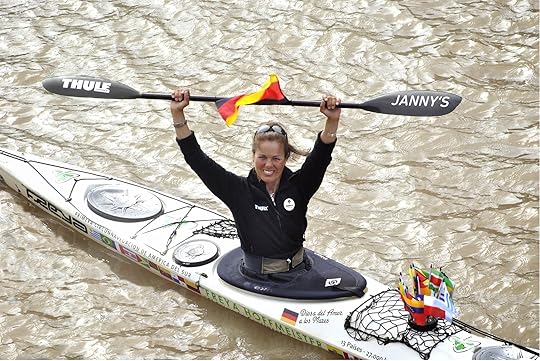
Photo: Freya Hoffmeister
When you visit Freya Hoffmeister’s website, you’ll see a picture of her holding a sea kayak above her head wearing a wetsuit and a huge smile. Freya is an accomplished open water paddler who currently holds the record for being the first woman (and second person) to navigate the entire circumference of Australia completely solo and unassisted. Then, in 2015, she went on to solo circumnavigate the entire continent of South America. With a kayaking resume as impressive as this, she has a lot to smile about.
3. Juliana Furtado
Riding bikes down mountains
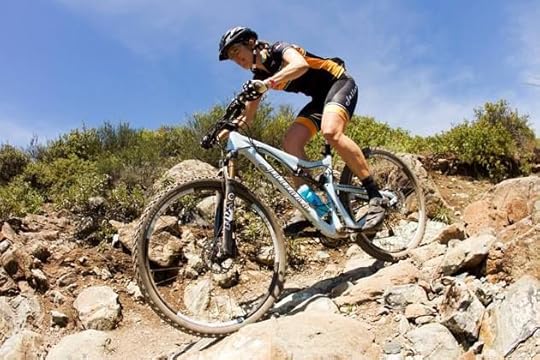
Photo: Dirt Rag Magazine
My first real mountain bike was a Santa Cruz Juliana, and it could easily handle every challenge I timidly threw at it. This bike was named after Juliana Furtado, one of the strongest Mountain Bikers in the mid-’90s, who amassed multiple wins in the early days of the sport. She is credited with holding the record for most career first-place finishes (for both men and women) during her time racing mountain bikes. Although she only competed professionally for six years, her legendary skills continue to inspire.
4. Mirna Valerio
A new kind of hero in Ultra Running

Photo: Mirna Valerio
It can be difficult to connect to a sport in which there are no athletes that look like you. For many years, I told myself runners were tall and lean so I couldn’t compete. Mirna Valerio might have felt that way at one point, but she moved past the idea of what a runner should look like and just decided to be one. She’s the creator of the blog called Fat Girl Running and a completely inspiring ultra-runner who competes in 50k and 100k races across the United States. Instead of focusing on speed, she chooses to turn her attention to the joy of running outside and emphasizes how healthy this type of exercise can be for people in all weight classes. Redefining the model, that is the definition of a true hero to the sport.
5. Karina Hollekim
Jumping off cliffs

Photo: Karina Hollekim
BASE jumping is one of the highest-risk adrenaline sports and involves jumping off one of the following: Bridge, Antenna, Span, Earth (cliff) with a parachute designed for rapid deployment. This sport is illegal in most parts of the United States, which might actually add to its allure and mystique. Karina Hollekim stepped it up a notch when she became the first woman to complete a SkiBase, which is exactly as crazy as it sounds. In 2006, she suffered a potentially deadly fall when her parachute failed to open 100 meters above the earth and came out alive with two broken legs. Determined to recover despite her doctor’s dismal prognosis, she was skiing again just one year later.
6. Lhakpa Sherpa
At the Top of the World

Photo: Nepal Mountain News
As of 2018, a Nepali woman named Lhakpa Sherpa has climbed Mount Everest, the tallest peak in the world, eight different times. She is considered by many in this small sect of the outdoor industry to be one of the most talented climbers on Everest, but her name doesn’t regularly show up in published articles. It could be said that Sherpas, in general, are not often awarded individual recognition for their accomplishments, and female Sherpas even less so. Regardless, her story is one of intense focus and determination, making her a true hero of alpine mountaineering.
7. Lindsey Vonn
Downhill skiing champion

Photo: Lindsey Vonn
I was living in Colorado during the 2010 Winter Olympics and everyone was busy talking about Lindsey Vonn. She seemed like she would fit right in with our group of girlfriends, and we all wanted to borrow her cool ski outfits. Not only did this woman have super style on the slopes, but she was fast. Really fast. She could rip down the mountain at a speed no one else could compete with. She took that speed and used it to become the first American woman to win an Olympic gold medal for the downhill ski event. This was not to be overshadowed by her eighty World Cup wins and multiple other victories. We all cheered and wished we could buy her a drink to celebrate.
More like this: Meet the first Mexican woman to climb all of the world’s highest mountains
Hottest place on Earth
Locals call it the “gateway to hell.”
This barren, inhospitable landscape is one of the world’s lowest, most geologically active areas. Earthquakes, volcanoes, lava lakes, and bubbling sulfur springs are the norm, rather than the exception. The sulfur mixes with iron oxides, copper salts, and other minerals, leaving behind an array of otherworldly colors. The acid lakes are as deadly as they are beautiful.

Photo: Achilli Family Journeys
Dallol — located in the Afar region of northern Ethiopia near the Eritrean border — is also the hottest inhabited place on Earth. The average annual temperature is almost 95 degrees Fahrenheit, and the average daily high temperature soars to 106º F. Mother Nature offers little relief. Rainfall is rare, and the “Afar wind” can leave one’s skin feeling as if it’s on fire. Stepping out of an air-conditioned vehicle is truly like stepping into a furnace.
Dallol is part of the larger 124 by 31-mile Danakil Depression, a desert 410 feet below sea level. The extreme, never-ending underground activity is due to the depression lying at the junction of three tectonic plates, which are violently tearing apart the land from the rest of Africa. Millions of years from now, scientists believe the Red Sea will engulf the Danakil, concealing this region forever.
For those willing to take a multi-hour 4 x 4 journey across the unforgiving terrain, the Erta Ale volcano awaits.

Photo: Marc Szeglat
The daytime heat is far too intense for the three-plus hours hike to the top of the volcano, meaning visitors depart after dark, arriving at the summit shortly before midnight.
Erta Ale contains just one of five lava lakes on the planet. In addition to battling the intense heat, onlookers must avoid the poisonous sulfuric fumes rising menacingly from the crater in the continuously active volcano. Even though there’s always the fear the volcano could erupt at any moment, it’s nearly impossible to walk away from the spectacle.
It’s hard to imagine anyone living in Danakil’s diabolical climate. However, the nomadic Afar people have been crisscrossing this desert for centuries, seeking to eke out a living through the salt trade.
It normally takes the caravans at least a week to arrive at the salt flats. Miners first pry the salt free, then cut it into large slabs, before shaving it into uniform blocks set for market. The blocks are finally loaded onto camels for the arduous return trek.

Photo: Trevor Cole
For such backbreaking work, a miner, on a good day, could expect to earn a little over seven dollars, which is considered a good income as some Ethiopian laborers survive on about one dollar a day. Despite the brutal conditions, the miners embrace the work with pride, the salt trade a hallmark of their Afar culture and identity.
The Danakil Depression would be a highlight for the most adventurous of travelers, but keep in mind that it’s a remote, hard-to-reach region; lodging facilities are nonexistent, so sleeping is done under the stars, and toilets entail squatting behind rocks or sand dunes; plus, there are some dicey security issues.
The border with Eritrea is always politically volatile. Back in 2012, terrorists kidnapped four tourists and killed five others. Now, solo traveling is outlawed. All groups must be accompanied by armed guards, bearing AK-47s.
Still, it’s not often one gets to stare into the mouth of an active volcano in the hottest place in the world.
More like this: 5 remote and undiscovered places you want on your bucket list
Untranslatable Greek words
Language is a powerful reflection of cultural values. Emotion and passion are central tenets of Greek culture, imbuing the Greek language with untranslatable concepts that only a Greek can truly understand; these are things that need to be felt and experienced. How many times have you felt something you just couldn’t put a word to? Keep reading, and maybe you’ll find that word in this list of 11 Greek words with no direct English translation.
1. Φιλοξενία (filoksenia)
The first part of this word comes from the word φιλώ, or love, while the second part comes from ξένος, foreigner. It literally means “love of/for the foreigner,” and is most often roughly translated as “hospitality.” But the significance of hospitality in Greece is beyond translation. The importance of hospitality toward a guest in one’s home is a pervasive part of Greek culture. One of the ways to ensure you’re a good host is to have a hefty stash of κεράσματα…
2. Κεράσματα (kerasmata)
This is any host of goodies you have on hand at your home at all times in case a guest comes by, which is guaranteed to happen multiple times a day in Greece! It’s expected that you will serve coffee, along with an offering (kerasma) of something like chocolates, homemade pitas or pies, or home-made liquor (among other things).
3. Καψούρα (kapsoura)
The first, initial phase of complete infatuation with a new love — you hate to be away from them, and your thoughts are consumed by them. This intense state of feeling/obsession leads one to suppress their self-respect in order to act irrationally for the sake of the person they desire.
4. Κοψοφλεβικα (kopsoflevika)
This is a genre of music, roughly translated to “vein cutters.” Basically, these are songs so incredibly sad, emotional, and full of passion/pain that Greeks joke they will make you want to slit your wrists.
5. Καμάκι (kamaki)
This is technically the word for “harpoon,” but it’s meaning refers to men trying to pick up women. It’s commonly used when men are flirtatious/charming with the intention of “reeling” a woman in. Originally it was used in reference to men who had the intentions to hook-up with tourists, but now it’s a more general term.
6. Κέφι (kefi)
The spirit of joy, passion, and enthusiasm which overwhelms the soul and requires a release. You may have heard that Greeks are infamous for their plate smashing. This is an example of kefi in action. People release kefi by doing things like breaking plates and dancing on tables.
7. Ξενέρωσα (ksenerosa)
This term refers to the effort of stopping a feeling of interest or feeling excited about something or someone. It does not mean a gradual loss of interest or enthusiasm, it comes as a result of a sudden or unexpected encounter, situation, etc. that causes a person to change a positive perspective or idea.
8. Ξενέρωτος (ksenerotos)
Someone who is not interesting or intriguing; very boring. Do you notice how similar this word and the word above are? This person brings down everyone’s mood; they often cause the feeling described above (Ξενέρωσα).
9. Μεράκι (meraki)
This term refers to actions that come from the heart, as a labor of love (derived from the Turkish “merak”). It doesn’t matter what you’re doing, or how simple the task (like making your neighbor coffee), you do it happily and with devotion.
10. Για πάρτη μου (gia party mou)
This is to do something solely on behalf of yourself. It implies a sense of not caring about anything or anyone. It might be slightly equivocal to “treat yo self,” but in this case, “treat yo self, and fuck everything else”!
And finally, the single word the Greeks are MOST proud of…
11. Φιλότιμο (filotimo)
The first part of this word comes from the word φιλο, or friend, and the second part comes from τιμή, meaning honor. At its most basic meaning, it is the love of honor or respect for honor. It is doing what is right/honorable out of a sense of loyalty/duty, regardless of the possible outcome. It also indicates a general feeling of compassion and duty towards humanity. It is to prioritize the well-being of others, to live for something greater than yourself.
More like this: The 18 dirtiest expressions in Greek (and how not to use them)
Budget airlines hurting environment
Up until a few years ago, it was normal to pay more $1,000 or more for roundtrip airfare between North America and Europe. But with the entry of Norwegian, WOW Air, and a host of other low-cost airlines, the no-frills services which dominate the European and Asian flight markets have found their way to transatlantic routes. This disruption is making international flights cheaper and causing legacy airlines to panic, but it also forces us to think about the larger environmental impacts of air travel.
Flying internationally is getting really cheap really fast
It’s now possible to fly one-way to Ireland or the United Kingdom from Boston or New York for $99 or from Los Angeles or Oakland for about double that price — far less than what legacy airlines once charged on those routes. Norwegian currently serves 15 airports in the United States with direct connections throughout Europe and the Caribbean with an expansion to Canada planned for July; WOW has flights from 13 US airports, as well as from Montreal and Toronto, to Reykjavik, where travelers can continue on to destinations across Europe. LEVEL, which currently serves three US airports, is planning to start service to Montreal and Newark in 2018; they also run a route between Barcelona and Buenos Aires. Primera Air is also poised to enter the transatlantic market in mid-2018 with flights from Toronto, New York, Boston, and Washington, DC to London, Paris, and Birmingham.
However, it’s not just North Americans who benefit from the low-cost carriers that have entered the transatlantic market. Europeans also get cheaper flights across the pond and, as LEVEL demonstrates, they’re also beginning to get budget routes to South America. Joon will be launching a flight from Paris to Fortaleza, Brazil in May, and Condor has affordable routes between Germany and Brazil, but they pale in comparison to Norwegian’s plans for Argentina.
The company launched its London to Buenos Aires route in February — its first to South America — and it plans to rapidly scale up operations in the middle of 2018 with approximately sixty planes designated for Argentina. The government has granted Norwegian permission to a margin closer to 2 or 3 percent on long-haul routes, allowing them to offer significantly lower prices and forcing legacy players to do the same. Between 2016 and 2017, data from Kayak showed median airfares between the United States and 20 major European airports down Norwegian flight attendants in the United States unionized last year, and European budget giant Ryanair agreed to fall below 90 percent by mid-2018 and data from air travel analyst OAG indicated that Norwegian was the adding seats to the premium cabin of its transatlantic flights to serve growing interest from business travelers — the real profit center for airlines because they pay much higher prices for a bit more space and a few more amenities.
But what’s the bigger picture of this disruption? Travelers have little reason to worry about legacy carriers; complaints about service quality on many of those airlines have been growing for years and they could use the wake-up call provided by low-cost competition. There are also potential social benefits of allowing more people to visit other cultures and meet people in different countries, which could help increase support for international cooperation and empathy for foreigners.
However, as more people opt to take transatlantic flights as a result of lower prices, or at least take them more often, it would be irresponsible to ignore the environmental impact of increased air travel. Air travel currently accounts for 2.5 percent of global carbon emissions, but it investment in green technologies and pushing for
March 12, 2018
Get paid to go on a road trip
Tepui, an adventure product brand which specializes in roof-top tents for automobiles, is sending 10 lucky travelers on the road this summer. Unlike most “win a dream trip” giveaways, this one actually gives participants the chance to do a bit of dreaming — they want to hear what your dream road trip looks like.
Think about this for a moment. Where would you head? Who would you bring? Tepui is looking for video submissions to be considered for the epic summer of adventure the brand is sponsoring.
Armed with cash and gear, the chosen few will head out into the abyss of their own design. Tepui covers expenses ($1,000 up front and $1,000 upon completion) and provides the gear, with 5 of the 10 winners taking home an additional $2,000 after its all said and done, plus a trip to TepuiFest where you’re sure to be a highlight of the party.
Sound awesome? Put together your dream trip and tell them why you’re stoked to hit the road. We suggest putting some time into research — you have until April 2 to get submissions in and there’s no prize for applying early. Be thorough, be passionate, be brave — and you might have the ultimate excuse to take a summer off work and cruise the country!
A bit of media savvy is necessary for the trip — they’re expecting thorough documentation via photo, video, and written content. But hey — it’s 2018, who are we kidding — you’re going to be documenting everything that happens anyway. Pro skills aren’t nearly as important as a desire to live and tell a cool story from the road.
More like this: The 10 road trips you have to experience before you die
Matador Network's Blog

- Matador Network's profile
- 6 followers

