
Matador Network's Blog, page 1380
March 19, 2018
Tickets to Europe less than $100
After a bitterly long winter, it is understandable for someone to start fantasizing about watching the flowers bloom on another continent. Fortunately for residents of the Northeast, Iceland’s WOW Airlines is offering a limited number of super discounted flights to Europe this spring.
Between now and June, WOW is offering one-way tickets from Boston, Pittsburgh, Washington D.C., New York, and Chicago to Reykjavik, Iceland for only $99.00 USD. Round-trip tickets will run the penny-saving traveler a total of $199.98.
For those living outside of the Northeast/Midwest, you can still get some remarkably low prices for a flight to the island. This spring, one-way flights to Reykjavik from Cincinnati and Miami come in at less than $150.00.
If Iceland doesn’tt sound like the most ideal place to warm up after surviving four Nor’easters in a matter of weeks (Reykjavik’s temperature averages around 30 degrees Fahrenheit in April), WOW is also offering discounted connections to other popular destinations in Europe.
After a quick stop at Iceland’s Keflavik Airport (KEF), travelers from New York, Pittsburgh and Chicago can hop over to London for $149.99. For the same price, flying out of Chicago can get you to Paris, Brussels, and Barcelona. (Barcelona, by the way, averages around 60 degrees in April and has more than its fair share of outdoor springtime activities).
Another round of discounted prices kicks off in the fall, when you can fly one-way to KEF from St. Louis, Cincinnati, Detroit, Cleveland, and Los Angeles for less than $130.00.
The cheap prices also come with bare-bones amenities, so don’t expect a free lunch on the flight over. But who wants a cellophane-wrapped ham sandwich when they have fresh croissants and Belgian waffles in their immediate future?
Tickets are available now and there is no way they are going to last, so you might want to get on it soon. 

More like this: The 8 best budget airlines for traveling on the cheap all year
The post WOW Airlines is selling one-way tickets to Iceland for less than $100 appeared first on Matador Network.


Visit Paris museum completely naked
The nudist movement in famously free-wheeling France chalked up another pantless win recently: visitors to the Palais de Tokyo art museum in Paris will be able to visit the museum free of clothing on May 5. The museum is located in Paris’ 12th district, increasingly a hub for those wishing to free themselves from the constraints of pesky mandatory clothing laws. This “nude museum day” will be the first such event anywhere in the world.
This fully exposed event is the brainchild of the Paris Naturists Association. The group has also organized nude sporting activities and successfully lobbied for the designation of a public nudist area in the city’s largest park, the Bois de Vincennes.
The Palais de Tokyo is a public art museum showcasing both contemporary and modern art. The space is broken into two wings, with the East wing featuring modern art owned by the City of Paris and the West wing housing contemporary art and operated by the country of France.
It’s yet to be seen if this event will loosen the belts of tourists who flock to the Louvre each day, as the Palais de Tokyo remains a more under-the-radar attraction. Those who fancy a day of art appreciation in the buff can’t just show up and drop trow, however. Guests must register with the Paris Naturists Association in advance in order to participate. Once registered, admission to the museum is free with one low-hanging caveat — inhibitions must be checked at the door. Everyone attending must participate in the nude, and to ensure no one opts out, all clothing is to be stored in the cloakroom and retrieved at the end of the visit.
France is home to over two million residents who participate in nudism at least recreationally, according to the France 4 Naturism Association. The group helps members ‘become one with nature’ by organizing nude retreats and vacation packages in tourist destinations across the country. The nude museum day follows the opening of the city’s first nude restaurant, located a short train ride away from the Palais de Tokyo.
More like this: 12 things I wish I knew before visiting Paris
The post You can visit this Paris museum completely naked appeared first on Matador Network.

Argentina for solo female travelers
When I lived in Argentina for two and a half years, my job was to answer the questions and concerns of travelers who were coming to Latin America. Questions often came from female solo travelers. Is it safe? Will I make friends? Is it easy to travel to different places? Let me tell you that I am walking, talking proof that a single lady can thrive in Argentina. There are excursions to sign up for, city life to experience, and a bit of everything for everyone. So the resounding answer is: yes!
From my experience, Argentina is the perfect destination for solo female travelers. Here are just a few reasons why:
1
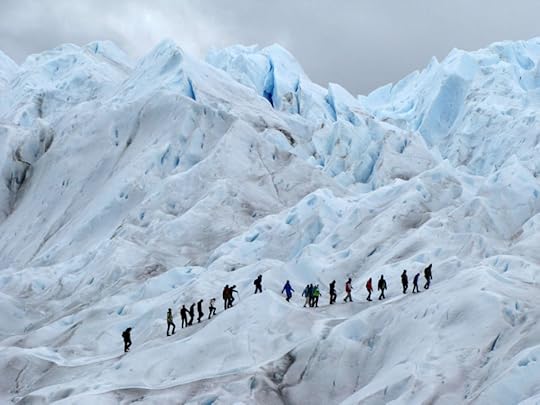
Argentinian Patagonia is a great solo challenge.
Patagonia is a popular region in Argentina. You can explore the Santa Cruz province by flying into the El Calafate airport. Join a group tour to the Perito Moreno Glacier or easily go explore alone. I stayed at Patagonia Hostel in El Chalten which was full of young solo travelers. The region has a huge variety of outdoor challenges, if you are looking for a rewarding experience spend a day or two hiking the Cerro Torre and Fitz Roy mountains (it’s tough, be prepared!) then treat yourself to a lamb or trout dinner, two delicacies of the area.
Photo: Sergejf
2
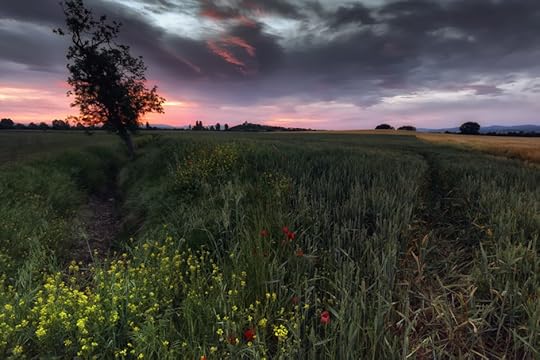
Mendoza is relaxed, welcoming, and home to Malbec.
If you want to stay away from crowds, head north to Mendoza. It has a much more relaxed vibe probably because it’s full of vineyards - more than 1,200 to be exact. It’s easy to grab a map, rent a bike and go tasting the famous Malbec wine. If you are looking for company, join an organized wine tasting tour, they are plentiful and a great way to meet other travelers.
Photo: Javier Colmenero
3
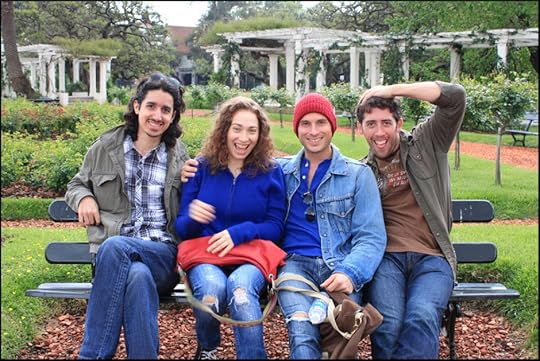
Argentinian people are open, very friendly, and accommodating.
While Patagonia has some of the friendliest people I’ve ever met, I always felt especially welcome in Buenos Aires, Argentina’s capital. Argentinian people can be very open and may even invite you over for a home-cooked meal - even around the holidays - especially upon hearing you are traveling alone and have no plans. Remaining open as you travel alone isn’t always easy but the people I met in Argentina, both locals and foreigners, were very social. I met so many wonderful girlfriends who had wandered to Argentina alone and stayed much longer than originally planned either because they fell in love with the city (or, let’s face it, a Latin man).
Photo: Japanese Garden by Joseph Brent
Intermission
Activism + Politics
The year women became eligible to vote in each country
Tim Wenger
Mar 7, 2018
Trip Planning
12 reasons why you should visit Patagonia this winter
Katie Scott Aiton
Sep 14, 2017
Sponsored
How to swim with the manatees in and around Crystal River, FL
Brian Cooke
Feb 19, 2018
4
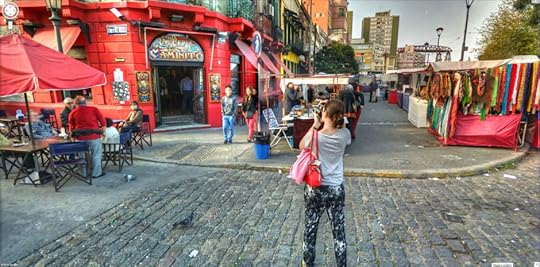
Argentina is one of the safer countries to travel to in South America.
One main concern solo travelers have is safety. Crime is a by-product of all urban centres throughout the world, but in comparison to other cities in South America, Argentina is far below the world average on all counts of crime. Buenos Aires is a safe place to travel but because there is an issue with petty theft, the same rules apply as with any other large city: always watch your bag and valuable things and be street-smart.
Photo: Kevin Dooley

5
No one will think it’s weird for a woman to be traveling on her own.
Buenos Aires is a melting pot of cultures with fairly liberal values, so you won’t attract any unwanted attention for being a woman traveling solo. But if you find yourself wanting some company in the big city, I recommend The Argentine Experience for a well-rounded cultural and social event. The intention of this event is to pull together people from around the world to learn about Argentinian food and wine and share cultural experiences. It’s the ultimate supper club - a perfect atmosphere for meeting new people.
Photo: The Argentine Experience
6
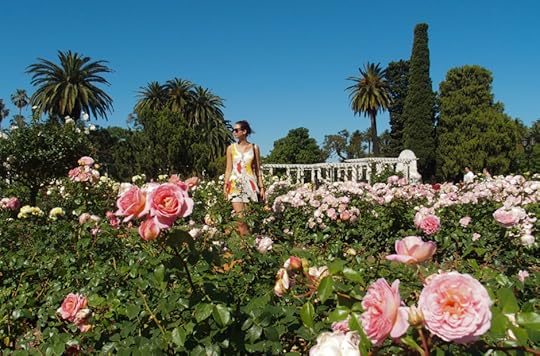
If you’re in need of space, Buenos Aires has many parks and gardens you can get some alone time.
While finding travel buddies in Buenos Aires is not difficult, there may be times you want to explore on your own and take it all in. Head to the Bosques de Palermo for Sunday sunbathing and a walk through the rose garden. Although the rose garden is popular with locals and tourists, the mornings are quite peaceful and provide a nice escape from the city.
Photo: Kaja Šeruga
7
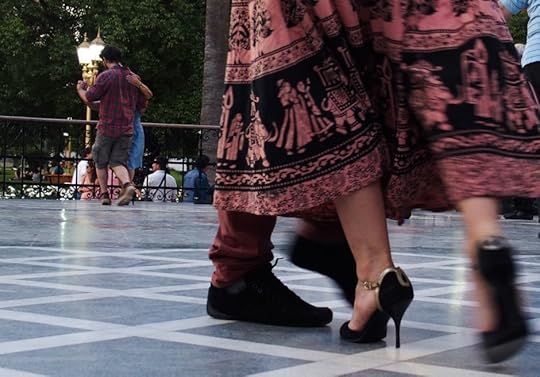
If you are looking to socialize and improve your dance moves, you’ll have a lot of fun in Argentina.
Free tango lessons are all around the city and are a fun way to experience the culture, let loose, and meet a mixture of people.
Photo: Kaja Šeruga
8
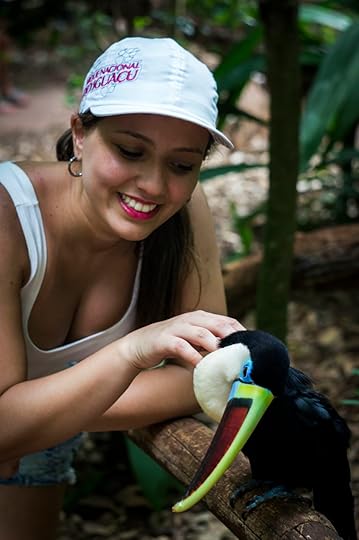
Exploring the entire breadth of the country solo is easy and hugely rewarding.
It’s tempting to get stuck in Buenos Aires, especially if you’ve made a nice group of friends. Keep in mind Argentina is a very easy country to navigate, be sure to explore other landscapes. For example, on the other side of the country, nearing Brazil, is Iguazu Falls, an otherworldly place with epic waterfalls and wildlife.
Being the massive country that it is, Argentina has too many destinations to recommend. For solo female travelers it’s not only safe, but whether you’re here just a few nights or stay long enough for it to become a second home, you’ll find yourself in great company and experiencing just about every type of landscape imaginable.
Photo: Deni Williams
More like this: Sharing culture: Argentina vs. the rest of the world
The post Argentina is the best destination for the solo female traveler. Here’s why. appeared first on Matador Network.

La Paz Waterfall Gardens
Some things go into the “do not try this at home” folder. Hucking yourself off a 100+ foot waterfall is usually one of them — unless you’re a professional and have permission from the area owners like Robert Wall and his friends in the below video.
La Paz Waterfall Gardens & Animal Sanctuary is a privately owned ecological attraction just north of San Jose in a town called Vara Blanca, which is located on the northeastern side of Volcan Poas — one of Costa Rica’s five active volcanoes. As the number-one most visited eco-attraction in Costa Rica, the La Paz Waterfall Gardens has some of the best hiking in the central highlands, a few of Costa Rica’s most famous waterfalls, a cloud forest and rainforest, and an animal sanctuary with over 100 species; so, plenty to do besides throwing yourself off a cliff into the water.
The La Paz Waterfall Gardens has been privately owned and open since 2000, and they’ve continued to improve and add more exhibits over the years. There are over 3.5 km of walking trails, and part of the gardens’ primary mission is to protect the natural environment of the area and educate visitors about it. Tours are mainly self-guided, and you’ll find loads of interesting exhibits along the way. Check out the Butterfly Observatory, or spot animals like big cats, butterflies, toucans, hummingbirds, monkeys, snakes, and other reptiles.
The park consists of 70 acres total, but the previous owner deforested 30 of them. The other 40 acres are pristine cloud and rainforest, and the owners are in the process of reforesting the unoccupied pastureland. The remaining forest is protected under the Private Animal Sanctuary Status.
While admission is a little steep at $44 per adult (for tourists, $28 for locals), the experience of the place and the mission of the owners warrant it. They aim to support the local economy and 95% of their employees come from within a 12-mile radius of the park. Previously, the economy of these communities relied on ranching and agriculture — both industries that decimated the native forests of Costa Rica.
How to get there
The La Paz Waterfall Gardens are about 1.5-hour drive north of San Jose. The GPS coordinates are Latitude 10.12.6.28 N Longitude 84.9.41.23 W. You can find detailed directions from lots of locations here.
What to consider
Hours are 8 AM-5 PM and you should plan at least 2-3 hours for your visit. Don’t start your visit later than 3 PM.
Bring rain gear because, even if it’s not raining (which it likely will), you’ll get wet because the waterfall viewing platforms are close to the falls.
Bring good walking shoes for the muddy trails and hundreds of stairs. The place isn’t suited for people with limited mobility.
The park ranges in elevation from 4,200 feet to 5,200 feet.
Expect to see animals in cages. Although it’s a sanctuary, they’re not free roaming.
Check out “titicupon”; it’s like Groupon for Costa Rica and sometimes has deals for the park.
More like this: Costa Rica’s stunning Nauyaca Falls: How to visit
The post The La Paz Waterfall Gardens in Costa Rica belong on your bucket list appeared first on Matador Network.

Solo female travelers in Nepal
Between July and November 2017, 18 women aged between 18 and 43 were sponsored to travel solo through various regions of Nepal. The competition, set by Solo Travel Nepal, facilitates female travelers to see their country. It also opens a line of discourse about gender equality and the potential risks that come with solo travel. Here are a collection of stories from some of the winners from 2017.
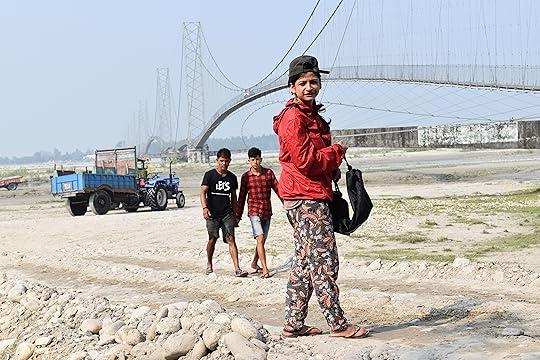
1. Sapna Timilsina
Age: 22
Solo travel area: Seven Districts in Far-western Nepal
Travel days: 25
Route: Kathmandu — Kailali — Kanchanpur — Darchula- Baitadi — Dadeldhura — Bajura — Achham — Dadeldhura — Kathmandu
I grew up in a family of six. My parents had got married at 15. It was my mother’s job to do the household chores and my father traveled a lot for work. I found my love for travel while traveling with my dad on his trips. I feel fortunate that I got to travel from a very small age.
My first trek was to Annapurna Conservation at the age of 13, and I have been to many places in Nepal. That said, I never imagined I would be traveling solo to the most remote area of Nepal. I went with the consent of my parents [with] the assurance that I would be supported financially. They were actually very enthusiastic and supportive about my adventure. But my relatives, on the other hand, were very doubtful and questioned my decision. They even tried to manipulate and convince my parents to not let me go on my own. One relative went to the extent to say that I should be getting married rather than focusing on travel.
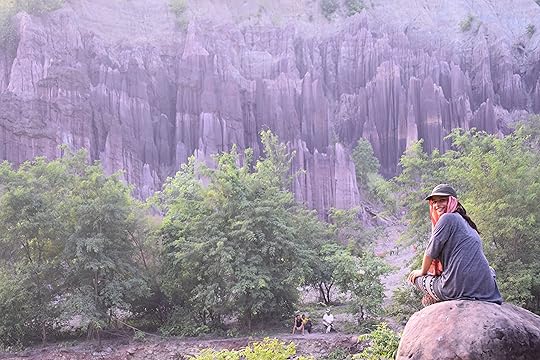
During the trip, a fear of being alone and concerns such as who would sit next to me and whether I would have to face harassment on local buses made me feel vulnerable. Yet experiences such as traveling during my period in the region where Chhaupadi tradition forces women to live in a cowshed and be treated inhumanely when they are menstruating opened my eyes and filled me with gratitude that I was born into my family and culture.
Belonging to a country where there are many restrictions for women to travel, I feel fortunate I have been able to complete my bucket list. I have traveled to every district of Nepal. I have proven many people wrong and set an example for other female members of my family to do something different, daring and adventurous. I also realized traveling is my passion and I want my career to be related to the industry. I have become a happy and satisfied person after this solo travel and absolutely love who I am today.
2. Prasna Dongol
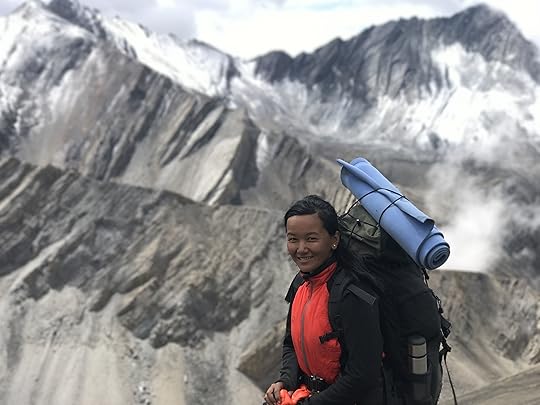
Age: 26
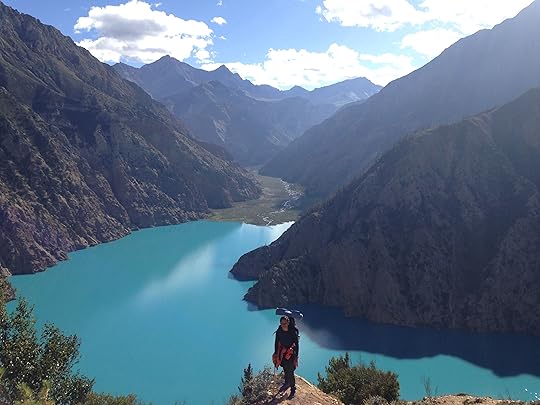
Solo travel area: Upper Dolpa Circuit
Travel days: 23
Route: Kathmandu — Nepalgunj — Dunai — Dho Tarap- Tinje — Shey Gumba — Phoksundo — Dunai
After winning the challenge, I told my parents that I was going on a trek to Dolpa; of course, they were shocked. Dolpa is one of the most remote and isolated regions of Nepal. There are no trail markers to follow which makes the journey even more difficult but I wanted to challenge myself, to see how far I can go. Being a young woman traveling alone in such a place made me stand out. I drew attention and quite a few questionable stares and comments: “Why are you here?”, “It’s not safe for a woman”. My parents were really concerned. What if I get robbed or assaulted in the wilderness?
On the first few days of my travel, I got off to a rough start. I had a difficult time enduring the physical challenge of the trek. I was horrified and demoralized. On the second day of my trekking, I had to sleep in a room full of men. I was so scared that I carried a Swiss knife with me in my pocket and tried as much as possible to not fall asleep. Yet one of the hardest aspects of my experience was when I got lost for 8 hours. It took me a great deal to overcome my fear — to find the strength and way back to the trail.
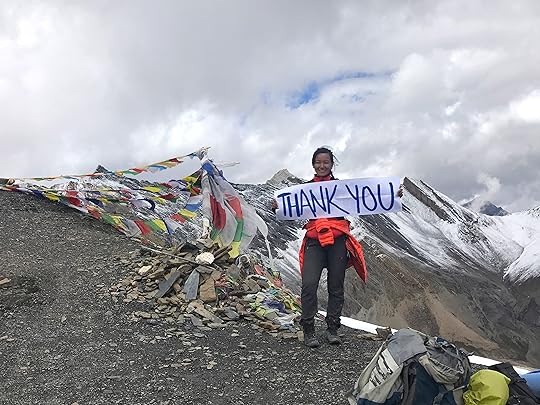
As a woman, I felt vulnerable in moments like this. The days passed, I increasingly felt sure of myself. I slowly started to gain more confidence. I became more vigilant and learned to make my own decisions. I realized that the only thing stopping anyone to travel is nothing but the fear they have in their minds.
Although I took a difficult, less popular route across Dolpa, the vast empty landscape was just one of the many rewards of the road less traveled.
3. Juliana Shrestha
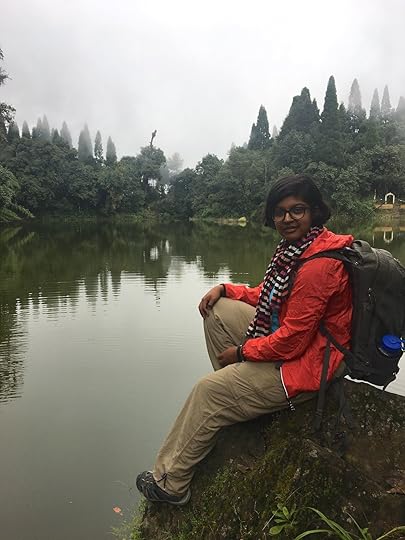
Age: 21
Solo travel area: Across the hills and plains of Nepal, starting from far west to east
Travel days: 29
Route: Kathmandu — Dadeldhura — Achham — Mahendranagar — Surkhet — Nepalgunj — Lumbini — Palpa — Pokhara — Gaighat — Itahari — Dharan — Dhankuta — Basantapur, Terathum — Jhapa — Illam — Jhapa — Kathmandu
As a city girl, born and raised in Kathmandu, I always wanted to explore Nepal and see what it is like outside the capital. Living in a society where travel is not really part of our culture (outside of work or family visits), the concept of traveling for the sake of traveling, to many, is bizarre.
However, hearing my mother’s stories from her work trips ignited a spark inside me and I wanted to see and experience it for myself. But, as a young girl of a middle-class family in Nepal, I did not have the resources or the encouragement from people around to consider travel.
I had visited some places with family but it wasn’t until I was 19 when I got the opportunity to travel long distance for the first time with friends. It took me months of saving, working small jobs and convincing my family to let me go. It was difficult for them to understand my wanderlust.
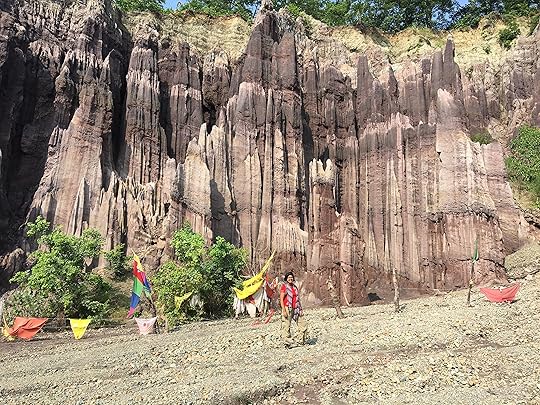
When I won the Solo Woman Travel Challenge 2017, the people around me thought it was even crazier. My mother had serious doubts and concerns, however, she supported me a lot in providing the guidance to plan my itinerary properly, as she had been to most of these places already. The support of the organization helped convince my family and myself that I am not only capable enough to travel solo but also that I can live an independent life: make my own decisions, organize my finances, plan and organize the logistics, take calculated risks and handle myself in social situations.
Through this challenge, I learned a lot about myself and my country. My family proudly talk [about me] being a solo traveler and I receive a lot of admiration from people. While experiencing Nepal outside the capital, a city girl like myself who would have otherwise been stuck in the capital in a safe bubble of family comfort, has today become more resolute and empowered.
4. Allan Rai
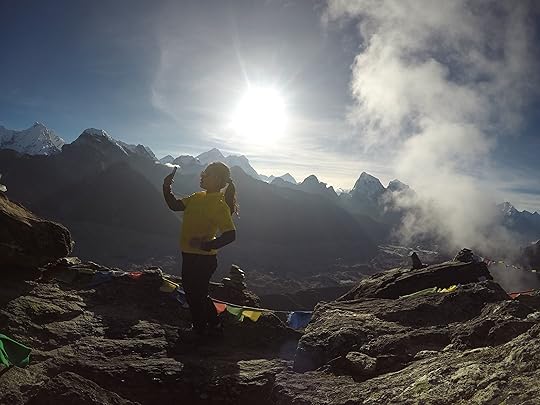
Age: 21
Solo travel area: Everest region (Gokyo Valley- Renjo la pass)
Travel days: 16
Route: Kathmandu — Salleri — Nunthala — Poiyan — Phakding — Namchey — Dole — Machherma — Gokyo — Gokyo Ri — Renjo la pass — Thame — Namchey — Lukla — Kharikhola — Phaplu — Kathmandu
I grew up in a society that prioritizes culture and traditions over personal beliefs. While women are discouraged to travel anywhere alone, and the society has made them believe that they always need someone to travel with, the men in our society can travel anywhere they want, alone or with company, without much interrogation.
Being a Nepali girl, I always wanted to have the freedom of learning and exploring anything that intrigues me.
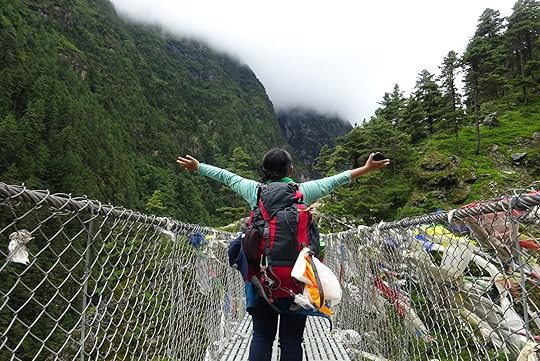
Going against the negative beliefs of the society has made my trek an impressive and revolutionary act. It has proved that women are quite capable to travel solo. My knack for adventure has always been known to my family so they readily supported me, despite having doubts I’d be successful.
The answer I gave to all the people who questioned my decision to travel solo was simpler than their curiosity and concern: because I wanted to.
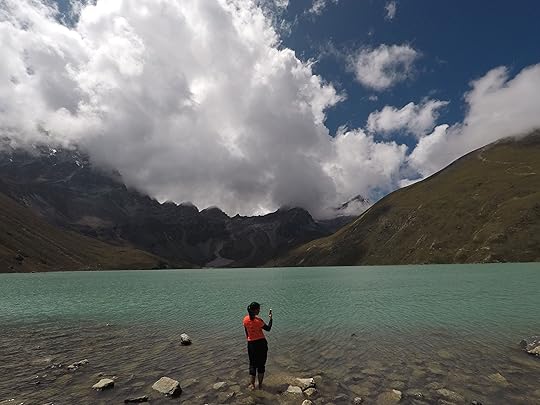
Before I left on my challenge we trained through workshops on wilderness first aid, self-defense, itinerary planning, and risk management. On the trek, I enjoyed the splendor of nature: the fresh light air, the mighty mountains, the rushing river; everything seemed so surreal yet so realistic at the same time. I have become the person I wished to become: independent, capable, a quick decision maker, good speaker and a storyteller; I feel empowered. Today, people around me admire me for my courage and passion and I can see their perspectives slowly changing towards a more supportive attitude. Everything I teach myself and learn is what I choose. I decide what I want to become; either to give up or carry on. And I decided to be the change.
5. Akshyata Bajracharya

Age: 23
Solo travel area: Langtang- Gosainkunda Trek
Travel days: 12 days
Route: Kathmandu — Sybrubesi — Lama Hotel — Mundu — Kyangjin Gompa — Dhunche — Cholangpati — Gosaikunda — Chandanbari — Dhunche — Kathmandu
As a kid, traveling for me was just visiting new places with family where we could have momo and pizza for dinner and take lots of pictures. I started traveling with my friends after I started at university. I was permitted to go on trips with my friends as my mother was a wanderer herself back in her days. She used to tell stories of going for hikes and trekking with friends but I used to prefer the city life over mountains and nature. My views changed with time, as I got to experience the outdoors and started falling in love with the mountains. Since then, I have never stopped exploring my beautiful country.
My parents never had a problem with me traveling but having to ask them for money to travel every time was difficult. So, the financial support from NepaliTravelers through the challenge made it possible.
After winning the Solo Woman Travel Challenge 2017, hearing stories from the other 17 travelers, guidance from the alumni and mentors, and workshops provided helped me a lot to build my confidence and prepare myself for the solo journey. Even with the positive thoughts about being independent, exploring myself, and experiencing freedom, the concerns about safety, loneliness, and boredom still made it at times scary.
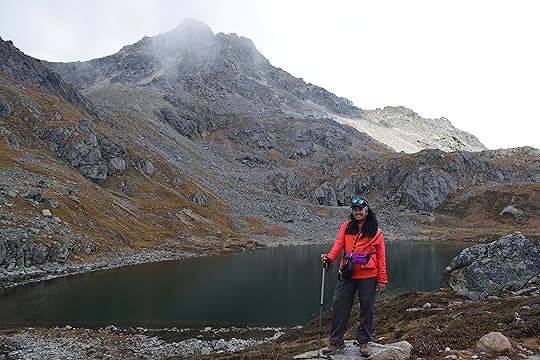
The real challenge for me was to enjoy being on my own. The journey taught me that I can enjoy my own company too. I learned that no matter what challenges you might come across, you can pass through it and that is what being independent is all about. But, the most important thing I learned is that the world is mostly good and genuine, unlike what our society tells us, and this feeling is what everyone should experience at least once in their lifetime.
More like this: 8 everyday Indian women challenging stereotypes in India
The post 5 solo female travelers in Nepal smashing stereotypes appeared first on Matador Network.

Cape Town water crisis
One month ago, Cape Town dominated global headlines when city officials announced it was perilously close to running out of water. Cape Town was just 90 days away from being the first major city in the world to shut off water supply to households, and residents would have to queue at distribution points to collect a daily ration of just 25 liters. And then last week, after several weeks of anxiety, as if by miracle and without any significant rains, the city announced that Cape Town would likely avoid running out of water — at least for 2018.
But the city is far from safe — the announcement made it clear that this is contingent on ongoing water saving, and reliance on winter rains. But in the midst of the doomsayers, there is a remarkable story of a city that came together to more than half its water usage in a matter of months.
Water consumption reduction has been impressive

Photo: African Drone
When Cape Town city officials warned that a city-wide water cutoff was imminent, they also highlighted that just 40 percent of residents were heeding the call to reduce consumption. The city was urging residents to use 50 liters per day — the minimum that the World Health Organisation considers sufficient to meet most basic human needs.
Though increasingly intensified water restrictions helped to push the city’s water usage close to this figure, it’s hovered frustratingly high. Newspapers heralded dire warnings, and talk radio stations ran doomsday-like shows around the clock that mooted the likelihood of a city-wide shutdown of schools and businesses. Many local stations all but did away with regular programming, and instead spent hours fielding calls from people lamenting the water wasters, spreading conspiracy theories, offering water saving tips, and debating the city’s apparent negligence in the matter.
But taken in context of where the city was previously, and how other major cities around the world have coped with similar situations, even getting close to the city’s imposed restriction figure is an impressive achievement.
In times of seemingly abundant water and no water restrictions, Cape Town residents used well more than 200 liters per capita. According to the Siemens Green City Index, the city was using as much as 225 liters per capita in 2009. Currently, Capetonians use an average of 124 liters per day — still well above the official requirement, but a drastic reduction in line with international standards.
The city has also done well compared to others that have faced similar situations. At the height of its drought in 2015, California residents used 387 liters per day — only a 27-percent reduction. Melbourne was lauded for reducing water consumption at the height of their critical “Millennium Drought”, but it took them 12 years to reach similar percentage reductions to those in Cape Town.
At the most extreme ranges, Cape Town has managed to drop its water usage by half — from over a billion liters of water used per day, to a figure that’s currently hovering around the 520 million liter mark. So drastic was the reduction in water usage that the city announced, and then later retracted, a plan to add a drought levy to all household bills to recoup some of the money lost to reduced water consumption.
Day Zero Panic
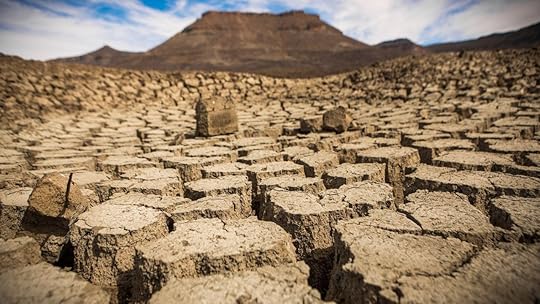
Photo: African Drone
But the reduction in water consumption was a long time coming, and it was only really with the announcement of an imminent “Day Zero” that the city’s residents sprung into action. Widespread concern and panic finally seemed to grip many residents who, until then, believed Mayor Patricia De Lille when she said: “We’re determined that we’ll not allow a well-run city to run out of water.” Photographs of a trial water point of distribution — essentially endless rows of rudimentary pipes, manned by armed guards — went viral; the city revealed an overview of its plans for 200 points of water distribution, and the city’s law enforcement and the South African National Defence Force committed to ensuring their peaceful operation.
From this day on, the tempo of the city changed. Public education kicked into overdrive, and social media groups offered endless insight and tips on how to save water around the house. Buckets became a common sight in showers around the city — from private homes to public gyms. Most unnecessary public water was shut off — showers at beaches, major public swimming pools, even some public taps were turned off or disabled. Gyms shut down saunas and steam rooms and installed countdown clocks in showers to alert users to how much time they were spending.
On the most part, these measures took place behind closed suburban doors — gardens were no longer watered, cars no longer washed, and pools, now valuable receptacles for grey water, were covered and no longer refilled. Residents started reusing household water as often as possible, and when it no longer became safe for consumption it was used for flushing toilets that were only flushed if absolutely necessary. Bathing became a luxury, and when necessary residents skipped lengthy cleaning rituals with brisk 90-second showers.
Other changes, or manifestations of panic, were more visible. Supermarkets sold out of bottled mineral water daily, just minutes after mass deliveries, and stores quickly introduced daily limits to prevent mass bulk buying. Other residents turned to a handful of natural springs around the city, where long queues formed from the early hours of the morning. At the height of the panic, scuffles broke out in these queues and private security guards oversaw the collection points.
Restaurants, shopping centers, and other public restrooms turned off taps and instead offered waterless hand sanitizers. Many stopped providing free drinking water to customers, and several coffee shops turned to serving all beverages in takeaway containers to avoid washing up.
Plastics manufacturers ran out of all types of water-safe receptacles; large borehole-drilling trucks became a common sight on the streets of leafy suburbs; tankers carrying thousands of litres of non-potable water arrived at the heavy gates of large suburban houses, presumedly to keep swimming pools in working order; and companies selling rainwater storage tanks all but ran out of stock.
City-wide measures also took hold
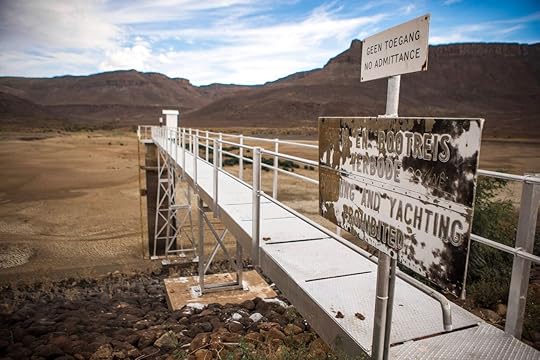
Photo: African Drone
With the drought taking place in the dry summer months — also Cape Town’s peak tourist season — the city walked a fine line between sounding the alarm and continuing to welcome tourists. Some popular events declared they wouldn’t be running their 2018 editions, and others, such as the Cape Town Cycle Tour, committed to importing all water in order to make it a water-positive event.
The city also introduced several punitive measures to drive the message home. The most controversial of these was an online map that allowed users to zoom in on houses across the city and see if their neighbors were above or below the required monthly limits.
At the same time, the city pressed on with token water augmentation projects. They added limited quantities of water into the national supply from desalination plants and by drilling into aquifers, the construction of most of these is underway, and by refurbishing systems that capture and filter runoffs from nearby Table Mountain. Even so, these vastly expensive operations alone are not enough to stay off an imminent Day Zero, and the city continues to emphasize the need to save.
Looking to lay blame for an ongoing disaster
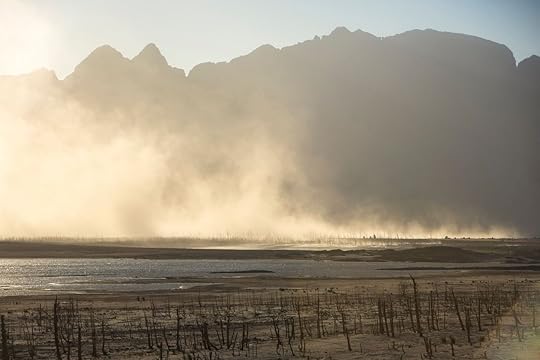
Photo: African Drone
Be it panic, augmentation, or the final realization of how dire the situation truly is, everything seemed to click into place. Though much of the national dialogue focused on who to blame, and what emergency measures we can take to avert the disaster, many failed to acknowledge that Day Zero or not, what the city of Cape Town and its residents had achieved was nothing short of miraculous. It may have taken time to sink in, but eventually, a sizeable portion of residents had more than halved their water daily consumption by changing daily habits and implementing widespread tips and tricks.
Though, given the finite resource that is water in South Africa’s Western Cape, it’s hardly a cause to celebrate or to ease off the water-saving measures. What’s become clear throughout this crisis is that it’ll take more than one winter of heavy rain to fill up the region’s desperately empty dams, that the agricultural sector will continue to feel the impact of this for many years to come, and that if the city’s residents and its visitors take their eye off the restrictions, even if for only a short while, the doomsday headlines will very rapidly return.
The post This is how Cape Town may have averted the biggest water crisis of its history appeared first on Matador Network.

Locals and outsiders in New Mexico
Sorry, tourists: sometimes you stick out like a sore thumb here. New Mexicans have lots of preferences (“lots of green chile for me!”), mannerisms, and slang (“It’s all sick, huh!”) that we can recognize in each other from a mile away, but it also means that when you make a beeline for the turquoise jewelry, don’t want green chile on your burrito, or do or don’t do any of these twenty things, we know you’re an out of towner.
1. A local will never order their chile on the side. An outsider will “in case it’s too hot.”
2. An outsider will ask for the mildest chile. A local goes hottest or goes home.
3. An outsider only wants to try “Christmas.” A local has a beloved and infallible chile preference (okay, we have a lot of particulars when it comes to our beloved chile).
4. An outsider will get excited when they see the signs for Las Vegas. A local knows that they mean Las Vegas, New Mexico and that they’re in for a real disappointment.
5. A local will never use their turn signal.
6. A local knows that the true PizzaGate took place way before the 2016 election cycle, at the Eldorado Hotel in Santa Fe.
7. A local would never make the mistake of asking if New Mexico is a part of Mexico. Outsiders do all the time.
8. An outsider doesn’t understand the sheer misery of juniper season. A local grimly awaits their watery-eyed miserable fate year in and year out.
9. An outsider will never know the joy of going to Zozobra every year while growing up.
10. A local will always have a bone to pick with Anthony Bourdain over how he treated our Frito Pies.
11. A local never knows who goes first at a four-way stop. An outsider presumably does know this basic rule of driving.
12. A local knows never to trust the weather forecast.
13. An outsider will ask way too many questions about “Breaking Bad.”
14. An outsider never knows how to properly pronounce Pojoaque.
15. An outsider will call it the Land of Enchantment. A local will call it the Land of Entrapment.
16. An outsider doesn’t know what Tamalewood is.
17. An outsider will comment on how high Santa Fe is. A local is used to it.
18. An outsider calls them Albuquerque and Santa Fe. A local calls them Duke City or ABQ, and the Fe or Fanta Se.
19. An outsider doesn’t get why Bernalillo and Española are the butts of all our jokes.
20. An outsider will think that New Mexico has the prettiest sunsets. A local will KNOW that New Mexico has the prettiest sunsets.
More like this: 36 giveaways locals know you're not from New Mexico
The post 20 differences between locals and outsiders in New Mexico appeared first on Matador Network.

Travel hacks for flying
There’s a reason every single stand-up comedian has a bit about flying: everyone hates doing it. The food on the planes is bad. The food in the airports is bad. The seats on the plane are crammed. The seats in the airport are impossible to get comfortable in. Security is a nightmare. You get sick every damn time you get on board. Babies cry the whole flight. Kids kick your seat the whole flight. A passenger with an annoying voice gets hammered and talks too loud.
Flying, in short, is a nightmare. Here are some travel hacks to make it less terrible.
1. Exercise before going to the airport.
This isn’t always possible, but if you can, get in a good workout before leaving for the airport. It boosts your endorphins (making you less grumpy), boosts your immune system (so you don’t get sick), and also makes it easier for you to fall asleep once onboard.
2. Morning flights have less turbulence.
If you get motion sickness, it’s better to travel in the morning. As the earth heats throughout the day, the hot air rises, causing storms and winds. While storms can happen at any time, they are more likely to happen in the afternoon. So you’ll reduce your chances of getting a bumpy flight if you fly early.
3. You’ll feel the turbulence the least over the wings.
Turbulence is felt most in the back of the plane, and least over the wings.
4. If you don’t mind turbulence, then sit up front.
The air is fresher and cooler up front and warmer towards the back.
5. Be cool to the flight attendants.
This is just common sense. The people who don’t suck get taken better care of.
6. You can’t bring liquids through security. You can bring empty mugs with tea bags.
If you don’t want to spend on Starbucks or drink watery airplane coffee, just bring an empty travel mug with tea bags inside. The flight attendants will be able to fill it with hot water on the plane. If you prefer coffee to tea, you can just put your coffee grounds in a tea infuser.
7. Frozen liquids are allowed through security.
In a pinch, you can bring a bottle of frozen water (or tea or coffee) through security. This is only really practical if you’re going on a long enough flight for it to defrost, though — the liquids have to be frozen solid while you’re going through security. They can’t be half melted.
8. Stay hydrated — avoid alcohol.
If you can avoid the temptation, stick to water on the plane. Alcohol dehydrates you and makes it harder to get REM sleep, so while it might calm the nerves short term, it’s going to make you that much more exhausted and groggy when you arrive.
9. Don’t get ice with your drink.
Aside from giving you less drink, airplane ice cubes usually come from the water tank, which is often not clean and might be the thing that makes you sick.
10. Wipe down your tray table.
You’re more likely to get sick from what you touch than from just breathing the same air as someone who’s sick, and attendants don’t clean the tray tables and handles before every flight. If you’ve got space, pack disinfectant wipes and wipe down both the tray table and the armrest before touching them.
11. Keep the air on.
If you’re cold, just put on a sweater — the air blows germs away and also keeps your skin from getting too dry.
12. The blankets are basically biological weapons.
Unless you’re getting it out of a sealed plastic bag (which isn’t great for the environment), that blanket has probably been used and probably hasn’t been washed. Either shell out for your own blanket or just wear warm clothes.
13. Skip carbonated drinks.
If you have a soda at the airport, you might later experience gastric distress — the air can expand in your intestines, causing gas. This can happen if you have it on the plane, too, if the pilots need to change altitude.
14. Get out of that middle seat.
If you get stuck with a middle seat assignment, go to ExpertFlyer.com and set up a seat alert. If someone changes, they’ll send you a message and you can swoop in and take the new assignment.
15. If you’re traveling as a couple, book a window and an aisle.
This is a crapshoot, but if the plane is underbooked, no one’s going to sign up for a middle seat between two strangers, so there’s an okay chance you’ll get three seats for the two of you. If the flight is full, you can always ask to switch — most people will happily do so to get out of a middle seat.
16. Bring a comfy coat with lots of pockets.
Coats with lots of pockets can serve as a supplemental carry-on, and soft, comfy ones can double as a pillow.
17. At security, turn left.
People prefer to turn towards their dominant hand, so if you come to a fork in the security line, go to the left — more people will instinctively go in the other direction.
18. Use Spotify Premium while offline.
Airplane wifi is usually both expensive and patchy, so if you need music for the flight, it’s best to have it downloaded on your phone. The best option for this is Spotify Premium, as it allows you to put specific playlists or albums in “offline mode.” Once you select this, it downloads the entire playlist. Then, when you’re at the next airport, if there isn’t a ton of space on your phone, deselect the old playlist and select a new one. No syncing to computers, it allows you to avoid being hit with roaming charges, and you can listen in Airplane mode.
19. Rebook canceled flights through the customer service line.
If your flight has been canceled while you’re at the airport, you’re probably not going to be the first one to the counter to rebook. To avoid missing the next flight — and the next — just call the airport’s customer service line from your cell. They can rebook from there, and you can skip the line.
20. You can buy day passes at many airport executive lounges.
It won’t necessarily be cheap ($30-75), but if you want to have a slightly more luxurious airport experience, a lot of lounges offer day passes.
21. Get free wifi by sitting outside the lounge.
If you don’t want to pay to get in the lounge, you can still sit near it and poach the free wifi.
22. The quietest place in the airport is the chapel.
If you need a space away from the crowds, this is usually the quietest (free) spot in the airport.
23. If you need a charge, there’s usually a USB port on the back of TVs.
Don’t break any laws (or any TVs) obviously, but airports are usually chock full of TVs, so if you can’t find a charging station, see if you can find an accessible TV and plug your phone into the USB port at the back of it.
24. Sign up for TSA Pre-Check to avoid long security lines.
If you travel a lot, it is 100% worth it to get TSA’s Pre-Check certification. If you travel internationally frequently, Global Entry is worth it, too.
25. Don’t miss a plane because of security.
TSA offers an app that tells you how long lines are at specific airports. There’s nothing worse than cutting it close and then realizing you’re going to spend 45 minutes waiting to get frisked.
More like this: How to actually enjoy long-haul flights
The post 25 genius hacks that will make your plane ride less terrible appeared first on Matador Network.

300 reasons we love New Orleans
When the governor of French Louisiana founded the city of Nouvelle-Orléans back in 1718, he couldn’t possibly have known that — 300 years later — it would be one of the liveliest, most happening places on the planet. To celebrate the tricentennial of The Big Easy, here’s one big embrace of the food, culture, lifestyle, and people that make the city so sought-after among avid travelers.
Here’s three hundred reasons to love New Orleans. Let ’em roll!
* * *
1. There’s SO much history here.
2. For instance, poker was invented by sailors in port in New Orleans.
3. That was back in the 1820s!
4. Even our teeth love New Orleans, because…
5. …the first dental floss was created here back in 1815.
6. The first opera in the US was performed in New Orleans in 1796.
7. And ever since that historic performance of Sylvain, operas have been staged here pretty much continuously.
8. Canal Street was once the widest street in the world.
9. It was named after a canal that was never built.
10. Speaking of names, Bourbon Street was named after the French ruling class, not the drink.
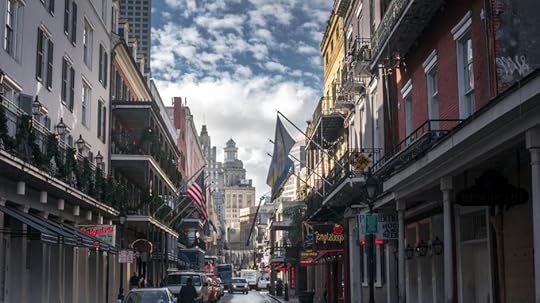
Photo: Eric Gross
11. These days you’ll find none of the former…and plenty of the latter.
12. The St. Charles Avenue streetcar line is the oldest continuously operating streetcar system in the country.
13. Speaking of streetcars, riding one in NOLA is pretty great.
14. Jazz was born in the New Orleans area…
15. …as was Grammy-winning Louis “Satchmo” Armstrong…
16. …and Emmy-winning Ellen DeGeneres…
17. …and Oscar-winning Reese Witherspoon…
18. …and BET-winning actor and producer Tyler Perry.
19. There’s so much history here, New Orleans has twenty historic districts.
20. That’s more than in any other US city!
21. In essence, New Orleans is a menagerie of awesome neighborhoods.
22. And in each, you’ll find food that is AMAZING.
23. From a muffuletta at Central Grocery…
24. …to perfect beignets at Café Du Monde…
25. …eating well on your trip is guaranteed.
26. The gospel brunch at House of Blues is always fun….
27. …as is the daily jazz brunch at Court of Two Sisters.
28. St. Roch Market is everything a Southern food hall should be.
29. They fry EVERYTHING. Perfectly.
30. Oh, and New Orleans does seafood right.
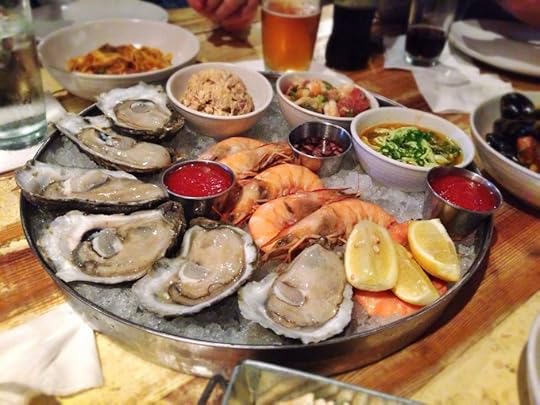
Photo: T.Tseng
31. So look out for the Louisiana Seafood Festival in the fall.
32. Boiled crawfish are EVERYWHERE (in season, of course).
33. You can buy crawfish and alligator hot dogs at Dat Dog.
34. The rich, buttery catfish pecan at Palace Café is famous for a reason.
35. There’s soft-shell crab at Clancy’s…
36. …and a perfect shrimp po’boy at Domilise’s.
37. There’s fried alligator at Cochon…
38. …turtle soup at Commander’s Palace…
39. …and gumbo at Galatoire’s.
40. Speaking of gumbo, there’s also the award-winning Gumbo Shop…
41. …and the Tremé Creole Gumbo Festival, which takes place in Louis Armstrong Park.
42. The onion rings at Popeyes are completely addictive.
43. Real onions, dipped in batter and deep-fried? Yum.
44. And then there’s the National Fried Chicken Festival.
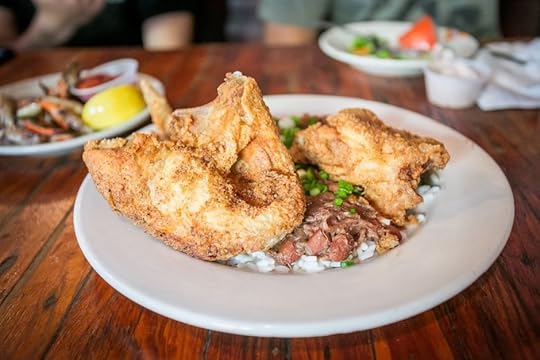
Photo: City Foodsters
45. You also shouldn’t miss Dooky Chase’s Restaurant.
46. It’s named after Edgar Lawrence “Dooky” Chase, Jr.
47. He died in 2016 after more than 70 years of marriage to Chef Leah Chase, the Queen of Creole Cuisine.
48. Chef Leah is 95 years old, and yes, she’s still cooking!
49. “America’s Best Fried Chicken” is at Willie Mae’s Scotch House.
50. Their red beans and rice also deserves a superlative or ten.
51. Meanwhile, the oldest restaurant in the city is Antoine’s.
52. It opened in 1840. Really.
53. Antoine’s created oysters Rockefeller, and we love them for that.
54. Acme Oyster House deserves a mention, too.
55. As do the charbroiled oysters at Drago’s.
56. Plus, there’s free oysters (!) and music every Friday evening at Le Bon Temps Roule music club.
57. Can we mention some more great seafood options and where to order them? Okay!
58. Raw oysters and beer at Cooter Brown’s…
59. …shrimp or crawfish etouffee at Bon Ton Café…
60. …barbecue shrimp at Pascal’s Manale…
61. …and shrimp remoulade stuffed avocado at Napoleon House.
62. What other city would be home to shrimp and alligator sausage cheesecake?
63. Or crabmeat cheesecake?
64. You’ll find that one at Palace Café.
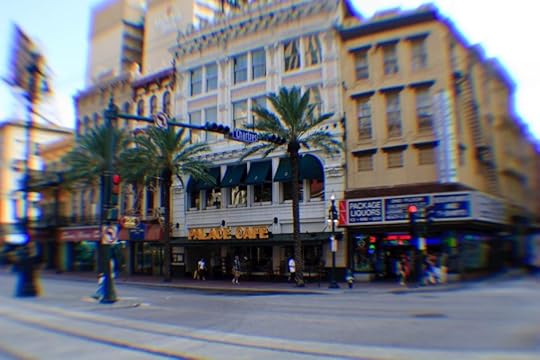
Photo: Gary J. Wood
65. Pepper Palace is the place to shop for some true tastes of NOLA heat.
66. It’s in the sauces. It’s in the dips. It’s in everything, and it’s awesome.
67. Oak Street Po’Boy Festival happens in November in Carrollton.
68. Their po’boys come “dressed,” which means with lettuce, tomatoes, pickles, and mayo.
69. Al fresco dining at Café Degas is such a treat…
70. …as is courtyard dining at Bacchanal.
71. No one ever said no to a meal at Broussard’s or Café Amelie.
72. Andouille sausage at Atchafalaya might just be the best thing ever.
73. The same goes for the brisket at Tujague’s, in business since 1856!
74. Because the chefs here? They’re amazing.
75. Chef Susan Spicer consistently creates masterpieces at Bayona…
76. …and Chef Emeril Lagasse knows exactly how to do Creole and Cajun cuisine.
77. In fact, Emeril’s Restaurant has pretty much won all the awards…
78. …including Esquire magazine’s “Restaurant of the Year”…
79. …and the Wine Spectator “Grand Award” every year since 2000.
80. There’s Emeril’s Delmonico to visit, too…
81. …along with Emeril’s other restaurants, NOLA and Meril…
82. …and it’s impossible not to love the Emeril Lagasse Foundation’s Boudin, Bourbon and Beer Festival.
83. A side of boudin balls at Toups Meatery never goes awry.
84. New Orleans also has the best food festivals around.
85. COOLinary New Orleans is a whole month of amazing dining experiences every August.
86. The French Market Creole Tomato Festival is two days of live music, bloody Marys, cooking demos, and food booths.
87. The Crescent City Blues & BBQ Festival is as awesome as it sounds.
88. FoodFest in Spanish Plaza is the best thing to happen to March, anywhere.
89. Six words: New Orleans Wine and Food Experience.

Photo: New Orleans
90. New Orleans is also the kind of place where you can eat in the bed of a pickup truck.
91. Just head to Jacques Imo’s Café for that experience.
92. It’s the spot to try jambalaya nirvana, too.
93. You can fulfill your turducken fantasies at K-Paul’s Louisiana Kitchen.
94. The same goes for soufflé potatoes at Arnaud’s.
95. NOLA does kooky well…
96. For instance, there’s a séance lounge at Muriel’s Jackson Square restaurant. Seriously!
97. For a pick-me-up, it’s PJ’s Coffee all the way. Sorry, Starbucks.
98. Community Coffee, too.
99. Bottom of the Cup Tea Room doubles as a psychic shop. Welcome to New Orleans.
100. Meal’s over…but not really, because desserts here are seriously the best.
101. Bananas Foster at Brennan’s is just too good.
102. The Italian ice cream at Angelo Brocato is legit…
103. …as is the baked Alaska at Antoine’s.
104. There’s the pecan pie at Camellia’s Grill…
105. …and the praline bacon at Elizabeth’s Restaurant in Bywater.
106. Pralines are a huge deal here.

Photo: Opacity
107. The ones at Leah’s Pralines are excellent.
108. Watching the praline makers at Aunt Sally’s in the French Quarter is a form of Zen meditation.
109. Sno-balls at Hansen’s Sno-Bliz. Enough said.
110. Okay, now let’s talk about the bars.
111. They never have to close!
112. You can get to-go cups in the French Quarter and drink on the street.
113. We love the Hurricane — the one you drink.
114. We also love the Ramos Gin Fizz at the Roosevelt Hotel’s Sazerac Bar…
115. …and the Sazerac, naturally.
116. It’s the official cocktail of New Orleans.
117. Can we mention a couple more ridiculously good NOLA drinks?
118. Arnaud’s French 75 at Arnaud’s.
119. Pimm’s Cup at Napoleon House.
120. Okay, we’re done. We swear! But can we also mention…
121. …Tipitina’s must be one of the best music clubs in the country.
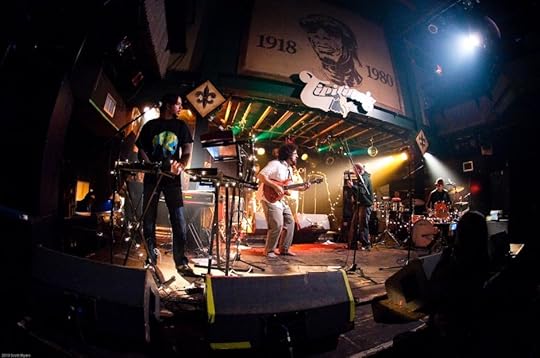
Photo: Scott Myers
122. Café Lafitte in Exile is the oldest continuously operating gay bar in the US.
123. Carousel Bar & Lounge in Hotel Monteleone is wonderful. (And yes, it looks like a real carousel).
124. There are Farm-to-Bar cocktails at The Three Muses…
125. …and free beer tastings at NOLA Brewery and Tap Room.
126. Plus we have drive-thru daiquiri shops.
127. New Orleans Daiquiri Season = 30 days of special events.
128. Go to Old Absinthe House and you walk through the same doors as Oscar Wilde, Mark Twain, General Robert E. Lee, and Franklin Roosevelt.
129. Pat O’Brien’s. Bourbon Street. You have to go.
130. High tea at Le Salon in the Windsor Court Hotel. Loose-leaf brews accompanied by a harpist or pianist? Perfect.
131. Tales of the Cocktail is a five-day celebration of cocktails and culture.
132. There’s an actual Museum of the American Cocktail here.
133. It’s inside the Southern Food & Beverage Museum.
134. But hey, New Orleans is fun for the whole family.
135. There’s Monkey Hill at Audubon Zoo.
136. The zoo is home to white alligators…
137. …the Louisiana Swamp Exhibit…
138. …and the Audubon Butterfly Garden & Insectarium.
139. The French Quartour kids’ tour is awesome (for kids young and old).
140. The Gulf of Mexico exhibit at the Audubon Aquarium of the Americas is fascinating.
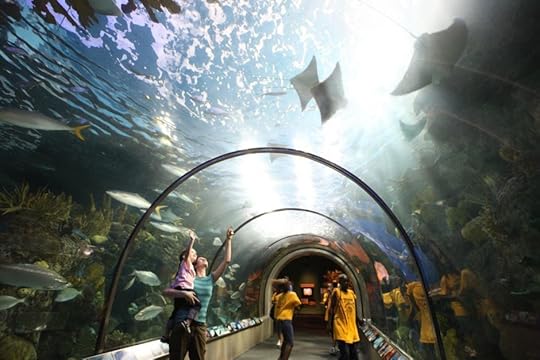
Photo: Lousiana Travel
141. The Louisiana Children’s Museum is also right here in New Orleans.
142. In this city, the lingo leaps off your tongue…
143. …except when it doesn’t (Burgundy, bur-gun-dee; Clio, kl-eye-oh; Tchoupitoulas, chop-uh-tool-us)…
144. But that’s what makes the city so unique!
145. We have the most colorful phrases, like…
146. …“Where ya’ at?”…
147. …“How’s ya’ momma an em?” and…
148. …“Go make groceries.”
149. We talk about “neutral ground” (you probably call it a median).
150. We’re home of the “Lagniappe”…
151. …so don’t be surprised if someone gives you a little something extra!
152. Southern hospitality is always on display, dahlin’.
Photo: David Arpi
153. Even the city’s initials are cool — NOLA.
154. Life here is laid back. Very laid back.
155. So slow down!
156. The only directions are Uptown, Downtown, River, and Lake.
157. New Orleans is often called “The Most Haunted City in America.”
158. Voodoo got its US start here…
159. …and you can thank Voodoo Queen Marie Laveau for that.
160. Her tomb receives more visitors each year than Elvis Presley’s grave…
161. …and her House of Voodoo is open to the public.
162. These days, there are psychics and tarot card readers in Jackson Square.
163. Music comes alive in the city…
164. …even when honoring the dead at jazz funerals.
165. We really do love jazz.
166. Especially the New Orleans Jazz & Heritage Festival.
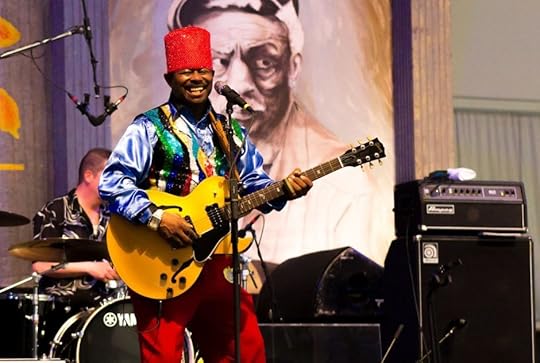
Photo: Doug Anderson
167. It’s coming to you this April.
168. There’s also jazz every Thursday at Armstrong Park.
169. And only in New Orleans could there be a national historical park…for jazz.
170. Fritzel’s European Jazz Pub is NOLA’s oldest operating jazz club…
171. …and you can also check out the New Orleans Jazz Museum.
172. It’s Zydeco night every Thursday at Rock ‘N’ Bowl on South Carrollton.
173. The Louisiana Cajun-Zydeco Festival is epic…
174. …and free!
175. The Singing Oak in City Park is unique.
176. It actually sings…but it’s not magic.
177. There are chimes carefully hidden within its boughs.
178. Which, in a way, kind of is magic…
179. …a very New Orleans kind of magic.
180. Thanks, local artist Jim Hart, for the installation!
181. There’s also the Music Tree, which makes no sound but pays tribute to it.
182. It’s chainsaw artwork at its finest.
183. Street performers in the Quarter are definitely one of 300 reasons why our city is so fun and lively.
184. There are also carriage rides in the French Quarter.
185. The brightly colored murals on Kermit’s Treme Mother-in-Law Lounge make us smile.
186. The Louisiana Philharmonic Orchestra doesn’t just make wonderful music…
187. …but is the first totally musician-owned symphony orchestra in the US.
188. Yep, there’s more to see in New Orleans than any single trip could ever accommodate (so you have to come back).
189. Our cemeteries are quite beautiful.

Photo: Nan Palmero
190. St. Louis Cemetery No. 1 is the oldest in the city (there’s also St. Louis Cemetery No. 2 and No. 3.)
191. Lafayette Cemetery is the oldest of the city-owned-and-operated cemeteries.
192. F. Scott Fitzgerald’s Boarding House is across from Lafayette Cemetery.
193. Audubon Park is gorgeous at any time of the year.
194. Climb its Tree of Life and you may even spot a giraffe (at the zoo next door).
195. City Park is pretty great, too.
196. It has a wooden carousel, aka “Flying Horses.”
197. It also has “Duelling Oaks”!
198. There are life-size bronze statues of New Orleans musicians in Musical Legends Park.
199. The monument to General Andrew Jackson in Jackson Square was the world’s first horse statue in which the animal had more than one foot off the base. So there you go.
200. The 1850 House shows how life in New Orleans looked more than 150 years ago.
201. At least, it shows how life looked for the rich.
202. The LaLaurie Mansion is an unmistakable piece of NOLA architecture on Royal Street…
203. …while Faulkner House Books is a national literary landmark and historic location.
204. There’s a little piece of the Eiffel Tower in New Orleans. Literally.
205. In 1981, the Restaurant de La Tour Eiffel left its home atop the Eiffel Tower in Paris.
206. It was then shipped, piece by piece, right here to NOLA.
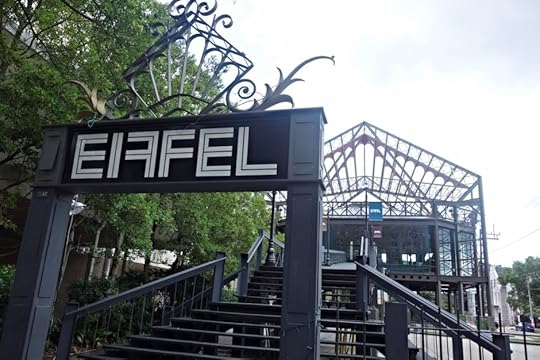
Photo: Allison Meier
207. It cost a cool $1.5 million to send the restaurant across the Atlantic.
208. Now it’s an events space and museum called Eiffel Society.
209. The Cabildo is a beautiful old Spanish colonial building…
210. …that’s home to Napoleon’s death mask.
211. It’s one of many cool finds that are part of the Louisiana State Museum.
212. Other fascinating museums to check out in NOLA include…
213. …the National WWII Museum…
214. …and the Backstreet Cultural Museum.
215. Also check out the Old Ursuline Convent Museum…
216. …and the New Orleans Pharmacy Museum.
217. The New Orleans Historic Voodoo Museum on Dumaine St is fantastic.
218. Confederate Memorial Hall Museum is Louisiana’s oldest museum.
219. Louisiana’s Civil War Museum is right here, too.
220. NOMA (New Orleans Museum of Art) doesn’t keep all the best stuff indoors…
221. Its Besthoff Sculpture Garden is stunning.
222. Shopping for art and antiques along Royal Street is always fun.
223. M.S. Rau Antiques was voted the best spot by locals.
224. The jewelry at Mignon Faget is pretty fab, too.
225. Boutique du Vampyre on St. Ann is THE ONLY VAMPIRE SHOP IN THE COUNTRY…
226. …and now do you see why we love New Orleans so much?
227. The French Market is open 365 days a year.
228. It’s home to a flea market…
229. …and a farmers market, too.
230. Crescent City Farmers Market on Saturday mornings is also pretty wonderful.
231. St. Louis Cathedral is the oldest continuously used cathedral in the US…
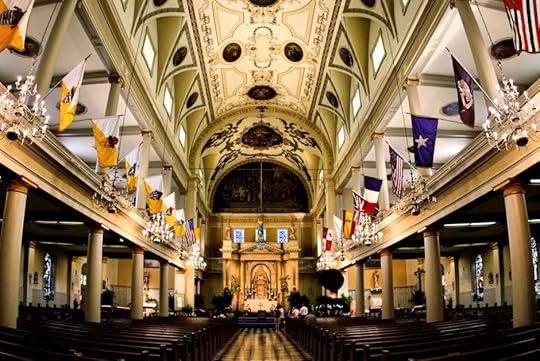
Photo: Phil Roeder
232. …while St. Joseph’s Church has the longest aisle in NOLA.
233. The Faerie Playhouse is a pink Creole cottage adorned with large wooden hearts and a rainbow flag.
234. It honors LGBT activists…
235. …because this city knows how important they are.
236. Watching the ships pass along the river at Woldenberg Park is peaceful…
237. …and the fountain at Spanish Plaza is the place to make a wish.
238. There’s horse racing at New Orleans Fair Grounds…
239. …and bike riding on the levee.
240. Taking the Canal Street Ferry is always a good idea…
241. …or you can simply go for a walk along Algiers Point.
242. Picnicking along the river at The Fly is a treat.
243. You can run, bike, or casually stroll the Lafitte Greenway.
244. You can even see the city on a Segway.
245. The Southern Yacht Club on Lake Pontchartrain is the second oldest in the country.
246. Two words: The Saints.
247. The chant of “Who Dat!” in the streets is electrifying.
248. The Superdome is the largest fixed-dome structure in the world. And it’s right here in New Orleans.
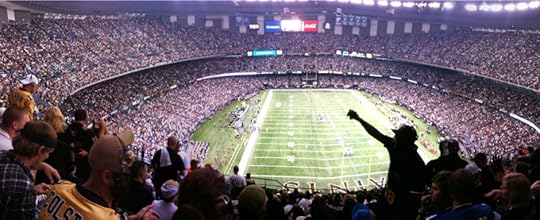
Photo: David
Reber
249. Every seat is a different color than the one next to it.
250. That way, it always appears to be a full house (not that they need much help).
251. Did we mention the festivals? We did? Well, here’s some more!
252. Art For Art’s Sake — a fall celebration on Magazine Street…
253. …White Linen Night — an annual art event in the Warehouse District…
254. …Dirty Linen Night — a street fest a week later on Royal Street…
255. …Essence Fest — featuring the biggest bands and musicians…
256. …French Quarter Festival (you can guess where it’s held), which lasts for four amazing days…
257. …Infringe Fest New Orleans (burlesque! comedies! dramas!)…
258. …and New Orleans Film Festival (films, of course).
259. New Orleans Pride happens June 8-10, 2018, and we are PROUD.
260. NOLA Navy Week has all the tall ships.
261. Saints and Sinners Literary Festival “brings together a who’s who of LGBT publishers, writers and readers from throughout the United States and beyond.”
262. And we’re not done: Southern Decadence, also known as “Gay Mardi Gras”…
263. …Tennessee Williams Festival, also known as New Orleans Literary Festival…
264. …Tremé Fall Fest, featuring all the food and live music you could hope for…
265. …and the massive Voodoo Music + Arts Experience. It takes place over Halloween weekend.
266. Wednesdays at the Square are always a party…
267. …and every holiday is a special celebration in New Orleans.

Photo: Harsh Light
268. We throw cabbage at the St. Patrick’s Day Parade…
269. …and July 4 sees a Go Fourth on the River fireworks extravaganza.
270. Dancing all night on Frenchmen Street at one of the biggest Halloween parties in the world is how this city rolls.
271. Krewe of Boo = Halloween, New Orleans style.
272. Thanksgiving means it’s time for turducken — a chicken inside a duck inside a turkey.
273. Oh, and Thanksgiving turkeys get fried (did we mention everything gets fried?).
274. Christmas brings Bonfires on the Levee…
275. …and Holiday Home Tours.
276. Réveillon Dinners are also how NOLA does the holidays.
277. Another Christmas tradition? Teddy Bear Tea in the Crescent City Ballroom at the Roosevelt Hotel!
278. Go and you’ll find thousands of twinkling lights in the hotel lobby.
279. For New Year’s Eve, head to Jackson Square…
280. …and watch fireworks over the Mississippi River.
281. Carnival Season here is unlike any place else, of course.
282. Here’s the lowdown…
283. …Lundi Gras takes place the Monday before Mardi Gras…
284. …while Mardi Gras (Fat Tuesday) is unparalleled, as you’re no doubt aware.
285. Endymion, Thoth, Orpheus, and Bacchus are the kings of the Carnival Super Krewes.
286. The Krewe of Venus was the first all-female krewe.
287. We love coconuts from the Krewe of Zulu…
288. …shoes from the Krewe of Muses…
289. …hand-decorated bras from the Krewe of Bosom Buddies…
290. …and we love Blaine Kern’s Mardi Gras World!
291. There’s the Krewe of Barkus, a Mardi Gras parade for dogs.
292. For more like that, the House of Dance & Feathers is a museum “dedicated to preserving the heritage of Mardi Gras’ most beloved underdog parades.”
293. You can tour the Germaine Cazenave Wells Mardi Gras Museum inside Arnaud’s Restaurant for free.
294. The Mardi Gras Bourbon Street Awards are too much fun.
295. And last, but most certainly and most definitely not least…
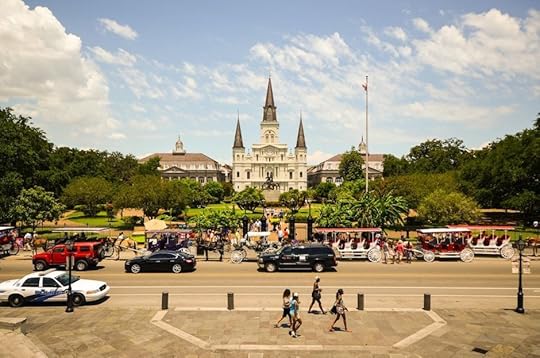
Photo: Simon
296. …the city’s official motto!
297. “Laissez les bons temps rouler!”
298. It means, “Let the good times roll!”
299. We couldn’t agree more.
300. New Orleans, WE LOVE YOU. Happy 300th!
The post 300 reasons we love New Orleans appeared first on Matador Network.

March 16, 2018
Belgium: Your shoe for a beer
A man walks into a bar in Belgium and the bartender says, “put your shoe in this basket.” It sounds like the start of a joke, but at least one bar in Belgium has started demanding that customers hand over one of their shoes whenever they order the house beer.
It’s not a gimmick — tourists keep stealing their glasses and it’s getting expensive. In Belgium, every beer has its own kind of glass, which often has a distinct shape and is stamped with the brewer’s or even the bar’s logo. Because of their uniqueness and keep-sakey appearance, many believe buying a beer entitles them to keep the glass as a souvenir.
This has frustrated bars and pubs across the country, who lose tens of thousands of Belgian beer glasses to treasure seekers every year. While some bars have installed expensive alarm systems and scanners at their doors, the Dulle Griet bar in Ghent is taking a lower-tech approach to prevent theft: ransom.
“Anyone who drinks our house beer must hand over their shoe,” Alex Devriendt told the Belgian newspaper Nieuwsblad. “We then put them in a basket that we put up against the ceiling. The basket has now become an attraction, but for us, it remains a guarantee. [The glasses] are quite expensive because we have them made especially for us”.
While demanding collateral for a beer might be effective for glassware, it seems that beer mugs aren’t the only thing tourists are after. “We have to supplement our inventory every day”, added Devriendt. “Tourists simply want a souvenir. Some even try to throw those old-fashioned billboards off my wall. Certainly, in the winter, a lot disappears, they have thick coats on. In the summer they can hide the loot less well”.
It remains to be seen if people will still favor a keepsake from the bar more than their shoes. At least locals will have an easier job at spotting the guilty parties: all they need to look for is someone walking around half barefoot.
More like this: How to order a beer in 17 countries
The post This Belgian bar is demanding your shoe as ransom so you don’t steal their beer glasses appeared first on Matador Network.

Matador Network's Blog

- Matador Network's profile
- 6 followers

