
Matador Network's Blog, page 1379
March 20, 2018
Underrated road trips
It is finally spring, which means that it is time to start mapping out summer road trips. But which roads should you choose this year? For the experienced adventurer who has seen all the major national parks, monuments, and coastlines, there is a new game in town: America’s quietest highways.
With help of the Highway Performance Monitoring System, a new study by the GPS company Geotab gathered the “average annual daily traffic” data from every highway, interstate, and route more than 10 miles long in the country.
Those with the lowest average daily traffic in each state were given the title of “quietest,” although “least traveled” or “most remote” would also fit the bill.
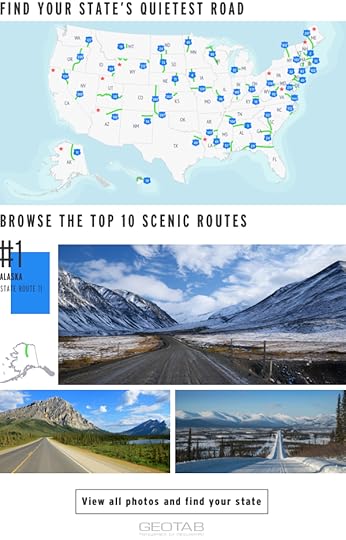
Click the image to open the full interactive version (via Geotab).
If you’ve already cruised the rocky Pacific coastline on Highway 101, check out U.S. Route 395, which meanders through the “Oregon Outback”, a high-desert plain that covers two-thirds of the state. Or on the other side of the country, drive the 157-mile Route 201, which starts just north of Portland, Maine, and crosses the state in a near-beeline for the Quebec border.
If isolation is what you are looking for, Utah has a 355-mile portion of U.S. Route 50, also known as “America’s Loneliest Road.” While the road sees very few people, Route 50 passes by an abundance of nationally renowned attractions, including the Great Basin, Arches, and Canyonlands national parks.
Unsurprisingly, the quietest road in all 50 states can be found in Alaska. The James W. Dalton Highway, or State Route 11, is a 414-mile stretch of road, gravel, and ice that begins 80 miles north of Fairbanks. From there, it heads north across the Yukon River, through the Gates of the Arctic National Park and Preserve, over the invisible line of the Arctic Circle, and into the farthest reaches of the sparsely populated state.
In 2015, fewer than 200 vehicles trekked along the Dalton Highway, which ends in Deadhorse, Alaska.
America is famous for its massive highway system and epic road trips, which means adventurers have to work a little bit harder these days to avoid the throngs of tour buses. Maybe the answer can be found by piecing together the nation’s loneliest roadways. 

More like this: 12 short road trips that take in the best of America
The post If you hate people, these are the quietest, least traveled scenic routes in every state appeared first on Matador Network.


Meaning of every country's name
A map created by Credit Card Compare shows the historical meanings of each country’s name, as far back as their earliest literary translation. As it turns out, a number of factors may go into a country’s name — often to quite humorous results. To view the full size interactive map, click here.
The surrounding geography and wildlife are common baselines, with Andorra (shrub-covered land) and Spain (land of many rabbits) being among the most straightforward. In some cases, the name is an overarching term used to describe the residents (such as Estonia, which is derived from “Waterside Dwellers”). Some founders went even more in depth in elaborating upon the people who lived there. Macedonia means “Land of the Tall People” while Saudi Arabia translates to “Land of Good Fortune.”
The United States may be the most “to the point” of any country on Earth, translating to nothing except for exactly what the name states. A sign of our no-nonsense approach to identification? Perhaps, or maybe an ode to our ability to come together.
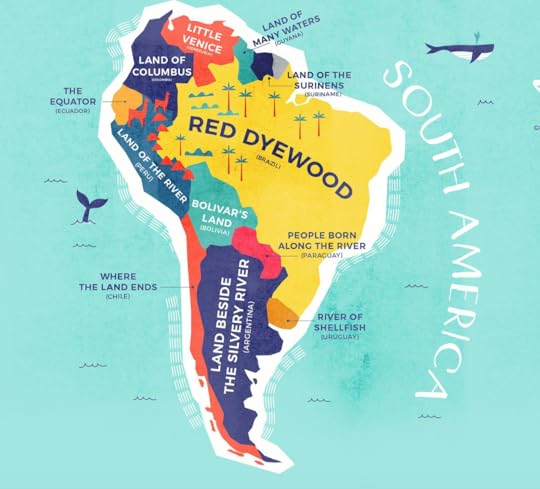
Photo: Credit Card Compare
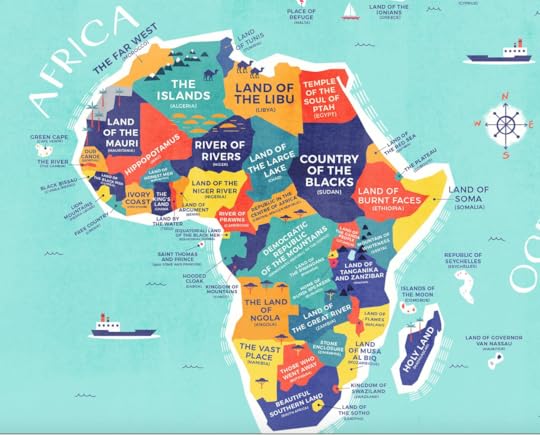
Photo: Credit Card Compare
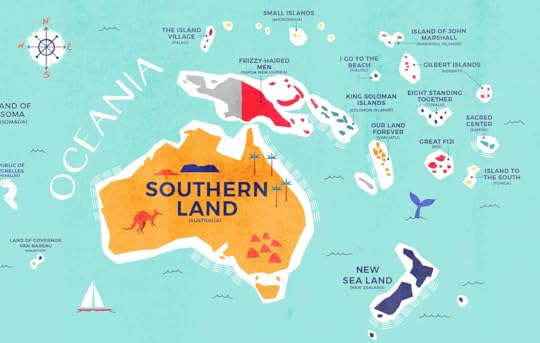
Photo: Credit Card Compare
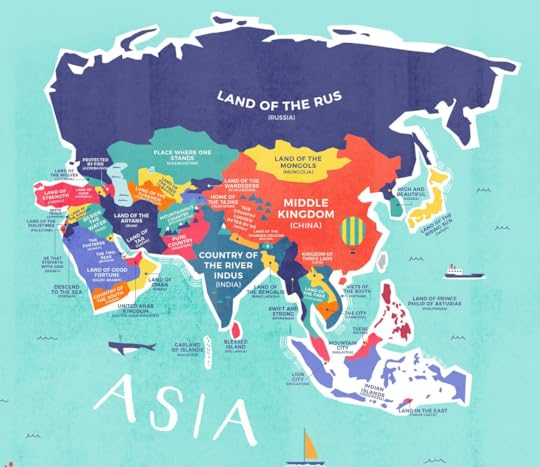
Photo: Credit Card Compare
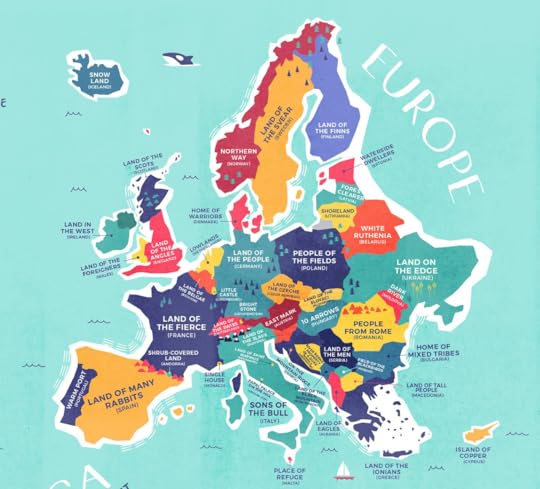
Photo: Credit Card Compare
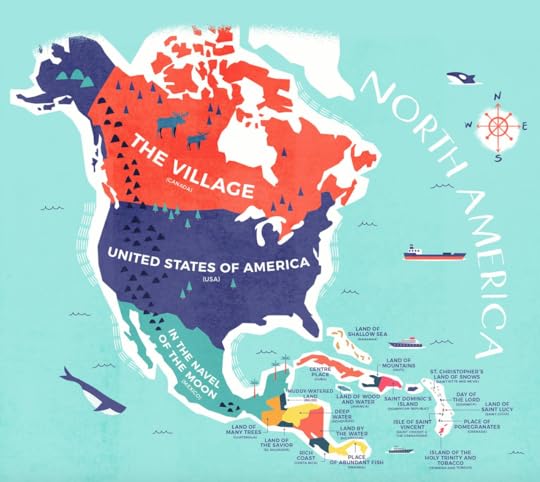
Photo: Credit Card Compare
For a bit of fun, try to trace your familial roots back as far as you can. Then, look up the translation for the country as far back as possible on this map. How well does the description fit you? Perfectly? Not at all? Either way, it may just provide a bit of insight into why your family members act the way that they do.
This map could also serve as a base for quizzical conversations, or at the very least, a way to make tracking your travels that much more interesting. “Where are you headed?” an enquiring friend or family member may ask. “To The Village,” you reply, leaving confusion on their faces as they wonder why you’ve loaded a full pack simply to head into town. Little do they realize you’re actually en route to Canada.
More like this: Mapped: How many languages are there in the world?
The post appeared first on Matador Network.

Remote Denali mountaintop chalet
It sounds like something out of a mountaineering film: a hexagonal lodge, wedged onto an outcropping of exposed rocks known as a Nunatak just five miles from the summit of North America’s highest mountain. Suffice it to say that the Sheldon Chalet doesn’t have valet parking. Or a parking lot, for that matter. Perched at 6,000 feet on Denali, this luxurious lodge is accessible only by plane.
Built atop the Ruth Glacier in 2017, the lodge is adjacent to the original Sheldon Mountain House which has housed climbers and adventure seekers since 1966. The Sheldon family has spent three generations building their Nunatak into this luxurious getaway that serves couples on a romantic retreat as well as it serves Denali summit-seekers.
Guests dine on regional cuisine prepared in-house, complemented by fine wines and the majestic 360-degree views of Denali available from throughout the ten-sided structure. In true alpine fashion, the main living quarters are centered around a large gas fireplace. Guest rooms and a communal restroom are located upstairs.
Want to visit? Bring your mountain adventure gear and your best game. Alaska is a hotbed for mountaineering, and the chalet offers access to everything from big mountain skiing to climbing to hiking. The Sheldon Lodge boasts an outside Observation Deck used for far more than just epic photoshoots. It also serves as the launching pad for helicopter adventures of the surrounding peaks. Personal guides are on hand to lead expeditions of Denali and the area surrounding the lodge, known as the Don Sheldon Amphitheatre. It’s definitely an epic way to experience Denali National Park.
The lodge appeals even to those for whom leisure is their high-alpine activity of choice. Chances of seeing the Aurora Borealis, or Northern Lights, are high but not guaranteed, and the views from the living quarters are perfect for relaxing over a good book. Get in touch with the Sheldon family to make reservations.
More like this: 4 reasons you need to visit Denali National Park
The post You can stay in this remote hexagonal chalet on top of the highest mountain in America appeared first on Matador Network.

Happiest city in America
For the third consecutive year, Naples-Immokalee-Marco Island, Florida has been ranked the happiest community in the US. The research conducted by Gallup-Healthways’ survey of well-being adopts a holistic approach by interviewing US residents from 186 communities querying key elements of their general well-being. The report draws on five core components of happiness; personal purpose and motivation, social relationships, financial stability, a sense of community and security, and physical health. Naples has not only come in first place for the past three years, it is also the first community to rank either first or second across all five elements mentioned above.
Runners-up to Naples are Barnstable Town; Massachusetts, followed by Boulder, Colorado; Santa Cruz-Watsonville, California; and Charlottesville, Virginia. All of these communities have featured in the top ten list over the past decade. The highest ranking communities are mainly located in five states. California leads the charge with seven cities, with Florida taking second place with four. North Carolina, Virginia, and Colorado also have two communities in the top 25. The report goes on to argue that there is a general trend of high-ranking cities and regions being located in states that have a reputation for advanced social policies and overall health and well-being of residents.
The lowest ranking regions are located squarely in the South, where the report details overall statewide decline in well-being over 2017. Following the trend of those at the higher end of the spectrum, the lowest listed have not shifted from the bottom over the last decade. Fort Smith, Arkansas-Oklahoma, had the poorest overall score.
Gallup-Healthways said, “data and insights from this report can be used as a call to action for communities around the country, leveraging it to benchmark and identify opportunities for well-being improvement.” Acknowledging that 2017 was a difficult year for citizens of the US, the poll results report a sharp decline in two core elements across the country — social and purpose. They go further to mention that this uncharacterized shift is the largest decline in the 10-year history of the Well-Being Index. That being said, there seems to be an overall nationwide improvement in the physical health of the population noting a decline in smokers and an increase in exercise.
Nationwide, this research is a crucial analysis of statewide productivity, the cost of living, levels of relative happiness and physical health. Gallup-Healthways also remarked that this data is vital not only for policy making but for local residents to use as a tool for improving quality of life. In regions where scores differ between communities that are culturally similar and geographically close, residents can use this information as a guide and adopt similar healthy behaviors and tactics. Gallup-Healthways said that taking a multifaceted approach to improving the well-being of citizens is crucial. The report goes on to outline the importance for everyone in communities from policymakers, mayors to everyday citizens, to take responsibility and play their part.
More like this: These are the happiest countries on Earth, according to science.
The post The happiest place in America is this underrated Florida city, for the third year in a row appeared first on Matador Network.

Last male Northern White Rhino dies
Sudan, the last male Northern White Rhino, had been suffering from an age-related infections for several months. Last night, to put an end to the suffering, Sudan was euthanized at the Ol Pejeta wildlife conservancy in Kenya at the age of 45.
Northern White Rhinos were poached to near extinction in the ‘70s and ‘80s to meet the demand for rhino horns in Asia and in the Middle East. They also suffered the consequences of conflict in some parts of Africa in the ‘90s and 2000s. In 2009, the last four White Northern Rhinos in the world (two males, including Sudan, and two females) were moved from a zoo in the Czech Republic to Ol Pejeta wildlife conservancy to be given a chance to thrive in their natural habitat and keep the subspecies alive.
Despite several attempts, the two females were never able to breed and with the death of Suni, the other northern white male, in 2014, there was little hope left for the subspecies.
The two White Northern Rhino females remain at Ol Pejeta. Like Sudan was, they are protected from poachers by armed guards 24/7. They are the last of their kind.
Notwithstanding the terrible plight of the subspecies, according to Ol Pejeta, conservationists and scientists are not giving up. The future of the Northern White Rhino hangs on the thread of in vitro fertilization. Semen formerly collected from Northern White males will fertilize eggs from the two remaining females and embryos will be inserted in and hopefully carried by Southern White females acting as surrogates.
Rhinos around the world
According to Save the Rhino, at the end of 2015, only around 30,000 rhinos survive in the wild. Most of them are the Black and White Rhinos of Africa — respectively listed as “critically endangered” and “near extinction” by the IUCN. The Asian species of rhinos, the Greater One-Horned Rhino (3,500+ left in the wild), the Sumatran Rhino (100), and the Javan Rhino (67) are also listed as “vulnerable” and “critically endangered.”
African Rhinos
The very aggressive poaching of rhinos in Africa has made it very difficult for these animals to survive outside of protected areas such as Ol Pejeta or Ol Jogi Ranch in Kenya. According to Save the Rhino, “In just a decade, more than 7,245 African rhinos have been lost to poaching” and despite the encouraging decrease of poached rhinos in South Africa in 2017 (from 1,054 in 2016 to 1,028 in 2017) thanks to anti-poaching units such as The Black Manbas, three rhinos are still killed every day in this country.
To learn more about rhinos, what is being done to fight the poaching crisis, and how to help, visit the Ol Pejeta, WWF, and Save the Rhino websites.
More like this: White Rhino: Encounter with an endangered species
The post The last male Northern White Rhino has died, and the species risks extinction appeared first on Matador Network.

Mermaids in Florida
Weeki Wachee Springs may appear to just be a small town on the Gulf side of north-central Florida, but here you’ll be able to experience close encounters with real mermaids. Ok — so maybe just people pretending to be mermaids, but when they’re flipping their fins at the famous underwater mermaid shows, you could almost believe that they were part of our world.
This aquarium-like setting was first opened in 1947 by a stunt swimmer who capitalized on underwater hose breathing techniques. From inside the 400-seat underwater auditorium, the performance area looks like a man-made spectacle, but it’s actually the natural formation of the springs, whose water bubbles up from an aquifer at a constant 74 degrees. The mermaids have been performing here for 63 years.
The mermaids, while entertaining, aren’t the only park spectacle. This 538-acre park includes riverboat cruises, Buccaneer Bay (which has four waterslides, a white-sand beach, and picnic areas), paddling adventures down the Weeki Wachee River, and educational animal shows.
Being a natural spring, the water is so clear that you can see 100 feet straight across to the limestone walls, and the area is often visited by wild animals who freely roam the river.
How to get there
An hour north of Tampa, Weeki Wachee Springs Park is located on US 19, at the intersection of SR 50 — north of Spring Hill and South of Homosassa Springs.
What to consider
The Park is perfect for families and children of all ages.
There’s a lifeguard supervised “Lil’ Mates Caribbean Cove” water play area for children under six.
Buccaneer Bay is included with admission to Weeki Wachee Springs State Park. Admission to the park is $13 for adults and $8 for children 6-12. Admission also includes the mermaid show, wildlife show, and a narrated riverboat ride.
While the mermaid shows happen 365 days a year (check the schedule here), Buccaneer Bay is only open on weekends from April to early June and daily from June to August, and weekends through September. They’re closed in the winter.
The mermaid show, as you’d expect, is a little corny, but children love it. Warning: The Little Mermaid show has a part where the witch jumps out, which has reportedly scared some children into leaving.
If you’re into self-guided adventure, definitely opt to kayak down the river. Get there early if you’re looking for a peaceful experience.
Try to go during the week and avoid spring break (of both high school and college).
More like this: How to swim with the manatees in and around Crystal River, FL
The post You can see mermaids perform underwater in a natural spring in Weeki Wachee Springs, Florida appeared first on Matador Network.

Original solo female travelers
Today’s solo female travel movement — the subject of so many articles, books, and blogs, the inspiration for so many trips and lifestyles — can trace its roots in America back to two people: Nellie Bly and Elizabeth Bisland.
Bly and Bisland were New York-based reporters in the late 1880s, at a time when American women had still not been granted the right to vote. Women in the field of journalism in this era had a particularly difficult time — most publications would not hire them unless it was to write about “women’s issues,” like housekeeping and fashion. They were paid substantially less than men and were rarely given good assignments. They were certainly not sent out on location or into potentially fraught reporting situations, as editors rationalized that it would be irresponsible to put women in harm’s way.
Out of this muck rose Nellie Bly and Elizabeth Bisland. Both, in the span of a few short months, would become nationally famous as travelers — or, to be more specific, as “globe-girdlers”: circumnavigators of the planet.
Modern women in conservative times

Nellie Bly
Photo: H. J. Myers
Nellie Bly was born Elizabeth Jane Cochran in a suburb of Pittsburgh. Her family was solidly working class, and for much of her teenage years, she was forced to work in menial jobs to help keep the family afloat after her father died. When she was 16, she penned an angry letter to the local newspaper, which had just published an editorial titled “What girls are good for,” suggesting that the answer was “housework and birthing babies.” Her response so impressed the editor of the paper that he offered her a job. She took on the pen name Nellie Bly, as it was considered improper for a woman to write under her own name.
At the start, she went undercover to report on the conditions working women had to deal with in factories, but upon receiving complaints about her writing, she was pigeonholed as a women’s writer, which Bly chafed against. She managed to talk the editor instead into reassigning her to the Mexico bureau. He refused unless she was accompanied by a chaperone, and so she took her mother. Her reporting was groundbreaking, and she did a lot to smash American stereotypes about Mexicans. But after six months, she was driven out of the country when she began speaking out against the government’s suppression of the free press.
Upon returning, she decided to move to New York to work for one of the big papers. She eventually talked an editor into giving her an undercover reporting gig for Joseph Pulitzer’s New York World. The idea was that she would feign insanity in order to be incarcerated at a women’s lunatic asylum so she could expose the horrible, dehumanizing practices there. Her report so appalled the public that it forced major reforms in the mental health community, and Bly became a star reporter. She went on to uncover a statewide corruption ring, she unmasked a Central Park sexual predator who had paid off the police to look the other way, and, at one point, she even managed to buy a baby while uncovering the city’s underground slave trade.

Elizabeth Bisland
Photo: A Flying Trip Around the World
Elizabeth Bisland was, in many ways, Bly’s opposite. She was born into a Louisiana slave-owning family that was ruined by the Civil War, and she began writing poetry from an early age. When she caught the attention of local intellectuals, she moved to New Orleans, where she became well-known as an educated woman and a socialite. In her early 20s, she decided to move to New York to pursue a writing career.
Unlike Bly, Bisland preferred not to put herself at the center of her stories, and instead, lived a quiet life as a literary type. She was still remarkably progressive for a woman of the slave-owning south, but was more upper class than Nellie Bly, and did not engage in muckraking.
The race around the world
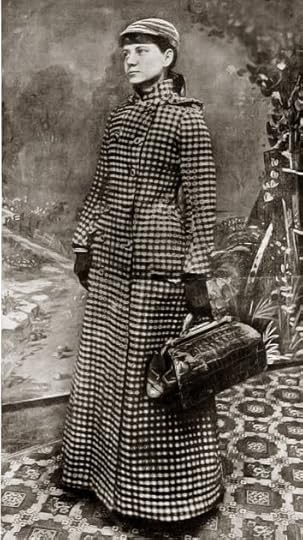
Nellie Bly
Photo: Historical and Public Figures Collection – New York Public Library Archives
In 1888, Bly pitched an idea to her editor: he should let her travel around the world to see if she could beat Phileas Fogg’s record from Jules Verne’s famous 1873 novel, Around the World in 80 Days. Her editor dismissed the idea out of hand — the thought of sending a woman unaccompanied around the world was, he believed, downright irresponsible, and he suggested she would not be able to pack lightly enough to move fast.
She managed to browbeat the editor into at least conceding that, if they did send a reporter on such a trip, it would be her. They left it there. And then a year later, several well-known travelers began approaching the World to see if they would fund such a trip. The editor realized that, if they didn’t sponsor the trip, another paper would beat them to it, and, true to his word, he told Bly she was to prepare for the trip. In defiance of the editor’s “women can’t travel light” expectations, Bly packed a single bag, saying, “If one is traveling simply for the sake of traveling and not for the purpose of impressing fellow travelers, the problem of baggage becomes a very simple one.”
In November of 1889, Bly set off to much fanfare in the World. That morning, the editor of The Cosmopolitan, a monthly magazine, read about Bly’s trip in the world and decided he could piggyback off of the publicity if he sent a female reporter in the other direction. Bly’s route, he reasoned, would be slowed by her choice of traveling east-to-west, as she would hit headwinds in the South China Sea. So he called Elizabeth Bisland to his office and asked her to leave that evening for her own trip. Bisland was not initially interested, but she was persuaded — though threats likely had a good amount to do with that. Nine hours after Bly’s ship left Hoboken, New Jersey, Bisland got on a train heading west across America, and the race was on.
Around the world in 72 days
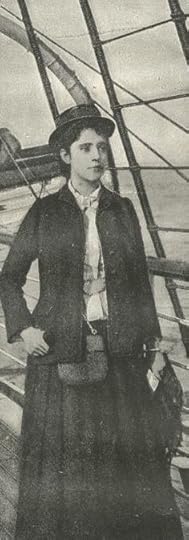
Elizabeth Bisland
Photo: Historical and Public Figures Collection – New York Public Library Archive
Jules Verne is widely considered to be the world’s first science fiction writer. He wrote Around the World in 80 Days to try and demonstrate that, with new technology like the steamship and the train, it was possible to circumnavigate the world in an amount of time that was previously unheard of. 80 days, he figured, was almost absurdly fast — circumnavigation a mere few decades before was a years-long affair.
Bly and Bisland’s journey was, by the standards of the time, so blindingly fast that they barely had time to see the world as it zipped by. Bly’s ship landed in Southampton, England, and she immediately had to catch a train to London and then a train to France, where she managed, for an afternoon, to meet with Verne himself. But from there, she had to zip across Europe, across the Mediterranean, through the Suez Canal and the Gulf Aden to Colombo in what is now known as Sri Lanka. From there she sped to Penang, to Singapore, to Hong Kong, to Yokohama, Japan, across the Pacific to San Francisco, and then a high-speed train trip across the US. The longest stretch Bly spent anywhere was in Hong Kong, where she was stuck for 5 days waiting for her boat.
The two had very different takes on the world — Bly was more interested in the speed of her trip than Bisland was, and was extremely defensive of the United States. She despised the British Empire, which she grumbled controlled all of the bits of the world that were worth owning, and she tried to pick fights over whether the Stars and Stripes was a more beautiful flag than the Union Jack. In Matthew Goodman’s book on Bly and Bisland, Eighty Days, he writes, “As she traveled among the English, Nellie Bly was becoming increasingly conscious of the peculiar privilege that imperial power conferred upon its citizens: the privilege of insensitivity. They could if they chose to, carry the empire along with them on their travels, as they sailed on English ships, slept in English hotels, ate English meals, taking little notice of the specific characteristics of the countries through which they passed.” It particularly galled Bly, who had chosen to not learn any other language so as to see how far English could get an American around the world, to find that she was piggybacking on British Imperial dominance. Her American dollars weren’t accepted anywhere — British pounds were accepted everywhere.
Bly also had an outspoken, brash personality, and was extremely competitive — she did not find out that she was even engaged in a race against Bisland until she reached Hong Kong, but she spent much of the rest of the trip in anxiety about whether she’d win the race, and would lie to the press about Bisland’s supposed attempts to sabotage her trip.
Bisland, on the other hand, was not interested in self-promotion, but found that she adored travel, and was deeply impressed by the British. The stratified class society reminded her of the old American South, and she found herself gravitating to the English wherever she went. She did not pack light, and was less interested in the competitive aspect than Bly. And, unlike Bly, her trip appears to have actually been sabotaged; in France, a mysterious man claiming to be a travel agent informed her that the ship she was supposed to catch hadn’t waited for her (even though it had) forcing her to change her route and lose time.
Bly won by about 4 days, getting off the train in Hoboken, New Jersey to a massive crowd and immediate national celebrity. Bisland came in to a much smaller crowd a few days later, and would never, to her pleasure, achieve Bly’s notoriety. The two, for a few months, were the fastest people to have ever circled the earth.
Travel’s first “influencers”
Bly’s fame hobbled her career. It is impossible, after all, to be an undercover reporter when your face is known to virtually everyone. While coverage of her journey gave The World its highest circulation numbers ever, she was never compensated for it financially, and she was forced to live off of book earnings and a lecture tour. She slipped into a depression, and never managed to return to that level of fame, but still advocated for workers’ rights and the poor for the rest of her life.
Bisland initially returned to her quiet life at The Cosmopolitan but found she’d been bit by the travel bug, so she returned to the United Kingdom, where she’d barely spent any time on her earlier trip, and there, she met her husband. The two would become prolific travelers, and they would hit many of the places she’d gone on her initial trip, albeit at a slower pace.
Much has changed since Bly and Bisland’s race, and much hasn’t: travel has become almost impossibly faster than it was 130 years ago, and, with social media, even more public. But solo female travelers still have to hear snide comments about packing and condescending remarks about safety. The famous women travelers now are known as “influencers,” and still must weather both the admiration and judgment of the society that follows their travels. But, as Bly and Bisland both realized at the end of their journey, it is the travel that matters, not the publicity that comes with it. You may be judged for what you do, but you do it anyway.
More like this: 8 badass female world record-breakers who proved women can do anything
The post The founding mothers of the solo female travel movement appeared first on Matador Network.

Funniest expressions in Welsh
People are often surprised to find that Wales has its own language, and even more so when I explain that, no, it definitely isn’t just a “dialect of English.” A primitive form of the Welsh language was spoken as far back as 550AD, and it has evolved into a rich and colorful language over the years.
Here are the 23 funniest expressions in Welsh, and how to use them. Pob lwc i chi! (good luck!)
1. A Welsh person doesn’t say they’ll arrive in “two-shakes of a lamb’s tail” (ironically) but in “two shits.” (dau gachiad)
2. A Welsh person doesn’t tell you to “stop bullshitting,” but to “stop breaking shit.” (paidâmalu cachu)
3. Welsh people don’t tell lies, they “speak though their hat” (siarad trwy ei het) or even “through their arse.” (siarad trwy ei dîn)
4. If a Welsh person talks a lot, they are not a “chatter box,” but they “talk like a pepper mill.” (siarad fatha melin bupur)
5. Welsh people don’t just go “over the top,” they go “over the top of the dishes.” (dros ben llestri)
6. In Wales, it doesn’t ‘“rain cats and dogs,” but “old women and sticks.” (bwrw hen wragedd a ffyn)
7. Welsh people don’t just “give up,” they “give it the best” (rhoi’r gorau iddi) or they “put the fiddle in the roof.” (rhoi’r ffidl yn y tô)
8. In Wales, you don’t get stung by a jellyfish, but by the “c**t of the sea” (cont y môr) or by the more PG-friendly “wibbly wobbly fish.” (pysgodyn wibli wobli)
9. If a Welsh person is a cheapskate, they’re not “tight fisted” but they “keep a hedgehog in their pocket.” (cadw draenog yn ei boced)
10. In Wales, if something is untidy, it’s not “a pig’s ear,” but “like pigs’ feet.” (fatha traed moch)
11. In Wales, that little thing fluttering around isn’t called a “butterfly,” but a “little chicken of the summer.”(iar fach yr haf)
12. In Wales, we don’t call them “ladybirds,” but “short red cows.” (buwch goch gota)
13. If a Welsh person is “dumb” or “gormless,” they are “like a calf.” (fatha llo)
14. A Welsh person isn’t just “useless,” they are like “like a fart in a jam jar.” (fatha rhech mewn pot jam)
15. In Welsh there is no word for “dickhead,” instead, we call someone a “sheephead.” (pendafad)
16. Welsh people don’t straight-up call you stupid, they point out that “you’re not wise” (ti’m yn gall!) or maybe that you’re a “funnel.” (twmffat)
17. In Wales, you don’t have a heavy session, you have a “naughty children’s session,” (sesh plant drwg) or a “session breaking the swings.” (sesh malu swings)
18. Welsh people don’t smoke “weed,” they smoke “naughty smoke.” (Mŵg drŵg)
19. In Wales it doesn’t matter if you’re on the wine, vodka, or White Lightning, Welsh people refer to any kind of alcohol as “beer.” (cwrw)
20. In Welsh you don’t get drunk, you get “dizzy” (chwil)
21. Welsh people don’t go to the toilet, they go to the “little house” (tŷ bach)
22. When something bad happens in Wales, you don’t tell someone “not to cry over spilled milk,” you say “don’t lift your petticoat after pissing.” (paid ȃ chodi pais ar ôl piso)
23. Welsh people don’t have a girlfriend or a boyfriend, but a gender-neutral word which just means “love.” (cariad)
More like this: 12 signs you were born and raised in Wales
The post 23 funniest expressions in Welsh (and how to use them) appeared first on Matador Network.

Alaskan calamities
Alaskans take pride in our preparedness, and we’re pros at handling any situation that comes our way. But despite all our foresight, planning, and stockpiling, disaster still occasionally strikes.
Here are 10 calamities even seasoned Alaskans have to deal with.
1. The river closing.
When the fish aren’t running and we are forced to make adjustments to our favorite pastime, we are not happy about it. News of a late opening or an unexpected river closure brings instant disappointment, especially when the window to catch a particular fish is already short.
2. Low salmon runs.
Beyond the river closures and the bleak environmental implications, low salmon runs can devastate our economic situation. A bad run can wipe out a year’s worth of income for commercial fisherman or mean our salmon supply will be depleted before winter’s end.
3. Getting too personal with wildlife.
We are well-trained at giving moose, bears, and other creatures their space, but we can’t avoid every wildlife run-in. Talking to ourselves through the woods and properly securing our trash are good safeguards, but sometimes we find ourselves staring down an angry moose or a curious bear. Depending on the situation, we know when to back off, play dead, or make a run for it.
4. Making a small mistake on our PFD application.
Auditors don’t play when issuing the PFD (Permanent Fund Division). When we slip up, tracking down the records that justify our claim to our dividend is a massive headache. And since the check will come late, it almost certainly means that we’ll miss out on the PFD sales.
5. “We don’t ship to Alaska.”
Nothing deflates our excitement about a new product or gadget faster than hearing these four words. After shaking our fists and picking a fight with the customer service representative, we’ll frantically search for a company that has the decency to ship us the product we want, even if it takes a couple weeks longer.
6. Not having enough snowfall.
In the past few years, Alaska has seen record high snowfalls alongside record lows. By the time October rolls around, anxiety increases, snowless spells put a damper on everything from snow machining to the Iditarod and make winter practically unbearable.
7. Daylight savings time.
There’s no winning when it comes to daylight savings time for us. In the fall, it eliminates the last sliver of morning daylight, the sun rises and goes down while we’re trapped at work. In the spring, it steals the hour of evening daylight we were just starting to enjoy after the long winter. Daylight savings is the bane of our existence. We should join forces with Arizona and ban it.
8. Burn bans.
Since they threaten to throw a wrench in all our bonfire plans, we’ll religiously check the news until they’re lifted and pray that they don’t last until summer solstice or the 4th of July.
9. Traveling out-of-state last minute.
We may be able to score a deal on a trip months in advance, but when we have have to leave Alaska unexpectedly we’re stuck paying astronomical fares. If we’re out of airline miles, an out-of-state emergency is bound to wreak havoc on our finances and should be avoided at all costs.
10. Hitting a moose.
After dealing with insurance claims, smashed windshields, and having the death of a moose on our hands, the only silver lining may be knowing that the carcass can be salvaged to feed a family through the winter.
More like this: 5 uncomfortable truths about living in Alaska
The post 10 calamities only Alaskans have to deal with appeared first on Matador Network.

March 19, 2018
Ultimate #vanlife adventure truck
While it is hard to argue against giving up your over-priced studio apartment for a year of #vanlife, hauling an old VW Bus with a battered engine across the Rockies isn’t always the best idea. That’s why this rock-climbing couple went ahead and created the perfect adventure vehicle from scratch.
They started by decapitating the roof of their original vehicle, an old Toyota Tacoma. The Tacoma was then outfitted with a TV and massive storage cabinet underneath a comfortable bed. But to give it some serious upgrades, the duo took their pickup truck to a metal shop and got to work.
A post shared by Adventure Truck (@get.the.truck.out) on Dec 18, 2017 at 12:36pm PST
They tore apart a new aluminum canopy, then rebuilt it with a new frame that unfolds to create an extra three feet of space above the cargo bed. That made room for a new sleeping arrangement. Then, they rewrapped the frame with aluminum, windows, and weather-proofing trim.
The new space was tall enough to stand in, but the couple was not finished yet. They added a ceiling fan, a second battery compartment, a propane tank, bamboo floors, curtains, an assortment of storage cabinets, a bench with handmade cushions, twinkly lights, and even a functional sink.
A post shared by Adventure Truck (@get.the.truck.out) on Mar 8, 2018 at 11:53am PST
Unlike most vans, the Tacoma is still a rugged off-road vehicle that is well-balanced on steep inclines and doesn’t have to worry about clotheslining itself with low branches and tunnels. But the new unfolding (upfolding?) cabin makes this truck just about as spacious as any van, most of which don’t come with a working sink.
A post shared by Adventure Truck (@get.the.truck.out) on Mar 12, 2018 at 10:52am PDT
A post shared by Adventure Truck (@get.the.truck.out) on Dec 4, 2017 at 12:57pm PST
A post shared by Adventure Truck (@get.the.truck.out) on Oct 29, 2017 at 2:21pm PDT
So there you have it, the most expertly dreamed up, crafted, and executed #vanlife adventure truck ever. You can see the step by step process on Imgur, if you’re up to the DIY. Based on the couple’s Instagram feed, you can expect to see this Tacoma hauling-A up and down the Rockies, from Canada to Arizona, in search of ever-more-challenging climbing routes.
A post shared by Adventure Truck (@get.the.truck.out) on Nov 4, 2017 at 11:46am PDT
More like this: Vanlife as a traveling couple
The post This couple built the ultimate #VanLife adventure mobile out of a pickup truck appeared first on Matador Network.

Matador Network's Blog

- Matador Network's profile
- 6 followers


