
Matador Network's Blog, page 1377
March 22, 2018
Mile-high skyscraper by 2045
The metropolitan region of Tokyo is home to more than 36 million people, making it the most populated metro in the world, but a few architects have their eyes on a new record for the Japanese capital: the first city to have a mile-high skyscraper.
The project began in 2016 when the architecture firms Kohn Pedersen Fox Associates and Leslie E. Robertson Associates proposed the tower and its surrounding structures as a way to shield Tokyo Bay from natural disasters while accommodating a growing urban population. If built, the appropriately named Sky Mile Tower could house up to 55,000 people.
When the new World Trade Center in New York City was completed in 2014 at a symbolic 1,776 feet high, it joined an elite club of about 100 “supertall” skyscrapers, or structures taller than 984 feet that are inhabited year-round. However, at 2,717 ft, the Burj Khalifa is a member of an even smaller club: the “megatalls”, of which there are only a handful in the world.
The Sky Mile Tower would be in a league of its own. At 5,577 feet, it would reach nearly half the height of Mt. Fuji.

Photo: KPF
At this height, the power of the wind slamming into the sides of the building is just as threatening to the structure as earthquakes and tsunamis, so megatalls have to come up with designs that “fool the wind.”
For instance, the facade of the Shanghai Tower twists 120 degrees from top to bottom in order to reduce wind loads, while the Shanghai World Financial Tower’s architects cut a massive trapezoidal out of the upper floors to accomplish the same feat.
To protect itself from the wind, the Sky Mile Tower is built in interlocking segments that allow wind to pass through the core of the building.
As pumping water a mile into the air would be astronomically expensive, the tower would be equipped with “cloud harvesting” technology that would feed water tanks at different levels.
While futuristic cloud-harvesting megatall structures are cool, it is at the base of the tower where residents would see some of the best amenities.
Like most coastal cities in the world, sea level rise poses a serious threat to Tokyo. In order to protect the city, the Sky Mile Tower would be surrounded by hexagonal structures that would serve as a barrier to storm surges and tsunamis. There are several ideas about what to put inside these structures, including energy and food farms, freshwater reservoirs, and beaches for residents. Aside from the beaches, residents would also have access to libraries, restaurants, shops, hotels, and gyms at various levels of the tower.
If accepted, the project would be scheduled for 2045. However, a project like this would be almost prohibitively expensive and exceptionally difficult to construct. Then again, Tokyo is already working on the tallest timber skyscraper in the world. 

More like this: 28 dizzying photos from the top of the world’s tallest skyscrapers
The post Tokyo might have a mile-high skyscraper, the tallest in the world, by 2045 appeared first on Matador Network.


Get a job and move to Japan
If you’ve ever dreamed of living in Japan but have that pesky little issue of not being a citizen, all hope is not lost. As someone who went through these steps, I can attest that it’s not as difficult as you may think to move to Japan. Yes, the easiest way to move to Japan would be to fall in love with a Japanese resident, lock that resident down, and create a love child, but this could take years and requires skills of flirtation that we all simply don’t have. So let’s stick with the second easiest method: finding a job.
How to find a job and move to Japan:
1. What visa are you eligible for?
2. What documents do you need?
3. Where can you look for a job?
4. Apply
5. Receive visa and celebrate over sake.
1. What visa are you eligible for?
There are several visas issued by the Japanese government for individuals looking for a long-term stay listed on the Ministry of Foreign Affairs of Japan website, but the process for all of them is the same. You can move to Japan if you:
Have a job lined up
Are a university student
Are a highly-skilled professional
Have family living in Japan
The first two categories are the easiest to qualify for to hop on over to Japan.
A working holiday visa does exist, but not for US citizens. In order to qualify for one, you need:
Proof that you are in good health. This can be done with a copy of your medical records from your doctor. The last health check must be within the past 3 months.
Enough funds to travel through Japan, as well as to buy a ticket back home. Printed bank statements from the past 3 months will suffice.
To not be accompanied by dependents.
The working holiday visa also prohibits employment in bars, nightclubs, and gambling establishments, so if all you know is how to sling drinks, this isn’t the best option.
A full list of the working conditions and qualifications can be found on the Ministry of Foreign Affairs of Japan website.
Note that it is not a good idea for you to travel to Japan before having a job lined up simply due to the cost of living. Sure, you can go to Japan and try to look for a job, but you’ll be spending a good chunk of your savings on accommodation and transportation alone. My advice: let’s keep that hard-earned money of yours in the bank and get a job before landing.
2. What documents do you need?
Whichever visa you qualify for, there are only 4 documents that you’ll need to begin the application process (additional documents may be requested depending on the employer):
Valid passport
It’s a good idea to acquire this document first. It must be signed before applying.
Visa application form
The form is the same form no matter which visa you are applying for. It is pretty straightforward to fill out, but make sure you have the information of your employer or sponsor ready in order to complete it. It must be printed, completed, and signed.
Note: The visa application form asks if you have a criminal record. If you do have a criminal record, the Japanese Embassy will need you to provide proof that you are allowed to leave the country and will not process the visa until they receive it. I recommend bringing proof with you to the embassy in order to avoid two trips.
One photo (2”x2”)
The photo can be a simple passport photo that you have taken at your local drugstore. Attached it to your application form (there’s a designated spot on the form for this).
Note: Even though only one photo is required for the actual visa, make sure to take several passport photos as your employer will require more of them later on.
Certificate of Eligibility (the original and a copy)
Here’s where the headache begins.
A COE is a document that proves to the Japanese government that the person landing in Japan meets all the requirements for the activities they will be engaging in during their stay, such as being a student or having the qualifications to work.
Generally, the COE is submitted by your employer or your school (i.e. your sponsor), as it must be taken to the regional immigration office of where you will be living in Japan. The employer or sponsor will, therefore, fill out the application for the COE on your behalf, but in order for them to do so, you will have to send additional information and documents. These include:
One passport photo
Signed work contract
Original university degree (don’t worry, you’ll receive it back)
The address of your nearest Japanese Embassy or Consulate-General
The dates of your previous visit to Japan (if any).
When your employer has submitted the application for the COE, you can start looking for flights; however always check what the cost of changing or canceling your flight would be in case of any hiccups that occur during the processing time, like misrouted mail or missing documents.
Ensure that all documents are fully legible, especially if you have to fax any of them to the embassy. I faxed a document to my nearest embassy with the necessary information legible, but the bottom of the document was cut off and I didn’t think anything of it because there was nothing important there. The staff at the embassy thought otherwise and wouldn’t process my visa until they received the document in full.
3. Where to look for jobs?
The types of jobs that foreigners can apply to in Japan are limited, but you can find them all online at these recommended websites:
Gaijinpot.com
Gaijinpot is the best source for foreigners trying to live, work, or study in Japan. It contains multiple job postings and you can filter your search for jobs that need native English speakers.
JobsinJapan.com
Another great search engine that lets you upload your skills/resume and set alerts for jobs of interest.
JapanEnglishTeacher.com
As the title suggests, this website is solely for English-teaching jobs.
Jetprogramme.org
The Japan Exchange and Teaching Programme is the most popular recruiting agency for English speakers looking to teach English in Japan.
Daijob.com
This search engine posts a variety of jobs from IT to hospitality, but they all require their applicants to speak Japanese and English.
Unfortunately, most of the jobs available for foreigners require some Japanese-language skills. It is a good idea to take Japanese lessons before arriving in Japan, as well as classes once in the country (in certain cases, your employer will pay for these, so make sure to ask).
If you don’t have the time to learn the language, the easiest job is to become an English Teacher. It doesn’t require you to speak Japanese and you don’t necessarily need to be a native English speaker — just an English speaker from outside of Japan. The requirements to becoming an English teacher in Japan are:
Speak English
Have a BA
Have a TEFL or TESOL certificate
Have some experience in tutoring/teaching or with kids
If you already have your BA, you can easily become a certified English teacher in 3 months or less.
4. Apply
Once you’ve found your new shigoto (job) and your employer has finally sent you the Certificate of Eligibility, you’re ready to apply for your visa. Take all the required documents to your nearest Japanese Embassy or Consulate-General and put on your biggest smile. They won’t smile back, but you’re entering their country and you want to make a good impression.
If you arrive to the Embassy or Consulate-General at opening time, you might be able to get your visa by closing time the same day.
5. Receive visa and celebrate over sake.
When you receive your passport back, there will be a big shiny sticker taking up one whole page — this is your Japanese Visa. On it, you will see the date of issue and the date of expiration which will only be 3 months apart. Don’t panic. Every visitor has 3 months from the day they receive their visa to enter Japan. After 3 months, the visa expires, but you will still be allowed in-and-out privileges.
While it might seem like a long process, note that it only took me 6 months to get my English teaching degree, find a job, collect documents, quit my previous job, and fly to Japan. If you get started now, you, too, could be there in September.
More like this: 10 customs you must know before a trip to Japan
The post How to get a job and move to Japan appeared first on Matador Network.

Be a more mindful traveler
It’s often said that travel is a great teacher, but it’s easy to crisscross the globe without getting any wiser if we don’t engage with our surroundings. These days, we’re often more interested in ticking “unmissable” sights and experiences off a list than in taking time to really get to know a place. And the culture of smartphones and selfies means that we’re sometimes more concerned with how our travels look, than with how they feel.
To travel mindfully is to rediscover the old-fashioned joys of travel – to explore, to learn, to connect with others; to slow down and to focus on your own thoughts and emotions, as well as on the world around you. If you change your mindset, you’ll be rewarded with a more enjoyable and authentic holiday; and in the process, you’ll help reduce the negative impact on the destinations you visit, too. Here are some tips on how to do so:
1. Change the way you plan your travels.
Mindful travel doesn’t start when you board the plane: you can incorporate mindfulness into the way in which you choose and plan your travels. Rather than picking a destination based on the weather or it’s ‘hot list’ status, think about what you need to get out of your holiday. Is it important to have time to de-stress, to bond with your family, or even get out of a rut and have an adventure? If you focus on what you need rather than where you think you should go, your travels will be more fulfilling, and you won’t end up following the crowd; which is good both for you and for the many communities facing over-tourism.
2. Step away from the tech.
With smartphone-toting travelers and free Wi-Fi on tap, you’re more likely to see people gazing at their social media feeds than engaging with each other and their surroundings – a far cry from the days when home was only reachable by weekly calls from the local phone box. Yes, it’s comforting to be able to get in touch with friends and family if need be, but if you’re constantly looking at your screen, you end up cut off from local culture rather than absorbed in it. The simple answer? Put down your phone and your laptop, strike up conversations with local people, and use all your senses to soak up the sights and sounds and smells of your destination.
3. Go easy on the camera.
Too often travelers spend their time working out how to portray their travels rather than living in the moment – another one of the downsides of the proliferation of smartphones. If you’re seeing the world solely through a screen and are too concerned with taking the perfect selfie or an artful shot of your dinner to post on Instagram, you’re not living in the moment. Take a leaf out of a professional photographer’s book and have an idea of what you want to capture before you go out, then limit yourself to just a few shots. That way you’ll spend more time looking around you and less time trying to capture everything on film.
4. Cut down the itinerary.
If you try to pack too much in to your trip, it’s hard to take stock of the world around you. Let’s be honest: will your travels be any richer if you stand in front of yet another ‘must see’ along with crowds of snap-happy tourists? Leave some time for aimless wandering, doing nothing, and people watching. And while it’s tempting to look to maps and guidebooks as an anchor in an unfamiliar destination, ditching the advice for a while leaves more time for chance discoveries, such as stumbling upon an exciting new neighborhood or making a surprising personal connection. In short, your memories will be deeper and longer lasting if you take time to look, listen and feel.
5. Work mindfulness into your daily travel routine.
A daily mindfulness routine while you’re on the road can help you to be more present on your travels and to deal more effectively with the surprises and challenges that travel can throw at you. For example, taking time out as soon as you wake up to pause, reflect, and cleanse your mind will only take a few minutes but will set a positive tone for the rest of the day. Or, when eating the local cuisine, slowing down over your meal and focusing all your attention on the taste, smell, and texture of what you’re eating can greatly enhance the experience. You could even use mindfulness techniques while waiting for that bus or plane – focusing your full attention on your breath as it flows in and out of your body and accepting everything for what it is – whether it be a delayed flight or a bumpy ride.
6. Be aware of your impact on others and on the environment.
A lack of awareness of the negative impacts of travel leads to problems such as over-tourism, environmental degradation, and a disconnect from or even disregard for local people. As a responsible traveler, you need to be mindful of your behavior when visiting other countries, rather than just switching off or suspending normal moral values – after all, you’re a visitor in someone else’s home. If you treat communities, places, and wildlife fairly and respectfully, you’ll gain greater insight into the local way of life, leading to a more genuine travel experience, while also making sure that local people and environments benefit from your visit. There’s a really useful guide to how to travel responsibly here.
More like this: Why “mindful travel” is going to be the next big thing
The post How to be a more mindful traveler appeared first on Matador Network.

Pollution-absorbing city benches
Ever felt nauseous after landing in a new city, walking outside, and finding that the air is incredibly polluted? The feeling is a common one in major cities worldwide, and the effects of constantly breathing polluted air are having major impacts on residents’ health. According to a study cited by The Guardian, more than 3 million people die each year as a result of air pollution.
German company Green City Solutions is doing something about it. Founded in Dresden in 2014, the brand created what looks very much like the offspring of a living green wall and a park bench. That’s essentially what it is, in fact, albeit with a heavy emphasis on the ‘green.’ Their product, aptly called the CityTree, helps polluted cities breathe easier by absorbing as much carbon pollution as 275 trees.
The CityTree is designed for functionality more so than aesthetic, although by many accounts they look incredibly fashionable as well. Instead of plants and flowers, the living element is a moss culture which is hyper-effective at absorbing particle matter from the air. The company states that each unit removes 240 metric tons of CO2 annually. “Moss cultures have a much larger surface area than any other plant,” Green City Solutions co-founder Zhengliang Wu told CNN. “That means we can capture more pollutants.”
One of the most practical features of the CityTree is that it takes up only 1% of the space that planted trees would require to sequester an equal amount of pollution, a blessing for densely crowded cities where space is a constant issue. The structure is just four meters tall and three meters wide.
This makes a CityTree location perhaps the most eco-friendly spot to stop and read over a cup of coffee or chill out while waiting for a bus or train. Green City Solutions’ product is currently installed in 20 major cities worldwide, including London, Oslo, and Hong Kong. The company’s plan is to spread their green love across the world.
More like this: The 'Green Wall' that is saving Africa from desertification
The post These moss-covered city benches absorb as much pollution as 275 trees appeared first on Matador Network.

App tells you what flying over
One of the few joys of sitting in a hard, cramped chair at 40,000 feet is peeking out the window and taking in the vast horizon below you. But how do you know what you are looking at?
A new free travel app called Inflighto takes the map technology that has been glued into your neighbor’s headrest for the last few decades to a whole new level.
While the headrest maps superimpose a not-to-scale plane over a slowly shifting map, Inflighto uses the plane’s WiFi to deliver live pinpoint tracking. The app also connects to social media platforms, making it easier to keep friends and family updated on your flight.
Follow Matador on
Vimeo
Follow Matador on
YouTube
Not only will users be able to identify the different landmasses your plane is cruising over, but the app also offers information about tourist destinations, landmarks, and events taking place below.
For those who want to know what’s happening down on Earth at all times, even when crossing an ocean, the app shows information about boat traffic underneath your plane.
For nervous flyers, upgrading to the premium version of the app gets users access to information about incoming weather patterns, giving users more time to prepare for possible turbulence.
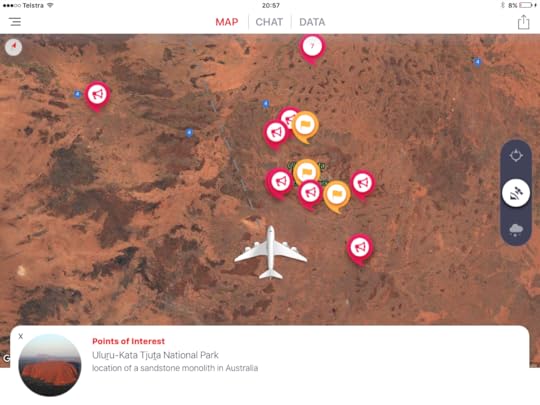
Photo: Inflighto
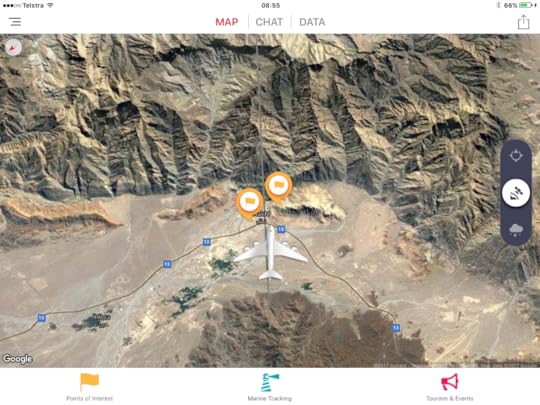
Photo: Inflighto
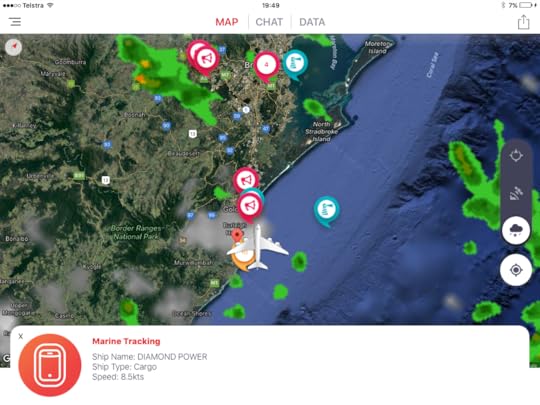
Photo: Inflighto
Users can also access a messaging chat room that allows them to communicate with the crew, fellow passengers, even the pilots. As Inflighto was created by two Australian pilots, the app is meant to improve the flying experience for passengers and crew members alike.
“We realized the PA system is pretty limiting for pilots who see a lot of interesting things out the cockpit window”, said co-founder and pilot Christopher Smyth, who gave the Northern Lights as an example. “It might be an inconvenient time during the flight when most of the cabin are asleep or watching movies. The flight crew probably don’t want to disturb everyone to let them know there’s something to look at our the window.”
Smyth and his co-founder John Hopkins created the app to help passengers “re-engage with flying” as an experience.
Even if the plane isn’t whizzing past an Aurora, just about anything a pilot points out beats having to watch another rom-com on a headrest screen.
More like this: 8 must-have flight apps that will save you money
The post A new app alerts you if you’re flying over anything awesome appeared first on Matador Network.

Latin American slang words
Although most Latin American countries share the mother tongue of Spanish, there are countless dialects and certain words that have completely different meanings from one place to another. The differences can be so extreme that you may find yourself completely lost even if Duolingo insists you’re “fluent”; Chileans chop words up, remix them, and use a completely different localized vocabulary, for example. If you’re traveling throughout the region, slang words play a large role in social interaction and culture. Here is a guide to the essential slang words you need to know when traveling in Latin America.
1. Pololear
“Pololo/a” means boyfriend/girlfriend in Chilean. If you are in a lasting relationship with someone, you are “pololeando.”
2. ¿Cachai?
Another popular word in Chilean that is peppered into most sentences. It’s used to verify that another person understands what you are saying. It is similar to “do you get it?”
3. Listo!
You’ll hear this one a lot all over South America, especially Chile and Colombia. “Listo!” means something/someone is ready. That said, more than often it is used as a means of agreement.
For example:
“Listo! Vamonos!”
“Ok, let’s go!”
4. Al toque / Al tiro
If you want to do something fast, almost instantly, then say “Al toque” in Peru, Argentina and Uruguay, and “Al tiro” in Chile.
For example:
“Voy al tiro.”
“I’ll go immediately.”
“Te lo envío al toque”
“I’ll send it ASAP.”
5. Chévere
This is very popular in Colombia and Venezuela, it’s used to describe something as nice or cool. Ask a Venezuelan “How are you doing,” and they may say “Chévere.” In Colombia, you’ll hear “Qué chévere” to show excitement for good news or “Estuvo muy chévere” to refer to something as cool. No matter the context, you’ll hear this word in almost every sentence in Colombia and Venezuela.
6. Bacán / Bacano
This is a more common way to say something is nice or cool in Colombia, Peru, Ecuador, and Chile. It’s a synonym for chévere.
7. Chido / Qué padre!
If you are traveling down to South America from Mexico, you’ll commonly hear this as their version for cool or nice.
8. Naguará
This is used in Venezuela to express excitement when something is extraordinary. It’s a more expressive version for “chévere”.
9. Habla pe causa
A common Peruvian slang for saying hello that basically translates to, “hello my friend!” but doesn’t make much literal sense if you’re only familiar with traditional Spanish.
10. Por si las moscas
In South America, we have an obsession with slang related to animals. This phrase translates literally to “in case of flies,” but culturally it means “just in case.” It’s broadly used in countries such as Venezuela, El Salvador, Chile, and Colombia.
11. Hacer una vaca
In Colombia “hacer una vaca” or “make a cow” has nothing to do with animal testing or cloning, it means to collect money from a group of people for a specific purpose, usually to purchase alcohol. You’ll also hear it in Uruguay, Chile, Venezuela, and Bolivia. In Perú they say “hagamos chancha” which means “let’s make a pig.”
12. Hacer el oso / Hacer la foca
“Hacer el oso” or “make the bear” in Colombia means to do something embarrassing. “Hacer la foca” or “make the seal” is used in the same context in Ecuador. Commonly if someone feels ashamed, he/she will say “¡Qué oso/foca!”.
13. Camello
If someone says “vamos a camellar” he/she is not inviting you to ride a camel. It means something much less adventurous: “let’s go to work.” Camello is the word for a job in Colombia and Ecuador.
14. Echar / Lanzar / Tirar los perros or Tirar los galgos
Don’t start running if you hear someone say “te va a echar los perros,” which translates to someone throwing dogs on you. Rather than being concerned, you should feel proud and excited. It is used as a means of seduction when someone is flirting with you. It is commonly heard in Colombia, Venezuela, Ecuador, Guatemala, and Puerto Rico.
In Argentina, the expression is a bit fancier, as they will throw the galgos, which is a fancy breed of dog.
15. No sea sapo
“No sea sapo” means “Don’t be a toad” or “Mucho sapo!,” “What a toad!.” It is used in reference to someone who likes gossiping. Commonly heard in Colombia, Chile, Costa Rica, Ecuador, Panamá, Perú, and Venezuela.
16. Arrecho
You need to be very careful with this word. In Colombia (except in Santander), Peru, and Panama, “estoy arrecho” means horny. But if said by someone from Honduras or Venezuela, they are pissed off.
17. Tirar / Coger / Cachar / Garchar
Now, you understand that if you are “arrecho” in Colombia, you are probably down for having sex. If someone is horny in Venezuela or Chile you’ll hear “vas a tirar”. In Argentina “vas a garchar,” and in Central America, the South Cone, and Bolivia, “vas a coger.”
18. En bola, en pelota/o
After declaring a desire to have sex, and believe me, that’s quite commonly heard, you might find yourself “en bola” or “en pelota/s.” Bolas and pelotas translates to balls. If you are in balls you are naked. Mainly used in Colombia and Venezuela.
19. Arruncharse
“Arrunchémonos” or “hagamos plan arrunche” means to snuggle or spoon. You’ll hear this in Colombia.
20. Apapacharse
The verb “apapachar” is widely used in Mexico. It means to pamper or coddle. It’s also utilized in countries like Colombia, Peru, Chile, and Honduras.
21. Most countries in South America have a different word for friend, bro, or girlfriend.
Pata/Causa in Peru
Pana in Ecuador and Venezuela
Cumpa in Bolivia
Maje in El Salvador
Cuate or Wey/ Güey in Mexico
Fren in Panama
Parce in Colombia
Mae in Costa Rica and Honduras
Weon/Weona in Chile
Kape in Paraguay
Boludo in Argentina
22. Tono / Carrete / Rumba / Parranda / Arranque / Farra
Now, you need to learn how to invite your friends to a party — or I should say to a Tono in Peru, Carrete in Chile, Rumbaor Parranda in Colombia and Venezuela, Arranque in Panama, and Farra in Ecuador.
For example:
“Esta noche vamos a rumbear/tonear/carretear/parrandear/arrancar/farrear!”
“Tonight we are going to a party!”
23. Chupar
The direct translation of this word is to suck, but it is used more commonly as an informal way to say drink or chug alcohol. You’ll hear this chanted at parties in Argentina, Bolivia, Chile, Ecuador, Mexico, Panama, and Peru.
24. Guayabo / Ratón / Chuchaqui / Caña / Cruda / Goma
After chugging a few too many drinks you’ll need to know the word for hangover.
Guayabo in Colombia
Ratón in Venezuela
Chuchaqui in Ecuador
Caña or hachazo in Chile
Goma in Costa Rica, Panama, Guatemala, Nicaragua, El Salvador, Honduras
25. Boludo
“¿Qué hacés boludo?” is a pretty standard phrase in Argentina. Boludo has two meanings: dumb or friend. Pay attention to the intonation and non-verbal cues. Your “new friend” might be insulting you.
26. Hablar paja
The direct translation of this is to “speak straw.” It is used in reference to the habit of talking too much or talking about something that is not true. Basically, it’s means “bullshit” and is used in Panama, Colombia, and Costa Rica.
27. Estar salado
“Estar salado”, means to be salty and is used in Colombia, Ecuador, and Panamá to describe someone who is unlucky.
28. Poner los cachos / Montar los cachos
If someone “poner los cachos” which means to puts the horns on you. I am sorry to say that if you are in Colombia, Ecuador, or Venezuela it means the person is cheating on you.
29. Levantar
This means to lift up, but when used in this context, “levantarse a alguien” is referring to picking someone up. You’ll hear this in Colombia, Argentina, and Panama.
30. Pura vida
This is one of my favorite slang words, characteristic of Ticos (Costa Ricans). It means hello, goodbye, great, thank you, you’re welcome, nice to meet you. Ask a Tico, “how are you doing?” and they’ll answer “pura vida.” The expression fills you with energy and happiness.
More like this: 12 Spanish words with no exact equivalent
The post The essential slang words you need to know when traveling in Latin America appeared first on Matador Network.

Toughest female adventurers
Women are bold, strong, and courageous as hell, but too often, our achievements have gone ignored. While they aren’t commonly taught about in history classes, here are six female travelers whose stories absolutely deserve to be known. They weren’t just some of the toughest women adventurers of their time, they were some of the most amazing adventurers — period.
For more stories about rad women through history, check out @womenadventurers on Facebook and Instagram.
1. Isabella Bird (1831-1904, UK)

Photo: Wikimedia Public Domain
At age 40, Isabella Bird went to her doctor to see about insomnia and back pain. She wasn’t prescribed painkillers or sleeping pills. Instead, she was told that adventure would do her good. For the next few years, it was rare for her to be found at home in Edinburgh.
Instead, she was off exploring Tibet and Japan, Kurdistan and the Rocky Mountains. Bird wrote vivid accounts of her travels. She took photographs and worked as a naturalist. In 1892, she became the first female Fellow of the Royal Geographical Society.
She also had a relationship with “Rocky Mountain Jim” — a notorious outlaw who, she said, “any woman might love but no sane woman would marry.”
2. Mae Jemison (1956, US)

Photo: NASA on the Commons
What’s more badass than going to outer space?
Growing up in Chicago, Mae Jemison knew she wanted to be a cosmonaut even as a young kid. She got a scholarship to Stanford University when she was 16, where she studied Chemical Engineering and African American studies. Mae became a medical doctor, worked in Liberia and Sierra Leone for the Peace Corp, and applied for the astronaut program at NASA.
On September 12th, 1992 Mae became the first African American women to go to space. To represent both African and African American culture on the historic Endeavour shuttle flight, she brought a West African Bundu statue and an Alpha Kappa Alpha flag — representing the first sorority established by African-American women.
3. Sacagawea (1788-1812, US)
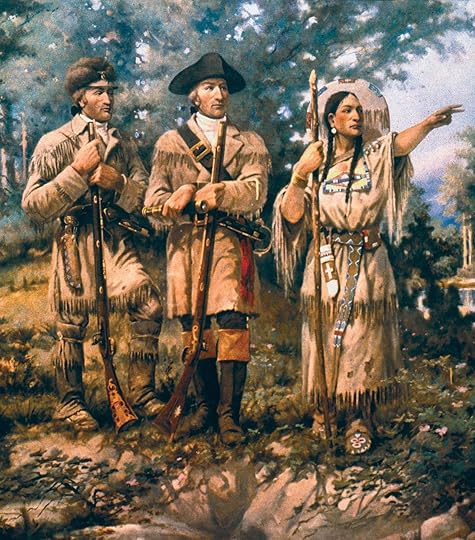
Photo: Edgar Samuel Paxson – Montana State Capitol
Sacagawea was twelve when she was kidnapped from the mountains of present-day Idaho by raiding Hidatsas and taken hundreds of miles east to the Great Plains. Four years later, she found herself traveling across her old home as part of the biggest expedition in the history of the United States.
Lewis and Clark’s party was heading 4,000 miles west in search of a route to the Pacific Ocean. They were better prepared than any expedition before them, but they still needed one thing: an interpreter to communicate with Native Americans.
They found their 31st official member in the winter of 1804 — fur trapper and interpreter Toussaint Charbonneau. His wife was 16-year-old Sacagawea. Carrying her baby boy in a leather backpack, throughout the journey, Sacagawea gathered edible roots, berries, and leaves; she also went fishing for the group. And Sacagawea didn’t just help the crew find food. She was also a brilliant interpreter, cultural liaison, trade negotiator, and guide who helped the group find the best routes through the mountains of her childhood.
Could they have made the journey without her? It’s hard to tell, but one thing is certain — this teenage girl did everything the men did and more, and she did it all while carrying a baby on her back.
4. Tomoe Gozen (c.1161-c.1184, Japan)

Photo: Yoshitoshi
Tomoe Gozen was a female samurai who was known for riding on horseback, defeating her enemies in the brutal Genpei War, and — like a real-life Katniss Everdeen– for her archery skills and physical strength. In fact, her fighting skills were so good that Lord Kiso no Yoshinaka made her his leading commander.
5. Josephine Baker (1906-1975, US)

Photo: Walery, French
Josephine Baker’s life took on all kinds of amazing twists. A cabaret siren in 1920s Paris, she brought the Charleston to Europe and became a spy for the French Resistance in World War II. Her belief was that “no happiness can be built on hate.” She became an activist who fought against racial segregation in 1950s America and refused to perform in theaters until anyone — of any color — could come and see her show.
6. Alexandra David-Néel (1868-1969, France)

Photo: Unknown, Wikimedia
The first Western woman to gain an audience with the Dalai Lama, the Belgian-French Buddhist scholar Alexandra David-Néel was famous for her forbidden journey to Lhasa — the holy capital of Tibet that foreigners were barred from entering. Aged 55, she disguised herself as a local and crossed the Himalayan mountains and steppes. It was a trek that saw her so hungry she had to eat the leather strips she’d stowed to patch her boots.
She believed that “the earth is the inheritance of man, and consequently any honest traveler has the right to walk as he chooses, all over that globe which is his.” And of course, hers.
More like this: The founding mothers of the solo female travel movement
The post The 6 toughest female adventurers of all time appeared first on Matador Network.

Commandments of being a bartender
Bartending may seem like a glamorous job for party animals, but it’s much more than that. It takes specific social skills, some unique abilities, and the respect of unspoken rules to make a great bartender. Here are 10 commandments every good bartender in the world knows to follow.
1. Thou shalt never get so drunk that you can’t count the money.
Bartenders are often encouraged to drink a little during their shift, whether because a regular wants to buy them a shot or the staff needs a morale booster. But you have to know your limits. Because at the end of the night, it’s your job on the line if you make a mistake while closing out the register.
2. Thou shalt never build a cocktail with liquor first.
When assembling a drink, the classic rule of thumb is to start with your juices and syrups, then add in the liquor component of the recipe. Mainly because if you make a mistake while making the drink, it’s far cheaper to dump out an ounce of lemon juice than two ounces of tequila and some triple sec.
3. Thou shalt not forget to upsell on liquor.
You never know how much money a guest has to spend. You don’t have to be pushy, but offering Ketel One for that Vodka Soda or suggesting Plymouth when someone orders a Martini can really bring up those check averages.
4. Thou shalt always hold a wine glass by the stem.
No one wants your dirty bartender hands near the lip of their glass.
5. Thou shalt never forget to burn the ice.
At the end of the night, every bartender must make sure their ice bins are empty, clean, and dry. Mostly for sanitation reasons, but also as a deterrent to the greatest of bar scourges — the fruit fly. Any standing water, even a coin-sized amount, can become a breeding ground for those bastards.
6. Thou shalt never forget to check expiration dates.
Yes, this seems obvious, but you’d be surprised at how a bottle of OJ or a pint of milk can lurk in the back of your bar fridge. The worst culprits are cans of soda. If you work at a bar without a soda gun, you must FIFO that shit. If not, I guarantee you that that can of soda in the back is at least three years old.
7. Thou shalt always restock the bar.
It’s bartender karma. There’s nothing worse than walking into your opening shift to twice as much work as usual.
8. Thou shalt never hold a glass anywhere near the ice bin.
Because it will shatter into a million pieces right over your ice which is one of the most annoying things that can happen during service.
9. Thou shalt never sleep with your regulars.
If you are single, it’s bound to happen eventually, but it is best to avoid it, unless you are both super chill. You can lose a great customer or worse, have to serve your hookup on their future dates. Save your flirtations for the cutie that’s just in town for the weekend.
10. Thou shalt never make excuses.
At a bar or restaurant, if something needs to be done, it’s everyone’s job. Someone has to shovel the sidewalk? It’s your turn! A drunk customer knocks over a tray of drinks? Whoever is closest has to clean it up. The phone rings? Okay, in this case, totally pawn this off on someone else.
More like this: 14 signs you’ve been a bartender for too long
The post 10 commandments of being a bartender appeared first on Matador Network.

Maine-based social movements
Maine’s motto is “dirigo,” or “I lead” — a fitting slogan if you look at the history of the state. Maine was one of the first states to initiate bottle redemption, ban billboards, and is one of the few states implementing a ranked choice voting system. We’re the first to see the sunrise, and we continue to lead the way for many progressive and locavore movements across the country. Here are a few current day movements taking place in Maine that could benefit the entire US.
1. MOFGA
The Maine Organic Farmers and Gardens Association has certified nearly 500 farms in the state as organic. The organization was founded in the seventies and has since grown to include 11,000 members.
With the help of thousands of volunteers, MOFGA offers trainings and workshops on organic growing practices — advocating for the health of our environment as well as the health of our people with locally produced, pesticide-free foods. Similar associations are hard to find elsewhere in the United States, and none are as long-standing or as established as MOFGA, but the organic trend is spreading — as evidenced at the annual MOFGA-led Common Ground Country Fair.
The unique fair highlights organic crops of Maine, and has since evolved to include alternative energy demonstrations, traditional skills workshops and locally produced artwork, crafts, and music. It brings roughly 50,000 people to Maine every year, who come from all over the country to appreciate one of the most unique fairs around.
2. Offshore Wind
In 2013, Maine became the first state to successfully connect a floating, offshore wind turbine to the grid, harnessing the ocean breeze into the power system. Three years later, the University of Maine Advanced Structures and Composites Center project gained top recognition from the US Department of Energy Advanced Technology Demonstration Program for Offshore Wind, making it eligible for $40 million in construction funding.
The innovative design has pushed the envelope of affordable, renewable energy sources, and put Maine on the map as a leader in such efforts. However, some residents have shown opposition to the project, mainly due to the potential interference of lobstering and fishing sites. Located off Monhegan Island, the project is expected to further develop over the next two years — aiming to become the United State’s first floating, offshore wind farm.
3. Millinocket Marathon & Half
Look out Boston, there’s a new marathon in town. In Millinocket, that is.
The tiny Northern mill-town turned tumbleweed-route has been in the spotlight as of late with their newest tourist attraction — the Millinocket Marathon & Half. Deemed the quickest growing marathon in the states — the race started as a group of friends trying to boost the town’s economy with a grassroots race. Organizers waived registration fees urging runners to put those dollars into local businesses instead.
Since its humble beginnings, the race has turned into an annual favorite, with professional runners from across the country signing up to participate and putting Millinocket back on the map — this time for the scenic race and small-town welcome.
4. Garbage to Garden
The Portland-based Garbage to Garden curbside composting company has gone from serving a handful of households to more than 5,000 across Maine and expanding service into Massachusetts in just six years.
What started out as a grassroots collection system — two roommates and a pickup truck — has turned into one of the leading urban composting systems in the Northeast. The company collects food scraps and various paper from apartments, houses, businesses, and schools that are then brought to a local farm to be turned into compost. Program participants are then left with a clean, green bucket to refill for the following week.
Not only does Garbage to Garden offer a way for city-dwellers to reconnect with the earth, the company also boasts using Maine-made biofuel to wash their buckets, a crucial practice they promote as “removing the ick-factor.”
5. The Telling Room
A speaker on issues of poverty once told her audience to “look at the children” to see a true reflection of the community’s strength.
“Are they playing in parks? Are they well fed and healthy? Are they happy?” she questioned.
In Portland, the answer to each of these questions would be a resounding ‘yes,’ and no place displays that better than at The Telling Room.
The Telling Room is an after-school creative writing hub for youth ages six to 18 that offers a wide range of classes and workshops to feed the imaginations of the students that walk through their doors. Founded in 2004, the program aims to build confidence, leadership, creativity, and fun in the students of Portland and beyond, a whopping 3,500 total.
The Telling Room has been a long-standing favorite in the Maine creative community, but is almost more importantly leading the way for similar philosophies to take root across the country. The program was recently recognized as one of the top twelve after school enrichment programs in the nation by winning the prestigious National Arts and Humanities Youth Program Awards.
More like this: Tasting Maine: A guide to the local food movement
The post 5 social movements Maine started that could benefit the entire US appeared first on Matador Network.

March 21, 2018
Violent wave slackline in Portugal
Extreme surfers and skiers alike are familiar with the term ‘No Fall Zone.’ The term is perhaps more applicable in the sport of slacklining, and Joshua Leopolz, a well-known German slackliner, just gave us all the proof we needed. Leopolz took the internet by surprise recently by stringing a massive zipline between two large rock outcroppings off the coast of Nazaré, Portugal. The line sat high above waves crashing into the rocks, promising certain death if he were to slip up.
This seems like a fool’s errand – which may be the driving force for the
Matador Network's Blog

- Matador Network's profile
- 6 followers


.jpg)


