
Matador Network's Blog, page 1378
March 21, 2018
China's spring blossoms
Even as Americans in the northern parts of the US brace for snow, spring has arrived in China, bringing with it one of the largest blossoming shows on the planet.
For thousands of years, western China has been famous for its four flower seasons, each represented by a popular blossom. Spring is the season of the orchid, and the brightly-colored flower has been used in Chinese medicine for millennia.
Visitors to China in the spring can also take in religiously significant magnolias and lilacs near Buddhist temples, imperial peonies outside the Forbidden City, cherry blossoms in Shanghai’s Gucun Forest Park, wildflowers on the slopes near the Great Wall, and fields of bright yellow rapeseed flowers in Guizhou.
A new drone video from China’s Central Television shows some of the most magnificent blooming locations, including forests of cherry trees, azaleas, and peach trees that can be found all over the country.
Follow Matador on
Vimeo
Follow Matador on
YouTube
During a short period between March and May, hundreds of blossom festivals take place across the nation, and many are dedicated to a particularly beloved local blossom.
One famous spring blossom festival is the Luoyang Peony Fair, which is a four-hour train ride south from Beijing in the Central Chinese province of Henan. The festival lasts from mid-April to mid-May, but the blossoms only peak at the end of April. During this time visitors can witness 200 species of the regal flower produce vibrant reds, yellows, and pinks.
Another popular event is The Pingu Peach Blossom Festival takes place every year on a 36,000 acre plot in the town of Liujiadian, 40 miles northeast of central Beijing. The massive peach farm is one of the largest in the world, hosting 600,000 trees that produce 300,000 tons of peaches every year. Visitors to the blossom festival will get to see 200 distinct varieties of the tree, which is native to China.
If you haven’t already booked your tickets to China for the spring blossoms, you might want to do it soon. The season is a brilliant but short one, mostly over by the time June rolls around. Then again, summer is lotus season. 

More like this: The 5 best places to see spring blossoms in their peak
The post China is covered in spring flowers and it looks mesmerizing from above appeared first on Matador Network.


Save money in Washington DC
The nation’s capital is not the cheapest city. Bars are expensive, hotels are expensive, meals are expensive, and, as any of the hordes of underpaid government interns living on the Hill will tell you, living in general is expensive. There are a few ways to keep costs down on your trip, though.
1. Visit the free National Museums.
This is the most obvious money-saver: most of the major attractions in DC are free. Most of the free ones are along the Mall, stretching from the Capitol to the Potomac. The Capitol rotunda is cool, but try the Library of Congress instead if you want to avoid the crowds — it’s just as pretty and they have books!
All of the Smithsonians are free, but the big ones — the Air and Space Museum, the American History Museum and the Natural History Museum — can get crowded. Instead, visit the Museum of the American Indian — they have a great food court that is both affordable and serves native food. The Museum of African American History and Culture is still pretty new (and is universally acclaimed), so it can be tough to get into. A few others are less packed but just as worth visiting: the US Holocaust Memorial Museum is a just a block away from the Mall, and the National Portrait Gallery up by Gallery Place is one of the more surprisingly cool spots in the city — the courtyard inside is a great place for having a cup of coffee and people-watching. The National Archives has the Magna Carta, the Declaration of Independence, the Constitution, and the Bill of Rights — any one of those would make it worth visiting. And the best (free) skyline view of the city (since the Washington Monument is closed at the moment) is from the clock tower in the Old Post Office Building.
Not all museums in DC are free — one of the most popular, the Newseum, has a cover charge, as does the International Spy Museum and Madame Tussauds. The rule of thumb is to look for the name Smithsonian or the emblem of the National Park Service — those ones tend to be free.
2. Check out the monuments.
The Monuments are clustered at the western end of the Mall, near the Potomac, and all are free. The Mall is huge, so it’s only genuinely crowded if there’s an event, but try the monuments at night when they’re all lit up and there are at least a few fewer tourists. It’s also worth checking out the smaller, less prominent memorials, like the Martin Luther King, Jr., Memorial, the Vietnam Wall, the FDR Memorial, and the Korean War Memorial. The Iwo Jima Marine Corps Memorial is across the river, so bundle that into a visit to Arlington National Cemetery and the Tomb of the Unknown Soldier.
3. Take advantage of free events.
There’s almost always something happening in DC, and the events usually have a political tinge. Big events — inaugurations, major holidays, and mass protests — can be a really cool experience but are a nightmare in terms of crowds. Instead, go for something a little more mellow: the National Gallery of Art holds a Jazz in the Garden event every Friday in the summer, and there’s an outdoor film series that plays movies out in the fresh air in several spots around the city (including the Mall). The Shakespeare Theatre on the Hill regularly shows plays for free.
You can also watch the Congress and Supreme Court while they’re in session. Supreme Court is first-come-first-served, so get there early (there are a lot of law nerds in DC, so you’re not guaranteed a spot), but Congress is usually easy to get into if you plan ahead of time.
4. Skip the rental cars and cabs.
You really don’t need a car in DC, and a cab may not even save you time, due to the many circuitous roundabouts in the city. Instead, opt for public transportation. The subway system is super clean, efficient and hits most of the tourist spots but has some gaps in it, and the bus system is excellent. Download the DC Metro app to figure out what subway or bus to take. Just prepare yourself for some of the steepest, longest escalators in the country.
5. Weather the heat.
DC is basically a swamp in the summertime. August, in particular, is a bit of a muggy nightmare. But the summer means fewer school trips, and fewer tourists in general, so if you want to get better rates on hotels, August is the time to go. Just pack light clothes and don’t plan too many uninterrupted walks. Pro tip: the free museums are air-conditioned.
6. People watch.
There are few better places in the country to people watch. Capitol Hill is one of the best spots for it: sit for long enough and you’ll see someone you vaguely recognize from the news, but better still, go to the Starbucks near the Hill — sit there long enough, and you’ll hear a douchey 20-year-old intern shout “DO YOU KNOW WHO MY BOSS IS?” at a barista. The aforementioned indoor courtyard at the National Portrait Museum is another great spot for people watching, as is the Tidal Basin right by the Jefferson Memorial.
7. Embrace day drinking.
I once heard a tourist, two blocks from the White House, turn to his wife at 4:45 PM and say, “Well, it’s 5 o’clock somewhere!” and then head into a Happy Hour. No one in DC thinks like that or feels the need to justify day drinking; DC is a drinking town. It is like Sterling Cooper Draper Pryce. There is no bad time to drink here. One of the best ways to see the city is to go on a boozy pub crawl during the day, when you’ll get good brunch deals and cheaper drink specials than if you were to visit the hotspots at their peak in the evening.
For your nights out, pick a neighborhood and wander
If you’re done with monuments and museums, it’s best to pick a neighborhood and stick with it — most areas have a dive bar or two, and getting from place to place adds up. Here are some of the cheaper options in the major neighborhoods.
DuPont Circle is a bit swankier across the board, so skip it if you want to drink cheap — an alternative is to get a pricier cocktail and then stroll up Embassy Row.
H Street has a solid Biergarten with an outdoor patio that’s a great hangout on sunny days, a cool rooftop at RedRocks, and an excellent dive at the Pug that is directly underneath Toki Underground, a tiny ramen shop that is one of the better lesser-known spots in DC.
U Street is one of the best bar streets in the city — get drinks at Irish dive Duffy’s before going to a show at the famous 9:30 Club, or just walk down the street and have a drink in every bar. You will not be sober (or even possibly conscious) by the time you get to the end of the road.
Adams Morgan tends to be a more bro-y college kid area, but that doesn’t mean it isn’t worth visiting: The Black Squirrel is a great bar with a solid beer selection, and Madam’s Organ is delightful. Dan’s Cafe is the diviest dive that ever dived — you can drink whiskey and cokes out of a ketchup bottle on a sticky counter, but damn, is it cheap. For drunk food, skip jumbo slice and go to Amsterdam Falafel.
Georgetown tends to be too expensive and unnecessarily hard to get to from the rest of the city, but it is a really beautiful neighborhood, even though it is chock-full of college students. Try the Tombs and the Georgetown Piano Bar for more affordable drinks.
Gallery Place/Chinatown is Mall-Adjacent, if not the best party spot in town, but RFD’s has a really extensive beer selection. Rocketbar isn’t crazy cheap, but it has a ton of bar games, so you can drink a bit slower while waiting for your concert at the Verizon Center to start. Gordon Biersch’s beer flights are a really good bang for your buck.
Eastern Market/Navy Yard has nice hangout bars like the Ugly Mug to the south and Tunnicliff’s to the north, but try going a little further down Pennsylvania Ave to Trusty’s — it’s one of the best divey bars in the city.
8. Eat at food trucks.
DC has some incredible fine dining options, but not a ton of cheap fine dining options. The workaround is to hit up food trucks. Food Truck Fiesta tracks where they all are in the city, but you can usually stumble across them in clusters around hub subway stations. Popular clusters are at the Farragut North station, around Metro Center, near Union Station, and around L’Enfant Plaza, all at lunchtime. Another option is to check out Truckeroo. Truckeroo is a monthly food truck festival held at the Bullpen outside the National’s Park in Southwest during the baseball season. You should check to see if your times overlap, but it’s a great way to sample some of the best food trucks all at once — and then go see a Nats game. Specifically, keep an eye out for Red Hook Lobster Pound, PhoWheels, and Korean BBQ Taco Box.
More like this: Top 10 free things to do in DC
The post 8 genius hacks for saving money on your trip to Washington DC appeared first on Matador Network.

Who Knows Where: Matador Original
After traveling to almost 50 countries solo, I’ve learned that planning trips is almost as fun as going on them. The excitement, the expectation — the post-it notes! But when researching, I rarely want to watch the travel videos I see online or TV. Because when I do, the flashy footage and hyperbolic beauty often leave me envious of others, rather than confident in myself.
With Who Knows Where, I wanted to create the kind of video that I would want to watch. One that included the everyday realities of travel (*ahem* diarrhea) as well as the perks, and featuring a woman out adventuring in the world.
In mainstream media, women have been missing from our travel narrative. It’s no wonder that the question I am most often asked is: Aren’t you scared traveling as a woman? Representation matters, and the litany of white males traveling on television can sometimes make it feel like women don’t leave the country. I dreamed that somewhere a viewer would finish my video and feel inspired to go on her own trip — not because I had been so inspirational on camera but because I was so ordinarily myself.
Because of how I identify, I face less barriers than most when searching for a platform for my voice.
Because of how I identify, I face less barriers than most when searching for a platform for my voice. As a white woman, it is easier for me to move around in this world that prioritizes my skin color above all others. Being cisgendered, I am less at risk of being a victim of violence or facing psychological abuse. Able-bodied, I rarely have to worry about accessibility. As a person of financial privilege, I have the resources and the support system that allow me to more easily make unorthodox decisions in my career. Therefore, my experience is only one page in the story of traveling while female. If you’re looking to hear from other perspectives — or just want more badassery in your feed — here are three of my favorite women killing it in the travel world:
Jessica Nabongo @thecatchmeifyoucan Luxury traveler Jessica Nabongo has amassed over 30k followers on Instagram with her beautiful photos and frank discussions of discrimination in the travel sector.
Annette Richmond founder of @fatgirlstraveling Annette has created a platform where the stories of plus-size women are celebrated and amplified.
T J Lee @cupoftj A solo travel vlogger with over 80k YouTube subscribers who shares many tricks of the trade on her channel (watch her 7-Eleven video if you’re looking for a good belly laugh).
I wanted Who Knows Where to make people feel comfortable and included. For me, that meant using humor. Because I believe that taking up space as a woman — a woman with flaws and jokes and belly rolls — can be its own form of rebellion.
In this episode, you’ll follow along on my fifth trip to Nepal, as we trek up to Annapurna base camp in the Himalayas. Along the way, we’ll meet Sareena Rai, a leader in the punk rock scene of Kathmandu, and the didi of Chomrong Cottage, who makes a cake voted best in Asia.
More like this: A Tribe Without Borders: Sisterhood through travel across the Middle East
The post Who Knows Where: The everyday realities of a woman adventuring solo appeared first on Matador Network.

Eastern quolls brought to Australia
Move over, wombat, we found an Australian creature even cuter than you. Eastern quolls are small (about the size of a cat), pointy-nosed, spotted marsupials who are adorable and need your help.
Eastern quolls used to roam south-eastern Australia until about 50 years ago when they went extinct because of diseases, predators, and loss of habitat. Luckily, they were able to survive in Tasmania where their main predator, the fox, cannot be found.

Photo: Sontag 1

Photo: Ways
Before they got decimated from mainland Australia, these little predators were very useful to farmers as they used to eat “agricultural pests, such as rats, mice and insects,” WWF explained.
To restore some balance in the ecosystem of Southeast Australia now that the fox population is under control, 20 Eastern quoll joeys (11 males and 9 females) were successfully reintroduced from Tasmanian sanctuaries devils@cradle and Trowunna Wildlife Sanctuary by WWF Australia and Rewilding Australia to Booderee National Park in New South Wales on March 13th.
Have a look at the first Eastern quolls returning to the wild on the Australian mainland in 50 years:
The Eastern quolls will be tracked and closely monitored to make sure they are healthy and breeding. If all goes well during the first year, 40 more quolls will follow in 2019 and another 40 in 2020.
WWF reports that two other species, long-nosed potoroos and southern brown bandicoots (two other cutie patooties), were successfully reintroduced in the same park in the past two years. We hope that the Eastern quolls follow their steps.
If you want to help Eastern quolls thrive in their natural habitat, visit the WWF website. These adorable furballs and the Australian ecosystem could sure use a hand.
More like this: The 11 most threatened species in the US and how to help them thrive
The post This ridiculously adorable, endangered Eastern Quoll returns to Australia and becomes our new favorite animal appeared first on Matador Network.

Adventurers who overcame challenges
For millennia, women have been told where we can go, what we can do, what we can do with our bodies. But through the centuries, women have always fought back to be heard. These are six women who rose up in the boldest, most rad way we know — as adventurers.
For more stories about badass women through history, check out @womenadventurers on Facebook and Instagram.
1. Silvana Lima (1984, Brazil)
A post shared by Silvana Lima (@silvanalimasurf) on Mar 12, 2018 at 6:18pm PDT
Silvana Lima is Brazilian pro surfer who rose above humble beginnings (she grew up in a shack on the beach and learnt how to surf on a piece of wood with a make-do fin) to become one of the best surfers in Brazil and the world. Yet, she was told she wasn’t sufficiently “pretty” to get full sponsorship from one of the big surf brands.
In an interview with the BBC, she said, “I don’t look like a model. I’m not a babe. I’m a surfer, a professional… So if you don’t look like a model, you end up without a sponsor, which is what happened to me. You’re excluded. You’re disposable. Men don’t have these problems.”
Despite being 32 years old, having suffered multiple injuries in her career, and not having won a final for almost 10 years, in 2016, Silvana funded her own qualifying series campaign by selling her bulldog puppies and crushed it. In 2017, she won the Los Cabos Open of Surf, the Hurley Pro Trestles, and Swatch Women’s Pro. Nothing can stop her, not even her lack of sponsor.
2. Bessie Coleman (1892-1926, US)
A post shared by Lydia Roberts (@lydiarobotica) on Mar 8, 2018 at 12:27pm PST
Bessie Coleman dreamed of being a pilot, but because she was black, not one aviation school in the United States would accept her application. So, Coleman learned French, moved to France, and learned to fly there instead. In 1922, she became the world’s first licensed female African American pilot.
Newly qualified and back in the States, she began touring the country with her own barnstormer show (walking on plane wings! Doing super dangerous swoops and dives!). Known for striding out in front of huge crowds in knee-high leather boots and a sweet military jacket, the press loved her chutzpah. They dubbed her “Queen Bess.”
This daring pilot died in a plane crash aged 34. Still, “Because of Bessie Coleman,” said the pioneering aviator and civil rights activist William J. Powell, “we have overcome that which was worse than racial barriers. We have overcome the barriers within ourselves and dared to dream.”
3. & 4. The Van Buren sisters (1892-1948 and 1894-1948, US)
A post shared by Women Adventurers (@womenadventurers) on Mar 2, 2017 at 1:33pm PST
American women were still four years from getting the right to vote, but in 1915 Augusta and Adeline Van Buren set off across the continent on motorcycles. Their plan? To travel 5,500 miles from Brooklyn to California.
Once the sisters were west of the Mississippi, they were no roadmaps to follow — they typically had to traverse cow passes, wagon, and dirt trails. And they were stopped by the police all the time. Their crime? Wearing leggings at a time when there were still American states that didn’t legally allow women to wear pants.
After their summer of adventure, Adeline became a lawyer; Augusta became a pilot known for her catchphrase, “Woman can, if she will.”
5. Valentina Tereshkova (1937, present day Russia)
A post shared by Women Scientists (@womenscientists) on Mar 7, 2018 at 7:21am PST
Lots of people didn’t think a female — especially a female who liked to look super glam in spiked heels and powdered lipstick — should be going into outer space. But on June 16th, 1963 the USSR’s Valentina Tereshkova orbited the earth on a solo mission for a total of two days, 22 hours, and 50 minutes. Since then, the world’s first woman in space has worked as an engineer and a politician who champions women’s rights.
Tereshkova’s now in her 80s, and she’s determined to go to Mars.
6. Grace O’ Malley (c.1530-c.1603, Ireland)
A post shared by Shawn (@spfarrell) on Mar 13, 2018 at 5:11am PDT
The day after giving birth, it’s said that Grace O’ Malley fought off an attack from Turkish pirates. It’s also said that she proposed to her second husband only because she fancied having his castle for herself. After a year of marriage, she gave him the ultimate divorce line: “I dismiss you.” Truth or hyperbole, one thing’s for sure — O’Malley was one tough pirate queen.
As a kid, she was desperate to go out adventuring with her sea captain father, but her mother wouldn’t let her. She said a woman’s place was in the home, and that her long red hair would get caught in the ship’s ropes. Story goes, Grace just cut her hair short and went off gallivanting anyway. Becoming a chieftain in adulthood, she plundered and pillaged and traded as far away as Portugal and Spain.
More like this: The 7 most badass female outdoor athletes of all time
The post 6 women who overcame immense challenges to become iconic adventurers appeared first on Matador Network.

Responsibilities travelers have
When you book a trip to the beach, your favorite city, or for an exotic jungle adventure, how often do you consider the impact that your actions will have on your destination? Unfortunately, that seems to be a secondary concern of many travelers — if it enters their minds at all — and, as a result, locals in some of the places that rank highest on travel bucket lists are turning against the droves of people who flock to them every year.
As residents of cities and countries which attract a lot of travelers have begun protesting the decline in their quality of life caused by excessive tourism, governments have reacted with policies aimed at limiting visitors. Barcelona and Venice are looking at ways to reduce tourist numbers, including by limiting available accommodation; Iceland and Norway want to limit visitors to certain natural wonders whose environments could be damaged by increasing tourism; Santorini and Venice want further restrictions on cruise ship traffic; and some Thai islands are drastically limiting tourists’ access, if not banning them altogether.
If the presence of tourists is fueling this much anger and resentment, it’s our responsibility to look at the actions we take when we’re abroad to see if we’re doing all we can be respectful of local cultures and not being obnoxious in a vacation destination that is also the home to thousands or sometimes even millions of people. If people came to our cities and weren’t respectful, we wouldn’t be very happy about it, so we shouldn’t engage in that behavior ourselves.
Destructive hordes and bad role models
In Sydney and Melbourne, there are news stories every year about the trash left behind by backpackers after Christmas beach parties with six-figure cleanup bills. Young British tourists also have a particularly bad reputation across the Mediterranean for their obnoxious and destructive behavior on party trips, while Americans are known for being ignorant of local cultures and peoples. Increasing rage is also being directed at the rising number of Chinese tourists who arrive in large tour groups, some of which have had to be told not to defecate in the gardens of the Louvre, and have had run-ins with vandalism, such as at an ancient Egyptian temple in Luxor.
And, unfortunately, young people may not have the best travel role models. Teens and young millennials are far more likely to be watching YouTube than regular television, where some of the most popular vloggers haven’t been setting positive examples. Online video incentivizes people to be controversial and when that’s combined with travel, the results can be disastrous.
For many YouTube stars, a trip abroad is not an opportunity to learn about a different culture, but to take their usual antisocial antics to the next level. A few months ago, criticism was leveled at Logan Paul, one of YouTube’s biggest names, for filming a man who had committed suicide in a notorious Japanese forest at the foot of Mount Fuji. However, his other Japan vlogs demonstrated the general disrespect that he showed for others and how he saw Japan as his playground, not the home of millions of people, and, by extension, gave a terrible portrayal of how to travel to his young, impressionable audience.
Paul threw Pokeballs at regular Japanese people — including a police officer — smashed a Gameboy and tried to return it, waved seafood in people’s faces before leaving it on the back of a taxi, and so much more. While there are dedicated travel vloggers who don’t engage in this kind of behavior, there are a lot of people like Paul who use travel to add an exciting twist to their general trend of disrespectful behavior that keeps people watching and subscribing.
Tourists pushing out locals
However, being a responsible traveler is not just about how we act when interacting with others in foreign destinations, but also about the choices we make when booking tours, accommodations, and deciding how we get around. Many of the cities looking at ways to reduce, or at least control, tourism are also leading the charge to effectively regulate the on-demand economy, including chief players Airbnb and Uber.
If you only read the promotional materials of these companies, the issues they present may not be apparent, but their operations and how they eschew the rules of traditional industries are causing a lot of problems in many cities. Residents in Barcelona have complained about apartment buildings that have become dominated by Airbnb rentals, making living a nightmare for long-term residents who have to deal with the noise of short-term visitors on party trips. The mayor of Paris’ first arrondissement called Airbnb “a catastrophe for central Paris” for contributing to population declines because people can make more money from short-term rentals than housing long-term tenants.
These aren’t baseless complaints from people who hate technology companies and can’t accept the future. A recent study of New York City’s housing market provided further evidence to back the claim that Airbnb has taken units off the market and contributed to higher rents. The problem is that there used to be a clearer distinction between housing and tourist accommodation, but now it’s much easier for the former to be converted into the latter. At the same time, there’s a movement of people into major cities, creating higher demands for housing.
When we leave our homes to venture out into the world and see new places, we have to remember that we aren’t simply going to a destination, but often we’re visiting a place that many people call their home, and we have a responsibility to treat their hometown or city as we would want visitors to treat our own. That means being considerate in our actions, but also in how we travel so as not to make life more difficult for the people who will remain in the places we visit once we’ve returned home.
More like this: The backlash against tourism: what travelers can do
The post The responsibilities travelers have to the places they visit appeared first on Matador Network.

Pro tips for visiting Petra
Amidst desert canyons and mountains, Petra was once the capital of the Nabataean empire and a thriving trading center on the route connecting ancient Mesopotamia and Egypt. Carved into red-hued sandstone, the prehistoric Rose City is a living museum, home to people for thousands of years (from Nabataeans to Romans to Crusaders and Muslims). Although largely deserted by the seventh century, the nearly 1000 caves of Petra have always attracted the local Bedouin tribes — and hordes of tourists— to the lost city.
Here are some tips you will want to know before you visit.
1. Consider at least two or three days for exploring Petra.
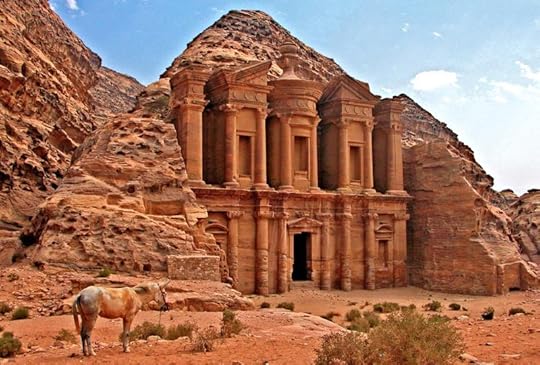
Photo: SeeTheHolyLand.net
Petra stretches over nearly 100 square miles of valleys and desert mountains overhanging Wadi Araba. The archaeologists have uncovered only 15% of ancient Petra (the vast majority of 85% is still underground and untouched) but even still, seeing Petra in one day is a counter-clock race.
This is also reflected by the variable price of the entrance ticket, more convenient if you spend a couple of days there (1-day, 2-day, 3-day). Besides, if you visit Petra as a day trip from Israel, keep in mind that you’ll be paying a visa fee for entering Jordan and the final price will exceed $100.
Petra cannot be understood and experienced in a one-day marathon. Petra deserves more than that. After all, it’s considered one of the New Seven Wonders of the World.
2. Check if your hotel offers a free shuttle to and from Petra’s main gate.
There are several hotels opposite the Visitor Center (the main entry gate to Petra). If you plan to stay in Wadi Musa town center (a more budget option), you’ll have to add 4 kilometers round-trip to the Visitor Center. However, most hotels in Wadi Musa offer a free shuttle service to and from the main gate in the morning and evening. Check with your hotel before making a reservation.
3. Alternatively, access Petra faster via the Uum Sayhoun village.
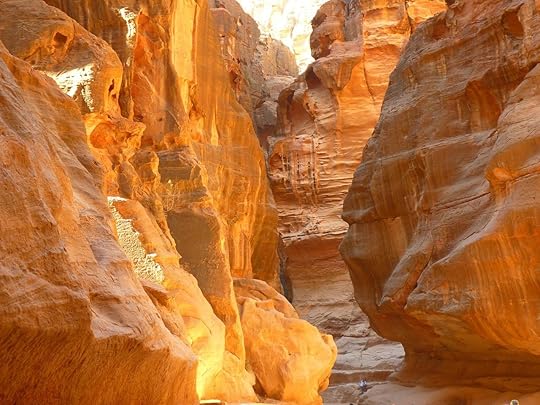
Photo: LoggaWiggler
If you enter Petra at the main gate, you have to walk 4 kilometers to reach the center of the ancient city. This is the Main Trail, a must-see in order to go through the famous red canyon, the Siq. You’ll have to go back the same distance, though.
Alternatively, the Bedouin village of Uum Sayhoun is only 7 kilometers from Wadi Musa. You can get there by taxi (5JD) or with a rented car. The back door to Petra is at the end of the village, nearby a parking lot. You’ll elude the tourist crowds entering the main gate and walk only 2 kilometers to Petra’s city center. It’s the starting point for most of the hikes in Petra, so this gate is convenient if you plan to walk a lot anyway.
You cannot buy tickets at the gate from Uum Sayhoun, so make sure you buy your ticket at the Visitor Center beforehand.
4. Be ready to hike a lot — and avoid riding donkeys.
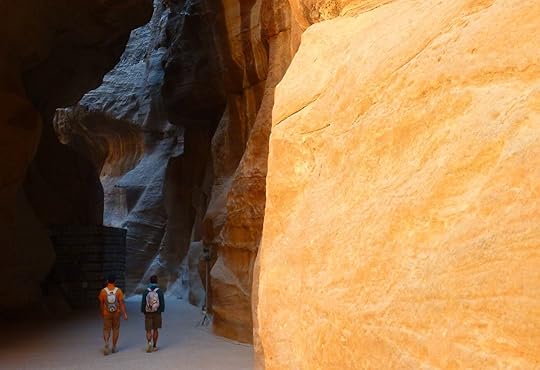
Photo: LoggaWiggler
The Main Trail crosses the ancient city from the Visitor Center to the Basin Restaurant and passes the key sights (approximate 8 kilometers round-trip). Petra has more than just the tourist highlights, though. The Monastery (Al-Deir), the Treasury Vista (Al-Khubtha), and the High Place of Sacrifice (Al-Madbah) are popular hikes and feature arresting views over the Rose City.
These trails steeply climb up and down hundreds of steps, and a round-trip (or a loop in the case of the High Place of Sacrifice Trail) lasts between 2.5 to 4 hours. Any of these hikes, each atop a different peak, require good physical condition. For lazier travelers, it may be tempting to ride a donkey (especially for uphill treks). However, local authorities caution against these rides as they cater towards tourists, and aren’t regulated; you risk paying an exorbitant fee for less-than-safe transportation, and the welfare of the animals is certainly in question for these sorts of tours.
5. Read “Married to a Bedouin” to understand Petra’s recent history.
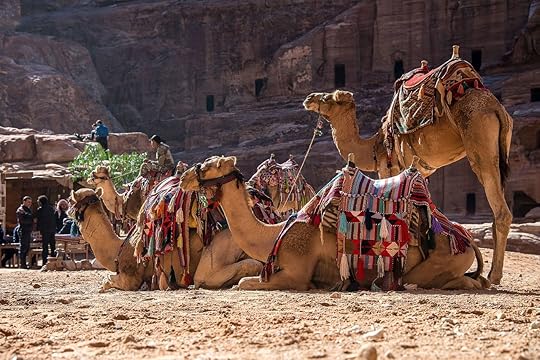
Photo: mikaelthunberg
The author, Marguerite van Geldermalsen, married a Bedouin from the Bdoul tribe after visiting Petra in 1978. “Married to a Bedouin” shows Petra’s life behind the tourist scenes — the life of the local Bedouin tribes. The Bedouin once lived in the caves surrounding the lost city, before being resettled in the newly built village of Uum Sayhoun when Petra was recognized as a UNESCO World Heritage Site in 1985. This has changed their lives and Petra, too.
You’ll find the family’s personal kiosk inside the ruins of the ancient city (past the theater, on the right). There, you can purchase your personally signed copy of the book.
6. Buy from the Bedouin — but be prepared to bargain.
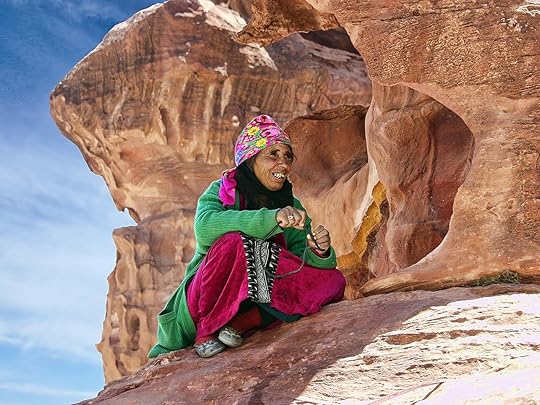
Photo: Graham H
Many Bedouins (and their families) live only from their small businesses run in Petra, selling handmade objects (beads, headscarves, jewelry, sand-bottles, etc). Buying from their stalls, you’ll help them and their community.
As a rule of thumb, there aren’t fixed prices for what you buy in Petra (except for food and drinks in restaurants). Bargain for everything. Just like most markets throughout the world, the correct price is far below what you are told the first time.
7. Stay with the Bedouin in Uum Sayhoun village or in their caves in Petra.
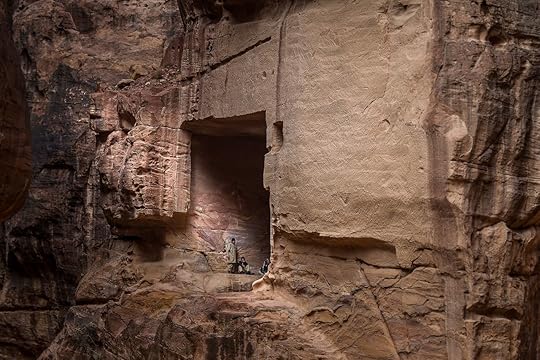
Photo: mikaelthunberg
Wherever you go in Petra, Bedouins will invite you to drink tea with them. After that, they’ll invite you to dine with them at their homes, in the village or in their caves. While you may be invited dozens of times a day — obviously more tea than you could possibly drink — do accept their invitations when possible. You’ll add a genuine dimension to your experience in Petra, one completely different from that of most tourists.
Talk with the Bedouins. They’ll open their heart and tell you their life stories. Some of them have begun to return to their past lifestyle, and nearly 45 families live in the caves of Petra now. If you want to plan such an experience in advance, Airbnb has plenty of listings of the Bedouins in the Uum Sayhoun village or even in their caves in Petra.
8. Look for a local Bedouin guide instead of a tour operator.
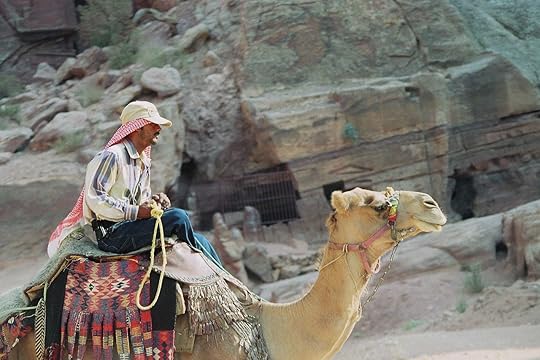
Photo: Stux
My guide’s name was Khalil, and I connected with him at his cousin’s Why Not? Shop in Petra (located on the Main Trail, at the entrance to the stone staircase for the High Place of Sacrifice Trail). Khalil worked in the army for two years, then quit and returned to his birth village, Uum Sayhoun. “I had to come back to my mountains in Petra,” he told me while we were drinking a cup of sweet Bedouin tea. Khalil knows Petra like the back of his hand and will take good care of you wherever you go — and most Bedouin guides will do the same. “Whenever you come back to Petra, you’ll find me here,” he added when I left. “I want to live in Petra for the rest of my life.”
9. Don’t forget about Little Petra.
As its name suggests, Little Petra is a miniature of Petra (10 kilometers from Wadi Musa), and if you have time, pop into the area for 1-2 hours. The atmosphere is different from Petra’s tourist crowds. There, you’ll find the only preserved frescoes nearby, inside the Painted House. Alternatively, there’s a trail connecting Petra’s Monastery (Al-Deir) to Little Petra. A guide is required, though, as the footpath is exposed and tricky in some parts.
More like this: The backstory behind Petra, Jordan’s ancient ghost city
The post 9 pro tips for visiting Petra without looking like a total tourist appeared first on Matador Network.

Best Arizonan food spots
Out-of-towners have no idea that there are so many incredible places to eat in Arizona, but locals are very aware of all the good grub to be had. If you’re a real Arizonan, you know where to get the best Sonoran dogs in the southern part of the state, and where to find delicious pie to devour in the north. Here are 13 restaurants where all Arizonans in the know have eaten at least once.
1. Crossroads Restaurant, Tucson
Tucsonans would rather go to Crossroads or some other less popular sit-down joint in South Tucson for a birria caramelo than one of the zillion gringo-ified Mexican places around town.
2. Cafe Roka, Bisbee
Bisbee peeps hit up Cafe Roka for the chef’s insanely delicious (but not inexpensive) rotational menu of locally-sourced goodness, the sorbet course, and the woodland creatures-shaped foil animals encasing their leftovers.
3. Elote Cafe, Sedona
Sedonans in the know stand in line for hours without complaining to splurge on the comida at Elote Cafe. Corn and huitlacoche caldo and lamb adobo are just two of the 30 or so elevated Mexican street food-inspired plates, all accompanying a tequila selection from heaven.
4. El Güero Canelo, Tucson
When Southern Arizonans are in the mood for a Sonoran Dog, they hit old-school El Güero Canelo.
5. Up the Creek, Cornville
Diners at Up the Creek in Cornville look out the huge picture windows to watch raccoons, hummingbirds, bobcats, and deer frolicking alongside the trickle of Oak Creek. Meanwhile, they drink well-curated wines, sing along with the owners at their old-timey upright piano, and feel guilty/not guilty devouring venison medallions and brandied liver pate.
6. Nick’s Feed Your Face, Prescott
Since 1981, Prescottonians have headed straight to Nick’s Feed Your Face for a Rude Boy sub or maybe a Depth Charge. Nick’s has had almost the exact same menu since it opened, just in a *slightly* larger location a couple streets away from the original (literal) hole-in-the-wall site.
7. Macy’s Coffee House, Flagstaff
Flagstaff hippies tried their first European-style locally-roasted coffee at Macy’s 38 years ago. They lunched on a spelt bagel, picked up a Camus book, started a game of Go, and never left.
8. Rock Springs Cafe, Black Canyon City
When driving down the hairpin windiness of I-17 from Northern Arizona to Phoenix, it’s vital to take a pie break at the bottom of the hills at the cool historic Rock Springs Cafe. Of course, they sell more than dessert, but who cares when there’s pie? So much pie.
9. The Old Spaghetti Factory, Phoenix
Phoenicians are well aware that they have the US’s best pizza at Pizzeria Bianco, but they prefer devouring Italian standards in a vintage trolley at the family-owned institution, The Old Spaghetti Factory. It’s been around as long as “Wallace and Ladmo” was on, back in the Legend City era.
10. The Grand Canyon Caverns, Peach Springs
The Grand Canyon Caverns on Route 66 are actually in Peach Springs, almost two hours southwest of the national park. The dry cave system houses Cavern Grotto, an all-you-can-eat dive 200 feet underground. Reservations are required and the buffet-style experience isn’t cheap, but where else are you going to get a bat burger surrounded by stalactites? (Kidding. No bats.)
11. The Velvet Elvis Pizza Company, Patagonia
Patagonia has some of the world’s best bird watching, drawing eccentric foreign rich folk who enjoy the cult-like Velvet Elvis Pizza Company alongside ranchers and farmers. The Elvis offers crunchy quinoa crust and sweet sauce — we’re all hooked.
12. Stables Ranch Grill, Tubac
8 ways to see Virginia Beach's past
Beach cities, right? Toes in the sand, salt on your skin, eating nothing but fresh seafood — it’s a pretty awesome recipe…but it’s also pretty generic. You could find that experience in a thousand different places.
And then there’s Virginia Beach. Unlike most other coastal destinations, it’s also got history — so when the SPF runs out, the list of things to do definitely doesn’t. Soak up the sun and sand, definitely, but leave time to explore Virginia’s deeper story. Here’s how.
Stop #1: First Landing State Park
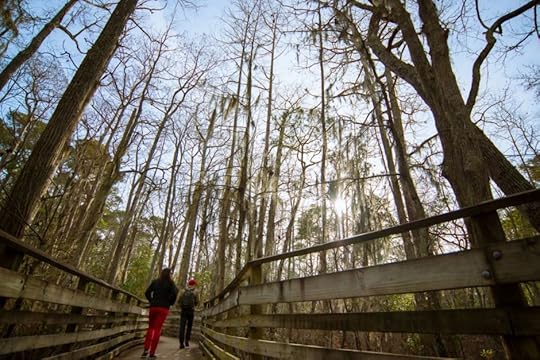
Photo: Virginia State Parks
The landing spot of the first European settlers of America in the early 1600s? That’s right here. Where Christopher Newport and his men first beached their ships is near what today is the state’s most popular state park, with over a million visitors a year. First Landing was — appropriately — the first state park in Virginia, too.
Spanning over 2,800 acres adjacent to the Chesapeake Bay and taking up most of Cape Henry, First Landing is huge. There are 20 cabins, over 200 campsites, a mile-long beach for fishing and swimming, and 19 miles of nature trails for hiking and biking (you can rent bikes onsite so you don’t have to lug yours here).
If you’re looking to experience the most history-packed bits, check out the Cape Henry Trail — it includes several reproduced Native American structures spread along a one-mile section. (You’ll get more out of your trek if you grab a pamphlet from the visitor center.) And for awesome photo opps? Bald Cypress Trail, on the northern edge of the park.
Stop #2: The Legends Walk at the Virginia Beach Oceanfront
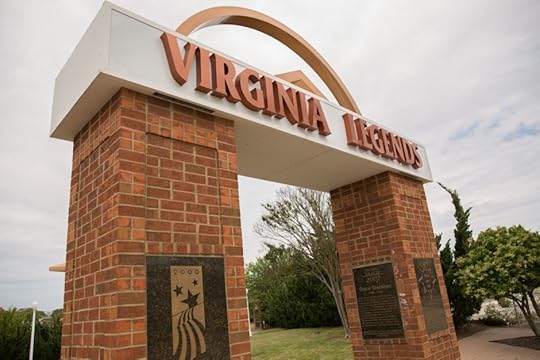
Photo: Visit Virginia Beach
Head on down to Atlantic Avenue and take a stroll along the Virginia Legends Walk (when you’ve reached the large brick arch topped with bold “Virginia Legends” lettering, you’ll know you’re in the right place). You’re already going to be on the ocean anyway — might as well add “famous Virginians” to your arsenal of trivia-night knowledge.
As you make your way through the outdoor walk, good luck not comparing these legends to those of your home state. We’re talking claims to George Washington, Pocahontas, Edgar Allan Poe, Ella Fitzgerald, Arthur Ashe, and dozens of others. Despite the number of famous names, the walk doesn’t take too long — if you’ve got time to spare, meander down the boardwalk for the Navy SEAL monument, Norwegian Lady Statue, and the Naval Aviation Monument, too.
Stop #3: Cape Henry Lighthouse
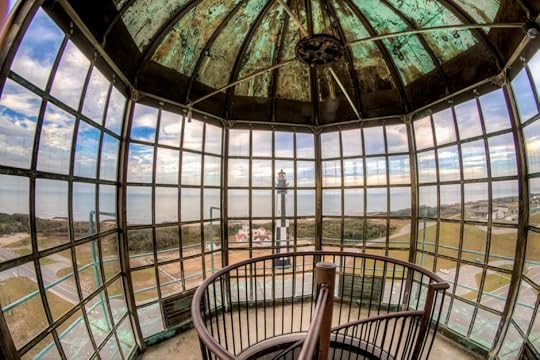
Photo: Rain0975
When it comes to famous lighthouses, Cape Henry is definitely on the podium. Erected way back in 1792, it was the country’s first federally funded lighthouse, overseen by Alexander Hamilton and authorized by George Washington. Today, its stunning brick exterior stands tall inside Joint Expeditionary Base Fort Story, which is just south of First Landing State Park.
The lighthouse experience — it’s definitely an experience — is had via a self-guided tour, so you can move at your own pace up the old-school spiral staircases and ladders. Once you make it to the “summit,” you’ll get 360° views of Virginia Beach, including beyond the coastline. And if you start singing, “God help and forgive me, I wanna build something that’s gonna outlive me”…that’s allowed.
Stop #4: The Military Aviation Museum
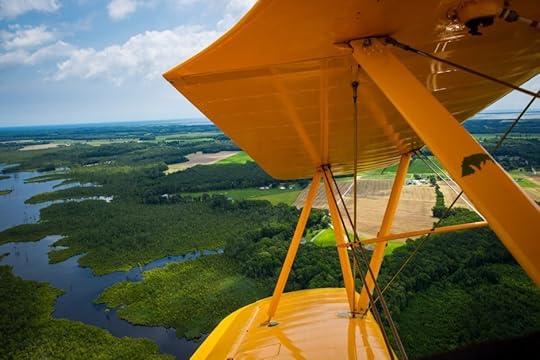
Photo: Visit Virginia Beach
This may sound like a niche thing, but don’t write it off just yet. The Military Aviation Museum stores one of the world’s most remarkable collections of WWI- and WWII-era military aircraft and features a fully restored control tower from America’s first air base in England during WWII — the only one of its kind in the United States. As you’re guided through the indoor aviation exhibits (by super-passionate volunteers), you’ll gain some serious appreciation for the art of flight and the country’s aviation evolution.
And then comes the mic drop: The Military Aviation Museum understands that you won’t get the full experience by merely observing the plane collection, so you’re welcome to step out back and hop aboard a flight in one of the authentic, refurbished planes. An actual flight, in an actual vintage machine.
The open-cockpit experience is basically a trip back in time. You certainly don’t have to be an aviation enthusiast to enjoy the city from above — or a pro photographer to get some great shots.
Stop #5: The Atlantic Wildfowl Heritage Museum
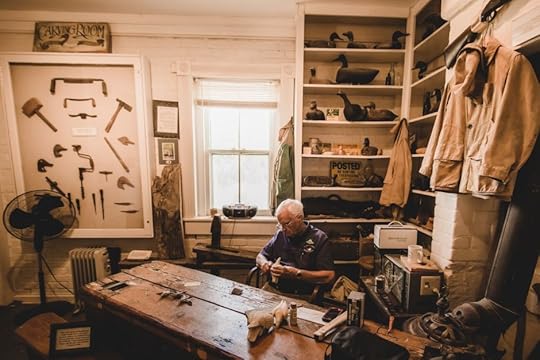
Photo: Visit Virginia Beach
The 12th Street Boardwalk is where you’ll find the historic DeWitt Cottage, the oldest structure within the resort area (circa 1895), and now home to the Atlantic Wildfowl Heritage Museum. A good introduction to the flora and fauna of the area — and very budget-friendly — the museum is a giant grab-bag of wildfowl artifacts, hand-carved decoys, and local artwork. Many of the displays focus on the Atlantic Flyway (a huge migration route that passes over Virginia Beach) and its migratory wildfowl.
The volunteer staff is extremely knowledgeable — if you’re lucky, you’ll catch some hard at work hand-carving decoys during your visit — and can point you to the area’s best spots for wildlife once your museum tour is complete. With their tips in hand, hit up Back Bay National Wildlife Refuge, and put your newfound knowledge to the test.
Stop #6: The Virginia Beach Surf & Rescue Museum

Photo: Rain0975
Beaches themselves have history, too. Located in the Old Coast Guard Station on the Virginia Beach boardwalk, the Virginia Beach Surf & Rescue Museum is an old-school homage to local coastal history. You’ll get the scoop behind the boardwalk, famous surfing icons and lifeguards, coast guard units, and the legendary storms that literally helped shape this coastline.
You can opt to experience the museum on your own or have one of the volunteers guide you through. But an insider tip? It’s always better to go the guided route.
Stop #7: The Virginia Sports Hall of Fame Walking Tour
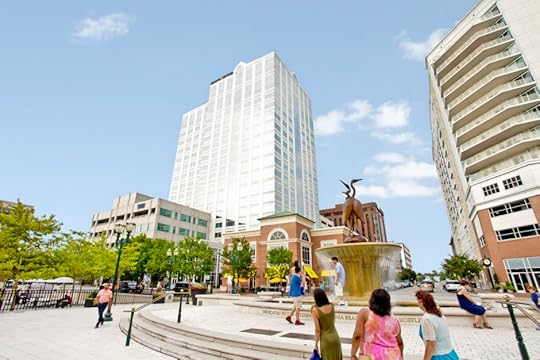
Photo: Visit Virginia Beach
Once occupying a brick-and-mortar location in nearby Portsmouth, the Virginia Sports Hall of Fame has now turned its extraordinary assortment of Virginia’s sports memorabilia into a collection of displays all across Virginia Beach’s Town Center. (This is also where you’ll find downtown events and all the best shopping and restaurants.)
The free pedestrian tour is the ultimate rundown on Virginia’s most influential sports figures, including coaches, athletes, contributors, and media figures. The tour’s corresponding mobile app is a handy guide to help you test your knowledge.
Stop #8: The Cavalier Hotel
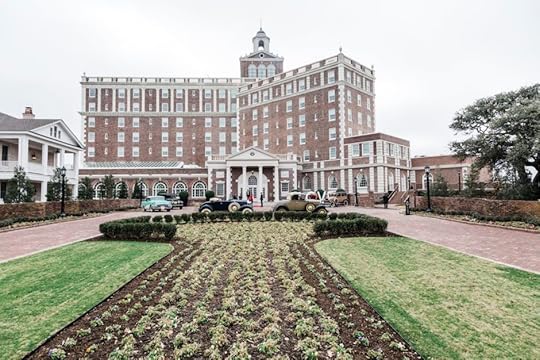
Photo: The Cavalier Virginia Beach
Known as the “Grand Dame of the Shore,” the Cavalier Hotel, built in 1927, is a straight-up icon. Sitting high on a grassy hill at the edge of the oceanfront resort area, you’ll immediately recognize it by its Jeffersonian-inspired architecture, mirroring the design of Monticello. It reopened in early 2018, after an $80 million renovation.
Back in the day, the Cavalier was considered a glam destination for the country’s biggest stars — noteworthy guests include F. Scott Fitzgerald, Frank Sinatra, Muhammad Ali, Bette Davis, Judy Garland, and Elizabeth Taylor. Ten US presidents have stayed here, too.
If you can swing a stay, do so. The hotel has exquisite rooms and suites, three restaurants, a world-class spa, and an infinity pool. But you can also just stop by for a tour, a taste at the onsite distillery (the only hotel distillery in the country), or a quick bite at the tavern — and if you can’t do it all, odds are the Cavalier will still be here on your next visit. Its history will only have gotten that much longer in the interim.

The post How to experience Virginia Beach’s extraordinary history firsthand appeared first on Matador Network.

March 20, 2018
Tiny camper pods in Iceland
After seeing pictures of waterfalls, hot springs, and the Northern Lights, Iceland doesn’t seem like the kind of place to spend any time indoors, especially in hotels. Then again, sleeping in tents this close to the Arctic Circle may seem equally unappealing to many. Luckily a company is renting luxury mini campers that can take you all over the island nation, without setting foot in a hotel or having to pitch a tent.
Mink Campers rents teardrop-shaped pods that are hitched to the back of a compact SUV. At 8.9 feet in length, the pods are big enough to fit a queen-sized bed and a bunk for a child, yet small and rugged enough that they can be taken just about anywhere the car can go. But it is the list of amenities that really proves a Mink Camper’s worth.
Every camper comes equipped with a kitchen, including a gas-powered stove and all the accoutrements you’ll need for whipping up a hot dinner, a sound system, heating, a cooler, a coffee maker, skylights for Aurora-viewing, towels, and slippers (no frostbite here).

Photo: Mink Campers
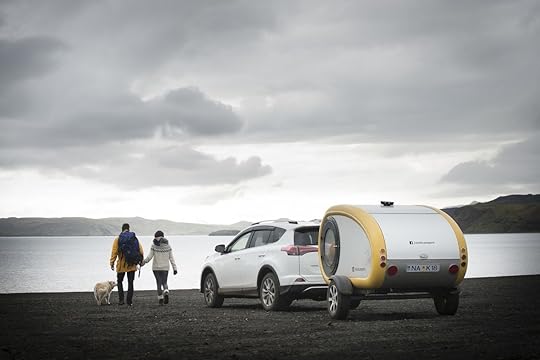
Photo: Mink Campers

Photo: Mink Campers
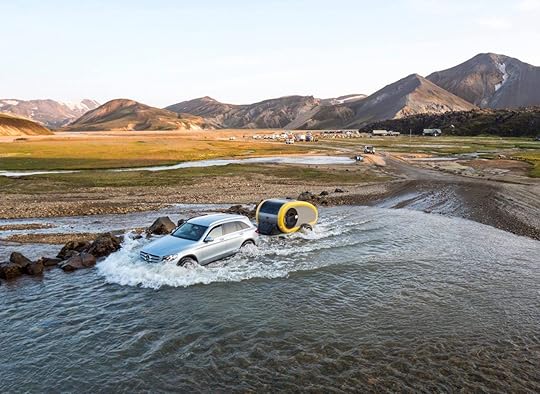
Photo: Mink Campers
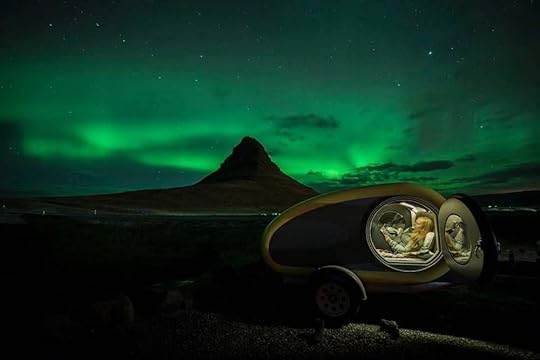
Photo: Mink Campers
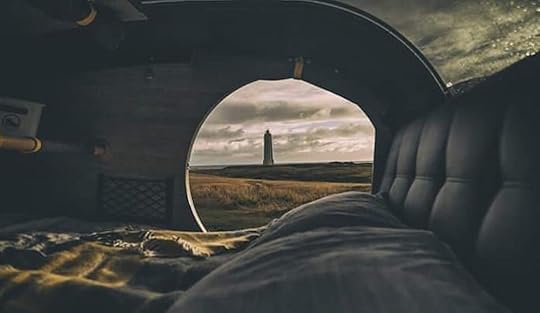
Photo: Mink Campers
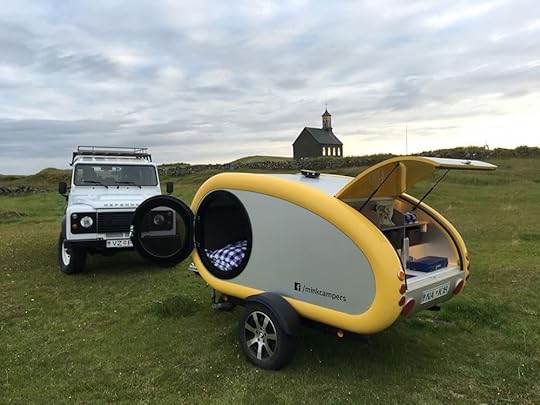
Photo: Mink Campers
Perhaps most importantly, every camper is mounted with USB chargers, GPS, and Wifi, so newcomers to Iceland will have an easier time fully embracing their wanderlust without getting lost driving between lava fields, glaciers, and black sand beaches.
If budget is a concern, though, it may not be the best option. Mink Campers charge €269 Euros per day (around $329 USD) for the camper, the car, the amenities, and cleaning, which is about twice the price of most of the highly-rated hotels in Reykjavik. And of course, a tent is practically free.
That being said, none of those hotels offer the same freedom of a luxury road trip across the entire country. And setting up tents is just plain annoying.
More like this: Here is why traveling to Iceland is the best way to reconnect with yourself and nature
The post These adorable teeny tiny camper pods are the best way to see Iceland appeared first on Matador Network.

Matador Network's Blog

- Matador Network's profile
- 6 followers


.jpg)