
Matador Network's Blog, page 1382
March 15, 2018
Luxe panoramic train to Machu Picchu
Inca Rail, Peru’s leading train service to Machu Picchu, announced significant upgrades to their passenger train services in Peru. The journey to Machu Picchu is now more luxurious and relaxing than ever, begging the question of which experience travelers will rave about more upon returning home: the journey or the destination.
Those who’ve done the four-day trek by foot may consider this upscale service a bit over the top, but hey, not all travelers venturing to this UNESCO World Heritage Site want to trek the Inca Trail. Some prefer a more luxurious getaway, and are willing to shell out good money — the most luxurious option being a $9,000 private train chartered specifically for the paying party.
The 360º Machu Picchu train is the latest upgrade, boosting the standard level of luxury of the single round-trip passenger. This option features panoramic viewing of the Sacred Valley from inside each of the six coach cars, along with local cuisine served onboard to guests without them having to leave their seat.
For the ultimate in upscale traveling, groups of up to eight passengers can charter a private train, the most exquisite option available. Guests are greeted by a bottle of Champagne upon boarding. In addition to taking in panoramic views of the Sacred Valley from the balcony or from within the luxurious coaches, the trip is spent sampling regional wines paired with Peruvian cuisine options. There’s also an open bar for the cocktail-inclined (we recommend trying a Pisco Sour). Should a passenger’s focus turn inward, an on-board educational app is readily available to entertain and inform about the Valley and the final destination, Machu Picchu itself.
The First Class Machu Picchu Train offers similar luxuries but in a setting shared with other travelers — perhaps allowing for a chance meeting of new friends with which to enjoy the three-course tasting menu. Guests also take in live music from the Observatory-Lounge car and can sip a cocktail on the balcony as the Sacred Valley floats by.
According to Inca Rail’s website, the new travel options allow travelers to “experience a unique way to travel to Machu Picchu, exploring the Andean landscape like never before with wider and taller panoramic windows and an observation outdoor carriage including a bar. The only train in Peru with an entertainment app on board which will allow you to learn more about the train journey and the Inca civilization.”
Or, you know, you could always walk there. 

More like this: 10 things I wish I knew before visiting Machu Picchu
The post This luxe panoramic train in Peru will make you rethink hiking to Machu Picchu appeared first on Matador Network.


Cruise around the world
It isn’t easy planning a trip that visits every continent in less than five months, but that is exactly what luxury cruise line Silversea has put on the table in an unprecedented offering.
Silversea’s World Cruise in 2020 will be the first cruise line in history to visit every continent in one go, including 62 ports spread across 32 countries, for an epic 140-day world tour.
Silversea’s luxury ship the “Silver Whisper” will depart from Fort Lauderdale on January 6, 2020 with 382 passengers. From there, it will take a brisk jaunt through the Caribbean and down the South American coast to Rio De Janeiro and Buenos Aires. Then the intrepid ship will pass the Tierra Del Fuego and make a stop on the Antarctica Peninsula, where guests can hop on smaller boats to see the continent up close.
After taking in the coldest continent, the Silver Whisper will take a few stops in Chile before making a dash for the islands of the South Pacific, including Easter Island and French Polynesia. Australia is the next continent on the list, with two stops in Melbourne and Sydney, followed by a meandering route through the islands off South East Asia, with a breather in Singapore. Sri Lanka, India, the Arabian Peninsula, and Egypt make up the next leg of the trip. After passing through the Suez Canal, the Silver Whisper will swing around Europe, taking in Italy, France, Portugal, Spain, and Ireland along the way, for some fjord-gazing in Norway. The ship ends its planet-circumnavigating trip in Amsterdam.

Photo: Silversea
Seeing the world by luxury cruise will cost you, however. The extraordinary list of destinations, as well as the pre-planned tours and Italian linens in every room, sets the starting price at $62,000 USD per person.

Photo: Silversea
A fully upgraded trip will run you $240,000 and get you an “Owner’s Suite.” Yeah, not cheap, but just imagine how much you will get to lord over your fellow passengers with your unlimited Wifi and laundry service.
More like this: 7+ under the radar destinations for cruises
The post This round-the-world cruise stops at every continent and 32 countries appeared first on Matador Network.

Happiest countries on Earth
Does it come as a surprise that the country that homes Santa Claus has been ranked the happiest country in the world?
The World Happiness Report was released on the 14th of March, just days before World Happiness Day on March 20th, and Finland has come out on top as the happiest country in the world.
Finland is ranked higher than its European neighbors, even though they rank high in elements typically affiliated with low happiness and depression, such as cold temperatures and a lack of sunlight in winter months. Last year’s winner Norway came in second place, followed by Denmark, Iceland, and Switzerland.
The study takes the following six variables into consideration when trying to measure subjective happiness in the 117 countries that were included in the research: freedom, trust, income, healthy life expectancy, social support, and generosity. This year, the Sustainable Development Solutions Network for the United Nations also analyzed the wellbeing of immigrants of the countries, an important element for inclusion considering the current climate and when looking holistically at a population’s welfare and quality of life.
There were no new entries to this year’s top 10 list and very little difference between the top 5. It seems like happiness is not only relative but sustainable.
Here are the top 10 happiest countries in the world for 2018.
1. Finland
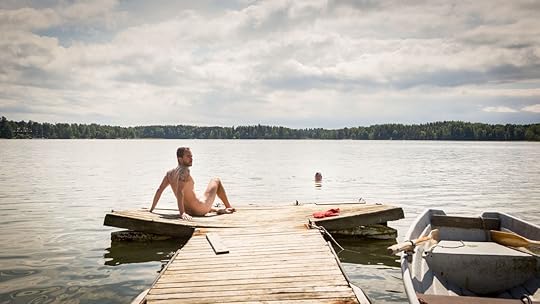
Photo: Ville Hyvönen
When Finland scores high in a ranking, it’s usually about education. It’s long been determined that the Finns are doing things right when it comes to teaching kiddos and that happy kids often equates a happy country. But that’s not all, Finnish people’s great work and life balance is a recipe for a happy life. As Tim Walker, an American teacher in Finland, writes for Matador, “I’ve never had colleagues tell me they were concerned that I wasn’t taking enough breaks until I started working at a Finnish school. And I’ve never had a boss encourage me to limit my work hours until I started teaching in Finland.”
2. Norway

Photo: Rob Bye
It is argued that Norwegians’ happiness is primarily attributed to the understanding that their society has developed to the standard that allows the population to relax. The culture of finding joy in the everyday rather than idealizing the material and commercial primates through Norway. The understated class and charm of Norwegians could be easily attributed to their quality of life. Jacqueline Kehoe writes for Matador about Norway’s culture in comparison to the qualities of other European countries. She states that Norway, “has all these things with the vibe that it’s unaware, like a timid-yet-striking woman not used to getting attention. Basically, a unicorn.” Unstated excellence runs through many other facets in Norway. From their outstanding chocolate and cuisine, the importance they place on the freedom to roam the landscape (Allemannsretten) and their outdoor lifestyle, it’s quite understandable that Norway has retained its high ranking on this list.
3. Denmark
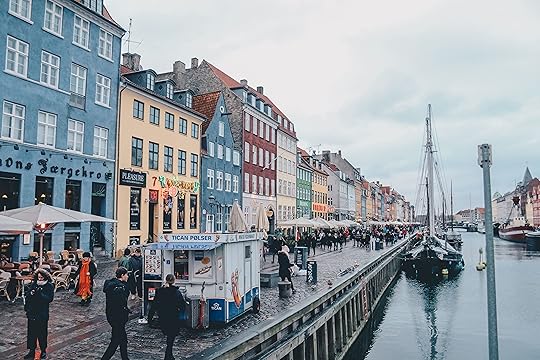
Photo:
Ethan Hu
If you have not picked up The Little Book of Lykke yet, now is the time. In it, Danish writer and CEO of the Happiness Research Institute Meik Wiking explains why Denmark ranks so high every year in the Happiness Index and how others can implement strategies to be just as happy. One of the concepts he puts forward in his book is the level of trust Danes have in each other. He explains that it’s common to see babies sleeping in strollers in front of cafes while their parents are having a cuppa with their friends, watching their children through the window and not worrying about the possibility of abduction. He also cites a 1996 study called The Lost Wallet Experiment to measure trustworthiness. In this experiment, wallets were left on the streets of 20 cities in Europe and a dozen cities in the US. In only two places were the wallets returned with all the money inside: Denmark and Norway.
Personally, I think their sense of humor is also responsible for their consistently high ranking.
4. Iceland

Photo: Alex Iby
Iceland is the most gender egalitarian country in the world, so, right off the bat, you know that 50% of the population of Iceland is happier than anywhere else. Not only that, but the fact that they live in a barren landscape close to the Arctic Circle does not faze Icelanders in the least. They don’t freak out about snowstorm and they don’t complain about the weather or the lack of trees. Instead, they barbecue year-around and take advantage of the unique geological features of their country by heating up their homes in the greenest way possible and by spending an awful lot of time soaking in hot water.
Also, there are no mosquitos in Iceland, which is probably the #1 reason why these people are so damn happy.
Now, if we convinced you that Iceland is the place to move to, here’s an easy guide to do just that.
5. Switzerland

Photo: Joshua Earle
Switzerland is generally known as a political utopia. A nation with a robust direct democracy, strong universal healthcare, and an uncannily potent economy, it’s a political model for many. This gives an overall sense of empowerment to the people, as they play a core role in shaping the future of the country. Although Switzerland has a reputation for being wary of outsiders and having isolating policies, for those that live there, the social exclusivity and cohesion creates a close-knit community. Couple that with the abundance of outdoor sports, their scenic railways, and stunning mountainous landscapes, it’s unlikely we’ll see Switzerland out of the top ten any time soon.
6. The Netherlands

Photo: gags9999
The Netherlands might be small, but believe me, they don’t sweat the small stuff. My Dutch friends have a common belief that you should simply be you and celebrate your unique qualities. This is illustrated in the fact that Holland is one of the most accepting places in the world when it comes to the LGBTQ+ community. They seem to care little about what others think and ignore insignificant details. With this freedom of expression and the directness they take with opinions, it makes life seem a heck of a lot less complicated.
7. Canada

Photo: Kalen Emsley
Canada makes the list as the only country from the Americas to feature in the top ten. Beating the U.S who came in at #18, Canada’s reputation for its nation’s upbeat attitudes, manners, and kindness proves that happiness does not only come down to net wealth. Claire Litton-Cohn writes for Matador, “Canada’s beautiful and diverse environment and constant growth as a world leader in multiple fields make it an amazing place to travel, live, and work.”
8. New Zealand

Photo: Carmen Huter
New Zealand has one of the greatest variety of ecosystems in the world and they take great care to keep it that way. The connection with the earth and the respect for the natural landscape is part of everyday life. Even those living in large cities retain an outdoor lifestyle. New Zealanders’ recognition for culture, tradition, and the importance of family are the grounding factors of their society. Young and old have pride in their nation and respect for one another. Like every society, the nation is not without social problems — the average wage is considerably lower than neighboring Australia — but the people of New Zealand have a culture of the community, and a support network that contributes to sustainability and relative happiness.
9. Sweden

Photo: Familjen Helsingborg
Maybe it’s the fact that the Swedes have the best traditions (they celebrate Cinnamon Bun Day every October 4th and Waffle Day every March 25th) or maybe it’s because they understand that their high taxes translate into a high standard of living (480 days of parental leaves and socialized health care are just two of the amazing benefits Swedes enjoy), but they sure are doing something right because they are constantly ranking high on the Happiness Index. I’m convinced that the reason why the Swedes are so happy is Fika. Fika is when friends, coworkers, and families alike take a little break for a coffee and a little snack. I’d be pretty darn happy too if I could dip a pastry in coffee while chatting with my friends every single day.
10. Australia

Photo: Kévin Lèvre
The healthy lifestyle, strong family bonds, and a comfortable level of income are attributable to the relaxed approach Australians take to life. Although there is research that suggests that those living in urban areas (80% of the population) have a poor life-work balance in comparison to the 1,000 people or so who live in rural Australia, beautiful landscapes and a connection with nature are a stone’s throw from most Aussies’ living rooms. Even if you work a 9-5 desk job in Sydney’s CBD, you can be horizontal on the beach or hitting the surf in 40 minutes. Another contributing factor could be the relationship Australians have with food and drink. It’s one of the most diverse and inventive food senses in the world. Pulling from local produce, supporting the community, and taking care of the planet is the core focus for all. It’s not a fad, it’s a part of life that creates harmony between what people consume and it’s origin. The blend of these elements together establishes a sense of well-being and mindfulness — core attributes of happiness.
More like this: 10 secrets to happiness according to cultures around the world
The post These are the happiest countries on earth, according to science. appeared first on Matador Network.

Images of strong women around world
If you were to just plug the words “Strong Woman” into Google Images, you’d see a lot of pretty quotes, a little Oprah, a dash of Tina Fey, and Rosie the Riveter from the “We Can Do It!” war poster. Isn’t there more to being strong than some quotes and a red kerchief? There’s no pretty little box to fit a woman’s strength into; it’s as diverse and beautiful and dynamic as each woman on earth. Here’s just a slice of our strength — in all its different forms — from around the world.

1
Climb
She scales the side of Mission Gorge like it's nothing at all. San Diego, USA.
Photo: Jackson Hendry

2
Bend
A dancer literally bends over backward on a streetcar in Lima, Peru.
Photo: Joel Valve

3
Glide
If you think ice skaters are dainty, think again. It requires insane leg and core strength to propel yourself into the air - not to mention that you need to make it look like a walk in the park. Doesn't that just sum up "womanhood' for a lot of people: do something seemingly impossible, and make it look easy while you're at it. Lake of the Isles, Minneapolis, USA.
Photo: Bruce Christianson
Intermission
Activism + Politics
The year women became eligible to vote in each country
Tim Wenger
Mar 7, 2018
Culture Guides
13 memories you have if you grew up in Michigan
Cathy Brown
Jan 31, 2018
Galleries
These images from NASA will rock your world
Kate Siobhan Mulligan
Feb 21, 2018

4
Rise
A hiker arrives at a coveted viewpoint and stakes her claim. Trolltunga, Norway.
Photo: Julia Caesar

5
Run
If we're gonna talk sheer, physical strength - look at those thighs.
Photo: Matt Lee

6
Dance
A woman dances Kathak - a complex, intricate, difficult Indian dance style from northern India, meant to tell epic stories and ancient myths. Stanford University, USA.
Photo: Saksham Gangwar

7
Shout
Four young girls raise their voices. Los Angeles, USA.
Photo: Nicole Adams

8
Marry
A bride climbs her way to a precipice where her partner waits to marry her. Garden of the Gods, Colorado Springs, USA.
Photo: Dylan Siebel

9
Pray
Some think prayer is weak. I beg to differ. Sometimes having hope takes every ounce of strength we have left. Vietnam.
Photo: Kevin Bluer
Intermission
Sponsored
8 amazing winter adventures in Colorado that don’t require a lift ticket
Tim Wenger
Jan 24, 2018
Infographics
Mapped: The most distinctive causes of death in each state
Henry Miller
Jan 17, 2018
Galleries
8 images that’ll convince any traveler to include Austria in their Europe trip
Andrew Thompson
Jan 22, 2018

10
Pretend
Supergirl, Ren, Wonder Woman, the women of Wakanda in “Black Panther”: new and powerful role models abound, and little girls are listening.
Photo: Paula Wallis

11
Grow 1
These women grow tomatoes in harsh conditions near the Dead Sea, in Jordan. And yet, they manage to produce a bounty anyway.
Photo by author

12
Grow 2
Women can grow life within them, and many of us do so in harsh conditions. Brazil.
Photo: Leandro Cesar Santana

13
Learn
Going to school is not an easy task for a lot of children, but girls have it harder than boys with cultural expectations of marriage, home-upkeep, chores, and menstrual cycles keeping them at home. So when you see a girl go to school, she is strong. She is fighting the odds every day.
Photo by author

14
Lift
Women bear many loads, some physically and others not. A woman bears her load all the way to the market in Pushkar, India.
Photo by author

15
Leap
Leaps of faith, leaps of love, leaps of life. Women take leaps every single day, everywhere around the world, believing they will land - one way or another - on the other side. Hawaii.
Photo: Brannon Naito

16
Slay
A Masai woman walks confidently off into the bush. She will slay branches for her fire. Under the heat, she must walk a little farther every day to get more wood, which she will bundle and carry back on her head.
Photo by author

17
Cook
We all know a woman's place is in the kitchen. Oh wait, bullshit. But when we do get into a kitchen, women can own it like no other. This woman at the floating market outside Bangkok is frying up a dozen different things at once, in the heat, in a kitchen that is floating on a river.
Photo: Lisheng Chang

18
Laugh
To look life in the face in all its joy, pain, sorrow, and struggle, and be able to laugh is a sure sign of strength. Vietnam.
Photo: Huyen Nguyen

19
Weave
Weaving is a time-consuming, finger-breaking, tedious, slow art form. Women like these in the Colca Valley of Peru weave daily, and when they're not weaving, they hike to touristy areas to sell their wares.
Photo: Pedro Szekely

20
Carry 1
These girls will walk in the heat to gather water several times a day. Kenya.
Photo: Tucker Tangeman

21
Carry 2
A mother carries her children in many ways, but this woman will carry her child the entire workday.
Photo: Annie Spratt

22
Carry 3
A mother hefts her toddler through a marketplace in Ubud, Indonesia, selling fans.
Photo: Tbel Abuseridze

23
Carry 4 / Sacrifice
Women's bodies stretch, ache, groan, and sacrifice to make room for a growing baby. We sacrifice our bodies, our time, our energy, our comfort, our futures, and even our shallow standards of beauty in order to bring a life forth. Scars should be celebrated, not shamed.
Photo: tomfreakz

24
Carve
Surfing was made mainstream by men but women have shown up around the world and to show that we can do it, too. And we're damn good. Australian Chelsea Hedges carves up a way, and a little more of that path forward for women in sports.
Photo: Surfglassy

25
Charge
Yeah, we play football too.
Photo: Pierre Selim
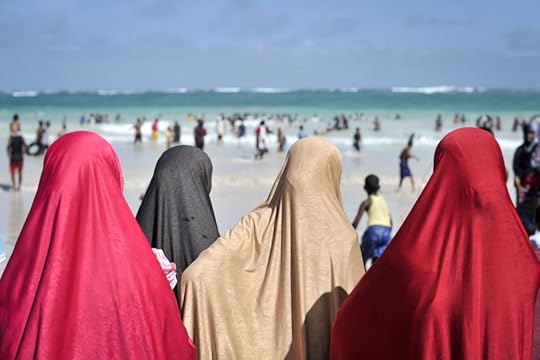
26
Swim
Despite ongoing violence in the country, these women braved social expectations, and crowds, to enjoy a day at the beach for Eid-Ul-Fitr, an important day on the Muslim calendar. Mogadishu, Somalia.
Photo: AMISOM Public Information

27
Herd
A woman makes her way home with her cows. She herds them along a sheer cliff drop following the Yangtze River, in Northwest Yunnan, China. Uphill, precarious, rough: the path home is not always easy.
Photo: TimQuijano

28
Nourish
Women teaching other women in India how to breastfeed, in order to combat malnutrition. Even if the mother is malnourished, her milk will sustain new life. That's how strong our bodies are.
Photo: DFID - UK Department for International Development

29
Create
Hannah Kidd is an artist in New Zealand who recycles roofing iron off old buildings, then runs over it in her truck to flatten it, before she cuts, welds, and sculpts incredible works of art. Creation takes a lot of inner strength but her art takes literal physical strength, too.
Photo: Lara Macgregor

30
Bloom
When women realize their own strength, they flourish.
Photo: Autumn Goodman
More like this: 10 inspirational women from around the world
The post Women around the world are as strong as hell. Here’s proof. appeared first on Matador Network.

Couple were in photo before they met
Nothing makes a relationship feel like it was simply meant to be more than a sense of fate. That is what Mr. Ye got a heavy dose of while rummaging through a box of his wife’s photos from nearly two decades ago, one of which has him in the background.
Back in July of 2000, Mr. Ye (only the couple’s surnames have been publicized) was part of a tour group that was visiting the city of Qingdao, in the Shandong Province. At the same time, Ms. Xue was touring the seaside city with her mother, who had recently undergone surgery and was in need of a vacation.
As tourists in Qingdao are wont to do, both Mr. Ye and Ms. Xue stopped by the May Fourth Square, which commemorates a movement to return the Qingdao to Chinese control after World War I and the end of German colonization.
May Fourth Square is famous for its massive abstract red sculpture, so naturally both Ye and Xue separately had their pictures taken in front of it. It was that photo of his wife that Ye stumbled across while going through photos in his mother-in-law’s closet.
Married couple in China discover they appeared in same photograph as teenagers: Report https://t.co/n0OLNxKbUi pic.twitter.com/vrSlECRRmP
— Channel NewsAsia (@ChannelNewsAsia) March 11, 2018
To his surprise, he noticed himself getting his picture taken in the background of her photo.
The odds of this happening are astronomical. The couple would not officially meet until 11 years later in a city thousands of miles away.
“When I saw the photo I was taken by surprise and I got goosebumps all over my body” Ye said. “That was my pose for taking photos.” He then found his own photo, and immediately shared his incredible find on social media, where it took off as evidence that some people are just meant to be together.
“It seems that Qingdao is certainly one of the most special cities,” added Ye. “When the children are older we’ll go to Qingdao again and the family will take another photo.”
More like this: The 13 most romantic places to travel as a couple
The post A married couple in China were photographed together while traveling, a decade before they met appeared first on Matador Network.

How to live and work on a yacht
You don’t need to be a billionaire to travel the high seas on a luxury yacht, hopping from port to port to experience coastal destinations. All you need to do is become a yachtie: a worker on a luxury yacht, whether that be in hospitality or as a deckhand. By becoming a yachtie, you can earn money, live for free, and travel to some of the most beautiful destinations in the world on a floating palace. But fair warning: the job isn’t completely glamorous; it’s hard work. But if you get down with the “work hard play hard” mentality, you’ll be able to set sail soon.
How to become a yachtie:
1. What is it really like to work on a yacht?
2. Yacht crew eligibility and requirements
3. 4 entry-level yacht jobs that do not require prior experience
4. Begin creating your plan of action
5. Begin networking
6. Begin day working
7. Ace your interviews
8. How to stay afloat on your first boat
1. What is it like to work on a yacht?
Pursuing a job in the yachting industry takes a lot of effort and energy, and it requires you to completely uproot your land-based life and move onto a boat full time. For the right kind of person, it’s totally worth it, but let’s face it, yachting is not for everyone.
The upside of working on a yacht:
Get paid to travel the world in style.
You no longer have to separate work from traveling, now traveling is part of your job. As soon as you’re off the clock, simply step onto the dock and your mini vacation begins.
Yachts don’t go to boring, ugly places. You can expect to travel to some of the most remote and exotic destinations in the world. A few yacht hotspots include the Caribbean, the Bahamas, and the Mediterranean.
Live for free, earn cash, save money, and pay off debt.
Even the most basic entry-level job on a yacht starts off with a salary of $2,000-$3,000 USD per month and you don’t have to have a college education to get hired.
There is also the possibility of earning additional cash tips (tax-free) which can range from a couple of hundred to a couple of thousand USD per charter (depending on the length of the trip and the number of guests onboard).
When you live on a yacht, your living expenses are covered. You no longer have to pay for food, rent, transportation, or utilities. This can save you thousands of dollars a month.
The downside of working on a yacht:
It can be very long, physical work that requires strength and stamina.
Contrary to popular belief, a majority of the tasks you must execute on a day-to-day basis are not luxurious.
You may have to work 16+ hour days for weeks on end if you work on a busy boat. You may get very little rest during these trips.
Some of the tasks you have to do are not appealing. You’ll be cleaning toilets, crawling around in tiny spaces, lifting heavy things, dealing with lots of chemicals, and getting dirty, sweaty, and wet.
You must leave your life on land, and move onto a boat full-time.
You must be willing to drop everything and move onto a boat.
It is a long process that requires a lot of preparation, determination, effort, energy, and time.
Succeeding in getting a job will not happen overnight, it can take several months, and to become good at it can take several more.
2. Yacht crew eligibility and requirements
Before you can even consider pursuing a career in the yachting industry, there are 4 minimum requirements that you have to be able to meet:
Have proper legal documentation
You must be at least 18 to work on a yacht.
Be physically able
You must pass a seafarers medical exam such as an ENG 1. This is just a quick doctor check-up/physical. It’s around $100 USD. It is valid for a maximum of 2 years.
To live on a boat full time, in tight quarters with other crew members.
To work long, physically-demanding shifts — sometimes 16 hours or more per day.
To work outside in the elements, or inside in small spaces, if your position requires it.
Be mentally willing
You should be willing to commit to working for at least 6 months, but ideally a year when you are starting out in the industry.
Complete basic training
STCW-95 which stands for Standards of Training, Certification, and Watchkeeping. It’s a 5-day course (typically) that costs about $1,000.00 USD (give or take). You must complete this course physically/in person, you can not get certified online.
Additional security awareness course (not mandatory but highly recommended) You can choose from either:
Security Awareness: 4 hour $149
VPDSD: 8 hour (stand watch) $299
Check out the International Yacht Crew Resources Directory for an extensive list of maritime schools that offer this training.
You can also learn more about eligibility and requirements in this Yacht Job YouTube Video Series.
3. 4 entry-level yacht jobs that do not require prior experience
There are all types of different tasks that need to be performed around the clock to maintain a yacht and keep it running smoothly. While some of the job positions on board are very technical and require a lot of skill and knowledge, there are 4 entry-level jobs that require little to no prior experience. The most common entry level jobs on a yacht are some variation of:
Stewardess/Steward
Deckhand
Cook/Chef
Stew/Deck/Cook
For more information about each job including tasks, responsibilities, contracts, and salaries check out this post about the 4 entry level yacht jobs for beginners.
4. Begin creating your plan of action
For an easy step by step guide with all of this information check out The Yacht Job Handbook for New Crew, with over 300 pages of great information and resources for aspiring yacht crew including how to get certified, how to create a professional resume, how to network and gain an edge, and how to prepare for interviews. Use the promo code “matador” for 50% off!
The 2 most important decisions to make before you get started:
Before you begin planning and coordinating your new adventure, you have 2 decisions to make that will determine every other action you need to take from this moment on, those are:
When are able to make the transition?
Which hiring port will you go to to get training and look for work?
Once you have answered these 2 questions, everything else will fall into place. However, these questions should not be taken lightly. You should plan strategically so you are at the right place at the right time when you are ready to begin job hunting.
The best times of year to look for work:
High season Winter/Spring
Turnover April to mid-June
High season Summer/Fall
Turnover September to mid-December
During the 2 high-season periods, yachts are generally on the move with a full crew and itinerary in place before they set off. While this is not the ideal time to be looking for work, it is certainly still possible to get hired. While there is a lower volume of job opportunities, there is also less competition.
On the other hand, the periods between the two high seasons are an ideal time to look for work because there tends to be a lot of turnover. Most boats will return to a major yachting hub for a couple of weeks or months to regroup after a busy season. Many crew members are either taking time off, “jumping ship” (quitting), or else they have completed their contracts and are off to spend their hard-earned money.
The 6 best ports in the world to find yacht jobs:
While yachts travel to various ports and destinations all over the world, there are a few “yacht hubs” where you can expect to find a big presence of yachts, yacht crew, and entry-level job opportunities. Your best chance of finding a job will be in one of the following locations:
Ft. Lauderdale/Southern Florida
Newport, Rhode Island
Antibes, France
Palma, De Mallorca
St. Maarten, Caribbean
Antigua, Caribbean
While these are some of the most well-known international yachting destinations, there are countless ports all over the world where yachts are known to frequent and pass through. If you aren’t able to relocate to one of the destinations above, do some research and try to find other locations that are more convenient and viable for you.
You will often hear people in the yachting industry say “it’s all about timing,” which is true. There are many reasons that crew suddenly quit, or get fired, and their position needs to be filled immediately. If you are available, willing, and able, you may find yourself getting interviewed and being offered a position that very same day!
Although the time of year is less important, you do still need to be physically located in or near a hiring port when you’re ready to work, especially if you are looking for an entry-level position.
5. Begin networking
Once you have relocated to a yachting hub, networking is essential for increasing your chances of getting a job. The more you expand your network, the greater your chances are of landing more interviews and getting more job offers!
There are multiple channels you can use to network and find work in the yachting industry. Once you arrive at a yachting hub to begin training and job hunting you can explore the top three:
Crew agencies
This is an agency with individuals who help place crew looking for work on boats who are looking for crew, and vice versa. Most of them begin with you creating an account on their website and filling out lots of personal information about yourself and what type of job you’re looking for.
Online
Job sites/apps: there are several job sites such as Daywork123.com and apps such as Crew Compass where yacht crew jobs are posted daily.
Social media: there are dozens of Facebook groups worldwide that are great resources for finding and posting job opportunities as well as yacht industry information in general.
In person
Crew networking events: these are social events that are held in some of the larger yachting hubs that enable aspiring crew to mingle with captains and other yacht industry professionals.
Crew houses: these are affordable housing options for yacht crew that are similar to hostels.
Day working or walking the docks at marinas, docks, and boatyards.
Check out the International Yacht Crew Resources Directory for an extensive list of crew agencies, job sites, and facebook groups that are free resources for yacht crew. Or read 7 Ways to Gain an Edge in The Yacht Industry Job Market.
6. Begin “day working”
While the ultimate goal is to get a full-time job, most new crew typically spend a few weeks or even months gaining experience by “day working” and working temporary gigs before committing to a permanent position on a yacht.
While you’re in the process of day working, you should be testing out different types of boats and positions to see which is the best fit for you. You should also start applying for full-time jobs and hopefully lining up interviews.
To avoid making costly and embarrassing mistakes, you should check out these yachtie greenhorn training tutorials on YouTube. In these quick flicks, I demonstrate some of the most common tasks you will be doing, as well as methods and techniques for doing them properly.
7. Ace your interviews
Every boat is different, and every interview is different. The one thing they have in common is that they have a position that’s open; so, they want the best candidate possible. Chances are they’re looking for someone who:
Is qualified to do the job mentally and physically
Is eager and willing to learn
Is mentally stable
Can handle working long hours, out at sea, while living in small quarters with several other crew members and personalities
Can start ASAP
Is willing to commit long-term
At this point, it’s all in your hands, good luck! Don’t get discouraged if you don’t make the cut for a job you were excited about; more opportunities will come along. Just continue expanding your network, gaining experience, and applying for jobs!
8. How to stay afloat on your first boat
Getting a job is a huge accomplishment, but can you stick it out? Your first few weeks onboard will either make or break you. Day working is a great way to get your feet wet in the industry, but once you go all in and move onto a boat to work full time, you’ll either sink or swim.
In the yachting industry, job security does not exist. You’re going to have to work extra hard to prove that you’re worth keeping around. It can take several months to train a new crew member. There are many mistakes you can make early on in the game such as behaving unprofessionally or doing tasks improperly that can result in severe damage, injuries, embarrassment, and lost job opportunities. If you don’t take things seriously in the beginning, they won’t waste any more time training you, and you may find yourself back on the job hunt.
But if you do stick with it, no matter how rough the waters get (figuratively and literally) you’ll be able to make a real career as a yachtie and experience luxury coastal destinations that might not have been possible before.
More like this: How to get a job on a cruise ship and travel the world for free
The post How to live, work, and travel the world on a yacht appeared first on Matador Network.

Swahili you learn on Kilimanjaro
Climbers learn a lot on Mount Kilimanjaro — whether they’re more likely to laugh or cry at high altitude, what characterizes an alpine desert, exactly how much plantain porridge is too much plantain porridge, etc. But what many don’t realize before setting off toward the summit is that the excursion also guarantees a lesson in the local language: Swahili. The following Swahili phrases are unavoidable on the mountain, offering climbers not only advice and encouragement during their ascent but also a special kind of souvenir to bring back with their certificates of completion.
1. Pole pole
Translation: “Slowly, slowly”
These are probably the most-spoken words on Mount Kilimanjaro. The friendly reminder to take it nice and easy is a standard greeting from passing guides and porters, and the mantra gets stuck in your head almost immediately. Don’t be surprised if you’re still reciting it weeks after you’ve returned home, even while working at your desk.
2. Twende sasa hivi
Translation: “Let’s go right now”
Normally, saying twende on its own is a fine way to rally a group, but climbers can always use a pinch more motivation. Adding sasa hivi turns a casual, “Let’s go,” into a spirited, “Let’s get a move on.” Plus the phrase is way more fun to say in its entirety.
3. Poa kichizi kama ndizi (ndani ya friji)
Translation: “Crazy cool like a banana (in the refrigerator)”
When someone asks how you’re doing in Swahili, you answer say poa, meaning “cool.” When someone asks how you’re doing on Kili, you can answer with a bit more gusto by comparing yourself to a banana. And when you want to express just how much you’re loving mountain life, you can go for the full simile, claiming you’re “crazy cool like a banana in the refrigerator.”
4. Maji maji
Translation: “Water”
Said once, maji means “water.” Said twice while trekking it means either, “I’m dying of thirst,” or, “I need a breather, and now that I think about it, it’s probably time for more water.”
5. Hongera
Translation: “Congratulations”
You’ll learn this word on summit day, but there’s a good chance you won’t get the chance to say it until you’re halfway back down the mountain, where the amount of available oxygen returns to a level suitable for breathing, and speaking.
6. Jambo! Jambo bwana! / Habari gani? Mzuri sana! / Wageni, mwakaribishwa! / Kilimanjaro? Hakuna Matata!
Translation: “Hello! Hello sir! / How are you? Very well! / Visitors, you are welcome! / Kilimanjaro? No trouble!”
More a song than a phrase, this is an adaptation of the ditty known around East Africa as “The Jambo Song.” It gets sung at least twice a day on Kili — before your daily hike and upon arrival at every new camp — and you’ll probably have the lyrics memorized before you learn what they mean. Unsurprisingly, later verses remind visitors to walk slowly, drink lots of water, and, of course, enjoy the climb.
More like this: 9 realities to consider before climbing Mount Kilimanjaro
The post 6 Swahili phrases you’ll learn climbing Mount Kilimanjaro appeared first on Matador Network.

Untranslatable Italian phrases
Every language has phrases or words that can stump a local when translating to an outsider. Italian has many untranslatable terms that are woven into not only the language but culture, too. If learning Italian, it’s important to know how to use “Mamma mia!” without automatically saying “here we go again” and fill your plate at an “apericena” buffet.
Here are 10 untranslatable Italian terms.
1. Boh
This is my favorite one. It’s so hard for me to refrain using it when I’m speaking in English because it’s very common and easy to say. Literally, it doesn’t mean anything but we use in place of “non lo so” (I don’t know). While you say it, shrug your shoulders and twist your mouth downwards. It’s the laziest word we have.
2. Ti voglio bene
It puzzles me how to differentiate between friendship and love with someone in English, if you say “I love you” to both friends and lovers. In Italian, we have two different and separate expressions: “tiamo” for your partner and “ti voglio bene” for your friends and family. It avoids any misunderstandings…
3. Abbiocco
The closest word to translate “abbiocco” is food-coma. It’s that feeling you get after you stuffed yourself with your grandma’s lasagna. The only thing you’re capable of doing during an “abbiocco” is hit the couch and give out some sort of death rattle. Embrace it, it comes with the territory of Italian food culture.
4. Spaghettata
As you can imagine, “spaghettata” has something to do with spaghetti. If you get a call from friends inviting you to have a “spaghettata” you are obviously going to a spaghetti-party. It doesn’t necessarily have to be spaghetti — the pastabilities are endless.
5. Tizio, Caio e Sempronio
Tizio, Caio e Sempronio is used in a dialogue when referring to multiple unspecified people. It is the equivalent of Tom, Dick, and Harry (therefore we could say the English language actually has a translation) and I found out many other languages have their Tizio, Caio, and Sempronio. But sometimes we only use “Tizio e Caio” without including “Sempronio“. We also use “Tizio” to refer to a random guy.
Why these names in particular? Because they were the most popular ones in juridical exemplifications and they were first used in the 1100s.
6. Mamma mia
It’s a classic and I use it very often. If someone bothers you, say “Mamma mia”. If you’re in front of the Colosseum and you find it beautiful, say “Mamma mia”. If you’re enjoying your mom’s spaghetti always say “Mamma mia che buoni!” (Mamma mia, it’s so good!).
7. Magari
Magari has many meanings depending on the context but generally, they can be translated with “I wish”.
For example:
“Did you win the tickets for the game?”
“Magari!”
8. Apericena
Aperitivo + cena = apericena. It’s a very new word that made its way into the dictionary in the 00s. Whereas an “aperitivo” is a meal consisting of a drink and a small bite consumed before dinner — generally between 6 and 8 PM — an “apericena” takes place at dinner (“cena“) time and has way more food. It often consists of an unlimited buffet. On your next trip to Italy find a good apericena.
9. Passeggiata
This word has a literal translation but we use it for something else too. “Passeggiata” means to walk. However, when a situation is straightforward we say it’s a “passeggiata”.
For example:
“How was the exam?”
“Una passeggiata!”
10. Dolce far niente
I know you know this one. “Dolce far niente” translates to “sweet doing nothing” and it’s a thing we love. Having a break after lunch, a walk on the beach while eating gelato, watching Netflix — they’re all dolce far niente activities.
More like this: A mini-guide to Italian slang
The post 10 untranslatable Italian phases we need in English appeared first on Matador Network.

Mistakes language learners make
With the world becoming more interconnected, more of us are required to have heightened language and communication skills. Learning a new language depends on patience, discipline and time. Three elements which are difficult to practice and fit into an everyday schedule. Personally, I have struggled to learn different languages. French and Portuguese were relatively easy to pick up due to their similarity to English. Japanese, on the other hand, was a real challenge.
Through my personal learning experience and ten years in education, I’ve noted a few common mistakes people make when learning a new language. Here 10 common mistakes people make when learning a new language and some helpful tips to keep you in a good mindset.
1. Getting discouraged by your mistakes.
Let’s start with the basics. Mistakes are ok — in fact, they are necessary. By making mistakes, you are creating a learning opportunity for yourself. Whether it’s a grammar point or a lack of vocabulary, making mistakes is all part of the fun of learning a new language. Practice patience, be kind to yourself and take your time.
2. Misunderstanding how you learn.
How you learn is just as important as what you learn. Everyone is different, and each person absorbs information differently. There are seven distinct learning styles ranging from visual to aural to physical. Do you enjoy reading about your interests? Would you prefer a more hands-on approach to learning? Do you retain information easily or do you need constant reminding? Understanding these and other questions can help you create a learning discipline that will help you to retain a new language.
3. Not starting with the sounds.
When learning a new language, it is important to start with how a language sounds. While reading and writing can be enticing, all languages will have a unique sound to them. That is why it is important to start with listening and repeating at first. Reading and writing should not be ignored, but for the sake of fluency, they should take a backseat to verbal exercises.
4. Focusing on the wrong vocabulary.
You should be mindful of what kind of vocabulary you are learning. Ideally, you want to create a base of vocabulary, a foundation, that you can grow from. If you are a beginner, focus on useful vocabulary. Numbers, colors, vehicles, family members, and food are usually great places to start. The core purpose is to get you speaking right away, so start with simple, practical vocabulary.
5. Not building sentence vocabulary.
Building sentences is an essential part of learning a new language, and it is often overlooked. There are many common phrases that every language has a version of which can start you off. “Hello,” “Goodbye,” “I’m sorry,” and “Thank you” are very common terms and usually easy to learn. Adding common everyday expressions to your studies will help you grasp the language faster.
However, there are basic sentences that can help you expand your base vocabulary. Start by using a selection of simple verbs, then combine these with your base vocabulary to start speaking simple sentences. After these get easier, you can begin to add more complex syntax like prepositional phrases and adverbs.
6. Focusing too much on grammar.
If you are just starting out in a language, don’t worry so much about grammar. I have often found myself getting caught in grammar confusion when it doesn’t serve me in that moment. Grammar lessons can come later down the road, but for now, you need to have your vocabulary down so that when the grammar lessons come around, you won’t get stuck parsing your sentence construction.
7. Stressing over pronunciation.
As mentioned before, every language will have its own unique sound. Some of the more exotic languages can have sounds that you are not used to making. When I was learning Japanese, there weren’t too many crazy sounds to learn since it’s predominantly a monotonic language. However, going from Japanese to Hebrew has me moving my mouth in completely different ways. But don’t worry about that! Pronunciation will come over time. The more you practice a language, the more you will pick up on the unique sounds. If you are speaking with natives, they will also help you with pronunciation.
8. Listening to native speakers.
Quite often, people will study a language and then try their skills on native speakers. However, they will sometimes get frustrated when the native speakers communicate with other native speakers. In my time teaching English, I have always tried to slow my speech down so that I can be more easily understood. Remember that listening with intent is good enough. Trying to achieve speed in your speech is important, but practice is not efficient if you’re not doing it correctly. If you’re getting upset because you can’t understand native speakers, relax.
Remember, this is not a race, it’s a journey.
9. Not giving yourself enough time.
Many people I have met who try to learn new languages tend to give up quickly because they lack motivation and results. This is understandable. Learning a new language takes time and patience. Give yourself credit for your early achievements and set goals for yourself to battle lack of motivation.
10. Not being in the right mindset.
Sometimes when teaching, I can see when a student is just not into the lesson that day. Our lives sometimes get in the way of our goals. This is something to keep in mind. Before I jump into a lesson, I usually give myself a language “pep talk.” This talk reviews what I learned in the last lesson and prepares me for new information.
Learning a new language is not easy and takes a lot of dedication. Keep in mind of how much time it took for you to master your own language! The most important thing is to not give up and keep with your routine and learning the language.
More like this: When I tried learning a second language while traveling, I realized I was doing it all wrong
The post 10 common mistakes language learners make (and how to fix them) appeared first on Matador Network.

March 14, 2018
Flying with pets
A family is mourning the death of their young dog, which died on United Flight 1284 en route to New York’s LaGuardia airport from Houston Intercontinental Airport on Tuesday evening. A flight attendant had insisted that the 10-month-old French Bulldog puppy be sealed in the overhead bin for the duration of the three-hour flight, against the passengers’ protests. The dog barked for a long time on the flight, before going silent. Upon landing, the family discovered their dog was lifeless.
The tragic story was shared on Twitter by fellow passenger Maggie Gremminger, and has since gone viral, with an outraged public expressing their dismay over the incident, with many on social media insisting on boycotting the airline — especially in the wake of other negative PR debacles, including the death of a giant rabbit in a cargo hold last July.
In regards to the United attendant’s behavior, Gremminger tweeted that “Myself and a fellow passenger felt like that was NOT a thing. I am not a flight attendant tho. Maybe they have air ventilation in there that I didn’t know about. I tried googling rules about pets on board but didn’t have ample time before [takeoff].”
Indeed, this was not protocol, and United said in a statement, “This was a tragic accident that should never have occurred, as pets should never be placed in the overhead bin. We assume full responsibility for this tragedy and express our deepest condolences to the family and are committed to supporting them. We are thoroughly investigating what occurred to prevent this from ever happening again.”
However, the incident has left many pet owners understandably concerned about bringing their animals on flights, and like Gemminger, wanting to know more about their rights for flying with pets. In an effort to make sure that every pet owner is informed, here we outline all of the rights a pet owner has when traveling the skies with their animals, along with the risks associated with doing such, the safety measures that are in place, and additional precautions you can take.
The official policy for traveling with animals on planes
Typically, dogs and cats must be at least eight weeks old to travel on a plane, and small pets are able to travel within the cabin if they are in proper carriers. Pets that are traveling in the cabin need to go through security, but they should not go through the x-ray tunnel (you have the right to insist upon this if a TSA agent is making you do so). Place the empty crate on the conveyor belt, then carry your pet or walk it through the security system with a leash. Allow for additional screening time.
United’s pet policy states the following: “A pet traveling in cabin must be carried in an approved hard-sided or soft-sided kennel. The kennel must fit completely under the seat in front of the customer and remain there at all times.” United goes on to explain that more leeway is given to soft-sided kennels, as they are more malleable in under-seat space. If the animal cannot fit under the seat, it needs to be checked (as if it were baggage, but with different fees) for stowing in the cargo hold. Most airlines have similar policies. Under no circumstances should a pet be stowed in the overhead bin, as there is no air circulation. You have the right as a passenger to demand that the animal be properly checked, if it cannot fit under the seat upon boarding.
If you are stowing an animal in the cargo hold, know that your pet will not be stored in the same location as the suitcases; the planes have dedicated, regulated areas for live cargo. The carriers (whether it be for in-cabin or cargo transportation) should have disabled wheels, ventilation, a waterproof bottom, and a spring locked door that the pet won’t be able to get open mid-flight. Pets should be able to stand up and turn around within the crate. The pet should also be equipped with hydration.
Live Animal and Directional Sticker are usually mandatory, and you should also include the name of pet, your name and cell phone number, any medical considerations, temperament issues, and a picture of your pet. It’s a good idea to include the pet’s veterinary information as well. Written instructions for food and water must accompany all animals.
Additionally, pets should not be tranquilized for travel as it can affect their breathing, which is integral to keep regulated during air travel. You should also carry a certificate from your vet stating that the animal has all mandated shots and procedures. Be sure to check if your pet needs its own passport or additional vaccinations, which depends on the country you are traveling to.
Cost of traveling with a pet
Small pets traveling in the cabin typically cost $125. Fees to check your pet as luggage typically range from $50 to $500, depending on size, weight, and carrier. Support animals, such as seeing-eye dogs, do not cost extra in most circumstances. But due to what can be chalked up to a number of cases of customers taking advantage of loose enforcement, the definition of what exactly qualifies as a support animal is tightening. United drew headlines back in January by refusing to allow an alleged “emotional support peacock” to board a flight, perhaps the most public-facing incident of a continued effort by many airlines to tighten restrictions on emotional support animals. In most cases, emotional support animals are not subjected to a cabin fee, but it is important that their status as a service animal is well documented and that you carry the paperwork.
The risks associated with flying with pets by the numbers
While this recent tragedy has many fliers worried, the overwhelming majority of pets arrive safely to their destination. According to the US Department of Transportation, over two million animals fly annually in the United States; in 2016, 26 animals died and 22 were injured. Not to downplay the deaths of those pets, but the stats are strikingly in favor of your animals’ well-being: the accident rate is less than 1 in 10,000. Assuming proper protocol is followed, the animal should be safe.
In accordance with the federal Animal Welfare Act, animals may not be exposed to temperatures less than 45 degrees Fahrenheit, unless they are accompanied by a certificate signed by a veterinarian stating that they are acclimated to lower temperatures. If you are especially concerned about the temperature of the flight, opt to travel during spring or fall, when planes are unlikely to enter any extreme lows or highs in temperature (though that is more of a concern during the outdoor loading and unloading process, versus the in-flight temperatures, which along with the pressure should be regulated).
Know your pet’s anxiety levels
One comforting factor in the equation is that no one knows your pet like you do — as the owner, or “human” in pet-centric circles, you need to be aware of the pet’s anxieties and their tolerance level for them. Give your pet a “voice” in the conversation by considering their likely response to certain triggers that may arise — whether that be people, noises, confined spaces, or any number of other factors that you have personally witnessed your pet react to. If flying sounds like something your dog will suffer to get through even in the best of circumstances, perhaps a road trip or train journey is in order instead.
Additional precautions you can take
At the time you book your trip, you need to call the reservations number of the airline and tell them that you will be traveling with an animal (unless you are able to do so online). Then, reconfirm one to two days before departure that you will be bringing your pet.
Ahead of your flight, acclimate your pet to the travel carrier, especially if the animal is not typically in a crate or cage at home. Doing so will alleviate the animal’s stress, and allow it to smell familiar to them in-flight.
Fly direct whenever possible. This reduces travel time and the amount of handling your pet will need to get to the end destination. If a layover is unavoidable, ask if you can collect your pet after the initial flight. The animal must then be boarded again onto the second plane no matter what, and this allows you to have more control over the situation and thus can better ensure the animal gets where it needs to go. Additionally, a bit of face to face time with you may put them (at least partially) at ease.
Show up extra early to the airport in case of any issues. If everything goes smoothly, the opportunity is always there to spend the extra time cooling the nerves over a cocktail in the terminal.
If you are the one with high anxiety levels, you have the right to inquire about your pet’s well-being. Tell the ticket agent at the gate that you would like to get confirmation that your pet has been loaded in the plane. Ask a crew member to inform the captain that a live animal is in the hold (they will probably already know that, but it will make you feel better to ask).
You can opt to purchase pet travel insurance from an IPATA-approved insurer, such as the aptly named Pet Travel Insurance. Doing so will cover medical expenses for the animal if any accidents occur while traveling. The duration of coverage lasts from when your pet is dropped off at one airport to when it is picked up at its destination.
There’s no denying that flying with a pet can be stressful. No matter the amount of research done, fees paid, and time allowed, anxiety is an unfortunate part of bringing four-legged family members with you on a trip. That said, the practice is extremely common and these regulations are in place to keep your pet safe. The United Airlines incident was a result of a staff member not following protocol (the carrier declined to say if the flight attendant had been fired at the time of publication). However, it may also speak to a potential lack of thorough training on these issues for staff. While absolutely heartbreaking for the family, the fellow passengers, and animal lovers everywhere, we hope that this incident can shine a light on the rights pet owners have on flights, and not discourage them from traveling for fear of their pet’s safety.
More like this: Travelers beware: You can’t bring your pet peacock on an airplane
Matador Network's Blog

- Matador Network's profile
- 6 followers

