
Matador Network's Blog, page 1386
March 9, 2018
the secret slang of airplane pilots
For those of us who grew up wanting to be pilots, part of the appeal was just being able to use all the cool sky captain slang. Alas, no matter how many times I say, “roger, Roger”, nobody has offered me their keys to their airplane. Fortunately, CityBase Apartments has produced a guide to common slang and codewords used by pilots on airplanes. So now you can know what to expect when you overhear your flight attendant mentioning a “holding pattern” or a “ground stop”- a lot more time in a cramped plastic seat.
Interestingly, airplane crews even send secret messages through the “Fasten Your Seatbelt” signs. Depending on the number of flashes and dings, pilots can communicate to the flight attendants that there are some bumpy skies ahead (three dings), takeoff or landing is imminent (two dings), or even just that they would like a cup of coffee. Not a bad job perk. 
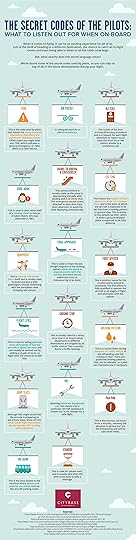
Photo: CityBase Apartments

More like this: How to get some decent sleep while on an airplane


best us cities for St Patrick's day
St. Patrick’s is a beloved mess of a holiday across the United States, but some US cities are exceptionally good at celebrating St. Patrick’s without too much wanton chaos. Locals have long argued who celebrates the unofficial drinking holiday of the year best: Boston or New York City.
Turns out, it’s neither. A new scientific study from Wallet Hub graded 200 US cities based on the quality of their St. Patrick’s celebrations. After examining things like the number of Irish pubs per capita, the average weather forecast the week of the holiday, and the number of St. Patrick’s Day events held throughout the city, the authors report that Chicago is the best city in the States to drink green beer and belt out the Dropkick Murphys. Buy your bus tickets for March 17th and shamrock shot-glass necklaces now.
Editor’s Note: Hover over the dots on the map to zoom in to the denser regions.
Source: WalletHub
The top ten best cities for St. Patrick’s Day celebrations:
Chicago, IL
Boston, MA
Philadelphia, PA
Buffalo, NY
New York, NY
San Francisco, CA
Fort Collins, CO
Tampa, FL
Madison, WI
Pittsburgh, PA
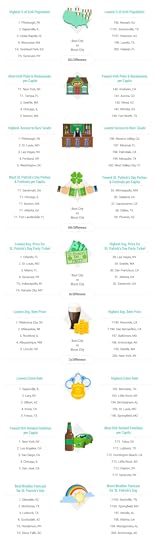
Photo: Wallet Hub
More like this: 5 way cooler things to do on St. Patrick’s Day in Chicago than watch the river turn green

Mainer superpowers
Mainers are a self-sufficient bunch. I suppose that’s what happens when you live in a state that offers just about everything that most Americans travel around the country for — mountains, beaches, backwoods, vibrant cities, you name it. We’ve developed a set of skills, let’s call them superpowers, that allow us to live and thrive up here. Here are ten superpowers people from Maine have over everyone else.
1. How to navigate backroads
I recently traveled to Costa Rica with my best friend. As we went further and further down the Nicoya Peninsula, passing through towns that grew smaller with every turn, we just kept repeating out loud — thank God we grew up where we did! People from Maine know all about back roads, after years of chasing that little-known peak or finding that secret swimming hole. Get the four-wheel drive. And try to avoid mud season.
2. How to unplug
Whether heading to camp, or out in the boat, or just to your friend’s house in the next town over where the population is just over 500 — signal is spotty at best. Most of those destinations — camp or boat or the deep North Woods — are better experienced without cell service anyway. Even visiting your friend can be more enriching without a device. We’d just as soon leave the cell phone at home, or back in the car across the lake, or lost at the bottom of your backpack — Maine is better without cell service.
3. How to own a snowstorm
If a big Nor’easter is on its way, you can bet that the office will be closed and your boss will be preparing for the storm just like you are — by stocking up on the Allen’s, making a big batch of homemade mac ‘n’ cheese and hunkering down. At some point, after sleeping in late, downing some blueberry pancakes with the end of last year’s syrup stash, and flipping through an Uncle Henry’s for a while — you will inevitably bundle up and head out for snowshoeing, or skiing, or just to shovel the driveway. If there’s any less than a foot of snow to clear off the deck, business will happen as usual.
4. Same goes for summer
When the aforementioned nor’easters have subsided and the last layer of mud is washed from our vehicles, we are fully ready to just focus on soaking up as much sun as possible before the leaves start dropping in September. To really understand an appreciation for the warmth of summer, just come live in Maine for a couple years. With boating, hiking and swimming, or just propping open a lawn chair in the sun-bathed dooryard — we know how to own the summer. Why do you think we got the title of Vacationland?
5. How to pick a lobster
Even those of us who live inland know how to eat a lobster. No soft shell needed — just grab a kitchen towel and a bowl of melted butter and call it dinnah. We’re not just talking about the tail meat either. If you really want to nail some Mainer skills, order a whole one and go to town.
6. How to return something at L.L. Bean
Our famous outdoor gear supplier had a lifetime guarantee return policy (until a few weeks ago) and we know how to use it. Not that we would ever take advantage, but if that down jacket is starting to molt, we beeline it to Freeport. When you’re up against the sometimes brutal elements of the north, you need the layers that will stand the test, and no one makes them better than L.L. Bean.
7. How to rock a bonfire
Bonfires are a regular part of family gatherings. If three or more aunts happen to be visiting in one weekend, there’s nearly a 100% guarantee that my dad will be gathering brush, logs, and an old picnic table for a late night, 20-foot-high fire in the field. And while s’mores and snappers are synonymous with summer campfires, these weekend bonfires serve a different purpose. The focal point of any party, they are for gathering around, for gazing at and for throwing more chunks of wood on from a good distance away — not snuggling in front of on a blanket.
8. And the polar bear plunge
Call us crazy, but we’d prefer our “refreshing” water temperatures to the bathwater of the south any day. Polar bear dips are a common fundraiser around the state, mostly because as soon as you set the date at least 30 people will sign up to participate. Our oceans don’t get much above 50 degrees in the summertime, but that doesn’t stop us from spending our days lounging in the Atlantic waves. While the lakes get to slightly warmer temperatures, it usually doesn’t last long before dropping again with a nighttime chill.
9. How to discuss the weather
Yesterday we were in t-shirts, keeping an eye out for fiddleheads, today we are getting 20 inches of snow. It’s not surprising that we can stand in the produce aisle of Hannafords discussing the weather with whichever former high school teacher we happen to run in to for a solid twenty minutes. Though we can find a lot to disagree on, one thing we all have in common is whatever is going on outside — and you can bet we have something to say about it.
10. How to find a flannel
It’s true that L.L. Bean sells wicked nice ones, and you can find them in most thrift stores, but the best place to find a really good flannel is the back of your grandpa’s closet. They are the ones that will have an old fading label hand stitched at the neckline, a couple of mismatched buttons where your grandma had to replace them, and a softness that can’t be store bought. Regardless of the season, or the temperature, it is always a good time to snuggle into your grandpa’s old flannel. You might want to toss the hankie in the breast pocket though.
More like this: The 5 funniest expressions in Maine
African safaris driving animals away
Amos, our guide, stopped our vehicle only 3 meters away from the lone cheetah. It was lying on a mound, back-dropped by the low grasslands and hills typical in this part of the Serengeti National Park. He was successful in finding the second cheetah I’d seen over three weeks of looking for them in the Hwange National Park in Zimbabwe, Chobe National Park in Botswana, and the Ngorongoro Crater and Serengeti in Tanzania.
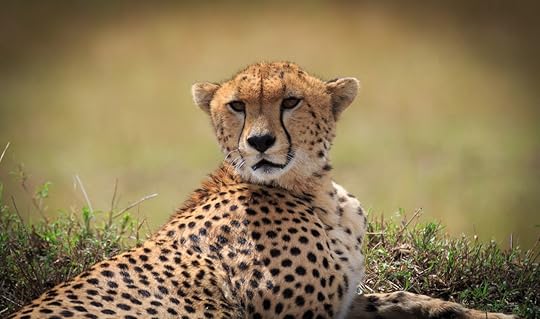
Photo by author
The Serengeti National Park is a World Heritage Site. It is famous for the annual migration of wildebeests and zebras and is home to over 2,500 lions, Thomson gazelles, elands, kudus, hippos, leopards, hyenas, cheetahs, and elephants.
Wildlife tourism forms a significant part of the Tanzanian economy (The Serengeti National Park hosts 350,000 visitors per year), supporting employment for guides, tour companies, lodges, and staff within the national parks. The management of the parks and the tourists who visit them is fundamental to a sustainable environment that supports the wildlife, the economy, and the livelihood of its people.
My stay in the Serengeti National Park was my last chance to see a few cheetahs and leopards — it was near the end of my trip, and until this morning, I hadn’t seen either of these animals. As I was admiring this specimen, three other vehicles full of tourists like us pulled up to have a look, and I wondered at the impact of our presence on this beautiful animal.
“How come there aren’t many cheetahs, Amos?” I was curious, wondering if I was here too early in the season. “Apart from wildebeests and lions, there don’t seem to be many animals. Is this typical?”
“Before, there was plenty of wildlife — lions, elephants,” he said, looking off into the distance. “But the number of animals has decreased, and it’s more difficult to spot them, especially cheetahs,” he said apologetically.
The week before, I had visited the Ngorongoro Crater and had been disappointed at the low wildlife numbers there, too. The Ngorongoro Crater lies within a protected World Heritage site of the larger Ngorongoro Conservation Area and receives just under 600,000 visitors per year. A variety of animals can be found in the Crater — flamingos, black rhinoceros, buffalos, wildebeests, zebras, hippopotamus, elands, and Thomson’s gazelles, among others.
I had only seen one rhinoceros, and this was quite some distance away. According to the Ngorongoro Conservation Area Authority (NCAA), the local population of black rhinos declined from about 108 recorded in 1964-66 to 30-40 recorded in 2012. The NCAA also claims this area has one of the densest populations of lions, about 60 recorded in 2012. These statistics seemed consistent with the species I had been able to spot.
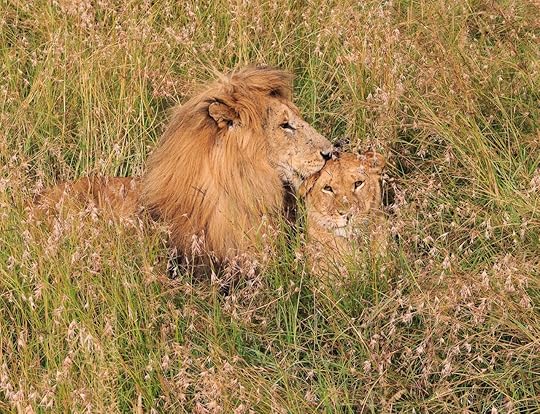
Photo by author
When we had stopped in the Crater for lunch, I had asked Amos about the large number of vehicles. Several tour companies were operating in this area, and, judging by the logos on the trucks, some companies had more than one vehicle.
“This is not as many vehicles as there will be in a few weeks’ time,” he had replied. “This is still a little early for the tourists. If you came later, there would also be more animals but maybe less chance of getting close to them due to the number of tourist companies here… more vehicles, more people.”
The relationship between the locals, the wildlife, and the tourism economy is critical at the local level. Amos is employed by a tourist company to run trips in Tanzania, and his job supports his wife and two children. Amos has plans to continue this role for another four years to help build up some capital. As he explained to me, “I want to find a place to teach others how to become guides, teach them about the wildlife, and identify habitats, animal behavior, and ecology, as well as the human side of tour guiding: how to handle a group, and communication.” He paused, then added, “I might do shorter trips, three or four days, so I’m not away from my family for as long.” Most trips involve driving on extremely rough roads, for seven days at a time with only a short break between trips.
Before visiting the Ngorongoro Crater, in Esilalei Maasai Village, I had spoken to Laraha, the Maasai guide whom Maasai Wanderings, a tourist company, sponsored.
“I was sponsored to go to school for one year to learn more English to be a guide for the village here,” Laraha explained. He is very tall and slender and wears traditional colorful robes and sandals made from recycled tires. “I learned how to take people into the bush safely and how to explain about the habitat, food, and behavior of the animals. At night we keep our cows, goats, and sheep in the middle of an enclosure, which is in the middle of our circle of huts, so the (domestic) animals don’t get eaten by the wildlife.” Laraha proceeded to bring us to this enclosure to experience a welcoming dance and to purchase items made by the women of the village. Any purchases from tourists contribute to the economy of the village.
There are no statistics at the village level, but to put this into the broader Tanzanian context, TanzaniInvest reports that the Minister of Natural Resources and Tourism of Tanzania reported in the budget for 2016/2017 that tourist arrivals had reached over 1.25 million in 2016 — up by 12.9% from 2015. In the financial year 2016/2017, tourism contributed to 17.5% of Tanzania’s Gross Domestic Product. TanzaniaInvest also reports that in 2016/2017, the Tanzania National Parks Authority, which is responsible for the management of the national parks, collected 173.2 billion TZS in revenue from entrance fees.
That night at the Serengeti camp, Amos was relaxing with a beer before dinner after another long day of driving us around searching for cheetahs and leopards. I wondered about the effect of tourists and asked Amos about the number of campsites.
“When I first started working as a guide, there were few campsites, few lodges. Now, there are a lot more, and the number of people visiting has increased a lot. There are more companies running tours. The animals are moving away, going elsewhere. The vegetation is also changing.”
The African Wildlife Foundation (AWF) states the cheetah’s habitat, which is primarily open plains, has decreased by 89% — which has led to a conservation status of “vulnerable.” The main cause of habitat loss is human activity such as agriculture, expansion of settled areas, and road construction. According to the AWF, the cheetah population has decreased by 30% over the last 18 years and less than 7,000 adults remain in the wild.
Amos has been a guide for sixteen years, seeing a lot of change in that time period. “So Amos, what would you say has been the best experience in your time as a guide?”
Amos thought for a moment, “Before, I used to hear a lot about poaching. Now, not much. We educate people in the villages not to kill animals, and they are getting their income from other activities like gardening vegetables. I feel like I’m making a difference, for the better.”
The pressure on wildlife habitat is not only from tourism but also from drought and wildfires. There is only one perennial water source in the Serengeti National Park, the Mara River, which runs through Kenya and Tanzania. The World Heritage Site acknowledges that as the activities of the park expand, the lack of sufficient resources for effective management of poaching, tourism, resource monitoring, and wildfire threat remains a concern.
That tension between numbers of visitors, number of wildlife, economic opportunity and pressure on the wildlife habitat is always present, and so is the continuous effort made by world organizations such as the World Heritage Conservation, and local guides like Amos, to balance these demands.
More like this: What not to do on a safari
Lived in Singapore too long
Singapore, the tiny red dot on a map which has become one of the richest countries in the world in a span of 30-40 years, has a unique blend of cultures. With 4 official languages, 3 recognized majority races, food from all the world, and unlimited convenience, living in Singapore implies you pick up a few habits that often might surprise others. Here are 21 signs that you have lived in Singapore for too long.
1. You find most Southeast Asian countries extremely affordable.
Singapore constantly ranks as one of the most expensive countries in the world. Moreover, Singapore currency is considerably stronger in value than most Asian currencies. After living in Singapore for too long, you jump with joy at how affordable everything is in other neighboring countries.
2. You leave your belongings anywhere and everywhere.
Singapore’s incredible safety often implies you can leave your belongings anywhere and most likely they will remain there. I have personally left my bag and laptop in Starbucks, on a university campus, and in hawker centers without ever losing them. In fact, I left my laptop overnight at a hawker center on a Friday night and found it on Saturday morning with a shop owner!
3. You can’t stick to eating one cuisine for a long time.
Commonly known as the culinary capital of Asia, Singapore combines a variety of cuisines from around the world and this is reflected not only in restaurants but also in hawker centers. If you go by the Singaporean way of life, one day you will want Laksa, Char Kway Teow the next day, and Roti Prata the day after. You just can’t imagine how people can possibly eat the same type of food every day!
4. You use a tissue packet to reserve seats in public places.
Imagine a lunchtime scene in a crowded hawker center and you need to reserve a place. What do you do if you are not carrying a bag? Just take out a packet of tissues and put it on the seat and now you have successfully “chopped” (read: reserved) that place for yourself.
5. You don’t just know what “kiasu” means, you have become it.
Singaporeans are stereotyped to be “Kiasu”, afraid of losing and must be the first one to grab every opportunity. Second place is never satisfactory and you will put in your heart and soul to be at the top of everything.
6. You have been stuck in an MRT breakdown at least once.
With world-class infrastructure and convenience, living in Singapore means expecting to be on time, every time. The occasional MRT (metro) breakdown is simply not tolerable. You know you have lived in Singapore for too long when you have at least witnessed one MRT breakdown or delay.
7. You start defending Singapore when you are abroad.
You may complain about a few things when you are in Singapore but when you are in a foreign country, you start defending Singapore ’til your last breath. You hate it when anyone thinks Singapore is a part of China and you proudly brag about the high standard of living in Singapore in front of others.
8. You have mastered a Singlish accent.
Admit it: the first time you heard Singlish (the Singaporean English), you did not understand it. But now, when someone asks you, “Hey, do you want to grab lunch?” you respond with a “can not liao! I makkan already.”
9. You prefer Kopi C or Kopi O Kosong to Cappuccino and Mocha.
Ordering coffee in Singapore is nothing short of an art and the local coffee shops will make anyone forget their favorite Cappuccino or Mocha. You know you have lived in Singapore for too long when you expertly order a Kopi O Kosong or Kopi Gao from local coffee stores.
10.You decide what to eat based on which stall has the longest queue.
Every hawker center has numerous stalls. How do you know which one serves the best food? Just follow the longest queue! If so many people are waiting for it, it must be great.
11. Your day trips often imply trips to Malaysia.
Yes, Malaysia is really that close, so you have become accustomed to visiting Johor Bahru for a day trip and Kuala Lumpur for a weekend trip.
12. You haven’t chewed a gum in a while.
Chewing gums are banned in Singapore.
13. You have probably forgotten what winter feels like.
Thanks to the year-round tropical climate, the land of eternal sunshine experiences no winter, ever. While this is heaven for many foreigners, living in Singapore for too long has made you a constant critic of the weather.
14. You are more excited for Chinese New Year than Christmas.
Sure, Singapore celebrates Christmas, but not the way they celebrate Chinese New Year. The whole economy slows down for a while as Singaporeans take a break to reconnect with their family and loved ones. If you are unmarried and have Chinese Singaporean colleagues, you might even receive some “ang bao.”
15. You have cut down on drinking and smoking.
With the average price of a pint of beer being S$11-12 in a bar, and a box of cigarettes costing around S$13, we don’t blame you for cutting down on drinking and smoking.
16. You no longer hate the smell of Durian.
Remember the first time you smelled a durian and thought it stank? Well, now you have begun to love Singapore’s favorite fruit.
17. You think “Bakkwa” is better than beef jerky.
You may have loved beef jerky before, but ever since you tasted the different varieties of “bakkwa” you have become addicted to it.
18. You put chili sauce into everything.
Like literally everything except desserts.
19. You have become an extremely law-abiding citizen.
You have become well accustomed to the numerous laws like no eating and drinking in public transport, no jaywalking, no littering and so on. Singapore is known as the “Fine City” for a reason — and each fine can burn a hole in your pocket.
20. You find most other countries quite dirty.
You are so accustomed to absolutely clean streets and public places, you just can’t understand how public areas in other countries can have even a speck of dirt.
21. You have become absolutely spoilt on convenience.
Once you have lived in Singapore, you have been spoilt by the amount of convenience it offers. No place is further than 20 mins. There must be a grocery store, a food court, and a bus stop all within a 2-minute walk from your residence. You are never lost, thanks to the awesome signage system. Everything is efficient and runs smoothly, the way it is supposed to. Admit it: Singapore has spoilt you to the core and you absolutely love it.
More like this: 9 spots in Singapore to frequent if you want to be a true local
Travel platforms for women of color
Women of color travelers are finding more platforms that cater to the specific trials and tribulations they may experience while being on the road. Here are seven platforms that are offering women of color travelers a safe space, relevant information, and stories of personal adventures.
1. On She Goes

Photo: On She Goes
On She Goes is a digital platform specifically created with women of color travelers in mind. Ran by a diverse group of women of color, On She Goes offers essays, informative articles, podcasts, and video to help women of color travelers navigate the world and travel confidently. While the Stories section shares the personal experience by women, the Travel Tips section dives into specific information for women of color such as survival tips for dealing with TSA. On She Goes has also created an online forum on their website and Facebook for women to engage and ask questions.
2. Latinas Who Travel

Photo: Latinas Who Travel
Blogger Olga Maria of the blog, Dreamer in Heels, created Latinas Who Travel, a Spanish and English bilingual website that seeks to inspire and encourage more Latinas to explore the world. Despite the name, the site welcomes other women of color travelers, too, whom they call “honorary Latinas.” With an online platform of articles, a very active Facebook community, and an Instagram where Latina travelers around the world are featured, the blog is building a community and movement. It’s important to note that the site hosts meetups around the U.S. and plans group travel such as to Spain and Morocco.
3. Mixtries
While Girls Love Travel is the well-known Facebook group that offers a general space for women travelers to connect, Mixtries is their sub-group for women of color travelers. Mixtries is not exclusionary to non-women of color but offers an online space for women of color and their allies. With only 2,330 members, Mixtries is a smaller sub-group than their mother-group, Girls Love Travel, but that provides for an intimate and safe atmosphere for those who need travel advice and for sharing resources.
4. Runaway Juno
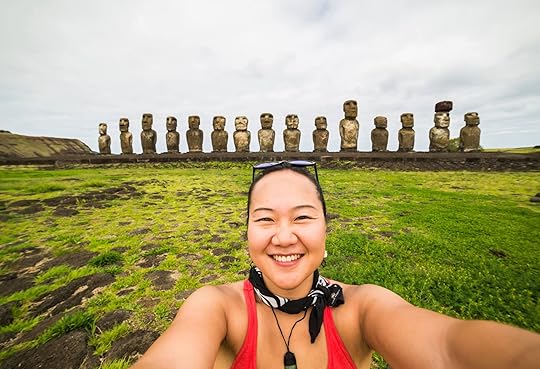
Photo: Runaway Juno
In 2011, Juno Kim, born and raised in Seoul, South Korea, quit her job as a mechanical engineer to become a full-time traveler. Today, she travels the world, runs a tour company, Unquote Travel, and writes travel articles on her website, Runaway Juno. She draws women of color travelers, especially those of Asian descent, to her multiple platforms for inspiration, insight, and advice. Kim often spreads her travel knowledge and business acumen at places like the Asian Women’s Empowerment Conference.
5. Black Girls Travel Too
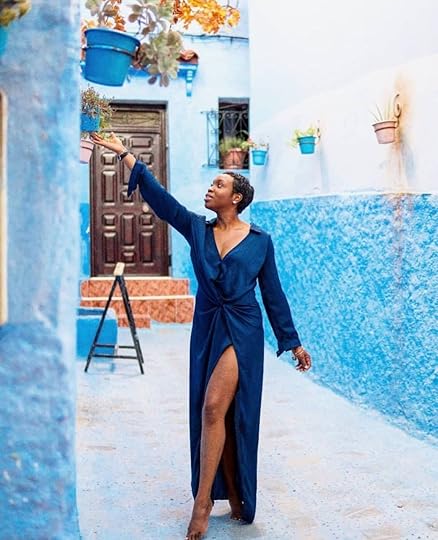
Photo: Black Girls Travel Too
Ms.@iamianthia in Chefchaouen The Blue Pearl.
In 2015, Danielle Rivers-Mitchell created the Instagram account, Black Girls Travel Too. It exploded with followers, many of which were women of color travelers who had never seen black women in travel-focused spaces. Black Girls Travel Too expanded to a popularly-used hashtag, and then as a website, where Rivers-Mitchell encourages black women to experience the freedom of travel. Now, the brand plans group trips around the world with Cuba and London on their 2018 travel list.
6. Expat Women of Color
Expat Women of Color is an online, nonprofit organization that seeks to help women of color to succeed while living, working, studying, and traveling overseas. Their website offers their members online educational classes about living abroad, a starter guide for building a community overseas, and group trips. Their Facebook group is particularly active, offering insight and advice on finding jobs or working overseas, moving with families abroad, and other personal lifestyle topics that may affect women of color abroad.
7. The Blog Abroad

Photo: Gloria Atanmo
The Blog Abroad is the brainchild of blogger, Gloria Atanmo, who began traveling in 2013 after graduating college. As an African American woman, Atanmo’s platforms such as her blog and social media draw other women of color solo travelers looking to be more adventurous. While she publishes many general pieces about travel, her posts for African-American travelers, like “Why More Black People Need to Travel Around Europe,” are eye-opening and encouraging, and intended to inspire African-American women (and other women of color) travelers to explore the world, despite some of the hardships they may face.
More like this: 5 amazing South African women challenging stereotypes
Travelers' culture shocks in USA
Here at Matador, we’ve recently taken to Quora, along with our deep well of editorial content, for a dose of crowdsourced insight on a number of topics. We’ve looked at culture shocks faced by Americans in Germany and Russia. We’ve uncovered common tourist mistakes in Paris, and went broad on how Americans are spotted abroad.
It seemed time to turn the table and look at what’s done differently on this side of the pond. What culture shocks do people face when coming to America? We took to Quora and Matador Network’s back catalog to find out.
On our excessive portions of food
Within the States, we say that “Everything is bigger in Texas.” But outside our borders, this sentiment tends to reflect the entire nation, as Raska Soemantoro noted on Quora: “The food portions are HUGE. I had only one plate of pasta for lunch and my stomach was so full I couldn’t eat dinner.”
Joseph Isip added, “Went to a local Buca Di Beppo and ordered a plate of spaghetti. Waiter comes and hands over a HUGE spaghetti plate good for 5 people.”
And those huge cars
“The first thing I noticed here was the size of the cars here,” noted Raska. “When I first arrived in Chicago, I saw the largest vans and trucks I’ve ever seen in my life. The trucks are so big they look ridiculous.”
We love to drive here in the states. Whether it’s a result of a burning passion for the open road, or just necessity because everything is so spread out, is up for debate. But many travelers and immigrants find our car-obsessed culture quite shocking. “Where I come from, we do things differently,” explained an anonymous commenter from Nepal on Quora. “I don’t have a clue how elderly people or disabled people, and even children, who cannot drive by themselves, live in the US. How? I just cannot imagine how hard it must be for them to get around.”
Americans love to chat. And chat. And chat.
“Americans have no problem making chit-chat in line, at the post office, at a urinal (really!) and just about everywhere else we congregate,” said Steven Muzik, an American expat now living in Asia, on Quora. “This doesn’t happen as often in other countries, I find.” A case of reverse culture shock, apparently.
“They will randomly come up to you and say ‘Hey, how are you doing?’” noted Raska Soemantoro on Quora. “BUT sometimes, when Americans ask you how are you doing, they just mean it as a greeting, and sometimes they don’t want to know how you’re actually doing.”
“It seems like a question preceding a longer conversation but it’s actually just a way to say ‘Hi,'” noted Laurent Lemaire on Quora.
“You must find your way to answer this and not explain what you’ve done during your day because that wasn’t really the purpose of the question.”
“They’ll make small talk and talk about anything and everything,” Abhishek Sehgal added on Quora. “Some people don’t even hold back personal details about their family. And after that meeting, they don’t even remember those things. In fact, they would be surprised about the things I recollected from our last conversation. It wouldn’t be surprising if they forget your name also.”
On our undying patriotism
“They have this internal culture that they are the most awesome country on the planet, the most righteous, the most amazing. La crème de la crème,” said Andrei Cimbru via Quora.
“Indonesians love their country, but Americans are on a whole new level,” Raska Soemantoro added on Quora. “Made in USA labels everywhere, flags on t-shirts, pants, and even bikinis!”
And our need to rock out
“I was in southern California and was impressed with the music scene, almost everyone I met was passionate about music and many play in their bands. This was very exciting,” Fay Yang explained on Quora.
On the fact that cars yield to pedestrians
“I was blown that drivers actually STOP to let someone cross the street,” noted Joseph Isip on Quora. “That is so awesome! I even see people chat on their phones while leisurely crossing the street taking their sweet time (to the motorists’ dismay) but they have no choice but to patiently wait.”
“A speeding car has to stop at a stop sign or the walk permits,” adds Tanvee Agrawal.
“And the pedestrian too hand gestures a thank you for the driver’s patience. And this reminds me of pedestrian crossing button on the traffic light poles. When you have to cross a road, you press the button for a walking signal. I have not seen this button in any metro city of India.”
But that never keeps us from being on time
“Everyone is on time for work/meetings/etc,” said Balaji Viswanathan. “They would arrive early rather than arrive late. If the agreed upon time is 10 AM, then it is 10 AM; not 10:05 AM or 10:10 AM.”
On the diversity
“There is so much diversity in this country it amazes me,” said Andrei Cimbru, “And I think this is the foundation of what makes America an interesting country.”
More like this: Culture shock vs. reverse culture shock
money traditions of 8 world cultures
Knowing how to manage your finances is one of the most valuable skills in the modern world, but you might get different advice depending on where you grew up. While giving weekly allowances is a common method parents in the US use to teach their children about money, many Muslim-dominated cultures put an emphasis on donating to charity, while others encourage relying on community support in tough times. A new infographic from Budget Direct reveals the finance traditions of eight cultures from around the world, and you might find yourself borrowing a few of them.

Photo: Budget Direct
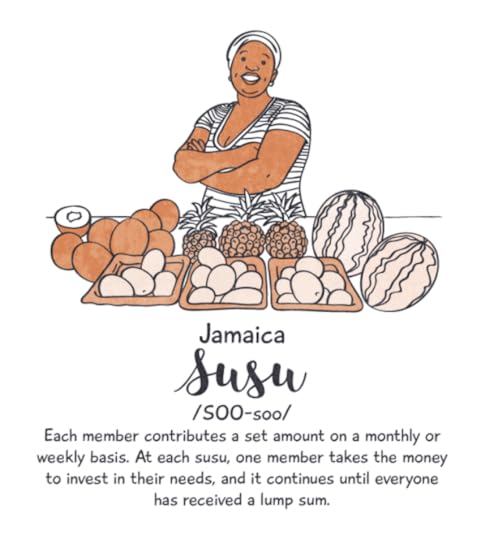
Photo: Budget Direct

Photo: Budget Direct

Photo: Budget Direct
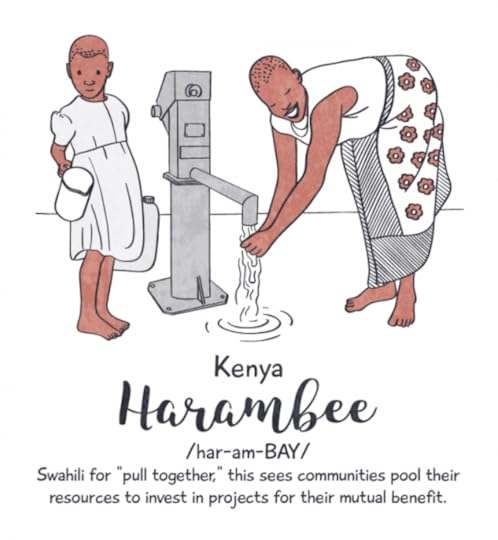
Photo: Budget Direct
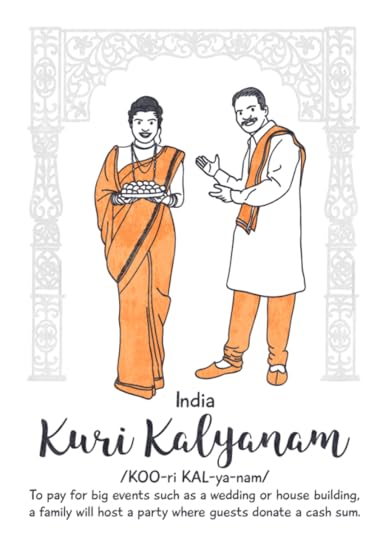
Photo: Budget Direct

Photo: Budget Direct
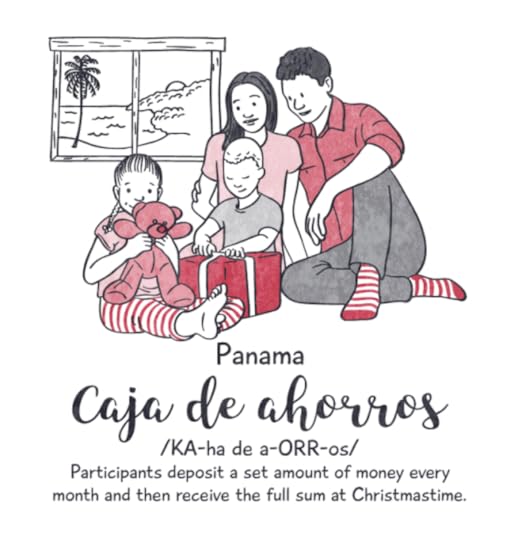
Photo: Budget Direct
More like this: Money idioms from around the world

the national origins of dog breeds
Ever come across a new dog and think, “woah, who thought you were a good idea?” From the tubular wiener dog, to the shoulder-heavy shar pei, to the utterly useless (but incredibly adorable) papillon, there are a lot of strange dog breeds out there. Well, thanks to Redditor FreeRojava, there now is a comprehensive map of every major dog breed and where they come from. So next time you come across someone from Japan, you will know to thank them for giving the world the much needed shiba inu.
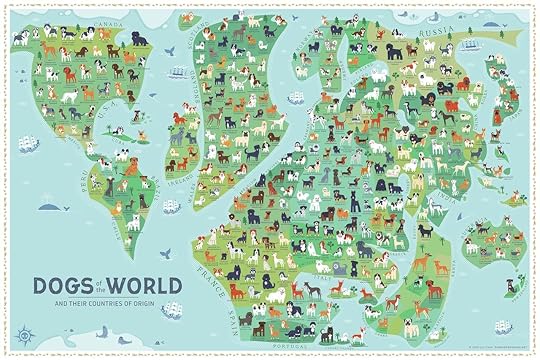
Photo: FreeRojava
More like this: 11 cities seen through the eyes of their dogs

March 8, 2018
70 degree North American road trip
Americans love road trips, and we should! With tens of thousands of miles of US highways capable of whisking us between 58 national parks and countless state parks, monuments, and local parks, it makes sense to take in this massive country by car. But traveling by car has its downsides — nobody likes hauling a minibus over the Canadian Rockies in subfreezing temperatures, nor do they enjoy getting cooked alive while driving through East Texas.
Fortunately, Redditor corn_starch_party shared a map of an epic North American road trip that lasts for a year without spending a single day with normal high temperature below 70(F) degrees. 
Photo: corn_starch_party
More like this: Mapped: The optimal road trip to see all the US national parks

Matador Network's Blog

- Matador Network's profile
- 6 followers

