
Matador Network's Blog, page 1390
March 5, 2018
China park will give you vertigo
For whatever reason, the Chinese tourism industry is determined to give visitors the exhilarating feeling that they might plummet to their deaths at any moment. This is certainly the case with the Wansheng Ordovician Theme Park, which is home to a gap bridge, swings, and a cantilevered glass bridge — each hovering hundreds of feet up in the air.

Photo: Wansheng Ordovician Theme Park
At 656 feet, the cantilevered glass bridge is the longest in the world. This gives visitors plenty of time to consider the 200-foot drop plainly visible beneath them. For safety reasons, only 30 people are allowed on the bridge at a time.
Yet the glass bridge is nothing compared to the gap bridge, which challenges visitors to jump beam-to-beam with nothing but a harness preventing them from falling down a 500-foot drop.
Follow Matador on
Vimeo
Follow Matador on
YouTube
The theme park is about an hour and a half drive from Chongqing, a major city in southwest China. Just make sure you give yourself extra time to get through lines full of people who also don’t mind trusting a sheet of glass with their lives. 

More like this: Watch: Tourists are trying really hard to break this terrifying glass bridge in China


Mental health while traveling
Staying healthy while traveling goes deeper than diet and exercise. Taking care of your mental health on the road is just as important. Running through the airport to make your flight, struggling to order breakfast in another language, and missing the people you left at home can be stressful. Bouts of anxiety and homesickness can sometimes ruin an entire trip. Plus, it can be hard to dig yourself out of a mental funk once you’re there. So, here are some tools and tips to help you take care of your mental health while on the road.
1. Use meditation apps.
Meditation has be been proven to lower stress, fight depression, and stave off anxiety. Sitting still, taking deep breaths, and thinking about nothing isn’t as easy as it sounds. But, if you can sneak in a few moments before you set off sightseeing for the day, it can have major benefits.
Meditation apps can give you some structure and guidance to pull off a few solid minutes of serenity. Headspace is an app that makes meditation easy to understand and practice. Your guide has a soothing British accent and explains exactly how each practice can help you. It’s also accompanied by silly videos with fun graphics to make meditating more relatable.
Pacifica is another meditation app that also offers cognitive therapy, mental goal making, and journaling. You can check in, document how you’re feeling, and perform mental games that help you relax and gain perspective.
2. Get enough exercise by joining classes or Meetups.
Exercise is just as important for your mental state as it is your body. While you could head out for a jog, hit the hotel pool, or do body weight exercises in your hostel, classes can often be better. If you’re already feeling down, it can be a challenge to force yourself to exercise. Instead, find a local exercise class, yoga studio, or a hiking trip found through Meetup.com. Classes are filled with other people so you’ll get the mental benefits of being social too.
3. Splurge on a comfy hotel once in a while.
Backpacking and budget traveling can save you tons of cash, but long bus rides, crowded hostel dorms, and peanut butter sandwiches can be a drag after a while. If you’re feeling run down from all the energy you’re using to save money, splurge on a hotel. It can do wonders for the mind to have some alone time, a hot bath, and squishy bed to snuggle up in.
4. Make friends with expats and other travelers.
Making friends with the locals while traveling is always a great idea. However, it can be a drain on your mental energy to understand cultural differences, try to communicate in foreign languages, and have few relatable experiences after a while. Break up your social time between experiencing local life and mingling with other travelers and expats. You can find them in hostels, at Couchsurfing meetings, or through apps like Bumble and Tinder (people use them to make platonic friends, too). Sometimes you just have to vent about the local traffic rules or the fact that a country uses so many coins instead of paper bills. And, when you can find someone from your own country, it can make you feel more comfortable even in the most faraway places.
5. Video chat with friends and family back home.
There are plenty of digital tools that allow you to talk to friends and family back home. You can send Snapchat videos, use Facebook call, Skype, Google Chat, or Facetime. If you have a phone and an internet connection, you can see your family face-to-face. Make time for it no matter how busy traveling has you.
6. Have a spa day.
If it’s within your budget, treat yourself to a spa day. Lay down for an hour in Bangkok for a Thai massage or try a fish spa in Cambodia for your feet. Hang out in a traditional Japanese bath, or a classic hammam in Morocco. Try acupuncture in China or get a mani/pedi while traveling through Europe. Choose a method that helps you relax the most.
7. Find comfort food.
Sampling local food is one of the best parts of traveling. However, you can only eat pad thai and yellow curry so much. Sometimes, you just want a starchy, cheesy, or sugary meal from your home country. Most big cities around the world have foreign supermarkets. Try to find one near you as they’ll likely stock items from your home country. And, you’ll probably be able to find a restaurant that offers food from your country too. Cities in China have realistic British pubs, Hong Kong has a restaurant serving poutine and Molson, and Chiang Mai, Thailand has a restaurant offering southern-style American food (sweet tea included). A meal from home can almost always fix a bad mood.
8. Let yourself do nothing for a day.
Take the pressure off yourself to see every site and have every cultural experience. It’s not worth the mental burden, and dragging yourself to see The World’s Biggest Pez Collection just because you feel you have to isn’t going to help you when you’re depressed. Trying to do too much while traveling can leave you too mentally exhausted to enjoy anything at all.
9. Have an emergency fund that can cover a plane ride home.
This is especially important for long-term travelers who aren’t exactly sure when they’ll return home. Being abroad, wanting to return home, but not having the money to can cause extreme anxiety and depression. Always make sure you keep an emergency fund in case you just want to pack up and get on a plane. The sense of security can bring peace to your worried mind.
More like this: How do you cope with mental illness while traveling? Travelers explain.
Become an au pair
If you want to live abroad, immerse yourself with the locals (you can’t be much more immersed than by living with a host family and caring for their kiddos), and learn everything there is to know about a new culture while making some money, working as an au pair is a great and easy option. So, if you are a trustworthy and responsible individual who is okay with wiping a lot of runny noses, changing quite a few diapers, and reading many bedtime stories, this may be a gig for you.
How to become an au pair and live abroad:
1. Is working as an au pair for you?
2. The low-down
3. Where do you want to live?
4. Find a family
5. Make arrangements
6. Money talk
7. You’re nearly done!
8. Get social
9. Dealing with dramas
10. My experience
1. Decide if working as an au pair is for you.
Au-pairing might seem like the easiest way to live abroad but there are a few things you should consider before taking the leap.
Do you like children?
While this might seem like an obvious question, it’s surprising how many people become an au pair for the benefits and not for the kids. As the au pair, you’re the children’s go-to while their parents aren’t around. This involves a lot of responsibilities and behavior to match, so you’d better be patient, enthusiastic, and kind or this gig isn’t for you.
Are you ready to dive into a new country and culture for a long period of time?
A lot of au pair contracts are for 12 months, so you need to be sure you’re ready to make the big move abroad.
Do you adapt well to change?
Working as an au pair seems like a dream job, but in reality, it can mean hectic schedules, last minute changes, and dealing with the pressures of family life.
Take this short “Should you au pair” quiz to help you clarify if working as an au pairing is right for you.
2. The low-down
There are no real rules to become an au pair. Aside from the obvious love of children, if you’re a responsible, adaptable, and friendly then you fit the main criteria of being an au pair. Previous babysitting experience is a plus and each host family will have different requirements but, generally speaking, if you’re enthusiastic and motivated, you won’t have any issues. Most au pairs are between 18 and 25 years of age and have either finished their studies or are taking a break. In saying this, if you’re older and just looking for a sabbatical, working as an au pair is still a great option.
3. Work out where you want to live.
Do you want to base yourself in an English-speaking country or try to master a new language? The UK, Australia, and the US are very popular places to find au pair jobs and the culture shock is usually minimal. If you’re looking to go to a non-English-speaking country, there are plenty of opportunities throughout Europe.
Every country has different visa regulations so be sure to check them out before you jet off. Au Pair World has a lot of information about visas, so check them out. Your potential host family should also be able to help you out during the immigration process.
4. Find a family.
This is the fun part! Once you’ve decided where you want to go, start searching for your new host family. Websites such as Au Pair World, AuPair Finder, and Easy Au Pair simplify searching through families, sending messages, and they have a lot of helpful info about working as an au pair that you’ll need.
If you’re feeling uncertain about moving to a foreign country into a strangers’ home that you arranged over the internet, there are other options. Some companies will arrange everything for a fee. Global Work and Travel Co., Cultural Care, and Geovisions will take you through each step from choosing a destination to applying for visas. Each of these companies have an approval process for families, giving you extra peace of mind for your big adventure!
5. Talk with families and make arrangements.
Once you’ve narrowed down your families choices, make sure you ask ALL the questions! Some things to consider are duties, living arrangements, pay, holidays, and expectations. Treat these conversations like job interviews and make sure you feel completely comfortable with the position before accepting it. Video chat is the best way to get to know the family and even see the house you’ll be living in.
Some questions to consider are:
Will I be required to work weekends/school holidays?
Will I have my own room/bathroom?
Will I be paid overtime for extra hours? (If I work more than the agreed daily/weekly amount)
How will I pay for things such as groceries/child expenses when I’m working? With my own cash or with a family card?
Are there any allergies or dietary requirements in this family?
How do you deal with conflicts/tantrums in your family?
Are there any rules concerning my personal life? For example, going out on weekends, having friends over, dating.
6. Money talk
Be sure to clarify the money situation right off the bat as each family will be different. Working as an au pair is seen as more of a cultural exchange than serious employment, so if you’re looking to make the big bucks then this probably isn’t for you. Most au pairs are usually provided with accommodation, food, and pocket money. While the pay isn’t great, the perks are usually plentiful. Lots of au pairs are taken on exotic family holidays, given use of cars, and treated like family members.
The biggest drawcard to becoming an au pair is being given the chance to travel a lot. During my time as an au pair in The Netherlands, I spent weekends and school holidays seeing as much of Europe as I could. However, I recommend having your own savings to use for personal travel as the pocket money you get won’t be enough to cover these trips. Every person’s spending habits are different but the more you have, the more you can travel.
7. Book tickets, buy insurance, and go!
You’ve picked your new host family and signed the contract so now it’s time to tick off those last few boxes. Book your flights, buy your travel insurance (don’t skimp!), and start packing.
8. Get social!
Moving to a new country can be a daunting process. Luckily, you certainly won’t be alone. The au pair community is big, friendly, and there is always someone new to meet! Join Facebook groups, sports teams, or language schools to meet new people and make friends.
Some great Facebook groups are:
Worldwide – Au Pair World
Australia & NZ – Au Pair Australia and New Zealand
USA – Au Pairs in the US
France – Au Pair Paris/France
9. Dealing with dramas
Sometimes things just don’t work out and, when you’re alone in a foreign country, things can turn into a nightmare.
If you don’t mesh with your host family, it can be tough to deal with, that’s why it’s very important to voice your concerns before and during the gig — you need to know exactly what is expected of you.
If you’re facing problems and you have arranged your job through an agency, contact them straight away and explain the situation. It’s their duty to ensure your safety.
If you’ve arranged your own job, make sure you’re well aware of your rights as an au pair and keep your friends and family updated with your life. Keep your belongings and personal information safe and never give anybody your passport or access to bank accounts.
To know more about your rights as an au pair, check out this great article.
10. My experience
Once I finished studying, all I wanted to do was live abroad and travel as much as possible (I’m from Australia). I wasn’t interested in working in hospitality or sitting in an office all day, so the idea of working as an au pair sounded great. I didn’t have a huge amount of experience working with kids but was keen to give it a shot. After finding a host family on Au Pair World, I packed my bags and headed to the Netherlands. My host family was warm and welcoming and it didn’t take long before I felt part of the family. Instead of the structured job that I was expecting, I became more of a big sister to the two girls I looked after. I spent a year with them and traveled as much as I could. There was a big au pair community in the city I lived in, so, within days of arriving, I had already made friends. I couldn’t have asked for a better experience and would recommend it to anyone wanting to live abroad.
More like this: How to become a flight attendant and travel the world for work
Inspirational South African women
In honor of Women’s History Month, here are five South African women whose remarkable work, achievements, and dreams are protecting, exploring, and making history!
1. Ness Knight, Adventurer
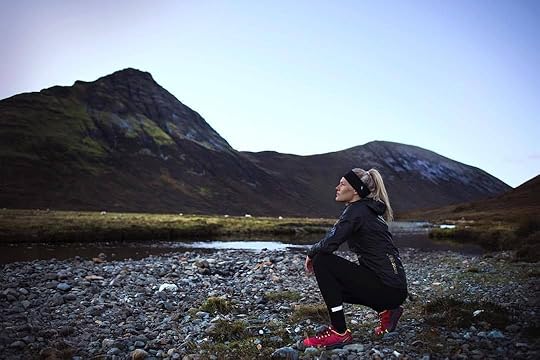
Photo: Ness Knight
When filling out forms, South African-born Ness Knight finds herself forced to choose “Other” as her occupation, because “Explorer” never seems to be an option. As she puts it, she has made a career out of “hauling everything that I need to survive with me around some of the most remote corners of our planet, and telling the stories of those experiences.”
Ness’s resumé as a record-breaking endurance adventurer includes things such as, becoming the first female ever to paddle over 1000 consecutive miles, cycling across the USA solo, becoming the first female in history to swim the Thames River from its source to London, running 15 marathons in 15 days, cycling across Bolivia with no money, and traversing the desolate Namib Desert solo.
And people still wonder if women can travel alone!
Ness’s next expedition will be a record attempt to be the first female to row the Pacific Ocean solo and non-stop.
“When you change your mindset, you change your outcome.”
2. Caster Semenya, Athlete

Photo: Caster Mokgadi Semenya
When Olympic gold medalist, Caster Semenya, won the women’s 800 meters at the Rio Olympics in 2016, you could call it a moment of poetic justice. Considering the kind of “brutal scrutiny” she has faced from “fellow competitors, sports officials, and journalists” since 2009 regarding her gender, sex, and hormone levels, one can only imagine how sweet the victory was when she finished with a time of 1:55.28 and made her country proud to claim her as their own.
Caster was the only South African woman to win gold in Rio, and she didn’t stop there. She went on to win the gold medal in the women’s 800 meter event at the World Championships held in London in 2017.
Despite attempts to reduce her athleticism to a question of mere testosterone — an act which undermines “at once her skill, preparation, and achievement,” Caster Semenya has risen above the media furor, letting her achievements speak for themselves. She is, quite simply, a world class athlete.
“The noise, it motivates me. It encourages me to do well, and to be a better person.”
3. Gcina Mhlophe, Storyteller
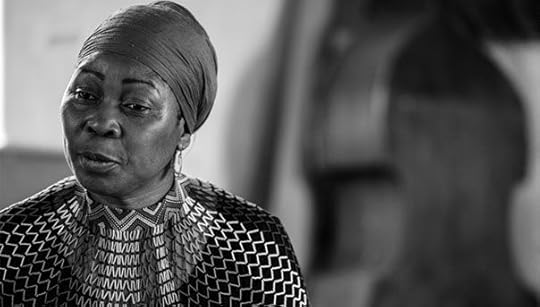
Photo: Gcina Mhlophe
Gcina Mhlophe wears many hats: She’s an activist, actress, poet, playwright, director, and author, but perhaps her most fitting title is the one that houses all of the above. In essence, Gcina is a storyteller.
In South Africa, izimbongi, or traditional bards in Zulu culture, are usually men, but Gcina Mhlophe has carved out a place for herself as an unquestionable force carrying South Africa’s cultural heritage forward through her energised, interactive, and charismatic performances. Mhlophe understands the power and importance of stories and has dedicated her life to telling, writing, sharing, and ensuring accessibility to them.
“I personally tell stories in order to wake up stories in other people, because I truly believe, every living being has got a story to tell.”
4. Adriana Marais, Quantum biology researcher & Mars One Astronaut Candidate
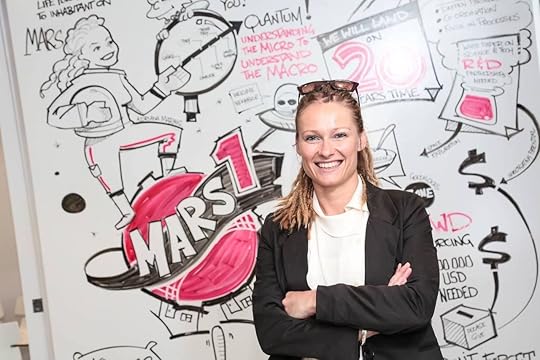
Photo: Adriana Marais- Mars One Astronaut Candidate
When it comes to travel, you don’t get more extreme than space travel, and Adriana Marais is one of 100 potential Mars One candidates worldwide to be selected to journey across our solar system and establish a permanent human colony on Mars by 2025.
Adriana’s research — at the intersection of quantum physics and biology — is driven by one question: “What is life?” and Adriana is prepared to risk it all in her quest for answers. Being the descendant of French Huguenots who travelled to South Africa 1688, she sees the voyage to Mars as no different from the perilous journeys faced by Earth’s long lineage of explorers. Adriana is fully aware that it could be a one way trip, but, as she puts it, “The allure of the unknown to me has always felt far more powerful than the comfort of the known.”
“I want to be the most improbable human that I can be.”
5. Zanele Muholi, Visual Activist
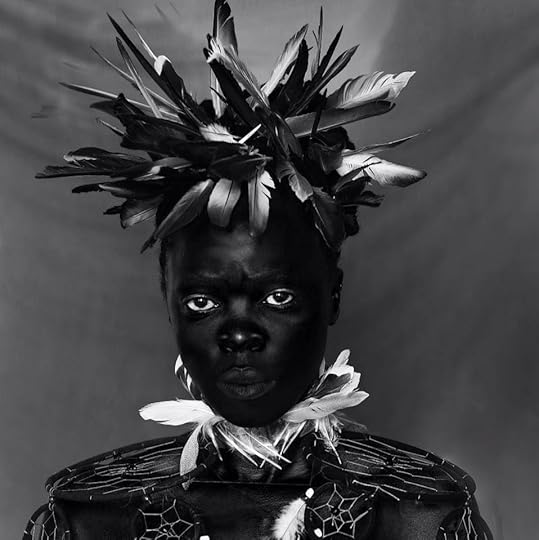
Photo: Zanele Muholi
Zanele Muholi is not simply a photographer, she is a visual activist. As she puts it, “I cannot use photography only for fine art. It should go deeper.” And indeed, Zanele’s politically charged work digs deep into issues such as race and sexual identity.
Zanele’s collection “Faces and Phases”, which is the fruit of over a decade of documenting black queer communities in South Africa, is testament to her dedication to increasing black LGBTQ+ visibility. Of late, she has turned her camera on herself, creating striking black and white self portraits that feel like silent, powerful dialogues with centuries of racial tension and cultural heritage.
Zanele Muholi has made it her duty to reveal. She reveals unseen faces, unseen lives, and unseen layers. In that sense, her work fundamentally challenges the onlooker to go beyond their own experience.
“If I wait for someone else to validate my existence, it will mean that I’m shortchanging myself.”
More like this: 10 inspirational women from around the world

Local in Kansas vs outsider
For more than 150 years, Kansans have contributed to society in more ways that one could imagine. As a rural community, people think that our state is dull with no culture. But with major business and corporations calling Kansas “home” and being an affordable place to live, outsiders are considering moving here. Though we love outsiders and welcome them, they do tend to stick out…
Here are 11 differences between a local and an outsider in Kansas.
1. An outsider pronounces names wrong Salina like “Sa-leen-a” and Olathe like “Oh-la-thuh.” A local Kansan says places like Osawatomie, Chanute, Tecumseh, and Tonganoxie without error and can probably locate them on a map, as well.
2. A local goes outside and tries to find the funnel clouds during a tornado. An outsider runs and hides at the first sign of a tornado watch.
3. An outsider might assume nothing has ever come from Kansas, while a Kansan knows that helium was discovered in natural gas at the University of Kansas, the aircraft industry was born here, and most importantly, the ICEE was invented here. You’re welcome.
4. An outsider will head out to the grocery store to get their liquor. A local goes to an actual liquor store for anything above 3.2 percent alcohol.
5. The grocery store of choice for the outsider is the closest chain. The local holds tight to their Dillons Plus Card with them every time they go grocery shopping. Who can resist those fuel points?
6. The outsider worries about snow canceling work/school. The local knows that ice will do more damage than snow.
7. At the bar, the local will ask for the latest Boulevard, Tallgrass, Wichita Brewing Co. beer and ask if it’s on tap. The outsider orders a standard domestic beer.
8. The outsider will be expecting spring to begin in late March. A Kansan won’t put up his/her winter clothes until late April.
9. An outsider might think there’s nothing to do in Kansas. A local knows that the Salt Mines, Kansas Cosmosphere, Sternberg Museum of Natural History, Greensburg Well, and the Flint Hills Discovery Center are all amazing places not to be missed.
10. It’s common for outsiders to take the weather forecast at face value, while a local Kansan prepares for the weather to change every hour.
11. A local will order brisket every time, while an outsider will hum and haw and order the chicken tenders.
More like this: How to properly compliment a Kansan
How to compliment an Alaskan woman
Though technically part of the states, Alaska can often feel like another universe, and Alaskan women can seem like another breed entirely. Fierce, resourceful, outdoorsy, and probably a better shot than you, they’re a force to be reckoned with, and remarking on their manicures won’t get you far with them. If you’re trying to win over an Alaskan woman, you’ll have better luck with one of the following compliments:
1. Respect her independence.
You’ll rarely find a more independent woman than an Alaskan. Since she’s fended for herself and explored the outdoors since birth, she has an impressive arsenal of mechanical and survival skills. Bottom line: she doesn’t need you to be a knight in shining armor. Your best bet here is treating her to some space and let her do her own thing. She’ll love you more for it.
2. Admire her toughness.
The daughters of avid outdoors people, adventurers, and commercial fisherman and women, Alaskan girls grow up tough. They’re also straight shooters with little patience for BS. Instead of being intimidated, respect her by showing you admire her grit.
3. Comment on her resourcefulness.
Frugality and fierce pragmatism are second nature to her, and her upbringing taught her how to turn lemons into lemonade, blueberries into jam, and moose into jerky. Your Alaska bae can likely sew, knit, can, fish, and shoot with the best of them, so every once in a while, pay a compliment to her resourceful ways.
4. Invite her along on your adventures.
An Alaskan woman isn’t satisfied to be cooped up in the kitchen or spend the weekend shopping. With her craving for adventure she’s better suited as your hiking buddy, so instead of buying her things, hit the trails and let her show up your backcountry skills.
5. Appreciate her fashion sense.
Your girl may not be fashionable according to most conventional standards, but she’s adept at pairing hoodies and puffy vests, dressing down any outfit with Xtratuffs, and making Carhartts look cute. This is no small feat — so let her know when her outfit is particularly on point.
6. Let her do her own heavy lifting.
Alaskan households skip the gendered division of labor, opting to treat girls as equal participants in pretty much every activity. Your Alaskan woman is no stranger to physical work and doesn’t need you to change her tire or haul furniture for her. Years of manual labor mean her legs and biceps can be a thing to marvel at, so you’re better off doing just that than offering to step in and help.
7. Appreciate her natural glow.
Alaskan women eschew beauty tutorials and attribute their natural glow to plenty of dirt, nature, and sunshine. Elaborate beauty routines would slow her down anyway, so tell her that you love how she lets her natural beauty shine through.
8. Take an interest in her creative projects.
Whether painting, writing, or knitting, Alaskan woman have creative outlets that often spring from the copious amounts of free time they had in their childhood. Show her you care by asking to see what she’s working on once in a while and accept her handmade gifts with pride.
9. Gush about her cooking.
Alaskan woman can whip up delicacies that satisfy the appetite of any meat-and-potatoes type. Next time she catches, fillets, and grills up a fish for you, watch her light up when you tell her you’ve never had a better piece of salmon.
10. Call her “down to earth.”
Your Alaskan girl isn’t easily riled and never worries about breaking a heel. In fact, she probably hardly ever wears them — she’s more comfortable stomping around in fishing or hiking boots. Nor is she afraid of a little dirt. Pay her the ultimate compliment by telling her you love how down to earth she is.
11. Allow her to dream big.
She doesn’t allow other people to define her life and wholeheartedly chases after her dreams — whether you come along for the ride or not is up to you. Compliment her by encouraging her, supporting her ambitions, and being sure you’re not slowing her down.
12. Accept that she’s wild at heart.
Your Alaskan’s first loves were the wilderness, the mountains, and the sea. Undoubtedly, she has a penchant for adventure and an insatiable travel bug. If you’re with an Alaskan, you have an unusually free-spirited woman on your hands. Appreciate the fact that she’ll always be wild at heart.
More like this: 16 things Alaskans love more than the rest of the US
Winter in Sarasota, FL, is awesome
When Saratoga County, New York, is sitting at 36°F, Florida’s Sarasota County is a “chilly” 74°F. Phrases like “thundersnow,” and “gotta step out to defrost my car” — we don’t know what any of that means. In our part of the world, winter equals hunting for shark teeth in the Gulf of Mexico. It means paddling the alabaster shores of Siesta Key, then refueling on cold craft beer, farmers market goodies, and fresh seafood (award-winning lionfish, anyone?).
This is 35 miles of beaches, historic golf courses, and boutique shopping with an ever-present light Gulf breeze. Ditch the parkas and boots, stock up on shorts and swimsuits, and get thee to Sarasota — where we do winter like no place else. Here’s how.
Step 1: Pick a beach, any beach.
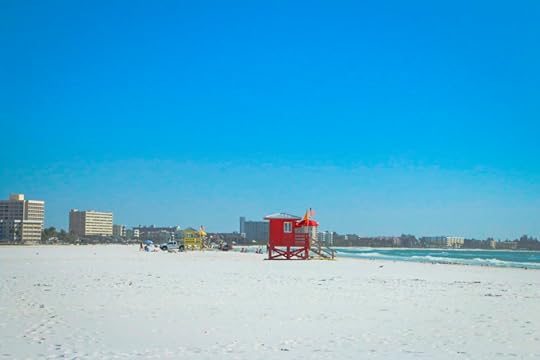
Photo: Visit Sarasota County
First things first: Get to the coast. In Sarasota County — the mainland of which is bordered by six islands — gentle waves lap the sand just about everywhere, but each spot is totally different from the next. Here’s the rundown:
Siesta Beach is widely regarded as one of the best in the world. It’s lined with sand that’s 99% pure quartz, meaning it’s snow white (the wonderfully warm kind) and feathery soft.
Kids and treasure hunters will want to dig into the colorful shores of Venice Beach, aka “The Shark Tooth Capital of the World.” Fossilized fangs can be found on this section of the mainland just by sinking your toes into the surf.
Just south of Venice Beach, Caspersen Beach and Manasota Key are equally shark-tooth-riddled, but quieter and less crowded, for a bit more of an escape.
Longboat Key is the county’s longest island, coming in at 12 miles. Its offbeat, laid-back vibe makes it a favorite for nesting sea turtles and those who dig turtle-paced vacations.
Lido Key, where the streets were named by well-known Sarasota resident John Ringling (of circus fame), is home to three distinct beaches. Eco-tourism and sunsets are the name of the game here.
Casey Key, dominated by picnic venues and lifeguard stands, is another family favorite, and it’s home to Sarasota’s oldest public beach, Nokomis Beach.
Though not technically a beach, North Port’s Warm Mineral Springs are worth mentioning. Nine million gallons of fresh water at a constant 87°F make this is a popular spot for those looking to relax (and maybe even heal).
Wildlife abounds in Snook Haven . Paddlers and anglers will spot turtles, alligators, birds, and tons of fish in and around these waters, technically a 2.5-acre park.
Visualize it: Your beach choice sorted, you grab a towel and hunker down. You have a margarita in one hand and a melty ice cream cone in the other. Whichever one you finish first, you’ll use that hand to bust out your phone and check the weather back home. Gloating social media post optional.
Step 2: Add a touch of class.

Photo: Walter
It happens every time: Someone in the group doesn’t abide by good SPF rules, turns into a lobster, and everyone has to break for the indoors. This is Florida’s Cultural Coast, though, so indoor time is allowed.
The Ringling, the State Art Museum of Florida, is a magnificent place to start. The absolutely sprawling campus showcases more than 28,000 works of art — including one of the world’s preeminent collections of Baroque art (didn’t see that coming, did you?), paintings from Rubens-level masters, and modern and contemporary pieces, too.
The onsite circus museum (surely this is the only place in the world to combine “Baroque” and “circus”?) is your connection to John and Mable Ringling’s once-vast Ringling Bros empire. Guided tours are included with admission. Whatever scale you’re thinking, think bigger — Ringling even had his own train car to travel around the country (yep, it’s right here). You can also tour Ca’ d’Zan, the Ringlings’ personal home, a five-story, 41-room, Mediterranean-style estate right on the water that pretty much screams themed Great Gatsby parties.
Slightly smaller in scale are the two Clyde Butcher galleries in Venice and St. Armands Circle. Known as the “Ansel Adams of the Everglades,” Butcher has spent his life capturing Florida’s endless natural beauty in stunning, large-format black and white photos. His work captivates, but the true focus is on conserving our state’s fragile ecosystems.
Next, make a short detour to the town of Englewood, a throw-back to the classic Old Florida lifestyle. It’s got tons of opportunities for antique shopping, plenty of cozy restaurants, and the aforementioned Manasota Key that stretches for miles along the Gulf of Mexico. If you can time it right, hit up the Englewood Farmer’s Market, every Thursday from 9am to 2pm. It sees 6,000 visitors every day, and that’s for a reason.
Finally, in downtown Sarasota, take a stroll through Towles Court, an Old Florida escape of narrow brick streets lined with colorful homes. The area became a live-work haven for artists in the 1990s and has evolved into a unique collection of galleries, boutiques, and cafés. The otherwise-quiet neighborhood springs to life during its art walks, held on the third Friday of the month, when musicians take to the streets and studios fling open their doors offering bites and bubbles to complement their crafts. Yep, all year long.
Step 3: Play the “Golf Coast.”
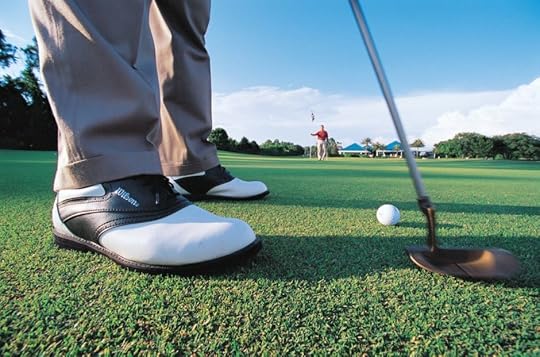
Photo: Visit Sarasota County
In the 1880s, a Scotsman by the name of John Hamilton Gillespie arrived in Sarasota (he probably didn’t come for the art walks), and the area’s future forever changed. In less than a year, Gillespie had set up a couple golf holes near what is now Sarasota’s downtown Main Street — some argue this was the first golf course in Florida, if not the country. Either way, it established a long and glorious history for golfers who don’t like taking winters off.
Sara Bay Country Club, formerly known as Whitfield Estates, came online in 1926. Designed by famed golf architect Donald Ross, the private and exclusive course has another claim to greatness: The legendary Bobby Jones once served as assistant sales manager for the property. (The next year, Jones opened his own.)
Nowadays, Sarasota County is home to a multitude of golf courses. From Golf Digest‘s four-star University Park Country Club (the best course in Southwest Florida, and that’s not factoring in their epic Sunday Mimosa Brunch Buffet) to TCP Prestancia’s two scenic (and water-lined) PGA courses, this Scotsman’s vision has taken flight.
Step 4: Try all the flavors.
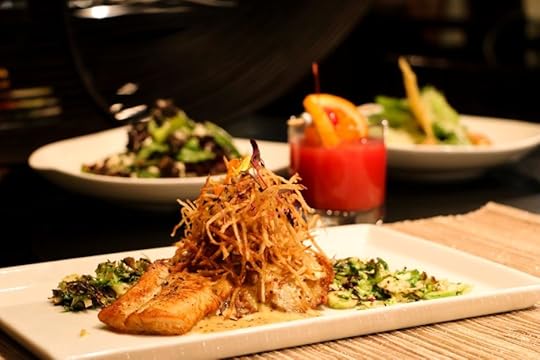
Photo: Visit Sarasota County
Sun-lovers and sea turtles aren’t the only ones drawn to Sarasota County’s splendid winters — renowned chefs, brewers, and distillers have taken root here as well. The city of Sarasota was named one of the “Best Food Cities in the U.S.” by Condé Nast Traveler Readers’ Choice Awards in 2016, and the county as a whole has a food scene that blends fine dining, farmers markets, craft breweries, and some of the freshest seafood coming out of the warm Gulf waters.
On the casual side, check out Yoder’s and Der Dutchman — restaurants established by the area’s Amish communities — serving from-scratch classics like fried chicken and award-winning pies. There’s also Snook Haven, an Old-Florida haunt with pulled pork, ribs, fried gator, and live music on the daily menu.
For romance, few do it better than Longboat Key’s Euphemia Haye, a chef-run island bungalow dressed in jungle-y vines and twinkling lights, and Michael’s on East. For more than 30 years, the latter has been serving up sophistication with a side of epicurean adventure, making it Sarasota’s only AAA Four Diamond Restaurant.
Wash it all down with a Friends Like These (wheatwine with coffee and vanilla bean coming at you at 11.5%!) or a Horseshoes & Hand Grenades (an intensely hoppy pale ale) from Calusa Brewing. For something a tad stronger (because 11.5% is child’s play), try Siesta Key Toasted Coconut Rum made from Florida-grown sugarcane at Drum Circle Distilling. The craft distillery produces some half dozen rums, from their Beer Barrel Finish Rum to a spiced variety that earned a Best in Class medal at the RumXP International Tasting Competition.
All this is a lot to take in, we know. But winters like ours make you hungry for more.


March 4, 2018
7 badass Icelandic women
Iceland has been making the news and, for once, it’s not only because of tourism or cheap air fare. Just this past January, the country made international headlines after passing a law that forces employers and businesses to pay women and men equal amounts for the same job. The legislation is the first of its kind in the world, and a radical step towards promoting gender equality. What better way to commemorate Women’s History Month and this fantastic step forward than by remembering the Icelandic women who made powerful impacts in the way we see the world?
1. Briet Bjarnhedinsdottir

Photo: Magnús Ólafsson
Briet Bjarnhedinsdottir was an advocate for women’s liberation and suffrage in the early 1900s. She founded Iceland’s first Women’s Society, and its first women’s magazine, Kvennablaðið, which became a political tool to motivate women to demand voting rights. She also served for a time on Reykjavík city council. Throughout her life, Breit wrote a number of articles advocating for women’s rights and never let her voice go unheard; she often held speeches in downtown Reykjavík, which always drew crowds and open ears. In 1907, she founded the first women’s suffrage society in Iceland, called Kvenréttindafélag Íslands (it still exists today). But Breit didn’t stop there. She also served as president from 1907 to 1911, and from 1912 to 1927. Breit changed the way Iceland viewed women forever, and in no small part because of her work, grit, and sheer determination, Iceland is now a world leader when it comes to women’s rights.
2. Sigríður Tómasdóttir

Photo: Luc Van Braekel
Sigríður Tómasdóttir is considered Iceland’s first environmental campaigner, and instilled a deeply-rooted sense of appreciation for the environment in the people of Iceland through her work. She grew up on a farm in the south of Iceland with a massive waterfall just outside her doorstep (Gullfoss). At the turn of the 19th century, Sigríður’s father was approached by foreign investors who wanted to dam the waterfall for hydroelectric production. Though Sigríður’s father turned down the offer, financers still threatened to “rent” the waterfall and do what they wished with it. Sigríður fought for the waterfall, urging the financers and businessmen to not interfere with nature, even threatening to throw herself into the waterfall if they did not leave it alone. Fortunately, Sigríður’s message was heard, the contract was annulled, and Gullfoss became property of the people of Iceland. Later, in 1979, the waterfall became a national park, and before Sigríður died, a new law was developed that forbade foreign nationals from purchasing state-owned waterfalls. Sigríður’s fight for Gullfoss has inspired changes in laws to protect Iceland’s beautiful environment.
3. Vigdís Finnbogadóttir

Photo: By Rob C. Croes / Anefo (Nationaal Archief (cropped))
Vigdís Finnbogadóttir was the first democratically-elected female president in Iceland (and Europe) from 1980 to 1996. As a single mother and divorcee, Vigdís stood for women’s independence, and did so unashamed. That her lifestyle contrasted with what was customary at the time not only shocked the world, but introduced Iceland to new ideas of womanhood and freedom. As a president, Vigdís was hugely popular – she was reelected three times, and served in office for sixteen years. In office, she promoted the education and empowerment of girls, the funding and celebration of the arts, and the protection of Icelandic nature. She also oversaw a handful of legislations that made these goals possible. After her presidency, Vigdís formed the Council of Women World Leaders in 1996, and it remains today one of the UN’s leading foundations promoting female empowerment and gender equality around the world.
4. Jóhanna Sigurðadóttir

Photo: Magnus Fröderberg
Jóhanna Sigurðadóttir is was the first female prime minister of Iceland from 2009 to 2012. She is known for pulling Iceland out of a devastating financial crisis, and for being the world’s first openly gay head of state. Her election to office was a huge step in the right direction for Iceland, whose attitude in regard to the LGBTQIA+ community changed dramatically from hostility to tolerance and celebration. Iceland is, after all, one of the first countries to recognize same-sex marriage, a move that was spearheaded by Jóhanna’s government (she and her partner became one of the first couples in Iceland to have an official same-sex marriage). Jóhanna was also Iceland’s longest-serving member of Parliament, holding office from 2009 to 2013. In 2010, her government banned strip clubs, paying for nudity in restaurants, and other means of employers profiting from employees’ nudity, the first ban of its kind in a Western democratic country.
5. Björk Guðmundsdóttir

Photo: Santiago Felipe
Björk Guðmundsdót otherwise known as Björk, is one of the most well-known Icelandic singer-songwriters. Her prolific career has spanned over four-decades, during which she’s developed a highly unique style of music. But before Björk’s fame rose to what it is today, she was known as the lead singer of the alternative rock band The Sugarcubes, back in the 80s. When she embarked on a solo career in 1993, the success continued. Since then, she’s released a number of albums to critical acclaim (and awards), won the award for best actress at the Cannes Film Festival, and a Golden Globe nomination for her performance in the 2000 film Dancer in the Dark. Björk has reshaped and redefined the terrain of femme artistry through her work’s genre-bending and psychedelic aesthetic.
6. Arna Ýr Jónsdóttir

Photo: Arna Ýr Jónsdóttir
Arna Ýr Jónsdóttir is an Icelandic model, beauty pageant titleholder, and pole vaulter. She was crowned Miss Iceland in 2015, and represented her country at Miss World 2015. In 2017, she won Miss Universe Iceland. Last year, she made international headlines after withdrawing from Miss Grand International 2016 because she was asked to lose weight. To this request, Arna replied, “If the owner of the contest really wants me to lose weight and doesn’t like me the way I am, then he doesn’t deserve to have me.” Arna is now considered a symbol of female strength and body acceptance. Her response also prompted a greater social media backlash against harassment, and once the dust settled, Arna was even hired by Nike as a brand representative. Oh yeah, and she’s only 22.
7. Katrín Jakobsdóttir

Photo: Johannes Jansson
No list of Icelandic women who changed the way we see the world would be complete without its most recent mover and shaker, Katrín Jakobsdóttir. As Iceland’s prime minister of nearly three months and the country’s second female leader in a decade, Katrín has already made some dramatic changes in the way the country and the world views women. She is a passionate feminist who has been pushing for tougher legislation in regards to women’s pay; just last month, Iceland passed a law that forces employers to pay men and women the same amount of money for the same job — a powerful step in eliminating gender inequality in Iceland, and an important wake-up call to the rest of the world. In Katrín’s words, “If we really want to achieve gender equality we need to do radical things.” Katrín is also an advocate for the treatment of sexual offences, LGBTQIA+ rights, and is passionate about welcoming more refugees to Iceland.
More like this: What is it like to be a woman in Iceland, the most feminist country in the world?
Teaching in South Korea
I was teaching possessive pronouns to Korean fourth-graders in Seoul when fighter jets drowned out the sound of my microphone.
“Oh, shit,” was my initial response.
Luckily, I didn’t say this out loud. My students looked around at each other, unsure, and then back at me. I smiled awkwardly.
“OK, let’s open our books to page 72!” I said in my sing-song teacher’s voice.
The sound of fighter jets overhead my Seoul elementary school during North Korean tensions was unnerving, at first. But then I remembered what I’d heard on expatriate Facebook groups days earlier: these planes, apparently, were preparing for an air show (with particularly bad timing.) Plus, I had the entire South Korean government working to keep the country, and my students, safe. But what if I’d heard gunshots, instead?
What if there’d been an announcement of a school shooter in the building? For starters, I probably wouldn’t have understood it. And secondly, my classroom nearly looked like a greenhouse, with sizable windows and Korean-style sliding doors secured by a dinky padlock, the same type I’d used as a high school student in Florida. There would be no way to barricade doors, and there would be no hiding. Because my classroom wasn’t designed to withstand an AR-15 semi-automatic. It was designed for learning.
If a school shooter really was on the premises, I’d probably have opened the windows and told my kids to run like the wind. And if I’d been armed, my reaction would’ve been the same.
“Don’t worry kids, stand behind me! Sorry Mr. Shooter, could you give me a moment? My hands are trembling, and I have to figure out how this things works.”
If I’d been trained to use a gun properly, I still would’ve encouraged my students to jump out the window. Seriously, no one should ever rely on me for safety, unless it’s about the proper way to go down a playground slide or how to prevent getting others sick by sneezing into your elbow, not your hands. I had signed up to be an educator. I taught my students proper nouns, I gave them high fives and stickers, I disciplined them as needed. I played games, I sang, “Baby Shark,” and I encouraged my students to be the rockstars I knew they were.
I had not signed up to be a human shield.
Thankfully that’s not my job, and here, it never would be. In Seoul, I don’t worry about shooters because there aren’t (many) guns to shoot with in the first place.
“South Korea, which has fewer guns per capita than any developed nation, has about 510,000 registered guns compared to about 300 million in the United States, which leads developed nations in gun ownership,” said an article in USA Today. That isn’t to say South Korea is perfect or 100 percent safe from gun violence. To be clear, one of the biggest mass shootings in history took place in Korea in 1982, when a drunk police officer went on a killing spree before taking his own life. But the numbers speak for themselves. In 2012, there were a total of only 23 gun deaths in South Korea. In the United States in 2012, there was nearly 33,540 more.
33,540 less gun deaths mean that I can teach with peace of mind. It means that I can focus on my student’s development as learners and as Samaritans. It means that I can explore South Korea without fear of walking down “the wrong street,” and that I don’t have to look for the nearest exit when I go to the movie theater.
In May, that will change. I’m coming back to my beloved home state — Florida.
During my first few months teaching in Seoul, I thought, “Wow, I really love being an educator. When I go home to the U.S., I’d like get my Florida teaching license to continue.”
Now, I’m not so sure. The news of mass shootings in the U.S., especially in Florida, is paralyzing and numbing at the same time. My heart aches for gun violence victims, but I can’t cry. It doesn’t feel real enough. It doesn’t feel like gun violence could ever happen to me, or even my loved ones living in Florida, because I can’t imagine it happening where I’m located now, in Seoul. In a few months, that won’t be the case. And while I once considered being an English teacher in Florida, I don’t know if it’s a risk I want to take any more. I can’t be a human shield. I don’t want to carry a weapon. Not for a starting salary of $36,141.
And as a former elementary school teacher, I can’t fathom losing a student to gun violence, whether from a school shooting, accident, or suicide. It would be like losing a child of my own. But I didn’t major in education. I majored in mass communications, journalism, so I have an alternate career path to pursue, one that I’m equally passionate about. Even still, teaching is difficult to let go. My mom was a teacher, and ever since I was asked in kindergarten, “What do you want to be when you grow up?” I’ve gleefully responded with, “A teacher.”
Would kindergarten-me have responded the same way if it had been 2018? Would I still have wanted to be a teacher if I knew it meant I’d have to carry a gun or defend students from mass shooters?
I have a feeling there will be less students with the dream of being a teacher this year.
More like this: Everywhere I travel, people want to know why Americans love guns
Matador Network's Blog

- Matador Network's profile
- 6 followers


.jpg)


