
Matador Network's Blog, page 1391
March 4, 2018
the hardest working cities in the US
Americans work hard for a rich Western nation. And it isn’t just an abstract reputation, but a data-backed fact that people who live in the US spend more time on the job than residents of France, Germany, and the UK. (The Mexican workweek, however, is a nearly a full day longer than the average American’s).
But not every US city puts its citizens through the same high-pressure grind as Manhattan. By looking at a number of factors from commute times to workweek hours and employment rates, Wallet Hub created a definitive list of the hardest working cities in the US. (Hover over the dots to zoom in to the denser regions). 
Source: WalletHub

More like this:
Mapped: the world’s wealthiest cities


March 3, 2018
Sleep while traveling
Travel can be rough for light sleepers. Bumpy roads, cramped bus seats, jet engines, and obnoxious passengers are not conducive to a good night’s sleep. And jet lag can make it even worse, especially if you’re traveling particularly far from home. We’re all travelers at Matador, so we asked our staff and the Matador Creator’s Community for tips on how to get a decent night’s sleep even while you’re on the move.
Get the right pillow
A good neck pillow makes all the difference, but you have to look around for the right one. Matador producer Henry Miller suggests getting an inflatable pillow, so as to save on space — also, he adds, you can wash the outer layer if you’re a germaphobe. Since a lot of pillows do take up space, Matador filmmaker Kyle Lamont suggests packing a puffy jacket, as it can double as a pillow.
Get the right earbuds
Over long periods, bad earbuds can start to hurt your ear. Matador filmmaker Blaze Nowara suggests over-the-ear noise canceling headphones, but Matt Hershberger points out that you’ll need to factor in how you sleep: bulky headphones can make leaning against a plane, train, or bus window awkward. A good neck pillow will give you the space you need.
If you’re in a desperate situation, Kyle Lamont suggests, say, at a Vietnamese farmstay where down the street they’re having a party that is playing “awful high pitch electro tin pan shit” music on repeat, just shove some toilet paper in there.
Imbibe the right substances before bed
Most agree that caffeine and alcohol are a mistake before bed. Copy editor Stephanie Edri suggests stopping caffeine after 2 PM in the place you’re visiting. Stephanie adds that it might be worth trying a single cup of sleepytime tea, but no less than an hour before bedtime (so you don’t wake up having to pee). Deia De Marco says most caffeine-free warm beverages will do: “even just some warm water before bed will help warm your stomach, and takes metabolic energy away from your brain (which is probably running a mile a minute) and diverts it towards your stomach to help you digest. When I drink chamomile tea I know it’s impossible to stay awake.”
Matadorian Alex Scola suggests a caffeine hack: “Avoid caffeine on your normal body schedule. This is a weird one, but as a caffeine enthusiast nothing screws me up more than getting caffeine when my body expects it, which sets my body up for the regular daily routine. Drink a coffee when you need it, but have it when your body thinks it’s 4 AM or 2 PM. Doing this en route also helps me flex to a new time zone easier.” Alex also recommends Benadryl for long flights — it’s especially useful if you have allergies.
Henry Miller says that, to avoid jetlag, you should not drink on the plane. “It will dehydrate you and make it harder for you to get to REM sleep.” Travelstoke manager Dayana Aleksandrova goes a step further: Don’t eat on your flight, even if it’s 6+ hours. Matador contributor Eben Diskin, on the other hand, thinks alcohol is a good way to lower your adrenaline a bit on the first night in a new city. “It’ll help facilitate a fun night in a new city, and then knock you out once the night’s over. I find it particularly useful when it comes to jet lag. Traveling overnight from the U.S. to Europe, I always have too much adrenaline to sleep when I arrive. A few drinks make me sleep like a rock, and also helps correct my sleep schedule.”
Matador editor Matt Hershberger and Deia De Marco both recommend melatonin tablets. “They are a godsend,” Matt says. “I stay up until a reasonable bedtime in the place I’ve just traveled to, take a melatonin pill a half an hour before bed, sleep soundly through the night, and wake up on a normal schedule.”
Henry strongly suggests, as an alternative to alcohol, “CBD edibles, as they relax your muscles (and get you high).”
Hack your sleep schedule
“If I need to be awake/alert at a weird hour,” Alex Scola says, “the night before doesn’t matter. It’s the night before that night I have to make sure I get enough rest. Sleep deprivation usually only does me dirty in 48-hour cycles.”
Director of Brand Partnerships CJ Close plans for the jetlag before leaving. “When I know I am going to be changing time zones of 5+ hours, I start backing into the new time zone 5 days before I leave the current time zone. I start one hour at a time, going to bed early, then increasing each day.” CJ also recommends walking around in the sunshine when you get to the new destination to get your brain used to the change.
Eben Diskin says, “I’ve found that whenever I’m in a new place, it helps to replicate the sleep environment I’m used to. At home I sleep with a fan by my bed for white noise, so whenever I travel, I either turn on the AC’s fan function, or listen to a white noise app. This can also help drown out disruptive street sounds.” Stephanie Edri agrees: “Do you read before bed? take off your socks? whatever you do at home, do it on the road. Don’t have sleep rituals? Create some.”
Digital Media Editor Carlo Alcos, Head of Branded Content Doree Simon, and Stephanie all suggest eye masks to block out the light on planes and in hotel rooms.
Everyone agrees — stay away from blue light screens, and try to read or journal before bed.
Aromatherapy
Stephanie Edri, CJ Close, and Creator’s Community member Deia De Marco all recommended lavender essential oils. “Dabbed onto your pillow or diluted and rubbed into your pulse points to help you relax,” Stephanie says. “It seriously works like a charm,” De Marco added.
Take care of your body
Matador’s Head of Branded Content, Doree Simon, and Dayana Aleksandrova both recommend meditation before sleeping. Dayana even offered a specific meditation to use:
Several people suggested exercising on your normal schedule, too. “I often notice on days that I have been particularly inactive that I have a much harder time falling asleep,” Deia De Marco says.
Find the right sounds
“I’ve spent the past 10 years perfecting a sleep playlist,” says Matt Hershberger. “It’s super selective — it still only has 17 songs, and I regularly try new songs only to delete them after a single attempt — but the right mix of Radiohead (“High and Dry,” “Sail to the Moon,”), Pink Floyd (“Great Gig in the Sky,” “Shine on You Crazy Diamond,”), My Bloody Valentine (“Sometimes,”) and the Stone Roses (“I Wanna Be Adored”) has become surprisingly effective in putting me to sleep in loud plane/train/automobile situations.”
Others suggest white noise machines and apps — Matt uses Noisli when the playlist isn’t doing it, and Creator’s Community member McKenna Klein suggests Solfreggio frequencies. Kyle Lamont suggests only using earplugs when you really need them — you don’t want to get dependent on them.
More like this: How to get some decent sleep while on an airplane 
Practical tips for getting to sleep when you travel (from experienced travelers)
Travel can be rough for light sleepers. Bumpy roads, cramped bus seats, jet engines, and obnoxious passengers are not conducive to a good night’s sleep. And jet lag can make it even worse, especially if you’re traveling particularly far from home. We’re all travelers at Matador, so we asked our staff and the Matador Creator’s Community for tips on how to get a decent night’s sleep even while you’re on the move.
Get the right pillow
A good neck pillow makes all the difference, but you have to look around for the right one. Matador producer Henry Miller suggests getting an inflatable pillow, so as to save on space — also, he adds, you can wash the outer layer if you’re a germaphobe. Since a lot of pillows do take up space, Matador filmmaker Kyle Lamont suggests packing a puffy jacket, as it can double as a pillow.
Get the right earbuds
Over long periods, bad earbuds can start to hurt your ear. Matador filmmaker Blaze Nowara suggests over-the-ear noise canceling headphones, but Matt Hershberger points out that you’ll need to factor in how you sleep: bulky headphones can make leaning against a plane, train, or bus window awkward. A good neck pillow will give you the space you need.
If you’re in a desperate situation, Kyle Lamont suggests, say, at a Vietnamese farmstay where down the street they’re having a party that is playing “awful high pitch electro tin pan shit” music on repeat, just shove some toilet paper in there.
Imbibe the right substances before bed
Most agree that caffeine and alcohol are a mistake before bed. Copy editor Stephanie Edri suggests stopping caffeine after 2 pm in the place you’re visiting. Stephanie adds that it might be worth trying a single cup of sleepytime tea, but no less than an hour before bedtime (so you don’t wake up having to pee). Deia De Marco says most caffeine-free warm beverages will do: “even just some warm water before bed will help warm your stomach, and takes metabolic energy away from your brain (which is probably running a mile a minute) and diverts it towards your stomach to help you digest. When I drink chamomile tea I know it’s impossible to stay awake.”
Matadorian Alex Scola suggests a caffeine hack: “Avoid caffeine on your normal body schedule. This is a weird one, but as a caffeine enthusiast nothing screws me up more than getting caffeine when my body expects it, which sets my body up for the regular daily routine. Drink a coffee when you need it, but have it when your body thinks it’s 4:00 am or 2:00 pm. Doing this en route also helps me flex to a new time zone easier.” Alex also recommends Benadryl for long flights — it’s especially useful if you have allergies.
Henry Miller says that, to avoid jetlag, you should not drink on the plane. “It will dehydrate you and make it harder for you to get to REM sleep.” Travelstoke manager Dayana Aleksandrova goes a step further: Don’t eat on your flight, even if it’s 6+ hours. Matador contributor Eben Diskin, on the other hand, thinks alcohol is a good way to lower your adrenaline a bit on the first night in a new city. “It’ll help facilitate a fun night in a new city, and then knock you out once the night’s over. I find it particularly useful when it comes to jet lag. Traveling overnight from the U.S. to Europe, I always have too much adrenaline to sleep when I arrive. A few drinks makes me sleep like a rock, and also helps correct my sleep schedule.”
Matador editor Matt Hershberger and Deia De Marco both recommend melatonin tablets. “They are a godsend,” Matt says. “I stay up until a reasonable bedtime in the place I’ve just traveled to, take a melatonin pill a half an hour before bed, sleep soundly through the night, and wake up on a normal schedule.”
Henry strongly suggests, as an alternative to alcohol, “CBD edibles, as they relax your muscles (and get you high).”
Hack your sleep schedule
“If I need to be awake/alert at a weird hour,” Alex Scola says, “the night before doesn’t matter. It’s the night before that night I have to make sure I get enough rest. Sleep deprivation usually only does me dirty in 48 hour cycles.”
Director of Brand Partnerships CJ Close plans for the jetlag before leaving. “When I know I am going to be changing time zones of 5+ hours, I start backing into the new time zone 5 days before I leave the current time zone. I start one hour at a time, going to bed early, then increasing each day.” CJ also recommends walking around in the sunshine when you get to the new destination to get your brain used to the change.
Eben Diskin says, “I’ve found that whenever I’m in a new place, it helps to replicate the sleep environment I’m used to. At home I sleep with a fan by my bed for white noise, so whenever I travel, I either turn on the AC’s fan function, or listen to a white noise app. This can also help drown out disruptive street sounds.” Stephanie Edri agrees: “Do you read before bed? take off your socks? whatever you do at home, do it on the road. Don’t have sleep rituals? Create some.”
Digital Media Editor Carlo Alcos, Head of Branded Content Doree Simon, and Stephanie all suggest eye masks to block out the light on planes and in hotel rooms.
Everyone agrees — stay away from blue light screens, and try to read or journal before bed.
Aromatherapy
Stephanie Edri, CJ Close and Creator’s Community member Deia De Marco all recommended Lavender Essential Oils. “Dabbed onto your pillow or diluted and rubbed into your pulse points to help you relax,” Stephanie says. “It seriously works like a charm,” De Marco added.
Take care of your body
Matador’s Head of Branded Content, Doree Simon and Dayana Aleksandrova both recommend meditation before sleeping. Dayana even offered a specific meditation to use:
Several people suggested exercising on your normal schedule, too. “I often notice on days that I have been particularly inactive that I have a much harder time falling asleep,” Deia De Marco says.
Find the right sounds
“I’ve spent the past 10 years perfecting a sleep playlist,” says Matt Hershberger. “It’s super selective — it still only has 17 songs, and I regularly try new songs only to delete them after a single attempt — but the right mix of Radiohead (“High and Dry,” “Sail to the Moon,”), Pink Floyd (“Great Gig in the Sky,” “Shine on You Crazy Diamond,”), My Bloody Valentine (“Sometimes,”) and the Stone Roses (“I Wanna Be Adored”) has become surprisingly effective in putting me to sleep in loud plane/train/automobile situations.”
Others suggest white noise machines and apps — Matt uses Noisli when the playlist isn’t doing it, and Creator’s Community member McKenna Klein suggests Solfreggio frequencies. Kyle Lamont suggests only using earplugs when you really need them — you don’t want to get dependent on them.
More like this: How to get some decent sleep while on an airplane
the 2018 Oscars by the numbers
2017 was a rough year for Hollywood’s reputation, and there is still a long road ahead before its ugliest elements are rousted by the #MeToo movement. That being said, big events like the Emmys and the Oscars have proven to be effective stages for outing the hypocrisy of the industry’s elite members. Lately it seems that for every boorish Seth McFarlane number or Billy Crystal in blackface, we have been getting an #Oscarssowhite or #TimesUp moment.
So if you are planning on watching the 90th Academy Awards tomorrow in hopes that Natalie Portman will drop a truth bomb or that Oprah straight up tears the roof off the building, you might enjoy this new “by the numbers” infographic from Wallet Hub.

Photo: Wallet Hub
More like this: The protests from around the world that defined 2017

March 2, 2018

5 travel memoirs by women that will inspire you to hit the road
The great cliche of travel is that it’s how some of us “find” ourselves. Sometimes, it’s true. No place, however, exists to function as a mirror to the traveler’s heart. That’s why great travel memoirs balance introspection with a spirit of curiosity and a desire to understand other cultures. Here are some travel memoirs written by women who dare to look inward, but also open their eyes, ears, and hearts to the world around them. They wrestle with very personal questions about their paths in life, about their ancestry, about the conflicting desires to travel and to put down roots, and above all about belonging — the answers to which could only be found in their unique journeys.
1. Wall to Wall: From Beijing to Berlin by Rail by Mary Morris
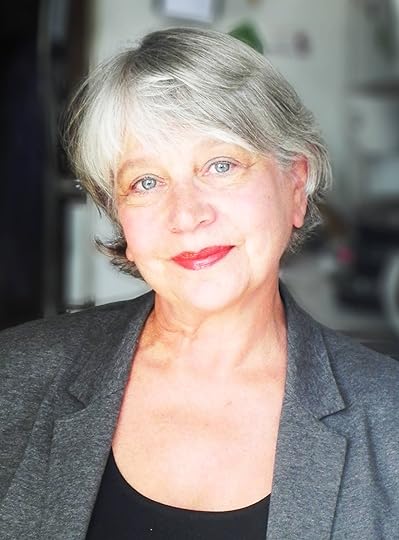
Photo: Mary Morris
The year is 1986, and Mary Morris is at the American Embassy in Beijing, desperate for information about the Chernobyl nuclear disaster. She is days away from departing on a train to Nezhin, her beloved grandmother’s hometown, not far from Chernobyl. No news on Chernobyl is available, but she has already booked her ticket. She’s thinking about her grandmother’s stories from Ukraine, one in particular: her grandmother buried in the earth of Ukraine by her mother to protect her from the Cossacks storming through their village. That earth, the home of her ancestors, calls her back. But is it possible to return to a home she’s never known? Wall to Wall is an intimate and honest meditation on the elusive concept of “home” in the context of the human urge and historical necessity to wander.
2. Maiden Voyage by Tania Aebi with Bernadette Brennan
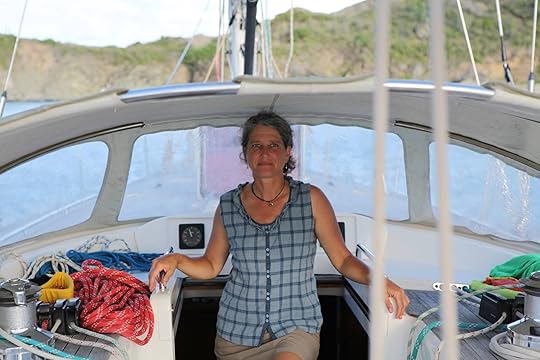
Photo: Tania Aebi Sailing Adventures
Imagine that you’re 17 years old and confused about what you want to do with your life. Your parents give you a choice: either go to college or circumnavigate the world. That’s how, in 1985, Tania Aebi found herself at the docks of Southstreet Seaport in New York City, waving to her family, friends, and a cluster of reporters as her boat drifted into the open sea. With little sailing experience and, incredibly, no navigation skills to speak of, she set off on a year and a half adventure of island hopping, multiple life-or-death challenges, itinerant friendships, a fierce romance with a fellow sailor. But perhaps the grandest part of her adventure is the time spent alone on the moody waters, where she learned to adapt to its meditative calms and wild rage. By the end of her journey, the teenager questioning her place in the world transforms into a competent sailor and a fearless voyager.
3. All of God’s Children Need Traveling Shoes by Maya Angelou
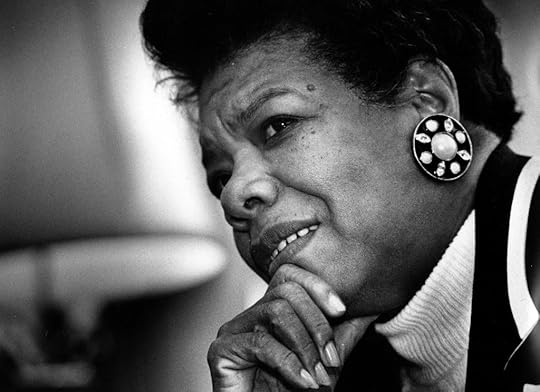
Photo: Maya Angelou
“And now,” Maya Angelou wrote, “less than one hundred years after slavery was abolished, some descendants of those early slaves taken from Africa returned, weighted with a heavy hope, to a continent which they could not remember, to a home which had shamefully little memory of them.” In the early 1960s, Angelou was one of the many Black American expats who settled in Ghana to repair the roots broken by the horrors of slavery. Rage and sorrow embrace in a dance of lyrical prose that only the celebrated Maya Angelou could write. For Angelou and her compatriots, every day in Ghana is a quiet struggle as they come to terms with the disappointment of not belonging. Angelou, an astute reader of the human heart, casts an incisive eye on the people she meets as she negotiates a path to her roots in the wide continent of Africa.
4. My Life in France by Julia Child with Alex Prud’homme

Photo: Julia Child
Except perhaps for the most devout of foodies, it seems unlikely that a single meal could change one’s life. But that’s exactly what happened to Julia Child. Oysters, sole meuniere, salad, cheese and coffee: that was the fateful meal that she and her husband, Paul Child, enjoyed in a restaurant in Paris in 1948, on a cold winter day. It was love at first bite. The Julia who cared little for the kitchen was no more, and the making of Julia Child, chef and co-author of the seminal cookbook Mastering the Art of French Cooking, began. In this joyful ode to France, its culture, and above all its cuisine, Julia Child captures the thrill of falling in love with a foreign country.
5. 36 Views of Mount Fuji: On Finding Myself in Japan by Cathy N. Davidson
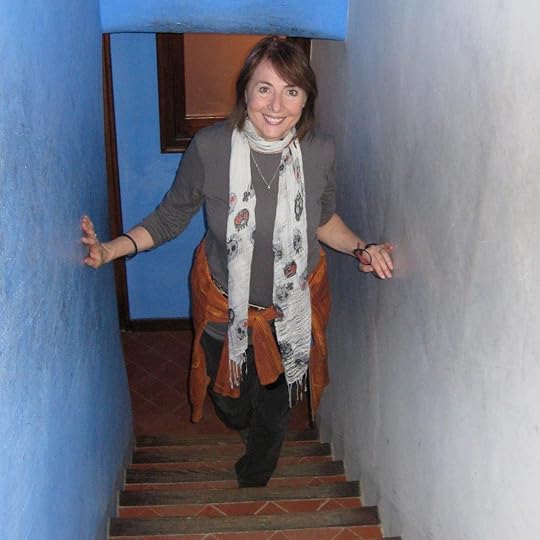
Photo: Cathy N. Davidson
If you google “36 views of Mount Fuji,” you will likely see images of woodblock prints of pristine blue sea and mountains. Davidson’s memoir borrows the title of the famous woodblock series by Hokusai Katsushika. These thirty-six woodblock prints, created in the early 1800s, depict Mount Fuji from different physical perspectives in each season and in varying weather conditions. Like Katsushika, Davidson observes Japan from a distance and lovingly engraves its beauty in her memory. Beginning in 1980, Davidson and her husband both lived in Japan on and off as English teachers. Over the years, she develops close relationships with Japanese people, especially with women, and gains insight into the layers of Japanese culture. 36 Views of Mount Fuji shows how expats who are curious, open-minded, and empathic can open themselves to the ebb and flow of life in a culture outside their own.
More like this: 7 books by women that will change the way you see the world

Hitchhiking in middle-age
After enduring three hours of rejection, I wished I’d heeded the advice of a motorcyclist an hour earlier — “Take the bus. No one is going to pick you up.” I wasn’t hitchhiking through Morocco as a poor university student trying to save every penny. Instead, I was a 52-year-old, international-school teacher hoping to prove a point to himself — we don’t need to fear life as we age.
Now, I wasn’t so sure. Morning had already given way to afternoon, and I was still a half-day’s journey from my destination of Merzouga in the Sahara Desert. The steady flow of traffic dwindled to a trickle. I felt tired. I felt lonely. I felt foolish, knowing the only bus had long since departed.
In my 20s, 30s, and 40s, I’d been a fan of independent, adventure travel. I preferred to utilize public transportation, rolling into a new town without reservations or even a detailed plan, ready to dive into the local culture. My ultimate rush involved placing my fate into the hands of strangers through hitchhiking, but since moving to Zimbabwe in 2016, my preferred travel mode was all-inclusive vacations via air-conditioned 4 X 4s.
I convinced myself I had few other options because of the continent’s lack of infrastructure; however, deep down, I dreaded the unknown. Riding in unmaintained buses on pothole-filled roads seemed risky. Could I find hotels showing up unannounced? Was Africa the best place to navigate solo? It certainly had absolutely nothing to do with middle age, or did it?
The older I get the more apparent it becomes that all accidents can’t be avoided. Sometimes bad things do happen to good people. Sometimes evil prevails. It’s been reassuring for me in midlife to embrace organized tours to steer clear of potential unpleasantries, in the name of comfort and convenience.
When I decided to visit Morocco, I again looked into tours and probably would have ended up on one if not for an argument with my then-girlfriend, who accused me of only being willing to explore Africa along well-worn, predictable paths. As a veteran backpacker, I knew she was wrong. I had to convince her, or convince myself, that I hadn’t changed, that I wasn’t afraid to resume my wandering ways.
A month later, for the first time in years, I was standing by the side of the road, sheepishly holding a crudely written placard with the word “Imlil,” a village in Morocco’s Atlas Mountains about two hours outside Marrakech.
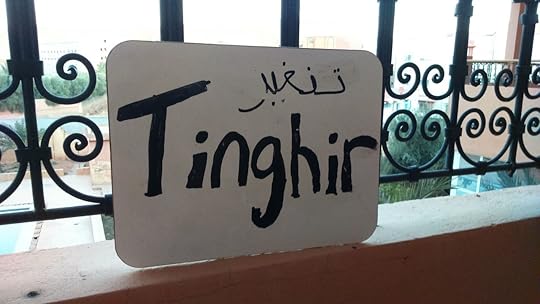
The hitchhiking sign that allowed me to travel 600 miles throughout Morocco
Despite the potential hazards, I’ll admit part of the attraction of hitchhiking is not knowing who or what is waiting on the other side of the door. But rather than dwelling on what might go wrong, I tried to keep in mind the slim likelihood of becoming a crime victim.
For decades, I’d hitchhiked around the world without incident, drawing inspiration from the words of Albert Einstein who once said, “The most important decision we make is whether we believe we live in a friendly or hostile universe.” I’m convinced of the former, which gave me the confidence to stick out my thumb in Africa. Hitchhiking is an exercise in trust, both for the hitchhiker and driver, and a terrific way to open the door to magical possibilities.
Within minutes of debuting my Imlil sign, a car stopped. It was too easy.
“No good,” said the driver, pointing to the opposite road I’d taken at the fork.
Once I was back on the correct route, another car stopped.
“I’ll take you to Imlil,” said the motorist.”100 dirhams,” the equivalent of about $10. I rejected the taxi driver’s offer. Hitchhiking isn’t always about saving money. It’s about the experience. I wanted that experience. He returned, insisting I wouldn’t find a ride.
However, less than an hour later, a car full of four men allowed me to squeeze in with them.
“American?” asked the front-seat passenger.
“Yes,” I replied.
“Trump,” he chuckled.
Any remaining angst evaporated. The men took me halfway, where I managed to find another ride the remainder of the way to the village. I was reliving the glory days of my youth.
My good fortune lasted two more days.
Now, it appeared my hitchhiking luck had vanished, just short of the Sahara. With the afternoon waning, the threat of getting stranded after dark loomed like a hungry vulture patiently awaiting the demise of its prey. I’d have to admit defeat, find a hotel, and take the next day’s bus.
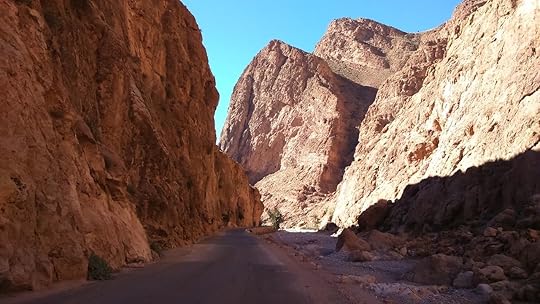
As a young man, I never entertained such negative thoughts because I believed the universe always provided. Eventually, the right person would pick me up, but perhaps times had changed in this troubled, unpredictable world.
I had essentially given up hope when a car pulled over next to me. Two German women heading to the desert offered me a lift covering the entire 100+-mile journey. The universe had come through yet again.

During my three weeks in Morocco, I faced additional adversity — language barriers, hours of walking, being dropped off in the middle of nowhere — but managed to hitchhike 600 miles, relying on the generosity of 23 benefactors.
Near the end of my trip, while waiting for a hitch to Fez, a 20-something-year-old stopped, saying he doubted someone would pick me up that late in the day. He volunteered to take me to the bus station, promising to bring me back to my spot if there were no buses. I was too exhausted to argue.
When we arrived at the station, he went up to the counter and learned an overnight bus would be leaving in a couple of hours. Before I could take out my money, he paid the fare. I objected, telling him that was completely unnecessary because I had plenty of cash, but he refused to accept it. I had to ask why. His face grew serious, and in his limited English he replied, “humanity.”
Nope, we needn’t fear life as we age, even while hitchhiking alone across Africa.
More like this: From trauma to trust: Leaving fear behind in East Africa
business etiquette around the world
Avoiding looking like an idiot in a social setting abroad can be a challenge, but business settings can be an absolute nightmare. While you might be forgiven for forgetting certain customs at a party, it is always best to try to impress when representing yourself as a professional. That is why Fundera Ledger created a business etiquette guide for some of the biggest big-business nations in the world.
You may already know that much of the Arab world does not drink alcohol, but did you know that Canadian business professional might expect you to pick up the tab for a second round of beers? When it comes to finding work abroad, it is always best to show up to a meeting knowing what to expect.

Photo: Fundera Ledger
More like this: Airbnb guest etiquette around the world

Being a woman in Mexico
When I first moved to Mexico to live with my Mexican partner, I noticed a few things that bothered me. One was people’s comments, expressing curiosity when I wasn’t in the mood to linger in a bar until 3 AM and preferred going home alone, leaving my partner behind at a party — I was supposed to wait for him. Another was waiters’ astonishment when I picked up the bill in a restaurant or bar instead of letting my partner pay.
But the real shocker happened on my first job interview. I was confident about my competence and the positive outcome of the meeting until the employer, a woman, asked me whether my husband agreed with my decision of having a 9-to-5 office job. To top it off, she also asked me who would take care of my one-year-old daughter while I would be at work — as if babysitting was only my responsibility. I was floored.
I soon realized that, in Mexico, many still believe in the traditional division of gender roles — men bring in the money, women dedicate themselves to housework. According to a study by the Organisation for Economic Co-operation and Development, in Mexico, only 45% of women between the age of 16 and 64 are employed (the OECD average is 60%), yet women perform over 75 percent of unpaid household work and childcare.
Years after the interview incident, I still get subtle messages from my daughter’s teachers that I’m the one who’s responsible for her performance in school — my husband is off the hook.
Discrimination and inequality of Mexican women are day-to-day issues. Many women cannot find work or achieve financial independence because there’s the possibility of them getting pregnant. In some rural communities, women aren’t allowed to vote or have to vote according to the preference of their husband, and there are still girls who aren’t allowed to go to school just because they are female.
Violence is also a significant problem in Mexican women’s lives. According to the National Institute of Statistics and Geography, more than 66% of women over 15 years of age have suffered at least one incident of emotional, sexual, economic, and physical violence. Mexico City’s public transport was named the second most dangerous for women among the 15 biggest cities in the world; 64% of its female users reported having been sexually touched or harassed, compared to 19% in London.
To avoid or minimize the possibility of becoming a victim of sexual harassment in public spaces, I put away my shorts, short skirts, dresses and shirts with cleavage, and became part of 40% of women who prefer wearing clothes that make them less attractive in order to diminish the risk. I learned that it’s not safe for me to take a cab alone, so every time I need to get places in the early morning or late at night, I choose Uber. It gives me the opportunity to send my route to my partner and he can follow my movement step by step until I get to my destination.
The worst of it is that women are held responsible for the crimes they suffer. When Mara Castilla, a 19-year old student, disappeared after ordering a ride with Cabify, misogynistic commentaries flooded the social networks, blaming her for having fun with friends, dancing with strangers, staying late in the bar, presumably getting drunk, and going home alone, which, according to people’s opinions, led to her disappearance and murder.
Despite the poor state of affair for women in Mexico, there have been initiatives and measures aimed at preventing violence and diminishing gender inequality.
Public and private transport providers in CDMX and other large Mexican cities have introduced several solutions to prevent sexual violence, such as women-only subway cars, separated waiting areas in Metrobus stations, and emergency buttons on the busiest routes. There are even pink buses that men can’t board, and Laudrive, a women-only private taxi service. While some consider these segregating measures insufficient and unsustainable, the many women do feel safer using them.
There have also been improvements among certain indigenous communities, particularly for women, who are among the most vulnerable population. Indigenous women have been historically suffering triple discrimination — for being indigenous, poor, and female, with the highest levels of illiteracy, maternal mortality, domestic violence, and extreme poverty. In the past few years, the women have been organizing into groups of embroiderers to create and sell fair-trade art and obtain financial independence. Indigenous women have also recently gained an unprecedented level of political empowerment — more and more of them have been actively participating in local elections as candidates for representatives in city councils. This year, for the first time in Mexican history, an indigenous woman was running for the presidency.
While abortion in Mexico is prohibited and penalized in general, there are organizations that help women terminate unwanted pregnancies, whether by covering their travel costs to Mexico City, the only place where voluntary abortion is allowed, or by providing medicine and accompaniment during the process. GIRE (the Information Group on Reproductive Choice) is one of them. It is a Mexican non-profit, non-governmental organization that promotes and defends women’s reproductive rights. GIRE also helps women during their legal battles in cases of obstetric violence.
Sinactraho is a young syndicate fighting to improve catastrophic working conditions of more than 2 million domestic workers. According to the National Council for the Prevention of Discrimination, domestic workers are among the most structurally discriminated working group: more than 98% of women don’t have access to health services, 8 out of 10 don’t have social security, and 1 out of 5 starts to work between the ages of 10 and 15. A lot of them work for more than 12 hours daily, 6 days a week, for a minimal wage, and they’re regularly humiliated and abused by the employers.
As for governmental representation, the most significant improvement is the increase of women engaged in politics thanks to the implementation of stricter quotas requiring the equal representation of women and men on candidate lists in elections. Today, 42% of the members of the Chamber of Deputies in Mexico are women, compared to an OECD average of 28% for lower houses of national legislatures. Mexico’s rate is the third highest in the OECD.
More like this: 6 uncomfortable truths about living in Mexico
Thailand tourists drive locals crazy
Thailand may be the land of smiles, but that’s not to say some Thai people won’t give you a frown if you’re truly disrespectful or fail to show you have a “cool heart.” While millions of tourists pass through the Southeast Asian country every year, there are certain behaviors — some less than intentional — that do not mesh well with locals trying to live their lives.
1. Drink at the worst possible places/times.
Two years ago when the King of Thailand died somewhat unexpectedly, the international media was flooded with stories of tourists considering canceling their trips or cutting them short, once it was discovered alcohol would not be served for several days and loud music and dancing would not be allowed. Though the country is certainly infamous for its Full Moon Parties on Koh Phangan, writing it off as a place not worth visiting without a Sang Som and Coke in your hand was pretty demeaning for Thais.
2. Insist on using English.
I once observed a tall British man walk into a 7-11 in Ao Nang and argue with the clerk over returning an open beer. Rather than paying attention to the line behind him, his complaints eventually devolved into yelling “It’s FLAT. It’s F-L-A-T!!!”, apparently having no idea that nothing he was saying was getting through to the Thai woman.
Though many Thai people can speak fluent English and it’s usually the best international language to fall back on when your Thai is nonexistent, assuming someone can understand every nuance to the language, e.g. a “flat” beverage, is the colonialist mentality at its worst (and besides: Thailand was never colonized).
3. Name the right price.
As in other countries in SE Asia, haggling over the price is all too common for markets, tuk-tuks, taxis, and even some hotels in Thailand. Though I never saw any vendors get genuinely upset when I suggested an absurdly low price to counter their absurdly high one, I did have one yell and push me away when I pointed out the price I had paid for a trinket to a random tourist he had not yet approached. Never mess with someone’s wallet.
4. Insult the King, even jokingly.
This practice may change as the King we think of — and many Thais still think of — as commanding respect was Bhumibol Adulyadej, who died in 2016. His son, Maha Vajiralongkorn, is currently recognized as the King of Thailand, though to say he has the same level of respect from everyone would be reaching.
Nevertheless, despite the change in leadership, the image of the King is sacred. His face is on all money, government buildings, homes, and each and every place of business — go into a Thai restaurant in any country and you’ll probably see his picture. Making fun of him in any way is not only a huge insult and cultural faux pas, it’s also illegal and can earn you a few years in prison under Lèse-majesté laws.
5. Use the toilet incorrectly.
It shouldn’t come as a big surprise that toilets are different in Thailand. Many in airports and large shopping malls are automatic, but those in rural areas often have no paper and require “flushing” with a water pail. Western tourists visiting the land of smiles often make the mistake of leaving toilet paper in the bowl rather than using a trash bin, but a few years ago Chinese tourists were banned from a temple for “inappropriate toilet usage”… whatever that means. The incident was serious enough to make many travel agencies wary of accepting Chinese tour groups.
More like this: 17 undeniably awesome truths about traveling in Thailand
Matador Network's Blog

- Matador Network's profile
- 6 followers

