
Matador Network's Blog, page 1393
March 1, 2018
Scottish language tips
They are not two incredibly popular men that everyone in Scotland is friends with.
“Ken” means “know” — e.g. I dinnae ken (I don’t know).
“Barry” means “good” — e.g. I went to Glasgow, it was fucking Barry.
2. Erase “Yes” from your vocabulary.
Instead, use “Aye” (pronounced “I”) to your heart’s content.
3. Remember where you are when you order chips.
Salt and vinegar in the west; salt and sauce in the east. Stray beyond these boundaries and you’re in serious danger of exposing yourself as an outsider.
4. Go to the “chippy” (fish and chip shop) prepared.
“Supper” means “with chips”. “Link roll” is a sausage in a roll, “sausage roll” is a sausage pastry, and “roll on sausage” is a square sausage on a roll. Got it?
5. Swear.
Try peppering your speech with it at a ratio of roughly 2:1 non-swears to swears. And be specific. There is an extra versatility to the word “cunt” for example. It can be divided into “good cunt” and “bad cunt.” “Good cunt” being your mum or your oldest friend. “Bad cunt” being someone with the capacity to burn down a primary school. Don’t worry about people getting offended, call an elderly lady a “good cunt” and prepare to make a friend for life.
6. Read between the lines.
“Moan fur a wee drink”
Literal: Let’s go for a small drink.
Actual: Let’s down eight pints in three hours.
“Did ye aye?”
Literal: Did you really?
Actual: I don’t believe a word of what you’re saying.
“Aye, right”
Literal: Ok.
Actual: You’re full of shit.
7. It’s a “loch,” not a “lake.”
And its pronounced Loch (“loccch”) not “Lock.”
8. If someone asks “how?” what they really mean is “why?”
9. Don’t even try to understand people from Aberdeen.
“Fit fit fits fit fit?” (Which foot fits which foot?)
10. It’s Whisky, not Scotch.
And it’s spelled “Whisky”, not “Whiskey”.
11. Never use a run-of-the-mill insult.
Instead of calling someone an idiot, take your pick of the following:
Bampot
Baw
Clipe
Dobber
Dafty
Hackit
Howlin
Jakey
Jessie
Jobby
Lavvy Heid
Numpty
Nyaff
Radge
Roaster
Rocket
Scrote
Shan
Tube
Walloper
12. Never talk about getting “drunk.”
Say this instead:
Blitzed
Tanked-up
Oot yer tree
Sloshed
Minced
Buckled
Foutered
Pished
Reekin’
Guttered
Oot the game
Trollied
Sozzled
Minkit
Rubbered
Steamin
Steamboats
Mingin’
Sottered
Tooteroo
Goosed
Tramlined
14. Don’t call our country “England.”
This might seem obvious but this mistake has been made before, and those people have never been seen since.
15. Don’t say “Happy New Year”.
It’s “Hogmanay” up here, and we take it very seriously.
16. Replace all these words by their Scottish equivalents:
Small = Wee
Shopping = Messages
Disgusting = Bowfin
Crazy = Radge
Car = Motor
Girl = Lassie, hen
Remember = Mind
Crying = Greeting
Cool = Sound
Busy = Hoachin
Unfair = Shan
Good = Braw
Food = Scran
17. Understand the importance of the accent.
Proper Scottish pronunciation is a stumbling block for anyone trying to blend in with the locals. Here are some tips:
Remember to roll your R’s. Practice with the words “Purple” and “Murder.”
Don’t pronounce your T’s. Any self-respecting Scot would never dream of uttering (u-erring) a T in the middle of a word. See Butter (Bu-er) Water (Wa-er).
Don’t confuse your nots and naes.
Can’t = Cannae
Don’t = Dinnae
Won’t = Willnae
Shouldn’t = Shouldnae


More like this: The 18 funniest Scottish expressions (and how to use them)


Truths about living in Alaska
Alaska is one of the most beautiful and unspoiled places in the world. It is an environment of coastal mountains, vast unspoiled tundras, ice fields, and rivers teaming with fish. As idyllic as this state is, life here in Alaska is not without its challenges.
Here are 5 uncomfortable truths about living in Alaska.
1. Alaska is a dangerous state.
The perils of the 49th state are frequently exaggerated, but they’re not complete works of fiction. According to the bureau of vital statistics, roughly 400 people a year succumb to an untimely demise in Alaska making it the second most deadly state in the Union. Although bear attacks always make headlines, they are few and far between compared to the number of people who fall out of boats, break through frozen lakes, or simply die of exposure in the extreme cold. As moribund as that sounds, the largest number of accidental deaths are far less dramatic. Dozens of Alaskans die each year in their sleep from carbon monoxide poisoning due to faulty heaters or clogged chimneys.
With the highest number of bush planes in the country per capita, aviation fatalities are not uncommon but account for only a small portion of all transportation deaths. Cars, snowmobiles, and ATVs still claim more lives but the best way to meet your maker is to get a job aboard a commercial fishing boat. Considered the most dangerous job in the country, it carries a 20% greater risk of injury or death over any other occupation. For hardened Alaskans nothing is safe, but perspective is everything. More than 150 people are killed every year by falling coconuts, none of them in Alaska.
2. Cabin fever is a real problem.
Every winter thousands of Alaskans get SAD. More than just a little down in the dumps, they become crippled by the symptoms of Seasonal Affective Disorder (SAD). Given its geographic place on the planet, winter in Alaska is not just cold, it is dark. Daylight in the northernmost regions is nonexistent for months at a time creating a physiological shift in mood and disposition. Sufferers of SAD often experience anxiety, malaise, and deep depression. In an attempt to cope, many turn to overeating, extended periods of sleep, booze, or drugs. As the symptoms become more severe this can be a causation of suicide. Alaska ranks second only to Wyoming for the highest rate of suicides in the country.
3. Cruise ships bring the cash and trash.
Tourism is the second largest industry in Alaska. Of the 2 million tourists to visit the state each year, more than half arrive by ship. As one of the most popular cruising destinations in the world, more than $60 million dollars in revenue is collected by coastal towns through docking fees and other taxes. But the cost to the environment is steep.
Despite strict environmental regulations and diligent watchdog groups, cruise ships continue to pollute the pristine waters they ply. According to the Environmental Protection Agency, a typical cruise ship produces 21,000 gallons of raw sewage, 2,000 pounds of garbage, 170,000 gallons of wastewater, and 6,400 gallons of oily bilge water from their engines. Airborne pollutants are also monitored and regulated, but infractions are commonplace with financial penalties routinely dismissed as a cost of business. Air quality fines usually exceed $20,000, but that’s a fraction of the daily take from the slot machines in a ship’s casino. Regulations or not, cruise lines caught violating wastewater and air quality standards usually commit repeat offences.
4. It’s not just the bears that get violent.
As beautiful and unspoiled as it is, Alaska is a difficult place to dwell. The climate is harsh and the rigors of daily life can extol a heavy price. For some residents, the stress of Alaskan living boils over into violent encounters. According to statistics provided by the FBI and the United States Census Bureau, Alaska is second to only Tennessee as the nation’s most violent state. Despite higher than average incomes, a low poverty rate, and a sparse population density, violent crimes are surprisingly frequent. The Anchorage Daily News reported that more than 37% of all Alaskan women reported some form of sexual assault.
5. Alaskans secretly love their oil.
Prior to the Deepwater Horizon accident in 2010, the most infamous oil spill in American history occurred in 1989 with the grounding of the Exxon Valdez tanker. What made the disaster so notable, aside from the 10.8 million gallons of crude dumped in the ocean, was the pristine setting where it took place. Only hours after the ship’s hull was ruptured, Prince William Sound was slathered in oil. Millions of fish, birds, and marine mammals were killed. Oil spills continue to occur on a regular basis including small releases where the Exxon incident occurred. Other significant spills have been recorded along the 800-mile Alaska pipeline which connects the southern tanker depot in Valdez with the oil fields on the northern slope. As tragic as the spills are, Alaskans secretly love their oil.
The largest employer and biggest driver of revenue in the state, the oil industry reigns supreme in Alaska. Even those not directly affiliated with oil production or transport get a cut of the action. The Alaska Permanent Fund was established in 1976 to allow all full-time residents to have some skin in the oil game. Each year the state pays residents a cash dividend, the largest was in 2008, when every Alaskan received more than $3,200 in the mail. Oil spills suck, but free money washes away many people’s concerns of crude-covered birds.
More like this: 12 signs it's been too long since you left Alaska
February 28, 2018
The cost of healthcare in US states
The health insurance debate has taken a backseat since President Trump’s inauguration (the threats of Russian cyber attacks, climate change, nuclear war, and regular war tend to drown out everything else), but there are still millions of uninsured Americans. To make things worse, the real cost of healthcare varies considerably for Americans depending on which state they are living in. A new pair of maps from HowMuch.net reveals that insurance premiums can vary from $415 per month in Idaho to $662 in Wyoming. At the same time, someone living in Oklahoma might have an annual deductible of less than $2,000 USD, while a neighbor in Texas can expect to spend more than twice that with a silver plan.

Photo: HowMuch.net

Photo: HowMuch.net
More like this: Yes, you should probably get travel insurance

how much travel vaccinations cost
Before modern vaccinations, going abroad could be a risky proposition. As traveling can exhaust even the strongest immune systems, a slight cold could turn deadly for those not immunized against tetanus, cholera, or yellow fever. While most of us start getting our shots for these at a very early age, it is always a good idea to check up on what vaccinations you should get when traveling to a new country. Once you do that, consult the below infographic from Travel Supermarket to find out how much it may cost you to update your vaccination. (Tip: £1 GBP = $1.39 USD).
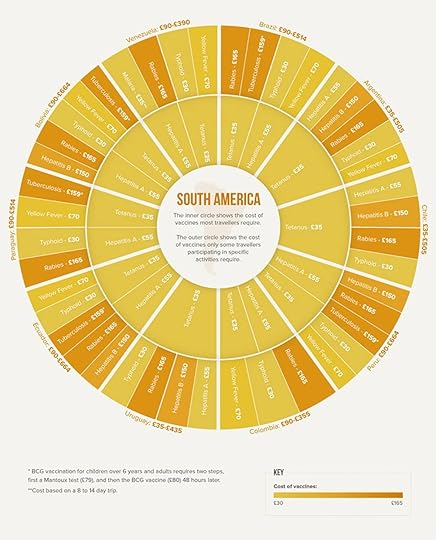
Photo: Travel Supermarket
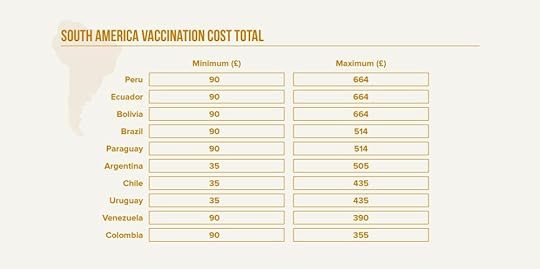
Photo: Travel Supermarket
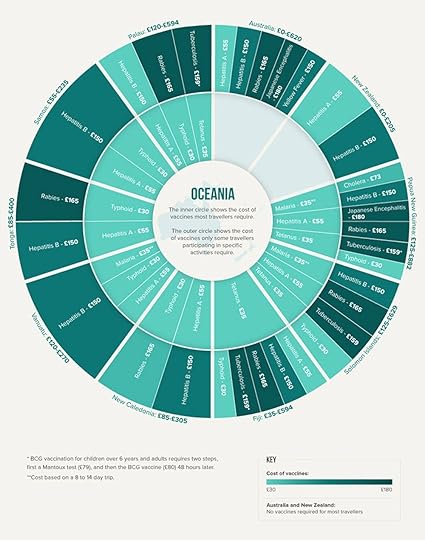
Photo: Travel Supermarket

Photo: Travel Supermarket
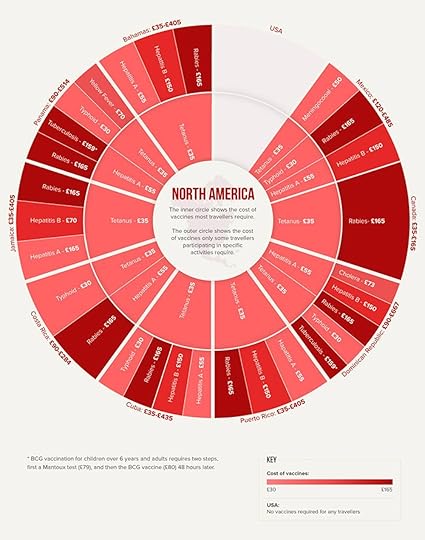
Photo: Travel Supermarket

Photo: Travel Supermarket
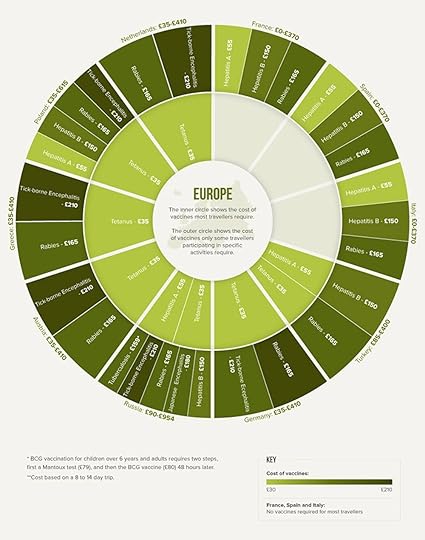
Photo: Travel Supermarket
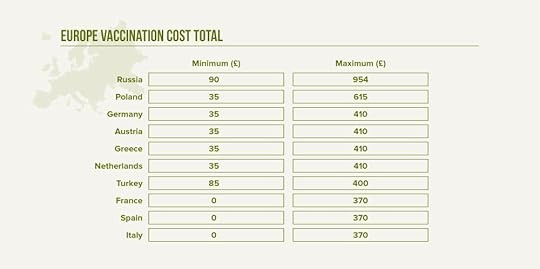
Photo: Travel Supermarket
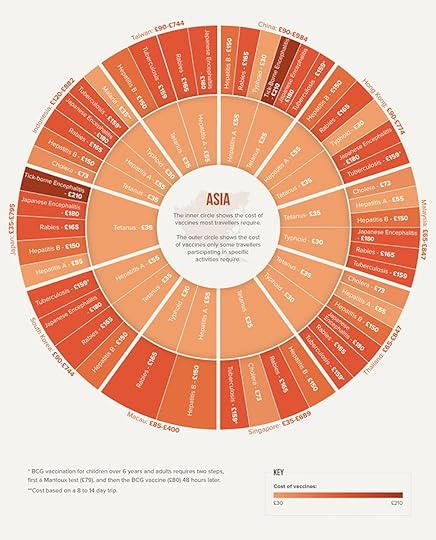
Photo: Travel Supermarket

Photo: Travel Supermarket

Photo: Travel Supermarket

Photo: Travel Supermarket
More like this: Yes, you should probably get travel insurance

China's high-speed train
California is in the process of building a bullet train that will eventually run all the way from San Diego to Sacramento and San Francisco along about 1,300 km (800 miles) of track, with trains running at speeds exceeding 320 km (200 miles) per hour. The first phase of the plan will connect San Francisco to Los Angeles and Anaheim at an estimated cost of over $60 billion with expected completion in 2029. However, a recent increase of $2.8 billion to the budget for construction in the Central Valley has some (short-sighted) people questioning the future of the project.
High-speed rail is the infrastructure that the United States needs to renew its ailing transportation system and California’s project can show Americans what twenty-first century transport infrastructure looks like. Unfortunately, detractors have been criticizing high-speed rail since it was initially proposed and will use any excuse to try to justify its cancellation. It’s odd that so many are against investing in their country, state, and community, especially when compared with Europe and China.
The sad truth is that, far from being a leader, the United States is way behind on building a modern transportation network. Compare the train maps of the United States, Europe, and China, and you’ll see how devoid of both regular and high-speed trains the United States is in comparison to the latter two regions. Nearly all the existing higher speed lines noted on the US map would still fall in the standard gray category of the European map.
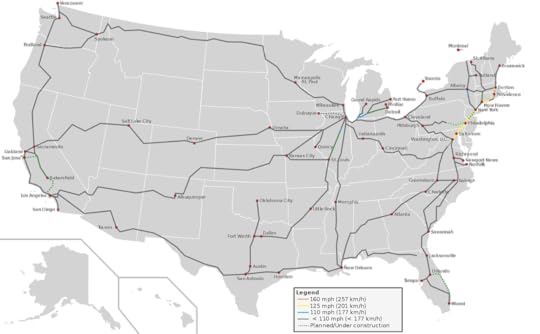
Photo: Wikimedia Commons
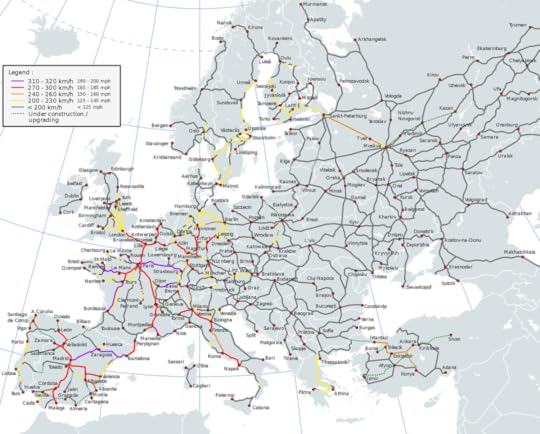
Photo: Wikimedia Commons
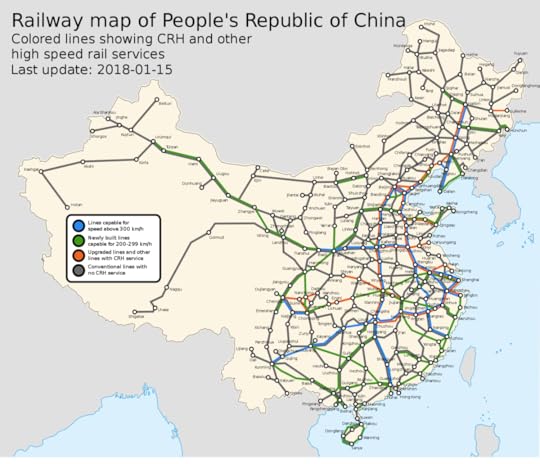
Photo: Wikimedia Commons
China opened its first high-speed rail line to connect Beijing and Tianjin in 2008 – the same year that California voters approved the state’s high-speed rail project. Since then, China has spent an estimated $360 billion to build 22,000 km (13,670 miles) of high-speed rail – more than every other country combined – and is expected to add another 15,000 km (9,321 miles) by 2025. This investment has transformed the way Chinese people travel and has had massive economic benefits, but there have been other notable expansions.
In the 1990s, there were hardly any subway systems in Chinese cities, but now twenty-five cities have them. There are more than 5,000 km (3,100 miles) of subway lines – more than four times what exists in the United States – and that number is expected to double by 2020. There are also nearly 1,000 km (620 miles) of bus rapid transit and hundreds of kilometres of tramways. China has seven of the twelve longest subway systems in the world, with Beijing and Shanghai being by far the longest.
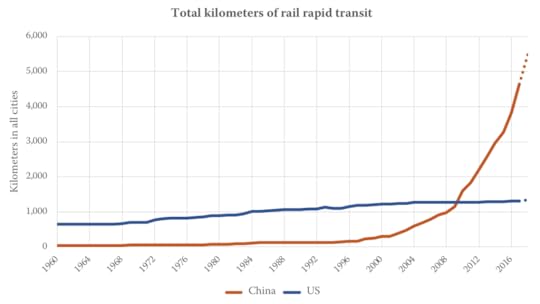
Photo: Transport Politic
This is made by possible by the massive investment in transit by the Chinese government. It spent $189 billion on metro lines from 2010 to 2015, and is expected to spend up to $308 billion more from 2016 to 2020. In comparison, the US federal government spends just $2.3 billion per year on transit.
While the United States is busy talking about making itself “great again” by demonizing immigrants and trans people, while it continues to decline as a world power, Europe and China are expanding their forward-looking systems of high-quality transportation to position their regions to challenge American power, and prosper in the coming century. The United States, on the other hand, is stuck with its eyes on the past.
Does that mean there’s no hope for the United States? Of course not. California’s bullet train is a step in the right direction, as are the many transit ballot initiatives approved across the country which amounted to nearly $200 billion in 2016 alone, though much of that money will be spent over many years, if not decades, not in the five-year timeframes common in China. The United States’ big challenge is that it’s still way behind Europe and China on transport infrastructure, and many of its political leaders, particularly at the federal level, either do not see a role for government in building the infrastructure of the future or are in the pocket of the automotive and fossil fuel lobbies which want the status quo to continue as long as possible, regardless of the societal consequences.
The United States is still the richest country in the world. It could have a twenty-first century transportation network if it wanted one. There’s no use waiting for Silicon Valley’s transportation pipe dreams; Americans need to demand a radical change from their politicians: an end to the mindset that tax breaks for the rich and cuts to spending on social goods and infrastructure produce prosperity – they don’t. And if politicians won’t change, they need to be replaced with a new generation of lawmakers – maybe even a president – that will make the investments the country needs.
This article originally appeared on Medium and is republished here with permission.
More like this: Eurostar announces non-stop service between London and Amsterdam

7 new wonders of the world
There are plenty of buckets lists to go around, but the various versions of the 7 Wonders of the World seem to remain people’s top destinations — for good reason. While you may battle a few tourists to enjoy the place, these really are incredible places to witness firsthand. The 7 “new” Wonders of the World were voted in by the public — I, for one, think they nailed it.
1. The Taj Mahal, India
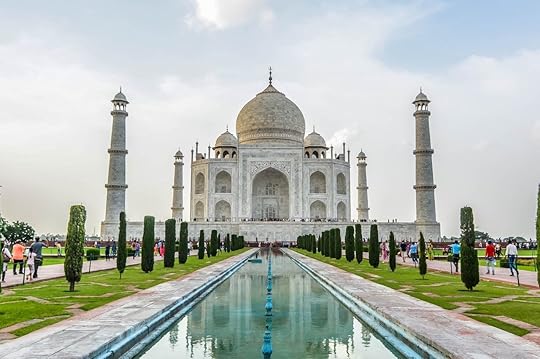
Photo: Koushik Chowdavarapu
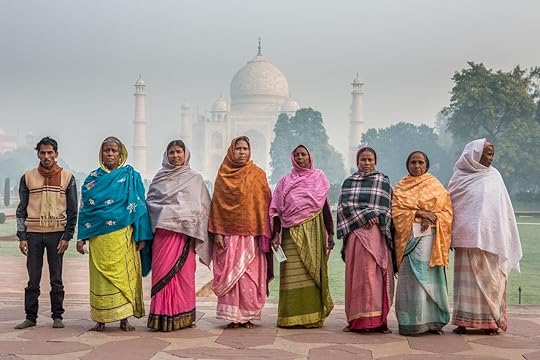
Photo: Kate Siobhan Mulligan
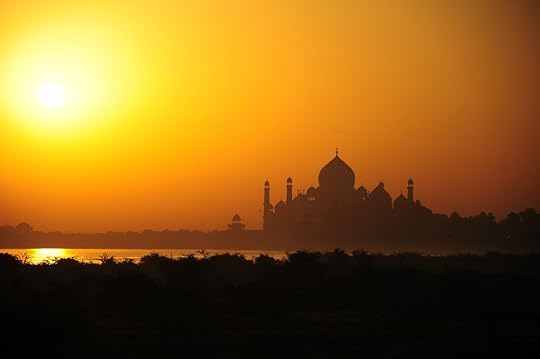
Photo: Gerard McGovern
The Taj is a labor of love. Emporer Shah Jahan built it in honor of his favorite wife, Mumtaz Mahal. She bore him 14 children but died in labor. Jahan was lost without her and in 1632 began construction on what is probably the world’s most elaborate and expensive gravesite (though, the tomb itself is unadorned as per Muslim law). Construction required a rumored 20,000 laborers and 1,000 elephants who hauled marble from all over the region. The Taj is famously symmetrical which is part of why it’s so beautiful to look at and to photograph. If you go, go very early for sunrise before it gets overwhelmed with visitors.
2. Christ the Redeemer, Brazil
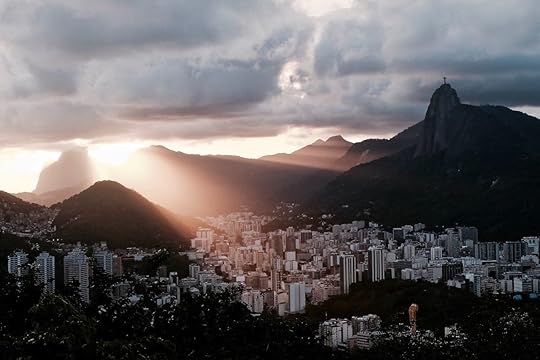
Photo: Julianna Kaiser
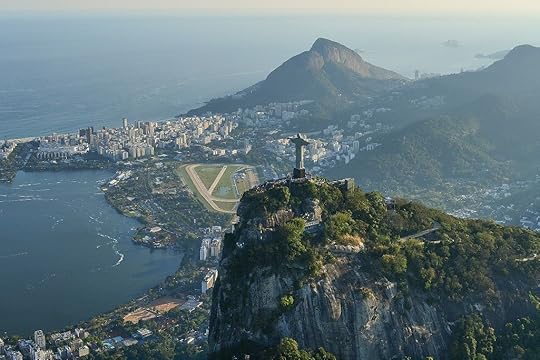
Photo: Raphael Nogueira
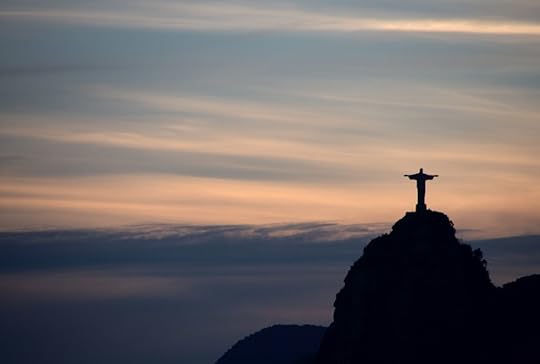
Photo: Christian Haugen
This iconic statue is found in an equally iconic city, Rio De Janeiro. It was constructed between 1922 and 1931 and stands 98 feet tall. Its purpose was to counteract the increasingly “sinful” nature of the Republic of Brazil, which had separated church from state in 1889. Christ is usually depicted on a cross, but this Christ has his arms open so, despite original intentions, is generally viewed as a symbol of peace and welcoming. It is covered in nearly 6 million small-stone tiles, painstaking applied by devout women (who wrote prayers, messages, or their boyfriends’ names on the backs of many tiles). You can get to the statue by cog train, taxi, van, or on foot if you’re able. It offers beautiful views at sunset of the city, Sugarloaf mountain, and the bay.
3. Petra, Jordan
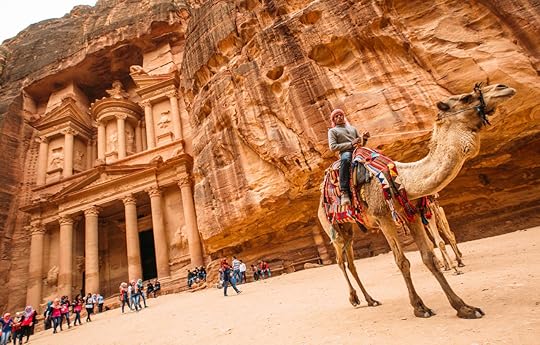
Photo: Scott Sporleder
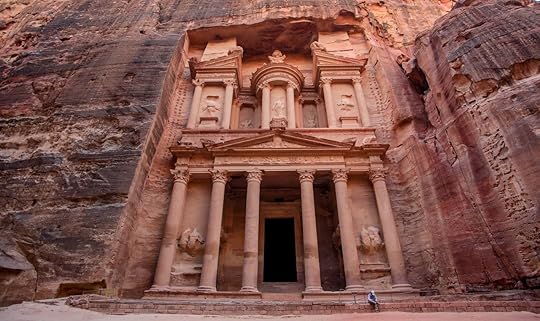
Photo: Kate Siobhan Mulligan
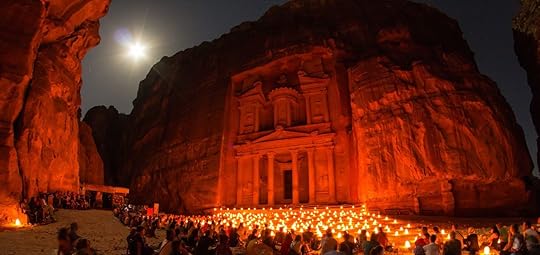
Photo: Sylvain L.
Petra means “rock,” which is a boring name for a very not-boring place. It’s in the south of Jordan between the Dead Sea and the Red Sea, several hours of driving from the capital city, Amman, and it is believed to have been established around 300 BC. To access it, you have to walk about 15 minutes through a narrow canyon — called The Siq — which some say is part of the excitement (and I tend to agree). You come out of the narrow passage and are greeted with one of the greatest sights on earth: the Treasury. Carved into the rock face, it’s enormous and overwhelming and the sandstone is a kaleidoscope of pinks and orange and reds — and the colors turn bolder and bolder at sunset, setting the city on fire (not just the treasury, but the whole city). It was a forgotten city for a while until a Swiss explorer rediscovered it in 1812 — can you imagine that moment? If you go, plan to visit on a day where there is an after-dark event. Stay in the ruins until dusk and then head back to the treasury — you’ll be treated with candlelight and a view before the crowds arrive.
4. The Great Wall of China
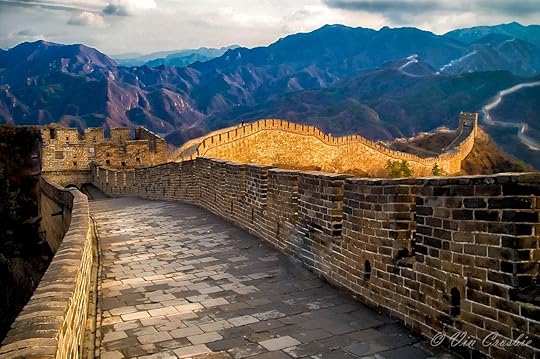
Photo: Vin Crosbie
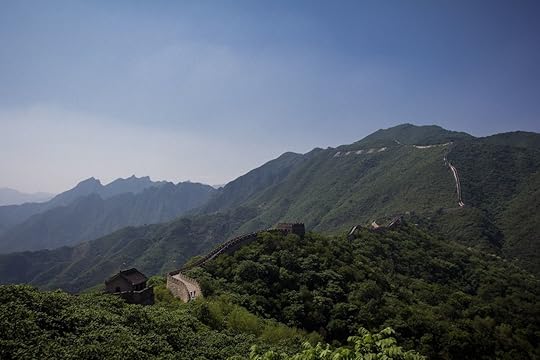
Photo: Tony Bertolino
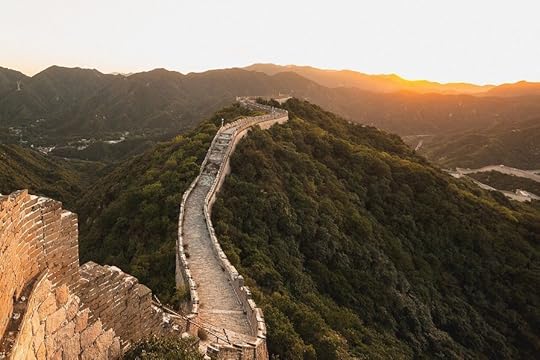
Photo: Raj Eiamworakul
The name, The Great Wall, is somewhat a misnomer. “The Great Wall” is not continuous, it’s actually many walls built at different times and for different reasons; many were joined together but gaps still exist. Some parts of the wall feel newer and almost pristine — these were built during the Ming Dynasty when the Ming were at war with Mongolians around the 1300s. The older walls date back as far as 700 BC and these sections show their age today. Still, the Wall itself weaves and winds over the hills where China borders Mongolia, measuring about 20,000 km and crossing 9 provinces.
5. The Colosseum, Rome
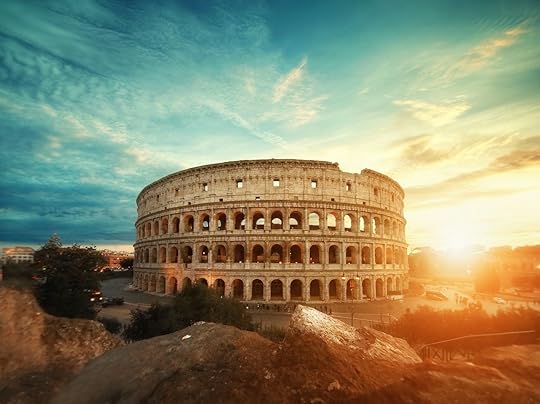
Photo: William West
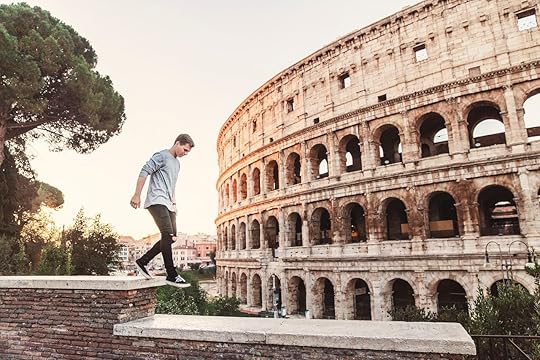
Photo: Joshua Earle
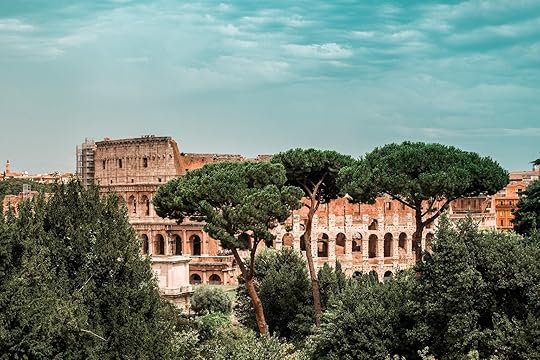
Photo: Dennis Van Den Worm
This beauty was built between 72 AD and 80 AD, in Rome. It is the world’s largest amphitheater, with over 80 entrances and seating for at least 50,000 people. Spectators would come to watch gladiators combat, animals fight (or be hunted), and much more. While some parts of the Colosseum have crumbled — from earthquakes, or looters, or vandals, or fire — it is still a gorgeous sight despite the throngs of tourists.
6. Machu Picchu, Peru
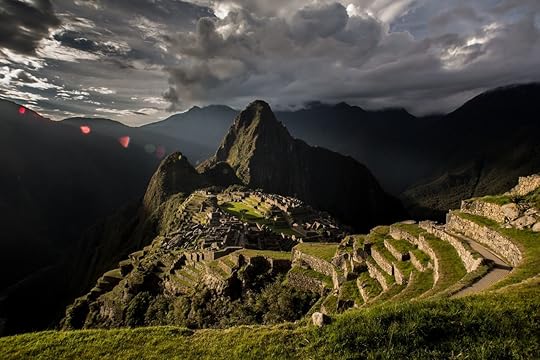
Photo: Kate Siobhan Mulligan
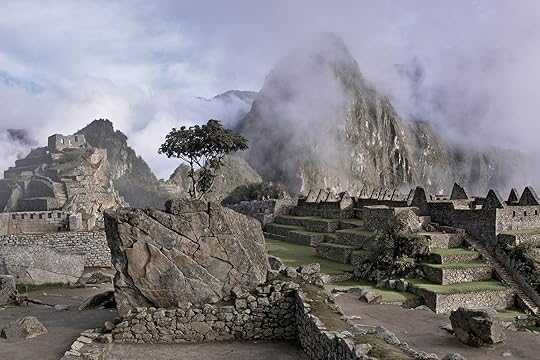
Photo: Tomas Sobek
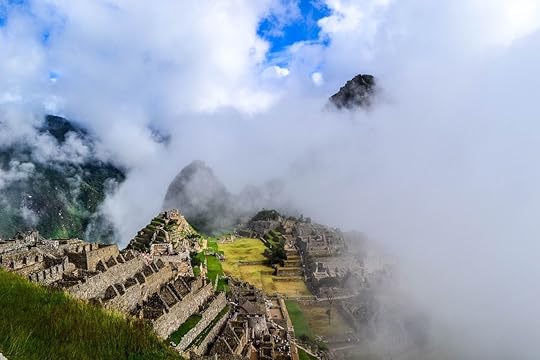
Photo: Alan Hurt, Jr.
Machu Picchu is one of the most impressive sites on our planet. It dates back to the 15th century and the height of the Incan Empire. It is extremely well built and well maintained and sits at 7,000 ft above sea level. In the indigenous tongue, Quechua, it means Old Peak. While it’s magnificent, it’s estimated only about 750 people lived here, as it was a royal estate and citadel, not really a city. You can reach Machu by train from Cusco to the town of Aguas Calientes, and from there you can hike or take a bus to the entrance; some savvy travelers opt to do a hike from Cusco and arrive at Machu 4-6 days later. Arrive very early for sunrise, or come later for nearly-sunset (you will have to exit before true sunset, but it is quieter).
7. Chichen Itza, Mexico
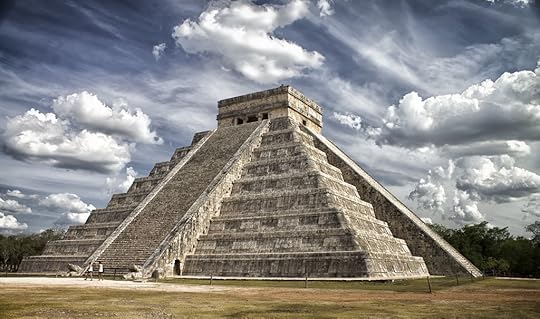
Photo: Ruben Nail
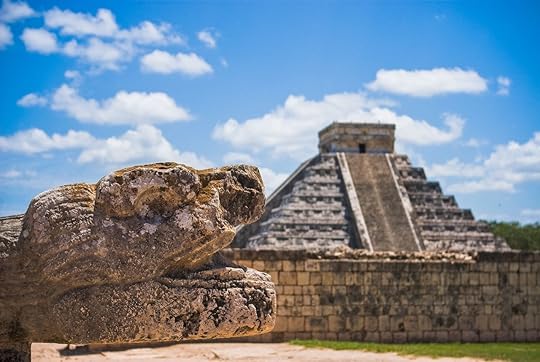
Photo: Marv Watson
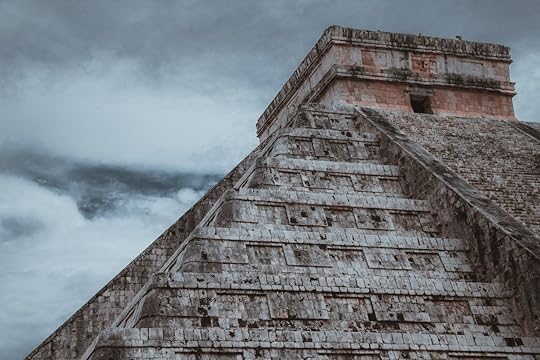
Photo: Jezael Melgoza
Found in the Yucatan state, Chichen Itza is a massive Mayan city that was once a powerhouse in the area. Its heyday was about 600 AD until about 1200 AD, and its name means “at the mouth of the well of Itza.” As to what Itza is, it either refers to an ethnic group, or possibly is a translation meaning “enchanter of the waters.” The name makes sense either way, as the Yucatan is famous for its underwater rivers and open sinkholes filled with fresh water known as cenotes, so water was a huge part of life here — and probably a part of the city’s success. It did eventually decline — reasons and theories vary — but the area is well kept and an easy visit from Cancun or the Maya Riveria. Go early to avoid crowds, or go on March 21st, the Spring Equinox, to witness the famous serpent effect on the main pyramid.
More like this: How many of these 39 natural wonders of the world have you been to?
Questions to never ask a traveler
How was your trip?
Show me pictures!
Tell me everything!
No, no, and no.
While these are well-intended, they just don’t work. Not for the asker. Not for the answerer.
I’m barely 15 seconds into speaking about my trip and just swiping to picture #3 (of the most beautiful mountain you’ve ever seen, obviously) and there it is, that disinterested glaze in their eye. Ouch. Maybe I talk too much. Maybe they don’t care. Maybe both. Who really knows? But if you’re on the asking end of it and you want to cut to the good stuff, here are a few tips to keep everyone sane:
First, ask yourself if you care.
Really. Do it. It doesn’t matter if you’re a traveler yourself or a homebody (don’t be fooled, we travelers aren’t always interested in each other’s adventures), or if you’re talking to your daughter or a co-worker, you can’t always care about what every single person has to say. There’s just not enough time in life. But you can always be genuine.
If you don’t care, don’t ask. Something along the lines of “Welcome back. I hope you had a really great time,” or “I hope your trip was what you were looking for,” is authentic, succinct, and effective. The latter acknowledges some sort of unspoken yet mutually understood distance between two people that we can’t quite explain but that we all know exists. It’s okay.
If you don’t really care, save both parties’ time. And if that’s the case, I grant you my personal permission to stop reading here. You’re dismissed. However, if you do catch yourself caring, I urge you to carry on.
Don’t be lazy. Be specific.
It’s easy to ask, “How was it?” It doesn’t require much thought on the part of the questioner. But guess what, thoughtless questions get thoughtless answers: “Great!”
So if you want to know, be specific. A great “small-talk” travel conversation I had was with someone who, surprisingly, I didn’t know that well. What was the scariest thing that happened to you? He dropped the question on me and there I was, less than 90 seconds later, jumping out of my seat, eyes bulging out of my head, acting out how the whole scene, and whipping out real-life footage of a Himalayan landslide that happened right before my eyes. The question was simple but effective. And it, along with other equally thought-provoking questions, turned into an hour-long lively conversation.
At another point in my life, I shared an experience with someone much closer to me. Upon returning to campus in the States after spending a semester in Central America, I felt totally disoriented. After a few weeks of realizing that starting my sentences with “when I was in Costa Rica…” only earned apathetic looks and held-back eye rolls, I started to keep to myself and draw inward. At the time, that was the most recent and important experience in my life, and I didn’t have many interested people to share it with. I’m not saying I fell into some sort of deep depression over it, but yeah, it sucked. Then I was asked by someone who really, really cared. He knew how to ask questions, and quite frankly, it’s a conversation I’ll never forget. When I was asked about my host family, what I ate every day, how safe I felt walking around, and for pictures of my house, my school, my friends, I felt connected, accepted, and eager to share and explain even the littlest of details of this huge part of my life.
Be selfish.
What do you actually want to know? As with many things in life, the usual rule sticks: not interesting for you, not interesting for them. So go ahead and interest yourself.
Recently I was interviewed by Unmapped travel podcast about my 10 months abroad. Some of their questions had me stumped: Do you think you can grow as deeply hopping around countries as you could staying in one place? Did you feel guilty being away from family? How did your relationships change? These questions were real, raw, honest, interested. Yes, they’re thinking about what will be interesting to their listeners, but the same goes for us regular joes who aren’t running businesses: how do the travels of this person relate to you? What value could their trip add to your life? What do you secretly really wanna know?
Sitting in that podcast studio, I laughed, I almost cried, I blanked out a few times at a loss for words, and honestly, I felt more connected to these two host-acquaintances in two hours than I had to some really close loved ones upon returning home — it didn’t matter whose motive was what.
Make sure you have time.
If you’re running to a meeting in the morning, falling asleep at night, or just otherwise generally distracted, then it’s not the time to ask someone about their trip. It’s not that everyone who asks a travel question must immediately morph into a psychologist or a cheerleader, but like any big event in someone’s life, give it the respect it deserves.
Or, if you’re looking to make a quick exit, refer back to line 1 up top.
More like this: Don't ask me how my trip was
ALIVE Canada video
Follow Matador on
Vimeo
Follow Matador on
YouTube
In the summer of 2017, I went on a six-week, 5500-kilometer solo road trip to British Columbia and Alberta in order to capture the provinces’ beautiful landscapes on camera.
My film, ALIVE, is the result of this trip. It takes you on a vivid journey through wild forests, along the shores of crystal lakes, and up the hills of massive mountains. By showing some of most beautiful landscape in the world, I want to raise awareness of the wonderful planet we have the privilege to live on and how we must to take responsibility and act now to protect it.
For more of Florian’s work, follow him on Instagram and Vimeo.
More like this: The 6 best road trips on Vancouver Island

Dirty Italian expressions
The Italian language is the best language when you’re angry or you have to complain about something. Even though we have many different regional idioms, dialects, and languages, it’s easy to remember some of the most popular dirty expressions used anywhere in the country. That’s because the words used are generally culo (ass) and cazzo (dick or shit).
Here are 12 of the dirtiest expressions in Italian.
1. In dirty Italian, you don’t say a place is “far away”… instead, you say it’s “in the ass” (in culo).
2. Italians don’t say something is done “wrong”… they say it’s done “as a dog’s dick” (a cazzo di cane).
3. When something is obvious Italians don’t simply say “duh”… they say “thank the dick” (grazie al cazzo).
4. In dirty Italian, you don’t say “go fuck yourself”… rather “go shit yourself” (andare a cagare).
5. And if you’re very scared, you “shit in your hands” (cagare in mano).
6. In dirty Italian you’re not simply sick of a situation… instead you “have your balls full” (avere i coglioni pieni).
7. In Italian, you don’t suck at something… “you’re a handjob” (una pippa).
8. And if something really sucks, you can say “it sucks to the dick” (fa schifo al cazzo).
9. In dirty Italian, when something or someone is annoying, they’re “breaking the balls” (rompere le palle).
10. And when someone takes advantage of you, they “shit out of the bowl” (cagare fuori dalla tazza).
11. When something goes wrong, you “take it in the ass” (prenderlo nel culo).
12. More specifically… they say, “at the end of the day, the cucumber always goes in the produce seller’s ass” (gira che ti rigira, il cetriolo va in culo all’ortolano).
More like this: 20 of the best Italian expressions for travelers
Don't let anxiety stop you
Don’t let anxiety derail your solo travel plans. I spent my entire childhood fantasizing about Norway’s fjords, Japanese gardens, southern Patagonia, but as I got older, my anxiety became progressively more debilitating. When I’m uncomfortable, my sympathetic nervous system reacts to seemingly nothing, sending me into a shaky panic. My blood feels like it’s been replaced with ice water, my heart rate rises, muscles tighten, I start hyperventilating, and in the worst cases, I faint. If you’re reading this, those sensations probably resonate with you. When these symptoms persist without intervention, they can turn into a full-blown panic attack. Panic attacks can be traumatic, especially when you’re alone in the foreign country.
Avoiding solo travel completely is not the answer. Anxiety doesn’t have to dominate your decisions. Traveling alone can be therapeutic and lead to improved coping mechanisms. When faced with the unpredictability of international solo travel, you have to face your fears and adapt to the ever-changing conditions.
I may be an expert when it comes to solo travel catastrophes, but I’m not a doctor. That being said, here’s what I learned from my mistakes.
1. Plan well, but leave wiggle room.
My biggest fear is being trapped. Not just trapped in a physical space, but trapped in a situation. Locking yourself into back-to-back plans will force you to structure your daily activities, but you have to ask yourself if the commitment will overwhelm you. Make sure there is a way out of plans if necessary. When I give myself just one goal for each day, I tend to end up engaging in more spontaneous adventures, making better use of my time, and ultimately, having a more positive experience.
2. Don’t over-plan.
Going full-pelt all day is draining physically and mentally. A rest day might help you recover. I watch Netflix, take a long shower, go for a leisurely walk, draw in a coffee shop, just do something that revives me. If you happen to visit East Asia, I highly recommend visiting a bathhouse as a rest day activity (as long as you don’t mind getting naked around strangers).
3. Back-up plans galore!
The best part about being alone abroad is getting to do whatever you want whenever you want. You’re never at the whim of someone else. If your plans fall through, have something else in mind to see or do. My backup plans generally involve eating, but this changes based on location. Sometimes you’ll be close to a beach, mountains, cities, or all three. Personally, I let the unique scenery govern your decisions.
4. Sometimes saving money isn’t worth the stress.
If walking alone in a questionable area makes you anxious, shell out money for a taxi. If you can’t stand another night in a loud hostel, upgrade to a hotel or an Airbnb. If you’re sick of eating nothing but PB&J, go eat a more luxurious meal. Keeping on a tight budget is great for extending trips, but can be excessively stressful. The additional stress of finances may be detrimental for those who already have a pretty high baseline of anxiety. I try to keep a reasonable amount of money saved for situations like the ones listed above.
5. Recognize your triggers.
My biggest trigger is loud, crowded restaurants. I can’t explain why, but that type of atmosphere sends me into instant panic. Figure out what specifically triggers your anxiety and use that knowledge to dodge situations that may cause extreme stress if you absolutely have to. Unfortunately, avoidance isn’t necessarily a healthy option. You can utilize this time to confront your stressors at your own pace if you feel comfortable. Doing so can help desensitize you. This concept is recognized in the field of psychology as exposure therapy. Exposing yourself to your fears can provide you with a sense of empowerment over your anxiety, and the temporary discomfort that is caused by the arousal of your nervous system will eventually subside after repeated exposure. Don’t overwhelm yourself by launching into a situation that scares you, build up a tolerance to the stressor. No need to suffer a traumatic experience abroad (or ever, really). I prepare myself by writing down what makes me uncomfortable or fearful, I learned about diaphragmatic breathing (described below), and I researched my fear.
6. Prepare a panic protocol.
When I feel symptoms of panic creep in, I start by inhaling to a count of 4, exhale to a count of 4, repeat, increasing incrementally until I am able to breathe slowly. Breathe deep, through your stomach, known as diaphragmatic breathing. This may sound obvious, but counting my breaths helps me tremendously. This biohack will activate your parasympathetic nervous system, which counteracts the fight-or-flight response of your sympathetic nervous system and allows you to relax. This is just one option, others include playing word games in your head, or using all of your five senses to ground you in your present environment, the list goes on!
7. If you take medicine, find an herbal alternative just in case.
The legality of medications changes from country to country. In my case, the prescription I took was prohibited. Thus, I carried Rescue Remedy (or a similar tincture) in my bag and frequently drank herbal tea. The following herbs may be beneficial for alleviating anxiety: holy basil, kava, lemon balm, passion flower, lavender, valerian root, and skullcap. They can be purchased in loose or tincture/oil form at most health food stores or online.
8. Talk to strangers!
This is a productive exercise for overcoming social anxiety. Plus, you might make a new friend out of it. Chances are you’ll cross paths with other solo travelers and friendly locals. Use this opportunity to face the discomfort of meeting new people. Worst case scenario, they’re unfriendly and you never ever have to encounter them again (hopefully). I’ve always had great luck with the travelers and locals I’ve spent time with, some of whom I’ve kept in contact with for many years and stayed with when overseas.
9. Use your perceptiveness to your advantage.
Be present and embrace what’s around you. Anxiety heightens the awareness of your surroundings. Use those heightened senses to have a deeper experience of the environment. Smell the smells, feel the textures, see the minute details, hear the softest noises. Your senses will ground you, hopefully reducing the fear response that you may be experiencing.
10. Sometimes you’ll feel out of place, lonely, and uncomfortable… but embrace the autonomy.
Being alone is well, lonely. Plain and simple. If you’re traveling by yourself and not getting lonely, you are incredibly lucky. Days, weeks, or months of eating alone usually gets old, but you’ll never forget that feeling of independence when you figure out how to get from point A to point B without someone to lean on. Traveling solo is truly something to be proud of, and the autonomy it provides you with is, in my opinion, unparalleled.
More like this: 5 easy ways to conquer your anxiety while traveling
Matador Network's Blog

- Matador Network's profile
- 6 followers


