
Matador Network's Blog, page 1397
February 23, 2018
How to spot American tourists
Last summer, I took part in a group dinner at Bali Bohemia in Ubud, Bali. Amid my plate of goreng and an arak madu cocktail, I happened to glance around our table of ten or so expats and nomads, all of whom were part of the Outpost coworking space. What I noticed surprised me: nearly every person came from a different country. We had travelers from across Europe, the US, multiple Asian countries, even a guy from The Bahamas, all intermingled in conversation over post-work dinner and drinks. It was a truly beautiful thing that I’ll never forget.
It got me thinking, how do Americans stand out? When we sat down, what signifiers did our server pick up from me that I am “for sure” an American? I actively avoid wearing American flag apparel. I never buy those street-stand tank tops sporting the logo of the local mass-produced light beer in whatever country I’m in.
But still, everyone always seems to know where I’m from. What are the signifiers, even before I come forth with my hometown (Denver)? I took to Quora and Matador’s extensive back catalog of expat content to find out. Here’s what I discovered:
We’ll start with something that even I pick up on:
American dudes and their tendency to rock those tank tops sporting the local domestic beer, no matter the weather:
“When Americans come for summer they think it will be 50ºC every day,” explains Natalia Corak, a resident of Croatia, on Quora, “but weather can change easily and then when you spot people with short pants, flip-flops, and colorful T-shirts without an umbrella running through the city to get ASAP to somewhere dry, they for sure are Americans.”
Michael Marian adds: “I can spot Americans by their clothes. It always looks like they went shopping especially for the trip. The men always have knee-length shorts with massive pockets on the sides, pristine white socks, and brand new white trainers. Baseball caps are a must.”
On our inability to talk at a reasonable volume:
In my time abroad, this is the most common observation I hear about Americans. We talk loud, and we like to be heard. “Before anything, we will hear them,” said Colina Arakis on Quora. “They can be so extremely loud! Any tourist can be loud but you can hear ‘OH MY GAWWWWDDDD’ from across the street and assume that they are either American or making fun of Americans.”
While Colina certainly isn’t alone in making this observation, perhaps we have an excuse: our accents just don’t allow for quiet communication! “It’s not just the volume, there’s something about American accents which carries especially well,” notes Nick Leroy on Quora.
Thomas L. Johnson offers a possible explanation for our boisterous behavior: “Americans are loud around friends and American culture erects very few barriers to friendship.” He continued: “Americans occupy a larger personal space, probably due to the fact that they live in a large and mostly uncrowded country. When in a French or German restaurant, for instance, it is not unusual to see them talking between tables, which usually leads to louder voices. Until they are reminded that they are louder than anyone in the place, they are usually unaware of their noise-making.”
In the interest of fairness here, Matador’s own Matt Hershberger offers a classic American rebuttal: “The next time you hear an American talking loudly, no matter where you are in the world, please understand they aren’t doing it because they’re inconsiderate or obnoxious. They’re doing it because their local bartender back home is going through a serious Katy Perry phase and just can’t bring himself to dial back on ‘Teenage Dream.'”
On our unusual diets and eating habits:
Are Americans always on a diet? It appears that much of the world thinks so, anyway. “I’ve watched a svelte Romanian woman put away two pounds of polenta with ease and no one batted an eye,” noted Eileen Cotter Wright in this piece for Matador. “But God forbid I tuck into a plate of ribs. I’ll get chastised by men around me for being too much of a ‘fat American girl.'”
On our continued amazement in other countries’ ability to have cool stuff:
Colina Arakis brings us home with this point: “(The) last thing that lets my ‘American tourist radar’ go off the charts? If I hear a tourist say ‘WHAAAAT? THEY HAVE [any modern thing] HERE????’ It is very American to treat most, if not all countries, like a place where the time stood still.”
Apparently, we Americans need to wipe that flabbergasted look off our collective faces. 

More like this: I asked people what the most annoying thing about American travelers was, and here’s what happened


Surprises in South Korea
Travel guides on South Korea prepared me for a new language, currency, and weather. But no one prepared me for washing my hands. After having conquered my first public restroom experience in Seoul, I walked up to the sink.
“No soap?” I thought. I saw only a blue air-freshener on a metal rod.
A woman exited a stall and stood next to me. She wet her hands, phallically caressed the blue oval until it was sudsy, and rubbed her hands together.
It was soap.
I was intrigued and horrified. Can germs collect on soap? How many people per day touch that bar? Why is it on a metal rod? From then on, I kept a pocket-sized hand sanitizer in my purse. There are worse things in life than a community soap bar. But I was taken back — how had I not read about this in any of the travel books, articles, or blogs leading up to my trip?
Soap on a stick was my first surprise, but in the year and a half I’ve been living in Seoul, there’s been plenty more. If you’re going to South Korea and you aren’t a fan of surprises, check out my list of things I wish someone would’ve told me, first.
1. Bring your own toilet paper into the bathroom.
Korean bathrooms are full of surprises. Along with soap-on-a-stick, you might encounter “squatter toilets” and toilets with more buttons than a rocket-ship control panel.
But what’s perhaps most important is what you won’t encounter — toilet paper in the stall. Now, this isn’t always the case. But when it is that case, you’ll want to be prepared. Some restrooms have toilet paper available outside of the stalls, where you’ll have to guesstimate how much you’ll need before you use the restroom. (Pointer: more is always better.)
Other bathrooms have no toilet paper at all. To ensure you never get yourself into a tricky situation, you should carry some tissues with you at all times. You can buy these little packs of tissues for cheap at convenience stores and even from many vending machines in the subway stations.
2. Dog meat isn’t common, but it also isn’t a myth.
Most of the Koreans I’ve asked in their 40s and under in Seoul say they would absolutely never eat dog meat, and that they think it’s wrong. Some younger Koreans I’ve spoken to here deny it still even happens.
But dog farms exist. I’ve seen one.
I was at a temple stay outside of Seoul, and our group was given free time that we used to explore nearby areas. A 10-minute walk away from the temple, we passed lines of Korean Jindo dogs, barking aggressively in small cages under a large tarp.
Later, I found out that “Mandune,” the sweet Korean Jindo that lived on the temple grounds, had escaped from that farm. I cried.
While I adamantly disagree with this practice, I also adamantly disagree with eating any animals at all because I’m vegan. And, I can’t say that I think eating dogs is any worse than eating factory-farmed pigs.
The good news is that veganism amongst the younger generation in Korea is booming, and there are now more vegan restaurants in Seoul, like PLANT, than in my Floridian hometown.
3. That basement noraebang isn’t what you think it is.
If you love to sing, you’ll love noraebang! If you don’t love to sing, you’ll love noraebang after a few shots of soju.
Noraebangs, or Korean singing rooms, are all over Korea. Usually, a noraebang is set up with comfy seating, a microphone, a song list, and sometimes tambourines and other musical instruments. Sometimes they serve food or alcohol. Sometimes they serve something else.
Some noraebangs offer girls, or doumi, that will sing or dance with you in the room. Often this leads to sex services performed nearby. While you can, and many people do, use noraebangs for wholesome singing and fun, I’ve also heard of friends being told they couldn’t buy noraebang unless they also bought girls from the company.
The safest bet? Choose a noraebang with big, open windows, or visit “coin noraebang” where you pay per song.
4. The water’s safe to drink, but (most) locals don’t drink it.
“According to a survey conducted by the Environment Ministry on 12,000 individuals in 2013, only about 10 percent responded that they drank water directly from the tap, whether it is boiled or not,” said an article in The Korea Herald. “About 55 percent said they drank tap water only after boiling to ensure safety.”
While tap water in Korea is 100 percent safe to drink, most Koreans don’t drink it unless they boil or filter it, first. When visiting or living in South Korea, you don’t have to doctor the water before drinking it. But if you fill up a glass straight from the tap in front of a Korean, be ready for some side-eye.
5. You might be asked some “forward” questions.
From, “How much do you weigh?” To, “Is that a pimple on your face?” Don’t be surprised if a Korean friend, coworker, student, or even stranger asks you a question you consider to be rude.
I’ve also been asked, “Are you Russian?” by older Korean men, which only later did I learn is often code for, “Are you a prostitute?”
To the last question, I usually respond with, “No, are you?”
But most of the time, personal questions are well-intentioned, and they show that a person has taken interest in your life. Respond politely, or if it makes you uncomfortable, simply say, “I’m not comfortable answering that question.”
6. “One size fits all” means “One size fits skinny.”
Many underground subway stations in Seoul, especially, are labyrinths that lead to malls, restaurants, and more. Along the way, many local brands that sell women’s clothing line the walkways. Most of the clothing these places sell are “one size fits all.” But, this is misleading because the clothing isn’t all fit with extra-stretchy bands and adjustable belts. If it were worded properly, it might read, “One size fits skinny.” The same goes for shoes, which are sometimes available in only a few sizes.
If you happen to be petite, you’ll love the wide variety of cheap clothing available. If you aren’t, you’ll have to visit popular clothing chains such as Zara, Forever 21, or H&M. ASOS also ships to Korea cheaply and quickly and has a variety of sizes and styles.
7. You’re going to fall in love with the country.
Despite the many surprises I’ve encountered in South Korea, the thing that surprised me most was how much this country stole my heart. In fact, I told my friends and family in the U.S. that I’d be leaving immediately after my 1-year contract was over, and I here I am, writing from Seoul 1.5 years later. From its familial culture and affordable healthcare to its bizarre flavor combinations and adorable desk supplies, it’s impossible not to fall in love with South Korea.
More like this: 6 things tourists do in South Korea that drive locals crazy
February 22, 2018
Crossing the most dangerous border
My first application for a Pakistani visa was scoffed at the embassy in Phnom Penh, where I had been working. I had prepared the documents to the exact specifications requested by the embassy, and I was assured over the phone that the process would be straightforward.
After a long wait, the consulate official finally arrived. I greeted him with the traditional As-salam Alaikum I’d used since I was a child, hoping our shared Islamic heritage might smooth over the process. He replied warmly enough and began reviewing my paperwork for a minute or two before he paused.
“Where are you from? What is your origin?”
I explained that I was American, most recently living in New York. He seemed dissatisfied. I heard that follow-up question, dreaded by every American immigrant; but by this time I was half expecting it.
“But where are your parents from?”
So close are the two nations, and the inherited culture I manifested, that at this point in the conversation I was passably Pakistani, but plausibly Indian. Before I could answer, he had flipped back to my passport where the Place of Birth field belied my Indian ancestry. It seemed as if a switch dictating politeness and intimacy flipped instantly inside his brain.
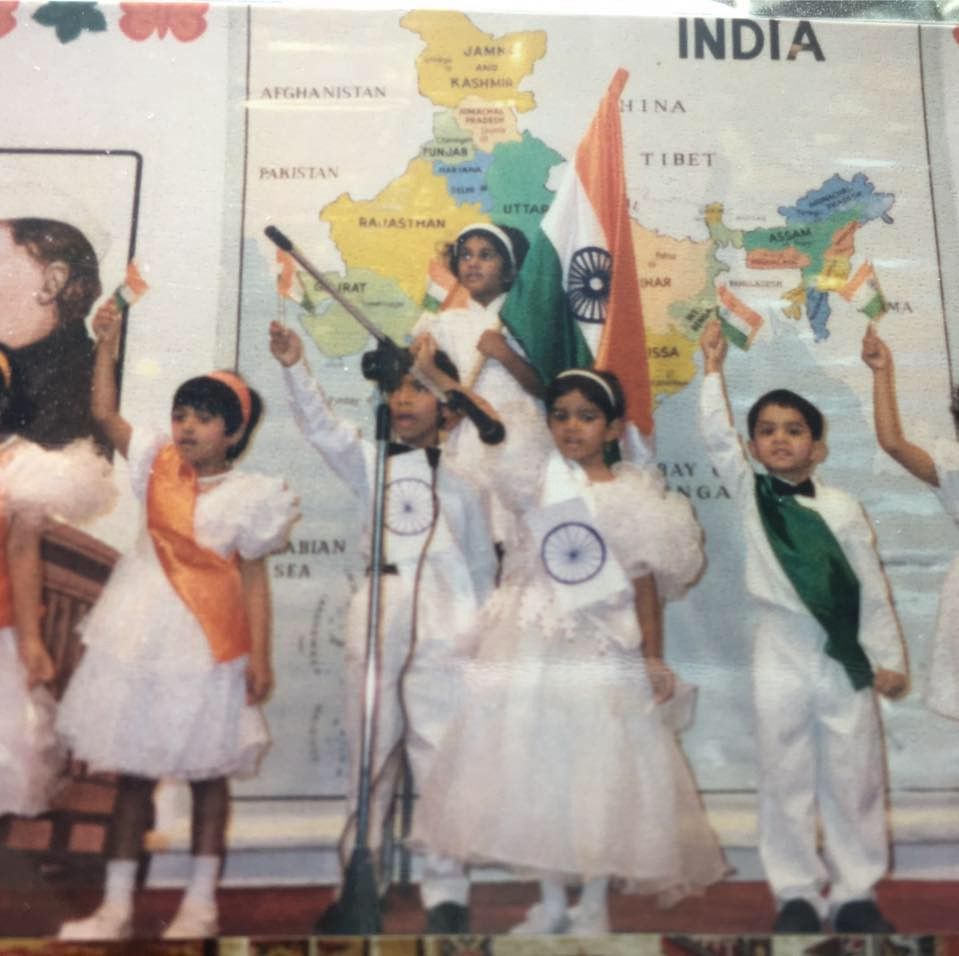
Me, far right, age 4, singing the Indian National Anthem at Indian Embassy School, Jeddah, Saudi Arabia. I was, clearly, a high risk individual.
Where moments earlier he had been helpful, even warm, he now refused to make eye contact — the political reality driving a firm wedge between us. Earlier I had been told the application would be quick, no more than a few days. It would now take “weeks, or probably more” to get the proper clearances from the necessary ministries responsible for Indian visitors. It didn’t matter that I had an American passport; that I had lived in the States my entire life. The two months I spent in India before I could even crawl were apparently deemed a sufficient security risk.
Almost suddenly, errors popped up throughout my application. My invitation letter wasn’t typed on the right type of paper. The letter, though notarized, was not completed by the appropriate court system. More sinister, the official insinuated that my Pakistani friend intentionally submitted incomplete paperwork. He could not have genuinely wanted to invite an Indian American.
That was my first attempt.
***
I couldn’t remember the last time I was so excited to go somewhere new. I had already visited some 40 odd countries, attempting naively with each to broaden my understanding of the world. But there was something especially evocative about the Islamic Republic of Pakistan.
Perhaps it was Pakistan’s monolithic representation in American media, always mentioned alongside drone strikes or terror attacks.
Perhaps it was the forbidden nature of the voyage, doubly reinforced for me as an Indian-American; the two nations Pakistan has the most fraught relationships with.
Perhaps as a South Asian Muslim, it was the indignation of a birthright interminably delayed due to political complications. After all, Pakistan was created in 1947 in the spirit of inviting and protecting the rights of Muslims.
My family, then nestled in the relative security of Muslim-majority Hyderabad in Southern India, decided to stay. But many others didn’t. Amidst a slightly different situation, I just as easily could have been born in Pakistan. I was, of course, as proud an Indian as any, but that never hampered my curiosity for my fraternal state.
***
My initial failure only made me strive harder to acquire the necessary visa. By this time, I was already in India, which felt like applying for a South Korean visa from Pyongyang. Almost everyone I knew had only ever visited either India or Pakistan, never both. I knew countless Pakistani Americans who were denied Indian visas, or vice versa. Most, expecting the difficulty, simply never tried.
So I asked around; everyone I could think of that might know someone who could help. Success came through a college roommate who knew an Embassy official in the US, who miraculously approved my visa request.
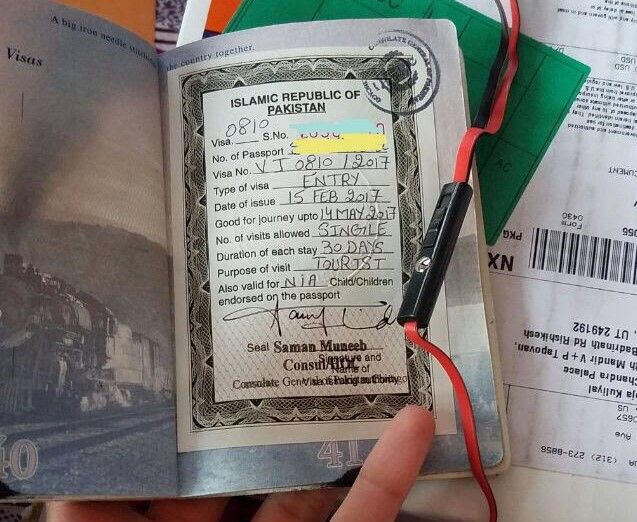
That sweet sweet Pak visa-Feb 23, 2017
I had to undergo a logistical nightmare involving sending my passport with my dad from Hyderabad to Phoenix for him to mail domestically to a friend in Chicago. He would apply for my visa on my behalf and then FedEx it to another friend in Rishikesh in India (while I was in transit, without a fixed address). She would have to fill out extensive paperwork to legally “import” my passport into India, while I waited patiently and undocumented.
But somehow it all worked out. I almost couldn’t believe my eyes when I finally had the visa in hand. It was an almost spiritual experience. Awash with emotion, I realized that I soon may actually be able to make that forbidden journey to a yet unknown, but strangely familiar land.
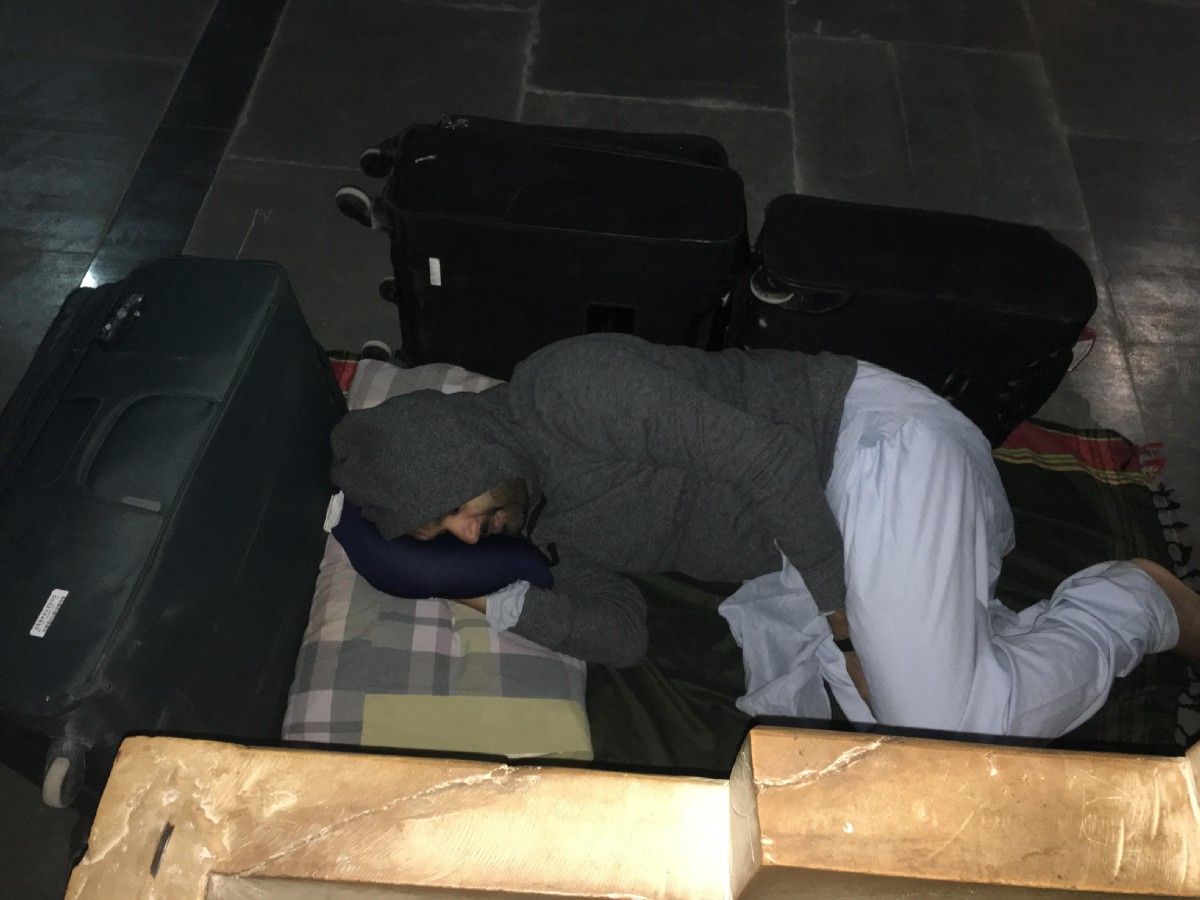
What an overnight layover looks like in an Indian train station — Feb, 2017
Passport and visa finally in hand, I boarded a train from Rishikesh to Amritsar, the closest Indian city to Lahore, Pakistan, only 50km east. My journey elicited stories from others also personally impacted by the Partition of India and Pakistan. I had an overnight layover at a train station in Ambala, India where a Pakistani friend told me his grandparents lived before Partition. An Indian friend asked me to find the home his father had left in Lahore. Partition felt like recent history, despite having taken place 70 years ago.
It was on the eve of August 15, 1947; a day etched into the minds of over a billion South Asians — of Indians, Pakistanis, Bangladeshis — and their diaspora the world over. The British were finally going to pack up and leave the subcontinent after over a century of rule, having exhausted themselves in the bloody tumult of the Second World War.
As exciting and momentous of this day of self-governance was, there was a downside. British India would be partitioned into two sovereign states; India with a majority Hindu population, and Pakistan drawn out where there was a majority Muslim population. Even worse, many of the communities near the newly drawn borders of these two states were, naturally, religiously mixed. Owing to the fervent nationalism and sectarianism of the day, there was significant tension and downright violence, as migrants scrambled to move to the “right” side of the line.
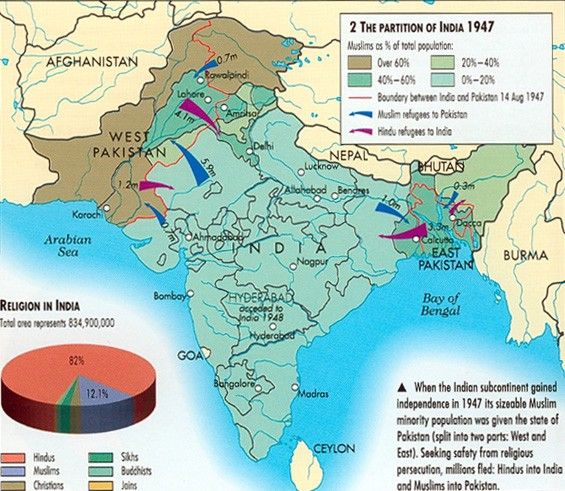
The Partition of India in 1947; East Pakistan would split off into Bangladesh in the 1971 Civil War
It was, and still remains, the largest mass migration in human history. 14.5 million people left everything they had ever known, to move to a new country amidst violence where over a million people lost their lives. The scars of that brutal displacement are still with us today, in the political and military rivalry between India and Pakistan — the same rivalry that makes it all but impossible for Indians and Pakistanis to visit each other over that prohibited border.
***
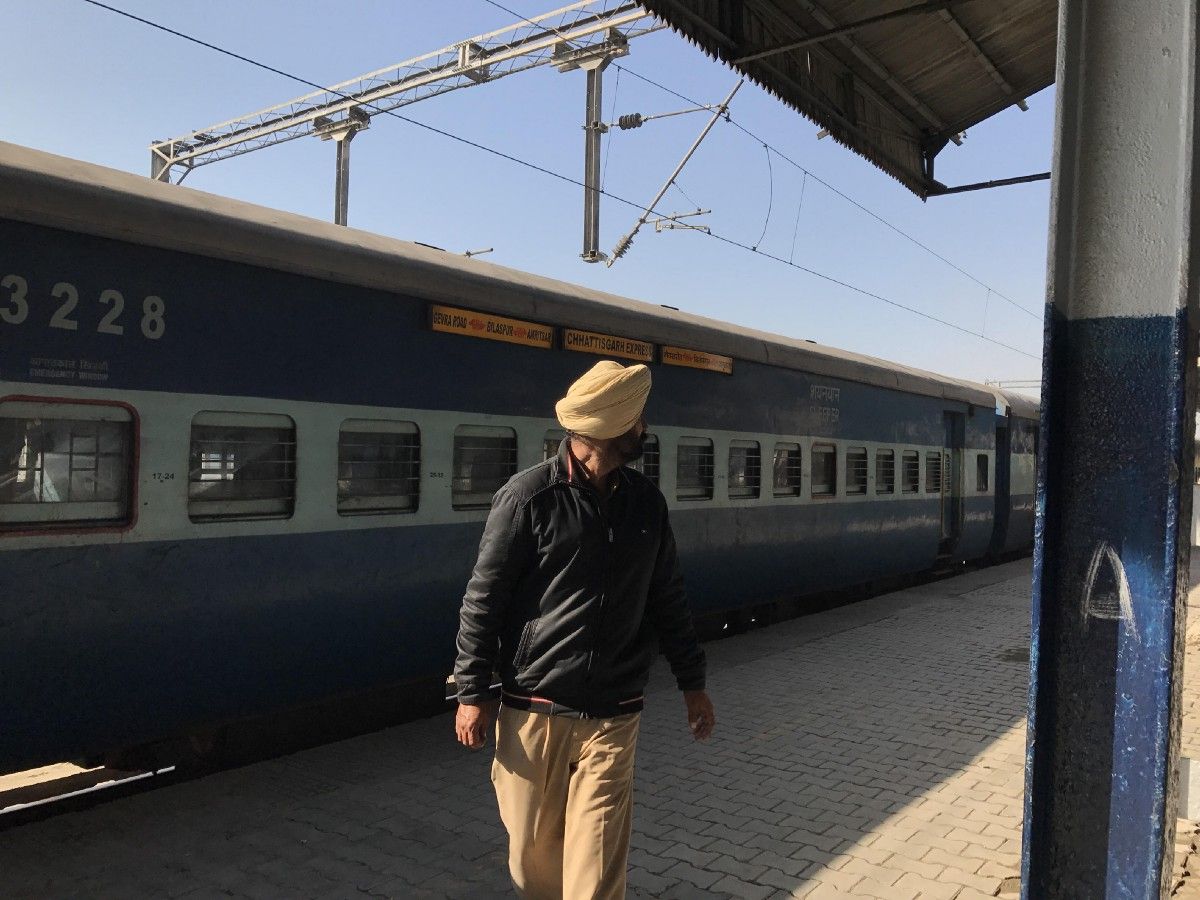
The Chattisgarh Express train I took from Ambala to Amristar, Punjab — Feb 27, 2017
I arrived at Amristar Junction around 9:15 AM, eager to head early to the Wagah Border to solve any issues I was almost certain would arise. I hailed a cab and explained my destination to the driver. He was a bit taken aback; he’d taken many tourists there to see the border ceremony, but I would be his first passenger to attempt to cross. The 40-minute drive was filled with anticipation. I finally reached the Attari Integrated Check Post where my passport and visas were verified, and the taxi driver’s license held before we were allowed to enter.
I’d approached the border many times before but never succeeded in crossing. Nearly 10 years ago, I came to Wagah to witness the daily military parade. Like every other visitor in attendance, without a visa, the border seemed unpassable, just a symbolic placeholder where the two nations engaged in a strange display of militaristic nationalism.
(An Indian soldier performs what I can only imagine is the military equivalent of flipping off, across the Wagah border to Pakistan — Mar 16, 2017)
I’d visited other parts of the 2,900 km border before: a heavily militarized Indian Kashmir that appeared to house more soldiers than residents. From Jaisalmer, Rajasthan, I ventured into Great Thar Desert towards Sindh, Pakistan. I was stopped just close enough to glimpse the faint glow of the gigantic floodlights that illuminate and secure the border (visible below from space). Any closer, I was told, would require an almost impossible-to-attain permit.
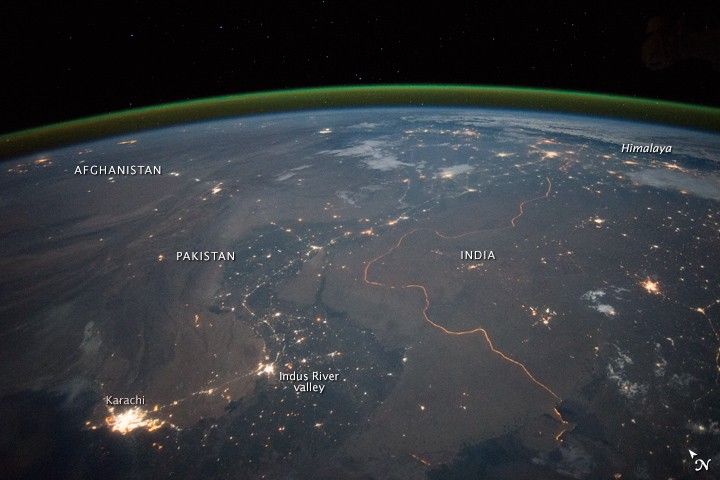
The border, clearly visible from the International Space Station — September 23, 2105
That day I was, unexpectedly, the only American crossing the border. I was joined by a few working class Indians: some Kashmiris and a few Sikh pilgrims visiting temples in Pakistani Punjab. I was able to chat with a few of the Kashmiris making the voyage who were visiting relatives separated by Partition. Hamed was attempting to cross the border to meet his relatives in Muzzafarabad, Azad Kashmir, Pakistan.
Unfortunately, 20 million Kashmiris have been embroiled in a conflict between the two powers, with some families split across the militarized border. Hamed now needs to spend over 24 hours to cross the open border at Wagah even though his home in Srinagar is only 170 km from Muzzafarabad. Interestingly, Hamed had the opposite problem that I did. Due to the intense security situation in Indian Administered Kashmir, he has a hard time getting an Indian passport, but Pakistan readily issued him the tourist visa.
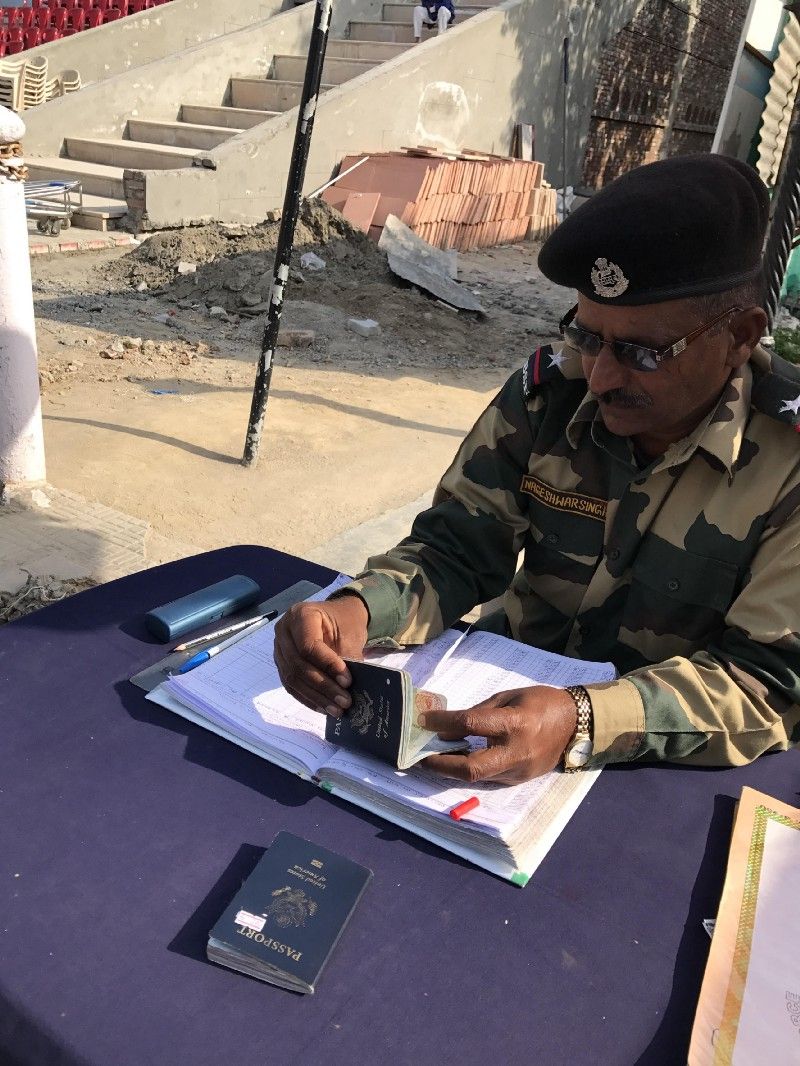
Having my documents checked for the 6th time. It didn’t help that my Indian visa was in my old passport.
The check post was reminiscent of the departure terminal of an international airport, only much simpler and with much tighter security. Security was ramped up with military presence seemingly around all sides.
I had never encountered such thorough examination. Simply entering the check post building necessitated a thorough frisking and the inspection of every nook and cranny of my bags, not excluding investigating my eyeglass cases for contraband, before the bags were even x-rayed. A border agent reviewed my passport and visas before ushering me towards customs clearance.
There were a number of seemingly arbitrary restrictions that worried me. No Indian or Pakistani currency was allowed to be brought, but American dollars were fine. Getting caught crossing the border with any older, pre-demonetization notes, even accidentally, would be considered illegal smuggling. I didn’t want to find out what that would entail.
I had meticulously prepared backup documents: duplicates of invitation letters, passport copies, photos, anything I could think of that’s absence might have my crossing rejected. I held my breath at each step, convinced that a wrong answer or a misstep would get me denied, detained, or worse. I kept my answers brief and to the point. I had almost made it.
It was hard to believe. I would be one of very few to have direct experience of both India and Pakistan, communities cleaved apart after Partition that had lived peaceably for centuries. I was about to see through my very own eyes, how Pakistan actually was; how it compared to its international perceptions, and maybe more interestingly, how it compared to its sibling rival, India.
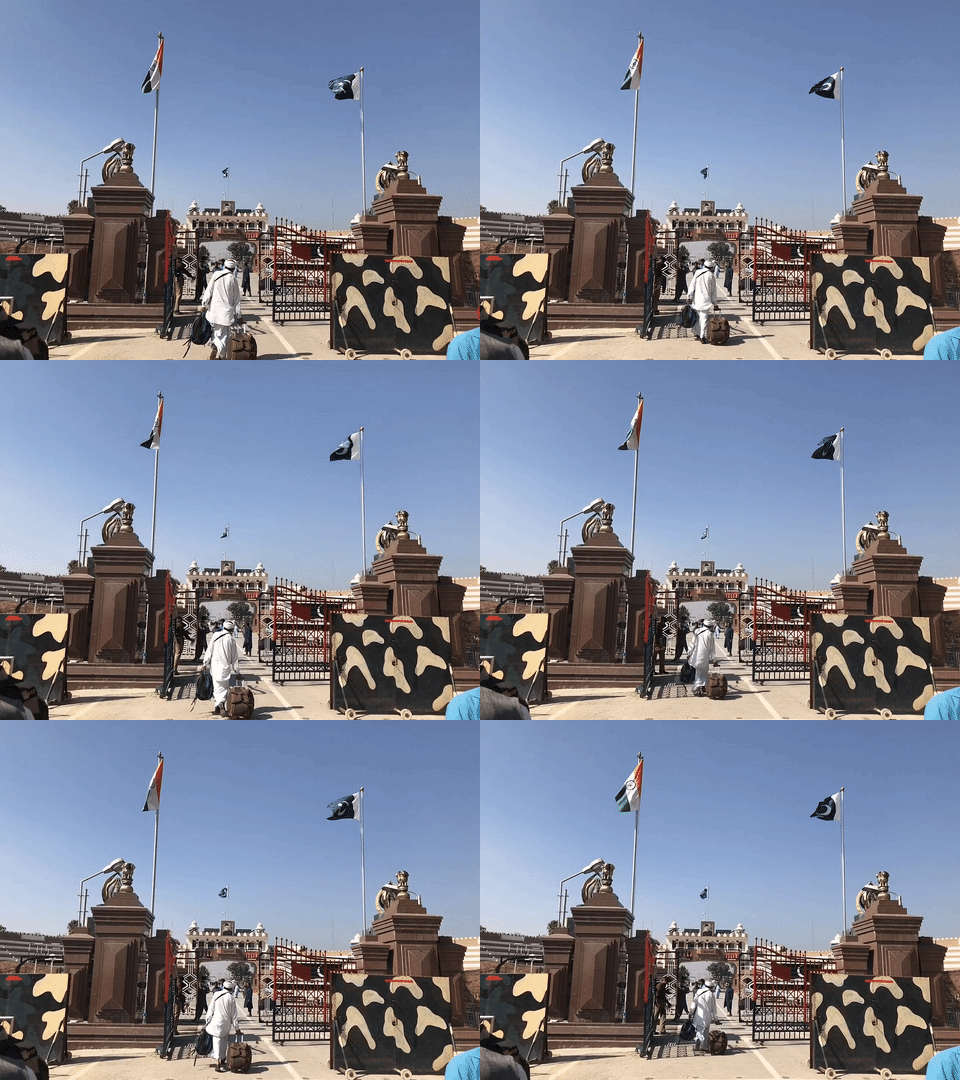
A traveler crosses the Indo-Pakistani border just before me
I was about to cross the border deemed the world’s most dangerous by the Economist just a few years ago. After three and a half hours, and what seemed like a dozen reviews of my passport, I had made it. I received permission to cross over and take my first steps into Pakistan.
I couldn’t believe it. I would be the first in my family to ever visit Pakistan; a nation close to my heart as a South Asian Muslim, a nation separated from me as an Indian American. I couldn’t wait to see it all.
Next stop: Lahore. 
I made it! Crossing into Pakistan — Feb 27, 2017
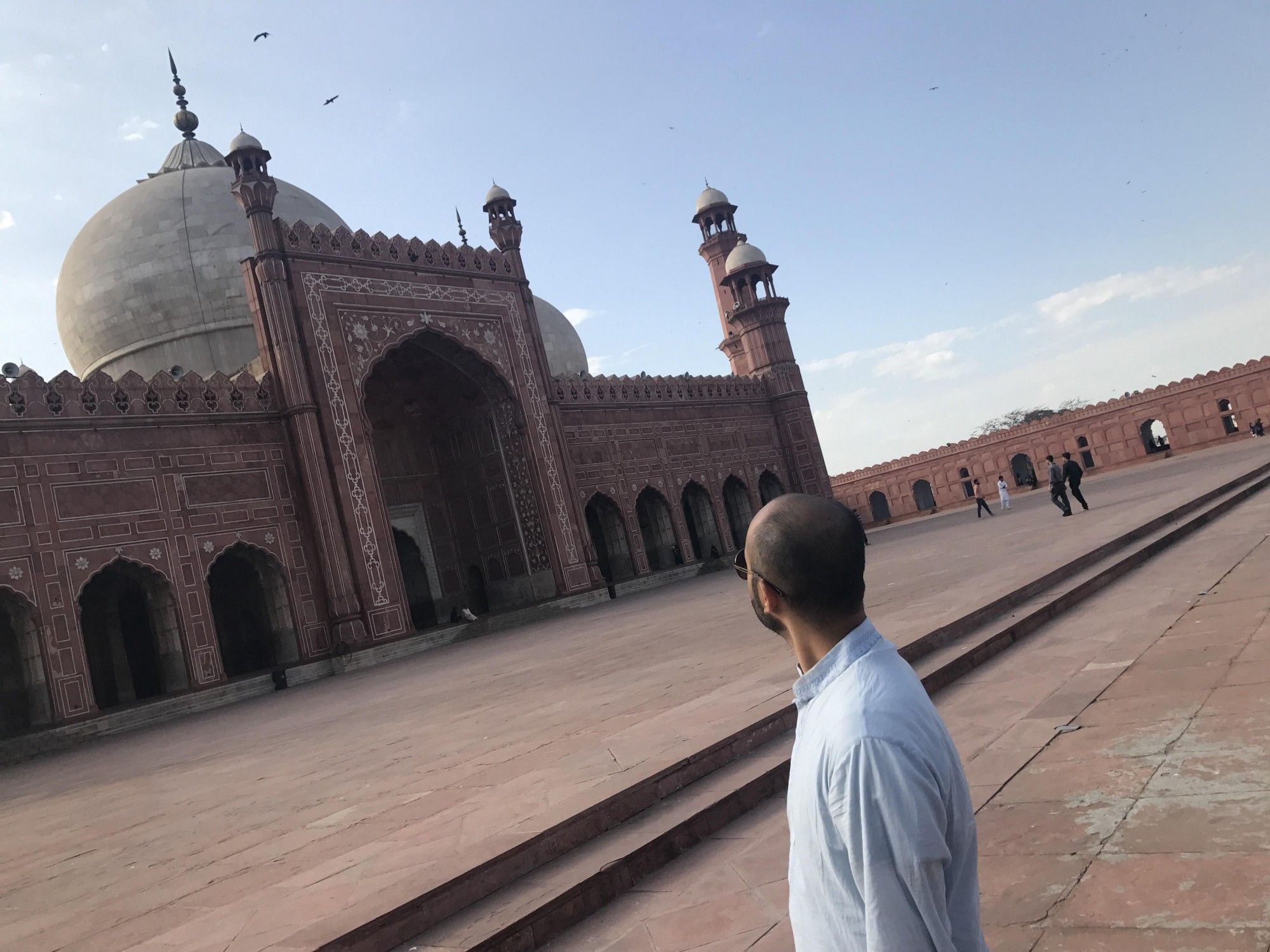
Me at 17th Century, Mughal Baadshahi Masjid, the world’s largest mosque for 313 years. Lahore, Pakistan — February 28th, 2017
* All photos and videos of the border were taken by me. Except for the one from the space. I did not, unfortunately, receive a visa to board the International Space Station.
This article originally appeared on Future Travel and is republished here with permission.
More like this: How I stayed connected to Pakistan through Chai tea

Top tech tools
There are two types of travelers: those who come prepared, and those who come with regrets. If you’re the guy that shows up to a lake trip in Canada wearing a cotton sweatshirt, that’s an A-level sign that you’re a travel newbie. The same goes for tech — don’t be the person that’s constantly asking to borrow your travel partner’s headphones! As society becomes more mobile, the tech world is pushing convenience to new levels and it takes keen attention to tech trends to stay on top of it all. Here are seven tech tools that will relieve your travel frustration and get you ready for the road.
1. Noise-canceling headphones
Since my days of touring in a punk rock band, my number-one rule of travel has been this: ABH. Always bring headphones. I can’t sleep without them, particularly in hostels, floors, thin-walled hotels, or anywhere else where I’m not isolated in a room far-removed from the bustling outside world. I’m cursed with being a pathetically light sleeper, which in addition to driving my wife nuts, is quite a hassle for a frequent traveler. Noise-canceling headphones are the ultimate sleep aid for me, even more so than sleeping pills or booze.
2. Project Fi
$5/day international data packages and roaming charges add up quick. Project Fi, from Google, is a phone service essentially built for travelers. Data is $10/GB up to 6 GB — after that it’s free, and data is usable in 170+ countries. Their service moves between data and WiFi depending on what’s available where you are, meaning that there’s no worry about not being able to make calls on your Verizon plan simply because there’s no Verizon towers around. International calls are subject to a small fee, so if you’re on the phone a lot, stick to WhatsApp.
3. GoPro Hero
I’ll admit that I cast a wincing glance when someone breaks out a selfie stick in an awkward place. But I have to remind myself that some of my best travel media — both video and stills — comes from my GoPro Hero 4. When documenting action sports and outdoor adventure are part of travel, GoPro is as good as it gets.
4. GoTenna Mesh
How many times have you been abroad or out in the backcountry and needed to contact someone else from your party? GoTenna built a communication system that is free from cell phone data or WiFi, and allows users to connect with each other at distances of about four miles in many cases. The device is essentially a walkie-talkie for texting. Download the app on your smartphone, link it via BlueTooth to your GoTenna device, and the device sends texts to other GoTenna users within range. When traveling with friends or family, staying in touch is simple regardless of who has cell service and who doesn’t.
5. Bluetooth-enabled portable speaker
This one is applicable primarily for road trips unless you’re checking a bag and can stuff a small speaker in there. A good portable Bluetooth speaker, like this one from Kicker, is perfect for camping, hotel rooms, and even driving in a vehicle without a good sound system. Charge in advance, and connect your phone or laptop to rock out to music or podcasts.
6. Portable battery
Basic travel tasks such as booking an Uber or finding an internet café are impossible when your phone’s dead. A reliable portable battery charger is essential. Poweradd makes a great one that’s as easy on the wallet as it is to find space for in your carry-on.
7. A dependable carry-on bag
They may not be the most tech-related item on here but a strong carry-on bag is essential. Something that keeps your clothes fresh, makes it easy to remove the laptop for TSA checks, and fits in the overhead storage bin. I’m a fan of Nomatic — their travel backpack is essentially a cross between backpack and suitcase. It’s perfect for heading to conferences, festivals, and other short trips.
More like this: 9 apps that take the frustration out of travel
Learn from Cape Town water crisis
Unless you’ve been living under a rock, you’ve probably heard that the rains down in Africa aren’t so blessed these days: as of June 4th, Cape Town will be the first big city in the world to run out of water.
On Day Zero, as it’s being called, city officials plan to turn off the water supply to all but essential services like hospitals, and residents will need to collect a daily ration of 6.6 gallons from one of 200 collection points around the city. There may be relief a few months hence when the annual rainy season is expected, and desalination plants are being built and boreholes drilled faster than you can sing “Have You Ever Seen The Rain”. But that still doesn’t change the fact that for a first time, a city — home to millions of people — will be out of water. Turn on the tap, and nothing will come out.
Just saying that out loud is mind-boggling. “How can a city RUN OUT of water?” And because it’s such an unthinkable situation in an age where many of us are used to having exactly what we need right at our fingertips or a quick Prime drone away, we don’t want to imagine that the same waterless (raw water or otherwise) fate could happen in our cities and towns, and so we look to place blame to explain why this is happening. “Oh, well, the city officials must not have planned properly.” “Oh, people must be taking more than their fair share of water.”
Yes, maybe more could have been done to properly prepare Cape Town for the Big Dry, but ultimately it comes down to this: an unprecedented drought, which was almost certainly exacerbated by climate change (GASP!!!), is the cause for this situation. Water ran out. Yes, it happens.
We need to get used to that fact.
Our water supplies are not unlimited
We need to stop seeing water as an eternal resource, because it isn’t. Yes, it cycles around the world, but humans are pumping it out of the ground faster than water tables can refill. Climate change is altering weather patterns, increasing desertification, yadda yadda, I’m not going to keep spouting off facts because a) climate change is a thing, we shouldn’t need to justify it anymore, and any arguments against its existence don’t hold much water (*ba dum tsssss*) and b) unnecessary spouting is the exact problem I’m here to talk about.
I grew up in Santa Fe, New Mexico, a town in the high desert of the American Southwest. The landscape is characterized by dusty plains of cacti, yucca, and juniper bushes, high mountain pine forests (that go up in smoke during fire season if you even think the word “spark”), and the occasional oasis alongside rivers. We have our annual monsoons and even snowfall, but even then, the entire state has been battling drought for decades. We are literally high and dry. So water conservation is just a part of daily life.
We try to take short showers. We never leave the water running when we’re brushing our teeth or washing dishes. We use rain collection barrels. If we need to water lawns or gardens, we do it in the morning or evening, when there is less evaporation. Fountains won’t run if it’s a really dry year. They don’t let water down the Santa Fe river except when the reservoir is high. “Let it mellow” is our mantra.
I grew up constantly using these techniques and was always aware of how I used my water. I felt guilty if I left the hose running too long watering the garden, or if I didn’t realize the faucet was dripping. I’ve openly blanched when seeing people wantonly waste water.
Living in the desert, we have a close relationship with water, seeing it for what it is: a valuable and finite resource. I’m not trying to shame the citizens of Cape Town or any other water-strapped city; it’s not your fault. This is just the new normal in a world shaped by climate change. But it is on you — on ALL of us — to adjust and go with the times. There are vast parts of the world where people don’t have easy, assured access to water (which is a whole other injustice we don’t have time to get to, I’m close to my word limit), so we need to get off our “More Economically Developed Countries” asses and do better with our water privileges.
This can (and probably will) happen in other places
If it can happen to Cape Town, it could happen to any other city (oh hi, LA). This is reality, not some Hollywood B-level climate disaster movie starring Jake Gyllenhaal or some other actor needing projects in between Oscar bids. And when it happens, we all need to be prepared. And by prepared, I don’t mean panicking and stockpiling bottled water and joining a Mad Max vigilante group, scouring streets, illegally turning on water mains, or creating a Citadel. I mean that, if you start being smarter with your water usage, if your city is facing a water crisis, it won’t completely upend your day to day life and you can do your part to save water.
It won’t be a sacrifice for you to take a five-minute shower because you already take five-minute showers. Your lawn is looking a little brown? If you’re that desperate to keep up appearances, it’s called Astroturf. When water crises hit, it affects everyone, which is why everyone needs to do what’s best for the community, which is SAVE WATER. So implementing water saving techniques into your daily lives now can help, in a tiny way.
As we say in Santa Fe, when in drought, tighten the spout. So here’s some ways you can start saving water:
“If it’s yellow, let it mellow. If it’s brown, flush it down.” (Yes, I know it’s gross. Get used to it.)
Turn off the faucet while brushing teeth, washing dishes, cleaning food, etc.
Clean dishes or food in a full sink of water, not under a running faucet.
Brush your teeth in the shower.
Check all faucets, pipes, etc. for leaks.
Install water-saving shower heads.
Shower in less time than it takes for Bohemian Rhapsody to play.
Fully load your dishwasher or washing machine before doing loads.
If you’re watering your lawn or garden, do so early in the morning or late in the evening.
More like this: Cape Town is about to be the first global modern city to run out of water

German culture shocks
Landing in a new country is a “trip,” both in the literal sense, as well as the parlance of our times. One never quite knows what to expect, no matter how much he or she might have heard about the place. Language barriers only add to the issue. In that light, we thought we’d dive into the culture shock that takes place in specific destinations popular with American tourists, starting with Germany. We checked in with Quora as well as editorial content from Matador Network to look at the biggest culture shocks visitors face when coming to Germany.
On the shunning of basic tap water
Despite Germany being on par with the most of Western Europe regarding drinking water, many Quora commenters find it notable that Germans tend to avoid tap water. Nicolas Corwin explained, “people generally avoid drinking tap water (and perforce it’s never served in a restaurant), even though it’s of excellent quality and totally safe to drink. By extension, there are no drinking fountains in evidence.” Michael Snow added this: “I will occasionally ask for simply a cup of tap water from the sink, and the server will invariably look at me like I’ve asked if it’s alright for me to take my shoes and socks off and walk around the restaurant barefoot for a while.”
On the struggle to shop on Sunday
Certain places in the US still see many shops and services closed on Sunday, but the practice is slowly dying out. Personally, I recall the time slightly after I turned 21 years of age when Colorado finally began to allow liquor sales on Sunday — no more driving south to the New Mexico state line or suffering through 3.2% ABV beer from the gas station! In Germany, however, the struggle continues. Genevieve Northup noted in a Matador piece that “Stock up now because come Sunday, villages are post-apocalyptic ghost towns. But it’s not all bad; Sundays give you the chance to focus on neglected chores, like the three loads of laundry that will take two days in your ‘energy saving’ LG washer and dryer.” Quora user Michael Snow sympathized: “It takes a while to adjust to everything shutting down on Sundays. Sure, some cafes and restaurants will be open. But supermarkets and almost all stores and shops close, except for on a few select Sundays, such as the Sunday before Christmas. Stock up, people.”
On the penchant for always following the rules
Crossing a vacant street at 2 AM? Better wait until that light turns green — someone may jump out from behind the corner and scold you for “setting a bad example for children,” as Michael Snow noted. Germans play by the rules — even when unwritten — and that means “don’t even think about kicking up your feet on the next seat while riding the train from Stuttgart to Munich. Mowing during quiet hours will earn finger pointing and chastisement in a tone of disappointment you’ve only heard from grandma,” explained Genevieve Northup in Matador. “Always yield the lane to somebody going faster… If they have to slow down, you waited too long and you will hear about it,” added Pete Creswell.
Apparently, though, driving on the Autobahn remains a rather hectic ordeal.
On holding your place in line but keeping your distance in conversation
Americans are known across the globe for their incessant need for “personal space,” but Germans retain their own variety. Bauan Ismail noted on Quora the importance of keeping an arm’s length when talking: “The people here have lost the ability to stand body contact. Especially the male population has a distanced understanding of physical contact.”
Genevieve noted in Matador that when waiting in line, you’d better make your intentions and place in the order obvious, or risk being pushed aside. When that happens, “You have three ways to handle the situation: a) stick your elbows out to save your spot, b) make a fuss, or c) accept your fate. Beware that the response to b is less than satisfactory. The perpetrator will turn around with a look of ‘There was a line? I had no idea’ and continue on.”
On the lack of chit-chatting
Germans aren’t about to just strike up a casual convo to pass the time while queuing. Try to start meaningless chatter and you may find yourself a victim of the legendary German stare. “Not being able to chat up strangers at the bank, or on the train, etc., just to pass the time,” noted Nicholas Corwin on Quora, “I know, I know, that is a goofy American practice regarded with suspicion and disdain in many places, but it’s a deeply ingrained habit that I have trouble breaking.”
Matador contributor Isabelle Martin echoes the sentiment: “During my first days of work in Germany, I made sure to be super friendly to all of my coworkers. Whenever anyone passed me in the hallway, I would grin maniacally, wave, and yelp, “Hi! How’s your day going?” The responses ranged from bemused looks to a total lack of reply.”
More like this: Dear travelers to Germany: Please don't come until you've understood these 9 things
Dark side to digital nomad life
Our social media channels are flooded with individuals living the “digital nomad dream.” Location independent, they post pictures of their ever-changing office spaces. One day, a quaint coffee shop overlooking a Roman ruin in Italy, the next, a poolside cabana in a Mediterranean location with an accompanying mojito to make the day progress faster.
Carefully-curated Instagram posts will have you believe that this is a perfect life. Being a digital nomad myself, I know that behind the filters and the manipulated view, the reality isn’t always so perfect.
Of course, we are having fun a lot of the time. The flexibility of schedule and the independence that this lifestyle creates means that you have the freedom to do absolutely anything. Last year, I visited 16 countries and lived in three of them. I am incredibly grateful for the life I lead but indeed, there is no perfect life. All of us are bound by some shackles or another.
In our social circle, everything is temporary, everything is transient. Every new hello is paralleled with a goodbye. The cycle of meeting and befriending others gets old fast and the majority of the friendships and relationships that you build are fickle.
Simple, taken-for-granted pleasures in life are those that you seldom get to experience as a digital nomad. I remember sitting in a galbi restaurant in Seoul, watching as a family ate Korean BBQ together and thinking about how seldom I saw mine. I remember walking around Athens when I first arrived in Greece and watching groups of friends go out for dinner and having the sudden realization that I was completely alone.
It’s a strange reality when those whom you are closest and most connected to are those whom you see so infrequently.
Your work associates and professional connections may be based at opposite ends of the world and the majority of your day’s conversations are held with anonymous people you’ve never met or seen.
The peculiarity of being a digital nomad is that for all of its negativity, the way that it impacts your personal life and relationships, and the bouts of loneliness, this lifestyle is difficult to walk away from once you have launched yourself into it.
In a world where you can literally do whatever you want, it becomes difficult to commit — difficult to commit to a base in Italy, when you long to see the bright lights of Tokyo, or the chaos of Mexico City, It’s difficult to commit to relationships and people when there is just so much out there. Friendships and relationships become easily disposable. After all, you will meet a new group of people at the next place.
You long for a home and a sense of belonging, but staying still is every bit as difficult as packing up and saying goodbye, and so we continue on with this way of life, accepting it for its warts and all because we cannot imagine it any other way — at least not right now.
More like this: The downside to being a digital nomad? Depression.
Countries for risk-taking travelers
Your mom would probably prefer that you didn’t wingsuit off the lip of a volcano into a bi-plane, but if you insist on being the wildest adventure traveler around, there are steps you can take to make her feel more at ease. RK&M did some research on the countries most likely to draw out risky behavior through tourist activities (e.g. discount bungee jumping), and compared that risk to data on safety standards, medical access, and the reliability of the court system. So, while Jamaica can provide quality medical care to tourists, it may not have the same variety of challenging and adventurous activities that can be found in Thailand. The best country for engaging in risky behavior without putting too much in the hands of fate? Australia.
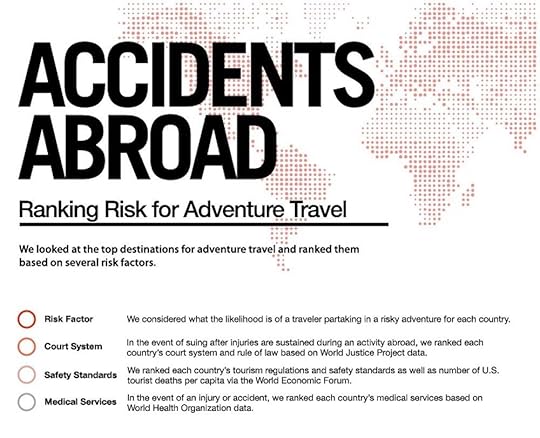
Photo: Rubens Kress &
Mulholland
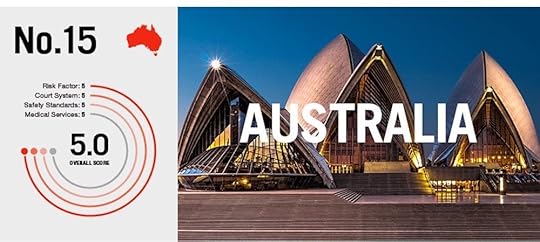
Photo: Rubens Kress &
Mulholland
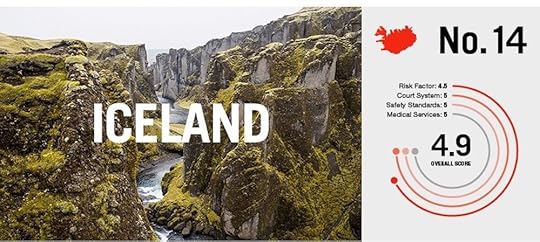
Photo: Rubens Kress &
Mulholland

Photo: Rubens Kress &
Mulholland
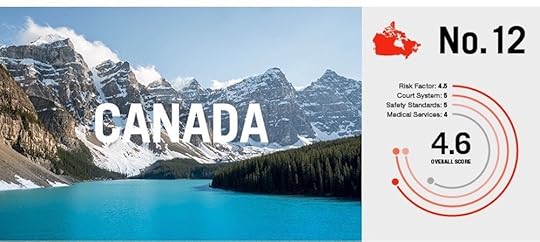
Photo: Rubens Kress &
Mulholland

Photo: Rubens Kress &
Mulholland
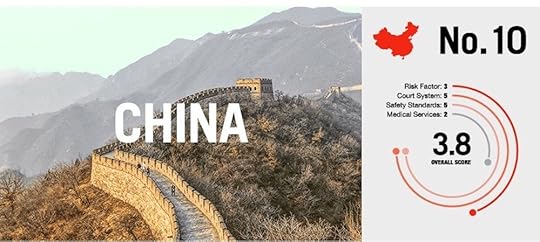
Photo: Rubens Kress &
Mulholland

Photo: Rubens Kress &
Mulholland
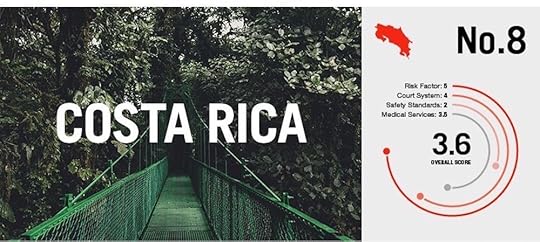
Photo: Rubens Kress &
Mulholland
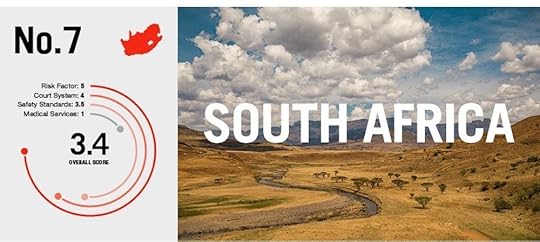
Photo: Rubens Kress &
Mulholland
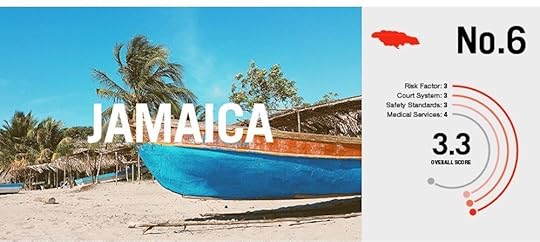
Photo: Rubens Kress &
Mulholland
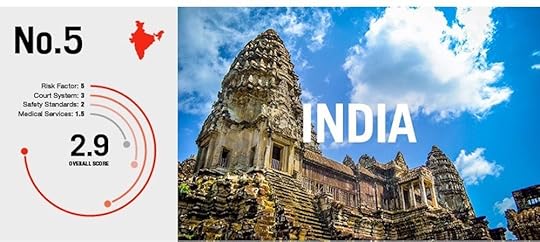
Photo: Rubens Kress &
Mulholland
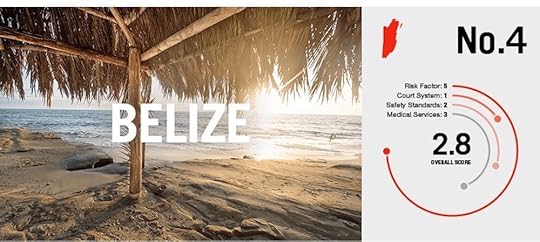
Photo: Rubens Kress &
Mulholland
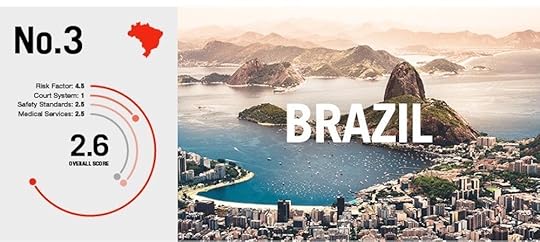
Photo: Rubens Kress &
Mulholland
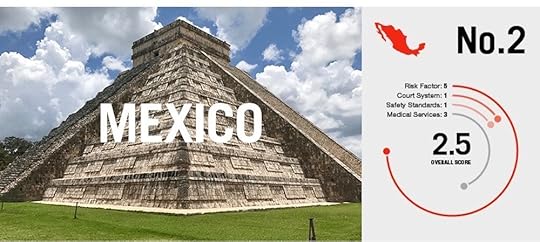
Photo: Rubens Kress &
Mulholland
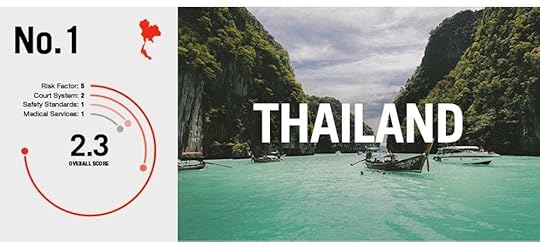
Photo: Rubens Kress &
Mulholland
More like this: The most expensive and the cheapest vacation destinations in the world

Worldwide access to drinking water
Cape Town might be the first major city to run out of drinking water, but it is just one of a growing list of cities that are dealing with the same threat. Beijing, London, Moscow, Mexico City, and Miami are also at risk of running out of drinking water, with reasons varying from contamination to reserve depletion to leakage. Worse still, around half of the world’s population has to deal with water scarcity during at least part of the year, including residents of a quarter of the world’s largest cities. Using data from the BBC and the World Health Organization, Jo Di Graphics created a map that shows which countries have access to basic drinking water services and which of the biggest cities are running out of water.
According to WHO, “basic drinking water services” means that drinking water is a) accessible on premises, b) available when needed, and c) free from contamination.
[image error]
Photo: Jo Di Graphics
More like this: Cape Town is about to be the first global modern city to run out of water

Don't quit job, travel for a year
There is no shortage of articles that offer a variety of advice on how to quit your job and travel. These can be a good starting-off point for anyone who is planning a long-term trip, and will likely provide some valuable insight on how to mentally prepare for such a drastic change in your lifestyle. But what about those of us who love our jobs and don’t actually want to quit? I was in this position three years ago. I was desperate to travel, but also enjoyed the comfort of a steady paycheck and an advancing career. After discussing this quandary over a few beers with my fiance, we came up with what we considered a revolutionary idea. This is how I convinced my company to allow me to work remotely while traveling through Mexico for a year.
Analyze your job situation.
Could you technically do your work remotely? Are other people at your company already working from home? There are a lot of jobs that could easily transition into remote employment, and more companies are becoming flexible when it comes to allowing for remote employees. At the time, I was working with a tech company in Denver. My fiance was a renewable energy consultant with a firm based in Boulder. We were confident that these jobs would translate to remote work, but unsure if our companies would support the move. Regardless, it was certainly worth having the conversation.
Plan it out.
Before you ask your boss consider answers to a few questions that will indirectly come up. What is the benefit for the company? Would there be any disadvantages to you working remotely? How can you ensure that you will be able to maintain the same quality of work from an off-site location? Acknowledge these objections in advance so you can provide thoughtful answers when your boss brings these topics up. You want to make this transition as seamless as possible. Going in with an action plan shows that you are serious about continuing to do your best work, and that is the goal of this conversation.
Have the conversation, be to the point.
When the day came for me to approach my boss, I was horribly nervous. I honestly had no idea what the answer would be, but I felt totally prepared to at least have the conversation. I asked her for a meeting, we chatted for about five minutes in which I laid out the proposition of working from Mexico. I explained that it would be just for a year, I would travel back to the States to visit the office for our big trade show, and would be completely available through Google chat and web conferencing. She was pretty surprised by the idea, mentioned that she had to discuss with the CEO and told me she’d let me know as soon as possible. I went back to my desk, heart racing, to wait for an answer. Ten minutes later we were back in my boss’s office and the answer was yes. I couldn’t believe it. Being given the freedom to work remotely gave me such an appreciation and feeling of loyalty towards my team and my company.
Set up your remote office before you leave.
Let me tell you, arriving in Tulum to find out that the Wifi download speed was not fast enough to hold a conference call sent me into a quick panic. Have you ever had to hold a client call at a restaurant while the DJ is practicing his set for the night? This is the exact scenario you want to avoid and can do so by planning out your work situation just as you would plan out any trip.
What are the tools that you need to do your job perfectly? For me, these included:
A reliable wifi signal with a minimum speed of 3mbs down, 1.5 mbs upload. In order to ensure this would be available before arriving at a new location, I would always ask the landlord to run a speed test and send me a screenshot of the results.
A way for clients to call my office extension and reach me. To do this, I set up a Google voice account that connected to my computer. Then I had our IT guy port my office line to that new Google voice number. I had several people test out this new method and was totally delighted when my Google chat showed an incoming call from my office extension.
Video and web conferencing ability. I made sure these tools were installed on my computer and working correctly.
Work in the same time zone as your coworkers. If your office is in San Francisco and you are living in Hawaii, plan on scheduling your day to match Pacific Standard Time. When your coworkers are working, you generally should be too. In Mexico, I was on Central time. This actually was a benefit — I could schedule meetings with clients on the East coast earlier than when I was on Mountain time. But I still made a point to end the day when my office closed.
Here is the most important piece of advice I can give for setting up your mobile office. Always have a backup plan. Learn where you can repair your computer, or buy a new one if needed. Research where you can find reliable wifi in town if it suddenly disconnects at your house. Join nomadic remote worker chat groups for the new area you’re traveling to and ask for advice. Find the coworking space in your town (if there is one) and pop in to see if it’s a good place to work. There are so many great resources available, take advantage of these and set yourself with an alternate plan in case you need it. Remember, if your coworkers in New York are able to work, you need to be able to as well. Faulty wifi can be an excuse once or twice, but it’s better to avoid this situation altogether.
Check-in frequently.
Make sure you are visible and available. Establish a daily or weekly check-in with your boss and your team. Set a recurring event on your calendar so that these meetings become routine. Even if you previously had monthly meetings, you want to show your coworkers that you are here and easily accessible, even if you are not physically in the office. Often, employees use internal chat tools to communicate while in the office. This makes location independence even easier and less of an issue.
Become the best at what you’re doing.
It goes without saying that this should be the objective with anything you’re working with, but when you’re working out of the office, it’s even more important. Work to improve your skill set. Prove your value.
Think outside the cube.
Even for those adventure-seekers with a seemingly more stationary career path, there are options. The key is to look at your skill set, not necessarily your current occupation. You might find that these skills easily translate into a job that might allow travel. For example, if you’re a nurse, consider transitioning to travel nursing. If you’re a teacher, you might explore the idea of working with an international school abroad. Once you start thinking creatively with travel as the end goal, you’ll be surprised at the number of options that begin to surface.
6 tools I've used to survive the digital nomad lifestyle
Matador Network's Blog

- Matador Network's profile
- 6 followers

