
Matador Network's Blog, page 1398
February 22, 2018
Dirtiest Russian expressions
The result of a curious research of Language Sciences shows that the mastery of slurs and taboo words actually signifies the richness of vocabulary and mental flexibility. Thus, we can definitely call Russian thugs nearly the smartest people in the world as we have a look at these 20 dirtiest expressions in Russian. Be prudent enough not to use them in polite society!
1. Russians don’t just say “Damn!”… instead, they say “Let the horse fuck it!” (Ебать его конем!) [Yebat’ yego konem!].
2. Russians don’t say “I need to use a bathroom”… they proclaim “I need to pour out” (Надо отлить) [Nado otlit’].
3. When Russians try to convince you that they’re telling you the truth, they say “Fuck me in my mouth!” (…if I’m lying) (Ебать меня в рот!) [Yebat’ menya v rot!].
4. When Russians say “Go to the dick!”… they actually mean simply “Get away from me!” (Иди на хуй!) [Idi na khuy!].
5. If speaking of a young lady, a low-life might call her (shudder) “a freshly-salted cunt” (Пизда малосольная) [Pizda malosol’naya].
6. When a Russian is completely exhausted, they might say, “You can even bang me in my ass!” (Самого хоть в жопу) [Samogo khot’ v zhopu].
7. In the same manner, after a tiring working day, a charming person might say, “I’ve bonked myself till death” (Уебался вусмерть) [Uyebalsya vusmert’].
8. Russians don’t call someone clumsy… they describe them as a “walrus’s cock” (Хуй моржовый) [morzhoviy].
9. When a woman sits with her legs crossed, a Russian yob might say “she is sitting with a pinched twat” (Пизду прищимивши) [Pizdu prishchimivshi].
10. Russians don’t say you’re lounging about… they say you’re “shaking a pear tree with your shlong” (Хуем груши околачивать) [Khuyem grushi okolachivat’].
11. When Russian low-lives need to think something over, they need to “place a pisser against a nose” (Хуй к носу прикинуть) [Khuy k nosu prikinut’].
12. It happens rarely, but when a Russian finds themselves in an odd situation, they say, “Only a dick knows what happens” (Хуй знает что) [Khuy znayet chto].
13. And when facing something weird or unexplainable, they may say it’s a “bonking power!” (Ебическая сила!) [Yebicheskaya sila].
14. If something is equal, its “cockual”/“dickual” (Однохуйственно) [Odnokhuystvenno].
15. If a Russian wants to harshly refuse you of something, they’d say “put a boner into your mouth/asshole” (Хуй в рот/жопу) [Khuy v rot/zhopu].
16. If you’re working without energy, “you’re pulling a shlong” (Тянуть за хуй) [Tyanut’ za khuy].
17. In Russia, someone is not furious… instead they “came off a dick” (С хуя сорвался) [S khuya sorvalsya].
18. And beware, if Russians offer you a “cane of tea”… they are asking you to have sex (Палка чая) [Palka chaya].
19. When something bad and unexpected happens, a Russian will remark “Fuck your mother!” (Ёб вашу мать!) [Yob vashu mat’!].
20. Of something really thin or narrow, a Russian thug may describe it (again shudder) “like a twat hair” (Толщиной с пиздиный волосок) [Tolshchinoy s pizdiniy volosok]. 

More like this: A mini-guide to Russian slang


The best margaritas? Santa Fe, NM
What other cocktail delicately balances four of the five human tastes, comes in flavors ranging from chocolate to raspberry to jalapeño, pairs with literally every single type of food on the planet, and has its own goddess? Only the margarita. Tequila, Cointreau, and lime juice, shaken for 15-20 seconds. Slide in a lime wheel and voilà. Perfection.
Lucky for me, I come from the state with the best margaritas anywhere — hands down — and they’re all on Santa Fe’s Margarita Trail (making it almost dangerously easy to find them). In fact, the city’s known as the margarita capital of the world. Or should be. Will be. Here’s proof.
Every drink has an origin story (or five)…
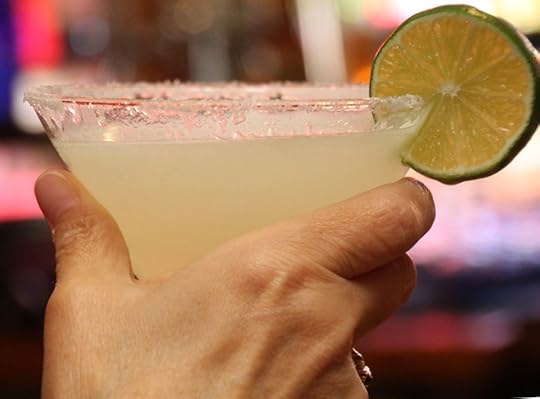
Photo: Sarah Stierch
As legend has it, Santa Fe was the first place in the world to import tequila from Mexico — which makes sense seeing as Santa Fe was, until 1848, a part of Mexico. Since the 1970s, margaritas have proliferated across The City Different. But let’s back up a bit: How did the drink come to be?
Slowly, that’s how. When the Spanish showed up on the shores of what is current-day Mexico, the indigenous people apparently presented them with a fermented agave juice called pulque. There was a tale to go along with the drink: When the Aztec goddess Mayahuel (the goddess of fertility) was killed, her lover Quetzalcoatl buried her, and the agave plant grew from her grave. Quetzalcoatl made pulque from the agave to drown his sorrows. But even though agave juice comes from the heavens, pulque didn’t taste so great — at least to the Europeans. It does set you right, however, so the Spanish distilled the agave juice. And thus, tequila was born.
It would take another 400 years to get from pulque to the margarita, and no one really knows who invented the drink. What we do know is that it most likely involved a gorgeous woman. One story has it that sometime in the 1940s, Carlos Herrera, a Mexican restaurant owner, created the drink for a showgirl by the name of Marjorie King. Supposedly, King was allergic to every type of alcohol save tequila — and she hated tequila. Herrera made her something she could stomach.
Most likely, the margarita evolved from a drink that was popular in the 1930s and ’40s known as “the Daisy,” a mix of various types of alcohols, citrus juice, grenadine, and a splash of soda served over shaved ice (spoiler alert: “Daisy” in Spanish is margarita). By the end of World War II, margaritas started showing up in Mexican Jose Cuervo ads — the first mention of margaritas in English print came only in 1965.
Enter the electric blender. The idea that you could turn an already perfect cocktail into a tequila slushy somehow took over the world, and today, the margarita is the most-ordered drink in America.
…but not every drink has its own trail…
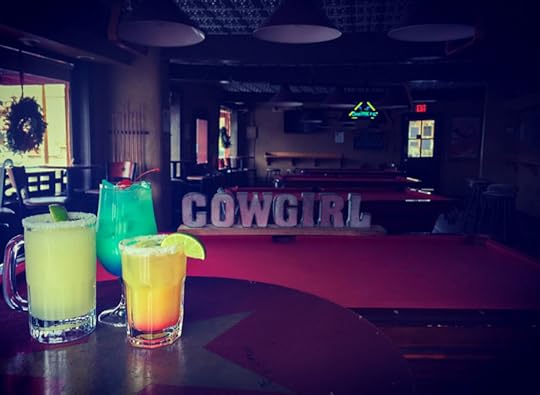
Photo: Cowgirl Santa Fe
On May 5, 2016 (Cinco de Mayo), Santa Fe introduced the Santa Fe Margarita Trail to the world, highlighting the diverse and creatively curated margarita culture Santa Fe has birthed. And, more importantly, to get the city’s 30+ margarita hotspots onto one comprehensive list. Each location has its own “signature” Margarita Trail cocktail, and you won’t find any run-of-the-mill recipes here — these are “specially crafted” creations using 100% agave tequila, all created by certified mixologists.
If you’re headed this way, there are two ways to get started on the Margarita Trail. First, you can pick up the Santa Fe Margarita Trail Passport for $3 at any Santa Fe Visitor Center. Then, present your passport at any of the participating restaurants for a stamp in your passport and $1 off your signature Margarita Trail margarita. Five stamps gets you a t-shirt; 20 stamps lands you a signed copy of The Great Margarita Book. Complete the whole trail and you get your very own margarita bartender kit.
You can also go digital and download the recently launched smartphone app, available from both the Apple App Store and Google Play. A free version gives you access to the map, where participating locations appear in a list format so you can see which spots are closest (the interactive map also provides step-by-step directions on how to get to a location you may be looking for). Note that you’ll need the paid version of the app ($3.99) to acquire a virtual Margarita Trail Passport, rate your favorite margaritas, and collect stamps and prizes.
…and the trail is long.

Photo: Del Charro Saloon
Pull up a seat at the tequila table in the Anasazi Restaurant Bar & Lounge for some advice on what dinner or tapas you might want to pair with your margarita. Known for their tortilla soup and lamb chops, the Anasazi has landed itself on the map for its simple, straightforward variations on the classic margarita. Consider the Sandia Y Pepino, made with Silver Tequila, Cointreau, watermelon, cucumber, and Tajin Lime Salt.
The margs over at the Del Charro Saloon aren’t for the timid. They infuse their Double Barrel Tequila Reposado from Casa Herradura with New Mexico green chile for a solid kick in the pants. If you’re in need of an extra slap, your bartender can add green chile powder or red chile flakes to your drink.
Or here’s a winning combination: After you check out the “Miraculous Staircase” at the Loretto Chapel, drop into Luminaria Restaurant & Patio for a sweet-and-spicy margarita flavored with jalapeños and strawberries. However, if you’re like me and tend to stick with the classics, order a Cowgirl Cadillac at the Cowgirl BBQ, my favorite rib joint (get the collard greens as a side — the best!) in the city. The Cowgirl Cadillac is the product of 30-some years of trial by Nick Ballas, the establishment’s recently retired co-owner. It’s made from organic blue agave tequila, Grand Marnier, and sweet and sour mix, with some fresh-squeezed lime and orange juice thrown in for good measure.
Simple. Clean. Fabulous. Thank you, Santa Fe. 
February 21, 2018
Floating village of Cambodia
There’s more to see in Siem Reap than temples and ruins, but what? The floating villages of Cambodia, specifically Kampong Phluk, are definitely a less-traveled destination.
Like Venice, Italy, this village isn’t actually floating but is built on 16’ tall wooden stilts driven into the bed of the seasonal lake, Tonle Sap (which literally translates to “large freshwater river”). The lake is filled by the Tonle Sap river that connects to the Mekong River — all of which form a massive central hydrological system in the Cambodian floodplain.
But the hand-hewn houses of Kampong Phluk aren’t always “floating” — it depends on what season you visit. During the rainy season (June to November), the lake rises to meet the bottom of the houses, but in the dry season (especially December or January), the supporting structures are completely exposed, making the houses only accessible by ladders. Many of the locals move out of their permanent housing and build temporary houses on the lake during this time.
Kampong Phluk translates to “Harbor of the Tusks” and their primary economy is fishing — specifically shrimp harvesting — but some of the outliers also farm. The boat tour is really a look into daily village life — you’ll see families doing laundry, kids going to school, cooking or fishing, and scaling swinging ladders like pros. It’s a colorful and unique experience.
There are two other floating villages in this region of Cambodia, but Kampong Phluk is the largest and, oddly, the least touristy. If you can time it, it’s nice to catch the sunset on the lake.
How to get there
Kampong Phluk is 16 km upriver from Siem Reap. There are plenty of tours that will include all transportation, tickets, and, usually, a meal. But, if you want the cheaper option, arrange it yourself by asking your tuk-tuk driver to book you a boat up to the village.
What to consider
Complete tours cost between $35 and $50 USD, but if you arrange it yourself the ticket for the boat to the village is $18 USD per person.
The boat ride to the village takes 45 minutes and the trip through the village is another 45 minutes.
There are two other floating villages besides Kampong Phluk: Chong Khneas and Kompong Khleang. Chong Khneas is overrun with tourists. Kompong Khleang isn’t as bad but is 35 km away from Siem Reap.
With over 3000 inhabitants, Kampong Phluk has the largest population of all the floating villages.
More like this: How to visit Kulen Falls in Cambodia

Carless in San Francisco
Not every San Franciscan drives a Prius or a Tesla. Plenty go greener than that, foregoing cars altogether. And since SF is crammed onto a seven-mile-wide peninsula, there’s no room for urban sprawl, which makes it a great place to go carless. The only catch is those hills… there are so many of them! Here’s how best to navigate the city without a car:
1. Walking
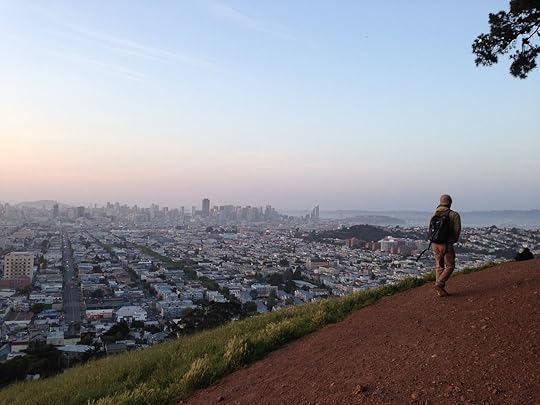
Photo: Steven M Dean
San Francisco emerged as a city with the 1849 gold rush, decades before the automobile, unlike many other western US cities. That means it grew up with distinct, walkable neighborhoods, each with its own character, restaurants, bars, cafes, and shops. You can find almost everything you need in each one, usually around a commercial area that’s pedestrian-friendly — in other words, not on a steep grade.
The Mission’s Valencia Street, the Marina’s Chestnut Street, Noe Valley’s 24th Street, Haight Street, and the streets of Hayes Valley are all mostly flat. Pac Height’s Fillmore Street is on a slope, but you’ll be so busy window-shopping you won’t notice the effort. So, if you just plunk yourself in a neighborhood, you’ll find everything you need in one, stroll-able place. If you want to walk between neighborhoods, you might consider hiking boots.
2. Biking
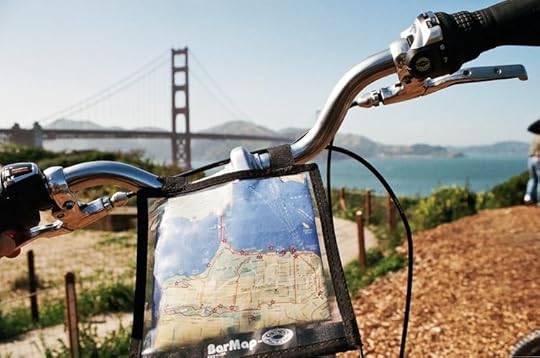
Photo: Anna Pavlyuchkova
San Francisco has been called one of the most bike-city friendly cities in the country. Rush hour on Market Street is an endless stream of bicycles. The city has been scrambling to make roads more cycle-friendly by adding green bike lanes along major thoroughfares, some of them separated by pylons from the rest of traffic. Google Maps will show you a good bike route, or you can check out the city map of bike lanes here. You can also buy a $4 walk/bike map from the SF Bike Coalition, or become a member and get it for free.
If you don’t have your own bike, the bike sharing option Ford GoBike has over a hundred bike stations in SF, with more coming. You can download the app or use a Clipper card (more on that below) to pick up the bike, ride it, and drop it off at another bike station. And they really do want you to drop it off as soon as you’re done riding, so the $3 rate is for a 30-minute trip only. ($9.95 gets you unlimited 30-minute trips throughout a day, and for $149 you get unlimited 45-minute trips all year.)
Know before visiting Patagonia
After seeing so much of South America, Patagonia is still my favorite place. Incredibly vast, unbelievably diverse, and stunningly beautiful, it’s a region made of superlatives. But with high prices, unforgiving weather, and frustrating infrastructure, it’s not the easiest of destinations to navigate. A bit of planning and research goes a long way.
Here are 10 things I wish I knew before visiting Patagonia.
1. Patagonia straddles two counties — should you visit one or both?
Patagonia is shared across Argentina and Chile. There are mindblowing highlights in each country. It’s a great idea to experience both sides, but this will depend on how much time you have, onward travel plans, and your budget. The good news is that the former reciprocity fees for US and Canadian tourists (US $160) have recently been waived, so visiting both is cheaper than it previously was. If you have the time, you should definitely try to see as much as posable. A classic route is to fly into Buenos Aires, Argentina and out of Santiago, Chile, with domestic flights to take you to and from regional airports in Patagonia.
2. And if you cross those borders, be aware of what you’re carrying.
This may sound really obvious, but if you’re not used to land-border crossings, it can be easy to board a bus forgetting that you’re heading to another country. And, depending on your route, you may cross the border several times between Chile and Argentina. Chile, in particular, is very strict with their border controls. You’ll go through a thorough screening process to keep invasive species out, to protect their fragile flora, fauna, and agricultural industries. As travelers, it’s normal to stock up on snacks for long journeys, but make sure you consume anything that isn’t permitted before you get to the border, like meat, fruit, and dairy products. I saw a Russian couple receive a hefty fine (and delay our bus by 40 minutes) crossing into Chile because of a forgotten apple at the bottom of a backpack.
3. Visit during the summer… no, the “other” summer.
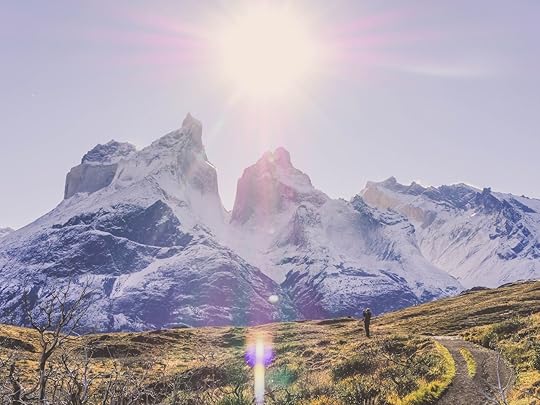
Photo: Ines d’Anselme
Remember that the seasons are reversed in the southern hemisphere, so it’s best to visit Patagonia during South America’s warmest months, from late November to March. You don’t have a lot of choice with this — many tour operators, hostels, and even some bus routes only operate in the summer. And with good reason — many of the trails are closed, or reserved only for professionals, and sometimes the snow can completely cut off access to towns. But you can try traveling in the shoulder season — October and April-May, when prices are slightly better, and the region is less crowded with tourists. But you’ll need to check in advance to see what’s open and accessible.
4. Patagonia is expensive — budget carefully.
Los Glaciares
Photo: Richard Silver
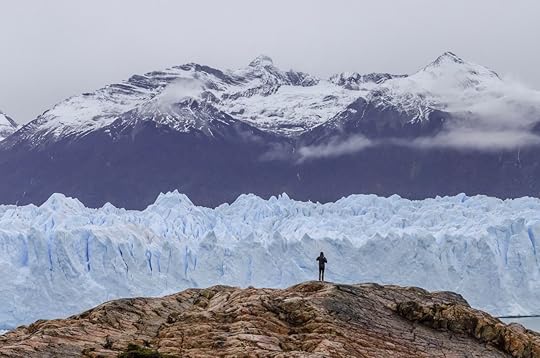
There’s so much to do and see, and accommodation and transport, even by bus, are expensive. Then there’s the myriad excursions available, from kayaking alongside glaciers to visiting Magellanic penguins on remote islands. So, if you’re traveling on a tight budget you need to plan carefully and prioritize. Luckily, there are always ways to save money. In the town of El Calafate, we discovered that if you have more than two people, it can be cheaper to rent a car for the day ($50 USD) to visit Perito Moreno glacier, rather than taking the expensive bus tour. The lodges in Torres del Paine National Park are eye-wateringly expensive, but they also offer camping pitches which are cheaper if you bring your own tent, and some campsites in the park are actually free (but fill up quickly!). While Torres del Paine has a hefty park entry fee, the equally stunning Parque Los Glaciares, just over the border in Argentina, is totally free. In towns, a great tip is to book hostels with open kitchens and cook a few meals yourself to save money on eating out (which is also really expensive). Saving money on food helped me justify splashing out on some unforgettable excursions like ice-trekking on Viedma glacier.
5. Be prepared for slow travel — everything in Patagonia is far apart.
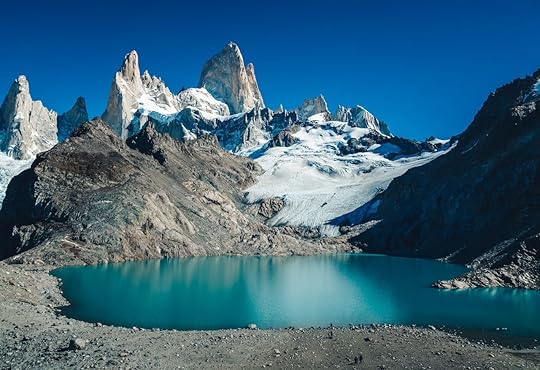
Photo: Arto Marttinen
Take a look at a map — Patagonia is HUGE. The region covers over a million square kilometers, which is three times the size of Germany, but with only 2 million inhabitants (Germany has a whopping 82.7 million people). So much of the region is devoid of civilization, so it should come as no surprise that it can be hard to travel around. Plan your itinerary carefully, giving lots of time for long overnight buses to get from one place to another. I took a bus from Bariloche to El Chalten, both on the Argentinian side, which was an epic 24-hour journey. Yet when you look at a map, the distance covered is dwarfed by the immensity of Patagonia. Some internal flights are available, but they’re pricey.
6. Build rest/planning days into your schedule.
I always try to pack as much as possible into my itinerary, but you can’t underestimate how much you’ll need to sort out on the ground. You’ll need time to find bus companies to book your onward travel, accommodation, compare and book excursions with local tour operators, do laundry, stock up on food, and just relax (recover from that bus journey) before heading out to explore the area. There’s so much that can’t be found online like up-to-date bus schedules, so you also have to be prepared to discover that the bus you need only runs twice a week, and be flexible with your schedule when necessary.
7. But some stuff does need to be booked in advance.
The top attraction on the Chilean side of Patagonia is the Torres del Paine National Park. On offer are some stunning scenery and many hiking routes, including the popular W-trek (5 days) and O-circuit (8 days). If you’re planning to hike through Torres del Paine National Park, whether you’re camping or staying in lodges, you must book your accommodation in advance — they won’t let you start the trail unless you have something reserved. In the high season, the lodges get booked over a month in advance, so it’s a good idea to base your travel in Patagonia around this and get it booked early.
8. You’re going to do a LOT of hiking — make sure you’re ready.
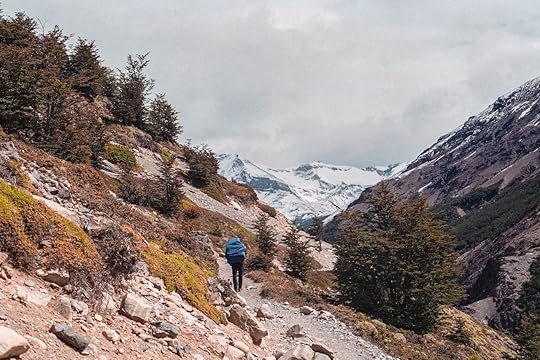
Photo: Jens Johnsson
Obviously, this depends on your travel style, but a lot of the amazing sites in Patagonia require some effort to get to them. Yes, you can just step off a bus and see Perito Moreno glacier without hiking, but for many of the other top attractions like the famous towers of Torres del Paine in Chile or Mount Fitz Roy in Argentina, some serious graft is involved. Make sure you’re prepared. Don’t rock up with brand new hiking shoes, or realize your pack is too heavy just an hour into a four-day hike. Think carefully about what gear you need, or don’t need — tents, camping stoves, food, clothing — there’s a lot to think about. Do some practice hikes at home to get yourself used to hiking with all your gear — it will make the experience immensely more enjoyable.
9. Be prepared for extreme weather.
The unpredictable weather is kind of a cliché of Patagonia — but it’s true. You can experience all four seasons in the space of an afternoon. Pack layers for easily adapting to the changing weather around you — from shorts to winter gear, and always be prepared for the rain and high winds at a moment’s notice. Then there’s the sun. The ozone layer is particularly thin over Patagonia, making the UV index really high. Protect yourself with hiking clothes made with UV-protective fabrics, and by wearing a hat and plastering on the sunscreen.
10. Be an environmentally conscious traveler.
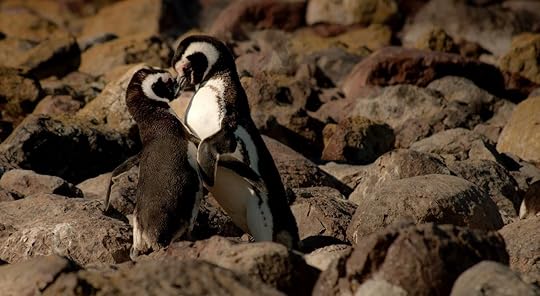
Photo: Paz Arando
Patagonia is all about the beautiful natural surroundings. With thousands of visitors each year, we all have a responsibility for keeping it that way, so think carefully about the impact of your visit and how you can mitigate it. For remote national parks, waste disposal is a big issue. Take a reusable plastic bottle which you can refill in streams and pack out all of your trash. Respect park rules about lighting fires. Forest fires started by hikers have had devastating consequences in Patagonia over the last decade. Stick to the paths to avoid trampling on delicate plants and causing soil erosion. There are loads of blogs out there with advice on how to be an environmentally-conscious traveler — so make sure you’re one of them!
More like this: 8 ways to save money on your trip to Patagonia
Plan a trip to La Paz, Mexico
Around La Paz, the capital city of Mexico’s Baja California Sur, locals are known as Los Paceños. The “Peaceful Ones,” visitors quickly discover, are proud to show off the culture, arts, and cuisine of their city — a trait that keeps the heart of La Paz beating strong even as the bigger and louder tourist towns of Mexico succumb to development. Many come for whale watching season — but that is far from the only reason travelers should escape to the city. Perhaps you’re seeking an experience only offered in truly authentic coastal towns, or maybe just a haven hideout from the region’s strikingly cold winds. No matter the reason, a trip to this laid-back capital town is worth the visit.
Plan a trip to La Paz, Mexico:
1. How to get there
2. Where to stay
3. Where to eat
3. What to do
How to get there
There are two main options for getting to La Paz: fly into San José del Cabo and commute two hours north or fly from Mexico City into La Paz. Flights from major US cities to Los Cabos can be as little as $350 and up to $550. To Mexico City, flights are often slightly cheaper at $200 to $450, and the connecting flight to La Paz can range from $60 to $160.
After landing in Los Cabos, it is easiest to coordinate hotel and transfer services through EcoBaja Tours, which will pick you up and deliver you to your destination, be it the airport to the hotel or the hotel to your day-trip destination.
Where to stay
Espiritu Santo Island
Photo: Rulo Luna
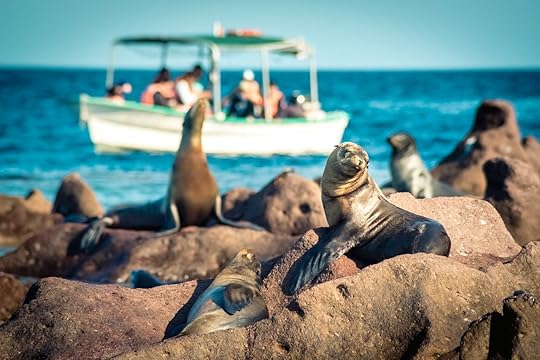
Camp Cecil elevates “glamping” by setting up camp on Isla Espiritu Santo, an island within Espiritu Santo National Park which is an UNESCO World Heritage Site in the Sea of Cortez. Guests are picked up at the airport or in Todos Santos and transferred across both land and sea to their retreat. Each tent features real beds, nightstands, chairs, linens, lanterns, towels, and rugs. Eco-toilets and showers are on-site and close enough to the real thing that adventurists will not even notice the difference. The resident chef prepares all meals and happy hours at the campsite’s Espiritu Xantus Café. Reservations are $350 per person per night, which includes transportation, all meals, accommodations and gear for kayaking, snorkeling, or paddle boarding. Check out the video below to get an idea of what it’s like to stay at Camp Cecil.
Costabaja Resort & Spa claims to be the first luxury hotel and spa in La Paz, though it is actually located on a small peninsula 10 minutes north of downtown. The resort hosts six restaurants, a fitness center, an infinity pool, a second pool with a swim-up bar, a shuttle that transports guests to the city center, and expansive views of both the Sea of Cortez and the cacti-dotted desert. Rooms average $140 per night.
Hotel Catedral is budget-friendly and located in a quiet but convenient nook of downtown. Local coffee shops, restaurants, art, the beach and malecón promenade are a short walk. The minimalist-chic interior is clean and features a rooftop bar and pool that overlooks the neighboring cathedral. Rooms are typically $75 per night.
Where to eat
Plaza in La Paz
Photo: Rulo Luna
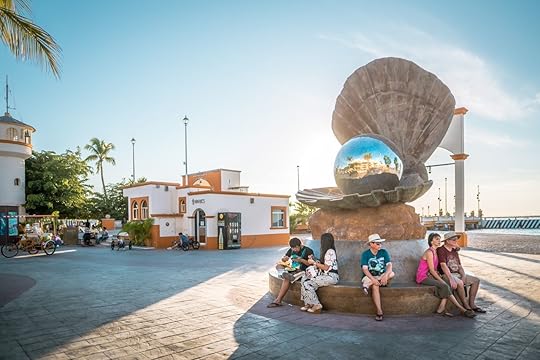
Wake up early for the cheapest and most authentic breakfast in town at the Mercado de Municipal General Nicolás de Bravo. Though there are several to choose from, this market offers the most and operates daily from 6AM to 4PM with the exception of Sundays when it closes early at 2PM. Arrive at Gorditas El Cacheton shortly after opening at 7AM to beat the crowd. Try a chile relleno taco or an empanada made fresh each morning ($1.35-$4).
Take lunch along the malecón at Bismarkcito with a breeze and a view of the bay of La Paz. Opening as a street cart in 1968, the restaurant now operates out of the three storage units it purchased to keep up with demand. Although known for its tacos, the stuffed chocolate clams, a local delicacy and some of the largest bivalves one can eat, is the dish to order ($5-12 for small to large entrées).
Located inside the expansive Costabaja Resort, Azul Marino skims the marina. Owned by two sisters, the fish served each night is caught by one and prepared by the other; however, visiting fishermen and women can bring their own catch of the day to be prepared. For a leisurely dinner, start with the fish tartar and end with crème brulée ($11-30 for mains).
End the day with a nightcap of mezcal tastings at La Miserable, an artful dive bar complete with a resident cat that presides over the cash register. Most are familiar with tequila, but its smokier cousin mezcal is rapidly growing in popularity. A two-ounce pour starts just under $4, but beer can also be ordered for as little as $1 or as much as $4 for local craft brews.
What to do
Balandra Beach
Photo: Rulo Luna
Day trip to Todos Santos, an artist’s town. Located at the half-way point between La Paz and Los Cabos, this easy day trip is essential to experience a desert oasis. Surrounded by a red, dry landscape, visitors will know they have arrived when greenery pops up outside the car window. From art galleries and stores displaying handcrafted silver products to locally-roasted coffee and freshly made pastries, the colorful facades and papel picado strung above the streets are a scene worth the drive.
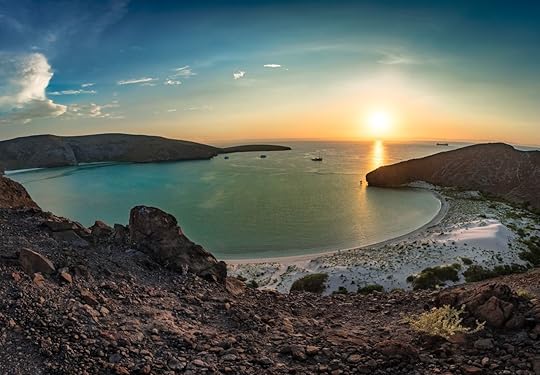
Visit Balandra Beach. At the northwestern-most point of the peninsula extending from La Paz, this beach has one beloved and renowned feature: the mushroom. Though it was once a free-standing phenomenon, the structure crumbled and was rebuilt after it was climbed by a visitor. The white sands and aquamarine waters hold their own as far as tourist vistas in the area. I recommend bringing sunscreen because a full day is barely enough time to fully take in this contrast to Balandra’s rocky alcoves.
Go SUPing in the bay of La Paz with Harker Board Co. after a day of lazily soaking up rays. Guests can rent equipment or take a class. It’s a great way to spot a stingray or a sea turtle.
La Paz is a famous destination for diving with whale sharks and sea lion pups, but from December to April, gray whale-watching takes precedence. The 30-ton animals migrate to the area to mate or give birth. Whales are easily spotted in the Sea of Cortez near La Paz, but for a memorable experience drive three and a half hours north to Puerto López Mateos. Choya Tours are led by marine biologists and will stop for breakfast in Ciudad Constitución before arriving in López Mateos, the Magdalena Bay marina. It’s estimated that there are 400 gray whales in the bay during this time of year. From the small boats, guests can often pet mothers and their young as they linger at the vessel.
Stop in the Museo de la Ballena back in La Paz to learn more about the evolution and conservation of whales in Baja California Sur. Both English- and Spanish-speaking guides are available to discuss the largest mammals in the ocean. Travelers that feel inspired to take action can aid gray whale and sea turtle research with Red Travel Mexico.
More like this: Exploring Baja

NASA images to rock your world
NASA is killing it these days with images from outer space. If your feed feels a bit limited by selfies and sunsets, you should definitely follow NASA on Instagram or Facebook and infuse your feed with otherworldly wonder. It really can be grounding to remember there is literally a whole universe (or more than one? a potentially infinite number of universes? Wait, what?) out there. In the meantime, here are ten phenomenal images from NASA to remind us we are so infinitesimally small and the world (and universe) is a beautiful place to call home.

1
Aurora Borealis
The space station catches the Northern Lights radiating from our home planet.
Photo: NASA

2
Mars
Remember when photos of Mars were grainy little pixilated things? We've come a long way, baby.
Photo: NASA

3
Deep space
It's a colorful expanse of infinity out there.
Photo: NASA
Intermission
Culture Guides
13 memories you have if you grew up in Michigan
Cathy Brown
Jan 31, 2018
Sponsored
8 amazing winter adventures in Colorado that don’t require a lift ticket
Tim Wenger
Jan 24, 2018
Sponsored
18 images that’ll make you book a trip to England’s Peak District National Park
Jacqueline Kehoe
Feb 12, 2018
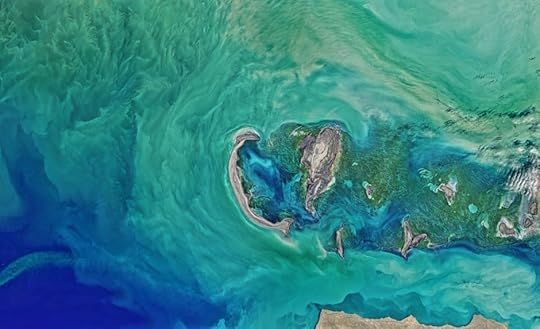
4
Ocean
The Caspian Sea as seen from space.
Photo: NASA
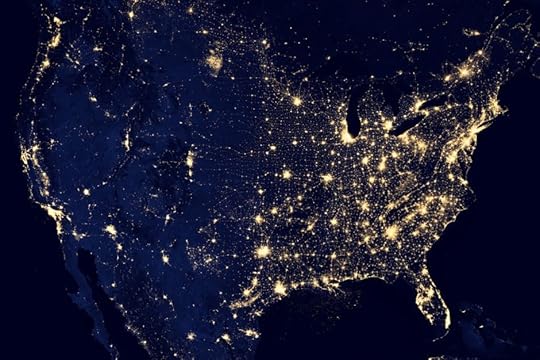
5
America
It looks so calm from this view.
Photo: NASA
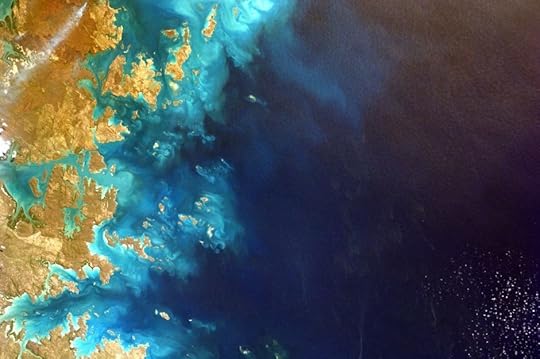
6
Australia
Specifically, Prince Regent National Park, as seen from space.
Photo: NASA
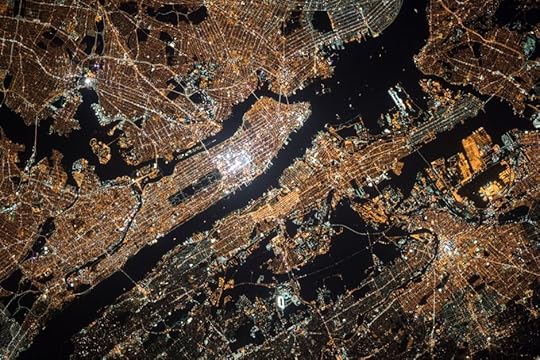
7
The City That Never Sleeps
New York City after dark, still wide awake.
Photo: NASA
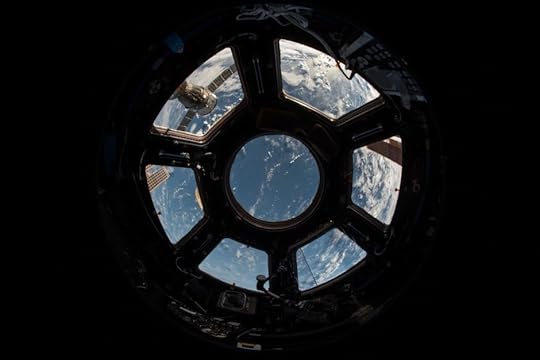
8
Hey there
Earth through the window of the space station.
Photo: NASA
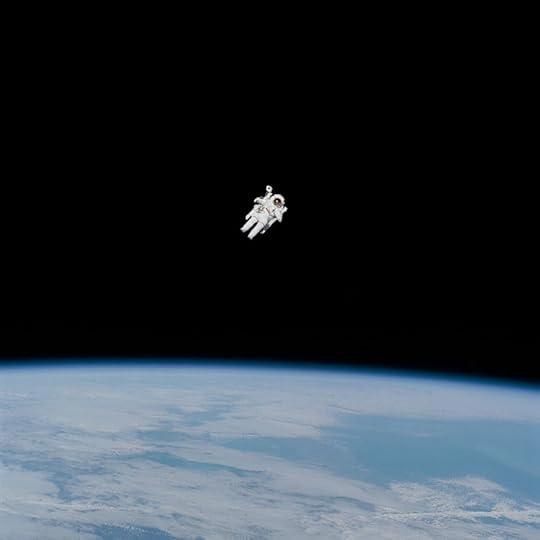
9
Float On
An astronaut takes a walk around the block.
Photo:
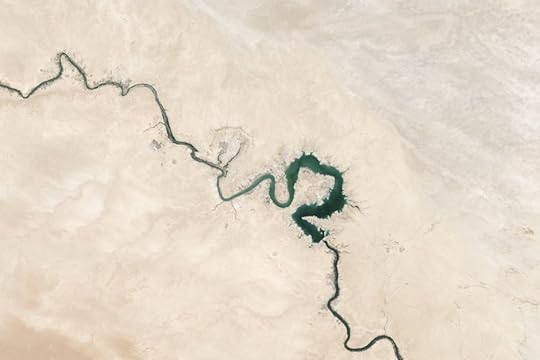
10
With Love
A river in Iraq reminds us we are all in this together.
Photo: NASA
More like this: These time-lapse GIFs of Earth are terrifying, courtesy of NASA

Mental breakdown overseas
Ten years have gone by since my first and only suicide attempt. I was in 9th grade and spent ten days in a psychiatric hospital. After being discharged, I attended a partial program, which pulled me out of school every day at lunch to attend group therapy. My excuses were endless:
“I got special permission to work a part-time job in the afternoons”
“I’m taking a class at the community college”
Etcetera, etcetera, etcetera… Most of my peers didn’t buy it. They would prod me with further questions that I refused to answer, too embarrassed to open up about my mental illness.
Through high-school, I swallowed a handful of pills every morning. My ever-changing diagnoses began with depression, generalized anxiety disorder, ADHD, and insomnia. I was begrudgingly medicated for each and every one of them until I felt nothing.
Fourteen years old and totally numb.
I got off the medications a few years later, and after some months of instability, my coping mechanisms became more effective and productive. I felt better, for the most part. My grades were weak, but I still got into one of my top-choice universities and did remarkably well in college, unmedicated. After studying abroad in three countries over two years, I decided to move to one of them after I graduated: Japan.
To be completely transparent, my symptoms came back in Japan with a vengeance. Debilitating panic attacks, social anxiety, derealization, lack of appetite, and gut problems plagued every waking moment of my life. For months, I had been fine living in my shoebox apartment in downtown Hamamatsu, going to work, teaching English, interacting with students and friends. I got along fairly well with my Japanese colleagues and was part of a prestigious government programme. For the first time, I had achieved true financial stability and I was putting my Japanese minor to good use. I thought I was happy.
So what could go wrong?
Well, I honestly don’t know what changed, but suddenly everything went dark and I stopped functioning completely. I lost weight rapidly, cried at work, stopped seeing my friends, and starting feeling like I wasn’t an active participant in my own life. I was going through the motions, but it was as if I just watched my routine happen from outside of my body. Helplessly, I withered away.
In Japan, mental health care is abysmal. Another participant in my government program died in a psychiatric facility due to the negligence of the hospital the same year I was there. I saw a Japanese psychiatrist who barely spent five minutes with me and sent me home in the same state with no medication or resources. The mental illness taboo in Japan makes actually getting treatment difficult and shameful. This taboo exists all over the world, but there are solutions that you can access on your own without confronting judgment.
So here’s what I ultimately learned from this experience:
Don’t alienate your friends and family.
They are the driving force of your social support network. If they don’t love you when you’re depressed, anxious, manic, whatever, then they don’t deserve you at your best. Focus on the people that matter, the people that will be there for you unconditionally. Don’t push them away when they try to help and try not to blow up on them when they don’t understand what you’re going through. You need them. Period.
Don’t let anyone shame you out of taking medication for your mental health.
Medication isn’t taking the easy way out. The idea of returning to the meds that numbed me as a teen left a sour taste in my mouth, but I knew that if I didn’t take them, I couldn’t function. I had one friend tell me that “medication is for people who don’t want to try.” Some people can’t understand what you’re going through. Ignore them and do what’s best for your wellbeing. Medication is a useful tool for recovery if you are comfortable with taking it. First, you have to research providers and which medicines are available in your country. Find a healthcare provider that is non-judgemental and will get to know your condition before writing you a prescription.
Seek online therapy in your native language if you need it.
There are countless resources for online counseling and some psychologists even offer distance sessions via Skype. A few options include TalkSpace or 7 Cups. Find out what your insurance will cover. Some of these services are more affordable than others, which is particularly important if you’re on foreign insurance that doesn’t cover mental health care. Be cautious when seeking out online counseling, make sure the therapist is licensed and HIPPA-compliant. Find out the costs and payment options beforehand. Talk therapy was the most helpful part of my recovery because I was able to release the negativity that was trapped in my brain and have a professional teach me how to cope. So I highly recommend it.
Find an international doctor’s office.
Depending on where you live, this may either be a tremendous struggle or pretty simple. Regardless, international doctors may hold less cultural prejudices on mental health. For example, I was able to get an emergency medication for panic attacks from an international physician in Japan, but not from a Japanese psychiatrist. If you are unable to find an international clinic in your area online, try consulting with a local or a coworker. You don’t have to tell them why you need to go
Create a support group with other expats.
This might sound a bit cheesy, but even just a casual invitation to a group of people that you trust to sit down and talk over coffee can turn into a mutually beneficial situation. Venting is therapeutic. Lend an ear to your peers and hope they’ll lend theirs in return.
Be as productive as possible.
Mental illness can lead to reclusive, lethargic behavior if you’re anything like me. Leaving your place of residence might feel like a major accomplishment. I’d see a movie, treat myself at a bakery, meet a friend for a hike, try something new. Try staying tidy so that your home environment won’t cause additional stress. And don’t forget to feed yourself while you’re at it.
Keep a journal. Get creative.
Creating a physical representation of your feelings can help liberate you from them. Invest in a journal that begs to be filled with drawings and writing. Get those smooth pens that are oh-so-satisfying as they glide across the page. Carry it in your bag or pocket, take it out when you feel anxious or inspired. Write your thoughts, draw your surroundings, do what feels good in that moment.
Try a meditation app.
I have Calm, but I’ve also heard great reviews of HeadSpace. They both have free and paid versions. Personally, I pay for Calm because I use it every day. If it works, great! If it doesn’t, at least you tried! If you have issues with panic/anxiety, use the free breathing feature to avoid hyperventilating or just to relax. You don’t even have to think, just watch and breathe.
Find an active hobby.
Whether it’s running, martial arts, cycling, climbing, swimming, it doesn’t matter, just pick something that requires movement. Get your heart rate up. This will override your body’s response to anxiety and attribute it to the physical activity. Additionally, most sports will put you into social settings, which can counteract loneliness. Making friends in a foreign country is hard, but having a shared hobby will make the process much easier.
Quit your job if you absolutely need to.
You can’t escape your mind, but you can escape your situation. You may hold a contracted position and the choice to quit and return to your home country can seem overwhelming. It certainly was for me. “What will I do about my lease? My bills? How do I tell my boss? Can I explain the real reason why I have to leave? Will they judge me? How will this affect my future? Hiring managers will think I’m flighty. I’ll never get another job.” These are thoughts that will probably cross your mind as you make this major decision. Feeling suffocated by the pressure of staying can worsen your condition. Put your mental health first. There is nothing more important. If ultimately, you do have to go home to seek more thorough treatment in your native language, that is totally up to you and nobody else. Sometimes staying isn’t worth it.
Remember why you moved overseas in the first place.
Best case scenario: you are able to work through your issues overseas. You’re determined to stay so make the best of the situation. What brought you to this place? The culture? The language? The landscape? Use this time to reflect on your life abroad: how this experience has shaped your character, how you have grown. Explore the places you’ve been putting off and the ones that moved you in the past. Realize how strong you are for enduring this adversity in a foreign country. Mental illness is not weakness.
Everyone will experience mental illness differently and recovery varies immensely from person to person. Some things will work for you and some won’t. This article is meant to help get you started with suggestions that may alleviate anxiety.
If you or anyone you know is having suicidal thoughts or harming themselves, please seek professional help and don’t give up on them.
The Suicide Prevention Hotline in the US is available 24-hours a day. Their number is 1-800-273-8255.
More like this: 7 ways to cope with depression while traveling

Humiliate yourself in Wisconsin
It’s okay if you are not an expert, but to not make a fool of yourself and be able to hold your own with basic small talk in Wisconsin, you should at least know the names of the coach and quarterback of the Packers. Another important fact to memorize is that we are definitely going to win the Super Bowl next year (whatever year that is).
2. Falling on black ice because you didn’t dress for the weather.
It happens to the best of us. The sun is shining and you are confidently walking down the street thinking that winter is actually not so bad and before you know it, you are kissing your knees and cursing whoever’s idea it was to make you live in Wisconsin. There’s no shame in that, especially if no one saw it — that pretty much means it never happened. However, if you fall because you are wearing those cute flats you bought from an off-season sale, then it’s your own fault and everyone is allowed to point and laugh.
3. Not knowing that Minneapolis is not in Wisconsin.
They just hosted the Super Bowl this year, we will win the Super Bowl next year.
4. Thinking everyone in Wisconsin is white and German.
Demographically, Wisconsin is definitely not California, but that doesn’t mean everyone in the state is white and walks around in lederhosen. Not only will you be missing out on some of the most vibrant parts of the state if you overlook the many active and growing communities of color, you will also sound pretty dumb.
5. Ordering a Budweiser at a local brewery.
You might as well go drink from the bubbler. And then just keep walking to that door and never come back.
6. Not singing “Roll Out the Barrel” at a Brewers game.
If you don’t get up and sing your heart out, you may get beer thrown at you. Just kidding, we wouldn’t waste our liquid gold on a party pooper like you!
7. Going to Wolski’s and not come home with a bumper sticker.
If you set foot in Wolski’s and don’t come out with that white and blue beauty to stick on the back of your car or proudly wear it around on your forehead the next day, you might as well get out of the state already.
8. Think that Milwaukee is like in the movie “Love Actually”.
We are honored to be brought to the world’s attention every year when families host their annual Christmas movie marathons, but we want to set the record straight about a few things. If you arrive in Milwaukee thinking that three random girls with Texas-sounding accents and nowhere-near-winter-appropriate attire will pick you up at a bar mysteriously serving only Budweiser, you are very much mistaken.
9. Interrupt someone during a Packers game.
Don’t call your aunt to catch up or confirm plans for next week if the Packers are playing or expect her to block your number before you can even say “cheese curd.”
10. Show up in Milwaukee on the 4th of July and expect fireworks.
Just make sure you change your red, white, and blue outfit into a blue and gold one before the next Brewer’s game and we might let you stay to see the fireworks at Miller Park when we score a home run.
11. Ask where the Indian Motorcycle factory in Milwaukee is.
Wisconsin is Harley-Davidson turf and here we definitely know who makes the fastest, baddest, and best-designed American motorcycle around.
More like this: 7 things Wisconsinites are total snobs about
Matador Network's Blog

- Matador Network's profile
- 6 followers

