
Matador Network's Blog, page 1394
February 27, 2018
Beast from the East hits Europe
Just about all of Europe is shivering right now thanks to the terrifyingly named “Beast from the East” cold front pouring in from Siberia.
Bringing temperatures well below freezing, the Beast has already led to the deaths of at least two dozen people across the continent, from Romania to France. Italian cities such as Rome, which is normally in the mid-40s (Fahrenheit) by February, are seeing dumps of snowfall shut down city schools and streets.


UK slang words
British slang will probably leave you “gobsmacked”. It’s a weird phenomenon which leaves many tourists puzzled, not understanding why “a storm is brewing” when there is sun outside, why they are served an evening meal when they ordered “tea,” and how to react when they are told “to do one”. Here’s a guide to some of the most interesting British slang, so you can better understand this hip culture.
Here are 18 slang words and phrases you need to know before traveling to the UK.
1. Buzzin’
Brits are not referring to the sound of the bees, so no need to run away just yet. Buzzin’ means to be slightly drunk and have the buzz on. When you are at the pub, you will probably be buzzin’ after a couple of pints. Buzzin’ is also a way to tell others you are excited. If someone just passed an exam, chances are, they are “buzzin’ mate!”
2. Chucking it down
Let’s get this clear: Brits use over 50 words for rain. We don’t like the rain, but it’s so common, it’s part of the daily life in Britain. You can’t avoid it unless you’re off on holiday somewhere warm. Chucking it down is a way of saying “there is torrential rain”. It’s the sort of rain which definitely requires an umbrella.
3. Bloody hell
The explanation for this one is a bit vague because Bloody Hell is a term used to express, anger, surprise, and shock. I guess you need to figure it out based on the conversation.
“What the bloody hell was that all about?”
“The dog needs to go out again — oh bloody hell.”
“Bloody hell, Amie, I think I’m in love with you.”
On the bright side, you can probably include bloody hell in any conversation. Chances are, it will probably make sense.
4. Gutted
Gutted used as a slang word has nothing to do with disembowelment. So worry not, nobody had their abdomen cut open. When someone tells you they are “gutted” it means they are just extremely disappointed. For example:
“I’m gutted, man, I didn’t even have the chance to get her phone number.”
5. Skint
When someone tells you they are skint, they’re not announcing they had a weird medical procedure, they are just informing you they have no money. You will hear this a lot amongst students especially and in the Northern cities in the UK.
6. Take the Mickey
Taking the Mickey, the Mick, the Michael, or taking the piss means making fun of someone. So next time someone is making fun of your new yellow raincoat, just tell them to stop taking the Mickey.
7. Gobsmacked
Being gobsmacked means utterly astonished. This type of slang is incredibly popular in the North in the UK and locals use it to dramatize. “I was gobsmacked to read that in the papers”.
8. Don’t be daft
When you have a conversation with someone in the UK, you will inevitably be told to not be daft. Being daft means being silly or foolish. This usually comes about in conversation when you ask someone a silly favor or apologize for putting too much milk in their tea.
“Hey Marc, sorry I ruined your tea.”
“Oh, don’t be daft.”
9. Tea
Northerners can be so confusing when they tell you they are off to get tea. One could even think that Brits really live to their stereotypes with their tea because, after 5 PM, virtually everyone is “off to get tea”. They are not talking about tea as in the beverage, but about dinner.
10. Dinner
Wait, so if tea is another word for dinner, then what could dinner possibly mean? In some Northern cities of the UK, dinner is another word for lunch. So when you visit Manchester from London and are asked to go to dinner, don’t assume it will an evening meal, but be ready for lunch.
11. Supper
Supper is referred to as the main evening course. It’s essentially the same as tea (dinner). However, in a certain region, people refer to supper as their late evening snack, after they already enjoyed their tea. Are you confused yet? The best bet is to just go along and eat as much as possible, at any time of the day.
12. This is mint
Not everyone feels the need to announce they found mint, as in the plant, growing at the side of the road. Mint is a slang for awesome. So next time someone tells you “mint” during the conversation, take it as a positive statement. For example:
“The concert was mint, mate”.
13. Brew
Brew is one of the most versatile British slang words.
“Let’s make a brew” is an indication that someone is about to make a cup of tea or coffee.
You can also say something like “Let’s brew a plan” in which case brew becomes slang for devising a secret plan.
And just to confuse you even more, some Brits love saying something like “a storm is brewing”. This means there is going to a storm, or in a personal conversation, it means there is going to be trouble or emotional upset.
If you arrive in the UK as a student and just made a best friend, chances are, you two are brew brothers (which means drinking buddies). Probably you will be spending a lot of time in the pub where you will quaff a brew (drink a beer).
14. Not too shabby
This is the reply you will get when you ask someone “How are you?” Not too shabby means not bad. It is also a term used by many sports fans in the football context.
“United scored 3 goals last night, not too shabby!”
15. Do one
Annoy a Brit and chances are, they will tell you to “Do one.” It’s basically classed as an insult and they are telling you (for shorters) to do a disappearing act. If someone tells you that, you might want to grab your coat, your umbrella and do one home.
16. Sound
Brits are not testing their hearing when they keep on replying to you by saying “sound.” It’s their way of saying that it’s all ok and it’s good, awesome. When you talk to younger generations, chances are, you will hear this in any standard conversation.
17. Chippy
When someone tells you “Let’s go to the chippy” you should absolutely say yes! The chippy or chipper is a slang for the fish and chips shop where you can get a bag full of chips, with pies, sausages, fried cod or haddock. Just be aware that in the UK, people put salt and vinegar on their chips, so make sure to specify if you only want one or the other.
18. You alright?
This is one of my favorite slangs as every foreigner in the UK gets really puzzled by the question. “You alright?” is just another way of asking “How are you”. Your reply should be something like, “Not too shabby”. 

More like this: British English vs. Kiwinglish: adapting to your destination without losing your identity
What not to do as tourist in Japan
We can all agree Logan Paul represents the very worst of humanity. His behavior in Japan is by and large the worst I’ve ever seen from expats. While people with any sort of common sense or basic decency certainly don’t need any explanation as to why what he did was wrong, they may be unaware of lesser offenses foreign visitors to Japan commit on a regular basis.
1. Speaking loudly.
Despite what others around the world might believe, this is not strictly an American problem. Even in a big city like Tokyo on the last train of the day, when plenty of people are tipsy and their inhibitions lowered, there may not be someone shouting at the top of his lungs, but there can be a few loud talkers.
What foreign tourists and residents of Japan often fail to consider is “reading the air,” a Japanese expression for adapting your behavior based on the situation. Even someone who speaks loudly on a train in which others are already talking may not necessarily do so if they’re quiet. The same applies to restaurants, offices, temples, museums, and even festivals. By all means, you don’t have to take a vow of silence on arrival in Narita, but pay attention to what those around you are doing.
2. Leaving bathroom slippers on.
By now, this habit is so cliché among western tourists visiting Japan it seems ridiculous to mention it. While most visitors know they may be expected to slip their shoes on and off at Japanese houses and hotels, as well as many businesses and restaurants, many are unaware of the existence of secondary bathroom slippers.
While many public buildings have no need for visitors to remove their outdoor shoes on arrival or when entering the toilet, others not only provide indoor slippers for common areas, but a second pair of slippers for bathrooms. Forgetting to remove your outdoor shoes is old hat by now, but keeping on the slippers that have been walking across water and urine? Good luck recovering from that cultural faux pas.
3. Blowing out but not sucking in.
From a foreign perspective, Japan is a series of contradictions in terms of social etiquette. On the one hand, it’s perfectly polite and encouraged to slurp noodles as loudly and messily as possible to show you’re enjoying them. In addition, when you’re sick, wearing a mask and sniffling to an almost ludicrous degree is socially acceptable.
It seems as though making noise when things are entering your body is okay, but letting them out is another thing entirely. Blowing your nose, even faintly, is frowned upon and a disgusting habit in Japan, as is spitting; you won’t see as many stains on the sidewalk associated with ground-up food, public urination, and chewing tobacco.
4. Listening carefully.
The way you listen to someone in Japan is a tough habit to break. While many foreigners have grown up learning to shut their mouth and maintain eye contact when someone is talking, in Japan, aizuchi is still the standard.
In a nutshell, aizuchi describes a collection of phrases and guttural sounds one should mutter during a conversation to show he is still focused on what the other is saying. Even though it may appear like one party is interrupting the other with a short aizuchi, just standing there and looking at them blankly is infinitely more awkward.
5. Walking on the wrong side.
Cars in Japan travel on the left side of the road, people on the right. Unless you’re in Osaka, then it’s left. Unless it’s Tuesday, then you switch to the right between 2:30-4:00 PM. Unless it’s a national holiday, then you stay on the left. Got it?
In reality, this isn’t nearly as confusing as it sounds. Cars do generally drive on the left and people do generally walk on the right side underground, with the direction of travel clearly marked on the floor in subway and train stations. However, on ground level, where there are no clear directions, this is another example of why reading the air is essential.
Sometimes I choose the left; sometimes I choose the right. It never feels like I make the right choice and I’m constantly avoiding collisions.
More like this: Why you don’t want to get on the wrong side of the law in Japan as a foreigner
Coyote Gulch in Utah
Our exploration of Utah by foot starts in a lesser-known place named Coyote Gulch. With my adventure buddies Doug and Chris ready to hike, eat, and hike some more, we packed up our car and made our way to the desert for a chilly trip along the bottom of a gulch.
1
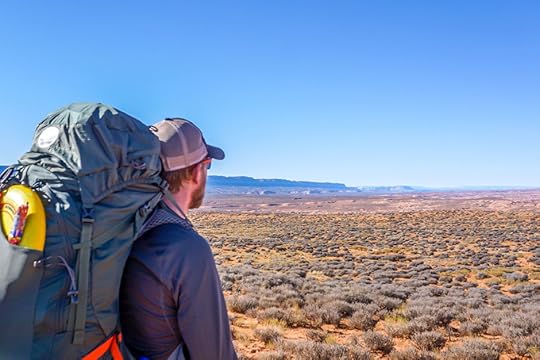
With a full pack, complete with Thanksgiving meals and a frisbee, Chris eyes the landscape. A world known as Coyote Gulch lies hidden among the red terrain before us.
2
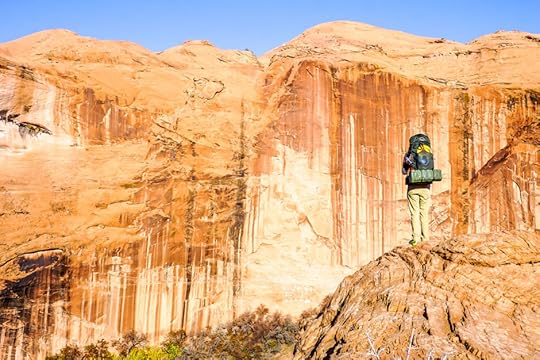
After a very chatty hike to the gulch, we arrive at its mouth and stand minuscule before the towering orange and red walls.
3
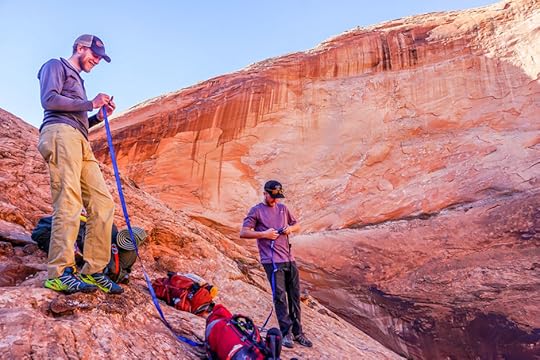
Packs in tow and not willing to trust our coordination, we prepare for a scramble to the bottom of the gulch. With occasional slips, a few hikers slowly move past us, and we quickly appreciate our decision to use gear.
Intermission
Culture Guides
13 memories you have if you grew up in Michigan
Cathy Brown
Jan 31, 2018
Parks + Wilderness
22+ spots that prove that our National Parks are the ultimate outdoor playground
Katie Scott Aiton
Apr 21, 2017
Sponsored
18 images that’ll make you book a trip to England’s Peak District National Park
Jacqueline Kehoe
Feb 12, 2018
4
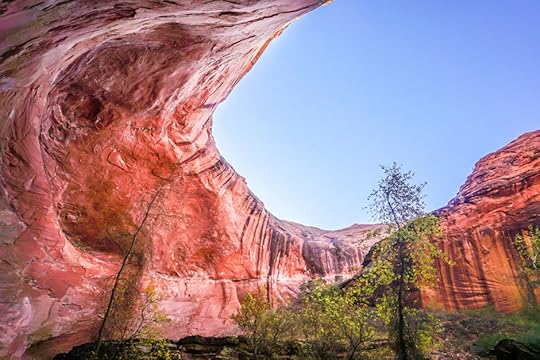
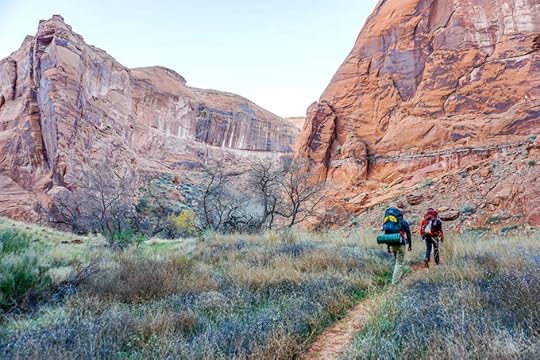
After we reach the bottom, we grab a few snacks and drop our packs before beginning the next segment of our hike. The walls stand like a fortress around us, and we move along their base, trying to avoid the water that runs along our trail.
5
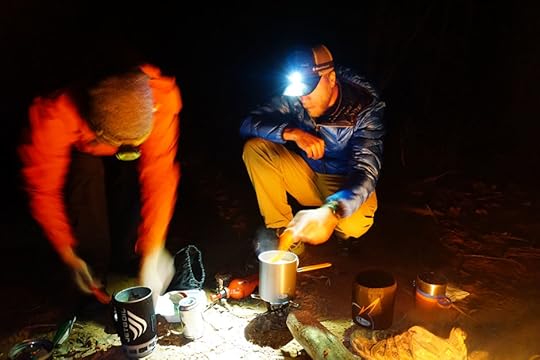
Full bellies give us the energy to begin our hike. Our dirty boots pad along the trail as we look for a cozy campsite with an open spot to stargaze and cook a nice and filling meal.
6
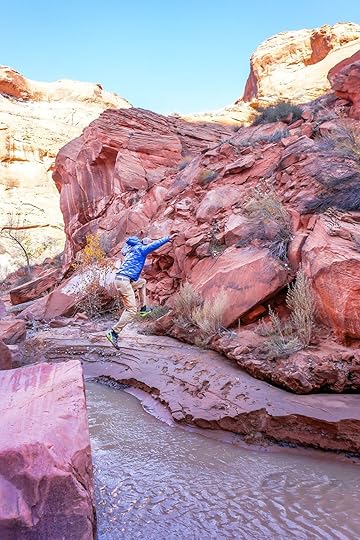
The sun disappears from the gulch early, as the natural walls block its rays from our trail. We find the perfect campsite in a grove and set up our tent as the last light disappears. Since no campfires are allowed in Coyote Gulch, we make our Thanksgiving meal on the stove, and we stuff our faces with an array of random foods that quickly send us into a well-deserved sleep.
7
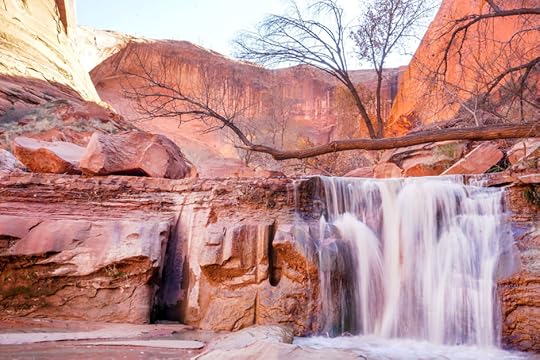
After an evening of stargazing and a chilly night, we wake well-rested and ready for a day of hiking. We plan to hike further down the gulch, return to our campsite, and hike out. We have a big day ahead of us, but the views make it all worth it. Chris jumps across the water to avoid getting his shoes wet. The entire gulch has water flowing through it, and it’s important to come prepared with proper footwear and extra socks!
8
One of the larger waterfalls has a perfect spot to stop for a snack. We munch on granola bars and fruit as the sound of rushing water puts us in a meditative trance.
9
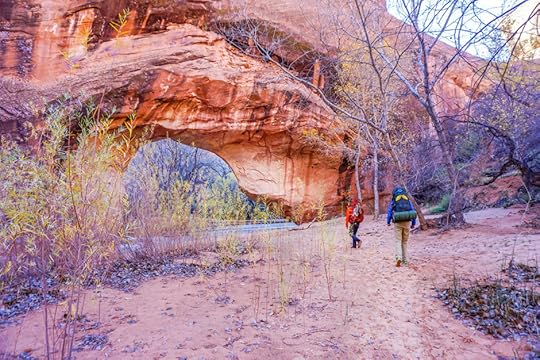
Keeping the early sunset in mind, we reluctantly head back to our campsite to pack up and snack up for our hike out. Doug and Chris make their ways toward a glowing natural arch - one of the places along our hike where the water in our path was unavoidable.
10
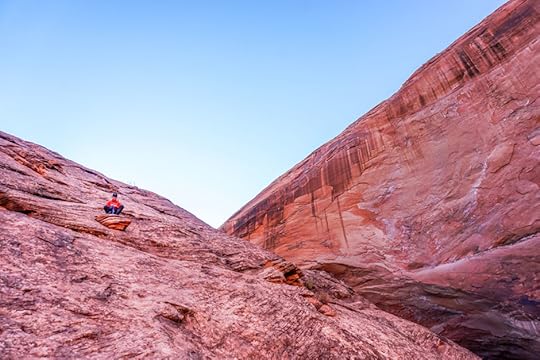
Doug perches on a rock preparing a rope to throw down to us. We have to ascend the scramble we clambered down, and opt to use gear to make it a little safer for us.
11
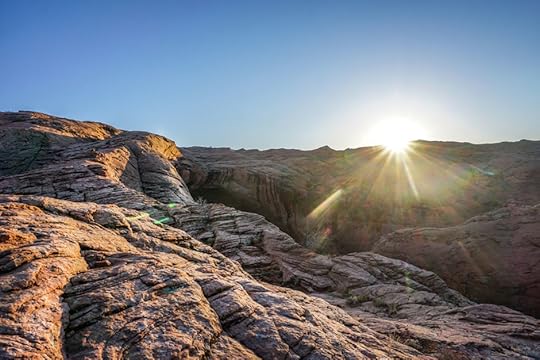
After a long day of packing, we reach the top of Coyote Gulch, hidden deep in a seemingly barren landscape. As the desert sunset paints our surroundings with radiant light, our footsteps carry us toward the car and we reminisce about our favorite spots in this lesser-known corner of Utah.
More like this: Hiking southern Utah

the next century of travel progress
Forget flying cars, in the 1910s, science-fiction writers and fantasists envisioned underwater blimp carriages attached to blue whales, cruise ships that could turn into trains, and personal winged jetpacks. While these inventions have not been delivered as promised (I’m also still waiting on my hoverboard), inventors and entrepreneurs continue to predict wild changes in how we travel. A new infographic from Globehunters reveals what we can expect in the next hundred years of progress, from passport-less travel to trips to the moon.

Photo: Globehunters
More like this: 10 predictions for the future of hotel travel

Alaskans explain to out-of-towners
Alaska is known for its rugged beauty and harsh living conditions. The culture of our 49th state is nuanced and only those who call it home can appreciate its quirks. Of its 700,000 residents, nearly half live in the urban centers of Anchorage, Fairbanks, and Juneau. The other half is scattered about the remote bush country in places where moose outnumber people. It’s in those areas the oddities of Alaskan life are most pronounced.
Here are 10 things rural Alaskans have to explain to out-of-towners.
1. Rubber boots are the only footwear you need.
It doesn’t matter how many shoes we have in our closets, they’re all pushed to the back and seldom see the light of day. No Sourdough worth their salt spends much time outside in anything other than Xtratuf rubber boots. The Alaskan sneaker is as much a part of the state as bears and bald eagles, and there’s one thing you never let anyone borrow, it’s your ‘tuffs.
2. Putting on a little weight over winter.
You can’t fight it. Winter is for getting fat. It doesn’t matter if a typical December day only has an hour of dim sunlight, Alaskans still find a way to pack in a breakfast, lunch, dinner, and a bedtime snack. There’s something about the cold weather, warm interior of a cabin, and the lack of anything else to do that makes eating an entire pie seem perfectly normal. There will be plenty of time to melt away the extra layers of blubber when summer rolls around.
3. Having a dirty coat.
It’s not so much a coat as it is a second skin. That fancy nylon puffy jacket that was so clean in October invariably looks like it was dragged through a ditch by March. It’s because we Alaskans never take them off. For someone in the lower 48, warm layers might be something to wear outside while scooping snow off a sidewalk. You’re not a real Alaskan until you’ve spent half the day shuffling around in your living room zipped into a hooded parka.
4. Knowing how much salmon you can buy with a bucket of blueberries.
In the lower 48 shoppers assess the value of groceries based on the discounts earned with their Super Saver card. We have our own brand of commerce, much of it transacted in trade. You better know if a cord of cut firewood is equal in value to ten pounds of freshly caught halibut. A sage trader knows a bucket of roofing nails is a fair swap for twelve jars of homemade blackberry jam. Alaskan life would be much easier if everything was barcoded, but it isn’t.
5. Summer sleep is for wimps.
You know you’re in Alaska when you invite your friends over for a summertime barbecue — at midnight. Winter is for sleeping. Summer is for doing stuff. Unless your bedroom windows are covered with sheets of black plywood, the never-setting sun will always stymy your best efforts to sleep. For new Alaskans, daylight bingeing has consequences and the lack of good sleep finally catches up. It’s not uncommon for a greenhorn to lose 48 hours to a much-needed nap. Hopefully, they make it to a bed when their eyelids slam shut.
6. This year’s PFD payout better be enough to buy a new kayak.
When the oil industry discovered black gold within Alaska’s frozen north, the state saw an opportunity to leverage the find for everyone’s benefit. Established in 1976, the Alaska Permanent Fund puts every resident in the oil business with annual cash payouts. Some years the state cuts checks for up to $2,000 per citizen. For a family of four, that’s enough to pop for a trip to Disney Land, or at the very least a splurge purchase of some sort. Long before Alaskans know how much they’re getting for the year, they’ve already spent it ten times in their heads.
7. It is perfectly normal to watch a dozen movies back to back in one sitting.
In November, it feels self-indulgent and lazy to waste time on the couch with a movie. As the days get progressively shorter and darker, it becomes easier to burn through several flicks in a single sitting. By March, you’ve watched every Star Wars episode so many times you start to wonder why Jar Jar Binks got such a bad rap. He wasn’t that bad. Before spring breakup arrives, you finally lose an entire week watching Groundhog Day on repeat on the off chance the story changes.
8. The lower 48 might as well be on Mars.
When asked to attend a wedding, graduation, or some other life-event in the lower 48, the Alaskan’s common response is always, “Sorry, can’t make it.” Getting in and out of the state is not only time consuming, it’s expensive. Why spend money and time getting to Wisconsin when you can get to a beach in Tahiti for the same amount of hassle?
9. The penalty for scamming Alaskan Unemployment Insurance.
Whether you earn your keep fishing, prospecting, or fleecing tourists, the economy is heavily influenced by high and low seasons. Even a banker in a port town might be out of work in winter. For many residents collecting unemployment, compensation is just another means of paying the bills. For others, it’s a way of funding a few weeks in the tropics –– which is illegal. Not to suggest it’s common practice, but more than a few margaritas in Baja have been funded by Alaskan Unemployment Insurance and phone calls to VICTOR, the program’s automated payment system.
10. Love thy neighbor, even though he’s a complete jerk.
Social skills are not to be taken for granted in the small hamlets of the bush. Your neighbor might be rude, foulmouthed, and ill-tempered, but you never know when you will need his help to dig out of a snowstorm or make a favorable trade of goods. When you need them, even bad neighbors are good to have around.
More like this: 10 things Alaskans don't blink an eye at
Bartender expressions
Part of entering any new industry is learning to speak the language. Life behind the bar is no exception. It’s not just cocktail recipes and beverage knowledge that you have to brush up on. You’ve got to speak like a bartender.
1. 86
Okay, so we technically share this term with the servers and back of house, but 86 can mean two different things. In terms of food or beverage, 86 is the term we use when we run out of something. Chartreuse is on backorder? 86 The Last Word. The fryer is broken? 86 onion rings for the night. You can also 86 a customer, typically for bad behavior, which means that customer is no longer welcome in your establishment. We caught you doing drugs in the bathroom again? 86 Frank.
2. Clopen or cl-open
The dreaded close-open scenario. If you work at a bar or restaurant that is open during the day, at some point, you will get stuck working the closing shift (depending on the bar that could be working till 5 AM), then you have to drag yourself back first thing in the morning (potentially 7 or 8 AM) to set up for day service. So if your brunch bartender seems particularly cranky one morning, she might have just “clopened”. Typically, this is a last-resort resort scenario if coverage is needed, but if you are a newbie on staff, this could be your scheduled shift until you earn your stripes.
3. Staff meeting
Typically called just after the staff has handled a big rush, the staff meeting is when the front of house (bartenders, servers, runners, chill managers) assembles at the service bar for a quick shot. On a really busy night, multiple staff meetings might be needed, for the morale of course.
4. Service bar
At restaurants or bars with table service, you typically have a bartender (or bartenders, depending on the size of the place) who handles the bar customers, and another bartender who works service bar. The service bartender makes all the drinks for the guests at tables. This position is great for new bartenders perfecting their cocktail skills and for grumpy bartenders not known for their people skills.
5. The pass
The entrance to the bar. Often a wood panel that can be raised (or crawled under) for access behind the bar, though many bars have an open entrance. Usually where you find the service bar and the server station so that servers can quickly grab the drinks to deliver to tables. It is bad etiquette for bar guests to congregate around this station because it makes it very difficult for the servers to maneuver.
6. The point
The point refers to the end of the bar closest to the door. This is usually the highest trafficked area and the main focus for the bartender serving the bar customers.
7. Cutting
This term when we send staff home for the night. Often, there is an opening bartender who arrives first and does the setup, and a closing bartender who is there until the bitter end of the shift. On busy nights, there might be swings, who work shorter shifts to help with the rush. As things start to slow down for the night, we cut the opening staff and swings because you don’t want extra staff in the tip pool unless you need them.
8. Pooling
When the bartenders (and potentially servers) assemble all the tips from the night and then use a point system, based on hours and position, to divvy up the tips. This system works best at smaller establishments where teamwork is essential.
9. Burning the ice
At the end of the night, bartenders must pour or run hot water over their ice bins in order melt all remaining ice. Then the whole bar can be properly wiped down.
10. Industry
At my first NYC restaurant job, my manager pointed to a table and said, “Send them dessert, they’re industry.” I sent them some tiramisu, but I was very confused. Perhaps other industries use the same expression, but, as bartenders, if we call someone “industry,” it’s because they work at a bar or restaurant as well. If we can, we always try to hook them up in some way. One, because we know what it’s like to serve others every day and we want them to feel taken care of. And two, industry types are the best tippers.
11. Boomerang
When a bartender sends a drink or shot to a bartender friend at a different bar. Typically packaged up in a jar with some masking tape and transported by a loyal regular. The farther the shot travels, the better the boomerang.
More like this: What bartenders actually think of your drink order
February 26, 2018
Find job and move to Spain
Spain is one of those effortlessly charming places that pulls you in with its delicious ham and ubiquitous wine, crazy tomato fights, and no pasa nada attitude. If you’ve ever visited and thought: “Man, I wish I could live here,” you’re not alone.
While it’s easy to enjoy the Mediterranean sunshine and a sweet afternoon nap, finding a job and relocating here is not so much.
As someone who’s lived in Spain for two years and done a variety of jobs, from party promoter to sales manager, juice maker, and boutique salesperson, I’ve seen it all.
If you’ve got serious intentions to make the move, then read on.
How to get a job and move to Spain:
1. Figure out what permit you need
2. Six ways to find a job
3. Obtain the two major documents
4. Celebrate over a caña
1. Do you need a permit?
When it comes to figuring out whether you need a job or a permit first, it’s a kind of a “chicken or egg” situation.
Here’s the simple answer:
If you hold a passport from one of the European Union countries, along with Norway, Iceland, and Switzerland, you’re automatically allowed to hop on a plane and come over. Working in Spain for EU citizens is completely legal and doesn’t require a special permit.
Many EU citizens move to Spain before they have a job and apply on the spot. In fact, some come for vacation and fall in love with the country so they never end up going home.
If you’re here for longer than 90 days, you should get yourself a national identity card (NIE), regardless of what country you come from.
If you come from a non-EU country, you’ll have to do a little more paperwork and it’s a good idea to secure a job before moving.
Citizens of the United States, Canada, Japan, and these countries can come in on a visitor status for up to 90 days without a special permit.
Other countries require an entry visa meaning that you’ve got to get your papers right or they won’t let you on the plane. Here is a list of countries which require a visa.
If you come from Australia and are between 18 and 30 years old, you can apply for a working holiday visa and have the most productive vacation of your life.
If you’re one of the 1,000 lucky Canadians aged 18-35 who fit the quota for the year, you can come to Spain on working holidays, as per a youth mobility program between the two countries.
Once you’ve locked down the job, your employer will need to apply to get a permit for you (just a gentle reminder to be nice to your HR officer, as the bureaucracy they deal with is too real).
2. Six ways to find a job in Spain
Get ready because finding a job in Spain can be a wild ride. While the country has almost recovered from the financial crisis that began in 2007, finding a position you enjoy that also pays well can be tough.
There are a few ways to approach your job search.
Walk around with your CV in hand.
If you’re coming from North America, this can seem like an intimidating and downright strange way to look for a job. After all, isn’t this why we have the internet, so we don’t have to go do things in person?
If you rely on e-mail and online contact forms in Spain, you’ll be waiting at home forever. People generally won’t give you much attention until you show up in person and prove your existence.
What many expats do is print out a stack of CVs and walk around. In Barcelona, for example, you’ll see many “salesperson/waitress wanted” notes posted on window shops and bar doors.
While this process may be exhausting and discouraging at times, the benefit is that it gives you the chance to make a great first impression. This is something that you can’t do over the web.
The types of jobs you can find are usually in the service industry, ranging from retail to cooking, and hospitality (receptionist, wait staff, tour guide, pub crawl guide, party promoter).
Do seasonal and odd jobs.
Some popular seasonal jobs are bartending where English speakers are in demand, especially in the central areas. The best months to find such jobs are May and June, as tourists flock to Spain from all over the world.
A popular seasonal job is to be a party promoter. The bonuses of the gig are that, in most cases, you can make uncapped commission and get to party. The downsides are that this gig will be over at the end of September at best, so don’t expect to build a career out of it.
Expect these jobs to pay in cash.
Start a freelance teaching/tutoring business.
If you’re a native speaker of English (most popular), French, German, or can teach a skill such as playing piano, you might want to start your own business.
What people do in this case is print flyers offering their services around town and wait for clients to come to them.
“What about taxes?” you might ask. Great question. In this case, you need to apply for an autonomous permit and pay taxes monthly to the government.
Go to a staffing agency.
If you’re looking to build a career in Spain rather than bounce from one gig to another, going to a recruitment agency is a great idea.
You’ll meet with a recruiter who will suggest a position based on your experience and interests and connect you with the company.
In Barcelona, for example, you can land a position at one of the many startups that look to create a highly international environment and grow quickly. Some of the most popular positions up for grabs at startups are engineers, data scientists, sales professionals, account managers, and technical writers.
Do a short-term volunteer gig.
Organizations such as Worldpackers and Workaway let you volunteer all over the globe in exchange for free meals and board. You’ll find plenty of places in Seville, the Balearic Islands, Tenerife, Barcelona, and Galicia where you can bartend or do a photography gig for a few weeks.
You don’t need a special work permit. You can do these volunteer projects on a “visitor” status.
Search on Facebook.
While we tend to think of Facebook as a place to watch cat videos and waste time, it’s actually very helpful for job hunting in Spain.
Join expat groups in your area. You’ll see job postings and the chances of finding something international that suits your taste is quite high.
3. Assembling your documents
If you want to work in Spain, you need two major documents:
NIE (Número de Identificación de Extranjeros)
which is a unique identification number you are assigned. In order to obtain one, you have to make an appointment which can be tough in large cities like Barcelona.
The cost of obtaining an identification card is between 10 and 20 EUR.
Once you manage to schedule an appointment, make sure to bring your passport, work contract, and a filled-out application.
Tips: if you live in a major city, try booking your appointment in a small town nearby. Show up at least 30 minutes in advance, as people start to line up. Bring a copy of everything, just in case. The NIE office will not make photocopies for you.
Any employer (unless you hand out fliers on the street) will need your NIE in order to give you a job, so get it done ASAP.
Social security number
This is your individual taxpayer number. Once you have your work contract, bring it along with your NIE and passport to the office nearby. This process is slightly easier and faster than getting a NIE.
4. Celebrate, you’re done!
While it may seem like a hassle to get a job in Spain, the benefits definitely outweigh the inconvenience.
The Spanish attitude towards enjoying life is unlike any other. Dining with friends and family for hours, playing guitar at quiet plazas, and enjoying homemade wine will help you achieve a work-life balance.
More like this: How to find a job and move to Iceland
American tourist mistakes in Paris
Self-deprecating humor, or at the very least a strong ability to laugh at yourself, is an essential tool for traveling abroad. The same goes for living in a city constantly filled to the brim with tourists. There’s a dose of humor involved anytime normally coherent citizens are taken out of their element. Still, it seems there are certain quaffs made more often than others.
Can common mistakes made by tourists be avoided? We took to Quora, along with Matador’s back catalog of editorial content, to find out. Stop #1: Paris.
On the tendency to attempt to do too much in a day
Diana Arneson on Quora starts us off by commenting on the all-too-common tourist practice of overbooking your time. “Trying to squeeze too many landmarks into a short space of time, to the exclusion of two of Paris’s chief joys: exploring, and just sitting and watching the world go by,” she says. “People tend to underestimate how much time it takes to get from one attraction to another, and to overestimate how important it is to get a selfie by those famous landmarks.”
“I like the idea of gradually becoming acquainted with a place,” Matador contributor Chris Adair explains in recounting a quick 3-day trip to Paris. This seems in line with Martin Blanchard’s opinion in the Quora thread: “Do not spend too much time in Champs Elysées, even if the view is iconic, it is really not a good place to feel the Parisian way of life and you will meet more tourists than actual locals.”
W Kasmer added: “Paris is not that small and lines even for security (assuming you have a museum pass or pre-purchased entry tickets) at some museums can be time-consuming.”
On Parisians’ disdain for overdoing it at breakfast
I fell victim to this on my first and only visit to Paris. I awoke hungry, only to find that the hotel breakfast consisted of pastries, coffee/tea, and more pastries. Parisians, and Europeans in general, in my experience, don’t do breakfast the way that Americans do. “Breakfasts are smaller, and so are the hotel rooms,” Martin Blanchard noted on Quora.
I see my mistake. “Expecting big, hot American breakfasts to be easily available,” according to Diana Arneson. “They’re not the norm in France — the standard is more likely to be fresh bread and perhaps a croissant, with a glass of juice and your choice of coffee, tea, or hot chocolate. Some places offer a breakfast buffet that also includes ham, cheese, boiled eggs and cereal, but you have to hunt around a bit if you expect to get eggs, pancakes, bacon and/or French toast.”
On Americans’ obsession with cars
“In Paris, car access is much more complicated than in US cities,” noted Martin Blanchard. “America is a very car-centric nation (especially away from the coasts) and American cities are designed around car access. Paris really isn’t,” Iain Compton added via the Quora thread. “Don’t assume you’ll need a car and don’t limit your transport options to taxis/Uber/etc. The RATP network covers pretty much everywhere in Paris at most of the times you’ll need it and your tourist ticket is valid on buses, trams, and the RER, as well as on the metro. Additionally, Paris is a relatively small city (geographically speaking), walking is often an option — many times it is the best option.”
I echo this sentiment. On our first night in Paris, my wife (who’d been there before) surprised me with a walking tour of the city, spanning about three hours and concluding with the Eiffel Tower. I will never forget that night.
On the café culture
This one was too good not to share via Ludovico Altana on Quora. The French take dining and the café lifestyle seriously. In that light, the cafes of Paris aren’t designed for the ‘Whole Foods’ crowd. Ludovico concludes where we’ll begin: “Food is serious business there, folks.”
Here we go:
“This happened in a small, fairly touristy café near Montmartre a couple years before I actually lived in Paris (I was on vacation with my parents).
While I’m trying to sip at my piping hot soupe à l’oignon, I hear two American women in their late twenties, fairly well dressed; I peg them as big-city, Whole Foods types. They sit down, and order a glass of white wine each. Typical.
As well as, they order — to share —– a fondue bourguignonne, known to them as “fun-do”. Interesting, I ponder. They didn’t look like big meat eaters. See, fondue bourguignonne is this: small chunks of beef you fry to your desired doneness in a fondue pot full of oil.
Surely they were expecting the world-famous fondue suisse, the one with the bread and cheese. They were. A few minutes later, a bowl of chunks of cold, raw beef is brought to their table.
Screams.
The waiter tries to explain the situation, in his best grammatically-perfect-but-heavily-accented English. They’re having none of it; the menu should have said it was meat. No, they don’t want to order something else. They leave.”
On hitting the different neighborhoods
Matador contributor Kate Robinson broke down the neighborhoods of Paris in this piece, noting the styles and attractions of each. On that note, visitors should expect subtle differences and specialties throughout the city’s neighborhoods.
Oh, and a good pair of shoes to get between the areas is helpful. “Seriously, you will have to walk further than you are used to,” noted C. Elizabeth Carter. “If you’re sightseeing, don’t wear heels, flip-flops, sandals, or trainers. Paris is hard on the feet and worse on the feet when it rains. Well broken-in shoes and a spare pair of socks are key.”
The bottom line: Go to Paris (just keep your wits about you)
Tired feet, messed up orders, and feelings of self-consciousness aside, the bottom line is this: Just go! You’ll never become a better traveler if you never travel. Chris Adair put it perfectly: “If there’s one thing I learned for absolute certain on this little junket, it’s that Paris has the power to very efficiently refresh one’s sense of artistic and cultural curiosity.”
More like this: This is how to capture Paris' tourist sites without being cliche
Best time visit Hawaii
It’s hard to pinpoint a time of year most desirable to visit paradise. Hawaii enjoys year-long beautiful weather with only two real seasons — summer (from May to October) and winter (from November to April). With the summertime average temperature at 85 degrees paired with it being “dry season,” a visit during summer means some serious fun in the sun. Winter is known as the “wet season” with localized rains bringing about the beautiful lush landscapes Hawaii is well-known and loved for. Visitors can enjoy flowing waterfalls and watch surfers ride the big waves synonymous with winter in Hawaii. Plus, cooler temperatures, hovering around 78 degrees, make for prime hiking and outdoor adventure weather.
The best times of the year to travel to Hawaii:
1. When should I visit, exactly?
2. What about hurricane season?
3. Christmas in Hawaii
4. The biggest events of the year in Hawaii
1. So, if Hawaii is a paradise year-round, when is the best time to visit?

Photo: Kalen Emsley
Some of best times to travel to Hawaii include December – April for being warm and welcoming during a time when the mainland is cold and snowy. It doesn’t hurt that humpback whale migration season is during the winter, so spotting a whale during your trip is a possibility. Another great time to visit Hawaii is in the fall (October); most of the summer rush has fallen away, lending you uncrowded trails, restaurants, and festivals.
2. Should I worry about hurricane season?
While travelers might be concerned about Hurricane season in Hawaii, which is from June through November, the last major hurricane to hit the Hawaiian Islands was Hurricane Iniki on the island of Kauai in September of 1992. Hurricanes in this region of the world usually travel from east to west. The islands’ biggest defenses against hurricanes are Mauna Kea and Moana Loa, the enormous volcanic mountains on the eastern end of the state on the Big Island of Hawaii, which “shield” inclement weather from the other islands.
3. What’s it like to spend Christmas in Hawaii?
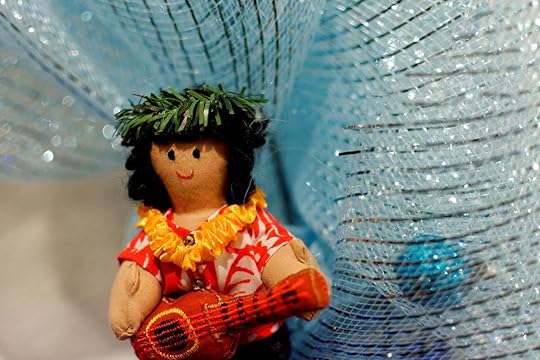
Photo: Daniel Ramirez
Instead of building snowmen like back home, people are building sandmen on the beach. Santa in Hawaii wears an Aloha shirt, and in the beginning of December, he cruises ashore Waikiki beach on an outrigger canoe in front of the Outrigger Waikiki Resort. The Honolulu City Lights festival includes an electric light parade through the city complete with marching bands, performers, and a Christmas tree decorating contest inside of Honolulu Hale (pronounced hah-leh). The Polynesian Cultural Center, the largest cultural center in the Pacific that celebrates six different Polynesian island nations, features live hula, selfies with Santa, and real snow for children to play in. Where else could you go from a fire spinning performance to playing in the snow?
Celebrating Christmas in Hawaii is special because Hawaii enjoys an amalgamation of cultures and traditions, yet traditionalists will still feel at home in Hawaii: the Hawaii State Ballet performs the Nutcracker at the Neil S. Blaisdell Center every year.
You might decide to attend the largest holiday craft show in the state at the Neil S. Blaisdell Center in mid-December where you can find homemade jams, bread, sweets, jewelry, pillows, clothes, and more. Don’t forget to grab an ornament where Santa dons an aloha shirt and shorts to hang on your tree back home.
4. The big events
Chinese New Year
Mid-January — Mid-March (varies)
Hawaii’s population is multi-cultural, lending way to a variety of unique celebrations throughout the year. The ushering in of the Lunar New Year is celebrated with Chinese New Year’s Day. Oahu’s Chinatown district hosts traditional lion and dragon dancing at the Chinatown Cultural Plaza, and nearby restaurants offer traditional dishes and snacks like Nian gao (or Chinese New Year Cake made of glutinous rice), noodles (try Little Village Noodle House), and manapua, or steamed buns with savory fillings like char sui pork (check out Sing Cheong Yuan Bakery).
Punahou Carnival
February
Private preparatory school and former President Barack Obama’s alma mater, Punahou School, hosts a 2-day carnival every year in February whose proceeds go to benefit their scholarship fund. A tradition spanning back to 1932, the Carnival is now hosted by the junior class and features a variety of carnival rides and games, as well as homemade local goodies like malasadas, or Portuguese fried doughnuts, fried noodles, bean soup, and homemade crafts, flowers, art, and more.
POW! WOW!
February
Termed after the Native American “Pow Wow,” describing a gathering for the purposes of culture, art, and music, POW! WOW! Is Hawaii’s week-long celebration of the arts. Street artists from around the world fly in and makeover Honolulu’s Kaka’ako district with various mural projects, while galleries host open houses, creative spaces are brimming with live art demonstrations, and concerts fill the streets with music.
Honolulu Festival
March
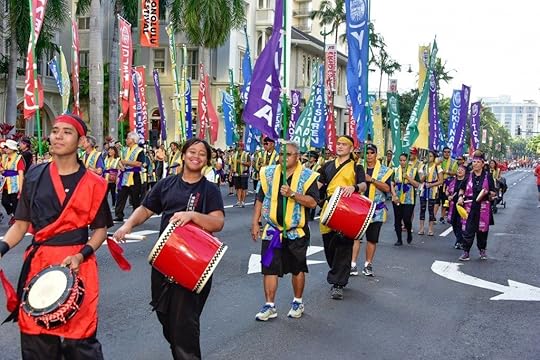
Photo: Honolulu Festival
Honolulu Festival is a chance to celebrate not only what’s uniquely “Honolulu,” but also the relationship between Hawaii and its neighbors like Tahiti, Japan, Australia, Taiwan, and the Philippines. Meant to unify attendees under a theme of “Pacific Harmony,” the weekend-long festival is free and includes an exhibition hall filled with performers, arts and crafts sellers, and food vendors. Cultural demonstrations like having your name ink-written in Japanese are available. The event’s culmination is a large parade down Kalakaua Avenue through the heart of Waikiki where attendees can enjoy hula dancers, drummers, marching bands, and dragon dancing.
Merrie Monarch Festival
April
Merrie Monarch Festival is held annually in Hilo on the Big Island of Hawaii and perpetuates hula and the Hawaiian culture. Known as the “Merrie Monarch,” King Kalakua sought to unify the Hawaiian Islands through practicing hula (among other cultural traditions) during a time when Hawaiian beliefs and traditions were suppressed by Christian missionaries. As such, the annual week-long hula festival commemorates King Kalakua by calling it “Merrie Monarch Festival.” Celebrating over 50 years of hula, the festival remains a strong draw for locals and tourists alike; revelers enjoy watching both traditional and modern hula, group competition, as well as bearing witness to powerful Hawaiian chants.
Lantern Floating Festival
Memorial Day (May)
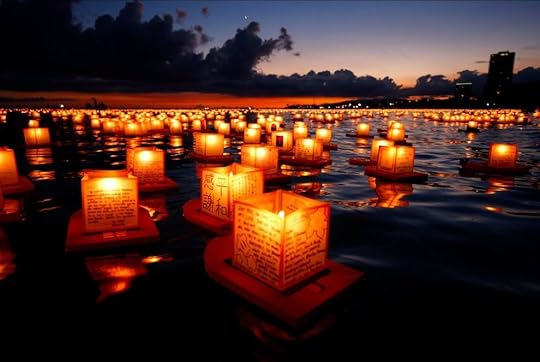
Photo: Lantern Floating Hawaii
Imagine thousands of floating, fire-lit lanterns launched off of one of the busiest, most beautiful beaches in Hawaii, and you have an idea of how the people of Hawaii celebrate and mourn their lost loved ones. Every Memorial Day, thousands gather at Ala Moana Beach Park for the Lantern Floating Festival to remember and honor those who were lost during service to their country. The ceremony includes an opening oli (or chant), hula, torch lighting, blessing, and the release of the lit lanterns. Prayers and remembrance are offered for all — war victims, victims of disasters and disease, and even extinct plant and animal life.
50th State Fair
May — June
When school’s out for summer, what better to take its place than a carnival? The 50th State Fair is held at the Aloha Stadium and offers all of the thrills and entertainment you’d expect from your neighborhood carnival. Think Ferris wheel rides, churros, cotton candy, swings, and a fun house. E.K. Fernandez, a local show and entertainment company, is committed to flying in some of the best circus acts, performers, and spectacles like monster truck rallies and barnyard animal races.
Kamehameha Day
June
Kamehameha Day is a public local holiday in Hawaii that celebrates King Kamehameha the Great, the King who unified the Hawaiian Islands when it was still a monarchy. A giant floral parade marches down Kalakua Avenue complete with fragrant plumeria flowers, ukulele players, and island floats that represent each main Hawaiian Island. Expect to see men and women adorned in beautiful costumes, paying homage to Hawaii’s ornate pageantry days.
Hawaii International Film Festival
October
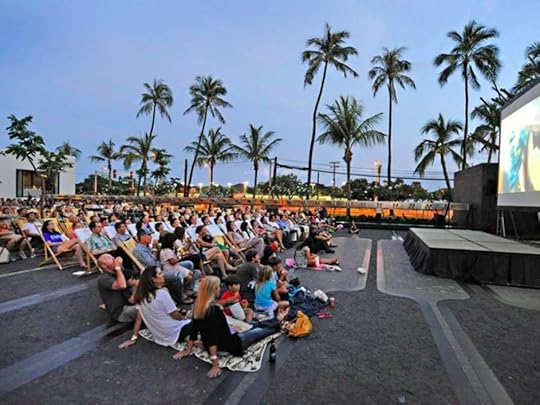
Photo: Hawaii International Film Festival
Hawaii International Film Festival (HIFF) started as a project by the East-West Center at the University of Hawaii at Manoa — in 1981, the festival just showed six films. Since then, the festival has grown in popularity — nearly 70,000 international film fans flock to Hawaii every year to watch 150 movies and shorts about or by Asians, Hawaiians, and Pacific Islanders. The festival focuses on films whose themes convey social and cultural ideas. The festival is notoriously inclusive; most films are shown at regular movie theaters throughout the islands and often showcase first-time filmmakers.
Halloween
October 31st
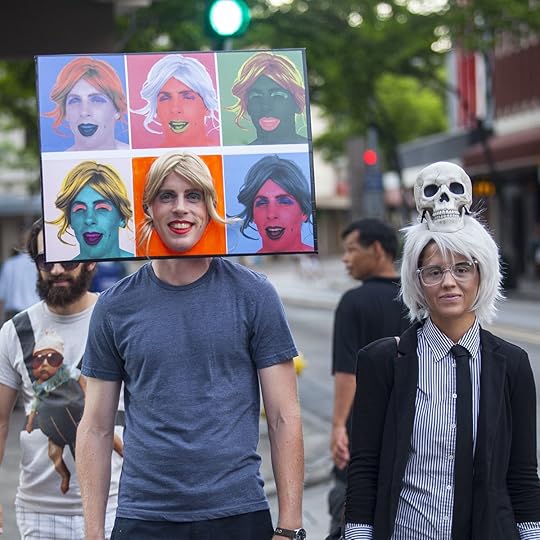
Photo: HallowBaloo
Hallowbaloo, an epic block party in Chinatown’s Arts District, is one of Oahu’s hottest draws for Halloween weekend. Usually held the Saturday before Halloween, Hallowbaloo is a chance to get dressed up in your most unique costume and head for the street festival which comes alive with music, entertainers, and food vendors. One of the craziest parties of the year takes place on Halloween night in Waikiki. Streets are filled with party-goers in costumes, and an annual costume party contest is held, but the real reason to venture out to Waikiki on Halloween night is for the people watching.
Hawaii Food and Wine Festival
October
Foodies delight: Hawaii hosts its very own food and wine festival in the fall, which takes place over the span of three weekends on multiple islands. Featuring the top local chefs and ingredients, farmers, and fisherman, the Hawaii Food and Wine Festival is a great opportunity to sample some unique dishes you can only find in Hawaii. Known for its Pacific Rim, Pan-Asian, and Hawaii Regional Cuisines, the food and beverage offerings in Hawaii demand a seat at the table of culinary big dogs worldwide.
Ironman
October
Considered to be the most prestigious triathlon in the world, Ironman takes place in October on the Big Island of Hawaii’s Kona Coast. Over 2,000 athletes will compete for the coveted title of “Ironman,” but the race isn’t for the faint of heart. It is comprised of a 2.4-mile swim, a 112-mile bike ride, and a full 26.2-mile marathon! The winner will earn bragging rights for life.
Kona Coffee Cultural Festival
November
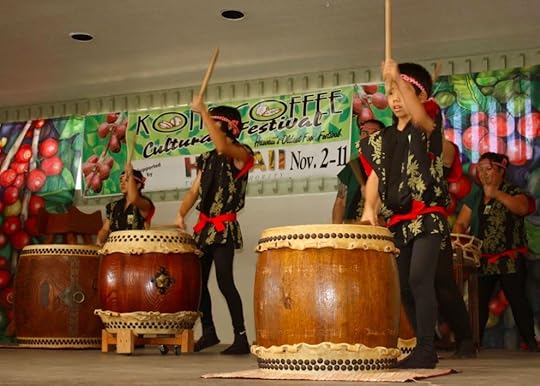
Photo: Kona Coffee Cultural Festival
Hawaii is the only US state that grows coffee, and it just so happens that Kona Coffee, grown on the Big Island of Hawaii, is some of the best and most expensive in the world. Every November, around 50 events over the span of 10 days revere the beloved beverage. Attendees can attend coffee tastings, art festivals, and even watch a Miss Kona Coffee earn her crown.
Vans Triple Crown of Surfing
November — December

Photo: Guy Kawasaki
Hawaii is the birthplace of surfing, so it’s fitting that a series of surfing events invades Oahu’s north shore for some serious big wave surf contents. Going 35 years strong, the Vans Triple Crown of Surfing includes three events each for both men and women. Professionals only need apply — waves can reach as big as 50 feet or more in height. Attendees are welcome to attend events held throughout November and December, throw a blanket on the beach, and watch the pros do their thing.
Honolulu Marathon
December

Photo: Honolulu Marathon
The fourth largest marathon in the US, the Honolulu Marathon is held annually in Honolulu and draws participants in from all over the world. The traditional 26.2-mile jaunt is difficult, as even in winter the sun can be strong. Hawaii’s mountainous terrain is challenging, but with no time limit for participants, the race is known to attract many. The course starts downtown, winds through Waikiki, then goes up to Diamond Head, Oahu’s extinct volcanic crater. The finish in Kapiolani Park has live music, vendors, and merriment abound.
New Year’s Eve – Party of the Year
December 31st
What could be better than ringing in New Year at the biggest party of the year? Held annually at Aloha Tower Marketplace in Honolulu, this behemoth festival is not to be missed. Over 30 bands and DJs perform on 9 stages and areas, a food truck rally features some of Hawaii’s best eats, and a giant fireworks show helps usher in the new year with style.
More like this: Hawaii: Where to go, what to see, do, eat and drink
Matador Network's Blog

- Matador Network's profile
- 6 followers

