
Matador Network's Blog, page 1381
March 16, 2018
JetBlue free ticket to the sunshine
In case you haven’t heard, the weather is just miserable in Boston right now. The city is currently waiting for its fourth Nor’easter in a matter of a few weeks, which will likely dump more snow on top of the 15 inches already covering the city.
In a move that is sure to inspire hope, as well as fierce jealousy among some Bostonians, JetBlue is offering residents of both Boston and San Diego the chance to swap cities with two round-trip tickets. The catch is that Boston applicants have to convince a friendly San Diegan to give up the sunshine of Southern California for the bitter, I-can’t-feel-my-toes weather of Massachusetts.
A post shared by Worcester Airport (@flyorh) on Mar 14, 2018 at 12:53pm PDT
Surprisingly, the pleas are actually working — some San Diegans are offering to trade places for a few days, taking on the Boston cold themselves. Turns out some people find things like snow, skiing, and hot cocoa by the fire “charming.”
Additionally, JetBlue is now expanding the contest to anyone having a particularly nasty winter, as well as anyone who is willing to forgo a little sunshine for snow.
In order to enter the “Flip the Forecast” travel promo, applicants just need to share a video of themselves on Instagram explaining why they need an escape from the weather and where they want to go. Judges will grade the entries based on “creativity,” “storytelling,” and “desperation.”
To enter, tag your post with @JetBlue, #Fliptheforecast, and #contest. The promo ends on March 18th, so you better get to work if you want to see a sunny beach by the end of the month. 

More like this: 40 most scenic beaches worldwide
The post JetBlue will give you free tickets to escape the winter cold, if you can convince someone to switch cities. appeared first on Matador Network.


Steve the Purple Aurora
If you have ever witnessed an Aurora Borealis, you probably didn’t take a deep breath while admiring one of the great wonders of our universe and think to yourself, “now that’s a Steve.”
Yet, that is what amateur Canadian scientists decided to call a new kind of Aurora in a paper that was published on Wednesday.
Their new discovery started about four years ago when Chris Ratzlaff (“aurora chaser” and co-author of the research paper) offered to show Eric Donovan (an associate professor of physics and astronomy at the University of Calgary) pictures of what Ratzlaff called a “proton aurora” after a guest lecture in 2014.
Meet Steve, a new type of purple aurora discovered by amateur astronomers in #Alberta: https://t.co/DCnMYt1953. #AlbertaAuroraChasers #Northernlights @AuroraMAX Photo: K. Trinder pic.twitter.com/CWMZx9yxaz
— CanadianSpaceAgency (@csa_asc) March 15, 2018
But Donovan was skeptical that the aurora was what the scientists thought it was — proton auroras can’t be seen by the naked eye and the photographers wouldn’t be able to snap a picture of it. “There is such a thing as proton aurora, but it’s always subvisual so they wouldn’t even know to point a camera to take a picture of it,” said Donovan.
Then Ratzlaff showed the professor something he had never seen before — a purple aurora that arced over the plains of Alberta in a shimmering band.
Donovan told Ratzlaff that this was a new discovery and that they needed to come up with a name for it. Ratzlaff came up with “Steve.”
Elizabeth Macdonald, a space physicist at NASA Goddard Space Flight Center in Greenbelt, Maryland, who led the research team, classified Steve as a type of “subaural ion drift”, (the flow of energetic charged particles). But the fact that you can see Steve, like you can for the aurora borealis (Northern Lights) makes it a truly unique discovery.
While “Steve” was intended as a placeholder name, the authors decided to stick with it, making an acronym after the fact to fit the nickname: “Strong Thermal Emission Velocity Enhancement.”
So, if you ever find yourself in Alberta at night and you spot a little strip of purple sky shimmering by itself, you can now shout, “Hi Steve!” and be scientifically accurate.
More like this: Here’s what the aurora borealis looks like from space
The post appeared first on Matador Network.

$156 million dropped from airplane
Picture this: It’s dark and bitterly cold — negative 40 degrees Fahrenheit, let’s say — and you’re bundled up walking through a remote city in Siberia with a flashlight. Perhaps you have a thermos containing a piping hot (and potentially alcoholic) beverage in the cupholder of your backpack. Oh, and your backpack is extremely heavy…as if there are gold bars in there.
Your mood? Ecstatic.
This may sound like bollocks; however, local residents of Yakutsk, Russia this week flocked to the local airport in a frenzy amid reports that USD $156 million of gold bars had fallen from a Soviet-era plane down onto the runway and bushes surrounding the airport.
The Antonov AN-12’s lower hatch was accidentally forced open during takeoff, releasing more than nine tons of precious metal worth a reported $156 million, according to Russia’s Investigative Committee. The reports spread quickly on social media, prompting locals to head to the airport to collect the bounty.
Une publication partagée par Родоки и Марти (@rodoki_ykt) le 15 Mars 2018 à 8 :31 PDT
As it turned out, the bars were actually doré, a composite of both gold and silver. Still, not a bad take for a night’s walk in the woods. It remains unclear if any were fortunate enough to find some. Reports stated that any who did and failed to report their find would be prosecuted. However, an Instagram video from a local posted today shows that people are still scouring the fields, so many still seem to believe in finders keepers.
More like this: Terrifying chairlift malfunction spinning in reverse leaves brutal injuries
The post A plane in Russia accidentally dropped $156 million worth of gold bars from the sky appeared first on Matador Network.

3D-print tiny homes
With the cost of living skyrocketing in cities around the world, it’s about time someone came in with an affordable solution. Enter ICON, a startup aiming to bring 3D-printed tiny homes first to developing parts of the world and eventually to the United States. With living conditions and affordable housing remaining a global issue, ICON aims to fill the gap with a simple idea: 3D-printed tiny homes.
They’re not just all talk, either. Their printer, dubbed The Vulcan, was unveiled for the first time this month. Along with the non-profit New Story, which works largely in Haiti and El Salvador, ICON recently completed the first ever permitted 3D-printed house. The two brands hope to be major players in the fight against homelessness worldwide, providing 600-800 sq. ft. homes for $10,000. Eventually, with growth and improved technology, the company hopes to drop the price even further — potentially to as low as $4,000.
“Conventional construction methods have many baked-in drawbacks and problems that we’ve taken for granted for so long that we forgot how to imagine any alternative,” said ICON co-founder Jason Ballard on the company’s website. “With 3D printing, you not only have a continuous thermal envelope, high thermal mass, and near zero-waste, but you also have speed, a much broader design palette, next-level resiliency, and the possibility of a quantum leap in affordability. This isn’t 10% better, it’s 10 times better.”
New Story plans to spread the love to similar organizations in the future, with the aim of fighting homelessness and bringing affordable housing issues around the world. “Imagine if we could slash the cost and time it takes to build a home while improving quality and customization,” said New Story COO Alexandria Lafci on the company’s website. “This 3D-home printer has that potential. Change is an open-source pursuit so we are not building this technology for New Story, we are building it for the world. Our goal is to power our sector, every government, and organization building homes for the poor, to do their best work.”
Will we be able to buy a plot of land and 3D print a tiny home on it? Time will tell, but one thing is certain: it’s hard to beat a $10,000 house.
More like this: These tents could be the future of refugee camps around the world
The post This startup plans to 3D print affordable tiny houses to combat homelessness around the world appeared first on Matador Network.

Brutal chairlift malfunction Georgia
A lift at Georgia’s Gudauri Ski Resort reportedly suffered an engine failure, resulting in a ropeway malfunction that caused lift chairs to careen backward towards the bottom turnstile at a high speed. Multiple skiers were thrown from the lift while some were caught underneath a detached chair. Others jumped from their chair as they approached the turnstile and crawled their way to safety.
Follow Matador on
Vimeo
Follow Matador on
YouTube
Skiers at the lift’s bottom could be heard yelling in a panicked manner for others to jump from their chairs, and for employees to stop the lift from running. Georgian Health Minister David Sergeenko confirmed at least eight injuries, according the news site Agenda.
“Among the injured are Swedish and Ukrainian citizens,” Sergeenko told Agenda. “Only two cases need to be monitored. One of the injured, a Ukrainian citizen, broke his hand during the incident, and has a small head injury, while a Swedish citizen is pregnant and feels pain in her waist.”
The two prominent injuries have been transported to Tbilisi for treatment. As of publication, there were no fatalities, and the remaining injuries were minor. Gudauri Ski Area sits at 7,200 feet (2,200 meters) and is part of Georgia’s Greater Caucasus Mountain Range.
More like this: 25 things you need to know about Georgia
The post Terrifying chairlift malfunction spinning in reverse leaves brutal injuries appeared first on Matador Network.

Free Interrail passes for teenagers
Traveling by train is a romantic way to explore the world, but when a monthly ticket to ride around Europe costs 510 EUR (630 USD) and there are cheap airlines offering deals left and right, you leave the glamour behind and choose what makes the most sense for your wallet.
This summer, teens around Europe won’t have to compromise whimsical for practical because the European Commission set aside 12 millions Euros for 20,000-30,000 teenagers to get a free Interrail pass for a full month of travel.
Prepare yourself to see lots of backpack-laden kids with big smiles and corny looks on their face in train stations all over the continent because a whole bunch of 18-year-olds will be riding trains, buses, and ferries to go from Dublin to Budapest via Ljubljana and Riga for the low low price of nothing.
All 18-years-old from the 28 member states will be able to apply and travel all over the continent on some of the most scenic train routes in the world. Details of the application have not been released yet, but keep your eyes peeled because when they do, the tickets will go fast.
The idea behind this initiative is obviously for young people from all backgrounds to connect with other European nations and develop a European identity, but it’s likely to bring much more than that to future participants.
Interrail is a rite of passage into the world of traveling that often results into a life-long travel addiction. If you’re still not convinced that you need to jump on this opportunity to travel Europe by train for a full month, hear this: I met my life partner and best friend of 9 years thanks to an Interrail ticket. That’s the beauty of throwing caution in the wind and traveling slowly for a while, you get to meet characters you’d never talk to in an airplane and you may even fall in love during the process.
More like this: Five incredible small European towns you can visit by rail
The post The EU is giving a month of free European train travel to teenagers this summer appeared first on Matador Network.

Best places to enjoy spring blooms
Spring has come to the northern hemisphere. One of the sure fire ways to know winter is over is by seeing color come back into the landscape. Blossoming trees are a sign of new life and new beginnings and they are pretty damn dramatic to look at, too.
Here are some of the best places to enjoy the blossoms this spring.
1. Tokyo, Japan
Spring is practically defined by the cherry blossom. Many cities around the globe pride themselves on the beauty of their sakura trees — D.C., Vancouver, and Seoul all hold dedicated festivals — but why not head to the source?
Petals drift down in surreal snowfalls that cover the wide, black paths of Tokyo’s Imperial Palace complex. From here, you can walk along a carpet of softest pink to Yasukuni Shrine, where the combination of spiritual tranquility and seasonal beauty invites visitors to linger longer than they planned.
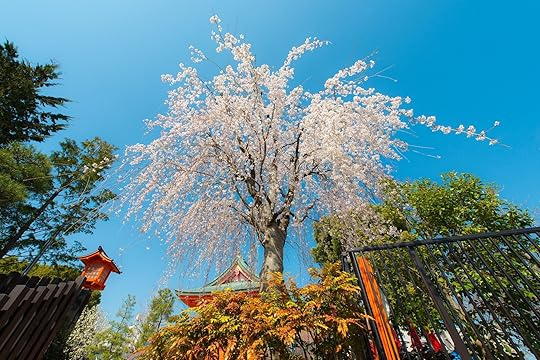
Photo: JordyMeow
Of course, the capital is one among hundreds of venues for sakura sightseeing in Japan. The imperial charm of Kyoto’s parks and shrines provide an excellent backdrop for the blossoms, while Nagoya, Kamakura, and Osaka are also popular destinations.
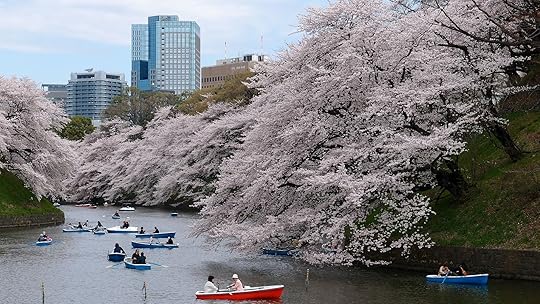
Photo: Pexels-2286921
When the flowers appear depends on the latitude, climate, and recent weather of each location. As of now, recommended 2018 viewing times are March 22 in Tokyo, March 25 in Kyoto, March 23 in Fukuoka, and March 25 in Osaka.
Schedules for these and other regions can be found here.
2. Lisse, Holland
The Dutch tulip is another spring specimen of world-class renown.
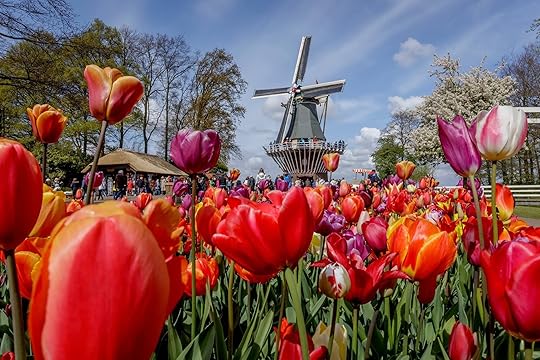
Photo: Visit Keukenhof
Amsterdam’s floating flower market of Bloemenmarkt is good for a splash of fragrance and color in any season, and flower history buffs can tour the city’s tulip museum.
But it’s Lisse, a town 40 kilometers southwest of Amsterdam and well-served by public transport, that’s home to the world’s largest flower garden, the Keukenhof.
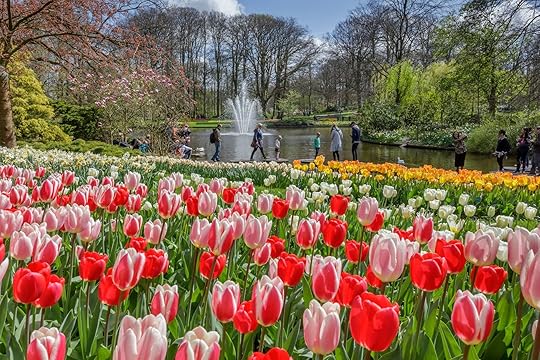
Photo: Visit Keukenhof
Open from March 19 to May 21, 2018, the vast grounds of the Keukenhof feature over 7 million flower bulbs, many of them tulips. In addition, boat tours, workshops, and bicycle rentals are available, ensuring an overdose of springtime fun.
3. The Lake District, England
A cradle of bucolic scenery year-round, England’s Lake District reveals something special each spring when daffodils erupt across the hills and dales.
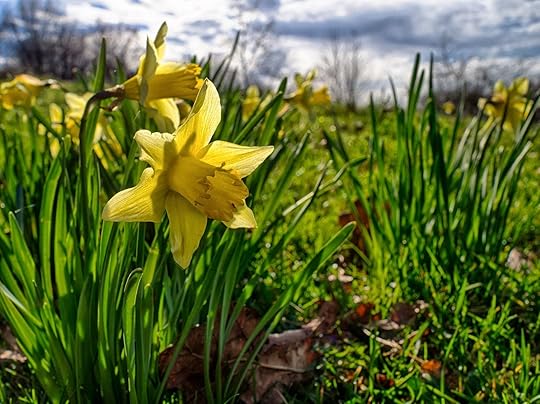
Photo: Johan Neven
This is where Wordsworth “wandered lonely as a cloud.” If you’re seeking poetic inspiration or just a pleasant stroll through the golden daffodils, fit Lake District National Park into your itinerary.
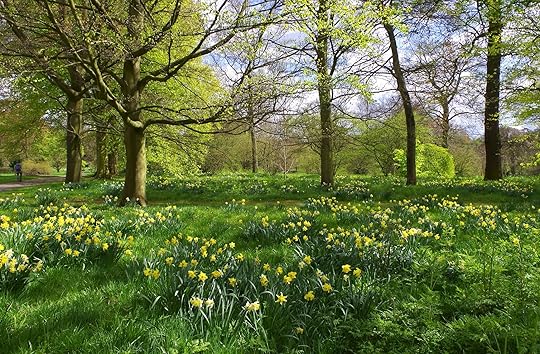
Photo: Swallowtail Garden Seeds
The town of Ambleside hosts its Daffodil and Spring Flower Show this March on the 17 and 18, but the blooms will be going off throughout April as well.
4. Chappell Hill, Texas, US
There’s a species of lupine so beloved by Texans that they named it their state flower back in 1901. Each spring, the bluebonnet carpets the plains and Hill Country of eastern and central Texas.

Photo: wgooden
These blossoms are at their peak in April, and the Chappell Hill Bluebonnet Festival is held mid-month accordingly. Ask the locals and they’ll be happy to tell you this is the only “official” bluebonnet festival in Texas.
Yet, it’s just as easy to spot blue-hued meadows along state highways, thanks to a wildflower seeding project prompted by former First Lady, Lady Bird Johnson.
If the flowers on their own aren’t enough for you, consider an outing along the Texas Bluebonnet Wine Trail. This network of East Texas roads traverses prime bluebonnet country while connecting you to more than half a dozen local wineries.
5. Perth, Australia
If traveling at the start of the year is not posable when September rolls around, head to Western Australia for a second-chance spring.
Perth, Western Australia, is the place to be, where the annual Kings Park Festival lasts all month.
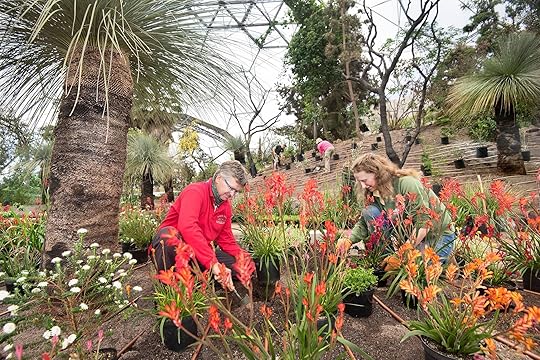
Photo: Kings Park and Botanic Garden
Live music, art installations, and cultural performances add to the attraction of the flowers blooming throughout the park and botanical gardens.
For the flower obsessed, the tourism board of Western Australia suggests a three-day itinerary heading north out of Perth.
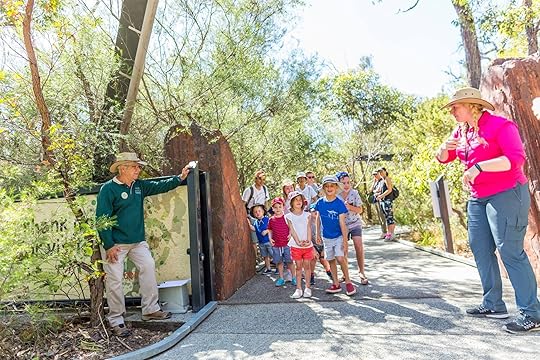
Photo: Kings Park and Botanic Garden
Thousands of species bloom in this region of the country, making it the ideal destination for enjoying spring Down Under.
More like this: 21 unique and spectacular trees and forests around the world
The post The 5 best places to see spring blossoms in their peak appeared first on Matador Network.

Volcanoes to see up close
There is something deeply hypnotic about watching a fire blazing. Anybody with a fireplace, a wood stove, or a love of campfires knows what I’m talking about — you can just sit for hours looking at the flames dancing. I have developed a theory about this fascination: fire, despite being dangerous, is at the core of our humanity, and somewhere deep inside the layers of our brains, we remember it as the true beginning. The same goes for volcanoes. If you’ve ever watched the footage of a volcano erupting, you know how hard it is to take your eyes away from it. You know it’s deadly, but the spectacle is a reminder of where we come from, of the rawness and fragility of the planet we are temporarily living on. Lucky for us, there are active volcanoes out there that we can explore and observe up close. They are only a hike, a boat ride, or a cable car away, so get off your seat in front of the Yule Log and go witness the Earth’s fiery power.
1. Kilauea, Hawaii
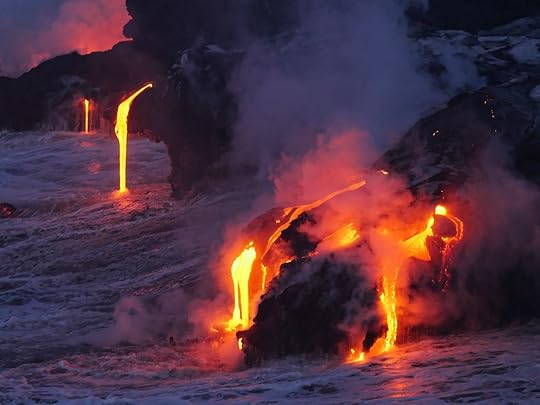
Photo: Marc Szeglat
There are not one, but three active volcanoes located on the island of Hawaii (Hualalai, Mauna Loa, and Kilauea) and you can easily check them all out. That said, Kilauea is the only one of the three that’s been erupting continuously since 1983 — the other two have not erupted in a little while — so this is the one you want to focus on.
There are many tour companies that will take you on boat rides to witness the Kilauea lava flowing into the ocean. Note that the lava does not enter the ocean every day, so you should check the status of the volcano before heading all the way there.
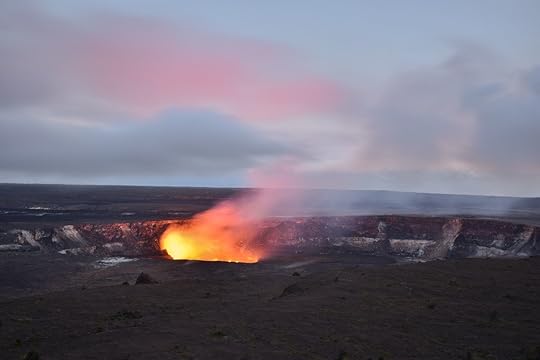
Photo: Matthew Hammond
You can also check out the steaming craters of Kilauea and the flow of lava on land.
Enjoy the view of Halema’uma’u, the main pit crater, from the observation deck at Jaggar Museum.
Hit the Crater-rim drive tour (11 miles).
Drive the Chain of Crater Road (18.8 miles).
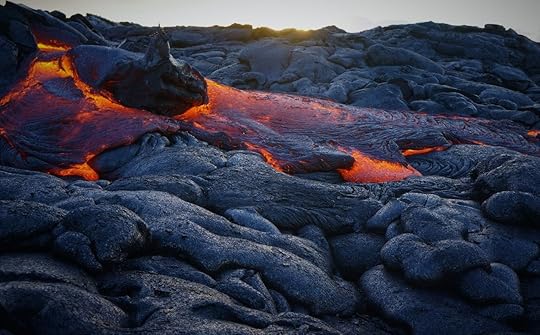
Photo: Jack Ebnet
If you are able to, we suggest you put on your hiking boots and hit the Halema’uma’u Trail (1.8 miles round trip). Depending on the danger level, you may be able to get very close to the main crater, but if the signs say for you to go no further, respect them. You don’t want to be breathing in high levels of sulphur dioxide or be at the wrong place when the volcano erupts and throws rocks and lava. There are more day hikes for those who want to explore further.
For those with a decent fitness level and enough time, there are several wilderness hikes that will take you as close as safely possible to the flow of lava and craters. One of the most popular backcountry hikes, the Nāpau Trail (14 miles round trip), follows the flow of the magma underground through exposed lava fields.
2. Eyjafjallajökull, Iceland
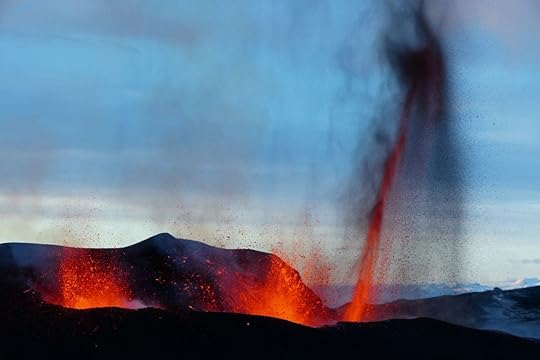
Photo: Marc Szeglat
There are enough volcanoes in Iceland for you to hike them for the rest of your life (130), but if you want to check out the most active volcanoes on the island, Katla, Hekla, and Eyjafjallajökull are the ones to conquer.
Now, both Katla and Hekla (the Angry Sisters) are about to burst, so it is highly recommended that you don’t summit them. Volcanoes are cool and all, but we don’t want you to die in horrible circumstances while trying to cross something off your bucket list.

Photo: David Karna
You can hike the infamous Eyjafjallajökull (the glacier that caps the top of the volcano), but only as part of a guided tour. Even then, as of winter 2018, there are many new large crevasses that are quite dangerous, so you may have trouble finding someone to take you there (even on a Jeep tour). Whatever you do, don’t go without an experienced guide; it’s not worth taking a chance.
What you can do, however, is hike the 15.5-mile Fimmvörðuháls trail that is located between Katla and Eyjafjallajökull (you can do it in one day or two days depending on your fitness level and your preference). You get to see two volcanoes in one hike and you remain safe. Jackpot!
3. Mount Etna, Italy
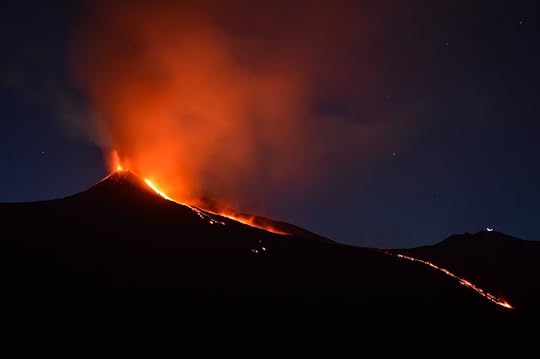
Photo: Shawn Appel
Mount Etna is the second most active volcano in the world after Kilauea and the largest volcano in Europe, so if you’ve got “getting to the top of an active volcano” on your travel to-do list, this is a good one to consider bagging.
In the summer, hikers can check out the steaming craters in the summit area of Mount Etna (you can also see the lava flow when the volcano is very active) from the south and the north entrances.
From the south entrance:
You can hike on your own from Rifugio Sapienza (you’ll have to get there by car or public transport) until meter 2700. After that, you’ll need to jump in a cable car (funivia) or a 4×4 minibus to reach the summit.
If you don’t feel comfortable hiking Etna on your own, you can hike with a group for the “long trek”. There is only one group departure daily early in the morning leaving from Rifugio Sapienza.
If you want to hike a little, but don’t feel capable of hoofing it all the way, you can hike with a group for the “short trek”. The short tour includes the cable car (about 15 minutes), 4X4 (about 40 minutes), and a short trek (40 minutes) to a low crater.
There is no way to hike to the very top of Mount Etna (meter 3300) without a private certified mountain guide that you would have arranged in advance.
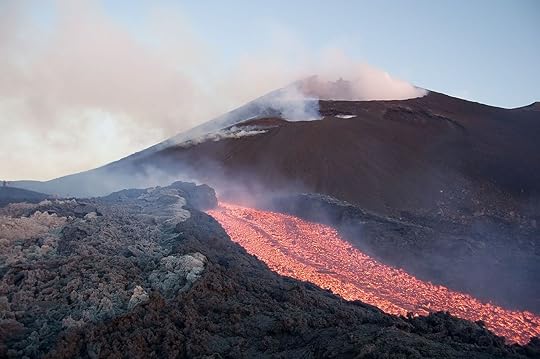
Photo: Romgiovanni
From the north entrance:
You will depart from the village of Linguglossa to Piano Provenzana, the main ski resort on Etna. From there, you can hike on your own or book guided treks or 4×4 excursions.
4. Erta Ale, Ethiopia
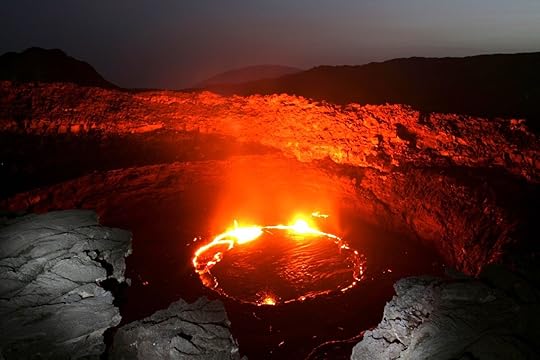
Photo: Marc Szeglat
The Afar region of Ethiopia is not the safest in the world, so all treks to Erta Ale have to have an armed escort. This is not a trip you want to take on your own anyways — the hottest place on the planet is not hospitable in any way, so don’t try to play it cool, you might just end up dead.
From the Danakil Depression, you will take a multi-hour, rough 4×4 journey to a base camp and a three-hour hike to the volcano. The hike takes place after sunset because exerting yourself in the unbearable heat characteristic of this region is a recipe for disaster. You’ll spend the night at a rustic camp at the top (don’t expect a luxurious glamping setup, there is no toilet, and you’ll sleep on very thin mats under the stars).
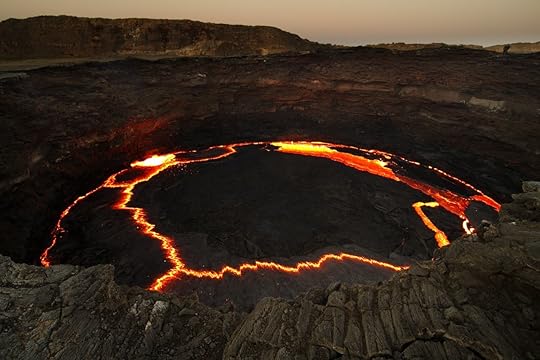
Photo: Petr Meissner
The sight that awaits you is clearly worth the risks, the discomfort, and the heat. The lava lake bubbling and spitting is mesmerizing.
5. Mount Bromo, Indonesia
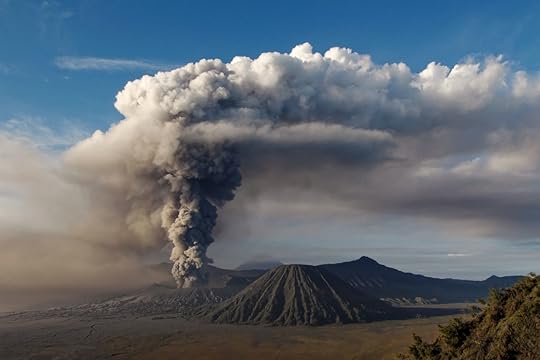
Photo: Marc Szeglat
Mount Bromo is what you expect a volcano to look like — it’s constantly smouldering and the surrounding area look like a moonscape. It’s also in East Java, Indonesia, a region well known for its volcanic activity.
To get to Mount Bromo, you first need to reach Cemoro Lawang, the village on the edge of the Bromo Tengger Semeru National Park. You can get to Cemoro Lawang by public transport or private car.
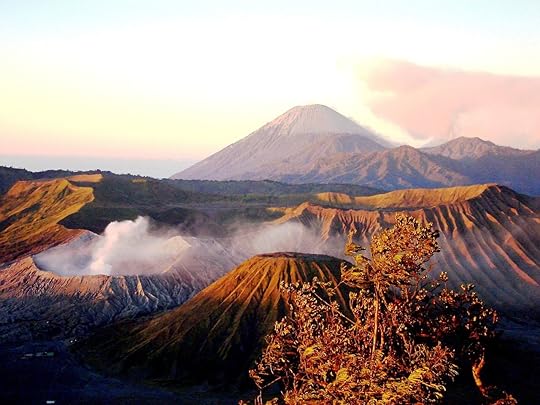
Photo: Jokotul
You can book a tour from Cemoro Lawang to Mount Bromo or head there on your own. If you decide to make it a budget-friendly, independent adventure, from the village of Cemoro Lawang, it’s a 3-hour easy walk in sea sand and up steep stairs to the crater.
6. Whakaari, New Zealand
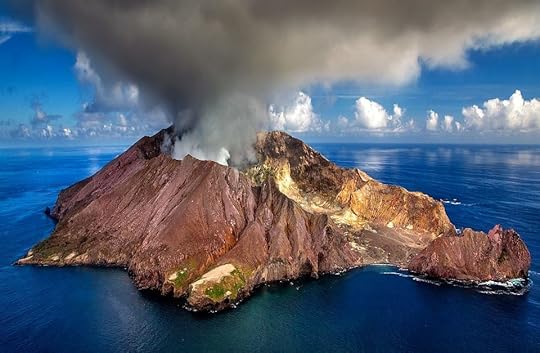
Photo: Max Pixel
If you thought New Zealand’s beaches and mountains made it the cool kid on the block, you have not seen anything yet. The country has the world’s most easily accessible active volcano — an island 30 miles off the shore of the North Island in the Bay of Plenty.
To visit Whakaari you can take a chopper (get ready to pay through the nose) or take a 90-minute boat tour from Whakatane (still expensive, but much more reasonable and you may be able to see dolphins and whales on the way there). Both options provide a guided tour.
Because this is a marine volcano (most of it lies beneath the ocean), there is no hiking needed — you’ll be dropped off right into the crater. You’ll have to wear masks and hard hats for safety purposes — the last eruption was in April 2016, so you’re never too cautious when hiking around the crater of an active volcano that’s constantly releasing sulphuric acid.
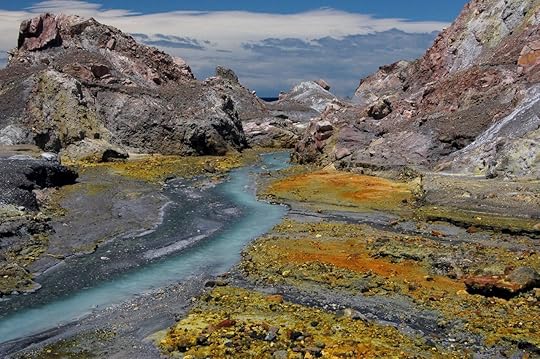
Photo: PROKrzysztof Belczyński
The place is super colorful (yellows, greens, reds, and blues all over the place) due to the levels of sulphur on the island and it’s steaming like a good active volcano should.
More like this: 3 amazing volcano hikes you have to try
The post 6 active volcanoes you can actually go and see up close appeared first on Matador Network.

Women from Pennsylvania
This year, we celebrated some of the best Pennsylvanian athletes who participated in the 2018 Winter Olympic Games and some of the best food to come out of this amazing state. Because March is Women’s History Month, it’s now time to turn the spotlight on the 10 most influential women who were born and raised in PA.
1. Betsy Ross

Photo: From painting by G. Liebscher
Betsy Ross is responsible for convincing George Washington to change the stars on the US flag. The original design was a 6 pointed star which was changed to 5. The story goes that George Washington came up with the basic concept but Betsy finalized the design. She was a revolutionary patriot and was undoubtedly a major figure in United States history. Betsy made flags for the Pennsylvania Navy and did all she could to support America in its fight for independence. She fixed uniforms, made tents, blankets, and even prepared ammunition.
2. Tina Fey

Photo: Mingle Media TV
Actress, writer, and producer, Tina Fey can do it all. She hails from Upper Darby Township and is best known for her work on “Saturday Night Live,” starring in and producing “30 Rock” and writing the cult classic film adaptation of “Mean Girls”. Her memoir Bossypants was on top of the New York Best Seller List for 5 weeks in 2011. She’s also known to shoutout her Pennslyvania roots in guest cameos on SNL.
3. Joan Jett

Photo: Ceedub13
Straight out of Philadelphia, Joan Jett is best known for her work with the Blackhearts, whose most notable songs include “I Love Rock and Roll” and “Bad Reputation.” She made it cool for women rockers to be loud. Her punk rock sound was immortalized when she was inducted into the Rock ‘n’ Roll Hall of Fame in 2015.
4. Patti Labelle

Photo: Epic Records
The “Godmother of Soul”, Patti Labelle, is from Philadelphia, PA. Her group Patti Labelle and the Bluebelles were the first African-American group to be on the cover of Rolling Stone. When the group split, Patti never missed a beat and continued to produce #1 albums and songs.
5. Grace Kelly

Photo: Sterling Publications
The actress turned princess of Monaco was born in Philadelphia. She began acting in 1950 and her 1953 breakthrough performance in “Mogambo” won her a Golden Globe and an Oscar Nomination. Soon after (in 1956) she married Prince Rainier II and became literal royalty.
6. Taylor Swift

Photo: Eva Rinaldi
Born in Reading, PA, Taylor Swift continues to be a trendsetter for modern pop music, just as she did for country music originally. She has 5 number-one and 22 top-10 hits including “Shake It Off” and “Love Story.” She also has Grammys for Album of the Year and Best Pop Vocal Album. Taylor has a total of 10 Grammy wins and a whopping 31 nominations.
7. Nellie Bly

Photo: H. J. Myers
Nellie was born in Cochrane Mills, PA but that didn’t stop Nellie from traveling the world. She had a record-breaking trip around the world in 72 days in 1889 and was also pioneer in investigative journalism.
8. Billie Holiday

Photo: Wikimedia
This Philadelphian’s jazz career spanned nearly 30 years. She was best known for her improv style and tempo. Billie was one of the most well-known musicians of her day and sold out venues like Carnegie Hall — all without any formal training.
9. Sharon Stone

Photo: Gage Skidmore
This Meadville native and femme fatale is an icon of the silver screen. She became the sex symbol of a generation after she played Catherine Tramell in “Basic Instinct,” which was released in 1992. Other notable roles include Lori in “Total Recall” and Ginger McKenna in “Casino”.
10. Tara Kristen Lipinski

Photo: Andy Miah
This Philadelphia native was a 1998 Olympic champion and a 1997 World champion in figure skating. She is the youngest ever to win a World Figure Skating title — she was 14 years old at the time. She has now transitioned to a successful broadcasting career on NBC, recently commentating on the 2018 Pyeongchang Olympics.
More like this: 8 of the best food items to come out of Philly
The post The 10 most influential women to come out of Pennsylvania appeared first on Matador Network.

March 15, 2018
NASA will hurl your name towards sun
If after your significant other feels too ’90s, NASA is now giving you the opportunity to put their name on a microchip that they will then hurl towards the sun.
This is part of NASA’s historic Parker Solar Probe mission, which will send a small spacecraft directly into the sun’s atmosphere to capture data that will help us better understand the nature of our star.
At one point, the spacecraft will be traveling at 430,000 mph, which NASA says is, “fast enough to get from Washington, D.C., to Tokyo in under a minute.”
In a video featuring Star Trek star William Shatner, NASA explains that this will be the closest any human spacecraft has ever been to the sun. While circling through the star’s corona, the probe will capture information on solar winds and solar energetic particles.
This is a big deal for space scientists, who have been waiting for this kind of mission for six decades, according to a press release. As you might have heard, these particles can affect life on Earth.
“Parker Solar Probe is, quite literally, the fastest, hottest — and, to me, coolest — mission under the Sun,” said project scientist Nicola Fox, of the Johns Hopkins Applied Physics Laboratory, in the press statement. “This incredible spacecraft is going to reveal so much about our star and how it works that we’ve not been able to understand.”
In order to survive the sun’s heat, the solar probe will be outfitted with a special 4.5 inch-thick carbon-composite shield capable of withstanding temperatures up to 2,500 degrees (F).
NASA is inviting you to submit your name what it has called “Hot Tickets,” or a space for your name on a microchip that will be placed on the spacecraft.
The tickets are free, but you have to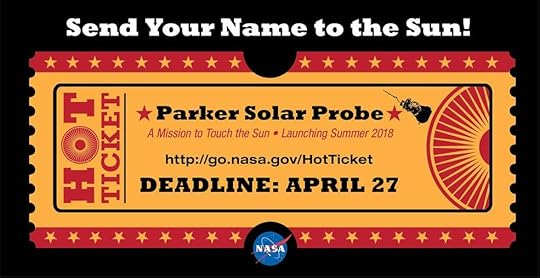
Photo: NASA
More like this: These images from NASA will rock your world
The post appeared first on Matador Network.

Matador Network's Blog

- Matador Network's profile
- 6 followers


.jpg%20)


.jpg%20)


.jpg%20)

