
Anne R. Allen's Blog, page 59
February 16, 2014
Guest Blogging for Authors: 10 Tips to Help You Land Those Valuable Guest Blog Gigs
Guest blogging is a great way for writers to improve visibility. Most host bloggers will allow you to link to your website and to your book "buy" pages, so the post can both improve your name recognition and sell books. It's free advertising and boosts your search engine rank.
Some authors don't have their own blogs and manage to do very well by simply guesting on other blogs several times a month. Ruth Harris did that before I roped her into invited her to join me here.
You don't have to be a published author to benefit. Guest blogging before you have a book out is a good way to pave the way for a launch, and it's an excellent way to raise your profile if you're a freelancer.
But don't assume all bloggers will welcome you. The higher ranked the blog, the more guest blog queries they're getting—and they may be burned out on the whole process.
Here we often get ten or more queries a day, which makes me sad, because we have to turn away most of them. We host a maximum of 12 guests a year, and book many months in advance. We don't often find the experts we need in "cold" email queries.
There are exceptions: the hilarious Melodie Campbell asked to guest blog with a friendly email query. Since she's a well-known author, creative writing teacher, and the President of Crime Writers of Canada, we were honored she wanted to visit.
She'd also been following the blog and mentioned several of her favorite posts, which made her a shoo-in. We've since become cyberfriends and I'm devouring her books.
Unfortunately, not many queriers are like Melodie. In fact, the one thing 99% of requests have in common is they show the writer hasn't visited the blog (although they give it high, generic praise.) But they don't have the slightest idea what the blog is about or who our readers are. Very few have read our "contact us" page.
They usually offer to blog about "the subject of your choice" and the only thing they seem to know about us is that our Alexa rating is low (a good thing) and our readership numbers are high (thanks, you guys!). They don't realize this is a slow blog focused on the publishing industry, and with only 4 posts a month, each post has to offer something pretty special to keep those numbers where they are.
I usually answer each query individually (which makes me feel some empathy with agents and editors.) I thank the writers and wish them all the best in their careers and then suggest that they, um, read a blog before querying.
After a morning in the guest-blog-request trenches, I decided to do some research. I discovered guest blogging is a hot topic in social marketing circles these days. That's because it is now one of the most popular ways to raise SEO and get backlinks to websites.
Unfortunately, it has also become a preferred venue for dodgy marketers and spammers. Many will provide mediocre content full of links to websites unrelated to the post—sometimes ads for male enhancement pills and "adult" sites.
Yeah, I felt kinda dumb when I realized I'd been working so hard to spare the feelings of porn spammers.
The spam problem has become so bad that Matt Cutts, a major Google blogger, says guest blogging has burned itself out. Last month he announced that guest blogging is dead.
Do note that other experts, like blog guru Jon Morrow, say it's only the low-quality content that's been consigned to the trash heap.
Certainly not every potential guest is offering spammy content. Many queries come from editing professionals, designers and fellow authors who might have something worthwhile to share.
Trouble is, they usually approach in an impersonal way and—although they may reference one post—don't have a feel for our tone or content. Often they make demands but don't offer much in return. Yes, we know it will help your book launch to get your covers and links in front of our 40,000 monthly readers. But if your post is simply a thinly disguised ad for your book or services, visitors will click away and may not come back.
Also, guest posts seldom get the hits our own posts do (readers seem to view guests like substitute teachers—not really part of the curriculum.) So a guest spot is something of a gift. You need to make bloggers want to turn their own bookselling platform over to you, either because you have a big following of your own, offer something fresh and unique, or they like you. Preferably all of the above.
Getting your (high quality) work onto a well-known blog is still one of the best ways to raise your search engine profile. The marketers are right about getting those "backlinks" from the blog to your site. It's a great way to get the Google spider-bots to notice you and raise your own website or blog higher on a Google search page.
But selling books isn't the same as selling shampoo or refrigerators.
With books, you're often better off targeting lesser-known blogs. Forget the SEO and Alexa ratings. Look for blogs that address your audience's niche. A visit to a chick lit blog with 50 followers may sell more copies of your chick lit novel than a visit to a general interest blog with 2500.
Here are some tips for authors who want to try guest blogging:
1) Read the blog before you query. Not just one post. Read several—and make sure you check the comments. That's how you can tell if the audience is right for the topic you're pitching. You don't want to pitch a "how to send your first query letter" post to an audience of published authors or a technical post on SEO to a poetry circle.
In fact, you can get great ideas for topics to write about by reading what people are asking questions about in the comments.
2) Comment on the blog. If bloggers have seen your name before, they're going to pay more attention to your query. The best way to break in is to get to know other bloggers and the blog community.
If you show your expertise in a certain subject in a blog comment, the blogger may even seek you out and ask you to be a guest. That's how we find most of our guests: in the comment thread. Not a query in a comment thread (don't do this), but with a useful comment that shows expertise and good writing skills.
It's how I connected with Ruth Harris. She commented several times on this blog and remembered reading her books when they were on the NYT bestseller list, saw she had no blog of her own at that point, and...the rest is history.
3) Learn how to write blog content. That means using sub-headers, lists, bullet points, bolding, and lots of white space. Older writers like me have a lot of re-learning to do when we start to blog.
I'll be writing a post soon about writing 21st century prose. Whether you're writing fiction, essays or blogposts, you attract more readers these days if you can write concise, skimmable copy.
4) Use a friendly, personal tone. A blogpost is not a news article, college thesis, or tech manual. Offer information in an entertaining, non-condescending way. Keep things light and encouraging. If you have a tale of woe, make sure the ending is hopeful and upbeat. (And be careful of language. Make sure it's appropriate for the blog. If you want to guest for somebody like Chuck Wendig, it's fine to go all four-letter in the text. On this blog, not so much.)
5) Don't just target book blogs. Think about where your readers might hang out.
Write crafting cozies? Try a blog that talks about selling crafts on Etsy. Crafters are probably going to be more excited about a new mystery about a crocheting sleuth than a bunch of writers whose Kindles are already overloaded. Have a war memoir? Find some blogs about veterans' issues. Most visitors might only buy two or three books a year, but if they "know" you, one might be yours. Set your thriller in an exotic local? Look to travel blogs. Travelers love to read books set in a country they're planning to visit—or would like to revisit via armchair.
6) Read the guidelines. If a blog doesn't have a separate "guest blog guidelines" page, it may be because they don't take many guests. But there will usually be a "contact us" page, so check it out. Bloggers sometimes don't give guidelines a separate page because spammers have been taught to search for guest blog gigs by Googling the blog name with "guest post guidelines".
But if they're posted anywhere, read them. Some bloggers may prefer to give you a topic, or may offer questions so the post can be in interview format. They may have specific requirements for number and size of photos and/or word count. They may suggest you offer a book give-away. Don't assume you "know the ropes". Guidelines are there for a reason.
Note: "guidelines" is something of a misnomer. Whether you're querying agents, publishers, journals, or blogs, "guidelines" usually means "ironclad rules".
7) Check out other guest posts. If you're a beginning freelance writer, you probably won't land a spot on a blog where bestselling authors and movie stars go to promote their books. You also won't benefit from guesting if the blogger has been lazy and accepts a lot of mediocre content.
Here our guests have mostly been seasoned authors, award winners, or experts in their fields (and yes, we've hosted a movie star). They also need to be good general-interest writers who don't use too much jargon, because tech-speak reads like Klingon to a lot of our readers (it sure does to me). A humorous approach is a big plus.
But you don't have to be a movie star or a bestseller to guest for us. You do need to be experienced in writing solid Web content and have something unique to say.
Here are some examples of guests who hit it out of the park for us:
Boomer Lit author Michael Murphy wrote one of our most popular posts ever on how to get rights to song lyrics. Blogger Lila Moore of Popular Soda enlightened us about scams aimed at writers. SEO specialist Johnny Base explained why Google Plus has suddenly become so important for writers and included a video tutorial showing how to sign up.Techies Jay and Mick fom EBookBargainsUK knocked our socks off with cutting edge info on the growing international markets for English language ebooks.
Individualize your pitch to each specific blog. We don't post personal stories, but lots of blogs do. Bloggers are usually happy to get success (or failure) stories, interesting anecdotes about researching your book, posts based on your book research or funny stories about the writing life. A lot of blogs like interviews, too.
8) Don't spam. Offer new, useful, informative content and make sure you're not writing a thinly disguised advertisement for your own book or services. This is important. I see way too many guest posts that are just ad copy.
9) Write a professional query via email. Write it like any other query. Open with a mention of why you're querying this particular blogger. Then pitch your project. Follow up with your credentials and links to your "clips" on your own blog or guest posts.
Note: as I said above, DON'T request a guest spot via comment thread, tweet or direct message. When I wrote about guest blogging two years ago, somebody actually pasted a query into the comments, showing they hadn't read a word of the post.
...so for those people, here's a bonus tip:
10) Read the blog. Seriously.
~
Guest blogging is one of the best ways to build your platform—and it's free advertising for your books. But remember you're asking for a favor. For more tips for guest bloggers see part 6 of my "How to Blog" series.
If you're a new writer without a presence in the blogosphere, it may be worth your while to launch your book with a professional blog tour, which will involve guest blogging as well as interviews and reviews. It will cost you some money, but doesn't have to be hugely expensive.
This week indie advocate Kristine Kathryn Rusch has an in-depth piece on her own experiences with guest blogging. (But you might want to turn off your speakers first. She has a strange audio ad for air freshener that kind of freaked me out.)
For a list of some vetted blog tour companies with price comparisons, see Greg Strandberg's post on Joel Friedlander's blog of February 5th. Greg's own blog is BigSkyWords.
What about you scriveners? Do you host guests on your blog? Have you been a guest? Have you had good experiences? What tips would you give new guest bloggers?
We LOVE comments. If you have trouble commenting because Blogger elves won't accept your ID (They prefer GooglePlus IDs, because they're owned by Google, alas) just email me through the "contact us" page and I'll personally post your comment.
This week I'm taking my own advice and doing some guest blogging myself. On 2/17, I'll be at Romance University talking about how authors can stay safe online, and on 2/19, I'll be visiting the Insecure Writers Support Group, with an author's guide on how not to spam.
Also: There's still time to vote. Our blog has been nominated by Indies Unlimited for "Best Resource for Indies"—one of just 7 blogs—along with Kristen Lamb, Joel Friedlander "The Book Designer", The Passive Voice, The Creative Penn, David Gaughran's "Let's Get Digital", and The Indie View. Anybody can vote over at Indies Unlimited. Voting closes on February 21st at 5 PM Pacific time.
BOOK DEAL OF THE WEEK
The Camilla Randall Mysteries
9 Months on Amazon's Humor Bestseller list!
Although the normal price is $4.99, this boxed set is only .99 on Amazon right now—for reasons known only to the Mighty Zon.
So if you've been thinking of taking a look at my loopy, but oh-so-polite sleuth's misadventures, grab this set while it's cheap. I have no idea if the price is down on international sites, because they don't let us see the pricing, but here are the links so you can check it out.
Amazon US, Amazon UK Amazon CA Amazon OZ Amazon IN also available on NOOK and may or may not be on Kobo, which my publisher describes as "an enigma wrapped up in a mystery and sealed with superglue."
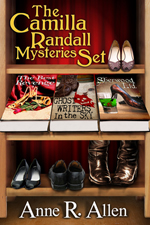
"The Best Revenge, Ghost Writers in the Sky and Sherwood Limited are hysterical. Anne Allen will keep you laughing throughout, but in the meantime she dabbles her fingers in some topics worth some serious thought: sexism, weightism, lechery, murder, duplicity, homelessness & poverty to name a few. If you love to laugh, you'll like these three books. If you love to think, ponder AND laugh, be ready to fall in love"... C.S. Perryess aka the Wordmonger
OPPORTUNITY ALERTS
Writers' Village International Short Fiction Award. Entry fee £15. This is a biggie. Stories in English up to 3000 words in any genre from anywhere in the world. £3000 First Prize. Judges include iconic mystery author Lawrence Block and Whitbread & Orange short-lister Jill Dawson. £4500 ($7200) in total prizes. The top 50 contestants also get a free critique of their stories. Deadline June 30th.
The 11th Yeovil International Literary Prize now open for entries Prize categories for novels, short fiction, poetry. Entry fee £11 for novels. 1st prize £1000. Deadline May 31st.
GLIMMER TRAIN FAMILY MATTERS CONTEST $1500 prize, plus publication in Glimmer Train Stories, plus 20 copies. $15 ENTRY FEE. They're looking for stories about families of all configurations. It's fine to draw on real experiences, but the work must read like fiction. Maximum word count: 12,000. Any shorter lengths are welcome. Deadline March 31.
Women Writers: MSLEXIA SHORT STORY COMPETITION £10 ENTRY FEE. A competition for unpublished short stories of up to 2,200 words. First prize £2,000 plus two optional extras: a week’s writing retreat at Chawton House Library outside of London, and a day with a Virago editor. Second prize: £500. Third prize: £250. Three other finalists each receive £100. All winning stories will be published in the Jun/Jul/Aug 2014 edition of Mslexia. Deadline March 17
The Jerwood Fiction Uncovered Prize: now open to UK self-publishers as well as traditional publishers. Fiction Uncovered seeks to promote emerging and deserving British fiction writers of outstanding work, looking beyond the debuts and the bestsellers. Debut works of fiction are not eligible. Be sure to follow the guidelines on the Fiction Uncovered site. Deadline has been extended to March 3rd.
Women on Writing Winter 2014 Flash Fiction Contest. $10 ENTRY FEE. Judged by literary agent Stephany Evans. WORD COUNT: Maximum: 750, Minimum: 250 The title is not counted in your word count. Any style or genre. Deadline February 28.
Dark Continents Publishing's Guns and Romances anthology. They're looking for previously unpublished short fiction from 3500-9000 words. Any genre as long as there's a tough protagonist, weapons, and... at least one reference to music. Sounds interesting. Payment rate is a one-off of $20 per story plus a percentage of the ebook royalties. Publication estimated in late-2014. More info on the website. Deadline February 28.


February 9, 2014
Why Novellas are Hot and How to Write One: a Step by Step Guide
We're so jazzed! Our blog has been nominated by Indies Unlimited for "Best Resource for Indies"—one of just 7 blogs—along with the fantastic Kristen Lamb, Joel Friedlander "The Book Designer", The Passive Voice, The Creative Penn, David Gaughran's "Let's Get Digital", and The Indie View. It's so amazing for a slow, once-a-week blog to be nominated with all those major bloggers.
Anybody can vote over at Indies Unlimited. Voting closes on February 21st at 5 PM Pacific time.
Of course, we don't just write for self-publishers. Our guest today is with a small niche press, as I am, and Ruth was with several of the big houses (and edited for them) before she started self-publishing. That means we have experience with all types of publishing. We don't want our readers to feel we're trying to push you onto one path or another.
It seems I'm not the only blogger who thinks "Short is the New Long," which I wrote in a post last May.
Penny Sansevieri, CEO of Marketing Experts Inc., said in her predictions for 2014 in the HuffPo:
"Short is the new long. You don’t have to be writing 500-page tomes. Create one or two full length books a year plus micro-content such as novellas or shorter books. It’s a great way to gain visibility and stay in front of your readers."
No doubt about it: novellas are hot.
Traditionally published authors self-publish them to fill in the time between the snail-speed production schedule of their own publishers and increase their revenue stream.Indies use them to explore characters in their series that readers want to know more about. Readers who have less time to read than they used to enjoy getting into a meaty story that has a satisfying beginning, middle and end, but doesn't take weeks to get through.
Perhaps the popularity of the novella also comes with our love of movies. As Paul tells us, the novella has a lot in common with a screenplay. It is also the fiction form most easily adapted to film.
My own publisher keeps encouraging me to write novellas to fill in the gaps in Camilla and Plantagenet's history.
Have I followed the advice?
Nope.
That's because I find writing novellas really hard. I think in terms of the "long game". For me an 80,000 word novel is short. How can I explore a big topic in 20,000 words?
I decided to ask award-winning novella author Paul Alan Fahey for some advice. Paul's book The Other Man was honored by the American Library Association last month, and received a Rainbow Award in 2013. The View from 16 Podewale Street , the first of his beautifully-crafted novellas set in WWII Britain, won a Rainbow Award in 2012.
I hope his advice will help us all to keep up with the new trend....Anne
NOVELLAS AND SCREENPLAYS: MORE IN COMMON THAN YOU THINKbyPaul Alan Fahey
Years ago, when I started writing fiction—as opposed to journal articles for career advancement in academe—I fell in love with flash fiction. That love affair lasted throughout the 1990’s, well into the millennium, and beyond. I loved the form and was quite content to stay within those teeny-tiny word limits. At the time, I also took classes in flash, presented writing workshops on the form, and participated in several online critique groups for flash writers.
 When I taught at Allan Hancock College, I edited Mindprints, A Literary Journal, devoted to flash fiction and memoir pieces of 250-750 words. Here's a piece I wrote giving tips for writing good flash fiction.
 During that time, I managed to write and publish a few short stories other than flash, but nothing beyond the 5,000 to 6,000-word range.
With the advent of the E-Age, I began to think seriously about writing longer work. The novel absolutely terrified me, so I gravitated to the novella: something in between a very long story and a novel.
When I began writing my first WWII novella, The View from 16 Podwale Street, and later with Bomber’s Moon, I told myself I was only writing flash, and that each scene or chapter was a kind of mini-flash piece with its own story arc. Little did I know that this strategy would work, and I’d soon be off and running with a romance series and a much larger story to tell.
Novellas in the E-Age: A Definition
Searching for a precise definition of a novella can be a maddening experience. Some consider novellas very long short stories, while others call them short novels, or say they’re synonymous with novelettes.
Nothing specific there, right? I was just about to give up when I stumbled upon a terrific article in the New Yorker by British novelist and screenwriter, Ian McEwan. Not only did he define the form, but he specified word limits most publishers, including my own, would agree with—give or take a few thousand at the top or bottom of the range.
“Novellas are between twenty and forty
 thousand words, long enough for a reader to inhabit a world or a consciousness and be kept there, short enough to be read in a sitting or two and for the whole structure to be held in mind at first encounter.”
 McEwan went on to discuss the strong similarity between novellas and screenplays in their overall unity and economy.
"To sit with a novella is analogous to watching a play or a longish movie."
I have to admit I was totally stoked when I read that. I’d been using screenplay techniques as a pre-writing strategy for flash fiction and short stories for years. In fact I wrote an article for Byline magazine about the flash-screenplay connection in 2005. It's since been reprinted at Fiction Fix. Is it any wonder I was drawn to the novella form?
THE PREWRITING STRATEGY
Let’s see how this prewriting thing works. We’ll take a look at my novella, Bomber’s Moon, and apply the strategy.
Step 1: Find a Story Idea
 The idea for Bomber’s Moon came from an incident in my childhood. Mom and I were sitting at the breakfast table discussing a lovely Englishwoman she worked with in an upscale dress shop, someone who had lived through the London Blitz and still suffered in the late 1950’s from what we’d probably now call PTSD.
 I took this idea and went into a “what if” frenzy, asking myself all sorts of questions: How did Londoners manage to survive day to day under such unimaginable conditions? What was it like being gay back then, and in a relationship, having to keep it all a secret except perhaps from your closest friends? These questions and many more would later guide character development as well as plot development in Bomber’s Moon.
Step 2: Turn the Idea into a Logline
Anne has previously written an excellent post on loglines. So there’s really no need to reinvent the wheel here other than to say a screenplay logline is a short, one-sentence statement of the film’s premise. Think TV Guide descriptions of cable movies.
Here’s an example:
Nebraska: An aging, booze-addled father makes the trip from Montana to Nebraska with his estranged son in order to claim a million dollar Mega Sweepstakes Marketing prize.
And another one:
August: Osage County: A look at the lives of the strong-willed women of the Weston family, whose paths have diverged until a family crisis brings them back to the Oklahoma house they grew up in, and to the dysfunctional woman who raised them.
Here’s the logline for Bomber’s Moon:
During the London Blitz, and after losing his life partner in a tragic accident, Leslie Atwater, a young gay man, discovers his lover’s death may not have been an accident and sets out to uncover the truth.
**I know, I know. It ain’t Shakespeare. You’re using it as a guide or throughline for developing your story. No one but you will see it.
Step 3. Write the Story Theme from the Logline
Often I know the book’s theme before I start to write. Sometimes I don't and it surfaces later in the writing. Still, it’s a terrific bonus if you do can articulate theme because it provides a wonderful subtext for scenes and dialogue.
"Journeys end in lovers meeting" is the main theme of Bomber’s Moon.
Step 4: Determine the Three Acts and As Many Plot Points as Possible
First, here’s a quick overview of three-act structure.
Act I, Set Up: Introduces setting, characters and the main story conflict or the inciting incident.Plot Point 1: The first major turning point or event that closes the first act and moves the characters into… Act II, Confrontation: The main character struggles to achieve his/her goal amid ever increasing obstacles. Midpoint: A subtle turning point in the plot midway through the story.Plot Point 2: A devastating setback or reversal in the main character’s fortune that leads to…Act III, Resolution: The final confrontation and highest point of action (climax) before the character reaches goal.Here’s what I knew about Bomber’s Moon before I began writing:
Act I: Set Up: During the day, Leslie works as a clerk in a modest bookshop in Central London. By night, he’s an air raid warden in his district responsible for the safety of his “flock.” In an effort to feel closer to Edward, he spends his evenings in their flat reviewing his partner’s sketches and soon discovers irregularities he can’t explain.Plot Point 1: Leslie, convinced his lover’s death wasn’t an accident. Despite warnings from friends to let well enough alone, he sets out on a journey. How did Edward die?Act II Confrontation Leslie learns more about Edward’s work assignment the day he died. He begins to question family members and colleagues at The Globe. This leads him on a journey through London and into the countryside as he follows the clues. (Vague? You bet, but it works for now.)Act III Resolution: I envisioned a climax in a lighthouse overlooking the English Channel with enemy aircraft overhead. The ending would be a happy one—journeys end in lovers meeting—since Bomber’s Moon is a romance, and I was following conventions of the form.
This pre-writing three-act paradigm for Bomber’s Moon, adapted from a screenwriting text by Syd Field is far from complete. But having the structure planned out as much as possible beforehand, kept me focused on the storyline, while I filled in the blanks of the paradigm as I went along in the first draft.
For a more thorough discussion and examples of the three-act structure, please see: The Elements of Cinema.
This process may or may not work for you. I can only say it does for me. And in a big way.
***

Paul Alan Fahey created and edited Mindprints, an international literary journal for writers and artists with disabilities, at Allan Hancock College in Santa Maria, California. During Paul’s seven-year tenure, Mindprints made Writers Digest’s “Top 30 Short Story Markets” list for two consecutive years. He is the author of the Lovers and Liars Gay Wartime Romance series, published by JMS Books. Paul is the editor of the 2013 Rainbow Award winning anthology, The Other Man: 21 Writers Speak Candidly About Sex, Love, Infidelity, & Moving On. His first WWII novella, The View From 16 Podwale Street, also won a Rainbow Award in 2012.
What about you, scriveners? Have you written a novella? Any advice to add to Paul's? Any questions you'd like to ask him?
Book of the Week
Paul Alan Fahey's latest novella, LOVERS AND LIARS is available in paper (and on sale!) at JMS Books, Amazon US, Amazon UK, and Nook
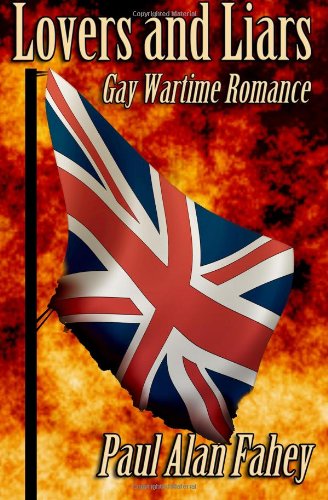
"Brimming with atmosphere, this historical setting envelopes the reader and transports them to a place and time that is both real and vividly imagined. These are glamorous people set against the backdrop of a time spare in luxuries, and in the reading of these books, they have become friends with whom I’m always glad to spend time, participating in their adventures, commiserating with their trials, sympathizing with their cause, and I look forward to their continuing journey."...Lisa Horan at Novel Approach Reviews
The other novellas in the series are also available as ebooks from JMS Books and most retailers.
Deal of the Week
In honor of the Beatles 50th anniversary, Michael Harris's bestseller, ALWAYS ON SUNDAY is only 99c this week. It's on Kindle, Nook, Kobo, iBooks and AmazonUK (All the other Amazons, too.)
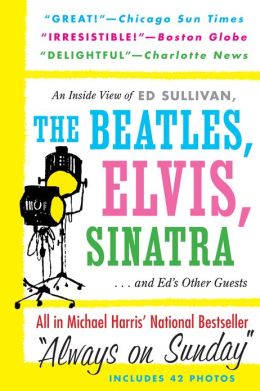
Michael worked for the Ed Sullivan Show in the 1960s, and was assigned to meet the Beatles at Kennedy Airport that day in 1964. He says Ed was warned not to sign the Beatles: "You're crazy! No British group has ever made it big in this country." A month before they arrived, they were still unknown in America.
Two weeks later, "I Want To Hold Your Hand" rocketed to the top of the charts and Beatlemania had begun. On February 14, Michael greeted the Beatles again, this time in Miami for a second Sullivan show. Thanks to papparazzi determined to cash in on every shot of the Fab Four, Michael appeared in photos published around the world. In the captions he was identified as "a Beatle".
OPPORTUNITY ALERTS
The 11th Yeovil International Literary Prize now open for entries. Aspiring writers throughout the world are invited to enter this prestigious writing competition. Prize categories for novels, short fiction, poetry. Entry fee £11 for novels. 1st prize £1000. Deadline May 31st.
GLIMMER TRAIN FAMILY MATTERS CONTEST $1500 prize, plus publication in Glimmer Train Stories, plus 20 copies. $15 ENTRY FEE. They're looking for stories about families of all configurations. It's fine to draw on real experiences, but the work must read like fiction. Maximum word count: 12,000. Any shorter lengths are welcome. Deadline March 31.
Write Flash? INNOVATIVE SHORT FICTION CONTEST $15 ENTRY FEE. $500 prize plus the winning story will be published in The Conium Review's next issue. Innovative short fiction should take risks that pay off. Don’t tell us a story we’ve already heard before. Show us something new with your subject, style, or characters.Your submission may include any combination of flash fictions or short stories up to 7,500 total words. Deadline March 15, 2014.
Dark Continents Publishing's Guns and Romances anthology. They're looking for previously unpublished short fiction from 3500-9000 words. Any genre as long as there's a tough protagonist, weapons, and... at least one reference to music. Sounds interesting. Payment rate is a one-off of $20 per story plus a percentage of the ebook royalties. Publication estimated in late-2014. More info on the website. Deadline February 28.
ERMA BOMBECK WRITING COMPETITION $15 ENTRY FEE. Capture the essence of Erma's writings and you could win $500 and a free registration to the Erma Bombeck Writers Workshop! Personal essay must be 450 words or less (entries of more than 450 words will be disqualified). Two categories: humor and human interest. Deadline February 17.
February 2, 2014
Six More Pieces of Bad Advice for Writers to Ignore
Two weeks ago I wrote a post listing some of the bad writing advice that can stand in the way of launching a successful publishing career.
But I had too much to run in one post, plus I got some great suggestions from readers in the comments. So this week we have a "Son of Bad Advice" post.
Hey, it's Groundhog Day, so I figure we can have deja vu all over again.
Some myths about the writing life have become so much part of our culture that "everybody knows" them. It's hard to accept they're not true. I've had a hard time unlearning some of them myself.
As I said in my previous post, we've been programmed with misinformation all our lives. We've watched romanticized fictional authors like Jessica Fletcher and Richard Castle and that guy who owned Magnum PI's tropical mansion write their way to fame and fortune. It looked so easy.
New myths have been added with the ebook revolution. We now hear that all we have to do is write a book, put it on Amazon, and the movie deals and fat paychecks will start rolling in. After all, it happened to Hugh Howey and Amanda Hocking. And recently we've heard about Sylvia Day with her 7-figure deal with Harlequin, and million-seller indie romance author Theresa Ragan...
But those authors are the exceptions, not the rule. They're newsworthy because they're rare. If you don’t want your heart broken in this ever-more-complex, fast-changing industry, it's best to learn the facts and put the following myths firmly in the "fiction" section of your consciousness.
1) Land a publishing contract and you can quit your day job
I think the biggest, baddest lie about this business is that authors make a lot of money once they land that publishing contract. How many times have your friends joked, "will you still talk to me when you're rich and famous"?
You can tell them to relax, because it's unlikely to be a problem.
How much do traditionally published authors make?
Last month an author posted on her blog the breakdown of her actual income from a multiple book contract. It came down to about $3000 a year. More on this at Lexi Revellian's blog.
The author in question had to remove the post after a few hours because it violated a non-disclosure clause in her contract, but she was very brave to post it. Publishers seem to want to keep up this myth that their authors are raking it in.
But the fact is: publishing advances have been evaporating in the past decade. Agents are saying, "$10,000 is the new $50,000". Also, it's important to know that $10,000 comes in several installments, over a couple of years, and of course the agent gets 15% (not that they don't earn every penny.)
And according to a study reported in the Guardian on January 17th, 54% of trad-pubbed authors make even less than that. The study put the average at $1000 (£600). Yeah. Picking up cans for recycling on the side of the road would probably pay better.
Of course, some big name authors are making millions. And a lot of self-publishers do much better than the trad-pubbed mid-lister who wrote that post.
But the average self-publisher makes even less: 77% are reported to be making less than $1000 a year.
That trad/self-pubbed ratio may be a little skewed, because the trad-pubbed category counts only the authors who've reached the point of getting contracts. But as Hugh Howey pointed out, while aspiring trad-pubbers are querying agents, self-pubbers are putting their fledgling work into the marketplace, so they get counted in the stats and the queriers don't. Also, the self-publishing category includes the hobbyists who may only have one book and aren't necessarily trying to earn money from it.
But it's important to point out that the authors with the highest income are hybrid authors. A hybrid author self-publishes as well as working with a traditional publisher.
You can find a fascinating breakdown of income streams for a hybrid author from Elizabeth S. Craig on her blog this week.
You can can become "hybrid" either of two ways:
1) Start out in traditional publishing (agent+Big 5 or smaller presses) and supplement with self-publishing.
2) Start by self-publishing, become a mega-seller, and wait to get offered a traditional contract like Howey and Hocking. Unfortunately you don't get to choose this path to hybrid-dom. You have to hit it big first and wait to be invited. Agents don't welcome queries from self-publishers unless they're mega-sellers.
This means querying agents and going the traditional route to break into print—while it may not be as lucrative as you imagined—can still be a good way to launch a career. Just make sure you don't sign any "non compete" clauses that prohibit you from self-publishing other work. Contracts can be full of booby-traps these days, so run it by a lawyer.
Yes, your initial trad-pub books will probably bring in less money than your later self-pubbed books, but that's not necessarily a bad trade-off.
Many self-pubbers make one or two of their early books perma-free in order to entice new readers. Your trad-pubbed book may only make $1000-$3000, but it can be a "loss leader" like those indies' perma-frees.
The marketing and cachet you get from starting with a traditional publisher (and having an agent in your corner when you start out) can still make this path attractive.
But don't make the mistake of thinking it's a get-rich-quick proposition. Write because you love it, have patience, and don't count on living the life of Richard Castle with your first few books.
2) Copyright that manuscript as soon as you type "the end" or somebody will steal your plot!
It's true that plagiarism is a big problem these days, but not of unedited, unpublished manuscripts. Pirates can lift books right off fan fiction sites or Amazon, so why would they want somebody's first draft?
No matter how original you think your concept is, plot theft is unlikely. The truth is that everybody’s got a story. It’s how you write it that matters.
As Anna Quindlen said, "Every story has already been told. Once you’ve read Anna Karenina, Bleak House, The Sound and the Fury, To Kill a Mockingbird and A Wrinkle in Time, you understand that there is really no reason to ever write another novel. Except that each writer brings to the table, if she will let herself, something that no one else in the history of time has ever had."
Since the copyright law reforms of the 1970s, copyrighting your work before it’s published has been the mark of a paranoid amateur.
Especially if you're sending it off to agents. If you mention in your query that you've copyrighted the material, "so don't think you can steal this fabulous idea and publish it yourself" you can expect instant rejection.
Also, the agent will inevitably ask for changes, and and so will your editor—if you're lucky enough to get a contract—then it will be a different book, needing a new copyright.
A copyright only costs $35 in the US, but if you register a rough draft, and every subsequent draft, that can add up.
And it's unnecessary: your work is copyrighted as soon as you type it onto your hard drive. (And BTW, you can’t copyright a title.)
If you want to read more on why you can put that paranoia aside, here's my post on "Hey, James Patterson Stole my Plot"
There are lots of things to fear in the Big Bad Publishing World: non-compete clauses, "in-perpetuity" contracts, shrinking advances, and overpriced vanity publishers, but plot theft should not be high on your list.
3) If you have talent, spelling and grammar don’t matter.
"You'll have editors to take care of all that stuff," people will tell you. "The only thing that’s important is creativity."
That may be true when you're seven, but not when you're trying to launch a professional career.
Would you hire a plumber who didn't know how to use a wrench?
Words and grammar are a writer's tools. If you can't use them properly, nobody's going to hire you for the job. Not an agent; not an editor; not a reader.
The old saw about 10% inspiration/90% perspiration is 100% true. Talent without skill is useless.
Today's author needs more polished writing skills than ever before. Readers have access to more books, and on tablets they can switch from your book to a magazine, movie, or TV show. You have to work harder than ever to keep their interest with fast pacing and lean, powerful prose.
In the e-age, authors also need top-notch skills with marketing and social media. Nobody's born with those. You have to learn them and keep up with rapid changes.
Work on perfecting the nuts and bolts of writing and keeping up with the latest industry news, or nobody will ever find out about that talent of yours.
Yes, you need editors, and they give necessary polish to a solid manuscript. But they can't take a total mess and make it into a masterpiece, no matter how much raw talent you may have.
4) Put a lot of skin on your cover: sex sells.
A woman I met at a party recently told me I should have my publisher put a semi-naked guy on the covers of my books and they'd sell better.
She was wrong on two counts: first, putting a cover on your book that isn't right for your genre will backfire. If people buy your literary novel thinking it's going to be a sizzling love story, they will not be pleased. Sell a cozy mystery as a dark thriller, and the reviews will be nasty. And if you sell realistic women's fiction as romance, readers who don't get their HEA ending will be unhappy forever after.
Genres have rules, and cover art is very genre-specific. To learn more about covers, designer Melinda Van Lone is running a great series on specific requirements by genre. Or follow Joel Friedlander's blog, The Book Designer .
Second, as I said in a post last November, sex may not sell mainstream fiction as well as it used to, now that rules are enforced by algorithm. One of Amazon's criteria for putting a book in the porn section is how many pixels of flesh tones are on the cover.
Too much shirtless man-flesh (or even a baby's face) on the cover of your book may relegate it to the erotica section, where it won't be discovered by your target readers and the erotica fans will find your book a major let-down.
5) You're doing writing wrong. There's only one way to write a good book.
Thanks to soldier-novelist Linda Adams for suggesting this one in last month's post.
There is no "right" way to write.
Yes, the Internet is packed with writing blogs and forums, all imparting advice, rules, and caveats. We do it here. But reading a lot of Internet advice can be overwhelming (and plenty of it is downright wrong.)
I see new writers so terrified of using adverbs they can't get beyond chapter one. Others spend years eliminating all forms of the verb "to be" from their manuscripts, only to end up with an incomprehensible, stilted mess.
Unfortunately, many writers are passing on this rigid advice as if it had been chiseled on tablets by the Almighty.
We need to be aware that most writing "rules" are simply guidelines that can help with your editing. But they should be banished from your mind when you're writing a first draft.
For a lighthearted look at some of these "writing rules" see my post on writing rules from December.
6) You wrote a whole book, so it deserves to be published!
Thank Mom for her enthusiasm and support, but this isn't true. Yes, writing a book is a huge achievement, and they say only about 3% of people who start writing one will finish. You deserve major congratulations.
But your book may not deserve publication. Almost all successful writers have a few practice books hidden away somewhere. I sure do. I recently unearthed one and realized it has too many characters, too much plot, and no dominant story arc. I might take one chapter and use that for a jumping off place for another novel, the way Jonathan Franzen did with the Corrections.
Successfully publishing book-length fiction is like getting to Carnegie Hall. It takes practice, practice, practice.
If you query too soon, or self-publish a book that has huge structural flaws, you won't just waste your own money and time: you waste your readers' time.
I know some self-publishing gurus tell you to publish everything you've ever written and "let the market decide." But remember an ebook is forever. When you get to be a better writer, that fledgling book is still going to be lurking on a Kindle somewhere with your name on it.
Patience. Give yourself time to learn to write at your own best level before you send your work out into the unforgiving marketplace.
~
Don't let these facts discourage you. Yes, writing is a tough way to earn a living. If you quit your day job "to write a novel" and expect to start paying the bills with it by the end of the year, you're heading for disaster. Especially if you have student debt.
But still, writing is one of the most fulfilling jobs around. You get to create worlds. You live a life of the mind. And it's fun.
And, in spite of the discouraging reports about how little authors are making, the self-publishing revolution has actually improved an author's chances of earning a living wage.
As As Hugh Howey says, "The simple fact is this: getting paid for your writing is not easy. But self-publishing is making it easier. How much easier? We don't have sufficient data to know. But a conservative estimate would be that five to 10 times as many people are paying bills with their craft today as there was just a few years ago. And that should be celebrated."
What about you, scriveners? Have you been led astray by any of these myths and misconceptions? Do you have any to add to the list?
****
BOOK OF THE WEEK
The Gatsby Game is available in ebook from Amazon US , Amazon UK , Amazon CA, and Barnes and Noble for NOOK, and Kobo and in paper in the US and in the UK.
.jpg)
The Gatsby Game is based on a real unsolved Hollywood mystery. It was inspired by the mysterious death of David Whiting, a man I knew in college. Nobody knows what happened the night he died in Sarah Miles' motel room during the filming of a Burt Reynolds movie, but I have a theory, and this is a fictionalized account of it. Like David, my anti-hero Alistair Milbourne is obsessed with F. Scott Fitzgerald, and imagines himself to be "the ghost of Jay Gatsby, in a straw boater and spats, whistling a tune by Cole Porter."
"Like a finely woven tapestry... a vivid portrayal of a woman's life and how it intertwined with a man who authors from an earlier time would have called a cad. It seems to be a love-hate relationship, an inexperienced and trusting young woman skillfully taken in by a man who was a scoundrel, a true user of women, a man who always seemed to show up like a bad penny throughout Nicky's life... and a man who saw himself as Jay Gatsby from F. Scott Fitzgerald's classic novel."... John Williamson
"I was thoroughly entertained by The Gatsby Game. It has all the elements for a good mystery, and would also appeal to readers who enjoy romance in a women’s fiction style. I give the characters, cultural references, story building, and especially the slightly sarcastic narrator voice a 5 star rating" --Donna Hole
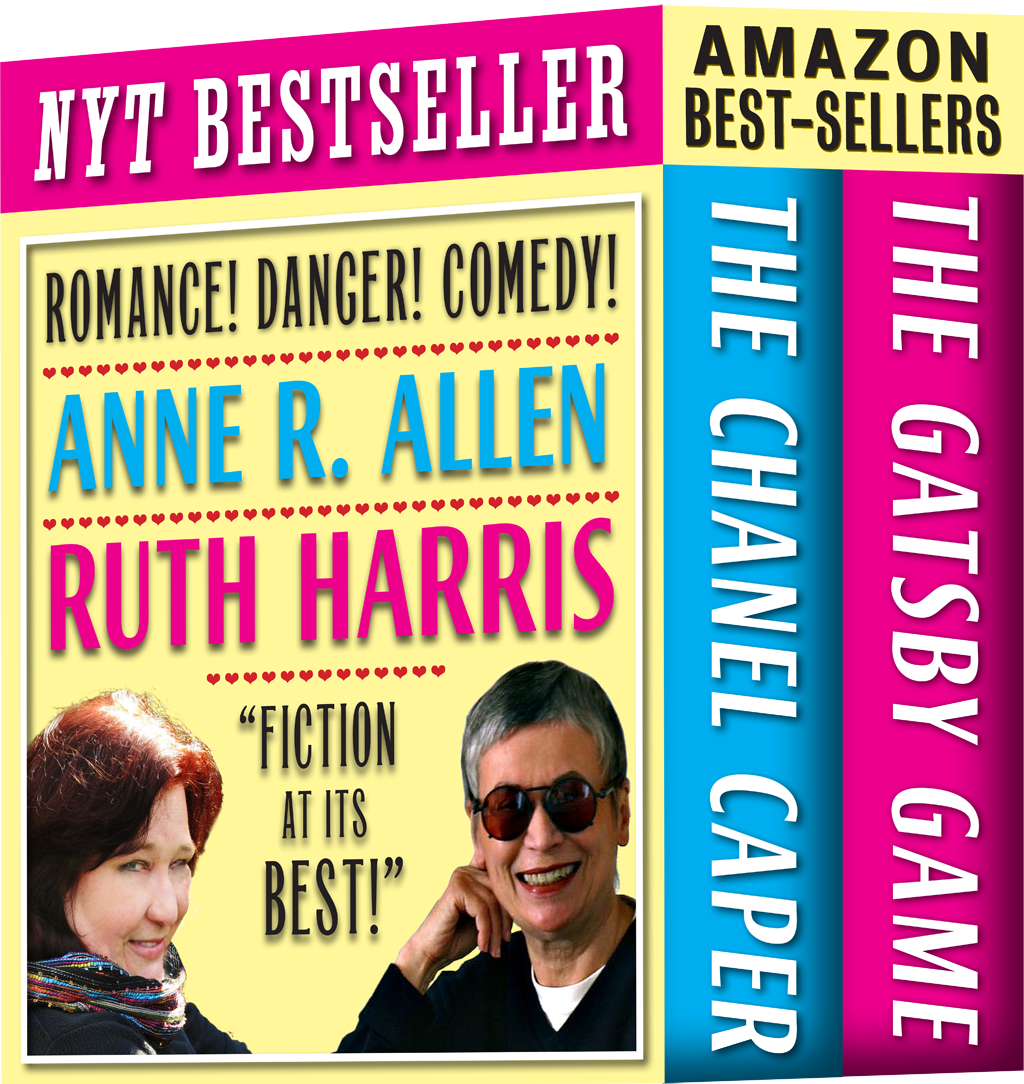
And you can now get The Gatsby Game together with Ruth Harris's The Chanel Caper together in one volume: Two comedies for the price of one
Hollywood and Manhattan: it's Bi-Coastal Comedy!
Available atNOOK, Kobo, and Amazon US, Amazon UK, Amazon CA
OPPORTUNITY ALERTS
Win a critique of your novel from a literary star and Cambridge professor. Winners will get full critique valued at $800. Contest sponsored by the Writers’ Village Foundation, a not-for-profit UK organization established to help new authors. The top eight submissions will win a session of personal feedback from the award judge, novelist Michelle Spring, a Royal Literary Fellow at Magdalene College, Cambridge. Entry is $19 and the deadline is 31st March.
GLIMMER TRAIN FAMILY MATTERS CONTEST $1500 prize, plus publication in Glimmer Train Stories, plus 20 copies. $15 ENTRY FEE. They're looking for stories about families of all configurations. It's fine to draw on real experiences, but the work must read like fiction. Maximum word count: 12,000. Any shorter lengths are welcome. Deadline March 31.
Women Writers: MSLEXIA SHORT STORY COMPETITION £10 ENTRY FEE. A competition for unpublished short stories of up to 2,200 words. First prize £2,000 plus two optional extras: a week’s writing retreat at Chawton House Library outside of London, and a day with a Virago editor. Second prize: £500. Third prize: £250. Three other finalists each receive £100. All winning stories will be published in the Jun/Jul/Aug 2014 edition of Mslexia. Deadline March 17
Dark Continents Publishing's Guns and Romances anthology. They're looking for previously unpublished short fiction from 3500-9000 words. Any genre as long as there's a tough protagonist, weapons, and... at least one reference to music. Sounds interesting. Payment rate is a one-off of $20 per story plus a percentage of the ebook royalties. Publication estimated in late-2014. More info on the website. Deadline February 28.
ERMA BOMBECK WRITING COMPETITION $15 ENTRY FEE. Capture the essence of Erma's writings and you could win $500 and a free registration to the Erma Bombeck Writers Workshop! Personal essay must be 450 words or less (entries of more than 450 words will be disqualified). Two categories: humor and human interest. Deadline February 17.
January 26, 2014
Writer’s Toolbox #5: Must-Have Research Tools Beyond Google and Wikipedia
This is the 300th post on this blog, and the 40th for Ruth Harris!
Ruth graciously agreed to join my blog in August of 2011, right after my out-of-print comic thriller Food of Love was accepted for re-publication by Popcorn Press. I was about to embark on the roller-coaster ride of a lifetime, publishing five novels (with two publishers) as well as contributing to three anthologies...in two and a half months.
I was amazed and honored that a New York Times bestseller and former Big Six editor would want to join my blog. I still am.
Little did I imagine that Ruth would someday want her bestselling fiction to join a book of mine between e-covers. But last November we came out with Chanel and Gatsby, a bi-coastal two-fer bringing together her Manhattan comedy-thriller The Chanel Caper, and my Hollywood comedy-mystery, The Gatsby Game.
I'm still recovering from my publishing marathon that began in mid-2011 and finally ended with the publication of my eighth novel, The Lady of the Lakewood Diner in December 2013.
There will be more Camilla books coming. But right now I'm trying to deal with all the stuff I neglected over that two and a half year period. Seriously. You do not want to know how many things in my pantry had expiration dates of 2011 or earlier.
I could not have done any of it without Ruth taking over the blog every fourth Sunday. And her advice and wisdom have helped me survive this crazy ride.
Today she's got a fantastic list of resources every writer can use. There are many I'd never thought of. I'm especially intrigued by the name generator for multi-culti or fantasy characters. And the James Bond trivia. Who knows when you're going to need to know which Bond movie featured AbFab's Joanna Lumley, or who was the oldest "Bond girl"? And the BBC's "on this day" historical site looks like a gold mine.
Thanks, Ruth, for continuing to educate us on this blog every month. We now have nearly 900 subscribers to our blog email, and we hit the 1600 mark with blog followers this week. We would not have the fantastic readers we do without Ruth's expertise, humor and wisdom...Anne
Writer’s Toolbox #5: Reference and Research—the World Beyond Googleby Ruth Harris
Which president came before Theodore Roosevelt?
How do you revive a dying orchid?
How fast can a rhino run?
What does SPECTRE stand for?
In the course of writing a novel, a writer—one who will never indulge in an info dump!—will often need to find the answer to all sorts of oddball questions, some of them basic, others esoteric, still others trivial but nevertheless important.
Google and Wikipedia and YouTube are the basic go-tos but there are many other sites (just about all of them FREE) that will answer your questions and, even better, give you answers to the questions you didn’t even think to ask.
Here is a brief round up of sites I have found indispensable for research including a few that aren’t usually thought of as reference sources.
The New York Times maintains a massive searchable archive containing more than 13 million articles dating from 1851. You can search by author, section, or time periods from past 24 hours, past year or by specific dates.
The Washington Post maintains a searchable archive dating from 2005. (For dates prior to 2005, there is a paid archive search.)
USA Today , New York’s Daily News and the BBC also offer valuable search options.
Time magazine’s archive extends from 1923 to the present and includes the weekly’s covers for a visual look at what made the headlines week by week during most of the 20th Century and all of the 21st.
From hair dos to manicures, grunge to prep: If you need a clue about what your characters are or were wearing or detailed info about their grooming routines, Vogue is the place to go.
Need to jog your memory about books, TV, movies and music? Try Entertainment Weekly .
The dish on celebs? Need inspiration from human-interest stories? What about The Sexiest Man Alive? People is the place to go. And not to forget: James Bond trivia.
Want to ask an expert? Sign up with Quora where you can choose from over 400,000 topics to create a feed of information tuned to your interests. Google Plus has communities devoted to just about any subject you can think of.
Messing with the Mafia? From Omertà to La Cosa Nostra, from Al Capone to John Gotti, the answers are here.
For the raciest in bathing suits or a who’s who and what’s what in the locker room and on the gridiron, the skating rink, the baseball diamond or the tennis court, Sports Illustrated will clue you in. Writing for a younger demo? SI Kids has the deets.
Pinterest, eBay and Etsy are usually not considered research sites but they are gold mines of ideas presented visually and, in the case of eBay and Etsy, items described in detail—a big help when you don’t know what this or that knicknack or collectible is called or when you want to find a popular hobby or off-beat interest for a character.
Need a name for a Catalan or Chinese character? Want a name for a hillbilly, a witch, a rapper? A name with ancient Celtic, Biblical or literary allusions? Try the
Authors of Regency fiction will find information on law, language, clothing, and the peerage plus links to other relevant sites from Regency author Joanna Waugh.
The Pew Research Center offers a searchable database covering everything from demographic data and scandals to international affairs and global religious beliefs.
Seeking a “fact checker for the internet?” Check out RefDesk.com.
Streetwise slang? Here’s the guide to current lingo: urban dictionary.
Hung up for a movie or TV series quote? This site will probably know.
Consult the Oxford dictionaries in a variety of languages including: British English, American English, German, French, and Spanish. The Oxford biographical dictionary contains bios of almost 60,000 people, English and beyond.
A dictionary on steroids, WordHippo tells you the meaning of a word and also finds synonyms, antonyms, words that rhyme with it, sentences containing it, other words starting or ending with it, its etymology, and much more. Type in what you are looking for, choose the appropriate category and WordHippo will come up with the results, as well as give one-click links to other data for the word.
Setting your story during a particular day in a certain year? Get the scoop on what happened on that day the BBC News OnThisDay site.
There’s a research blog for the history of graphic design at the University of Southern Missisippi.
Contemporary art? Try MOMA in New York City or the Metropolitan Museum. In San Francisco, try the SFMOMA, or MOCA in Los Angeles.
Renaissance art?
African art?
Folk art?
Science? Get information about Mind & Brain, Plants & Animals, Earth & Climate, Space & Time, Matter & Energy, Computers & Math, Fossils & Ruins at ScienceDaily.
Health and medicine? Rely on the experts at the Mayo Clinic.
Still need more? Try the Smithsonian:
The US Army has an extensive, searchable site that covers American wars from the Colonial era to the current War On Terror in the archives of the US Army Center of Military History.
Stuck? Out of ideas? Don’t even know what to look for next? Tell this site what you’re interested in and they will recommend websites/photos/videos: StumbleUpon.
We are living in the information age. Just about anything a writer wants to know or needs to find out is just a few keystrokes away. No more trips to the library. No more scrolling through hard-to-read microfiche. No more searching through heavy tomes to find that one piece of information you're looking for.
Explore beneath the surface to find the pearl of info that will make your book stand out from the crowd: the right research, properly used, can make all the difference.
What about you scriveners? Do you have anything to add to Ruth's list? Are any of you old enough to remember what research used to be like before the Internet?
BOOK OF THE WEEK
The Chanel Caper by Ruth Harris is $2.99 on Amazon US, Amazon UK and Nook | Kobo | iBooks
.jpg)
Here's what USA Today bestseller, Vanessa Kelly says about The Chanel Caper in Love Rocks:
"In an ongoing effort to upmarket her own outdated style and rekindle some romance in her marriage, Blake buys a faux Chanel handbag from a street vendor. This sets off a chain of wild events that includes murder, explosions, counterfeit drug rings, and the pursuit of suspects and warlords from Shanghai to Afghanistan. The Chanel Caper is a romantic comedy, a thriller, and a send-up of the big city lifestyle in the wake of the global financial crisis. All the disparate elements of this very funny story are tethered by the engaging Blake, a smart, sensible, and dryly witty heroine intent on saving her marriage. It’s definitely a romance for the grownups, set against the backdrop of the bright lights of the city that never sleeps."
And for a limited time, you can get The Chanel Caper together with The Gatsby Game for the same price: only $2.99!
Hollywood and Manhattan: it's Bi-Coastal Comedy!
Available atNOOK, Kobo, and Amazon US, Amazon UK, Amazon CA
OPPORTUNITY ALERTS
Win a critique of your novel from a literary star and Cambridge professor. Winners will get full critique valued at $800. Contest sponsored by the Writers’ Village Foundation, a not-for-profit UK organization established to help new authors. The top eight submissions will win a session of personal feedback from the award judge, novelist Michelle Spring, a Royal Literary Fellow at Magdalene College, Cambridge. Entry fee is $19 and the deadline is 31st March.
GLIMMER TRAIN FAMILY MATTERS CONTEST $1500 prize, plus publication in Glimmer Train Stories, plus 20 copies. $15 ENTRY FEE. They're looking for stories about families of all configurations. It's fine to draw on real experiences, but the work must read like fiction. Maximum word count: 12,000. Any shorter lengths are welcome. Deadline: March 31.
Dark Continents Publishing's Guns and Romances anthology. They're looking for previously unpublished short fiction from 3500-9000 words. Any genre as long as there's a tough protagonist, weapons, and... at least one reference to music. Sounds interesting. Payment rate is a one-off of $20 per story plus a percentage of the ebook royalties. Publication estimated in late-2014. More info on the website. Closing date for submissions is February 28.
Glamour Magazine "My Real Life Story" Essay Contest NO ENTRY FEE. $5000 prize, plus possible publication in Glamour. Creative nonfiction. Must be factual and appropriate for a Glamour audience. 2500-3500 words. Deadline February 1st.
Dog Lovers! AMERICAN KENNEL CLUB FICTION WRITING CONTEST NO ENTRY FEE. Submit one short story, maximum 2,000 words. Entries can be on any subject, but must feature a dog. (But it can't talk) Prizes $500, $240, $100. Deadline January 31.
January 19, 2014
Six Pieces of Bad Advice New Writers Need to Ignore
A couple of weeks ago, when I wrote a post about writing as a hobby as opposed to a profession (hint: they're both good choices), I got a couple of comments from new writers who were discouraged to read how much work and dedication it takes to become a professional writer.
They can be forgiven for being unaware of the realities, since so much misinformation about the business of writing has become part of our general culture.
From Ernest Hemingway's self-mythologizing to tales of fictional writers like Jessica Fletcher, Richard Castle, and Owen Wilson's character in Midnight in Paris, we've been shown a romanticized—and mostly untrue—picture of what it's like to be a writer.
The indie revolution has brought a whole new twist to the myth-making. New writers now hear all they have to do is write a book, put it on Amazon, send out a few Tweets, and they're off to big-bux land in the footsteps of Amanda Hocking and Hugh Howey.
And for some reason, everybody who's ever watched Oprah (or Richard and Judy in the UK) thinks they know all about what it takes to be a professional writer. Tell somebody you write and you'll immediately get lots of clueless advice from the "civilians" around you—from your family to your hairdresser to that know-it-all guy at work.
But the truth is, writing for a living is hard. If you love it, that won't stop you for a minute, but if you believe there are shortcuts, you're going to be awfully disappointed.
Here are six pieces of bad advice it's best to ignore if you want to launch a successful writing career.
1) Start with genre fiction, because it's easy to write.
People will tell you to start with something “easy” like a romance/mystery/kid’s book.
Yeah, I heard that one a lot when I was starting out. So the first book I tried to write was a romance. I spent nearly eight months on it. Oh, what a disaster! I learned the hard way that every genre takes years to learn to write well. And if you don’t love a genre and read it voraciously, you’ll never be good enough enough to gain an audience.
This is true whether you self-publish or go the traditional route.
Readers are just as picky as agents when it comes to choosing what they buy. They don't want fill-in-the blanks fiction. They want passion and originality within their genre.
Also, if your book is successful in getting a traditional publisher or a bunch of fans, they're going to want more of the same. Whatever genre you succeed in is the one you'll be expected to write throughout your career. Why would you do that with a genre you don't love?
2) Write about vampires/zombies/dystopian YA/mommy porn: that's what's selling.
Alas, traditional publishing has smoked its last 50 Shades cigarette and sneaked out the back door without leaving a note. Dystopian apocalypses have met their Armageddon. Vampires and zombies have been safely returned to their graves, and werepersons, angel/demons and witch/warlocks have been banished to the shadows from whence they came.
The known authors in these genres are still selling, but traditional publishing is saturated and won't look at new writers in most of these genres. You can self-publish, but you'll be on the tail end of a waning trend, so you'll need to bring something original to it.
The big trends in traditional publishing are usually over by the time the general public hears about them. By the time something's big on TV or film, it's been played out in the publishing industry.
As I said in #1, only write what you love. If you simply adore the undead, your passion may bring a new spark to the genre and you may find a great niche audience in the indie market. But only write in the currently popular genres if they are at the top of your own reading list.
Writing to trends almost always backfires, as I found out myself. Back in the 1980s, I tried to write a "glitz" novel. Glitz was super-hot at the time. Judith Kranz and Jackie Collins were queens of the genre (and the bestseller lists.) The stories involved lots of designer name-dropping and steamy sex. But no matter how hard I worked at glorifying sex and money, the book turned out funny.
I was actually writing chick lit, but I didn't know that because it hadn't been invented yet. I still write chick lit, a genre that had its heyday at the beginning of the millenium. But I didn't write it because I was trying to follow a trend. It's what I like to read.
I'm not telling you to dump your ms. in one of these genres, or even that your books in these genres won't sell as indies. But don't write in a genre just because it's selling right now, because it's probably oversaturated.
3) Querying agents is a good way to get feedback.
I often hear new writers encouraging each other to "send it out: it can't hurt to try." (This often comes from your critique group, who are re-e-e-e-ally tired of reworking chapter one for the sixteenth time.)
But actually, it can hurt. A lot. Rejection is no fun. Why invite it when it means nothing? And a rejection from an agent means just that: zip, zilch, nada.
These days, most agents don't give feedback of any kind. Even the gentlest suggestion can backfire when upset authors retaliate with nasty return emails or worse...much worse.
That's why a good percentage of agents don't respond to queries at all unless they're interested, and most of the others send a one sentence generic note along the lines of "this does not fit our needs at this time."
Every writing group and forum is full of complaints from new authors who are trying to read meaning into those one-liners. But believe me, they only mean your book didn't tick off all the boxes on the list of what the agent's contacts at the Big Five are looking for this week. That's ALL.
For more on what rejections really mean, here's Ruth Harris's post on the subject.
There's also the problem that if your query is especially clueless, the agent may remember your name, and not in a good way.
DO NOTE: Agents don't get paid for reading your queries. They don't owe you feedback. They only get paid when they sell a book, and if your book isn't ready to sell, you're clogging up the pipeline and slowing down the process for other writers (like maybe you, a couple of years from now) who really are ready to publish.
The way to get feedback is to join a critique group or find a beta reader.
There are lots of opportunities for these online. Some can be snarky and useless, so do check with other users before you put your fledgling writing out there. Kristen Lamb's WANATribe.com is a bully-free, friendly community where you can meet beta readers. Two other great resources are are CritiqueCircle.com and SheWrites. GalleyCat has a great new sign-up system for finding the right critique group.
Also the wonderful Jami Gold has a valuable post this week on how to find beta readers.
For more on querying agents, we're going to have a guest post in March from agent Pam Van Hylckama Vlieg (yes, the one who was attacked by the crazed rejected author a couple of years ago) She's now a partner at Foreword Literary Agency and she'll be talking about the changing guidelines for queries.
4) You can launch a career with one book.
Blame the movies: the writer-hero struggles to finish that opus, finally types the last page, sends it to an agent and voila!—he has a contract and a book tour and he's an overnight millionaire.
This doesn’t happen anymore. If it ever did.
For self-publishers, it's almost impossible to get a readership with one book. Most successful marketing of self-published books is based on free and cheap deals to entice readers to come in and sample your work so they'll buy more. If there's no "more", all you're doing is giving away the store. Both Howey and Hocking had close to ten books a piece before they started making the big sales.
And even if you're going the traditional route, you need at least two books. I know this from experience, too.
I landed an agent with one of my first chick lit queries, and she had it six months and almost made a deal with Bantam. But did I use that time to work hard on a second book? No. I wasted my leisure hours obsessing about stupid stuff like whether I should quit my day job and what I'd wear on a book tour. (Yeah, I was running one of those movies in my head the whole time.)
When the deal fell through, my agent asked if I had anything else. I didn't. So she dropped me. I thought I could regain the magic with another agent, but by then the book had been out on submission to editors and no agent would touch it. I was back at square one with an unpublishable manuscript.
These days, most authors have to query agents for years, then when they get a deal, it's usually for multiple books. If you don't have those manuscripts waiting in the hopper, you'd better be good at writing very, very fast (while going on blog tours and social networking like mad.)
And that book tour? These days they don't happen for anybody but superstars. Tours for newer authors simply don't offer a good return on investment except for reality TV stars or politicians with SuperPacs to buy up all the books.
5) Just finish the book, throw it up on Amazon and let the customer reviews tell you what needs editing.
No. No. NO!! This one makes me cringe. I still see lots of writers telling each other this nonsense in forums, and even some of the big self-publishing gurus advocate it.
But they are not doing new writers any favors.
First of all, this gives ammunition to every self-publishing hater out there. You're creating the very "tsunami of crap" indies are accused of perpetrating.
And using Amazon or Goodreads customer reviewers as your critique group is one of the worst ideas ever.
Anybody who thinks they're going to learn anything from online reviews hasn't read them.
Could George Orwell have learned from this review of 1984?
"I highly reccomend that you DO NOT READ THIS BOOK. And please for the love of God don't read that "Brave New World" book by Hoxley. It is twice as worse as 1984. To put it bluntly, DON'T READ ANY GEORGE ORWELL. Your just waisting your time.""
Or maybe Tolstoy could have improved Anna Karenina after reading this?
"If you see Anna for $5 at your neighbor's garage sale, go ahead and buy it. Hollow it out, and stash a handgun in there. Leave it next to your toilet if you have unwanted guests. Beat your disobedient child with it. Put it in your fireplace and have a nice glass of vodka. Just don't read it! You have been warned."
Donna Tartt's The Goldfinch, which tops pretty much everybody's "Best of 2013" lists has nearly 200 one-star reviews on Amazon with enlightening comments like this:
"This book is too depressing and sad. I have yet to finish it. Just when I think it will get better something else bad happens."
Right. Don't let anything bad happen to your characters, Ms. Tartt. We want books about nice people watching paint dry.
All you can tell from one-star customer reviews is that the reviewer was probably having a bad day. They do not help you write better books.
See #3 for suggestions of places to get useful feedback.
Then hire an editor.
6) Don’t waste time on short fiction.
This is another one I fell for. I spent way too much time working on unpublishable novels instead of honing my craft with short fiction that could build a list of credits and establish my brand.
People will still tell you that short stories are a waste of time because they don’t make any money, but that has all changed with the ebook (see my posts on "Why you Should be Writing Short Fiction" and "Short is the New Long".)
Here are some reasons to write short-form fiction
Short stories are the best place to hone your skills. Short stories make money these days, both as stand-alone ebooks and in anthologies Publishing credits for short fiction and essays makes you more attractive to agents, publishers and readers. Winning a story contest gives your self-confidence a boost. (And you might even win a little cash.)It’s a whole lot easier to publish a short story than a novel: there are thousands of literary magazines and contests in the US, but only five major book publishing houses.
Short is definitely the new long right now. Novellas are having a renaissance, too. (In February we will host Paul Alan Fahey, author of a series of popular novellas. He'll offer a nuts-and-bolts formula for writing a compelling novella.)
What about you, scriveners? Have you followed any of this bad advice? What other writing misinformation have you heard? I had too much to list in one post, so I'll be writing about this again in February. Anything to add to my list?
BOOK OF THE WEEK
This month, Sherwood, Ltd is 99c for Kindle US, UK, Nook, and FREE on Smashwords and on Kobo. And for book-sniffers (I have to admit to some closet book-sniffing myself) it is available in paper for the marked-down price of $8.54 (regularly $8.99 on Amazon and $12.99 in stores.) It's also on sale in paper in the in the UK for £6.81.
.jpg)
"A wily tale of murder, deceit, and intrigue that can stand with the best of them. Her characters are all too real and her dialogue took me from laughter to chills to suspicion of everybody in the book...Read this book. It will be well worth the time."...David Keith at Smashwords
"One uses the term 'romping good yarn' advisedly but in fact this tale is exactly that. Aspiring author and failed A-lister Camilla, desperate for funds and affection, joins forces with a publishing team that beggars description. The similarities between the legend of Robin Hood and this story are subtle, the links never overdone or cliched. The narrative leaps from one twist to the next turn with pace and energy. The characters are delightfully off-centre and the hero? Well, he is definitely of a kind to swing down from the trees armed with bow and nocked arrow."...Prue Batten, author of the Guy of Gisborne series
BTW although Sherwood has all 5-star reviews on Smashwords, its Amazon buy page has had a visit from a couple of bullies who object to my "behavior" (i.e. writing a 2011 blogpost urging non-techie grandmas to write reviews). If you have read and enjoyed the book, some genuine reviews would be very welcome, especially on Amazon.
OPPORTUNITY ALERTS
Glamour Magazine "My Real Life Story" Essay Contest NO ENTRY FEE. $5000 prize, plus possible publication in Glamour. Creative nonfiction. Must be factual and appropriate for a Glamour audience. 2500-3500 words. Deadline February 1st.
GLIMMER TRAIN FAMILY MATTERS CONTEST $1500 prize, plus publication in Glimmer Train Stories, plus 20 copies. $15 ENTRY FEE. They're looking for stories about families of all configurations. It's fine to draw on real experiences, but the work must read like fiction. Maximum word count: 12,000. Any shorter lengths are welcome. Deadline: March 31, 2014.
Dog Lovers! AMERICAN KENNEL CLUB FICTION WRITING CONTEST NO ENTRY FEE. Submit one short story, maximum 2,000 words. Entries can be on any subject, but must feature a dog. (But it can't talk) Prizes $500, $240, $100. Deadline January 31.
January 12, 2014
Go Global in 2014: How to Get Your Books into the Global Marketplace
A lot of bookish blogs have posted predictions for 2014. But I'm only making one prediction for the new year: writers will need to start thinking globally.
Growth of ebook sales in the US and UK has slowed, but the markets abroad are growing fast.
Eoin Purcell wrote in the Irish Times last week: "Ebooks outside of the US continue to grow – markets such as Ireland, France, Spain and Germany are only now beginning to see the growth that the UK & US markets experienced two and three years ago."
Publishing Perspectives says that Russia now is the third biggest ebook market, and a Price Waterhouse Cooper study predicts that by 2017, 54% of e-book sales will be overseas.
Gareth Cuddy at Digital Book World said this week, "There was a real opening up of new markets in 2013. This is evident in the fact our publishers sold into a third more countries in 2013 than 2012."
This is especially important information for indie writers. As Dean Wesley Smith said in his recap of 2013 publishing trends:
"During 2013, indie publishing in many, many ways, both paper and electronic, spread out over the world. Now your indie books get a much wider reach than any traditional publisher can manage, which not too many people have talked about yet, but will in 2014."
Zoom. The book business is changing by the minute.
So I figured it was time to get an update from the EBUK blokes: Jay and Mick and the team who run the EBookBargainsUK newsletter (and now blog!) They visited us last October and opened a lot of eyes to the huge market out there for ebooks in English around the globe.
A recent ad I put in their newsletter got my books onto bestseller lists in Australia, Germany, and Canada and even made a sale to the Orkney Library and Archive, the oldest library in Scotland.
Some of this info is a little overwhelming for a non-geek like me, but I think you'll be convinced that getting into as many of these markets as possible is going to be increasingly important.
Do note that self-publishers can get onto a lot of international retailer sites by going through an aggregator like Smashwords, D2D, or BookBaby. You don't have to upload to all these sites yourself.
Going Global in 2014by the EBUK team
It was back in September that Anne and Ruth last invited us here to talk about the international ebook scene, and there’s no question the global ebook market has got bigger and better since then.
Numerous new ebook retail outlets have materialized even in that short time – we’ll be looking at a couple below – and we’re hearing more and more reports of indie US and UK authors not just selling overseas in increasing numbers, but selling in the most unexpected places, on platforms the authors never knew existed, in places they never knew ebooks could reach.
Which is why we felt it was the right time to launch our Go Global In 2014 campaign. Because if you don’t get your ticket now you may just miss the boat!
More and more authors are coming to realize that, important as Amazon is to any author’s career, we're not living in 2009 anymore.
Amazon is no longer the only show in town
Amazon is still very much the biggest player in the ebook marketplace, but it's not as big an international player as you may think.
1) Your books may be a lot cheaper on sites other than Amazon.
If that sounds crazy you probably haven’t heard about the notorious Amazon surcharges. Respected indie commentator David Gaughran has posted about these on several occasions.
Put simply, for customers outside the Kindle Zone countries (that is, countries without a Kindle store) Amazon bizarrely adds a substantial surcharge to the list price.
Your $2.99 ebook will cost a reader in Malta or Poland $4.99.
In Norway it will cost as much as $6.99. (And the author will get just 35% of the $2.99 US price.)
Similar surcharges apply across the globe to countries without a Kindle store.
That’s always presuming Amazon allows readers to buy at all. Despite that long list of countries in KDP where your ebooks are supposedly going to be on sale, the truth is many countries are blocked completely from buying. Singapore is an example.
Obviously, readers will be buying elsewhere. And in 2014 there are plenty of places to choose from.
2) Kindle isn't the primary e-reader any more.
The world of e-readers, tablets and smartphones has changed beyond all recognition since 2009.
Having your books on Amazon is great, but they are in mobi format and not much use to anyone without a Kindle device.
Of course if you're on Apple, Kobo and Nook, you will have epub ebooks.
So what about Apple, Kobo and Nook?
Kobo has been growing slowly, like Amazon, but it has many competitors, as you'll see below. Apple may have 51 ebook stores but actually many of them only sell public domain titles, so they're of no interest to contemporary authors. Barnes and Noble is still more of a player than you'd know from its bad press. Readers can now buy your Nook titles from all four corners of Europe, from Finland up top to Norway on the left, tiny Malta down in the Med, Poland and Austria in the middle, and Estonia and Latvia over by the Russian border. It now has stores in Australia as well. But many of these they are restricted to the Windows 8 platform at the moment.
But these four retailers pretty much have the market sown up, right?
If only…the publishing world would be so much simpler.
Think wholesalers as well as retailers
The familiar retailers like Amazon, Apple, Nook and Kobo aren't enough any more. To reach the wider global market you need to have your titles in the wholesaler catalogues.
These are distribution companies like Ingram, Gardners, Baker & Taylor, OverDrive, etc.
Because the wholesalers distribute to so many channels with so many different end-user devices your First Grade epub conversion from a Word doc that might be acceptable on Kindle or Nook will not be good enough.
If you plan on going global you’ll need an industry standard epub file that meets IDPF standards.
IDPF is the International Digital Publishing Forum. They are the Trade and Standards Organization for the Digital Publishing Industry.
They have a free epub validator here. Just load up your epub file and it will come back approved or rejected. If your epub doesn’t pass the IDPF validator check it WILL NOT be accepted by any serious aggregator, such as Ebook Partnership, who can get your ebooks into the Ingram, Copia and OverDrive catalogues.
As we showed here back in September, Anne has excellent global distribution, with titles in local ebook stores everywhere from Iceland to Switzerland to South Africa. Anne uses Smashwords and Ebook Partnership together to maximize her global footprint. And of course her ebooks pass the IDPF validation test. (Whew! Actually my publisher handles this. I'm a cybermoron...Anne)
If you’re new to the indie game and looking to move up to the next level as self-publishers you should bookmark the IDPF validator and make sure every file you put out passes the IDPF validation test.
Why is the IDPF validation so important? After all, your Word doc that you put up on KDP looks fine, and you can throw a Word doc into Calibre and out pops an epub. Why all the fuss?
Well for starters your Kindle converted Word doc may not work on all Kindle devices. Don’t take our word for it. Check out Lexi Revellian, who reformatted all her files when she realized the Kindle Paper White was playing games with her ebooks.
For other devices anything but an industry standard epub is just asking for problems. Yes, we know your ebook looks fine on your neighbour’s Kobo and your nephew’s iPad and your Aunt Dot’s Nook, but…
In the world beyond the comfort zone of the US, UK, NZ, Australia and Canada, people are reading ebooks on tablets, phablets. smartphones and apps most of us didn’t even know existed.
Ever heard of Archos? Or the ‘txtr Beagle? TheTolino Shine? The Infiebeam Pi? The iRiver range? Orient? Goopad? (Seriously). Lenova, anyone? Haier? Chuwi? Doodee? Onda?
No, we’re not making these up. Here’s the Onda – an 8”, 16GB tablet for just $115.
Yes, it ships from China, but you can pay by Paypal, so you know your money is safe. No, it doesn’t come with Amazon Prime and film and TV and all those extras that make the KindleFire so worth buying.
But here’s the thing: If you’re not in the US and you buy a KindleFire none of those wonderful extras will work anyway. The KindleFire is just another tablet. And if you’re outside the comfort zone of the US, UK, the EU, Australia, New Zealand and Canada your credit card may not be usable at Amazon. Paypal may be the only international payment option open to you.
And that includes countries where Amazon has Kindle stores. Want to buy an ebook from Amazon India? It’s just one-click, right? Er… No. Check out the hoops you have to jump through just to buy an ebook from Amazon India.
Speaking of India brings us neatly to the Aakash.
Aakash: The $35 tablet
Way back in 2011 a $35 tablet was launched in India.
And everybody laughed. A tablet for thirty-five bucks? How could a $35 tablet be anything but an unmitigated disaster?
Surprise! The Aakash has been a phenomenal success. In the first quarter of 2013 the Aakash not only outsold Samsung in India, but sold twice as many tablets as Apple in India.
And this is just the beginning. The Indian tablet and smartphone market is still in its infancy. The number of Indians who will be buying tablets, phablets and smartphones in India over the next year or two is going to be staggering.
And many of them could be reading your ebooks on these devices.
Tablets, phablets and smartphones are taking off internationally on a scale that's hard to imagine. Many will be using devices we’ve all heard of and are comfortable with. But many more will be using devices we’ll never ever hear of and couldn’t pronounce if we did.
And they’ll be buying their ebooks from stores you’ve never heard of, too.
If you plan on going global in 2014 and reaching a truly international audience you need to make sure you are in as many of these stores as possible. Including the ones that don’t even exist yet.
No, no need to read that again. You read right the first time.
If you play your cards right, you can be in new stores from the moment they launch. Anne R. Allen did just that in Bild in Germany.
The Bild Ebook Store
Never heard of Bild? Given the Bild ebook store only launched in mid-December that’s no surprise. Luckily our patent early-warning new ebook retailer detector alerted us and we were there for Bild’s first day – and there were six of Anne R. Allen’s titles beaming back at us. (Much to my amazement...Anne)
As we explained here last time, Germany is a key market for your English language titles. For one thing it has as many English-speakers as Australia and Canada put together!
So with Amazon Germany, Apple Germany and Bild does that makes three ebook stores for Germans to choose from?
Nope. A quick count suggests there are about twenty German ebook stores, and we’ve probably missed several. Expect LOTS more through 2014-15 as market fragmentation accelerates.
But we’ve chosen to mention Bild here not just because Anne’s in it. Bild is part of a much bigger picture emerging. You see, Bild is part of a key consortium of ebook stores that together are challenging Amazon’s supremacy in the German market.
Sadly while Kobo has the largest German ebook store by number of titles, it has yet to make a serious impact in Germany. That will change as Kobo expands its presence in the country, but the big threat to Amazon comes not from Kobo, Apple or Google Play but from the domestic market. Not ‘txtr, surprisingly, but what is loosely termed the Tolino Alliance.
The Tolino Alliance
The Alliance is a consortium of German publishing interests acting together to promote ereading in Germany. By summer 2013 they were estimated to have grabbed 34% of the German ebook market.
The Tolino Alliance comprise Thalia, WeltBild, Hugendubel, Buecher, Deutsche Telecom and Bertelsmann, who together are selling the Tolino e-reader and tablet across some 1500 retail stores. No surprise it did rather well then, despite some dismissive reports from industry commentators.
Nate Hoffelder over at The Digital Reader typified the reaction to the Tolino Shine: “The Shine is going to bring generic ereaders to a whole new level,” he said, adding “Let me know when Tolino has a plan to sell ebooks better than Amazon, because that is the point at which they might start winning. At this point all I can see is that they are making the same hardware mistake as everyone else.”
Three months later Nate wrote a post headed, “Tolino Shine eReader Has Great Success in First 100 Days.”
The Tolino Alliance goes from strength to strength. Check out their website - In October they launched their tablet range, and in December their latest ebook store.
Nate talks about “winning” and “selling ebooks better than Amazon”, which somewhat misses the point. The thing is, it's not about winners and losers. It’s about market share and selling books. Not selling books better than Amazon.
The Tolino Alliance is devastating Amazon market share in Germany. Yes, Amazon are still the biggest, but for the Tolino Alliance to not just barge Apple to one side but to eat up a third of the market so quickly is pretty phenomenal, and perhaps a sign of things to come, not just in Germany but globally.
But Bild ebooks is of interest for other reasons too. We talk a lot about market fragmentation on our blog, and this new German ebook site is a fine example. For starters it’s run by a newspaper – the German tabloid Bild, which immediately gives it high visibility. Especially given Bild already has a digital music subscription service, and also sells video.
It’s powered by Buecher, part of Holtzbrinck. Holtzbrinck, who also own Macmillan, are one of the Big Five publishers. (They're also behind the Skoobe ebook subscription service, which long predates the US getting subscription ebooks).
Oh, and Bertelsmann, one of the companies in the Tolino Alliance? They own Random House Penguin, the world’s biggest publisher.
Next time you read how the Big Five has its head in the sand about ebooks, bear that in mind.
“Glocalization” and “market fragmentation”
"Glocalization" and "market fragmentation" are terms you’ll often see on the EBUK blog.
"Glocalization" is a combination of "globalization" and "local". It's a measure of how multinational companies go about their business in foreign lands. Do they stick out like a sore thumb or seamlessly interact with the local environment?
"Market fragmentation" means sales are going to more and more smaller retailers instead of one or two monolithic giants.
Let's look at those new retailers in Germany. Those local German stores start off with an inbuilt advantage over foreign competition, even if the foreigners got there first–so they are already fragmenting the market.
And sometimes the new kids on the block gain an advantage over the established players, because they don’t carry the inevitable baggage that accumulates with age.
Many Germans haven’t forgiven Amazon for originally launching the Kindle in Germany without even bothering to translate the packaging and manual (bad glocalization), and Amazon has had more than its fair share of bad press in Germany everything from tax avoidance to Nazis in the workplace – and it has continuing issues with employee strikes.
But thanks to the early start with the Kindle, Amazon has held its own in the ebook market.
So far.
But as market fragmentation accelerates, and glocalizing stores like Google Play, now 44 ebook stores worldwide, and – to a lesser extent – Kobo, compete with the other international players like ‘txtr (18 international ebook stores, plus partner stores) and Sony (seven global stores) and the many hundreds of new White Label stores that WILL materialize worldwide through 2014, it’s essential indies are in distribution networks that will get you everywhere.
It cannot be stressed strongly enough that – while Amazon, Apple, B&N and Kobo are your primary retailers in the US and UK markets, you need to be in a wider distribution network than just the current front-runners.
Can small presses and indies get into the Tolino Alliance stores? Given those links with trad publishers you might be thinking there’s not a snowball’s chance in hell. But Anne R. Allen has managed it. (Again, all credit goes to my publisher...Anne.)
Here’s Anne in Buecher and in Thalia. And yes, she’s in Weltbid, Hugendubel, Club Bertelsmann too. Of course if Germans don’t want to buy Anne’s books from an Alliance store they can choose from other local German stores like ‘txtr, Ciando and Libreka (there are others!). And then of course Anne’s in Apple Germany, Amazon Germany, Kobo Germany, Sony Germany and even Nook Germany.
Obviously they will be focussed on German language titles, but don’t let that put you off. Click on this link to Anne in the Ciando store and check out what language the site is in. Yes, it’s in English. If you check out the Bild site they have a top 100 English-language ebook chart link prominently displayed on the home page.
Surprise, surprise, it’s all big name trad pubbed titles – but there’s a reason these big names got to be so big – it’s because they are available everywhere. And in the new world of global ebooks they will just get bigger and bigger, while indies can get left behind.
That’s why it’s so important to Go Global In 2014.
How many ebook stores will you have available in in Germany for 2014? The ebook market is just beginning to take off globally. Take five minutes out of your busy schedule to check if your titles are available in Germany and other key markets around the world. And if they are not, set an hour aside to do something about it.
To help you find your titles we’re making available our EBUK Global Footprint template
This is an Excel sheet which lists the English-language ebook sites (or ebook sites accessible through an English language portal) in the countries to which we send newsletters.
Just drop us an email at info.ebookbargainsuk.com with “Footprint” in the subject bar.
We’ll send you a Global Footprint spreadsheet template that you can copy for each of your titles. We update these regularly, as new retailers emerge or as we increase our promo newsletter reach to new areas.
It will help you keep track not only of where you are (you may be pleasantly surprised to find you’re in more places than you thought) but all importantly where you are not.
For example, if you are in Amazon India through KDP and in India’s Flipkart store through Smashwords you are probably confident you have the burgeoning Indian ebook market sown up pat. But as you’ll see from our Global Footprint template you could also be selling ebooks in Landmark, Pothi, Infibeam (oh, go on then, here’s Anne in Infibeam), W. H. Smith India, Google Play India, Crossword, Newshunt and Rockstand, to name but a few.
Indians can also buy from stores like Smashwords, Diesel, Blio, All-Romance/Omni-Lit, Scribd and similar retailers that don't have territorial payment or download restrictions.
How many options are you offering Indian readers to buy your ebooks?
Why is it so important to be in all these smaller stores? Because being there is half the battle.
And that applies equally whether you are selling in the US, the UK, Australia, New Zealand, India or tiny Malta.
As we mentioned above, while Amazon will surcharge a Maltese reader wanting to buy your book, good old Nook have a Windows 8 option for Malta. And for those Maltese not using a Windows 8 app they can buy from their local Malta ebook store. Just one more of the many new retailers that launched since we were last here.
Among the other new arrivals Google Play opened ebook stores in Argentina, Chile, Peru, Colombia and Venezuela. In case you’re wondering,
Amazon has Kindle stores in none of these countries, and surcharges readers in all of them, so your Kindle-exclusive ebook is not going to be very appealing.
The Internet is called the "world wide web" for a reason. It is truly global. Your ebooks can be read, and talked about, pretty much anywhere on the planet. The question is, can they be bought?
Here’s the thing. When your many Amazon readers love your books and tell all their friends, many of those friends will be on other platforms. When those friends look on their favourite ebook site – which may be one of those unpronounceable ones you’ve never heard of – and find you're not there – you've just lost a sale.
You've also lost a sale from their proudly Australian friend down under who only buys from local Aussie stores like Dymocks, Booktopia or QBD.
And their Aunt Mabel who was given a smartphone for Christmas with a Blio app pre-installed and has no intention of learning how to use something new.
And when they wax lyrical to their relatives in Munich about your book and said relatives go to Thalia or Hugendugel and find it's not there for their treasured Tolino ereader you've lost another sale.
And when that first reader's cousin in Calcutta with the Infibeam Pi2 goes to buy your book from Infibeam, and their brother with the Akaash checks on Rockstand but your title is only on Amazon India and Flipkart...guess what?
Anne mentioned in her intro some of the unexpected places she’s had sales recently. It’s a safe bet these sales weren’t from casual browsers who happened to spot her books. They came from word of mouth recommendation over the 'Net – almost certainly from the ton of books Anne’s been selling on good old Amazon.
Yes, Amazon is by far Anne’s biggest selling platform, but the international market is where her new customers are coming from. Readers who don’t use Amazon probably heard about Anne’s books from readers who do.
Readers will find you. But only if you are there.
For indies wanting to sell globally it cannot be stressed strongly enough - if you are not in a retailer's catalogue you have no chance of selling there. Loyal customers to that store won't go setting up a new account somewhere else just for you. They will buy someone else's book instead.
Being there is half the battle.
What about you, Scriveners? Are you as gobsmacked by all this as I am? Who knew there were that many retailers? Or that indies can get into the big wholesaler catalogues? I'd never heard of a "phablet" before, had you? (I "corrected" it as typo the first time, then realized it was a real thing.) I find this all very exciting, but also a bit overwhelming...how about you?
Go Global In 2014!

Ebook Bargains UK
Far more than just another promo newsletter.
Far more than just the UK.
You can contact EBUK here. Their subscriber list is still relatively small compared to something like Bookbub or Ereader News Today, but they reach 14 countries – they just added Japan this week – plus they're inexpensive, offer lots of options and have the advantage of not being an Amazon affiliate. That means they don't get any money from Amazon or other retailers, so they can promo whatever books they like – even freebies – on whatever sites are available, because they don't get a commission from any retailer.
Besides, they promote indie bookstores instead of the big four retailers.This week they're promoting Vromans in Pasadena in the US newsletter. (And our own Ruth Harris has a nice spotlight.)
They will be rolling out more newsletters soon, including to the Middle East and Scandinavia, and each newsletter features links only to retailers available in that country /region. Same titles, but thirteen different sets of links.
Jay Hounsell says "Advertisers should expect results in bingo numbers, not telephone numbers. For this reason we keep our fees very low and it's Buy One get One Free." Unlike other newsletters they offer a variety of listing options - One Day, Something For The Weekend, Featured Title of the Week, Author Spotlight, Series Showcase, etc.
Book of the Week
After reading all this, I'm kind of embarrassed to say my new ebook is only available at Amazon, but it will be on other platforms soon. If you do have a Kindle or Kindle app it's only $2.99 right now...Anne
My new comedy, The Lady of the Lakewood Diner is at Amazon US, Amazon UK, Amazon CA
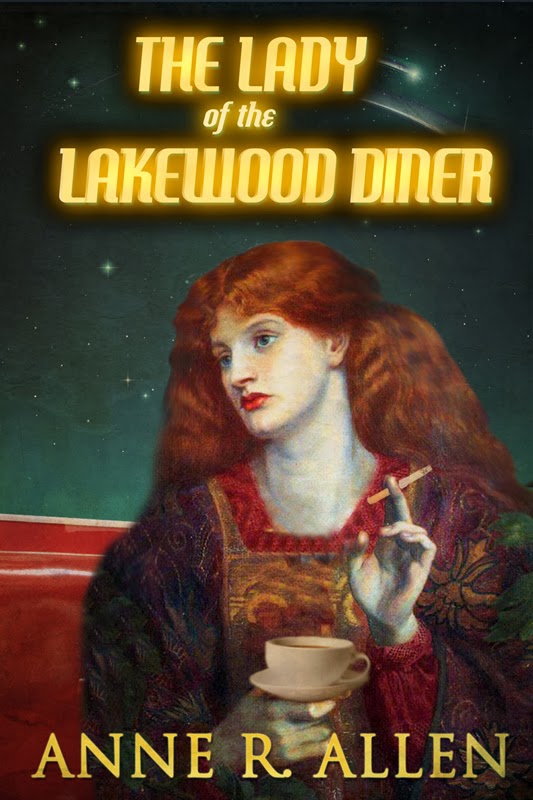
Who shot Morgan le Fay?
The Lady of the Lakewood Diner is a comedy about a six-decade friendship between an aging rock star and her childhood best friend—the owner of a seedy diner in Central Maine, who might be the only person who can figure out who's been trying to kill the rock diva.
"This isn't just "funny women's fiction for the Woodstock generation," it's a canny cultural observation that brings to mind two of my favorite British authors, Barbara Pym and Penelope Fitzgerald. Yes, the humor is there and sometimes spew-your-cocktail funny, but the character depth and plot fulfillment go so far beyond the humor. I felt I knew these people. I felt I was there."...Debra Eve of "The Later Bloomer Blog."
"In a panoramic view sweeping three decades, Anne Allen's "The Lady of Lakewood Diner" integrates the suppression of the fifties into the growing counter-culture of the sixties and the anti-war protesters of the seventies, all through the lens of the young women who live it. Folk music, the U. S. moon landing, JFK, The Vietnam War, Martin Luther King, the birth of Rock n' Roll, racial unrest, feminism, lesbian and gay consciousness, improvisational theater, Woodstock, the struggle of Vietnam veterans returning home and growing political unrest of U.S. military involvement all become part of the young women's lives as they mature....A cultural masterpiece for the discerning reader."...Kathleen Keena, author of Adolescent Depression Outside/In
Opportunity Alerts
Dog Lovers! Here's one for you: AMERICAN KENNEL CLUB FICTION WRITING CONTEST NO ENTRY FEE. Submit one short story, maximum 2,000 words. Entries can be on any subject, but must feature a dog. (But it can't talk) Prizes $500, $240, $100. Deadline January 31.
CRAZYHORSE PRIZES IN FICTION, NONFICTION, POETRY $20 fee (includes subscription). This is a biggie, well worth the fee. This venerable literary magazine has published the likes of John Updike, Raymond Carver and Billy Collins. Winners in each category receive $2,000 and publication. Submit up to 25 pages of prose or three poems. All entries considered for publication. Submissions accepted in the month of January only.
2014 BETHLEHEM WRITERS ROUNDTABLE SHORT STORY AWARD $10 ENTRY FEE. Submit 2,000 words or fewer on the theme of "Food Stories". In addition to a $200 prize, the first place winner's story will be considered for print publication in the Bethlehem Writers Group's next anthology or as a featured story in Bethlehem Writers Roundtable. Their last anthology won Indie Book Awards for Best Anthology and Best Short Fiction. Second place will receive $100 + publication in the BWG Writers Roundtable. Deadline January 15th.
Geist Literary Postcard Contest Canada's favourite writing contest is back! Enter now for your chance at literary fame and fortune! How it works: Send a story and a postcard—the relationship can be as strong or as tangential as you like, so long as there is a clear connection between the story and the image. If you’re not sure where to look for a postcard, you can make your own or visit Wikimedia Commons. The story can be fiction or non-fiction; maximum length is 500 words. For a classic example of a postcard story, read " How to Survive in the Woods " or "Death in the Family." Prizes of $500, $250, and $100 CND $20 fee. Deadline February 1st.
Writers over 40: Midlife Collage is a literary website that runs a creative nonfiction essay contest every month with progressive cash prizes. Stories must be true. Approximately 800 words. All submissions are entered into a $50 Weekly Contest. If a writer wins a $50 Weekly Contest, the writer may submit a Never-Published Story into their next $100 Contest. More info at Midlife Collage contest page.
January 5, 2014
Is Writing a Hobby or a Profession for You? Why Either Path Can be a Good Choice.
If one of your New Year's resolutions is to become a successfully published author, it's a good idea to consider first what that means to you.
What is your personal definition of success?
Do you want to be a professional writer or a hobbyist?
Before you burst into high dudgeon and say, "Of course I'm a professional! I've finished a whole novel, published a bunch of short stories and won three awards," consider this quote from publishing superstar Hugh Howey:
"Of…hobbyist writers, thousands now make a full-time living from their work. Thousands more pay a huge chunk of their bills from their hobby. These are part time artists who have thousands of fans and hear from readers all over the world. Some of them go on to get offers from agents and publishers and score major deals. All because they are doing something they love."
Writing is one of the best hobbies in the world. It costs almost nothing and keeps your mind alive and active and you get to create worlds—how cool is that?
And in the digital age, you can share that writing with lots of people. The online writing community is huge. On fan fiction sites or sites like Wattpad and Readwave, you can get fans and develop a following. None of it will cost you a thing.
You can also buy a pre-made cover, trade edits with a friend and upload to Smashwords or self-publish with Amazon, Nook and/or Kobo and be a published author and it won't cost you much more.
And you might even make money. In the electronic age, the line between writing as a hobby and writing as a profession has blurred. To quote Hugh again:
"There are tens of thousands of authors out there now making $20 or $100 a month doing what they would happily do for nothing."
Some writers, like Hugh, have made the leap from hobby to profession in a spectacular way.
And even though he's now a superstar trad-pubbed author with a big movie deal, Hugh still writes fan fiction. He's written a story, Peace in Amber set in Vonnegut's world of Billy Pilgrim and the Trafalmadorians through Amazon's fan fiction platform. It hasn't even been released yet, but it's already #1 in Kindle Worlds.
If you're not clear on your goals, I recommend this great post Dan Holloway posted on Jane Friedman's blog this week: What Do You Want from Your Writing in 2014? Dan provides exercises for clarifying your writing goals and suggests things like writing a letter to your future self.
If you decide that for now your goal is to remain a hobbyist, that doesn't mean you can't be a brilliant writer—or that you can't be published.
As Hugh says, this is the best time ever to be a writer, whether you choose to treat writing as a hobby or a profession.
But hobbyists can be easily ripped off, hurt, or manipulated if they're not clear on their goals.
Overpriced vanity publishers and predatory publishing contracts can turn a fun hobby into a nightmare for the amateur who doesn't know the ropes.
And lots of them get their feelings hurt and even quit writing because they make the mistake of querying agents and publishers.
Every day I see laments in forums and writing groups from writers who feel wounded when an agent or publisher rejects a book solely on the basis that it has already been self-published.
But the rejection doesn't reflect the quality of the book. It comes because they've flagged themselves as amateurs. A professional presents new material and doesn't mention failed projects.
Agents are only interested in working with professionals who can turn out product quickly on a regular schedule, make timely edits, show up for personal appearances, and dedicate a good deal of time to following directives from the marketing department.
This is the reality: no self-published book is going to be taken on by an agent or traditional publisher unless it's phenomenally successful. And for that kind of success, authors need to produce multiple titles and promote them in a well-planned, professional way.
How does the industry define "phenomenally successful"? According to agent Joanna Volpe, "Today, to turn publisher’s heads, that needs to be...50,000 copies in one month, at a $2.99 price point or higher."
Most smaller publishers won't be interested either. They'd like to be your first choice, not your last resort, and they don't want to deal with a book that's already been in the marketplace and failed to sell.
The truth is, you can't make the leap from self-publishing to traditional unless you become a superstar on your own—and then you may not want to make the switch.
Do note: plenty of self-published authors are just as professional as traditionally-published ones, so choosing to self-publish does not mean you've chosen to be a hobbyist.
But don't knock writing as a hobby. There's nothing wrong with hanging on to amateur status.
Keep in mind that Olympic athletes are amateurs.
What defines the hobbyist writer?
1) Hobbyists write for the joy of writing.
If money comes, it's gravy—the way winning a money prize at the local club tournament is for a golfer.
2) They can write in any genre.
Or they can happily cross genres—with no worries about the marketplace. They can write memoirs, zombipocalyptic dystopians, Christian romance, and Star Trek fan fiction and still use the same name, or have 47 pen names if that's more fun.
3) They don't need to spend money on advertising or publicity.
Or, if they're fabulously wealthy, they can spend tons and hire a marketing team, even if they only have one book, written in Klingon, with an projected audience of two hundred readers. Hobbyists don't need to look at the bottom line.
4) They don't need expensive websites.
And they don't have to obsess about branding or platform or spend any more time on social media than is enjoyable. In fact, they can ignore social media entirely and leave their manuscripts on random bus seats, sail them into crowds as paper airplanes, or write them on birch bark and make them into canoes. There is no wrong way.
5) They can give themselves a big old launch party, no matter the cost.
Or they can splurge on a conference or book fair even if it means spending more money than they'll ever make on the book, because parties and conferences are a blast and this is something they do for pleasure.
6) They can write only one book.
Some hobbyists spend decades working on a memoir and never write another word. It's very tough to make money on just one book, but if it's your hobby, that doesn't matter.
7) Hobbyists no longer have to publish with an expensive vanity press.
In the pre-digital age, vanity presses were the only way most hobbyists could get published. These presses charged thousands of dollars to put a few copies of your book into print. But now, even paper copies can be self-published cheaply through CreateSpace, BookBaby, Lulu, or Lightning Source.
Unfortunately, some of the Big 5 Houses have teamed up with the old vanity presses and offer overpriced packages that exploit the uninformed writer's "overnight success" dreams. A smart hobbyist doesn't go there.
They learn the ropes of self-publishing or use reliable, inexpensive self e-publishing assistants like Smashwords, BookBaby, Lulu, and Draft2Digital. These self-publishing companies offer inexpensive services and even keep track of your royalties for you. (Lots of professionals use them too. Smashwords is one of the best ways to get a book into the global marketplace. More on that next week in a guest post from the EBookBargainsUK guys on "Going Global in 2014".)
8) They don't waste agents' time (or their own) on the heartbreaking query-go-round.
A query is a job application for long-term employment in the publishing industry. Don't go there if you don't want the job.
At best, you'll get discouraged by the rejections, and at worst, you could end up signing a cut-throat contract that takes a piece of your rights in perpetuity or hobbles you with a "non-compete clause" that bans you from ever publishing books in your genre, even if the publisher or agent rejects it.
In these days when it's the hybrid author, not the traditionally published author who makes the most money, a non-professional writer who goes the traditional route could end up losing the possibility of making money from a book any time in the future (or even your children's future.)
What defines a professional writer?
We can't say a professional writer must make a living solely from writing, because many of our most lauded literary icons make a living teaching or have some other day job.
"Professionalism" means entering an industry and treating your writing as a business.
Not everybody wants to do that. Don't let anybody push you into it if you're not ready or you don't feel the need. The fact you're not "going pro" doesn't devalue the quality of your work—and it doesn't mean you shouldn't work to make your writing the very best it can be.
Remember those Olympians!
But you should be aware of these things:
If your goal is a traditional publishing career, you need to educate yourself in the industry and learn how to present yourself as a professional…and take care of yourself like a professional. (see #12 below) If you have long-term plans to make writing your primary career, whether you publish with the Big 5, go with a small press, or self-publish, you're more likely to succeed if you approach it as a business.
That means writing becomes the main focus of your work life, even if you have another job.
How do you become a professional?
No, you don't need an MFA (in fact that won't impress many people in the industry.) But you do need to educate yourself about the business side of publishing.
Here are some things to do if you plan to be a professional author:
1) Learn the basics of the industry: the jargon, the names of big players, important conferences, etc. Read Publishers Lunch and Galley Cat, and subscribe to major industry blogs. Pay attention to what sells and what's overdone and on the way out. Join professional organizations in your genre, like SCBWI and RWA.
2) Keep up with the latest technology, as well as social media and contemporary marketing techniques. Start following business news, especially in the tech industries.
3) Treat your writing as a job. Show up for work on a regular schedule. Treat it as your #1 job, even if you have others.
4) Lose the magical thinking. As Porter Anderson says, just lighting a candle to St. Amanda the Hocking won't sell your work. Don't expect your first novel be discovered in a slushpile if you've never published anything outside of the church newsletter. Don't expect a 600,000 word zombie romance time-travel western based on your psilocybin hallucinations that time in Baja to be a million-seller, no matter how many times you Tweet about it.
5) Always think in terms of "Return On Investment". Estimate the income you can realistically expect to make, and factor in ROI when you plan your marketing strategy. Don't pay for expensive marketing until you've got enough titles out there to bring in the income to pay for them. (Remember what I said about launch parties.)
6) Have a career plan. Know where you want to be in a year, and five years, and ten—and budget your time (and money) accordingly. Make getting successfully published and establishing yourself as an author your #1 goal. That means submitting to magazines and contests and getting known in your genre in order to build a solid writing resume.
7) Develop a personal "brand" and platform (yes, platform still matters), and use social media regularly but with care. Keep religion and politics out of your online activity unless it is related to your writing. (For instance if you write Christian romance, it's fine to talk about religion—in a respectful way—or if you write about LGBT issues, promoting marriage equality is good. But don't share every far-right or far-left petition that lands in your inbox: you're eliminating half the market.)
8) Know your genre and realize you'll be expected to stick to it. Some authors do write in multiple genres, but fans don't like it when you switch. If you do, you may have to use a pen name and double your platform building.
9) Pay for professionals to edit, design and format your book unless you know how to do these things on a professional level yourself—or find a traditional publisher.
10) Don't try to publish a first novel or a single title in a genre. Have at least two finished and more in the pipeline before you launch a career. Yes, writers have launched careers with a single book, but writing the second one is tough while you're busy promoting the first—just ask Jay Asher, who got a fierce case of writers block after his first YA novel, Thirteen Reasons Why became a #1 NYT Bestseller.
11) Learn the basics of journalism and content writing. Even if you prefer to write fiction, you'll need to write tons of articles, web content, and blogposts. A professional novelist is expected to write lots of nonfiction.
12) Learn something about contract law or have an intellectual property expert on speed dial. (See #8 above.)
13) Know there's no such thing as "overnight success."
~
But if you don't choose to be a professional, don't let anybody put you down for it. Does a golfer have to join the PGA tour to make playing the game worthwhile?
Maybe we over-value "professionalism" these days.
Consider this quote from Alexandra A. Palmer, who blogs as "The Happy Amateur"
"I want to engage in life as a favorite pastime, not a profession. I want to remain… a novice who is hungry for knowledge and humble at the same time. I want to be a constant devotee and admirer of life. In other words, I want to be an amateur."
Or this from UK businessman Nick Glaves
"Sometimes a happy amateur can get the better of the over-competitive, self-obsessed and grumpy professional."
I fear I'm a grumpy professional sometimes, and there are things I miss about being a happy amateur. But I was an amateur at a time when that meant nobody but a handful of writer friends and the 50 people who subscribed to an obscure literary magazine would read my work. These days, a hobbyist writer can reach a worldwide audience.
And who's to say that Klingon birch-bark canoe novel based on your 'shroom hallucinations won't be the next Pride and Prejudice and Zombies?
That would be some nice gravy.
What about you, Scriveners? Are you a grumpy professional or a happy amateur? Or are you a professional who's also having loads of fun?Any other suggestions for people who prefer to keep their amateur status?
Next Week: The EBUK blokes are back, this time telling us how to "Go Global in 2014". They say this is the year to get your work into the international marketplace.
Books of the WeekAll the Camilla Randall Mysteries are on sale this month!
No Place Like Home 99c on Amazon US, Amazon UK, and Amazon CA, and Nook

"A warp-speed, lighthearted comedy-mystery"...Abigail Padgett"A fun, charming novel about the rich and less so" ...Karen Doering"A cross of dry British humor and American wackiness, and it all adds up to a fun read." ...Deborah Bayles
The Camilla Randall Mysteries Boxed Set: 33c per book!!
99c on Amazon US, NOOK, and now £0.77 on Amazon UK and 99c CDN on Amazon CA . $1.03 on Amazon OZ and 49 rupees on Amazon IN, and the equivalent on all Amazon stores.
"The Best Revenge, Ghost Writers in the Sky and Sherwood Limited are hysterical. Anne Allen will keep you laughing throughout, but in the meantime she dabbles her fingers in some topics worth some serious thought: sexism, weightism, lechery, murder, duplicity, homelessness & poverty to name a few. If you love to laugh, you'll like these three books. If you love to think, ponder AND laugh, be ready to fall in love"... C.S. Perryess
Opportunity Alerts
FREE HOUSES FOR WRITERS. Yes, you read that right. With its "Write A House" project, the city of Detroit is giving away houses to writers. If you're a promising writer, AND a responsible homeowner (who's handy with tools) and want to be a proud member of the Motor City intelligentia, check out their website for details. Applicants will be asked to submit a writing sample, a resume, and a brief description of why they think they should receive the Write-a-House award. Applications taken starting in Spring 2014.
Dog Lovers! Here's one for you: AMERICAN KENNEL CLUB FICTION WRITING CONTEST NO ENTRY FEE. Submit one short story, maximum 2,000 words. Entries can be on any subject, but must feature a dog. (But it can't talk) Prizes $500, $240, $100. Deadline January 31.
CRAZYHORSE PRIZES IN FICTION, NONFICTION, POETRY $20 fee (includes subscription). This is a biggie, well worth the fee. This venerable literary magazine has published the likes of John Updike, Raymond Carver and Billy Collins. Winners in each category receive $2,000 and publication. Submit up to 25 pages of prose or three poems. All entries considered for publication. Submissions accepted in the month of January only.
2014 BETHLEHEM WRITERS ROUNDTABLE SHORT STORY AWARD $10 ENTRY FEE. Submit 2,000 words or fewer on the theme of "Food Stories". In addition to a $200 prize, the first place winner's story will be considered for print publication in the Bethlehem Writers Group's next anthology or as a featured story in Bethlehem Writers Roundtable. Their last anthology won Indie Book Awards for Best Anthology and Best Short Fiction. Second place will receive $100 + publication in the BWG Writers Roundtable. Deadline January 15th.
Geist Literary Postcard Contest Canada's favourite writing contest is back! Enter now for your chance at literary fame and fortune! How it works: Send a story and a postcard—the relationship can be as strong or as tangential as you like, so long as there is a clear connection between the story and the image. If you’re not sure where to look for a postcard, you can make your own or visit Wikimedia Commons. The story can be fiction or non-fiction; maximum length is 500 words. For a classic example of a postcard story, read "How to Survive in the Woods" or "Death in the Family." Prizes of $500, $250, and $100 CND $20 fee. Deadline February 1st.
December 29, 2013
6 Writing Dragons: How To Slay Them...and Realize Your Writing Dreams in 2014
by Ruth Harris
Why Tough (Self-) Love (and Some Dragon-Slaying) Will Get You Where You Want To Be Next Year
The reasons (excuses?) for not writing/not getting your book finished often come down to six usual suspects:
1) The Procrastination Dragon
As if you don’t know what I’m talking about. ;-) But, just in case you only recently landed on Planet Earth, here’s a short list:
You’re tweeting instead of writing.You’re surfing the web instead of writing.You’re making coffee instead of writing. You’re answering emails instead of writing.You’re cleaning the bathroom instead of writing.You’re organizing your spices instead of writing.
Bottom line: You’re doing anything and everything you can think of exceptwrite.
2) The Interruption Dragon
The phone.The kids.The dog. The cat.Your husband/wife/significant other.The Amazon drone delivering 3 pairs of gym socks you ordered half an hour ago.You lose your train of thought. If you were in the zone, you’re now out of the zone. If you weren’t in the zone, you’re now out in Siberia.How can you be expected to write if you’re being interrupted all the time?
3) The What-Happens-Next? Dragon
Your MC is on the top branch of a burning tree and the bad guys are down below. With guns, knives, IEDs, RPGs, snarling tigers. machetes and blowtorches.
So now what happens?What does the MC do?What do the bad guys do?What does his/her husband/wife, cubicle mate, best friend, bridge partner, girl friend/boy friend, Pilates teacher, dog walker, nutty neighbor, favorite TV comedian or movie star do?Who says what? And to whom?You mean you don't know? Don't even have a clue?
4) The Fear and Loathing Dragon
You forgot why you’re writing the damn book and you hate every word anyway because you’re a no-talent nobody.You can’t figure out whether it’s a comedy, a thriller, urban fantasy, horror or romance. You can’t remember why you started the stupid thing in the first place. You have no idea what you’re doing, why you’re doing it, and how you got from there to here.
Excessive, much?
Not really.
Writers, like everyone else, have mood swings. Not enough for clinical intervention but enough to—at least temporarily—undermine confidence and forward progress.
5) The "Dream Big" Dragon
You’re writing the Great American/Latvian/Cambodian novel. It’s so wonderful you’ll reach millions and millions of readers everywhere.
An invitation to the White House, to a billionaire’s yacht, to a fabulous mansion on a private island in the Caribbean is in the mail. Beautiful, brilliant people are lined up, just waiting to experience the exquisite pleasure of your company.
And, while you’ve unleashed your imagination about the rewards about to come pouring down on you, please, definitely do not forget the prizes:
The NBA (Not the one that’s played by tattooed seven feet tall men aka hoops. The other one.). The Booker. The Legion of Honor. The Nobel. The Pulitzer.
The list is endless.
Which leads us to—
6) The Perfection Dragon
Every word chiseled in marble. Every syllable a treasure for the millennia. So, of course, it has to be perfect. That’s why you have that infallible misery-maker, your own personal internal critic, to tap you on the shoulder and remind you of every terrible thing anyone ever said about you, your crappy taste in clothes and your rotten books.
You’re so terrible, even your dog hates you.You write. And rewrite.Consider and reconsider.Contemplate and then contemplate some more.You hit the delete button. Then the undo. You open the sentence-in-question in two documents and review them side by side. Still can’t decide which one is better so you write a third version.Which just adds to the confusion and misery as you scratch your chin and tear your hair (at the same time if at all possible because—don’t forget!—we’re going for perfection here) and try to decide whether or not afourth version is called for.
Getting to the point:
Here is where tough love comes in because, believe it or not, every item on this gruesome list is identical. Each one, no matter the superficial differences, is a self-inflicted wound.
That’s right: you caused your own suffering.
It’s your fault.
You did it to yourself.
You’re the dragon.
Once you truly understand that you are the cause of your dilemmas and frustrations, you are halfway to conquering them.
We are not in “it-hurts-so-good-don’t-stop” mode here. We are in destructive, self-defeating territory, a lethal terrain in which you will never get your book written, much less edited, revised, proof read and published.
Which is actually the good news and the point of this post. Since whatever is going wrong is something you are doing to yourself, you are the one who can undo the damage.
Let’s slay them one by one:
1) Procrastination
Are you an adult? Or a kid who doesn’t want to go to school because there’s a history test today and you haven’t done your homework? The real answer is—or should be—that you’re a professional and professionals get the job done.
You shut down the internet.You let the soap film remain on shower curtain. Until later. Afteryou’ve done the day’s work.So the oregano is next to the thyme, not next to the pepper where it belongs? BFD.You’re the boss of you. You’re a grown up. You do not give in to your self-defeating tendencies. You go back to your desk and get back to work. If you can’t do that, then you have to wonder how committed you are to your work.
Are you serious? Or are you just fooling around—and fooling yourself in the process?
2) Interruptions
Turn off the damn phone.Close the door.Put up a “do not disturb” sign.Make a deal: Trade a hour of uninterrupted work for an hour of errands/child care/chores: you’ll walk the dog (the one who hates you)/do the grocery shopping/take the kid to soccer practice in exchange.If your family doesn’t respect your work, doesn’t that mean you have somehow given them the signal that it’s OK to barge in and interrupt you with whatever?
Nora Roberts famously said that she will allow interruptions only in the case of blood and/or fire. NR is as professional as it gets. Isn’t her no-nonsense attitude something to emulate?
3) The What-Happens-Next? Syndrome
You’re stuck and then what? You got yourself into this pickle and it’s up to you to get yourself out.
Here is where experience is crucial. Every writer, no exceptions that I’ve ever known of or heard of, faces the blank wall, the blank screen, the blank brain. Every writer has been there before and every writer has escaped because, if they hadn’t, no book would ever have been finished.
What you need to do is develop a backlog of techniques that will get the work moving again.
Brainstorm with a trusted friend.Go to your junk file. By that I mean drafts you wrote but junked. Never delete unused paragraphs or scenes, just put them in a junk file. When you’re stuck, open the file. You may well find just the right route forward in something you once rejected.Make a list. Steven Sondheim spoke of making a list of all the words that might apply to the song he was writing. That list, SS said, revealed hidden connections he hadn’t seen before. There’s no reasons that approach can’t work for a writer.Have a glass of wine. I am not talking about getting rip-roaring drunk. I am talking about having a glass of wine with dinner. The combination of a small amount of alcohol, a relaxed mood and diverting conversation can spring open a door that has been stubbornly closed.Go for a walk. Take a shower. Weed the garden. Very often just getting away from your desk and engaging is a different activity is enough to break the block.Face up to your own tics and twitches. For me, it’s beginnings. When I’m stuck, I go back and reread. Almost invariably, the hang up is somewhere in the beginning: either I’ve told too much or not enough.
After I figure out the problem and make the necessary edits, I can go forward again. Once you see a pattern to your own bad habits, you will be able to develop coping techniques you can turn to again and again.
4) Fear and loathing
Happens to everyone. I’m not joking, either.
In fact, fear and loathing are so predictable that I and many other writers have come to see F & L as a normal part of the process.
Going back to your original outline can help. So can reading over your notes and research.Having someone else read your manuscript and report back can also help.Maybe it’s not as mind-blowingly vile as you think.Maybe it is, and you have to rewrite/revise.F&L is why god created beta readers, crit groups, and editors.Patience, perspective, persistence, and, if necessary, a pair of outside eyes are called for.
5) Dream big, dreamer
Dreams, even big dreams are OK and, for many, come with the territory.
They can motivate but if they lead to paralysis, you will need to ask yourself why you are allowing a dream to interfere with the necessary real-life work required to make the dream come true. Only you will be able to answer that question but unless you can look at yourself with an unflinching eye, no dream can come true.
6) Perfection
Doesn’t exist. Everyone knows it. So why do some writers torment themselves trying to achieve something no one—not Einstein, not Picasso, not Shakespeare—ever achieved?
If you are in that group or even if you have tendencies in that direction, try a dose of reality.
Go to the Amazon page of any famous writer and check out the one-star reviews. They’re guaranteed to be there even for famous and successful writers.
John Grisham, The Racketeer: “this book stinks”Donna Tartt, The Goldfinch: “a meandering mess”Stephen King, Doctor Sleep: “one-dimensional, amateurish”
Need I go on?
So you still think you’re going to write the perfect book? ;-)
Bottom line: more times you rescue yourself from perfectionism, procrastination, a block, unrealistic dreams, the more you will become a professional, dragon-slaying writer and the closer you will be to where you want to go.
We want to thank all our fantastic readers who have made this blog such a success in 2013, and we wish for you all to achieve your writing goals in 2014!
We'd love to hear in the comments about your goals for next year, and what dragons you need to slay.
Book of the WeekOn SALE for the Holidays!CHANEL and GATSBY: A Comic two-fer. Only $2.99!
Hollywood and Manhattan: it's Bi-Coastal Comedy!
Available at
NOOK, Kobo, and Amazon US, Amazon UK, Amazon CA
The Chanel Caper
JAMES BOND MEETS NORA EPHRON. OR IS IT THE OTHER WAY AROUND?
Blake Weston is a smart, savvy, no BS, 56-year-old Nora Ephron-like New Yorker. Her DH, Ralph Marino, is a très James Bond ex-cop & head of security for a large international corporation. At a tense time in their relationship, Blake & Ralph are forced to work together to solve a murder in Shanghai & break up an international piracy ring.
A totally fabulous, LMAO adventure with some of the best one-liners I've ever read!!! Ruth's wit is just a hoot, and her characters have the best sassy mouths in the biz!!!...bestselling author D.D. Scott
The Gatsby Game
A POSSIBLE SOLUTION TO A 40-YEAR OLD UNSOLVED HOLLYWOOD MYSTERY
When Nicky Conway meets Fitzgerald-quoting Alistair at a Princeton mixer, she falls for his retro, Jazz-Age charm. But she discovers he’s a con man obsessed with his own “Daisy”—British actress Delia Kent. After Alistair manipulates Nicky into nannying for Delia’s daughter on the set of a Hollywood film, Delia finds Alistair dead in her motel room. Local police can’t decide if it’s accident, suicide—or murder, in which case, Nicky is the prime suspect.
"For anyone who likes their books to be witty, with great characters, an atmosphere which it is a delight to experience, and a fast moving plot, this book is one you definitely shouldn't miss." ...Gerry McCullough of Gerry's Books
Opportunity Alerts
FREE HOUSES FOR WRITERS. Yes, you read that right. With its "Write A House" project, the city of Detroit is giving away houses to writers. If you're a promising writer, AND a responsible homeowner (who's handy with tools) and want to be a proud member of the Motor City intelligentia, check out their website for details. Applicants will be asked to submit a writing sample, a resume, and a brief description of why they think they should receive the Write-a-House award. Applications taken starting in Spring 2014.
Screenwriters!! 16th Annual Scriptapalooza Screenplay Competition. Over $50,000 in cash and software prizes. Every script entered is read by either a producer, manager or agent. Scriptapalooza will promote, pitch and push the semifinalists and higher for an entire year. They have relationships with producers, managers and agents that are actively looking for material. Only $45 to enter if you get it in by the early bird deadline January 6th.
Dog Lovers! Here's one for you: AMERICAN KENNEL CLUB FICTION WRITING CONTEST NO ENTRY FEE. Submit one short story, maximum 2,000 words. Entries can be on any subject, but must feature a dog. (But it can't talk) Prizes $500, $240, $100. Deadline January 31.
CRAZYHORSE PRIZES IN FICTION, NONFICTION, POETRY $20 fee (includes subscription). This is a biggie, well worth the fee. This venerable literary magazine has published the likes of John Updike, Raymond Carver and Billy Collins. Winners in each category receive $2,000 and publication. Submit up to 25 pages of prose or three poems. All entries considered for publication. Submissions accepted in the month of January only.
2014 BETHLEHEM WRITERS ROUNDTABLE SHORT STORY AWARD $10 ENTRY FEE. Submit 2,000 words or fewer on the theme of "Food Stories". In addition to a $200 prize, the first place winner's story will be considered for print publication in the Bethlehem Writers Group's next anthology or as a featured story in Bethlehem Writers Roundtable. Their last anthology won Indie Book Awards for Best Anthology and Best Short Fiction. Second place will receive $100 + publication in the BWG Writers Roundtable. Deadline January 15th.
December 22, 2013
The Rules of Writing...and Why Not To Follow Them
Somerset Maugham famously said, "There are three rules for writing. Unfortunately, nobody knows what they are."
But pretty much everybody you meet in the publishing business will give you a list of them. (One is "never start a sentence with 'there are'" —so watch yourself, Mr. Maugham.)
Last year I read a great post by editor Jamie Chavez about what she calls the "Secret Fiction Rule Book." I wrote about it on the blog last year at holiday time. I got so many grateful comments, I decided to talk about breaking rules again this year, and offer a new version of my little verse, "The Beginning Writers' Rule Book."
The "secret writing rules" are the ones you hear at conferences, critique groups, and forums: the ones people say you MUST follow to be a successful novelist—although as an avid reader, you somehow never ran into them before you started writing.
Jamie pointed out that nobody knows where these rules come from, or why so many great books have become classics without following a single one.
Don't get me wrong: most of these rules involve solid advice, but if you follow them rigidly, you'll end up with wooden, formulaic prose that nobody is going to want to read.
Do learn them. It's much more fun to break rules when you know what they are. But then go ahead and smash them with happy abandon.
Here are some more of my unfavorites.
1. Show, don't tell
Authors who follow this rule closely can write such murky stuff you never know what's going on.
Is this really the best way to present a character? "He wore a helmet with a wide brim, longer in the back to protect the neck, big black boots, a protective coat, and overalls held up with red suspenders. He smelled of ashes and soot."
Why not just tell us he's a fire fighter? After three pages of these guessing games, the building has burned down and WE DO NOT CARE.
2. Eliminate all adverbs
Seriously? Even when you're writing in the voice of someone who is, um, rather vague?
3. No prologues
Yeah, I admit I've preached the no-prologue gospel in many posts. That's because so many beginning authors use a prologue for info-dumping. But our readers keep pointing out that George R. R. Martin seems to do OK, and he loves him some prologues.
I think it depends on your genre and what your readers expect. Personally, I usually skip the prologue, but I'll go back to it later if the book grabs me.
4. You must write every day
Nothing should be done every day. Moderation in all things. Including moderation.
5. You must blog to have a successful writing career
Now even agents are seeing the silliness of this dictum. There are many paths to writing success. For me, blogging is the easiest way to build an online presence, but not everybody likes to blog. If you hate it, readers can tell.
You can get a lot of exposure with well-placed guest blog posts and a strong presence in other social media. Some writers are best at spreading a wide net on Twitter, Pinterest, Facebook and Google Plus, and others only use a single blog, or develop a following in one community like RedRoom or Wattpad.
Every publishing path is different. You should plan one that fits with your personality and writing style.
6. Eliminate all cliches
Unless your characters are wildly inventive poets, strange visitors from another planet, or children fostered by wolves, their dialogue and thoughts will include familiar expressions. Don’t rob your Scarlett O’Hara of her "fiddle dee-dees" or deprive your Bogart of "doesn’t amount to a hill of beans."
7. Write from only one point of view
Multiple points of view in one sentence—or even one chapter—can be clumsy and confusing, (and they drive me crazy), but novels with several points of view separated by chapters can be richer and have more depth.
8. Eliminate the words "was", "that" and "just"
This is one that just makes my blood boil. I wrote a whole blogpost about the "was" police.
9. Happy endings are required and kids can't die
Jamie Chavez addressed the dying kid thing in her post. This is why Little Women has been such an obscure failure, right? Beth should not have died! And Rhett Butler should not have walked out on Scarlet with that rude line at the end of Gone with the Wind. Books like those could never become commercially successful, right?
10. Never repeat a word in the same paragraph
Would A Tale of Two Cities have been improved if its first line read: "It was the best of times; it was the worst of historical eras." (And Mr. Dickens, the "was" police will be all over sentence!)
Or Anna Karenina with this: "Happy families are all alike; every morose clan is despondent in its own way."
Thesaurisitis can be a worse problem than breaking the secret rules.
Here is a little verse I stole from Dorothy Parker wrote about those rules, based on Dorothy Parker's hilarious poem, "The Lady's Reward".
Rules for the Beginning Novelist…with apologies to Dorothy Parker
Newbie author, never penBackground story till page ten.Use no flashbacks—no, nor prologue.Never start your book with di’logue.Set the hero’s hair on fire.Keep the situation dire.Write in genres tried and trueFrom a single point of view.Tell your tale in linear time.Avoid a plot that strains the mind.No dead kids, bad priests, abuseOr politics in your debuts.Copy last year's biggest hit.No one wants to read new @#%*
Make it light but never funny.
(Humor’s too subjective, honey.)
And if that gets you published kid,You’ll be the first it ever did.
Have a very Merry Solstice Season, everybody!
At the 2013 Grammy Awards, Neil Patrick Harris introduced the band Fun this way: "As legendary gangster-rap icon Katharine Hepburn once said,
'if you follow all the rules, you miss all the fun'."
So listen to Katherine Hepburn and have fun this season, everybody!
What about you, scriveners? Have you run into the "Secret Writing Rules" book? What are your unfavorite writing rules?
We Have TWO Books of the Week!!
The Lady of the Lakewood Diner is finally here!
$2.99 at Amazon US, Amazon UK, Amazon CA
Anne's new comic novel about the Boomer generation and the myth of the Golden Age.
Many thanks to Keri Knutson of Alchemy Book Covers for the hilarious cover!
NOSTALGIA AIN'T WHAT IT USED TO BE...
Who shot Morgan le Fay? The Lady of the Lakewood Diner is a comedy about a six-decade friendship between an aging rock star and her childhood best friend—the owner of a seedy diner in Central Maine, who might be the only person who can figure out who's been trying to kill the rock diva. It's Beaches meets Fried Green Tomatoes at the Whistle Stop Cafe.
On SALE for the Holidays!CHANEL and GATSBY: A Comic two-fer. Now only $2.99!Hollywood and Manhattan: it's Bi-Coastal Comedy!Available at NOOK, Kobo, and Amazon US, Amazon UK, Amazon CA
The Chanel Caper
JAMES BOND MEETS NORA EPHRON. OR IS IT THE OTHER WAY AROUND?
Blake Weston is a smart, savvy, no BS, 56-year-old Nora Ephron-like New Yorker. Her DH, Ralph Marino, is a très James Bond ex-cop and head of security for a large international corporation. At a tense time in their relationship, Blake and Ralph are forced to work together to solve a murder in Shanghai and break up an international piracy ring.
The Gatsby Game
A POSSIBLE SOLUTION TO A 40-YEAR OLD UNSOLVED HOLLYWOOD MYSTERY
When Nicky Conway meets Fitzgerald-quoting Alistair at a Princeton mixer, she falls for his retro, Jazz-Age charm. But she discovers he’s a con man obsessed with his own “Daisy”—British actress Delia Kent. After Alistair manipulates Nicky into nannying for Delia’s daughter on the set of a Hollywood film, Delia finds Alistair dead in her motel room. Local police can’t decide if it’s accident, suicide—or murder, in which case, Nicky is the prime suspect.
Opportunity Alerts Screenwriters!! 16th Annual Scriptapalooza Screenplay Competition. Over $50,000 in cash and software prizes. Every script entered is read by either a producer, manager or agent. Scriptapalooza will promote, pitch and push the semifinalists and higher for an entire year. They have relationships with producers, managers and agents that are actively looking for material. Only $45 to enter if you get it in by the early bird deadline January 6th.
Dog Lovers! Here's one for you: AMERICAN KENNEL CLUB FICTION WRITING CONTEST NO ENTRY FEE. Submit one short story, maximum 2,000 words. Entries can be on any subject, but must feature a dog. (But it can't talk) Prizes $500, $240, $100. Deadline January 31, 2014.
CRAZYHORSE PRIZES IN FICTION, NONFICTION, POETRY $20 fee (includes subscription). This is a biggie, well worth the fee. This venerable literary magazine has published the likes of John Updike, Raymond Carver and Billy Collins. Winners in each category receive $2,000 and publication. Submit up to 25 pages of prose or three poems. All entries considered for publication. Submissions accepted in the month of January 2014 only.
2014 BETHLEHEM WRITERS ROUNDTABLE SHORT STORY AWARD $10 ENTRY FEE. Submit 2,000 words or fewer on the theme of "Food Stories". In addition to a $200 prize, the first place winner's story will be considered for print publication in the Bethlehem Writers Group's next anthology or as a featured story in Bethlehem Writers Roundtable. Their last anthology won Indie Book Awards for Best Anthology and Best Short Fiction. Second place will receive $100 publication in the BWG Writers Roundtable. Deadline January 15th, 2014
GINOSKO LITERARY JOURNAL FLASH FICTION CONTEST: $250 Award, $5 entry fee, Submit up to 2 pieces, 800 words maximum each piece. Deadline March 1, 2014.
AARP/HuffPo Memoir contest for Boomers! You must have been born before 1964 to enter. The winner will get a $5,000 prize will be excerpted in AARP The Magazine and featured on The Huffington Post’s website. In addition, Simon & Schuster will consider publishing the work. Finalists from this round are invited to submit their complete memoir by June 15th. The books should run between 20,000 to 50,000 words. The first 5,000 words of the memoir is due February 15, 2014.
December 15, 2013
Author Collectives: The "Third Path" to Publication. Is it Right for You?
Liza Perrat contacted me a few months ago, asking for permission to quote me in a book about her author collective, Triskele Books. I've been fascinated by the idea of authors forming their own publishing companies, so I asked if she'd like to guest post for us. I was eager to hear more about her experiences and share them with our readers.
.jpg) Some writers take to the "indie" route easily, but others prefer to work with a team, the way it's done in traditional publishing. But traditional publishing can be very scary these days. Not only is breaking in daunting, but "non-compete" and "in perpetuity" clauses, rigid rules, low royalties and glacial schedules can turn a lot of writers away from the whole process.
Some writers take to the "indie" route easily, but others prefer to work with a team, the way it's done in traditional publishing. But traditional publishing can be very scary these days. Not only is breaking in daunting, but "non-compete" and "in perpetuity" clauses, rigid rules, low royalties and glacial schedules can turn a lot of writers away from the whole process. The author collective offers a way to have the best of both worlds. If you're a "team player" who wants the control indie publishing offers, but you don't want to go it alone, the collective may be for you. But you do need to choose your team carefully, and dedication is a must, as you will see from Liza's story.
The Triskele Books website is stunning and professional and the covers are beautiful. I could tell they have a team that includes a fantastic designer. Triskele was formed in 2011, by UK authors Gillian Hamer, JJ Marsh and Liza, who's originally from Australia and lives in France. In 2012, three more authors joined the team, Jasper Dorgan, JD Smith and Catriona Troth.
Although they write in slightly different genres, their books are aimed at a similar audience. All the books are "serious" works of fiction, mostly historicals, set in exotic times and places. They look fascinating.
They've also jointly written a non-fiction book that details their journey as a collective. The Triskele Trail A Pathway to Independent Publishing , which debuted in November.
As they put it, The Triskele Trail is a story about "a writers' collective who made some mistakes and some smart decisions; who discovered opportunities, found friends and dodged predators in the independent publishing jungle...This is not a How-To book. This is How-We-Did-It."
I'm so grateful to Liza for guesting for us while I recover from the flu and the loss of my mom. Liza has been amazingly gracious while I've been kind of a dragon-lady. Thanks a bunch, Liza! ...Anne
An Alternative Route to Publishing – The Author Collectiveby Liza Perrat
Once upon a time there were three authors. They met via an online writing group where they honed their writing skills, critiqued each other’s work, and where, attracted by the quality of each other’s writing, they gravitated towards each other. Around the end of 2011, each with manuscripts they believed were fit for the public eye, these three writers found themselves in a similar predicament.
‘Cross-genre won’t sell,’ Gillian’s agent said, of her historically-based crime thrillers with a touch of
.jpg) the otherworldly.
the otherworldly.‘Your crime novels are far too cerebral,’ one agent said about JJ Marsh’s European crime series.
‘Love it, but can’t see how to sell it,’ publishers told Liza’s agent, of her Revolutionary France novel.
Frustration at traditional publishing routes became a common topic of conversation so, spread across Europe and the UK, they got together and discussed their fears, hopes and plans.
At that stage, even as self-publishing was becoming an increasingly attractive option, the market was still littered with poorly-written, badly-presented vanity projects. They expressed their reservations about this, and about the lonely prospect of trying to tout their books in such a crowded marketplace, not to mention the frightening thought of taking on all that responsibility alone.
The idea of a team emerged. Sharing it between three, with that sense of mutual support, made it not only appealing but quite exciting. Apart, they were nothing, but together, they could make one hell of a team!
With all the administration of establishing a business, and because, legally, each member wanted to retain her own rights, they did not want to be a small press. So, they became simply a group of authors working as a team to promote their writing. Along the way, they picked up two more valuable members, and today the Triskele Books Author Collective remains a core group of five, inviting associate members from time to time, to publish under their label.
This is their story.
Getting the Author Collective off the Ground …
The three of us began by hammering out a philosophy founded on three principles:
High quality writingProfessional presentationA strong sense of placeTo brand ourselves, we chose the triskele as our logo, with its three independent, yet connected,
 circles. We had already designed our marketing materials when we realised that the triskele symbol is also an identifier for the BDSM community. What the heck, we thought … all welcome, BYO whip and chains!
The question of finances arose next. Even though each author retains her own rights and profits, for Triskele Books to get off the ground, there had had to be a certain financial commitment. We voted in our cash-savvy member as financial manager, she opened a bank account and we all deposited an initial float to cover website, promotional material, design and initial launch. She sends out bank statements for all expenses and, as and when we need to add funds, we all chip in equal sums.
Our biggest mistake in the beginning was everyone trying to do everything. After losing a website, dragging books across London on a hot Saturday afternoon and putting noses out of joint by forgetting to use “REPLY ALL” for emails, we soon learned it was better to assign tasks to individual strengths. Each had a skill, and we should focus on that.
So, our admin girl now draws up monthly workplans, assigning each member –– based on her particular skills –– certain tasks, which the others know will be done to the best of her ability.
The Nitty-Gritty of our Author Collective…
For the actual book-writing aspects we basically hold each other’s hands throughout the process. We critique, edit and advise on each other’s drafts before they go for final professional proofreading. You might think that four editors could be counter-productive, but we all try and keep in mind what the author wants to achieve, and how we can help her to get there.
.jpg) For marketing and promotion, we share the workload. In today’s crowded marketplace, an author has to shout pretty loudly to be heard over all the other voices, and it’s hard to keep thinking up new and witty things to say. Being part of a group means there is no lone wolf crying into the wilderness; we take turns out there, spreading the word, which leaves more time for actual writing. We argue. Not often, but we do. However, among five voices, we always find a solution.
For marketing and promotion, we share the workload. In today’s crowded marketplace, an author has to shout pretty loudly to be heard over all the other voices, and it’s hard to keep thinking up new and witty things to say. Being part of a group means there is no lone wolf crying into the wilderness; we take turns out there, spreading the word, which leaves more time for actual writing. We argue. Not often, but we do. However, among five voices, we always find a solution.Each writer self-publishes her own books. Choices regarding print and/or e-book, distributors, exclusivity or otherwise, translation rights, etc., are all up to the individual author. So far, we have all shared the same designer, but that’s not mandatory. Of course, we examine and discuss all the options together, but it’s as simple as that.
We have come to rely on each other for all these things, and take comfort in the knowledge that these mammoth tasks are far less daunting when shared. Not only that, but the pressure not to let the others down is even more of an incentive.
Tips for Writers Considering an Author Collective …
First and foremost, we believe you should look at quality, or level, of writing. Don't join with someone who can talk the talk and has a thousand Facebook and Twitter friends, but who lacks the skill, or ambition, to match your level of writing. One of the main reasons many people self-publish is to maintain absolute editorial control. All members of your Collective should be dedicated to quality and making each book the best it can be. It’s a good idea to say that all members must unanimously agree on any decisions concerning the Collective, and that you will never publish a book that does not have the full backing and agreement of the others. Look at diversity of skills. Who can do what? Who has business sense, financial nous, organisational skills? Who can market, and where? Don’t collaborate with anyone you do not like as a person. You might adore their writing, but if the very sight of them irritates you, it’ll never gel. Ask yourself if you would be happy to go into business with these people. Because even though this isn't a company set-up in the strict sense, the commitment is identical. There’s a lot of work and energy involved in self-publishing, and no ship can afford to carry unseaworthy passengers. But the most vital question is: who is reliable? Basic trust has to be the foundation stone of a workable Collective. You need members who can be honest about every aspect of the game; who are not afraid to tell each other the unpalatable truth. You also need people who are trustworthy on an emotional level. The route to independent publishing is bloody hard work, so someone will always be hyper, another despondent and another neutral. Whenever one hits a wall, she needs to be able to rely on the others to prop her back up. And of course, you have the slightest doubt that any of your colleagues might high-tail it to Rio with the Collective booty, best not to consider working with them. Founding a Collective is not something to be taken lightly, but with a team of like-minded, motivated people, it is becoming a truly viable option in today’s publishing world.
Our Author Collective Two Years Down the Line …
Eighteen months after launching the first three Triskele Books, our strategy seems to be working. In addition to practical advantages such multiple critiquers, editors and proofreaders, not to mention the emotional benefits of being able to crow or cry to sympathetic ears, the key gain has been the mutiplying of our marketing network.
We have launched our titles in sets of three or four, every six months. Each book carries an ad in the back for the others in its set, as well as a complete list of all Triskele titles.
People seem to respond more positively to the concept of a Collective rather than just another self-published book. Our sales are on the rise, we have supportive and enthusiastic readers, books ready to publish through to 2016, and a queue of authors
 lining up to jump onto the Triskele team.
We’ve gained valuable advice from successful independently-published authors, swapped marketing and networking opportunities. We’ve grown to depend on each other whilst retaining our individuality.
Instead of feeling sorry for ourselves and letting out books stagnate on a hard drive, we have taken on the publishing industry, our way. Independently publishing novels to a professional standard has proved to be hard work, frustrating and exciting. We’ve shared the angst, the uncertainties, the mistakes, and learned a lot in a short time.
In conjunction with our latest release of Triskele Books at the Chorleywood Literary Festival, we’ve collated everything we’ve learnt –– our mistakes, our successes, our experiences ––into a short eBook titled The Triskele Trail.
***
What about you, scriveners? Have you ever thought of joining up with other writers to form your own indie publishing company? Have you had any experience with a collective that you'd like to share? Do you know of other successful collectives? Are you thinking of self-publishing, but have put it off because you prefer working with a team?
***
Liza grew up in Wollongong, Australia, where she worked as a general nurse and midwife for fifteen years. When she met her French husband on a Bangkok bus, she moved to France, where she has been living with her husband and three children for twenty years.
 Her stories have been published widely in anthologies and small press magazines. Her articles on French culture and tradition have been published in international magazines such as France Magazine and France Today.
She has completed four novels and one short-story collection, and is represented by Judith Murdoch of the Judith Murdoch Literary Agency.
Spirit of Lost Angels is the first in the historical L’Auberge des Anges series set against a backdrop of rural France, and published under the Triskele Books label in May, 2012. The second in the series –– Wolfsangel –– was published in October, 2013, and Liza is working on the third novel in the series ––Midwife Héloïse – Blood Rose Angel –– set during the 14th century Black Plague years.
Liza reviews books for the Historical Novel Society and Words with Jam magazine.
Contact and Other Information:
E-mail: liza.perrat@gmail.com
Website: www.lizaperrat.com
Blog: http://lizaperrat.blogspot.com
Twitter: @LizaPerrat
Facebook: https://www.facebook.com/liza.perrat.5
Book of the WeekOnly $2.99 at Amazon US Amazon UK and Amazon CA
Once upon a time, there were five writers.
They believed there was a third way of publishing, somewhere over the rainbow. So they packed their books and set off to explore. This is what happened on the journey.
The Triskele Trail is a true story. About a writers' collective who made some mistakes and some smart decisions; who discovered opportunities, found friends and dodged predators in the independent publishing jungle.
Fourteen books later, here are the lessons we learned.
This is not a How-To book.
This is How-We-Did-It.
This is The Triskele Trail.
"Triskele stands out in the world of indie authors as an author collective that is focused and mindful of their writing, publishing and marketing processes. In this book, you'll learn their views on the fundamentals of being an indie author, as well as the benefits of a collective, who to trust on the journey, plus tips on time management and researching historical fiction. The Triskele Trail is a smorgasbord of useful tidbits and the book will definitely help authors make decisions in this rapidly changing publishing environment." –– Joanna Penn, Author of #1 bestseller How To Market A Book. www.TheCreativePenn.com
Opportunity AlertsDog Lovers! Here's one for you: AMERICAN KENNEL CLUB FICTION WRITING CONTEST NO ENTRY FEE. Submit one short story, maximum 2,000 words. Entries can be on any subject, but must feature a dog. (But it can't talk) Prizes $500, $240, $100. Deadline January 31, 2014.
CRAZYHORSE PRIZES IN FICTION, NONFICTION, POETRY $20 fee (includes subscription). This is a biggie, well worth the fee. This venerable literary magazine has published the likes of John Updike, Raymond Carver and Billy Collins. Winners in each category receive $2,000 and publication. Submit up to 25 pages of prose or three poems. All entries considered for publication. Submissions accepted in the month of January 2014 only.
2014 BETHLEHEM WRITERS ROUNDTABLE SHORT STORY AWARD $10 ENTRY FEE. Submit 2,000 words or fewer on the theme of "Food Stories". In addition to a $200 prize, the first place winner's story will be considered for print publication in the Bethlehem Writers Group's next anthology or as a featured story in Bethlehem Writers Roundtable. Their last anthology won Indie Book Awards for Best Anthology and Best Short Fiction. Second place will receive $100 + publication in the BWG Writers Roundtable. Deadline January 15th, 2014
DRIFTLESS REVIEW ANNUAL FLASH FICTION CONTEST $15 ENTRY FEE for up to three stories. Each short-short story limited to 500 words. $500 prize. Deadline December 31
Dark Continents Publishing's Guns and Romances anthology. They're looking for previously unpublished short fiction from 3500-9000 words. Any genre as long as there's a tough protagonist, weapons, and... at least one reference to music. Sounds interesting. Payment rate is a one-off of $20 per story plus a percentage of the ebook royalties. Publication estimated in late-2014. More info on the website. Closing date for submissions is February 28, 2014.


